

Dreadlocks are more than just a hairstyle—they’re a beautiful commitment that reflects culture, identity, and personal style.
Whether you’re just starting your loc journey or you’ve been rocking dreadlocks for years, maintaining healthy, vibrant locs requires dedicated care and the right knowledge.
Essential Hair Care Tips for Dreadlocks will guide you through proven methods to keep your dreadlocks clean, strong, and stunning while avoiding common mistakes that can lead to buildup, breakage, or scalp issues.
This comprehensive guide covers everything from establishing the perfect washing routine and choosing suitable products to protecting your locs during sleep and addressing specific concerns like dandruff and thinning.
You’ll discover professional maintenance techniques, styling options that won’t compromise your hair health, and seasonal care strategies that adapt to changing weather conditions.
By following these expert recommendations, you’ll ensure your dreadlocks remain a source of pride and confidence for years to come.
1. Understanding Your Dreadlock Type and Texture

Before diving into maintenance routines, it’s essential to recognize that not all dreadlocks are created equal. Your hair’s natural texture, the method used to create your locs, and how mature they are will significantly influence your care approach.
- Different hair textures—from fine and straight to coarse and kinky—form dreadlocks in distinct ways and require customized care approaches.
- Starter locs (0-6 months) are delicate and need gentle handling to prevent unraveling, while mature locs (1+ years) are more resilient and can withstand more rigorous maintenance.
- Freeform dreadlocks develop naturally without manipulation and require different care than systematically maintained locs that involve regular palm rolling or interlocking.
- Thin dreadlocks are more prone to breakage and need extra moisture, whereas thicker locs may struggle with drying completely after washing.
- Understanding your specific loc type helps you select appropriate products and techniques that support healthy growth rather than causing damage.
- Consulting with a professional loctician during your early stages can provide personalized insights about your unique hair characteristics and maintenance needs.
2. Establishing a Proper Washing Routine
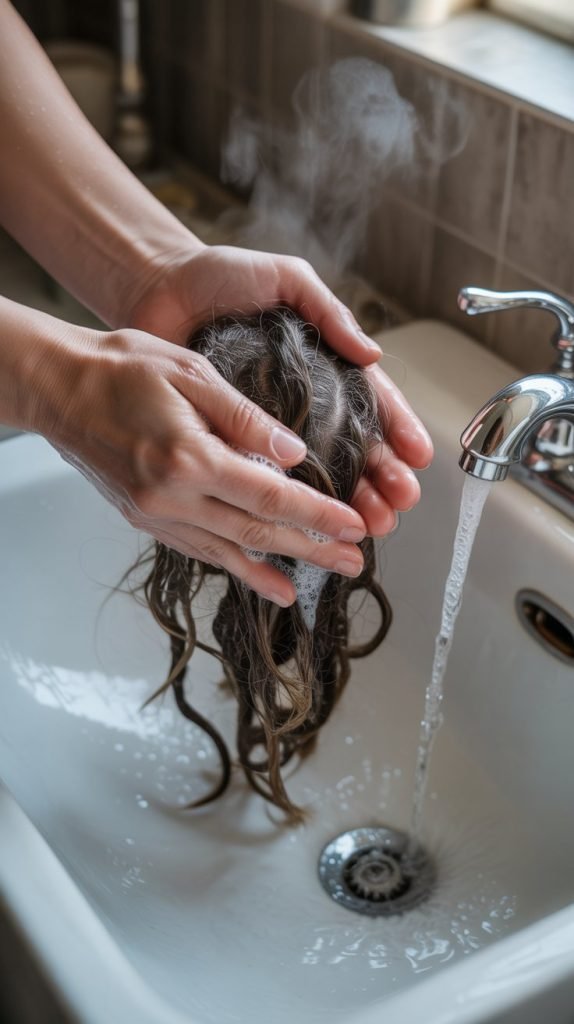
Clean scalp and locs are fundamental to healthy dreadlock maintenance, but overwashing or underwashing can both create serious problems. Finding the right balance is crucial for long-term loc health.
- Wash your dreadlocks every 7-10 days to maintain scalp health without stripping natural oils that protect your hair.
- Always use residue-free shampoos specifically formulated for dreadlocks, as regular shampoos often leave buildup that attracts lint and causes odor.
- Focus your shampooing efforts on the scalp where oil and dead skin accumulate, using your fingertips to massage gently and stimulate blood circulation.
- Dilute your shampoo with water in a spray bottle or applicator bottle for easier distribution throughout your locs without excessive product use.
- Rinse thoroughly for at least 5-10 minutes to ensure no soap residue remains trapped inside your locs, which can lead to mildew and unpleasant smells.
- Consider doing an apple cider vinegar rinse monthly to remove buildup and restore your scalp’s natural pH balance.
- Avoid using hot water, which can dry out your hair and scalp; lukewarm or cool water helps seal the hair cuticle and retain moisture.
3. Choosing the Right Products for Dreadlocks
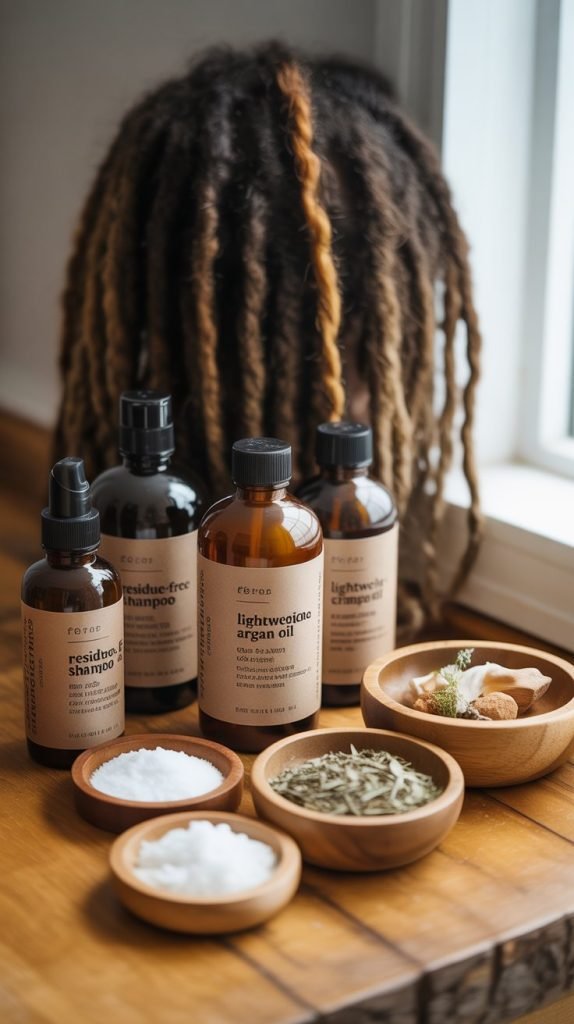
Product selection can make or break your dreadlock journey, as the wrong ingredients lead to buildup, slippage, and unhealthy locs. Quality matters more than quantity when it comes to loc care products.
- Select shampoos labeled as “residue-free” or specifically designed for dreadlocks, avoiding products with sulfates, silicones, and heavy conditioning agents.
- Lightweight natural oils like jojoba, sweet almond, or grapeseed oil provide moisture without causing buildup or making locs feel greasy.
- Stay away from petroleum-based products, heavy waxes, and thick creams that never fully wash out and attract dirt and lint.
- Essential oils such as tea tree, peppermint, and rosemary offer antibacterial properties while promoting scalp health and adding pleasant natural fragrance.
- Aloe vera gel serves as an excellent natural alternative to chemical styling products when you need light hold without residue.
- Read ingredient labels carefully and research any unfamiliar components before applying them to your precious locs.
- Invest in quality products from reputable brands rather than experimenting with cheap alternatives that may contain hidden ingredients harmful to dreadlocks.
4. Drying Your Dreadlocks Completely
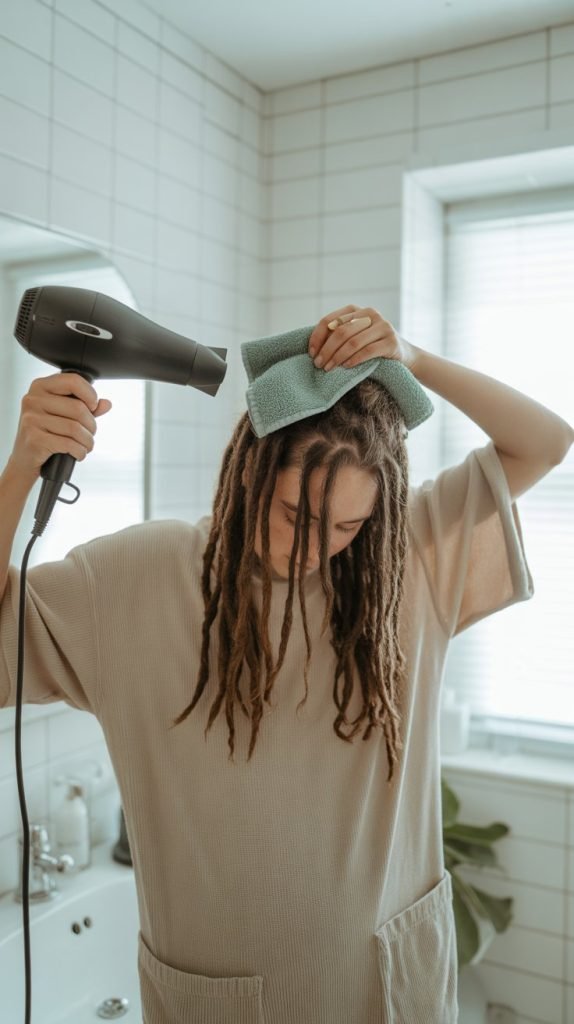
Moisture trapped inside dreadlocks creates the perfect environment for mildew, mold, and unpleasant odors. Proper drying techniques are absolutely non-negotiable for healthy locs.
- Never go to bed with wet or damp dreadlocks, as this promotes mildew growth that can compromise your loc structure and scalp health.
- Use a microfiber towel or soft t-shirt to squeeze excess water from your locs gently—avoid rough rubbing that can cause frizz and breakage.
- Apply a blow dryer on the cool or low heat setting, working methodically through your locs to ensure the interior dries completely.
- Sit in direct sunlight when weather permits, as natural sun exposure helps dry locs thoroughly while providing antibacterial benefits.
- Separate your locs while drying to ensure air reaches all sides and the spaces between them where moisture tends to hide.
- Thicker locs may require 2-4 hours to dry completely depending on their size and your hair density, so plan your wash days accordingly.
- Consider using a hooded dryer for thorough, even drying that reaches the core of each loc without excessive heat exposure.
5. Maintaining Your Scalp Health
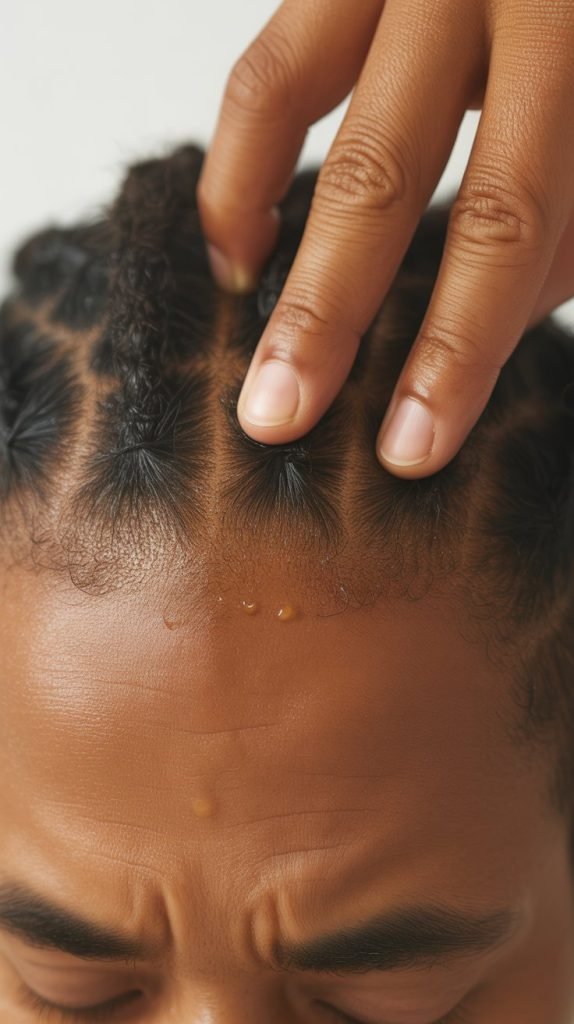
A healthy scalp is the foundation for healthy dreadlocks, yet many people focus solely on their locs and neglect the skin beneath. Your scalp needs consistent attention and care.
- Massage your scalp for 5-10 minutes several times weekly to stimulate blood flow, distribute natural oils, and promote healthy hair growth.
- Apply lightweight oils directly to your scalp using an applicator bottle with a nozzle tip for precise application between your locs.
- Address dandruff immediately using tea tree oil treatments or specialized dandruff remedies before it becomes embedded in your locs.
- Keep your scalp moisturized but not greasy by finding the right balance of oil application based on your individual needs and climate.
- Watch for signs of scalp irritation, excessive dryness, or unusual itching that might indicate underlying issues requiring professional attention.
- Exfoliate your scalp monthly using gentle scrubs or clarifying treatments to remove dead skin buildup and product residue.
- Maintain a healthy diet rich in vitamins and minerals that support scalp health from the inside out, including omega-3 fatty acids and biotin.
6. Retwisting and Maintenance Techniques
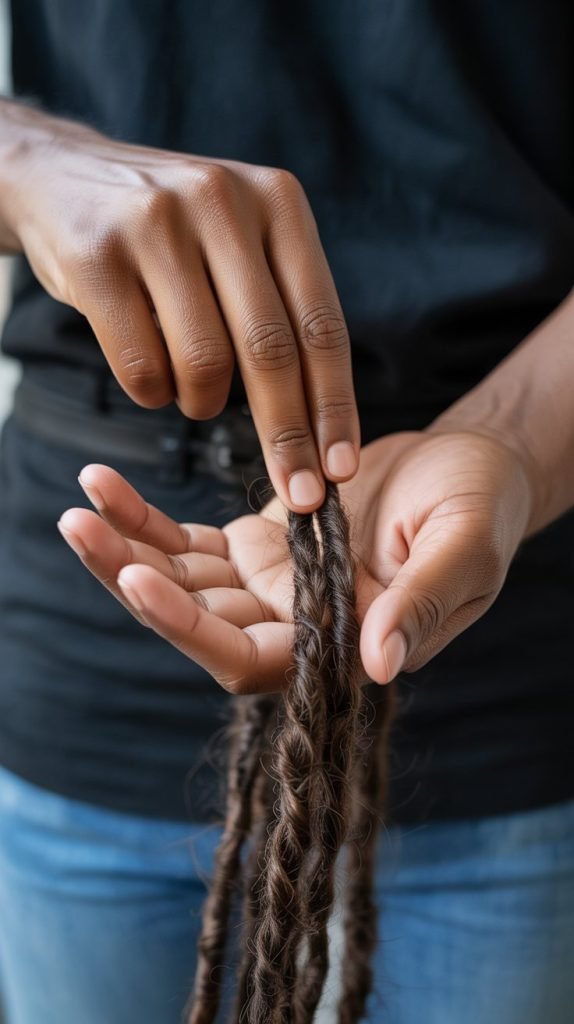
Regular maintenance keeps your dreadlocks looking neat and helps them mature properly, but the frequency and method depend on your personal preferences and hair characteristics.
- Schedule retwisting sessions every 4-8 weeks depending on how fast your hair grows and how neat you prefer your locs to appear.
- Palm rolling involves rolling each loc between your palms in one direction to encourage cylindrical shaping and tame frizzy new growth.
- Interlocking threads the end of each loc through its base using a specialized tool, creating a tighter, longer-lasting maintenance option.
- Avoid retwisting too frequently or too tightly, as excessive tension leads to thinning locs, scalp damage, and traction alopecia.
- Use minimal product during maintenance—natural oils or aloe vera gel work better than heavy waxes that cause buildup.
- Work with clean, dry locs whenever possible, as maintenance on wet hair can lead to mildew problems within the loc structure.
- Consider professional maintenance every few months to ensure proper technique and address any developing issues before they become serious.
7. Protecting Dreadlocks While Sleeping

The friction and movement during sleep can cause breakage, frizz, and lint accumulation in your dreadlocks. Nighttime protection is essential for maintaining their appearance and health.
- Wrap your dreadlocks in a silk or satin scarf every night to minimize friction against cotton pillowcases that absorb moisture and cause frizz.
- Invest in a large satin bonnet designed specifically for dreadlocks that accommodates their volume without compressing them uncomfortably.
- Switch to satin or silk pillowcases as an alternative if you dislike wearing head coverings while sleeping.
- For longer locs, gather them loosely on top of your head or braid them gently before covering to prevent tangling and tension on your edges.
- Avoid tight hair ties or bands that create weak points in your locs where breakage commonly occurs.
- Refresh your nighttime routine weekly by washing your scarves and bonnets to prevent transferring oils and dirt back onto clean locs.
- Never sleep with wet locs even if they’re wrapped, as the enclosed environment creates perfect conditions for mildew growth.
8. Dealing with Lint and Fuzz

Lint and fuzz are common frustrations for people with dreadlocks, but understanding why they occur and how to prevent them makes management much easier.
- New locs naturally collect more lint because their structure is looser and more porous than mature, tightened locs.
- Dark-colored locs show lint more obviously than lighter shades, but all dreadlocks are susceptible to collecting environmental debris.
- Reduce lint accumulation by wearing satin or silk head coverings that don’t shed fibers like cotton materials do.
- Remove visible lint carefully using tweezers or your fingertips rather than pulling aggressively, which can disturb your loc structure.
- Switch to lint-free towels for drying and avoid wearing wool hats or sweaters that shed fibers directly onto your locs.
- Keep your living spaces clean and vacuum regularly to minimize airborne particles that settle into your hair.
- Accept that some fuzz is natural and will eventually work its way into your loc structure as they mature and tighten over time.
9. Moisturizing Without Causing Buildup
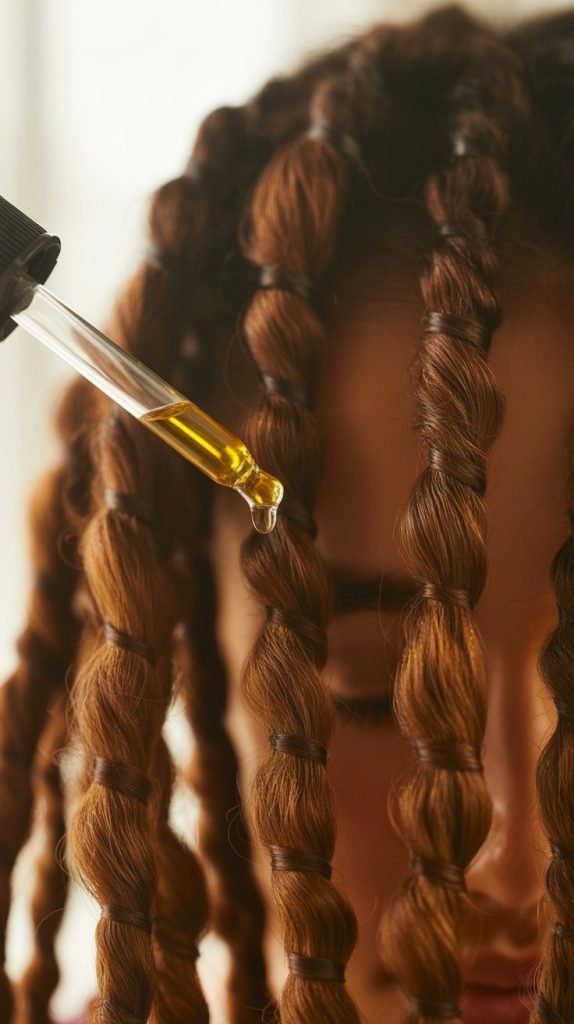
Maintaining the delicate balance between adequate moisture and product buildup challenges many dreadlock wearers. The key lies in using the right products in appropriate amounts.
- Apply moisture to your locs using a light hand—less is always more when it comes to preventing buildup in dreadlocks.
- Choose water-based moisturizing sprays that hydrate without leaving heavy residue, and always include ingredients that help with absorption.
- Natural oils penetrate the hair shaft better when applied to slightly damp locs rather than completely dry or soaking wet hair.
- Focus moisturizing efforts on the length and ends of your locs, which tend to be drier than the roots near your scalp.
- Create your own moisturizing spray by mixing water, aloe vera juice, and a few drops of essential oils in a spray bottle for an economical, effective solution.
- Deep condition your locs monthly using lightweight, natural treatments that rinse out completely without leaving residue behind.
- Monitor how your locs respond to products and adjust your routine seasonally, as moisture needs change with weather conditions.
10. Addressing Common Dreadlock Problems

Even with excellent care, dreadlock wearers occasionally encounter challenges that require specific solutions. Knowing how to address these issues prevents minor problems from becoming major setbacks.
- Address problems immediately rather than hoping they’ll resolve on their own, as early intervention prevents permanent damage.
- Seek professional help from experienced locticians when you’re unsure about the best course of action for serious issues.
- Document your loc journey with photos to track changes and identify patterns that might indicate developing problems.
- Join online communities or local groups of dreadlock wearers to learn from others’ experiences and discover proven solutions.
- Remember that patience is essential—many loc problems require time and consistent care rather than quick fixes.
11. Styling Options for Healthy Dreadlocks

Dreadlocks offer incredible versatility for creative styling while requiring careful techniques to avoid damage. Smart styling choices allow you to express yourself without compromising loc health.
- Experiment with updos, ponytails, and buns that distribute weight evenly across your scalp rather than concentrating tension in specific areas.
- Use fabric hair ties or loc-friendly bands without metal components that can snag and break your dreadlocks.
- Incorporate decorative beads, wraps, and accessories that slide on and off easily without requiring excessive manipulation.
- Avoid styles that pull tightly on your edges or maintain constant tension, as these contribute to traction alopecia and permanent hair loss.
- Give your locs regular breaks from elaborate styles by wearing them down or loosely gathered to prevent strain.
- Research protective styling options specifically designed for dreadlocks that maintain their integrity while offering variety.
- Remember that your locs’ health always takes priority over trendy styles that might compromise their structure or your scalp condition.
12. Seasonal Care Adjustments

Your dreadlock care routine should adapt to changing weather conditions throughout the year, as different seasons present unique challenges and opportunities for loc maintenance.
- Summer heat and sun exposure can dry out your locs, requiring increased moisture and protective coverings when spending extended time outdoors.
- Winter weather demands extra scalp moisturizing as indoor heating systems create dry conditions that lead to itchiness and flaking.
- Humid climates require more frequent washing to prevent buildup and mildew, while dry climates allow for less frequent cleansing schedules.
- Protect your locs from chlorine and salt water during summer by wetting them with fresh water first and wearing a swimming cap when possible.
- Fall and spring weather fluctuations mean adjusting your routine based on daily conditions rather than following a rigid schedule.
- Cold weather styling should include protective coverings that keep your locs warm without causing breakage from wool or rough materials.
- Stay hydrated year-round and maintain a healthy diet to support your hair’s needs from the inside regardless of external weather conditions.
Conclusion
Mastering Essential Hair Care Tips for Dreadlocks empowers you to maintain beautiful, healthy locs that reflect your personal style and cultural pride.
By understanding your unique hair type, establishing consistent washing and drying routines, choosing appropriate products, and protecting your locs day and night, you create the foundation for long-term success.
Regular maintenance performed with care rather than excessive force, combined with attention to your scalp’s health and seasonal adjustments, ensures your dreadlocks thrive through every stage of their development.
Remember that patience and consistency matter more than expensive products or complicated techniques—your commitment to proper care will reward you with strong, vibrant locs that grow more beautiful with time.
Whether you’re just beginning your dreadlock journey or celebrating years of loc love, these essential practices will help you avoid common pitfalls while embracing the natural beauty and versatility that dreadlocks offer.
