
Best Dreadlocks Hair Care Routine
Dreadlocks are more than just a hairstyle—they’re a commitment, a statement, and for many, a spiritual journey that requires dedication and proper care.
Whether you’re just starting your loc journey or you’ve been wearing dreadlocks for years, understanding the right hair care routine can make the difference between healthy, vibrant locs and ones that are dry, brittle, or plagued with buildup.
Many people believe that dreadlocks are maintenance-free, but this couldn’t be further from the truth. The reality is that locs require consistent attention, specialized products, and techniques that differ significantly from caring for loose natural hair.
This comprehensive guide on the Best Dreadlocks Hair Care Routine will walk you through everything you need to know—from the essential washing techniques that keep your scalp healthy without causing unraveling, to the moisturizing methods that prevent breakage, the retwisting schedules that maintain your style, and the protective measures that ensure your locs remain strong for years to come.
You’ll discover the common mistakes that can damage your locs, learn which products to embrace and which to avoid, and gain insider knowledge on how to address specific concerns like lint accumulation, thinning roots, and odor prevention
By the end of this article, you’ll have a complete roadmap to maintaining beautiful, healthy dreadlocks that reflect your personal style while honoring the integrity of your hair.
1. Understanding Your Dreadlock Type and Texture
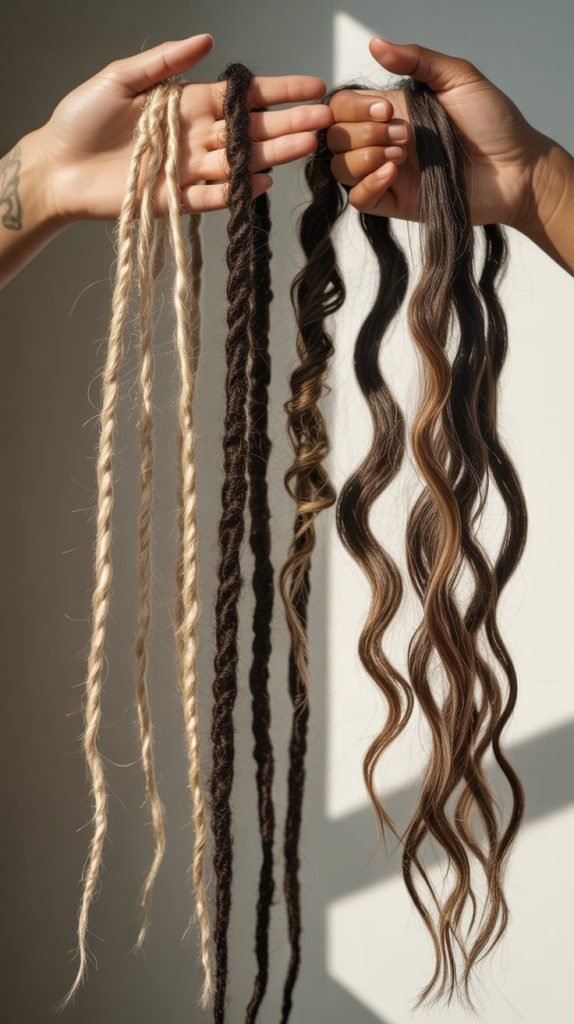
Before diving into any hair care routine, you need to recognize that not all dreadlocks are created equal, and understanding your specific loc type and hair texture is fundamental to providing the right care.
Different hair textures—from straight to coily—form locs differently and require tailored approaches to maintenance and moisture retention.
- Afro-textured hair (Type 4) naturally locs faster and holds its shape more easily, but it also tends to be drier and more prone to breakage without proper moisture.
- Type 3 curly hair creates locs that may be looser and require more frequent maintenance to prevent unraveling, especially in the first year of the loc journey.
- Type 2 wavy and Type 1 straight hair textures can form dreadlocks, but they require more deliberate maintenance methods like backcombing, crochet techniques, or neglect methods, and they take significantly longer to mature.
- The thickness of your individual locs matters tremendously—thin locs dry faster and are more prone to breakage, while thick locs can hold moisture longer but may develop mildew if not dried properly.
- Your loc age also determines care needs: baby locs (0-6 months) are fragile and need gentle handling, teenage locs (6-18 months) are in their awkward phase with lots of frizz and looping, while mature locs (18+ months) are fully formed and more resilient.
- Understanding your scalp type is equally important—oily scalps may need more frequent washing, while dry scalps require targeted moisture treatments and less frequent shampooing.
2. Essential Washing Techniques for Healthy Locs
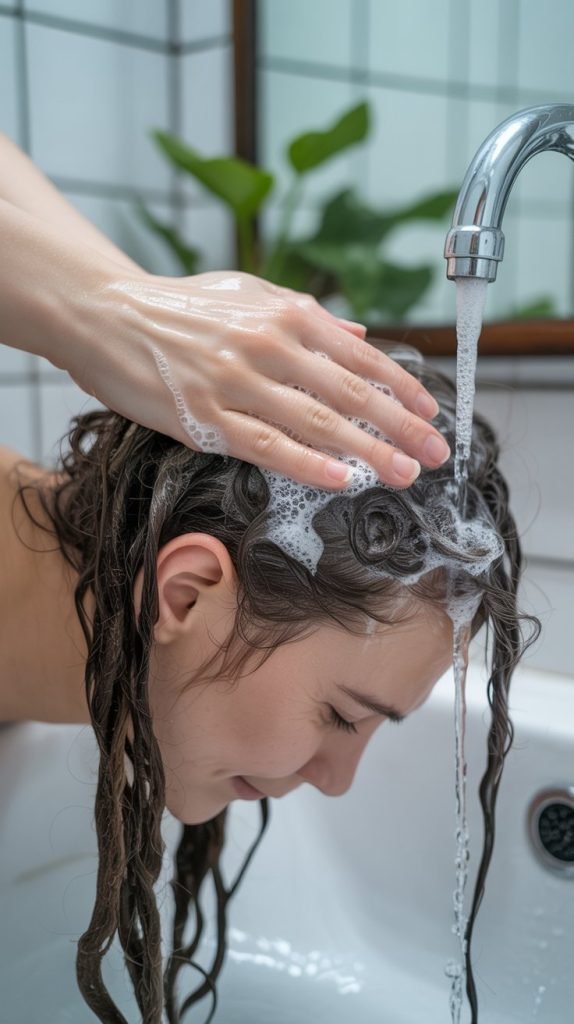
Washing dreadlocks properly is perhaps the most critical aspect of the Best Dreadlocks Hair Care Routine, as improper washing can lead to buildup, odor, mildew, and even loc deterioration.
The key is finding the balance between keeping your scalp clean and not disrupting the locking process or causing your locs to unravel.
- Always use a residue-free shampoo specifically formulated for dreadlocks, as regular shampoos often contain conditioning agents, oils, and fragrances that build up inside locs and attract lint.
- Focus your shampooing efforts on the scalp rather than the locs themselves—a clean scalp is the foundation of healthy locs, and the shampoo will naturally cleanse the locs as you rinse.
- Wet your locs thoroughly before applying shampoo, as dreadlocks can be surprisingly water-resistant, and inadequate wetting can prevent proper cleansing.
- Use your fingertips (not nails) to massage the shampoo into your scalp in circular motions, working between the locs to stimulate blood flow and remove dead skin cells.
- Rinse extremely thoroughly—this cannot be overstated—because any shampoo residue left in locs will attract dirt, cause buildup, and create a breeding ground for bacteria.
- The rinsing process should take at least twice as long as the washing process; squeeze each loc gently while running water through it to ensure all product is removed.
- Washing frequency depends on your lifestyle and hair type: active individuals may wash weekly, while others can go 10-14 days between washes without issues.
- Avoid washing more than twice per week, as over-washing strips natural oils and can cause excessive dryness, especially in the early stages of locs.
- Some loc wearers find success with the dilution method—mixing shampoo with water in a spray bottle and applying it directly to the scalp for more controlled, targeted cleansing.
- Consider doing a deep cleanse or loc detox every 2-3 months using apple cider vinegar rinses or baking soda soaks to remove stubborn buildup that regular washing misses.
3. Proper Drying Methods to Prevent Mildew
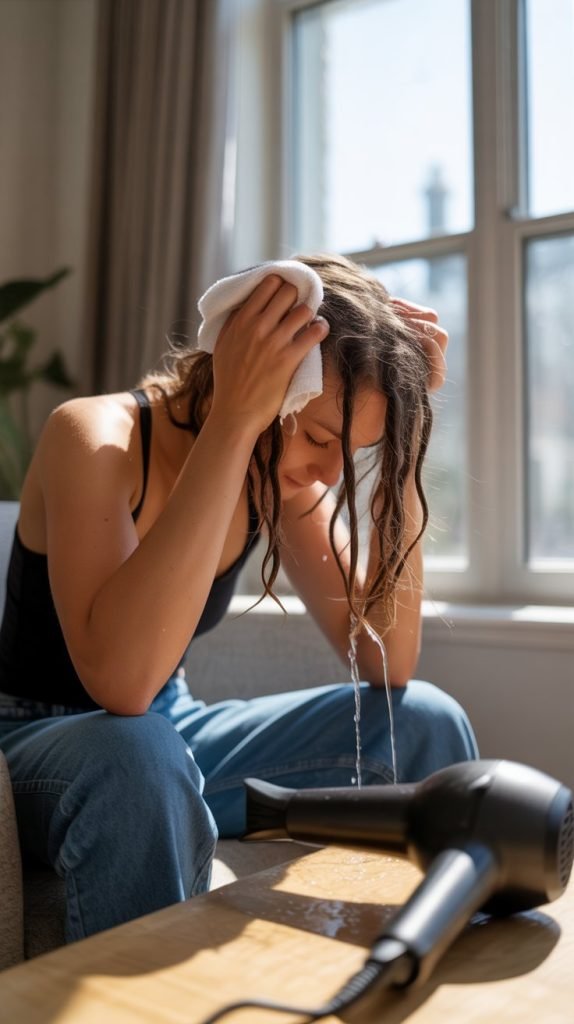
Drying your dreadlocks completely after washing is absolutely non-negotiable in your hair care routine, as damp locs create the perfect environment for mildew, bacteria growth, and unpleasant odors that can be extremely difficult to eliminate.
Many people underestimate how long it takes for the interior of dreadlocks to dry completely, which can be several hours to even days for thick or long locs.
- Immediately after washing, gently squeeze excess water from your locs—avoid twisting or wringing them harshly, as this can cause frizz and weaken the loc structure.
- Use a highly absorbent microfiber towel or an old cotton t-shirt to blot your locs, as regular terrycloth towels can catch on locs and leave behind lint.
- The squeeze-and-roll technique works well: wrap a section of locs in your towel, squeeze firmly, then roll the towel along the loc to absorb maximum water.
- Air drying alone is insufficient for most people—even if your locs feel dry on the outside, moisture can be trapped in the core, especially with thick or mature locs.
- Use a hair dryer on a low to medium heat setting to thoroughly dry your locs, lifting them in sections and directing airflow at the roots and along the length of each loc.
- A hooded dryer provides the most even and thorough drying experience, distributing heat uniformly and allowing you to dry your entire head of locs simultaneously.
- The blow dryer attachment method involves sectioning your locs and directing concentrated airflow down each loc to accelerate drying from the inside out.
- For extremely thick or long locs, drying can take 3-6 hours with a blow dryer or an entire day air-drying in optimal conditions.
- Drying in direct sunlight can significantly speed up the process and has natural antibacterial properties, making it an excellent option when weather permits.
- Never sleep on wet or damp locs, as this compressed state traps moisture and dramatically increases mildew risk—your pillow will also absorb unpleasant odors.
- If you detect a musty smell from your locs, it indicates mildew has already formed and requires immediate intervention with clarifying washes or an ACV rinse.
4. Moisturizing Without Causing Buildup
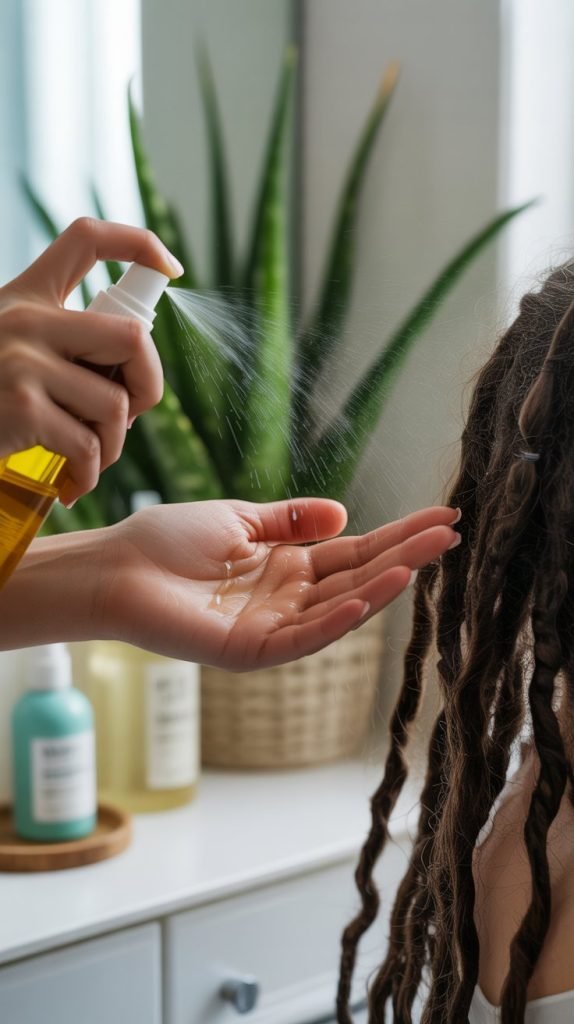
Moisture is the lifeblood of healthy dreadlocks, yet achieving the perfect balance is tricky because locs need hydration without the heavy products that cause buildup, weigh them down, or prevent them from locking properly.
The Best Dreadlocks Hair Care Routine incorporates lightweight moisturizing techniques that penetrate the loc without leaving residue.
- Water is your primary moisturizer—a simple spray bottle filled with water can refresh locs and provide immediate hydration without any buildup concerns.
- The L.O.C. method (Liquid, Oil, Cream) can be adapted for locs: spray with water or aloe vera juice, seal with a light oil like jojoba or grapeseed, and skip the cream or use an extremely lightweight loc butter.
- Avoid heavy butters, creams, and petroleum-based products that sit on the surface of locs, attract lint, and create waxy buildup that’s nearly impossible to remove.
- Essential oils mixed with carrier oils provide both moisture and therapeutic benefits: tea tree oil has antifungal properties, peppermint stimulates the scalp, and rosemary promotes hair growth.
- Rose water or aloe vera juice mixed with a few drops of your favorite oil creates an excellent daily refresher spray that moisturizes without buildup.
- Focus moisture application on the roots and scalp area, as this is where your hair is actively growing and needs the most nourishment.
- The mid-lengths and ends of locs generally don’t need as much product—over-moisturizing these areas can cause unraveling or loosening, especially in newer locs.
- Moisturize your locs 2-3 times per week or as needed based on how they feel—dry, brittle locs will feel rough and may show white lint more easily, while properly moisturized locs feel supple and have a healthy sheen.
- Internal hydration matters just as much as external: drinking adequate water, eating a balanced diet rich in omega-3 fatty acids, and taking biotin or hair-specific vitamins supports loc health from within.
- Climate affects moisture needs dramatically—dry, cold winters require more aggressive moisturizing strategies, while humid summers may need less product application.
5. Retwisting and Maintenance Schedule
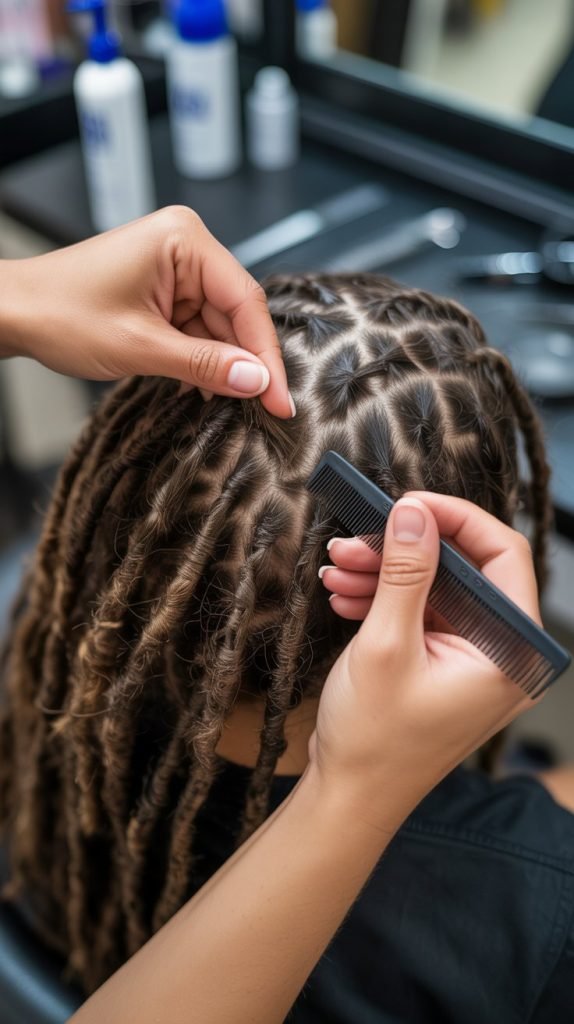
Retwisting is the process of tightening the new growth at the roots of your locs to maintain their neat appearance and encourage continued locking, and establishing the right maintenance schedule is crucial for balancing aesthetic preferences with hair health.
Over-retwisting can cause thinning and breakage, while under-maintaining can result in excessive frizz and merging locs.
- Most people should retwist their locs every 4-6 weeks, though this timing can vary based on hair growth rate, desired aesthetic, and whether you prefer a freeform or maintained look.
- The two-strand twist method works well for new locs and involves twisting new growth at the roots while leaving the matured loc undisturbed.
- Palm rolling is a classic technique where you roll the loc between your palms in one direction, which helps compact the loc and train the hair to form a cylindrical shape.
- The interlocking method (also called latching) pulls the end of the loc through the base using a tool, creating a very tight, uniform look but potentially causing stress on the roots if done too frequently.
- Freeform locs require minimal to no retwisting—they naturally section, mat, and form with occasional separation at the roots to prevent unwanted joining.
- Using too much product during retwisting causes buildup and attracts lint, so opt for lightweight gels specifically formulated for locs or simply use aloe vera gel.
- The root tightness should be firm but never painful—excessive tension during retwisting is the primary cause of traction alopecia and thinning at the base of locs.
- Rotating your retwisting pattern can help: instead of always parting the same way, vary your sections slightly to distribute tension more evenly across the scalp.
- Some people prefer the “wash and go” approach, where they simply wash their locs and allow them to loc naturally without constant maintenance, accepting the frizz as part of their aesthetic.
- Professional maintenance every 2-3 months can help identify problem areas early, address thinning, and provide expert care that’s difficult to achieve at home, especially for the back sections.
6. Protecting Your Locs During Sleep

Nighttime protection is a often-overlooked component of the Best Dreadlocks Hair Care Routine, yet it’s during sleep that your locs can experience significant damage from friction, dryness, and physical stress against your pillow.
Proper sleep protection extends the life of your locs and reduces frizz and breakage.
- Satin or silk bonnets are essential for protecting locs during sleep, as these smooth fabrics create minimal friction compared to cotton pillowcases that absorb moisture and cause frizz.
- Loc socks—stretchy, tube-like coverings designed specifically for dreadlocks—keep longer locs contained and protected while preventing them from catching on jewelry or getting tangled.
- Satin or silk pillowcases provide an alternative for those who dislike wearing bonnets or who tend to remove them during sleep, offering protection even when head coverings slip off.
- Wrapping longer locs in a loose bun or pineapple style before covering them prevents unnecessary pulling and tension at the roots while you sleep.
- Avoid elastic bands directly against your locs, as they can cause thinning and breakage points; instead, use fabric scrunchies or loc-friendly ties for securing your hair.
- Sleeping with wet or damp locs should be avoided at all costs, as the compressed state against the pillow traps moisture and creates ideal conditions for mildew growth.
- Some people with very thick or long locs find success sleeping with their locs hanging off the edge of the bed or over a separate pillow to prevent crushing and flattening.
- The friction from cotton pillowcases not only causes frizz but can also pull loose hairs out of young locs, slowing down the locking process significantly.
- Refreshing your locs before bed with a light spritz of water and oil can help them maintain moisture overnight, but ensure they’re not too wet.
- Establishing a consistent nighttime routine—moisturize, cover, protect—ensures you’re doing this crucial maintenance step every night rather than occasionally.
7. Dealing with Lint and Fuzz
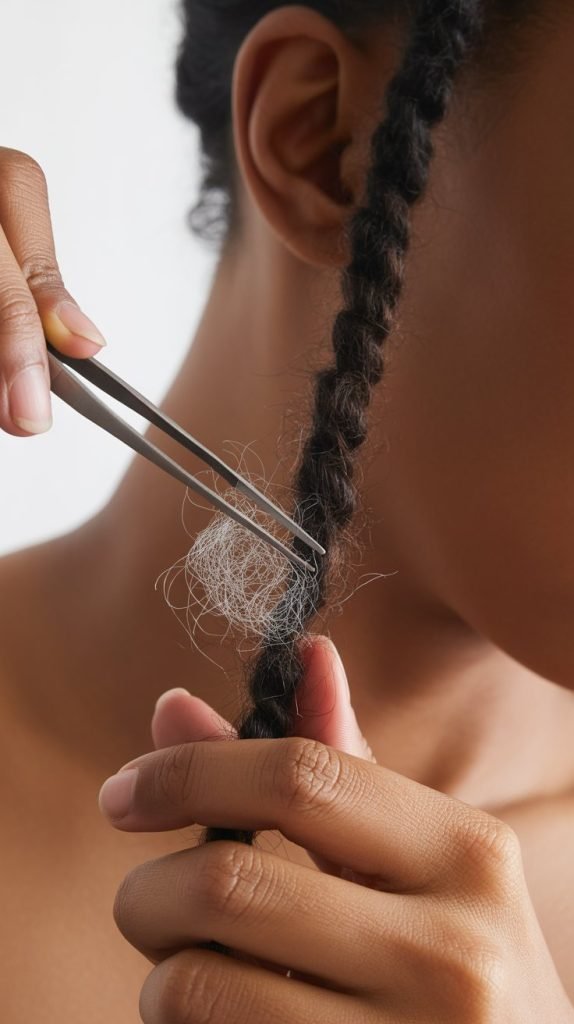
Lint accumulation in dreadlocks is one of the most common and frustrating issues that loc wearers face, as these tiny fibers from clothing, towels, and the environment become trapped in the loc structure and can be extremely difficult to remove.
Understanding how to prevent and address lint is essential for maintaining clean, professional-looking locs.
- Lint is most visible in darker colored locs and most problematic during the first 6-18 months when locs are still forming and have a more open, spongy structure that traps fibers.
- Prevention is far more effective than removal—avoid using terrycloth towels on your locs, as they shed fibers constantly; instead, use microfiber towels or t-shirts for drying.
- Wearing a satin or silk bonnet at night prevents lint from your pillowcase and bedding from working its way into your locs while you sleep.
- Be mindful of clothing materials that shed heavily: wool sweaters, fleece jackets, and fuzzy scarves are major lint culprits that should be kept away from freshly washed or damp locs.
- Light-colored clothing sheds less noticeable lint, so consider this when choosing what to wear during the first year of your loc journey.
- For minor lint issues, use clean tweezers to gently pull out visible fibers from the surface of your locs—this requires patience and good lighting but is effective for spot treatments.
- Avoid over-manipulating locs while removing lint, as excessive picking can cause frizz and potentially damage the loc structure or create holes.
- A deep cleansing treatment using baking soda and apple cider vinegar can help draw out embedded lint from inside the locs during the soaking and rinsing process.
- Some people use a crochet hook to carefully work lint out from the surface, but this should be done sparingly and gently to avoid damaging the loc’s integrity.
- As your locs mature and tighten, they become less susceptible to lint accumulation because the structure becomes more compact and less porous.
- Acceptance is part of the journey—some lint is inevitable, and obsessing over perfect, lint-free locs can cause more damage through excessive manipulation than the lint itself ever would.
8. Scalp Care and Health
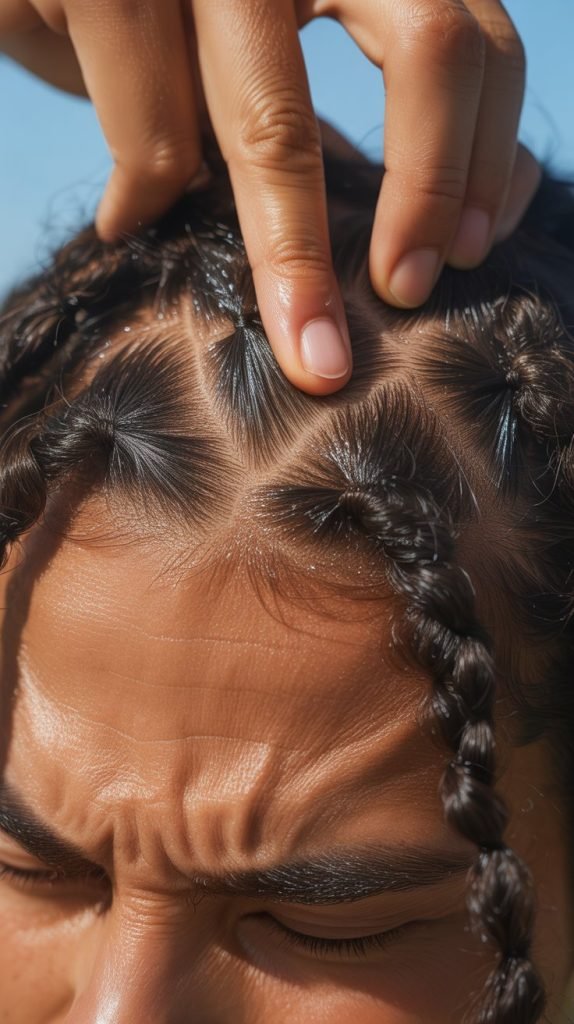
A healthy scalp is the foundation of healthy dreadlocks, yet many people focus so much on the locs themselves that they neglect the skin underneath, leading to issues like dandruff, itching, buildup, and even hair loss.
The Best Dreadlocks Hair Care Routine must include dedicated scalp care practices.
- Regular scalp massages stimulate blood circulation to the hair follicles, promoting healthy hair growth and helping to prevent tension-related thinning at the roots.
- Use your fingertips to massage your scalp for 5-10 minutes several times per week, working between the locs in circular motions to increase blood flow and distribute natural oils.
- Scalp oil blends specifically formulated for locs—typically containing tea tree oil, peppermint, rosemary, and jojoba—can soothe irritation, reduce inflammation, and promote a healthy scalp environment.
- Apply scalp treatments directly to the skin between partings using an applicator bottle with a pointed nozzle, ensuring the product reaches the scalp rather than just sitting on the locs.
- Itching is common, especially during the early stages of locs or after retwisting, and usually indicates dry scalp, product buildup, or new growth—address it with targeted moisturizing rather than scratching.
- Dandruff in locs requires specific attention: use clarifying shampoos designed to address the issue, and consider reducing products that might be contributing to buildup.
- Apple cider vinegar rinses help balance scalp pH, remove product buildup, and have antimicrobial properties that combat dandruff and scalp odor.
- Watch for signs of traction alopecia—thinning at the roots, tender spots, bumps, or receding hairline—which indicate you’re retwisting too tightly or too frequently.
- Avoid scratching your scalp with your fingernails, as this can create microtears in the skin that become entry points for bacteria and can lead to scalp infections.
- Psoriasis, eczema, and seborrheic dermatitis can be more challenging to manage with locs but are not impossible—work with a dermatologist to develop a treatment plan that accounts for your loc maintenance.
- Keep your scalp dry after washing to prevent fungal growth, which thrives in warm, moist environments and can cause unpleasant odors and scalp issues.
9. Product Selection and What to Avoid
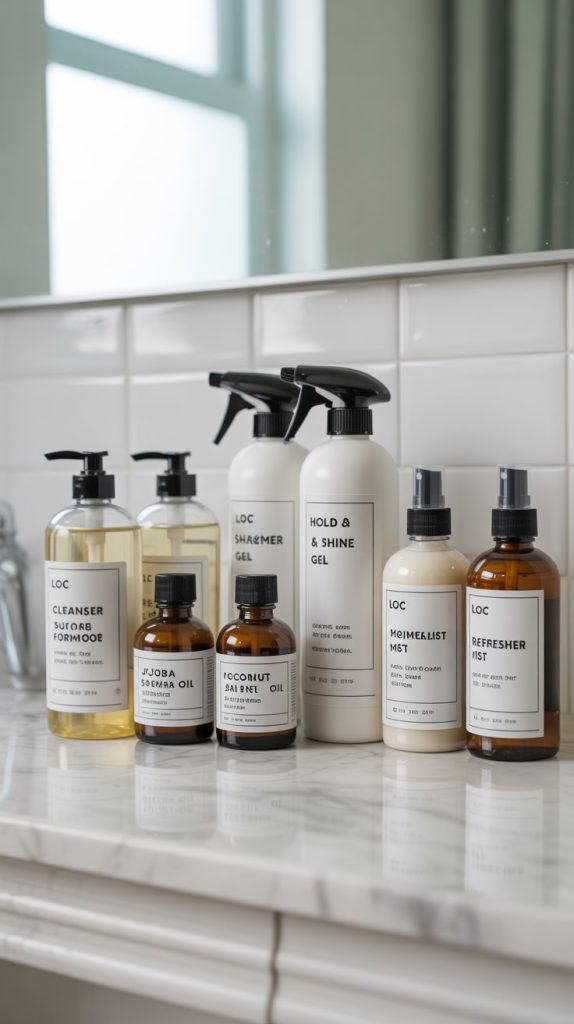
The products you use on your dreadlocks can make or break your loc journey, as the wrong products cause buildup, prevent locking, attract lint, and create long-term problems that require extensive remediation.
Understanding which ingredients to seek out and which to avoid is crucial for the Best Dreadlocks Hair Care Routine.
- Read ingredient labels carefully and avoid products containing silicones (dimethicone, cyclomethicone), sulfates (SLS, SLES), and heavy waxes, as these ingredients are difficult for water to rinse away.
- Residue-free doesn’t necessarily mean product-free—it means the product washes out completely without leaving behind film, buildup, or coating that accumulates over time.
- Natural doesn’t always mean better for locs: coconut oil, while beloved for loose natural hair, can be too heavy for many loc types and cause buildup if used excessively.
- The thickness and age of your locs determines which products work best—baby locs need extremely light products that won’t unravel them, while mature locs can handle slightly heavier moisture treatments.
- DIY products can be excellent for locs: a simple mixture of aloe vera gel with essential oils makes an effective, residue-free retwisting gel.
- When trying a new product, test it on a small section first to see how your locs respond before applying it to your entire head.
- Less is always more with loc products—a little goes a long way, and over-application is one of the primary causes of buildup and product-related issues.
- Checking product reviews from other loc wearers can help you identify which products have a track record of success versus those that cause problems.
- If you’ve used problematic products in the past, you may need to do a deep cleanse or ACV rinse to remove accumulated buildup before starting a fresh, clean product routine.
- Price doesn’t always correlate with quality—some expensive “loc-specific” products contain the same problematic ingredients as cheaper alternatives, so always read labels rather than trusting marketing.
10. Managing Frizz and Loose Hairs
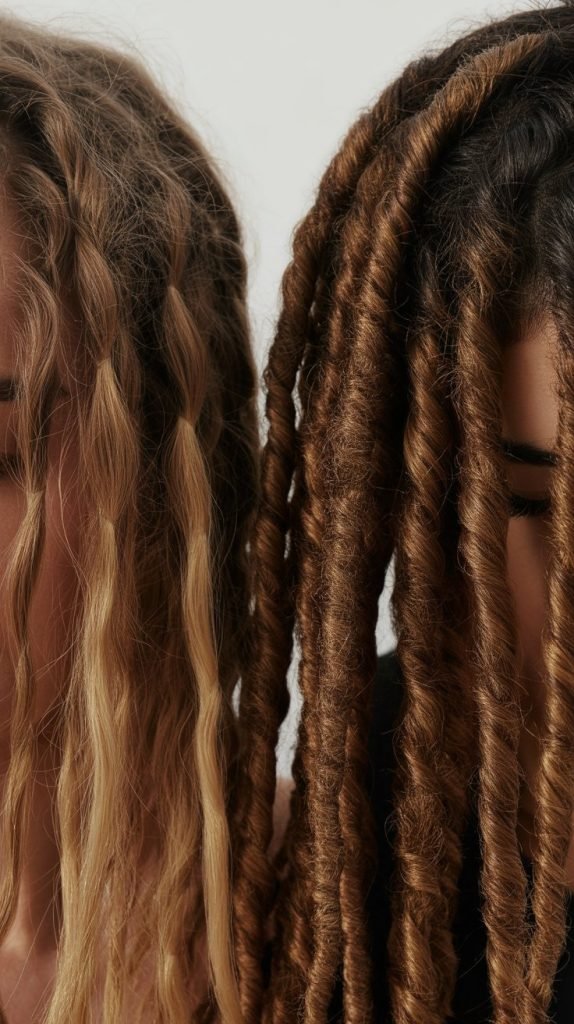
Frizz is a natural and often inevitable part of the dreadlock journey, particularly during the “teenage” phase when locs are neither new nor fully mature, and learning to manage it without causing damage or halting the locking process is an important skill.
Understanding when to address frizz and when to embrace it is key to maintaining the Best Dreadlocks Hair Care Routine.
- Frizz is not inherently bad—it’s actually new hair locking into your existing locs and is a sign that your locs are maturing and incorporating new growth.
- The “teenage” phase of locs (typically 6-18 months) is characterized by maximum frizz, loops, bumps, and a generally unkempt appearance that causes many people to panic, but this phase is temporary and necessary.
- Palm rolling is the gentlest method for managing frizz: roll each loc between your palms in one direction, which helps smooth loose hairs against the loc shaft without causing damage.
- Avoid excessive crochet hooking to address frizz, as this technique, while immediately effective for creating neat locs, can cause thinning, holes, and long-term structural damage if overused.
- Gel can temporarily tame frizz for special occasions or professional settings, but constant use of gel to maintain perfectly smooth locs can prevent proper locking and lead to buildup.
- The interlocking method addresses frizz at the roots by creating a very tight, uniform base, but should only be done every 6-8 weeks to prevent stress on the hair follicles.
- Loose hairs sticking out from locs can be gently tucked back in during palm rolling sessions or left alone to naturally incorporate over time through washing and manipulation.
- Wearing your locs in protective styles like buns or updos can minimize the appearance of frizz without requiring additional products or manipulation.
- Environmental factors increase frizz: humidity, wind, and friction from hats or clothing all contribute to loose hairs, so protecting your locs in these conditions helps minimize additional frizz.
- Some hair textures naturally produce frizzier locs—Type 3 and Type 4 hair tends to loc with more texture and character, while straighter hair types may create smoother locs but take longer to fully mature.
- Learning to appreciate the natural beauty of textured, slightly fuzzy locs is part of the journey—the perfectly smooth, uniform locs seen on social media often require extensive manipulation that can be damaging in the long term.
- If specific locs are excessively fuzzy or developing problematic loops or bumps, targeted maintenance on just those locs is better than manipulating your entire head.
11. Nutrition and Internal Health for Loc Growth
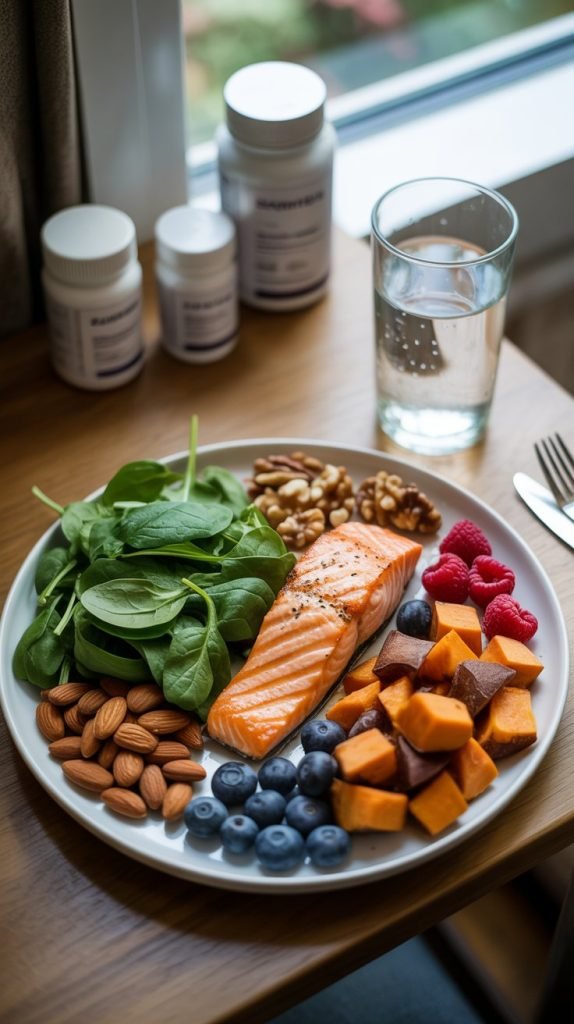
While external care is crucial for maintaining healthy dreadlocks, what you put inside your body is equally important for promoting strong, fast-growing locs with minimal breakage and shedding.
The Best Dreadlocks Hair Care Routine extends beyond topical treatments to include nutritional support and lifestyle habits that foster optimal hair health.
- Protein is the building block of hair, which is composed primarily of keratin—ensure you’re consuming adequate protein through sources like eggs, fish, chicken, beans, lentils, or plant-based proteins if you follow a vegan diet.
- Biotin (Vitamin B7) supports hair growth and strength, and deficiency can lead to hair loss and brittle hair; food sources include eggs, nuts, sweet potatoes, and spinach, or consider a supplement after consulting with a healthcare provider.
- Omega-3 fatty acids found in fatty fish, flaxseeds, and walnuts nourish hair follicles, reduce inflammation in the scalp, and promote shiny, healthy hair growth.
- Iron deficiency is one of the most common nutritional causes of hair loss, particularly in women, so include iron-rich foods like red meat, spinach, and lentils in your diet, paired with vitamin C to enhance absorption.
- Vitamin E provides antioxidant protection to hair follicles and improves scalp circulation, found in almonds, sunflower seeds, avocados, and spinach.
- Zinc supports hair tissue growth and repair and helps keep oil glands around follicles working properly, available in oysters, beef, pumpkin seeds, and lentils.
- Adequate hydration is essential for hair health—water helps transport nutrients to hair follicles and keeps hair hydrated from the inside out, so aim for at least 8 glasses daily.
- Vitamin D deficiency has been linked to hair loss conditions, and since this vitamin is primarily obtained through sun exposure, consider supplementation if you live in northern climates or spend most time indoors.
- A well-balanced, whole-foods diet rich in fruits, vegetables, lean proteins, and healthy fats provides the comprehensive nutrition your body needs to grow strong, resilient locs.
- Avoid crash diets and extreme calorie restriction, as these stress your body and can trigger telogen effluvium—a condition where hair prematurely enters the shedding phase, resulting in noticeable thinning.
- Manage stress through meditation, exercise, adequate sleep, and healthy coping mechanisms, as chronic stress elevates cortisol levels, which can disrupt the hair growth cycle and lead to increased shedding and slower growth.
12. Seasonal Loc Care Adjustments

Just as you adjust your skincare routine with the changing seasons, your dreadlocks require different care approaches throughout the year to accommodate varying weather conditions, humidity levels, and environmental stressors.
The Best Dreadlocks Hair Care Routine adapts to seasonal needs rather than following a rigid, year-round protocol.
- Winter months bring cold, dry air and indoor heating that strips moisture from locs, requiring more frequent moisturizing with water-based sprays and sealing oils to prevent brittleness and breakage.
- Static electricity in winter causes locs to stand up and repel each other, which can be managed with slightly heavier oils or anti-static products, and by wearing satin-lined winter hats instead of wool beanies.
- Spring’s increased humidity can be beneficial for naturally dry locs but may require adjustments for people whose locs tend to frizz or unravel with moisture, including more frequent palm rolling or using light holding products.
- Summer sun exposure can lighten loc color and cause dryness, so protect your locs with hats or UV-protectant sprays when spending extended time outdoors, and increase moisture to compensate for sun damage.
- Swimming in chlorinated pools or salt water requires pre-swim protection—wet your locs with fresh water and apply a protective oil to minimize absorption of harmful chemicals or salt that can dry and damage locs.
- After swimming, immediately rinse locs thoroughly with fresh water and follow up with a clarifying shampoo session to remove chlorine, salt, and any buildup from protective products.
- Fall’s cooler temperatures and lower humidity mark the transition back to more protective care—reintroduce heavier moisturizing routines and ensure locs are thoroughly dry before covering them with hats or hoods.
- Seasonal allergies can cause scalp itching and irritation, so keep antihistamines on hand and use soothing scalp oils with anti-inflammatory properties like tea tree or lavender during high pollen seasons.
- Your washing frequency may need adjustment with seasons—summer’s heat and increased sweating might necessitate more frequent washing, while winter’s dryness might allow for longer intervals between washes.
- Pay attention to how your locs respond to seasonal changes and be willing to adjust your routine accordingly rather than forcing them to conform to a static regimen that doesn’t account for environmental factors.
Conclusion
Maintaining beautiful, healthy dreadlocks is a journey that requires commitment, knowledge, and consistent care tailored to your unique hair needs.
The Best Dreadlocks Hair Care Routine isn’t a one-size-fits-all formula but rather a flexible framework that adapts to your loc age, hair texture, lifestyle, and personal preferences.
By implementing the washing techniques that keep your scalp and locs clean without causing buildup, the thorough drying methods that prevent mildew and odor, the moisturizing strategies that maintain suppleness without weighing down your locs, and the protective measures that minimize damage during sleep and environmental exposure, you create the foundation for locs that will thrive for years to come.
Understanding which products to embrace and which to avoid saves you from the frustration of dealing with buildup and damage, while recognizing that frizz and imperfection are natural parts of the loc journey helps you maintain realistic expectations and appreciate your locs’ unique character.
Remember that internal health matters as much as external care—proper nutrition, hydration, and stress management support your hair from the inside out, promoting faster growth and resilience.
Seasonal adjustments ensure your locs receive the specific care they need as weather and environmental conditions change throughout the year.
Whether you prefer meticulously maintained locs or embrace a more freeform aesthetic, the principles outlined in this guide provide the knowledge you need to make informed decisions about your loc care routine.
Your locs are a reflection of your personal journey, and with the right care, they’ll remain strong, vibrant, and beautiful for as long as you choose to wear them.
