
55 Best Chin-Length Haircuts for Fine Hair That Add Instant Fullness
If you’ve been struggling with flat, lifeless fine hair that refuses to hold volume, a chin-length cut might be the transformation you’ve been searching for.
Fine hair faces unique challenges when it comes to body and movement, but the right chin-length haircut can completely change your relationship with your locks by creating the illusion of thickness and adding natural bounce.
This comprehensive guide explores 55 best chin-length haircuts for fine hair that add instant fullness, covering everything from classic bobs to textured shags, layered styles to blunt cuts, and specialized techniques that maximize volume at every angle.
You’ll discover why chin-length cuts work exceptionally well for fine hair types, learn about strategic layering techniques that prevent your hair from looking thin, explore color and styling tricks that enhance fullness, and find expert maintenance tips to keep your cut looking salon-fresh between appointments.
Whether you prefer sleek and sophisticated or tousled and textured, you’ll find multiple options that suit your face shape, lifestyle, and personal style while delivering the volume boost your fine hair craves.
1. The Classic Blunt Bob
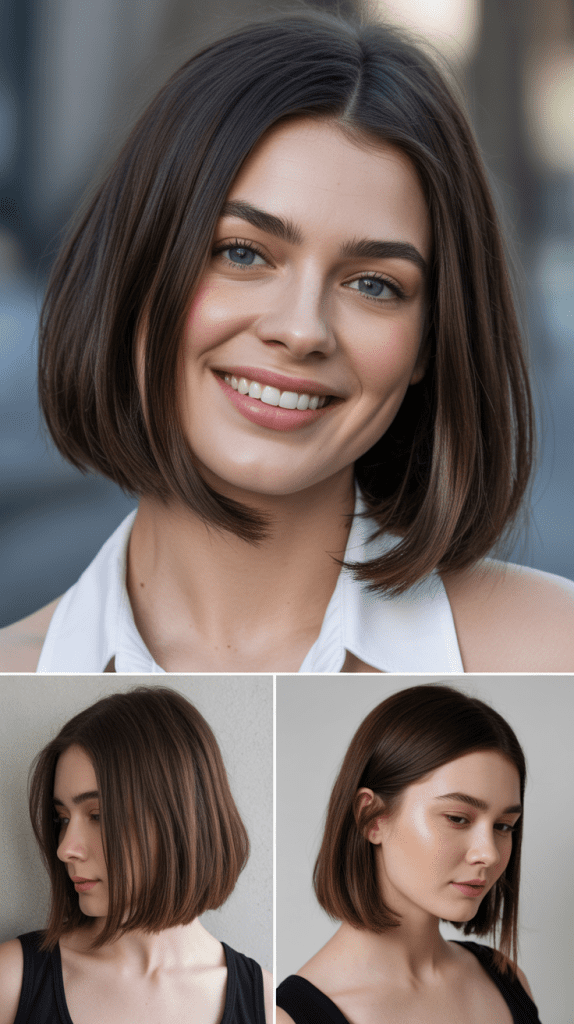
The blunt bob remains one of the most effective chin-length cuts for creating the appearance of thicker, fuller hair.
This timeless style features a straight-across cutting line that makes fine hair look denser by keeping all strands at the same length, eliminating any wispy ends that might reveal thinness.
- The blunt cut creates a solid, uniform perimeter that gives fine hair a fuller appearance by preventing the tapered ends that naturally occur with layered styles.
- This cut works particularly well when the length hits right at the jawline, as this placement creates a strong horizontal line that draws attention to your facial features rather than hair texture.
- Stylists recommend cutting blunt bobs when hair is dry to ensure precision and accuracy, as fine hair can appear longer when wet and shorter when dry.
- The maintenance level is relatively low, requiring trims every 6-8 weeks to maintain the clean line and prevent split ends from making hair look thinner.
- Styling involves blow-drying with a round brush to create slight inward movement at the ends, which adds polish without requiring excessive product that might weigh down fine hair.
2. Textured Choppy Bob
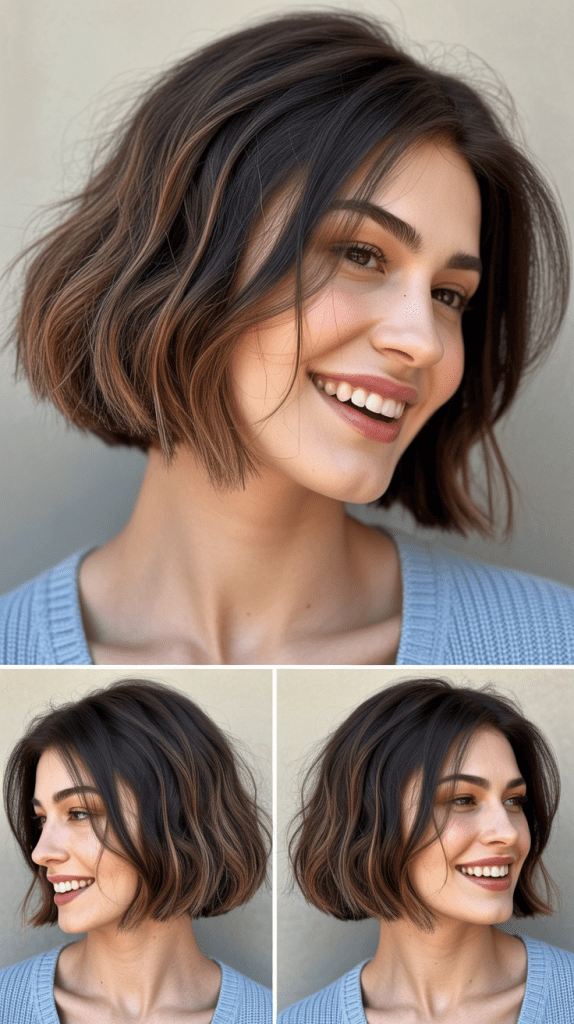
The textured choppy bob introduces strategic unevenness that creates movement and dimension in fine hair.
This modern approach to the chin-length cut uses point-cutting and razor techniques to break up the weight line while still maintaining enough density to prevent thinness.
- Point-cutting along the perimeter creates irregular ends that catch light differently, giving the illusion of more texture and volume than a straight line.
- The choppy technique removes small amounts of weight throughout the cut without creating distinct layers, which helps fine hair maintain its body.
- This style benefits from air-drying or rough-drying with fingers rather than smooth blow-drying, as the natural texture enhances the intentionally undone appearance.
- Texturizing products like sea salt spray or dry texture spray work exceptionally well with this cut, adding grip and separation without heaviness.
- The choppy bob suits various face shapes and can be customized with more texture around the face for those wanting to soften angular features.
3. Angled Bob with Shorter Back
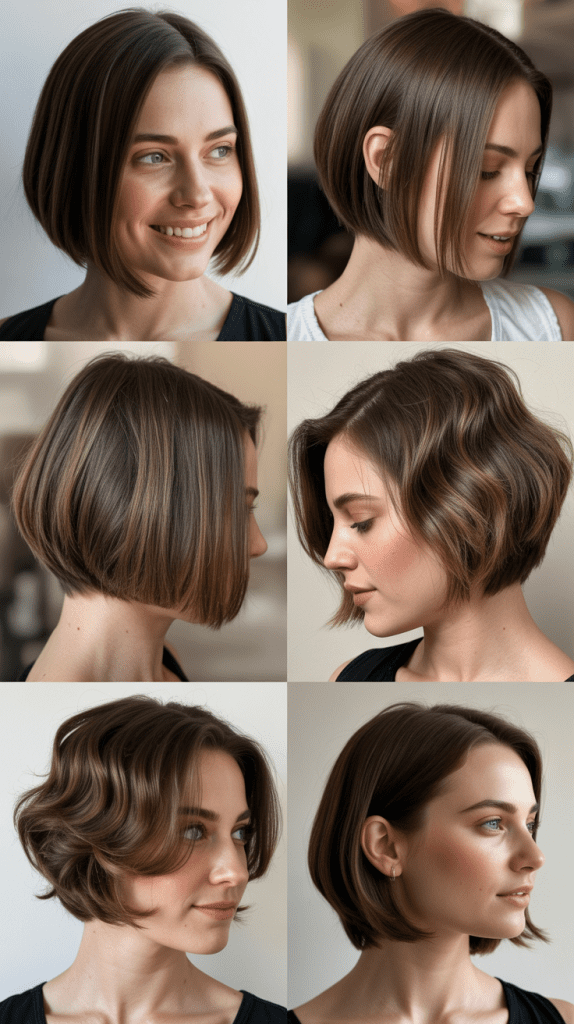
The angled bob features shorter hair at the nape that gradually lengthens toward the front, creating a dynamic diagonal line that adds sophistication and perceived volume.
This architectural cut naturally lifts fine hair away from the scalp due to its stacked back section.
- The shorter back section can be cut with graduated layers that stack upon each other, creating built-in volume that doesn’t require excessive styling.
- As the hair angles forward, the longer front pieces frame the face beautifully while the shorter back prevents the mushroom effect that sometimes plagues fine hair in one-length cuts.
- This cut requires more frequent maintenance at the back (every 4-6 weeks) to maintain the stacked shape, but the front can grow slightly longer without losing the style’s integrity.
- Blow-drying the back section forward and upward creates maximum lift, while the front pieces can be smoothed for contrast or tousled for a more casual appearance.
- The dramatic angle works particularly well for those with fine hair who want a statement cut that clearly shows intentional styling rather than hair that simply lacks volume.
4. Layered Chin-Length Cut with Face-Framing Pieces
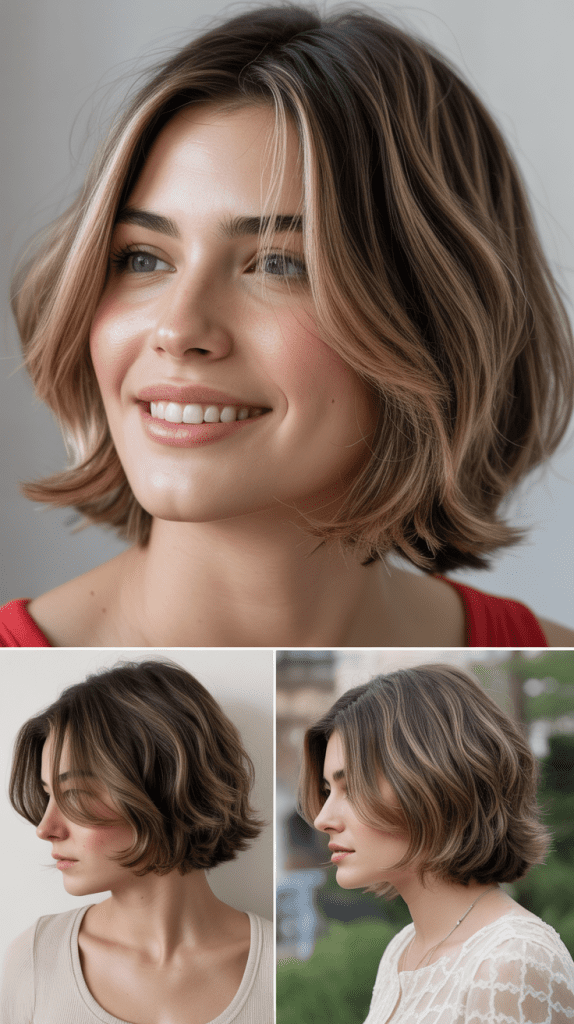
Strategic layering around the face combined with a chin-length base creates movement and dimension that makes fine hair appear fuller.
This approach focuses layers specifically around the facial area rather than throughout the entire cut, maintaining density at the ends.
- Face-framing layers typically start around the cheekbone or chin area and blend into the overall length, creating softness without sacrificing the fullness that fine hair needs.
- The key difference from traditional all-over layering is that the bulk of the hair remains one length, with layers concentrated only at the front sections.
- These front pieces can be styled away from the face for an open, voluminous look or swept forward for a more protective, face-softening effect.
- This cut pairs beautifully with side parts, as the face-framing pieces naturally fall at flattering angles that enhance facial structure.
- Fine hair benefits from this selective layering because it maintains maximum weight at the perimeter while still achieving movement where it matters most.
5. Chin-Length Shag
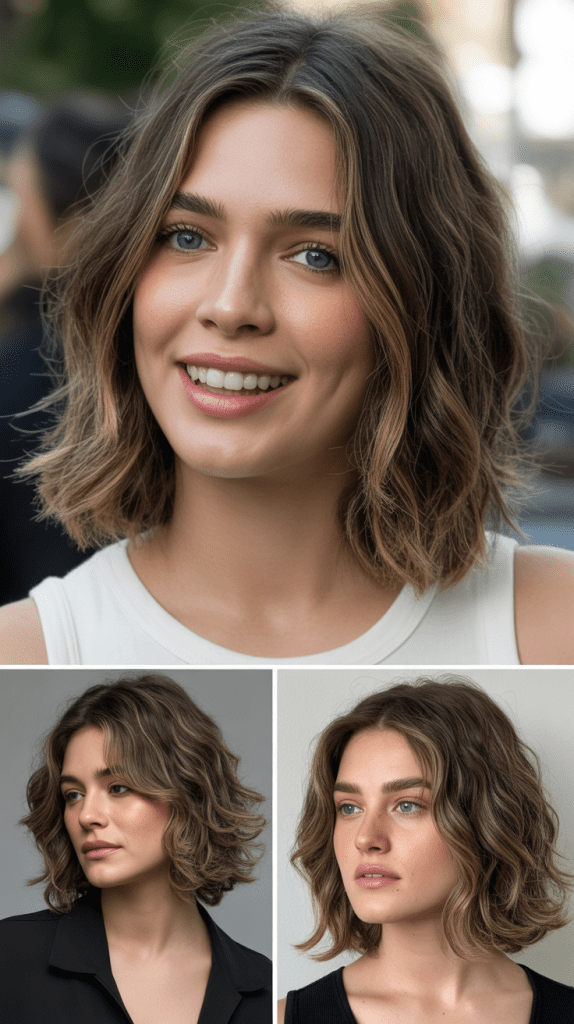
The modern shag adapted for chin length brings 1970s-inspired texture into a contemporary framework that works beautifully for fine hair.
This cut features multiple short layers throughout that create volume and movement while maintaining enough length to avoid looking too choppy.
- Unlike traditional shags that can remove too much density from fine hair, the chin-length version keeps layers longer and more subtle, typically ranging from 1-2 inches in variation.
- The shag technique includes cutting layers at various angles around the head, which creates a rounded, voluminous silhouette rather than a flat appearance.
- This style embraces texture and actually looks better with a slightly undone, lived-in appearance rather than perfectly smooth styling.
- Styling products that add grit and texture, such as texturizing sprays or lightweight mousses, help separate the layers and enhance the fullness this cut provides.
- The shag grows out beautifully for fine hair, maintaining an attractive shape for 8-10 weeks before requiring a trim, making it practical for busy lifestyles.
6. Blunt Bob with Micro Bangs
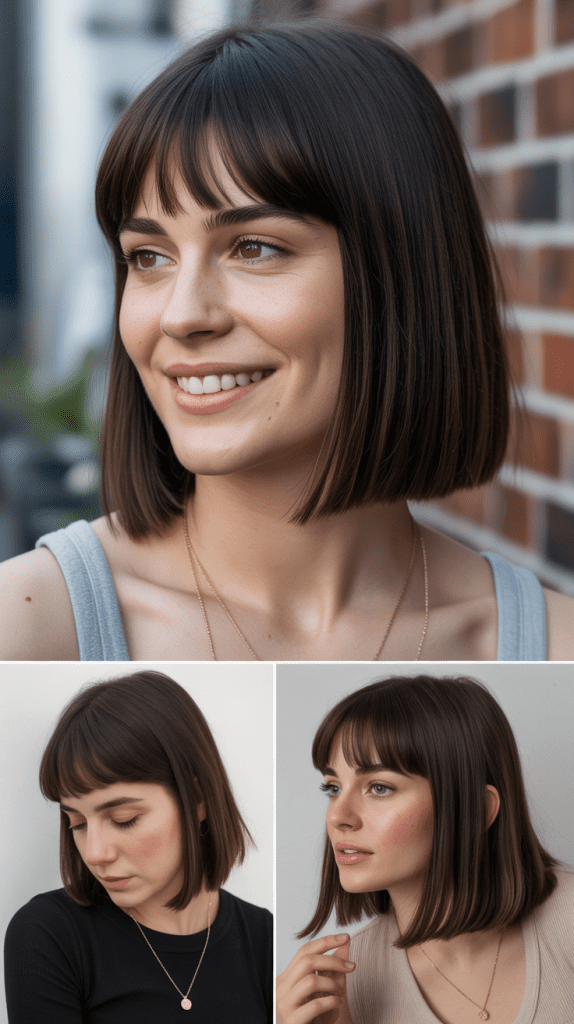
Combining a blunt chin-length bob with micro bangs creates a high-fashion look that draws attention upward and makes fine hair appear intentionally styled rather than simply thin.
The contrast between the short bangs and chin-length body creates visual interest.
- Micro bangs sit well above the eyebrows, typically at mid-forehead level, and should be cut blunt to match the strong line of the bob.
- This combination works particularly well for fine hair because both elements—the blunt perimeter and the short bangs—create solid lines that suggest density.
- The micro bang requires frequent trims (every 2-3 weeks) to maintain its precise length, making this a higher-maintenance option but one with significant style impact.
- Styling involves blow-drying the bangs forward and flat while the bob can be styled smooth or with slight texture depending on preference.
- This bold combination suits confident personalities and works especially well on heart-shaped and oval faces where the short bangs emphasize the eyes.
7. Asymmetrical Chin-Length Cut
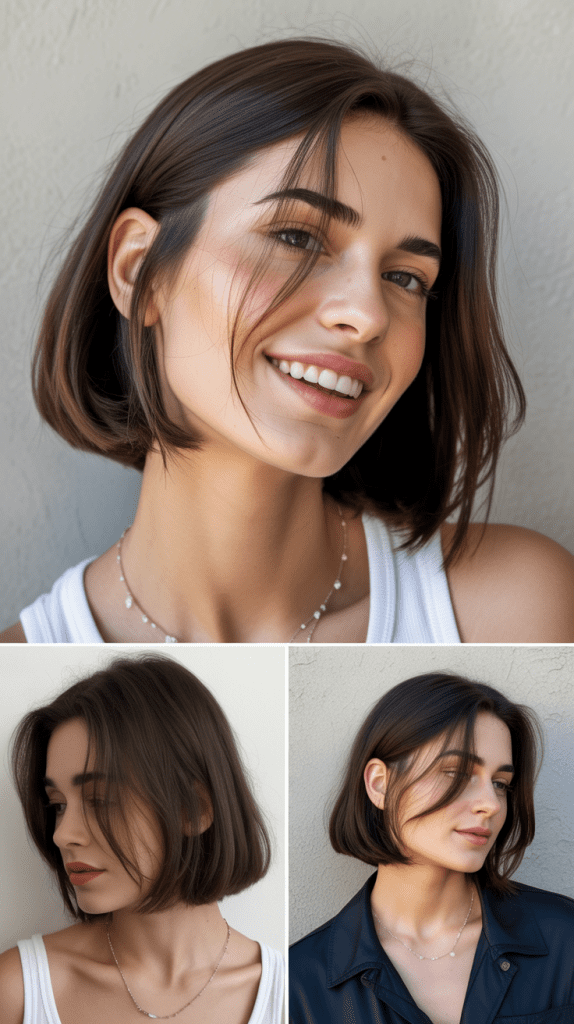
An asymmetrical cut features one side noticeably longer than the other, creating an edgy, modern look that adds visual volume through its unconventional shape.
This style works surprisingly well for fine hair by creating the illusion of fullness through geometric design.
- The length difference typically ranges from 1-3 inches between the two sides, with the longer side often tucked behind the ear to showcase the asymmetry.
- This cut draws the eye across the head horizontally, which can make fine hair appear more voluminous than symmetrical cuts that emphasize vertical lines.
- The shorter side can be cut with slight layering or texturing to add dimension, while the longer side maintains weight and density.
- Asymmetrical cuts require commitment as they need time to grow out if you decide to return to a symmetrical style, but they offer a fashion-forward option for fine-haired individuals seeking something distinctive.
- Styling is versatile—the longer side can be worn sleek and tucked, or both sides can be textured for a more casual, tousled appearance.
8. Chin-Length Bob with Curtain Bangs
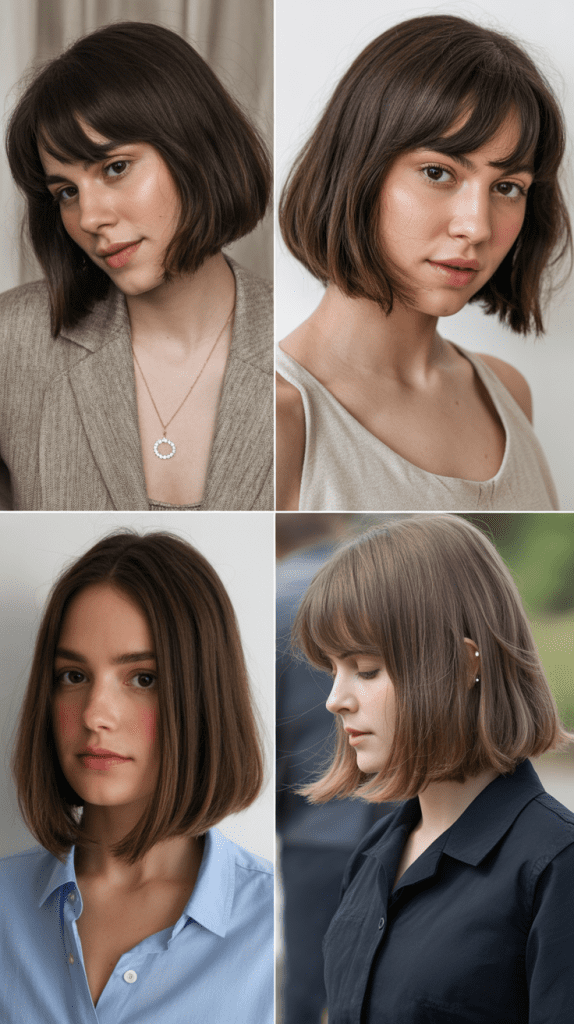
Curtain bangs paired with a chin-length bob create a soft, romantic look that adds fullness around the face while maintaining clean lines at the perimeter.
This combination has become immensely popular for its flattering, face-framing properties.
- Curtain bangs are cut shorter in the center (typically nose-length) and gradually lengthen toward the sides where they blend into the bob, creating a natural, face-framing arc.
- The parted-in-the-middle styling of curtain bangs adds width at the cheekbone area, which can balance narrower face shapes and draw attention to the eyes.
- For fine hair, curtain bangs should be cut with minimal layering to maintain fullness, using point-cutting techniques only at the very ends for softness.
- This style works beautifully when blow-dried with a round brush, directing the bangs away from the face on both sides to create the signature “curtain” effect.
- The maintenance is moderate, requiring bang trims every 3-4 weeks while the bob portion can go 6-8 weeks between cuts.
9. Inverted Bob (Stacked Back)
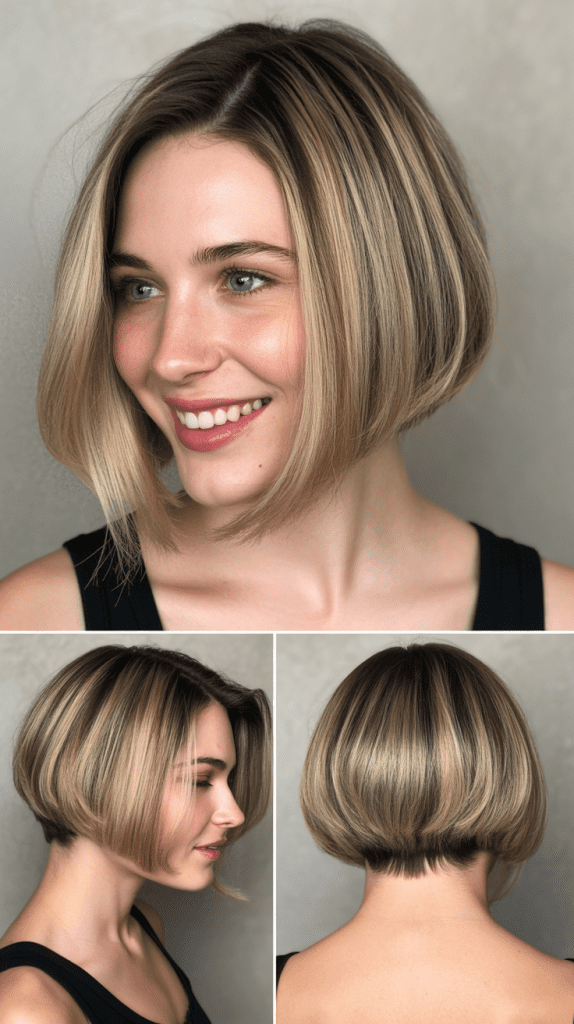
The inverted bob features a dramatically shorter, stacked back that creates significant volume at the crown while maintaining chin-length pieces at the front.
This architectural cut is specifically designed to add height and fullness to fine hair.
- The back section is cut in graduated layers that stack upon each other, creating a rounded, voluminous shape that lifts away from the scalp naturally.
- This cut requires precision and should be executed by an experienced stylist who understands how to create the proper weight distribution for fine hair.
- The stacked back needs frequent maintenance (every 4-5 weeks) to keep its shape and prevent the flatness that occurs as it grows out.
- Blow-drying with the head flipped upside down, then smoothing the front sections, creates the ideal balance of volume at the back and sleekness at the front.
- The inverted bob works exceptionally well for fine, straight hair that needs architectural shaping to create body and movement.
10. Chin-Length Cut with Razored Ends
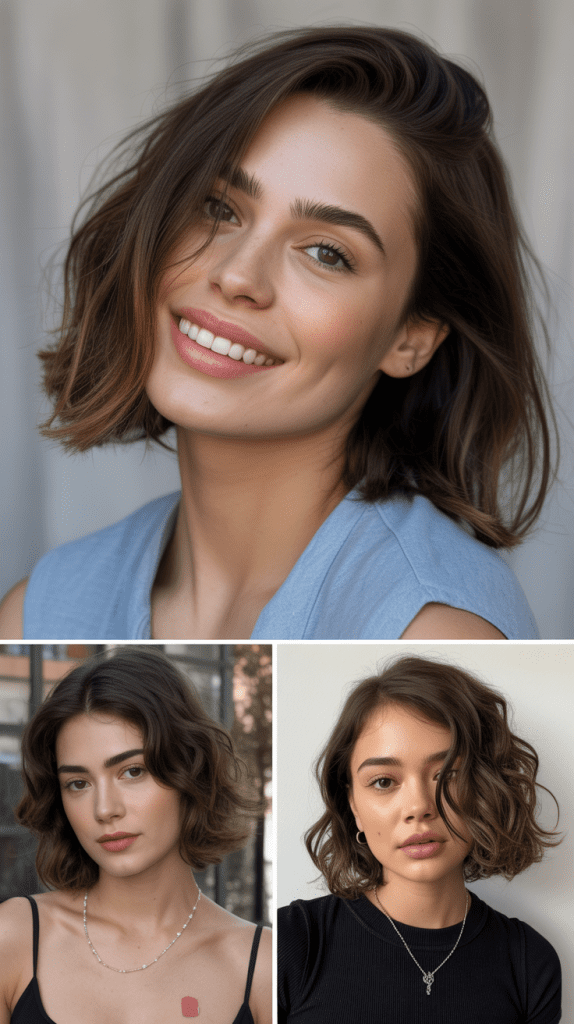
Using a razor instead of shears to finish the ends creates ultra-fine texture that adds movement and the appearance of fullness to fine hair.
The razor technique softens the perimeter without creating a blunt line that might emphasize thinness.
- Razor-cutting removes small amounts of hair at varied lengths, creating a feathered effect that catches light and appears more voluminous than blunt-cut ends.
- This technique should be used judiciously on fine hair—applied only to the bottom inch or two of hair to avoid removing too much density.
- The razored texture allows for versatile styling, looking equally good when worn straight and sleek or enhanced with waves and texture.
- Products with light hold like texturizing creams or sprays work best with razored ends, as they enhance the texture without weighing down the delicate ends.
- This cut requires trims every 6-8 weeks as razored ends can be more prone to splitting, but the technique creates a softer, more modern appearance than scissors alone.
11. Blunt Bob with Subtle Internal Layers
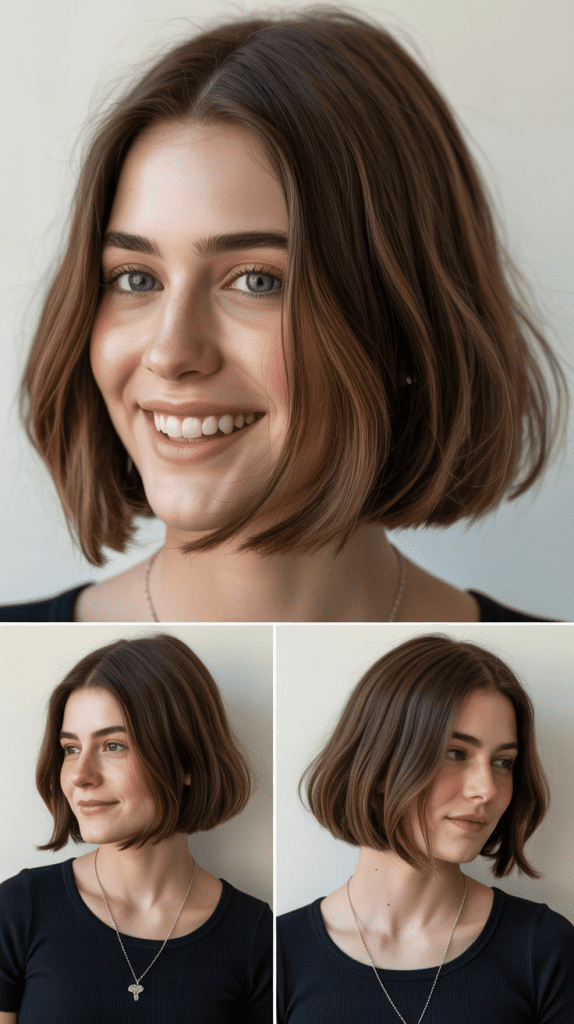
This hybrid approach combines the density-creating properties of a blunt perimeter with hidden internal layers that reduce bulk without sacrificing fullness.
The technique is ideal for fine hair that needs both weight at the ends and movement throughout.
- Internal layers are cut underneath the exterior layer of hair, creating space and movement while the outer layer maintains a blunt appearance.
- This technique prevents the “triangle effect” that can occur when fine hair is cut all one length, as the internal layers remove weight that might pull the hair down flat.
- The outer blunt layer acts as a protective barrier that conceals the layering, making hair appear denser than it actually is.
- Styling is simplified because the internal structure does much of the work, requiring only basic blow-drying or air-drying for attractive results.
- This cut grows out gracefully for fine hair, maintaining an appealing shape for 8-10 weeks before the next appointment.
12. Chin-Length Wavy Bob
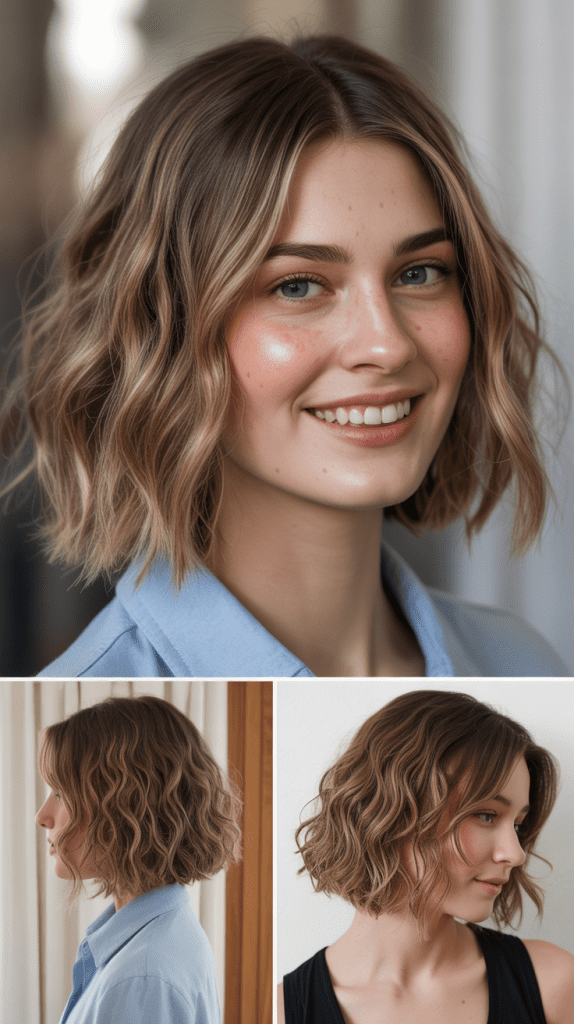
Enhancing or creating waves in chin-length fine hair dramatically increases perceived volume and texture.
This style works with natural wave patterns or can be created with styling tools for those with straight hair.
- Waves add dimension through their three-dimensional structure, making hair appear two to three times fuller than when worn straight.
- For fine hair, loose, relaxed waves work better than tight curls, as they create volume without requiring excessive product or heat styling that might damage delicate strands.
- The ideal wave pattern for chin-length fine hair features waves that begin at ear level and continue through the ends, avoiding tightness at the root which can emphasize thinness.
- Sea salt spray or texturizing spray applied to damp hair and scrunched while drying creates natural-looking waves that hold throughout the day without stiffness.
- This style can be achieved with a curling wand, flat iron, or even by braiding damp hair and allowing it to dry before releasing the braids for heat-free waves.
13. Choppy Layered Bob with Piece-y Texture
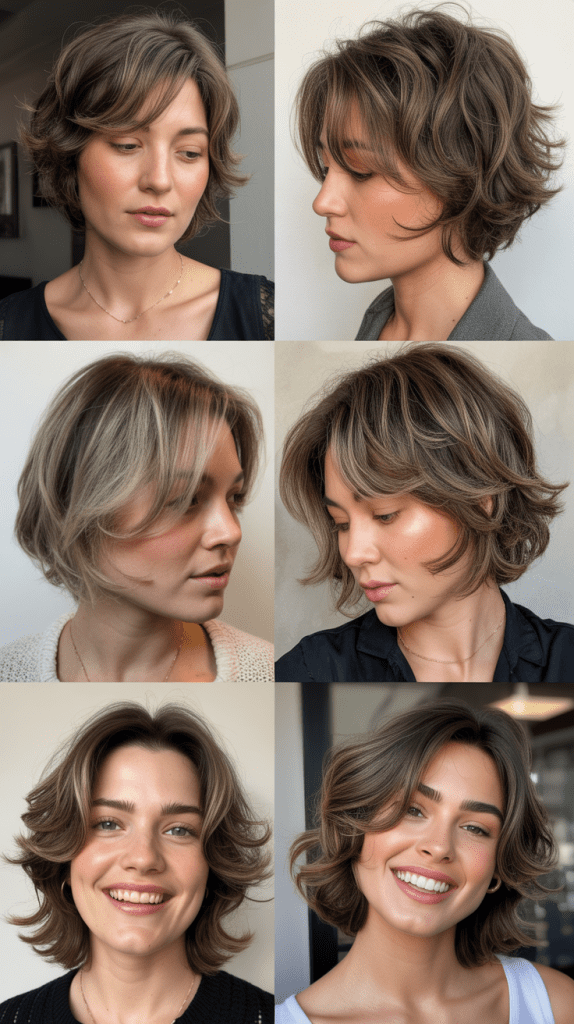
This modern take on the layered bob features intentionally separated pieces that create dimension and the illusion of thickness.
The choppy technique distributes weight throughout the cut while maintaining enough density for fine hair.
- Piece-y texture is created through a combination of point-cutting, slide-cutting, and strategic product application that separates strands into visible sections.
- The layers in this cut are irregular and varied in length, preventing the uniformity that can make fine hair look flat and one-dimensional.
- Styling involves applying a small amount of pomade, wax, or texture paste to dry hair and separating pieces with fingers to create definition.
- This cut looks best with a slightly undone, lived-in appearance rather than perfectly polished styling, making it ideal for low-maintenance routines.
- The choppy layers grow out attractively, maintaining character and style even as they lengthen between appointments.
14. Chin-Length Bob with Deep Side Part
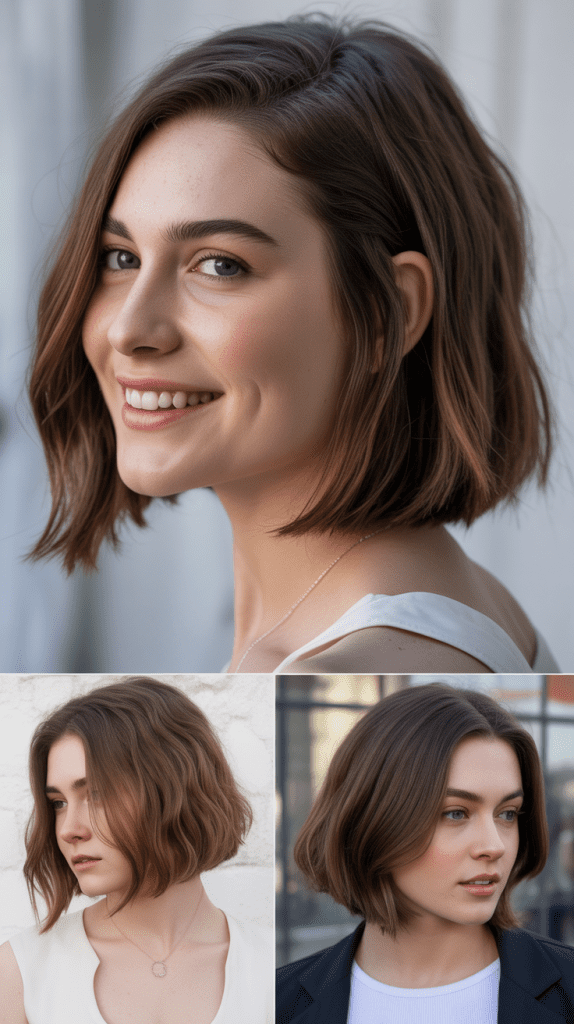
Simply changing the part from center to a deep side position can dramatically increase the perceived volume of fine hair in a chin-length cut.
This styling technique costs nothing but creates significant visual impact.
- A deep side part typically sits 2-3 inches from the center, creating more hair volume on one side that can be styled over for fullness.
- The weight of hair falling from a deep part creates natural lift at the root on the heavier side, while the lighter side gains volume from being swept across.
- This technique works with any chin-length cut but is particularly effective with blunt or slightly layered bobs.
- Blow-drying with the part already established and directing airflow against the natural growth pattern maximizes volume at the root.
- Alternating the side of the deep part every few days can prevent the hair from becoming trained in one direction and maintains maximum lift.
15. Graduated Bob with Stacked Layers
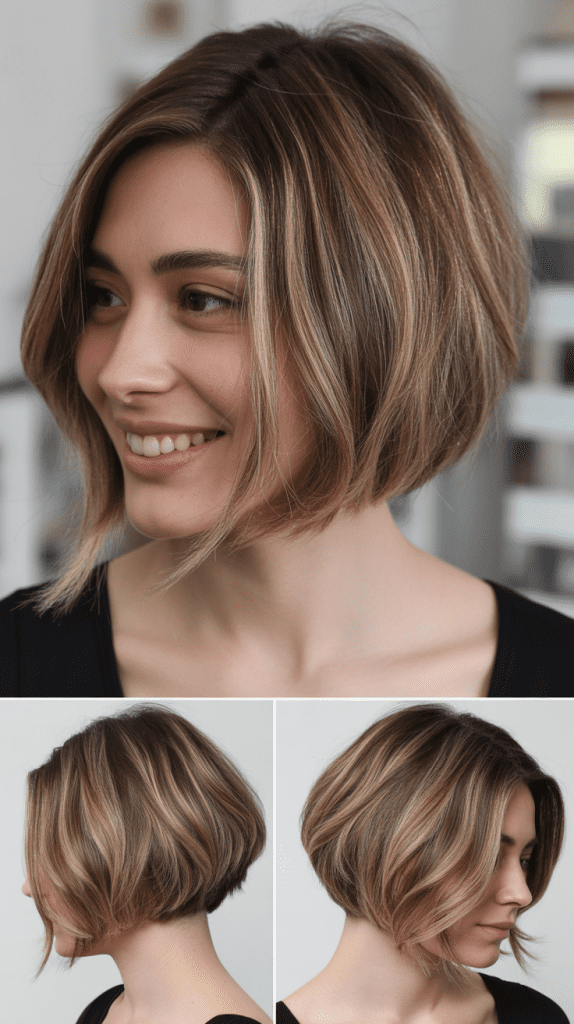
The graduated bob features progressively longer layers from back to front with significant stacking at the crown area.
This technical cut creates architecture and volume specifically designed for fine hair that lacks natural body.
- Graduation refers to the angle at which hair is cut, with each layer slightly longer than the one above it, creating a wedge-shaped silhouette.
- The stacked back section is cut at higher angles, which causes the hair to naturally lift and curve inward, creating roundness and fullness.
- This cut requires an experienced stylist who can properly assess head shape and hair density to determine the correct graduation angle.
- Maintenance is important as the shape can become distorted as it grows, typically requiring appointments every 5-6 weeks.
- Blow-drying techniques include directing airflow upward at the back while using a round brush to smooth the sides and front sections.
16. Chin-Length Bob with Babylights
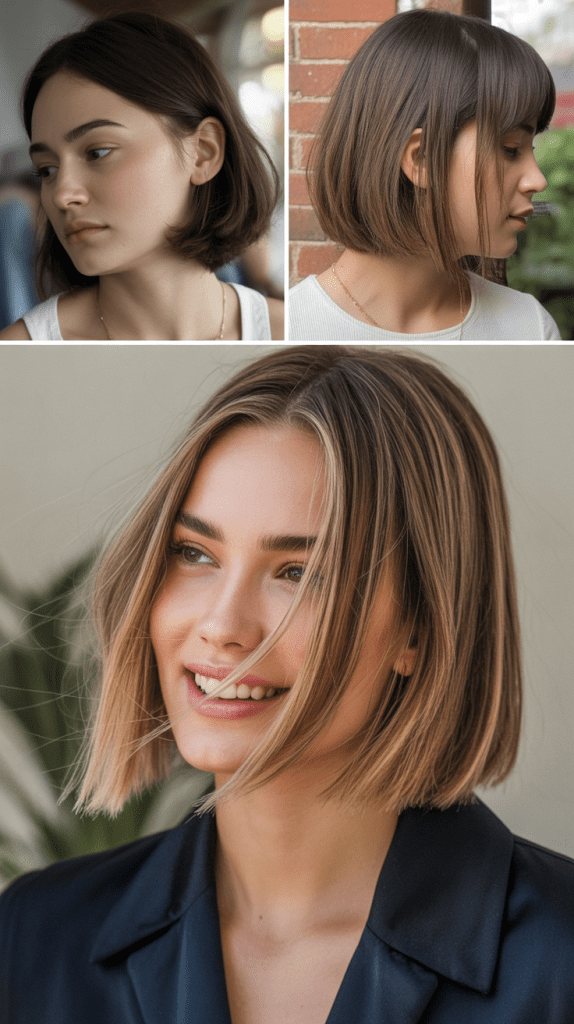
Babylights are extremely fine, subtle highlights that add dimension and the illusion of thickness to fine hair.
When combined with a chin-length cut, they create depth that makes hair appear fuller and more dynamic.
- These ultra-fine highlights mimic the natural sun-lightening that occurred in childhood, creating a soft, multidimensional effect rather than obvious streaks.
- The varying shades of color create shadows and highlights that trick the eye into perceiving more texture and volume than exists.
- For fine hair, babylights should be placed strategically throughout the cut, with concentration around the face and crown where dimension is most noticeable.
- The subtle nature of babylights means they grow out beautifully without obvious demarcation lines, requiring touch-ups only every 10-12 weeks.
- This coloring technique causes minimal damage to fine hair as it involves only small sections and can be done with lower-volume developers.
17. Chin-Length Cut with Feathered Layers
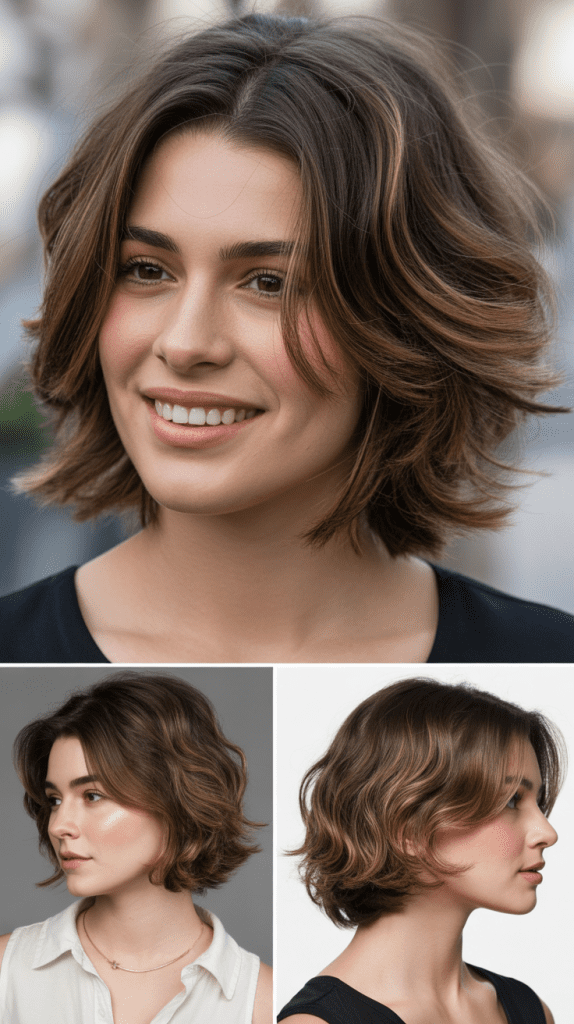
Feathered layers create soft, graduated texture that adds movement and fullness without the harsh lines of traditional layering.
This vintage-inspired technique has been modernized for contemporary chin-length cuts on fine hair.
- Feathering involves cutting hair at angles while simultaneously using a sliding technique that creates tapered, wispy ends that blend seamlessly.
- The layers are typically longer and more subtle than in traditional layered cuts, maintaining density while still creating movement.
- This technique works particularly well around the face where soft, feathered pieces can frame features without looking choppy or overly textured.
- Styling feathered layers involves blow-drying with a round brush and directing the ends slightly outward or inward depending on the desired effect.
- The soft, blended nature of feathering means the cut grows out gracefully, maintaining an attractive shape for 8-10 weeks.
18. Blunt Bob with Subtle Balayage
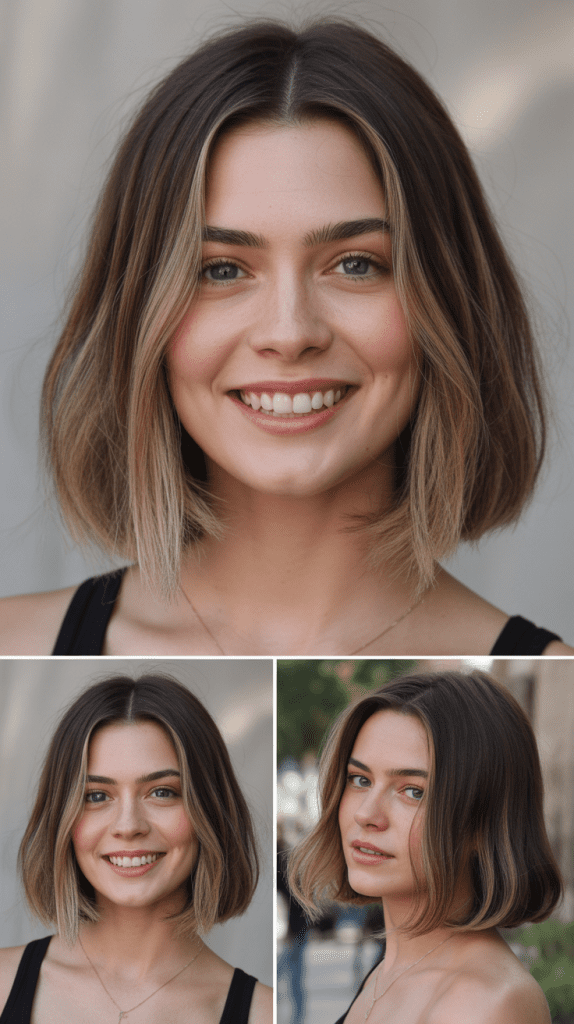
Balayage adds hand-painted color variation that creates depth and dimension in chin-length fine hair.
The strategic placement of lighter tones gives the illusion of fuller, more textured hair without harsh lines.
- Balayage involves freehand painting lighter color onto sections of hair, typically concentrating on mid-lengths to ends and face-framing pieces.
- The subtle color variation creates shadows and highlights that make hair appear more voluminous and dimensional than solid color.
- For fine hair, a subtle balayage with only 1-2 levels of lift from the base color creates dimension without causing excessive damage.
- The hand-painted technique means no harsh lines of demarcation, allowing 12-16 weeks between color appointments as it grows out beautifully.
- Combining balayage with a blunt bob creates contrast between the clean cutting line and the soft color variation, resulting in a modern, dimensional look.
19. Chin-Length Bob with Wispy Bangs
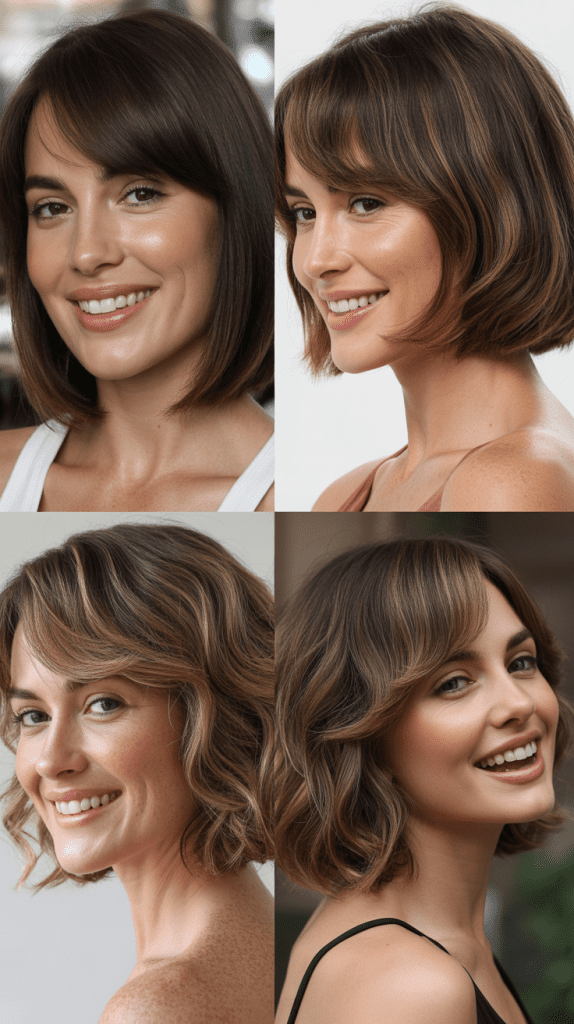
Wispy bangs paired with a chin-length bob create a soft, feminine look that adds interest at the forehead without overwhelming fine hair.
The light, airy quality of wispy bangs complements the delicate nature of fine hair.
- Wispy bangs are cut with point-cutting or razor techniques that create irregular, feathered ends rather than a solid, blunt line.
- The thinned-out quality of wispy bangs prevents them from becoming too heavy or requiring excessive styling that might weigh down fine hair.
- These bangs typically fall just below the eyebrows and can be styled with a small round brush or simply air-dried for a natural appearance.
- The maintenance is moderate, requiring trims every 3-4 weeks to maintain the wispy texture and prevent them from becoming too long or heavy.
- Wispy bangs work beautifully for oval, heart, and long face shapes, adding width at the forehead area.
20. Textured Lob (Long Bob)
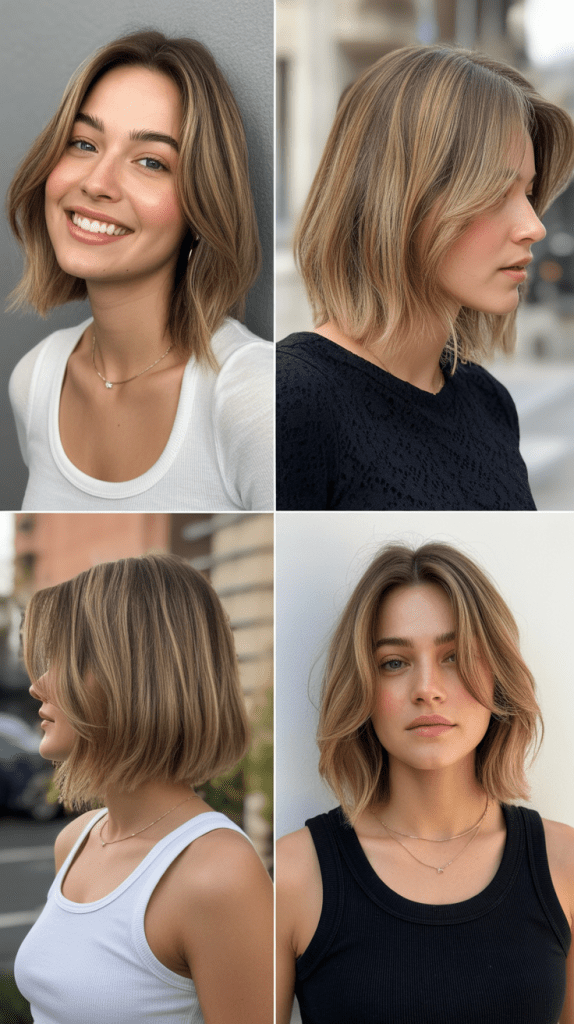
The textured lob sits right at the collarbone, technically slightly longer than chin-length but often included in this category.
The added texture compensates for the extra length, preventing the weight from pulling fine hair flat.
- Texture is introduced through point-cutting, razor work, or slide-cutting techniques that create irregular ends and internal movement.
- The slightly longer length offers more versatility for styling, including the ability to pull hair into a small ponytail or half-up style.
- For fine hair, the lob should include subtle layers or internal texturing to prevent the flatness that can occur with all-one-length longer cuts.
- This length is particularly flattering as it works with virtually all face shapes and can be styled sleek, wavy, or tousled depending on the occasion.
- Maintenance is less frequent than shorter chin-length cuts, typically requiring trims only every 8-10 weeks while still maintaining an attractive shape.
21. Chin-Length Bob with Root Tease
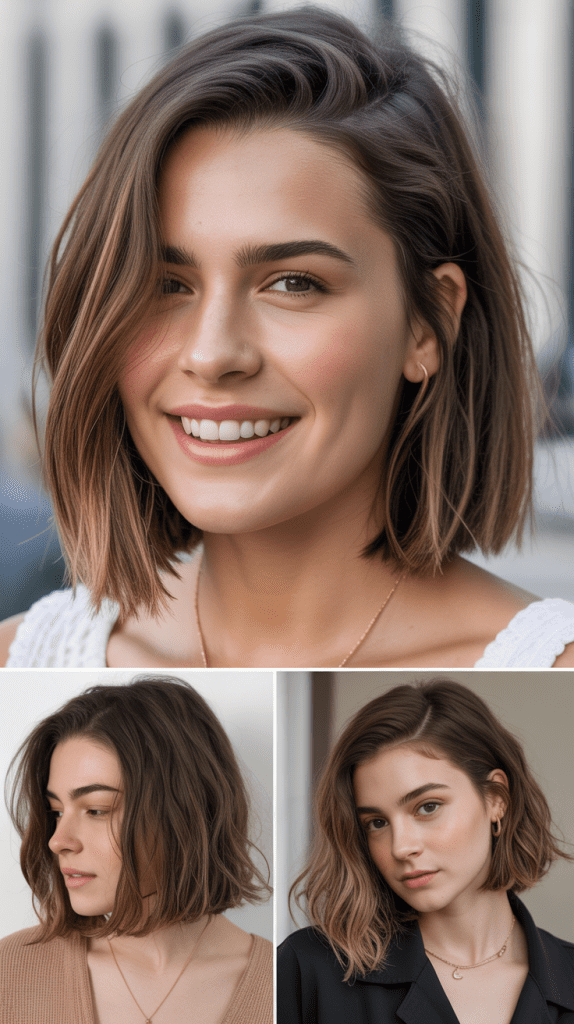
Root teasing is a styling technique rather than a cutting technique, but when incorporated into your styling routine with a chin-length bob, it creates impressive volume in fine hair.
This method lifts hair at the scalp for instant fullness.
- Root teasing involves backcombing small sections at the root area using a fine-tooth comb to create cushion and lift underneath the smooth outer layer.
- The technique is most effective when applied at the crown and throughout the top section where volume is most visibly needed.
- After teasing, smooth the outer layer gently over the teased sections to conceal the backcombing while maintaining the lift it provides.
- Finishing spray applied to the roots after teasing helps set the volume and prevents it from falling flat throughout the day.
- This method can be used daily without damage to fine hair as long as the teasing is gently brushed out each evening and not left in overnight.
22. Chin-Length Shag with Curtain Bangs
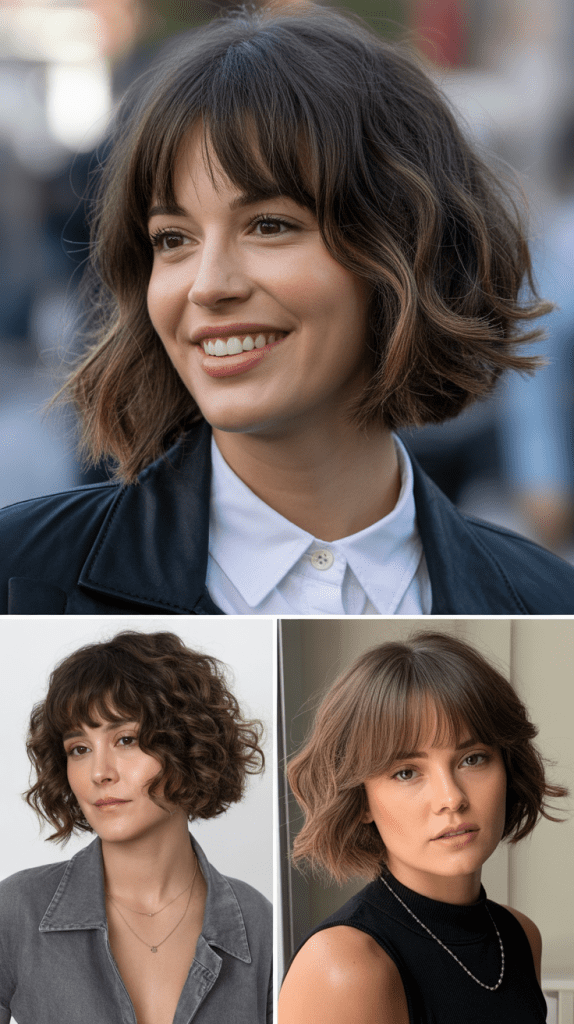
Combining the layered texture of a shag with the face-framing softness of curtain bangs creates a bohemian-inspired look that adds significant volume to fine hair.
This combination provides fullness through both cutting technique and strategic styling.
- The shag layers create volume throughout the cut while curtain bangs add width and dimension specifically at the face.
- The center-parted curtain bangs blend seamlessly into the shaggy layers, creating a cohesive style that appears intentionally textured.
- This combination works particularly well for fine hair as both elements contribute to fullness—the shag through layering and the curtain bangs through face-framing dimension.
- Styling involves enhancing natural texture with products and allowing hair to air-dry or using a diffuser for added volume without excessive smoothing.
- The casual, lived-in nature of this style means imperfection is actually desirable, making it perfect for those who prefer low-maintenance routines.
23. Blunt Bob with Underlights
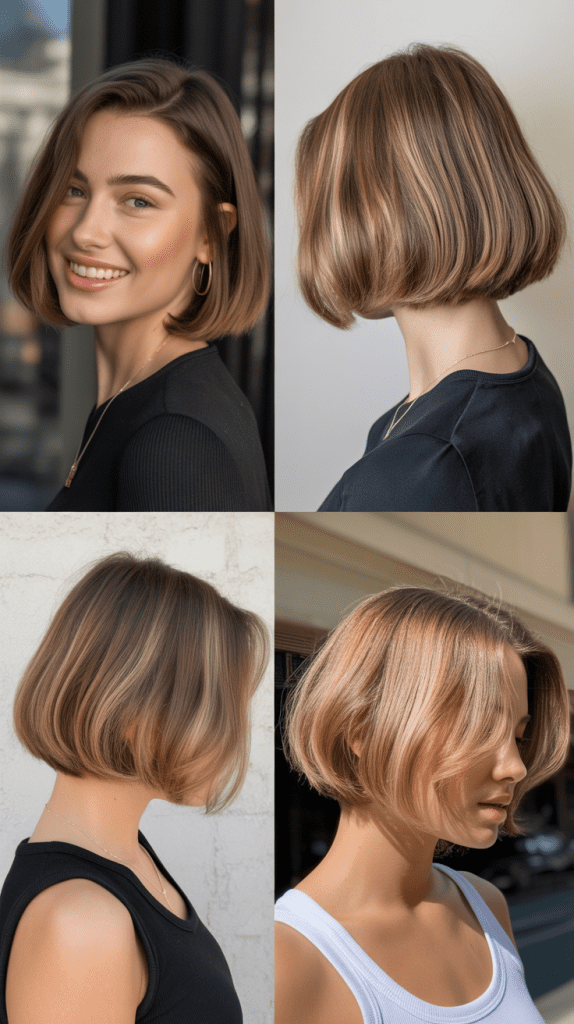
Underlights involve applying darker color to the underneath sections of hair while keeping the top layer lighter.
This reverse highlighting technique creates depth that makes fine hair appear fuller when combined with a chin-length blunt bob.
- The darker underlayer creates a shadow effect that gives the illusion of thicker hair by increasing visual depth and dimension.
- When hair moves, the glimpses of darker color underneath create interest and the appearance of more hair volume and texture.
- This technique is particularly effective for fine hair as it requires no lightening of the top layer, minimizing damage to delicate strands.
- Underlights grow out beautifully as roots come in naturally at the underneath sections, requiring touch-ups only every 10-12 weeks.
- The contrast between lighter top sections and darker underneath creates a dimensional effect that makes the overall cut appear more voluminous.
24. Asymmetrical Bob with Shaved Side
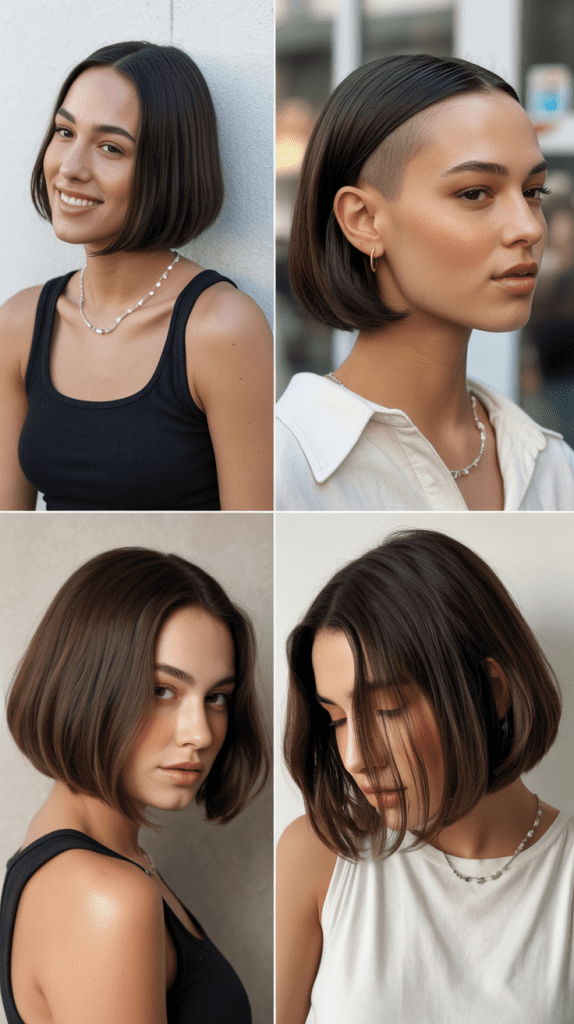
For those seeking a bold, edgy look, an asymmetrical bob with one side partially or fully shaved creates dramatic visual interest that draws attention away from fine hair texture.
This avant-garde style makes a strong fashion statement.
- The shaved or closely buzzed side eliminates hair entirely from one section, creating contrast with the chin-length or longer hair on the opposite side.
- This extreme asymmetry creates visual volume through contrast rather than actual hair density, making it an unconventional solution for fine hair.
- The long side can be styled with texture, waves, or kept sleek depending on personal preference and the desired level of drama.
- Maintenance requires regular buzzing or shaving of the short side (every 2-3 weeks) while the long side can be trimmed less frequently.
- This bold style works best for confident individuals in creative fields or those who enjoy making fashion-forward statements with their appearance.
25. Chin-Length Bob with Invisible Layers
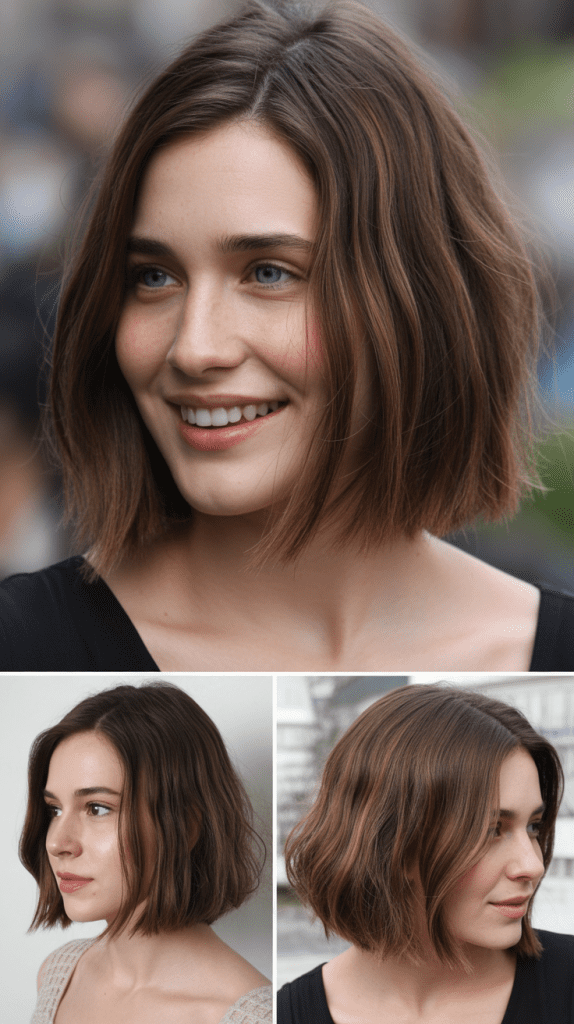
Invisible layers are cut within the interior of the hair using vertical sectioning, creating movement and reducing bulk without visible layering on the exterior.
This technique is perfect for fine hair that needs body without obvious cutting lines.
- The layers are created by elevating sections of hair and cutting at angles that blend seamlessly, making them undetectable when hair is styled.
- This approach maintains maximum density at the perimeter where it’s most visible while creating space and movement in the interior.
- Invisible layering prevents the “see-through” quality that can occur when fine hair is traditionally layered throughout.
- The technique creates natural movement that requires minimal styling—hair simply falls with more body and dimension.
- This cut maintains an attractive shape for 8-10 weeks, growing out gracefully as the hidden layers blend naturally with growth.
26. Rounded Bob with Curved Perimeter
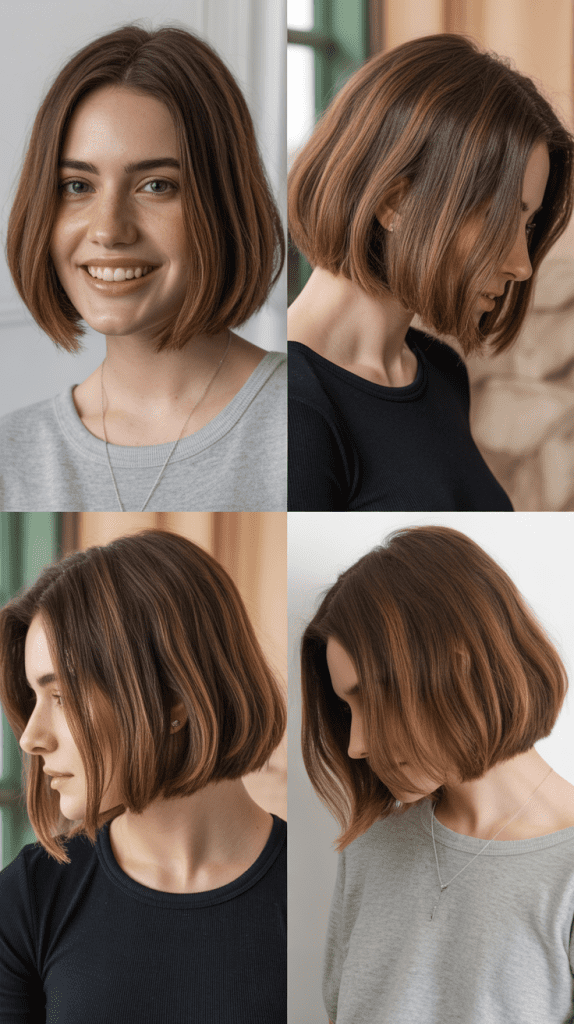
The rounded bob features a curved rather than straight cutting line, creating a soft, feminine silhouette that adds visual volume to fine hair.
The curve naturally creates fullness around the face and prevents harsh, straight lines.
- The curved perimeter is cut slightly shorter at the back and gradually lengthens toward the front in a gentle arc rather than a sharp angle.
- This soft shape creates the illusion of fullness by curving inward, which makes hair appear to wrap around the head with more body.
- The rounded bob works particularly well for round and square face shapes as the curved line softens angular features.
- Styling involves blow-drying with a round brush and directing the ends to follow the natural curve of the cut, typically curving slightly inward.
- This style maintains its attractive shape well between cuts, typically requiring appointments every 6-8 weeks.
27. Chin-Length Bob with Piecey Fringe
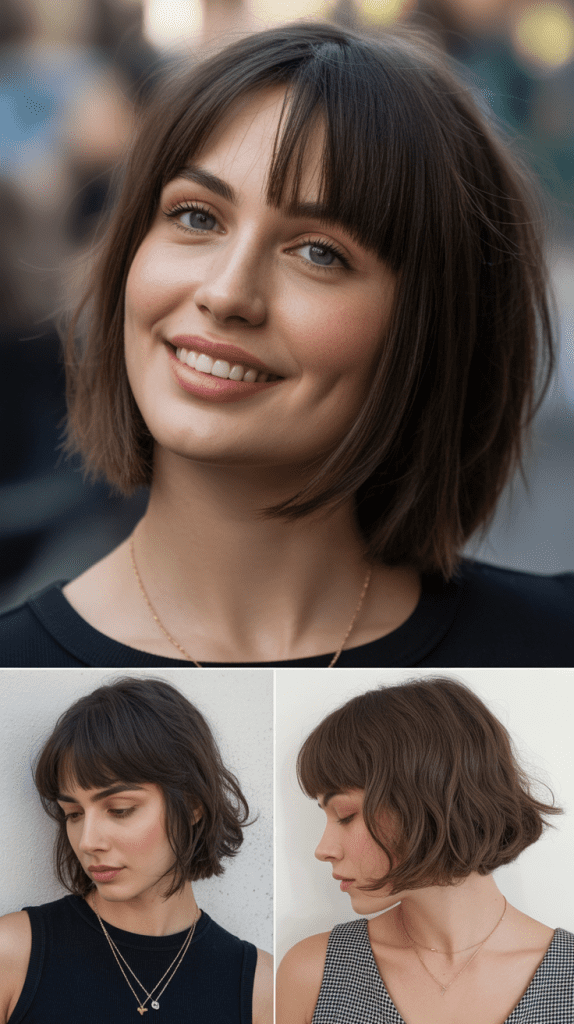
A piecey fringe features separated, textured bangs rather than a solid, heavy fringe.
This modern approach to bangs adds interest at the forehead while keeping weight minimal—ideal for fine hair.
- Piecey bangs are created through aggressive point-cutting or razor work that separates the fringe into distinct sections rather than a uniform line.
- The separated nature means less hair is required for the fringe, preventing it from removing too much density from the rest of the fine-haired bob.
- Styling involves applying a small amount of texture product and separating the fringe pieces with fingers for defined, piecey texture.
- This style of fringe is lower maintenance than traditional bangs as the separated pieces can grow slightly longer without looking unkempt.
- The piecey fringe adds an edgy, modern element to the classic chin-length bob, creating visual interest without requiring excessive styling.
28. Chin-Length Cut with Beveled Ends
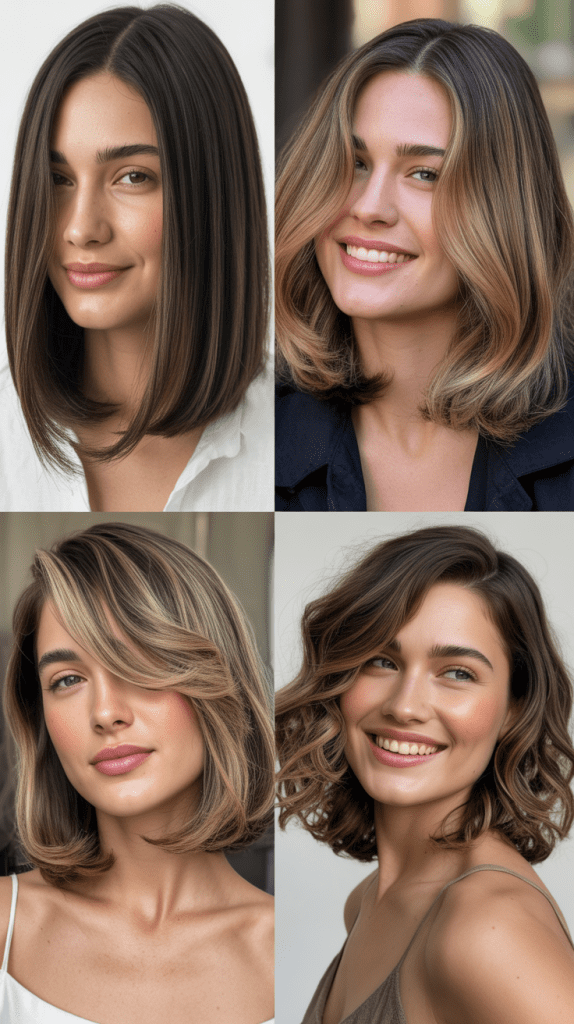
Beveled ends are cut at an angle underneath, creating ends that naturally curve inward or outward.
This subtle shaping technique adds polish and fullness to fine hair without obvious layering.
- The beveling technique involves holding scissors at an angle beneath the perimeter and cutting upward, creating angled ends rather than blunt ones.
- When beveled inward, the ends naturally curve toward the face, creating a polished, classic bob silhouette with built-in shaping.
- When beveled outward, the ends flip slightly away from the face, creating a retro-inspired appearance with playful movement.
- This technique works exceptionally well for fine, straight hair that needs shaping and direction rather than just a blunt chop.
- Beveled ends maintain their shape well and actually improve as the cut grows slightly longer, making this a lower-maintenance option.
29. Messy Textured Bob
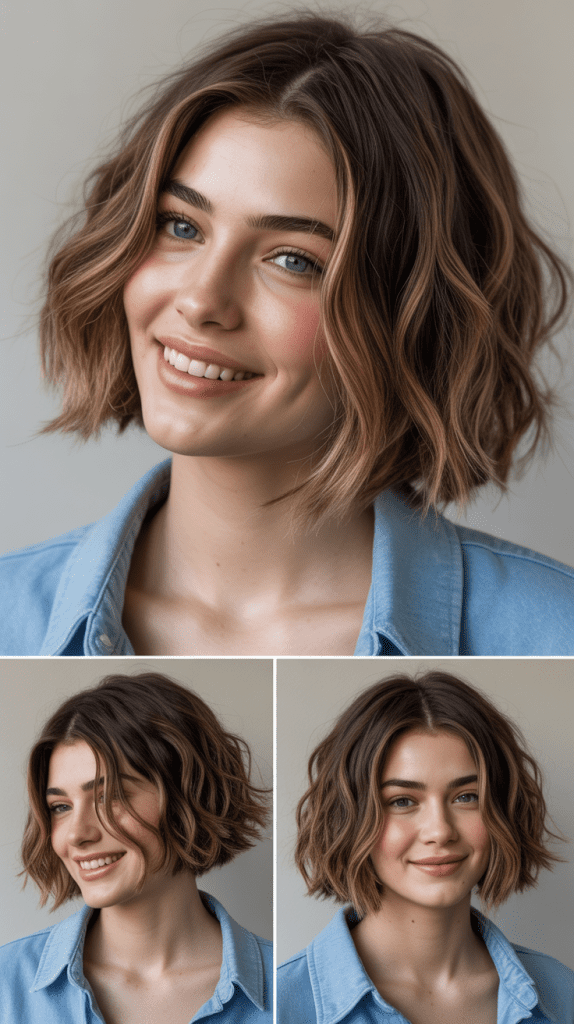
The messy textured bob embraces an intentionally undone aesthetic that works beautifully for fine hair.
The tousled, lived-in appearance creates the illusion of fullness through calculated disorder.
- This style is achieved through combination cutting techniques including point-cutting, slide-cutting, and internal texturing that creates varied lengths throughout.
- The “messy” appearance is actually carefully constructed through strategic cutting and styling rather than truly random chaos.
- Styling involves scrunching texture product into damp hair and either air-drying or rough-drying with fingers rather than using brushes or straighteners.
- The intentionally imperfect nature means this style is extremely low-maintenance and actually looks better with less effort.
- Fine hair benefits from the messy aesthetic because texture and separation naturally make hair appear fuller than smooth, sleek styling.
30. Chin-Length Bob with Hidden Undercut
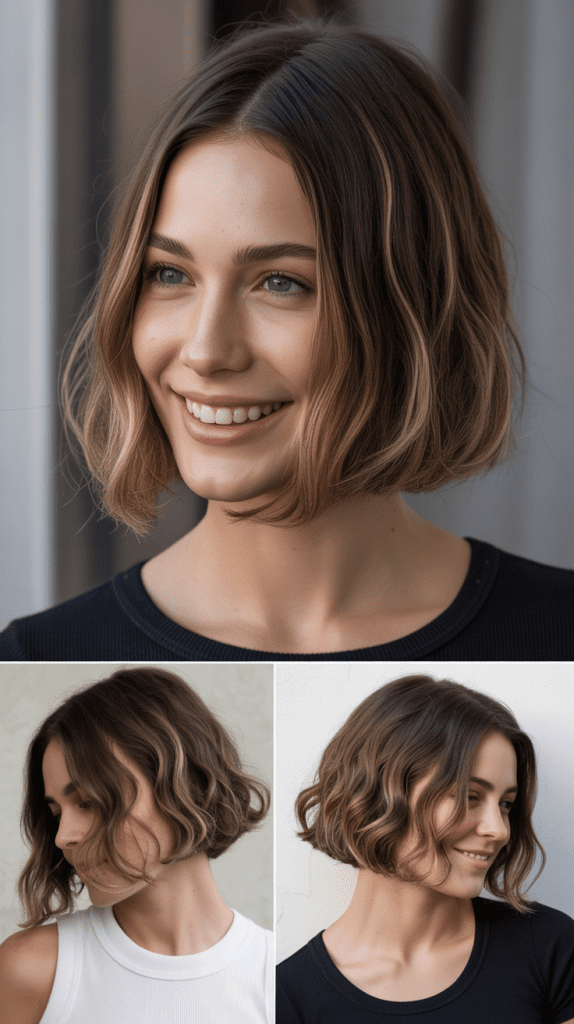
A hidden undercut involves shaving or closely cutting the hair at the nape underneath the visible hair layer.
This technique removes weight and bulk while the top layer maintains full appearance—perfect for fine hair that becomes heavy at the neck.
- The undercut is typically done on the bottom 1-2 inches at the nape, completely hidden when hair is down but visible when pulled up.
- This removes significant weight from fine hair that might otherwise pull down and flatten the overall style.
- The reduced weight at the bottom allows the top layer to appear fuller and bouncier as it’s not weighed down by underlayers.
- Maintenance requires buzzing or trimming the undercut section every 4-6 weeks to prevent it from growing long enough to show through.
- This technique offers versatility as you can occasionally style hair up to reveal the undercut for a completely different look.
31. Soft A-Line Bob
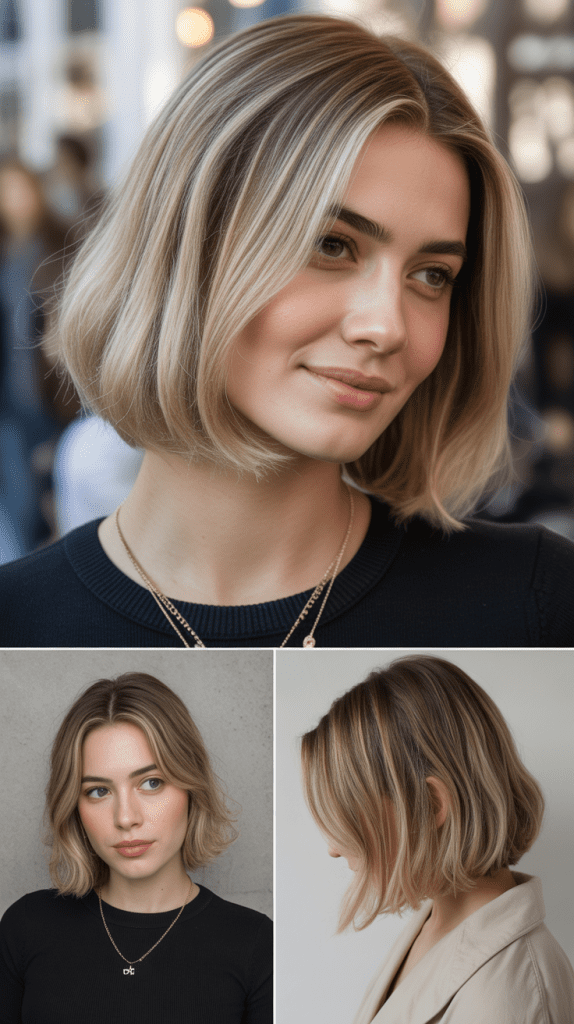
The soft A-line bob features a gentle angle that’s less dramatic than traditional angled bobs.
This subtle approach creates sophistication and fullness while maintaining a natural appearance for fine hair.
- The angle is typically only 1-2 inches difference between back and front rather than the dramatic graduation of steep A-line cuts.
- This gentler approach prevents the extreme maintenance requirements of stacked cuts while still creating architectural interest.
- The soft angle creates natural movement as hair falls from shorter at the back to longer at the front, adding dimension without obvious shaping.
- Styling is simple as the cut does most of the work, requiring only basic blow-drying with a round brush to enhance the natural angle.
- This style grows out attractively and maintains an appealing shape for 7-9 weeks, making it practical for moderate maintenance schedules.
32. Chin-Length Bob with Face-Framing Money Pieces
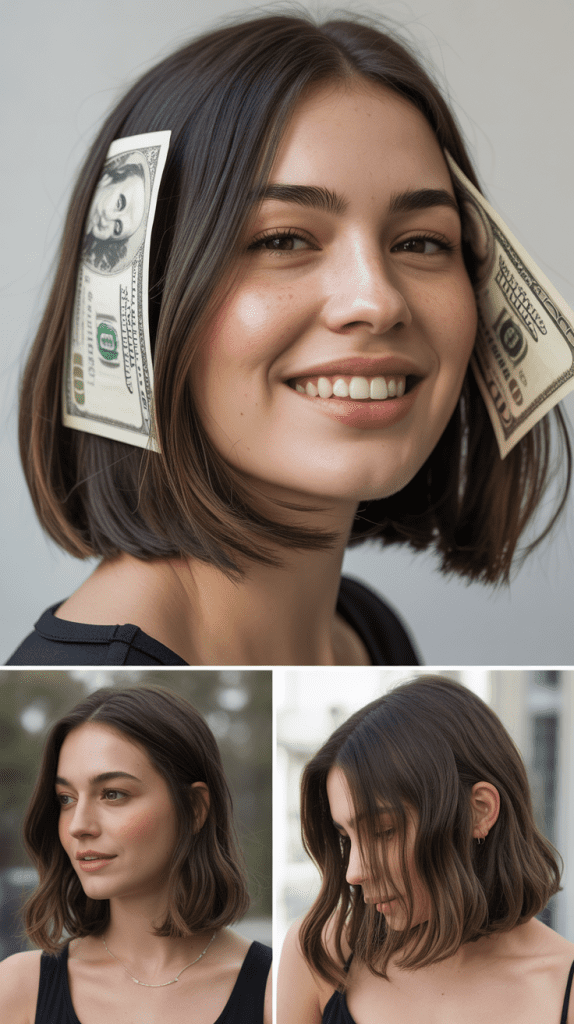
Money pieces are bright, face-framing highlights concentrated at the front sections.
When combined with a chin-length bob, they create dimension that draws attention to facial features and creates the illusion of fuller hair.
- Money pieces typically consist of two chunky highlights at the very front of the hairline that frame the face on either side of the part.
- These strategic highlights are usually 2-4 shades lighter than the base color, creating noticeable contrast and dimension.
- The light-reflecting quality of the brighter pieces creates depth and makes the overall cut appear more voluminous and dimensional.
- For fine hair, money pieces should be painted rather than foiled to create a softer transition that won’t highlight thinness at the hairline.
- Maintenance varies based on base color but typically requires touch-ups every 8-10 weeks as the bright pieces grow out visibly.
33. Textured Bob with Lived-In Roots
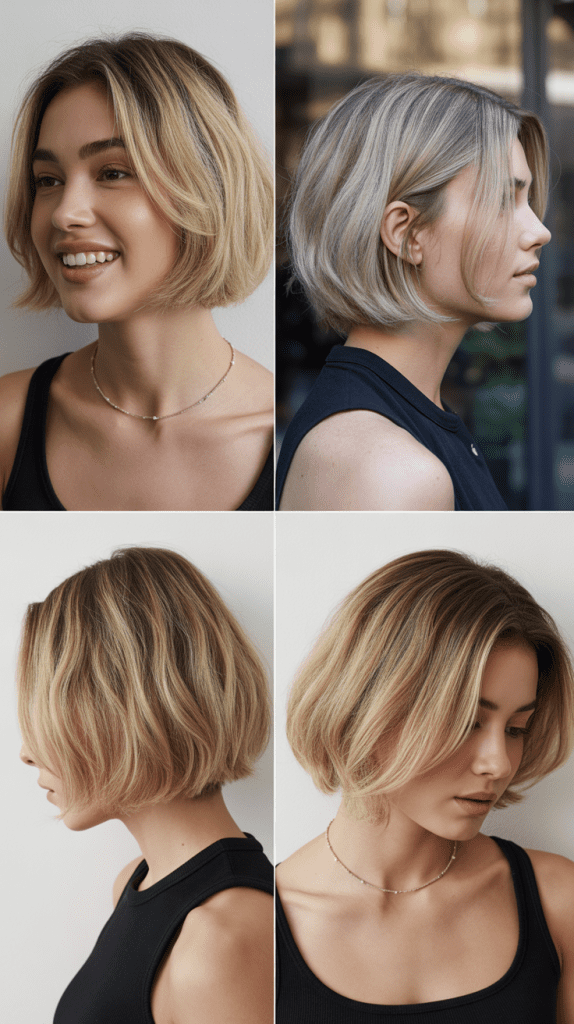
Embracing natural root growth or intentionally creating shadow roots with color creates a low-maintenance style that adds depth to fine hair.
The darker roots create dimension that makes hair appear thicker overall.
- Lived-in roots involve allowing 1-2 inches of natural root color to show or using color technique to create a subtle shadow at the roots
The contrast between darker roots and lighter ends creates visual depth that tricks the eye into perceiving more volume.
- This approach is particularly practical for fine hair as it requires less frequent color maintenance, reducing chemical exposure and potential damage.
- The dimensional effect works with any chin-length cut but is particularly effective with textured, tousled styling rather than sleek, smooth looks.
- Color appointments can be stretched to 12-16 weeks with this technique as the grown-out appearance is intentional rather than neglected-looking.
34. Chin-Length Bob with Swoopy Side Bang
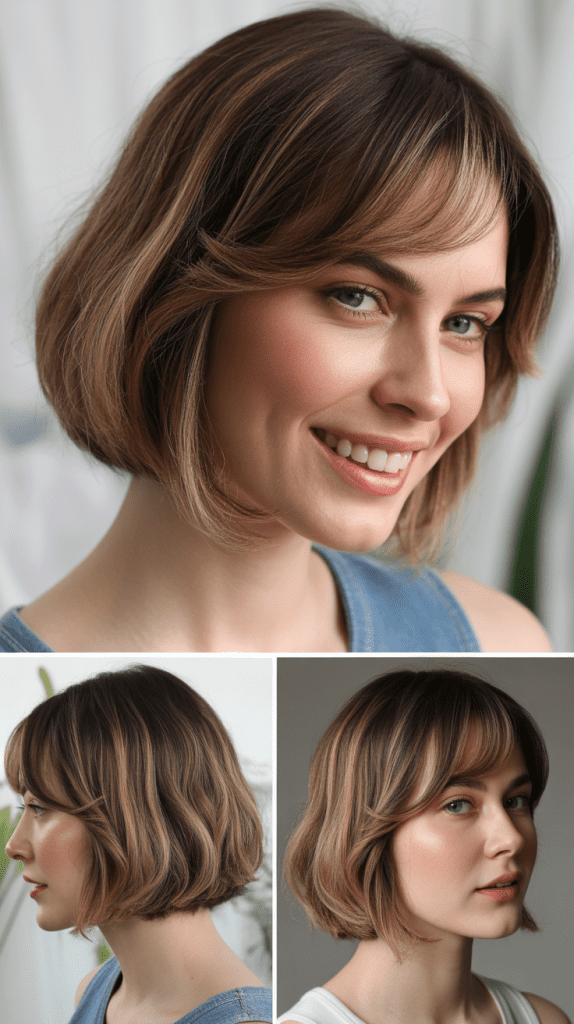
A swoopy side bang sweeps dramatically across the forehead from a deep side part, creating movement and dimension that adds visual volume to fine hair.
This glamorous element elevates a simple chin-length bob.
- The swoopy bang is cut longer than traditional bangs (typically eye-length or longer) and styled to sweep dramatically across the forehead.
- This style creates width at the forehead and draws the eye across the face horizontally, which creates the illusion of fuller hair overall.
- The sweeping motion is created through blow-drying with a round brush, directing the bang in an arc from the part across the forehead.
- For fine hair, the swoopy bang should involve enough hair to create the sweeping effect but not so much that it removes density from the overall cut.
- This styling works best with side-parted chin-length bobs and adds a touch of vintage Hollywood glamour to the modern cut.
35. Chin-Length Shag with Razored Edges
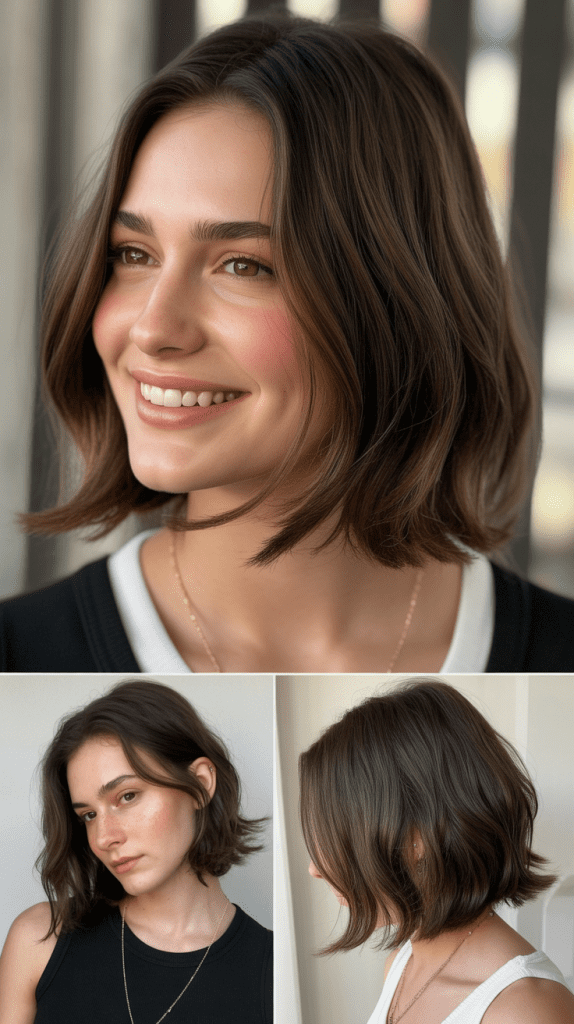
Combining the layered structure of a shag with razor-cut edges creates maximum texture and movement in fine hair.
This double-texture approach results in a voluminous, dimensional cut.
- The shag provides the layered framework while the razor finishing adds additional texture and softness at the ends.
- Razor edges create feathered, irregular ends that separate naturally, making fine hair appear thicker through visible texture.
- This combination works particularly well for those with naturally wavy or textured fine hair as it enhances existing movement.
- Styling involves applying texturizing product to damp hair and scrunching while drying to enhance the layered, razored texture.
- The double-texture approach creates a deliberately edgy, lived-in appearance that requires minimal effort to maintain.
36. Blunt Bob with Colored Tips
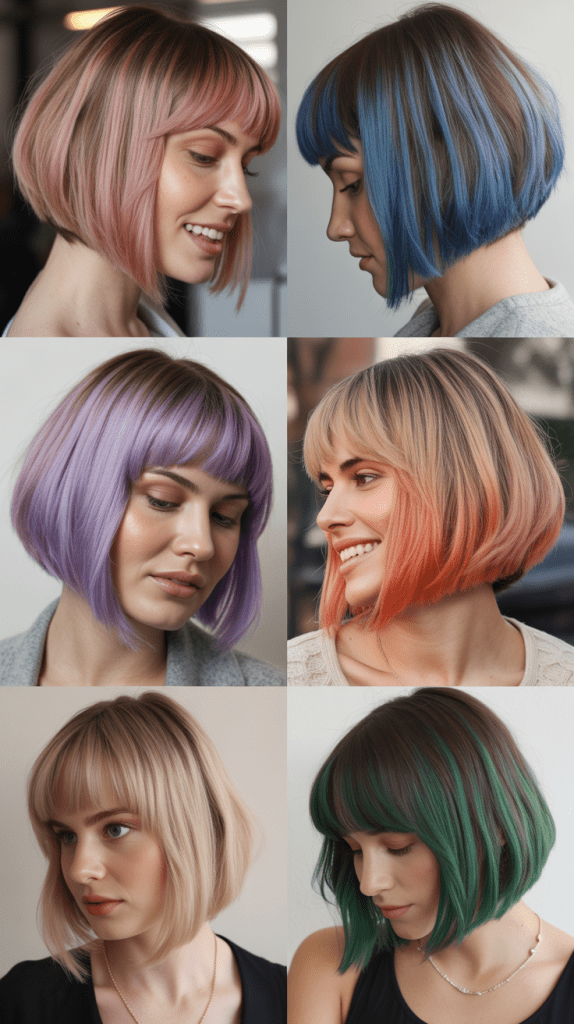
Adding color specifically to the ends of a blunt chin-length bob creates visual interest and dimension that makes fine hair appear fuller.
The concentrated color draws attention to the perimeter and creates the illusion of density.
- Colored tips typically involve applying fashion colors or lighter shades to the bottom 1-2 inches of hair.
- The color concentration at the ends makes the perimeter appear more substantial and draws the eye to the fullest part of the cut.
- For fine hair, this technique works best with the precision of a blunt cut, as the solid line combined with color creates maximum visual impact.
- The color can range from subtle highlights to bold fashion shades depending on personal style and workplace requirements.
- Maintenance depends on the color used but typically involves touch-ups every 6-8 weeks as the color fades or grows out.
37. Chin-Length Bob with Flicked Ends
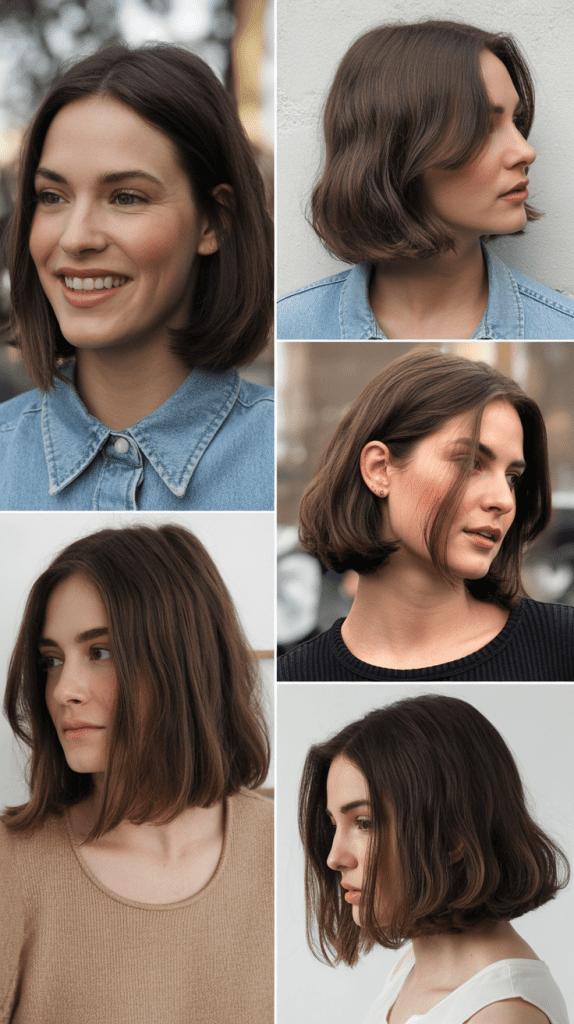
Flicked ends involve styling or cutting the perimeter to turn outward rather than inward.
This playful styling choice adds movement and visual volume that makes fine hair appear bouncier and fuller.
- The flicked effect can be achieved through cutting beveled ends that naturally flip out or through styling with a round brush directing ends outward.
- This technique works particularly well for fine hair that lies flat when styled inward, as the outward movement creates space and body.
- The 1960s-inspired flip adds a retro, youthful element to the modern chin-length bob while solving volume issues.
- Styling involves blow-drying with a small round brush, wrapping the ends around the brush and directing them outward with heat.
- Setting spray applied while hair is still warm from the blow-dryer helps the flip hold throughout the day without appearing stiff.
38. Chin-Length Cut with Crown Layers
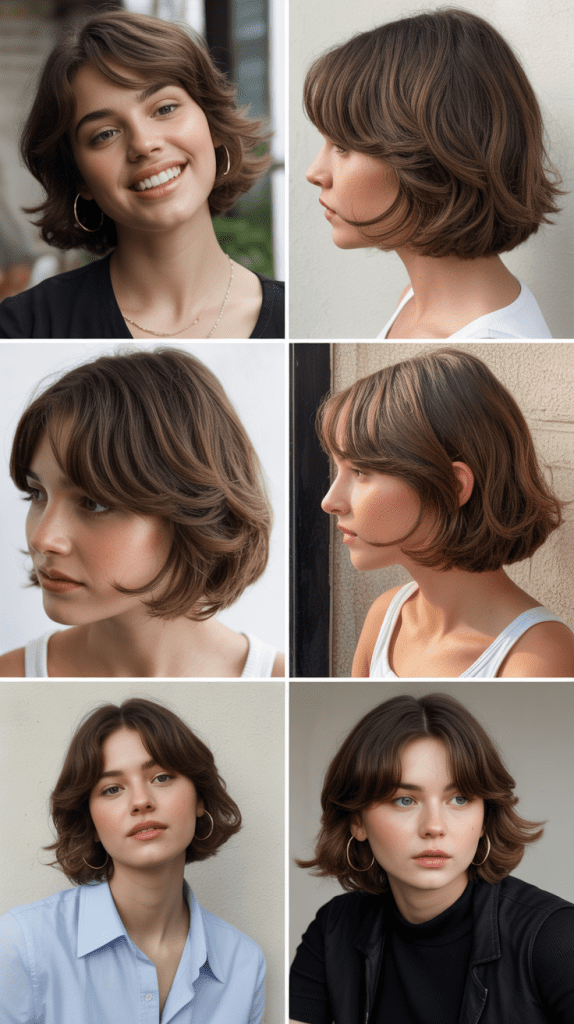
Strategic layering specifically at the crown area creates lift and volume where fine hair most needs it.
This targeted approach maintains density at the perimeter while solving flatness at the top of the head.
- Crown layers are cut shorter than the rest of the hair, typically 1-3 inches shorter depending on desired volume, and blend into the overall length.
- These layers create natural lift at the scalp in the crown area where fine hair typically lies flattest against the head.
- The rest of the cut can remain relatively one-length, maintaining fullness at the perimeter and ends.
- Styling crown layers involves blow-drying them upward and away from the scalp to maximize the volume they provide.
- This technique works beautifully for fine hair that’s flat at the crown but has sufficient density at the sides and back.
39. Chin-Length Bob with Glossy Finish
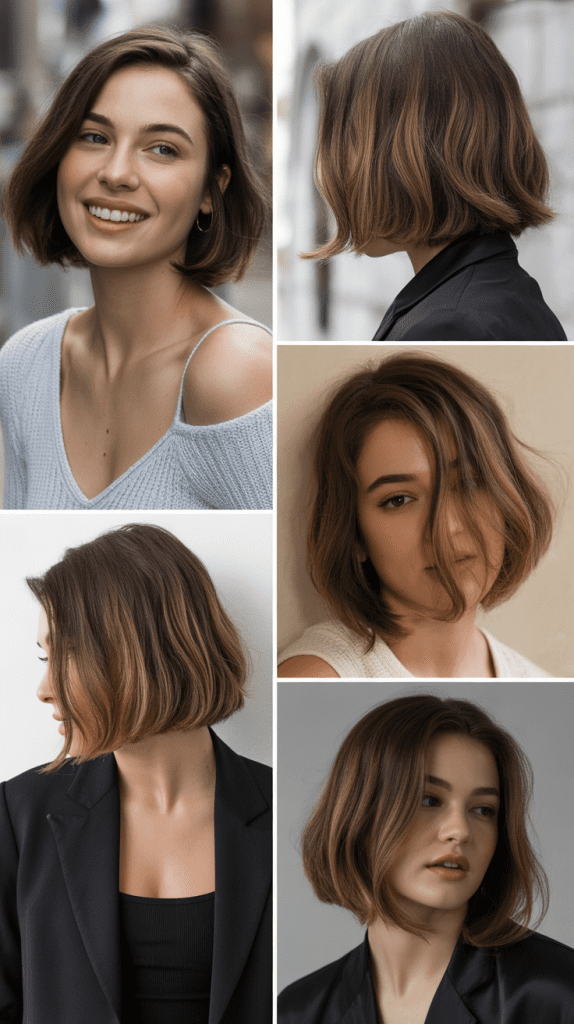
A glossy finish achieved through specific styling products and techniques creates light reflection that makes fine hair appear thicker and healthier.
The shine creates dimension that adds perceived volume.
- Glossy finishes are achieved using shine serums, glossing sprays, or smoothing creams applied to styled hair.
- The light-reflecting properties of glossy products create highlights and lowlights even in solid-colored hair, adding dimension.
- For fine hair, the key is using lightweight shine products that don’t weigh hair down or make it appear greasy.
- This styling approach works best with sleek, smooth chin-length bobs where the glossy finish can be appreciated without competing with texture.
- The polished appearance makes hair appear healthier and fuller, though it requires more frequent washing as shine products can cause buildup.
40. Choppy Bob with Disconnected Layers
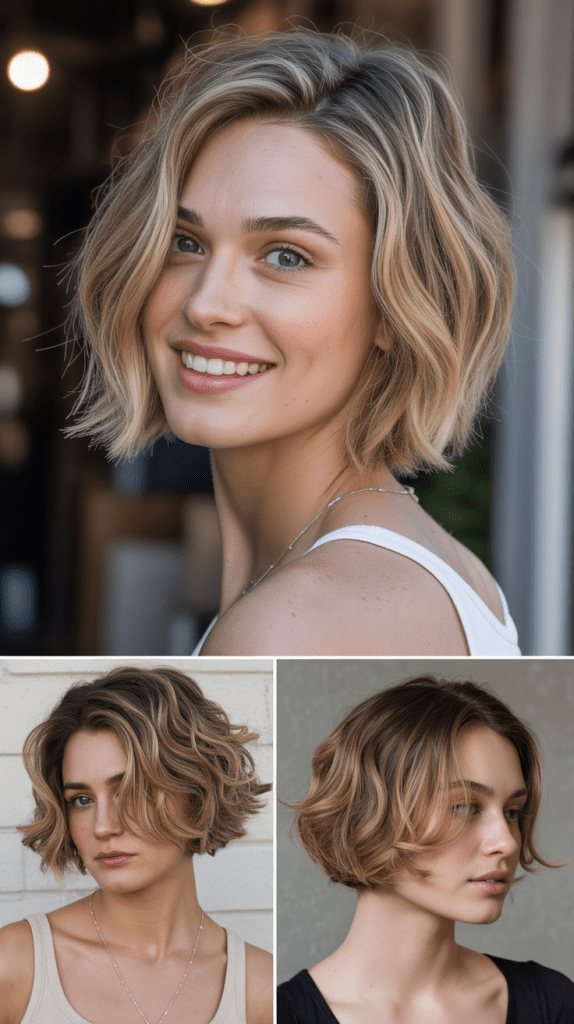
Disconnected layers feature obvious separation between layer lengths rather than seamless blending.
This avant-garde approach creates striking dimension and volume in fine hair through intentional contrast.
- Unlike traditional layering that blends smoothly, disconnected layers have visible gaps in length creating a choppy, editorial appearance.
- This technique works for fine hair by creating multiple lengths that all contribute to overall volume without blending into invisibility.
- The disconnection is most visible when hair is styled straight or smoothly, showcasing the intentional length variations.
- Styling can be sleek to emphasize the cutting technique or textured to create a more casual interpretation of the style.
- This fashion-forward cut requires an experienced stylist who understands how to create intentional disconnection that enhances rather than detracts from fine hair.
41. Chin-Length Bob with Wet Look Styling
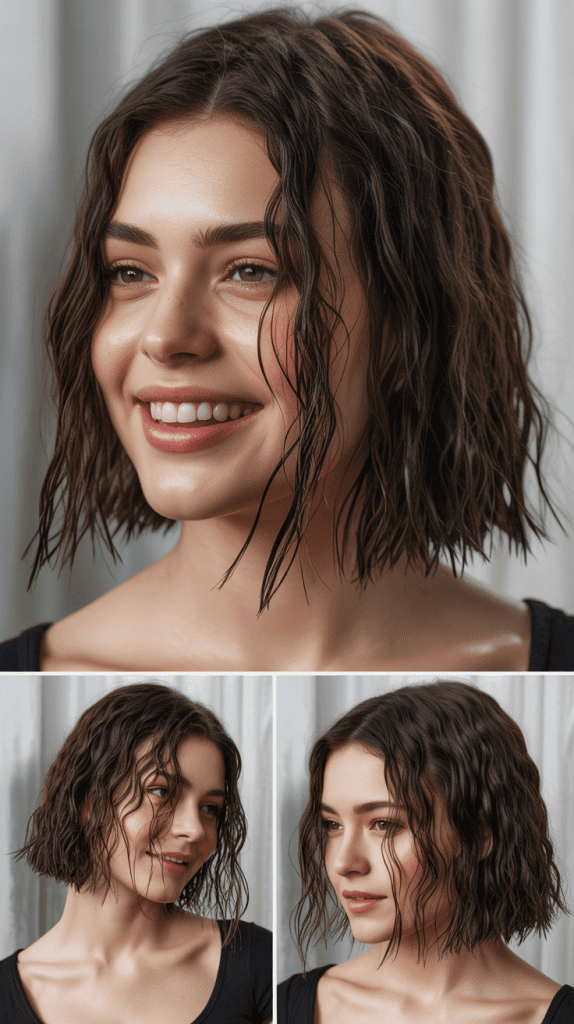
Wet-look styling uses gels or strong-hold products to create a sleek, glossy appearance that resembles wet hair.
This high-fashion styling choice can make fine hair appear fuller through its reflective, controlled appearance.
- Wet-look styling involves applying generous amounts of gel or styling cream to damp hair and slicking it back or styling it smoothly.
- The technique creates a sculptural, intentional appearance that makes fine hair look deliberately styled rather than simply thin.
- For fine hair, lightweight gels or water-based products work better than heavy pomades that might weigh hair down excessively.
- This styling is temporary and can be washed out easily, making it a fun option for special occasions or fashion-forward events.
- The controlled, sleek nature of wet-look styling draws attention to the precision of the chin-length cut rather than hair texture.
42. Textured Bob with Finger Waves
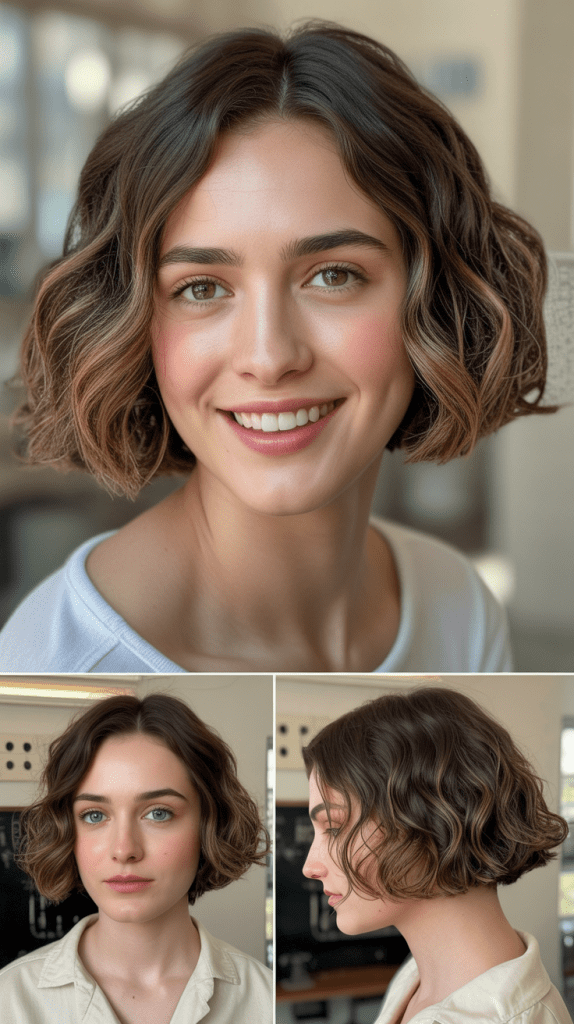
Finger waves add vintage glamour and surprising volume to chin-length fine hair.
This 1920s-inspired technique creates structured waves that make hair appear dramatically fuller and more dimensional.
- Finger waves are created by molding damp hair into S-shaped curves using fingers, combs, and strong-hold setting products.
- The structured waves add significant volume compared to the hair’s natural state, making fine hair appear two to three times fuller.
- Modern interpretations of finger waves are often softer and less rigid than historical versions, creating vintage-inspired texture without costume-like appearance.
- This styling requires time and practice but creates dramatic results for special occasions when fine hair needs maximum impact.
- Finishing spray is essential to set the waves and maintain them throughout the day, as fine hair tends to fall more easily than thicker textures.
43. Chin-Length Bob with Balayage and Lowlights
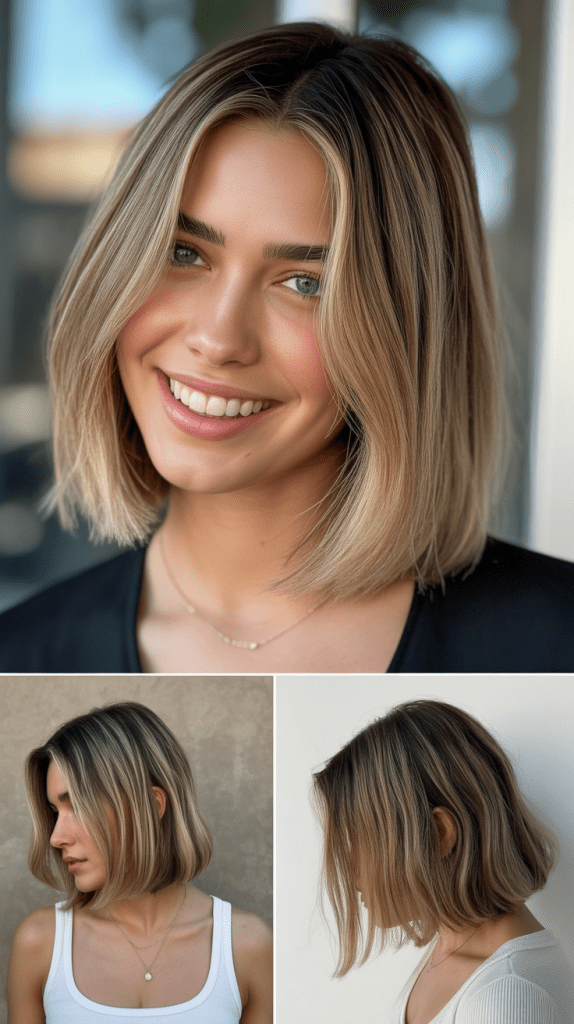
Combining both highlights (balayage) and lowlights creates maximum dimension in fine hair.
The interplay of light and dark tones tricks the eye into perceiving significant volume and texture.
- This technique involves hand-painting both lighter and darker shades throughout the hair, creating a multi-dimensional color story.
- The varied tones create depth that makes the cut appear more voluminous, as the eye perceives the color variation as texture.
- For fine hair, keeping the color variations subtle (within 2-3 shades of the base) creates dimension without obvious stripes that might emphasize thinness.
- The combination grows out beautifully as both lighter and darker pieces blend naturally with new growth, extending time between appointments to 10-14 weeks.
- This dimensional coloring works with any styling—whether worn sleek, wavy, or textured—as the color variation creates interest in every styling scenario.
44. Chin-Length Shag with Curtain Fringe
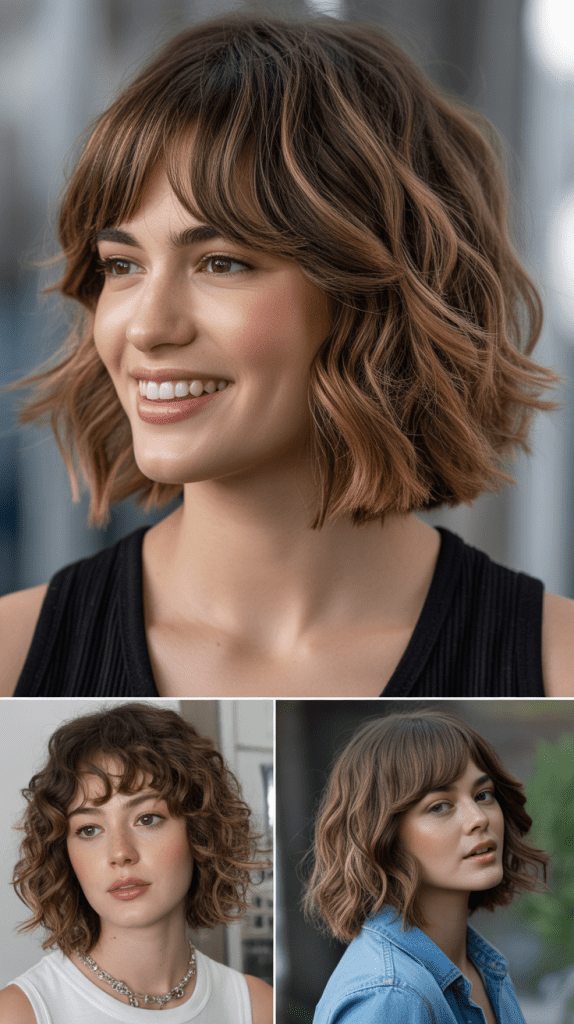
A curtain fringe is similar to curtain bangs but starts shorter at the center and creates a more dramatic frame.
When combined with a shaggy chin-length cut, this creates maximum fullness around the face.
- The curtain fringe typically starts at cheekbone or nose length in the center and gradually lengthens to blend with the shag layers.
- This combination creates volume both at the face (from the fringe) and throughout the cut (from the shag layers).
- The center-parted fringe adds width at the cheekbones and draws attention to the eyes, while the shag provides overall texture and movement.
- Styling involves rough-drying with fingers or using a small round brush to direct the fringe pieces away from the face on both sides.
- This bohemian-inspired combination works beautifully for casual, low-maintenance styling while still providing significant volume to fine hair.
45. Blunt Bob with Ombré Color
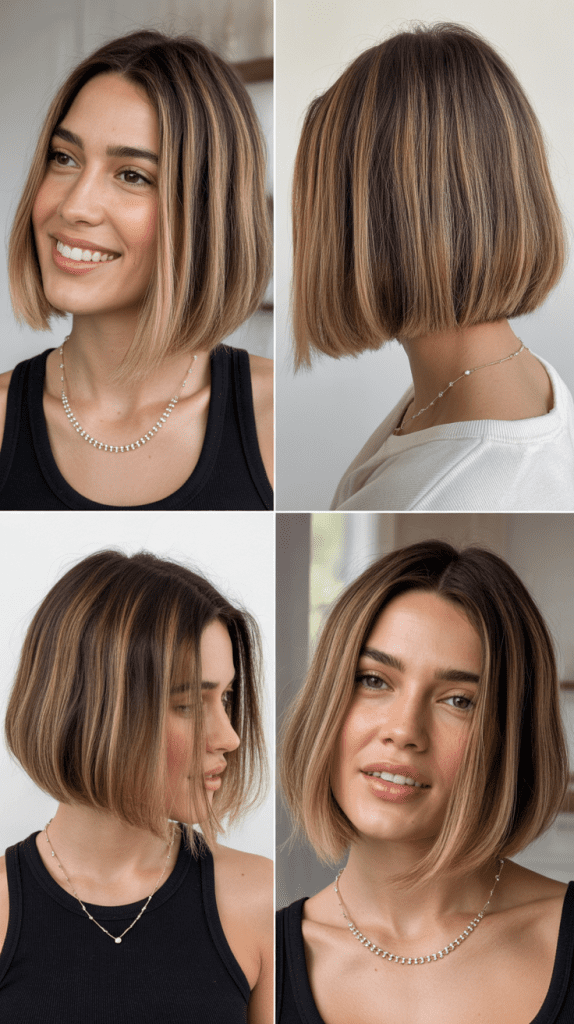
Ombré coloring transitions from darker roots to lighter ends, creating dimension that adds visual volume to fine hair.
When combined with a blunt chin-length bob, the color variation makes the perimeter appear fuller.
- The gradual color transition creates depth that makes hair appear more dimensional and voluminous than solid color.
- For fine hair, a subtle ombré with only 2-3 shades difference works better than dramatic contrasts that might emphasize thinness at the roots.
- The lighter ends draw attention to the fullest part of the blunt cut, making the perimeter appear more substantial.
- Ombré grows out beautifully as the transition is already gradual, requiring color maintenance only every 12-16 weeks.
- This coloring technique pairs particularly well with blunt cuts as the solid cutting line contrasts nicely with the soft color gradation.
46. Chin-Length Bob with Twisted Sections
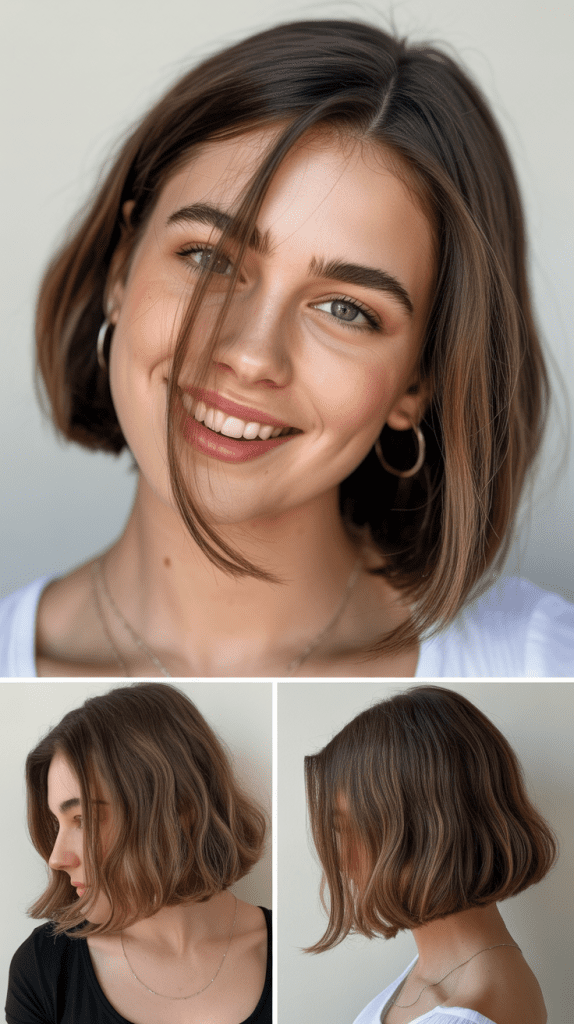
Creating twisted sections within a chin-length bob adds texture and volume through simple styling rather than cutting.
This technique makes fine hair appear fuller by adding three-dimensional elements.
- Small sections of hair are twisted and pinned while damp, then released when dry to create natural-looking texture and wave.
- The twisting creates volume by disrupting the natural fall pattern of fine hair, encouraging it to stand away from the scalp.
- This heat-free styling method is gentle on fine hair while creating significant volume and texture.
- Products like mousse or texture spray applied before twisting help set the texture and make it last longer.
- The twisted sections can be placed strategically where volume is needed most—typically at the crown and throughout the sides.
47. Chin-Length Cut with Scrunched Texture
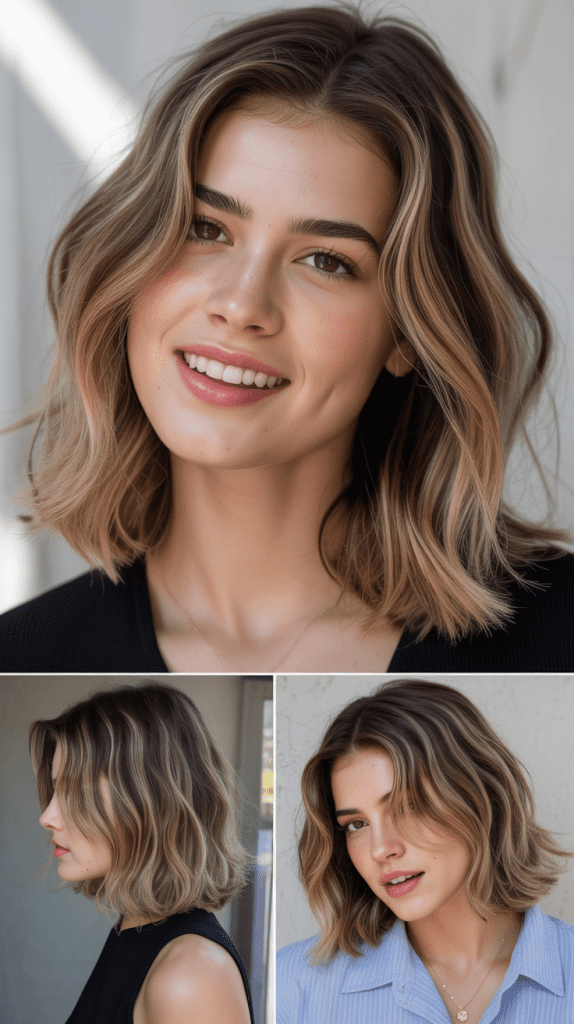
Scrunching is a styling technique that creates natural-looking waves and texture while adding volume to fine hair.
This simple method requires minimal products and no heat tools.
- Scrunching involves applying product to damp hair and repeatedly squeezing handfuls of hair upward toward the scalp.
- The technique encourages fine hair to wave and curl naturally, creating texture that makes it appear significantly fuller.
- Lightweight mousses, sea salt sprays, or curl-enhancing creams work best for scrunched styling on fine hair.
- Air-drying or diffusing on low heat maintains the scrunched texture without weighing it down or causing frizz.
- This method works best on fine hair with some natural wave or texture, though even straight fine hair can achieve subtle body through scrunching.
48. Chin-Length Bob with Side-Swept Style
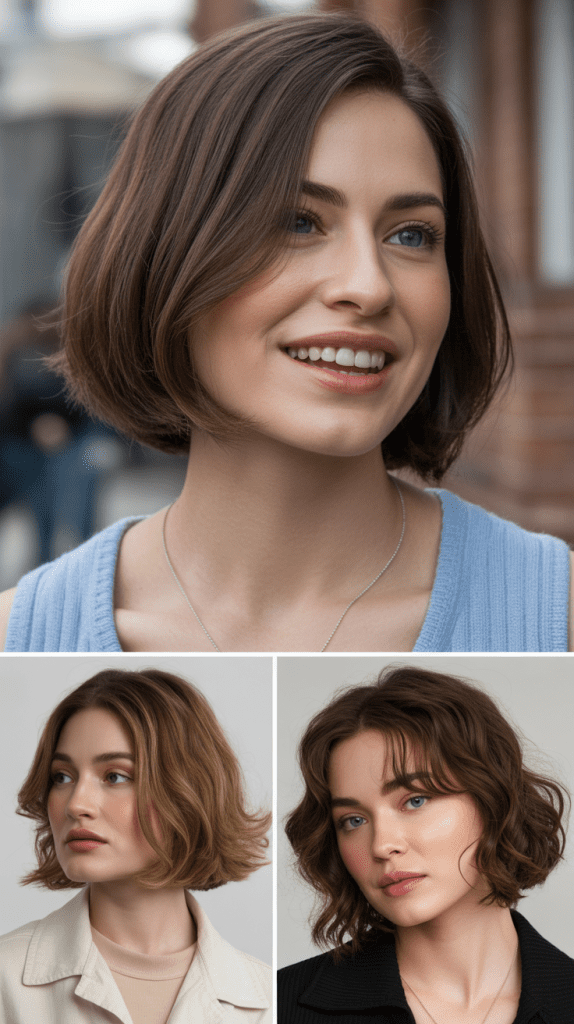
Side-sweeping all hair to one side creates asymmetrical volume that makes fine hair appear dramatically fuller.
This simple styling trick transforms a basic chin-length cut into a glamorous, voluminous style.
- Side-sweeping involves creating a deep side part and directing all hair to fall over one shoulder, creating maximum volume on the heavy side.
- The weight of the hair falling to one side creates natural lift at the root on that side, while the other side is tucked behind the ear for contrast.
- This styling works particularly well for special occasions when fine hair needs maximum impact and glamour.
- Smoothing serum on the tucked side and volumizing products on the swept side creates intentional contrast and polish.
- The side-swept style can be secured with bobby pins hidden underneath for all-night hold during events.
49. Textured Bob with Beach Waves
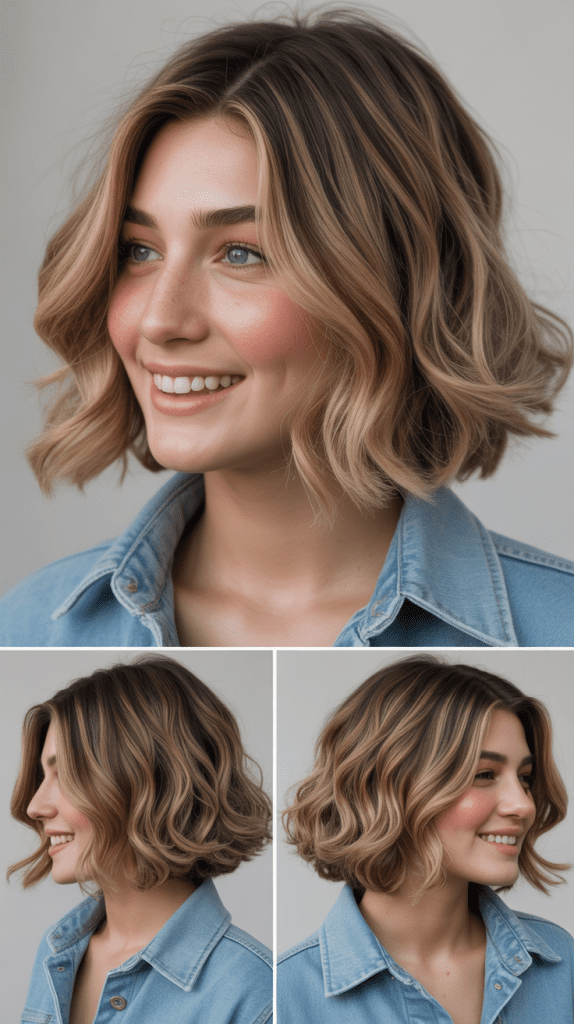
Beach waves create relaxed, tousled texture that adds significant volume to fine hair.
This casual styling approach makes chin-length cuts appear fuller while maintaining an effortless, lived-in appearance.
- Beach waves are created using sea salt spray, braiding techniques, or loose curling with flat irons or wands.
- The irregular, relaxed wave pattern adds dimension that makes fine hair appear two to three times fuller than when worn straight.
- For fine hair, loose waves starting at ear level work better than waves starting at the root, which can emphasize thinness at the scalp.
- The intentionally imperfect nature means this styling actually looks better with slight frizz or irregularity rather than perfectly defined waves.
- Beach waves can last 2-3 days on fine hair with minimal touch-ups, making this a practical styling choice for busy schedules.
50. Chin-Length Bob with Volumizing Perm
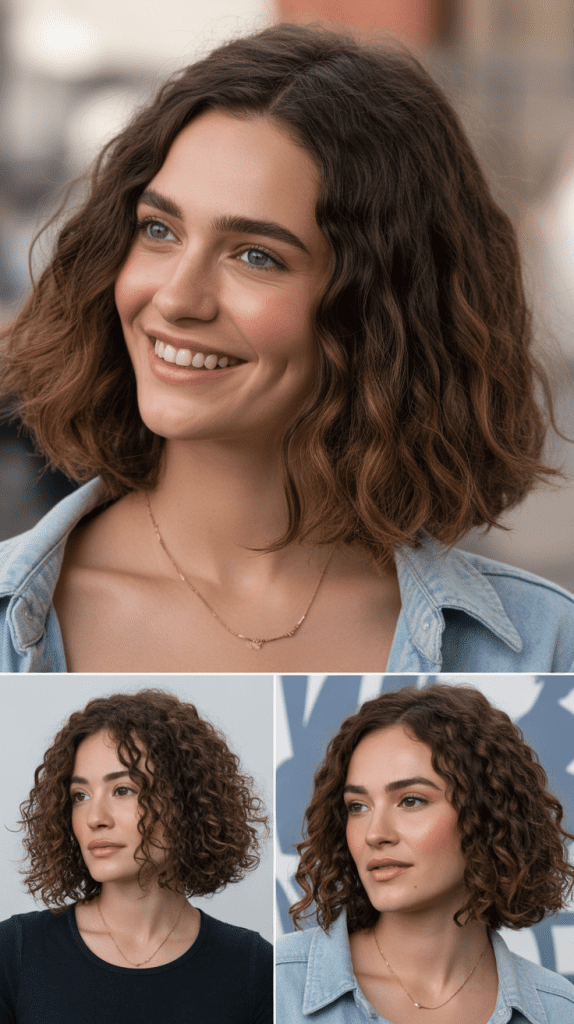
A modern volumizing perm adds body and texture to fine hair through chemical processing.
Today’s perming techniques are gentler and more customizable than traditional perms, creating natural-looking volume.
- Modern perms use larger rods and gentler solutions to create loose waves or body rather than tight curls.
- The chemical restructuring adds permanent volume and texture to fine hair, eliminating daily styling time.
- For fine hair, a body wave or root perm that focuses on adding lift without excessive curl works better than all-over tight perming.
- The results last 3-6 months depending on hair growth and care, making this a semi-permanent solution for volume issues.
- Proper conditioning and protein treatments are essential after perming to maintain hair health and prevent damage to fine strands.
51. Chin-Length Cut with Tousled Styling
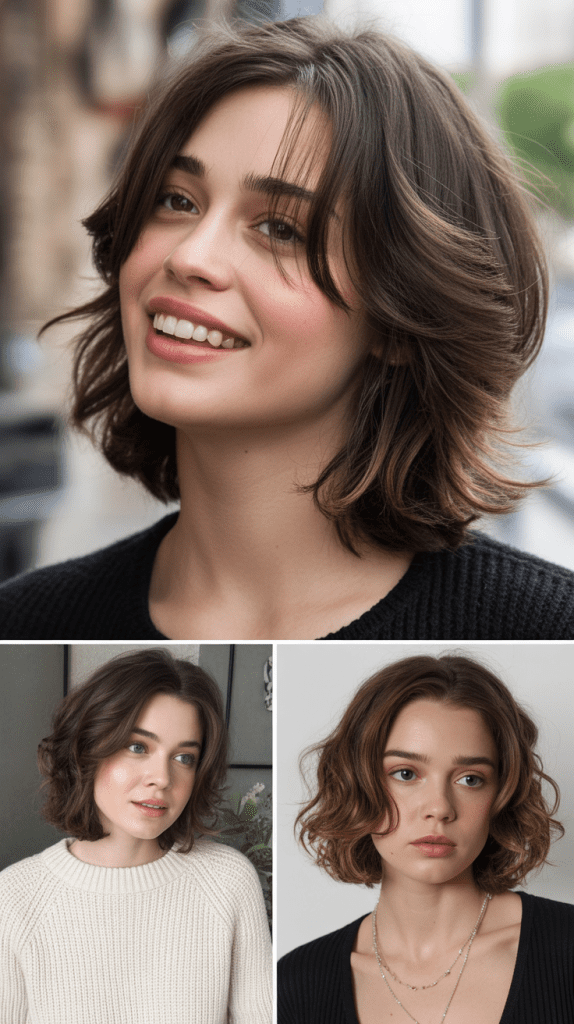
Tousled styling creates an intentionally messy, windblown appearance that adds volume and movement to fine hair.
This casual approach makes hair appear fuller through strategic disorder.
- Tousling involves applying texture product and deliberately disrupting hair with fingers to create piece-y, separated texture.
- The technique creates volume by preventing hair from lying flat or clumping together in uniform sections.
- For fine hair, lightweight texture sprays or dry shampoos work better than heavy waxes or pomades for tousled styling.
- The key to successful tousling is creating controlled chaos—enough disorder to add volume but not so much that hair looks unkempt.
- This styling works beautifully with layered or shaggy chin-length cuts where the cutting already provides a framework for textured styling.
52. Chin-Length Bob with Rounded Blow-Dry
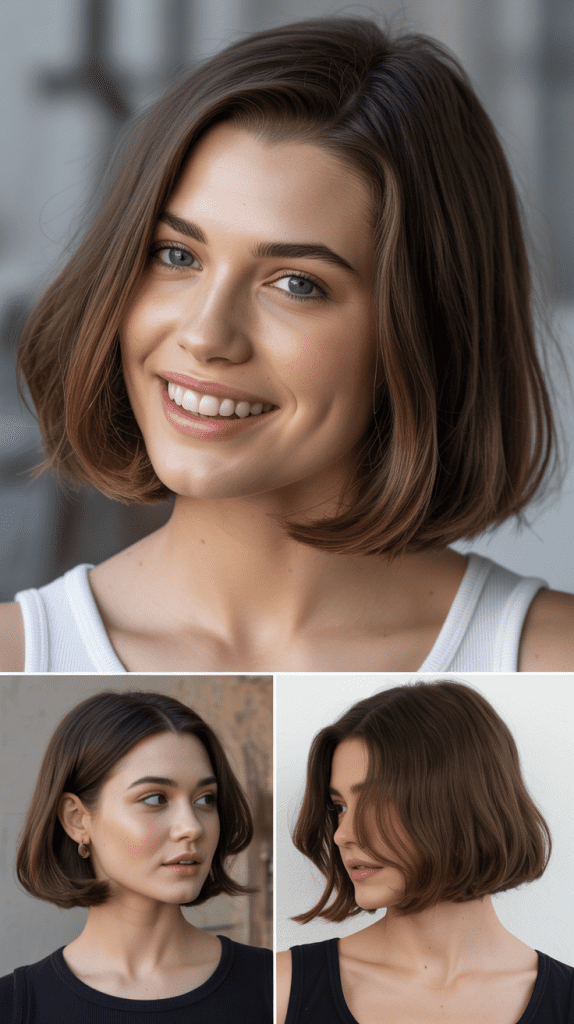
A rounded blow-dry technique creates curved, voluminous shape that makes fine hair appear fuller.
This classic styling method uses specific blow-drying techniques to build body and movement.
- The rounded technique involves using a large round brush to create C-shaped curves throughout the hair while blow-drying.
- Directing the brush under sections and rolling it creates lift at the root and rounded shape through the mid-lengths and ends.
- For fine hair, blow-drying in sections from the bottom layer up ensures even distribution of volume throughout the cut.
- Finishing with cool air sets the shape and helps the volume last throughout the day without falling flat.
- This technique creates a polished, salon-styled appearance that makes fine hair look intentionally volumized rather than simply styled.
53. Chin-Length Shag with Feathered Face-Frame
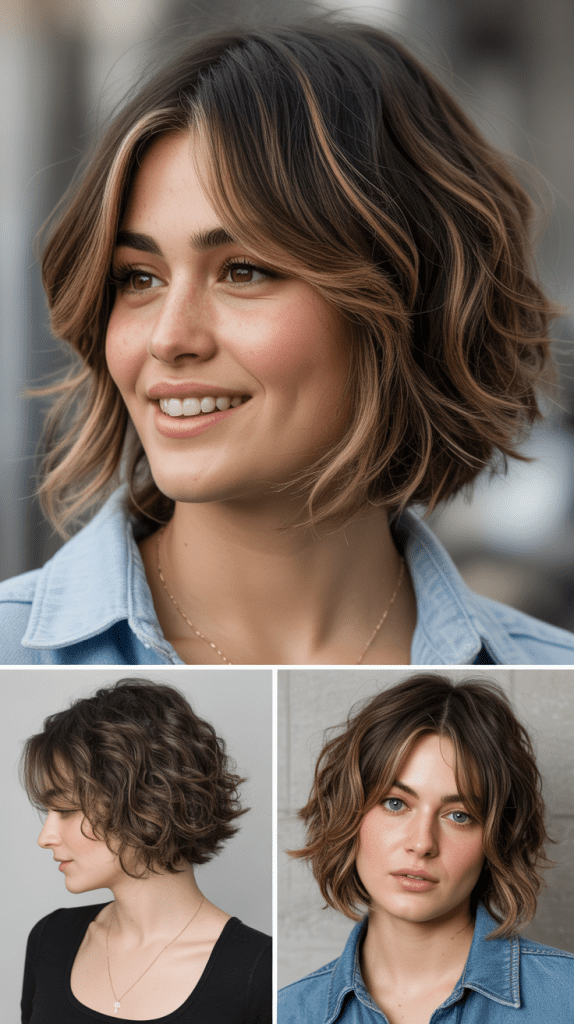
Combining the layered texture of a shag with specifically feathered face-framing pieces creates maximum volume where it’s most visible.
This targeted approach enhances the overall fullness of fine hair.
- The feathered face-frame features soft, tapered pieces that start around the cheekbones and blend into the shag layers.
- These pieces are cut with razor or point-cutting techniques that create ultra-soft, wispy ends rather than blunt edges.
- The combination creates volume both throughout the cut (from the shag) and specifically at the face (from the feathered frame).
- Styling involves blow-drying the face-framing pieces with a small round brush, directing them slightly away from the face for maximum softness.
- This combination works beautifully for fine hair as both cutting techniques contribute to overall fullness without removing excessive density.
54. Chin-Length Bob with Half-Up Styling
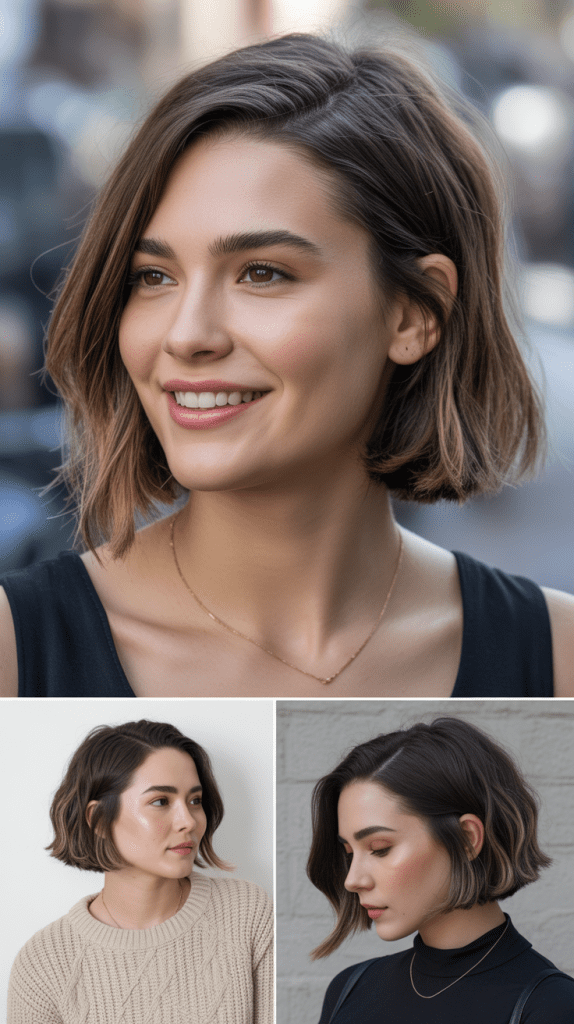
Half-up styling involves pulling the top section of hair up while leaving the bottom section down.
This simple technique creates the illusion of fuller hair by adding dimension and visual interest to a chin-length cut.
- The half-up section can be styled as a small bun, ponytail, or twist, creating height at the crown that makes overall hair appear more voluminous.
- This styling works particularly well for fine hair at chin length as there’s just enough hair to create a secure half-up section while maintaining attractive length below.
- Teasing or backcombing the crown section before securing it up creates additional volume and prevents the half-up style from looking flat.
- Small accessories like decorative pins, clips, or scrunchies can disguise the fine texture of the pulled-back section while adding visual interest.
- This versatile styling transitions easily from casual daytime wear to more polished evening looks depending on how it’s executed.
55. Chin-Length Bob with Air-Dried Natural Texture
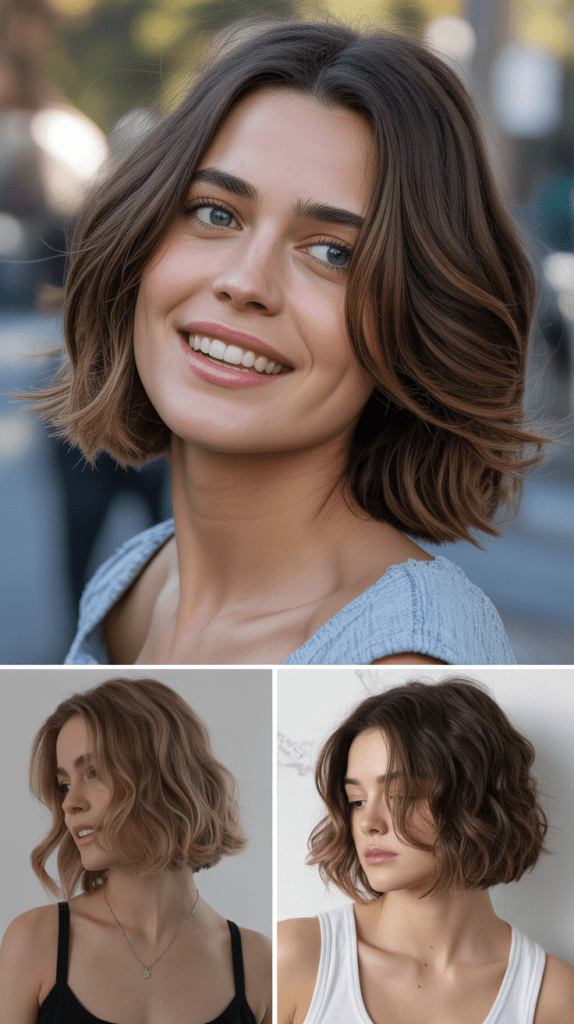
Embracing natural air-dried texture creates effortless volume in fine hair while minimizing heat damage.
This low-maintenance approach works with your hair’s natural tendencies rather than fighting against them.
- Air-drying involves applying lightweight products to damp hair and allowing it to dry naturally without blow-dryers or heat tools.
- For fine hair with natural wave or texture, this method enhances existing movement while maintaining maximum hair health.
- Products like leave-in conditioners, curl creams, or sea salt sprays help define natural texture during the air-drying process.
- Scrunching hair periodically as it dries helps encourage volume and prevents it from drying flat against the scalp.
- This method requires the least daily effort and causes zero heat damage, making it ideal for maintaining the health of fine, delicate hair.
Maintenance Tips for Chin-Length Fine Hair
| Aspect | Recommendation | Frequency |
|---|---|---|
| Trimming | Regular trims prevent split ends that make fine hair look thinner | Every 6-8 weeks |
| Washing | Use volumizing shampoo and lightweight conditioner only on ends | Every 2-3 days |
| Heat Protection | Always apply heat protectant before using styling tools | Every styling session |
| Deep Conditioning | Use lightweight protein treatments to strengthen fine strands | Once weekly |
| Scalp Care | Gentle scalp massage promotes healthy hair growth | Daily |
| Product Buildup | Clarifying shampoo removes residue that weighs down fine hair | Once monthly |
Best Styling Products for Fine Hair at Chin Length
- Volumizing mousses provide lift without weight when applied to damp roots before blow-drying
- Sea salt sprays create texture and separation that makes fine hair appear fuller when scrunched into damp hair
- Dry shampoos absorb oil at roots while adding volume and texture when applied between washes
- Lightweight texture sprays add grip and hold without the heaviness of traditional hairsprays
- Root-lifting sprays target the scalp area specifically to create lift where fine hair needs it most
- Smoothing serums should be applied sparingly and only to ends to add shine without greasiness
Color Strategies That Enhance Volume
- Multi-dimensional coloring with highlights and lowlights creates depth that tricks the eye into seeing more volume
- Subtle balayage adds natural-looking dimension without harsh lines that might emphasize thinness
- Root shadowing creates darker roots that add depth and make the overall cut appear more dimensional
- Strategic babylights placed throughout add light-catching dimension that creates perceived fullness
- Glossing treatments enhance shine which makes hair appear healthier and fuller without permanent color commitment
Face Shape Considerations
- Oval faces can wear any chin-length variation as this face shape is naturally balanced
- Round faces benefit from asymmetrical or angled chin-length cuts that create vertical lines
- Square faces look best with soft, textured chin-length cuts that soften angular jawlines
- Heart-shaped faces are flattered by chin-length cuts with volume at the ends to balance wider foreheads
- Long faces should choose chin-length cuts with width-creating elements like side-swept styling or curtain bangs
The comprehensive collection of 55 best chin-length haircuts for fine hair that add instant fullness demonstrates that fine hair doesn’t mean you’re limited to flat, lifeless styles.
From classic blunt bobs that create the illusion of density through solid perimeters to textured shags that build volume through strategic layering, each option offers unique benefits for different preferences and lifestyles.
The key to success with fine hair at chin length lies in choosing cutting techniques that maintain density while creating movement, selecting colors that add dimension without damage, and using styling methods that enhance rather than weigh down delicate strands.
Whether you prefer the polished sophistication of a glossy rounded bob, the bohemian ease of air-dried texture, or the dramatic impact of an asymmetrical cut, there’s a chin-length option that will transform your fine hair into a voluminous, head-turning style.
By understanding which techniques add fullness and which styling approaches work best for your specific hair type, you can confidently embrace chin-length cuts and finally achieve the full, bouncy hair you’ve always wanted.