

Finding the perfect hairstyle can transform your entire look, and when it comes to medium-length hair with bangs, the possibilities are truly endless.
Whether you’re looking to soften your features, add dimension to your face shape, or simply refresh your style, understanding which hairstyles with medium-length hair and bangs suit you best is the key to unlocking your most confident self.
Medium-length hair offers the perfect balance between manageability and versatility, while bangs can dramatically frame your face and highlight your best features.
This comprehensive guide will walk you through everything you need to know about choosing the ideal medium-length hairstyle with bangs for your unique face shape, hair texture, lifestyle, and personal style preferences.
You’ll discover expert styling techniques, maintenance tips, and inspiration for various bang styles that will help you make an informed decision about your next haircut.
From curtain bangs to blunt fringes, layered cuts to sleek bobs, we’ll explore how different combinations can enhance your natural beauty and complement your individual characteristics.
1. Understanding Your Face Shape and Bang Compatibility
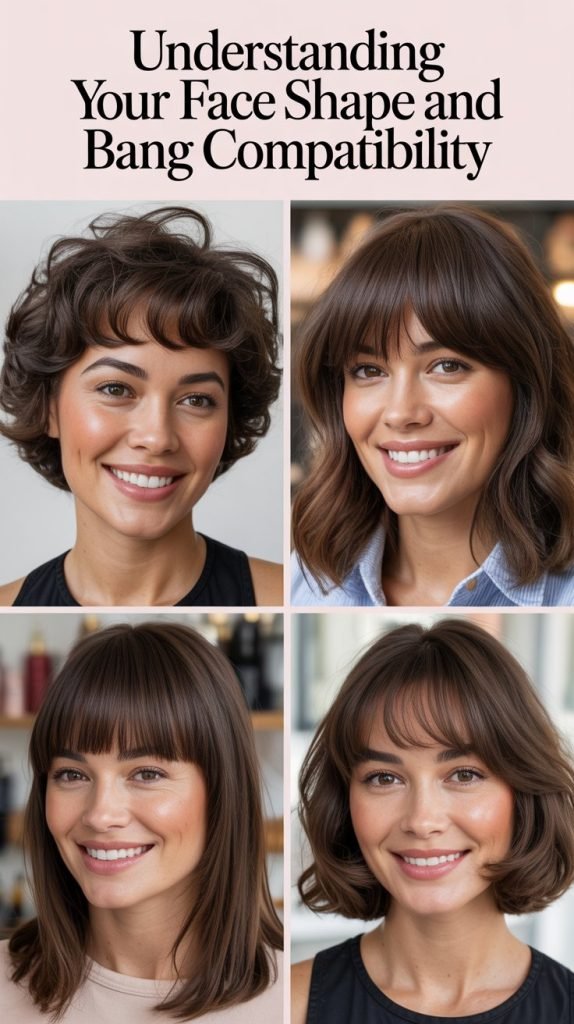
Before selecting any hairstyle, identifying your face shape is crucial for ensuring the most flattering results.
Different face shapes naturally pair better with specific bang styles and medium-length cuts that either balance proportions or enhance existing features.
Face Shape Identification
- Oval faces are characterized by balanced proportions where the forehead is slightly wider than the chin, with gently rounded jawlines that create harmonious symmetry.
- Round faces feature similar width and length measurements, with soft, curved lines and fuller cheeks that create a circular appearance without prominent angles.
- Square faces display a strong, defined jawline with a broad forehead, creating angular features where the face width and length are relatively equal.
- Heart-shaped faces showcase a wider forehead that gradually tapers down to a narrow, pointed chin, often with prominent cheekbones.
- Diamond faces present the widest point at the cheekbones, with a narrow forehead and chin, creating angular yet balanced proportions.
- Oblong faces exhibit greater length than width, with a long, straight cheek line and minimal curves throughout the facial structure.
Best Bang Styles by Face Shape
| Face Shape | Recommended Bang Styles | Styles to Avoid |
|---|---|---|
| Oval | Blunt bangs, side-swept, curtain, wispy | None (most styles work) |
| Round | Side-swept, diagonal, long curtain | Blunt, straight-across bangs |
| Square | Soft, wispy, side-swept, textured | Heavy, blunt bangs |
| Heart | Side-swept, curtain, piece-y | Full, heavy bangs |
| Diamond | Side-swept, curtain, oval-framing | Blunt, straight bangs |
| Oblong | Blunt, straight-across, brow-skimming | Long, side-swept bangs |
- Oval faces possess the versatility to experiment with virtually any bang style since their balanced proportions naturally complement most cuts without requiring significant adjustments.
- Round faces benefit most from bangs that create vertical lines and angles, such as side-swept or diagonal styles that elongate the face and minimize width.
- Square faces require softening elements, making wispy or textured bangs ideal choices that reduce the appearance of angular jawlines and harsh features.
- Heart-shaped faces look best with bangs that add width at the chin level, with side-swept or curtain styles balancing the broader forehead beautifully.
- Diamond faces need bangs that widen the forehead area while maintaining attention on the cheekbones, making curtain and side-swept styles particularly effective.
- Oblong faces achieve better proportions with blunt, horizontal bangs that break up facial length and create the illusion of width across the forehead.
2. Popular Medium-Length Hairstyles with Bangs
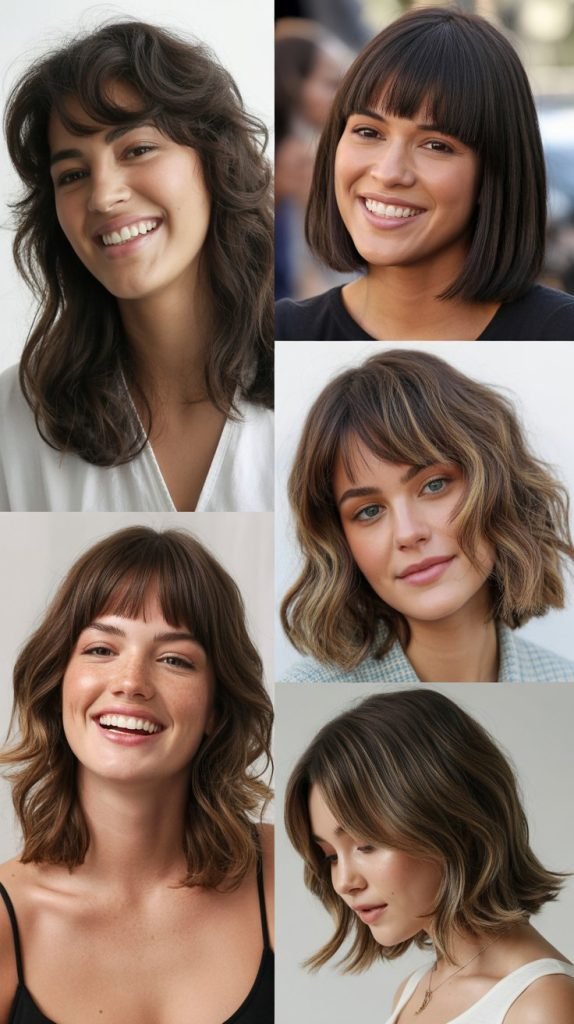
Medium-length hair provides the perfect canvas for incorporating bangs while maintaining enough length for versatile styling options.
These popular combinations have stood the test of time and continue to trend for their universal appeal and adaptability.
The Medium Shag with Curtain Bangs
- The modern shag features heavily layered texture throughout medium-length hair, creating movement and dimension that works beautifully with the effortless vibe of curtain bangs.
- Curtain bangs part down the middle and frame both sides of the face, gradually blending into the longer layers for a seamless, face-framing effect.
- This combination particularly suits those seeking a low-maintenance, lived-in aesthetic that requires minimal daily styling while maintaining a chic, contemporary appearance.
- The shag’s choppy layers add volume to fine hair while removing bulk from thick hair, making it an excellent choice across different hair textures.
- Styling involves applying texturizing spray to damp hair, rough-drying with fingers, and using a round brush to flip the curtain bangs outward slightly.
The Long Bob (Lob) with Side-Swept Bangs
- The lob sits between the chin and collarbone, offering sophistication and versatility while maintaining the convenience of shorter hair.
- Side-swept bangs angle across the forehead, creating asymmetry that adds interest and elegance to the classic lob silhouette.
- This pairing works exceptionally well for professional environments where polished appearance matters, yet remains stylish enough for casual settings.
- The lob can be worn straight for a sleek, modern look or with waves for added texture and romantic appeal.
- Maintenance requires regular trims every 6-8 weeks to preserve the crisp lines and prevent the bangs from growing past the desired length.
Layered Medium Cut with Blunt Bangs
- Medium-length layered cuts incorporate varying lengths throughout the hair, creating depth and movement while preventing a heavy, one-dimensional appearance.
- Blunt bangs cut straight across the forehead create a bold, statement-making frame that draws attention to the eyes and balances facial proportions.
- This combination exudes confidence and works particularly well for those with thick hair who can support the weight of full, dense bangs.
- The contrast between textured layers and sharp, blunt bangs creates visual interest and sophistication that elevates the overall style.
- Styling requires blow-drying the bangs with a round brush to achieve smoothness while the rest can be air-dried or styled with loose waves.
Textured Waves with Wispy Bangs
- Medium-length textured waves create a romantic, effortless aesthetic that pairs perfectly with the soft, delicate nature of wispy bangs.
- Wispy bangs feature feathered, piece-y texture that’s lighter and less dense than traditional bangs, allowing glimpses of forehead to peek through.
- This combination provides maximum versatility since both elements maintain a relaxed, undone quality that forgives imperfect styling.
- The soft textures throughout create a youthful, approachable appearance that works across age groups and style preferences.
- Achieving this look involves curling medium sections of hair with a wand, shaking out the curls, and finger-combing the wispy bangs for natural separation.
3. Bang Styles Explained in Detail
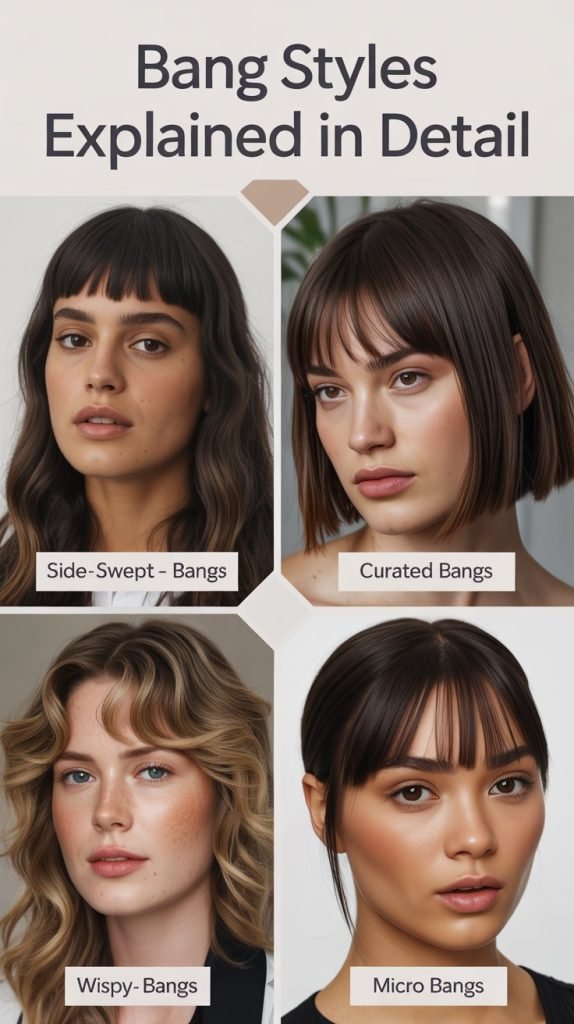
Understanding the nuances of different bang styles helps you communicate effectively with your stylist and choose the option that best aligns with your maintenance preferences and lifestyle needs.
Curtain Bangs
- Curtain bangs part naturally in the center, sweeping to either side of the face like curtains framing a window, hence their descriptive name.
- These bangs typically start shorter at the center (often around eyebrow length) and gradually lengthen toward the sides, blending seamlessly into the hair.
- Their face-framing quality makes them universally flattering while requiring less precise maintenance than other bang styles.
- The center part creates elongation that particularly benefits round and square face shapes by adding vertical lines.
- Styling flexibility allows you to wear them pushed back, pinned to the side, or tucked behind ears on days when you prefer a different look.
Blunt Bangs
- Blunt bangs feature a straight-across cut that creates a bold, dramatic line across the forehead, typically hitting somewhere between mid-forehead and eyebrow level.
- The density and weight of blunt bangs make them ideal for those with thick hair who can support the fullness without the bangs appearing wispy or sparse.
- This style requires commitment and regular maintenance since even slight growth becomes noticeable and can interfere with vision.
- Blunt bangs create strong horizontal lines that effectively shorten the appearance of long faces and balance oblong proportions.
- Daily styling necessitates blow-drying with a round brush to maintain the smooth, sleek finish and prevent the bangs from separating awkwardly.
Side-Swept Bangs
- Side-swept bangs angle across the forehead from one side to the other, creating diagonal lines that add sophistication and elegance.
- The asymmetrical nature of this style softens angular features and creates movement that draws the eye across the face.
- Length versatility allows side-swept bangs to range from grazing the eyebrows to extending past the cheekbones, depending on personal preference.
- This style offers exceptional practicality since growing-out phases appear intentional rather than awkward, making it ideal for bang beginners.
- Styling involves blow-drying in the direction of the sweep while using your fingers or a round brush to create smooth movement.
Wispy Bangs
- Wispy bangs incorporate point-cutting techniques that create soft, feathered ends with deliberate separation and texture throughout.
- The lighter, less dense nature of wispy bangs makes them suitable for those with fine hair or anyone seeking a softer, more delicate frame.
- These bangs allow small sections of forehead to show through, preventing the heavy appearance that solid bangs can sometimes create.
- Maintenance remains relatively low since the textured nature forgives slight growth and doesn’t require obsessive precision during trims.
- Styling simply involves rough-drying while using fingers to tousle and separate the bangs for natural, piece-y texture.
Baby Bangs
- Baby bangs sit well above the eyebrows, creating a high, cropped fringe that makes a bold, fashion-forward statement.
- This dramatic style requires confidence and works best on those with smaller foreheads or anyone seeking an edgy, unconventional aesthetic.
- The shortened length emphasizes eyes and cheekbones while creating a retro vibe reminiscent of various fashion eras.
- Growing out baby bangs presents the most challenging transition among bang styles, requiring patience and creative styling during the awkward phases.
- Daily maintenance involves careful blow-drying to prevent the short length from flipping in unintended directions or appearing uneven.
Choppy Bangs
- Choppy bangs feature intentionally uneven, textured cuts that create an edgy, modern appearance with maximum movement and dimension.
- The varied lengths throughout prevent the bangs from lying flat, instead creating dynamic texture that adds visual interest.
- This style particularly complements medium-length shags and layered cuts where texture remains consistent throughout the hairstyle.
- The deliberately imperfect nature means maintenance becomes less critical, as slight growth enhances rather than detracts from the intended look.
- Styling involves applying texturizing product and either air-drying or rough-drying with fingers to emphasize the piece-y, separated texture.
4. Hair Texture Considerations
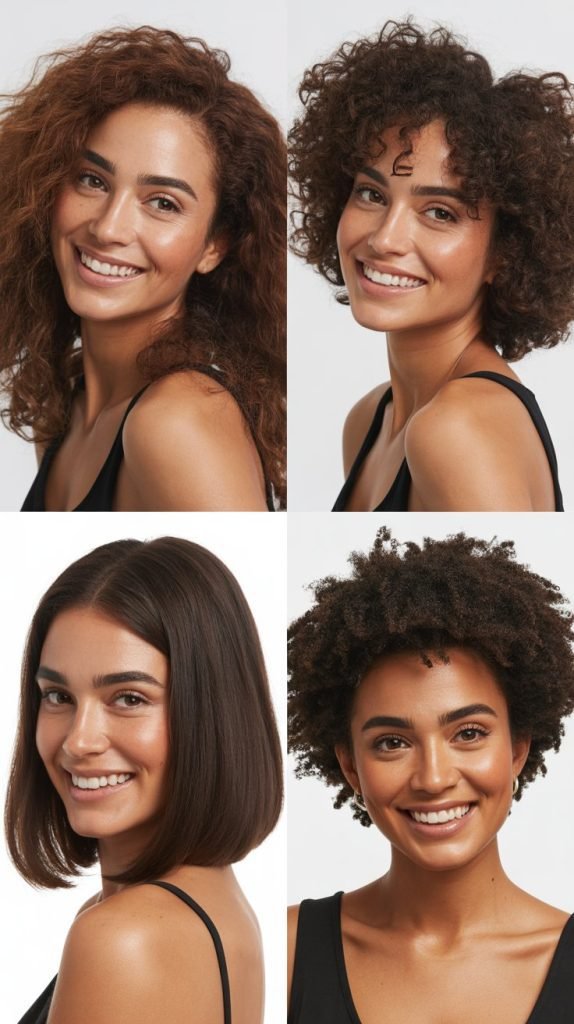
Your natural hair texture significantly influences which medium-length styles with bangs will work best and how much daily maintenance you’ll need to invest in styling.
Straight Hair
- Straight hair lays flat against the head naturally, making it ideal for sleek, polished styles and particularly compatible with blunt bangs that require smooth, even texture.
- The lack of natural texture means straight hair shows cuts more precisely, requiring regular trims to maintain clean lines and prevent scraggly ends.
- Adding layers and texture to straight, medium-length hair creates much-needed movement and prevents the style from appearing heavy or one-dimensional.
- Bangs on straight hair tend to separate and become oily more quickly, necessitating more frequent washing or the use of dry shampoo.
- Styling straight hair with bangs offers simplicity but may require heat tools like flat irons or round brushes to add volume and shape.
Wavy Hair
- Wavy hair provides natural texture and movement that enhances layered medium-length cuts and works beautifully with curtain or wispy bangs.
- The natural bend in wavy hair helps bangs blend seamlessly into the rest of the style without requiring excessive styling effort.
- Frizz management becomes important for wavy hair, requiring smoothing products and proper drying techniques to maintain definition without creating puffiness.
- Embracing the natural wave pattern in both the medium-length hair and bangs creates an effortlessly chic, low-maintenance aesthetic.
- Air-drying proves more successful with wavy hair than with straight hair, though diffusing can enhance wave definition when desired.
Curly Hair
- Curly hair requires special consideration when cutting bangs since curls shrink significantly when dry, necessitating longer wet lengths to achieve desired dry lengths.
- Curtain bangs and side-swept styles work exceptionally well with curly medium-length hair, as they frame the face while maintaining the hair’s natural texture.
- Avoiding blunt bangs proves wise for most curl patterns, as the curls naturally separate and create uneven lines that fight against straight-across cuts.
- Moisture retention becomes critical for curly hair with bangs, requiring leave-in conditioners and curl-defining products to prevent frizz and maintain definition.
- Styling curly bangs involves applying product to damp hair, scrunching to encourage curl formation, and diffusing or air-drying while avoiding touching until completely dry.
Fine Hair
- Fine hair benefits from wispy or curtain bangs that don’t require excessive density, preventing the bangs from looking sparse while the rest appears thin.
- Layering throughout medium-length fine hair creates the illusion of thickness and allows the hair to maintain volume rather than laying flat.
- Lightweight styling products prove essential since heavy products quickly weigh down fine hair and make both the bangs and medium-length sections appear limp.
- Texturizing techniques during cutting, such as point-cutting and slide-cutting, add dimension without removing too much precious volume.
- Volumizing products, blow-drying with a round brush, and avoiding over-washing help fine hair with bangs maintain lift and body throughout the day.
Thick Hair
- Thick hair supports fuller bang styles like blunt or choppy bangs that require density to achieve their intended dramatic effect.
- Managing bulk becomes important in thick, medium-length hair, requiring internal layering and thinning techniques to prevent excessive heaviness.
- Thick hair holds styles well once set, meaning heat styling efforts last longer throughout the day compared to finer textures.
- The density of thick hair allows bangs to maintain their shape without separating excessively, though they may become hot and uncomfortable in warm weather.
- Styling thick hair with bangs may require more time and effort initially, but the results typically last longer and resist humidity better than finer textures.
5. Maintenance and Styling Tips
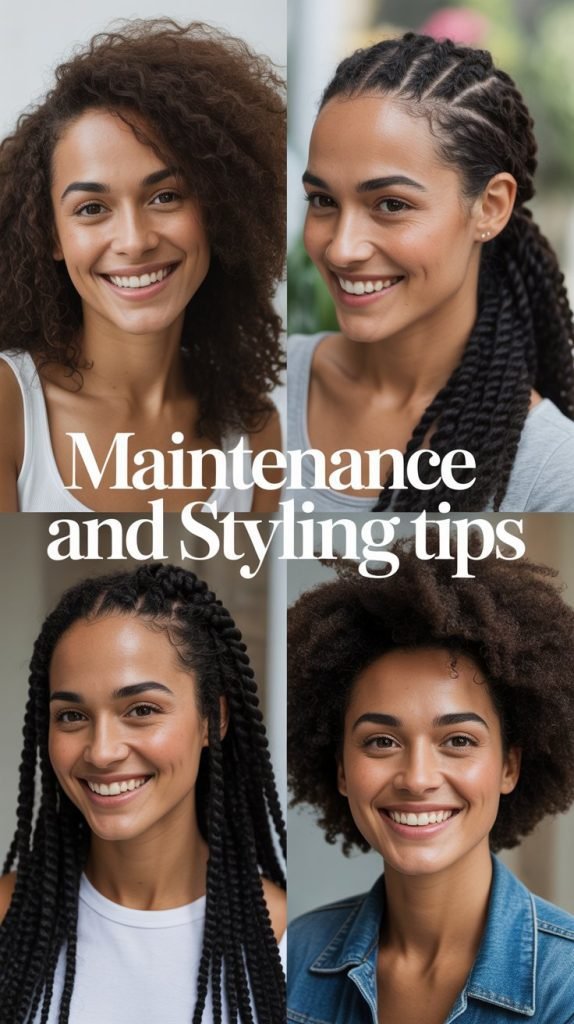
Proper maintenance and styling techniques ensure your medium-length hair with bangs always looks fresh, intentional, and professionally styled regardless of your daily routine.
Daily Styling Routine
- Begin with clean, towel-dried hair and apply heat protectant spray throughout the medium-length sections and bangs before using any hot tools.
- Focus on drying bangs first while the rest of the hair remains damp, as this prevents the bangs from drying in awkward directions.
- Use a medium round brush to direct bangs while blow-drying, either straight down for blunt styles or to the side for swept variations.
- Once bangs are set, complete drying the remaining hair using your preferred method—round brush for smoothness, diffuser for waves, or air-drying for natural texture.
- Finish with a small amount of styling product appropriate for your desired result: smoothing serum for sleekness, texturizing spray for piece-y separation, or light hairspray for hold.
Washing Frequency
- Medium-length hair with bangs typically requires washing every 2-4 days depending on hair texture, scalp oil production, and styling product usage.
- Bangs often become oily faster than the rest of the hair due to forehead oil transfer, sometimes necessitating bang-only washing between full washes.
- Dry shampoo applied at the roots and along the bang line absorbs excess oil, extends time between washes, and adds volume.
- When washing, use lukewarm water and focus shampoo on the scalp and roots while allowing suds to gently cleanse the lengths during rinsing.
- Conditioning should concentrate on the mid-lengths and ends rather than the roots or bangs to prevent rapid oil buildup and heaviness.
Trimming Schedule
- Bangs require trimming every 2-3 weeks to maintain their intended length and prevent them from interfering with vision or losing their shape.
- The medium-length portions need cutting every 6-8 weeks to preserve the style’s shape, remove split ends, and maintain healthy hair.
- Between professional appointments, careful at-home bang trims prove manageable following proper techniques: cutting on dry hair in small sections using sharp scissors.
- Always trim conservatively, removing less length than you think necessary, since hair cannot be reattached but more can always be cut.
- Watching tutorial videos from professional stylists or consulting resources from reputable sources like Allure provides guidance for safe at-home maintenance.
Product Recommendations
- Lightweight mousses applied to damp hair before blow-drying add volume without weighing down medium-length hair or bangs.
- Dry shampoo serves double duty by absorbing oil and adding texture, making it essential for extending washes and refreshing styles.
- Texturizing sprays create piece-y separation and enhance natural texture in both the medium-length sections and piece-y bang styles.
- Smoothing serums containing silicones tame frizz and add shine, though they should be used sparingly to prevent greasiness, especially on bangs.
- Flexible-hold hairsprays maintain style without creating stiffness, allowing natural movement while preventing humidity-induced frizz.
Overnight Care
- Sleeping with hair in a loose, low ponytail or braid prevents tangling while maintaining the integrity of your styled medium-length cut.
- Using a silk or satin pillowcase reduces friction that causes frizz, breakage, and disrupts both the medium-length style and bang placement.
- Some people find success with a light, breathable hair wrap that protects the style overnight without creating excessive heat or tension.
- Bangs can be pinned back with a soft clip while sleeping to prevent them from getting crushed or developing odd bends that require restyling.
- Morning refreshing typically involves lightly misting bangs with water and re-blow-drying them quickly while leaving the rest of the style relatively undisturbed.
6. Styling Variations for Different Occasions
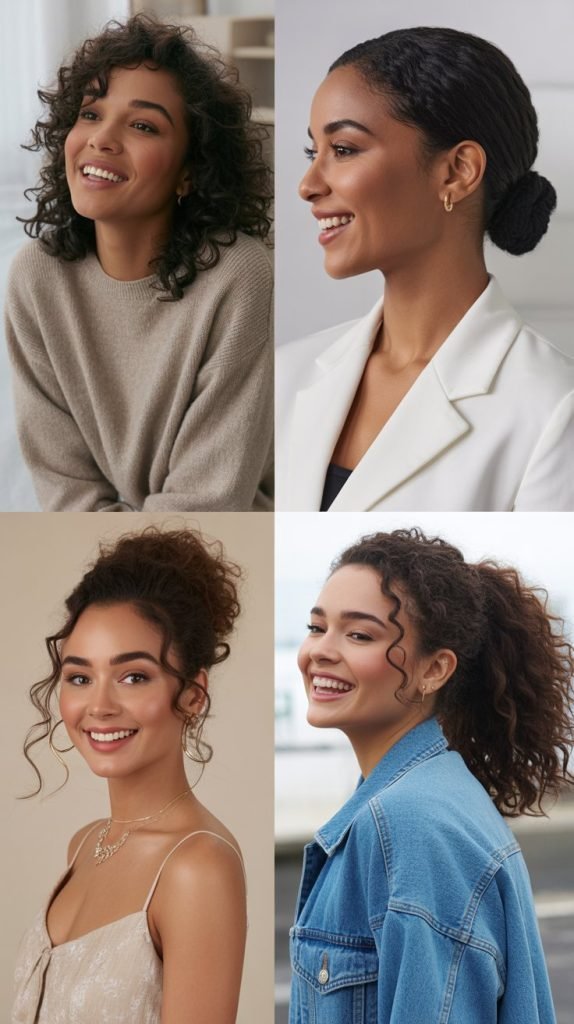
Medium-length hair with bangs offers remarkable versatility, allowing you to adapt your look for various settings and events with minimal effort and time investment.
Casual Everyday Style
- Air-dried medium-length hair with naturally textured bangs creates an effortless, lived-in look perfect for running errands, meeting friends, or relaxed weekends.
- Adding a texturizing spray while hair remains damp enhances natural wave patterns and prevents the style from appearing too polished or deliberately styled.
- Loose, undone waves achieved through braiding damp hair and allowing it to dry create relaxed texture that pairs beautifully with tousled curtain or wispy bangs.
- A simple middle or side part with bangs swept casually to the side maintains comfort and style without requiring elaborate styling techniques.
- Minimal product use keeps the style touchable and natural-looking while preventing buildup that necessitates more frequent washing.
Professional Workplace Appearance
- Sleek, blow-dried medium-length hair with smooth bangs creates polish and sophistication appropriate for business settings and important meetings.
- A low ponytail or half-up style with carefully styled bangs frames the face while keeping hair controlled and professional-looking throughout the workday.
- Subtle waves add visual interest without appearing overly casual, striking the perfect balance between approachable and competent.
- Using smoothing products and ensuring bangs lay flat without separation creates the refined appearance that professional environments often require.
- Avoiding excessive volume or dramatic texture helps maintain a conservative aesthetic that won’t distract during presentations or client interactions.
Romantic Date Night Look
- Loose, flowing waves throughout medium-length hair with softly styled bangs create romance and femininity perfect for dinner dates or special evenings.
- Adding a small braid detail or twist on one side pulls hair slightly away from the face while maintaining a soft, approachable appearance.
- Enhancing shine with glossing products and ensuring hair appears healthy and well-maintained demonstrates care and attention to detail.
- Slightly more styled bangs—perhaps with added volume or deliberately swooped to one side—add polish without appearing overly formal or stiff.
- Incorporating small accessories like delicate clips or pins adds interest while keeping the overall style elegant and romantic rather than overdone.
Athletic and Active Styling
- High ponytails pull medium-length hair completely off the face and neck while allowing bangs to be pinned back or secured with a headband during workouts.
- Braiding damp hair before exercise ensures it dries in controlled waves afterward, providing a ready-made style once the braid is released post-workout.
- Using sport headbands or soft, stretchy bands keeps bangs away from the face without creating dents or breakage from tight elastic pressure.
- Dry shampoo applied before working out absorbs sweat and prevents hair from becoming excessively oily during physical activity.
- Accepting that athletic styling prioritizes function over form allows you to embrace practical solutions without sacrificing the overall health and condition of your medium-length hair and bangs.
Formal Event Elegance
- Sophisticated updos incorporating medium-length hair—such as low chignons or twisted buns—create elegance for weddings, galas, and formal occasions.
- Leaving bangs down and carefully styled provides face-framing softness that prevents updos from appearing too severe or harsh.
- Adding volume at the crown before securing hair up creates height and drama appropriate for special events and photographs.
- Incorporating small braids, twists, or strategic pinning throughout the updo adds visual interest and demonstrates styling effort.
- Finishing with strong-hold hairspray and shine spray ensures the style withstands dancing, weather, and long event durations while maintaining a polished appearance.
7. Common Challenges and Solutions

Even the most perfectly chosen medium-length hairstyle with bangs comes with occasional challenges that require practical solutions and troubleshooting techniques.
Managing Oily Bangs
- Bangs contact forehead skin constantly, transferring natural oils and causing them to appear greasy faster than the rest of the hair.
- Applying dry shampoo directly to bang roots and allowing it to sit for a few minutes before brushing through absorbs excess oil effectively.
- Training your hands to avoid touching bangs throughout the day prevents transferring additional oils from fingertips to the hair.
- Using blotting papers designed for facial skin works surprisingly well for absorbing oils from bangs in emergency situations without disturbing the style.
- Washing bangs separately between full hair washes provides freshness without requiring complete styling sessions or excessive water exposure.
Dealing with Cowlicks
- Cowlicks create stubborn hair growth patterns that cause bangs to stick up, separate awkwardly, or refuse to lay in the intended direction.
- Wetting the problem area and blow-drying while directing hair firmly in the desired direction using a brush helps temporarily overcome natural growth patterns.
- Strategic cutting by professional stylists who understand how to work with rather than against cowlicks proves most effective for long-term management.
- Applying light pomade or styling cream to problem areas while hair remains damp provides additional control and hold throughout the day.
- Sometimes accepting and working with the cowlick—perhaps by cutting bangs to naturally part where the cowlick directs them—creates easier maintenance than constant fighting.
The Growing-Out Phase
- Growing out bangs presents awkward length stages where hair is too long to stay out of eyes but too short to tuck behind ears comfortably.
- Using small bobby pins, clips, or decorative pins to secure bangs to the side transforms the growing-out phase into an intentional style choice.
- Braiding bangs into the front sections of hair incorporates them into the overall style while keeping them controlled during transition periods.
- Headbands, scarves, and other accessories provide fashionable solutions that keep growing bangs away from the face while adding visual interest.
- Increasing time between bang trims while maintaining regular cuts for the medium-length portions allows everything to gradually reach a uniform length.
Fighting Humidity and Frizz
- Humid weather causes hair cuticles to swell, creating frizz that particularly affects bangs due to their constant forehead contact and exposure.
- Anti-humidity products containing silicones create protective barriers that seal the hair cuticle and prevent moisture penetration.
- Blow-drying bangs straight when humidity threatens proves more effective than allowing air-drying, as the heat sets the style more firmly.
- Carrying a small travel-sized anti-frizz serum allows quick touch-ups throughout humid days when bangs begin to lose their smooth appearance.
- Avoiding touching hair frequently prevents disrupting the protective product layer and introducing additional frizz-causing moisture from hands.
Bang Separation Issues
- Bangs naturally separate into sections, sometimes creating gaps that expose forehead or cause uneven, stringy appearance.
- Applying dry shampoo at roots adds texture and grip that helps bangs stay together rather than separating into distinct sections.
- Using a round brush while blow-drying and directing all bangs in the same direction encourages them to act as one cohesive unit.
- Slightly over-directing bangs to one side while styling and then brushing them back to center creates fullness that prevents separation.
- Strategic cutting techniques by experienced stylists—such as adding subtle layering within the bangs themselves—reduces natural separation tendencies.
8. Choosing the Right Stylist and Communication Tips
Finding a skilled stylist who understands your vision and possesses the technical ability to execute medium-length cuts with bangs ensures satisfaction with your results.
Researching Potential Stylists
- Examining stylists’ social media portfolios on Instagram or Facebook reveals their work quality, specialty areas, and whether they regularly create the styles you desire.
- Reading online reviews from multiple platforms provides insight into stylists’ consistency, communication skills, and client satisfaction rates.
- Seeking recommendations from people whose hair you admire offers firsthand testimonials about stylists’ abilities and working styles.
- Scheduling consultations before committing to a cut allows you to meet stylists, discuss your vision, and assess whether your communication styles align.
- Visiting reputable sources like American Board of Certified Haircolorists helps verify credentials and professional standing when vetting potential stylists.
Effective Communication Techniques
- Bringing multiple reference photos showing your desired medium-length cut and bang style from various angles ensures clear visual communication.
- Explaining your daily styling routine honestly helps stylists recommend cuts that align with your maintenance willingness and skill level.
- Discussing your hair’s natural texture, growth patterns, and any problematic areas ensures the stylist accounts for these factors during cutting.
- Asking questions about styling techniques, product recommendations, and maintenance requirements demonstrates engagement and helps you understand the commitment involved.
- Being open to professional suggestions while clearly stating any non-negotiable preferences creates collaborative relationships where stylists can offer expertise while respecting your boundaries.
Understanding Professional Terminology
- “Point cutting” describes a texturizing technique where scissors cut into hair ends at an angle, creating soft, feathered edges rather than blunt lines.
- “Slide cutting” involves sliding scissors down the hair shaft while cutting, removing weight and creating movement without drastically changing length.
- “Face framing” refers to shorter layers cut around the face that create dimension and draw attention to facial features.
- “Graduation” describes hair cut at angles where lengths progressively increase, creating stacked or layered effects.
- “Texturizing” encompasses various techniques that remove bulk, add movement, and create dimension without significantly altering the overall length or shape.
Setting Realistic Expectations
- Understanding that reference photos show professional styling under optimal lighting conditions helps maintain realistic expectations for daily results.
- Recognizing that hair texture differences between you and reference models may necessitate style modifications ensures satisfaction with personalized results.
- Accepting that growing and maintaining medium-length hair with bangs requires commitment to regular trims and daily styling prevents disappointment.
- Trusting your stylist’s professional judgment when they suggest modifications based on your individual features, hair texture, or lifestyle demonstrates wisdom.
- Patience during the styling process and understanding that perfect results may require multiple appointments allows for gradual refinement and optimization.
9. Color Considerations for Enhanced Dimension
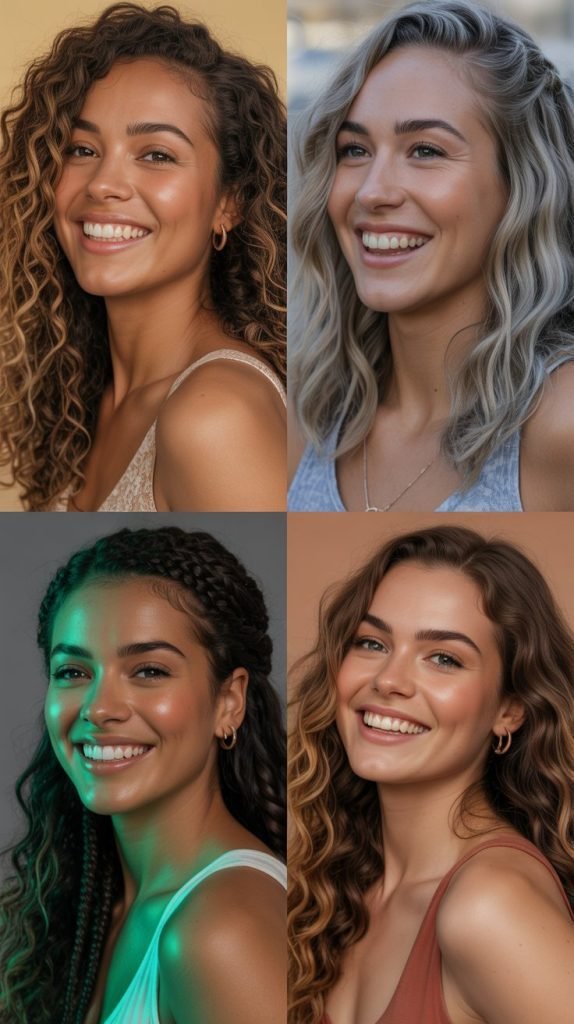
Strategic hair color techniques can dramatically enhance medium-length hairstyles with bangs, adding depth, dimension, and visual interest that complements the cut’s structure.
Highlighting Techniques
- Balayage involves hand-painting highlights throughout the hair, creating natural-looking dimension that enhances layers and adds movement to medium-length cuts.
- Face-framing highlights placed strategically around the bangs and front sections draw attention to facial features and create brightness that flatters complexion.
- Babylights consist of extremely fine, delicate highlights that mimic natural sun-lightening and add subtle dimension without dramatic contrast.
- Foil highlights create more precise, controlled placement and can achieve lighter results than balayage techniques, particularly for those wanting significant lift.
- Dimensional highlighting throughout medium-length hair prevents solid, flat color while adding depth that makes the cut appear more sophisticated and expensive.
Ombre and Gradient Effects
- Ombre features darker roots that gradually transition to lighter ends, creating low-maintenance color that grows out gracefully without obvious regrowth lines.
- The gradual lightening effect in ombre applications adds visual length to medium-length cuts and creates movement that enhances layered styles.
- Ensuring the lightest portions don’t start until below the bangs maintains consistency in bang color while allowing the gradient effect throughout longer sections.
- Ombre’s inherent dimension makes medium-length hair appear fuller and more voluminous, particularly benefiting those with finer hair textures.
- The low-maintenance nature of ombre proves ideal for those who want color enhancement without frequent salon visits for root touch-ups.
Bang-Specific Coloring
- Leaving bangs slightly darker than the rest of the hair creates definition and prevents them from appearing washed-out or blending too seamlessly with skin tone.
- Strategically placing a few highlights within the bangs adds dimension and prevents solid, flat color that can appear harsh against the face.
- Ensuring bang color complements undertones in skin prevents the face-framing sections from creating unflattering contrasts or clashing with complexion.
- Maintaining bang color consistency during touch-ups requires careful attention since bangs grow out and show roots faster than other sections.
- Avoiding excessive lightening in bangs prevents damage to these delicate sections that receive frequent heat styling and handling.
Color and Face Shape
- Lighter pieces placed strategically around the face create brightness that can make round or square faces appear more angular and defined.
- Darker colors at the roots and crown add depth that can make longer faces appear more balanced and proportionate.
- Warm tones like caramel and honey add richness that complements warm skin undertones and creates inviting, approachable aesthetics.
- Cool tones including ash and platinum create sophisticated, edgy appearances that suit those with cooler skin undertones.
- Consulting color theory resources from professional organizations like Professional Beauty Association provides guidance for choosing flattering shades.
Maintenance Requirements
- Colored hair requires specialized shampoos and conditioners formulated to preserve color vibrancy and prevent premature fading.
- Heat protectant products become even more critical when hair is colored, as processed hair sustains damage more easily during heat styling.
- Regular toning appointments maintain desired shades, particularly for blonde or fashion colors that can develop unwanted brassiness between full color services.
- Deep conditioning treatments restore moisture and repair damage caused by color processing, maintaining hair health alongside aesthetic appeal.
- Touch-up frequency depends on chosen color technique, with root-heavy applications requiring maintenance every 4-6 weeks while balayage and ombre extend to 8-12 weeks.
10. Age-Appropriate Styling Across Decades
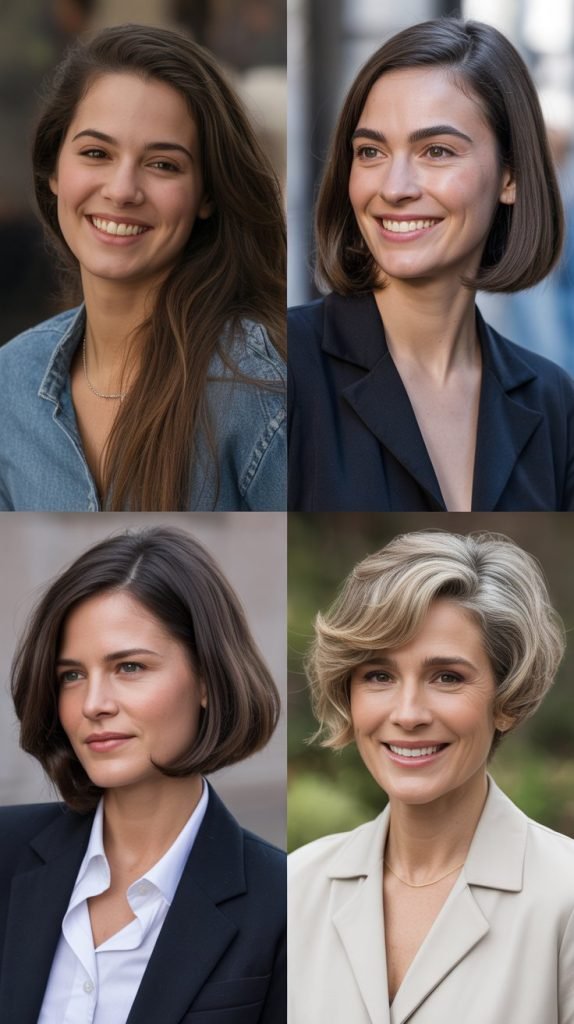
Medium-length hair with bangs proves flattering across all ages, though styling nuances and bang choices may evolve to complement changing features and lifestyle needs through different life stages representation.
Twenties: Experimental and Trendy
- The twenties represent an ideal time for experimenting with bold bang choices like baby bangs, vivid colors, and edgy, textured medium-length cuts.
- Following current trends and pushing style boundaries aligns with this age group’s social media presence and desire for self-expression.
- Lower maintenance concerns often characterize this decade since professional demands may be less rigid and styling time more available.
- Embracing natural texture and lived-in aesthetics resonates with twenty-somethings’ authentic, less-polished styling preferences.
- The resilience of youthful hair tolerates frequent styling, color changes, and experimentation without showing significant damage.
Thirties: Polished and Versatile
- Thirties often bring increased professional responsibilities requiring more polished, sophisticated styling that remains current without appearing too trendy.
- Curtain bangs and side-swept styles offer versatility for both professional and social settings, transitioning seamlessly between work and personal life.
- Balancing maintenance requirements with busy schedules becomes important as careers advance and families potentially expand.
- Subtle color enhancements rather than dramatic changes typically suit the refined aesthetic many develop during this decade.
- Classic medium-length cuts with modern touches create timeless appeal that photographs well and maintains professional credibility.
Forties: Elegant and Refined
- The forties often bring increased confidence and refined personal style, allowing for elegant, sophisticated medium-length cuts with carefully chosen bangs.
- Side-swept or soft, wispy bangs typically prove more flattering than heavy, blunt styles as facial features may soften during this decade.
- Strategic coloring that covers emerging gray hair while maintaining natural-looking dimension becomes an important consideration.
- Prioritizing hair health through quality products and treatments ensures hair maintains shine, strength, and vitality despite hormonal changes.
- Timeless, elegant styles that enhance rather than fight against natural features create age-appropriate beauty that celebrates experience.
Fifties and Beyond: Graceful and Sophisticated
- Medium-length hair with soft bangs creates youthful framing without appearing as if one is trying too hard to recapture youth.
- Softer, side-swept bangs tend to flatter more than heavy, blunt styles, gently framing the face and drawing attention to eyes.
- Embracing natural gray or maintaining professional color application that complements mature skin tones creates authentic beauty.
- Adjusting styling techniques to account for texture changes—often increased fineness or different wave patterns—ensures continued success with chosen styles.
- Focusing on hair health, shine, and condition becomes paramount since these qualities communicate vitality and proper self-care.
Conclusion
Discovering which hairstyles with medium-length hair and bangs suit you best ultimately comes down to understanding your unique combination of face shape, hair texture, lifestyle needs, and personal style preferences.
Throughout this comprehensive guide, we’ve explored the essential elements that influence your decision—from identifying your face shape and matching it with complementary bang styles, to understanding the maintenance requirements and styling techniques that keep your look fresh and intentional every day.
Medium-length hair offers the perfect balance of versatility and manageability, while bangs add that personalized touch that transforms a haircut into a true style statement.
Whether you choose the effortless appeal of curtain bangs, the bold drama of blunt bangs, or the soft elegance of side-swept styles, the key to success lies in working with rather than against your natural features and hair characteristics.
Remember that communication with a skilled stylist, realistic expectations, regular maintenance, and learning proper styling techniques all contribute to long-term satisfaction with your chosen look.
Armed with the knowledge from this guide about face shapes, bang varieties, styling methods, and solutions to common challenges, you’re now equipped to make an informed decision and confidently embrace a medium-length hairstyle with bangs that enhances your natural beauty and fits seamlessly into your daily life.
