

Cutting curly hair in layers can transform your natural texture from unruly and shapeless to beautifully defined and full of movement.
Unlike straight hair, curly hair requires specialized techniques that honor its unique growth patterns and natural spring.
The Ultimate Guide to Cutting Curly Hair in Layers will walk you through professional methods, essential tools, and expert tips that ensure your curls maintain their bounce while achieving the perfect layered look.
This comprehensive guide covers everything from understanding your curl pattern to mastering advanced cutting techniques, helping you achieve salon-quality results whether you’re a professional stylist or cutting your own hair at home.
This article provides an in-depth exploration of layered curly hair cutting, covering curl pattern analysis, essential tools and preparation, various cutting techniques, styling methods, and maintenance routines.
You’ll discover how to work with different curl types, avoid common mistakes, and create customized layered cuts that enhance your natural texture while providing the shape and movement you desire.
1. Understanding Your Curl Pattern and Hair Structure
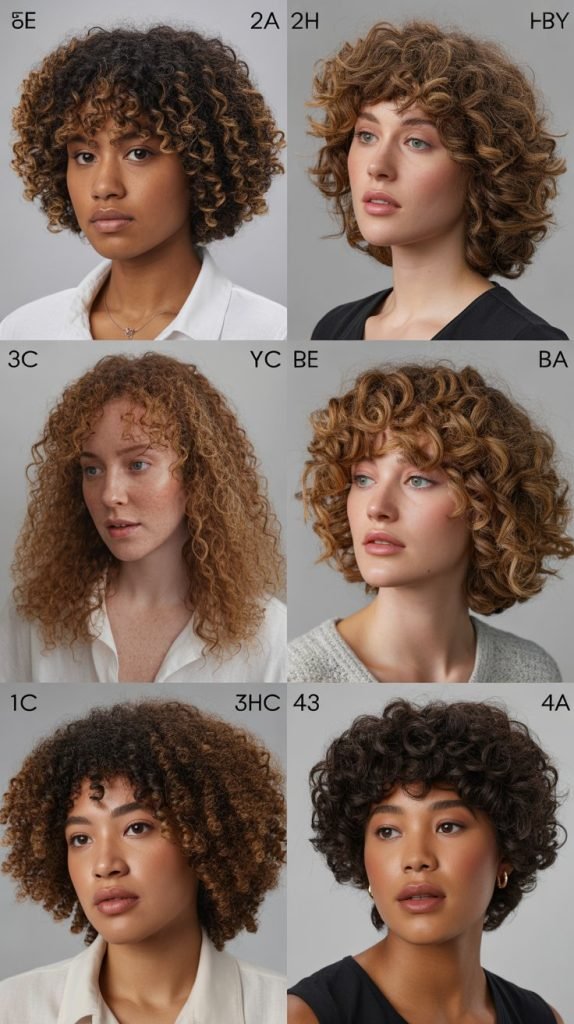
Before attempting any layered cut, understanding your specific curl pattern forms the foundation of successful curly hair cutting.
Each curl type responds differently to layering techniques and requires tailored approaches to achieve optimal results.
- Curl patterns range from loose waves (2A) to tight coils (4C), with each type requiring different layering strategies
- Type 2 curls benefit from longer layers that prevent the hair from appearing triangular or overly voluminous
- Type 3 curls respond well to medium-length layers that enhance natural bounce and reduce bulk
- Type 4 curls require careful consideration of shrinkage and benefit from strategic layering that maintains length while adding shape
- Hair porosity affects how layers will settle, with high-porosity hair requiring more conservative cuts to prevent frizz
- Curl density determines the spacing between layers, with thick hair needing more dramatic layering than fine hair
- Understanding your hair’s elasticity helps predict how much the hair will spring back after cutting
- Natural growth patterns and cowlicks influence where layers should be placed for the most flattering results
2. Essential Tools and Preparation for Layered Curly Hair Cutting

Proper preparation and the right tools make the difference between a professional-looking layered cut and a potential disaster.
Investing in quality equipment and following proper preparation steps ensures clean cuts and predictable results.
- Sharp, professional-grade hairdressing scissors are non-negotiable for clean cuts that won’t cause split ends
- Wide-tooth combs and detangling brushes help separate curls without disrupting their natural pattern
- Sectioning clips in various sizes allow for precise parting and organization during the cutting process
- Spray bottles with fine mist settings keep hair at the optimal moisture level throughout the cut
- Curl-specific cutting tools like razor combs can create softer, more natural-looking layers
- Clean, damp hair cuts more predictably than wet or completely dry hair for most curly textures
- Pre-cutting treatments with leave-in conditioner help maintain curl definition during the process
- Proper lighting and a comfortable cutting environment prevent mistakes and ensure precision
- Having reference photos and discussing the desired outcome beforehand sets clear expectations
3. The Dry Cutting Method for Natural Curl Definition
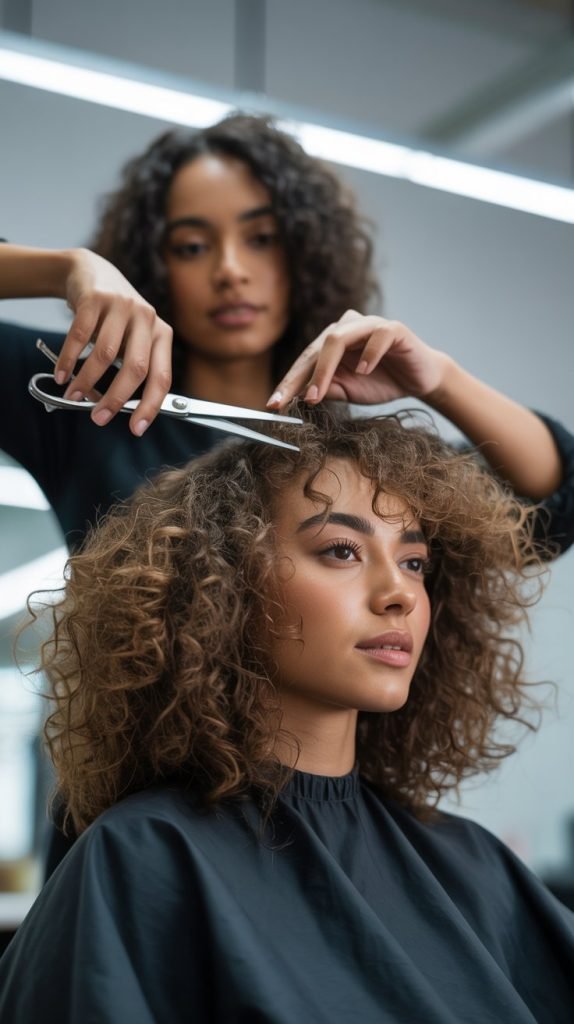
Dry cutting has revolutionized curly hair styling by allowing stylists to see exactly how each curl will fall in its natural state.
This method provides the most accurate preview of the final result and prevents the surprise of dramatically different lengths when curls dry.
- Dry cutting reveals the true length and shape of each curl, eliminating guesswork about the final result
- Each curl can be individually assessed and trimmed to complement its natural pattern and direction
- This method prevents the common problem of curls appearing much shorter than expected after drying
- Stylists can immediately see how layers interact with each other in their natural state
- Problem areas like uneven curls or awkward lengths become immediately apparent during cutting
- The technique works best on clean, styled hair that represents the client’s typical daily look
- Dry cutting allows for more conservative approaches, with the ability to take off small amounts at a time
- This method is particularly effective for maintaining curl integrity and preventing unnecessary damage
- Advanced dry cutting techniques include twist cutting and point cutting for softer layer transitions
4. Wet Cutting Techniques for Structured Layered Looks

While dry cutting offers natural results, wet cutting provides more structure and precision for dramatic layered transformations.
This traditional method works exceptionally well when creating defined geometric layers or when working with very long curly hair.
- Wet cutting allows for more dramatic and structured layering that creates bold shape changes
- Hair sections can be pulled to consistent tension levels, ensuring even layer distribution
- This method works well for clients who want significant length reduction along with layering
- Sectioning patterns become more crucial in wet cutting to ensure balanced results when hair dries
- The point-cutting technique creates softer edges that blend naturally when curls dry and spring up
- Slide cutting can thin out bulk while maintaining length in specific areas
- Wet cutting requires experience in predicting curl shrinkage to avoid cutting too much length
- This approach is ideal for creating foundation cuts that will grow out gracefully over time
- Combining wet and dry cutting techniques often produces the most optimal results for complex curl patterns
5. Face-Framing Layers and Customization Techniques

Face-framing layers can completely transform how curly hair complements facial features, but they require careful consideration of curl direction, face shape, and personal style preferences.
Customizing these layers ensures the most flattering results for each individual.
- Face-framing layers should follow natural curl patterns rather than fighting against them
- Different face shapes require different layer lengths and angles for the most flattering results
- Round faces benefit from longer layers that create vertical lines and elongate the appearance
- Square faces are softened by curved layers that begin below the jawline
- Heart-shaped faces look best with layers that add width around the chin area
- Long faces benefit from layers that add width at the sides and avoid excessive height
- Curl direction must be considered when placing face-framing layers to ensure they fall naturally
- Asymmetrical layering can correct facial imbalances while adding modern style elements
- Regular maintenance of face-framing layers keeps them looking fresh and intentional
6. Managing Curl Shrinkage and Length Expectations

Understanding and managing curl shrinkage is crucial for achieving desired length results in layered curly hair cuts.
Shrinkage varies significantly between curl types and can dramatically affect the final appearance of layered cuts.
- Curl shrinkage can range from 20% to 75% depending on the curl pattern and hair porosity
- Type 4 curls typically experience the most dramatic shrinkage and require careful length planning
- Stretch tests before cutting help predict how much length will be lost when curls dry naturally
- Layering must account for shrinkage to prevent shorter layers from becoming too short
- Different sections of the head may experience varying degrees of shrinkage
- Humidity levels affect shrinkage and should be considered when setting length expectations
- Pre-cutting consultations should include demonstrations of expected shrinkage using similar hair textures
- Photography of stretched versus natural curl lengths helps clients understand realistic outcomes
- Gradual cutting approaches allow for adjustments as shrinkage becomes apparent during the process
7. Styling and Finishing Techniques for Layered Curly Hair

Proper styling techniques can make or break a layered curly hair cut, with the right methods enhancing the layers while the wrong approaches can create chaos.
Understanding how to work with freshly cut layers ensures the best possible results.
- Curl-enhancing products should be applied to damp hair using scrunching motions that encourage layer separation
- Diffusing with a blow dryer on low heat and speed helps set layers without causing frizz
- Plopping techniques can help layers settle naturally while removing excess moisture
- Layer definition is enhanced by using different product concentrations on different sections
- Finger coiling can help individual layers maintain their shape and definition
- Sleeping techniques with silk pillowcases or bonnets protect freshly cut layers overnight
- Refresh techniques for day-two hair help maintain layer separation and definition
- Avoiding brushing or combing dry curls prevents layer disruption and frizz creation
- Professional finishing sprays can lock in layer definition and provide humidity protection
8. Common Mistakes and How to Avoid Them
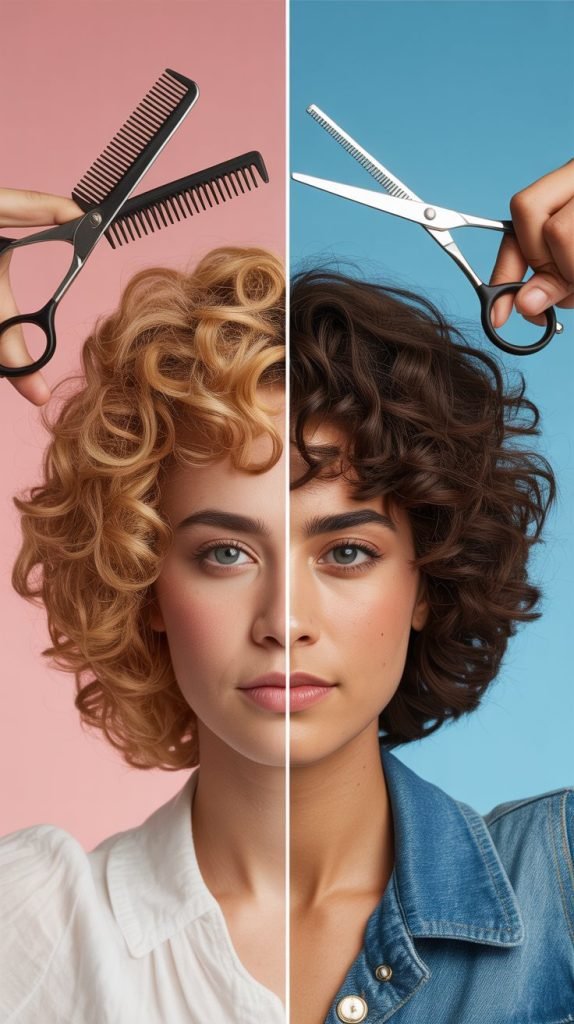
Even experienced stylists can make mistakes when cutting curly hair in layers, but understanding common pitfalls helps prevent disappointing results. Learning from these mistakes ensures better outcomes for future cuts.
- Cutting curly hair like straight hair ignores the unique properties that make curls behave differently
- Using dull scissors creates ragged edges that lead to frizz and poor curl formation
- Thinning shears can destroy curl patterns and should be used sparingly if at all
- Over-layering removes too much weight and can make curly hair appear frizzy and unmanageable
- Ignoring natural growth patterns results in layers that fight against the hair’s natural tendencies
- Cutting layers too short near the crown creates unflattering volume and shape issues
- Rushing the cutting process leads to uneven results and missed opportunities for customization
- Failing to consider the client’s styling routine results in cuts that are difficult to maintain at home
- Not accounting for curl maturation over time can lead to cuts that don’t age well
9. Maintenance and Long-Term Care for Layered Curly Hair

Maintaining layered curly hair requires ongoing attention and proper care routines to keep the cut looking fresh and the layers well-defined. Understanding long-term maintenance needs helps preserve the investment in a quality cut.
- Regular trims every 8-12 weeks maintain layer integrity and prevent split ends from traveling up the hair shaft
- Deep conditioning treatments keep curls hydrated and help layers maintain their shape and bounce
- Protective styling at night preserves layer definition and prevents tangling
- Seasonal adjustments to layer lengths account for changes in humidity and curl behavior
- Product rotation prevents buildup that can weigh down layers and reduce curl definition
- Professional touch-ups can address any layers that grow out unevenly or lose their shape
- Home maintenance tools like silk scarves and microfiber towels protect the investment in professional cutting
- Regular scalp care ensures healthy hair growth that supports well-defined layers
- Tracking curl changes over time helps inform future cutting and maintenance decisions
Conclusion
The Ultimate Guide to Cutting Curly Hair in Layers provides the comprehensive knowledge needed to transform curly hair from unmanageable to beautifully defined through strategic layering techniques.
Success with layered curly hair cuts depends on understanding individual curl patterns, using proper tools and techniques, managing shrinkage expectations, and maintaining the cut through appropriate care routines.
Whether you’re a professional stylist expanding your curly hair expertise or someone looking to better understand your own curl care journey, these techniques and principles will help you achieve stunning, long-lasting results that celebrate the natural beauty of textured hair.
Remember that cutting curly hair is both an art and a science, requiring patience, practice, and respect for each curl’s unique characteristics to create truly transformative layered styles.
