

Wavy pixie haircuts represent the perfect fusion of edgy sophistication and natural texture, creating a versatile look that works for every face shape and lifestyle.
This bold yet feminine hairstyle offers endless styling possibilities while maintaining the low-maintenance appeal that makes pixie cuts so popular.
Whether you’re considering making the chop or already rocking this trendy style, mastering the art of styling wavy pixie haircuts will transform your daily hair routine and boost your confidence.
From understanding your hair’s natural texture to exploring creative styling techniques, this comprehensive guide will walk you through everything you need to know about How to Style Wavy Pixie Haircuts.
You’ll discover professional tips for enhancing your waves, learn about essential products and tools, and explore various styling methods that will keep your pixie cut looking fresh and dynamic every day.
1. Understanding Your Wavy Hair Texture

Before diving into styling techniques, it’s crucial to understand your unique wave pattern and hair characteristics.
Wavy hair typically falls into three categories, and each requires slightly different approaches to achieve the best results with a pixie cut.
- Type 2A waves are loose and subtle, creating gentle bends that add volume without pronounced curl definition
- Type 2B waves form more defined S-patterns, offering moderate texture that holds styles well throughout the day
- Type 2C waves are the most pronounced, featuring strong wave patterns that can sometimes border on curly
- Hair porosity affects how your waves respond to products, with low porosity hair needing lightweight formulas and high porosity hair benefiting from heavier moisturizers
- Density determines the overall fullness of your pixie cut, influencing which styling techniques will work best for your specific hair type
- Understanding your hair’s elasticity helps predict how it will hold curls and waves, guiding your choice of styling methods and products
2. Essential Products for Wavy Pixie Styling

The right products form the foundation of any successful wavy pixie styling routine. Selecting formulas specifically designed for short, textured hair ensures your waves look defined and healthy.
- Sea salt spray creates effortless beach waves while adding grip and texture to short hair lengths
- Curl-enhancing creams define individual wave patterns without weighing down fine or short hair strands
- Lightweight styling gels provide hold without stiffness, perfect for maintaining pixie cut shape throughout the day
- Texturizing paste adds piecey definition and helps create tousled, lived-in looks that complement wavy textures
- Heat protectant sprays shield hair from thermal damage when using styling tools to enhance or redirect waves
- Dry shampoo extends style longevity and adds volume to roots between washes
- Leave-in conditioners maintain moisture balance without overwhelming short hair with excess weight
3. Pre-Styling Preparation Techniques

Proper preparation sets the stage for long-lasting, beautiful wavy pixie styles. These foundational steps ensure your hair is primed for whatever styling method you choose.
- Start with freshly washed hair using sulfate-free shampoo to avoid stripping natural oils that enhance wave formation
- Apply conditioner primarily to mid-lengths and ends to prevent weighing down the crown area of your pixie cut
- Gently squeeze excess water from hair with a microfiber towel to minimize frizz and preserve natural wave patterns
- Detangle carefully using a wide-tooth comb while hair is still damp and conditioner is present
- Apply leave-in products to damp hair for maximum absorption and even distribution throughout short lengths
- Section hair strategically before applying styling products to ensure complete coverage and consistent results
- Scrunch hair gently to encourage natural wave formation before beginning any heat styling processes
4. Air-Drying Methods for Natural Waves

Air-drying techniques allow your natural wave pattern to shine while creating effortless, touchable texture. These methods work particularly well for wavy pixie cuts since the shorter length reduces drying time significantly.
- The scrunch method involves repeatedly squeezing sections of damp hair to encourage curl formation and reduce frizz
- Plopping with a cotton t-shirt helps set waves while preventing the friction that traditional towels can cause
- Pineappling technique gathers hair loosely at the very top to preserve wave patterns while sleeping on damp hair
- Diffusing on cool air setting speeds the process while maintaining the natural texture that air-drying provides
- Strategic clipping of sections creates volume at the roots while allowing waves to form naturally underneath
- Regular scrunching during the drying process helps maintain wave definition and prevents limp, lifeless results
- Avoid touching hair until completely dry to prevent frizz and maintain crisp wave formation
5. Heat Styling Techniques and Tools
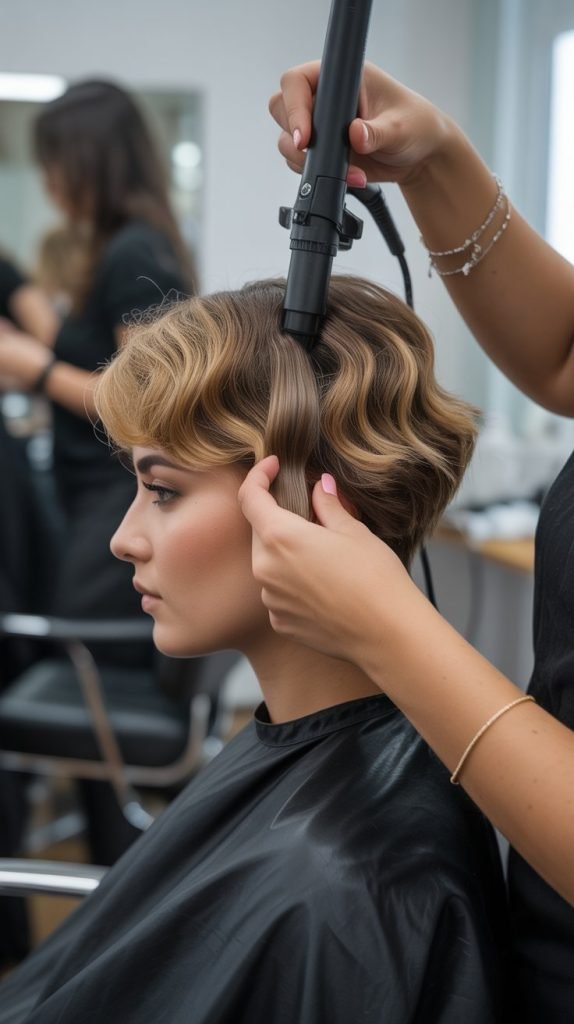
Heat styling opens up numerous possibilities for transforming your wavy pixie cut. With the right techniques and tools, you can enhance natural waves or create entirely new textures while maintaining hair health.
- Always use heat protectant products before applying any thermal styling tools to prevent damage
- Work with small sections to ensure even heat distribution and consistent results throughout your pixie cut
- Alternate curl directions when using curling irons to create natural-looking, varied wave patterns
- Allow styled sections to cool completely before running fingers through or applying finishing products
- Use lower temperatures on damaged or fine hair to prevent additional stress and breakage
- Finish with cool air from your blow dryer to set the style and add extra shine to your waves
6. Creating Volume and Texture

Volume and texture are essential elements that make wavy pixie cuts truly shine. These techniques help maximize the impact of your short length while creating dynamic, eye-catching styles.
- Root lifting techniques using a flat brush create instant volume at the crown area where pixie cuts need the most height
- Backcombing small sections gently adds texture and grip without creating visible teasing lines
- Strategic placement of volumizing powder at the roots provides lift that lasts throughout the day
- Twisting small sections while styling creates natural-looking texture and movement in short layers
- Scrunching with styling products enhances natural wave patterns while adding deliberate messiness
- Using a wide-tooth comb to lift sections during blow-drying creates lasting volume from the roots
- Finishing with texturizing spray adds grit and hold to maintain volume and texture between washes
7. Day-to-Night Styling Transformations

Wavy pixie cuts offer incredible versatility for transitioning between casual day looks and sophisticated evening styles. Learning quick transformation techniques maximizes your styling investment.
- Adding hair accessories like headbands or clips instantly elevates a casual wavy pixie for evening events
- Smoothing the front sections with a flat iron creates a sleek contrast against textured back and sides
- Applying shine serum to finger-combed waves transforms matte daytime texture into glossy evening glamour
- Pinning one side behind the ear reveals facial features and creates an asymmetrical, sophisticated silhouette
- Misting with glitter spray adds sparkle for special occasions without damaging hair structure
- Creating finger waves in the front sections pays homage to vintage glamour while keeping modern edge
- Using bobby pins decoratively turns functional styling into fashionable evening accessories
8. Maintenance and Styling Schedule

Establishing a consistent maintenance routine ensures your wavy pixie cut always looks its best while minimizing daily styling time. Strategic scheduling keeps your hair healthy and your styles fresh.
- Weekly deep conditioning treatments maintain moisture levels crucial for healthy wave formation in short hair
- Bi-weekly trims keep the pixie shape crisp and prevent the awkward growing-out phases that plague short cuts
- Daily morning refresh sprays reactivate yesterday’s products without requiring complete restyling from scratch
- Rotating between air-drying and heat styling prevents damage while providing style variety throughout the week
- Evening preparation with silk pillowcases preserves wave patterns and reduces morning styling time significantly
- Monthly clarifying treatments remove product buildup that can weigh down short hair and diminish wave definition
- Seasonal adjustments to product weight and hold accommodate changing humidity and weather conditions
9. Troubleshooting Common Styling Issues

Even experienced stylists encounter challenges when working with wavy pixie cuts. Understanding how to address common problems saves time and frustration while ensuring consistently great results.
- Frizz control starts with proper drying techniques and continues with anti-humidity products throughout the day
- Flat crown areas benefit from strategic blow-drying with a round brush and volumizing products applied at the roots
- Uneven wave patterns can be corrected by adjusting product application and using targeted styling techniques
- Limp, lifeless waves respond well to lightweight mousses and air-drying methods that enhance natural texture
- Overly defined waves can be softened by finger-combing with a small amount of hair oil or serum
- Stubborn cowlicks require specific directional styling using heat and strong-hold products to redirect hair growth patterns
- Color-treated hair needs extra moisture and gentler styling methods to maintain wave integrity and prevent damage
10. Seasonal Styling Adaptations

Different seasons present unique challenges and opportunities for styling wavy pixie cuts. Adapting your routine to environmental conditions ensures year-round success with your short, textured hairstyle.
- Summer humidity requires anti-frizz products and protective styles that embrace rather than fight environmental conditions
- Winter dryness calls for heavier moisturizing treatments and protective styling methods that combat static electricity
- Spring’s variable weather demands versatile products that can handle both humid and dry conditions throughout the day
- Fall’s crisp air allows for longer-lasting styles but requires adjustment to prevent over-drying from heating systems
- UV protection becomes crucial during sunny months to prevent color fading and texture changes in short hair
- Indoor heating adjustments include humidifiers to maintain optimal moisture levels for healthy wave formation
- Seasonal color changes may require product reformulation as chemical processes can alter hair’s natural texture and porosity
Conclusion
Mastering the art of How to Style Wavy Pixie Haircuts opens up a world of creative possibilities while maintaining the effortless chic that makes this cut so appealing.
From understanding your unique wave pattern to executing flawless styling techniques, every aspect of this guide contributes to achieving consistently beautiful results.
The key lies in embracing your hair’s natural texture while learning to enhance and direct it through proper product selection, strategic styling methods, and consistent maintenance routines.
Remember that great wavy pixie styling is as much about confidence as it is about technique – when you understand your hair and work with its natural characteristics, stunning results become second nature.
With practice and patience, these styling methods will become intuitive, allowing you to wake up each morning excited about the endless possibilities your wavy pixie cut provides.
