

Growing healthy 3C/4A hair is a journey that blends patience, knowledge, and consistent care.
This article, “How to Grow Healthy 3C/4A Hair”, offers a comprehensive guide to understanding your hair type, establishing effective routines, and embracing practices that promote growth and vitality.
Exploring the unique characteristics of 3C and 4A hair, delving into moisturizing techniques, protective styling, and nutritional considerations, you’ll be equipped with the tools to nurture your curls and achieve your hair goals.
In This Post......
1. Understanding 3C and 4A Hair Types

Before embarking on a hair growth journey, it’s crucial to understand the specific characteristics of your hair type.
- 3C hair features tight corkscrew curls with a circumference similar to a pencil.Living Proof
- This hair type is densely packed, giving it a lot of volume and a tendency to frizz.
- 4A hair has a defined “S” pattern with coils that are about the size of a crochet needle.
- It is soft in texture and retains moisture well but can be prone to dryness.
- Both hair types benefit from moisture-rich products and gentle handling to maintain curl definition and health.
2. Establishing a Moisturizing Routine

Moisture is the cornerstone of healthy hair growth, especially for curly textures.
- Curly hair tends to be drier because natural oils have a harder time traveling down the twists and turns of the hair shaft.
- Regular deep conditioning treatments help replenish moisture and improve elasticity.
- Leave-in conditioners and curl creams can provide ongoing hydration throughout the day.
- Incorporating the LOC (Liquid, Oil, Cream) method can lock in moisture effectively.
- Avoiding harsh shampoos with sulfates can prevent stripping natural oils from the hair.
3. Gentle Cleansing Practices

Maintaining a clean scalp is essential for healthy hair growth.
- Use sulfate-free shampoos to cleanse the scalp without stripping moisture.
- Co-washing (washing with conditioner) can be an alternative to frequent shampooing.
- Limit shampooing to once a week or as needed based on your hair’s response.
- Always follow up with a moisturizing conditioner to restore hydration.
4. Protective Styling Options
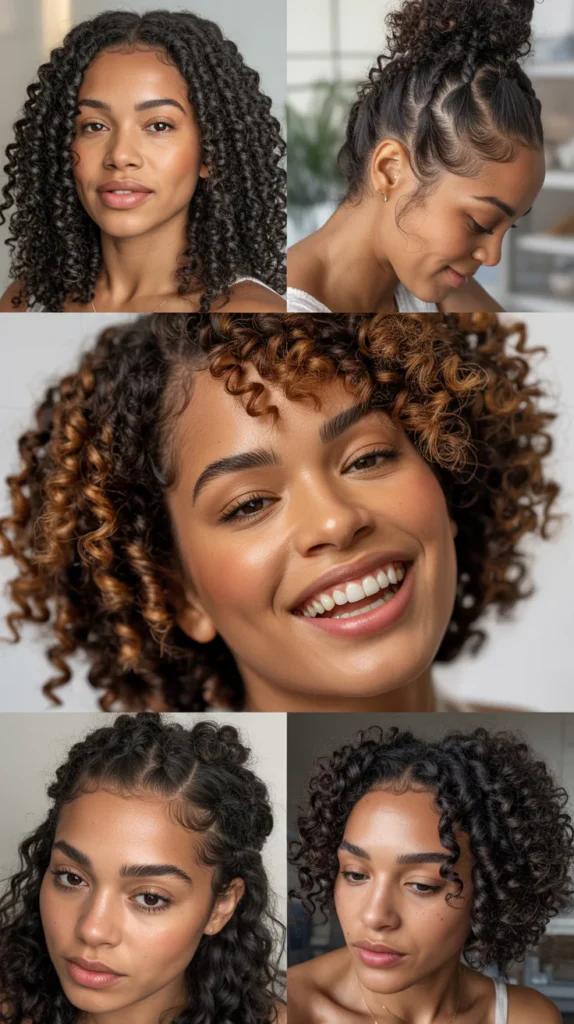
Protective styles help minimize manipulation and shield hair from environmental stressors.
- Styles like braids, twists, and buns can protect ends and promote length retention.
- Ensure styles are not too tight to avoid tension on the scalp.
- Limit the duration of protective styles to prevent matting and breakage.
- Moisturize hair regularly even when it’s in a protective style.
5. Nighttime Hair Care

Night routines are crucial for maintaining moisture and preventing breakage.
- Sleep on a satin or silk pillowcase to reduce friction.
- Use a satin or silk bonnet or scarf to protect hair overnight.
- Pineapple your hair (gathering it into a loose, high ponytail) to preserve curls.
- Apply a light leave-in conditioner or oil before bed for added moisture.
6. Regular Trimming and Scalp Care

Maintaining healthy ends and a nourished scalp supports overall hair health.
- Trim your hair every 8-12 weeks to remove split ends.
- Regular scalp massages can stimulate blood flow and promote growth.
- Keep the scalp clean and free from buildup to prevent issues like dandruff.
- Use natural oils like tea tree or peppermint oil for scalp treatments.
7. Nutrition and Hydration

A balanced diet and proper hydration play a significant role in hair health.
- Consume foods rich in vitamins A, C, D, E, and B-complex for hair growth.
- Include protein-rich foods to strengthen hair strands.
- Omega-3 fatty acids found in fish and flaxseeds can enhance hair elasticity.
- Drink plenty of water to keep hair hydrated from the inside out.
8. Embracing Your Natural Texture

Loving your natural hair is a journey of self-acceptance and care.
- Celebrate the uniqueness of your 3C/4A curls.
- Avoid comparing your hair to others; every curl pattern is beautiful.
- Document your hair journey to track progress and stay motivated.
- Engage with communities and resources that support natural hair care.
Conclusion
Growing healthy 3C/4A hair involves understanding its unique needs and embracing a routine that prioritizes moisture, gentle handling, and protective practices.
By following the guidance in How to Grow Healthy 3C/4A Hair, you can nurture your curls to their healthiest state and enjoy the beauty of your natural texture.
Note: For additional tips and visual tutorials on caring for 3C/4A hair, consider exploring reputable hair care websites and video resources that specialize in natural hair maintenance.
