

Short curly hair possesses a unique beauty that demands specialized attention and understanding.
While many people struggle with managing their natural curls, learning how to care for short curly hair can transform your daily routine from frustrating to fabulous.
This comprehensive guide will walk you through proven techniques, essential products, and expert tips that will help you embrace and enhance your gorgeous curls.
From understanding your specific curl pattern to mastering the perfect styling routine, you’ll discover everything needed to keep your short curly hair healthy, defined, and stunning every single day.
1. Understanding Your Curl Pattern and Hair Type

Understanding your unique curl pattern forms the foundation of effective short curly hair care.
Every curl has its own personality, density, and porosity level that determines how it responds to different products and techniques.
Properly identifying these characteristics allows you to customize your hair care routine for optimal results.
- Type 2 (Wavy): Ranges from loose waves (2A) to more defined S-shaped patterns (2C)
- Type 3 (Curly): Includes loose curls (3A), springy curls (3B), and tight corkscrews (3C)
- Type 4 (Coily): Features soft coils (4A), wiry coils (4B), and tight zigzag patterns (4C)
- Porosity testing: Drop clean hair strands in water – low porosity floats, high porosity sinks quickly
- Density assessment: Part hair in sections to determine if you have fine, medium, or thick hair density
- Elasticity check: Gently stretch wet hair strands to test for breakage and flexibility
2. Essential Washing Techniques for Short Curly Hair

Proper cleansing techniques preserve your hair’s natural oils while removing buildup and maintaining curl definition.
Short curly hair requires gentle handling during the washing process to prevent frizz and maintain moisture balance.
The frequency and method of washing directly impact your curl health and appearance.
- Pre-wash preparation: Detangle hair with wide-tooth comb while dry or slightly damp
- Sulfate-free shampoos: Use gentle cleansers that won’t strip natural oils from curls
- Scalp focus: Massage shampoo primarily into scalp rather than hair lengths
- Cool water rinse: Finish with cool water to seal hair cuticles and enhance shine
- Washing frequency: Limit washing to 2-3 times per week to preserve natural moisture
- Co-washing option: Use cleansing conditioners between regular washes for gentle cleansing
3. Deep Conditioning and Moisture Retention Methods
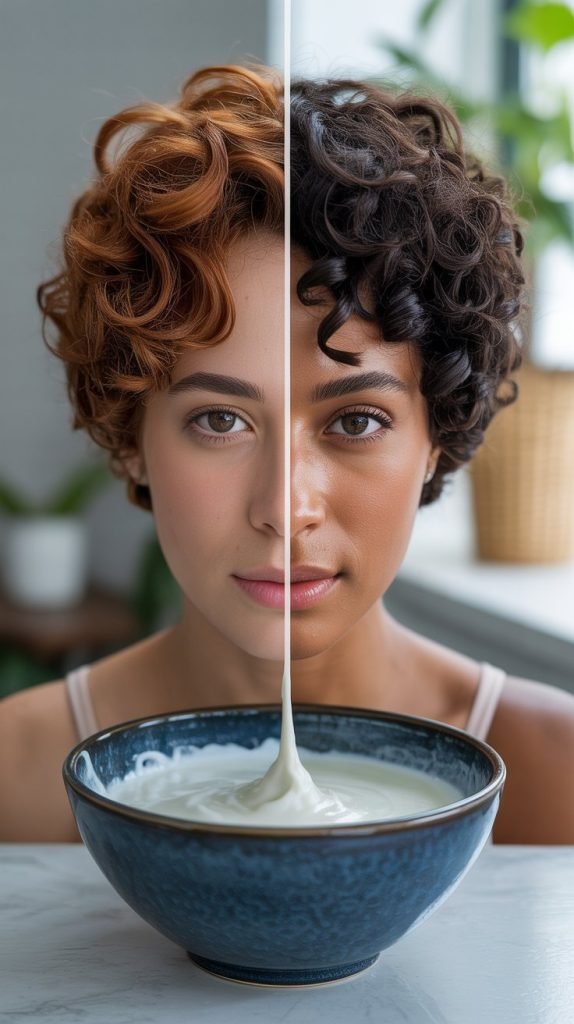
Moisture retention stands as the cornerstone of healthy short curly hair care.
Curly hair naturally struggles to distribute oils from the scalp down the hair shaft due to its spiral structure.
Implementing regular deep conditioning treatments and moisture-locking techniques ensures your curls remain hydrated, elastic, and resilient.
- Weekly deep conditioning: Apply protein-free masks for 15-30 minutes under heat
- Leave-in conditioners: Use lightweight formulas that won’t weigh down short hair
- Oil treatments: Apply coconut, argan, or jojoba oils to seal moisture into hair cuticles
- Protein balance: Alternate between moisture and protein treatments based on hair needs
- Overnight treatments: Use silk scarves or bonnets to protect moisture while sleeping
- Humidity protection: Apply anti-humidity products to prevent frizz in damp weather
4. Styling Techniques and Product Application
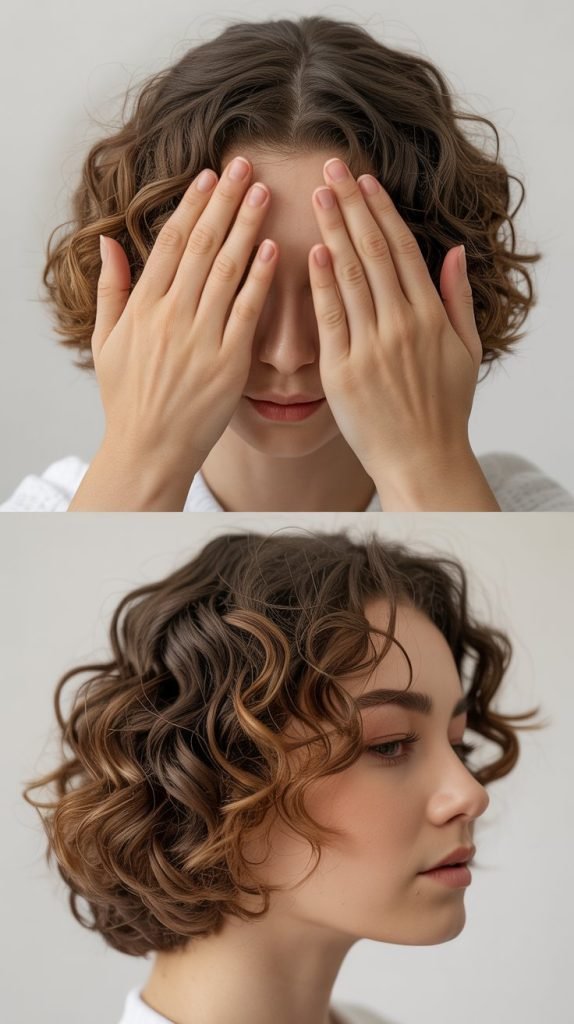
Mastering proper styling techniques transforms short curly hair from unruly to perfectly defined.
The key lies in applying products to damp hair using methods that enhance your natural curl pattern while minimizing manipulation.
Understanding when and how to apply different products creates lasting curl definition and reduces daily styling time.
- Damp hair application: Apply styling products to hair that’s 70-80% dry for best absorption
- Sectioning method: Work through small sections to ensure even product distribution
- Praying hands technique: Smooth products down hair shaft without disturbing curl pattern
- Scrunching motion: Gently squeeze hair upward to encourage curl formation
- Plopping method: Wrap hair in microfiber towel to enhance curl definition while drying
- Diffuser attachment: Use on low heat and speed settings to dry curls without frizz
5. Product Selection Guide for Short Curly Hair
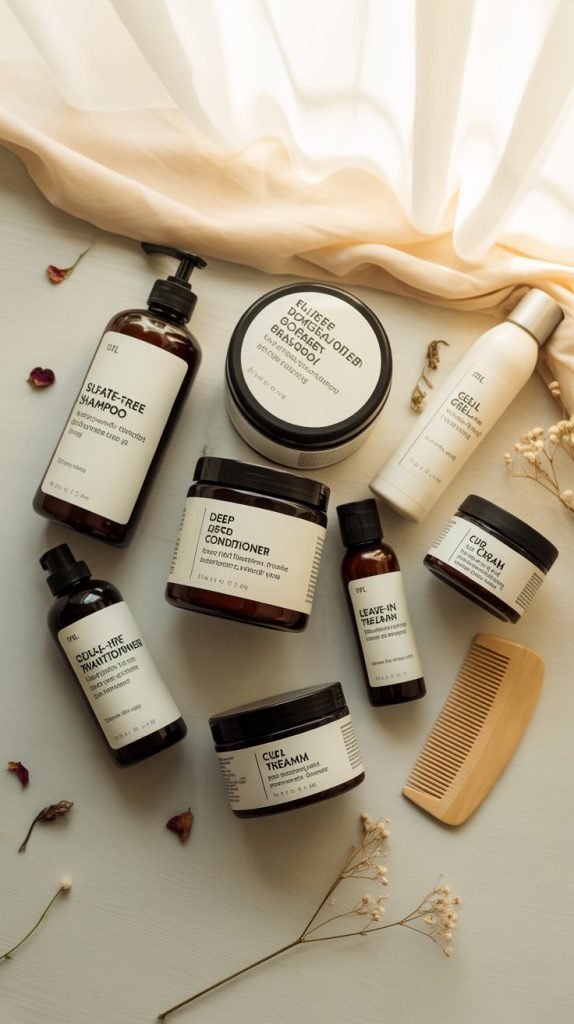
Choosing the right products for short curly hair requires understanding your specific needs and hair characteristics.
The market offers countless options, but focusing on ingredients and formulations that work with your curl type yields better results.
Building a simplified yet effective product routine saves time and money while maximizing hair health.
- Sulfate-free cleansers: Avoid harsh detergents that strip natural oils from curls
- Silicone considerations: Choose water-soluble silicones or silicone-free formulations
- Curl creams: Provide moisture and light hold without weighing down short hair
- Gels and mousses: Offer stronger hold and definition for longer-lasting styles
- Multi-purpose products: Look for items that cleanse, condition, and style simultaneously
- Ingredient awareness: Avoid drying alcohols, sulfates, and heavy waxes in formulations
6. Common Mistakes and How to Avoid Them

Many people unknowingly damage their short curly hair through improper techniques and product choices.
Recognizing these common mistakes helps prevent breakage, frizz, and lackluster curls.
Simple adjustments to your routine can dramatically improve your hair’s health and appearance while reducing styling frustration.
- Dry brushing: Never brush curly hair when dry – always detangle when wet with conditioner
- Terry cloth towels: Replace with microfiber towels or cotton t-shirts to reduce friction
- Over-washing: Limit washing frequency to prevent stripping natural protective oils
- Heat damage: Minimize hot tool usage and always use heat protectant products
- Product overload: Start with small amounts and build up coverage gradually
- Sleeping friction: Use silk pillowcases or protective bonnets to prevent overnight damage
7. Maintenance Routine and Long-term Hair Health

Establishing a consistent maintenance routine ensures your short curly hair remains healthy and beautiful over time.
Regular trims, protective measures, and seasonal adjustments keep curls in optimal condition. Long-term success requires patience, consistency, and willingness to adapt your routine as your hair’s needs change.
- Regular trims: Schedule cuts every 6-8 weeks to prevent split ends and maintain shape
- Seasonal adjustments: Modify routine based on humidity, temperature, and environmental changes
- Protective styling: Use gentle methods that don’t stress or damage curl pattern
- Sleep protection: Invest in silk accessories and loose protective styles for overnight care
- Scalp health: Massage scalp regularly to promote circulation and healthy hair growth
- Progress tracking: Take photos and notes to monitor improvements and identify what works best
Conclusion
Learning how to care for short curly hair opens the door to embracing your natural texture with confidence and pride.
By understanding your unique curl pattern, implementing proper washing and conditioning techniques, selecting appropriate products, and avoiding common mistakes, you can achieve the healthy, defined curls you’ve always wanted.
Remember that consistency and patience are key to seeing lasting results.
With the right knowledge and techniques outlined in this guide, your short curly hair journey becomes an enjoyable part of your self-care routine rather than a daily struggle.
Embrace your curls, celebrate their uniqueness, and enjoy the beautiful, healthy hair that proper care will bring.
