

Men with curly hair often struggle with managing their natural texture, but with the right knowledge and techniques, curly hair can become your greatest asset.
How to care for men’s curly hair involves understanding your unique curl pattern, choosing appropriate products, and developing a consistent routine that works with your hair’s natural characteristics rather than against them.
This comprehensive guide will transform your relationship with your curls and help you achieve healthy, defined, and manageable hair that turns heads for all the right reasons.
This article covers everything from identifying your specific curl type and building an effective daily routine to selecting the right products and styling techniques.
You’ll discover professional tips for washing, conditioning, and styling curly hair, learn about common mistakes to avoid, and understand how lifestyle factors affect your curls.
Whether you’re dealing with frizz, dryness, or lack of definition, this guide provides practical solutions that deliver real results.
1. Understanding Your Curl Type and Pattern
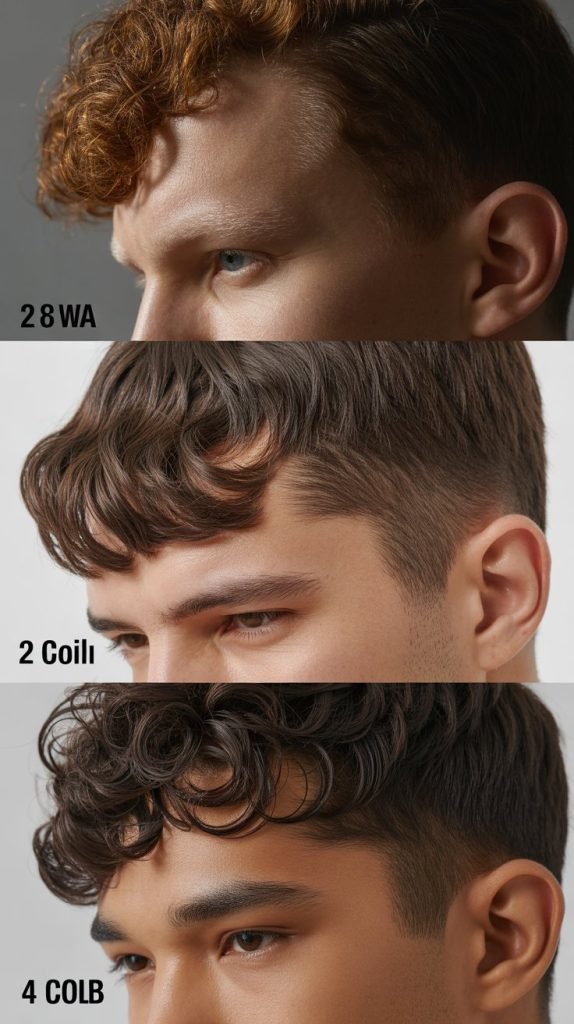
Identifying your curl type is the foundation of proper curly hair care, as different curl patterns require specific approaches and products.
Men’s curls typically range from loose waves to tight coils, and understanding where your hair fits on this spectrum determines your entire care routine.
- Type 2 (Wavy) hair has a loose S-pattern and tends to be less prone to dryness than tighter curls
- Type 3 (Curly) hair forms definite spirals and requires more moisture to maintain its shape
- Type 4 (Coily) hair has the tightest curl pattern and needs the most intensive moisturizing routine
- Fine curly hair requires lighter products to avoid weighing down the curls
- Thick curly hair can handle heavier creams and oils for better control
- Your curl pattern may vary across different sections of your head
- Understanding porosity levels helps determine how your hair absorbs and retains moisture
- Climate and weather conditions can temporarily affect your curl pattern
2. Essential Daily Hair Care Routine
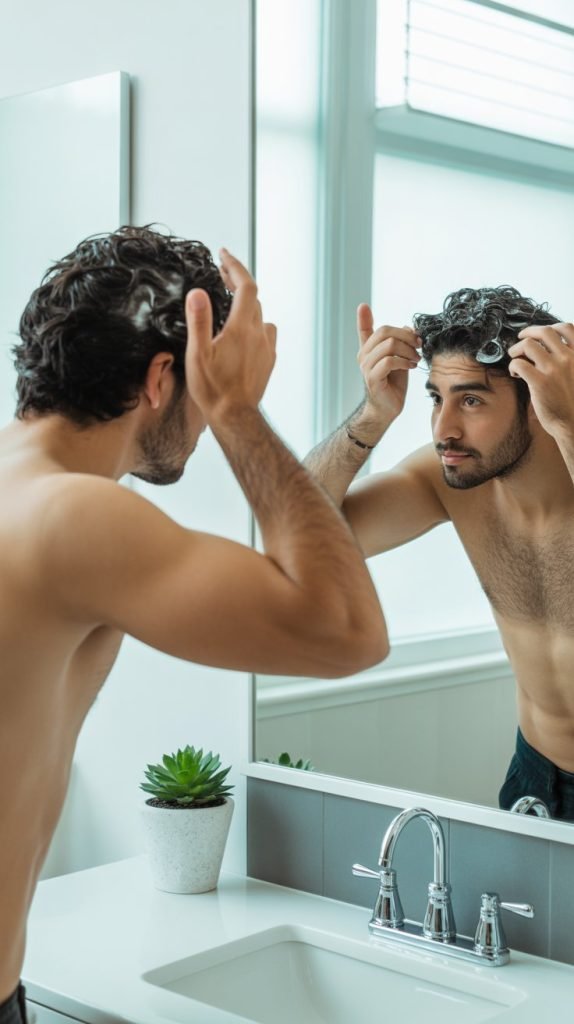
A consistent daily routine is crucial for maintaining healthy curls and preventing common problems like frizz and tangles. The key is developing habits that support your hair’s natural moisture balance while enhancing curl definition.
- Start each day by lightly misting your hair with water to reactivate products from the previous day
- Use a wide-tooth comb or your fingers to gently detangle while hair is damp
- Apply leave-in conditioner to damp hair, focusing on mid-lengths and ends
- Use curl-enhancing cream or gel while hair is still wet for maximum definition
- Scrunch your hair gently upward to encourage curl formation
- Allow hair to air dry completely or use a diffuser on low heat
- Avoid touching or manipulating curls while they dry to prevent frizz
- Sleep on a silk or satin pillowcase to reduce friction and maintain curl shape
- Consider protective nighttime styles like loose braids or a silk scarf
3. Proper Washing and Conditioning Techniques
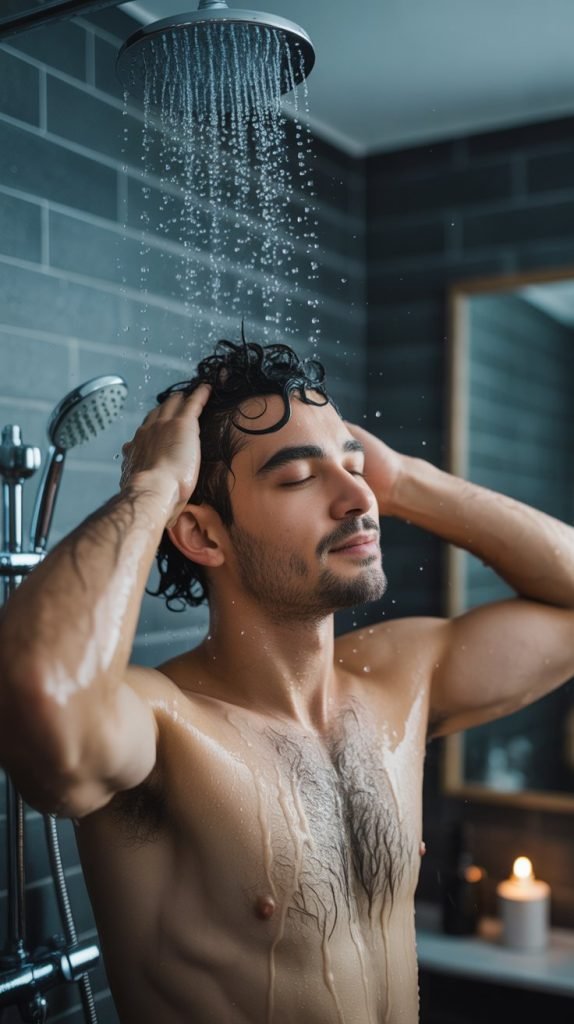
How you wash and condition your curly hair significantly impacts its health, appearance, and manageability. Traditional shampooing methods often strip curly hair of essential oils, leading to dryness and frizz.
- Wash curly hair only 2-3 times per week to preserve natural oils
- Use sulfate-free shampoos that cleanse without stripping moisture
- Focus shampoo application on the scalp rather than the hair lengths
- Apply conditioner generously from mid-length to ends
- Use a wide-tooth comb to distribute conditioner evenly through wet hair
- Leave conditioner in for 3-5 minutes before rinsing with cool water
- Consider co-washing (conditioner-only washing) between shampoo days
- Deep condition weekly with protein or moisture treatments based on your hair’s needs
- Rinse with cool water to seal the hair cuticle and enhance shine
4. Choosing the Right Products for Your Curls
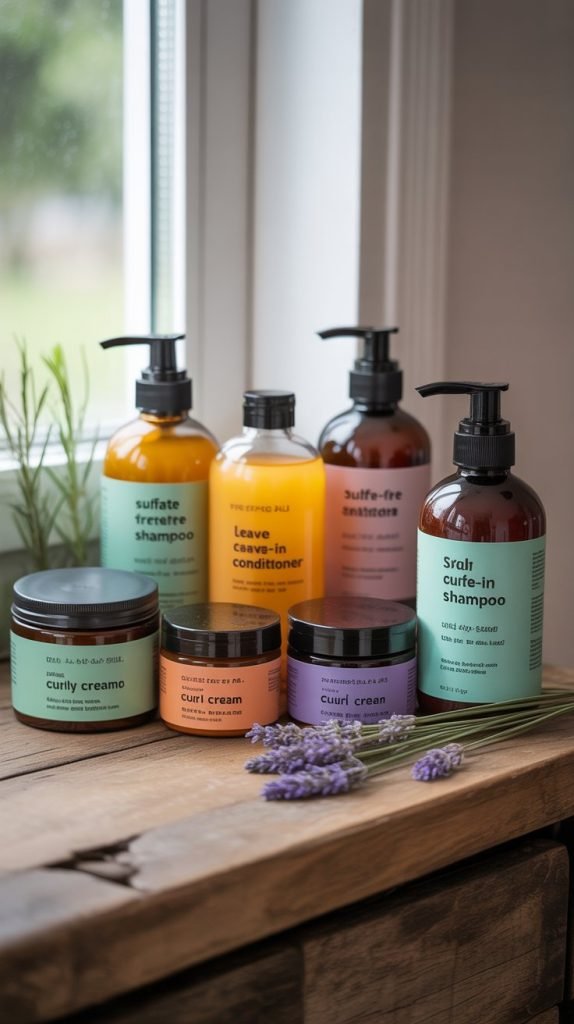
Product selection can make or break your curly hair routine, and understanding which ingredients benefit your specific curl type is essential for achieving optimal results.
The wrong products can weigh down your curls or leave them looking greasy and lifeless.
- Look for sulfate-free shampoos that won’t strip natural oils from your hair
- Choose conditioners with moisturizing ingredients like shea butter, coconut oil, or glycerin
- Avoid products containing drying alcohols like denatured alcohol or ethanol
- Lightweight mousses work well for fine curly hair without weighing it down
- Heavier creams and butters are ideal for thick, coarse curls that need extra moisture
- Protein treatments help strengthen damaged or chemically-treated curly hair
- Natural oils like argan, jojoba, or sweet almond oil provide excellent moisture and shine
- Gel provides strong hold for defined curls but may create crunchiness that needs scrunching out
- Leave-in conditioners offer daily moisture and protection from environmental damage
5. Styling Techniques for Maximum Definition
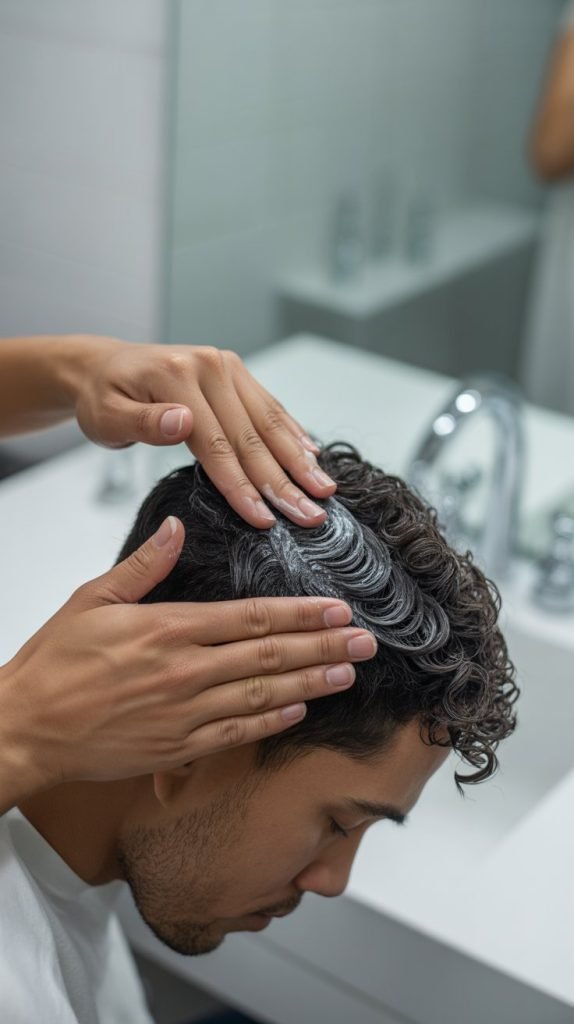
Proper styling techniques can dramatically improve your curl definition and reduce frizz throughout the day. The way you handle your curls while styling determines how they’ll look and how long your style will last.
- Apply products to soaking wet hair for best curl clumping and definition
- Use the “praying hands” method to smooth product through each section
- Scrunch your curls gently upward to encourage their natural pattern
- Avoid touching or manipulating curls once styling products are applied
- Use a microfiber towel or cotton t-shirt instead of regular towels to reduce frizz
- Diffuse on low heat and low speed settings to preserve curl integrity
- Try “plopping” your hair in a t-shirt for 10-20 minutes to enhance curl formation
- Consider finger-coiling individual curls for more definition in problem areas
- Refresh curls on non-wash days with a mixture of water and leave-in conditioner
6. Common Mistakes to Avoid
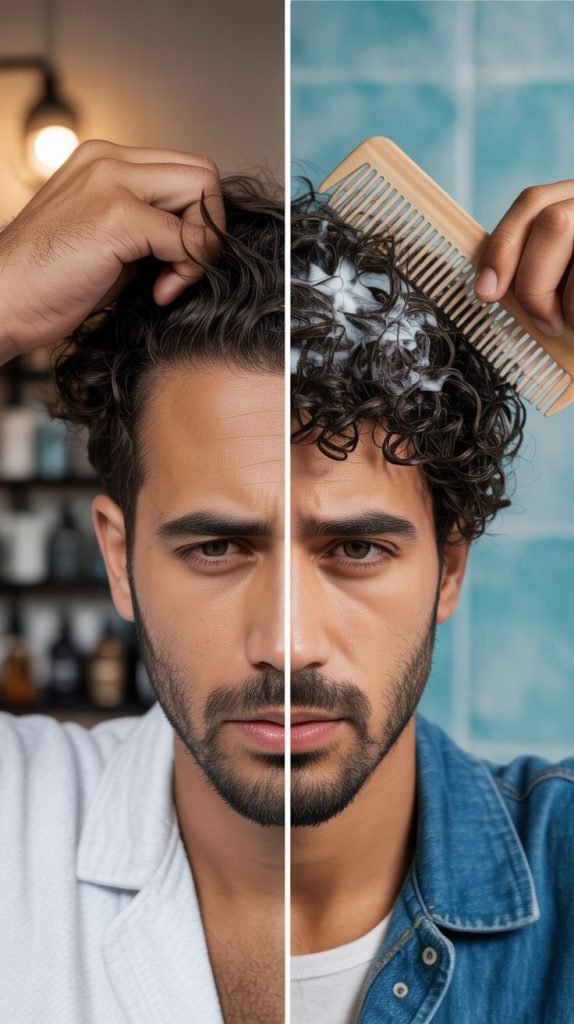
Even well-intentioned curly hair care can go wrong when common mistakes sabotage your efforts. Recognizing and avoiding these pitfalls will save you time, frustration, and potential damage to your hair.
- Never brush or comb dry curly hair as this breaks up curl patterns and causes frizz
- Avoid over-washing which strips natural oils and leads to dryness and brittleness
- Don’t skip regular trims as split ends travel up the hair shaft and cause more damage
- Resist the urge to touch or play with your curls throughout the day
- Avoid using regular cotton towels which create friction and frizz
- Don’t apply products to completely dry hair as they won’t distribute evenly
- Avoid heat styling tools like flat irons and curling irons that damage the hair cuticle
- Never sleep on cotton pillowcases without protection as they absorb moisture and create tangles
- Don’t use products with harsh sulfates or drying alcohols that strip moisture
7. Nutrition and Lifestyle Impact on Curl Health

Your overall health and lifestyle choices directly affect the quality and appearance of your curly hair. What you eat, how much water you drink, and your stress levels all play crucial roles in curl health.
- Drink adequate water daily as hydration affects hair moisture from the inside out
- Include protein-rich foods like eggs, fish, and legumes to support hair structure
- Consume foods high in omega-3 fatty acids for scalp health and shine
- Get sufficient vitamins A, C, and E which support healthy hair growth
- Manage stress through exercise, meditation, or other relaxation techniques
- Get adequate sleep as poor sleep affects hormone levels that influence hair health
- Protect hair from sun damage with UV-protective products or hats
- Avoid excessive alcohol and smoking which can negatively impact hair quality
- Consider supplements like biotin or collagen if your diet lacks essential nutrients
8. Seasonal Care and Adjustments

Curly hair responds differently to seasonal changes, requiring adjustments to your routine throughout the year. Understanding how weather affects your curls helps you maintain consistent results regardless of climate conditions.
- Increase moisture in winter when indoor heating and cold air dry out curls
- Use lighter products in summer to prevent weighing down curls in humidity
- Apply anti-humidity products during rainy or very humid weather
- Protect curls from chlorine and salt water during swimming season
- Adjust washing frequency based on seasonal activity levels and sweat production
- Use deeper conditioning treatments more frequently during harsh weather months
- Consider protective styles during extreme weather conditions
- Switch to heavier oils and creams in dry climates or winter months
- Use UV protection products during peak sun exposure times
How to care for men’s curly hair successfully requires understanding your unique curl pattern, maintaining a consistent routine, and choosing products that work with your hair’s natural characteristics.
By following the techniques outlined in this guide, avoiding common mistakes, and making necessary seasonal adjustments, you can achieve healthy, defined curls that enhance your overall appearance.
Remember that finding the perfect routine takes time and experimentation, but the results are worth the effort when you finally unlock your curls’ full potential.
