

Dry curly hair doesn’t have to be a constant struggle. Understanding your hair’s unique needs and implementing the right care routine can transform your curls from brittle and lifeless to bouncy and hydrated.
This comprehensive guide will walk you through proven techniques, product recommendations, and lifestyle changes that will help you achieve healthy, moisturized curls.
Whether you’re dealing with frizz, breakage, or simply want to enhance your natural texture, you’ll discover practical solutions that work.
How to care for dry curly hair becomes manageable when you have the right knowledge and tools at your disposal.
This article covers essential topics including understanding your curl type, developing an effective washing routine, choosing the right products, styling techniques that preserve moisture, overnight care methods, dietary considerations, and seasonal adjustments.
Each section provides actionable advice that you can implement immediately to see improvements in your hair’s health and appearance.
1. Understanding Your Curl Type and Porosity
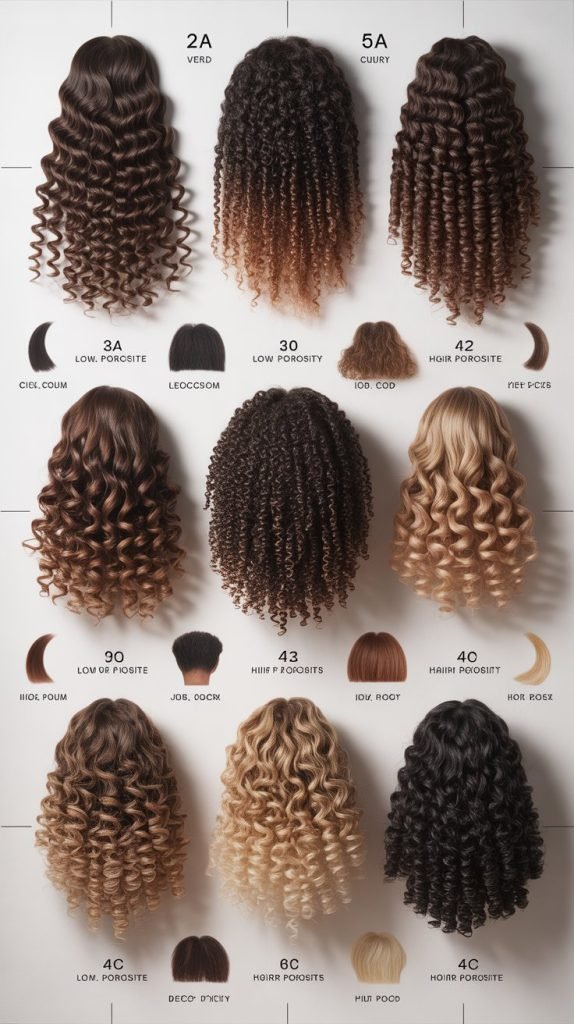
Understanding your specific curl pattern and hair porosity is the foundation of effective curly hair care. Different curl types have varying needs, and porosity affects how your hair absorbs and retains moisture.
This knowledge helps you select appropriate products and techniques that work specifically for your hair structure.
- Curl types range from 2A (loose waves) to 4C (tight coils), with each requiring different levels of moisture and styling approaches
- Low porosity hair has tightly closed cuticles that resist moisture penetration but retain it well once absorbed
- High porosity hair absorbs moisture quickly but loses it just as fast, requiring heavier products and more frequent treatments
- Medium porosity hair strikes a balance and typically responds well to most curl care routines
- The porosity test involves placing a clean strand of hair in water – low porosity floats, high porosity sinks quickly
- Type 3 and 4 curls generally require more intensive moisturizing than type 2 waves
- Understanding your hair’s unique characteristics prevents product buildup and ensures optimal hydration
2. Proper Cleansing Techniques for Dry Curls

The way you cleanse your curly hair significantly impacts its moisture levels and overall health.
Traditional shampooing can strip natural oils that curly hair desperately needs, making proper cleansing techniques essential for maintaining hydration.
- Co-washing (conditioner-only washing) removes dirt and buildup while preserving natural oils
- Sulfate-free shampoos provide gentle cleansing without harsh detergents that cause dryness
- Pre-shampoo treatments with oils create a protective barrier during cleansing
- Scalp massage during washing stimulates blood circulation and distributes natural sebum
- Cool water rinses seal the hair cuticle and enhance shine while preventing moisture loss
- Clarifying shampoo should only be used once every 4-6 weeks to remove stubborn buildup
- Focus shampoo application on the scalp rather than the hair lengths to prevent over-drying
- Deep conditioning treatments should follow every wash to replenish lost moisture
3. Deep Conditioning and Protein Treatments

Deep conditioning is crucial for dry curly hair as it penetrates the hair shaft to provide intensive moisture and repair damage. Regular deep conditioning treatments help maintain elasticity, reduce breakage, and enhance curl definition.
- Deep condition weekly or bi-weekly depending on your hair’s moisture needs and damage level
- Protein treatments should be used monthly to strengthen hair structure and prevent breakage
- Heat application during deep conditioning helps ingredients penetrate more effectively
- DIY treatments using natural ingredients like honey, avocado, and coconut oil provide budget-friendly options
- Leave-in treatments offer continuous moisture between wash days
- Overnight deep conditioning treatments provide maximum penetration for severely damaged hair
- Balance moisture and protein treatments to prevent hair from becoming too soft or too rigid
- Look for ingredients like hyaluronic acid, ceramides, and natural butters in commercial treatments
4. Product Selection and Ingredient Knowledge

Choosing the right products for dry curly hair requires understanding beneficial ingredients and avoiding harmful ones.
The curl care market offers numerous options, making ingredient knowledge essential for making informed choices.
- Humectants like glycerin and hyaluronic acid attract moisture from the environment to your hair
- Emollients such as shea butter and argan oil smooth the hair cuticle and reduce frizz
- Proteins like hydrolyzed wheat and keratin temporarily fill gaps in damaged hair strands
- Avoid sulfates, drying alcohols, and harsh detergents that strip natural oils
- Silicones can provide temporary smoothness but may cause buildup over time
- Water-based products hydrate better than oil-heavy formulations for most curl types
- pH-balanced products maintain your hair’s natural acid mantle and prevent damage
- Layering lightweight products often works better than using one heavy product
5. Styling Methods That Preserve Moisture
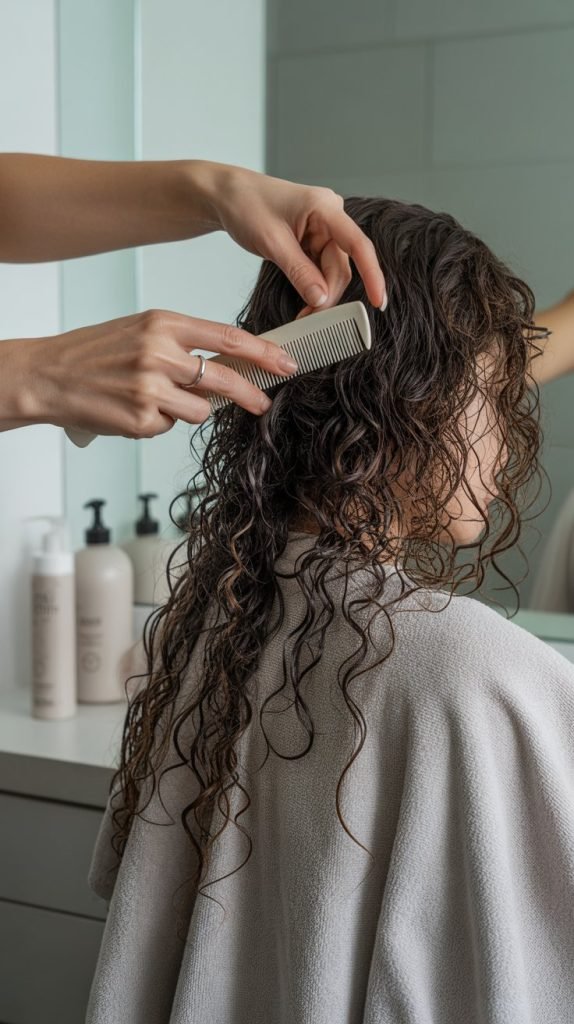
Proper styling techniques can make the difference between dry, frizzy curls and well-defined, moisturized ones. The key is using methods that enhance your natural curl pattern while locking in hydration.
- The “praying hands” method smooths products down the hair shaft without disrupting curl formation
- Scrunching helps encourage curl formation while distributing products evenly
- Plopping with a microfiber towel or cotton t-shirt removes excess water without causing frizz
- The LOC (liquid, oil, cream) method layers products to maximize moisture retention
- Air drying preserves natural curl patterns better than heat styling
- Diffusing on low heat and speed minimizes frizz while speeding up drying time
- Avoid touching or manipulating curls while they dry to prevent frizz and breakage
- Set curls with a light hold gel or mousse to maintain definition throughout the day
6. Nighttime Care and Protection

Protecting your curls while you sleep is essential for maintaining moisture and preventing damage from friction against pillowcases. Proper nighttime care can extend the life of your hairstyle and reduce morning styling time.
- Satin or silk pillowcases reduce friction and help retain moisture compared to cotton
- The “pineapple” method involves loosely gathering curls at the very top of your head
- Medusa clipping uses small clips to lift sections of curls away from your head
- Satin scarves or bonnets provide complete protection for your curls while sleeping
- Refresh sprays with water and light leave-in conditioner revive curls in the morning
- Avoid tight ponytails or buns that can cause breakage and flatten curl patterns
- Change pillowcases frequently to prevent oil and product buildup that can clog pores
- Consider using a humidifier in your bedroom during dry seasons to maintain ambient moisture
7. Diet and Lifestyle Factors

Your hair’s health reflects your overall well-being, making nutrition and lifestyle choices important factors in managing dry curly hair. Internal health significantly impacts external appearance and hair strength.
- Adequate water intake helps maintain hair moisture from the inside out
- Omega-3 fatty acids found in fish, walnuts, and flaxseeds promote hair health and shine
- Biotin, iron, and vitamin D deficiencies can contribute to hair dryness and breakage
- Protein intake supports hair structure since hair is primarily made of keratin protein
- Stress management is crucial as chronic stress can affect hair growth cycles and oil production
- Regular exercise improves circulation, delivering nutrients to hair follicles
- Limit heat styling and chemical processing to prevent additional damage
- Protect hair from UV damage with products containing sun protection factors
8. Seasonal Care Adjustments

Curly hair needs different care approaches throughout the year as environmental conditions change. Adapting your routine seasonally helps maintain optimal moisture levels regardless of weather conditions.
- Winter requires heavier moisturizers and protective styles to combat dry indoor heating
- Summer humidity may necessitate lighter products and anti-frizz formulations
- Transition seasons call for flexible routines that can adapt to changing weather patterns
- Cold weather protection includes wearing hats with satin linings and using leave-in treatments
- Hot weather strategies focus on UV protection and lightweight, non-greasy products
- Indoor heating and air conditioning both contribute to environmental dryness
- Adjust washing frequency based on seasonal activity levels and environmental factors
- Monitor your hair’s response to seasonal changes and modify your routine accordingly
9. Common Mistakes to Avoid
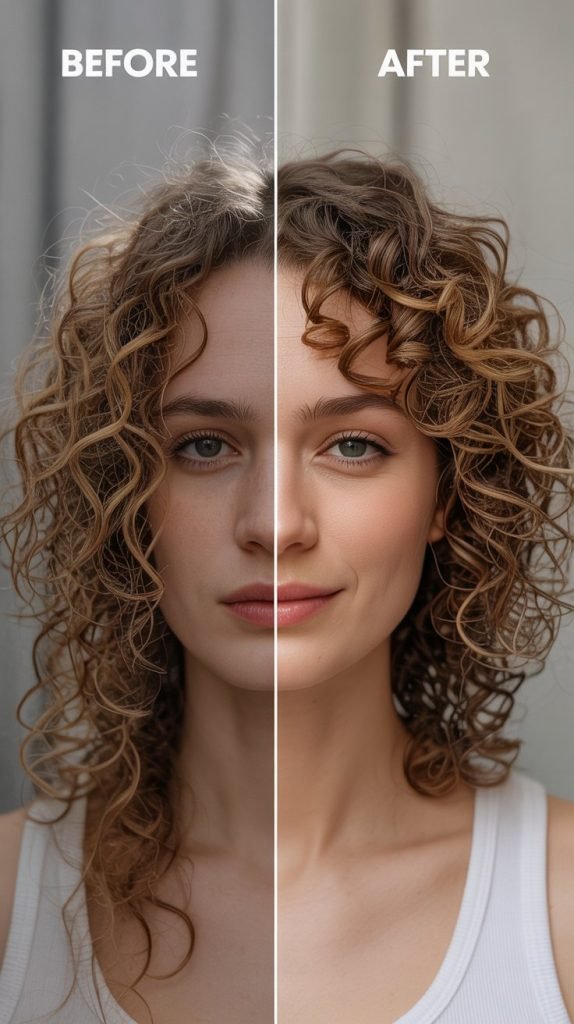
Understanding what not to do is just as important as knowing proper care techniques. Many people unknowingly damage their curly hair through well-intentioned but incorrect practices.
- Over-washing strips natural oils and leads to increased dryness and frizz
- Using regular towels creates friction that causes breakage and disrupts curl patterns
- Brushing dry curls separates curl clumps and creates frizz and volume loss
- Applying products to completely dry hair prevents proper distribution and absorption
- Using too much product can weigh down curls and cause buildup over time
- Sleeping on cotton pillowcases without protection causes friction damage and moisture loss
- Ignoring your hair’s porosity leads to using inappropriate products that don’t work effectively
- Inconsistent routines prevent you from seeing the full benefits of proper curl care
10. Building Your Personal Routine

Creating a personalized routine for your dry curly hair involves combining all the techniques and knowledge you’ve learned into a sustainable daily and weekly schedule.
Consistency is key to seeing long-term improvements in your hair’s health and appearance.
- Start with a basic routine and gradually add products and techniques as needed
- Keep a hair journal to track what works and what doesn’t for your specific curl type
- Adjust your routine based on seasonal changes, lifestyle factors, and hair condition
- Budget considerations should focus on investing in quality leave-in conditioners and styling products first
- Experiment with DIY treatments before investing in expensive salon products
- Allow 4-6 weeks to see full results from any new routine or product changes
- Stay patient and consistent, as curly hair often takes time to respond to new care methods
- Remember that what works for others may not work for you due to individual hair differences
In conclusion, learning how to care for dry curly hair is a journey that requires patience, experimentation, and consistency.
By understanding your hair’s unique needs, using proper cleansing and conditioning techniques, choosing appropriate products, and maintaining healthy lifestyle habits, you can transform your dry curls into healthy, hydrated, and beautiful hair.
Remember that every person’s hair is different, so take time to discover what works best for your specific curl pattern and porosity level.
With dedication and the right approach, you can enjoy the natural beauty of your curls while keeping them moisturized and manageable year-round.
