

Many people love the stylish look and cultural beauty of Fulani braids, but it’s normal to wonder if they’re actually healthy for your hair in the long run.
In this complete guide, Are Fulani Braids Good for Your Hair?, we’ll break down how Fulani braids can protect your hair, the risks if they’re done incorrectly, and the best ways to care for your hair before, during, and after wearing them.
By the end, you’ll feel confident knowing exactly how to enjoy Fulani braids without damaging your natural hair.
1. Understanding Fulani Braids

Before you decide if Fulani braids are good for your hair, it’s important to understand what makes them unique.
This section explains what Fulani braids are and why they’re different from other braided styles.
- Fulani braids are inspired by the Fulani people of West Africa, known for their signature patterns and beautiful adornments.
- This style typically features cornrows down the center and sides, with single hanging braids often decorated with beads or cowrie shells.
- The braids can be large or small and may include a center braid or side-swept patterns.
- Unlike box braids, Fulani braids often mix feed-in braids with loose extensions, creating a lighter feel on the scalp.
- The style is versatile, protective, and can last up to 4–6 weeks with proper care.
2. Benefits of Fulani Braids for Hair Health

When done properly, Fulani braids can offer great benefits for your hair’s health.
This section explains why many people choose Fulani braids as a protective style.
- Fulani braids help protect your natural hair by tucking away your ends, which are the oldest and most fragile parts of the hair strand.
- They reduce daily manipulation like brushing and styling, which can cause breakage over time.
- This style allows you to moisturize and oil your scalp easily, which helps prevent dryness and flaking.
- Because Fulani braids are often lighter than some heavy box braids, they put less stress on your roots and edges.
- They can help with length retention when worn properly and not left in too long.
3. Risks of Fulani Braids If Done Incorrectly
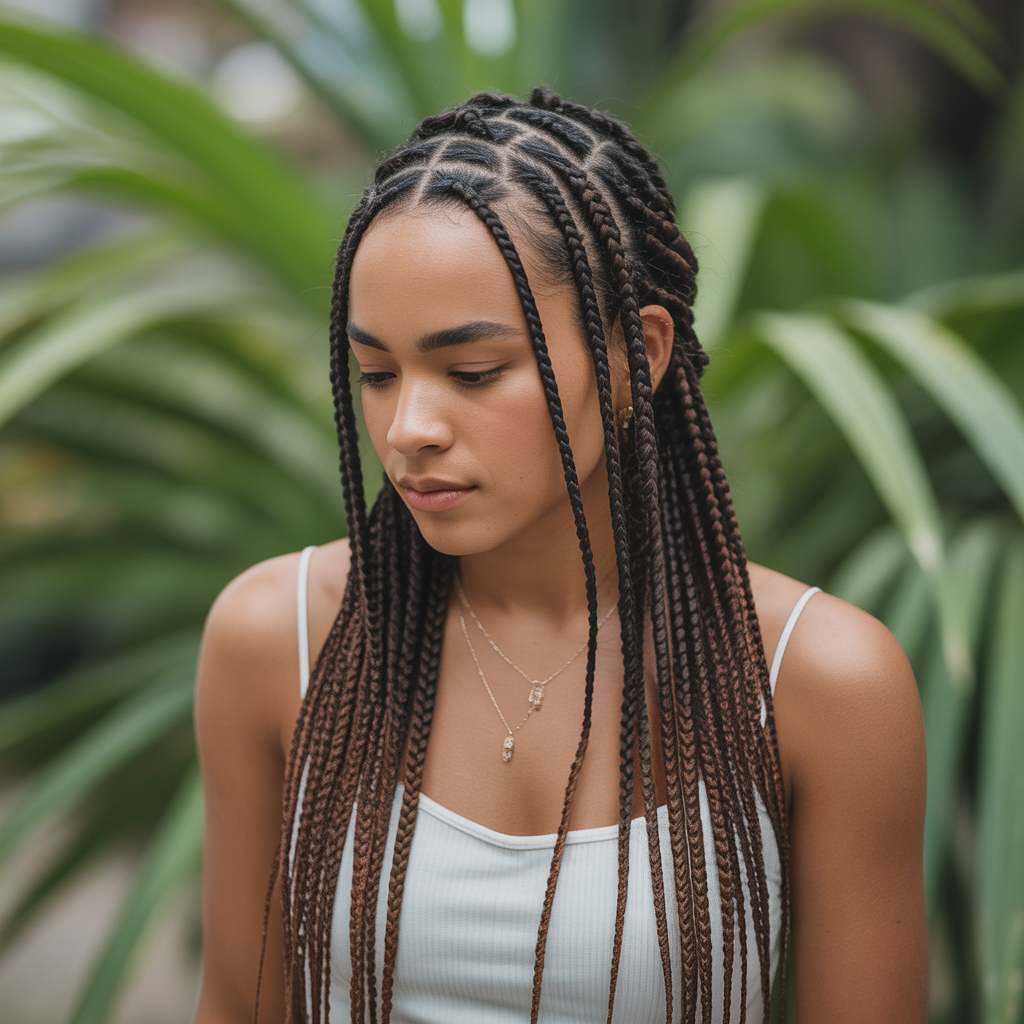
Like any protective style, Fulani braids can cause damage if they’re not installed or maintained properly.
This section highlights what to watch out for to keep your hair safe.
- If your braids are too tight, they can pull on your edges and cause traction alopecia, which is hair loss from repeated tension.
- Using too much added hair or heavy beads can weigh down your natural strands and lead to breakage.
- Leaving braids in for too long can cause matting, buildup, and even mildew if the scalp is not cleaned properly.
- Using low-quality hair extensions may irritate your scalp or cause an allergic reaction.
- Not moisturizing your scalp while wearing braids can lead to dryness and itching.
4. Best Practices to Make Fulani Braids Safe

The good news is that you can easily avoid the risks with the right approach.
This section shares simple tips for healthy Fulani braids every time.
- Always work with a skilled braider who knows not to braid too tight.
- Before braiding, wash, condition, and detangle your hair thoroughly.
- Use high-quality, lightweight hair extensions that blend well with your natural hair.
- Keep your braids clean by using a gentle scalp cleanser or witch hazel to wipe away buildup.
- Moisturize your scalp with light oils like jojoba or tea tree to keep it healthy.
- Wrap your braids in a silk or satin scarf or bonnet every night to reduce frizz and breakage.
- Remove your braids within 4–6 weeks and give your hair a break before reinstalling.
| Safe Braiding Tips | Why They Matter |
|---|---|
| Avoid tight braids | Prevents hair loss and scalp pain |
| Use light extensions | Reduces tension on roots |
| Moisturize regularly | Keeps scalp healthy and nourished |
| Clean scalp weekly | Prevents buildup and odor |
| Take breaks between installs | Allows hair to recover |
5. Caring for Your Hair After Fulani Braids

How you treat your hair after removing Fulani braids is just as important as how you wear them.
This section covers gentle takedown and post-braid care.
- Always apply oil or a conditioner to soften buildup before removing your braids.
- Take your time and detangle gently to prevent breakage.
- Shampoo and deep condition your hair to remove any leftover product and restore moisture.
- Use a protein treatment if needed to strengthen your strands.
- Trim your ends if you notice any split or damaged hair.
- Give your hair at least 1–2 weeks to breathe before installing another protective style.
- Moisturize and style your hair in low-manipulation styles during this break to keep it healthy.
Conclusion
If you’ve ever asked yourself Are Fulani Braids Good for Your Hair?, now you know the answer depends on how you install, maintain, and remove them.
Done right, Fulani braids are not only beautiful but also an excellent protective style that can help you grow and protect your natural hair.
Follow these tips, listen to your hair, and enjoy the timeless beauty of Fulani braids while keeping your crown strong and healthy!
