
33 Natural Black Toddler Hairstyles for Girls
Natural hair is a beautiful crown that deserves to be celebrated, especially when it comes to styling your little one’s precious curls, coils, and kinks.
Finding age-appropriate, protective, and adorable hairstyles for Black toddler girls can feel overwhelming with so many options available, but the journey to discovering the perfect styles for your child’s unique hair texture should be exciting and empowering.
This comprehensive guide to 33 Natural Black Toddler Hairstyles for Girls will walk you through protective styles, simple everyday looks, special occasion hairstyles, and low-manipulation options that promote healthy hair growth while keeping your toddler comfortable and stylish.
Whether you’re a parent new to natural hair care or looking to expand your styling repertoire, you’ll find practical techniques, maintenance tips, and creative inspiration that work for busy mornings and special moments alike.
From twist-outs and puff styles to braids and bantu knots, each hairstyle has been carefully selected to suit toddlers’ active lifestyles, sensitive scalps, and delicate hair strands while celebrating the natural beauty and versatility of Black hair textures.
1. Classic Two-Strand Twists

Two-strand twists are foundational protective styles that work beautifully for toddlers with natural hair textures.
This versatile technique involves dividing hair into small sections and twisting two strands around each other, creating defined coils that can last for days or even weeks with proper maintenance.
Benefits and Styling:
- Two-strand twists protect hair ends from damage while promoting length retention and healthy growth
- The style requires minimal daily manipulation, making it ideal for toddlers who resist sitting still for hair sessions
- Twists can be styled in various ways including updos, ponytails, or left down for a classic look
- This hairstyle typically lasts 1-2 weeks depending on hair texture and maintenance routine
- Using a moisturizing cream or butter before twisting helps maintain softness and definition
Maintenance Tips:
- Cover hair with a satin or silk bonnet at night to preserve the style and prevent frizz
- Apply a light oil or moisture spray every 2-3 days to keep twists hydrated
- Gently cleanse the scalp with a diluted shampoo or cleansing spray without unraveling the twists
- Avoid making twists too tight, which can cause tension on toddlers’ delicate hairlines
2. Adorable Puff Ponytails

Puff ponytails are quick, cute, and comfortable styles perfect for toddlers with enough hair length to gather.
This simple yet stylish look celebrates natural hair texture while keeping hair secure and out of your child’s face during playtime.
Styling Variations:
- Single high puff positioned at the crown creates a playful, bouncy appearance
- Double puff ponytails placed on each side of the head offer a classic, adorable look
- Low puff positioned at the nape provides a sophisticated style for special occasions
- Multiple small puffs across the head create a unique, creative appearance
- Adding colorful hair accessories like bows, ribbons, or beads enhances the style
Best Practices:
- Use satin or silk scrunchies instead of elastic bands to prevent breakage and damage
- Ensure ponytails are not too tight to avoid tension alopecia and discomfort
- Moisturize hair before gathering to reduce friction and maintain hair health
- This style works best as a temporary option for 1-2 days rather than extended wear
3. Protective Cornrow Styles
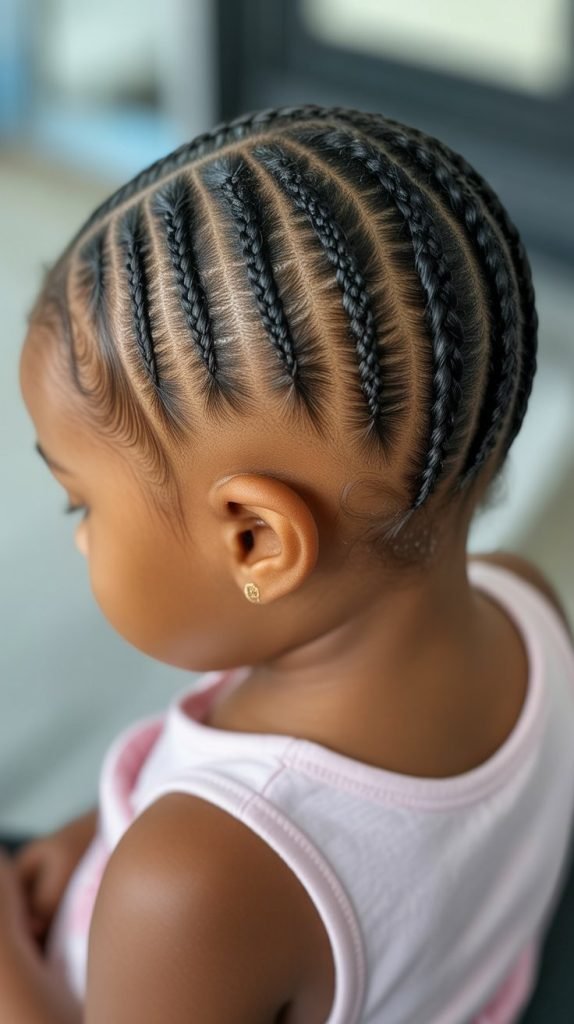
Cornrows are traditional protective braiding styles that lie flat against the scalp, offering durability and versatility for active toddlers.
These braided patterns can range from simple straight-back designs to creative curved and geometric patterns.
Pattern Options:
- Straight-back cornrows running from front to back create a classic, timeless appearance
- Side-swept cornrows flowing in one direction add visual interest and style
- Curved or zigzag patterns introduce creative elements while maintaining protective benefits
- Cornrows combined with loose sections or twists offer styling versatility
- Heart, star, or other shapes can be incorporated for special occasions
Care Considerations:
- Cornrows should not be braided too tightly to protect toddlers’ sensitive scalps and hairlines
- This style typically lasts 1-3 weeks depending on hair texture and growth rate
- Apply light oil to the scalp and along braids every few days to maintain moisture
- Watch for signs of tension or discomfort and remove braids immediately if irritation occurs
- Cleanse the scalp gently with a spray cleanser or diluted shampoo while braids are installed
4. Fluffy Twist-Out Style

Twist-outs are popular styles created by unraveling two-strand twists after they’ve set, resulting in defined, bouncy curls with beautiful texture and volume.
This style showcases natural hair patterns while providing a soft, touchable finish.
Creating the Perfect Twist-Out:
- Start with freshly washed and conditioned hair for best definition and curl pattern
- Apply a curl cream or styling gel to damp hair before creating two-strand twists
- Allow twists to dry completely (overnight or 6-8 hours) before carefully unraveling
- Separate each twist gently with fingers to create fullness without causing excessive frizz
- Fluff roots carefully to achieve desired volume and shape
Longevity and Maintenance:
- Twist-outs typically last 3-5 days with proper nighttime maintenance and care
- Re-twist sections at night or pin hair up to preserve curl definition
- Apply a light oil or butter to refresh curls and add shine on subsequent days
- Avoid over-manipulating the style during the day to maintain definition
- This style works beautifully for various hair lengths and textures
5. Simple Side Part with Natural Curls
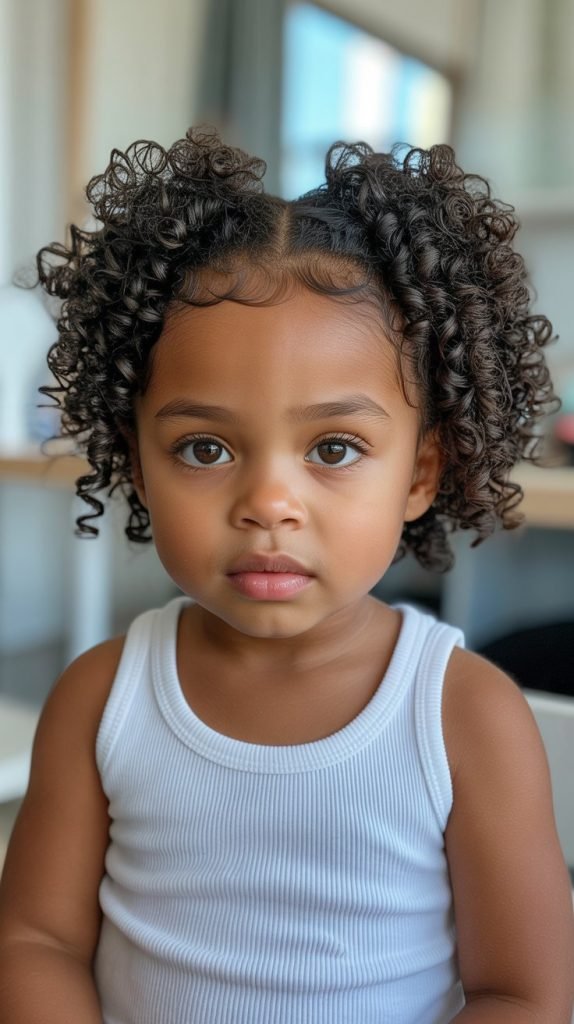
A side part with natural curls is an effortless everyday style that requires minimal manipulation while highlighting your toddler’s natural hair texture.
This approach celebrates wash-and-go styling with strategic parting for added visual interest.
Styling Approach:
- Create a clean side part using a rat-tail comb on freshly moisturized hair
- Apply a leave-in conditioner and curl-defining cream to enhance natural curl pattern
- Allow hair to air dry or use a diffuser on low heat for faster drying
- Use fingers to gently separate and shape curls once completely dry
- Add decorative clips or headbands on the parted side for extra style
Daily Care:
- Refresh curls in the morning with a water-based spray and light oil mixture
- Gently finger-detangle starting from ends working toward roots to minimize breakage
- This low-manipulation style works well for 2-3 days between washes
- Protect curls at night with a satin bonnet or pillowcase
6. Cute Mini Bantu Knots

Bantu knots are small, coiled buns created by twisting sections of hair and wrapping them into knots against the scalp. For toddlers, these adorable knots can be worn as a finished style or unraveled for beautiful curls.
Creating Bantu Knots:
- Section hair into even squares or triangles across the entire head
- Apply a twisting cream or butter to each section for hold and definition
- Twist each section tightly from root to tip, then coil the twisted hair around itself
- Secure each knot by tucking the end under itself or using a small bobby pin
- Create larger knots for a bold statement or smaller knots for a delicate appearance
Styling Versatility:
- Wear knots as the finished style for a playful, textured look lasting several days
- Unravel knots after they’ve set completely (6-8 hours or overnight) for defined curls
- The resulting bantu knot-out creates beautiful spiral curls with impressive volume
- This protective style promotes curl definition while minimizing daily manipulation
- Bantu knots work excellently for various hair lengths from short to long
7. Front Cornrows with Puff Back
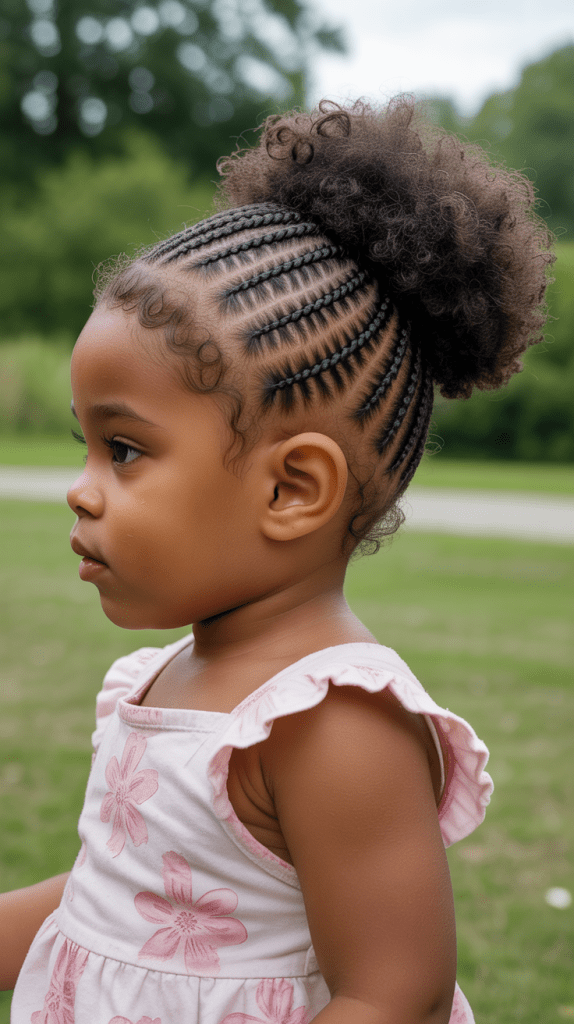
Combining cornrows in the front with a puff in the back creates a practical yet stylish look that keeps hair off the face while showcasing natural texture. This hybrid style offers the best of both protective styling and carefree naturalness.
Construction Method:
- Create 2-4 cornrows starting at the front hairline and braiding back toward the crown
- Gather remaining hair at the crown or mid-head into a high puff ponytail
- Secure the puff with a satin scrunchie or fabric-covered elastic band
- Fluff and shape the puff to achieve desired fullness and rounded appearance
- Add decorative beads to cornrow ends or colorful accessories to the puff
Practical Benefits:
- Front cornrows keep hair away from the face during eating, playing, and sleeping
- The back puff allows natural texture to shine while remaining manageable
- This style combines protection with easy access for moisture application
- Typically lasts 5-7 days before needing refreshing or complete restyling
- Perfect for active toddlers who need functional yet attractive hairstyles
8. Crown Braided Halo
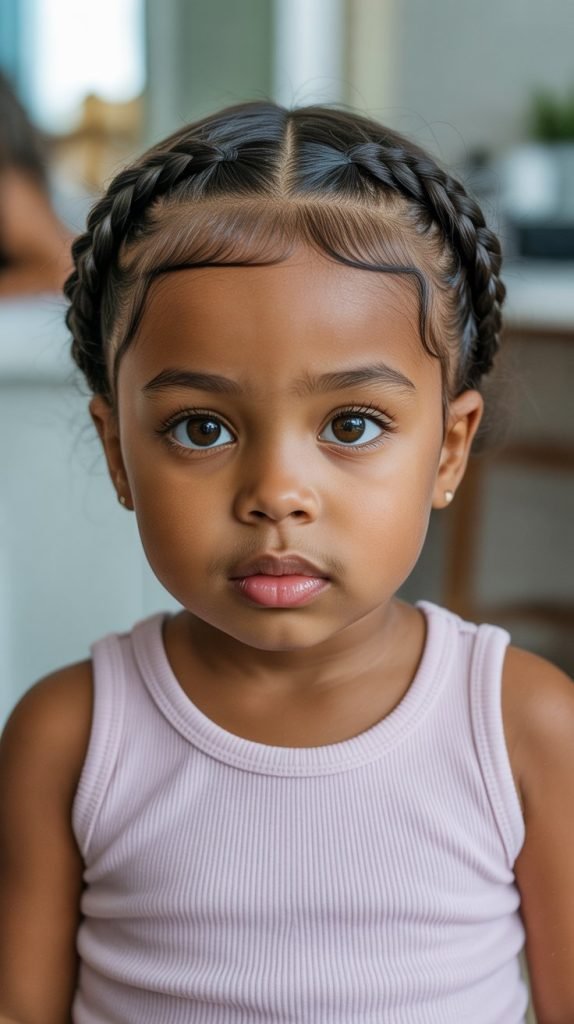
A crown braid or halo braid encircles the head like a beautiful headband, creating an elegant, princess-worthy style perfect for special occasions or everyday wear. This protective style keeps all hair secured while looking sophisticated.
Braiding Technique:
- Part hair in a circular pattern around the head starting from one point
- Create a cornrow or three-strand braid following the circular part all around the head
- Tuck the end of the braid underneath the beginning or secure with bobby pins
- Smooth any flyaways with edge control or light gel for a polished finish
- Add small flowers, pearls, or decorative pins along the crown for special occasions
Style Advantages:
- The halo braid protects all hair ends while creating an elegant, timeless appearance
- This style works well for formal events, photo sessions, or everyday wear
- Keeps hair completely off the face and neck, ideal for warm weather
- Can last 5-10 days with proper nighttime maintenance and scalp care
- Suitable for various hair lengths from shoulder-length to longer
9. Space Buns

Space buns are playful double buns positioned high on either side of the head, creating an adorable, youthful style perfect for toddlers. This fun look can be created with natural hair gathered and twisted or with previously installed braids or twists.
Creating Space Buns:
- Part hair down the middle from front to back, creating two equal sections
- Gather each section into a high ponytail positioned above the ears
- Twist each ponytail and wrap around the base to create rounded buns
- Secure buns with bobby pins or additional elastic bands as needed
- Leave bun edges slightly loose and textured for a natural, age-appropriate appearance
Styling Tips:
- Space buns work beautifully with various hair textures from loose curls to tight coils
- Add colorful ribbons, scrunchies, or hair accessories for extra personality
- This style keeps hair secured while maintaining a playful, carefree vibe
- Perfect for active play as buns stay secured throughout the day
- Can be worn for 1-2 days before hair needs refreshing
10. Flat Twist-Out

Flat twists are similar to cornrows but use a two-strand twisting technique instead of three-strand braiding, creating a different texture when unraveled. The flat twist-out produces beautiful, defined waves with impressive volume.
Installation Process:
- Section freshly washed and moisturized hair into medium to large parts
- Create flat twists by adding hair to two-strand twists as you work along the scalp
- Flat twists can follow various patterns: straight back, curved, or side-swept
- Allow flat twists to set completely, preferably overnight or 8-10 hours
- Carefully unravel each flat twist to reveal defined, stretched waves
Styling Benefits:
- Flat twist-outs provide more stretch and elongation than regular twist-outs
- The resulting style has beautiful definition with less shrinkage
- This technique works excellently for transitioning between protective styles
- Lasts 3-5 days with proper maintenance and nighttime retwisting
- Versatile enough for casual daily wear or dressed up for special occasions
11. Wash and Go with Headband

A wash and go enhanced with a decorative headband combines natural texture with practical style, perfect for busy mornings when time is limited. This approach celebrates natural curl patterns while adding a fashionable accessory.
Quick Styling Method:
- Apply leave-in conditioner and curl-defining product to freshly washed, damp hair
- Use praying hands or raking method to distribute product evenly throughout hair
- Allow hair to air dry completely or use a diffuser attachment on low heat
- Once dry, place a wide, comfortable headband over hair to keep it off the face
- Fluff roots gently and arrange curls as desired for shape and volume
Headband Selection:
- Choose soft, stretchy fabric headbands that won’t cause discomfort or tension
- Wide headbands work better for keeping hair secured than thin elastic bands
- Colorful, patterned, or embellished headbands add personality to simple styles
- Ensure headbands are age-appropriate and don’t have small detachable parts
- This style provides 1-2 days of wear before needing refreshing
12. Side-Swept Cornrow Design

Side-swept cornrows create visual interest by directing all braids toward one side of the head, offering an asymmetrical, stylish appearance. This protective style combines creativity with functionality for active toddlers.
Pattern Creation:
- Section hair starting from one side, creating diagonal parts toward the opposite side
- Braid cornrows following the diagonal direction for consistent flow and pattern
- Cornrows can end loosely or be gathered into a side ponytail or bun
- Vary the thickness of cornrows for added dimension and visual texture
- Add beads or cuffs to the ends for decoration and to secure braid ends
Care and Duration:
- Side-swept cornrows typically last 1-3 weeks depending on hair growth and texture
- Maintain the style by applying light oil to scalp and braids every 2-3 days
- Cleanse scalp gently with diluted shampoo or dry shampoo without disturbing braids
- Protect braids at night with a satin bonnet or scarf
- Monitor for any signs of tension or discomfort and adjust or remove if necessary
13. Top Knot with Loose Curls
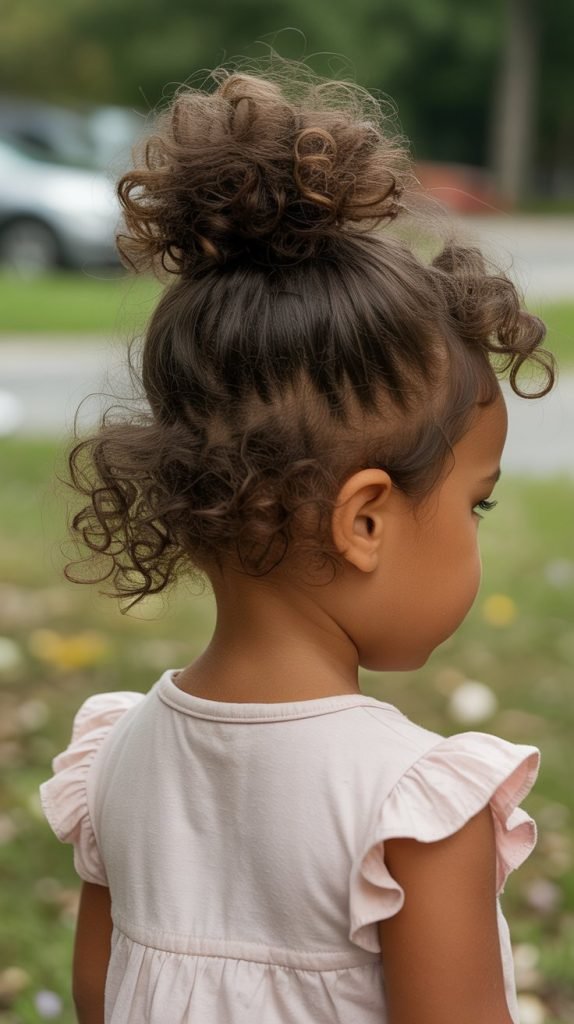
A top knot positioned at the crown with loose curls flowing in the back combines practicality with natural beauty. This partially protective style keeps the front secured while allowing natural texture to show.
Styling Technique:
- Section hair horizontally from ear to ear, creating front and back portions
- Gather front section into a high ponytail at the crown and twist into a bun
- Secure the top knot with bobby pins or an additional elastic band
- Leave back section loose, defining curls with cream or gel as desired
- Fluff and arrange both the bun and loose curls for balanced appearance
Benefits:
- Keeps hair off forehead and out of eyes during active play and meals
- Allows natural curl pattern in the back to remain visible and celebrated
- Quick to create on busy mornings, taking only 5-10 minutes
- Works well for various occasions from casual play to dressed-up events
- This style typically lasts 1-2 days before needing adjusting or restyling
14. Mohawk with Cornrow Sides

A faux mohawk creates a bold, edgy look by braiding or twisting the sides while leaving the center section standing upright. This creative style makes a statement while providing protective benefits to the braided sections.
Construction Method:
- Part hair vertically on both sides, creating a wide center strip from front to back
- Braid cornrows on each side section, either straight back or in creative patterns
- Leave the center section loose, twisting or fluffing for height and definition
- Apply gel or styling cream to center section for hold and texture
- The center can be styled in various ways: curly, twisted, or even braided upright
Styling Considerations:
- This dramatic style works best for toddlers with adequate hair density in the center
- Perfect for special occasions, photo shoots, or children who love bold hairstyles
- The cornrowed sides provide protection while the center showcases natural texture
- Typically lasts 5-7 days before needing refreshing of the center section
- Monitor side braids to ensure they’re not too tight on sensitive toddler scalps
15. Chunky Twists with Beads
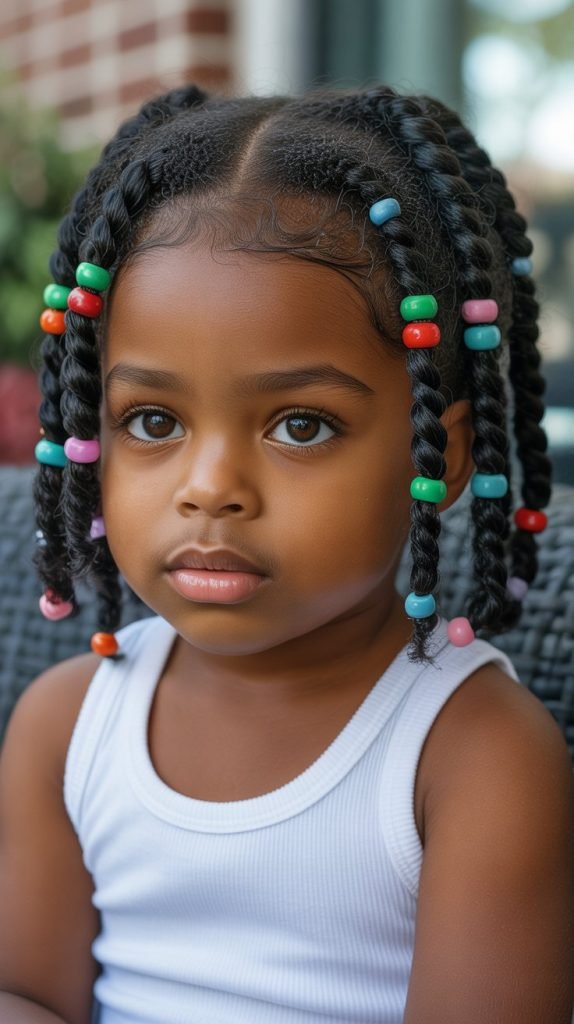
Larger, chunky two-strand twists decorated with colorful beads create a playful, distinctive style perfect for toddlers who love accessories. These substantial twists install faster than smaller versions while still offering protective benefits.
Installation Process:
- Section hair into larger squares or rectangles for substantial twists
- Apply moisturizing cream or butter to each section before twisting
- Create two-strand twists using the entire section for chunky, rope-like results
- Thread colorful plastic beads onto twist ends while hair is still damp
- Ensure beads are large enough not to pose choking hazards and secure them properly
Advantages:
- Chunky twists take significantly less time to install than smaller twists
- This style remains comfortable for toddlers who dislike prolonged sitting for hair
- Beads add weight that helps twists hang nicely and stay separated
- Colorful bead combinations allow for creative expression and personalization
- Typically lasts 1-2 weeks with proper maintenance and careful nighttime protection
16. Zigzag Part with Two Ponytails
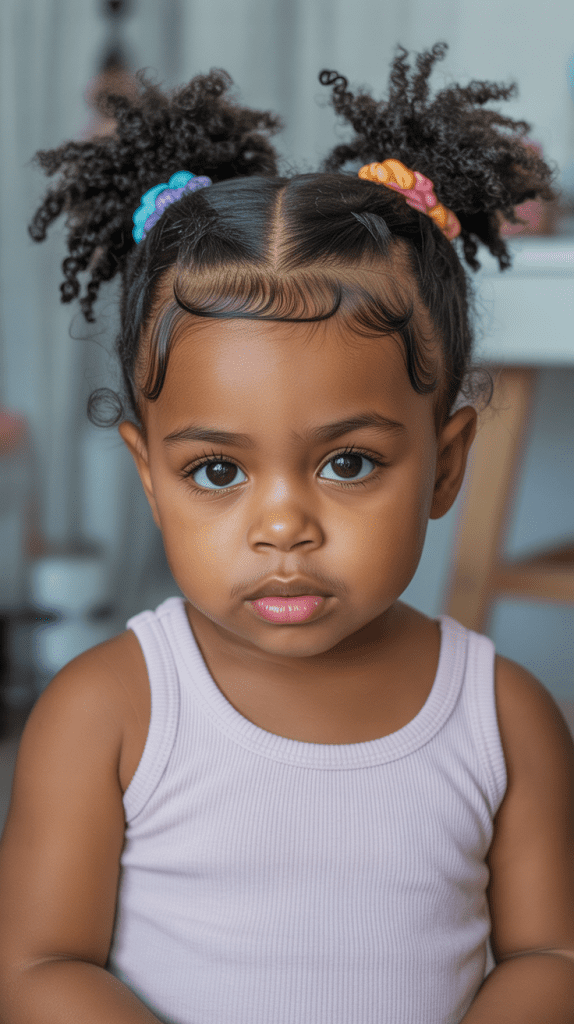
Creating a zigzag part instead of a straight part adds visual interest to classic double ponytails. This simple variation elevates an everyday style with creative parting technique.
Creating the Zigzag:
- Use a rat-tail comb to create a zigzag pattern from front hairline to nape
- Make consistent, evenly-spaced zigs and zags for a clean, intentional appearance
- Gather each side into ponytails positioned wherever desired (high, low, or mid-level)
- Secure ponytails with satin scrunchies or fabric-covered elastic bands
- Add bows, ribbons, or decorative clips for additional personality
Styling Benefits:
- The zigzag part adds creativity to a simple, functional style
- Takes minimal extra time compared to traditional straight part ponytails
- Works beautifully with all hair textures and lengths
- Perfect for practicing parting techniques on toddlers’ hair
- This style works well for 1-2 days before needing adjusting
17. Goddess Braids

Goddess braids are large, chunky cornrow-style braids that create a dramatic, beautiful appearance. These oversized braids install quickly and work wonderfully for toddlers who need protective styling without extensive installation time.
Braiding Technique:
- Section hair into larger parts, typically creating 4-8 goddess braids total
- Begin each braid at the hairline and continue cornrow-style toward the back
- Keep braids chunky and substantial, adding hair as you progress down each braid
- Secure ends with elastic bands or leave them loose for natural finishing
- Add extensions if desired for additional length, though not necessary for toddlers
Practical Advantages:
- Goddess braids install much faster than traditional smaller cornrows
- The larger size means less tension on individual sections of scalp and hairline
- This style provides excellent protection for hair ends and length retention
- Typically lasts 1-2 weeks for toddlers depending on activity level and maintenance
- Easy to maintain with regular moisturizing and nighttime protection
18. Curly Frohawk

A frohawk features shaved, twisted, or braided sides with a curly, voluminous strip running down the center. This bold style can be created without cutting by simply styling sides flat and leaving the center big and curly.
No-Cut Frohawk Creation:
- Apply strong-hold gel or edge control to side sections and smooth toward the back
- Use a brush or comb to achieve sleek, flat sides
- Pin or band sides down if necessary for more secure hold
- Define center section curls with curl cream or gel for maximum definition
- Fluff and pick center section to achieve desired height and volume
Styling Versatility:
- This dramatic style works for special occasions or toddlers with bold personalities
- Can be created quickly on wash day or with previously styled curls
- Sides can also be cornrowed or flat twisted instead of slicked for longer wear
- The frohawk typically lasts 1-2 days before sides need re-smoothing
- Perfect for showcasing natural curl pattern in a creative, eye-catching way
19. Mini Twists All Over

Mini twists are tiny two-strand twists covering the entire head, creating a delicate, detailed protective style. While these take longer to install, they offer excellent protection and versatility for extended wear.
Installation Considerations:
- Section hair into very small parts, typically pencil-width or smaller
- Apply light moisturizing cream to each section before twisting
- Create two-strand twists from root to tip, ensuring consistent size throughout
- Installation time ranges from 2-4 hours depending on hair length and density
- Consider doing twists in multiple sessions if toddler cannot sit comfortably for extended periods
Benefits and Maintenance:
- Mini twists can last 3-4 weeks with proper maintenance and care
- The small size means minimal weight and tension on the scalp
- Twists can be styled in various updos, ponytails, or left loose
- Versatile enough for daily wear and special occasions throughout their lifespan
- Excellent for low-manipulation periods focusing on length retention and growth
- Maintain by moisturizing every few days and protecting at night with satin bonnet
20. Bubble Ponytails
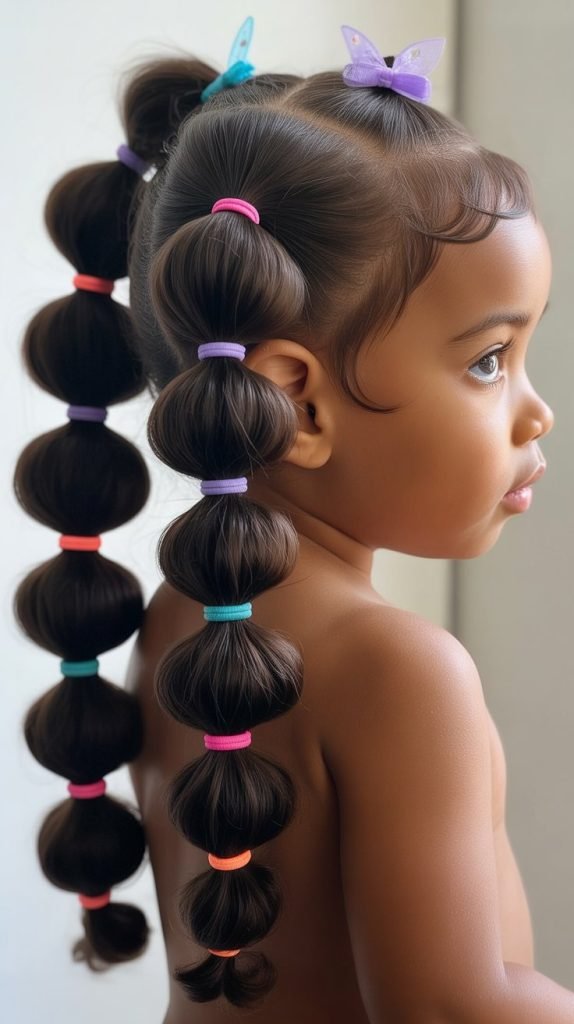
Bubble ponytails create segmented, puffy sections along one or more ponytails, resulting in an adorable, playful appearance. This style adds dimension and interest to simple ponytails with minimal effort.
Creating Bubbles:
- Start with one or two base ponytails positioned wherever desired on the head
- Secure additional elastic bands down the length of the ponytail at regular intervals
- Gently pull and fluff hair between each elastic to create rounded bubble shapes
- Continue adding elastics and creating bubbles until reaching the ponytail end
- Use colorful elastics or matching colors for cohesive, coordinated appearance
Styling Tips:
- Use satin or fabric-covered elastics to minimize breakage and damage
- Space bubbles evenly for balanced, symmetrical appearance
- This style works best on stretched or straightened hair for clear bubble definition
- Bubble ponytails typically last 1-2 days before needing adjustment
- Perfect for active toddlers as bubbles help keep hair contained and manageable
21. Side Twist with Accessories

A simple side twist enhanced with decorative accessories creates an elegant yet easy style perfect for special occasions or daily wear. This low-manipulation approach combines beauty with practicality.
Styling Method:
- Part hair deeply to one side, creating a larger section on the preferred side
- Apply light gel or cream to smaller section and twist or braid toward the back
- Secure with bobby pins behind the ear or at the back of the head
- Leave larger section loose with defined curls or style as desired
- Add fresh flowers, decorative clips, or jeweled pins along the twist
Occasion Versatility:
- This elegant style works beautifully for weddings, parties, or photo sessions
- Can be dressed down with simple clips for everyday wear
- Takes only 10-15 minutes to create, perfect for busy schedules
- Works with various hair textures and curl patterns
- Style typically lasts 1-2 days depending on activity level and maintenance
22. High Puffs with Twisted Bangs

Combining twisted bangs with high puffs creates a sophisticated style that keeps hair completely off the face while showcasing natural texture. This hybrid approach offers style and functionality in one look.
Construction Steps:
- Section front hairline area, creating the bang section from ear to ear
- Create small twists or cornrows going back from the front section
- Gather remaining hair into one or two high puffs at the crown
- Secure puffs with satin scrunchies and fluff for desired fullness
- Smooth any flyaways along twisted bangs with light gel or edge control
Benefits:
- Twisted bangs provide protection to the fragile hairline area
- High puffs keep bulk of hair secured while maintaining natural texture
- This style combines protective elements with showcase areas effectively
- Perfect for active toddlers who need hair completely away from their face
- Typically lasts 3-5 days with proper maintenance and nighttime care
23. Asymmetrical Cornrow Style

Asymmetrical cornrow patterns create artistic, unbalanced designs that make a bold style statement. These creative patterns showcase braiding skills while providing protective benefits.
Pattern Ideas:
- Create more cornrows on one side gradually decreasing toward the other side
- Design curves, spirals, or geometric shapes that flow asymmetrically across the head
- Combine thick and thin cornrows in an intentionally unbalanced arrangement
- Part hair diagonally or in unexpected ways for added visual interest
- End cornrows at different lengths or gather some while leaving others loose
Creative Expression:
- Asymmetrical styles allow for artistic freedom and unique personal expression
- These patterns work wonderfully for fashion-forward toddlers and parents
- Can incorporate the child’s favorite colors through bead placement or accessories
- Typically lasts 1-3 weeks depending on pattern complexity and maintenance
- Perfect for special events where a standout hairstyle is desired
24. Three-Strand Braid Ponytail

A classic three-strand braid within a ponytail offers timeless elegance with protective benefits. This simple style keeps hair contained while showcasing braiding technique and hair length.
Braiding Process:
- Gather hair into a ponytail at desired height using a satin scrunchie
- Divide ponytail into three equal sections for balanced braiding
- Create a standard three-strand braid down the length of the ponytail
- Secure braid end with another elastic band, leaving a small puff at the bottom
- Add decorative elements like ribbons woven through the braid or beads at the end
Style Advantages:
- Three-strand braids are simple enough for braiding beginners to master
- This style keeps hair protected and contained during active play
- Works beautifully for various hair lengths from shoulder to longer
- Braid helps stretch hair and minimize shrinkage for length demonstration
- Typically lasts 1-3 days before needing to be redone or refreshed
25. Twisted Crown with Center Part
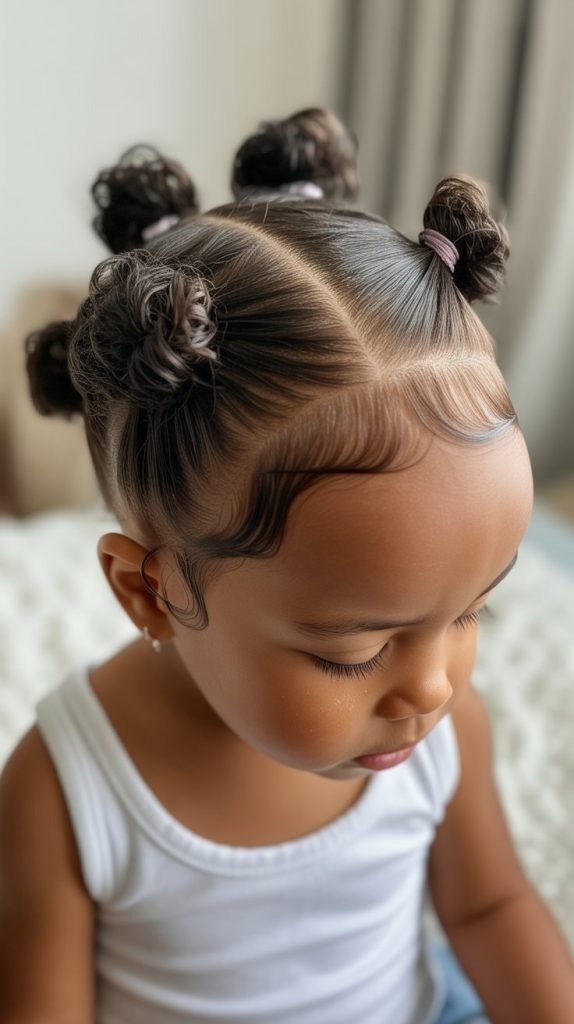
A twisted crown created from the sides meeting at the back, combined with a center part, creates a romantic, elegant appearance. This style works beautifully for special occasions while remaining comfortable for toddlers.
Creating the Crown:
- Part hair down the center from front hairline to the crown area
- Take a section from one front side and begin twisting toward the back
- Repeat with the opposite side, twisting toward the back as well
- Secure both twisted sections together at the back with bobby pins or elastic
- Leave remaining hair loose in the back, styled in curls or left natural
Styling Context:
- This elegant style works perfectly for flower girls, special photos, or holidays
- The twisted crown resembles a natural headband created from the child’s own hair
- Can be enhanced with small flowers, pearls, or decorative pins along the twists
- Typically lasts 1-2 days as a special occasion style
- Works best on hair with some length for adequate twisting material
26. Sectioned Puffs with Colorful Bands
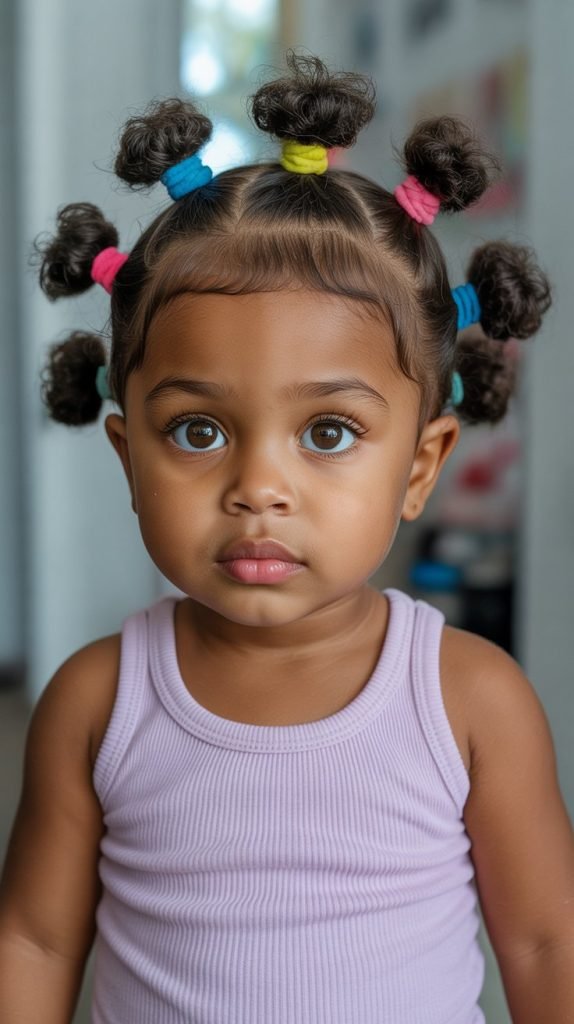
Multiple small puffs created across the head with colorful elastic bands offer a playful, youthful style. This approach combines the cuteness of multiple puffs with the fun of colorful accessories.
Creating Multiple Puffs:
- Section hair into multiple squares or rectangles across the entire head
- Gather each section into a small ponytail secured with colorful elastic bands
- Create anywhere from 4 to 10+ puffs depending on hair density and desired look
- Arrange puffs in rows, random patterns, or specific designs
- Fluff each puff to create rounded, full appearance
Practical Considerations:
- Use quality elastic bands that won’t snag or damage hair
- Ensure ponytails are not too tight to prevent discomfort and tension
- This style works well for toddlers with shorter to medium-length hair
- Sectioned puffs can last 2-3 days with proper nighttime maintenance
- Perfect for active play as hair remains completely secured and manageable
- Easy to refresh by simply re-moisturizing and re-fluffing each puff section
27. Faux Locs for Toddlers
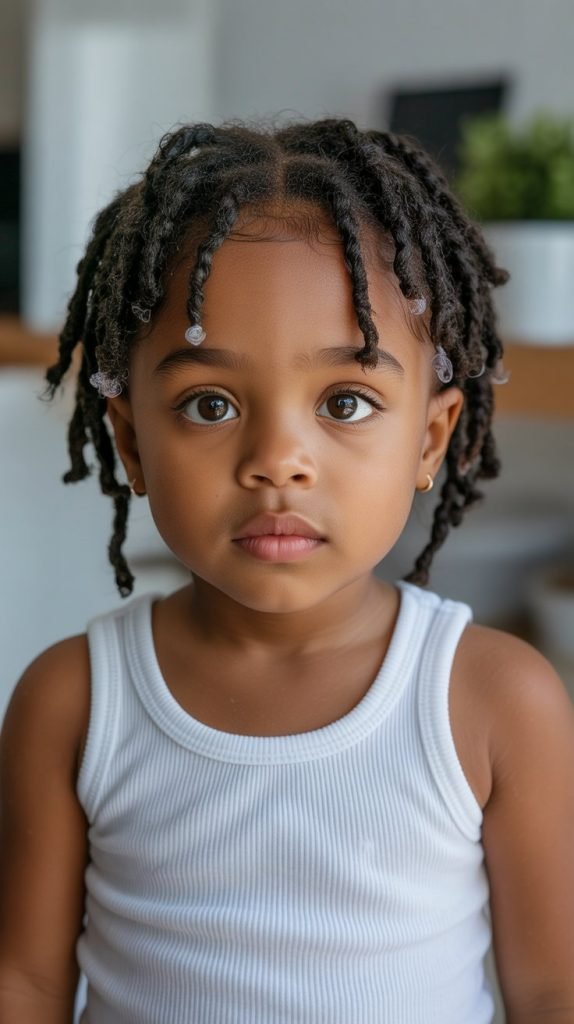
Faux locs created with yarn or faux loc extensions provide a temporary loc’d appearance without the commitment. For toddlers, shorter, lighter faux locs work best for comfort and age-appropriateness.
Installation Guidelines:
- Create small to medium sections across the head for individual loc placement
- Use lightweight yarn, faux loc extensions, or pre-twisted loc pieces
- Attach extensions using the wrapping method or crochet technique around toddler’s natural hair
- Keep locs shoulder-length or shorter to prevent weight strain on young scalp
- Ensure installation is not too tight to maintain scalp comfort
Care and Duration:
- Faux locs can last 2-4 weeks on toddlers depending on maintenance and activity level
- Moisturize the scalp regularly using a spray bottle with water and oil mixture
- Cover locs at night with a satin bonnet or sleep on a satin pillowcase
- Avoid heavy products that can cause buildup on the loc surfaces
- Monitor your toddler’s comfort level, as some children may find locs heavy initially
- Remove carefully by unraveling each loc and gently detangling the natural hair underneath
28. Half-Up Half-Down with Twists
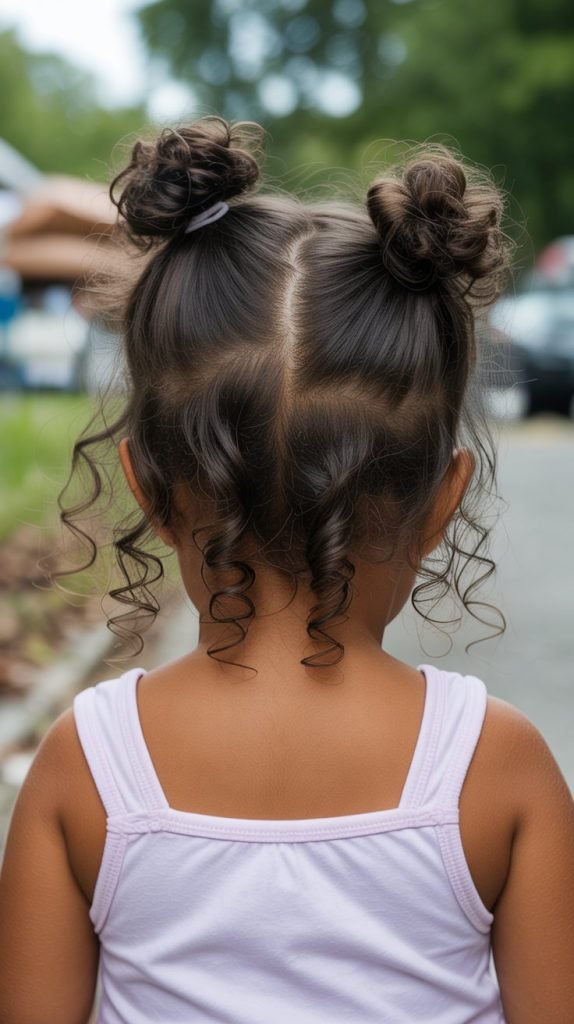
The half-up half-down style with twists combines protective styling with natural hair display, creating a balanced, versatile look. This approach secures the top portion while allowing bottom curls to flow freely.
Styling Technique:
- Section hair horizontally from ear to ear, separating top and bottom portions
- Create two-strand twists, cornrows, or flat twists with the top section
- Gather twisted top section at the crown or back and secure with elastic or pins
- Leave bottom section loose with defined curls using curl cream or leave-in conditioner
- Style can be dressed up with accessories or kept simple for everyday wear
Versatility Benefits:
- This style offers the best of both protective and natural styling worlds
- Works beautifully for various occasions from casual to formal events
- Takes approximately 20-30 minutes to create depending on complexity
- Allows easy access to bottom section for moisturizing and curl refreshing
- Top section provides 5-7 days of protection while bottom can be restyled as needed
- Perfect transition style between fully protective and completely loose natural hair
29. Cornrow Ponytail with Curly Ends
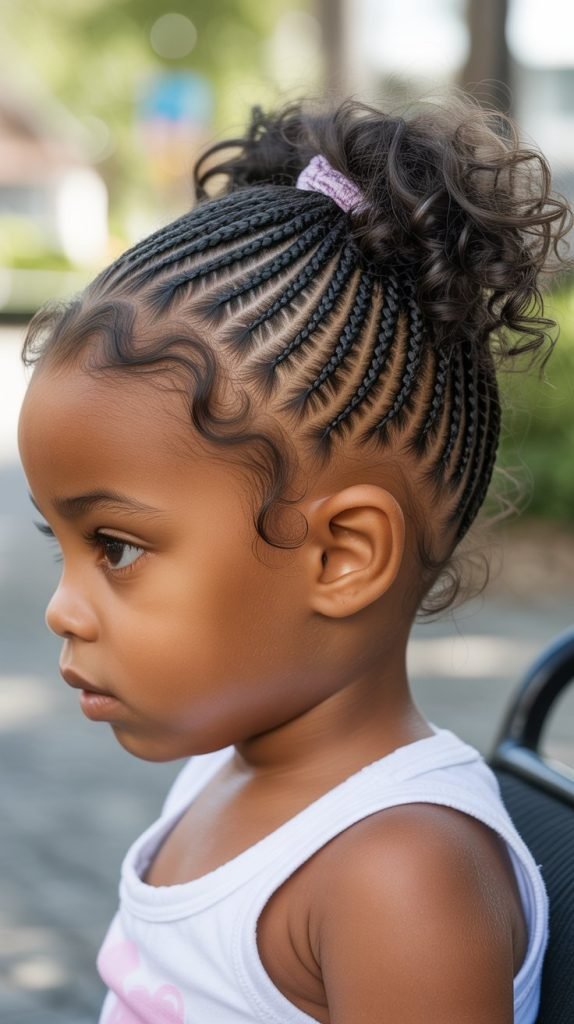
Cornrows leading into a ponytail with curly ends combines sleek protective braiding with natural texture showcase. This style keeps the front secured while celebrating natural curl pattern at the ends.
Construction Method:
- Create 4-6 cornrows starting at the front hairline braiding toward the crown
- Gather all cornrows together at the crown area into a single ponytail
- Secure ponytail with a satin scrunchie or fabric-covered elastic band
- Define the loose curly ends with curl cream and finger-coil or scrunch
- Leave ends loose and bouncy rather than continuing to braid them
Style Benefits:
- Front cornrows keep hair away from face during meals and activities
- Curly ponytail ends add playful movement and natural texture celebration
- This hybrid style provides protection to most of the hair while minimizing manipulation
- Typically lasts 1 week before cornrows need redoing or complete restyling
- Perfect for toddlers transitioning into protective styling gradually
- Can be enhanced with colorful beads on cornrow ends before gathering into ponytail
30. Twisted Updo
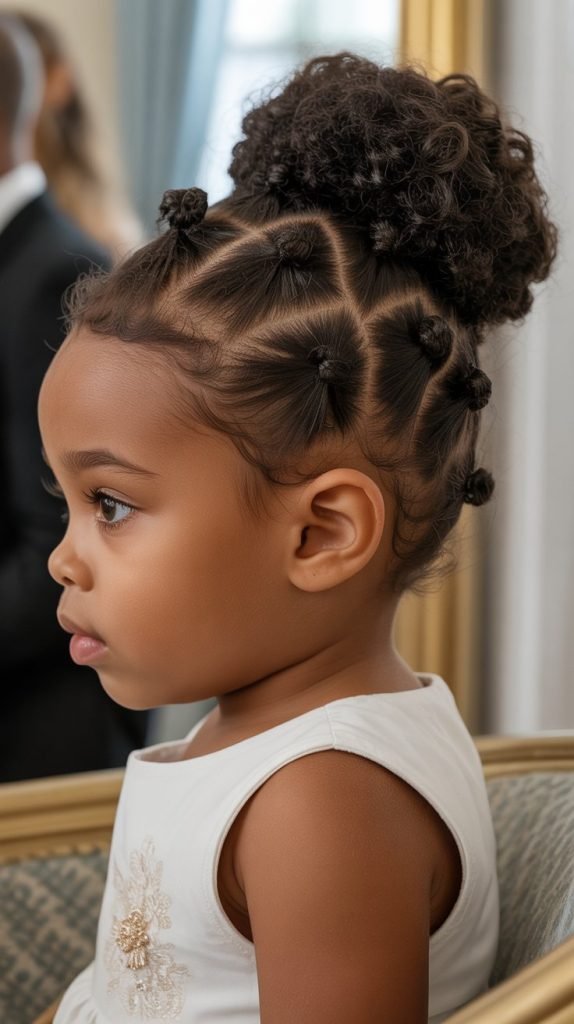
A twisted updo gathers all hair into an elevated style using twisting techniques, creating an elegant appearance perfect for special occasions. This sophisticated look keeps all hair protected and secured.
Creating the Updo:
- Start with stretched or moisturized hair for easier manipulation and styling
- Create multiple two-strand twists all over the head working in sections
- Gather twists upward toward the crown or back of the head
- Pin each twist in place using bobby pins, creating a clustered updo appearance
- Tuck twist ends underneath for a polished finish or leave slightly loose for texture
- Smooth edges with edge control or gel for refined, elegant completion
Occasion Suitability:
- Twisted updos work beautifully for weddings, formal photos, or holiday celebrations
- This style keeps all hair protected and away from the face and neck
- Can be adorned with decorative pins, flowers, or jeweled accessories
- Typically created as a single-day special occasion style
- Comfortable for toddlers to wear throughout long events without discomfort
- Consider your child’s patience level before attempting elaborate updo variations
31. Side Cornrows with Beads
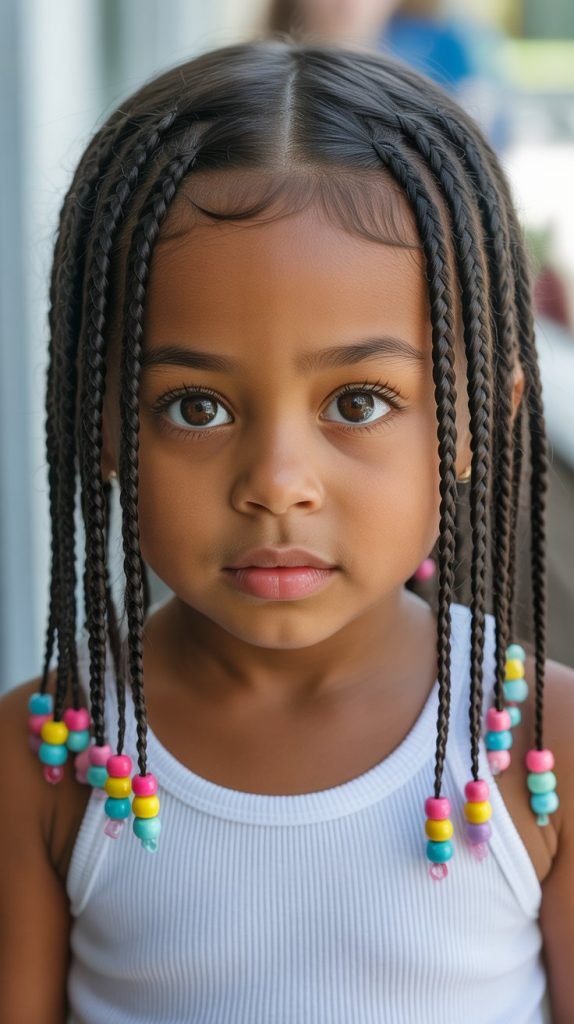
Side cornrows flowing in one direction decorated with beads create a directional, artistic style. The addition of beads adds personality, color, and helps secure braid ends.
Braiding and Decoration:
- Part hair to create sections that flow from one side toward the opposite side
- Braid 6-10 cornrows depending on hair density and desired thickness
- Keep cornrows medium-sized for comfort and reasonable installation time
- Thread beads onto each cornrow end while hair is still slightly damp for easier application
- Choose beads large enough to be safe and ensure they’re secured properly with additional small elastics if needed
Color Coordination:
- Select bead colors that match your toddler’s outfit for coordinated appearance
- Use rainbow assortments for playful, colorful expression of personality
- Monochromatic bead schemes create more sophisticated, cohesive looks
- Allow your toddler to participate in bead color selection for ownership of their style
- This style typically lasts 1-2 weeks with beads helping to preserve cornrow ends
- Replace or adjust beads as needed if they become loose or uncomfortable
32. Natural Afro Puff

The classic afro puff celebrates natural hair in its full, glorious volume. This simple style requires minimal manipulation while showcasing the beautiful texture of Black hair in its natural state.
Creating the Afro Puff:
- Work with freshly washed, conditioned, and fully dried natural hair
- Apply a light leave-in conditioner or moisturizer for softness and manageability
- Use a wide-tooth comb or pick to gently lift and separate hair at the roots
- Shape the afro into a rounded, cloud-like formation by picking evenly
- Avoid over-manipulating to prevent frizz while achieving desired fullness and shape
Maintenance and Care:
- The afro puff works best as a 1-2 day style between wash days
- Refresh in the morning by lightly spritzing with water and re-picking for volume
- This style celebrates natural shrinkage and authentic texture without alteration
- Perfect for toddlers with dense, coily hair that naturally grows outward
- Protect at night by loosely gathering hair in a satin bonnet without flattening
- Represents a beautiful statement of natural hair pride and acceptance
33. Combination Style: Braids and Twists

Combining braids and twists in a single hairstyle creates visual interest through contrasting textures. This creative approach allows for artistic expression while maintaining protective benefits.
Creating the Combination:
- Plan the design by deciding which sections will be braided versus twisted
- Common patterns include braided sides with twisted middle or alternating rows
- Create cornrows in designated braid sections first for foundation structure
- Install two-strand twists in remaining sections for contrasting texture
- Ensure both techniques are done with similar tension for balanced comfort
Design Possibilities:
- Alternate between braids and twists in stripes or rows for geometric patterns
- Create shapes using one technique outlined by the other technique
- Use braids for areas needing more security and twists for softer sections
- This combination style typically lasts 1-2 weeks with proper maintenance
- Perfect for showcasing styling versatility and creative braiding skills
- Can be customized endlessly based on your child’s preferences and your creativity
- Add beads to twist ends while leaving braid ends plain, or vice versa, for more contrast
Hair Care Tips for Natural Black Toddler Hair
Maintaining healthy natural hair requires consistent care practices and quality products. Understanding your toddler’s specific hair needs ensures their styles look beautiful while promoting growth and health.
Essential Care Practices:
- Deep condition hair weekly or bi-weekly to maintain moisture and elasticity
- Use sulfate-free shampoos that cleanse without stripping natural oils
- Apply leave-in conditioner daily or every other day for continuous moisture
- Seal moisture with natural oils like coconut, olive, or jojoba oil
- Detangle gently using fingers or wide-tooth combs, always starting from ends
- Never force through tangles or knots, which can cause breakage and pain
Protective Styling Guidelines:
- Avoid styles that are too tight, which can cause traction alopecia and discomfort
- Give hair breaks between protective styles to allow scalp rest and assessment
- Monitor your toddler’s scalp regularly for irritation, bumps, or excessive dryness
- Change styles every 1-3 weeks depending on the style type and hair needs
- Focus on low-manipulation approaches that minimize daily handling and stress
Product Selection:
- Choose products specifically formulated for natural, textured Black hair
- Avoid products containing harsh sulfates, silicones, or drying alcohols
- Read ingredient lists and prioritize natural, moisturizing components
- Test new products on a small section first to check for allergic reactions
- Invest in quality products as they directly impact hair health and manageability
Styling Tools and Accessories for Toddler Hair
Having the right tools makes styling natural toddler hair easier, more comfortable, and more effective. Quality tools reduce breakage and make the styling process more enjoyable for both parent and child.
Tool Care and Safety:
- Clean styling tools regularly to prevent product buildup and bacteria
- Replace elastic bands frequently as they lose elasticity and can cause breakage
- Choose tools appropriate for your toddler’s age and hair density
- Avoid metal accessories that can snag or pull delicate hair strands
- Store tools in a clean, dry location accessible for daily styling needs
Making Styling Comfortable:
- Let your toddler watch shows or listen to music during longer styling sessions
- Take breaks during installation of time-consuming styles to prevent restlessness
- Explain what you’re doing and why to help toddlers understand the process
- Offer small rewards for patience during styling to create positive associations
- Never rush through styling as this can cause pain and negative hair experiences
Dealing with Tangling and Matting
Tangling and matting are common challenges with natural toddler hair, especially with active children. Prevention and proper detangling techniques protect hair health while minimizing discomfort.
Prevention Strategies:
- Braid or twist hair before bedtime to minimize nighttime tangling
- Use satin or silk pillowcases and bonnets to reduce friction during sleep
- Keep hair moisturized as dry hair tangles more easily than hydrated hair
- Style hair in protective styles that minimize exposure to wind and elements
- Apply leave-in conditioner daily to create slip and prevent strand clumping
Detangling Process:
- Never detangle dry hair, always dampen with water or leave-in conditioner first
- Start detangling from the ends and gradually work upward toward roots
- Use fingers first to gently separate major tangles before using tools
- Work in small sections rather than attempting to detangle large portions at once
- Apply additional conditioner or detangling spray to particularly stubborn knots
- Be patient and never rush through detangling, which causes breakage and pain
Addressing Matting:
- For severe mats, saturate the area with conditioner or detangling product
- Gently pull apart the mat with fingers, starting from the outer edges
- Use a wide-tooth comb carefully once the mat begins loosening
- Consider professional help for extensive matting rather than causing damage
- Prevent future matting by improving nighttime protection and moisturizing routine
Creating a Toddler Hair Care Routine
Establishing a consistent hair care routine ensures your toddler’s natural hair remains healthy, manageable, and beautiful. A predictable schedule also helps toddlers cooperate better during hair care time.
Weekly Schedule Example:
- Sunday: Wash day with shampooing, deep conditioning, and styling for the week
- Monday-Wednesday: Light moisturizing and touch-ups as needed
- Thursday: Mid-week refresh with spray moisturizer and edge smoothing
- Friday-Saturday: Light maintenance, prepare for weekend activities
- Daily: Morning refresh with water-based spray and evening bonnet application
Wash Day Routine:
- Pre-detangle hair gently with fingers and wide-tooth comb before wetting
- Wet hair thoroughly with warm water in the bath or shower
- Apply sulfate-free shampoo focusing on scalp, gently massage without tangling
- Rinse thoroughly ensuring no product residue remains on scalp
- Apply deep conditioner generously from roots to ends
- Allow conditioner to penetrate for 15-30 minutes, using heat cap if available
- Rinse with cool water to seal cuticles and enhance shine
- Apply leave-in conditioner to damp hair for ongoing moisture
- Style hair in chosen protective or natural style while still damp
Daily Maintenance:
- Spritz hair lightly with water and oil mixture each morning
- Apply small amounts of moisturizing cream to any dry areas
- Smooth edges with edge control or light gel if needed
- Ensure bonnet is on properly each night before bed
- Check for any loose braids, twists, or sections needing adjustment
Seasonal Hair Care Considerations
Natural toddler hair needs different care approaches depending on the season and climate conditions. Adjusting your routine based on weather ensures optimal hair health year-round.
Winter Hair Care:
- Increase moisturizing frequency as indoor heating creates dryness
- Use heavier creams and butters to combat harsh cold weather effects
- Protect hair with hats, ensuring satin lining to prevent friction damage
- Consider longer-lasting protective styles to minimize exposure to elements
- Deep condition more frequently to counteract moisture loss from low humidity
Summer Hair Care:
- Use lighter, water-based products that won’t feel heavy in heat and humidity
- Protect hair from chlorine and salt water with pre-swim conditioning treatments
- Rinse hair immediately after swimming to remove damaging chemicals
- Increase sun protection as UV rays can damage and dry hair strands
- Consider styles that keep hair off the neck for comfort in hot weather
- Maintain hydration by spritzing hair more frequently throughout the day
Humidity Management:
- In high humidity, use anti-frizz products and styles that embrace natural texture
- Avoid fighting natural hair’s response to humidity with excessive products
- Choose styles that look good with expanded volume and frizz
- In low humidity, focus intensely on moisture retention and sealing techniques
Encouraging Hair Positivity in Toddlers
Building positive hair identity in young children sets the foundation for healthy self-esteem and cultural pride. How you talk about and handle your toddler’s hair significantly impacts their relationship with it.
Positive Language:
- Use affirming words like “beautiful,” “strong,” “special,” and “unique” when discussing their hair
- Never express frustration or negativity about hair texture, length, or manageability in front of your child
- Celebrate their natural hair as an important part of their identity and heritage
- Avoid comparing their hair to others or expressing wishes for different textures
- Teach proper terminology for hair types, styles, and care practices age-appropriately
Building Pride:
- Read books featuring characters with natural Black hair in positive contexts
- Point out beautiful natural hair on others in person, media, and art
- Let your toddler participate in style selection when age-appropriate
- Take photos of their hairstyles and express excitement about how beautiful they look
- Attend cultural events and spaces where natural hair is celebrated and normalized
- Connect hair care time with bonding, storytelling, and positive experiences
Handling Negative Comments:
- Prepare age-appropriate responses for questions or comments about their hair
- Teach them simple, confident responses like “I love my hair” or “My hair is special”
- Address any negative experiences immediately with comfort and affirmation
- Connect with other families raising children with natural hair for community support
- Model confidence in your own natural hair journey if applicable
Conclusion
Navigating the world of 33 Natural Black Toddler Hairstyles for Girls opens up endless possibilities for celebrating your child’s unique beauty while maintaining healthy hair practices.
From protective styles like cornrows and twists to celebratory natural looks like afro puffs and wash-and-gos, each hairstyle serves a purpose in your toddler’s hair journey while honoring the rich cultural heritage these styles represent.
Remember that the best hairstyle is one that keeps your child comfortable, protects their delicate strands, and makes them feel confident and beautiful in their own skin.
As you experiment with these various styles, pay attention to your toddler’s preferences, comfort levels, and hair’s specific needs, adjusting techniques and products accordingly for optimal results.
The time spent caring for and styling your child’s natural hair is more than just a grooming routine—it’s an opportunity to bond, teach self-love, and build a foundation of cultural pride that will benefit them throughout their lives.
Whether you choose simple daily styles or elaborate special occasion looks from these 33 options, your commitment to maintaining and celebrating your toddler’s natural hair sends a powerful message of acceptance, beauty, and confidence that will resonate far beyond childhood.