

Grey hair doesn’t have to mean the end of vibrant, youthful-looking locks.
Whether you’re noticing your first silver strands or dealing with a full head of grey, choosing the right hair color can transform your appearance and boost your confidence dramatically.
Best Hair Colors to Hide Grey Hair: The Ultimate Guide to Youthful Locks will walk you through everything you need to know about selecting, applying, and maintaining hair colors that seamlessly blend away grey while enhancing your natural beauty.
From understanding which shades work best with your skin tone to learning professional techniques that ensure long-lasting coverage, this comprehensive guide covers all the essential information you need.
You’ll discover low-maintenance options for busy lifestyles, strategic highlighting methods that add dimension, and expert tips for keeping your color looking fresh between salon visits.
Whether you prefer the expertise of a professional colorist or the convenience of at-home treatments, this guide will empower you with the knowledge to make informed decisions about your hair color journey and achieve stunning results that turn back the clock.
In This Post......
- 1. Understanding Grey Hair and Color Coverage
- 2. Best Hair Color Shades for Covering Grey
- 3. Permanent vs. Semi-Permanent vs. Demi-Permanent Color
- 4. Hair Color Techniques for Natural-Looking Grey Coverage
- 5. Best At-Home Hair Color Products for Grey Coverage
- 6. Professional Salon Techniques for Grey Coverage
- 7. Maintaining Your Hair Color Between Appointments
- 8. Choosing Hair Color Based on Skin Tone
- 9. Addressing Common Grey Coverage Challenges
- 10. Health Considerations and Hair Care
- 11. Budget-Friendly Grey Coverage Options
- 12. Transitioning to Embracing Your Grey
- Conclusion
1. Understanding Grey Hair and Color Coverage

Before selecting the perfect shade to cover your grey strands, it’s essential to understand why grey hair behaves differently than pigmented hair and what this means for color application.
Grey hair has a coarser texture and lacks melanin, making it more resistant to color absorption and requiring specific strategies for effective coverage.
Why Grey Hair Is Different
- Grey hair develops when melanocytes in hair follicles stop producing melanin, the pigment responsible for hair color.
- The texture of grey hair tends to be coarser and drier because it produces less sebum than pigmented hair.
- Grey strands often have a wiry quality and may stand out from the rest of your hair due to their different structure.
- The cuticle layer of grey hair is often more tightly packed, making it resistant to color penetration.
- Grey hair can reflect light differently, sometimes appearing more translucent or glass-like compared to pigmented hair.
Hair Porosity and Grey Coverage
- High porosity grey hair absorbs color quickly but may fade faster, requiring more frequent touch-ups.
- Low porosity grey hair resists color absorption and may need longer processing times or pre-treatment.
- Testing a small section of hair before full application helps determine the exact processing time needed for your specific hair type.
- Understanding your hair’s porosity level allows you to choose the right color formula and application technique.
- Pre-treating resistant grey hair with a dedicated primer can significantly improve color uptake and longevity.
2. Best Hair Color Shades for Covering Grey
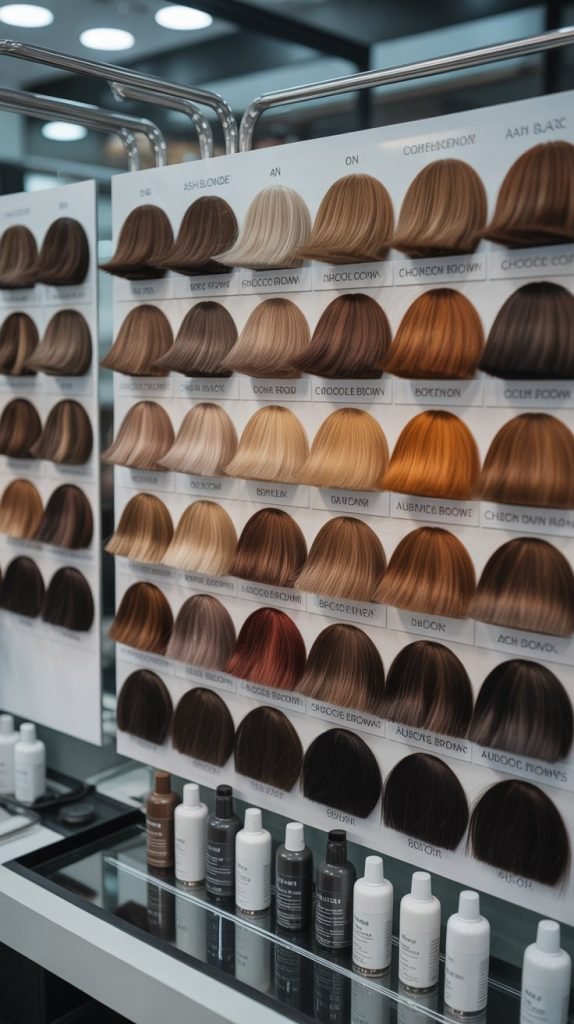
Selecting the right shade is crucial for natural-looking grey coverage that complements your complexion and personal style.
The most flattering colors work harmoniously with your skin tone while providing the opacity needed to mask grey hair effectively.
Warm Brown Tones
- Warm browns ranging from golden chestnut to rich chocolate provide excellent grey coverage while adding warmth to your complexion.
- These shades work particularly well for individuals with warm or neutral undertones in their skin.
- Golden brown tones reflect light beautifully and create a youthful, vibrant appearance.
- Medium to dark warm browns offer the best opacity for stubborn grey hair without appearing too harsh.
- Adding subtle caramel or honey highlights to a warm brown base creates dimension and further disguises grey regrowth.
Cool Brown and Ash Tones
- Cool-toned browns with ash or violet undertones complement cool skin undertones and neutralize any unwanted brassiness.
- Ash brown shades provide sophisticated coverage that looks natural and modern.
- These colors work exceptionally well for individuals who had naturally dark brown or black hair before greying.
- Cool browns help counteract the yellow or orange tones that can sometimes develop in grey hair exposed to sun or minerals.
- Ash tones require proper maintenance with purple-toned shampoos to prevent color from turning brassy.
Strategic Blonde Options
- Transitioning to a lighter blonde shade can make grey roots less noticeable by minimizing contrast.
- Honey blonde, champagne blonde, and beige blonde tones blend beautifully with grey hair while adding warmth.
- Highlighted blonde techniques scatter light and create the illusion of fuller, more dimensional hair.
- Very light blonde shades work best for those with less than 50% grey and naturally light hair.
- Blonde colors require more maintenance and toning to prevent yellowing but offer a softer approach to grey coverage.
Rich Auburn and Red Shades
- Auburn and copper-red tones provide vibrant coverage that energizes your entire appearance.
- These warm shades work beautifully for those with warm undertones and can actually be quite forgiving with grey regrowth.
- Red-based colors fade faster than other shades but create stunning depth and richness.
- Mahogany and burgundy tones offer sophisticated alternatives to traditional browns and provide excellent grey coverage.
- Red shades require color-depositing products between appointments to maintain vibrancy.
Natural Black Options
- True black or soft black shades offer maximum coverage for heavily grey hair with dramatic results.
- Black hair color can appear harsh on some skin tones, so consider softening it with subtle brown undertones.
- Blue-black or brown-black formulations provide depth while looking more natural than pure black.
- Black hair color requires precise application to avoid an overly flat, one-dimensional appearance.
- Softening the hairline with slightly lighter tones prevents the stark contrast that can age your appearance.
3. Permanent vs. Semi-Permanent vs. Demi-Permanent Color
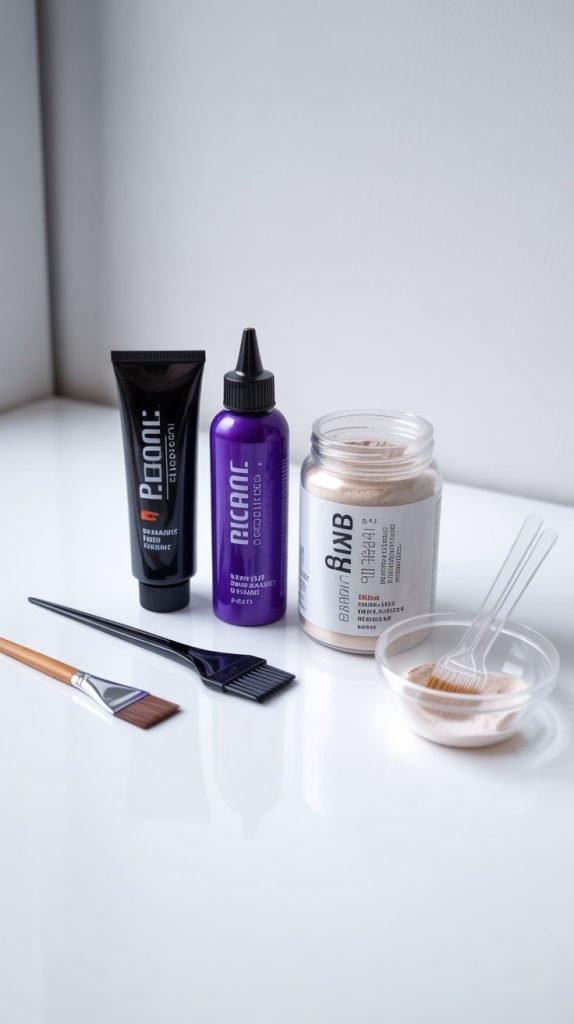
Understanding the differences between color formulations helps you choose the right product for your coverage needs, lifestyle, and hair health.
Each type of hair color offers distinct advantages and limitations when it comes to grey coverage and maintenance.
Permanent Hair Color
- Permanent color penetrates the hair shaft completely and provides the most reliable coverage for stubborn grey hair.
- These formulations use ammonia or similar alkaline agents to open the hair cuticle and deposit color deep within the cortex.
- Permanent color lasts until your hair grows out and doesn’t wash away, making it ideal for significant grey coverage.
- Touch-ups are typically needed every 4-6 weeks as new grey growth appears at the roots.
- Permanent color can be more damaging to hair health due to its chemical composition, requiring careful conditioning and maintenance.
Demi-Permanent Hair Color
- Demi-permanent color deposits color without fully penetrating the hair shaft, offering a gentler alternative to permanent formulations.
- This option provides excellent grey coverage for up to 50% grey hair and gradually fades over 24-28 shampoos.
- Demi-permanent color contains no ammonia but uses a low-volume developer to slightly open the cuticle.
- The gradual fading means less obvious regrowth lines and a more natural transition as the color wears away.
- This formula adds shine and condition to hair while providing reliable grey coverage with less damage than permanent color.
Semi-Permanent Hair Color
- Semi-permanent color coats the outside of the hair shaft without penetrating deeply and is best for minimal grey coverage.
- These formulations work well for blending grey hair that makes up less than 25% of your total hair.
- Semi-permanent color typically lasts 4-6 weeks or 12-16 shampoos before gradually fading away.
- This option causes minimal damage to hair and can actually improve shine and condition.
- Semi-permanent colors are ideal for those wanting to experiment with shades before committing to permanent color.
4. Hair Color Techniques for Natural-Looking Grey Coverage
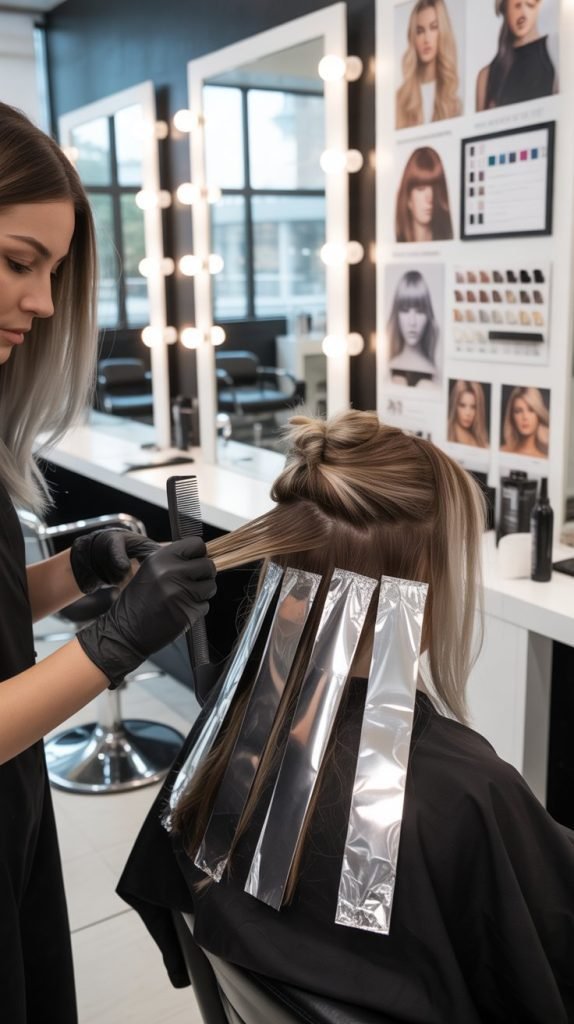
Modern coloring techniques offer sophisticated alternatives to traditional all-over color, creating dimensional results that blend grey hair while maintaining a natural appearance.
These methods can be customized to your specific needs and desired level of maintenance.
Balayage for Grey Blending
- Balayage involves hand-painting color onto the hair in strategic placement, creating a sun-kissed effect that camouflages grey.
- This technique places lighter pieces throughout the hair, making grey regrowth far less noticeable.
- Balayage requires less frequent touch-ups than traditional color, typically needing maintenance every 12-16 weeks.
- The freehand application creates soft, natural gradients that add dimension and movement to your hair.
- Combining balayage with a base color provides comprehensive grey coverage while maintaining the technique’s low-maintenance benefits.
Foil Highlights and Lowlights
- Strategic highlighting breaks up solid grey sections by adding lighter tones that blend with the grey.
- Lowlights involve adding darker pieces to create depth and make grey strands less prominent.
- Combining both highlights and lowlights creates a multi-dimensional effect that’s incredibly natural-looking.
- Foil techniques allow for precise placement and controlled processing for predictable results.
- This method works exceptionally well for salt-and-pepper hair patterns, creating intentional contrast.
Root Shadowing and Root Smudging
- Root shadowing applies darker color at the roots that gradually blends into lighter mid-lengths and ends.
- This technique extends the time between color appointments by creating a soft, intentional gradient.
- Root smudging softens the line of demarcation between colored hair and grey regrowth.
- These methods work beautifully in conjunction with highlights or all-over color for more forgiving maintenance.
- The shadow effect adds depth and dimension while strategically concealing grey roots.
Grey Blending vs. Full Coverage
- Grey blending incorporates existing grey hair into the overall color scheme rather than completely covering it.
- This approach creates a salt-and-pepper or silver-highlighted effect that looks intentional and stylish.
- Full coverage aims to eliminate all visible grey hair for a uniform, solid color result.
- Blending techniques typically require less maintenance and look more natural as hair grows.
- The choice between blending and full coverage depends on your personal preference and the amount of grey present.
5. Best At-Home Hair Color Products for Grey Coverage

Quality at-home hair color products have advanced significantly, offering salon-quality results for those who prefer the convenience and cost-effectiveness of DIY coloring.
Selecting the right product and following proper application techniques ensures successful grey coverage from your own home.
Top Permanent At-Home Color Options
- Look for brands specifically formulated for 100% grey coverage, which contain higher pigment concentrations.
- Products with built-in conditioners help minimize damage while providing reliable coverage.
- Choose formulations that include detailed instructions and tools for precise application.
- Many premium at-home colors now offer shade consultations through mobile apps to ensure you select the right tone.
- Oil-based permanent colors tend to be gentler on hair while still providing excellent grey coverage.
Recommended Demi-Permanent Options
- Demi-permanent at-home colors offer gentler alternatives for those with moderate grey coverage needs.
- These products typically come in cream formulations that are easier to apply evenly throughout the hair.
- Look for brands that include nourishing ingredients like argan oil or keratin for added hair health benefits.
- Demi-permanent options work particularly well for maintaining color between salon visits.
- Many of these products offer ammonia-free formulations that are less harsh on hair and scalp.
Color Depositing Products
- Color-depositing shampoos and conditioners help maintain hair color and blend grey between full color applications.
- These products work gradually with each use, making them ideal for subtle grey coverage and color maintenance.
- Toning products neutralize brassiness and keep color looking fresh and vibrant.
- Weekly color-depositing masks provide more intensive toning and grey coverage than daily products.
- These maintenance products extend the life of your color and reduce the frequency of full color applications.
Application Tips for Home Use
- Always perform a patch test 48 hours before applying any new hair color product to check for allergic reactions.
- Section hair into quadrants using clips to ensure even, thorough application of color.
- Start application at the areas with the most grey, typically at the temples and crown, for optimal coverage.
- Use a timer to track processing time precisely, as over-processing can damage hair and under-processing leaves grey uncovered.
- Apply color to dry, unwashed hair for better adherence and more even results.
6. Professional Salon Techniques for Grey Coverage

Professional colorists possess advanced skills and access to superior products that deliver exceptional grey coverage results.
Understanding what to expect from salon services helps you communicate effectively with your stylist and achieve your desired outcome.
Custom Color Formulation
- Professional colorists can create custom blends that perfectly match your desired shade and provide optimal grey coverage.
- Salons use professional-grade products with higher pigment concentrations that aren’t available in retail stores.
- Colorists adjust developer strengths and processing times based on your specific hair texture and grey percentage.
- Custom formulations can incorporate multiple shades to create dimension and prevent flat, one-dimensional color.
- Professional products typically last longer and fade more gracefully than retail alternatives.
Pre-Treatment for Resistant Grey
- Resistant grey hair benefits from pre-treatment products that prepare the hair shaft to accept color more readily.
- Professionals use specialized primers that open the cuticle gently and create a more receptive surface for color.
- Pre-pigmentation techniques fill the hair with base tones before applying the final color for richer, longer-lasting results.
- Bond-building treatments can be incorporated into the coloring process to minimize damage and strengthen hair.
- These preparatory steps significantly improve color uptake and longevity, especially on coarse or resistant grey hair.
Specialized Grey Coverage Services
- Reverse balayage techniques add darker tones to overly light or grey hair while maintaining dimension.
- Color melting creates seamless transitions between different shades for ultra-natural results.
- Glossing services seal in color, add shine, and refresh faded tones between full color applications.
- Bayalage combined with base color provides comprehensive coverage with low-maintenance regrowth.
- Toning services correct unwanted undertones and perfect the final shade for polished results.
Consultation Process
- Schedule a thorough consultation before your first grey coverage appointment to discuss goals and expectations.
- Bring reference photos showing colors you like to help your colorist understand your vision.
- Be honest about your at-home color history, as previous color applications affect how new color takes.
- Discuss your lifestyle and maintenance commitment to ensure the recommended service fits your needs.
- Ask about the expected maintenance schedule and costs before committing to a particular coloring approach.
7. Maintaining Your Hair Color Between Appointments

Proper maintenance extends the life of your hair color, keeps grey coverage looking fresh, and protects your hair’s health.
Implementing a strategic care routine maximizes your investment in professional or at-home coloring.
Color-Safe Washing Routine
- Wait at least 48-72 hours after coloring before your first shampoo to allow the color to fully set.
- Use sulfate-free shampoos specifically formulated for color-treated hair to minimize fading.
- Wash hair with lukewarm or cool water rather than hot water, which opens the cuticle and releases color molecules.
- Limit washing to 2-3 times per week, using dry shampoo on non-wash days to extend time between washes.
- Apply shampoo primarily to the scalp and allow the suds to gently cleanse the lengths as you rinse.
Conditioning and Treatment Schedule
- Use a color-depositing conditioner weekly to refresh your shade and blend emerging grey roots.
- Deep condition or mask weekly to replenish moisture lost during the coloring process.
- Leave-in conditioners and hair oils protect color from environmental damage and UV exposure.
- Focus intensive conditioning treatments on the mid-lengths and ends rather than the roots to avoid greasiness.
- Protein treatments every 4-6 weeks strengthen hair and help it better retain color molecules.
Root Touch-Up Strategies
- Color touch-up sticks, powders, and sprays temporarily conceal grey roots between coloring appointments.
- These products come in various shades to match your hair color and wash out with your next shampoo.
- Apply root concealers to dry hair after styling for the most natural-looking coverage.
- Strategic parting and styling can help hide grey regrowth until your next color appointment.
- Root touch-up kits designed for at-home use target new growth without recoloring your entire head.
Sun and Heat Protection
- UV filters in hair products prevent color fading and brassiness caused by sun exposure.
- Wear hats or use leave-in products with SPF when spending extended time outdoors.
- Always apply heat protectant before using hot tools like blow dryers, flat irons, or curling wands.
- Reduce heat styling frequency to minimize color fading and hair damage.
- Use the lowest effective temperature setting on heat styling tools to preserve color integrity.
8. Choosing Hair Color Based on Skin Tone

Selecting a hair color that harmonizes with your skin tone creates a naturally flattering appearance and ensures your grey coverage looks sophisticated rather than artificial.
Understanding your skin’s undertones guides you toward the most complementary shades.
Warm Skin Undertones
- Warm undertones have golden, peachy, or yellow hues and look best in hair colors with warm bases.
- Golden browns, honey blondes, rich auburns, and warm chestnuts complement warm skin beautifully.
- Avoid ashy or cool-toned colors that can make warm skin appear sallow or washed out.
- Caramel highlights and copper lowlights add dimension while enhancing your natural warmth.
- Warm skin typically has veins that appear greenish and looks best in gold jewelry rather than silver.
Cool Skin Undertones
- Cool undertones contain pink, red, or blue hues and are flattered by hair colors with cool or neutral bases.
- Ash brown, cool blonde, burgundy, and blue-black shades enhance cool-toned complexions.
- Warm golden or brassy tones can clash with cool skin and emphasize redness.
- Platinum, champagne, and mushroom blonde shades create stunning contrasts with cool skin.
- Cool skin typically has bluish or purple-toned veins and looks best in silver jewelry.
Neutral Skin Undertones
- Neutral undertones balance both warm and cool elements and can wear a wide range of hair colors successfully.
- Medium browns, natural blondes, and balanced auburn shades all work well with neutral skin.
- This versatility allows for more experimentation with different color families.
- Both warm and cool highlighting techniques can complement neutral undertones beautifully.
- Choose colors based on your personal preference and desired overall effect rather than strict undertone rules.
9. Addressing Common Grey Coverage Challenges
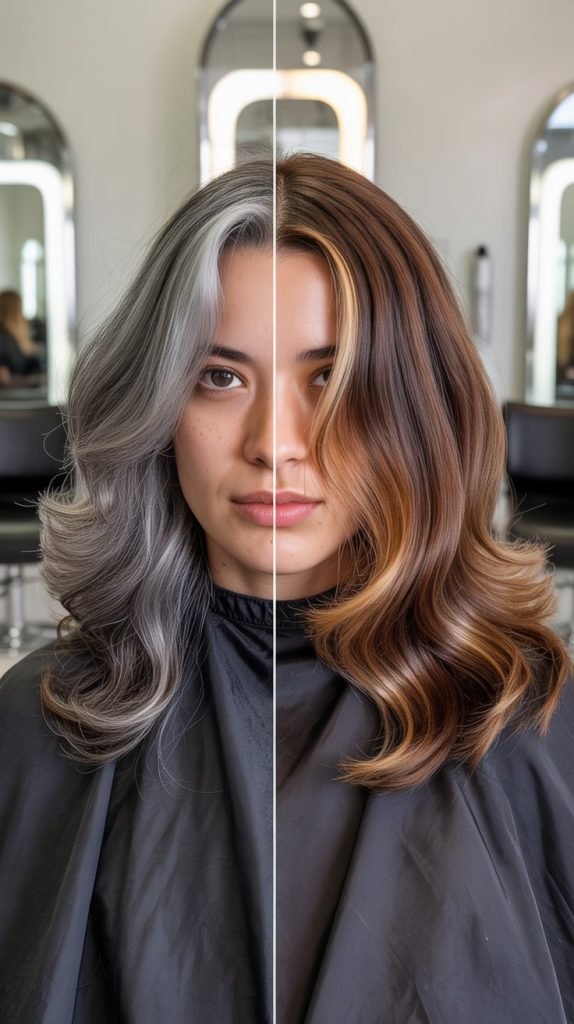

Even with the best products and techniques, grey coverage can present specific challenges that require targeted solutions.
Understanding these common issues and their remedies ensures consistent, satisfactory results.
Resistant Grey Hair
- Some grey hair has a particularly tight cuticle structure that resists color penetration despite normal processing.
- Pre-softening treatments that gently open the cuticle improve color absorption in resistant areas.
- Increasing processing time by 5-10 minutes can help color fully develop on stubborn grey strands.
- Using a slightly stronger developer strength (with professional guidance) improves penetration.
- Multiple color applications may be necessary for extremely resistant grey hair to achieve full coverage.
Uneven Color Results
- Porous areas of hair absorb color differently than healthy sections, creating uneven color distribution.
- Apply color to the most resistant areas first, saving porous ends for last to prevent over-processing.
- Porosity-equalizing treatments applied before coloring create more uniform color absorption.
- Section hair carefully during application to ensure every strand receives adequate color coverage.
- Overlapping color onto previously colored hair can create dark bands, so apply precisely to new growth.
Brassy or Unwanted Tones
- Grey hair and light-colored hair are prone to developing warm, brassy tones over time.
- Purple or blue-toned shampoos neutralize unwanted yellow or orange undertones between color appointments.
- Hard water minerals and chlorine can cause color to turn brassy or greenish.
- Installing a shower filter removes minerals that contribute to color changes and brassiness.
- Glossing treatments at the salon correct and neutralize unwanted tones while adding shine.
Fading Color
- Grey hair tends to release color molecules faster than pigmented hair due to its structure.
- Color-depositing conditioners used weekly help maintain vibrancy and extend time between full color services.
- Minimizing washing frequency preserves color by reducing the number of times color molecules are stripped away.
- Professional color-sealing treatments lock color into the hair shaft for improved longevity.
- Choosing deeper shades that fade to your target color ensures your hair looks good even as color diminishes.
10. Health Considerations and Hair Care

Maintaining hair health while covering grey requires balancing effective color coverage with proper care and nourishment.
Damaged hair doesn’t hold color well, making a healthy hair care routine essential for successful long-term grey coverage.
Minimizing Chemical Damage
- Space color applications appropriately to allow hair time to recover between treatments.
- Choose the gentlest effective color formulation for your grey coverage needs to reduce cumulative damage.
- Bond-building treatments incorporated during coloring protect hair structure and minimize breakage.
- Olaplex, K18, and similar products repair broken bonds within the hair shaft caused by chemical processing.
- Consider alternating between full color applications and root touch-ups to reduce overall chemical exposure.
Protein and Moisture Balance
- Color-treated hair requires balanced protein and moisture treatments to maintain strength and elasticity.
- Over-moisturizing without adequate protein leads to limp, weak hair that doesn’t hold color well.
- Too much protein without moisture creates brittle, straw-like hair prone to breakage.
- Alternate between protein treatments and deep moisturizing masks based on your hair’s specific needs.
- Perform the stretch test to determine whether your hair needs protein or moisture treatments.
Scalp Health
- A healthy scalp provides the foundation for healthy hair growth and better color results.
- Color chemicals can irritate the scalp, especially during processing, causing discomfort or sensitivity.
- Scalp barrier creams applied along the hairline before coloring prevent staining and irritation.
- Weekly scalp treatments with exfoliating or soothing ingredients promote healthy hair growth.
- If you experience persistent scalp irritation from hair color, consult with a dermatologist or trichologist.
Nutrition and Supplements
- Adequate protein intake supports healthy hair growth and structure for better color retention.
- Biotin, vitamin E, and omega-3 fatty acids contribute to hair health and vitality.
- Staying hydrated helps maintain hair moisture and elasticity from the inside out.
- Iron deficiency can affect hair health and potentially contribute to premature greying.
- Consult with a healthcare provider before starting supplements to address specific nutritional needs.
11. Budget-Friendly Grey Coverage Options

Effective grey coverage doesn’t always require expensive salon visits or premium products.
Strategic choices and smart maintenance techniques allow you to achieve excellent results while managing costs.
Cost-Effective Home Coloring
- High-quality drugstore brands offer reliable grey coverage at a fraction of salon prices.
- Buying color in bulk during sales reduces per-application costs for regular maintenance.
- Root touch-up kits specifically target new growth, using less product than full applications.
- Color-depositing products extend the life of your color, reducing the frequency of full applications.
- Following directions precisely prevents costly mistakes that require professional correction.
Extending Time Between Colors
- Strategic hair part changes hide grey regrowth by distributing visible grey across a larger area.
- Root concealer sprays and powders provide temporary coverage for special occasions between coloring.
- Grey-blending techniques rather than full coverage require less frequent maintenance appointments.
- Choosing hair colors closer to your natural grey tone creates less obvious regrowth lines.
- Dimensional coloring techniques like highlights make regrowth less noticeable than solid color.
DIY Highlighting Techniques
- At-home highlighting kits cost significantly less than salon services and can blend grey effectively.
- Cap highlighting methods allow precise placement without expensive salon foils.
- Balayage tutorials enable you to learn hand-painting techniques for natural-looking results.
- Starting with conservative highlights allows you to build confidence before attempting more complex techniques.
- Enlisting a friend or family member to help with application ensures more even, professional-looking results.
12. Transitioning to Embracing Your Grey
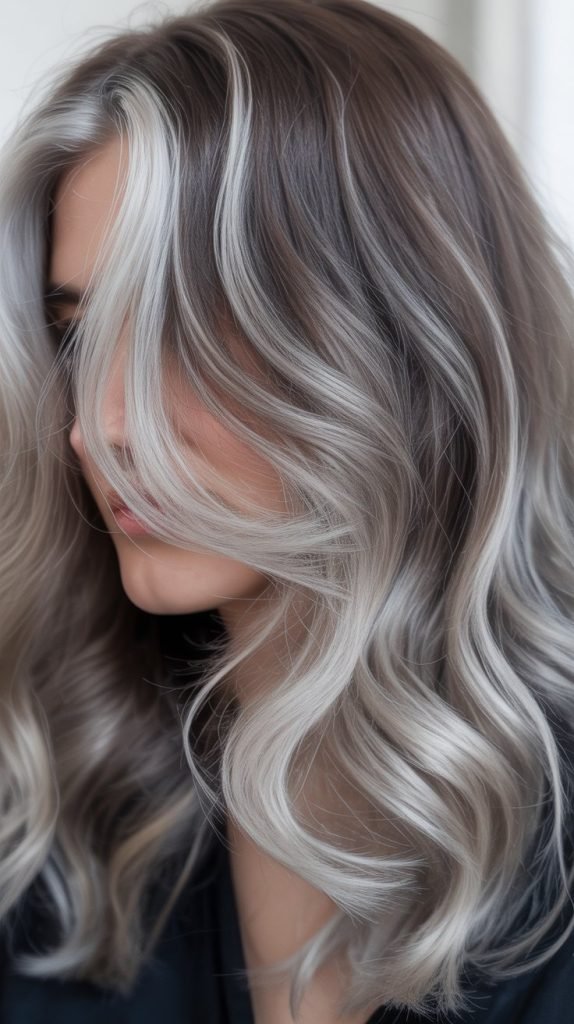
Sometimes the best approach to grey hair isn’t covering it completely but rather transitioning gracefully to embrace your natural silver.
This journey requires patience and strategic styling but can result in stunning, low-maintenance locks.
The Growing-Out Process
- Transitioning to natural grey can take 6-18 months depending on your hair length and growth rate.
- Blending techniques help camouflage the demarcation line between colored hair and grey regrowth.
- Strategic lowlights that match your grey tone make the transition less stark and more intentional.
- Gradually going lighter with each color service eases the contrast as grey grows in.
- Short haircuts accelerate the transition by removing colored ends more quickly.
Grey-Enhancing Techniques
- Silver and platinum toning treatments enhance natural grey by removing yellow undertones.
- Highlights in cooler tones throughout remaining colored hair blend seamlessly with incoming grey.
- Gloss treatments add shine and dimension to grey hair, making it look intentional and polished.
- Purple-toned products maintain the cool, silvery quality of natural grey hair.
- Professional color correction can blend harsh lines and create cohesive, beautiful grey.
Styling Silver Hair
- Grey hair benefits from extra moisture and conditioning to combat its naturally coarser texture.
- Shine-enhancing products make grey hair look healthy, vibrant, and intentional rather than dull.
- Modern cuts with layers and texture showcase the beauty of natural grey rather than hiding it.
- Silver hair looks especially striking with bold, well-defined makeup and fashion choices.
- Regular trims remove any remaining colored ends and maintain a polished, intentional appearance.
Psychological Aspects
- Embracing grey hair represents a significant mindset shift in a culture that often equates youth with beauty.
- Surround yourself with images of beautiful grey hair to reinforce positive associations with your transition.
- Join online communities of others transitioning to grey for support, advice, and inspiration.
- Focus on the freedom and authenticity that comes with embracing your natural hair rather than constant color maintenance.
- Remember that confidence and self-acceptance are far more attractive than any hair color.
Conclusion
Discovering the best approach to grey coverage transforms not just your hair but your entire confidence and self-image.
Best Hair Colors to Hide Grey Hair: The Ultimate Guide to Youthful Locks has equipped you with comprehensive knowledge about selecting flattering shades, choosing between permanent and temporary options, mastering application techniques, and maintaining vibrant color between appointments.
Whether you decide to embrace rich browns, experiment with strategic blondes, opt for professional salon services, or confidently handle at-home coloring, you now have the tools to make informed decisions that align with your lifestyle and budget.
Remember that covering grey successfully involves more than just choosing a color—it requires understanding your hair’s unique characteristics, maintaining its health, and implementing proper care routines.
The journey to beautiful, youthful-looking hair is deeply personal, and there’s no single right answer for everyone.
Some will find joy in regular color maintenance, while others may ultimately choose to embrace their natural silver.
Whatever path you choose, approach it with confidence, armed with the knowledge to achieve stunning results that make you feel absolutely radiant every time you look in the mirror.
