
27 Cute Braided Hairstyles for Kids
Finding the perfect hairstyle for your little one can transform their daily routine from a morning struggle into an enjoyable bonding experience.
27 Cute Braided Hairstyles for Kids offers a comprehensive collection of adorable, practical, and age-appropriate braiding styles that every parent, guardian, or caregiver can master.
Whether you’re preparing for school days, special occasions, or simply want to keep hair neat and manageable, this guide presents versatile braiding techniques suitable for various hair types, lengths, and textures.
From simple three-strand braids that beginners can accomplish in minutes to more intricate designs that make your child feel like royalty, each style has been carefully selected to combine beauty with functionality.
These hairstyles not only protect your child’s delicate hair from damage but also encourage creativity and self-expression during those formative years.
Get ready to discover braiding options that will have your kids excited about hairstyling time while giving you the confidence to create stunning looks that last all day.
1. Classic Three-Strand Braid

The classic three-strand braid remains the foundation of all braiding techniques and serves as the perfect starting point for parents new to styling their children’s hair.
This timeless style works beautifully on kids of all ages and can be dressed up or down depending on the occasion.
- The three-strand braid divides hair into three equal sections that are alternately crossed over one another to create a rope-like pattern.
- This style typically takes only 2-3 minutes to complete once you’ve mastered the basic technique.
- It works exceptionally well for school days because it keeps hair completely secured and tangle-free throughout active play.
- You can position this braid down the center of the back, to one side over the shoulder, or create two braids for a classic pigtail look.
- Adding colorful hair ties or ribbons at the end personalizes the style and makes it more appealing to younger children.
- This braid suits all hair types including straight, wavy, curly, and coily textures.
- For fine hair, gently pulling apart the braid sections after securing creates fuller, more voluminous appearance.
2. Dutch Braids (Reverse French Braids)

Dutch braids create a stunning raised effect that sits on top of the hair rather than blending into it, making them a favorite for kids who want their hairstyle to stand out.
This technique involves braiding hair under rather than over, producing a three-dimensional look.
- The Dutch braid technique requires crossing sections under the middle strand instead of over it as with traditional braiding.
- This style provides excellent hold and can last multiple days with proper nighttime care using a silk or satin bonnet.
- Dutch braids work particularly well for athletic kids participating in sports, dance, or gymnastics since they stay secure during vigorous movement.
- You can create a single Dutch braid down the center or two parallel Dutch braids for a symmetrical look.
- The raised texture makes this braid visually striking and photograph beautifully for special events and portraits.
- Adding small flowers, beads, or decorative pins along the braid elevates the style for formal occasions like weddings or parties.
- This braiding method distributes tension evenly across the scalp, making it more comfortable for children with sensitive heads.
3. French Braid

The French braid incorporates hair gradually from the sides as you work down the head, creating a sleek and sophisticated appearance that keeps flyaways under control.
This classic technique has remained popular for generations due to its elegant simplicity.
- French braiding begins at the crown of the head and incorporates small sections of hair from each side as you progress downward.
- This style smooths the hair close to the scalp, making it ideal for children with layered haircuts or shorter pieces around the face.
- The technique requires sectioning the hair into three initial strands at the top and continuously adding hair to the outer sections before crossing them over.
- A single French braid down the back creates a polished look suitable for school photos, recitals, or family gatherings.
- The tight weaving pattern helps prevent tangles and knots that commonly occur during outdoor play.
- French braids can transition seamlessly from casual daywear to evening events with the simple addition of accessories.
- This style works best on hair that reaches at least shoulder length, though shorter hair can be French braided partially.
4. Fishtail Braid

The fishtail braid produces an intricate woven appearance that looks complex but surprisingly simple to create, making it perfect for parents wanting to achieve an impressive result without advanced skills.
The alternating pattern creates beautiful texture and visual interest.
- Fishtail braiding uses only two sections of hair instead of three, with small pieces alternately crossed from one side to the other.
- The resulting pattern resembles a fish’s tail or a herringbone design, hence the name of this popular style.
- This braid works exceptionally well on longer hair where the intricate pattern can be fully displayed and appreciated.
- Taking smaller sections creates a tighter, more defined fishtail, while larger sections produce a looser, more relaxed version.
- The fishtail braid tends to stay secure throughout the day without requiring excessive hairspray or styling products.
- Gently pulling apart the woven sections after completing the braid creates a fuller, more romantic bohemian appearance.
- This style pairs beautifully with flower crowns or delicate hair accessories for spring and summer events.
5. Crown Braid

The crown braid wraps around the head like a natural halo, creating a regal and fairytale-inspired look that makes children feel like princesses.
This elegant updo keeps all hair off the face and neck, making it practical for warm weather.
- Crown braids can be created using various techniques including Dutch braiding, French braiding, or wrapping two separate braids around the head.
- This style works beautifully for formal events such as flower girl duties, birthday parties, or holiday celebrations.
- The circular pattern provides even tension distribution, making it comfortable for children to wear throughout long events.
- You can incorporate ribbons, flowers, pearls, or small decorative pins throughout the crown for added elegance.
- This updo protects hair ends by tucking them securely within the braid, reducing breakage and split ends.
- Crown braids suit medium to long hair lengths and work across all hair textures with proper preparation.
- The style keeps hair completely away from the face, making it ideal for active outdoor activities or summer camp.
6. Side Braid with Accessories

A simple side braid becomes a statement hairstyle when adorned with carefully chosen accessories that reflect your child’s personality and the occasion.
This versatile option allows for endless customization and creative expression.
- Side braids drape elegantly over one shoulder, creating an asymmetrical look that appears both casual and intentional.
- This positioning makes the braid easily accessible for children to touch and admire their hairstyle throughout the day.
- Popular accessories include satin ribbons woven through the braid, colorful elastic bands spaced evenly, beads threaded onto small sections, or decorative clips.
- The side placement works particularly well for children who dislike having things touch their back or neck.
- You can adjust the tightness based on your child’s comfort level and the duration they’ll wear the style.
- This braid showcases hair length beautifully and photographs well from multiple angles.
- Adding accessories in school colors makes this perfect for sports events or spirit days.
7. Boxer Braids

Boxer braids feature two tight Dutch braids running parallel from the hairline to the nape, creating a sporty and practical style that has gained immense popularity in recent years.
This athletic look provides maximum security during physical activities.
- The name “boxer braids” comes from female boxers who popularized this style for its ability to keep hair completely controlled during intense training.
- These braids sit very close to the scalp and use the Dutch braiding technique for that characteristic raised appearance.
- Boxer braids can last several days when properly maintained with nighttime protection and light oil application to the scalp.
- This style works exceptionally well for swimming, as the tight braiding prevents excessive tangling when hair gets wet.
- The parallel placement creates a balanced, symmetrical look that appeals to children who prefer orderly, neat hairstyles.
- You can extend the braids with synthetic hair for added length and volume if desired.
- This protective style minimizes daily manipulation, allowing hair to rest and grow healthier.
8. Waterfall Braid

The waterfall braid creates a cascading effect where sections of hair appear to flow through the braid like a waterfall, producing a romantic and whimsical appearance.
This semi-updo keeps the top portion controlled while allowing the rest to hang freely.
- This technique involves dropping sections of hair as you braid instead of carrying them through, creating the signature waterfall effect.
- The waterfall braid works beautifully as a half-up style, keeping hair away from the face while showcasing length and texture below.
- This style particularly flatters wavy or curled hair, as the loose sections display movement and dimension.
- The braid typically runs diagonally or horizontally across the back of the head from one side to the other.
- Waterfall braids suit special occasions like birthday parties, school dances, or family photo sessions.
- The technique requires moderate skill level but creates impressive results that appear more complicated than they are.
- You can enhance the look by curling the loose sections with a child-safe styling tool on low heat.
9. Heart-Shaped Braid

Heart-shaped braids use strategic parting and braiding techniques to create an adorable heart outline on the back of the head, perfect for Valentine’s Day or any day your child wants to wear their heart literally on their head.
This creative style showcases both skill and affection.
- Creating this style requires parting hair in a heart shape from the crown, then braiding along the outlined sections.
- The two braids typically meet at a point in the center back, where they can be secured together or continued as one braid.
- This design works best on straight to slightly wavy hair where the heart shape shows most clearly.
- Heart braids make adorable hairstyles for themed parties, school Valentine’s celebrations, or simply showing love on ordinary days.
- The symmetry of the heart requires careful sectioning and even braiding tension on both sides.
- You can fill the interior of the heart with small ponytails, twists, or leave it smooth for contrast.
- Adding red or pink ribbons enhances the romantic theme of this sweet hairstyle.
10. Four-Strand Braid

The four-strand braid introduces an additional section that creates a more intricate and textured pattern than traditional three-strand braiding.
This advanced technique produces stunning results that showcase your braiding skills.
- Four-strand braiding requires dividing hair into four equal sections and following a specific over-under pattern for each strand.
- The resulting braid appears fuller and more complex than standard three-strand versions, creating impressive visual impact.
- This technique works particularly well for thick hair, as it manages volume while creating beautiful definition.
- The pattern resembles a Celtic knot or woven ribbon, making it special for cultural celebrations or formal events.
- Learning the four-strand technique takes practice but becomes easier with repetition and muscle memory.
- This braid holds securely without requiring excessive tightening, making it comfortable for all-day wear.
- You can incorporate a ribbon as the fourth strand for added color and decoration.
11. Braided Pigtails

Braided pigtails offer a playful and youthful look that has remained a childhood staple across generations, combining practicality with undeniable cuteness.
This classic style keeps hair neatly divided and secured on both sides of the head.
- Traditional braided pigtails involve parting hair down the center and creating one braid on each side of the head.
- The placement can vary from high on the sides of the head to lower near the ears, depending on preference and hair length.
- This style distributes hair weight evenly, preventing the neck strain that sometimes occurs with single heavy braids.
- Braided pigtails work across all age groups from toddlers to pre-teens, adjusting the positioning for age-appropriateness.
- The symmetry appeals to children who appreciate balance and order in their appearance.
- You can mix braid types, such as one French braid pigtail and one Dutch braid pigtail, for creative variation.
- Adding matching ribbons, bows, or scrunchies at the base and ends completes this timeless look.
12. Infinity Braid

The infinity braid creates a figure-eight pattern that produces a unique and eye-catching design rarely seen in standard braiding styles.
This advanced technique challenges braiders while rewarding them with a stunning final result.
- Creating an infinity braid requires manipulating hair sections in a continuous figure-eight motion as you work down the length.
- The interlocking pattern creates depth and dimension that catches light beautifully in photographs.
- This style works best on straight to slightly wavy hair where the intricate pattern displays most clearly.
- The infinity braid typically requires hair at least shoulder-length or longer to properly showcase the design.
- This advanced technique may take 15-20 minutes to complete but creates a show-stopping result worth the effort.
- The tight weaving keeps hair secure for extended periods, making it suitable for overnight wear with proper protection.
- Adding small rhinestones or pearls at the crossing points of the figure-eight enhances the elegant appearance.
13. Bubble Braids

Bubble braids create a fun, segmented appearance using multiple elastic bands to form rounded “bubbles” along the length of a ponytail or pigtails.
This trendy style requires no actual braiding skills yet produces impressive results.
- Bubble braids form by securing elastic bands at regular intervals down a ponytail, then gently pulling each section outward to create volume.
- This style works exceptionally well for medium to thick hair that can support the expanded bubble sections.
- The technique requires no braiding ability, making it perfect for parents still learning hair styling basics.
- You can create bubble braids in a single high ponytail, two pigtails, or even a low side ponytail for different looks.
- Using clear elastics creates a seamless appearance, while colorful bands add playful pops of color throughout.
- The bubbles can be uniform in size for a polished look or varied for a more casual, organic appearance.
- This style works for both casual daily wear and can be dressed up for parties with glitter spray or decorative pins.
14. Ladder Braid

The ladder braid incorporates a side section of hair that weaves through a standard braid like rungs on a ladder, creating a unique combined effect.
This creative style appears complex but follows a logical pattern once understood.
- Creating a ladder braid requires braiding a thin section along one side while periodically threading it through a larger main braid.
- The side section creates horizontal “rungs” across the main braid, producing the ladder appearance that names this style.
- This technique works best on contrasting hair colors or when using a ribbon for the ladder section to highlight the design.
- The ladder braid showcases both creativity and skill, making it perfect for competitions, recitals, or special photo opportunities.
- Hair should be at least shoulder-length to accommodate both the main braid and the ladder section comfortably.
- The process takes longer than standard braiding, typically requiring 10-15 minutes for completion.
- You can position the ladder braid to the side, down the back, or even incorporate it into an updo for versatility.
15. Twist Braids

Twist braids use a two-strand twisting technique instead of traditional over-under braiding, creating a rope-like appearance that’s simpler to execute while still looking polished.
This method works wonderfully for beginners building their styling confidence.
- Twist braids form by dividing hair into two sections and continuously twisting them around each other in the same direction.
- This technique tends to unravel more easily than traditional braids, so securing with a strong elastic is essential.
- The style creates a smoother, more uniform appearance compared to the segmented look of standard braiding.
- Twist braids work particularly well on textured and curly hair, where they provide excellent definition and control.
- You can create multiple small twist braids throughout the head for a protective style that lasts several days.
- The simplicity of the technique allows children to learn and potentially style their own hair as they grow older.
- Applying light oil or styling cream before twisting helps define the pattern and add shine.
16. Zipper Braid

The zipper braid creates an optical illusion resembling a closed zipper running down the braid, achieved through strategic threading of hair sections.
This showstopping style demonstrates advanced braiding skills and creative problem-solving.
- Creating a zipper braid requires lacing small sections from alternating sides through a center Dutch braid, forming the zipper teeth effect.
- This intricate style works best on straight to slightly wavy hair where the detailed pattern shows most clearly.
- The technique demands patience and precision, typically taking 20-30 minutes to complete properly.
- Zipper braids make exceptional choices for competitive events such as dance competitions, cheer championships, or hair shows.
- The tight interlocking provides excellent hold that can last multiple days with proper nighttime care.
- This style requires hair long enough to complete the full pattern, generally at least mid-back length.
- Using a contrasting ribbon or colored strand as the center section makes the zipper effect even more pronounced.
17. Braided Bun

The braided bun combines the security of braiding with the elegance of an updo, creating a sophisticated style perfect for formal occasions or simply keeping hair completely contained.
This versatile option offers numerous variations to suit different preferences.
- Braided buns typically involve creating one or more braids that are then wrapped and pinned into a circular shape at the crown, nape, or side.
- This style works for dance recitals, weddings, religious ceremonies, or any event requiring a polished appearance.
- The bun position can be high for a ballerina aesthetic, low for classic elegance, or to the side for modern asymmetry.
- Multiple small braids can be wrapped together to create a fuller, more textured bun appearance.
- Using bobby pins that match the hair color ensures they remain invisible for a seamless finished look.
- The braided texture provides grip that helps the bun stay secure without requiring excessive pinning.
- Adding a decorative hair net over the bun in a matching or contrasting color creates additional visual interest.
18. Cornrows

Cornrows involve braiding hair very close to the scalp in continuous raised rows that can form straight lines, curves, or intricate geometric patterns.
This traditional protective style has deep cultural roots and provides excellent hair protection.
- Cornrows use the underhand braiding technique to create raised braids that lie flat against the scalp in defined rows.
- This protective style can last 1-2 weeks with proper maintenance, significantly reducing daily styling time.
- The patterns can be simple straight-back rows or elaborate designs including curves, zigzags, or even words and images.
- Cornrows work excellently for all hair textures but particularly benefit thick, textured, or curly hair types.
- This style requires skill and time to execute properly, often taking 1-3 hours depending on the complexity of the pattern.
- Professional stylists typically create the most complex cornrow designs, though parents can learn simple patterns with practice.
- Applying hair oil to the scalp and braids helps maintain moisture and prevents itching during extended wear.
19. Pull-Through Braid

The pull-through braid creates the illusion of a complicated braid without requiring any actual braiding technique, making it perfect for achieving an impressive look with beginner-level skills.
This style uses strategic ponytails that are pulled through each other for stunning effect.
- Creating a pull-through braid involves making a series of ponytails down the head, splitting each one and pulling the next ponytail through it.
- The technique creates exceptional volume and width, making it ideal for fine or thin hair that benefits from appearing fuller.
- This style requires only elastic bands and the ability to section hair evenly, no braiding experience necessary.
- The resulting appearance mimics a Dutch braid but with even more dimension and fullness throughout.
- Pull-through braids work well for photos and special events where you want hair to make a visual impact.
- Gently pulling apart each section after completing the style increases the volume and creates a softer, more romantic appearance.
- The technique works on all hair lengths from shoulder-length to very long, adjusting the number of sections accordingly.
20. Mohawk Braid

The mohawk braid creates a bold raised braid running down the center of the head from the hairline to the nape, with the sides slicked down or partially shaved for dramatic effect.
This edgy style appeals to kids wanting to express a more daring personality.
- The mohawk braid typically uses a Dutch braiding technique down the center of the head to achieve maximum height and definition.
- The sides of the hair are either slicked down smoothly with gel or styling cream, or actually trimmed shorter for authentic mohawk appearance.
- This style works particularly well for kids involved in alternative sports like skateboarding, BMX, or rock climbing where individuality is celebrated.
- The central braid can be tight and close to the scalp or loosened for a fuller, more voluminous mohawk effect.
- Adding temporary hair color, glitter, or accessories to the mohawk braid enhances the bold aesthetic.
- This style provides practical benefits by keeping all hair secured away from the face during athletic activities.
- The mohawk braid can transition from casual to dressy depending on accessories and the overall outfit choice.
21. Milkmaid Braid

The milkmaid braid wraps two braids over the top of the head from ear to ear, creating a vintage-inspired crown that evokes European folk traditions.
This romantic style keeps hair elegantly contained while maintaining a soft, feminine appearance.
- Creating a milkmaid braid involves making two standard braids on either side of the head, then crossing them over the crown and securing with bobby pins.
- This style works beautifully for flower girls, spring festivals, or any event with a pastoral or vintage theme.
- The braids can lay flat for a sleek appearance or be gently pulled apart for increased volume and a more relaxed look.
- Milkmaid braids work best on medium to long hair that can reach across the top of the head when braided.
- Decorating the braids with small flowers, ribbons, or pearl pins enhances the romantic, ethereal quality of this style.
- The updo keeps hair completely off the neck and face, making it comfortable for warm weather events.
- This style photographs exceptionally well from all angles, making it perfect for special occasions with lots of pictures.
22. Feather Braid

The feather braid incorporates small sections of hair that extend outward from the main braid like the delicate barbs of a feather, creating an intricate and detailed appearance.
This artistic style showcases advanced braiding techniques and patience.
- Creating a feather braid requires leaving small sections loose at regular intervals while braiding, which then extend outward creating the feather effect.
- This delicate style works best on straight to slightly wavy hair where the extended sections display clearly without tangling.
- The technique demands precision and planning to ensure the “feather barbs” are evenly spaced and sized throughout the braid.
- Feather braids make exceptional choices for competitions, photo shoots, or events where the hairstyle is part of the overall presentation.
- The style can incorporate multiple colors through temporary sprays or extensions to create a truly stunning bird feather appearance.
- This braid works on medium to long hair, though very long hair shows the design most dramatically.
- Using hairspray or light styling gel helps the extended sections maintain their position throughout the day.
23. Criss-Cross Braids
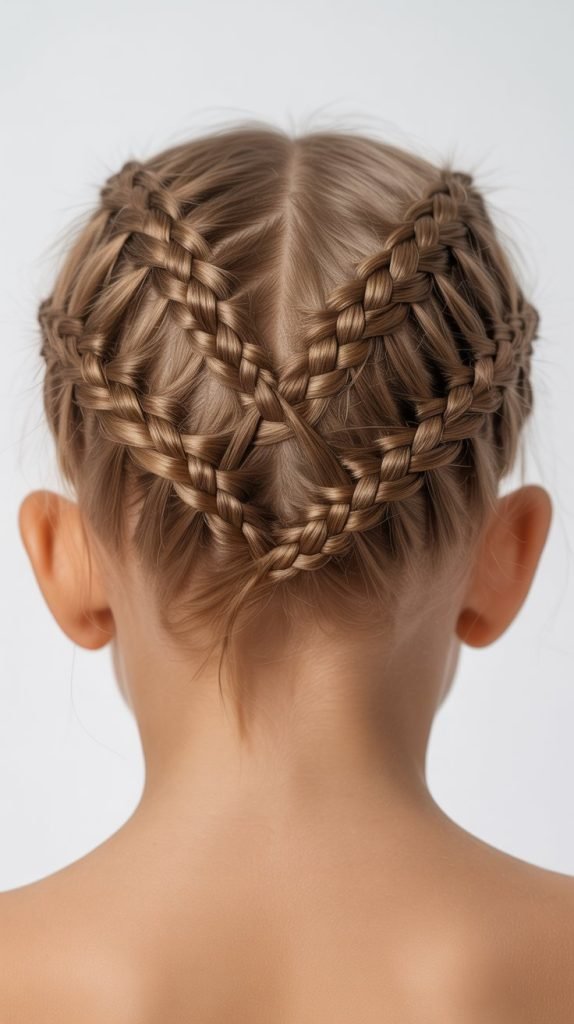
Criss-cross braids create an interwoven pattern across the back of the head where multiple braids intersect and overlap, forming a complex geometric design.
This eye-catching style combines multiple techniques for a truly unique result.
- This style typically involves creating four or more braids that cross over each other at strategic points before being secured at the ends.
- The crossing pattern can form simple X shapes or more complex woven designs depending on skill level and time available.
- Criss-cross braids work well for kids who want a unique style that stands out but remains school-appropriate.
- The multiple anchor points where braids cross create excellent security that keeps the style intact during active play.
- This technique works across various hair textures and can be adapted for different hair lengths by adjusting braid positions.
- Using different colored elastics at intersection points emphasizes the geometric pattern and adds playful color.
- The style requires careful planning of braid placement before beginning to ensure the crosses align properly.
24. Rope Braid Ponytail

The rope braid ponytail combines a standard ponytail with a simple two-strand rope braid, creating an elegant twisted appearance that’s perfect for both casual and formal occasions.
This quick style delivers polished results with minimal effort.
- Creating a rope braid ponytail involves first securing hair in a ponytail, then dividing it into two sections and twisting them together.
- The twisting technique creates a sleek, uniform appearance similar to actual rope, hence the style’s name.
- This braid tends to unwind if not properly secured, so wrapping a small section of hair around the elastic adds both security and polish.
- Rope braids work particularly well on straight to slightly wavy hair where the twist pattern shows most clearly.
- The style can be positioned high for a sporty look, mid-level for casual wear, or low for elegant sophistication.
- Adding volume to the ponytail before rope braiding creates a fuller, more dramatic finished appearance.
- This quick style typically takes only 3-5 minutes, making it perfect for busy mornings when time is limited.
25. Halo Twist Braid

The halo twist braid wraps around the head similar to a crown braid but uses a twisting technique rather than traditional braiding, creating a softer, more relaxed appearance.
This romantic style works beautifully for both special events and everyday wear.
- This style involves twisting sections of hair from both sides of the head around toward the back, meeting and continuing around to form a complete circle.
- The twisting technique creates less definition than traditional braiding but produces a softer, more ethereal appearance.
- Halo twist braids work exceptionally well for fine or thin hair, as the twisting naturally creates the illusion of more volume.
- The style keeps all hair secured away from the face while maintaining a romantic, whimsical quality.
- You can incorporate flowers, small clips, or decorative pins throughout the halo for enhanced beauty.
- This technique works best on medium to long hair that can reach around the head when twisted.
- The style photographs beautifully from all angles and holds well throughout long events without requiring touch-ups.
26. Side Dutch Braid with Loose Curls

This combination style features a side Dutch braid that travels diagonally across the head while the remaining hair falls in loose curls, blending structured braiding with romantic flowing texture.
This versatile look works for numerous occasions from casual to formal.
- The style begins with a Dutch braid starting at the hairline on one side, traveling diagonally across the back while incorporating hair from the top section only.
- The remaining hair below the braid hangs freely, either in natural texture or styled with curls for added elegance.
- This half-up, half-down approach keeps hair away from the face while showcasing length and movement in the loose sections.
- The Dutch braiding technique creates that signature raised appearance that contrasts beautifully with flowing curls.
- This style works well for medium to long hair where both the braid and loose sections can be clearly distinguished.
- Adding light hairspray to the braid helps maintain security while allowing the curls to move naturally.
- The asymmetrical design creates visual interest and photographs beautifully from multiple angles.
27. Mixed Braid Ponytail

The mixed braid ponytail combines multiple braiding techniques within a single ponytail, creating a textured and visually interesting style that showcases various skills.
This creative approach prevents the monotony of a single braid type while maintaining a cohesive look.
- This style involves sectioning a ponytail and creating different types of braids in each section, such as combining fishtail with three-strand and rope braids.
- The variety of textures within one ponytail creates visual depth and demonstrates multiple braiding capabilities in a single style.
- This approach works particularly well for thick hair that can support multiple distinct braid sections without appearing sparse.
- The mixed technique keeps the style interesting for children who become bored with repetitive single-braid patterns.
- You can incorporate colored extensions or ribbons in different sections to further distinguish each braid type.
- This creative style encourages experimentation and learning, as parents can try new techniques within the safe structure of a ponytail.
- The resulting textured ponytail works for casual daily wear and can be dressed up with accessories for special events.
Essential Tips for Braiding Kids’ Hair
Creating beautiful braids for children requires more than just technical knowledge—it demands understanding of their comfort, patience levels, and hair care needs. These foundational tips ensure successful braiding experiences that both parent and child can enjoy.
- Always start with detangled hair using a wide-tooth comb or detangling brush appropriate for your child’s hair texture to prevent pain and breakage.
- Apply a light leave-in conditioner or detangling spray before braiding to provide slip and make the process smoother for both you and your child.
- Keep your child entertained during styling time with their favorite show, movie, or music to help them remain still and patient.
- Section hair clearly using clips or elastics before beginning complex styles to maintain organization and reduce frustration.
- Maintain even tension throughout braiding—too tight causes discomfort and potential hair damage, while too loose results in braids that don’t hold.
- Take breaks during lengthy styling sessions to allow your child to move, stretch, and avoid fatigue or discomfort.
- Practice new braiding techniques on yourself, a mannequin, or willing family member before attempting them on your child to build confidence.
- Invest in quality hair accessories including seamless elastics, bobby pins that match hair color, and decorative elements your child loves.
- Protect braided styles at night using silk or satin bonnets, pillowcases, or scarves to extend wear time and reduce frizz.
- Never braid wet hair unless specifically creating a style for damp hair, as wet hair is more fragile and prone to breakage.
- Communicate with your child throughout the process, checking frequently about comfort levels and tightness to ensure positive experiences.
- Remove braids carefully after their wear period, using detangling products and working gently from ends to roots to minimize breakage.
Hair Care Considerations for Braided Styles
Proper hair care before, during, and after braiding ensures that these protective styles actually protect rather than damage your child’s delicate hair. Understanding the specific needs of braided hair helps maintain healthy growth and scalp condition.
- Moisturize the scalp regularly when wearing extended-style braids like cornrows or boxer braids using light oils or scalp sprays to prevent dryness and itching.
- Limit braid wear time to appropriate durations—most styles should be removed after 1-2 weeks maximum to allow hair and scalp to rest.
- Watch for signs of tension or traction including bumps along the hairline, tenderness, or hair thinning which indicate braids are too tight.
- Cleanse the scalp even while wearing braids using diluted shampoo applied with an applicator bottle or witch hazel on a cotton pad for refresh between washes.
- Ensure braids aren’t installed too tightly from the start, as this can lead to traction alopecia, a type of hair loss caused by prolonged pulling.
- Give hair regular breaks between protective styles, allowing at least a few days of loose hair between braided styles for scalp and follicle recovery.
- Deep condition hair before installing long-wear braids and immediately after removal to restore moisture and strengthen strands.
- Trim split ends regularly, as braiding can sometimes worsen existing damage by pulling on compromised ends.
- Pay attention to edges and hairline areas which are most vulnerable to tension damage, keeping braids in these areas looser than the rest.
- Adjust styling techniques for different hair textures—fine hair requires gentler handling while thick, coarse hair can typically handle more tension.
- Teach older children to communicate discomfort immediately rather than enduring pain, establishing healthy boundaries around hairstyling.
- Consult with pediatric dermatologists if you notice persistent scalp issues, unusual hair loss, or reactions to styling products.
Choosing the Right Braid for Different Occasions
Selecting appropriate braided hairstyles for specific events ensures your child looks and feels their best while meeting any dress code or activity requirements. Consider both aesthetic appeal and practical functionality when making style decisions.
- School days benefit from secure, simple styles like classic three-strand braids, French braids, or braided pigtails that stay neat throughout active play and won’t require midday adjustments.
- Athletic events and sports practices require the most secure options including boxer braids, Dutch braids, or cornrows that won’t interfere with helmets, goggles, or vigorous movement.
- Formal occasions like weddings, recitals, or religious ceremonies call for elegant styles such as crown braids, milkmaid braids, or braided buns adorned with appropriate accessories.
- Birthday parties and casual celebrations allow for fun, creative styles including bubble braids, mixed braid ponytails, or colorful accessories that match party themes.
- Swimming and water activities work best with tight protective styles like boxer braids or cornrows that minimize tangling when wet and dry faster than loose hair.
- Photo sessions and professional portraits benefit from styles with visual interest from multiple angles including halo braids, waterfall braids, or side braids with accessories.
- Hot weather and outdoor summer activities require updos and styles that keep hair completely off the neck and face such as crown braids, braided buns, or high ponytails.
- Sleep-friendly styles for sleepovers or camping include loose braids that won’t create uncomfortable lumps when lying down or simple low styles that easily fit under sleeping caps.
- Cultural celebrations may have specific traditional styles that honor heritage, such as particular cornrow patterns or braiding techniques passed through generations.
- Dance competitions and performances often have specific requirements regarding hair security and neatness, typically favoring slicked styles with strong hold like tight buns or braided updos.
Age-Appropriate Styling Considerations
Different developmental stages call for braiding approaches that respect children’s comfort levels, attention spans, and personal preferences. Adapting your techniques to your child’s age creates more positive hairstyling experiences.
- Toddlers (ages 2-4) benefit from quick, simple styles like basic three-strand braids or braided pigtails that take under 5 minutes since their attention spans and sitting tolerance are limited.
- Preschoolers (ages 4-6) can typically handle slightly more complex styles taking 10-15 minutes such as French braids or side braids, especially when distracted with entertainment.
- Early elementary (ages 6-8) children often begin developing opinions about their hairstyles and can participate in decision-making about daily styles and special occasion braids.
- Older elementary (ages 8-10) kids may want trendier styles they’ve seen on social media or worn by friends, including boxer braids, bubble braids, or styles with accessories.
- Preteens (ages 10-12) frequently desire more sophisticated looks that balance childhood and approaching teen years, often preferring styles like waterfall braids or mixed techniques.
- Consider your child’s sensory sensitivities—some kids find tight braids unbearable while others prefer the security of snug styles over loose ones that move and tickle.
- Involve children in the styling process by letting them choose accessories, select between style options, or help section hair to build their interest and cooperation.
- Teach age-appropriate self-styling skills progressively, starting with removing elastics, then simple braiding on themselves or dolls, building toward independent styling.
- Respect when children express genuine discomfort or reluctance about certain styles rather than forcing them to endure painful or anxiety-inducing experiences.
- Balance your aesthetic preferences with your child’s comfort and preferences, remembering that positive associations with hair care last into adulthood.
Building Your Braiding Skill Level
Developing proficiency in children’s hairstyling requires practice, patience, and progressive skill building. Starting with foundational techniques and gradually advancing creates confidence and capability over time.
- Begin with mastering the basic three-strand braid before attempting any advanced techniques, ensuring your foundation is solid and automatic.
- Practice on yourself first whenever possible, as this helps you understand hand positions, tension levels, and the muscle memory required for each technique.
- Use online video tutorials from reputable hairstyling sources, watching them multiple times and pausing frequently while learning new braiding methods.
- Invest in a practice mannequin head with long hair if you want to build skills without requiring a patient child to sit through learning attempts.
- Join online communities or social media groups dedicated to children’s hairstyling where members share tips, troubleshooting advice, and encouragement.
- Start styling sessions earlier than needed when learning new techniques, allowing time for mistakes, do-overs, and reduced pressure on both you and your child.
- Keep a hairstyle journal with photos of successful styles, notes about what worked, and ideas for future attempts to track progress and inspiration.
- Learn complementary skills including proper sectioning, elastic placement, bobby pin insertion, and accessory attachment that support braiding success.
- Understand that professional hairstylists have years of training and practice, so comparing your home styling to salon results creates unrealistic expectations.
- Recognize that different hair textures require different approaches—what works for straight hair may not work for curly hair and vice versa.
- Seek professional help when needed, whether for creating a special occasion style beyond your skill level or learning techniques specific to your child’s hair type.
- Celebrate small victories and improvements rather than focusing on imperfections, building positive associations with the learning process for both you and your child.
Essential Products and Tools for Braiding
Having the right supplies makes braiding easier, more enjoyable, and produces better results. Building a well-stocked hairstyling kit ensures you’re prepared for any braiding project.
Basic Tools:
- Wide-tooth comb for initial detangling without causing breakage or pain
- Rat-tail comb for creating precise parts and sections in complex braiding patterns
- Paddle brush or detangling brush appropriate for your child’s specific hair texture
- Spray bottle for lightly dampening hair when needed for certain styles
- Small hair elastics in colors matching your child’s hair for invisible hold
- Clear elastics for bubble braids and pull-through styles where you want seamless appearance
- Bobby pins in colors matching hair for securing updos and pinning braid ends
- Hair clips or sectioning clips for holding hair out of the way during styling
Styling Products:
- Leave-in conditioner or detangling spray to provide slip and prevent pulling
- Light styling gel or edge control for smoothing flyaways and creating sleek looks
- Hair oil or serum appropriate for your child’s hair type to add shine and seal in moisture
- Dry shampoo for refreshing styles between washes without full shampooing
- Light hairspray for holding styles without creating stiff, crunchy texture
- Moisturizing cream or butter for textured and curly hair to define and hydrate
Accessories:
- Ribbons in various colors and widths for weaving through or tying onto braids
- Decorative pins, clips, and barrettes for adding personality to simple styles
- Flowers (real or artificial) for romantic styles like crown braids or milkmaid braids
- Beads in various sizes and colors for threading onto individual braids
- Headbands and hair wraps for adding color and securing styles
- Scrunchies in fun patterns for casual, comfortable elastic alternatives
Storage and Organization:
- Clear containers or tackle boxes for organizing small items by category
- Hanging organizer for keeping tools accessible and visible
- Travel-sized versions of essential products for on-the-go styling needs
Troubleshooting Common Braiding Challenges
Even experienced braiders encounter difficulties and imperfect results. Understanding common problems and their solutions helps you overcome obstacles and improve your technique.
- Bumpy, uneven braids result from inconsistent section sizes or varying tension; focus on taking equal amounts of hair in each section and maintaining steady pressure throughout.
- Braids that fall out quickly indicate insufficient tension or weak elastic securing; slightly increase tightness during braiding and use quality hair elastics that grip properly.
- Frizzy, messy-looking braids can be smoothed by applying light styling product before braiding and using a soft-bristle brush to smooth each section before incorporating it.
- Pain or discomfort complaints mean braids are too tight; loosen your grip, take breaks to check with your child, and remember that slight looseness is better than damage.
- Difficulty incorporating new sections in French or Dutch braids often stems from sections that are too large; try taking smaller amounts of hair each time for easier management.
- Braids that angle incorrectly happen when you pull sections in the wrong direction; consciously pull toward your intended destination, adjusting your hand position as needed.
- Flyaways and short pieces escaping are natural in layered cuts; use light gel on these areas or allow them to frame the face naturally rather than fighting them.
- Tired arms and hands during long styling sessions can be alleviated by sitting in positions that allow you to rest elbows on surfaces and taking brief breaks.
- Tangles forming during the braiding process suggest hair wasn’t sufficiently detangled beforehand; always start with completely knot-free hair and have detangler nearby for touch-ups.
- Braids that look perfect when finished but messy by afternoon may benefit from light hairspray at completion or a satin hair scarf during particularly active play.
- Difficulty seeing what you’re doing on the back of the head can be solved by positioning a hand mirror so you can see the reflection while working.
- Child becoming increasingly restless means the style is taking too long; either speed up, simplify the design, or save complex styles for times when your child is particularly patient.
Cultural Considerations and Braiding Heritage
Braiding carries deep cultural significance in many communities worldwide, representing heritage, identity, and artistic tradition. Understanding and respecting these cultural contexts enriches your appreciation of braiding as both art and cultural practice.
- Many African and African diaspora cultures have rich braiding traditions spanning thousands of years, with specific patterns often indicating tribal affiliation, social status, age, or marital status.
- Cornrows and other traditional African braiding techniques serve as protective styles that honor cultural heritage while maintaining healthy hair in various textures.
- Native American and Indigenous peoples across the Americas have distinct braiding traditions often tied to spiritual beliefs, ceremonies, and tribal identity.
- When adopting styles from cultures other than your own, approach with respect, acknowledgment of origins, and understanding rather than treating them as mere fashion trends.
- Teaching children about the cultural origins of different braiding styles promotes cultural awareness, respect, and appreciation for diverse traditions.
- Some traditional styles have specific cultural or ceremonial significance and may not be appropriate for casual adoption by those outside the culture.
- Learning braiding techniques from members of the originating culture, when possible, provides authentic knowledge and supports cultural preservation.
- Recognize that for some families, traditional braiding represents an important way of maintaining cultural connections and passing knowledge through generations.
- Avoid cultural appropriation by understanding the difference between appreciation (learning with respect and acknowledgment) and appropriation (taking without credit or understanding).
- Support and learn from Black-owned hair care businesses, educators, and content creators when exploring traditionally Black hairstyles.
- Understand that hair texture significantly influences which traditional styles work best, and not all techniques translate across different hair types.
- Celebrate the diversity of braiding traditions worldwide, recognizing that beautiful techniques exist across countless cultures from Viking braids to Celtic knots to Asian styling methods.
Safety Considerations for Children’s Braiding
Prioritizing safety ensures that hairstyling remains a positive, healthy experience without causing physical harm or emotional distress. Implementing safety-conscious practices protects both hair and scalp health.
- Never braid hair so tightly that it causes pain, pulls at the scalp, or creates visible bumps along the hairline indicating excessive tension.
- Avoid leaving tight braided styles in for extended periods exceeding 2 weeks, as prolonged tension can cause traction alopecia or permanent hair loss.
- Check that elastics and accessories don’t have rough edges or metal parts that might catch, pull, or cut hair or skin.
- Ensure bobby pins and similar sharp implements are inserted carefully with the rounded ends toward the scalp to prevent scratching or poking.
- Never braid over cuts, scrapes, rashes, or other scalp conditions that need to heal or could be irritated by styling.
- Be cautious with styling products, testing new items on a small area first to check for allergic reactions or sensitivities.
- Keep styling products away from eyes, and have water nearby to immediately rinse if accidental contact occurs.
- Supervise young children around styling tools and products, storing them safely out of reach when not in use.
- Listen when children express pain or discomfort rather than dismissing their concerns, and loosen or remove styles causing distress.
- Avoid using heat tools on young children’s hair when possible, as their hair is more delicate and susceptible to heat damage.
- Watch for signs of scalp infection including unusual redness, swelling, oozing, or persistent itching that doesn’t resolve with normal care.
- Seek medical attention if braiding causes unexpected hair loss, severe scalp pain, or other concerning symptoms rather than attempting to self-treat.
Conclusion
The journey through 27 Cute Braided Hairstyles for Kids reveals the beautiful intersection of practicality, creativity, and bonding that braiding provides.
These versatile techniques offer solutions for every hair type, skill level, and occasion, transforming daily hair care from a chore into an opportunity for connection and artistic expression.
Whether you’re mastering your first simple three-strand braid or confidently creating intricate zipper braids for special events, each style you attempt builds your confidence and strengthens your relationship with your child.
The memories created during these styling sessions—the conversations shared, the laughter over imperfect attempts, the pride in successfully completed styles—become cherished moments that last far beyond the hairstyles themselves.
Remember that perfection isn’t the goal; creating positive experiences, protecting your child’s hair health, and expressing their unique personality through beautiful braids matters most.
As you continue practicing and exploring these techniques, you’ll discover your favorites while developing skills that serve your family for years to come.
Embrace the learning process, celebrate small victories, and enjoy the special time spent caring for your child’s hair while creating styles that make them feel confident, beautiful, and loved.