
Dread Care Routine for Black Natural Hair
Your locs deserve the same love and attention you give to any other aspect of your life, yet many people struggle to find the right care routine that keeps their dreads healthy, strong, and beautiful.
Whether you’re a few months into your loc journey or you’ve been wearing dreads for years, understanding the proper maintenance techniques can transform your hair from dry and brittle to moisturized and thriving.
This comprehensive guide on Dread Care Routine for Black Natural Hair will walk you through everything from washing and moisturizing to protecting your locs at night, ensuring your natural hair remains in its best condition.
You’ll discover the essential products, techniques, and scheduling tips that will help you maintain gorgeous, healthy dreads while avoiding common pitfalls like buildup, thinning, and breakage.
1. Understanding Your Loc Journey Stages

Before diving into specific care routines, it’s essential to recognize that dreadlocks go through distinct stages of development, and each stage requires slightly different care approaches.
Knowing which stage your locs are in helps you make informed decisions about products and maintenance techniques that will support healthy growth.
- The starter stage (0-3 months) is when your hair begins forming into individual locs through twisting, braiding, or other methods, and the hair is still quite loose and unraveled.
- During this phase, your locs are extremely fragile and require gentle handling to prevent unraveling while establishing their foundation.
- The budding stage (3-12 months) is characterized by swelling, frizz, and the beginning of the locking process as your hair starts to mat and tangle within itself.
- You may notice significant changes in texture and appearance as your locs begin to tighten and show signs of maturity during this transitional period.
- The teenage stage (12-18 months) brings more definition to your locs, though they may still experience some frizz and require regular maintenance to maintain their shape.
- At this point, your dreads are stronger but still developing their final form, so patience and consistent care remain crucial.
- The mature stage (18+ months) is when your locs have fully locked, become firm throughout their length, and require less intensive maintenance.
- Mature locs are more resilient and can better withstand various styling options and environmental stressors.
2. Washing Your Dreads Properly
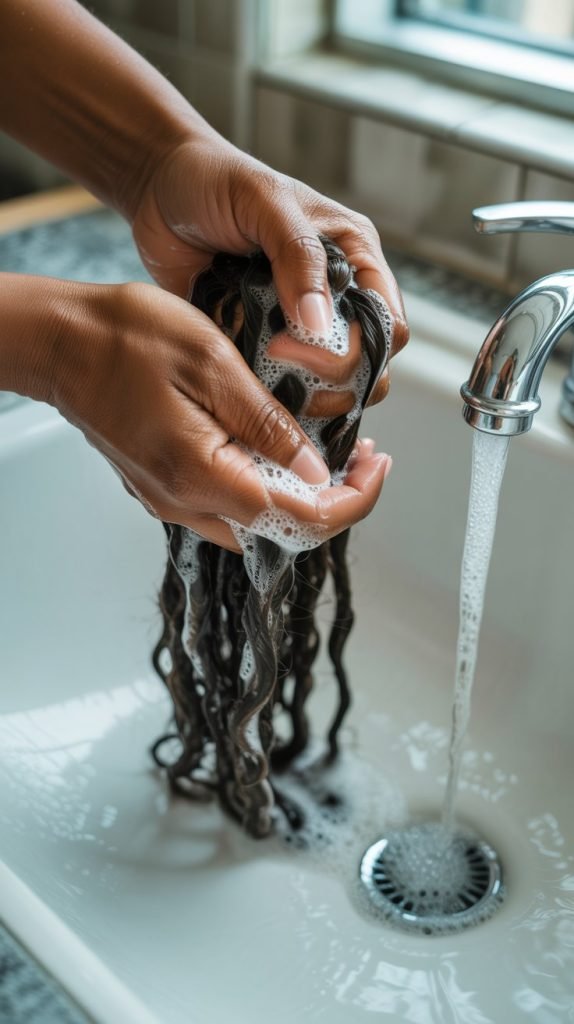
Washing is the cornerstone of any healthy dread care routine, but the technique differs significantly from washing loose natural hair.
Many people with locs worry about washing too frequently, but clean hair actually locks better than dirty hair, and proper cleansing prevents buildup that can lead to odor and weakening of the hair shaft.
- Frequency matters: Wash your dreads every 1-2 weeks during the starter stage and every 7-10 days once they’re more established, adjusting based on your scalp’s oil production and lifestyle.
- Those who exercise frequently or live in humid climates may need to wash more often to prevent sweat and environmental buildup.
- People with drier scalps can extend washing to every 10-14 days without compromising scalp health.
- Use residue-free shampoos: Choose clarifying or residue-free shampoos specifically formulated for locs to prevent product buildup that can cause mildew and weaken your dreads.
- Avoid shampoos containing heavy moisturizers, sulfates, or conditioning agents that leave residue inside the loc structure.
- Look for shampoos with natural cleansing ingredients like tea tree oil, peppermint, or eucalyptus that cleanse while promoting scalp health.
- Proper washing technique: Apply shampoo directly to your scalp rather than your locs, using your fingertips to massage in circular motions to stimulate blood flow and remove debris.
- Allow the shampoo to run down the length of your locs as you rinse, which cleanses them without excessive manipulation.
- Squeeze each loc gently from root to tip while rinsing to ensure all shampoo residue is removed.
- Never skip the rinse: Rinse your locs thoroughly for at least 5-7 minutes to ensure no shampoo remains trapped inside, as leftover product can cause buildup and unpleasant odors.
- Incomplete rinsing is one of the most common mistakes in loc care and can lead to itching, flaking, and weakened hair structure.
3. Drying Your Locs Completely

Moisture trapped inside locs creates the perfect environment for mildew, mold, and unpleasant odors, making thorough drying absolutely essential for loc health.
Incomplete drying is one of the leading causes of problems in dreadlock maintenance, yet it’s often overlooked in care routines.
- Squeeze out excess water: Immediately after washing, gently squeeze each loc from root to tip to remove as much water as possible without rough twisting or wringing.
- Use a microfiber towel or old t-shirt to absorb water, as regular towels can cause frizz and leave lint in your locs.
- Never rub your locs vigorously with a towel, as this creates unnecessary friction and frizz.
- Air drying limitations: While air drying is gentlest on your hair, it can take 6-24 hours for thick locs to dry completely, leaving them vulnerable to mildew growth.
- If you choose air drying, ensure you’re in a warm, low-humidity environment and separate your locs to allow air circulation.
- Avoid going to bed with damp locs, as this traps moisture against your scalp and creates an ideal environment for bacterial growth.
- Use a hooded dryer: A hooded dryer provides even heat distribution and significantly reduces drying time to 1-3 hours depending on loc thickness and length.
- Set the dryer to medium heat rather than high to prevent damage to your hair and scalp.
- Periodically separate and shake your locs during the drying process to ensure air reaches all parts of each loc.
- Handheld blow dryer technique: If using a handheld dryer, keep it on a low or medium setting and maintain at least 6 inches distance from your locs.
- Focus on drying the roots and scalp first, then work your way down the length of each loc.
- Squeeze and feel each loc thoroughly before considering your hair completely dry, paying special attention to the centers which hold the most moisture.
4. Moisturizing and Sealing Your Locs
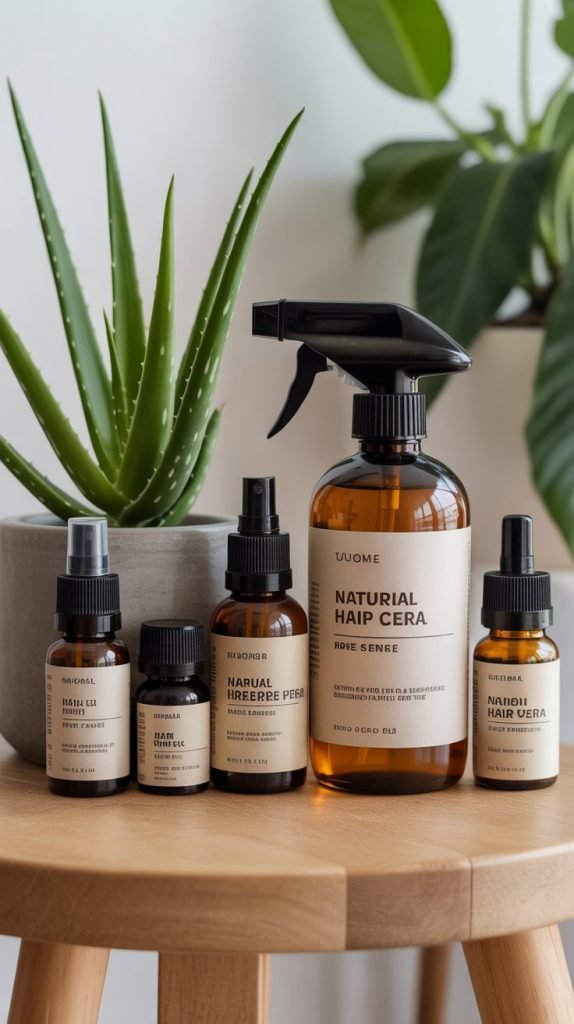
Despite the myth that locs don’t need moisture, proper hydration is critical for preventing breakage, maintaining elasticity, and promoting healthy hair growth.
The key difference is that locs need lighter, water-based moisturizers that won’t cause buildup while still providing necessary hydration.
- Water is your primary moisturizer: Use a spray bottle filled with water or a water-based leave-in conditioner mixture to lightly mist your locs 2-3 times per week.
- Your locs should feel slightly damp but not wet after moisturizing, as too much water can delay proper locking.
- Focus on the length of your locs rather than saturating the roots, which can cause loosening and delayed locking.
- Light oils seal in moisture: After applying water-based moisture, seal it in with lightweight oils like jojoba, grapeseed, or sweet almond oil applied sparingly.
- Heavy oils and butters like coconut oil or shea butter should be used minimally as they can cause buildup and attract lint.
- Apply oil by rubbing a few drops between your palms and gently smoothing over your locs rather than pouring directly onto them.
- Avoid heavy products: Stay away from petroleum-based products, thick creams, and waxes that create residue inside your locs and prevent them from locking properly.
- Many commercial loc products contain unnecessary ingredients that do more harm than good over time.
- When in doubt, simpler is always better when it comes to loc care products.
- Create a moisturizing spray: Mix distilled water with a few drops of essential oils (like peppermint or lavender) and a small amount of aloe vera juice or glycerin for an effective DIY moisturizing spray.
- This combination provides hydration without the buildup associated with commercial products.
- Store your mixture in a dark spray bottle and shake well before each use.
5. Retwisting and Maintenance Schedule

Regular maintenance keeps your locs looking neat and promotes healthy growth patterns, but finding the right balance between too much and too little manipulation is essential.
Over-maintaining can cause thinning and breakage, while under-maintaining can lead to excessive frizz and merging locs.
- Choose your retwisting method: Decide between palm rolling, interlocking, or two-strand twisting based on your hair texture, loc size, and desired appearance.
- Palm rolling works well for maintaining cylindrical locs and is ideal for medium to thick hair textures.
- Interlocking creates a more permanent base and works excellently for people with softer or looser hair textures that don’t lock easily.
- Two-strand twisting is gentler and often preferred during the early stages of loc development.
- Don’t over-manipulate: Excessive retwisting, especially when done too tightly, causes traction alopecia and thinning at the roots that can become permanent.
- Your scalp should never feel pain or excessive tension after a retwist, which is a sign of damage occurring.
- Allow your new growth to show for at least 1-1.5 inches before considering another retwist.
- Maintain separation: Regularly check your locs for any that are beginning to merge or marry, gently separating them at the root while they’re still loose.
- Married locs that have fully locked together require cutting to separate, so prevention is crucial.
- Pay special attention to the back and sides of your head where locs are more likely to merge unnoticed.
- DIY versus professional maintenance: While you can learn to maintain your own locs, professional locticians provide expertise, especially during the challenging early stages.
- Professional maintenance every other session, alternating with DIY care, offers a good balance between cost and quality.
- If you notice consistent thinning, breakage, or other concerns, always consult a professional loctician.
6. Nighttime Protection for Your Locs

Protecting your locs while you sleep prevents friction damage, maintains moisture, and preserves your style between maintenance sessions.
Proper nighttime care can significantly extend the life of your retwist and reduce overall frizz.
- Satin or silk materials are essential: Always cover your locs with a satin or silk bonnet, scarf, or sleep on a satin pillowcase to minimize friction and moisture loss.
- Cotton materials absorb moisture from your hair and create friction that causes frizz and breakage.
- Satin and silk allow your hair to glide smoothly while maintaining its moisture balance throughout the night.
- Proper bonnet technique: Choose a bonnet large enough to accommodate all your locs without bunching or crushing them.
- Tuck all your locs completely inside the bonnet rather than leaving ends exposed, which can cause them to dry out.
- If you have long locs, consider gathering them into a loose pineapple or high ponytail before covering to prevent them from being slept on directly.
- Alternative protection methods: For longer or thicker locs, a satin scarf wrapped securely can provide better coverage than a bonnet.
- Some people prefer sleeping on a satin pillowcase as their primary protection or as a backup if their bonnet comes off during sleep.
- Combining a bonnet with a satin pillowcase offers maximum protection for restless sleepers.
- Refresh in the morning: Upon waking, gently separate your locs if they’ve clustered together during sleep and lightly mist with your moisturizing spray if needed.
- Use your fingers to smooth down any frizz rather than constantly retwisting, which can cause unnecessary manipulation.
7. Dealing with Buildup and Deep Cleaning

Even with careful product selection, buildup can accumulate inside locs over time from hard water minerals, product residue, and environmental pollutants.
Deep cleaning every 1-3 months helps maintain loc health and prevents the musty odors and weakening associated with trapped debris.
- Recognize the signs: Locs with buildup feel heavy, look dull, may have white or gray residue visible between the coils, and can develop unpleasant odors.
- Your locs should feel relatively lightweight and springy when clean and properly dried.
- If water doesn’t penetrate easily during washing or takes an unusually long time to dry, buildup is likely present.
- Apple cider vinegar rinse: Mix 1 part raw apple cider vinegar with 3 parts water and soak your locs for 5-10 minutes, then rinse thoroughly.
- ACV helps dissolve product buildup, balances scalp pH, and removes mineral deposits from hard water.
- The smell dissipates completely once your locs are dry, leaving them fresh and clean.
- Follow with your regular shampoo and thorough rinsing to remove any lingering vinegar smell.
- Baking soda deep clean: For more stubborn buildup, create a mixture of 2 tablespoons baking soda in a basin of warm water and soak your locs for 10-15 minutes.
- Baking soda’s alkalinity helps break down oils and residue that regular shampoo can’t remove.
- Always follow a baking soda treatment with an acidic rinse like ACV to restore your hair’s pH balance.
- Use this method sparingly (every 2-3 months maximum) as frequent use can be drying.
- Professional deep cleaning: Some locticians offer deep cleaning services using specialized products and techniques if DIY methods aren’t sufficient.
- This is particularly helpful for older locs that have accumulated years of buildup.
8. Nutrition and Internal Care for Loc Health

Healthy locs begin with a healthy body, and your diet directly impacts hair strength, growth rate, and overall appearance.
While external care is important, internal nutrition provides the building blocks your hair needs to thrive.
- Protein is essential: Hair is made of keratin, a protein structure, so consuming adequate protein from sources like fish, eggs, beans, nuts, and lean meats supports strong loc development.
- Aim for at least 50-75 grams of protein daily depending on your body weight and activity level.
- Protein deficiency can lead to weakened hair structure, increased breakage, and slower growth rates.
- Stay hydrated: Drinking 8-10 glasses of water daily keeps your scalp and hair hydrated from the inside out, promoting elasticity and preventing brittleness.
- Dehydration manifests in your hair just as it does in your skin, causing dryness and increased fragility.
- Your body prioritizes vital organs over hair when distributing water, so hair is often the first place dehydration shows.
- Key vitamins and minerals: Biotin, vitamin E, vitamin D, iron, and omega-3 fatty acids all play crucial roles in hair health and growth.
- Consider taking a multivitamin or hair-specific supplement if your diet doesn’t provide adequate amounts of these nutrients.
- Iron deficiency, particularly common in women, can cause significant hair shedding and slowed growth.
- Vitamin D supports the hair follicle cycle and is often deficient in people with darker skin tones due to melanin’s sun-blocking effects.
- Reduce damaging habits: Smoking, excessive alcohol consumption, and high-stress levels all negatively impact hair health by restricting blood flow to the scalp.
- Stress increases cortisol levels, which can push hair follicles into a resting phase and slow growth.
9. Protecting Locs from Environmental Damage

Your locs face constant exposure to environmental stressors including sun, chlorine, salt water, and pollution that can cause dryness, discoloration, and damage.
Proactive protection minimizes these effects and keeps your locs healthy regardless of your activities or location.
- Sun protection: UV rays can fade loc color and cause protein breakdown in the hair shaft, leading to dryness and brittleness.
- Wear a hat or head wrap when spending extended time outdoors, especially during peak sun hours (10 AM – 4 PM).
- Use hair products containing UV protectants if you’ll be in the sun frequently.
- Swimming precautions: Before entering chlorinated or salt water, wet your locs with fresh water and apply a light oil to create a barrier against harsh chemicals.
- Chlorine and salt are extremely drying and can cause significant damage with repeated exposure.
- Wearing a swim cap provides the best protection, though it’s not always practical or desired.
- Always rinse your locs thoroughly with fresh water immediately after swimming and follow with a clarifying shampoo session within 24 hours.
- Hard water solutions: If you live in an area with hard water, install a shower filter to reduce mineral deposits that can accumulate in your locs.
- Hard water minerals create buildup that makes locs feel rough, look dull, and become difficult to cleanse properly.
- Regular ACV rinses help counteract hard water effects if a filter isn’t feasible.
- Seasonal adjustments: Increase moisturizing frequency during winter months when indoor heating and cold air create dryness.
- Summer may require more frequent washing due to increased sweating and outdoor activities.
- Pay attention to how your locs respond to seasonal changes and adjust your routine accordingly.
10. Common Loc Problems and Solutions

Even with the best care routine, you may encounter challenges along your loc journey. Understanding common issues and their solutions helps you address problems quickly before they become serious.
- Thinning locs require immediate attention: If you notice thinning, especially at the roots, reduce manipulation and tension immediately to prevent permanent hair loss.
- Traction alopecia from tight styling can become irreversible if not addressed early.
- Consider combining thin locs with adjacent ones to create thicker, healthier dreads if thinning is severe.
- Consult a professional loctician or dermatologist if thinning continues despite reduced manipulation.
- Mildew smell indicates trapped moisture: If your locs develop a musty odor, they haven’t been dried completely and require immediate attention.
- Wash your locs with a clarifying shampoo and ensure they’re completely dry using a hooded dryer.
- Consider cutting your locs shorter if they’re so long or thick that complete drying is impossible.
- Prevention through thorough drying is far easier than treating established mildew problems.
- Breakage signals weakness: Locs breaking at various points along their length indicate damage from dryness, chemical treatments, or excessive manipulation.
- Increase your moisturizing routine and handle your locs more gently during styling and washing.
- Trim away severely damaged ends that are unlikely to recover to prevent breakage from traveling up the loc.
- White balls or residue: These are typically product buildup or lint that has accumulated inside your locs and require deep cleaning.
- Regular clarifying treatments and residue-free products prevent this accumulation.
Your journey with locs is deeply personal and requires dedication, patience, and consistent care to achieve the healthy, beautiful dreads you envision.
This Dread Care Routine for Black Natural Hair provides you with the comprehensive knowledge needed to maintain your locs through every stage of development, from the initial starter phase to mature, fully-formed dreadlocks.
Remember that every person’s hair is unique, and what works perfectly for one individual may need adjustment for another, so pay attention to how your locs respond to different products and techniques.
Embrace the natural evolution of your locs, including the frizz and changes that come with maturation, as these are signs of healthy locking rather than problems to fix.
With proper washing, moisturizing, protection, and maintenance balanced with patience and self-care, your locs will thrive and become a beautiful expression of your natural hair journey.
Stay consistent with your routine, listen to your hair’s needs, and don’t hesitate to seek professional guidance when challenges arise, because healthy, stunning locs are absolutely achievable with the right knowledge and commitment to care.
