
28 Perfect Skiing Hairstyles for Medium Hair with a Helmet for a Sleek Look
Finding the right hairstyle for your next ski trip doesn’t have to be a challenge when you have medium-length hair and need to wear a helmet.
The key to enjoying your time on the slopes lies in choosing styles that keep your hair secure, comfortable, and looking great even after hours of wearing protective gear.
This comprehensive guide to 28 Perfect Skiing Hairstyles for Medium Hair with a Helmet for a Sleek Look will walk you through practical, stylish options that prevent tangles, reduce helmet hair, and maintain your confidence from the first chairlift ride to après-ski.
Whether you prefer braids, buns, ponytails, or creative combinations, you’ll discover techniques that work with your hair texture and skiing intensity level.
Each style has been selected for its ability to stay put during active movement while minimizing the dreaded flat, sweaty helmet hair that can ruin your mountain experience.
You’ll learn how to prepare your hair before hitting the slopes, which products provide hold without stiffness, and how to quickly refresh your look when you remove your helmet.
From beginner-friendly options to more intricate designs, these hairstyles ensure that medium hair becomes an asset rather than an obstacle during your winter adventures.
1. Low Sleek Ponytail
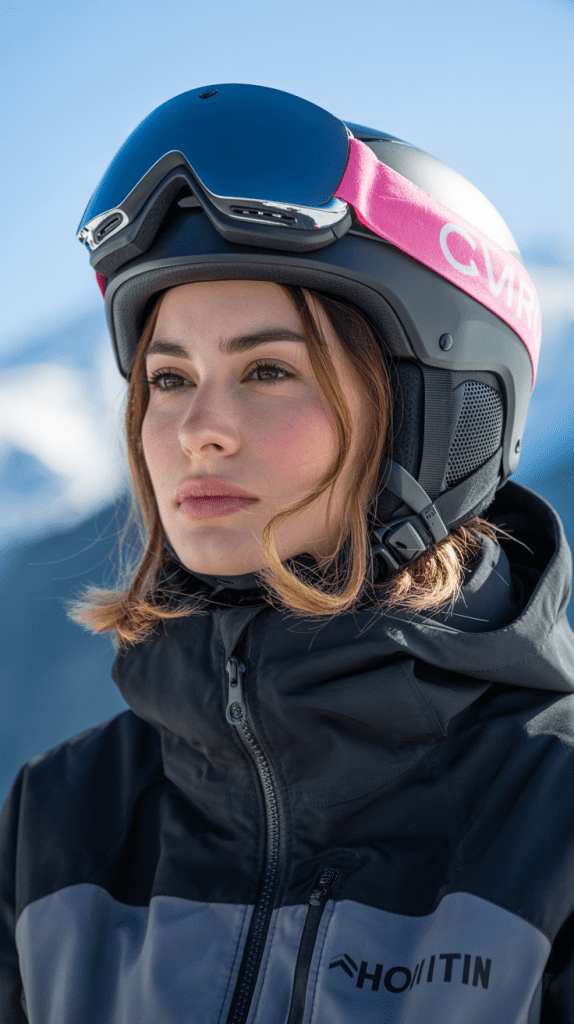
The low sleek ponytail offers maximum comfort under a ski helmet while maintaining an elegant appearance.
This classic style positions hair at the nape of your neck, avoiding pressure points that higher ponytails create when wearing helmets.
It works exceptionally well for medium hair because there’s enough length to secure firmly without excessive bulk.
How to Create:
- Brush your hair thoroughly to eliminate all tangles and create a smooth foundation.
- Apply a smoothing serum or light gel to control flyaways and add shine.
- Gather all hair at the nape of your neck, positioning the elastic band just below the occipital bone.
- Secure tightly with a no-slip elastic band designed for active wear.
- Wrap a small section of hair around the elastic to conceal it and add polish.
- Spray with flexible-hold hairspray to maintain the sleek appearance throughout the day.
Benefits for Skiing:
- Creates minimal bulk that won’t interfere with helmet fit or comfort.
- Keeps hair completely off your face and neck for better temperature regulation.
- Easy to adjust or redo quickly in the lodge without tools or mirrors.
2. Dutch Braid Down the Center
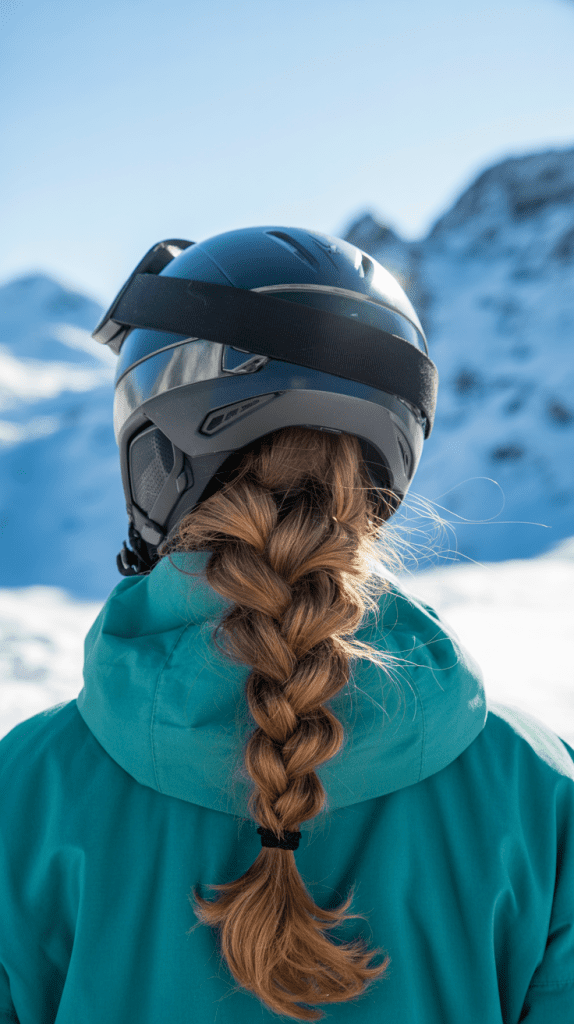
A Dutch braid down the center creates a raised, textured look that distributes pressure evenly under your helmet.
This inverted French braid technique keeps medium hair completely secured while adding visual interest.
The style works particularly well for those with layered cuts that might escape traditional braids.
Styling Steps:
- Start with slightly damp hair or use a texturizing spray for better grip.
- Section a triangle of hair from your forehead to crown.
- Begin the Dutch braid by crossing sections under rather than over the middle strand.
- Add small sections of hair from each side as you work down toward the nape.
- Keep consistent tension to ensure the braid stays raised and secure.
- Secure the end with a small elastic and tuck any remaining length under if desired.
Why It Works:
- The raised braid creates channels for air circulation between your scalp and helmet.
- Distributes helmet pressure across the braid rather than flattening hair completely.
- Remains intact through multiple runs and doesn’t require mid-day adjustments.
3. Double French Braids
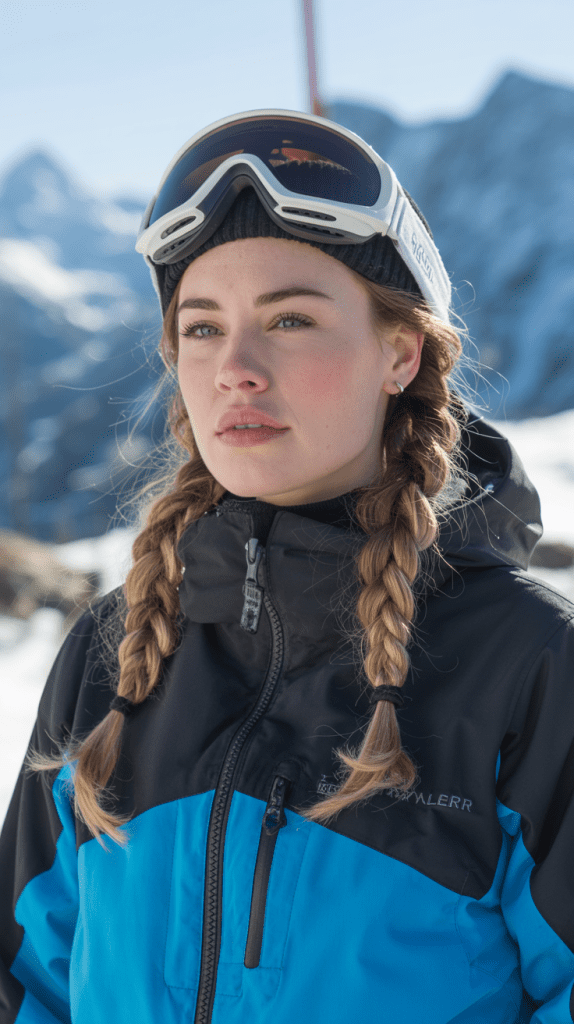
Double French braids divide your medium hair into two manageable sections that lie flat against your head.
This symmetrical style has been a favorite among athletes for decades because it combines security with scalp comfort.
The twin braids eliminate the single-point tension that center braids can create.
Creation Process:
- Part your hair straight down the middle from forehead to nape.
- Secure one side temporarily while working on the other.
- Begin the French braid at the hairline, incorporating hair as you move downward.
- Maintain even tension to prevent one braid from being tighter than the other.
- Complete both braids to the ends and secure with matching elastics.
- Apply a light mist of hairspray to smooth any loose hairs.
Skiing Advantages:
- Keeps hair completely contained without creating a single pressure point.
- Allows helmets to sit evenly without tilting to one side.
- Easy to check and tighten individually if one side loosens during skiing.
4. Low Twisted Bun
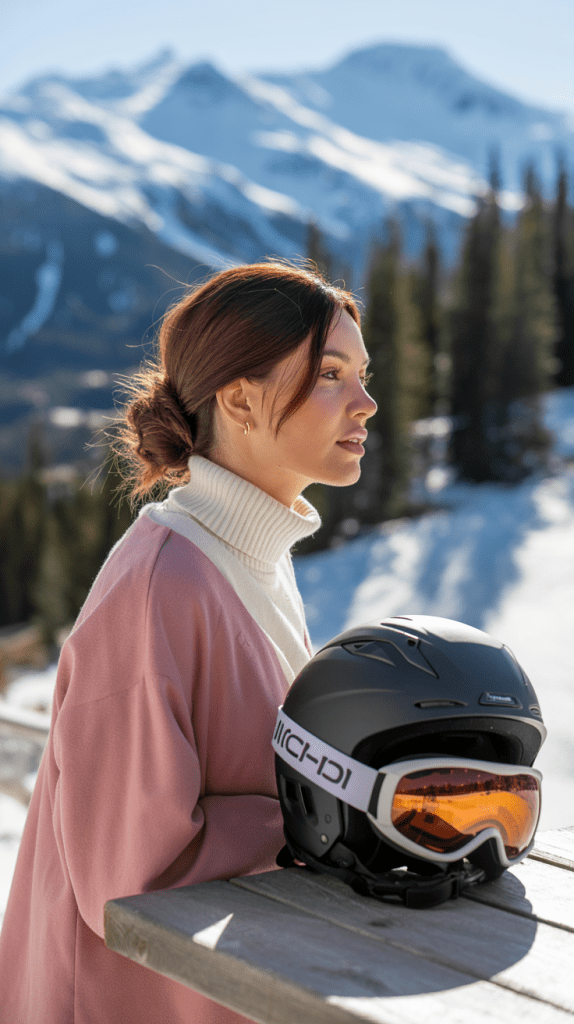
The low twisted bun provides an elegant solution that keeps medium hair completely off your neck and shoulders.
This style creates a compact shape that doesn’t interfere with helmet placement while looking sophisticated enough for après-ski activities.
The twisting technique adds extra security compared to simple wrapped buns.
Step-by-Step Instructions:
- Gather hair into a low ponytail at the nape of your neck.
- Divide the ponytail into two equal sections.
- Twist each section clockwise individually until they begin to coil.
- Wrap the twisted sections around each other and around the base.
- Secure with bobby pins, inserting them vertically for maximum hold.
- Use a hair net if you have particularly slippery or fine hair.
Practical Benefits:
- Creates a flat profile that won’t create uncomfortable bumps under your helmet.
- Stays secure even during aggressive skiing or unexpected falls.
- Can be loosened and restyled easily for evening activities without washing.
5. Braided Headband with Low Ponytail
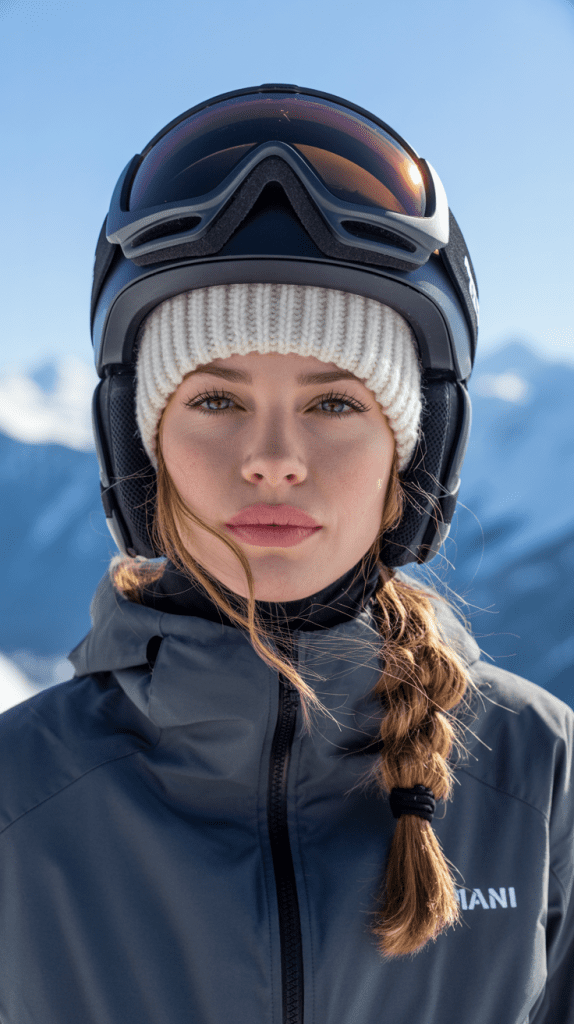
Combining a braided headband with a low ponytail offers both style and function for medium-length hair.
The headband braid keeps front sections away from your face while the ponytail manages length.
This hybrid approach addresses the common problem of shorter layers escaping traditional ponytails.
How to Achieve This Look:
- Section off a one-inch strip of hair along your hairline from ear to ear.
- Create a simple three-strand braid with this section, keeping it close to the scalp.
- Secure the braid end temporarily behind your opposite ear.
- Gather remaining hair into a low ponytail at the nape.
- Wrap the braid end around the ponytail base and secure with pins.
- Apply light-hold product to smooth any bumps or gaps.
Why Skiers Love It:
- Prevents shorter front pieces from falling into your eyes or goggles.
- Adds decorative detail without bulk that interferes with helmet fit.
- Versatile enough to transition from slopes to lodge seamlessly.
6. Rope Braid Ponytail
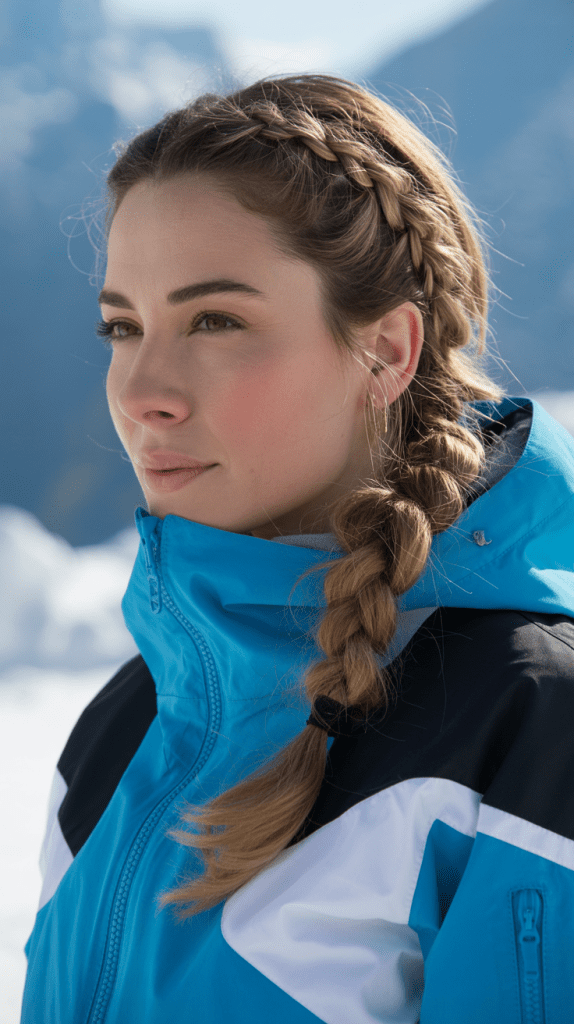
The rope braid ponytail combines the simplicity of a ponytail with the security of braiding for medium hair.
This two-strand twisting technique creates a spiral effect that’s both practical and visually appealing.
It’s particularly effective for hair that’s too short for long braids but too long to leave loose.
Creating the Style:
- Secure hair into a ponytail at your desired height, typically mid to low.
- Divide the ponytail into two equal sections.
- Twist both sections clockwise until they’re tightly coiled.
- Wrap the two twisted sections around each other counterclockwise.
- The opposing twist directions create a rope effect that holds itself.
- Secure the end with an elastic and apply finishing spray.
Functional Advantages:
- Requires fewer elastics and bobby pins than traditional braids.
- Takes less time to create, perfect for early morning ski departures.
- The twist naturally tightens rather than loosens during activity.
7. Side-Swept Low Bun
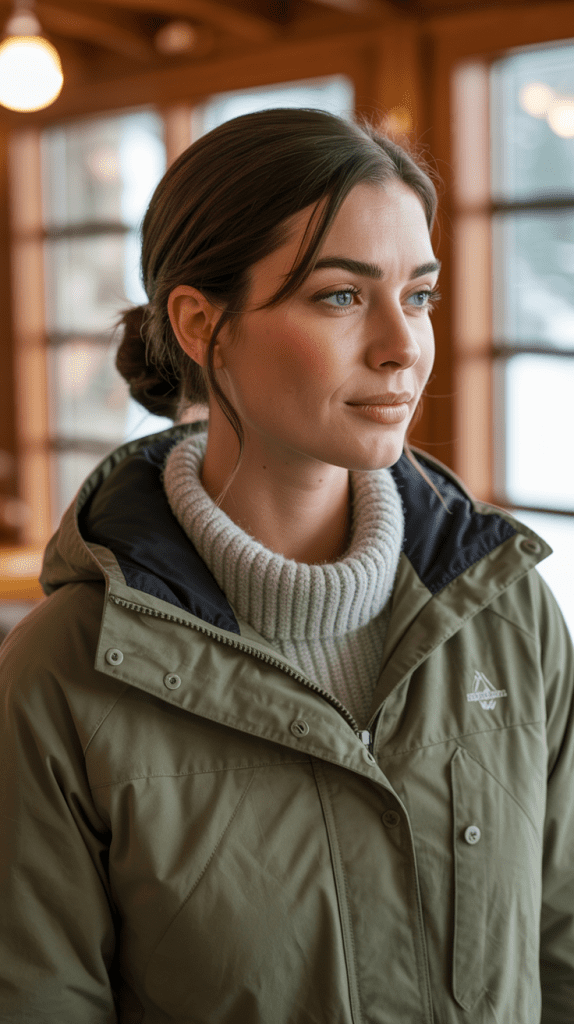
A side-swept low bun positions your medium hair asymmetrically for balanced helmet wear.
This elegant style keeps hair gathered at one side of your neck, creating visual interest while maintaining practical security.
The offset placement can be particularly comfortable for those sensitive to direct pressure at the skull base.
Assembly Instructions:
- Brush all hair over one shoulder, choosing your preferred side.
- Gather hair into a ponytail positioned behind your ear at the nape.
- Twist the ponytail loosely and wrap it around the base in a circular pattern.
- Secure with bobby pins placed in an X-pattern for stability.
- Pull a few face-framing pieces loose if desired for a softer look.
- Set with medium-hold hairspray that allows some movement.
Skiing Practicality:
- Distributes helmet weight differently than center styles for varied comfort.
- Easy to access and adjust with one hand while wearing gloves.
- The side position makes it simple to check security using peripheral vision.
8. High Bubble Ponytail
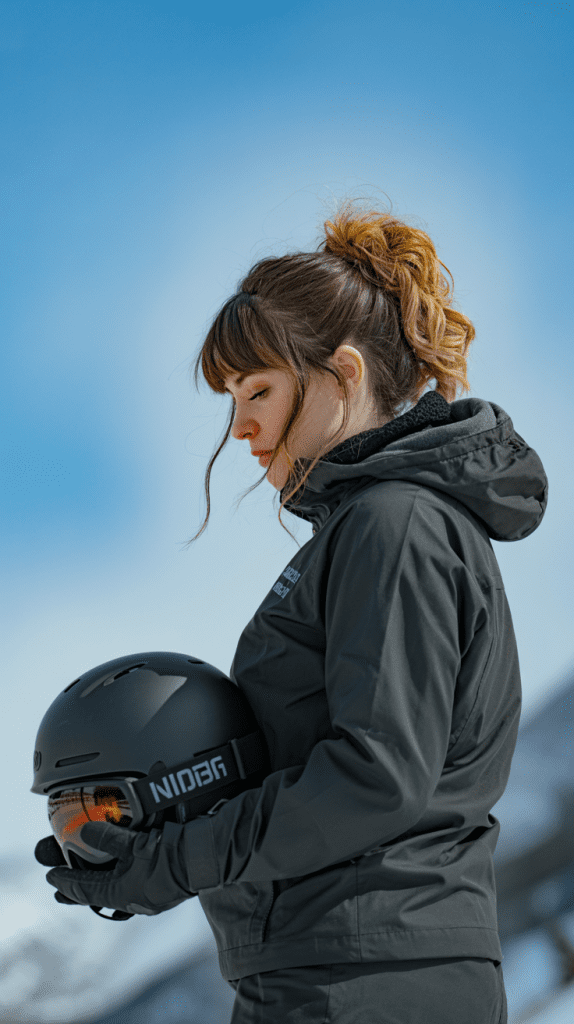
The high bubble ponytail transforms medium hair into a series of rounded sections that reduce overall length.
This trendy style uses multiple elastics to create bubbles that stay more secure than a single long ponytail.
The segmented approach prevents the weight of your hair from pulling down during active skiing.
Creation Method:
- Pull hair into a high ponytail at the crown of your head.
- Place additional elastics down the length of the ponytail at 2-3 inch intervals.
- Gently tug at each section between elastics to create bubble shapes.
- Ensure bubbles are evenly sized for a balanced appearance.
- The multiple securing points prevent the style from drooping.
- Use clear elastics for a more sophisticated look or colored ones for fun.
Benefits Under Helmets:
- The segmented structure keeps hair from becoming a single heavy weight.
- Multiple elastic bands mean if one breaks, others maintain the style.
- Creates less overall length that could get caught in jacket zippers.
9. Waterfall Braid into Low Ponytail
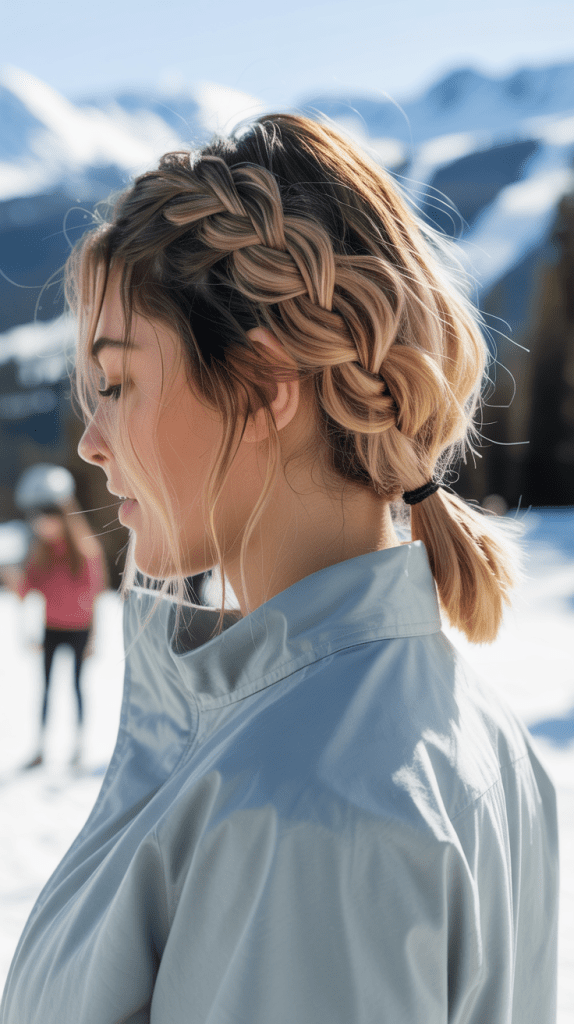
The waterfall braid into low ponytail creates a romantic, cascading effect while keeping hair secured.
This style works beautifully with medium hair because there’s enough length to show the waterfall effect without overwhelming bulk.
The combination of decorative and functional braiding makes it perfect for skiers who don’t want to sacrifice style.
Styling Process:
- Begin a French braid at one temple, working horizontally across the head.
- Instead of carrying all three strands through, drop the bottom strand with each cross.
- Pick up a new section to replace the dropped piece, creating the waterfall effect.
- Continue across to the opposite side of your head.
- Gather all hair including the waterfall pieces into a low ponytail.
- Secure tightly and consider wrapping a hair section around the elastic.
Skiing Suitability:
- The crown braid keeps helmet pressure off your roots while allowing airflow.
- Decorative enough to leave in for lunch or photos without the helmet.
- Secured low enough that helmet positioning isn’t affected.
10. Classic Low Chignon
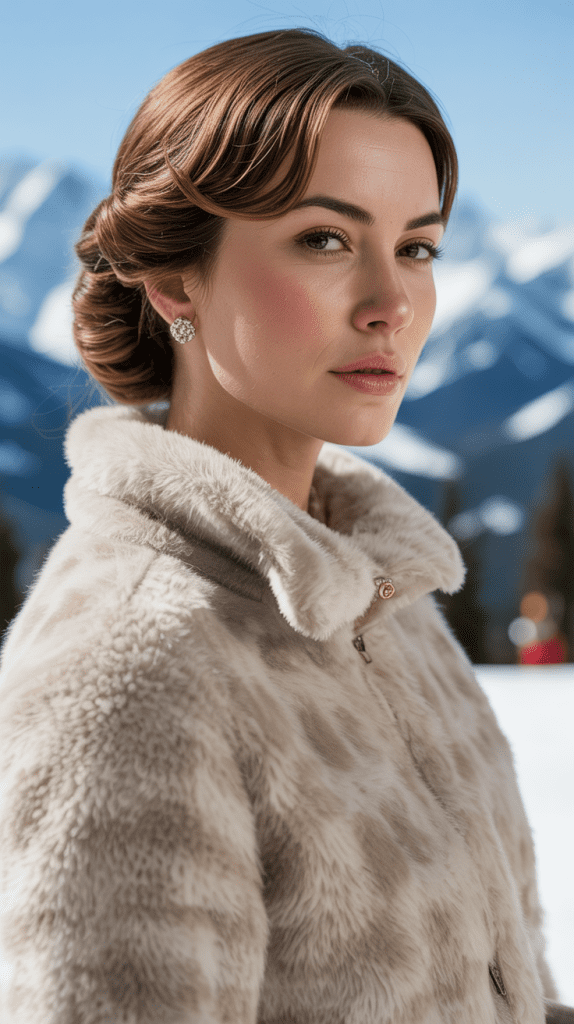
The classic low chignon offers timeless elegance while providing practical benefits for skiing with medium hair.
This sophisticated updo creates a smooth, rounded shape at the nape that doesn’t interfere with helmet fit.
It’s particularly effective for professional settings or those transitioning from slopes to formal après-ski events.
How to Form:
- Brush hair smoothly and gather at the nape into a low ponytail.
- Twist the ponytail loosely to create a rope-like texture.
- Wrap the twisted hair horizontally around the base, forming a cylindrical shape.
- Tuck the ends under the chignon and secure with bobby pins.
- Use pins that match your hair color for an invisible hold.
- Apply shine spray for a polished finish that lasts all day.
Practical Advantages:
- Creates a low, flat profile that helmets can easily accommodate.
- Sophisticated enough to wear from morning skiing through evening dining.
- Keeps every strand contained for hours without uncomfortable pulling.
11. Twisted Crown with Loose Ends
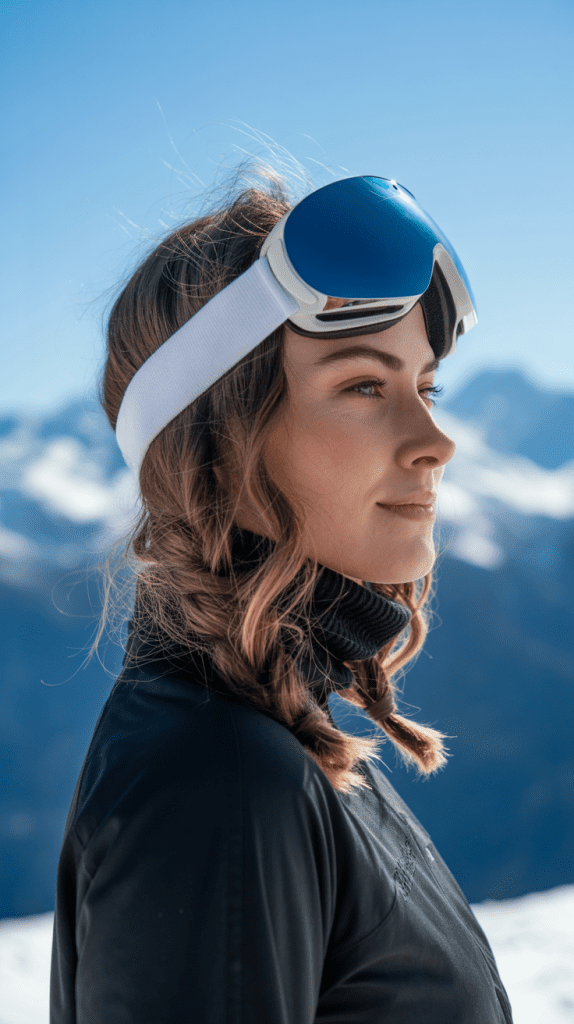
The twisted crown with loose ends keeps the front and sides of medium hair controlled while allowing length to flow naturally.
This semi-updo style prevents hair from getting in your face while maintaining volume and movement.
The twisted crown creates a secure band that helmets won’t disrupt.
Assembly Steps:
- Take a section of hair from above each temple.
- Twist each section backward toward the crown of your head.
- Cross the twisted sections at the back and secure with bobby pins.
- Leave the remaining length loose or gather into a loose ponytail.
- Spray the crown area with flexible hold spray to maintain structure.
- Ensure twists are tight enough to hold but not so tight they cause tension.
Why It Works for Skiing:
- Keeps face-framing hair secured without creating bulk at the nape.
- Allows natural movement that reduces that “helmet head” appearance.
- The crown placement means helmet straps don’t interfere with the style.
12. Fishtail Braid
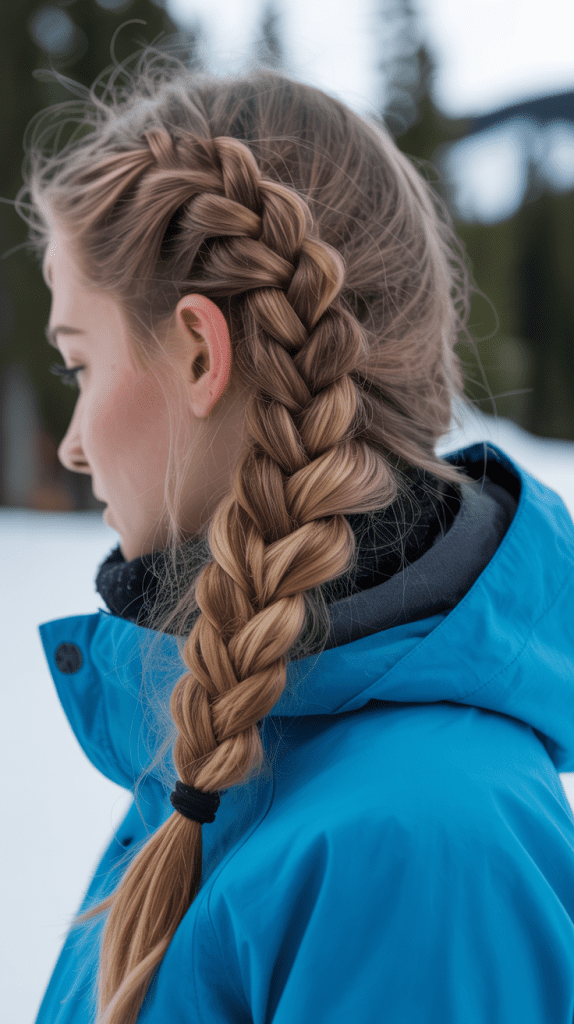
The fishtail braid creates an intricate, textured look that keeps medium hair completely secure.
This four-strand technique produces a herringbone pattern that’s more resistant to loosening than traditional braids.
The detailed weaving means even shorter layers stay incorporated throughout active skiing.
Braiding Technique:
- Divide hair into two large sections rather than three.
- Take a thin strand from the outer edge of the left section.
- Cross it over to join the right section.
- Take a thin strand from the outer edge of the right section.
- Cross it over to join the left section, repeating this pattern.
- Continue alternating sides until you reach the ends.
- Secure with an elastic and gently loosen for a fuller appearance.
Skiing Benefits:
- The intricate weaving keeps even layered medium hair from escaping.
- Creates a flatter braid profile than bulkier three-strand versions.
- Adds visual texture that looks intentional rather than messy after helmet wear.
13. Space Buns
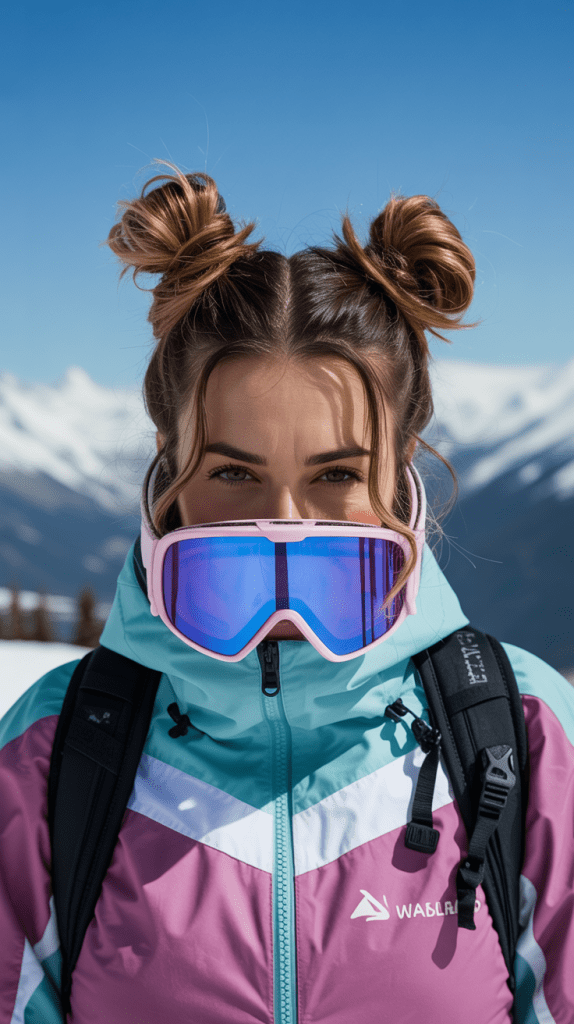
Space buns transform medium hair into two high, rounded buns that sit on either side of the head.
This playful style might seem unconventional for skiing, but when positioned correctly, they fit comfortably under helmets while adding personality.
The dual-bun approach distributes hair weight evenly.
Creation Process:
- Part hair down the center from forehead to nape.
- Gather one side into a high ponytail positioned above and slightly behind the ear.
- Twist the ponytail and wrap it around the base to form a bun.
- Secure with bobby pins and repeat on the opposite side.
- Ensure both buns are the same height and size for balance.
- Place buns slightly back from the temples to avoid helmet pressure points.
Functional Aspects:
- Creates two smaller masses rather than one large one for better helmet fit.
- The higher placement works well with helmets that have adjustable rear systems.
- Adds a fun, youthful element that’s perfect for younger skiers or playful personalities.
14. Braided Low Pigtails
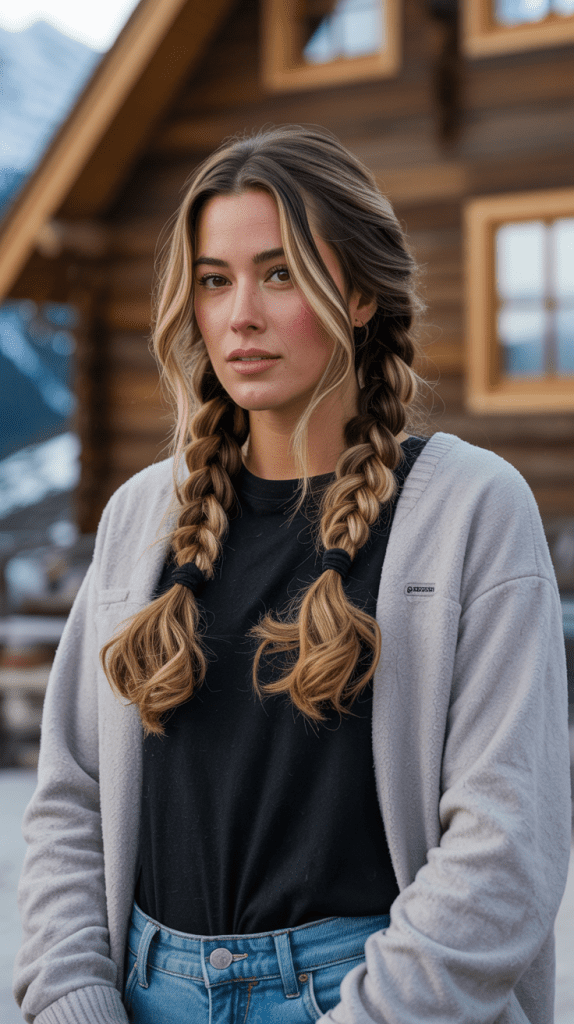
Braided low pigtails divide medium hair into two manageable braids positioned at the nape.
This style combines the security of braiding with the symmetrical comfort of divided hair.
Unlike high pigtails, the low positioning ensures helmet straps and padding work properly.
How to Create:
- Part hair down the middle from front to back.
- Secure each side into a low ponytail positioned behind the ears.
- Braid each ponytail using a three-strand or fishtail technique.
- Keep braids tight enough to hold but loose enough to be comfortable.
- Secure ends with small elastics that won’t create bulk.
- Tuck braids into your jacket or leave them outside depending on preference.
Skiing Advantages:
- Divides hair weight evenly to prevent neck strain.
- Each braid can be adjusted independently if one loosens.
- Low positioning means they don’t interfere with helmet fit or adjustment systems.
15. Messy Low Bun
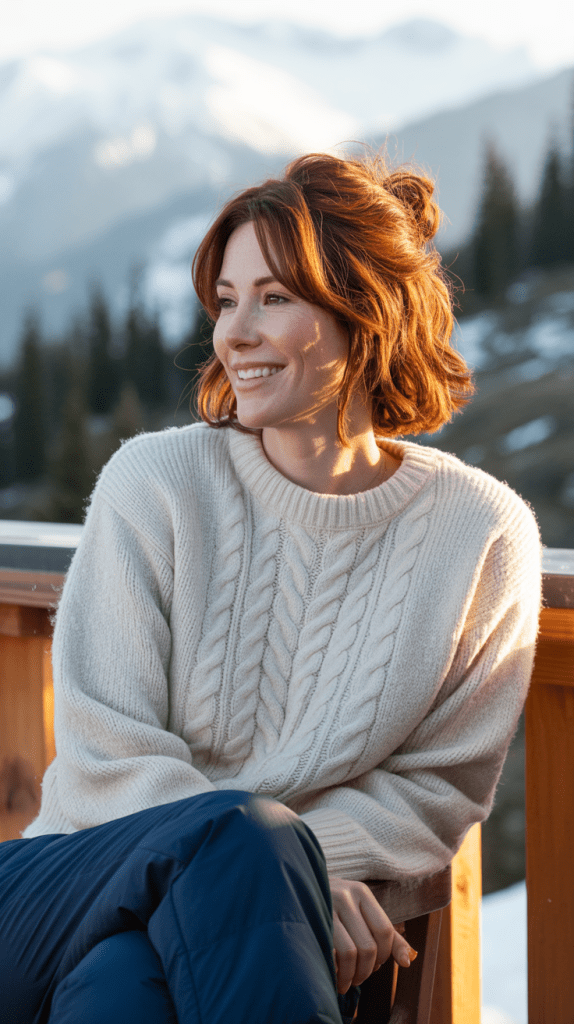
The messy low bun offers an effortlessly chic look that’s surprisingly practical for skiing with medium hair.
This deliberately undone style doesn’t require perfection, making it ideal for early mornings and quick preparation.
The loose construction actually allows better airflow than sleek alternatives.
Styling Instructions:
- Skip the brush and use fingers to gather hair at the nape.
- Don’t worry about bumps or perfectly smooth sides.
- Twist hair loosely and wrap around the base in an irregular pattern.
- Secure with bobby pins, leaving some pieces intentionally loose.
- Pull a few strands free around your face for a softer look.
- Use texturizing spray rather than smoothing products for this style.
Why It’s Perfect for Skiing:
- The deliberately imperfect look means helmet hair doesn’t ruin the style.
- Takes minimal time and skill to create, perfect for rushed mornings.
- Loose construction is comfortable for all-day wear without tension headaches.
16. Half-Up Top Knot
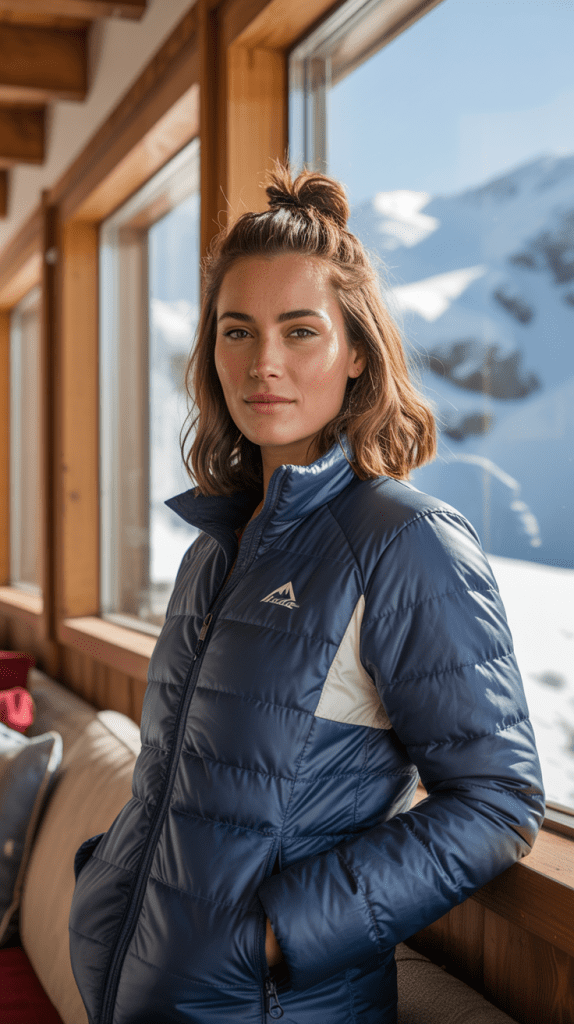
The half-up top knot keeps the top section of medium hair secured while leaving length flowing freely.
This hybrid style addresses the common problem of front pieces falling forward while maintaining volume and movement.
The top knot sits high enough to avoid helmet interference.
Assembly Method:
- Section hair horizontally from temple to temple across the crown.
- Gather this top section into a high ponytail at the crown.
- Twist and wrap the ponytail around its base to form a small bun.
- Secure with bobby pins inserted in multiple directions.
- Leave the bottom section loose or add gentle waves with a curling iron.
- Apply lightweight hairspray to the knot for hold without stiffness.
Practical Benefits:
- Keeps hair away from your face and goggles while maintaining length.
- The small knot creates minimal bulk under your helmet.
- Bottom section provides warmth on your neck during cold weather.
17. Dutch Braid Crown
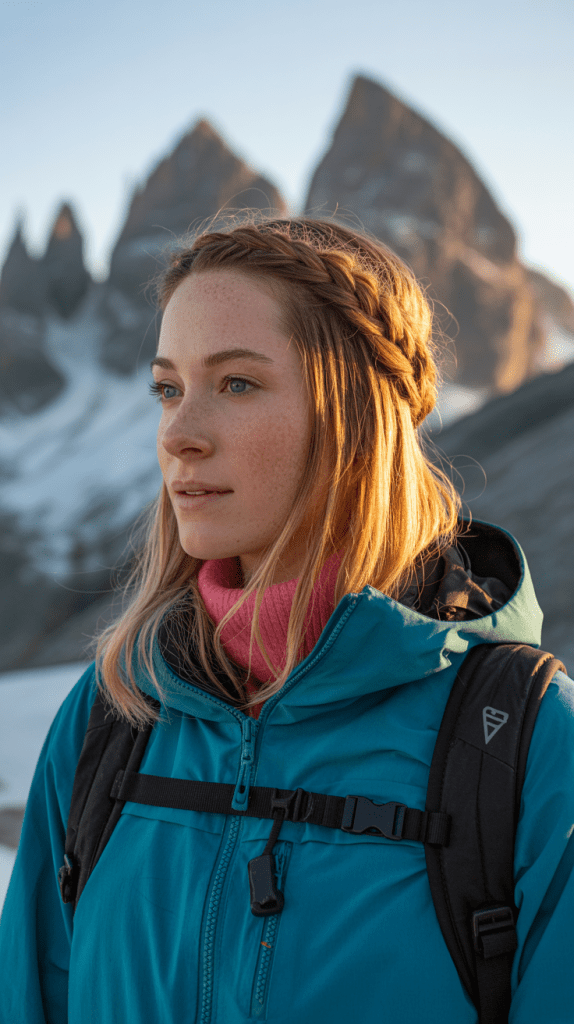
The Dutch braid crown wraps around your head like a natural headband, keeping all hair secured in an elegant circle.
This style works exceptionally well with medium hair because there’s just enough length to complete the crown without excess bulk.
The raised braid technique creates channels that help with ventilation.
How to Achieve:
- Start the Dutch braid at one ear, working toward the opposite side.
- Braid along the hairline, incorporating all hair as you work around.
- Continue the braid around the back of your head to return to the starting point.
- When you reach where you began, braid the remaining length regularly.
- Tuck the end under the crown and secure with bobby pins.
- Apply hairspray to set any flyaways and add shine.
Skiing Suitability:
- Distributes helmet pressure evenly around the entire head.
- Keeps every strand secured without any loose pieces.
- Creates an elegant look that transitions perfectly to après-ski activities.
18. Low Ponytail with Wrapped Base
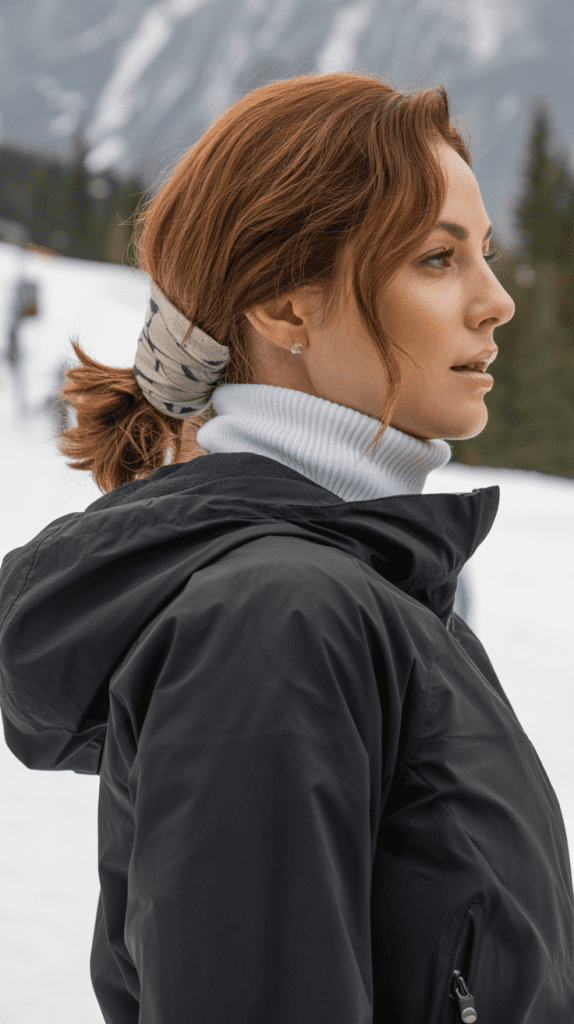
The low ponytail with wrapped base adds sophistication to a simple style while maintaining practicality.
By wrapping a section of hair around the elastic, you create a polished appearance that elevates basic function.
This detail-oriented approach works beautifully with medium hair.
Creation Steps:
- Brush hair smooth and gather at the nape into a low ponytail.
- Secure with a strong elastic band.
- Take a thin section from the ponytail and wrap it around the elastic.
- Continue wrapping until the elastic is completely concealed.
- Secure the wrapped section with a small bobby pin tucked underneath.
- Apply smoothing cream to the wrapped section for a sleek finish.
Functional Advantages:
- The wrapped base creates a focal point that distracts from helmet-flattened roots.
- Adds elegance without bulk that would interfere with helmet fit.
- Easy to create quickly and holds securely all day.
19. Boxer Braids
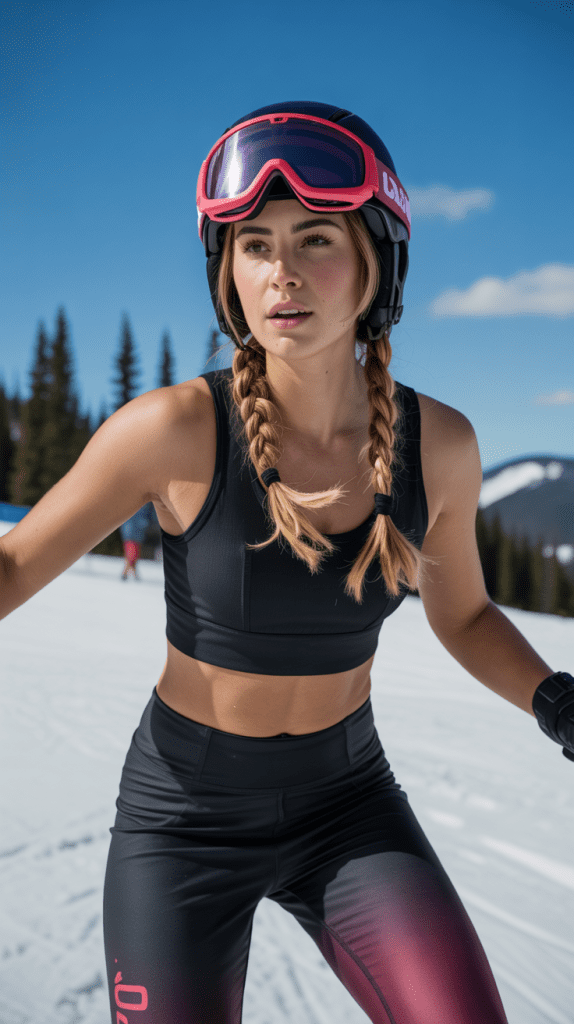
Boxer braids, also known as tight double Dutch braids, offer maximum security for active skiing.
These athletic braids sit close to the scalp and use the Dutch technique for a raised appearance.
The style has gained popularity among athletes because it stays intact through intense physical activity.
Braiding Process:
- Part hair straight down the middle with precision.
- Begin each braid at the hairline, crossing sections under rather than over.
- Add hair to each braid as you work down, keeping tension consistent.
- Braid tightly to ensure security but not so tight it causes discomfort.
- Complete both braids to the ends of your hair.
- Secure with small, strong elastics designed for athletic activity.
Why Athletes Choose Them:
- Provide the most secure hold of any braided style.
- Stay intact even during falls or very aggressive skiing.
- The raised braids allow air circulation against your scalp.
20. Twisted Side Ponytail
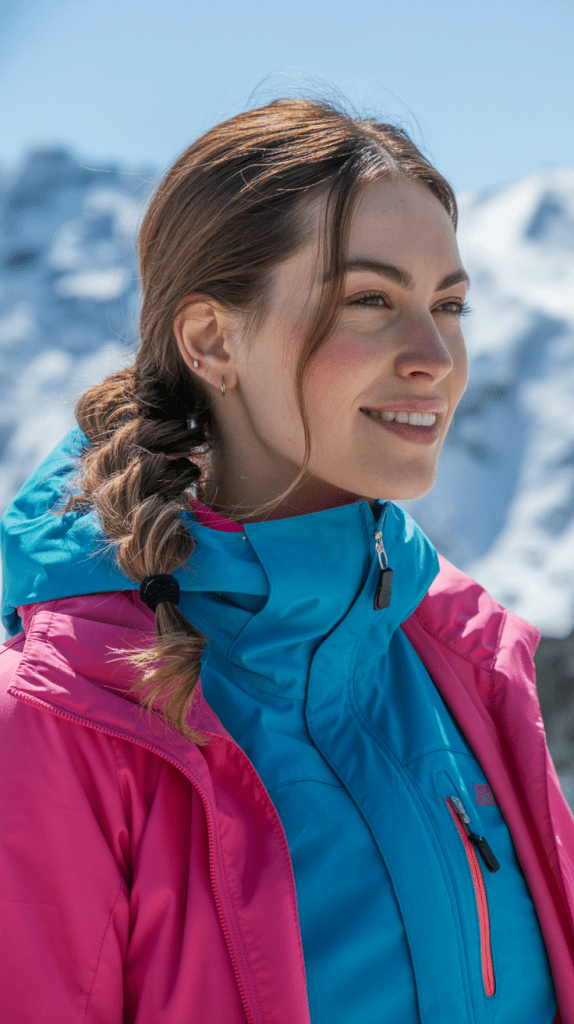
The twisted side ponytail positions medium hair asymmetrically while adding texture through twisting.
This style offers comfort by avoiding the central pressure point where helmets bear down most.
The twist adds interest and additional security compared to a simple side ponytail.
How to Style:
- Sweep all hair over one shoulder to your preferred side.
- Gather into a ponytail positioned low behind your ear.
- Divide the ponytail into two sections.
- Twist each section individually in the same direction.
- Wrap the two twisted sections around each other in the opposite direction.
- Secure the end and allow the twist to rest on your shoulder.
Skiing Benefits:
- The side placement reduces helmet pressure on your crown.
- Easy to bring forward for checking or adjusting.
- The twist prevents tangling better than loose ponytails.
21. Braided Bun Combination
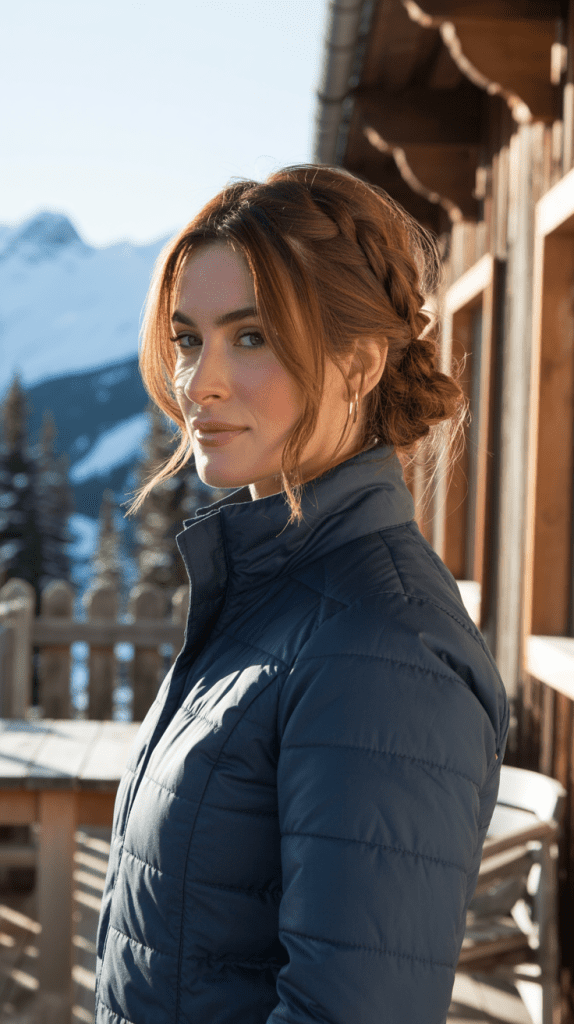
The braided bun combination incorporates a braid into bun formation for maximum security and visual interest.
This hybrid approach keeps medium hair completely contained while the braiding prevents the bun from loosening.
It’s particularly effective for long ski days when you won’t have opportunities for touch-ups.
Assembly Instructions:
- Gather all hair into a ponytail at your desired height, typically low to mid.
- Braid the entire ponytail using your preferred braiding technique.
- Wrap the braid around the ponytail base in a circular pattern.
- The braid structure prevents the bun from unwrapping or loosening.
- Secure with multiple bobby pins placed through the braid sections.
- Apply firm-hold hairspray to ensure all-day security.
Practical Advantages:
- Combines the security of braiding with the compactness of buns.
- The braid structure means fewer pins are needed for hold.
- Creates an elegant, textured appearance that looks intentional even after helmet wear.
22. Low Side Braid
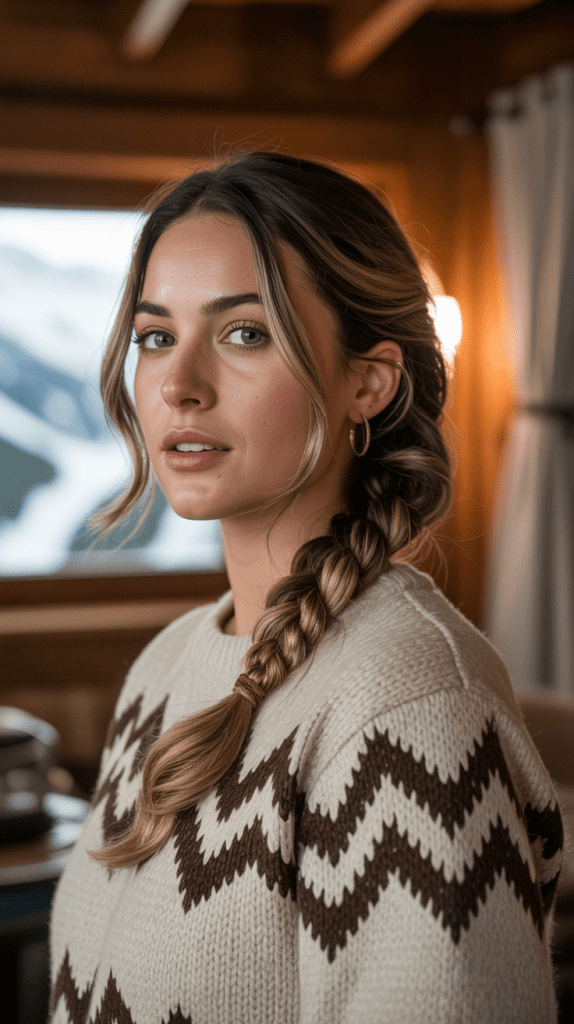
The low side braid brings all medium hair over one shoulder into a single braid positioned away from helmet pressure points.
This asymmetrical style is both romantic and practical, keeping hair secured while adding visual interest.
The side positioning makes it easy to check the braid’s security throughout the day.
Braiding Steps:
- Brush all hair over one shoulder to your preferred side.
- Begin braiding at the nape level, not too high on the head.
- Use a three-strand French braid technique, incorporating all hair.
- Keep the braid loose to medium tension for comfort.
- Secure the end with an elastic and gently loosen for fullness.
- Apply texturizing spray to enhance the braid’s dimensional appearance.
Why It Works:
- The side position avoids the helmet’s main pressure point at your crown.
- Easy to bring forward for quick adjustments or checks.
- Creates a softer, more romantic look than center braids.
23. Double Low Buns
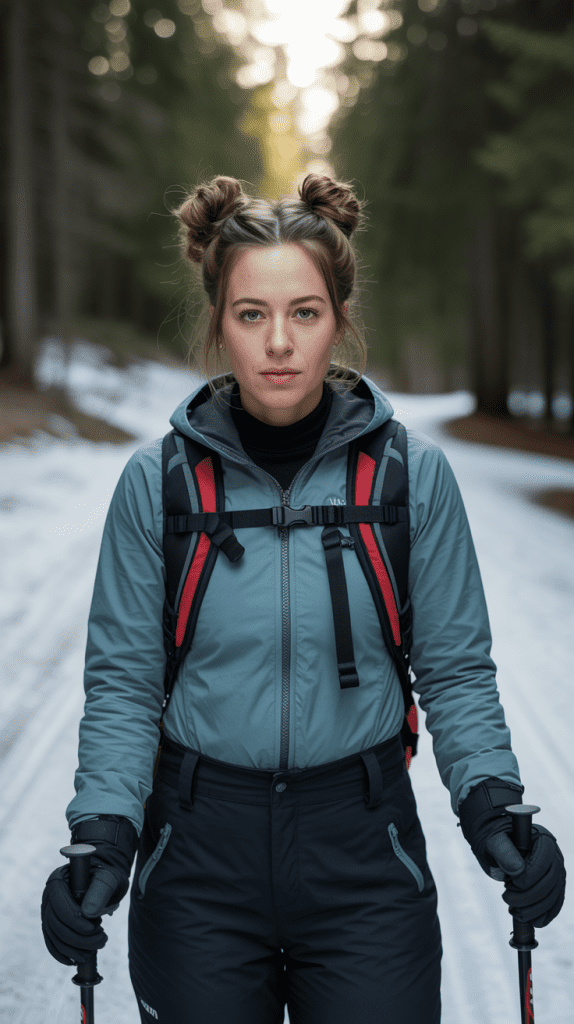
Double low buns position two small buns at the base of your skull, dividing medium hair for balanced helmet fit.
This style creates less bulk than a single large bun while keeping all hair secured.
The low, symmetrical placement works with helmet adjustment systems better than higher styles.
Creation Method:
- Part hair down the center from crown to nape.
- Gather each side into a low ponytail positioned behind the ear.
- Twist each ponytail and wrap around its base.
- Secure with bobby pins, ensuring both buns are the same size.
- Position buns close together so they don’t push ears forward under helmet pressure.
- Use hair spray to smooth any flyaways or loose pieces.
Functional Benefits:
- Distributes hair weight evenly without creating a single large mass.
- The low placement doesn’t interfere with helmet positioning systems.
- Creates a unique look that’s still practical for active skiing.
24. Slicked Back Low Ponytail
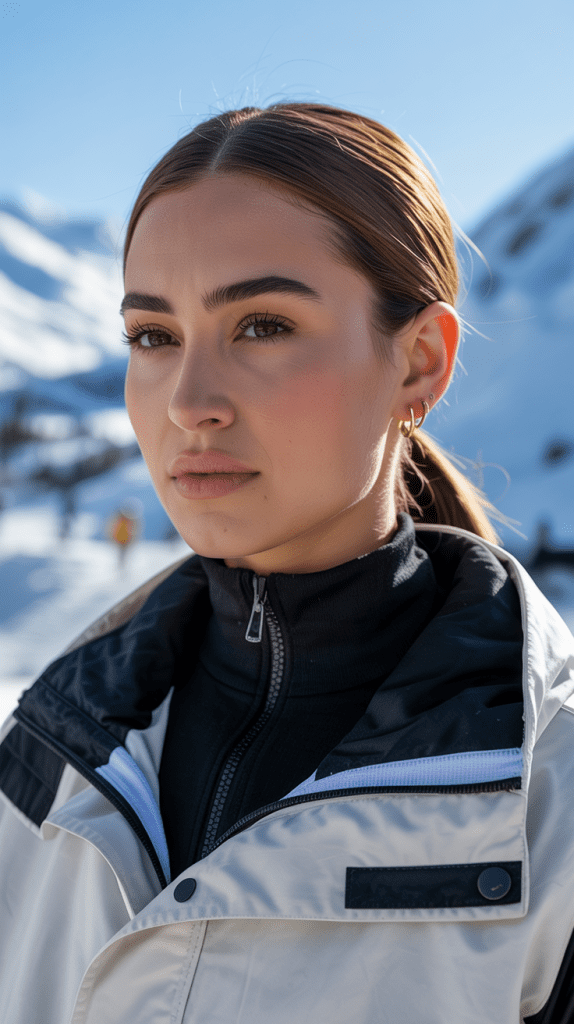
The slicked back low ponytail creates an ultra-smooth, polished appearance that minimizes bulk under helmets.
This sleek style uses gel or pomade to eliminate bumps and flyaways for a refined look.
It’s particularly effective for fine to medium hair that tends to get staticky under helmets.
Styling Process:
- Apply smoothing gel or pomade to damp or dry hair.
- Use a fine-tooth comb to pull hair straight back from the hairline.
- Eliminate all bumps by combing repeatedly until perfectly smooth.
- Gather hair at the nape and secure with a strong elastic.
- Apply additional product to smooth any remaining flyaways.
- Finish with shine spray for a glossy, polished appearance.
Skiing Advantages:
- Creates the flattest possible profile under a helmet.
- The product application helps prevent static buildup.
- Looks intentionally sleek rather than accidentally flat after helmet wear.
25. Herringbone Braid
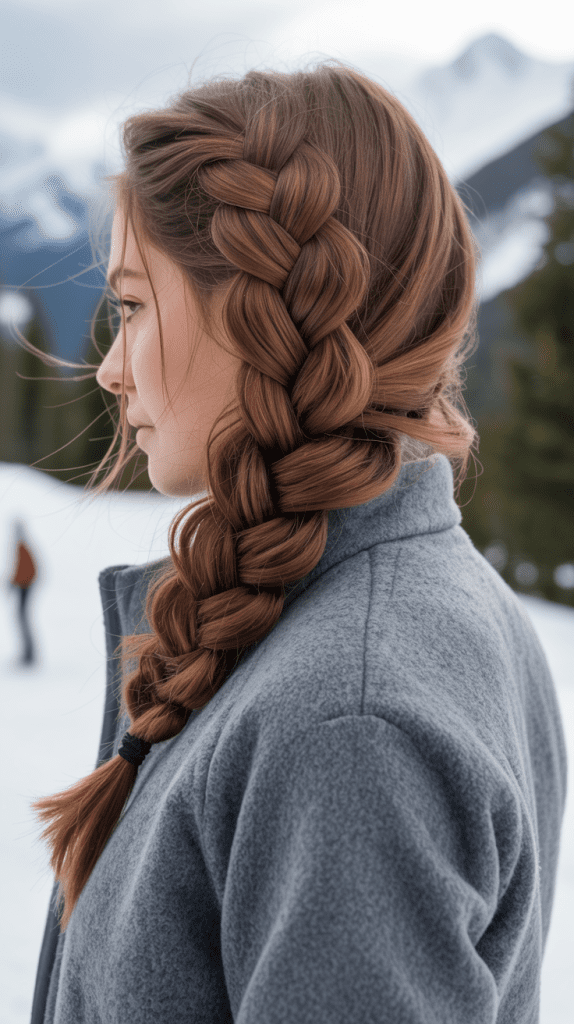
The herringbone braid creates a complex, flat pattern that lies beautifully against the scalp for medium-length hair.
This advanced braiding technique produces a striking visual effect while providing excellent security.
The flat, wide braid distributes helmet pressure more evenly than round braids.
Braiding Technique:
- Divide hair into two sections, working with very thin strands.
- Take a small piece from the outside of the left section.
- Cross it to the inside of the right section.
- Take a small piece from the outside of the right section.
- Cross it to the inside of the left section.
- Continue this pattern, keeping pieces small for definition.
- Secure at the end and gently loosen for a fuller appearance.
Benefits Under Helmets:
- Creates a flat, wide braid that doesn’t create uncomfortable ridges.
- The complex pattern means it’s less likely to loosen during activity.
- Provides an impressive, detailed look that transitions well to après-ski settings.
26. Braided Ponytail with Ribbon
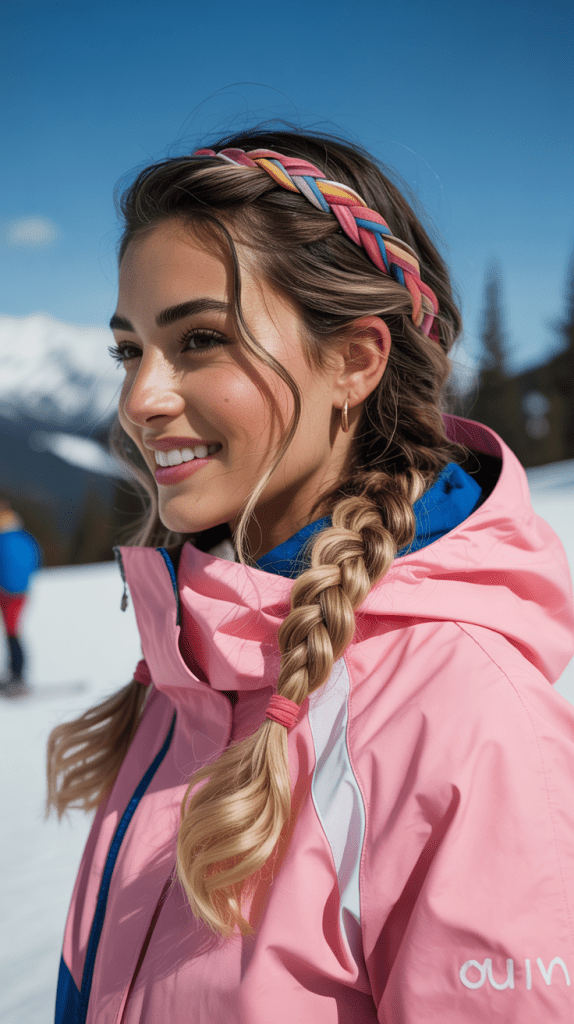
The braided ponytail with ribbon adds a decorative element while providing extra security for medium hair.
Threading a ribbon through the braid creates visual interest and reinforces the structure.
This style combines function with personality, perfect for skiers who want to express their style.
How to Create:
- Secure hair into a ponytail at your desired height.
- Begin braiding the ponytail, starting near the elastic.
- As you braid, weave a ribbon through the sections with each cross.
- The ribbon should appear to spiral through the braid structure.
- Secure the braid end with another elastic.
- Tie the ribbon in a small bow at the end or tuck and pin it.
Practical Elements:
- The ribbon adds structural support to the braid.
- Creates a personalized look that makes finding your group easier on crowded slopes.
- The decorative element makes post-ski photos more interesting.
27. Faux Hawk Braid
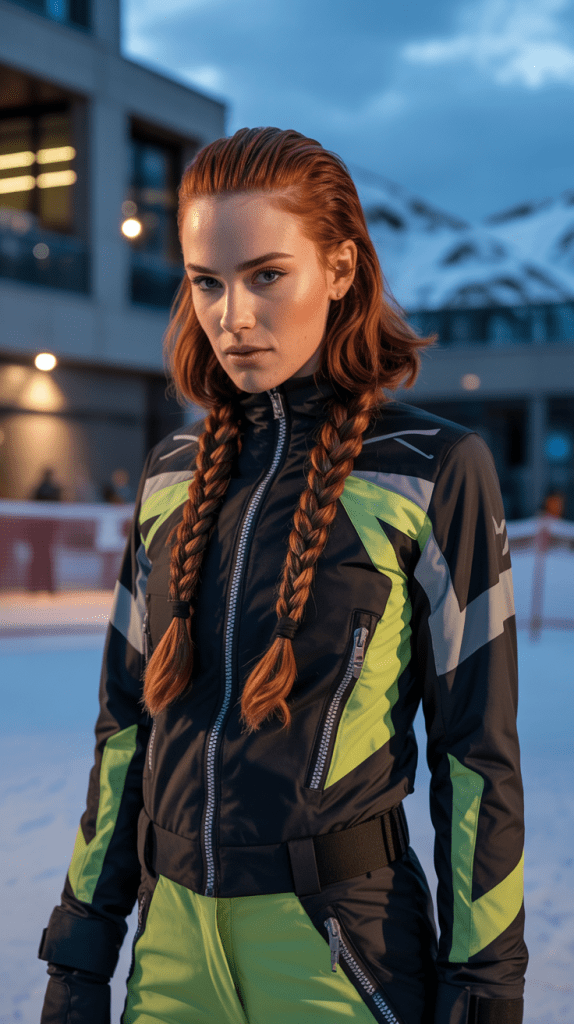
The faux hawk braid creates a bold, athletic statement while keeping medium hair completely secured.
This edgy style uses a raised center braid that mimics a mohawk appearance without any cutting.
The dramatic look is surprisingly practical, keeping hair off your neck and face during intense skiing.
Styling Steps:
- Section a wide strip of hair from forehead to nape down the center.
- Create a Dutch braid with this center section, pulling it tight for maximum lift.
- Leave the sides smooth or gathered into the braid as you work back.
- The raised braid should stand prominently above the sides.
- Secure any side pieces with bobby pins tucked under the braid.
- Apply strong-hold hairspray to maintain the lifted appearance.
Why It’s Functional:
- The center braid distributes helmet pressure along its length.
- Creates a statement look that works for confident, athletic personalities.
- Keeps absolutely all hair secured without any loose pieces.
28. Wrapped Chignon with Braided Detail
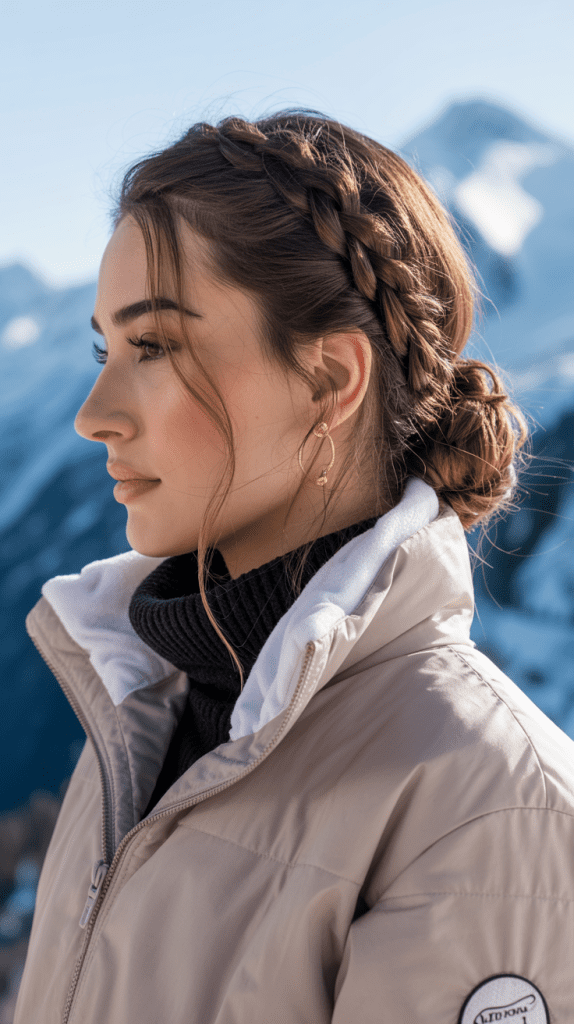
The wrapped chignon with braided detail combines elegance with security for medium hair.
This sophisticated style incorporates a small braid into a classic chignon base, adding texture and visual interest.
The combination ensures the updo won’t loosen while providing a polished appearance.
Creation Process:
- Take a small section from one side and braid it completely.
- Gather remaining hair into a low ponytail, incorporating the braid.
- Twist the ponytail loosely and wrap around the base.
- Position the braid visibly on the outside of the chignon.
- Secure everything with bobby pins, ensuring the braid detail is visible.
- Apply shine serum to the chignon for a glossy, finished look.
Final Style Benefits:
- Combines maximum security with elegant aesthetics.
- The braid adds a decorative element that elevates a simple chignon.
- Perfect for skiers who want to transition seamlessly from slopes to fine dining.
Essential Hair Products for Skiing
Preparing your medium hair for skiing requires specific products that withstand cold, moisture, and helmet wear.
The right products make the difference between styles that last all day and those that fall apart by lunch.
Investing in quality formulations designed for athletic activities ensures your chosen hairstyle maintains its integrity from first run to last.
Pre-Styling Products:
- Texturizing spray adds grip to smooth hair, making braids and twists hold better throughout the day.
- Leave-in conditioner protects hair from the harsh combination of cold outdoor air and dry indoor heating.
- Heat protectant is essential if you’re using any hot tools before hitting the slopes.
- Dry shampoo applied the night before adds volume and texture that helps styles hold longer.
Styling Products:
- Flexible-hold gel provides control without the crunchiness that makes helmet wear uncomfortable.
- Smoothing serum tames flyaways and adds shine for polished looks like slicked ponytails.
- Light mousse gives fine hair enough body to hold braids and buns without weighing it down.
- Hair oil applied sparingly prevents static electricity that builds up under helmets.
Finishing Products:
- Flexible-hold hairspray keeps styles in place while allowing some natural movement.
- Anti-humidity spray prevents moisture from snowfall or sweat from disrupting your hairstyle.
- Shine spray refreshes your look when you remove your helmet for breaks or photos.
On-Mountain Essentials:
- Small travel-size hairspray fits in jacket pockets for quick touch-ups in the lodge.
- Bobby pin case ensures you always have reinforcements if any come loose.
- Extra elastics in multiple sizes provide backup for broken or lost hair ties.
- Wide-tooth comb gently detangles without creating static when you need to refresh your style.
Hair Preparation Tips Before Skiing
Proper preparation the night before and morning of your ski day sets the foundation for styles that last.
Medium hair responds particularly well to advance planning, as it has enough length to tangle but not enough weight to stay naturally smooth.
Following these preparation steps ensures your chosen hairstyle performs optimally under challenging mountain conditions.
The Night Before:
- Wash hair in the evening rather than morning to allow natural oils to develop, which help styles hold better.
- Apply a deep conditioning treatment to strengthen hair against cold weather damage.
- Braid damp hair before bed to create natural texture that makes styling easier in the morning.
- Sleep on a silk or satin pillowcase to reduce friction that causes tangles and frizz.
Morning Preparation:
- Avoid washing hair the day of skiing unless absolutely necessary, as freshly washed hair is more slippery and difficult to secure.
- If you must wash, use a volumizing shampoo and conditioner that add grip rather than excessive smoothness.
- Apply products to slightly damp hair when possible, as they distribute more evenly and provide better hold.
- Let hair air dry partially before styling to reduce heat damage and save time.
Pre-Styling Checks:
- Detangle thoroughly using a wide-tooth comb, starting from ends and working up to roots.
- Section hair properly before beginning complex styles to ensure even distribution.
- Have all tools, products, and accessories within reach before starting to avoid rushing.
- Test your helmet fit with the completed hairstyle before leaving to identify any pressure points.
How to Refresh Your Hairstyle After Skiing
Even the best-planned hairstyles need refreshing after hours under a helmet.
Medium hair is particularly susceptible to the compression and moisture that create “helmet hair,” but strategic refreshing techniques can revive your look quickly.
Knowing how to efficiently restore your style means you’ll feel confident during après-ski activities without a complete do-over.
Immediate Post-Helmet Steps:
- Remove your helmet carefully to avoid catching hair on straps or adjustment mechanisms.
- Shake your head gently to restore natural volume and allow air circulation to your scalp.
- Use your fingers to lift roots where helmet pressure created flatness, working from back to front.
- Flip your head upside down and shake vigorously to redistribute your hair’s natural oils.
Quick Fixes by Style Type:
- For ponytails: Remove the elastic, brush through gently, reapply dry shampoo to roots, and re-secure slightly lower or higher than the original position.
- For braids: Gently loosen by pulling at the sides of the braid to add volume without completely undoing the structure.
- For buns: Release the bun, apply texturizing spray, twist loosely, and re-form in a slightly different position.
- For loose styles: Use a round brush and portable battery-operated styling tool to add volume at the crown.
Product Application for Refreshing:
- Dry shampoo absorbs excess oil and sweat while adding volume to compressed roots.
- Texturizing spray revives limp hair and adds grip for restyling if needed.
- Shine serum smooths surface frizz without weighing down your hair or making it greasy.
- Light hairspray sets the refreshed style for evening activities.
Complete Style Transitions:
- Transform a tight braid into a loose, textured braid by pulling sections apart strategically.
- Convert a ponytail into a messy bun by twisting and securing with decorative pins.
- Release half-up styles completely and add beach waves with your fingers for a relaxed evening look.
- Smooth slicked styles into elegant low chignons by gathering and pinning artfully.
Common Mistakes to Avoid
Understanding what doesn’t work helps you make better choices for skiing hairstyles with medium hair.
Many skiers repeat the same errors season after season, leading to discomfort, damaged hair, or styles that fail midday.
Learning from these common mistakes ensures your hairstyle enhances rather than detracts from your mountain experience.
Positioning Errors:
- Placing buns too high creates uncomfortable pressure points where the helmet pushes down most forcefully.
- Positioning ponytails at the crown interferes with helmet adjustment systems and creates bulky bumps.
- Creating styles too far forward causes goggles straps to disrupt your hairstyle’s integrity.
- Forgetting about ear placement leads to styles that push ears forward uncomfortably under helmet padding.
Product Mistakes:
- Using too much product creates stiff, uncomfortable hair that breaks or becomes brittle in cold weather.
- Applying heavy oils weighs down medium hair and makes it look greasy after just a few hours.
- Skipping heat protectant before using hot tools leads to damaged, brittle hair that tangles more easily.
- Over-applying dry shampoo builds up white residue and creates a gritty texture that doesn’t photograph well.
Styling Technique Errors:
- Braiding too tightly causes tension headaches that worsen under helmet pressure throughout the day.
- Using too few bobby pins leads to styles that loosen or fall apart during active skiing.
- Securing with weak elastics results in broken hair ties at inconvenient times when replacements aren’t available.
- Not testing helmet fit before leaving means discovering problems when you’re already on the mountain.
Maintenance Oversights:
- Never adjusting throughout the day allows styles to loosen progressively until they fail completely.
- Ignoring discomfort leads to headaches and neck tension that could be prevented with simple adjustments.
- Skipping the refresh means walking around with obvious helmet hair during social après-ski time.
- Removing styles too roughly creates unnecessary tangles and breakage that accumulate over a ski season.
Hair Accessories for Skiing
The right accessories transform good skiing hairstyles into great ones while providing backup options when styles need adjustment.
Medium hair benefits particularly from strategic accessory use, as the length requires more securing than short hair but offers more styling versatility than long hair.
Selecting accessories designed for athletic activity ensures they perform under challenging mountain conditions.
Essential Functional Accessories:
- No-slip elastics with silicone or rubber grips prevent styles from sliding loose during active movement.
- Heavy-duty bobby pins stay secure even during falls or aggressive skiing maneuvers.
- Spin pins work like corkscrews to hold buns with less bulk than traditional bobby pins.
- Hair nets provide invisible security for fine or slippery hair that tends to escape from buns.
Decorative Yet Functional:
- Ribbon or cord woven through braids adds security while creating personalized style statements.
- Decorative pins with flat backs look elegant but don’t create uncomfortable pressure points under helmets.
- Colored elastics coordinate with your ski outfit while making it easy to spot your hair ties.
- Headbands worn under the hairstyle help control flyaways around the hairline and temples.
Emergency Kit Items:
- Mini claw clips provide temporary solutions for quick fixes in the lodge bathroom.
- Travel brush collapses to fit in pockets for smoothing and detangling between runs.
- Clear elastics disappear into any hair color and work for last-minute adjustments.
- Small scissors allow you to cut away broken elastics rather than yanking them out.
Weather-Specific Accessories:
- Silk scrunchies reduce friction and breakage compared to regular elastics in extremely cold conditions.
- Anti-static tools combat the electricity that builds up from helmet wear in dry winter air.
- Waterproof hair ties maintain their elasticity even when wet from snow or sweat.
- UV-protective hair wraps shield your part from sun damage at high altitudes during breaks.
Helmet Selection Considerations for Hairstyles
Your helmet choice significantly impacts which hairstyles work best with medium hair.
Modern ski helmets offer various features that accommodate different styling needs, and understanding these options helps you make informed decisions.
The relationship between helmet design and hairstyle compatibility often goes overlooked but dramatically affects all-day comfort.
Adjustment System Types:
- Rear dial systems work best with low ponytails and buns positioned at the nape rather than center back.
- Vertical adjustment mechanisms accommodate high buns and top knots better than fixed-position systems.
- Size-only systems without adjustment mechanisms offer the most flexibility for varied hairstyle choices.
- Full-wrap systems distribute pressure evenly, making them compatible with most braided styles.
Interior Padding Considerations:
- Removable padding allows customization of interior space to accommodate different hairstyle bulks.
- Memory foam liners compress gently around buns and braids without creating uncomfortable pressure.
- Moisture-wicking fabrics help manage sweat that can loosen hairstyles or create uncomfortable dampness.
- Ventilation channels positioned strategically allow airflow that reduces heat buildup on styled hair.
Helmet Shape and Fit:
- Round shell designs accommodate center buns and ponytails more comfortably than elongated shapes.
- Deep-fitting helmets provide more interior space for larger buns or thick braided styles.
- Shallow profiles work better with flat styles like slicked ponytails or herringbone braids.
- Wide helmets accommodate side-swept styles and asymmetrical buns better than narrow designs.
Testing Your Combination:
- Try on helmets with your hairstyle completed to identify pressure points before purchasing.
- Wear the combination for 15-20 minutes in the store to assess comfort beyond initial impressions.
- Shake your head vigorously while wearing the helmet to ensure the hairstyle doesn’t shift or loosen.
- Adjust all straps and fit systems with your hairstyle in place to find optimal positioning.
Seasonal Hair Care for Skiers
Different times of the ski season present unique challenges for maintaining healthy medium-length hair while skiing regularly.
Environmental factors, temperature extremes, and accumulated damage from repeated styling require adaptive care strategies.
Understanding seasonal variations helps you protect your hair throughout the entire winter sports season.
Early Season (November-December):
- Hair is still recovering from summer sun damage and transitioning to drier winter conditions.
- Focus on deep conditioning treatments twice weekly to strengthen hair before peak skiing season.
- The relatively mild temperatures mean less extreme cold damage but potentially more moisture from early snow.
- Gradually introduce protective styling rather than immediately subjecting hair to daily helmet wear.
Peak Season (January-February):
- This period brings the coldest temperatures and driest air, leading to maximum brittleness and static.
- Increase use of leave-in conditioners and anti-static products to combat extreme environmental conditions.
- The frequent skiing schedule requires low-maintenance styles that don’t demand daily heat styling.
- Watch for signs of breakage around hairlines where helmet straps create the most friction.
Late Season (March-April):
- Spring skiing combines harsh sun exposure at high altitudes with warming temperatures that increase sweating.
- Add UV-protective products to your routine as sun intensity increases dramatically at mountain elevations.
- The temperature fluctuations between sunny slopes and shaded runs require versatile styling products.
- Begin planning for post-season hair recovery treatments as you approach the end of ski season.
Year-Round Protection:
- Regular trims every 6-8 weeks prevent split ends from traveling up the hair shaft.
- Alternate between different hairstyles to avoid repetitive stress on the same sections.
- Use silk or satin-lined helmets or helmet liners to reduce friction damage.
- Consider protective treatments like keratin or bond-building systems if skiing multiple days per week.
Hairstyles for Different Skiing Intensities
Your skiing style and intensity level should influence your hairstyle choice for medium hair.
What works perfectly for leisurely groomed run enthusiasts may fail completely for aggressive off-piste skiers.
Matching your hairstyle to your activity level ensures comfort and security throughout your specific mountain experience.
Beginner-Friendly Styles:
- Low ponytails provide simple security without requiring advanced braiding skills.
- Simple three-strand braids offer more hold than loose hair while remaining easy to create.
- Messy buns forgive imperfection and actually look better after helmet compression.
- Half-up styles keep hair off the face while maintaining enough length to adjust easily.
Intermediate Skier Options:
- French braids provide more security for increased speed and varied terrain without extreme complexity.
- Low chignons offer elegance and security for mixed skiing and social activities.
- Rope braids combine simplicity with the enhanced hold needed for more dynamic skiing.
- Bubble ponytails adapt well to moderate activity levels while adding personality.
Advanced and Aggressive Skiing:
- Boxer braids deliver maximum security for high-speed runs and challenging terrain.
- Dutch braid crowns distribute pressure while maintaining absolute control during extreme movement.
- Braided buns combine the compactness of buns with the security of braiding for maximum hold.
- Multiple small braids break hair into manageable sections that won’t shift during aggressive maneuvers.
Terrain Park and Freestyle:
- Space buns positioned strategically accommodate the unique movements and potential impacts of park skiing.
- Faux hawk braids suit the edgy aesthetic of freestyle skiing while providing excellent security.
- Low pigtail braids stay secure during spins and aerial maneuvers without creating uncomfortable bulk.
- Wrapped chignons with extra reinforcement withstand the unique stresses of trick skiing.
Professional Tips from Ski Instructors and Athletes
Learning from those who spend entire seasons on the mountain provides valuable insights into what truly works for skiing hairstyles.
Professional ski instructors, patrol members, and competitive athletes have refined their approaches through thousands of hours wearing helmets.
Their collective wisdom offers practical solutions to common challenges faced by recreational skiers with medium hair.
Instructor Recommendations:
- Keep hairstyles simple enough to adjust quickly with gloves on, as you won’t always have time to remove them.
- Choose styles that don’t require mirrors for touch-ups, since mountain bathrooms are often crowded or unavailable.
- Test new hairstyles on low-stakes days rather than expensive destination trips or important events.
- Always carry backup elastics and pins in multiple pockets to ensure you’re never without supplies.
Competitive Athlete Strategies:
- Professional racers prioritize function over aesthetics, choosing the most secure options regardless of appearance.
- Many athletes apply gel or mousse the night before and sleep with hair in the desired style for maximum hold.
- Competition-level skiers often use multiple securing methods simultaneously for redundancy.
- Athletes recommend practicing your chosen style repeatedly until you can execute it perfectly in under five minutes.
Ski Patrol Insights:
- Patrol members emphasize positioning hairstyles away from areas where first-aid procedures might require helmet removal.
- They recommend avoiding styles with numerous metal accessories that can conduct cold or create discomfort.
- Patrol professionals suggest low-profile styles that don’t interfere with wearing additional protective equipment.
- Their experience shows that simpler styles require less maintenance during long shifts on the mountain.
Resort Staff Advice:
- Lift operators who work in extreme cold recommend styles that allow for easy wear of additional headwear underneath helmets.
- Restaurant and lodge staff suggest transitional styles that can be easily modified from slope to social settings.
- Rental shop employees note that helmet sizing works best with consistent hairstyle bulk across multiple days.
- Photography staff recommend considering how your hairstyle photographs from above during action shots.
Conclusion
Mastering the art of skiing hairstyles for medium hair with a helmet transforms your entire mountain experience from potentially frustrating to consistently enjoyable.
This comprehensive guide to 28 Perfect Skiing Hairstyles for Medium Hair with a Helmet for a Sleek Look has provided you with diverse options that address every hair type, skiing intensity, and personal style preference.
The key takeaway is that you no longer need to choose between looking good and feeling comfortable on the slopes, as the right hairstyle delivers both benefits simultaneously.
By understanding the principles behind successful ski hairstyles—low positioning for helmet compatibility, secure techniques that last all day, and styles that transition smoothly from slopes to social settings—you can confidently approach each ski day knowing your hair won’t become a distraction or source of discomfort.
The variety of options presented ensures that whether you prefer the simplicity of a low ponytail, the security of boxer braids, or the elegance of a wrapped chignon, you’ll find styles that suit your technical abilities and aesthetic preferences.
Remember that the best hairstyle is one you can execute quickly, that remains comfortable throughout extended wear, and that makes you feel confident as you carve down the mountain.
Experiment with different options during practice sessions at home, invest in quality hair accessories designed for athletic activities, and don’t hesitate to adapt these styles to your unique hair texture and personal taste.
With these 28 hairstyles in your repertoire, you’re equipped to handle any skiing situation while maintaining a polished, put-together appearance that carries you seamlessly from first tracks to après-ski celebrations.
