
33 Simple Army Short Hairstyles for Men for a Clean-Cut Look
When it comes to timeless, masculine hairstyles that exude discipline and confidence, nothing quite compares to military-inspired cuts.
The “33 Simple Army Short Hairstyles for Men for a Clean-Cut Look” showcases a collection of practical, low-maintenance styles that have transcended their military origins to become staples in modern men’s grooming.
These cuts offer the perfect solution for men seeking sharp, professional appearances without the daily hassle of extensive styling routines.
Whether you’re in the armed forces, working in a corporate environment, or simply prefer a no-nonsense approach to hair care, army hairstyles deliver unmatched versatility and polish.
This comprehensive guide explores 33 distinct military-inspired cuts, ranging from ultra-short buzz cuts to slightly longer textured styles, each designed to keep you looking sharp, feeling comfortable, and projecting an image of confidence and capability.
You’ll discover the characteristics that make each style unique, styling tips to achieve the perfect look, and guidance on which face shapes and hair types work best with each cut.
1. The Classic Buzz Cut
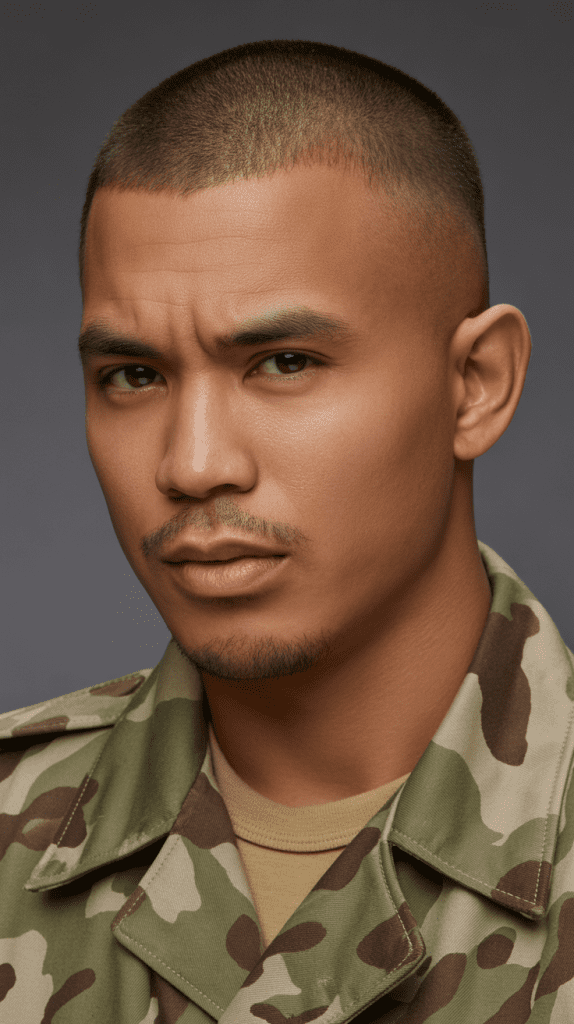
The buzz cut represents the quintessential military hairstyle, characterized by uniform length all around the head.
This timeless style eliminates any guesswork from your grooming routine while providing maximum practicality.
- The classic buzz cut typically uses clippers with guards ranging from #1 to #4, creating lengths between 1/8 inch to 1/2 inch.
- This style works exceptionally well for men with strong facial features, as it draws attention to the face rather than the hair.
- Maintenance requires minimal effort—simply run clippers over your entire head every two to three weeks to maintain the desired length.
- The buzz cut proves ideal for active lifestyles, hot climates, and anyone seeking to minimize daily grooming time.
- Men with round face shapes should consider slightly longer guards on top to add vertical dimension.
- This cut works universally across all hair textures, from straight to tightly coiled.
2. The Induction Cut
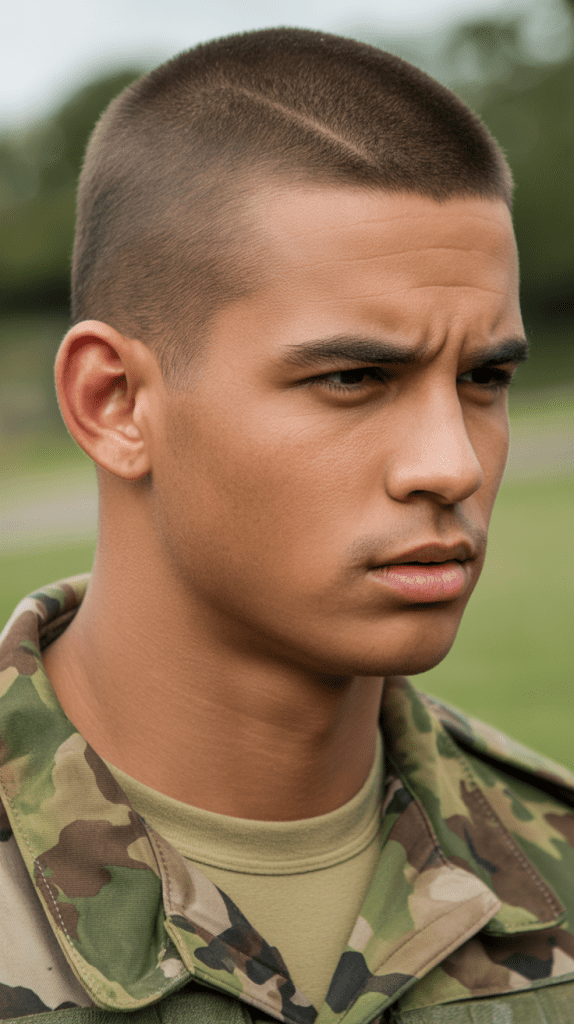
The induction cut takes minimalism to its extreme, representing the shortest possible hairstyle achievable with clippers.
Military recruits receive this cut upon entering basic training, symbolizing uniformity and a fresh start.
- This style uses a #0 or #1 guard, leaving hair between 1/16 inch to 1/8 inch in length.
- The induction cut exposes the scalp more than any other style, making it essential to apply sunscreen when outdoors.
- Men with perfectly shaped heads benefit most from this ultra-short approach, as any scalp irregularities become visible.
- The style requires clipper maintenance every 7-10 days to prevent the awkward in-between growth phase.
- This cut provides the ultimate cooling effect during summer months and humid conditions.
- Athletes, particularly swimmers and wrestlers, favor this cut for its performance advantages.
3. The High and Tight
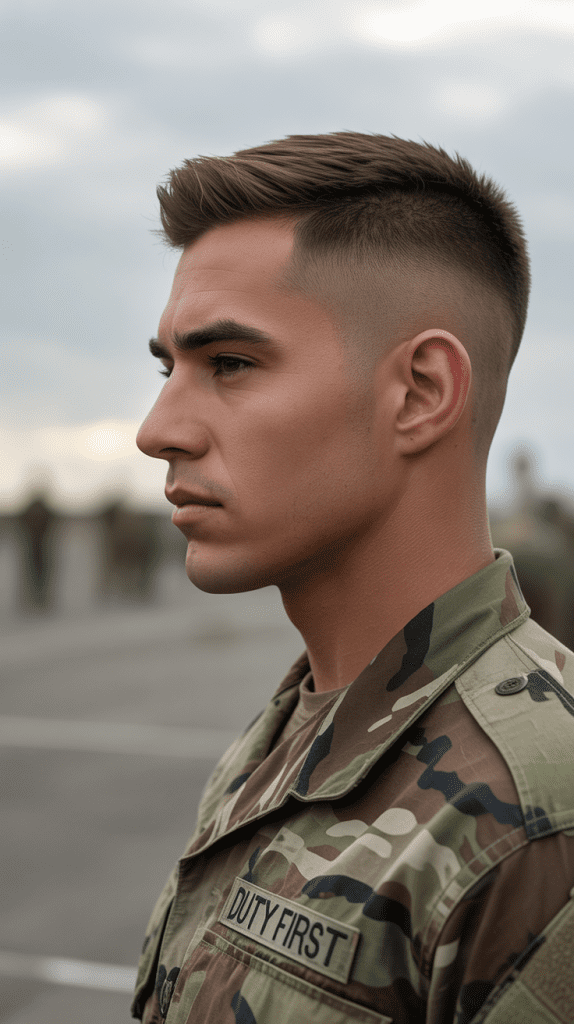
The high and tight features extremely short or shaved sides with slightly longer hair on top, creating a stark contrast that emphasizes masculinity and discipline.
- The sides typically receive a #0 or #1 guard while the top maintains a #2 to #4 length.
- This dramatic contrast creates a “landing strip” effect of hair running from the forehead to the crown.
- The high and tight works exceptionally well for men with oval or square face shapes.
- Styling requires only 30 seconds—a small amount of matte pomade keeps the top section in place.
- The cut effectively camouflages receding hairlines by drawing attention to the fuller top section.
- Maintenance involves trimming sides weekly and the top every two to three weeks.
4. The Regulation Cut
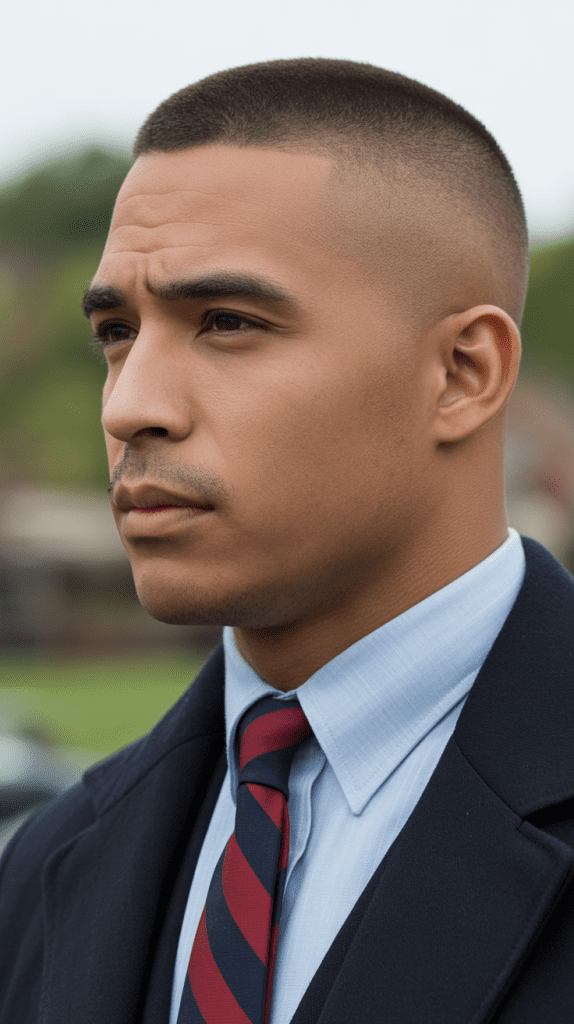
The regulation cut provides a slightly longer alternative to the buzz cut while maintaining military standards for grooming and professionalism.
- Hair length measures between 1/2 inch to 1 inch on top, with tapered sides and back.
- This versatile style allows for subtle styling variations while remaining workplace-appropriate.
- The regulation cut suits men transitioning from civilian styles to military requirements.
- A light-hold styling cream adds texture without creating a shiny or overly styled appearance.
- The cut flatters most face shapes, particularly those with balanced proportions.
- Barbers can customize the taper fade to complement individual preferences and head shapes.
5. The Burr Cut

The burr cut sits between the buzz cut and crew cut in terms of length, offering slightly more coverage while maintaining military practicality.
- Top hair measures approximately 1/4 inch, creating a uniform surface that stands upright.
- Sides and back gradually taper shorter, typically using a #2 guard transitioning to a #1.
- This style works particularly well for men with thick, coarse hair that naturally stands upright.
- The burr cut requires virtually no styling products or morning preparation time.
- Men with prominent foreheads appreciate how this cut balances facial proportions.
- The style remains professional in all settings, from boardrooms to battlefields.
6. The Ivy League Cut
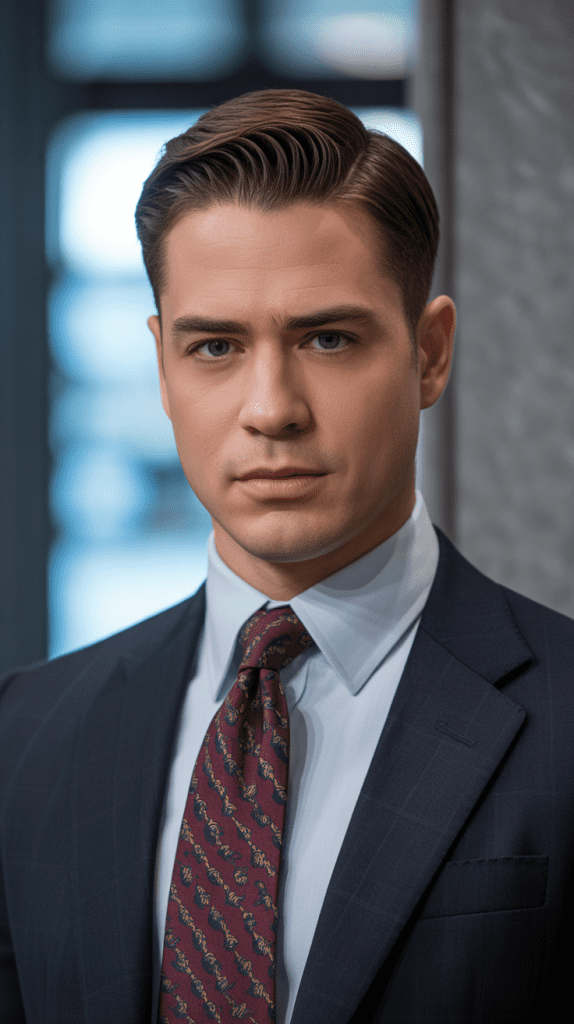
The Ivy League cut represents a refined military style that bridges the gap between military precision and collegiate sophistication.
- This cut features 1 to 2 inches on top, allowing for a subtle side part or forward styling.
- Sides receive a classic taper that gradually shortens from the top down to the neckline.
- The Ivy League works exceptionally well in professional civilian environments while maintaining clean-cut appeal.
- Styling requires a small amount of pomade or fiber to create texture and hold the part in place.
- This versatile cut flatters diamond and heart-shaped faces by adding width at the temples.
- The style evolved from military crew cuts adopted by Ivy League university students in the 1950s.
7. The Butch Cut

The butch cut provides uniform length across the entire head, typically ranging from 1/4 to 1/2 inch, creating a fuller appearance than the buzz cut.
- Unlike the buzz cut, the butch cut maintains consistent length without tapering on the sides.
- This style proves ideal for men with round or square face shapes seeking to add perceived height.
- The cut requires clippers with a single guard size, making home maintenance straightforward.
- Weekly trimming keeps the style looking sharp and prevents the shaggy in-between phase.
- Men with cowlicks benefit from this length, as the hair stands too short to show growth patterns.
- The butch cut delivers a youthful, energetic appearance regardless of age.
8. The Crew Cut with Fade
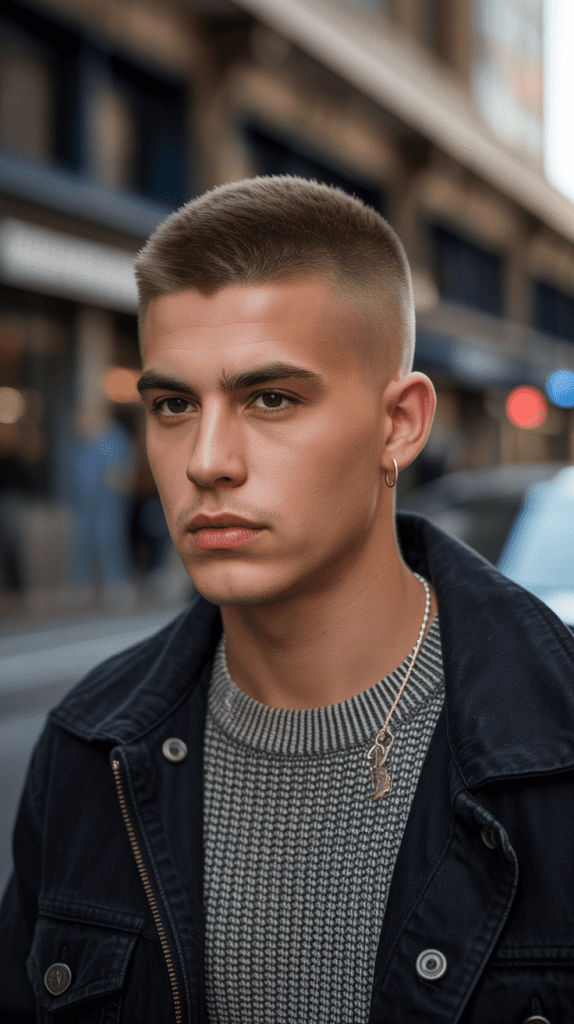
The crew cut with fade combines classic military styling with modern barbering techniques, creating a contemporary take on a timeless look.
- Top hair measures 1 to 2 inches, gradually decreasing in length toward the crown.
- A fade on the sides transitions smoothly from longer hair at the top to skin or near-skin at the bottom.
- This cut offers three fade variations: low fade (starting above the ears), mid fade (starting at the temples), or high fade (starting near the top of the head).
- Styling involves applying a light pomade or clay to add texture and definition to the top section.
- The crew cut with fade suits oval, square, and rectangular face shapes particularly well.
- Regular maintenance every 2-3 weeks ensures the fade remains crisp and well-defined.
9. The Flat Top
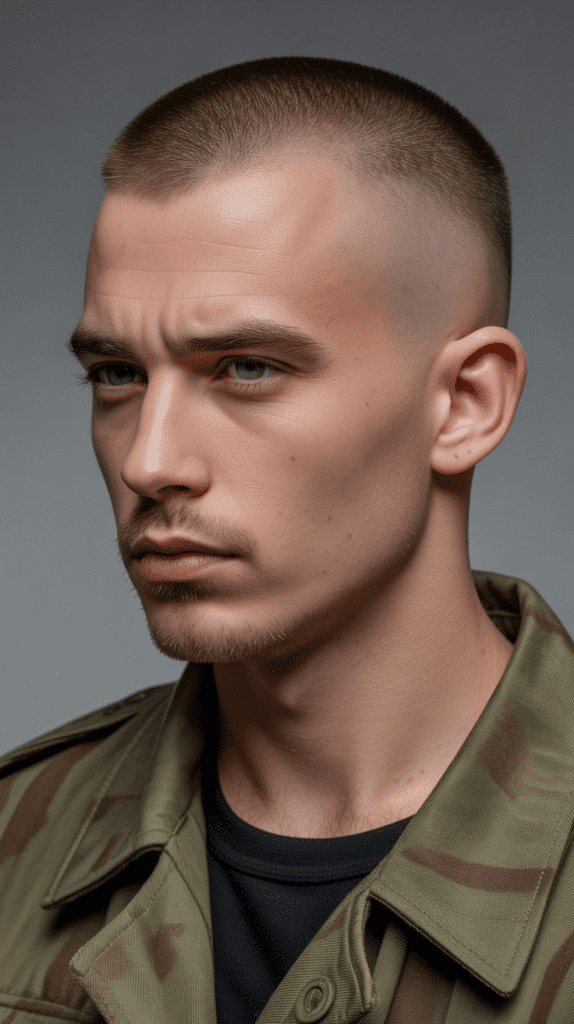
The flat top stands as one of the most distinctive military hairstyles, featuring hair that stands vertically and is cut flat across the top surface.
- This iconic style requires hair long enough to stand upright (typically 1.5 to 2 inches) with the top cut perfectly horizontal.
- Sides receive a high fade or taper, creating dramatic contrast with the flat top surface.
- Achieving this style requires specialized barbering skills and regular professional maintenance.
- Strong-hold gel or pomade keeps the hair standing vertically throughout the day.
- The flat top works best for men with thick, coarse hair that naturally possesses body and volume.
- Square and rectangular face shapes receive the most flattering results from this angular style.
10. The Military Fade
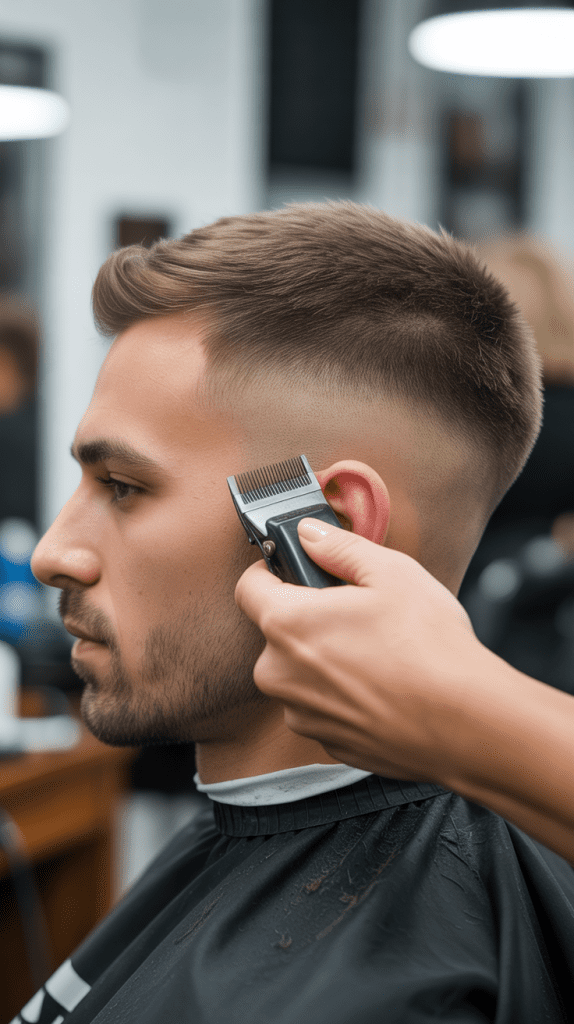
The military fade emphasizes gradual transition from longer hair on top to progressively shorter sides and back, ultimately fading to skin.
- The fade typically starts at different heights: low (at the ear level), medium (at the temple), or high (several inches above the ear).
- Top length varies from 1 to 3 inches depending on personal preference and military regulations.
- This versatile cut adapts to various hair textures and face shapes through customized fade positioning.
- Light styling products maintain the top’s shape without appearing overly groomed.
- The military fade requires professional maintenance every 2-3 weeks to preserve the gradient effect.
- This style has become increasingly popular in civilian contexts due to its sharp, modern appearance.
11. The Forward Brush
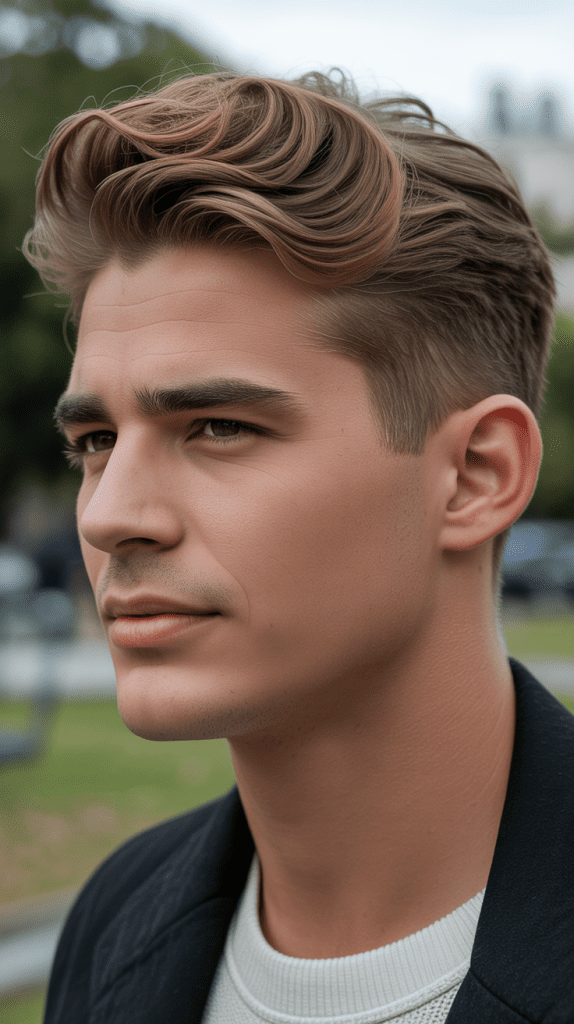
The forward brush style features hair on top brushed toward the forehead, creating a youthful, dynamic appearance while maintaining military neatness.
- Top hair measures 1.5 to 2.5 inches, long enough to lie forward but short enough to maintain a clean profile.
- Sides receive a medium taper or fade to keep the style military-appropriate.
- This cut effectively minimizes the appearance of receding hairlines by covering the frontal area.
- Styling requires blow-drying hair forward while applying light pomade or clay for hold.
- The forward brush flatters round and square face shapes by adding length to the face.
- This style originated with Roman military aesthetics and has evolved through modern military traditions.
12. The Side Part Military Cut
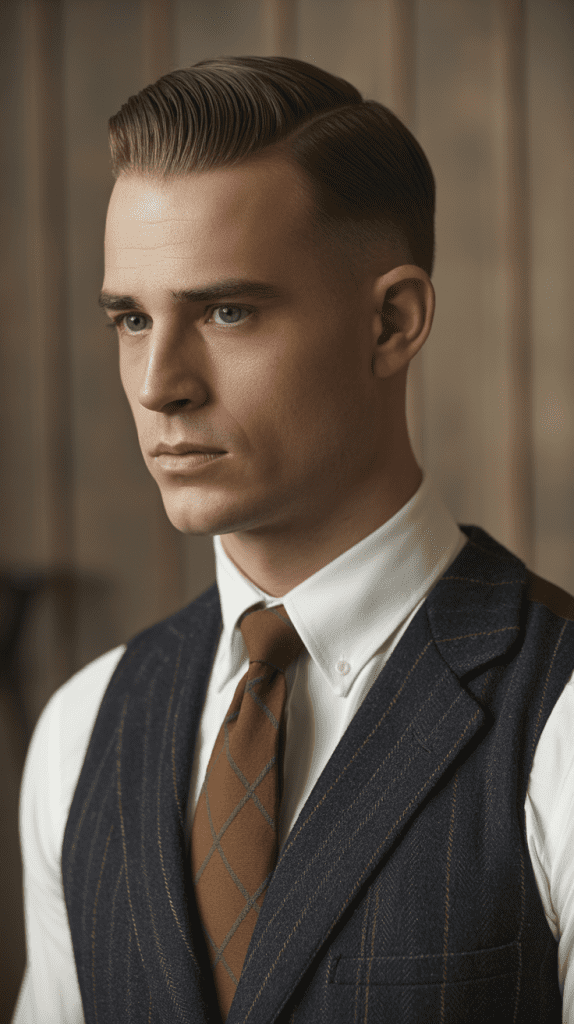
The side part military cut introduces classic sophistication to military styling through a defined parting line and structured sides.
- Hair on top ranges from 2 to 3 inches, providing sufficient length for a clean, defined part.
- The part typically begins at the temple and runs toward the crown, creating a diagonal line.
- Sides feature a classic taper or low fade that complements the longer top section.
- Medium-hold pomade smooths the hair and maintains the part’s position throughout the day.
- This versatile style transitions seamlessly from military to business professional environments.
- The side part works exceptionally well for men with straight to wavy hair textures.
13. The Horseshoe Flattop
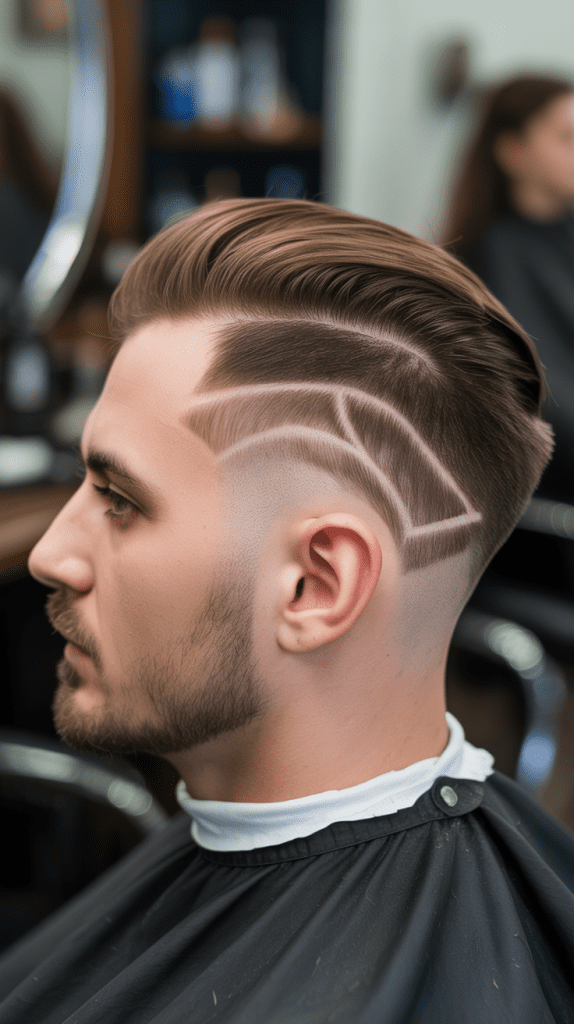
The horseshoe flattop represents an advanced variation of the standard flat top, featuring a curved shape when viewed from above.
- This distinctive cut creates a horseshoe or rounded appearance at the front when looking down at the head.
- Hair stands vertically at 1.5 to 2 inches with precise shaping around the front perimeter.
- The style requires exceptional barbering expertise and cannot be achieved through home cutting.
- Strong-hold gel maintains the vertical positioning and shaped contours throughout the day.
- This bold style makes a strong statement and works best for confident individuals comfortable with attention.
14. The Whitewalls
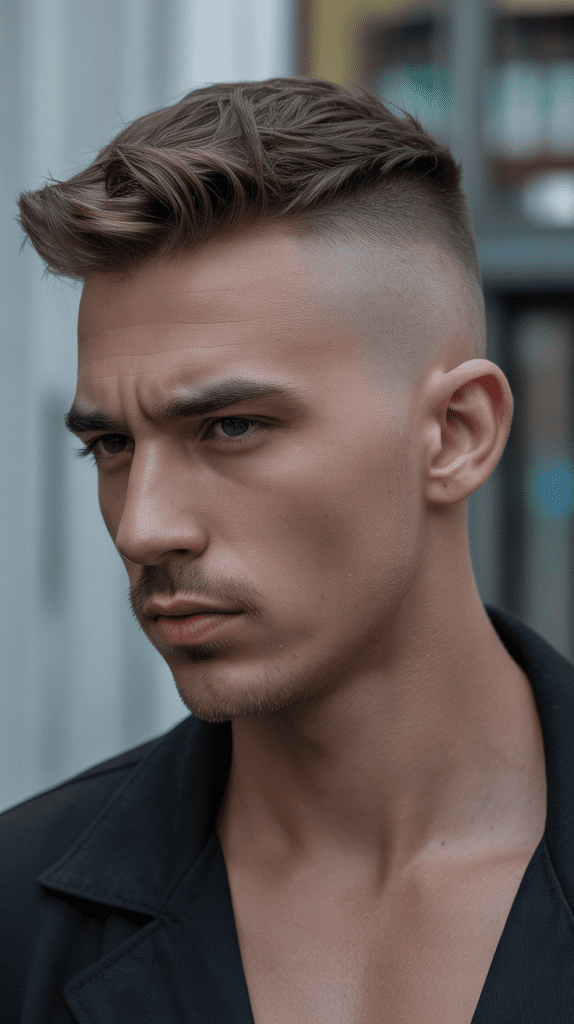
The whitewalls style features extremely short or completely shaved sides that expose the scalp, creating a stark “white wall” appearance.
- Sides and back receive a #0 guard or are shaved with a razor, leaving visible skin.
- Top hair maintains 1 to 2 inches in length, creating dramatic contrast.
- This high-contrast style emphasizes facial features and jawline definition.
- The whitewalls require weekly maintenance to prevent stubble from diminishing the dramatic effect.
- Men with well-defined head shapes and minimal scalp irregularities achieve the most polished look.
- Sunscreen becomes essential for exposed scalp areas when spending time outdoors.
15. The Combat Crop
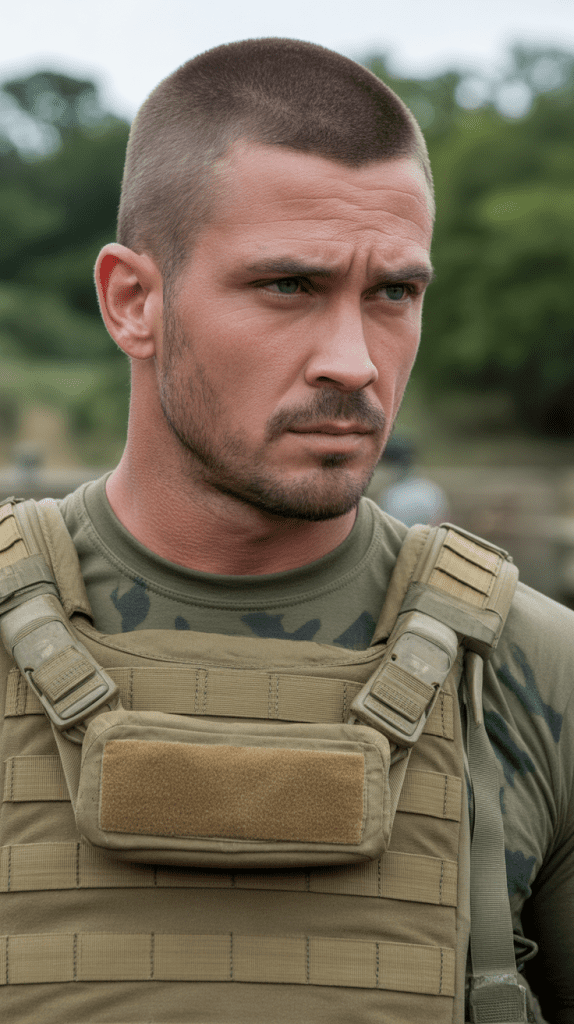
The combat crop delivers maximum practicality for active duty personnel while maintaining enough length on top for subtle styling options.
- Top hair measures 3/4 inch to 1.5 inches, offering a balance between maintenance and versatility.
- Sides taper gradually from the top down to a #1 or #2 guard at the bottom.
- This functional cut dries quickly, requires minimal products, and withstands helmets and headgear.
- A small amount of matte clay adds texture without shine for a natural appearance.
- The combat crop suits all face shapes through adjustable top lengths and taper heights.
- Active individuals appreciate how this style maintains its shape through physical activity and sweating.
16. The Textured Crop
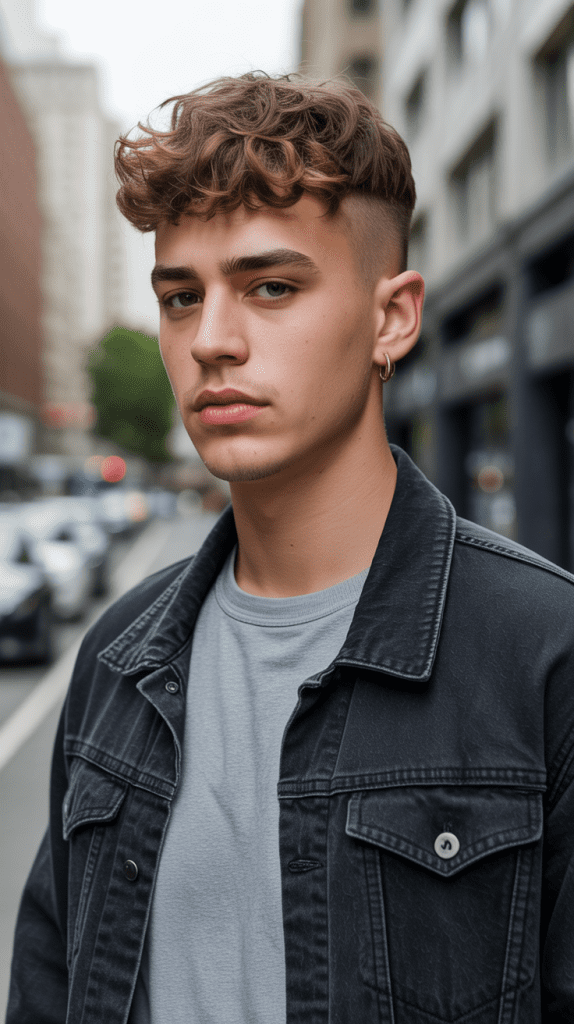
The textured crop introduces modern styling elements to military precision, featuring choppy, irregular lengths on top for dimensional appeal.
- Top hair ranges from 1 to 2 inches with varied lengths creating texture and movement.
- Sides receive a fade or taper to maintain the clean-cut military aesthetic.
- Texturizing scissors or razors create the piecey, non-uniform top surface.
- Matte styling products emphasize the textured effect without creating stiffness.
- This contemporary cut appeals to younger men seeking military neatness with fashion-forward elements.
- The textured crop works particularly well with thick or wavy hair that naturally creates volume.
17. The Caesar Cut (Military Version)
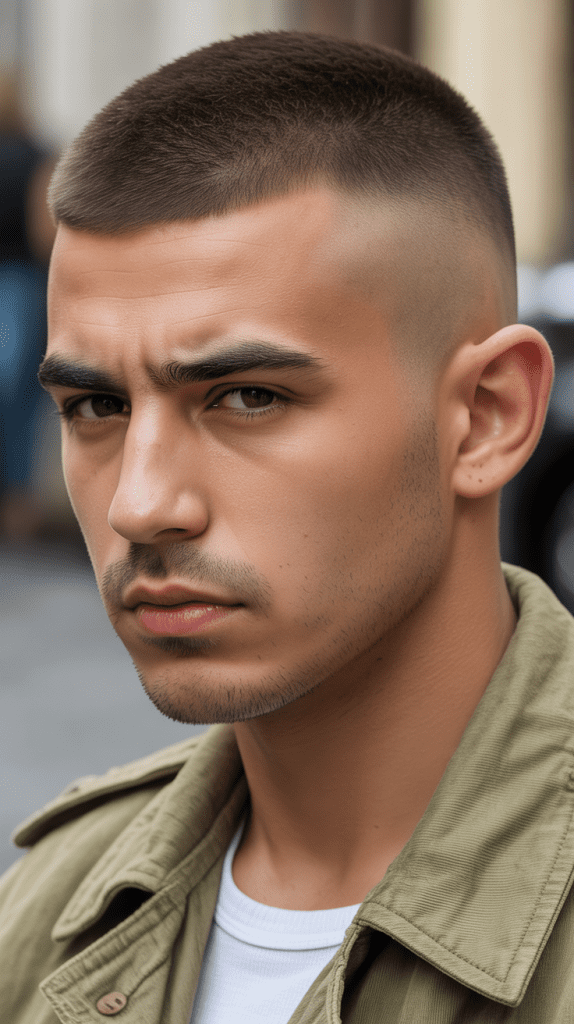
The military Caesar cut features short, horizontally forward-brushed hair with a precisely aligned fringe, adapted from ancient Roman military tradition.
- Top and fringe measure 1 to 2 inches, creating a horizontal line across the forehead.
- Sides receive a modern fade or taper to update the classic style.
- This cut effectively conceals receding hairlines and thinning areas at the temples.
- Light pomade or cream brushes hair forward and maintains the horizontal fringe.
- The Caesar cut flatters round, square, and oval face shapes through its horizontal emphasis.
- Minimal daily maintenance makes this an ideal choice for low-fuss grooming routines.
18. The Jarhead
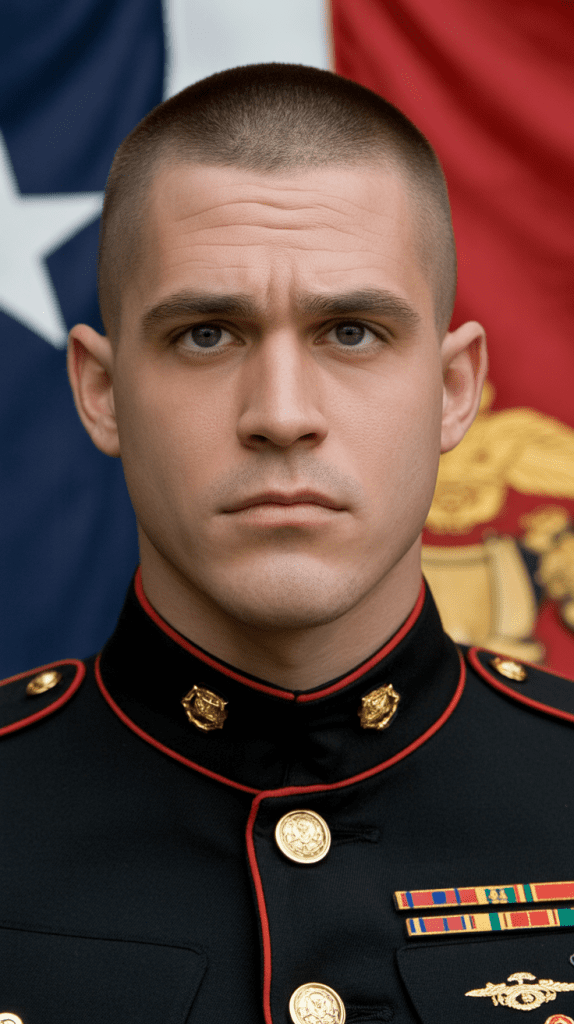
The jarhead refers to an extremely short, uniform cut associated specifically with Marine Corps tradition and minimalist grooming standards.
- Hair measures between 1/8 and 1/4 inch across the entire head with no variation.
- This no-nonsense style represents the epitome of military simplicity and practicality.
- The jarhead works for all hair types, face shapes, and ages due to its universal approach.
- Maintenance involves running clippers over the entire head every 7-10 days with a single guard.
- The style eliminates all grooming decisions, product requirements, and styling time.
- Men with active outdoor lifestyles appreciate the cooling effect and wash-and-go convenience.
19. The High Fade with Line Up
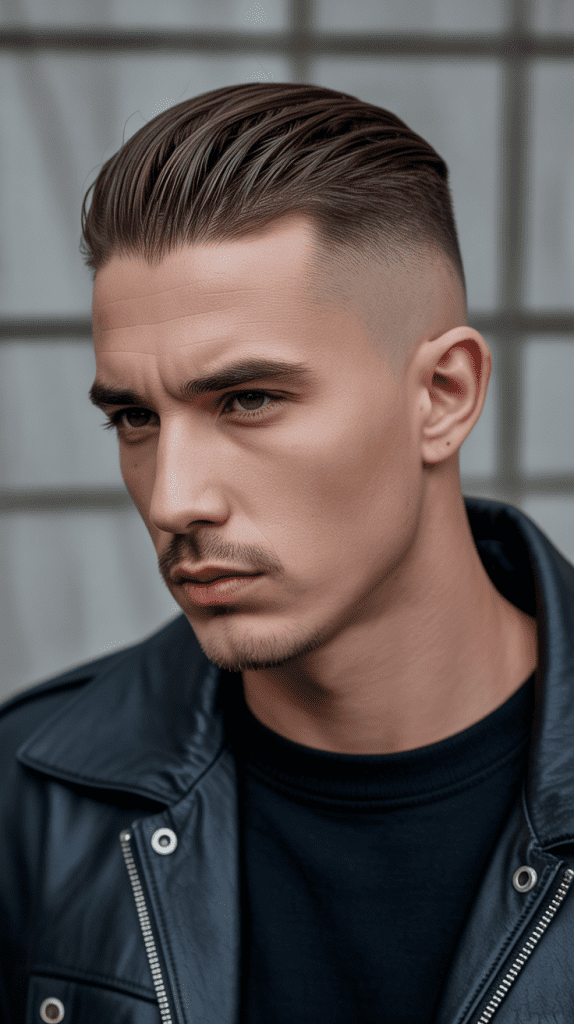
The high fade with line up combines precise barbering technique with sharp geometric lines, creating an exceptionally polished appearance.
- The fade begins high on the head (2-3 inches above the ears) and transitions to skin at the bottom.
- A “line up” or edge-up creates sharp, defined hairlines at the forehead, temples, and neckline.
- Top hair maintains 1.5 to 3 inches depending on desired styling versatility.
- This contemporary military style requires professional maintenance every 1-2 weeks for optimal sharpness.
- The high fade with line up suits square and oval face shapes particularly well.
- Styling products range from pomade for sleek looks to clay for textured styling.
20. The Skin Fade
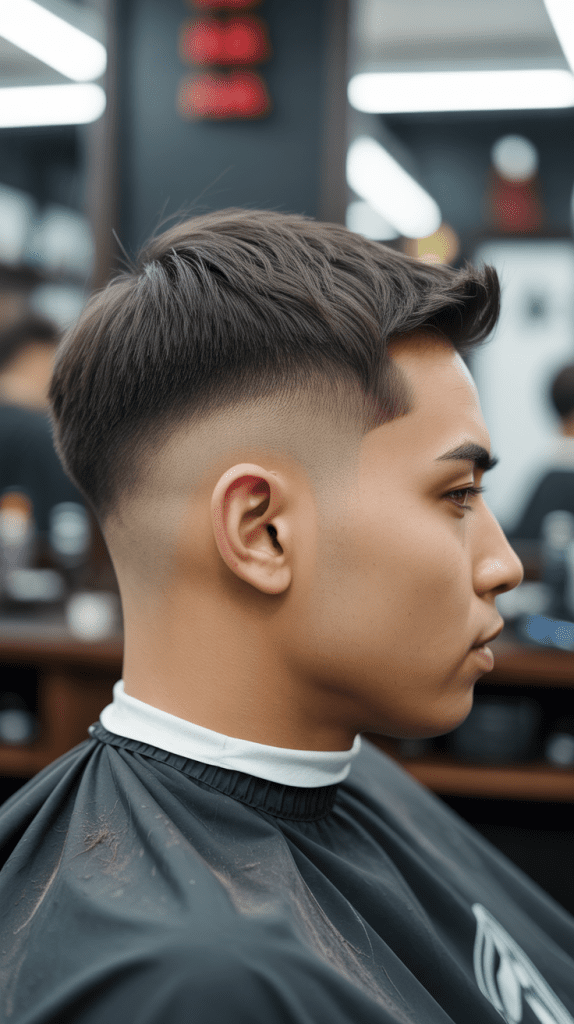
The skin fade creates the smoothest possible transition, gradually blending from longer hair on top down to completely bare skin on the sides and back.
- The fade starts at various heights and seamlessly transitions through multiple guard lengths to bare skin.
- Top length varies from 1 to 4 inches depending on personal style preferences.
- Achieving a flawless skin fade requires advanced barbering skills and cannot be replicated at home.
- This style demands the most frequent maintenance, ideally every 7-10 days to maintain the gradient.
- The skin fade works universally across ethnicities and hair textures when executed properly.
- Modern military personnel favor this cut for its sharp appearance that still meets regulation standards.
21. The Undercut Military Style
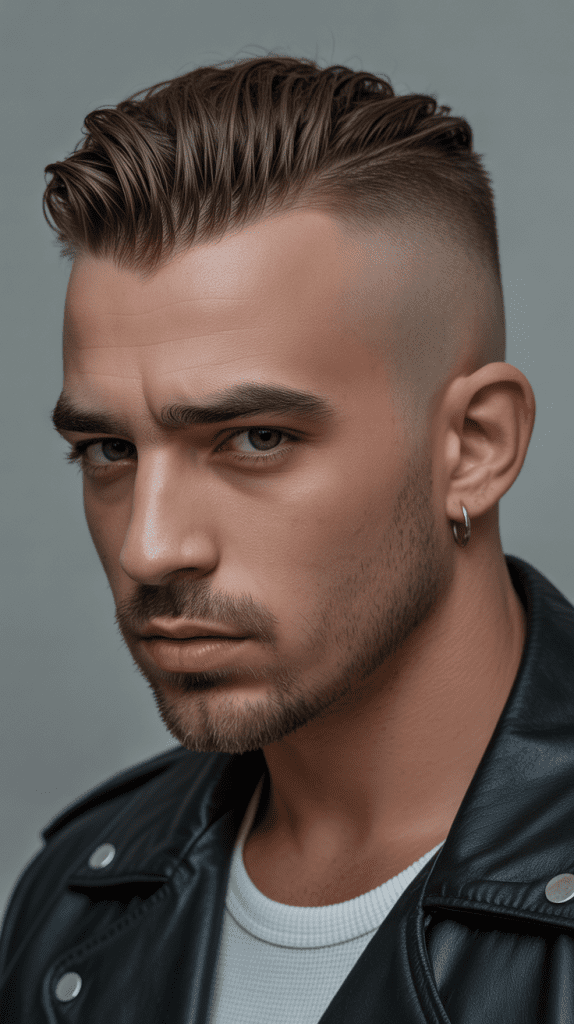
The undercut military style features a disconnected length transition, with longer hair on top and abruptly short or shaved sides without gradual blending.
- Top hair measures 2 to 4 inches while sides receive a #0 or #1 guard, creating a stark division.
- Unlike fades, the undercut creates an obvious line of demarcation between lengths.
- This bold style allows for versatile top styling: slicked back, textured, or forward-brushed.
- Medium to strong hold products keep the longer top section styled throughout the day.
- The undercut suits men with thick hair and works particularly well with oval and square face shapes.
- Historical military connections trace back to early 20th-century soldiers in various armed forces.
22. The Ranger Cut
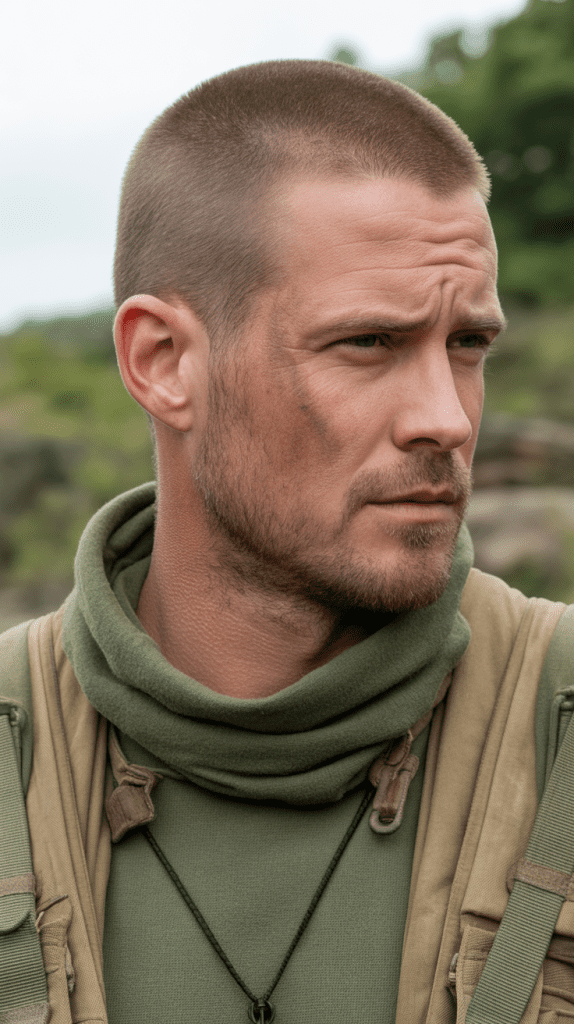
The ranger cut balances military functionality with slightly more length and styling flexibility, reflecting the elite status of Army Rangers.
- Top hair measures 1.5 to 2.5 inches with a textured, slightly messy finish.
- Sides feature a medium fade that maintains professionalism without extreme contrast.
- This versatile cut transitions effectively between field operations and formal military settings.
- Matte styling products create a natural, lived-in appearance without obvious product shine.
- The ranger cut flatters most face shapes through customizable top length and fade positioning.
- Active duty personnel appreciate how this style withstands physical demands while remaining presentable.
23. The Mid Fade Military
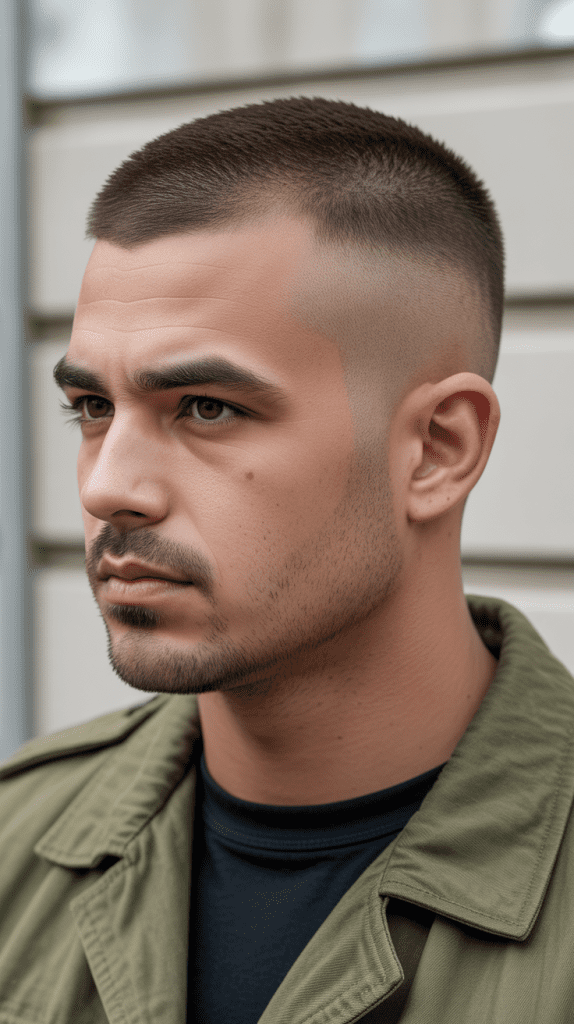
The mid fade military cut positions the fade transition at temple level, creating balanced proportions between top and sides.
- The fade begins approximately at the middle of the head’s side profile, between the ear and temple.
- Top length ranges from 1 to 3 inches, offering styling versatility within military standards.
- This universally flattering fade position works across all face shapes and head proportions.
- The mid fade requires maintenance every 2-3 weeks to preserve the graduated effect.
- Styling options include textured, slicked, or naturally dried depending on hair type.
- This moderate approach appeals to men seeking military precision without extreme styling.
24. The Low Fade with Brush Up
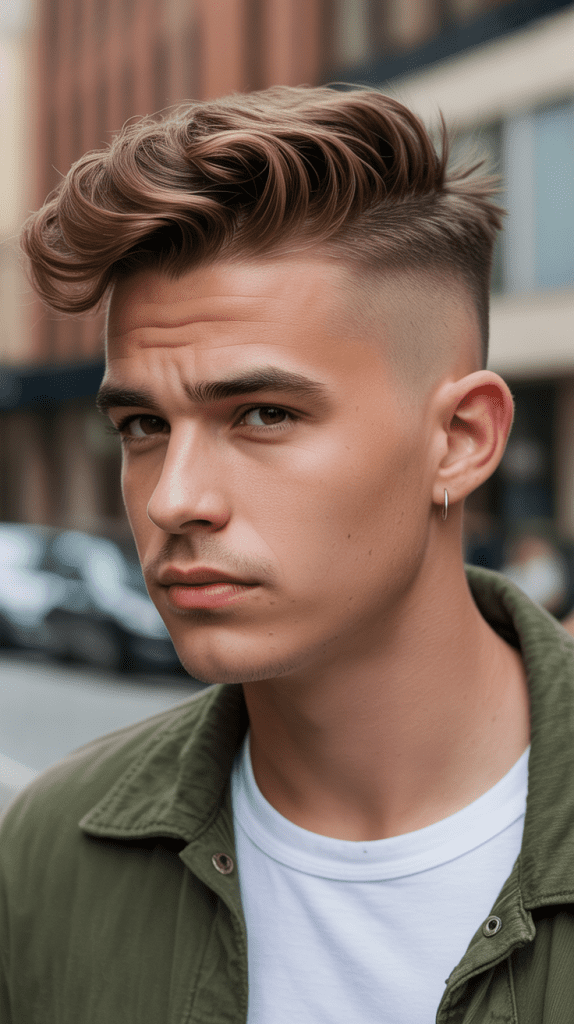
The low fade with brush up combines conservative side styling with voluminous top texture, creating vertical height and modern appeal.
- The fade begins just above the ears and gradually tapers to shorter lengths at the neckline.
- Top hair measures 2 to 3 inches and is blow-dried upward and slightly back for volume.
- This style adds perceived height, making it ideal for men with round or square face shapes.
- Medium-hold products maintain the upward styling without creating stiffness.
- The low fade appears less dramatic, making it appropriate for conservative military and civilian environments.
- Men with naturally thick hair achieve the most dramatic brush-up volume.
25. The Tapered Neckline
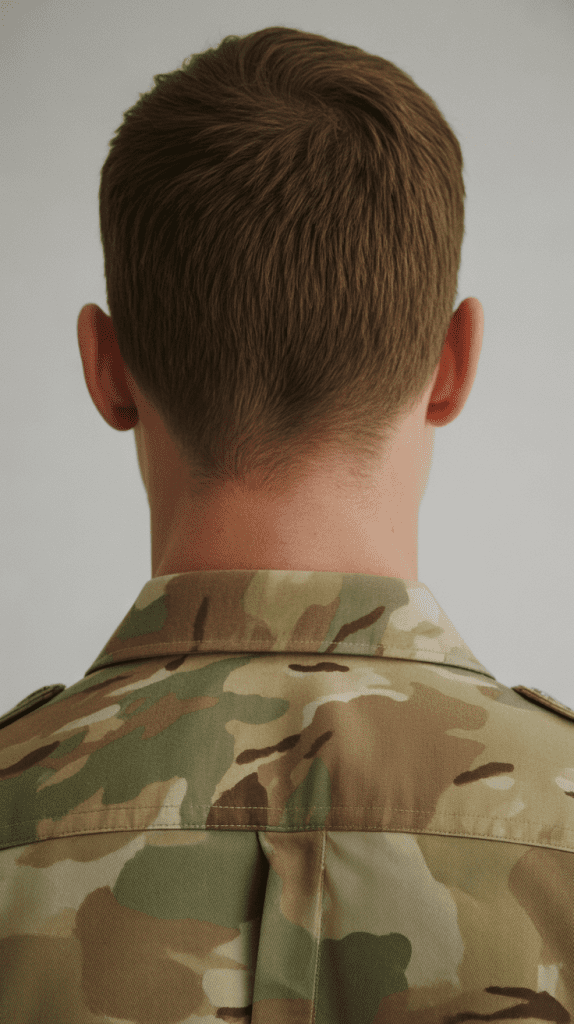
The tapered neckline focuses on creating a clean, gradually shortened back and neck area while maintaining consistent length on top and sides.
- Hair gradually decreases in length as it approaches the natural neckline, creating a soft, natural finish.
- Top and side lengths typically range from 1 to 2 inches depending on overall style preferences.
- This subtle approach to military styling appears less severe than blocked or faded necklines.
- The tapered neckline requires less frequent maintenance than sharp line-ups or skin fades.
- This versatile finishing technique works with virtually any military-inspired cut.
- Men transitioning from longer civilian styles often prefer the softer appearance of tapered necklines.
26. The Blocked Neckline
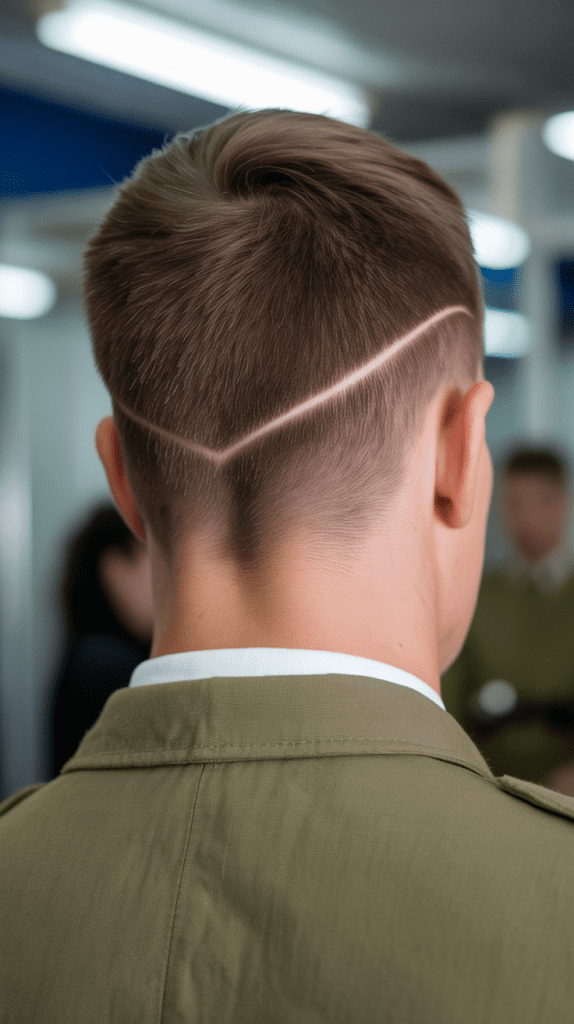
The blocked neckline features a horizontal line cut straight across the neckline, creating a sharp, geometric finish.
- The barber establishes a straight horizontal line at the desired neck height and removes all hair below it.
- This precise finish emphasizes the structured, disciplined nature of military grooming standards.
- Blocked necklines work best with shorter overall hairstyles (buzz cuts, crew cuts, regulation cuts).
- The style requires maintenance every 2-3 weeks as the horizontal line becomes less defined with growth.
- This neckline finish suits men with balanced neck proportions and works across all face shapes.
- The blocked approach represents traditional military barbering at its most fundamental.
27. The Rounded Neckline
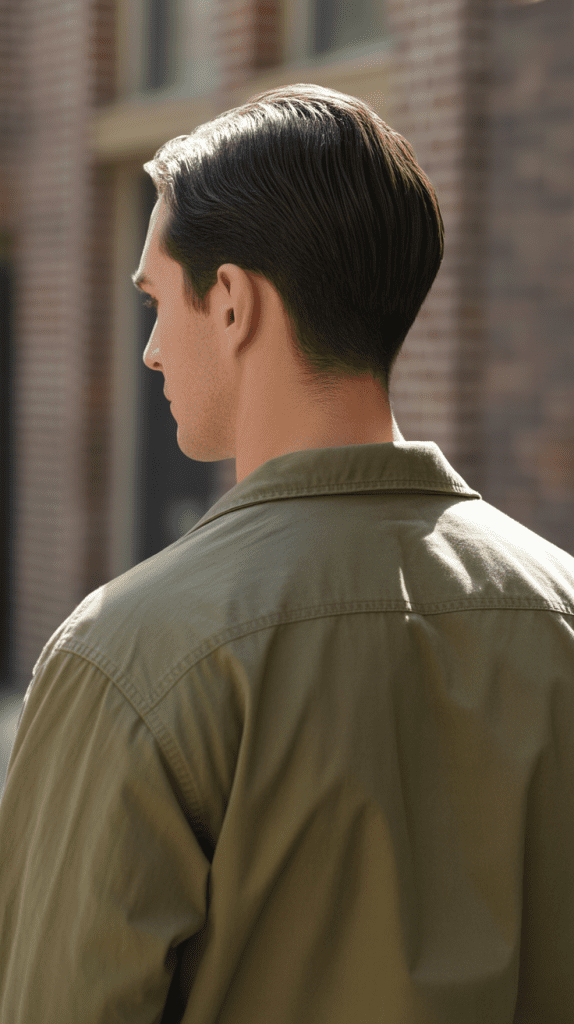
The rounded neckline creates a curved finish that follows the natural contours of the head and neck, offering a softer alternative to blocked styles.
- The barber shapes the neckline in a gentle arch that mirrors the head’s natural curve.
- This finishing technique appears more natural and casual than sharp horizontal blocking.
- Rounded necklines work particularly well with slightly longer military styles that emphasize natural appearance.
- The curved finish requires less frequent maintenance as growth appears less obvious than with blocked lines.
- Men with longer necks or those seeking a softer military aesthetic prefer rounded necklines.
- This approach bridges military precision with contemporary styling preferences.
28. The French Crop Military
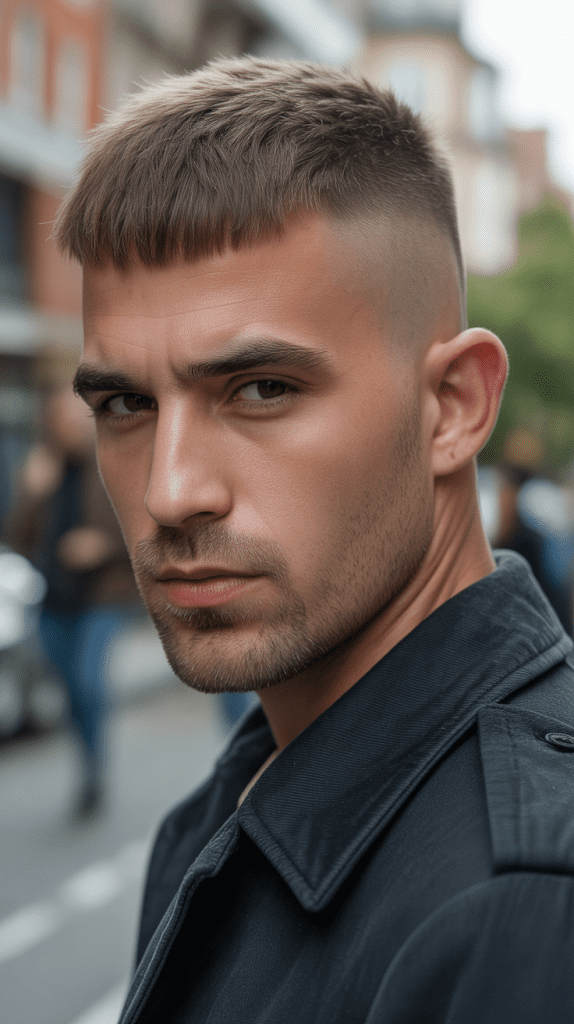
The French crop military style features a short fringe, textured top, and clean sides, combining European sophistication with military practicality.
- Top hair measures 1 to 2 inches with a horizontal fringe that sits just above the eyebrows.
- Sides receive a fade or taper to maintain military standards while highlighting the textured top.
- This contemporary cut conceals receding hairlines and adds youthful dimension to mature faces.
- Matte clay or fiber creates piecey texture throughout the top and fringe.
- The French crop flatters round and square faces by adding horizontal emphasis.
- This style has gained popularity among modern military personnel seeking current fashion trends within regulations.
29. The Comb Over Fade
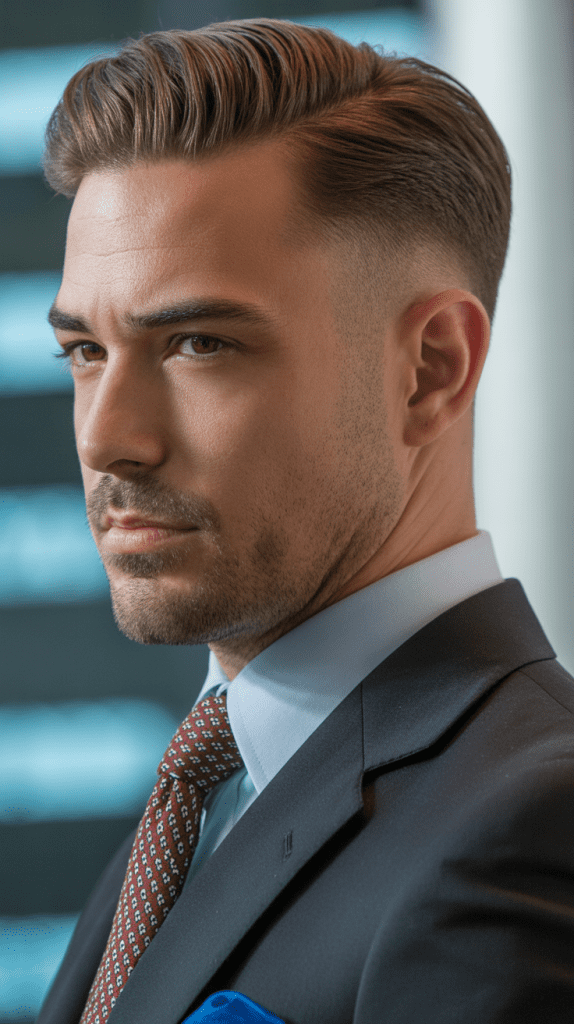
The comb over fade incorporates a defined side part with hair combed to one side, paired with military-standard faded sides.
- Top hair measures 2 to 4 inches, providing sufficient length for a pronounced side sweep.
- A clearly defined part runs from the front hairline toward the crown.
- Sides feature a fade that can be positioned low, mid, or high depending on desired contrast.
- Medium-hold pomade or cream smooths hair to the side while maintaining natural movement.
- This sophisticated style works exceptionally well in professional civilian contexts while meeting military standards.
- The comb over fade suits oval, square, and rectangular face shapes particularly well.
30. The Mohawk Fade
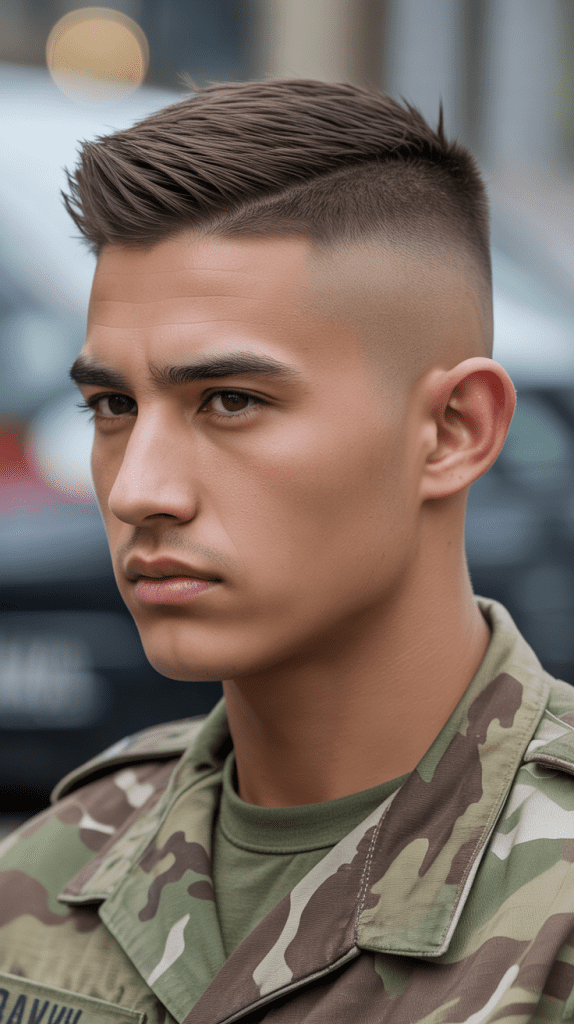
The mohawk fade creates a strip of longer hair running from forehead to crown while fading the sides down to skin, offering edgy style within military parameters.
- The central strip measures 1 to 3 inches wide and 2 to 4 inches in length depending on regulations.
- Sides fade completely to skin, creating maximum contrast with the center strip.
- This bold style pushes the boundaries of military grooming standards while remaining technically acceptable in some branches.
- Strong-hold gel or pomade styles the center strip upward or forward depending on preference.
- The mohawk fade works best for younger personnel in less formal military roles.
- Square and oval face shapes receive the most flattering results from this vertically-emphasizing style.
31. The Slicked Back Military
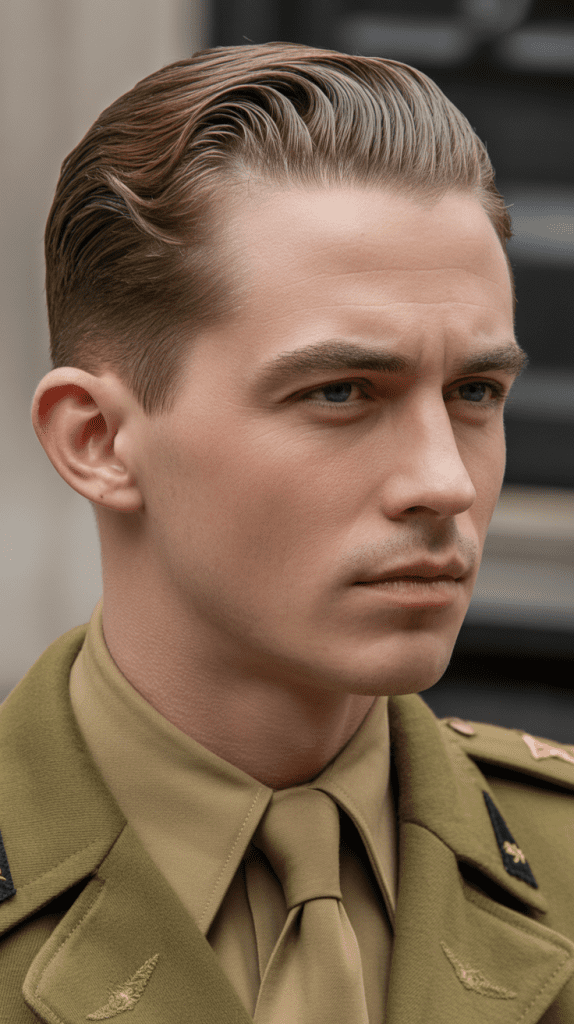
The slicked back military style features hair combed straight back from the forehead, creating a sleek, polished appearance with vintage military appeal.
- Top hair measures 2.5 to 4 inches, providing sufficient length to comb backward smoothly.
- Sides receive a taper or fade to maintain military standards while emphasizing the slicked top.
- This classic style works particularly well for formal military occasions and dress uniform contexts.
- Medium to high-hold pomade creates the sleek, glossy finish characteristic of this style.
- The slicked back look suits oval and square face shapes, particularly those with strong jawlines.
- Men with straight or slightly wavy hair achieve the smoothest slicked-back results.
32. The Temple Fade
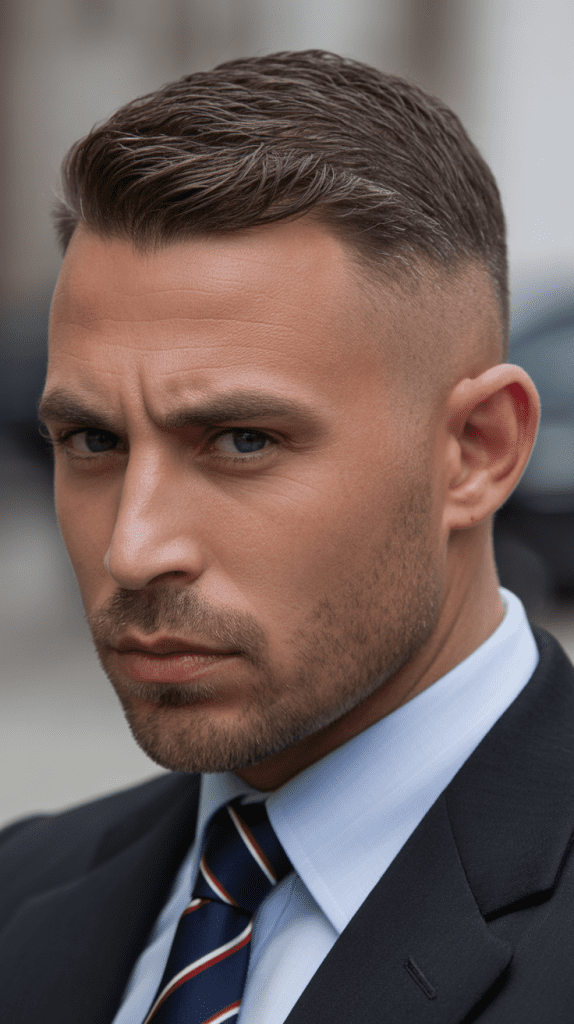
The temple fade focuses fade technique specifically on the temple areas, creating subtle contrast while maintaining conservative length elsewhere.
- The fade occurs primarily at the temples, gradually blending shorter hair into the sides.
- Top and general side length remains relatively consistent, typically 1 to 2 inches.
- This subtle approach offers military precision without dramatic contrast, ideal for conservative environments.
- Minimal styling products maintain natural appearance while keeping hair in place.
- The temple fade works universally across face shapes due to its moderate approach.
- Men seeking low-maintenance military style with professional polish favor this technique.
33. The Natural Military Cut
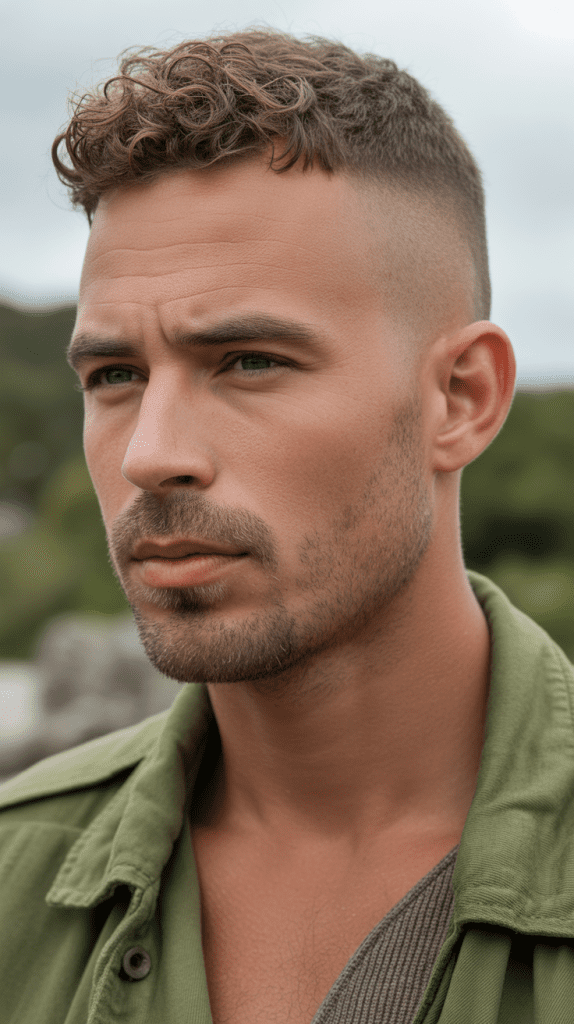
The natural military cut embraces hair’s inherent texture and growth patterns while maintaining short, regulation-compliant length.
- Hair measures 1 to 2 inches throughout with minimal styling or product application.
- Sides taper naturally without dramatic fades or geometric lines.
- This approach suits men with naturally cooperative hair that dries presentably without effort.
- A small amount of light-hold product can enhance natural texture without obvious styling.
- The natural military cut works across all hair textures when cut to appropriate lengths.
- This effortless style appeals to men prioritizing authenticity and minimal grooming routines.
Essential Styling Products for Military Hairstyles
Military hairstyles require minimal products, but the right choices enhance appearance and manageability throughout the day.
- Matte Clay or Fiber: Provides medium hold with a natural finish, ideal for textured styles without shine.
- Light Pomade: Offers subtle hold and slight shine for classic styles like the side part or Ivy League.
- Strong-Hold Gel: Essential for flat tops and mohawk fades where hair needs to defy gravity throughout the day.
- Texture Spray: Adds volume and grip to fine hair before styling, enhancing natural texture.
- Leave-In Conditioner: Maintains scalp and hair health when cutting extremely short or shaving sides to skin.
- Sunscreen for Scalp: Protects exposed skin on ultra-short styles like whitewalls and induction cuts.
Maintenance Tips for Long-Lasting Military Cuts
Proper maintenance extends the life of your military hairstyle and ensures consistent professional appearance between barbershop visits.
- Schedule regular appointments every 2-3 weeks to maint
- g visible stray hairs or visiting your barber for touch-ups.
Choosing the Right Military Style for Your Face Shape
Selecting a military hairstyle that complements your facial structure enhances your natural features and creates balanced proportions.
- Oval Face Shape: The most versatile shape that works with virtually any military style, from ultra-short buzz cuts to longer textured crops.
- Round Face Shape: Benefits from styles with height and vertical emphasis like flat tops, brush-ups, and high fades that elongate the face.
- Square Face Shape: Complemented by styles with softer edges like tapered cuts, crew cuts, and regulation lengths that balance angular features.
- Rectangular Face Shape: Works well with styles that add width at the sides while avoiding excessive height, such as Caesar cuts and forward brushes.
- Heart-Shaped Face: Looks best with styles that add volume at the temples and avoid excessive height at the crown, including Ivy League and side parts.
- Diamond Face Shape: Flatters with fuller styles at the temples that balance narrow foreheads and chins, such as textured crops and regulation cuts.
Military Hairstyles Across Different Armed Forces Branches
- Army Standards: The U.S. Army permits hair on top to measure up to two inches in length when styled, with tapered sides and back that create a gradual appearance.
- Marine Corps Standards: The Marines enforce the strictest grooming requirements, mandating extremely short cuts like the jarhead, induction cut, and high and tight styles.
- Navy Standards: Naval personnel can maintain slightly longer hair than Marines, with styles like the regulation cut, crew cut, and Ivy League being common choices.
- Air Force Standards: The Air Force allows the most flexibility among branches, permitting styles up to 2.5 inches on top when styled, including textured crops and French crops.
- Coast Guard Standards: Coast Guard grooming standards mirror Navy requirements, focusing on neatness and professionalism rather than extreme brevity.
- Special Operations Forces: Elite units often receive slightly more grooming flexibility during deployments while maintaining standard military appearance when in garrison or formal settings.
Transitioning from Civilian to Military Hairstyles
Making the shift from civilian hair length to military standards requires planning and gradual adjustment to new grooming routines.
- Begin transitioning 2-3 weeks before reporting to basic training or enlistment to acclimate to shorter hair and reduced styling time.
- Start with longer military-acceptable styles like the regulation cut or crew cut before progressing to ultra-short options if desired.
- Visit a barber experienced with military cuts who understands branch-specific regulations and can provide appropriate guidance.
- Invest in basic grooming tools including quality clippers, a handheld mirror for checking the back, and minimal styling products.
- Prepare mentally for the dramatic change by viewing it as a symbol of commitment and new identity rather than a loss of personal expression.
- Research your specific branch’s grooming standards through official regulations available on military websites like defense.gov.
- Consider the practical benefits including reduced grooming time, lower product costs, and improved comfort during physical training.
DIY Military Haircut Techniques
Learning to maintain military hairstyles at home between professional barbershop visits saves time and money while ensuring consistent appearance.
- Purchase professional-grade clippers with multiple guard attachments ranging from #0 to #8 for versatile cutting options.
- Set up your cutting area with adequate lighting, a large mirror, and a handheld mirror to view all angles.
- Start with longer guards and gradually work shorter to avoid cutting too much hair too quickly.
- For buzz cuts and burr cuts, move clippers against the direction of hair growth in overlapping passes for uniform results.
- Use a shorter guard for sides and back when creating tapered effects, blending carefully where different lengths meet.
- Clean up necklines with a trimmer or razor for blocked or rounded finishes, using the handheld mirror to check symmetry.
- Remember that complex styles like fades, flat tops, and line-ups require professional expertise and should not be attempted at home without extensive practice.
Common Mistakes to Avoid with Military Hairstyles
Understanding frequent errors helps you achieve and maintain optimal results with your chosen military cut.
- Using Too Much Product: Military styles emphasize natural appearance, so heavy product application creates an overly styled, unprofessional look.
- Neglecting Regular Maintenance: Allowing too much time between cuts results in loss of shape and unprofessional appearance that violates grooming standards.
- Choosing Styles Incompatible with Hair Type: Attempting flat tops with fine hair or slicked styles with very curly hair leads to frustration and poor results.
- Ignoring Face Shape: Selecting styles based solely on trends rather than facial structure creates unflattering proportions and imbalanced appearance.
- Improper Home Cutting Technique: Attempting complex fades or geometric lines without proper training results in uneven, unprofessional outcomes requiring corrective professional work.
- Skipping Scalp Care: Neglecting to moisturize and protect very short or shaved areas leads to dryness, irritation, and sun damage.
- Inconsistent Neckline Maintenance: Allowing neckline hair to grow wild between cuts undermines the clean, disciplined appearance of military styling.
Military Hairstyles for Different Hair Textures
Understanding how various hair textures respond to military cuts ensures you select styles that work with your natural hair characteristics.
- Straight Hair: Offers maximum versatility, working beautifully with all military styles from ultra-short buzz cuts to longer slicked-back variations.
- Wavy Hair: Adds natural texture and volume to styles like textured crops, regulation cuts, and crew cuts without requiring additional product.
- Curly Hair: Works exceptionally well with very short styles like buzz cuts and induction cuts that minimize curl pattern, or slightly longer cuts that embrace natural texture.
- Coily/Kinky Hair: Thrives with short military cuts that reduce maintenance complexity while looking sharp, including buzz cuts, Caesar cuts, and tapered styles.
- Fine Hair: Benefits from slightly longer military cuts like regulation cuts and crew cuts that create the appearance of fuller coverage.
- Thick Hair: Handles all military styles exceptionally well, with particular success in flat tops, brush-ups, and textured styles that showcase natural volume.
The History and Evolution of Military Hairstyles
Military hairstyles have evolved through centuries while maintaining core principles of practicality, uniformity, and discipline.
- Ancient Roman soldiers wore short cropped styles like the Caesar cut for hygiene and to prevent enemies from grabbing hair during combat.
- During World War I, lice infestations in trenches led to mandatory short haircuts across all military forces, establishing modern military grooming standards.
- The iconic flat top emerged in the 1950s among American military personnel and became synonymous with military masculinity and discipline.
- The high and tight gained prominence during the Vietnam War era, representing Marine Corps tradition and unwavering commitment.
- Modern military grooming has incorporated contemporary barbering techniques like fades and line-ups while maintaining traditional standards of neatness.
- Recent decades have seen slight relaxation of some standards, allowing more personal expression within defined parameters that still emphasize professionalism.
- Military hairstyles have transcended their original purpose, becoming civilian fashion statements that communicate discipline, confidence, and no-nonsense practicality.
Military Hairstyles in Professional Civilian Environments
The clean-cut appeal of military hairstyles translates exceptionally well to corporate and professional civilian settings.
- Law enforcement, firefighting, and emergency services professions favor military cuts for their practical, authoritative appearance.
- Corporate executives often adopt military-inspired styles to project leadership, discipline, and decisive confidence in boardroom settings.
- The finance and legal industries value the conservative professionalism that military hairstyles naturally communicate to clients and colleagues.
- Healthcare professionals appreciate the hygiene and low-maintenance aspects of military cuts in demanding clinical environments.
- Education professionals, particularly male teachers and administrators, find military styles convey approachability combined with authority.
- Technology sector professionals increasingly adopt military cuts as the industry moves toward more polished, professional appearance standards.
- Athletes across various sports embrace military styling for performance advantages, reduced maintenance, and disciplined aesthetic.
Seasonal Considerations for Military Hairstyles
Different seasons present unique challenges and advantages for various military haircut styles.
- Summer Months: Ultra-short styles like buzz cuts, induction cuts, and whitewalls provide maximum cooling and comfort in hot, humid conditions.
- Winter Months: Slightly longer military styles like regulation cuts and crew cuts offer minimal insulation while maintaining professional appearance.
- Spring Transition: Moderate-length styles with tapers and mid-fades balance comfort as temperatures fluctuate during seasonal change.
- Fall Season: This transitional period works well for experimenting with slightly longer military styles before winter weather arrives.
- Year-Round Considerations: Remember to protect exposed scalp from sun damage in summer and cold wind exposure in winter months.
- Indoor Climate Control: Modern indoor environments minimize seasonal impact, making personal preference and professional requirements more important than weather.
- Active Outdoor Lifestyles: Those spending significant time outdoors should prioritize ultra-short styles year-round for practical advantages regardless of season.
Cost-Effectiveness of Military Hairstyles
Military haircuts offer significant financial advantages compared to high-maintenance civilian styles requiring frequent professional attention and expensive products.
- Professional military cuts typically cost between $15-30, significantly less than fashion-forward styles requiring specialized expertise.
- Home maintenance with quality clippers (one-time investment of $50-150) can reduce or eliminate barbershop visits for simple styles like buzz cuts.
- Minimal product requirements mean spending $10-20 every few months rather than maintaining extensive product collections.
- Reduced wash and styling time translates to lower utility costs for water and electricity over time.
- Less frequent deep conditioning treatments and specialized hair care products decrease ongoing maintenance expenses.
- The durability of military styles between cuts means fewer annual barbershop visits, saving hundreds of dollars annually.
- Time savings translate to economic value when calculated as opportunity cost for professional activities or leisure pursuits.
Celebrity and Athlete Military Hairstyle Inspirations
Numerous high-profile individuals have adopted military-inspired hairstyles, demonstrating their versatility and mainstream appeal.
- Professional athletes across NFL, NBA, UFC, and soccer frequently sport buzz cuts, high and tights, and crew cuts for performance and style.
- Action movie stars often adopt military cuts for film roles and maintain them permanently due to masculine appeal and convenience.
- Musicians in various genres embrace military styling, from hip-hop artists with crisp fades to rock performers with textured crops.
- Business leaders and entrepreneurs increasingly favor military-inspired grooming as part of their professional brand and public image.
- Military veterans transitioning to civilian careers often maintain their service hairstyles, bringing authentic military aesthetic to various industries.
- Social media influencers in fitness, lifestyle, and men’s fashion categories showcase military cuts to millions of followers worldwide.
- These public figures demonstrate that military hairstyles transcend their original context to become symbols of confidence, discipline, and modern masculinity.
Adapting Military Styles as You Age
Military hairstyles remain appropriate and attractive across all life stages with subtle adjustments for age-related hair changes.
- 20s and 30s: Experiment with bolder military styles like mohawk fades, high fades, and flat tops while hair remains thick and versatile.
- 40s: Transition toward classic styles like regulation cuts, crew cuts, and tapered approaches that convey maturity and professionalism.
- 50s and Beyond: Embrace shorter styles like buzz cuts and burr cuts that gracefully accommodate thinning hair and changing hairlines.
- Gray Hair Integration: Allow natural silver tones to enhance the distinguished appearance of military cuts rather than attempting to conceal age.
- Receding Hairlines: Forward brush styles, Caesar cuts, and buzz cuts effectively minimize the appearance of changing hairlines.
- Thinning Hair: Very short styles create the illusion of fuller coverage by minimizing visible scalp contrast with remaining hair.
- Lifelong Consistency: Men who adopt military styling early often maintain these cuts throughout life, creating a signature look that evolves subtly with age.
Combining Military Hairstyles with Facial Hair
Strategic facial hair grooming complements military hairstyles, creating balanced, masculine aesthetics within grooming standards.
- Clean-Shaven: Traditional military requirement that emphasizes facial features and maintains the most formal, disciplined appearance.
- Stubble (1-3mm): Adds rugged masculinity to military cuts while remaining within relaxed grooming standards in some branches and civilian contexts.
- Short Beard: When permitted, a neatly trimmed beard measuring 1/4 to 1/2 inch complements longer military styles like crew cuts and regulation cuts.
- Goatee: This focused facial hair style pairs well with buzz cuts and high and tights, creating visual interest while maintaining clean-cut appeal.
- Mustache: Classic military tradition dating back centuries, mustaches complement any military hairstyle when kept neatly groomed and within regulations.
- Sideburns: Should taper naturally and extend no lower than the middle of the ear to maintain military standards and balanced proportions.
- Grooming Coordination: Ensure facial hair receives the same maintenance attention as your military haircut for cohesive, polished appearance.
Military Hairstyles and Personal Identity
Despite their association with uniformity, military hairstyles offer surprising opportunities for personal expression within structured parameters.
- The choice between various military styles reflects individual priorities regarding maintenance, boldness, and professional context.
- Styling variations within each cut allow for personal flair while maintaining the fundamental clean-cut military aesthetic.
- Product selection and application technique create subtle differences in texture, shine, and finish that express individual preferences.
- The confidence to adopt short military styling often reflects deeper personality traits including self-assurance and pragmatic thinking.
- Military cuts can serve as external symbols of internal values like discipline, efficiency, and no-nonsense approaches to life challenges.
- Many men report increased confidence and simplified decision-making after adopting military hairstyles, reducing daily grooming stress.
- The style becomes part of personal brand and identity, communicating specific qualities to others before verbal interaction begins.
Environmental and Practical Benefits
Beyond aesthetics, military hairstyles offer tangible environmental and practical advantages in modern life.
- Reduced water consumption from shorter shower times and less frequent washing requirements benefits environmental conservation efforts.
- Minimal product use decreases plastic packaging waste and chemical runoff entering water systems through drainage.
- Lower electricity usage from reduced blow-drying and styling tool requirements contributes to smaller carbon footprints.
- Quick-drying properties eliminate the need for heated drying, saving energy and reducing heat damage to hair.
- Decreased barbershop visits reduce transportation-related emissions when cuts are less frequent or performed at home.
- Simplified grooming routines free mental bandwidth for more important decisions and reduce daily decision fatigue.
- Athletic performance benefits include improved comfort during physical activity, reduced sweat retention, and quick post-workout cleanup.
Finding the Right Barber for Military Cuts
Selecting a skilled barber who understands military styling ensures optimal results and consistent maintenance of your chosen style.
- Seek barbers with military experience either through service or extensive work with military clientele who understand specific requirements.
- Look for shops near military installations where barbers specialize in regulation cuts and understand branch-specific grooming standards.
- Request consultations to discuss face shape, hair texture, and lifestyle factors before committing to a new military style.
- Observe the barber’s technique with fades, tapers, and line-ups during other clients’ cuts to assess skill level and attention to detail.
- Establish regular appointments with the same barber who learns your preferences and consistently delivers your desired results.
- Communicate clearly about length preferences using guard numbers and specific terminology rather than vague descriptions.
- Don’t hesitate to try different barbers until finding one who consistently delivers the precision and professionalism military cuts require.
Conclusion
The “33 Simple Army Short Hairstyles for Men for a Clean-Cut Look” demonstrates that military-inspired grooming offers far more than simple uniformity and regulation compliance.
These time-tested styles provide modern men with practical solutions to daily grooming challenges while projecting confidence, discipline, and refined masculinity across professional and personal contexts.
From the ultra-minimal induction cut to the more versatile crew cut with fade, each style carries its own heritage, advantages, and aesthetic appeal suited to different face shapes, hair types, and lifestyle demands.
The enduring popularity of military hairstyles transcends their armed forces origins, proving that the principles of functionality, cleanliness, and low-maintenance elegance resonate universally with men seeking to simplify their grooming routines without sacrificing style or professionalism.
Whether you’re active military personnel maintaining regulation standards, a veteran honoring your service tradition, or a civilian drawn to the sharp aesthetic and practical benefits, these 33 military hairstyles offer proven options that have stood the test of time.
By understanding the characteristics, maintenance requirements, and styling techniques associated with each cut, you can confidently select and maintain a military-inspired hairstyle that enhances your appearance, complements your lifestyle, and communicates the qualities of discipline and capability that these classic cuts have represented for generations.