
How to Care for Mixed Curly Hair
Caring for mixed curly hair can feel overwhelming when you’re dealing with multiple curl patterns, varying textures, and different moisture needs all on one head.
Many people with mixed heritage or naturally varying curl patterns struggle to find the right routine that addresses every strand’s unique requirements.
The good news is that with the right knowledge, products, and techniques, you can create a comprehensive care routine that celebrates and enhances your hair’s natural diversity.
This complete guide on how to care for mixed curly hair will walk you through understanding your unique curl pattern combinations, selecting the right products, developing an effective washing routine, mastering styling techniques, and maintaining healthy hair growth while embracing your hair’s beautiful complexity.
1. Understanding Mixed Curly Hair Types and Patterns
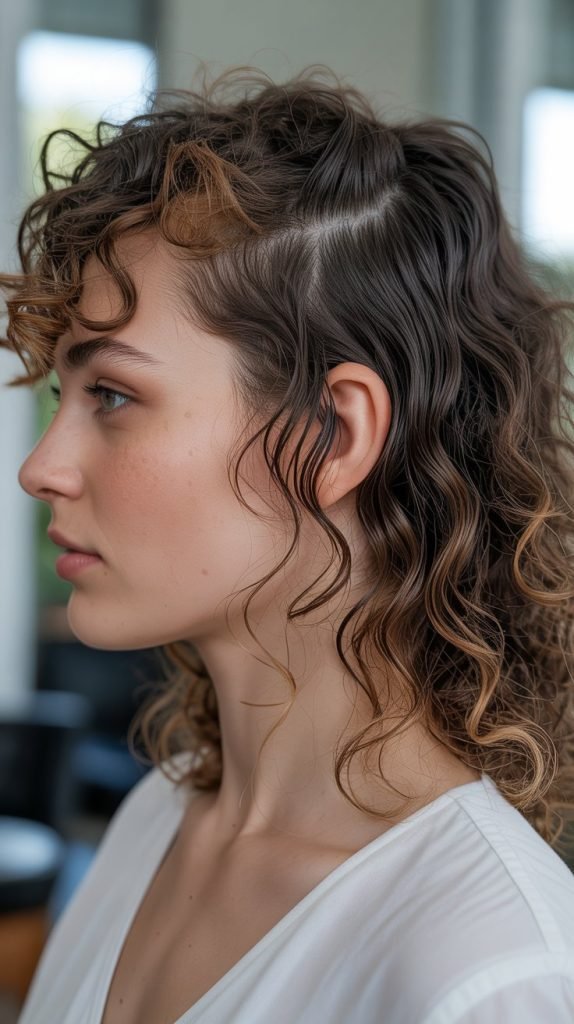
Mixed curly hair presents unique challenges because different sections of your head may have varying curl patterns, porosity levels, and texture needs.
Understanding these variations is crucial for developing an effective care routine that addresses each area appropriately.
- Mixed curly hair typically occurs when you have genetic heritage from different ethnic backgrounds, resulting in varying curl patterns across your scalp
- The most common combinations include loose waves (2A-2C) mixed with tight curls (3A-3C) or kinky coils (4A-4C)
- Your hair’s porosity can also vary by section, with some areas absorbing moisture quickly while others repel it
- The back of your head often has the tightest curl pattern, while the front and sides may be looser
- Different sections may have varying strand thickness, with some areas being fine while others are coarse
- Understanding that your hair needs multiple approaches rather than a one-size-fits-all solution is key to success
2. Essential Products for Mixed Curly Hair Care
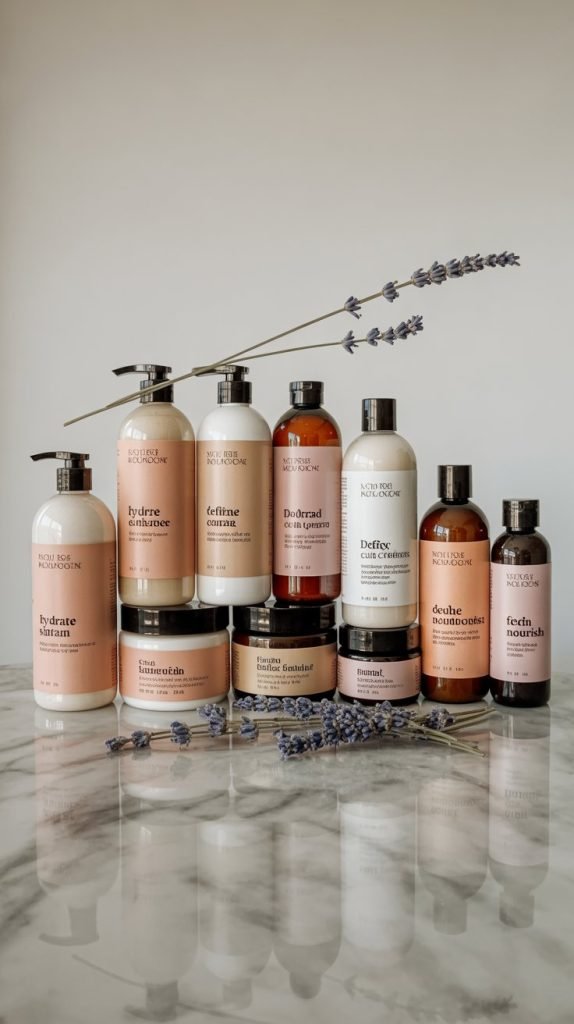
Selecting the right products for mixed curly hair requires understanding that you may need multiple formulations to address different areas of your head effectively.
Building a versatile product arsenal ensures every curl pattern receives appropriate care.
- Invest in a sulfate-free clarifying shampoo to remove buildup without over-stripping your hair
- Use multiple leave-in conditioners with different consistencies for varying curl patterns
- Lightweight serums work best for looser wave patterns to avoid weighing them down
- Heavier creams and butters are essential for tighter coil sections that need intense moisture
- Natural oils like argan, jojoba, or coconut oil can be applied selectively to the driest areas
- A good curl-defining gel helps create uniform hold across different curl patterns
- Deep conditioning masks should be protein-free to avoid overloading already strong curls
- Microfiber towels or cotton t-shirts prevent frizz better than regular terry cloth towels
3. Developing a Washing Routine for Mixed Textures
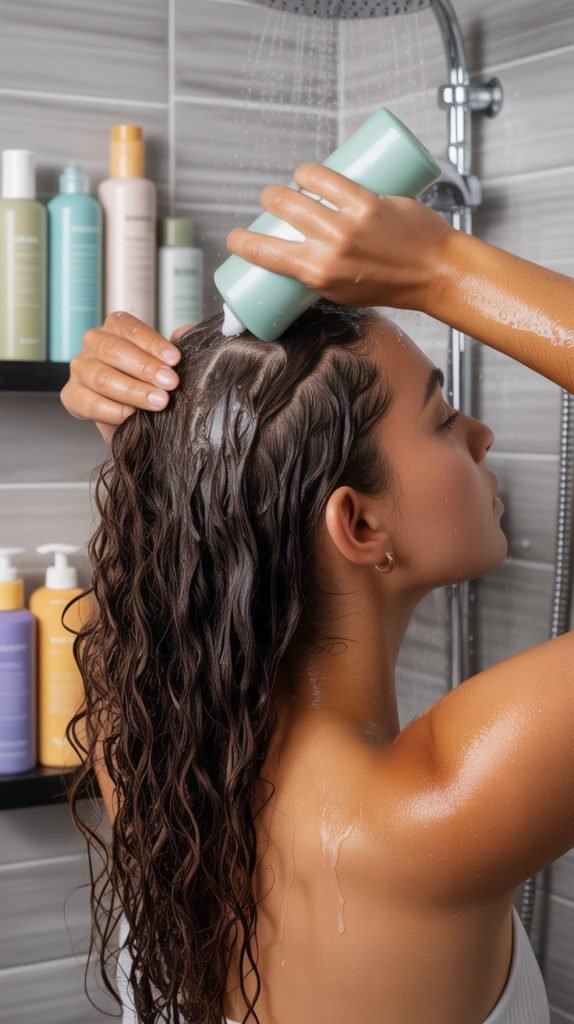
Creating an effective washing routine for mixed curly hair involves adjusting your technique and product application based on the varying needs of different sections.
This customized approach ensures optimal cleansing without compromising any area’s health.
- Wash your hair no more than twice per week to prevent over-cleansing and moisture loss
- Apply shampoo primarily to your scalp and roots, allowing the suds to gently cleanse the length as you rinse
- Use cool to lukewarm water to prevent excessive drying and frizz activation
- Section your hair while wet and apply different conditioners to areas with varying curl patterns
- Allow conditioner to sit for 3-5 minutes before detangling with a wide-tooth comb
- Start detangling from the ends and work your way up to the roots to minimize breakage
- Rinse conditioner partially from looser curl sections while leaving more in tighter coil areas
- Apply leave-in treatments immediately after washing while hair is still damp for maximum absorption
4. Styling Techniques for Multiple Curl Patterns
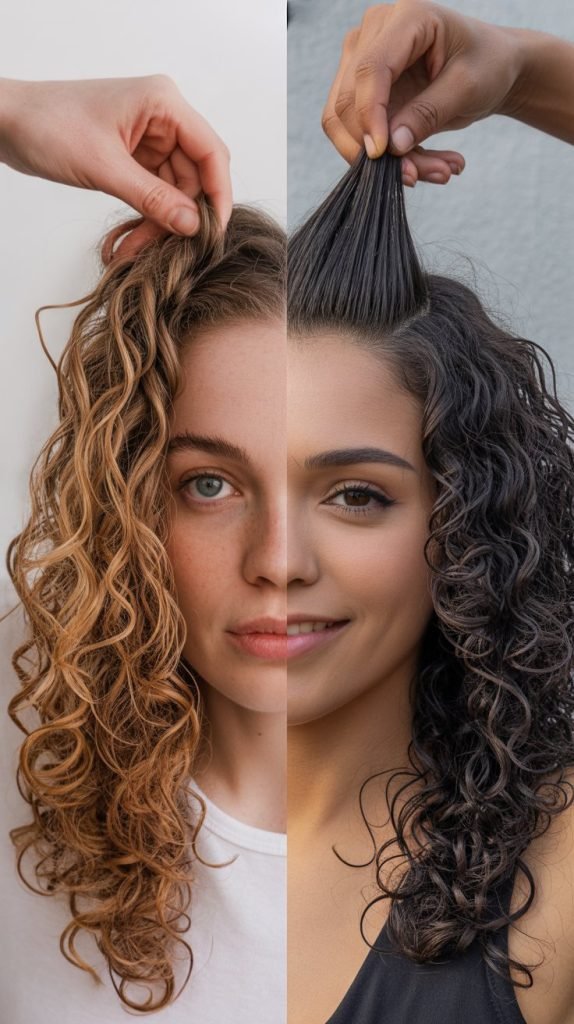
Mastering styling techniques for mixed curly hair involves using different methods on various sections while creating an overall cohesive look.
The key is enhancing each curl pattern’s natural characteristics while maintaining harmony across your entire head.
- Use the “praying hands” method to smooth products through straighter sections without disturbing curl formation
- Apply curl cream with upward scrunching motions to enhance wave patterns in looser areas
- Finger-coil or twist individual curls in tighter sections to encourage definition and reduce frizz
- The “plopping” technique with a microfiber towel helps set curls while removing excess water
- Air-drying is preferable, but if using heat, apply thermal protectant and use a diffuser on low settings
- Sleep on a silk or satin pillowcase to reduce friction and prevent overnight frizz
- Refresh curls between wash days using a spray bottle with diluted leave-in conditioner
- Avoid brushing or combing dry hair, which can disrupt curl patterns and cause breakage
5. Moisture Balance and Deep Conditioning Strategies
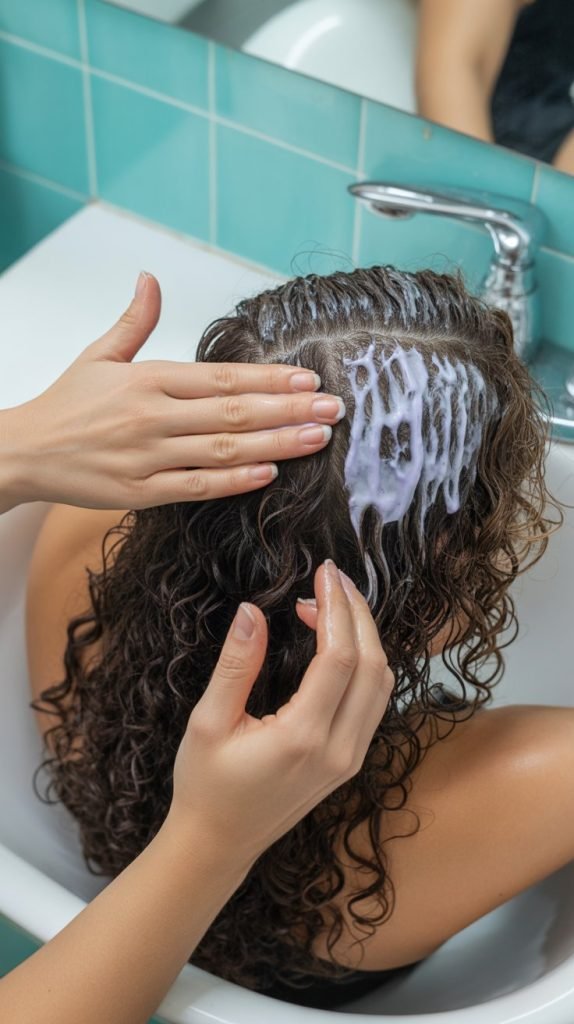
Maintaining proper moisture balance in mixed curly hair requires understanding that different curl patterns have varying hydration needs.
Creating a strategic deep conditioning routine ensures every section receives adequate nourishment without overloading any area.
- Perform deep conditioning treatments weekly, using lighter formulas on wave sections and heavier masks on coil areas
- Protein treatments should be used sparingly and only when hair shows signs of damage or weakness
- Steam treatments or warm towel wraps can help deep conditioners penetrate more effectively
- Oil treatments using lightweight oils like argan work well for pre-shampoo protection
- The LOC method (Leave-in, Oil, Cream) helps seal moisture into tighter curl patterns
- Monitor your hair’s response to different moisture levels and adjust frequency accordingly
- Avoid products with drying alcohols that can strip natural oils from your curls
- Incorporate humectants like glycerin in humid climates and avoid them in dry conditions
6. Managing Frizz and Flyaways in Mixed Textures
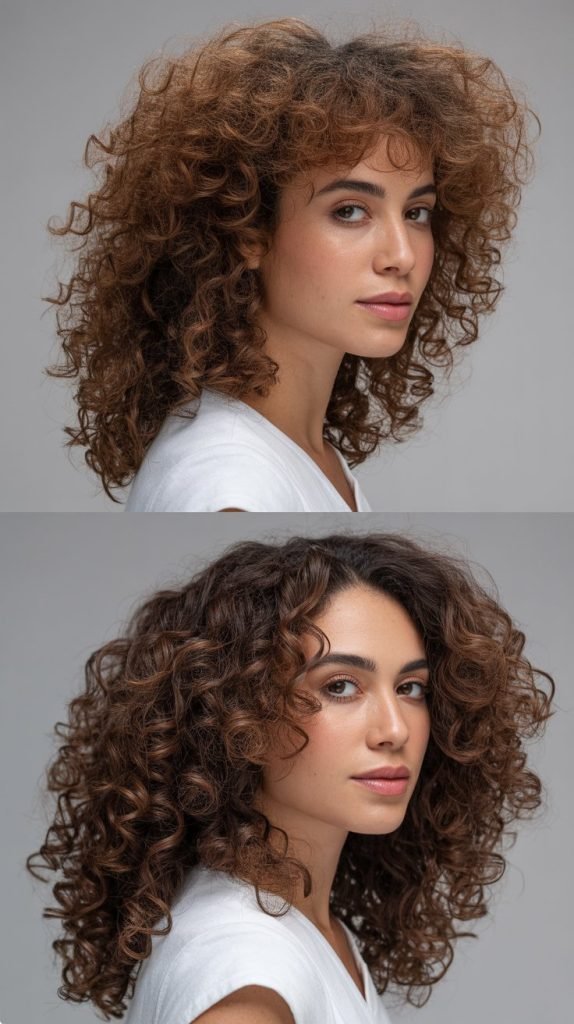
Controlling frizz in mixed curly hair requires targeted approaches since different curl patterns may react differently to environmental factors and styling techniques.
Understanding the root causes helps develop effective prevention and management strategies.
- High humidity affects different curl patterns differently, with looser waves often becoming more frizzy
- Use anti-humidity products containing silicones or natural oils to create a protective barrier
- Avoid touching your hair throughout the day, as oils from your hands can disrupt curl patterns
- Apply styling products to soaking wet hair for better curl definition and frizz control
- Use a wide-tooth comb only when hair is wet and loaded with conditioner
- Silk scarves or bonnets protect curls while sleeping and prevent morning frizz
- Regular trims every 6-8 weeks prevent split ends that contribute to frizzy appearance
- Environmental factors like wind and dry air require protective styling or additional leave-in products
7. Protective Styling Options for Mixed Curly Hair
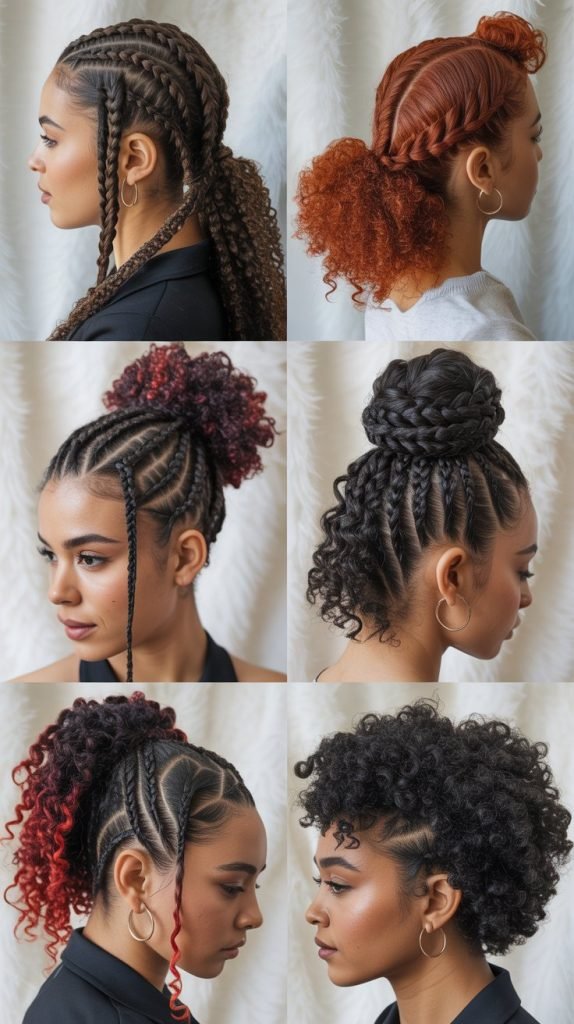
Protective styling for mixed curly hair involves choosing styles that accommodate different curl patterns while minimizing manipulation and breakage.
The right protective styles can help maintain moisture and promote healthy growth across all texture variations.
- Low manipulation styles like loose buns or braids protect all curl patterns without causing stress
- Avoid tight styles that can cause tension and breakage, especially around the hairline
- Silk or satin-lined accessories prevent friction and moisture loss during protective styling
- Rotate between different protective styles to avoid repeated stress on the same hair sections
- Night-time protective styles like loose braids or silk bonnets maintain curl integrity while sleeping
- Two-strand twists work well for incorporating different curl patterns into one cohesive style
- Avoid leaving protective styles in for more than 2-3 weeks to prevent matting or breakage
- Always moisturize your hair before installing protective styles and maintain moisture while styled
8. Common Mistakes to Avoid with Mixed Curly Hair
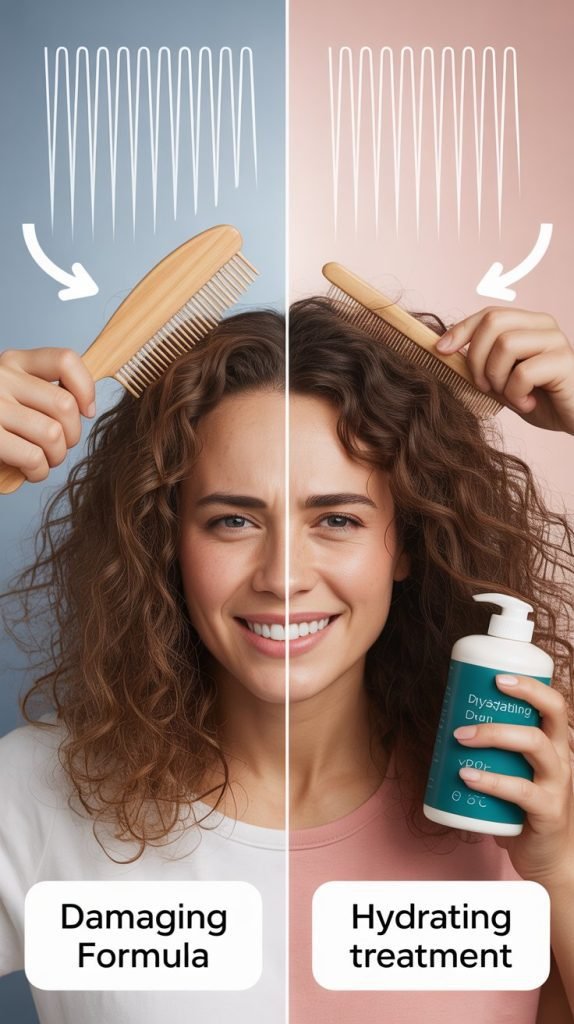
Understanding and avoiding common mistakes in mixed curly hair care can save you time, money, and prevent damage. Many people unknowingly use techniques or products that work against their hair’s natural characteristics.
- Using the same products and techniques on all sections instead of customizing your approach
- Over-washing your hair or using harsh sulfates that strip natural oils
- Applying heavy products to fine wave sections, which can weigh down and flatten curls
- Neglecting to protect your hair while sleeping, leading to overnight damage and frizz
- Using heat styling tools without proper thermal protection or too frequently
- Attempting to brush or comb dry curls, which causes breakage and disrupts curl patterns
- Ignoring your hair’s porosity needs and applying products incorrectly
- Expecting immediate results and switching products too frequently before giving them time to work
Learning how to care for mixed curly hair is a journey of understanding your unique curl combinations and developing personalized techniques that work for your specific needs.
Every head of mixed curly hair is different, and what works for someone else may not work for you, so patience and experimentation are key.
By understanding your curl patterns, choosing appropriate products, developing customized washing and styling routines, maintaining proper moisture balance, and avoiding common mistakes, you can achieve healthy, defined, and beautiful curls.
Remember that consistency is crucial – your mixed curly hair will respond best to regular care and gentle handling that honors each curl pattern’s individual needs while creating harmony across your entire head.
