

Navigating the world of toddler curly hair care while deciding between styling cream or defining gel can feel overwhelming for parents seeking the perfect balance of gentle care and effective results.
Your little one’s delicate curls deserve specialized attention that differs significantly from adult hair care routines, requiring products and techniques specifically designed for their unique needs.
This comprehensive guide on how to care for toddlers’ curly hair will explore the fundamental differences between styling creams and defining gels, helping you make informed decisions that promote healthy curl development while managing daily styling challenges.
From understanding your toddler’s specific curl characteristics to mastering gentle application techniques and establishing routines that work for busy families, you’ll discover everything needed to nurture those precious curls during these crucial early years when proper care habits are formed.
1. Understanding Toddler Curl Characteristics
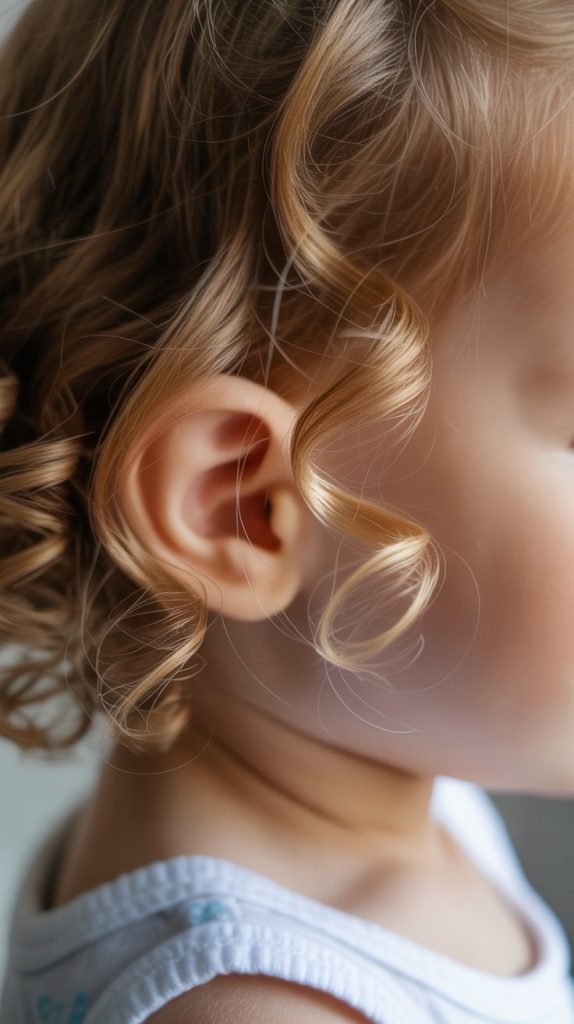
Toddler curls possess unique properties that differ significantly from adult curly hair, requiring specialized care approaches that account for their delicate structure and developing patterns.
The hair follicles are still maturing, making the strands finer, more fragile, and often more prone to changes in curl pattern as they grow.
- Toddler hair cuticles are thinner and more porous than adult hair, making them more susceptible to damage from harsh products
- The natural oil production from their scalp is typically lower, requiring gentler cleansing methods and more frequent moisturizing
- Curl patterns often change and evolve throughout toddlerhood as hair follicles mature and hormones fluctuate
- Fine hair diameter means products can easily weigh down curls, requiring lighter formulations than those used for adults
- Growth patterns may be uneven, creating varying curl tightness and texture throughout different sections of the head
- Toddler scalps are more sensitive to temperature changes, chemical ingredients, and physical manipulation during styling
- Natural shrinkage is often more pronounced in toddler curls due to the fine hair structure and high moisture needs
2. Styling Cream: Benefits and Best Practices
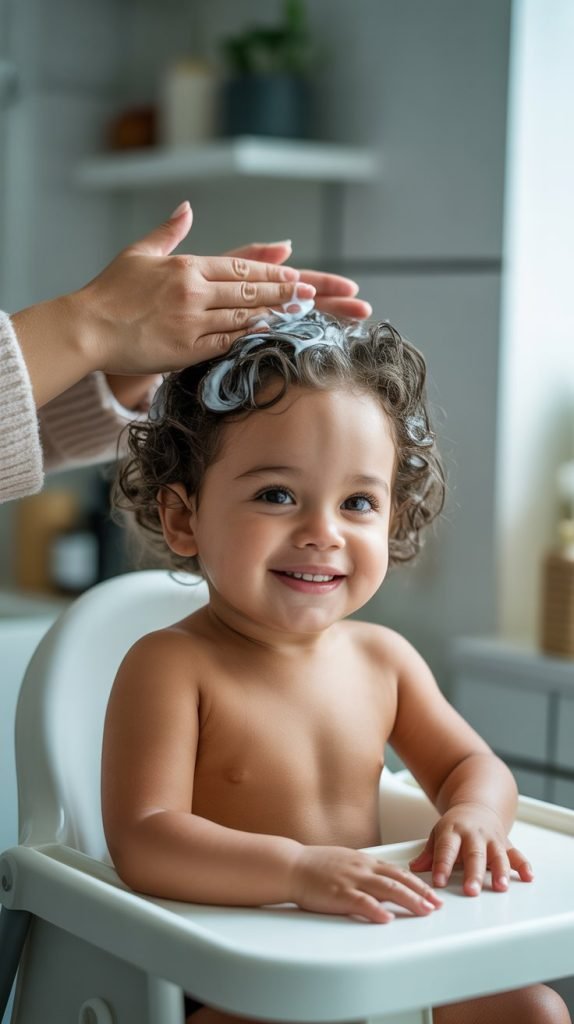
Styling creams offer gentle moisture and light hold for toddler curls, making them an excellent choice for daily use and sensitive scalps.
These products typically contain nourishing ingredients that condition while providing soft definition without the stiffness often associated with stronger hold products.
- Cream formulations provide essential moisture that toddler curls desperately need for healthy development and frizz control
- The lightweight consistency penetrates fine hair strands without creating buildup or weighing down delicate curl patterns
- Natural ingredients like shea butter and coconut oil in quality creams nourish the hair shaft while providing gentle hold
- Creams offer flexibility throughout the day, allowing curls to move naturally without becoming crunchy or stiff
- Application is typically easier with squirmy toddlers as creams spread smoothly and don’t require precise sectioning techniques
- Most styling creams are formulated to be touch-friendly, meaning parents can smooth flyaways without disrupting the entire style
- The conditioning properties help protect against environmental damage from sun, wind, and frequent touching
- Cream products often have pleasant, mild scents that won’t overwhelm sensitive toddler noses or cause irritation
3. Defining Gel: Advantages and Application Methods
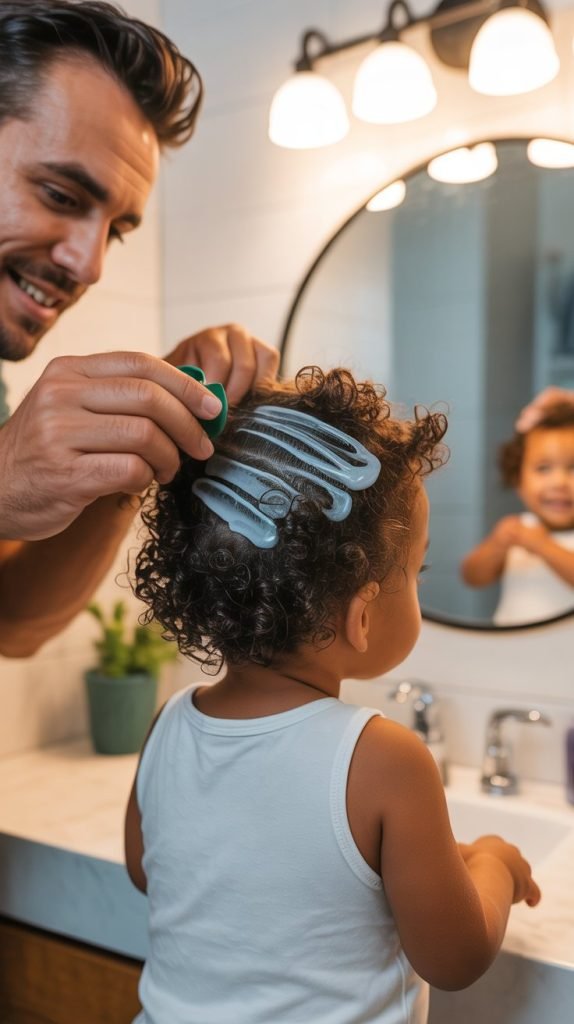
Defining gels provide stronger hold and more pronounced curl definition, making them ideal for special occasions or when longer-lasting styles are needed.
However, choosing the right gel formulation and application technique is crucial for maintaining hair health while achieving desired results.
- Alcohol-free gels offer stronger hold without the drying effects that can damage delicate toddler hair
- Gel formulations create more defined curl clumps and better frizz control for important events or photos
- The film-forming properties of quality gels provide a protective barrier against humidity and environmental factors
- Proper application involves scrunching upward motions rather than smoothing to maintain natural curl formation
- Water-based gels rinse out easily during regular washing routines without requiring harsh clarifying products
- Some gels contain proteins that can temporarily strengthen fine toddler hair while providing hold and definition
- Application timing is crucial – gels work best on very wet hair to ensure even distribution and prevent flaking
- The drying process requires patience as rushing can cause frizz and uneven curl formation throughout the styling session
4. Age-Appropriate Application Techniques
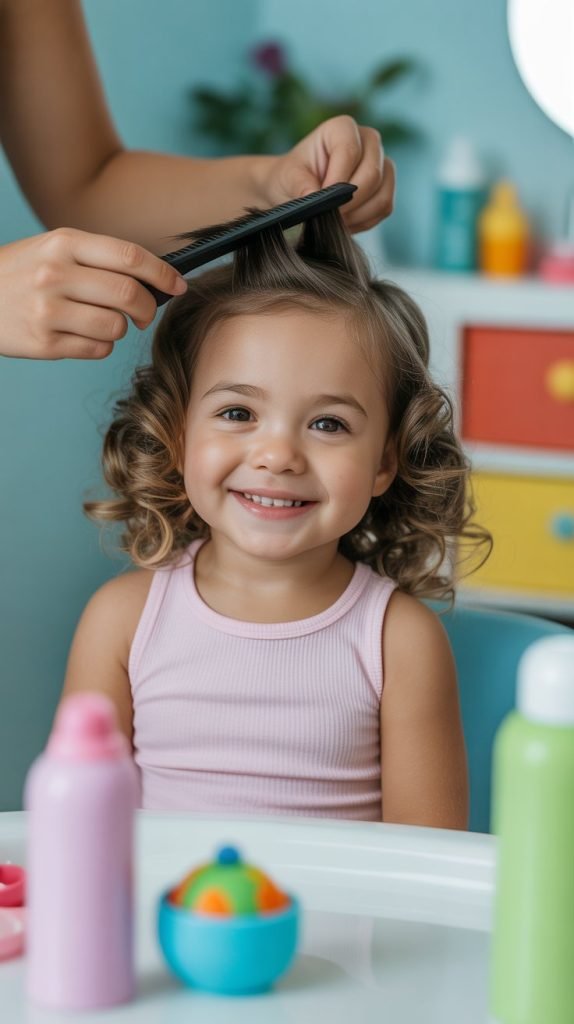
Mastering gentle application methods ensures effective product distribution while keeping your toddler comfortable and cooperative during styling sessions.
The key lies in working quickly, efficiently, and with movements that feel more like play than grooming to maintain your child’s patience.
- Work with damp hair that’s been gently squeezed with a microfiber towel to remove excess water without disrupting curls
- Use the “praying hands” method to smooth product down the hair shaft before scrunching to encourage curl formation
- Section hair into manageable portions no larger than two inches to ensure even product distribution throughout the head
- Apply products starting from mid-length to ends, then gently work toward roots to avoid over-saturating the scalp area
- Use upward scrunching motions to encourage natural curl bounce and remove excess moisture from freshly applied products
- Distract toddlers with songs, games, or favorite toys during application to maintain cooperation and reduce fidgeting
- Work systematically from one side of the head to the other to ensure no sections are missed or double-processed
- Keep application sessions short and efficient, typically completing the entire process within 5-10 minutes for best results
5. Product Layering Strategies for Maximum Results
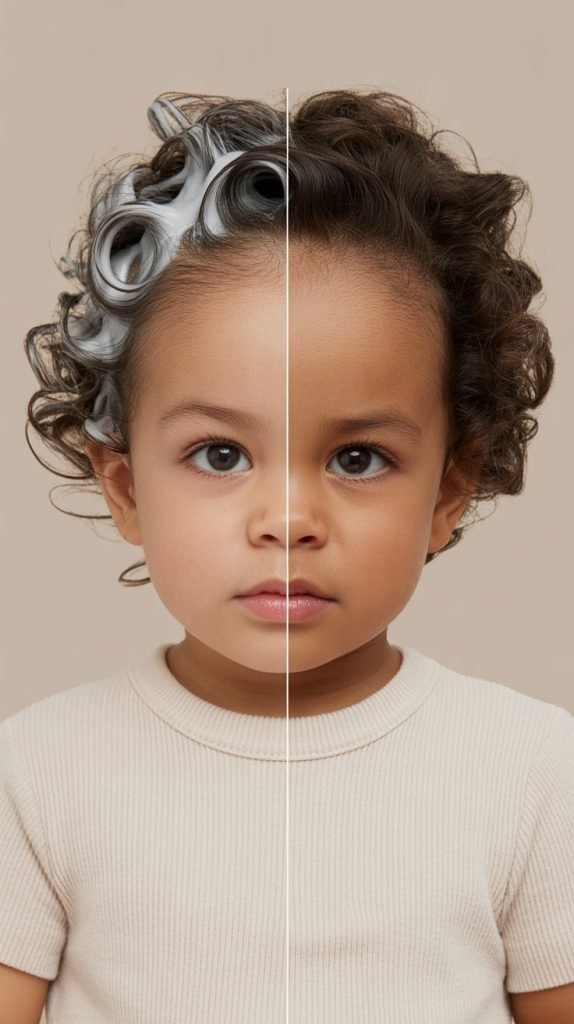
Combining styling cream and defining gel can create superior results when done correctly, offering the benefits of both moisture and hold.
Understanding proper layering techniques prevents product buildup while maximizing curl definition and longevity for active toddlers.
- Start with a small amount of leave-in conditioner as a base layer to provide moisture and protect against product buildup
- Apply styling cream first to damp hair, focusing on moisture and initial curl enhancement before adding hold products
- Follow with a small amount of defining gel, concentrating on areas that need extra hold or definition
- Use significantly less product than you would on adult hair due to the fine texture and lower density of toddler curls
- Allow each product layer to partially penetrate before applying the next to prevent products from sliding off the hair
- Focus gel application on the mid-lengths and ends where definition is most needed rather than saturating roots
- Scrunch excess water and product from hair between applications to prevent dilution and ensure proper product adhesion
- Monitor your toddler’s hair response over several styling sessions to adjust product amounts and combinations accordingly
6. Gentle Drying Methods for Toddler Curls
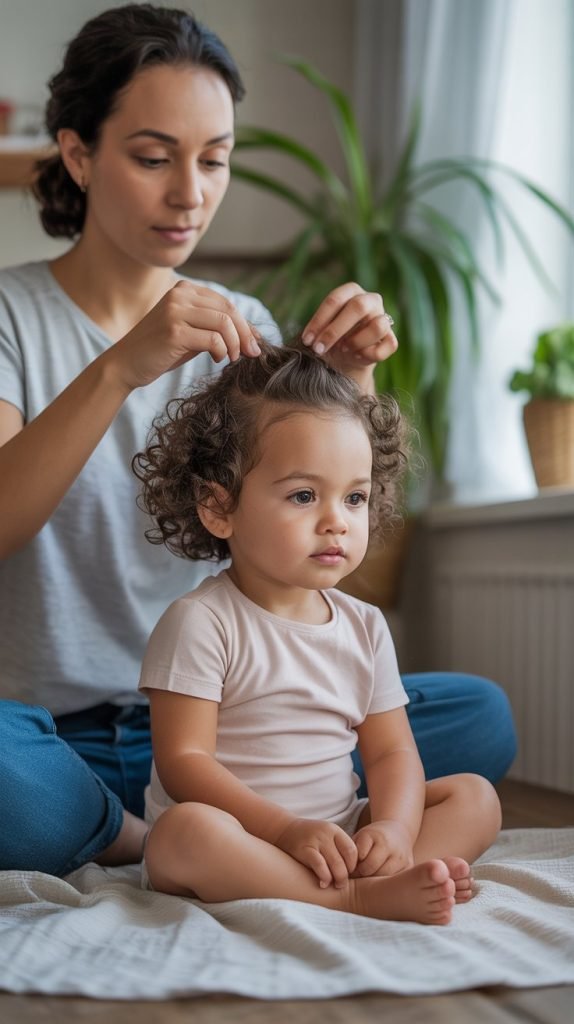
Proper drying techniques preserve curl formation while preventing frizz and damage that can occur with rough handling or high heat.
Toddler hair requires extra gentle methods due to its delicate structure and their typically low tolerance for long styling sessions.
- Plopping with a cotton t-shirt or microfiber towel removes excess water without disturbing curl patterns like terrycloth towels do
- Air drying produces the most natural results and eliminates heat damage concerns for delicate toddler hair
- Diffusing on the lowest heat and speed settings can accelerate drying when time constraints require faster results
- Use a hover diffusing technique, keeping the diffuser away from the hair to prevent disrupting curl formation
- Micro-plopping between drying stages helps remove excess moisture while maintaining curl definition throughout the process
- Avoid touching or manipulating curls during the drying process as this creates frizz and breaks up natural curl clumps
- Plan styling sessions when you have adequate time for air drying to avoid rushing the process with heat tools
- Create a comfortable environment with appropriate room temperature to prevent chills while curls air dry naturally
7. Building a Sustainable Toddler Hair Care Routine
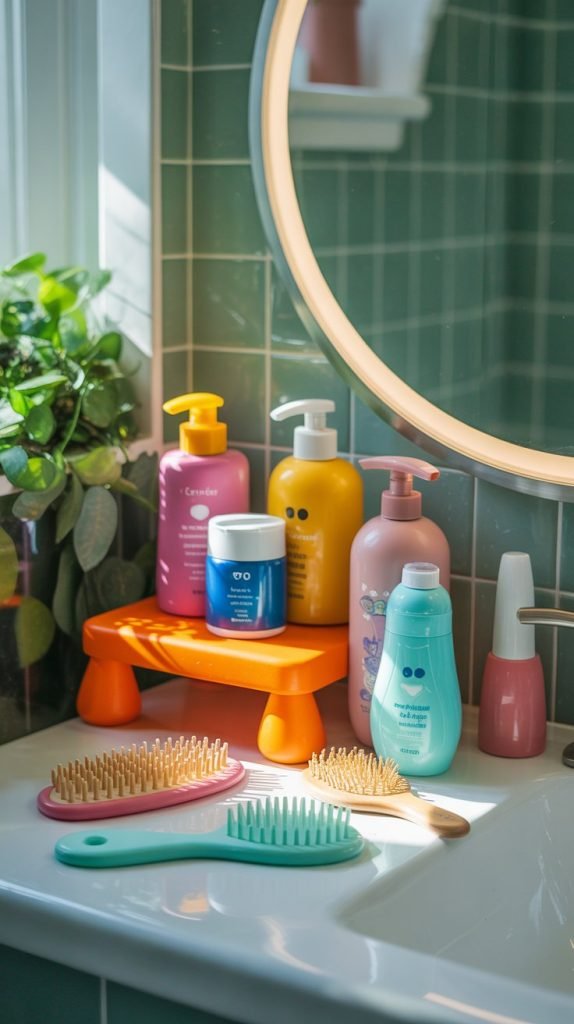
Establishing realistic routines that work within busy family schedules ensures consistent care while accommodating toddler attention spans and energy levels.
The key is creating systems that promote hair health without becoming overwhelming for parents or stressful for children.
- Develop a simple routine that can be completed in 10-15 minutes to match toddler attention spans and patience levels
- Choose multipurpose products that serve several functions to minimize the number of steps and products needed
- Create positive associations with hair care through songs, games, and praise to build cooperation and self-esteem
- Establish consistent timing for hair care routines, such as after bath time, to create predictable expectations
- Involve toddlers in age-appropriate ways, such as choosing between two product options or holding the spray bottle
- Keep backup styling options ready for days when cooperation is low or time is limited for full styling routines
- Document what works and what doesn’t to refine your approach and identify the most effective products and techniques
- Adjust routines seasonally to account for weather changes, activity levels, and evolving hair needs as your toddler grows
8. Troubleshooting Common Toddler Curl Issues
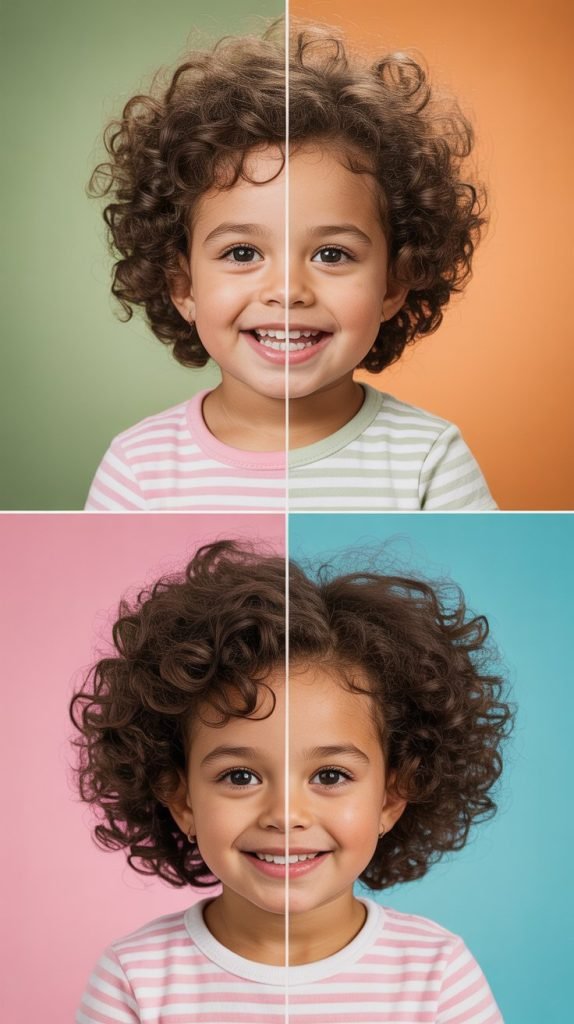
Addressing frequent challenges specific to toddler curly hair requires understanding the unique factors that contribute to these problems and implementing age-appropriate solutions.
Quick problem-solving strategies help maintain hair health while reducing daily styling stress for both parent and child.
- Combat morning frizz with satin pillowcases or bonnets designed specifically for toddlers’ smaller head sizes and comfort preferences
- Address product buildup with gentle clarifying treatments followed immediately by deep conditioning to prevent dryness
- Manage tangling with daily leave-in conditioner application and gentle finger detangling during bath time when hair is wet
- Handle growth spurts that change curl patterns by adjusting product types and amounts as hair texture evolves
- Deal with hat hair and flattened curls by using refresh sprays and gentle scrunching to revive curl bounce
- Prevent over-manipulation by limiting styling frequency and focusing on protective styles for active play days
- Address seasonal changes by switching between lighter summer formulations and richer winter products as needed
- Manage toddler resistance to hair care through patience, distraction techniques, and making the experience as pleasant as possible
Conclusion
Mastering how to care for toddlers’ curly hair while navigating the choice between styling cream or defining gel becomes much more manageable with the right knowledge and techniques tailored to your child’s unique needs.
The decision between these products ultimately depends on your toddler’s specific curl type, lifestyle, and the level of definition you desire, with many parents finding success in combining both products strategically.
Remember that consistency, gentleness, and patience are your greatest tools in developing a hair care routine that promotes healthy curl development while building positive associations with natural hair texture.
By understanding your toddler’s delicate curl characteristics and implementing age-appropriate techniques, you’re laying the foundation for a lifetime of healthy hair habits and self-confidence in their natural beauty.
