

Caring for your child’s curly hair doesn’t have to be a daily struggle filled with tears and tangles.
Understanding the unique needs of curly hair can transform your routine from a stressful ordeal into a bonding experience that leaves your little one’s curls healthy, defined, and beautiful.
This comprehensive guide on how to care for kids’ curly hair will equip you with practical techniques, product recommendations, and expert tips that make managing those precious curls easier than ever before.
From establishing gentle washing routines to mastering detangling methods and choosing the right products, you’ll discover everything needed to nurture your child’s natural texture while building their confidence in embracing their curly crown.
1. Understanding Your Child’s Curl Type
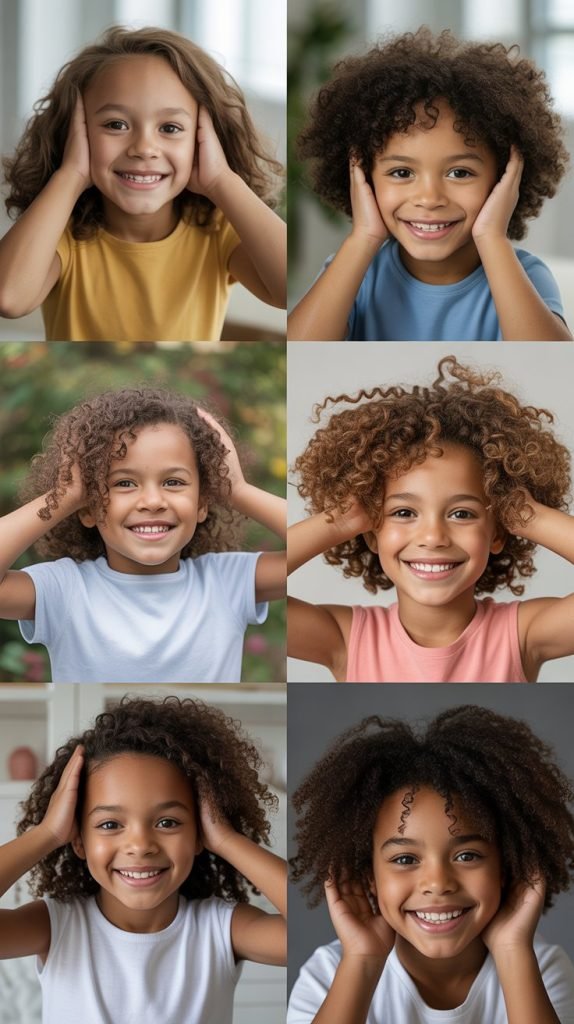
Identifying your child’s specific curl pattern is the foundation of effective curly hair care, as different curl types require tailored approaches for optimal results.
Curl patterns range from loose waves (Type 2) to tight coils (Type 4), with each category having subcategories that determine porosity, density, and care requirements.
- Type 2 (Wavy) hair forms loose S-shaped patterns and tends to be less prone to dryness than tighter curl patterns
- Type 3 (Curly) hair creates well-defined spirals and requires more moisture than wavy hair but less than coily textures
- Type 4 (Coily) hair forms tight zigzag patterns and needs intensive moisture and gentle handling to prevent breakage
- Fine hair appears thin and can be easily weighed down by heavy products, requiring lightweight formulations
- Thick hair can handle heavier creams and oils without losing volume or becoming greasy
- Low porosity hair resists moisture absorption and benefits from heat application during conditioning treatments
- High porosity hair absorbs moisture quickly but also loses it rapidly, requiring protein-moisture balance
2. Establishing a Gentle Washing Routine
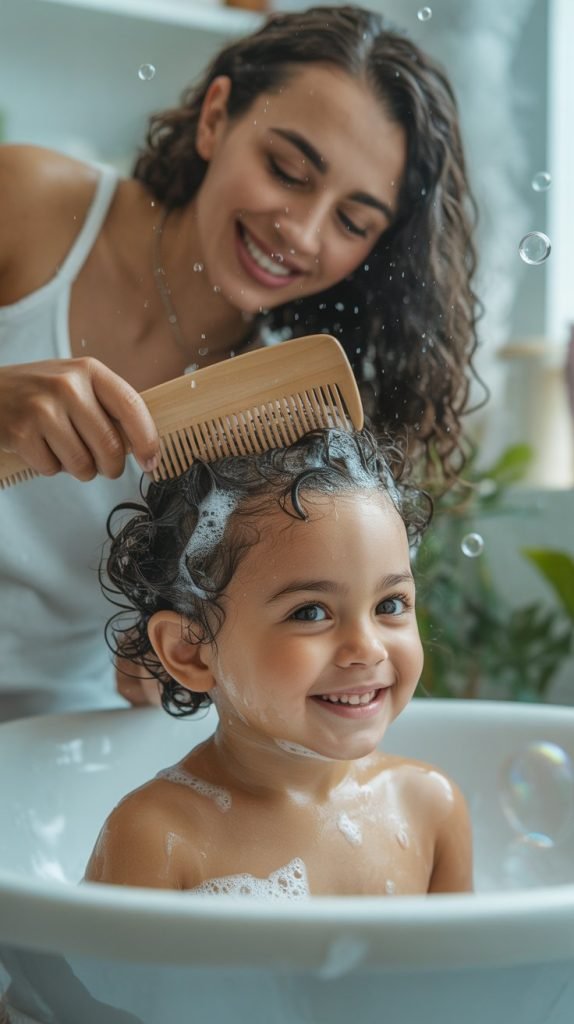
Creating a consistent and gentle washing schedule helps maintain your child’s curl health while avoiding over-cleansing that strips natural oils.
Most curly-haired children benefit from washing 1-2 times per week, though this can vary based on activity level, scalp condition, and curl type.
- Use sulfate-free shampoos that cleanse without stripping natural oils essential for curl health and moisture retention
- Focus shampoo application primarily on the scalp rather than the hair lengths to avoid unnecessary dryness
- Rinse thoroughly with lukewarm water as hot water can cause frizz and strip moisture from delicate curls
- Consider co-washing (conditioner-only washing) between shampoo sessions for extra moisture and gentle cleansing
- Pre-poo treatments with natural oils can provide extra protection before shampooing, especially for high-porosity hair
- Scalp massage during washing promotes circulation and helps distribute natural oils along the hair shaft
- Always detangle during the conditioning phase when hair is slippery and more manageable to prevent breakage
3. Mastering the Art of Detangling
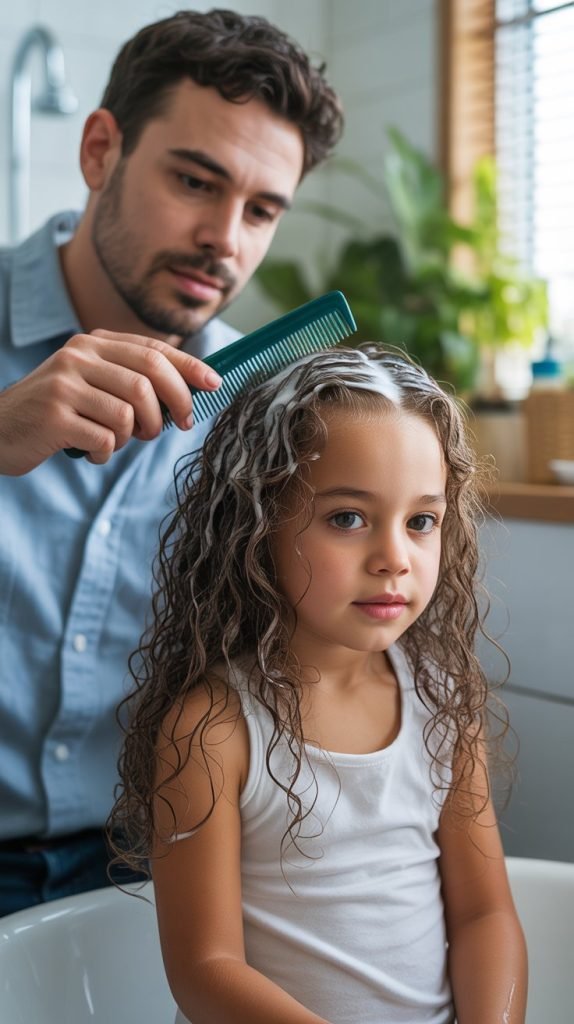
Proper detangling techniques prevent breakage and reduce the stress associated with managing curly hair, making it a crucial skill for parents.
The key lies in patience, the right tools, and working with wet, conditioned hair rather than fighting against dry tangles.
- Always detangle wet hair saturated with conditioner or detangling spray for maximum slip and minimum breakage
- Start detangling from the ends and work your way up to the roots in small sections to avoid pulling
- Use a wide-tooth comb or wet brush specifically designed for curly hair to minimize damage and snagging
- Hold each section firmly at the root while detangling to reduce tension and discomfort for your child
- Apply additional conditioner or detangling product to particularly stubborn knots rather than forcing through them
- Work in small sections no larger than one inch wide for thorough and gentle detangling results
- Never attempt to detangle completely dry curly hair as this causes excessive breakage and pain
- Consider finger detangling for very fragile or tightly coiled hair to provide maximum control and gentleness
4. Choosing the Right Products for Curly Hair

Selecting appropriate hair products forms the backbone of successful curly hair care, as the wrong formulations can lead to buildup, dryness, or weighed-down curls.
Understanding ingredient lists and your child’s specific hair needs ensures you invest in products that deliver real results.
- Avoid products containing sulfates, drying alcohols, and silicones that can strip moisture or create buildup
- Look for ingredients like shea butter, coconut oil, argan oil, and glycerin that provide moisture and nourishment
- Choose leave-in conditioners with lightweight formulations that won’t weigh down fine curls or overwhelm thick hair
- Protein treatments should be used sparingly and only when hair shows signs of damage or excessive elasticity
- Natural oils like jojoba, sweet almond, or grapeseed can seal moisture and add shine without heaviness
- Curl-defining creams and gels help maintain pattern definition while reducing frizz throughout the day
- pH-balanced products maintain the hair’s natural acid mantle and prevent cuticle lifting that causes frizz
- Always perform patch tests when introducing new products to avoid potential allergic reactions or sensitivities
5. Nighttime Protection and Maintenance
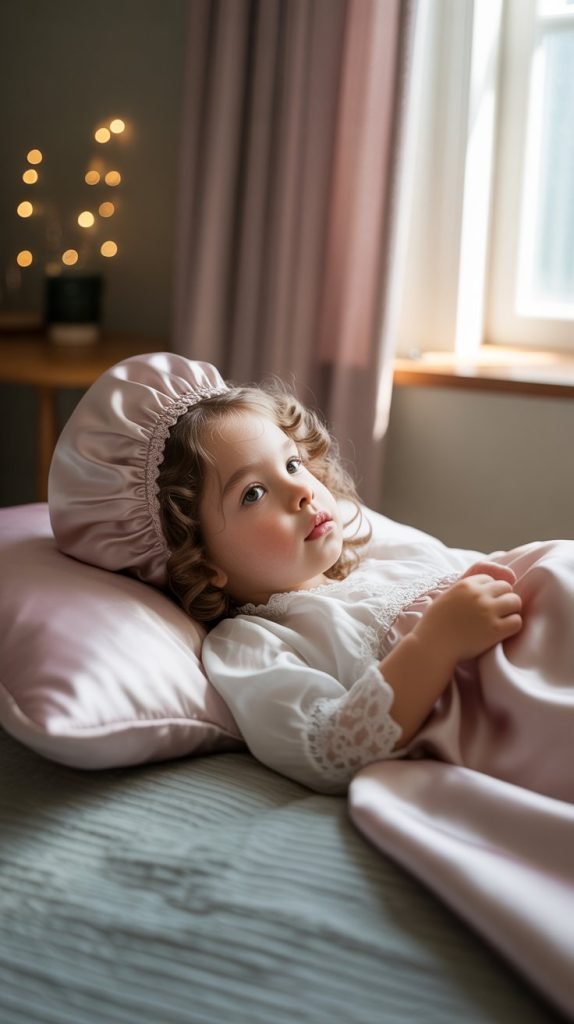
Protecting curly hair during sleep prevents friction damage and helps maintain curl definition from day to day, reducing morning styling time.
The right nighttime routine can significantly extend the life of your child’s hairstyles while promoting healthier hair growth.
- Satin or silk pillowcases reduce friction and prevent moisture loss that cotton pillowcases can cause
- Hair bonnets or scarves made from silk or satin provide complete protection for longer or more textured hair
- Loose protective styles like a high pineapple ponytail prevent crushing curls while sleeping
- Refresh curls in the morning with a spray bottle containing water and leave-in conditioner for quick revival
- Avoid tight elastic bands that can cause breakage and opt for fabric-covered or spiral hair ties instead
- Consider braiding or twisting sections for children who move frequently during sleep to prevent tangling
- Apply a small amount of hair oil to ends before bed to provide overnight nourishment and protection
- Teach older children to maintain their nighttime routine independently to build good hair care habits
6. Styling Techniques for Healthy Curls
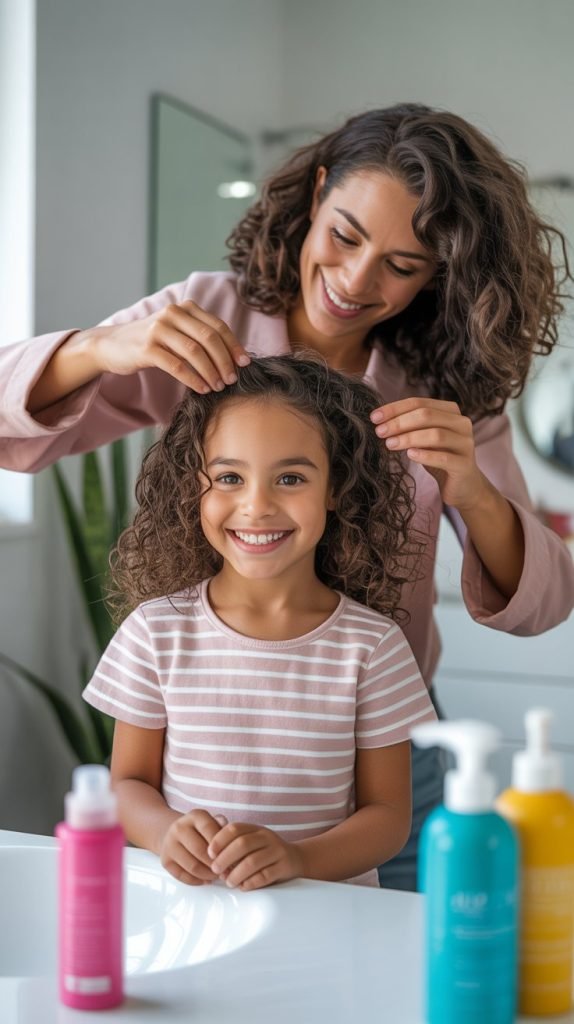
Implementing proper styling techniques enhances your child’s natural curl pattern while minimizing damage and maximizing definition.
The goal is to work with the hair’s natural texture rather than against it, creating styles that look great and promote hair health.
- Apply styling products to damp hair using the praying hands method to smooth the cuticle and reduce frizz
- Scrunch products upward into curls to encourage natural curl formation and remove excess moisture
- Use plopping or micro-plopping with a cotton t-shirt to absorb water without disturbing the curl pattern
- Air drying produces the most natural results, though diffusing on low heat can speed up the process safely
- Avoid brushing or combing curly hair when dry as this breaks up curl clumps and creates frizz
- Section hair for more even product distribution and better curl definition throughout the head
- Refresh day-old curls with a mixture of water and leave-in conditioner in a spray bottle for renewed bounce
- Embrace shrinkage as a natural characteristic of healthy curly hair rather than fighting against it
7. Dealing with Common Curly Hair Challenges
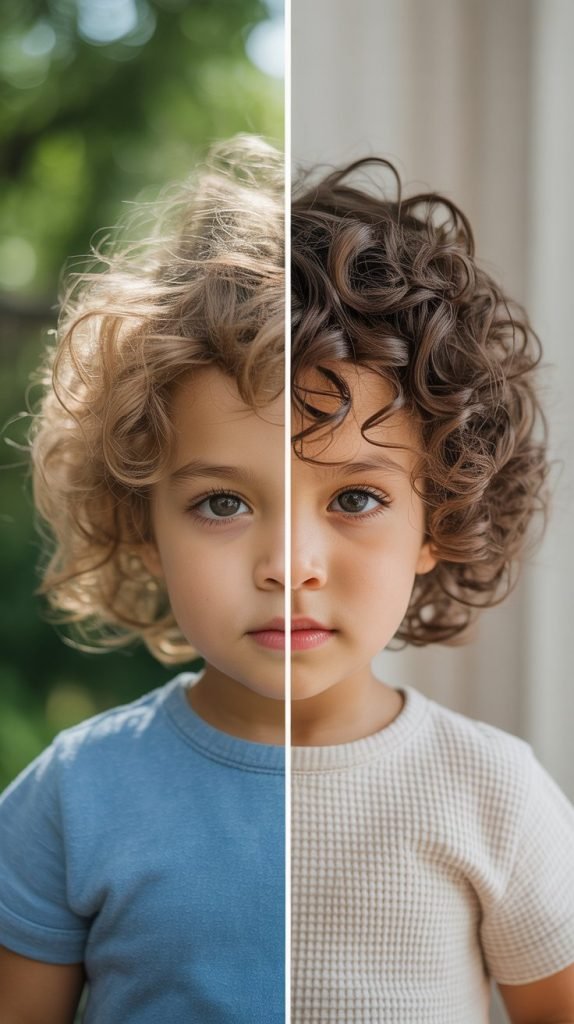
Addressing frequent issues like frizz, dryness, and tangles requires targeted solutions and patience as you discover what works best for your child’s unique hair.
Understanding the root causes of these challenges helps you implement more effective prevention and treatment strategies.
- Combat frizz by maintaining consistent moisture levels and avoiding products with drying ingredients like sulfates
- Address dryness with regular deep conditioning treatments and protective styling that retains moisture
- Prevent excessive tangling by maintaining a consistent detangling routine and using leave-in conditioners daily
- Handle matting gently with patience, additional conditioner, and working in very small sections to avoid cutting
- Manage shrinkage by accepting it as natural and focusing on hair health rather than length appearance
- Reduce breakage by using gentle handling techniques and avoiding tight hairstyles that create tension
- Treat scalp issues like dryness or irritation with gentle, natural remedies and consultation with a pediatrician if needed
- Address product buildup with occasional clarifying treatments followed by intensive conditioning to restore moisture balance
Conclusion
Successfully learning how to care for kids’ curly hair transforms what many parents view as a daunting task into an enjoyable routine that celebrates your child’s natural beauty.
By understanding your child’s unique curl type, establishing gentle care routines, and choosing appropriate products, you’re setting the foundation for a lifetime of healthy hair habits.
Remember that consistency, patience, and embracing your child’s natural texture are the keys to success in this journey.
With the techniques and knowledge shared in this guide, you’re well-equipped to help your little one love their curls while maintaining their health and vibrancy for years to come.
