

Natural curly hair is a beautiful gift that deserves proper care and attention. Many people with curly hair struggle with frizz, dryness, and unpredictable styling results, often feeling frustrated with their natural texture.
The key to loving your curls lies in understanding their unique needs and adopting the right care routine. Learning how to care for natural curly hair transforms your relationship with your locks from daily struggle to confident embrace.
This comprehensive guide covers everything from understanding your curl pattern to selecting the right products, establishing effective routines, and mastering styling techniques that will help you achieve healthy, defined, and gorgeous curls every day.
1. Understanding Your Curl Pattern and Hair Type
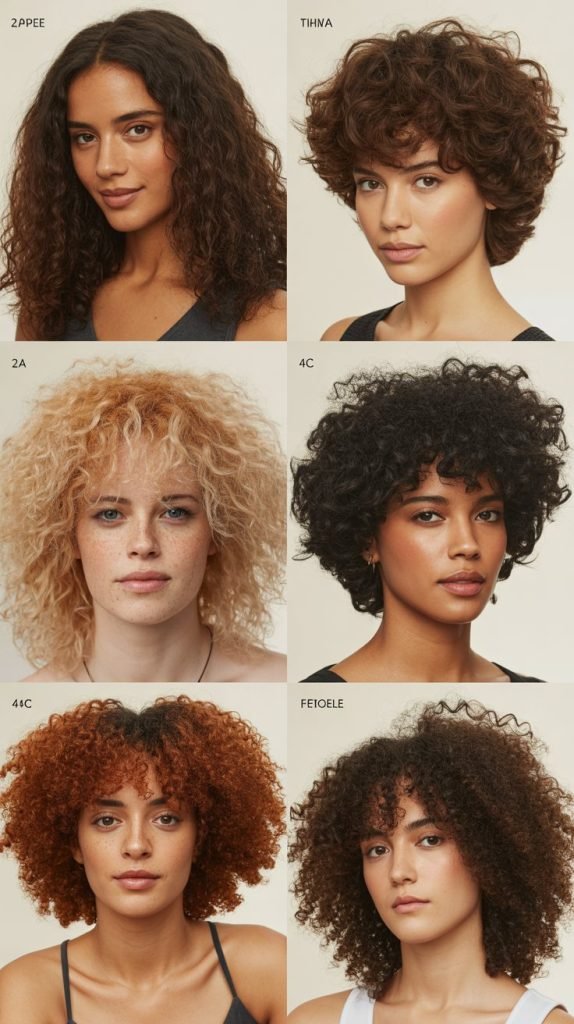
Before diving into any hair care routine, it’s essential to identify your specific curl pattern and hair characteristics.
Curl patterns range from loose waves to tight coils, and each type requires different approaches for optimal care.
Understanding your curl pattern helps you choose the right products and techniques that work best for your unique hair texture.
- Hair professionals classify curls into four main categories: Type 2 (wavy), Type 3 (curly), and Type 4 (coily/kinky)
- Each type has subcategories A, B, and C, with A being the loosest and C being the tightest
- Type 2A hair has gentle waves that are easy to straighten
- Type 2B features more defined waves with some frizz
- Type 2C has strong waves with definite curls and more resistance to straightening
- Type 3A curls are large, loose spirals with shine and bounce
- Type 3B curls are springy ringlets with more volume
- Type 3C has tight corkscrews that are densely packed
- Type 4A coils are soft with visible curl pattern when stretched
- Type 4B has a Z-pattern with less defined curls
- Type 4C appears more densely packed with minimal visible curl pattern
- Hair porosity (low, normal, high) affects how your hair absorbs and retains moisture
- Strand thickness (fine, medium, coarse) influences product selection and styling techniques
2. Essential Ingredients to Look for in Curly Hair Products
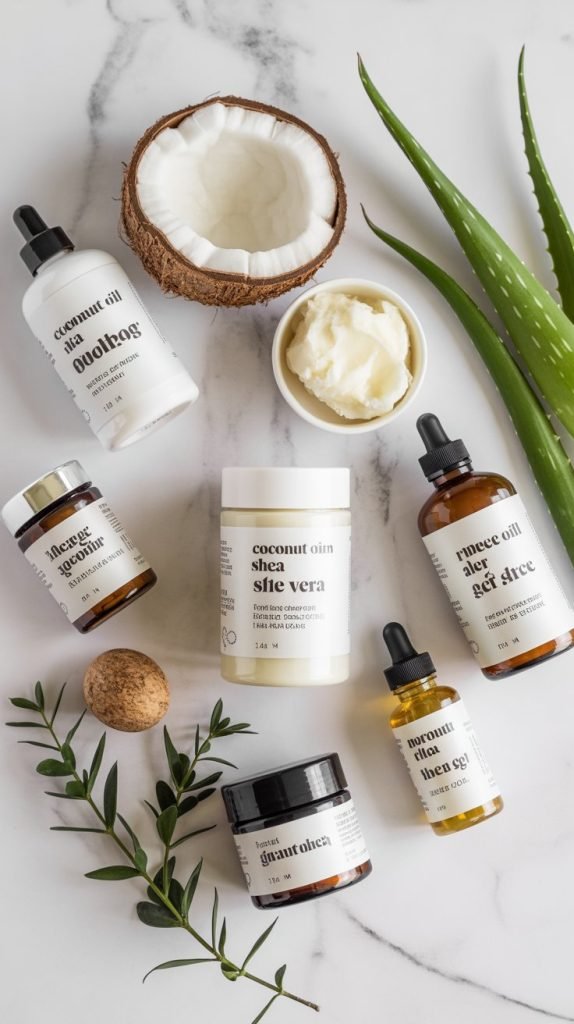
The foundation of healthy curly hair lies in choosing products with nourishing, curl-friendly ingredients.
Natural curls tend to be drier than straight hair due to the shape of the hair shaft, making ingredient selection crucial for maintaining moisture and definition.
Understanding which ingredients benefit curly hair helps you make informed decisions when building your hair care arsenal.
- Humectants like glycerin and honey attract moisture from the environment to your hair
- Emollients such as coconut oil, argan oil, and shea butter smooth the hair cuticle and add softness
- Proteins like hydrolyzed wheat protein and silk amino acids strengthen damaged hair strands
- Aloe vera provides gentle moisture without weighing hair down
- Jojoba oil closely mimics your scalp’s natural sebum
- Hyaluronic acid offers intense hydration for very dry curls
- Panthenol (Pro-Vitamin B5) improves hair elasticity and reduces breakage
- Natural butters like murumuru and cupuacu provide rich moisture for coarse textures
- Ceramides help repair the hair’s protective barrier
- Avoid sulfates, drying alcohols, and heavy silicones that can cause buildup
- Look for gentle cleansing agents like cocamidopropyl betaine
- Seek products with pH levels between 4.5-5.5 to maintain hair’s natural acidity
3. The Right Way to Wash Curly Hair
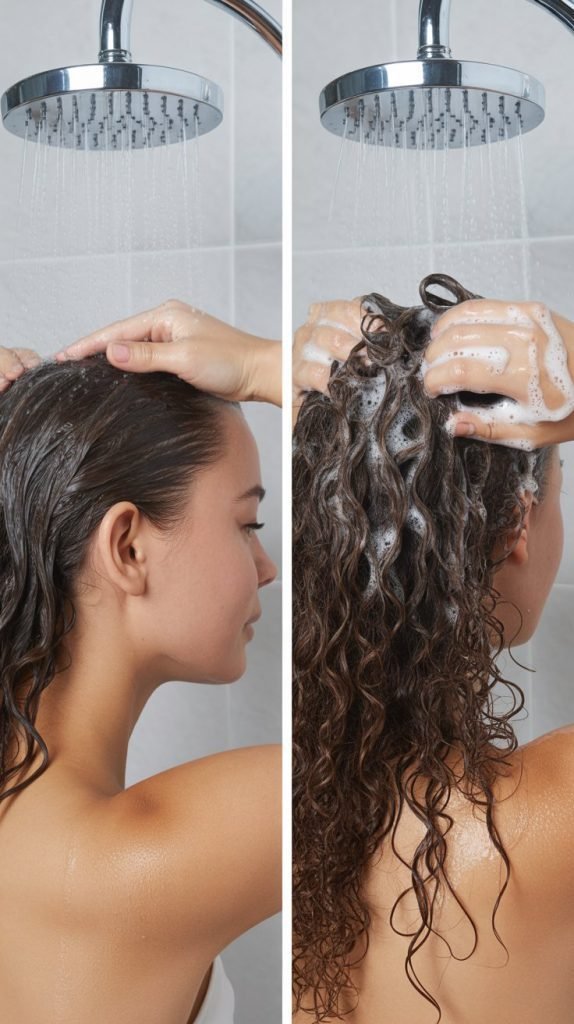
Washing curly hair requires a gentler approach than caring for straight hair, as over-washing can strip essential oils and cause excessive dryness.
The frequency and method of washing significantly impact curl health, definition, and manageability. Proper washing techniques preserve your hair’s natural moisture while keeping your scalp clean and healthy.
- Wash curly hair 1-3 times per week depending on your scalp’s oil production
- Use lukewarm water instead of hot water to prevent moisture loss
- Focus shampoo application on the scalp rather than the hair lengths
- Massage your scalp gently with fingertips, not nails, to stimulate circulation
- Consider co-washing (conditioner-only washing) between shampoo days
- Apply conditioner from mid-length to ends, avoiding the scalp area
- Use wide-tooth combs or fingers to detangle while conditioner is in your hair
- Leave conditioner on for 3-5 minutes for better moisture absorption
- Rinse thoroughly to prevent product buildup that can weigh curls down
- Try cold water rinses to seal the hair cuticle and enhance shine
- Deep condition weekly or bi-weekly depending on your hair’s needs
- Consider clarifying once a month to remove buildup from styling products
4. Drying Techniques That Preserve Curl Pattern
How you dry your curly hair dramatically affects the final result of your curl pattern and overall hair health.
Traditional towel drying and heat styling can cause frizz, breakage, and disrupt natural curl formation. Learning proper drying techniques is essential for maintaining defined, healthy curls while minimizing damage and frizz.
- Never rub curly hair with regular terry cloth towels as this causes frizz and breakage
- Use microfiber towels or cotton t-shirts to gently squeeze out excess water
- Apply leave-in conditioner or curl cream to damp hair before drying
- Scrunch hair upward toward the scalp to encourage natural curl formation
- Consider plopping technique by wrapping damp curls in a t-shirt for 10-20 minutes
- Air drying produces the most natural results but takes several hours
- Diffusing with a blow dryer on low heat and speed can reduce drying time
- Keep the diffuser moving to prevent concentrated heat damage
- Avoid touching or manipulating hair while it’s drying to prevent frizz
- Sleep with a silk or satin pillowcase to reduce friction and morning frizz
- Try the “pineapple” method by loosely gathering curls at the very top of your head before bed
- Use silk or satin scrunchies instead of regular elastic bands
5. Styling Products and Application Methods
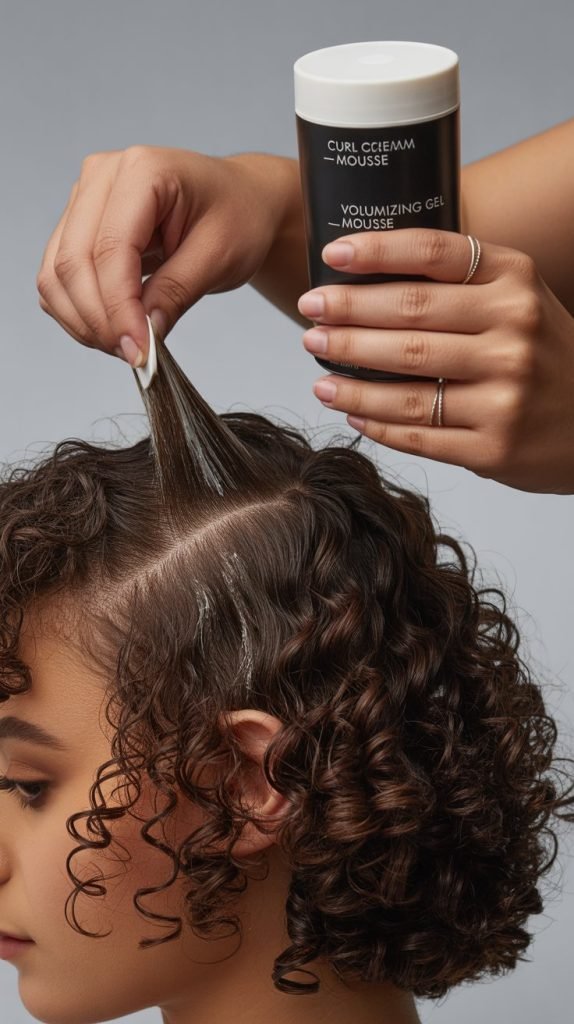
The right styling products and application techniques can make the difference between beautiful, defined curls and a frizzy, unmanageable mess.
Product selection should align with your curl type, hair porosity, and desired outcome. Understanding how to layer products correctly ensures maximum effectiveness without weighing your curls down.
- Apply products to soaking wet hair for better distribution and curl definition
- Use the “praying hands” method by smoothing products down the hair shaft
- Section hair into 4-6 parts for even product application
- Start with leave-in conditioner as your base layer
- Add curl cream for moisture and soft hold
- Follow with gel or mousse for stronger hold and definition
- Scrunch products upward into curls to encourage formation
- Less is often more with styling products to avoid buildup and weighing hair down
- Experiment with different product combinations to find your perfect routine
- Refresh second and third-day curls with water and a light leave-in spray
- Avoid brushing or combing dry curls as this disrupts the curl pattern
- Consider using a wide-tooth comb only on wet, conditioned hair
6. Common Mistakes to Avoid with Curly Hair Care
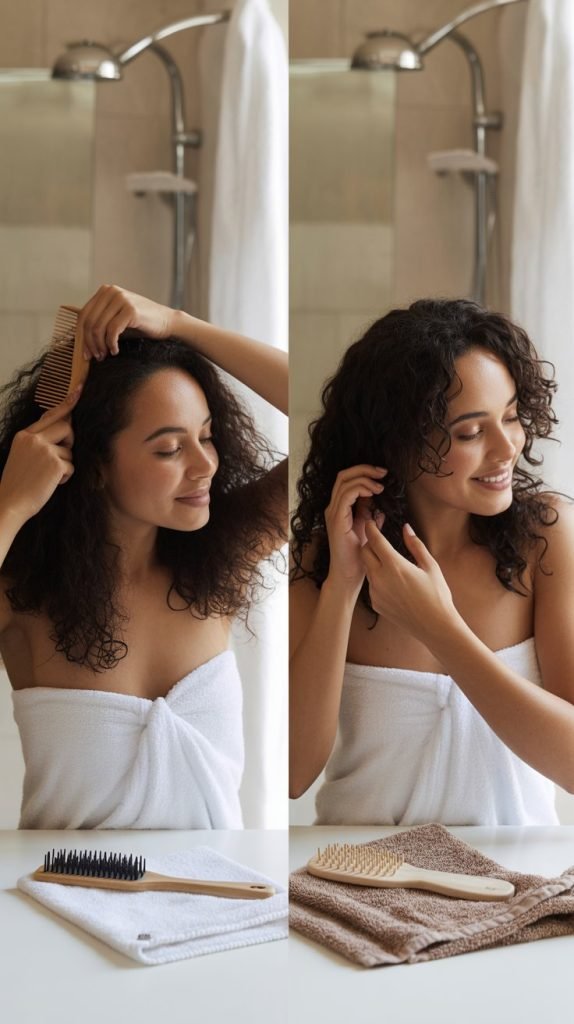
Even well-intentioned curly hair care can go wrong when common mistakes sabotage your efforts.
Many people unknowingly damage their curls through improper techniques, wrong product choices, or outdated advice. Recognizing and avoiding these pitfalls is crucial for achieving your best possible curl results.
- Never brush or comb dry curly hair as this breaks up curl clumps and creates frizz
- Avoid using products with sulfates, drying alcohols, and heavy silicones
- Don’t apply conditioner directly to your scalp as this can cause greasiness
- Stop using regular towels that rough up the hair cuticle
- Avoid touching, playing with, or scrunching dry curls throughout the day
- Don’t use too much product as this weighs curls down and creates buildup
- Never sleep with wet hair as this can cause matting and breakage
- Avoid heat styling tools without proper heat protection
- Don’t ignore your scalp health while focusing only on curl definition
- Stop getting haircuts from stylists who don’t understand curly hair
- Avoid one-size-fits-all advice as every curl type has different needs
- Don’t expect overnight results when transitioning to a new routine
7. Professional Treatments and Salon Care

While at-home care forms the foundation of healthy curls, professional treatments can address specific concerns and enhance your curl care routine.
Knowing when to seek professional help and which treatments benefit curly hair ensures you invest wisely in your hair’s health. The right salon services can transform damaged, lackluster curls into vibrant, healthy ones.
- Deep conditioning treatments provide intensive moisture for severely dry curls
- Protein treatments strengthen damaged hair but should be used sparingly
- Olaplex or similar bond-building treatments repair chemically damaged hair
- Professional curl cuts from certified curly hair specialists enhance natural pattern
- Steam treatments open the hair cuticle for better product penetration
- Scalp treatments address issues like dandruff or excessive oiliness
- Color services require extra care and moisture for curly hair
- Keratin treatments can reduce frizz but may loosen curl pattern
- Regular trims every 8-12 weeks prevent split ends from traveling up the hair shaft
- Professional product recommendations based on your specific hair needs
- Curl refreshing services for special events or when you need a reset
- Consultation appointments help you understand your hair’s unique requirements
Learning how to care for natural curly hair is a journey of self-discovery and patience that rewards you with gorgeous, healthy curls.
Every person’s curl journey is unique, requiring experimentation and adjustment to find the perfect routine.
With the right knowledge, products, and techniques, you can transform your relationship with your natural texture from frustration to celebration. Remember that consistency is key, and beautiful curls don’t happen overnight but develop over time with proper care.
Embrace your natural curl pattern, be patient with the process, and enjoy the confidence that comes with well-cared-for, stunning curly hair.
