
How to Do Brunette Balayage Hair: Step-by-Step Guide
Brunette balayage has become one of the most sought-after hair coloring techniques, offering a natural-looking sun-kissed effect that adds dimension and movement to dark hair.
This French highlighting method creates seamless color transitions that complement your natural brunette base while adding warmth and depth.
Whether you’re looking to refresh your current look or try something completely new, learning how to do brunette balayage hair will open up a world of stunning color possibilities.
This comprehensive guide will walk you through every step of the process, from preparation to aftercare, ensuring you achieve salon-quality results.
This article covers essential preparation steps, detailed application techniques, color selection guidance, professional tips, maintenance strategies, and troubleshooting common issues.
You’ll discover how to choose the right shades for your skin tone, master the balayage painting technique, and maintain your beautiful results for months to come.
1. Understanding Brunette Balayage Basics
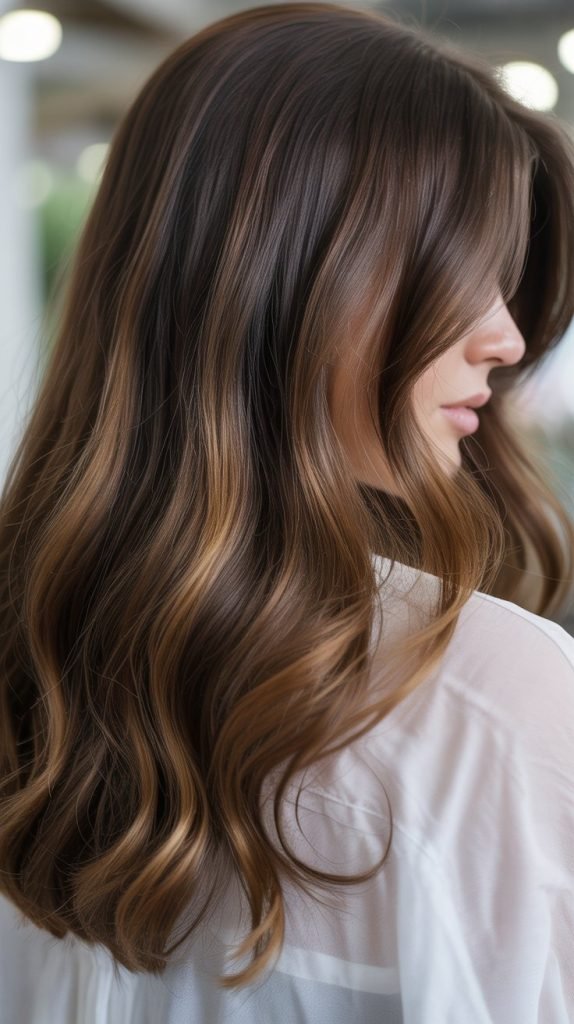
Balayage is a freehand painting technique that creates natural-looking highlights by strategically placing color where the sun would naturally lighten your hair.
The method originated in France and has revolutionized hair coloring by moving away from traditional foil highlighting to create more organic, blended results.
- Balayage means “to sweep” in French, referring to the sweeping brush strokes used during application
- The technique focuses on surface highlighting rather than lifting color from the roots
- Brunette balayage typically uses warmer tones like caramel, honey, golden brown, and copper
- Results appear more natural because the color placement mimics how sun naturally lightens hair
- The grow-out phase is more forgiving compared to traditional highlights
- Balayage works on all brunette shades from dark chocolate to medium brown
- The technique can be customized to suit different face shapes and personal preferences
- Professional colorists often combine balayage with other techniques for enhanced results
2. Essential Tools and Materials Needed
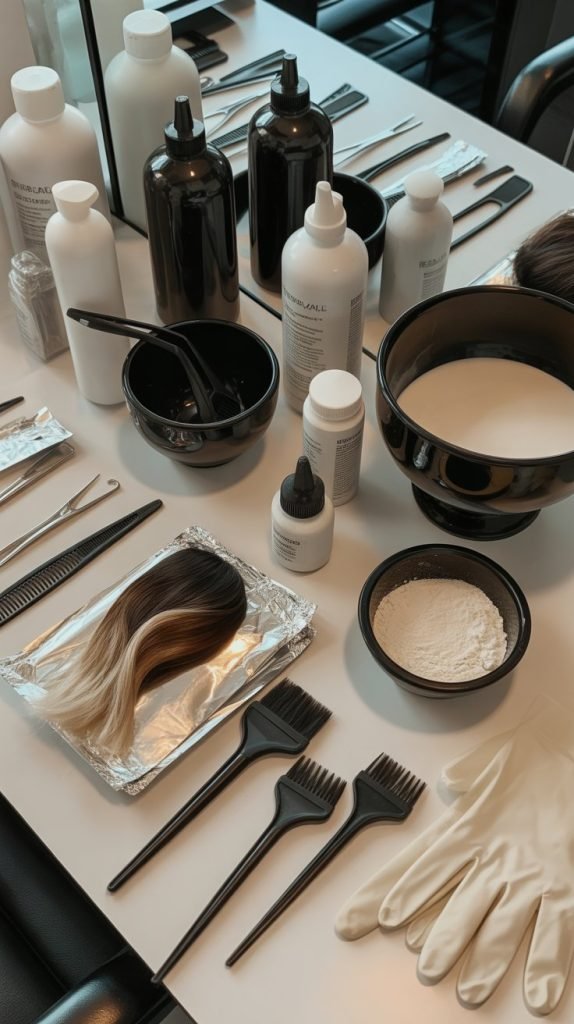
Proper preparation with the right tools and materials is crucial for achieving professional brunette balayage results. Having everything ready before you start ensures a smooth application process and optimal color development.
- High-quality balayage brush with natural bristles for smooth color application
- Mixing bowls made of glass or plastic (avoid metal which can react with bleach)
- Hair sectioning clips to separate and organize hair during application
- Wide-tooth comb for gentle detangling and sectioning
- Foil sheets or balayage boards for isolating sections during processing
- Bleach powder specifically formulated for hair lightening
- Developer in appropriate volumes (20-30 volume for most brunette hair)
- Toner to neutralize unwanted brassiness and achieve desired tone
- Protective gloves to prevent skin contact with chemicals
- Cape or old towels to protect clothing and work surfaces
- Timer to monitor processing time accurately
- Deep conditioning treatment for post-color hair care
- Color-safe shampoo and conditioner for maintenance
3. Pre-Color Hair Assessment and Preparation
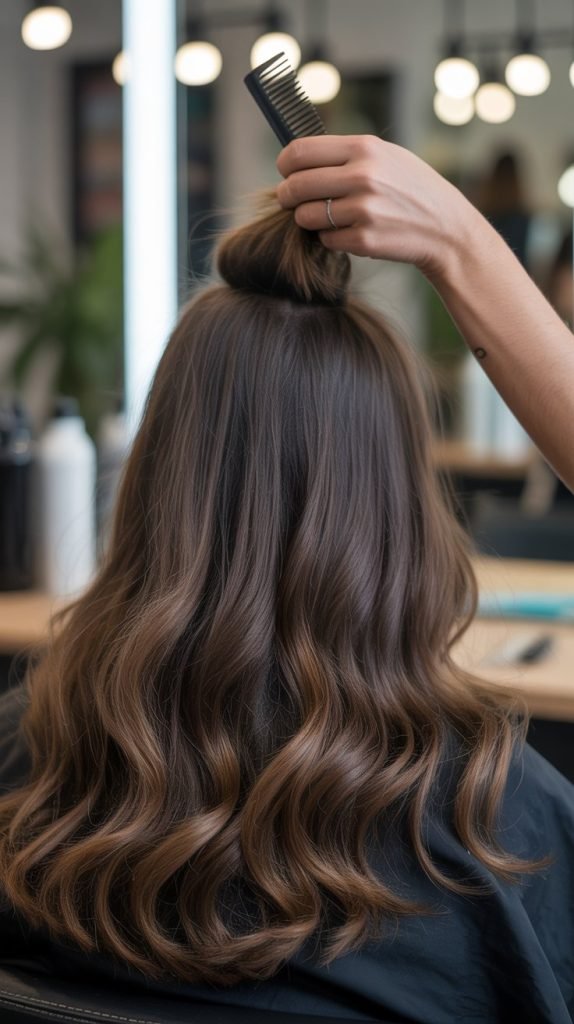
Thorough hair assessment and preparation are fundamental steps that determine the success of your brunette balayage.
Understanding your hair’s current condition, color level, and porosity helps you make informed decisions about the coloring process.
- Assess your natural hair color level on a scale from 1 (black) to 10 (lightest blonde)
- Examine hair porosity by performing a strand test with water absorption
- Check for previous chemical treatments that might affect color uptake
- Evaluate hair texture and thickness to determine sectioning strategy
- Perform an allergy patch test 24-48 hours before coloring
- Wash hair 1-2 days before coloring to maintain natural oils for scalp protection
- Avoid using heavy styling products or treatments before the appointment
- Take reference photos of desired results to guide color placement
- Consider your skin tone when selecting highlight shades
- Document any hair damage or concerns that might affect the process
- Plan the balayage pattern based on your face shape and hair length
- Prepare hair by gently detangling and removing any knots
4. Selecting the Perfect Brunette Balayage Shades
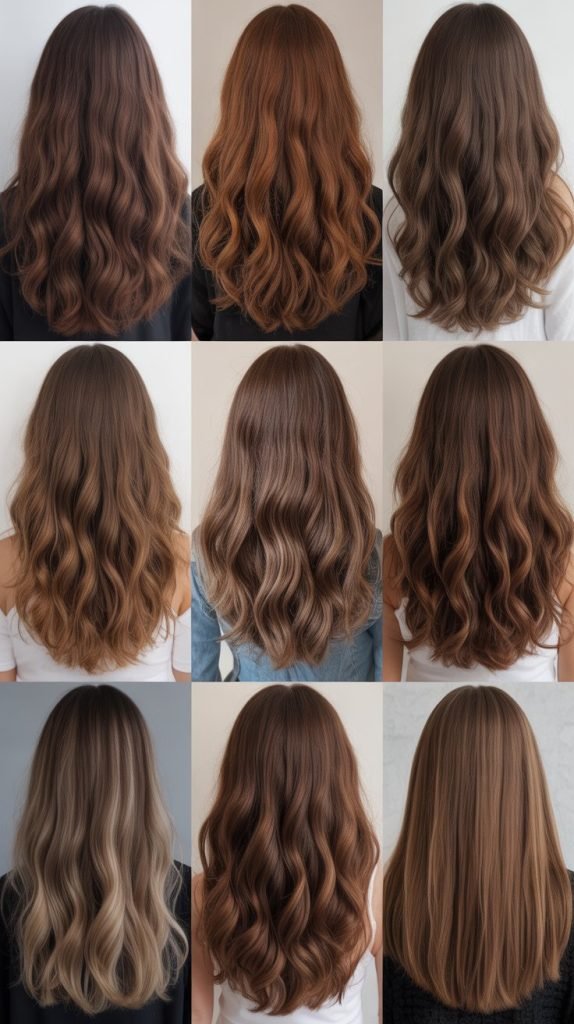
Choosing the right shades for your brunette balayage is essential for creating a harmonious and flattering result.
The key is selecting colors that complement both your natural base and skin undertones while achieving your desired level of contrast.
- Consider your skin undertones when selecting highlight colors
- Warm undertones pair beautifully with caramel, honey, and golden highlights
- Cool undertones complement ash brown, beige, and mushroom blonde shades
- Neutral undertones offer flexibility to work with both warm and cool highlight tones
- Stay within 2-3 levels of your natural color for the most natural appearance
- Dark chocolate bases work well with rich caramel and golden brown highlights
- Medium brown hair suits honey, toffee, and light caramel tones
- Light brown bases can handle brighter highlights like golden blonde and butterscotch
- Consider seasonal factors when choosing shades for optimal complement
- Factor in your lifestyle and maintenance preferences when selecting intensity levels
5. Step-by-Step Balayage Application Technique
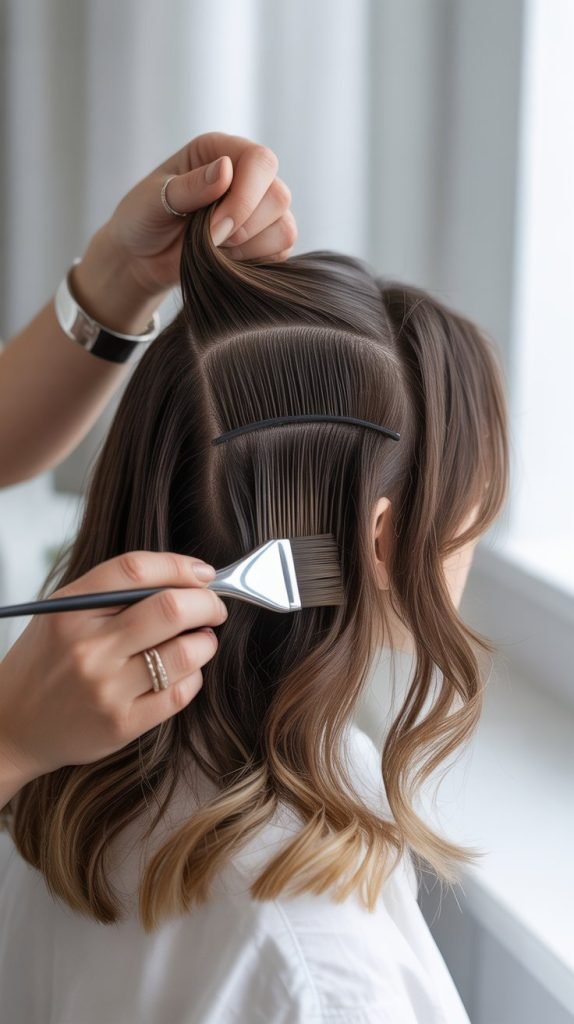
The balayage application technique requires precision, artistic vision, and careful attention to color placement. This step-by-step process will guide you through creating natural-looking highlights that enhance your brunette base.
- Begin with clean, damp hair for optimal color adherence and even application
- Section hair into four quadrants using horizontal and vertical parts
- Start application at the back sections and work toward the front
- Mix bleach and developer according to manufacturer’s instructions for consistent results
- Load brush with color mixture, removing excess to prevent dripping
- Begin painting color 2-3 inches away from the roots for natural gradation
- Use upward brush strokes to blend color seamlessly into the natural base
- Apply heavier color saturation toward the ends where maximum lightening is desired
- Vary the thickness and spacing of highlights for natural-looking dimension
- Focus color placement around the face for brightening and framing effects
- Work quickly but carefully to ensure even processing time across all sections
- Place foil under each section to prevent color transfer to surrounding hair
- Check color development every 10-15 minutes during processing time
6. Processing Time and Color Development
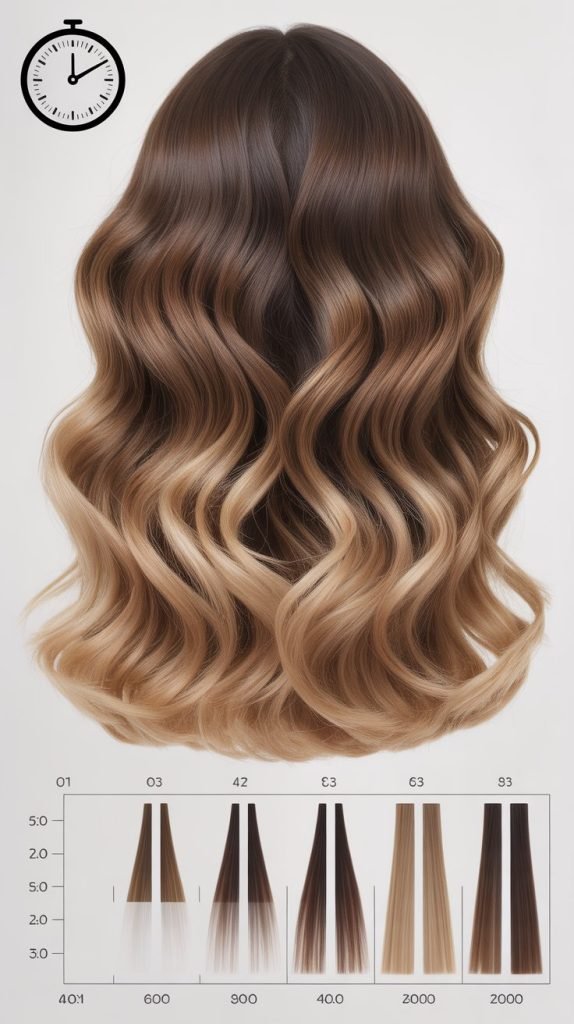
Understanding proper processing time and monitoring color development are critical for achieving your desired brunette balayage results while maintaining hair health.
Timing varies based on hair texture, previous chemical treatments, and desired lightness level.
- Processing time typically ranges from 20-45 minutes depending on desired lightness
- Check color development starting at 15 minutes to monitor progress
- Hair with previous chemical treatments may process faster than virgin hair
- Coarse hair textures generally require longer processing times than fine hair
- Natural brunette hair often needs 30-40 minutes to reach optimal lightness
- Stop processing when highlights reach 1-2 levels lighter than your target shade
- Remember that toner will further adjust the final color result
- Heat can accelerate processing but may cause uneven results
- Avoid over-processing which leads to damaged, brittle hair
- Document processing times for future color services and maintenance
- Consider hair porosity when determining optimal development time
- Test a small section first if you’re unsure about timing
7. Toning for Perfect Brunette Balance
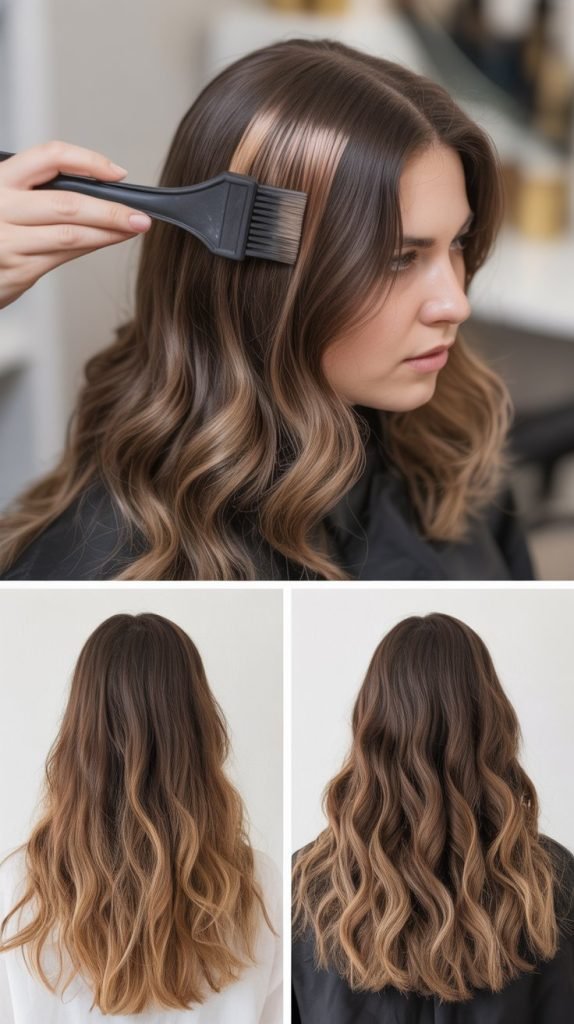
Toning is the crucial final step that neutralizes unwanted brassiness and creates the perfect brunette balayage finish. This process refines your highlights and ensures they blend seamlessly with your natural base color.
- Choose toner shades based on the underlying pigments in your lightened hair
- Orange tones require blue-based toners for neutralization
- Yellow tones need violet or purple-based toners for correction
- Apply toner to towel-dried hair for optimal penetration and results
- Process toner for 5-20 minutes depending on desired intensity
- Monitor toning progress closely as over-toning can create muddy results
- Semi-permanent toners provide gentle color adjustment with minimal damage
- Demi-permanent toners offer longer-lasting results with slightly more commitment
- Multiple toning sessions may be necessary for severely brassy hair
- Consider gloss treatments for added shine and color depth
- Document successful toner formulations for future maintenance appointments
- Rinse thoroughly and follow with deep conditioning treatment
8. Aftercare and Maintenance Tips
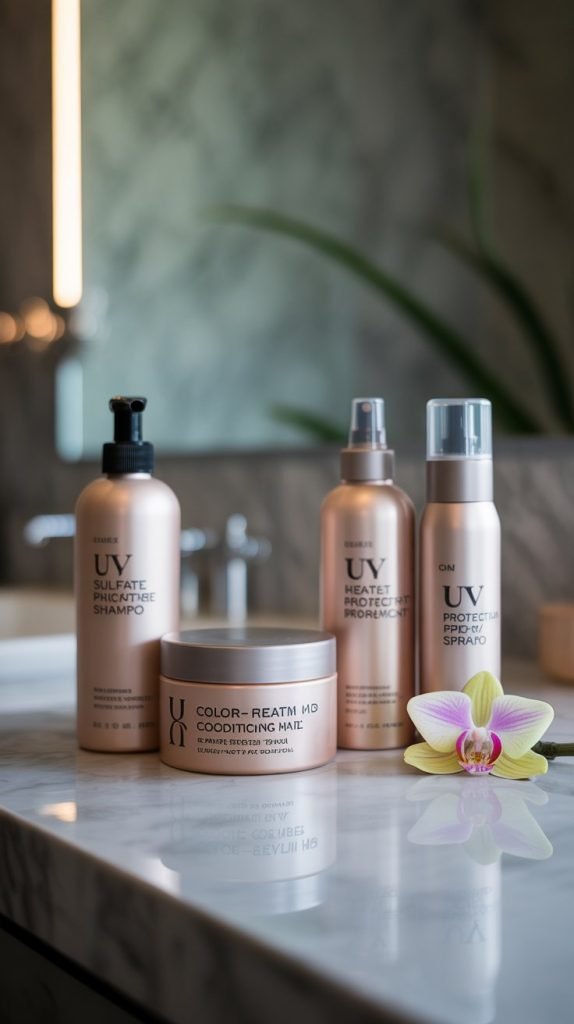
Proper aftercare and maintenance are essential for preserving your beautiful brunette balayage and extending the life of your color investment. Following these guidelines will keep your highlights looking fresh and vibrant between salon visits.
- Wait 48-72 hours before washing hair to allow color to fully set
- Use sulfate-free shampoos to prevent premature color fading
- Apply deep conditioning treatments weekly to maintain hair health
- Protect hair from UV damage with specialized sun protection products
- Limit heat styling and always use thermal protection products
- Sleep on silk or satin pillowcases to reduce friction and color loss
- Rinse hair with cool water to seal the cuticle and lock in color
- Schedule touch-up appointments every 12-16 weeks for optimal maintenance
- Use color-depositing shampoos occasionally to refresh highlight tones
- Avoid chlorine exposure which can cause color shifts and damage
- Consider professional gloss treatments every 6-8 weeks for enhanced shine
- Monitor hair health and adjust care routine as needed
9. Troubleshooting Common Balayage Issues
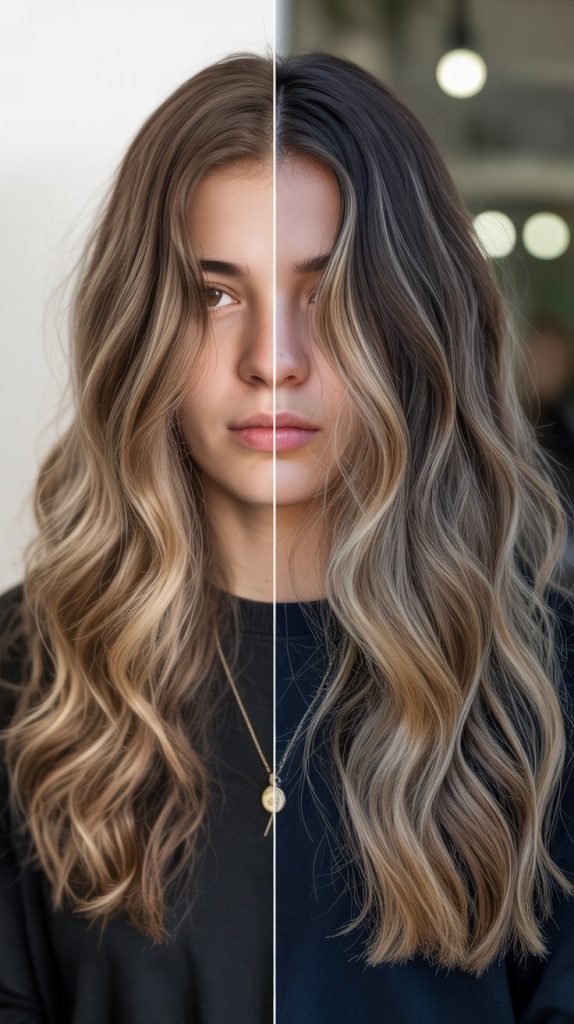
Even experienced colorists encounter challenges during the balayage process. Understanding how to identify and correct common issues ensures you can achieve beautiful results and maintain hair health throughout the coloring journey.
- Uneven color development often results from inconsistent application or sectioning
- Correct color banding by applying additional color to under-processed areas
- Address excessive brassiness with appropriate toner selection and application
- Over-processed hair requires intensive conditioning treatments and protein therapy
- Harsh lines can be softened with root smudging or shadow root techniques
- Color that’s too light can be toned down with darker semi-permanent colors
- Insufficient lift may require additional lightening sessions spaced weeks apart
- Patchy results often indicate improper sectioning or rushed application
- Color bleeding between sections can be prevented with careful foil placement
- Scalp irritation requires immediate attention and possible color removal
- Document any issues and solutions for future reference and improvement
- Consult professional colorists for complex correction procedures
10. Professional vs. DIY Considerations
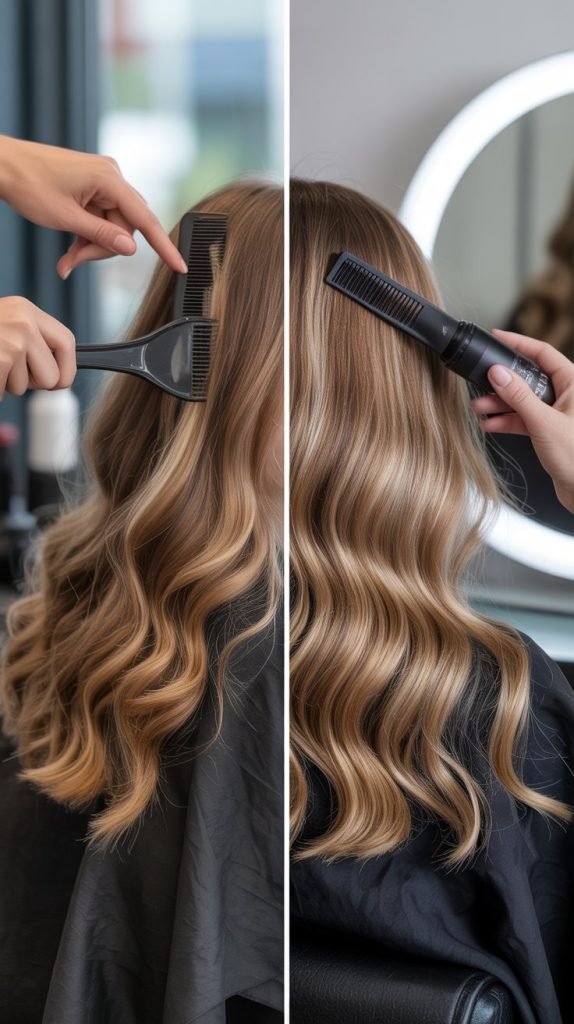
Understanding the differences between professional and DIY brunette balayage helps you make informed decisions about your color journey.
Each approach has distinct advantages and considerations that impact both results and hair health.
- Professional colorists have extensive training in color theory and application techniques
- Salon-grade products often provide superior results and hair protection
- Professional assessment ensures appropriate color selection and processing times
- Expert application creates more natural-looking and evenly distributed results
- DIY balayage offers cost savings and convenience for maintenance touch-ups
- Home application requires significant time investment for research and preparation
- Professional correction of DIY mistakes can be more expensive than initial salon service
- Consider your experience level and comfort with chemical hair processes
- Evaluate the complexity of your desired results when choosing application method
- Factor in long-term maintenance costs and time commitment
- Professional services typically include consultation, application, and styling
- DIY success depends on realistic expectations and thorough preparation
How to do brunette balayage hair successfully requires careful planning, proper technique, and ongoing maintenance commitment.
This comprehensive guide has provided you with the knowledge and steps necessary to achieve beautiful, natural-looking highlights that enhance your brunette base.
Whether you choose professional application or decide to try the DIY approach, remember that patience and practice are key to mastering this sought-after coloring technique.
With proper care and maintenance, your brunette balayage will continue to look stunning and provide you with the dimensional, sun-kissed hair you’ve always desired.
