

Curly hair has its own unique beauty, but achieving the perfect layered look can seem intimidating without professional guidance.
Learning how to layer curly hair like a pro stylist will transform your styling routine and unlock your hair’s full potential.
This comprehensive guide will walk you through every step of the layering process, from understanding your curl type to mastering advanced cutting techniques that enhance your natural texture.
This article covers essential topics including identifying your specific curl pattern, selecting the right tools and products, mastering fundamental layering techniques, and troubleshooting common mistakes.
You’ll discover professional secrets for creating volume, managing different curl types, and maintaining your layered style for long-lasting results.
Whether you’re a beginner or looking to refine your technique, these expert insights will help you achieve salon-quality layers at home.
In This Post......
- 1. Understanding Your Curl Type and Pattern
- 2. Essential Tools and Products for Layering
- 3. Preparing Your Hair for Layering
- 4. Basic Layering Techniques for Beginners
- 5. Advanced Layering Methods
- 6. Working with Different Curl Densities
- 7. Face-Framing Techniques
- 8. Managing Volume and Shape
- 9. Common Mistakes and How to Avoid Them
- 10. Styling and Maintaining Layered Curls
1. Understanding Your Curl Type and Pattern

Before diving into layering techniques, identifying your specific curl type is crucial for achieving optimal results.
Different curl patterns require distinct approaches to layering, and understanding your hair’s natural behavior will guide your cutting strategy.
- Type 2A curls are loose waves that benefit from long layers to prevent weighing down the hair
- Type 2B curls have more defined S-patterns and work well with medium-length layers
- Type 2C curls are strong waves with some spirals that need strategic layering to avoid triangle shapes
- Type 3A curls are loose spirals that respond beautifully to graduated layers
- Type 3B curls are springy corkscrews that require careful layering to maintain shape
- Type 3C curls are tight spirals that need minimal layering to avoid excessive volume
- Type 4A curls are soft coils that benefit from subtle layering techniques
- Type 4B curls have a Z-pattern and require specialized layering approaches
- Type 4C curls are the tightest pattern and need gentle, strategic layering
2. Essential Tools and Products for Layering

Professional-quality tools make a significant difference in achieving clean, precise layers that enhance your curls rather than damage them.
Investing in the right equipment and products will elevate your layering technique to professional standards.
- Sharp hairdressing scissors are absolutely essential for clean cuts that won’t cause split ends
- Wide-tooth combs help detangle curls without disrupting the natural pattern
- Sectioning clips allow for precise division of hair during the cutting process
- Spray bottle with water keeps curls hydrated and manageable during cutting
- Leave-in conditioner provides slip and protection during the layering process
- Curl cream helps define patterns and shows true curl behavior
- Diffuser attachment for blow dryer allows gentle drying without disrupting layers
- Hair clips in various sizes help manage different sections effectively
- Mirror with good lighting ensures you can see your work clearly
- Cutting cape or old towel protects clothing during the process
3. Preparing Your Hair for Layering
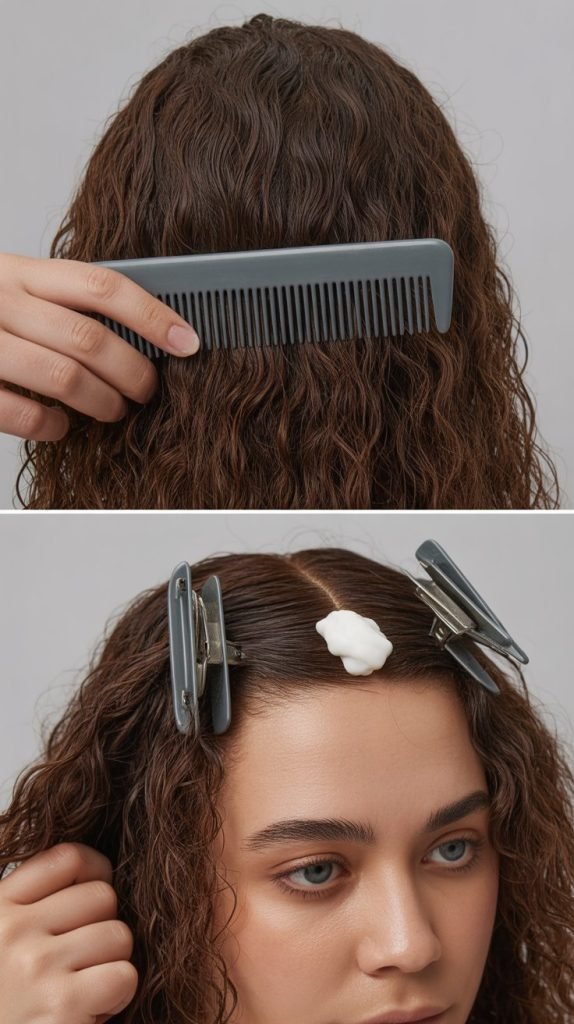
Proper preparation sets the foundation for successful layering and ensures your curls behave predictably during the cutting process.
Taking time to prepare your hair correctly will result in more accurate cuts and better-defined layers.
- Start with freshly washed hair using a sulfate-free shampoo designed for curls
- Apply a generous amount of conditioner and detangle gently with fingers or wide-tooth comb
- Rinse thoroughly but leave hair slightly damp for cutting
- Apply leave-in conditioner from mid-length to ends for protection and slip
- Use curl cream to define your natural pattern and show true curl behavior
- Divide hair into four main sections using horizontal and vertical partings
- Secure each section with clips to keep them separated and manageable
- Work in a well-lit area where you can clearly see all angles of your head
- Have all tools within easy reach before beginning the cutting process
- Take photos of your hair from multiple angles to track progress
4. Basic Layering Techniques for Beginners
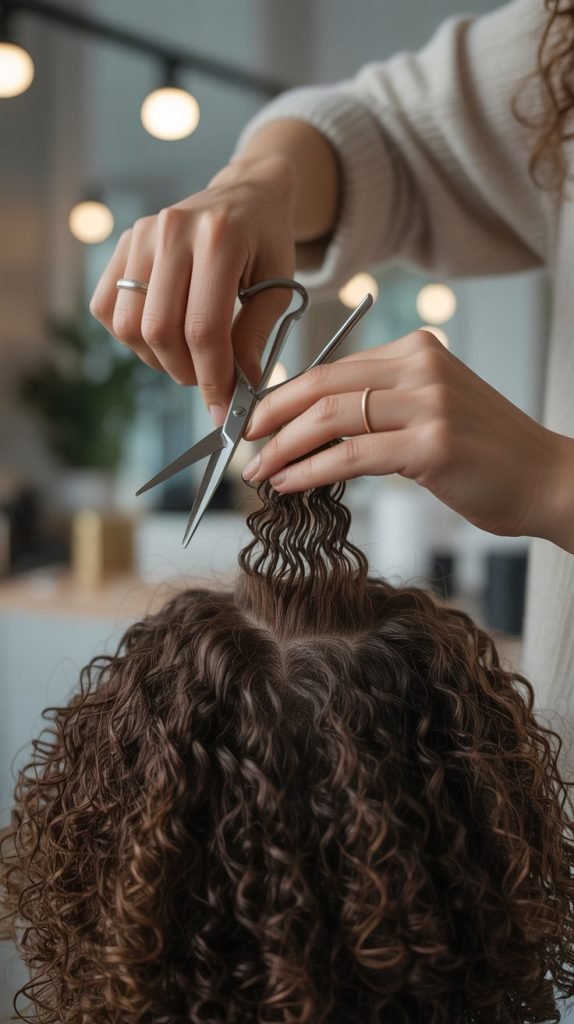
Mastering fundamental layering techniques provides the foundation for more advanced cutting methods. These beginner-friendly approaches focus on creating gentle, natural-looking layers that enhance your curls without overwhelming them.
- The twist-cut method involves twisting small sections and cutting at an angle for natural layers
- Point cutting creates soft, textured ends that blend seamlessly with curl patterns
- The unicorn cut technique creates face-framing layers by cutting hair gathered at the forehead
- Slide cutting removes bulk while maintaining length and curl definition
- The DevaCut method cuts each curl individually in its natural state
- Dry cutting allows you to see exactly how each layer will fall naturally
- Start conservatively with longer layers before gradually going shorter
- Cut less than you think you need initially as curls spring up when dried
- Work with your hair’s natural growth patterns rather than against them
- Focus on removing weight rather than creating dramatic length differences
5. Advanced Layering Methods

Once you’ve mastered basic techniques, advanced layering methods allow for more sophisticated cuts that create complex dimension and movement in curly hair.
These professional techniques require more skill but deliver stunning results.
- Elevation cutting involves lifting sections at specific angles to create graduated layers
- The carving technique uses scissors to sculpt individual curls for maximum definition
- Channel cutting removes interior bulk while preserving surface curl patterns
- Razor cutting creates ultra-soft, feathered layers that move beautifully
- The twist-and-cut method creates natural-looking layers that follow curl patterns
- Disconnected layers add dramatic movement and prevent overwhelming volume
- Face-framing techniques enhance facial features with strategic shorter pieces
- Asymmetrical layering creates modern, edgy looks while maintaining curl integrity
- Invisible layering removes weight without obvious length differences
- Combination techniques blend multiple methods for customized results
6. Working with Different Curl Densities

Hair density significantly impacts how layers should be cut and styled, requiring different approaches for fine, medium, and thick curly hair.
Understanding density helps you choose techniques that complement your hair’s natural volume and weight.
- Fine curly hair benefits from longer layers that add movement without reducing volume
- Avoid over-layering fine hair as it can appear sparse and lacking fullness
- Medium density hair can handle most layering techniques and responds well to graduated cuts
- Thick curly hair requires strategic layering to remove bulk and prevent triangle shapes
- Dense curls need interior layering to reduce weight while maintaining surface definition
- Low-density hair looks best with subtle layering that preserves apparent fullness
- High-density hair can accommodate dramatic layering techniques and bold cuts
- Consider porosity levels when planning layers as it affects curl behavior
- Factor in growth patterns that may affect how layers settle over time
- Adjust maintenance schedules based on how quickly different densities show regrowth
7. Face-Framing Techniques
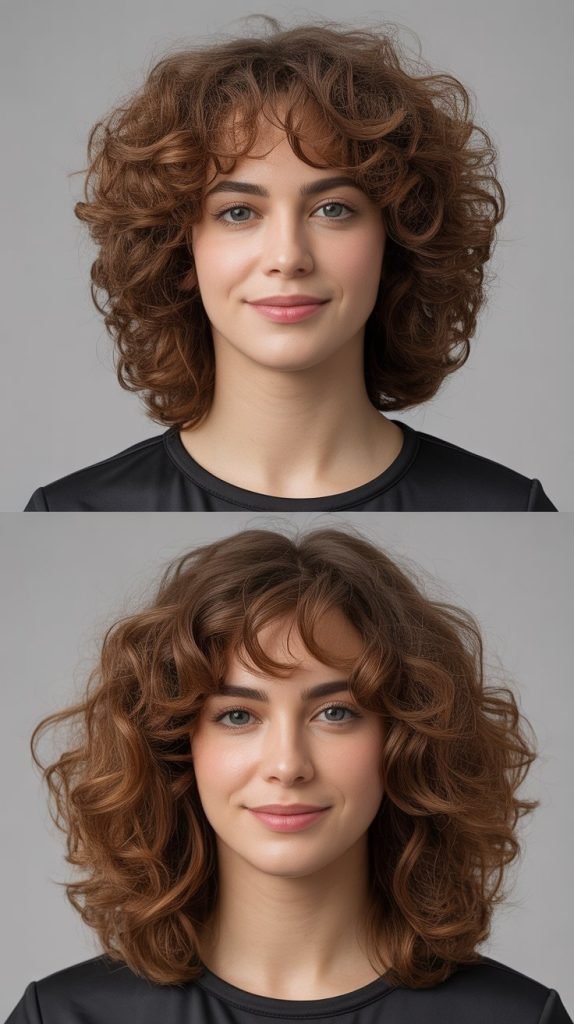
Strategic face-framing layers can dramatically enhance your features and create a polished, professional look.
These specialized techniques require understanding facial geometry and how different layer lengths interact with your bone structure.
- Identify your face shape to determine the most flattering layer placement
- Oval faces can handle most face-framing techniques and layer lengths
- Round faces benefit from longer layers that create vertical lines
- Square faces look best with soft, curved layers that soften angular features
- Heart-shaped faces need layers that add width at the jawline
- Long faces require layers that add width and horizontal movement
- Consider your lifestyle and styling preferences when planning face-framing cuts
- Graduation techniques create smooth transitions from shorter to longer pieces
- Asymmetrical face-framing adds modern edge while remaining flattering
- Maintenance requirements increase with shorter face-framing layers
8. Managing Volume and Shape
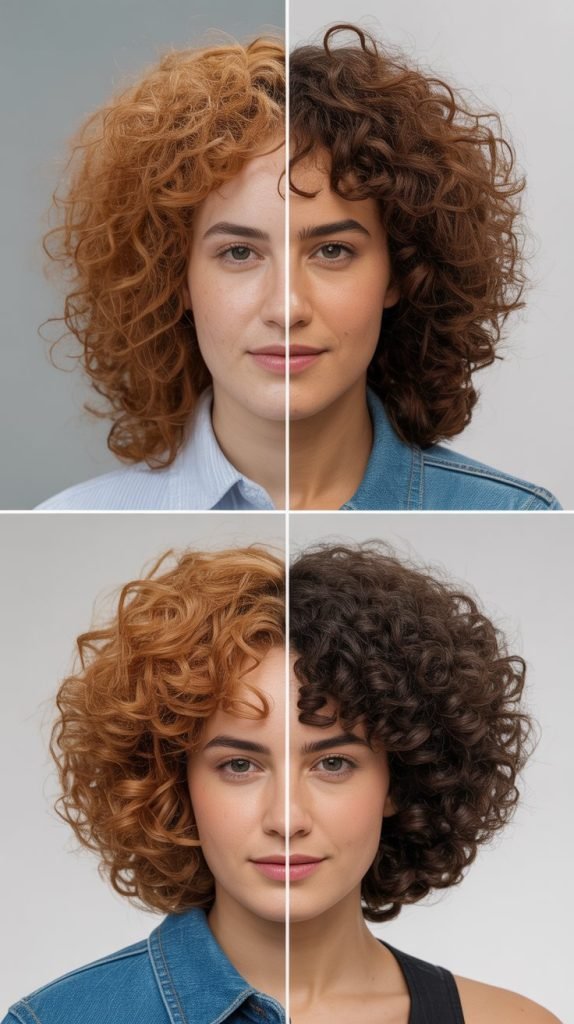
Controlling volume and creating balanced shapes requires understanding how different layering techniques affect overall silhouette.
Proper volume management prevents common issues like triangle shapes and bottom-heavy appearances.
- Identify areas where your hair tends to accumulate excess volume naturally
- Use interior layering to remove bulk without affecting surface curl definition
- Create connection points between layers to maintain balanced proportions
- Avoid layering that creates steps or shelf-like appearances in the hair
- Consider your head shape when planning volume distribution
- Use texturizing techniques to reduce weight in specific areas
- Balance shorter layers with longer pieces to prevent top-heavy looks
- Incorporate face-framing elements that complement overall shape goals
- Plan for how volume will change as hair grows between cuts
- Adjust techniques based on seasonal humidity and climate changes
9. Common Mistakes and How to Avoid Them
Understanding and avoiding common layering mistakes prevents disappointing results and helps maintain healthy, beautiful curls. Learning from these frequent errors saves time and prevents damage to your hair.
Image Prompt: Educational diagram showing common curly hair layering mistakes with red X marks and correct techniques with green checkmarks
- Cutting hair too short initially because curls spring up more than expected
- Using regular scissors instead of professional hairdressing shears
- Layering hair when it’s completely dry without considering shrinkage patterns
- Creating too many layers which can result in a chaotic, undefined appearance
- Ignoring natural growth patterns and cowlicks when planning cuts
- Cutting all curls the same length regardless of their individual characteristics
- Over-texturizing which can lead to frizz and loss of curl definition
- Not considering face shape and lifestyle when choosing layer placement
- Rushing through the cutting process without proper sectioning and planning
- Attempting advanced techniques before mastering fundamental skills
10. Styling and Maintaining Layered Curls

Proper styling and maintenance techniques ensure your layered curls look their best between cuts and maintain their shape over time. Developing a consistent routine maximizes the longevity and appearance of your professional-quality layers.
- Use curl-specific products that enhance your natural pattern without weighing down layers
- Apply products to soaking wet hair for maximum curl definition and frizz control
- Scrunch hair gently to encourage curl formation and remove excess water
- Diffuse on low heat and speed settings to preserve curl integrity
- Sleep on silk or satin pillowcases to prevent friction and maintain curl shape
- Refresh curls between washes with water and leave-in conditioner spray
- Schedule regular trims every 6-8 weeks to maintain layer integrity
- Adjust your routine seasonally to account for humidity and weather changes
- Deep condition regularly to keep layered ends healthy and hydrated
- Document your routine to identify what works best for your specific curl pattern
Mastering how to layer curly hair like a pro stylist transforms not just your appearance but your entire relationship with your natural texture.
With patience, practice, and the right techniques, you can achieve salon-quality results that celebrate and enhance your unique curl pattern.
Remember that great layering is about working with your hair’s natural characteristics rather than against them, creating a beautiful, manageable style that grows out gracefully and maintains its shape between cuts.
