

Short hair doesn’t limit your styling options when it comes to incorporating bandanas into your daily looks.
Learning How to Do Quick Bandana Hairstyles for Short Hair transforms your morning routine and gives you versatile styling solutions that work perfectly with cropped cuts, bobs, pixies, and everything in between.
These quick techniques require minimal time investment while delivering maximum style impact, making them ideal for busy mornings, bad hair days, or when you simply want to add a pop of personality to your look.
This comprehensive guide covers seven essential bandana styling techniques specifically designed for shorter hair lengths.
You’ll discover how to choose the right bandana size for your hair length, master quick wrapping methods that stay secure all day, and learn styling variations for different short haircuts.
We’ll explore color coordination tips, securing techniques that work with limited hair volume, and professional finishing touches that elevate casual looks into polished styles suitable for any occasion.
1. Choosing the Right Bandana Size for Short Hair
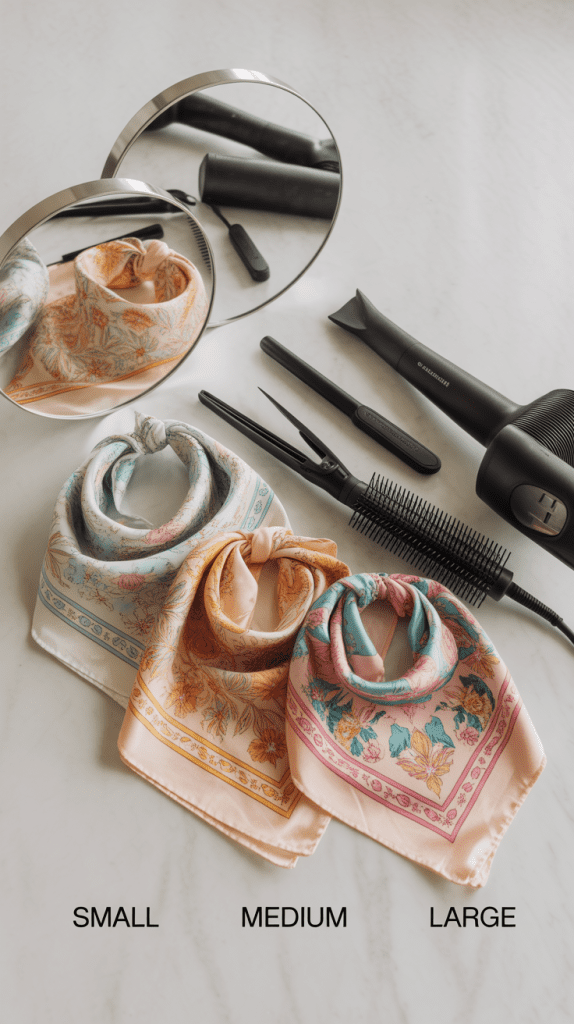
Selecting appropriately sized bandanas is crucial for short hair success, as standard sizes can overwhelm smaller head proportions and create styling difficulties.
Understanding size relationships helps create balanced, proportional looks that complement rather than dominate your hairstyle.
Standard Size Adaptations:
- Choose 18-inch square bandanas instead of the standard 22-inch for better proportion
- Look for rectangular bandanas measuring 16×20 inches for easier wrapping
- Consider children’s bandanas which often provide ideal sizing for short adult hairstyles
- Select narrow bandana scarves specifically designed for hair styling applications
- Opt for bandana headbands that come pre-folded to appropriate widths
Proportion Considerations:
- Smaller bandanas create more delicate, refined looks on petite faces
- Wider bandanas can overwhelm very short pixie cuts and fine features
- Consider your face shape when selecting bandana width for headband styles
- Choose patterns and colors that complement rather than compete with your hair color
- Test different sizes to find your most flattering proportion before investing in multiple pieces
2. The Classic Short Hair Headband Method
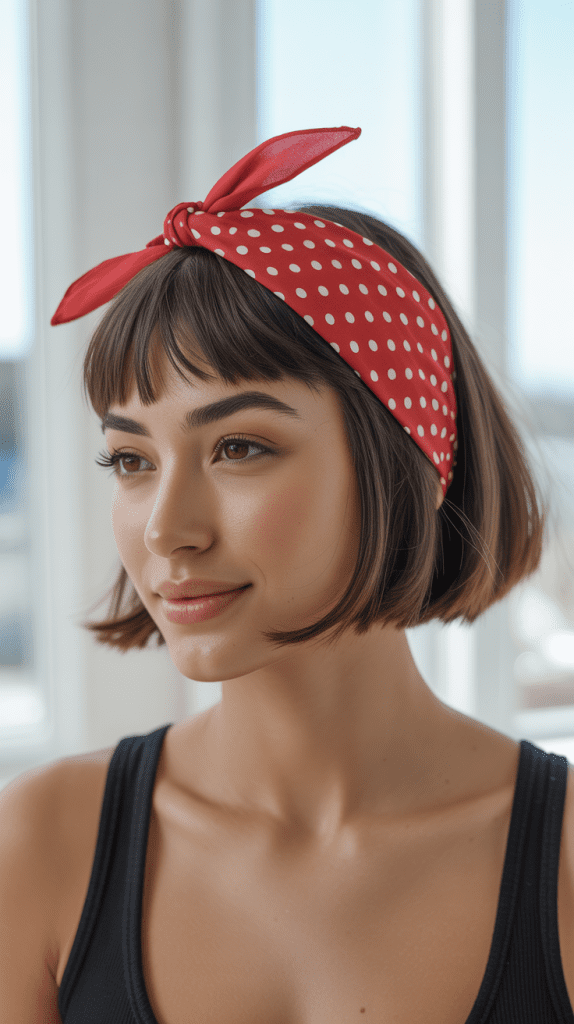
The headband technique remains the most versatile and foolproof method for incorporating bandanas into short hairstyles, providing instant polish while accommodating various hair lengths and textures.
This foundational technique forms the basis for many other short hair bandana styles.
Preparation Steps:
- Start with clean, dry hair that has some natural texture for better grip
- Fold your bandana diagonally to create a triangle shape
- Roll the triangle from the long edge toward the point to form a band
- Adjust the band width to approximately 2-3 inches for optimal proportion
- Ensure the roll is tight enough to maintain shape but flexible for comfort
Application Technique:
- Position the center of the band at your hairline or slightly above
- Smooth any front pieces that you want to keep visible around your face
- Bring the bandana ends behind your ears and cross them at the nape
- Pull the crossed ends forward and tie them at your preferred side
- Adjust the knot position – temple area for classic looks, behind ear for modern styles
Short Hair Specific Adjustments:
- Push shorter front pieces through the bandana for a layered effect
- Allow pixie cut texture to peek out around the edges for natural movement
- Position the bandana slightly higher on very short cuts to create proportion balance
- Use the bandana to create the illusion of more hair volume by positioning strategically
- Incorporate small bobby pins invisibly to secure any pieces that won’t stay in place
3. Quick Top Knot Techniques for Shorter Lengths
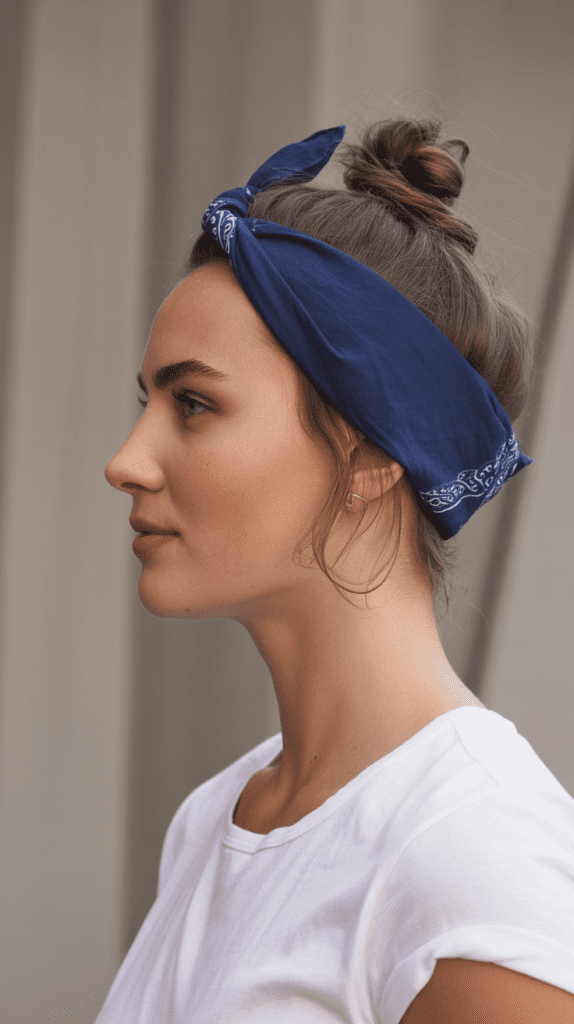
Creating top knots with short hair requires modified techniques that work with limited hair length while still achieving that effortlessly chic updo appearance.
Bandanas become essential tools for adding volume, color, and security to these abbreviated styles.
Short hair top knots rely on strategic bandana placement to create the illusion of fuller, longer hair while providing the decorative element that makes the style complete.
Foundation Building:
- Apply texturizing mousse to damp hair and scrunch while air drying for natural grip
- Use dry shampoo at the roots to create additional texture and volume
- Gather all available hair at the crown, even if some pieces are too short to reach
- Secure with a small clear elastic, allowing shorter pieces to fall naturally
- Don’t worry about perfection – embrace the messy, textured appearance
Bandana Integration Methods:
- Wrap the folded bandana around the elastic base to hide the hair tie
- Thread the bandana through your ponytail before twisting into a mini bun
- Use the bandana as the primary securing method by tying it around the gathered hair
- Create a faux bun by stuffing the bandana fabric into the gathered hair area
- Position the bandana knot as a decorative element on top of or beside the bun
Volume Enhancement Tricks:
- Backcomb the hair gently before gathering to create more fullness
- Use a small hair donut or sock bun maker wrapped with bandana fabric
- Twist sections of hair around the bandana to create texture and bulk
- Pin shorter face-framing pieces back with decorative bobby pins that match the bandana
- Finish with light-hold hairspray to maintain the style without weighing down fine hair
4. Pixie Cut Bandana Styling Solutions
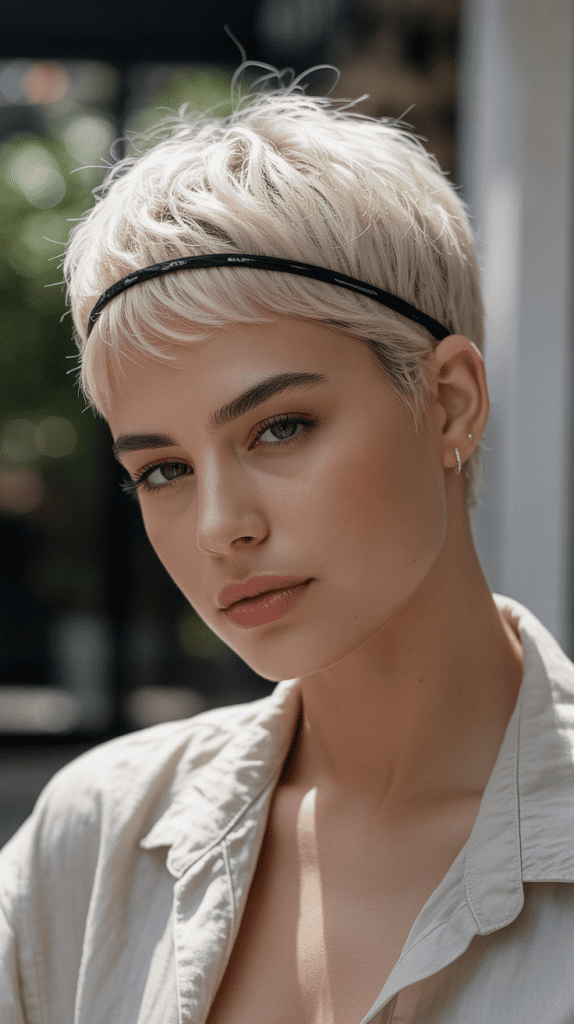
Pixie cuts present unique styling opportunities where bandanas serve as both functional and decorative elements, adding personality and versatility to ultra-short hairstyles.
These techniques focus on accent styling rather than hair manipulation.
Accessory-Forward Approaches:
- Use bandanas primarily as decorative headbands rather than hair-holding devices
- Focus on the bandana as a color and pattern accent that complements your pixie texture
- Position bandanas to frame your face and highlight your facial features
- Choose bandanas that echo colors in your makeup or outfit for coordinated looks
- Embrace the bandana as the main styling element while letting hair texture shine naturally
Narrow Band Techniques:
- Fold bandanas into very thin strips, approximately 1-2 inches wide for pixie proportions
- Position thin bandana bands across the forehead like a delicate headpiece
- Try multiple thin bandana strips at different angles for a layered accessory look
- Use narrow bandana ties to create small accent bows positioned at the temples
- Incorporate thin bandana strips into small braided sections if hair length allows
Texture Integration Methods:
- Work with your natural pixie texture rather than trying to smooth it completely
- Use bandanas to push back longer front sections while allowing sides to remain natural
- Create intentional contrast between sleek bandana lines and tousled hair texture
- Apply small amounts of texturizing paste to enhance your natural hair movement
- Position bandanas to complement rather than hide your pixie cut’s architectural lines
Special Occasion Adaptations:
- Choose metallic or embellished bandanas for evening events
- Layer multiple coordinating bandanas for festival or creative looks
- Use silk bandanas for professional settings where subtle elegance is appropriate
- Try vintage-inspired patterns for themed events or retro styling
5. Bob Length Bandana Wrapping Variations
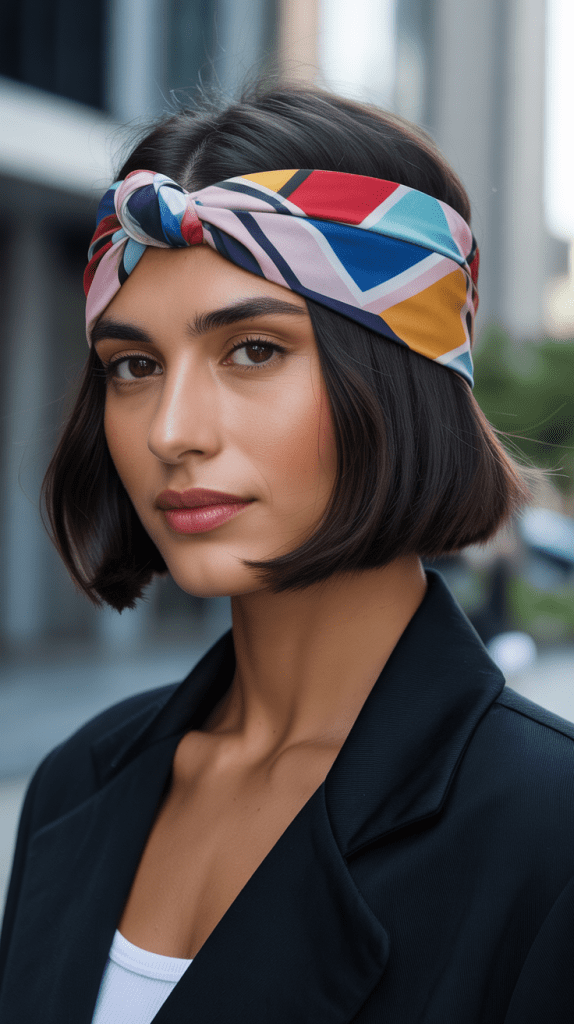
Bob haircuts offer the perfect canvas for diverse bandana styling techniques, providing enough length for creative wrapping while maintaining the clean lines that make bobs so appealing.
These methods work with all bob variations from blunt cuts to layered styles.
Bob lengths provide optimal versatility for bandana styling, offering sufficient hair to work with while maintaining the sleek sophistication that defines this classic cut.
Classic Wrap-Around Method:
- Start with hair styled in your preferred bob shape using your usual products
- Position the bandana at the nape of your neck with equal lengths on both sides
- Bring both ends forward along your hairline, crossing them at your forehead
- Tie the ends in a knot at the top of your head, creating a crown-like effect
- Adjust the bandana position to show the desired amount of hair around your face
- Tuck any loose bandana ends under the wrapped sections for a clean finish
Side-Swept Integration:
- Create a deep side part in your bob using a fine-tooth comb
- Place the bandana center point behind one ear on the shorter side of the part
- Wrap the bandana across the top of your head following your part line
- Secure by tying behind the opposite ear, allowing longer hair to cascade over the knot
- This technique works especially well with asymmetrical bob cuts
- Use contrasting bandana colors to emphasize the dramatic side-swept effect
Under-Wrap Technique:
- Position your bob hair forward over your shoulders temporarily
- Place the bandana across the back of your head at neck level
- Bring the ends forward under your hair, crossing them beneath your chin
- Pull the crossed ends up and tie them at the top of your head
- Smooth your bob back into place, allowing it to cover the bandana base
- This creates a hidden foundation with decorative top knot styling
6. Securing Methods for Short Hair Volume
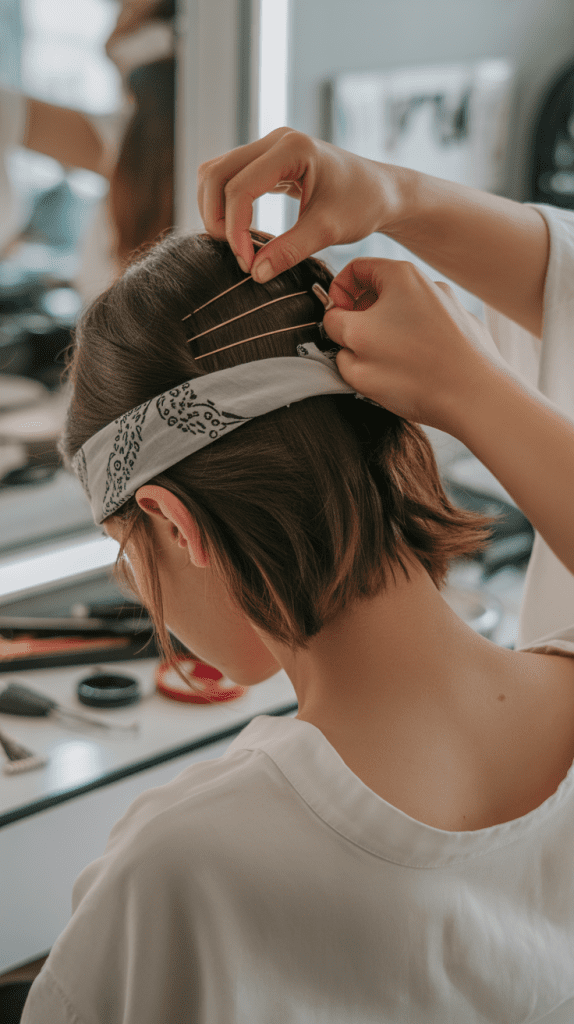
Short hair requires specialized securing techniques that provide adequate hold without the weight and anchor points that longer hair naturally provides.
These methods ensure your bandana styles remain intact throughout your daily activities.
Strategic Pin Placement:
- Use bobby pins that match your hair color exactly for invisible security
- Insert pins at a slight upward angle to catch more hair and provide better grip
- Place pins at natural stress points where the bandana experiences tension
- Cross bobby pins in X-patterns at critical anchor points for maximum hold
- Target areas behind the ears where hair tends to be thicker for better pin grip
Elastic and Grip Enhancements:
- Choose mini elastics designed specifically for short hair applications
- Use clear elastics that won’t show through bandana fabric or against your scalp
- Apply texturizing spray before styling to create better grip between hair and bandana
- Consider velcro-style hair grips that provide extra hold on slippery fine hair
- Use small claw clips temporarily while arranging bandana position, then remove for photos
Tension Management:
- Avoid overtightening bandanas, which can cause headaches and hair breakage
- Test the comfort level by wearing the style for 10-15 minutes before leaving home
- Learn to recognize the difference between secure hold and excessive pressure
- Adjust knot positions if you experience any discomfort or pulling sensations
- Practice creating the right amount of tension for security without strain
Professional Finishing Products:
- Apply light-hold hairspray after positioning to set the style without stiffness
- Use anti-frizz serum on any flyaways that peek out around the bandana edges
- Carry a small smoothing brush for midday touch-ups if needed
- Consider travel-size styling products for on-the-go adjustments
7. Color Coordination Tips for Short Hair
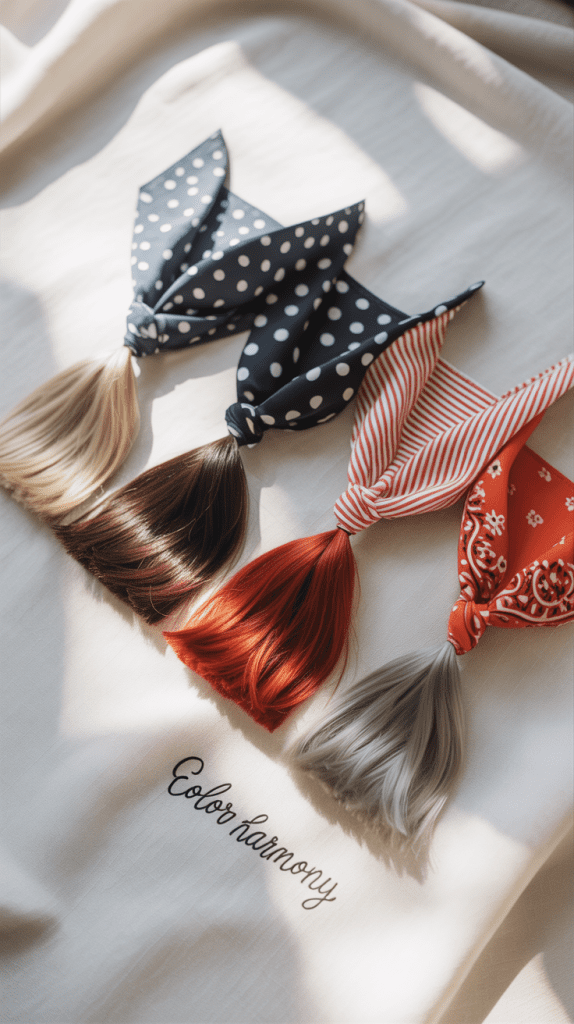
Color coordination becomes especially important with short hairstyles where bandanas often occupy a significant visual proportion of your overall look.
Strategic color choices enhance both your hair color and overall style presentation.
Hair Color Complementation:
- Blonde hair pairs beautifully with soft pastels, navy blues, and classic black bandanas
- Brunette hair looks stunning with warm colors like burgundy, forest green, and rich oranges
- Red hair complements earth tones, deep greens, and sophisticated neutrals like cream and gold
- Gray or silver hair works well with jewel tones, black and white patterns, and bold modern prints
- Consider your undertones – warm or cool – when selecting bandana colors for most flattering effects
Skin Tone Considerations:
- Cool undertones look best in bandanas with blue, purple, or green base colors
- Warm undertones are enhanced by bandanas in red, orange, or yellow families
- Neutral undertones can wear most bandana colors successfully with proper coordination
- Test bandana colors near your face in natural lighting before purchasing
- Consider how different lighting conditions will affect color appearance throughout your day
Outfit Integration Strategies:
- Choose bandanas that echo a secondary color in your outfit rather than competing with the primary color
- Use neutral bandanas as foundation pieces that work with multiple wardrobe colors
- Select patterned bandanas that incorporate several colors for maximum outfit coordination flexibility
- Consider metallic accent bandanas for evening wear or special occasions
- Build a capsule collection of bandanas in versatile colors that coordinate with your existing wardrobe
Seasonal Color Adaptations:
- Spring: Fresh greens, soft pinks, and light blues that echo renewal and growth
- Summer: Bright corals, sunny yellows, and ocean-inspired blues and teals
- Fall: Rich burgundies, warm oranges, deep browns, and golden yellows
- Winter: Classic reds, elegant blacks, sophisticated navy, and jewel tones
8. Professional Finishing Touches
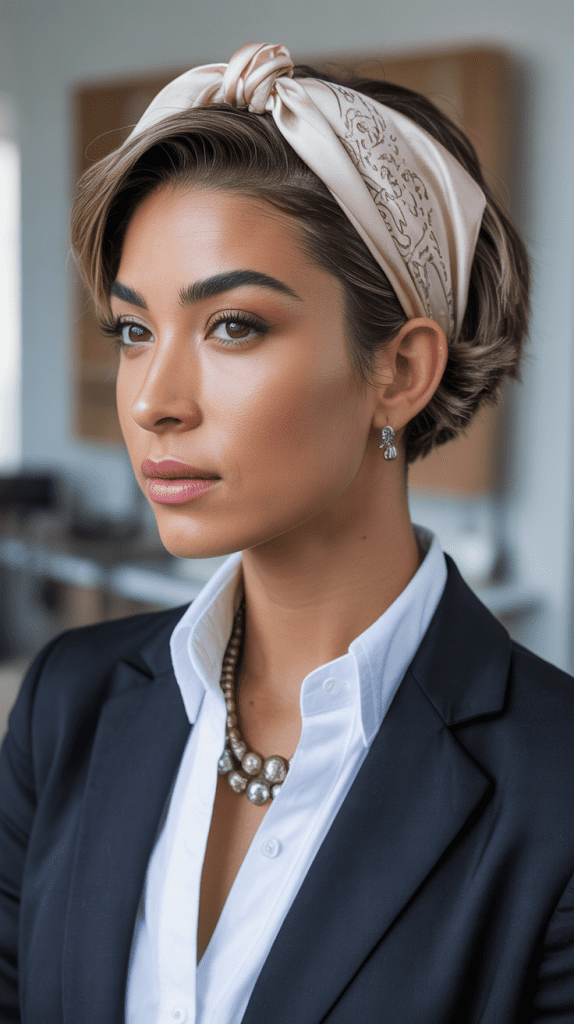
Professional finishing techniques transform basic bandana styles into polished looks that work for workplace settings, special events, and any situation requiring a refined appearance.
Mastering professional finishing details elevates your bandana hairstyles from casual accessories to sophisticated styling elements that enhance your overall presentation.
Edge Smoothing Techniques:
- Use a small boar bristle brush to smooth any flyaways around the bandana edges
- Apply a tiny amount of hair serum to your fingertips and gently smooth problem areas
- Keep a clean mascara wand in your purse for emergency flyaway control throughout the day
- Use a fine-mist spray bottle with water for quick smoothing touch-ups
- Consider anti-humidity products if you live in a climate that causes frizz and flyaways
Knot Perfection Methods:
- Practice tying neat, symmetrical knots that look intentional rather than haphazard
- Learn to adjust knot tightness for both security and aesthetic appeal
- Position knots at flattering angles that complement your face shape and features
- Trim any excessively long bandana tails that detract from the overall polished appearance
- Master the art of tucking loose ends invisibly for clean, finished looks
Overall Style Cohesion:
- Ensure your bandana style complements rather than competes with your makeup choices
- Consider your earring selection – smaller, simpler earrings often work best with bandana styles
- Coordinate your bandana texture with other accessories like bags, shoes, or jewelry finishes
- Pay attention to neckline coordination – bandana styles work differently with various collar types
- Practice your complete look in advance for important events or professional presentations
Maintenance Throughout the Day:
- Check your bandana position in mirrors or phone cameras periodically
- Carry a few extra bobby pins for emergency securing if needed
- Learn quick adjustment techniques for common shifting or loosening issues
- Develop awareness of activities that might disturb your bandana style and plan accordingly
Conclusion
Mastering How to Do Quick Bandana Hairstyles for Short Hair opens up a world of styling possibilities that prove short hair is anything but limiting when it comes to creative expression.
These versatile techniques work seamlessly with pixie cuts, bobs, and every short hairstyle in between, providing solutions for busy mornings, special occasions, and everyday style enhancement.
The key to success lies in choosing appropriately sized bandanas, understanding your hair’s unique characteristics, and practicing securing methods that provide all-day confidence and comfort.
Whether you’re looking to add a pop of color to your professional wardrobe, create festival-ready looks, or simply elevate your casual style game, these bandana techniques offer endless creative potential.
Remember that the most successful bandana hairstyles are those that work harmoniously with your natural hair texture and personal style, so embrace experimentation and find the combinations that make you feel most confident and authentically yourself.
