

Bandanas have transformed from simple utility accessories into powerful fashion statements that can instantly elevate your hairstyle game.
Whether you’re dealing with a bad hair day, want to add a pop of color to your outfit, or simply love the vintage-chic aesthetic, learning How to Make Bandana Hairstyles That Elevate Any Look opens up endless styling possibilities.
This versatile accessory works beautifully with every hair length, texture, and personal style, making it a must-have addition to your hair accessory collection.
This comprehensive guide will walk you through essential bandana styling techniques, from classic headband looks to trendy top knots and sophisticated braided styles.
You’ll discover the best bandana types for different occasions, learn styling tips for various hair textures, and master the art of securing your bandana for all-day wear.
Additionally, we’ll explore seasonal styling variations and troubleshoot common bandana hairstyling challenges to ensure you always achieve that perfectly polished look.
1. Essential Bandana Types and Selection Guide

Choosing the right bandana is crucial for creating hairstyles that truly elevate your look and complement your personal style.
Different materials, sizes, and patterns work better for specific hairstyles and occasions, making selection an important first step in your bandana styling journey.
Material Considerations:
- Cotton bandanas offer the best grip and are ideal for casual everyday looks
- Silk bandanas provide a luxurious finish and work well for formal occasions
- Polyester blends offer durability and maintain their shape throughout the day
- Chiffon bandanas create soft, flowing effects perfect for romantic styles
Size and Pattern Selection:
- Standard 22-inch square bandanas work best for most hairstyling applications
- Smaller 18-inch bandanas are perfect for short hair and subtle accents
- Solid colors create timeless, versatile looks that match any outfit
- Paisley patterns add classic vintage appeal to your hairstyles
- Floral prints bring feminine touches to casual and dressy looks
- Geometric patterns offer modern, edgy styling options
Seasonal Color Choices:
- Spring: Pastel blues, soft pinks, and fresh mint greens
- Summer: Bright corals, sunny yellows, and ocean blues
- Fall: Rich burgundies, warm oranges, and deep forest greens
- Winter: Classic reds, elegant blacks, and sophisticated navy blues
2. Classic Headband Style Techniques
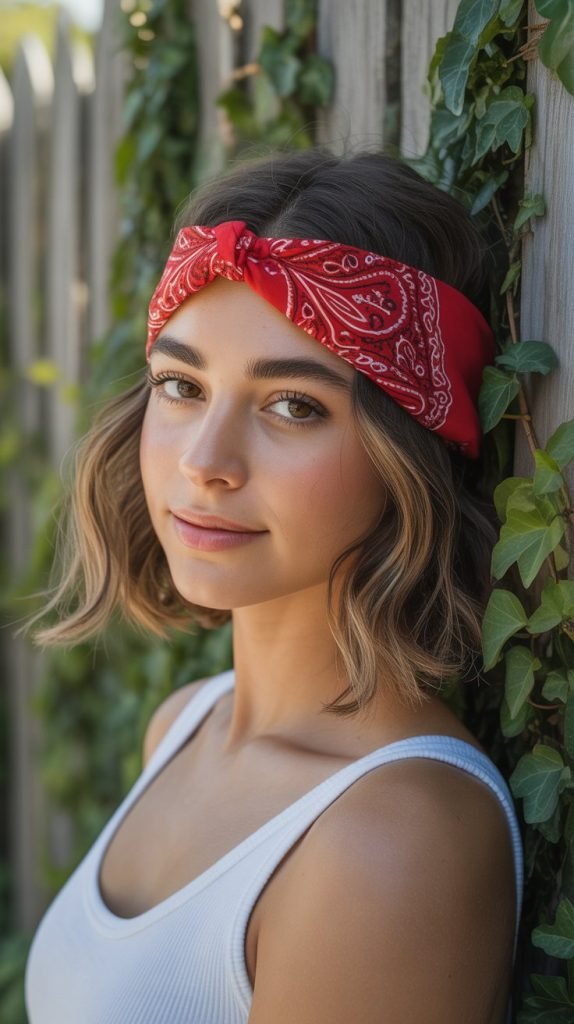
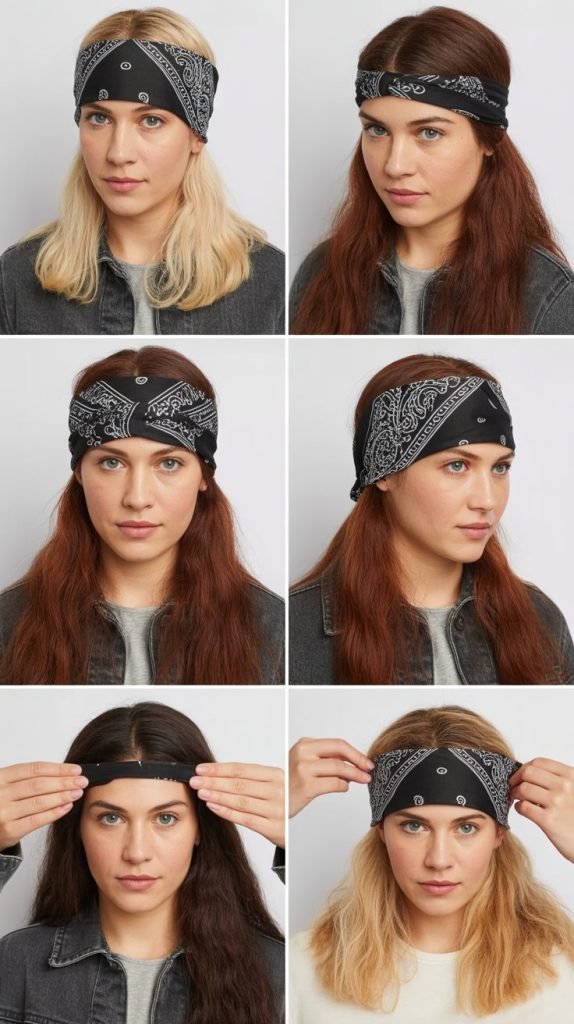
The headband style remains one of the most popular and versatile ways to wear a bandana, instantly adding retro charm while keeping hair neat and stylish.
This timeless technique works exceptionally well for all hair lengths and can be adapted for both casual and more polished looks.
Basic Headband Preparation:
- Fold your bandana diagonally to create a triangle shape
- Roll the bandana from the longest edge toward the point to create a band
- Adjust the width of your band based on your desired coverage
- Leave approximately 6-8 inches of tail on each side for tying
Styling Technique Steps:
- Place the center of the band at your hairline or slightly behind it
- Smooth your hair back gently while positioning the bandana
- Cross the tails behind your head at the nape of your neck
- Bring the tails forward and tie them in a knot at your temple
- Tuck the loose ends under the band or let them hang for a casual effect
- Adjust the band position to frame your face attractively
Variation Ideas:
- Position the knot at the top of your head for a pin-up inspired look
- Tie the knot behind one ear for an asymmetrical, modern twist
- Leave some face-framing pieces loose for a softer, romantic appearance
- Push the bandana back slightly to create volume at the crown
3. Trendy Top Knot and Bun Combinations
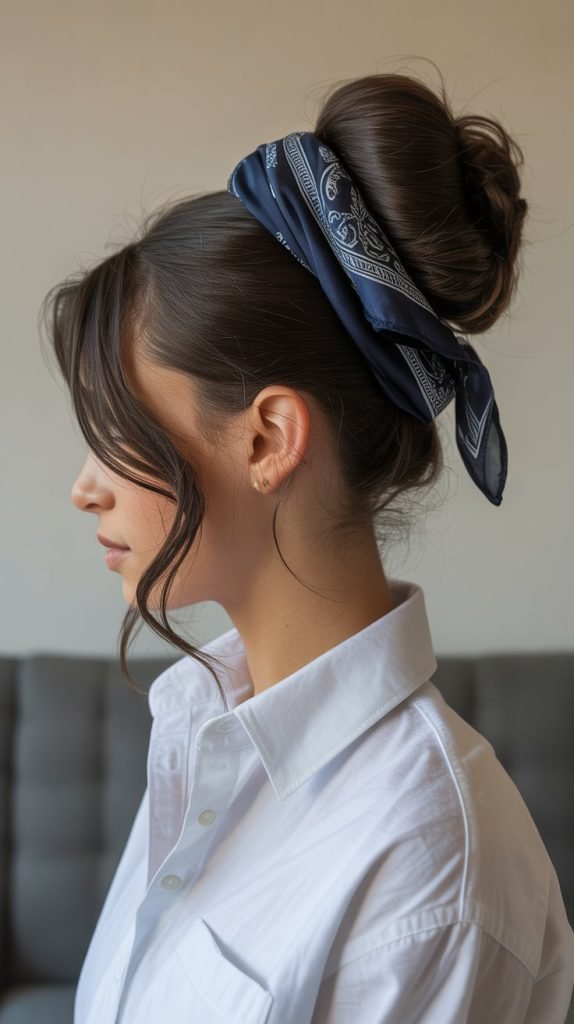
Combining bandanas with top knots and buns creates sophisticated styles that work beautifully for both casual outings and special occasions. This technique adds texture, color, and visual interest to simple updos while providing practical hair management.
Top Knot Foundation Setup:
- Start with day-old hair for better grip and texture
- Gather your hair into a high ponytail at the crown of your head
- Secure with a clear elastic band that won’t interfere with the bandana
- Twist the ponytail and wrap it around the base to form your bun
Bandana Integration Methods:
- Fold your bandana into a thin band and wrap it around the bun base
- Thread the bandana through your ponytail before creating the bun
- Tie the bandana around your head first, then gather hair through it
- Weave the bandana through sections of the bun for textural contrast
- Position the bandana as a decorative band around the finished bun
Styling Variations:
- Create a messy bun and wrap the bandana loosely for a bohemian feel
- Make a sleek low bun with the bandana positioned as an elegant headband
- Try a side bun with the bandana twisted through the hair for asymmetry
- Combine multiple small buns with bandana accents for a festival look
Securing Tips:
- Use bobby pins that match your hair color to secure loose bandana ends
- Tuck bandana tails into the bun structure for a clean finish
- Apply light-hold hairspray to maintain the style throughout the day
4. Braided Bandana Styling Methods
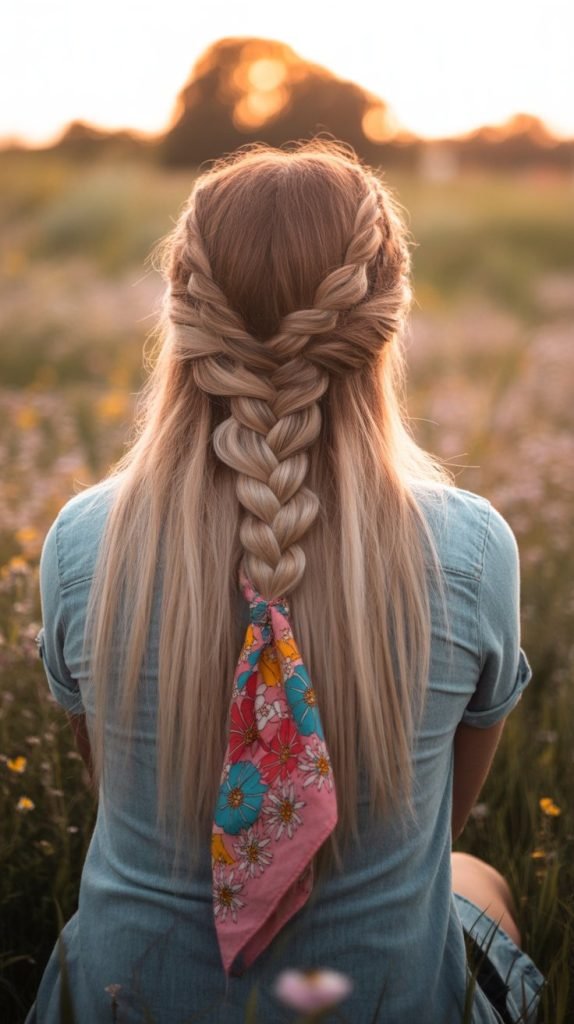
Incorporating bandanas into braided hairstyles creates intricate, eye-catching looks that combine texture, color, and sophisticated braiding techniques. These styles work particularly well for medium to long hair lengths and offer excellent longevity for active days.
Three-Strand Braided Integration:
- Divide your hair into three equal sections at the nape of your neck
- Fold your bandana lengthwise to create a narrow strip
- Replace one hair section with the folded bandana for color contrast
- Braid normally, treating the bandana as you would a section of hair
- Secure the end with a clear elastic and tie a small knot with bandana excess
Dutch and French Braid Techniques:
- Begin your French braid at the hairline, incorporating small sections gradually
- Weave the bandana strip through every few crossovers for subtle color addition
- Create Dutch braids with the bandana forming the center strand throughout
- Finish with the bandana ends wrapped around the elastic for a polished look
Multiple Braid Combinations:
- Create two side braids and connect them with a bandana bow at the back
- Make several small braids and tie them together with bandana ribbons
- Combine a crown braid with loose hair and finish with a bandana accent
- Try waterfall braids with the bandana cascading through the loose sections
Advanced Braiding Options:
- Four-strand braids using bandana as the fourth element
- Fishtail braids with bandana strips woven throughout
- Rope braids twisted with bandana for added texture and color
5. Hair Texture-Specific Styling Tips
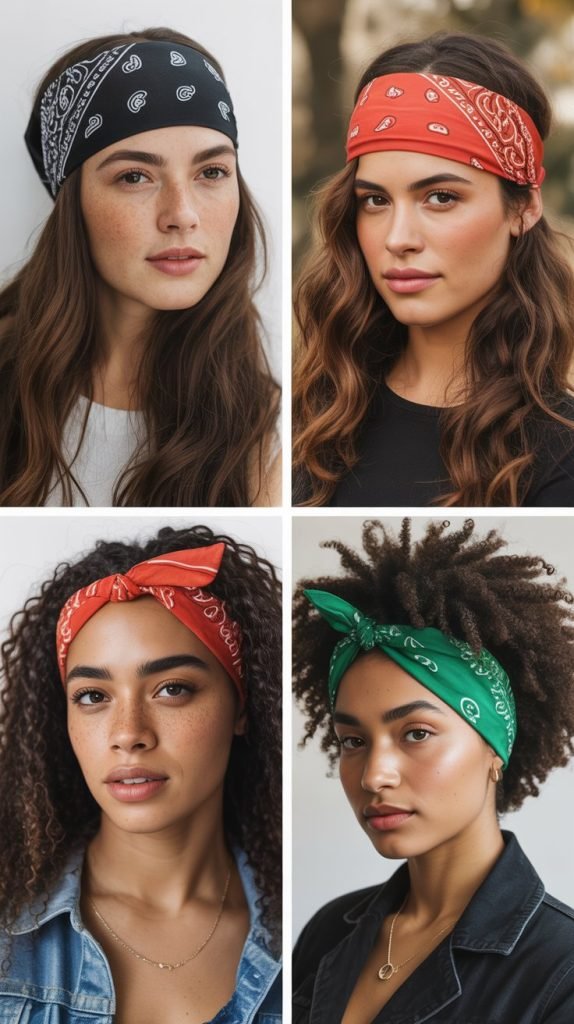
Different hair textures require specific approaches when styling with bandanas to ensure the accessory stays secure while complementing your natural hair characteristics.
Understanding your hair’s unique properties helps create bandana styles that look polished and last all day.
Understanding hair texture impacts how bandanas grip and move with your hair, making technique adjustments essential for optimal results.
Fine Hair Considerations:
- Use texturizing spray before styling to create grip for better bandana security
- Opt for lightweight bandana materials like chiffon to avoid weighing hair down
- Create volume at the roots before applying bandana styles
- Use smaller bobby pins and clear elastics for less visible securing methods
- Choose looser bandana wrapping techniques to prevent hair from appearing flat
Thick Hair Management:
- Ensure bandanas are large enough to accommodate your hair volume
- Use strong-hold elastics and multiple bobby pins for secure placement
- Consider sectioning hair before applying bandana techniques
- Cotton bandanas provide better grip and control for thick hair textures
- Allow extra bandana length for proper tying and securing around fuller hair
Curly Hair Adaptations:
- Apply leave-in conditioner to prevent frizz when handling curls
- Use the “pineapple” method to gather curls gently for top knot styles
- Allow natural curl pattern to show around bandana headband styles
- Avoid pulling curls too tightly when incorporating bandana elements
- Choose bandana colors that complement your curl definition products
Natural Hair Styling:
- Protect edges with edge control before applying bandana pressure
- Use satin-lined bandanas to reduce friction on natural hair textures
- Incorporate bandanas into protective styles like braids and twists
- Allow shrinkage patterns when calculating bandana length requirements
6. Securing Techniques for All-Day Wear
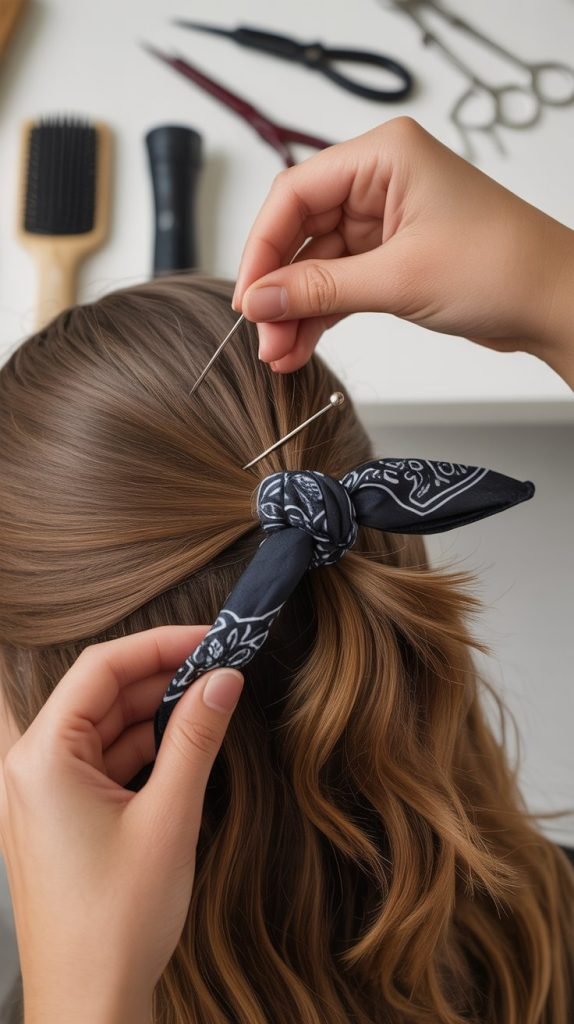
Proper securing methods ensure your bandana hairstyles maintain their shape and position throughout your daily activities while remaining comfortable and damage-free for your hair.
Mastering professional securing techniques transforms temporary styles into long-lasting looks that withstand movement, weather, and time.
Bobby Pin Placement Strategies:
- Insert bobby pins with the wavy side against your scalp for better grip
- Cross bobby pins in X-patterns for maximum hold strength
- Use bobby pins that match your hair color for seamless blending
- Secure bandana ends by pinning them under existing hair layers
- Place pins at stress points where bandanas experience the most tension
Elastic and Hair Tie Methods:
- Use clear elastics that won’t show through bandana fabric
- Double-wrap elastics for extra security without excessive tightness
- Choose seamless hair ties to prevent snagging on bandana materials
- Position elastics strategically within bandana folds for hidden support
- Replace worn elastics regularly to maintain consistent holding power
Knot Tying Techniques:
- Master the square knot for secure, long-lasting bandana connections
- Use surgeon’s knots for extra security on slippery fabrics like silk
- Leave appropriate tail length for retying throughout the day if needed
- Practice tension control to avoid overtightening and causing headaches
- Learn to tie knots at various positions for different styling effects
Professional Finishing Touches:
- Apply light-hold hairspray to set bandana position without stiffness
- Use small amounts of hair wax on bandana ends to prevent fraying
- Smooth flyaways with a small brush or clean mascara wand
- Check mirror angles to ensure even positioning and proper coverage
7. Seasonal Styling and Occasion Adaptations
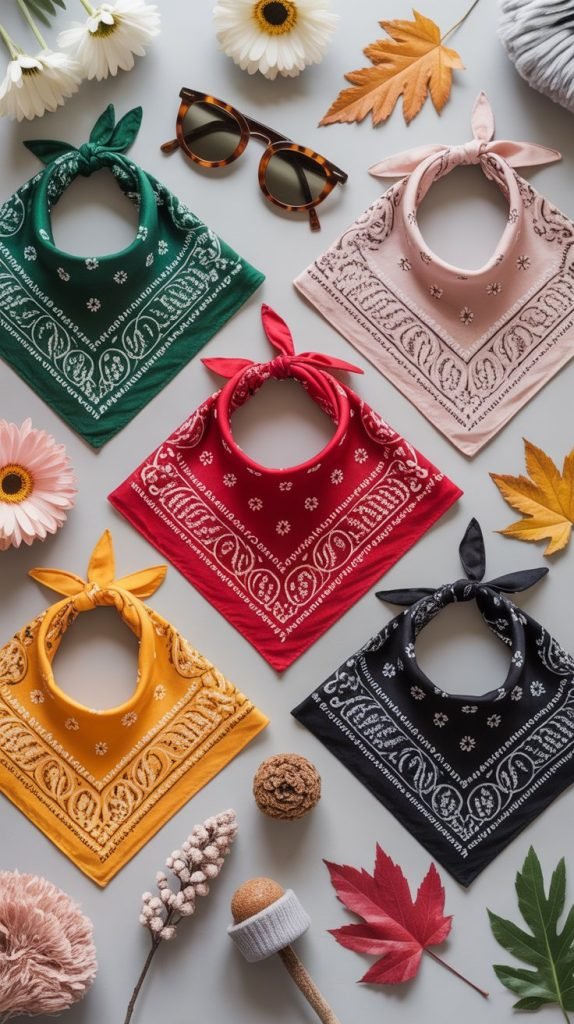
Adapting your bandana hairstyles to match seasons and specific occasions ensures your look always feels appropriate and thoughtfully coordinated with your overall style presentation.
Spring and Summer Adaptations:
- Choose lightweight, breathable fabrics that won’t trap heat against your scalp
- Opt for bright, cheerful colors that complement warm weather wardrobes
- Create styles that keep hair off your neck and shoulders for cooling comfort
- Incorporate floral and tropical patterns that echo seasonal themes
- Use bandana styles that work well with sun hats and sunglasses
- Consider sweat-resistant securing methods for active outdoor activities
Fall and Winter Modifications:
- Select warmer colors like burgundy, forest green, and rich browns
- Choose thicker bandana materials that provide some insulation
- Adapt styles to work under winter hats and hoodies
- Create looks that complement cozy textures like wool and cashmere
- Use deeper, more sophisticated color palettes for seasonal appropriateness
Occasion-Specific Styling:
- Workplace: Classic headband styles in neutral colors with professional knots
- Casual weekends: Messy buns with playful bandana colors and relaxed tying
- Date nights: Elegant low chignons with silk bandana accents
- Exercise activities: Secure top knots with sweat-wicking bandana materials
- Formal events: Sophisticated braided styles with coordinating bandana colors
- Music festivals: Bold patterns and multiple bandana layering for statement looks
Special Event Considerations:
- Wedding guest: Soft, romantic styles that don’t upstage the bride
- Beach vacations: Salt-air resistant styles with tropical-inspired patterns
- Holiday parties: Festive colors and metallic accents for celebratory feels
8. Troubleshooting Common Bandana Hair Challenges
Even experienced stylists encounter challenges when creating bandana hairstyles, but understanding common issues and their solutions helps you achieve consistently beautiful results.
Learning to identify and solve typical bandana styling problems saves time and frustration while improving your overall technique and confidence.
Slipping and Sliding Issues:
- Increase hair texture with dry shampoo or texturizing spray before styling
- Use bandanas with better grip properties like cotton instead of slippery silk
- Ensure proper tension when tying – not too loose, not too tight
- Add strategic bobby pins at pressure points to anchor the bandana position
- Check that your knot technique provides adequate security for your activity level
Headache and Pressure Problems:
- Avoid overtightening bandanas, which can cause tension headaches
- Position bandanas slightly higher or lower to find your comfort zone
- Take breaks from bandana wear to prevent prolonged pressure on pressure points
- Choose softer bandana materials that don’t dig into your scalp
- Adjust knot placement to distribute pressure more evenly around your head
Flyaway and Frizz Management:
- Apply anti-frizz serum to hair before bandana application
- Use a small amount of leave-in conditioner to smooth stubborn pieces
- Carry a travel-size smoothing cream for touch-ups throughout the day
- Consider your local humidity levels when choosing bandana materials
- Embrace some natural texture rather than fighting against your hair’s characteristics
Color Coordination Difficulties:
- Build a bandana collection in versatile neutrals like black, navy, and cream
- Choose patterns that incorporate multiple colors for easier outfit matching
- Consider your skin tone when selecting bandana colors for most flattering effects
- Invest in quality bandanas that maintain their color after washing
- Practice mixing patterns and solids to expand your styling options
Conclusion
Mastering the art of How to Make Bandana Hairstyles That Elevate Any Look opens up a world of creative styling possibilities that work for every hair type, occasion, and personal aesthetic.
From classic headband styles that never go out of fashion to sophisticated braided combinations that showcase your creativity, bandanas prove their versatility as transformative hair accessories.
The key to success lies in understanding your hair’s unique characteristics, selecting appropriate bandana materials and colors, and practicing proper securing techniques that ensure all-day comfort and style longevity.
Whether you’re aiming for casual weekend vibes, professional workplace looks, or special occasion elegance, these bandana styling techniques provide the foundation for countless beautiful hairstyles.
Remember that the best bandana hairstyle is one that makes you feel confident and comfortable while expressing your personal style, so don’t be afraid to experiment with different techniques and create variations that work uniquely for you.
