

Winter’s harsh conditions don’t have to spell disaster for your hair.
While cold temperatures, indoor heating, and low humidity can wreak havoc on your locks, the right approach can keep your hair healthy, shiny, and beautiful throughout the season.
This comprehensive guide will walk you through everything you need to know about winter hair care, from understanding why your hair struggles in cold weather to implementing practical solutions that work.
You’ll discover professional techniques, DIY treatments, and daily habits that protect your hair from winter damage while maintaining its natural beauty and strength.
In This Post......
1. Understanding Winter Hair Damage

Winter weather creates the perfect storm for hair damage through multiple environmental factors working against your hair’s natural protective barriers.
The combination of cold outdoor air and heated indoor environments strips moisture from your hair shaft, leading to brittleness, static, and breakage that can persist long after winter ends.
- Cold air holds significantly less moisture than warm air, creating an environment where your hair constantly loses hydration
- Indoor heating systems further reduce humidity levels, sometimes dropping below 30% when hair needs at least 50% humidity to maintain optimal moisture
- Temperature fluctuations between heated indoors and cold outdoors cause your hair cuticles to expand and contract repeatedly
- This constant expansion and contraction weakens the hair shaft’s protective outer layer
- Low humidity causes static electricity buildup, making hair difficult to manage and more prone to tangling
- Winter accessories like wool hats and scarves create friction that can lead to breakage and split ends
- Reduced oil production in your scalp during cold months means less natural protection for your hair strands
- The combination of these factors can result in up to 25% more hair breakage during winter months compared to other seasons
2. Essential Winter Hair Care Routine
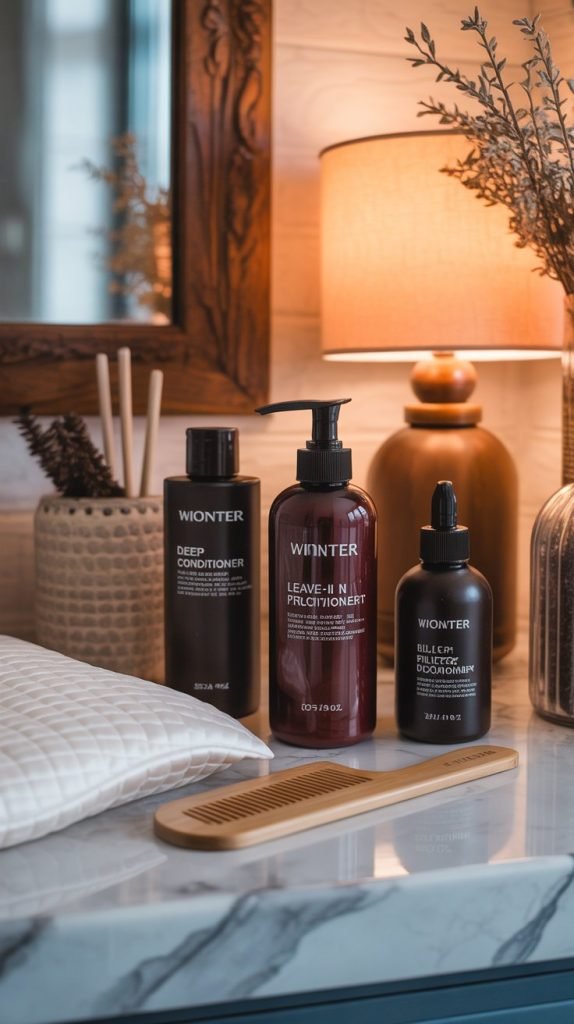
Establishing a consistent winter hair care routine forms the foundation for protecting your hair against seasonal damage while maintaining its health and appearance.
Your routine should focus on moisture retention, gentle cleansing, and protective treatments that work together to create a barrier against harsh winter conditions.
- Reduce washing frequency to 2-3 times per week maximum to preserve your hair’s natural oils
- Use lukewarm water instead of hot water when washing to prevent further moisture loss from your hair and scalp
- Apply a deep conditioning mask once or twice weekly, focusing on mid-lengths and ends where damage is most severe
- Incorporate a leave-in conditioner or hair oil into your daily routine for continuous moisture protection
- Switch to a sulfate-free shampoo that cleanses gently without stripping essential oils from your hair
- Use a wide-tooth comb on damp hair to minimize breakage when detangling
- Apply a heat protectant before any styling to create an additional barrier against damage
- Sleep on silk or satin pillowcases to reduce friction and prevent overnight moisture loss
- Trim your hair every 6-8 weeks to remove split ends before they travel up the hair shaft
- Consider overnight treatments once weekly using natural oils like argan, jojoba, or coconut oil
3. Protective Styling Techniques

Protective styling becomes crucial during winter months as it shields your hair from environmental damage while reducing manipulation that can cause breakage.
These techniques work by keeping your hair ends tucked away and minimizing exposure to harsh conditions that can compromise your hair’s integrity.
- Master low manipulation styles like loose braids, buns, and twists that keep hair ends protected
- Line your winter hats with silk or satin fabric to prevent friction and static buildup
- Create loose protective styles that don’t pull tightly on your scalp or hairline
- Use fabric hair ties instead of elastic bands that can snag and break hair strands
- Incorporate protective overnight styles like loose braids or silk scarves to prevent pillow friction
- Avoid tight ponytails and high-tension styles that can cause breakage at the hairline
- Pre-treat your hair with leave-in conditioner before putting on protective styles
- Change your part regularly to prevent one area from becoming overly stressed or damaged
- Use bobby pins and hair clips sparingly, opting for snag-free varieties when necessary
- Consider protective wigs or scarves as stylish alternatives that completely shield your natural hair from winter elements
4. Nutrition and Hydration for Healthy Hair

Your hair’s winter resilience depends heavily on internal nourishment, as proper nutrition and hydration provide the building blocks for strong, healthy strands that can better withstand seasonal challenges.
What you consume directly impacts your hair’s ability to retain moisture and resist damage during harsh winter months.
- Increase your daily water intake to at least 8-10 glasses to maintain optimal hydration from within
- Include omega-3 rich foods like salmon, walnuts, and flaxseeds to support scalp health and natural oil production
- Consume protein-rich foods such as eggs, lean meats, and legumes to provide essential amino acids for hair strength
- Add biotin-rich foods like sweet potatoes, spinach, and avocados to support hair growth and thickness
- Include vitamin C sources like citrus fruits and bell peppers to enhance iron absorption needed for healthy hair follicles
- Consider taking a high-quality multivitamin specifically formulated for hair, skin, and nails during winter months
- Eat foods high in vitamin D like fortified dairy products and fatty fish to compensate for reduced sun exposure
- Include zinc-rich foods such as pumpkin seeds and oysters to support hair follicle health and prevent excessive shedding
- Limit caffeine and alcohol consumption as both can contribute to dehydration and nutrient depletion
- Focus on antioxidant-rich foods like berries and leafy greens to protect hair follicles from environmental stress
5. Common Winter Hair Mistakes to Avoid
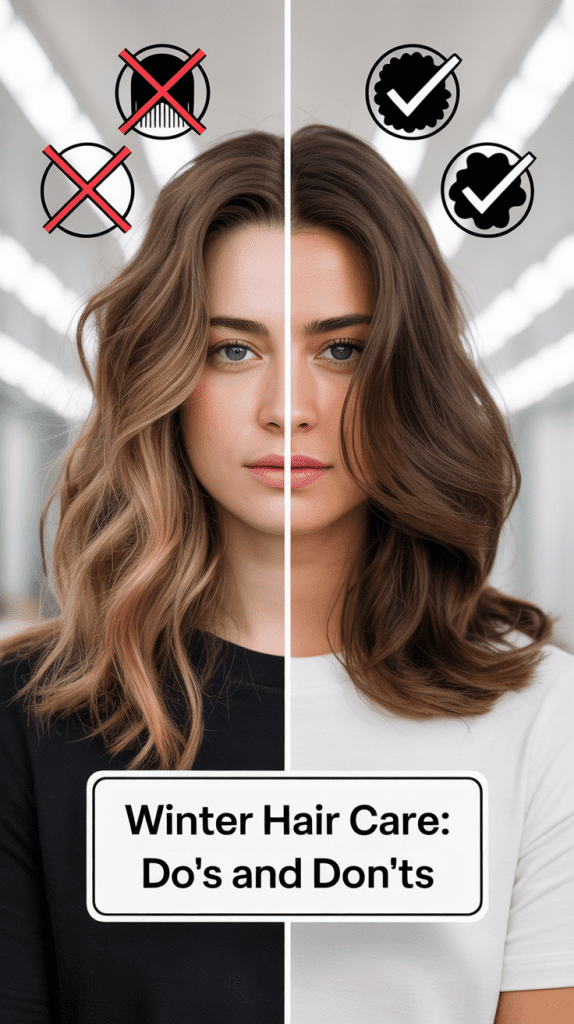
Many people unknowingly sabotage their winter hair care efforts through seemingly harmless habits that actually accelerate damage and dryness.
Recognizing and correcting these common mistakes can dramatically improve your hair’s condition and appearance throughout the cold season.
- Never brush wet hair aggressively, as winter-weakened strands are more susceptible to breakage when saturated
- Avoid using high heat styling tools daily, as winter hair lacks the moisture needed to withstand intense heat
- Don’t skip heat protectant products, even for quick touch-ups, as cumulative damage adds up quickly in dry conditions
- Resist the urge to wash your hair daily, even if it feels oily, as this strips away protective natural oils
- Never go outside with wet hair in freezing temperatures, as frozen hair becomes extremely brittle and prone to snapping
- Avoid tight hairstyles that create tension points where breakage commonly occurs during fragile winter months
- Don’t use regular cotton towels to dry your hair roughly, as this creates friction and lifts the hair cuticle
- Never ignore scalp care, as a dry, flaky scalp can lead to hair thinning and poor growth conditions
- Avoid using products with high alcohol content, as these ingredients further dehydrate already moisture-starved hair
- Don’t rely solely on external treatments while neglecting internal hydration and nutrition that support hair health
6. Budget-Friendly Winter Hair Care Solutions

Effective winter hair care doesn’t require expensive salon treatments or luxury products, as many powerful solutions can be created using affordable ingredients found in most homes.
These budget-conscious approaches deliver professional-quality results while keeping your wallet happy throughout the expensive winter season.
- Create a deep conditioning mask using mashed avocado, honey, and olive oil for intense moisture restoration
- Use coconut oil as an overnight treatment by applying it to damp hair and washing out in the morning
- Make a static-fighting spray by mixing water with a few drops of fabric softener in a spray bottle
- Replace expensive leave-in conditioners with a mixture of your regular conditioner and water in a spray bottle
- Use apple cider vinegar diluted with water as a clarifying treatment to remove product buildup monthly
- Create a protein treatment using beaten eggs mixed with yogurt to strengthen damaged hair strands
- Line existing hats and scarves with silk fabric pieces instead of buying new silk-lined accessories
- Use a microfiber towel or old cotton t-shirt for gentler hair drying compared to regular terry cloth towels
- Make a scalp-soothing treatment using aloe vera gel mixed with a few drops of essential oils
- Invest in a humidifier for your bedroom to increase moisture levels in your environment affordably
Winter doesn’t have to be your hair’s worst enemy when you’re armed with the right knowledge and techniques.
How to Take Care of Your Hair in Winter: A Complete Guide has provided you with comprehensive strategies to protect, nourish, and maintain beautiful hair throughout the coldest months.
By understanding the science behind winter damage, establishing proper routines, using protective styling, focusing on nutrition, avoiding common mistakes, and implementing budget-friendly solutions, you can ensure your hair emerges from winter healthier and more beautiful than ever.
Remember that consistency is key, and small daily efforts compound into significant improvements in your hair’s overall health and appearance.
Start implementing these strategies today, and watch as your hair defies the harsh winter conditions while maintaining its natural beauty and strength.
