

Learning to braid your own hair can feel intimidating at first, but it’s a skill that gives you freedom to style your hair beautifully anytime.
With How to Do Braids on Yourself, you’ll discover the best techniques, practical tools, step-by-step methods, and real-world tips to master braiding on your own head — even if you’re a total beginner.
This guide covers the basics of self-braiding, setting up your workspace, easy starter braids, more advanced options, common struggles, and pro-level advice to build your confidence and skill.
Stick with it, and you’ll soon be braiding your hair with ease and pride!
In This Post......
- 1️⃣ Why Braiding Your Own Hair is Worth Learning
- 2️⃣ Get Your Tools Ready: What You’ll Need
- 3️⃣ Prepping Your Hair: The Secret to Easy Braids
- 4️⃣ Easy Starter Braids for Beginners
- 5️⃣ Learning French Braids on Yourself
- 6️⃣ Dutch Braids: Taking It Up a Notch
- 7️⃣ Tips for Making Braiding Yourself Easier
- 8️⃣ Common Problems and How to Fix Them
- Conclusion
1️⃣ Why Braiding Your Own Hair is Worth Learning
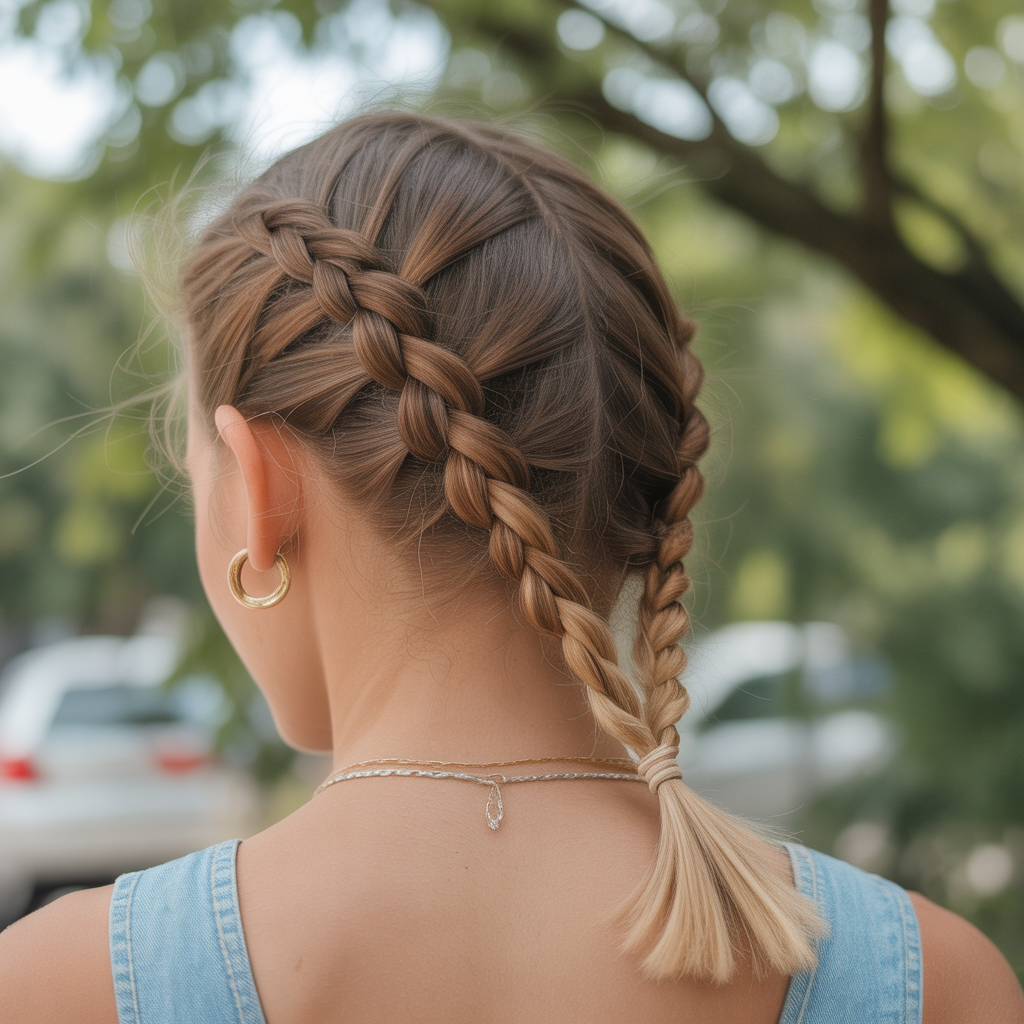
Braiding your own hair can feel tricky at first, but the effort is worth it.
This section explains why self-braiding is an empowering skill.
- Knowing how to braid your own hair saves money on salon visits.
- It gives you endless styling options for any mood or event.
- Braids protect your hair from tangles, breakage, and harsh weather.
- Self-braiding builds your hand coordination and patience.
- You can experiment with your personal style anytime, anywhere.
2️⃣ Get Your Tools Ready: What You’ll Need

Having the right tools at your fingertips makes braiding your own hair much easier.
Here’s what you’ll need to prep like a pro.
- A wide-tooth comb for gentle detangling.
- A rat-tail or fine-tooth comb for sharp, clean parts.
- Strong clips to section your hair and keep it out of your way.
- Snag-free elastics to secure the braid ends comfortably.
- A hand mirror or wall mirror, plus a small mirror to see the back of your head.
- A spray bottle with water or leave-in conditioner for easier grip.
- Hair oil or light styling cream to smooth flyaways.
| Tool | Why You Need It |
|---|---|
| Wide-Tooth Comb | To remove tangles without breakage |
| Rat-Tail Comb | To part hair neatly |
| Hair Clips | To hold sections in place |
| Snag-Free Elastics | To tie off braid ends securely |
| Double Mirrors | To see all angles |
| Styling Cream | To control frizz and add shine |
3️⃣ Prepping Your Hair: The Secret to Easy Braids

Prepping your hair correctly makes braiding yourself so much easier.
This step is often skipped, but it’s a game changer.
- Wash and condition your hair if it’s been a few days since your last wash.
- Let hair air dry until it’s slightly damp or completely dry, depending on your hair type.
- Comb through gently to remove tangles.
- Apply a small amount of leave-in conditioner or styling cream for smoothness.
- Part your hair clearly with a fine-tooth comb — clean parts keep braids neat.
- If your hair is very fine or slippery, a bit of texturizing spray can help add grip.
4️⃣ Easy Starter Braids for Beginners
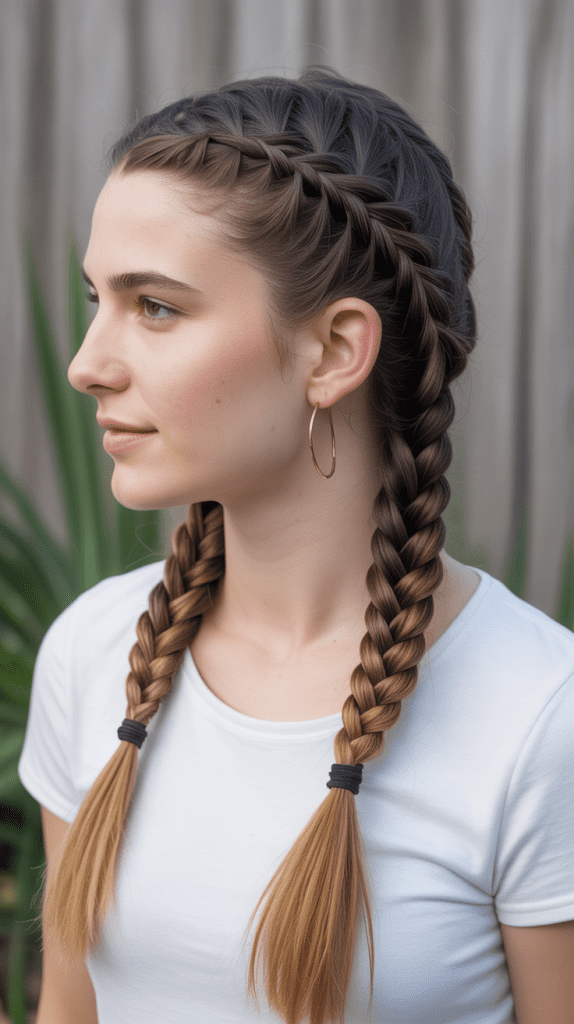
When learning How to Do Braids on Yourself, start with simple styles first.
These beginner-friendly braids help you build confidence and control.
- A basic three-strand braid is the best place to start.
- Brush your hair, pull it to one side or over your shoulder so you can see it.
- Divide it into three even sections.
- Cross the right section over the middle, then the left over the middle.
- Keep repeating until you reach the end and tie with an elastic.
- Next, try two simple pigtail braids — part your hair down the middle and braid each side.
- Pigtail braids help you get used to handling hair on both sides of your head.
5️⃣ Learning French Braids on Yourself

French braids look impressive and keep hair secure all day.
They can be tricky to do on yourself at first but get easier with practice.
- Start with brushed, detangled hair.
- Take a section from the front of your head (near your forehead).
- Split it into three sections.
- Begin a regular braid for a couple of stitches.
- Add hair from the left side into the left section, then cross it over the middle.
- Add hair from the right side into the right section, then cross it over the middle.
- Keep adding hair as you move backward toward the nape of your neck.
- Once you reach the nape, braid the remaining hair normally.
- Secure with an elastic and gently smooth any flyaways.
- Practice leaning your head slightly forward — it can help you reach the back more easily.
6️⃣ Dutch Braids: Taking It Up a Notch

Dutch braids look similar to French braids but have a bold, raised look.
They’re sometimes called “inside-out” or “reverse” braids.
- Start with the same sectioning as a French braid.
- Instead of crossing sections over the middle, cross them under the middle.
- Add hair each time you cross under, working your way down the head.
- Keep your grip firm and sections tight for a neat, raised braid.
- Secure with an elastic and fluff the braid gently for volume.
- Dutch braids are great for sporty looks, casual days, or a trendy double-braid style.
7️⃣ Tips for Making Braiding Yourself Easier

Braiding your own hair can feel awkward at first.
These tips will make it more manageable and less frustrating.
- Use two mirrors to see the back of your head — a wall mirror and a handheld mirror work well together.
- Sit or stand in front of good lighting so you can clearly see your parts.
- Keep your arms relaxed and take breaks if they get tired.
- Divide hair into clear, clean sections so you don’t lose track.
- Secure sections you’re not using with clips to avoid tangles.
- Practice finger movements slowly until they feel natural.
- If you get stuck, undo and try again — practice is the best teacher.
8️⃣ Common Problems and How to Fix Them

Everyone struggles at first when learning How to Do Braids on Yourself.
Here’s how to tackle the most common self-braiding frustrations.
- If your arms get tired, braid in front of a table so you can rest your elbows.
- If your braid feels loose, check your tension and practice keeping it firm but not painful.
- If you can’t see the back well, section the hair into two parts and do two braids instead.
- If flyaways stick out, smooth them down with a bit of styling cream or hairspray.
- If your hair slips out of your fingers, try braiding on slightly damp hair for better grip.
- Always be patient — no braid is perfect at first, but each try makes you better!
Conclusion
Learning How to Do Braids on Yourself is one of the best ways to express your style, protect your hair, and build confidence in your skills.
With practice, patience, and the techniques you’ve learned here, you’ll soon braid your own hair beautifully and easily, anytime you want.
Enjoy the process, celebrate your progress, and keep braiding until it feels as natural as brushing your hair!
