

Cutting a fade on curly hair is both an art and a skill, combining precision, texture awareness, and a keen eye for detail.
Curly hair presents unique challenges and opportunities when it comes to fades—it demands control, patience, and the right tools to bring out the natural shape of the curls while achieving clean transitions from short to longer lengths.
In this in-depth guide titled How to Cut a Curly Hair Fade for Men, we’ll walk you through every step of the process.
Whether you’re a beginner attempting your first DIY fade or a barber looking to refine your curly hair cutting techniques, this guide will provide practical, easy-to-follow, and professional advice to help you achieve a sharp, stylish curly hair fade every time.
1. Understanding the Nature of Curly Hair

Curly hair isn’t just a hair type—it’s a hair personality. Before you start cutting, it’s important to understand what makes curly hair different.
- Curly hair varies widely—ranging from loose waves (Type 2) to tight coils (Type 4).
- Curls shrink when dry, so hair appears shorter than it actually is.
- Cutting curly hair while it’s dry can lead to uneven results unless the stylist understands its natural pattern.
- Moisture is key—dry curly hair becomes frizzy, making it harder to blend and shape during a fade.
2. What Is a Fade Haircut?

A fade is a gradual transition from short to longer hair. When executed well, it provides a clean, modern, and versatile look.
- There are multiple types of fades: low, mid, high, burst, drop, and skin fade.
- A fade works exceptionally well on curly hair because it contrasts textures and provides definition.
- A properly done fade enhances the shape of the head and face.
3. Tools You Need for a Curly Hair Fade

Having the right tools is critical for a smooth, clean finish. Use this checklist to prepare.
| Tool | Purpose |
|---|---|
| Clippers with guards | Main tool for fading |
| Trimmers/edgers | For clean lines and edges |
| Barber scissors | To trim and shape curls on top |
| Wide-tooth comb | To manage and separate curls |
| Spray bottle | To dampen hair if it dries too quickly |
| Mirror (or 2 for DIY) | To view all angles of the head |
4. Preparation Before the Cut

Before starting your fade, prep the hair for better manageability and results.
- Wash the hair using a curl-friendly shampoo and deep conditioner.
- Detangle with a wide-tooth comb to reduce snagging.
- Lightly dampen the hair using a spray bottle if it begins to dry out during the cut.
- Decide on the type of fade: low, mid, or high, based on the head shape and personal style.
5. Sectioning the Hair
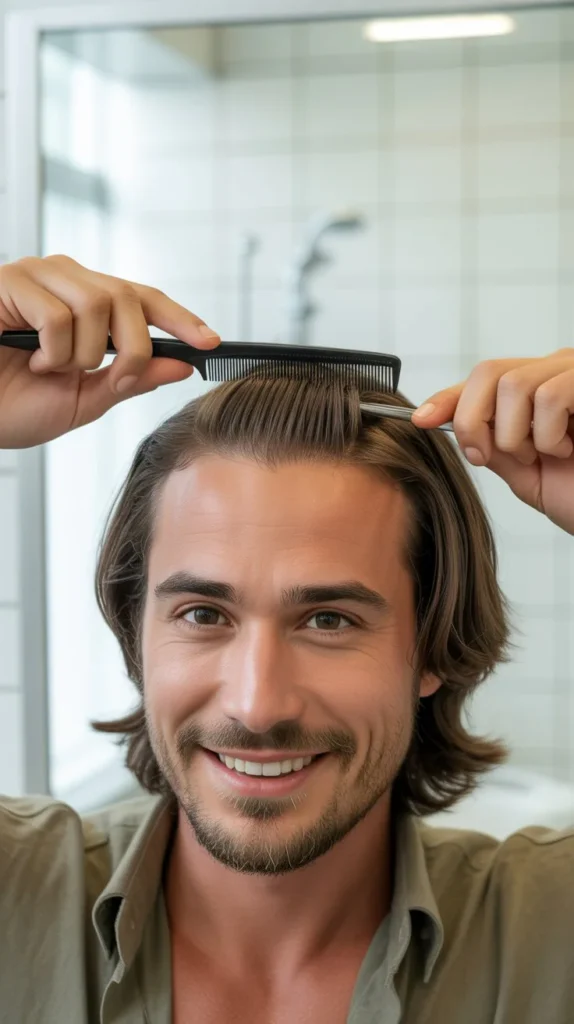
Divide the hair into manageable sections to maintain control and accuracy.
- Part the hair from temple to temple across the crown using a comb.
- Clip the top curls up and out of the way to focus on the sides first.
- Ensure symmetry on both sides by mirroring your sections carefully.
6. Start with the Fade – Bottom to Top

A fade always works best when you blend from the bottom upward.
- Begin with the lowest guard (#0 or #1) at the neckline and around the ears.
- Use upward flicking motions to prevent hard lines.
- Switch to a higher guard (#2 or #3) as you move up, blending each level gradually.
- Always brush or comb hair down after each pass to see the fade lines more clearly.
7. Blending the Fade into the Curls

Blending is the secret to a natural-looking fade, especially with curls.
- Use a #4 or #5 guard to start blending the fade into the curl zone.
- Use a lever open-and-close technique on clippers to refine transitions.
- Avoid cutting into the curl structure—cut with the curl, not against it.
- Step back frequently to view the entire fade for balance.
8. Trimming the Top Curls

Now that the fade is complete, it’s time to shape the curls on top.
- Use scissors to trim curls, especially around the crown and front hairline.
- Cut curl by curl, especially if hair is tight or coiled (Type 4).
- Keep the top longer if you want a voluminous, high-contrast look.
- Always cut dry curls conservatively—they shrink more when dry.
9. Detailing the Hairline and Beard (Optional)

Clean edges make your fade look professional.
- Use trimmers to create a sharp edge-up around the forehead and temples.
- Line the nape with trimmers or a razor for a clean neckline.
- If wearing a beard, fade it slightly from sideburns down for continuity.
10. Styling and Finishing the Look
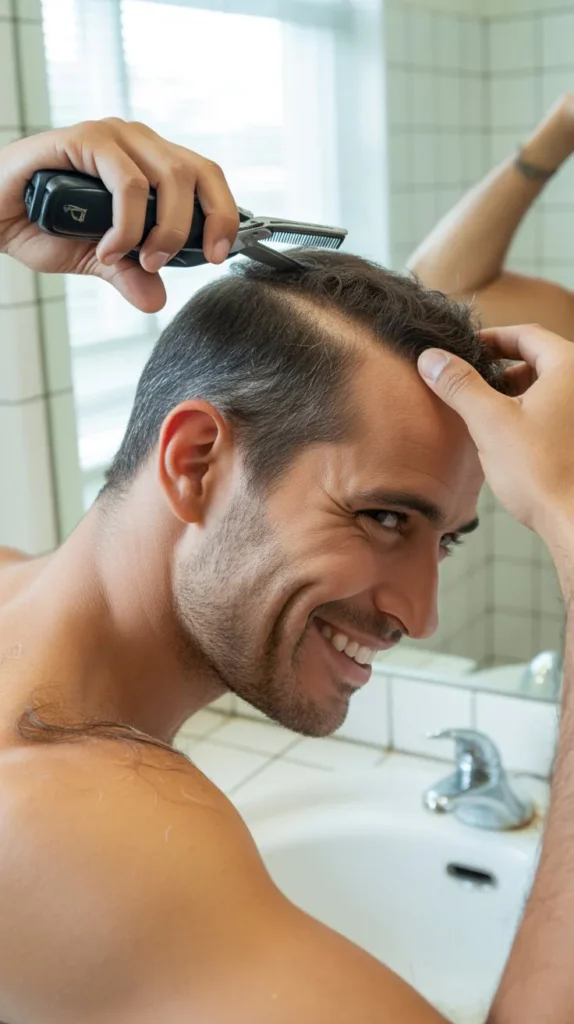
The cut is complete—now style it properly for polish and hold.
- Apply a lightweight curl cream or leave-in conditioner.
- Define curls by finger-coiling or scrunching product in.
- Finish with a light oil to seal in moisture and add shine.
- For extra hold, use a curl-enhancing gel (alcohol-free).
11. Maintaining a Curly Fade
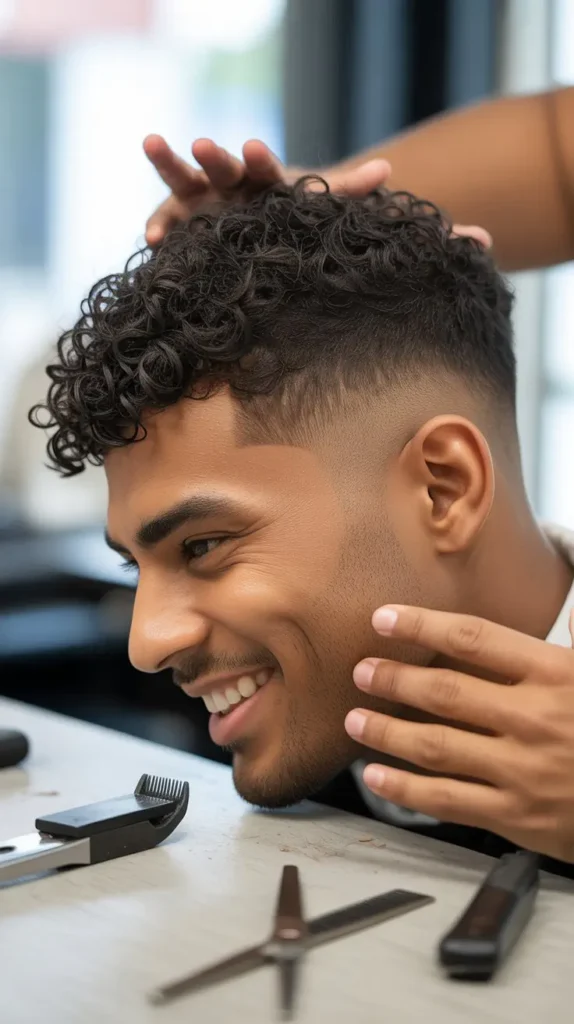
A curly fade requires upkeep to maintain its shape and freshness.
- Re-cut or clean up every 2–3 weeks depending on hair growth.
- Moisturize curls daily or every other day to prevent dryness.
- Use sulfate-free products to keep curls healthy and defined.
- Wear a satin durag or bonnet at night to preserve shape.
12. Common Mistakes to Avoid

Avoid these pitfalls for better, more consistent results.
- Using the wrong guard size too early—can create hard lines.
- Cutting curly hair dry without knowing its pattern—leads to uneven cuts.
- Over-fading—taking too much off too quickly, leaving bald patches.
- Forgetting to blend—results in harsh steps instead of smooth gradients.
13. Fade Styles That Work Best for Curly Hair

Here’s a quick guide to choosing the right fade for your curl type and personality.
| Fade Style | Best For | Look Description |
|---|---|---|
| Low Fade | Subtle styles, professional | Gradual fade from bottom of ears |
| Mid Fade | Balanced, casual | Begins just above the ears |
| High Fade | Bold, trendy styles | Starts near temples |
| Burst Fade | Curly mohawks or afro styles | Fades around ear in a semicircle |
| Drop Fade | Defined curls and line-ups | Follows natural head curve |
14. How Barbers Handle Curly Hair Differently
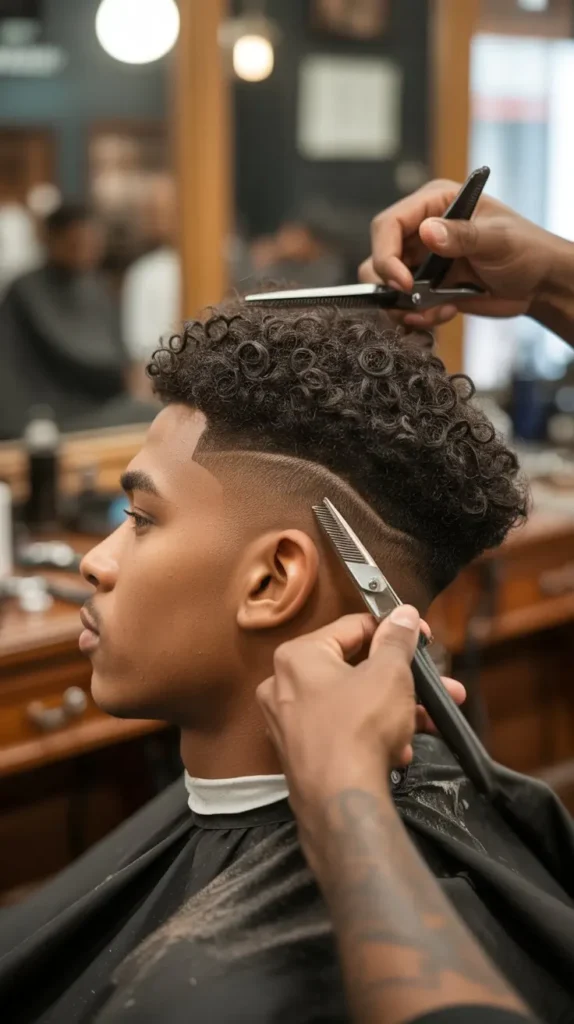
Professional barbers use special techniques when working with curly clients.
- They avoid wet cutting unless absolutely necessary.
- They stretch curls to measure length accurately before cutting.
- They blend slower, using mirrors and lighting to examine depth.
- Most use trimmers and razors for detailing rather than clippers alone.
Learn more from this barbering education platform
15. Can You Fade Curly Hair at Home?
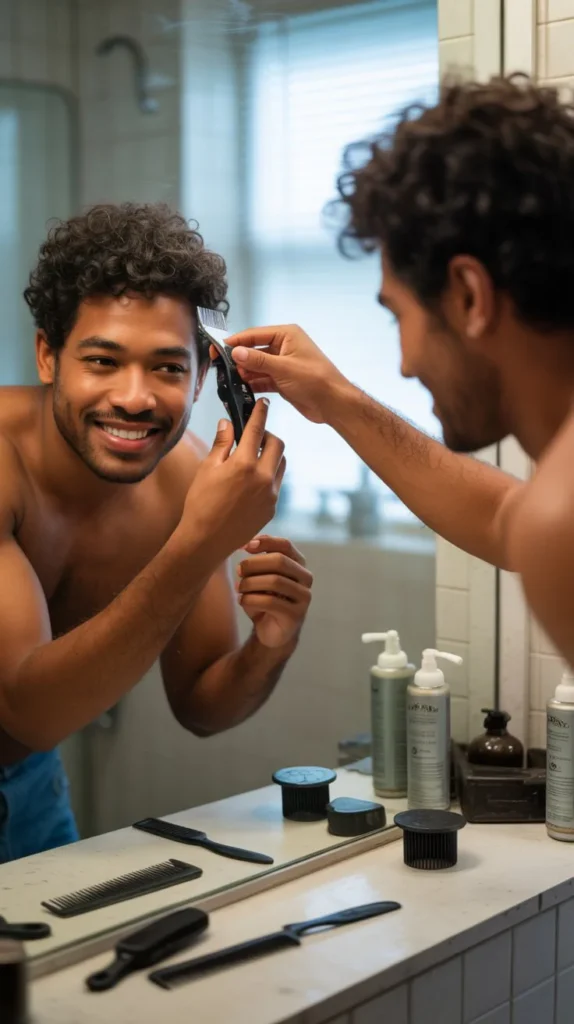
Yes—with patience, the right tools, and good lighting.
- Use two mirrors (front and back) to check fade consistency.
- Always start conservative—cut less, then refine.
- Watch tutorials from trusted barbers online before attempting.
Conclusion
Whether you’re heading to the barbershop or cutting hair at home, mastering the How to Cut a Curly Hair Fade for Men technique opens the door to a clean, defined, and expressive look.
This guide has walked you through the tools, prep steps, cutting techniques, and aftercare necessary to make sure your curly fade isn’t just good—it’s great.
With consistent practice and attention to detail, you’ll be able to turn curly textures into a crisp, confident style that complements your unique look.
