
How to Achieve the Perfect Rainbow Hair Look Without Damage
Achieving show-stopping rainbow hair doesn’t mean you have to sacrifice the health of your hair.
Many people hesitate to go vibrant because they fear bleach damage, dryness, or long-term breakage. But with the right techniques, tools, and care routine, it’s entirely possible to get bold color and keep your strands healthy.
In this detailed guide on how to achieve the perfect rainbow hair look without damage, you’ll learn how to prep, color, and maintain your hair safely.
Whether you’re trying rainbow hair for the first time or improving your routine, this article covers every aspect—damage-free bleaching, safe dyes, protective styling, and post-color recovery.
Stick with us to discover how to achieve the perfect rainbow hair look without damage while maintaining shine, strength, and vibrancy.
1. Understand What Causes Hair Damage
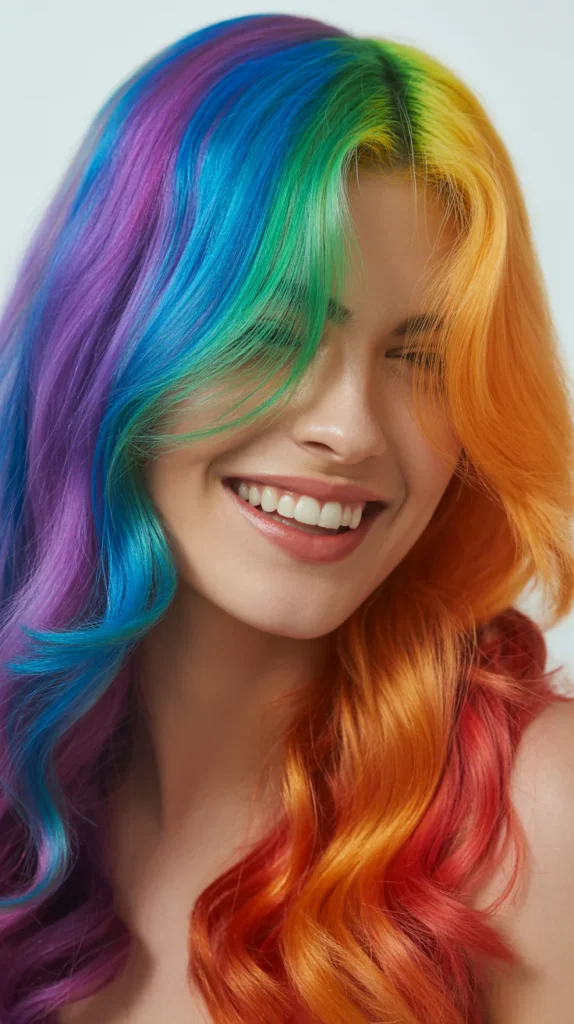
Before you begin coloring, it’s essential to know what to avoid.
- Bleaching improperly or too frequently causes breakage and porosity.
- High heat from styling tools weakens protein bonds in your hair.
- Cheap dyes with harsh chemicals lead to dryness and split ends.
- Coloring over already processed hair without proper rest harms your scalp and strands.
- Not using protective products during coloring accelerates damage.
2. Choose a Hair-Friendly Rainbow Dye Method
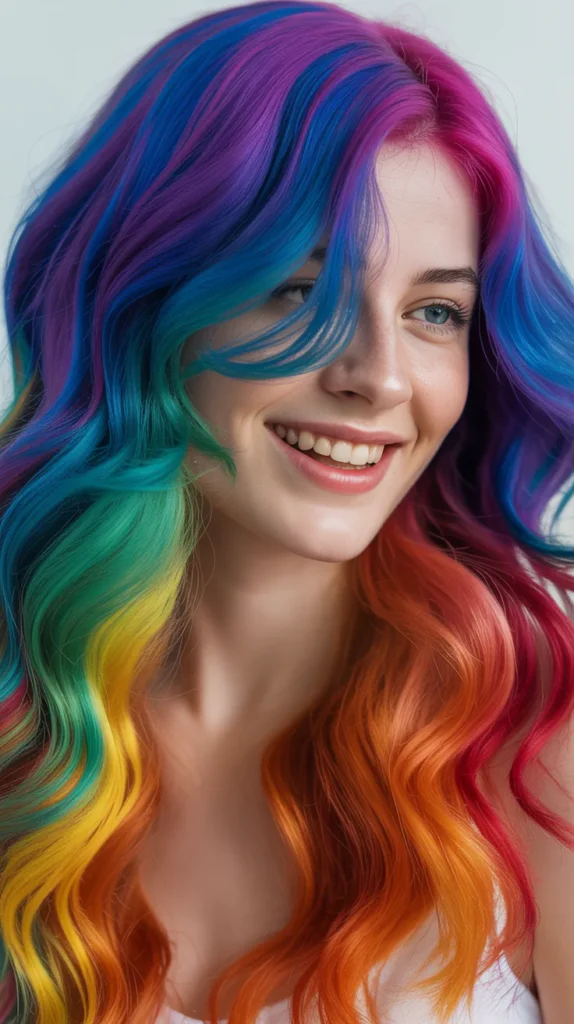
You don’t have to bleach everything to get great color.
| Method | Damage Level | Notes |
|---|---|---|
| Semi-Permanent Dye | Low | No ammonia or peroxide, fades gradually |
| Hair Chalk/Spray | None | Temporary and non-invasive |
| Colored Clip-In Extensions | None | Instant rainbow with zero damage |
| Diluted Dye on Highlights | Low | Use conditioner to mix and soften application |
- Choose techniques that suit your hair’s current condition.
- Consider placement-based color to minimize overall exposure.
- Temporary options let you enjoy rainbow looks without commitment.
3. Start with a Healthy Hair Prep Routine
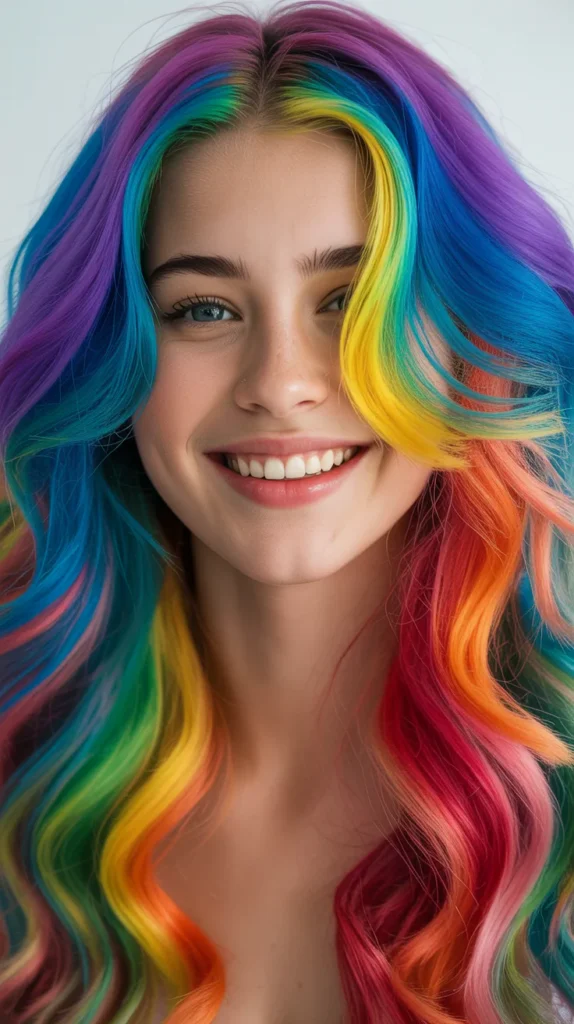
Your hair needs to be strong before it can hold color safely.
- Use deep conditioners or protein masks at least 1–2 weeks before coloring.
- Trim split ends so they don’t worsen during processing.
- Avoid heat styling and chemical treatments in the week leading up to your dye job.
- Drink water and eat hair-nourishing foods like eggs, avocado, and nuts.
- Use a sulfate-free, moisturizing shampoo to balance your scalp’s oils.
4. Consider Bleach Alternatives or Minimized Bleach Techniques

You don’t always need full-head bleach for rainbow effects.
- Try lightening shampoos or bleach-free lighteners with conditioning agents.
- Use low-volume developer (10 or 20) instead of high-volume bleach.
- Consider balayage or dip-dye methods that focus bleach only on select areas.
- Apply coconut oil before bleaching to add a protective barrier.
- Space out bleaching sessions if multiple rounds are required.
5. Select the Right Hair Dye Brands for Minimal Damage
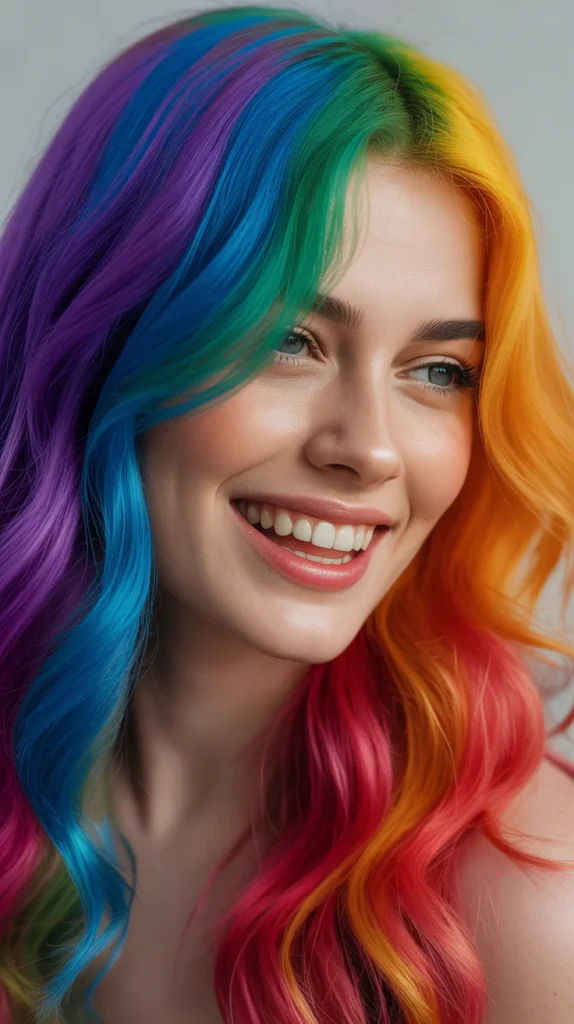
Your choice of color matters more than you think.
| Brand | Why It’s Hair-Friendly |
|---|---|
| Arctic Fox | Vegan, cruelty-free, and conditioning formula |
| Overtone | Color-depositing conditioner with no ammonia |
| Manic Panic | Semi-permanent, gentle, and DIY-friendly |
| Good Dye Young | Formulated with natural ingredients |
- Avoid permanent dyes unless necessary.
- Always patch test—even gentle dyes can irritate some scalps.
- Look for dyes with added nourishing oils or keratin.
6. Master Safe Application Techniques

Even the safest dye can cause problems if applied poorly.
- Always section hair properly and apply dye evenly to avoid reprocessing.
- Use gloves and cover your skin with a barrier cream to prevent irritation.
- Don’t over-saturate or leave dye in longer than the recommended time.
- Use foil or plastic wrap between sections to prevent color bleed.
- Rinse with cold water to lock in pigment and protect the cuticle.
7. Avoid Heat During and After Coloring
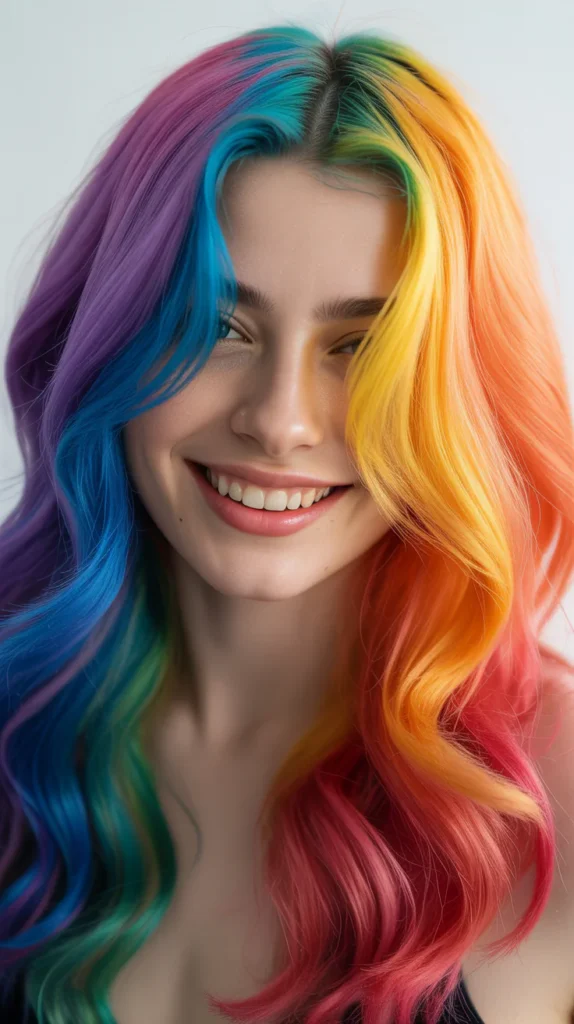
Heat is one of the biggest culprits of hair damage—especially on freshly colored strands.
- Avoid using hot water when rinsing out hair dye.
- Skip flat irons and curling wands for at least a week after coloring.
- If you must style, use the lowest heat setting and always apply a heat protectant spray.
- Embrace heatless styling options like braids, rollers, or flexi rods.
- Air-drying your hair helps preserve both the color and your hair’s health.
8. Deep Condition After Every Color Session
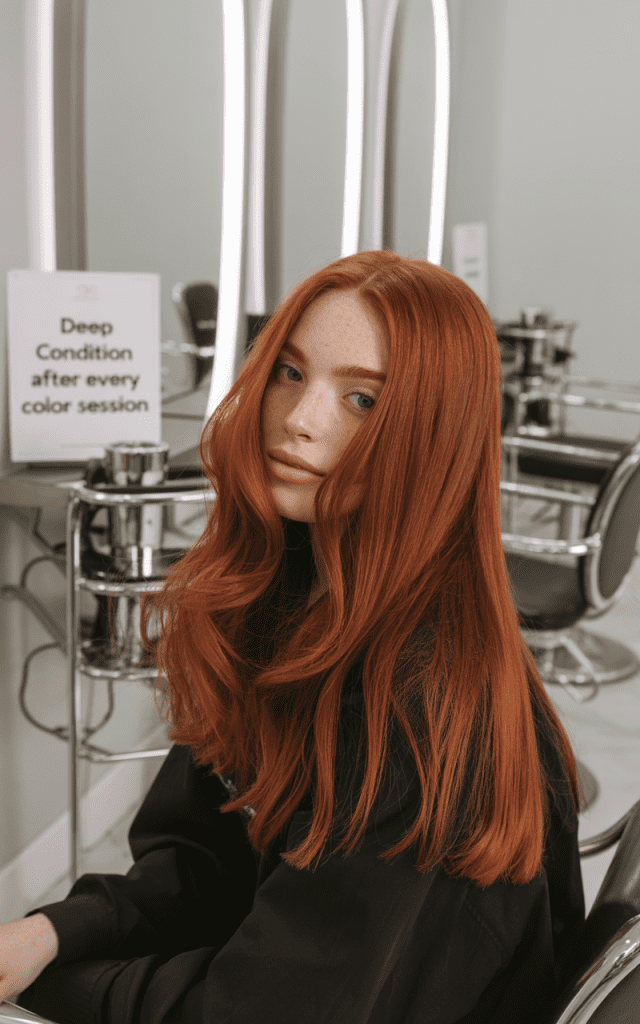
Coloring—even with gentle dye—can leave hair thirsty. Hydration is key to keeping damage away.
- Use a protein-rich deep conditioning mask after coloring.
- Follow up with a moisture-based mask 2–3 days later for balance.
- Focus on the mid-lengths to ends, where most damage occurs.
- Let masks sit for at least 15–30 minutes under a shower cap.
- Look for ingredients like argan oil, shea butter, keratin, or aloe vera.
9. Use Sulfate-Free and Color-Safe Products

The wrong shampoo can strip color and dry out your hair fast.
- Choose sulfate-free shampoos and conditioners that are marked “color-safe.”
- Wash your hair no more than 2–3 times per week.
- Rinse with cold water to help seal the hair cuticle.
- Add a color-depositing conditioner to refresh rainbow tones between dyes.
- Avoid clarifying shampoos unless prepping for a re-color.
10. Protect Rainbow Hair from the Elements
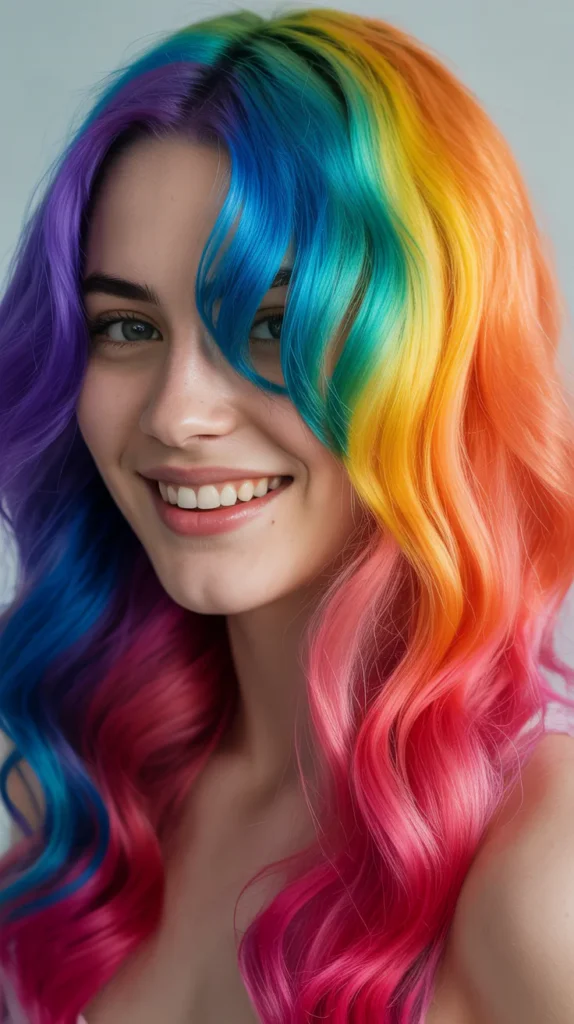
Sunlight, salt water, and chlorine are all enemies of healthy colored hair.
- Wear a hat or scarf when in the sun for extended periods.
- Apply UV protection spray specifically made for hair.
- Use a swimming cap in pools to avoid chlorine damage.
- Rinse your hair with clean water before and after swimming.
- Use a leave-in conditioner daily to act as a protective shield.
11. Trim and Treat Regularly
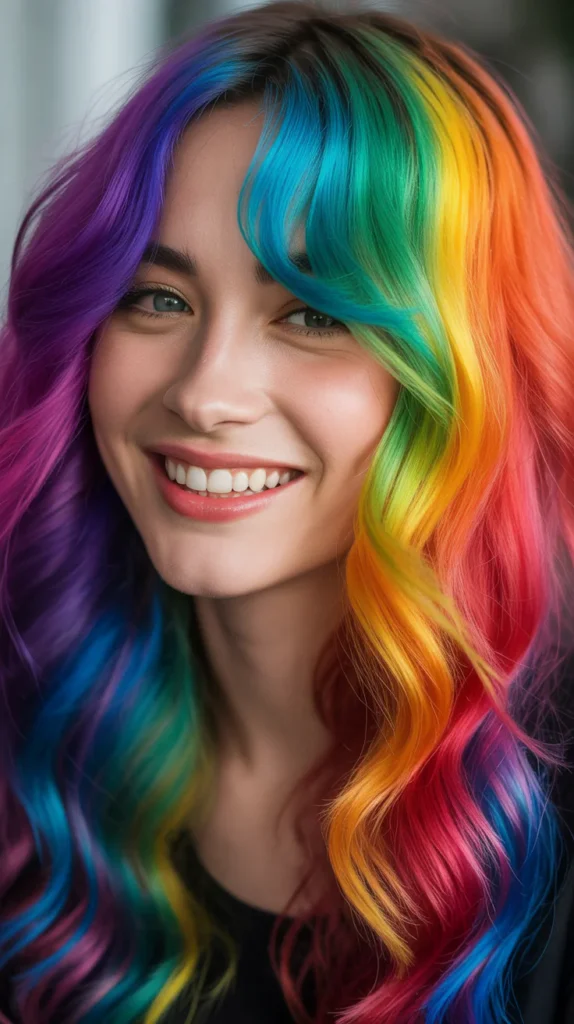
Keeping rainbow hair healthy means maintaining it from the roots to the ends.
- Schedule trims every 6–8 weeks to prevent split ends from traveling up the shaft.
- Apply a light oil (like jojoba or argan) daily for softness and shine.
- Massage your scalp to stimulate growth and distribute natural oils.
- Use a silk pillowcase to prevent friction damage while you sleep.
- Avoid tight hairstyles that tug at the hairline or stress dyed sections.
12. Know When to Pause or Reassess
Sometimes, the healthiest rainbow hair is the one that waits.
- If your hair feels brittle or gummy, hold off on any further coloring.
- Consider switching to colorful wigs or clip-in extensions until your hair heals.
- Use this time to do weekly deep conditioning treatments and restore elasticity.
- Focus on scalp health—a healthy scalp = healthy hair.
- When you’re ready again, opt for a gentler color method or fewer shades.
Conclusion
Now you’ve learned exactly how to achieve the perfect rainbow hair look without damage.
From choosing the right products and techniques to maintaining your hair post-color, this guide ensures that your journey to vibrant, head-turning hair doesn’t come at the cost of breakage, dryness, or regret.
With these tips, you can wear every shade of the rainbow proudly—knowing your hair is just as healthy as it is beautiful.
Let How to Achieve the Perfect Rainbow Hair Look Without Damage be your go-to blueprint for safe, stunning color transformations. Because great hair shouldn’t hurt—and neither should bold self-expression.