

Thin, fine hair doesn’t mean you’re limited to lifeless, flat styles.
The right short haircut can transform your look entirely, creating the illusion of thickness, body, and movement that makes heads turn. Whether you’re dealing with naturally fine strands or thinning hair that’s evolved over time, strategic cuts work with your hair’s texture rather than against it.
This comprehensive guide to 30 Volume Boosting Short Haircuts for Thin Fine Hair will walk you through the most flattering styles, cutting techniques, and styling secrets that professional hairstylists use to maximize volume.
From pixie cuts that defy gravity to textured bobs that create dimension, you’ll discover how length, layers, and angles can work together to give your hair the fullness you’ve been craving.
Each style has been carefully selected for its ability to lift roots, add texture, and create the appearance of density where your hair needs it most.
In This Post......
- 1. Textured Pixie Cut with Choppy Layers
- 2. Asymmetrical Bob with Side Part
- 3. Blunt Cut Bob at Chin Length
- 4. Shaggy Short Cut with Razored Ends
- 5. Cropped Cut with Volume on Top
- 6. Graduated Bob with Stacked Back
- 7. Micro Fringe Pixie
- 8. Tousled Lob with Beach Waves
- 9. Short Shag with Curtain Bangs
- 10. Inverted Bob with Undercut
- 11. Feathered Crop with Wispy Ends
- 12. Choppy Collarbone-Length Cut
- 13. Curved Bob with Rounded Edges
- 14. Pixie with Side-Swept Volume
- 15. Textured A-Line Bob
- 16. Short Layered Cut with Volume at Crown
- 17. Razored Shoulder-Length Cut
- 18. Pixie with Tapered Nape
- 19. Layered Bob with Flipped Ends
- 20. Disconnected Undercut Bob
- 21. Wavy Bob with Root Lift
- 22. Choppy Midi Cut with Face-Framing Layers
- 23. Stacked Pixie with Longer Top
- 24. Soft Undercut with Feminine Layers
- 25. Angled Lob with Balayage Highlights
- 26. Tousled Crop with Piecey Texture
- 27. Graduated Layers with Flipped Crown
- 28. Asymmetrical Pixie with Long Side Fringe
- 29. Layered Bob with Side Bangs
- 30. Textured Collarbone Cut with Curtain Bangs
- Conclusion
1. Textured Pixie Cut with Choppy Layers
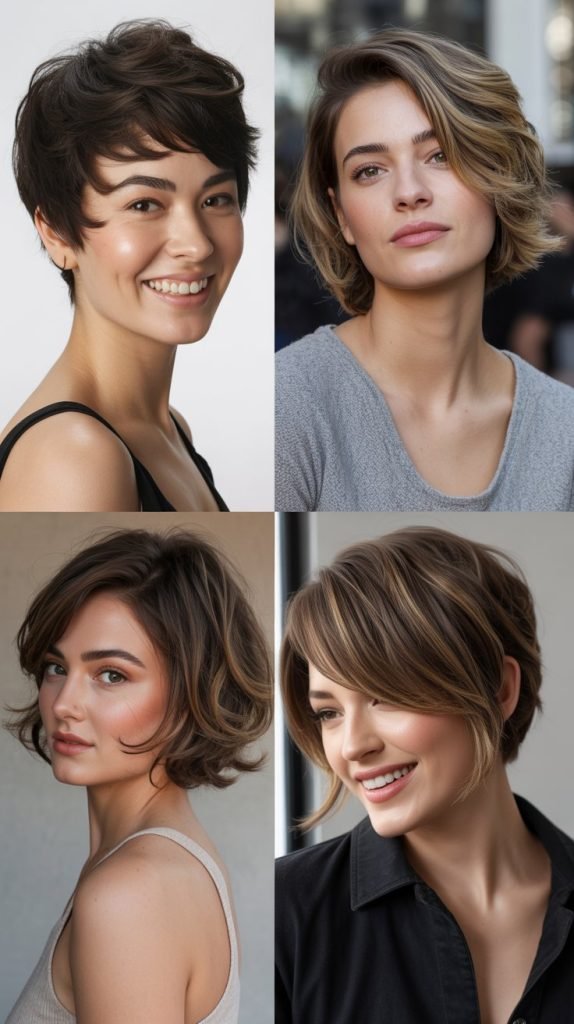
The textured pixie cut stands as one of the most transformative options for thin, fine hair, utilizing strategic layering to create maximum lift and dimension.
This style removes weight from your hair while maintaining enough length on top to style upward and outward, instantly multiplying your hair’s apparent volume.
- The choppy layers throughout this cut prevent hair from lying flat against your scalp, with each uneven piece catching light differently to create depth
- Shorter sides and back reduce bulk in areas where fine hair tends to collapse, while the longer top section provides styling versatility
- The deliberate unevenness of the texture breaks up the typical fine-hair flatness, making individual strands less likely to clump together
- Styling products like texturizing spray or dry shampoo work exceptionally well with this cut, enhancing separation between layers
- This style requires minimal daily maintenance, often looking better with a slightly undone, lived-in appearance
- The pixie’s short length means damaged ends are removed quickly, keeping your fine hair looking healthier
- Face-framing pieces can be customized to flatter your features while adding softness to the edgy cut
2. Asymmetrical Bob with Side Part
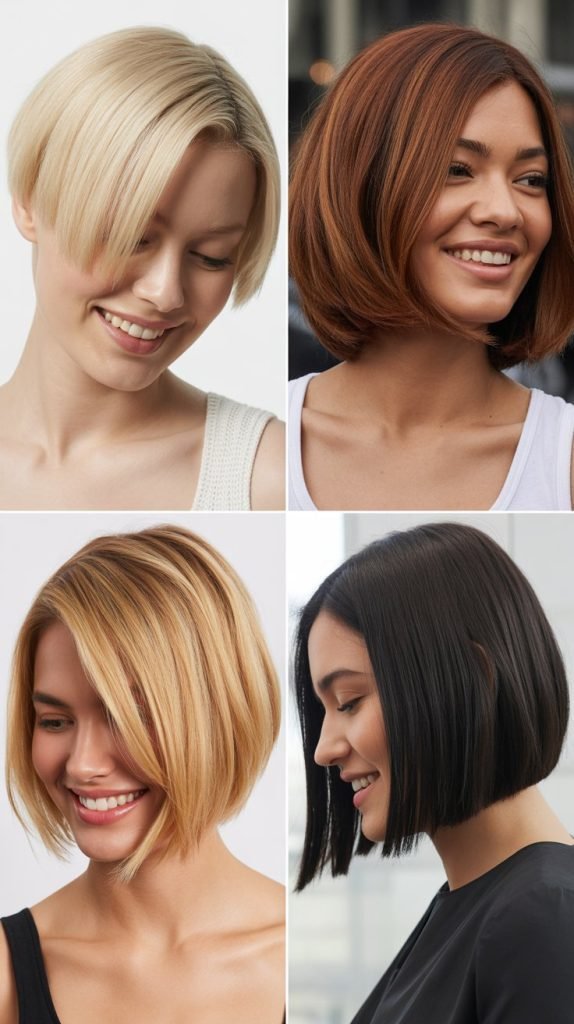
An asymmetrical bob creates visual interest through uneven lengths while strategically distributing volume where thin hair needs it most.
The side part is crucial here, as it immediately lifts hair at the roots and creates natural height that fine hair struggles to achieve on its own.
- The longer side draws the eye and creates a diagonal line that suggests fullness and movement
- A deep side part forces hair to sweep across the head rather than fall straight down, building volume at the crown
- The shorter side prevents the cut from looking bottom-heavy, which can emphasize thinness in fine hair
- This style works beautifully with straight or slightly wavy textures, requiring straightforward styling
- The angled cut line creates dimension that makes hair appear thicker from every viewing angle
- Strategic undercutting on the shorter side removes weight while maintaining the bob’s shape
- This cut photographs exceptionally well, always appearing fuller than completely symmetrical styles
3. Blunt Cut Bob at Chin Length
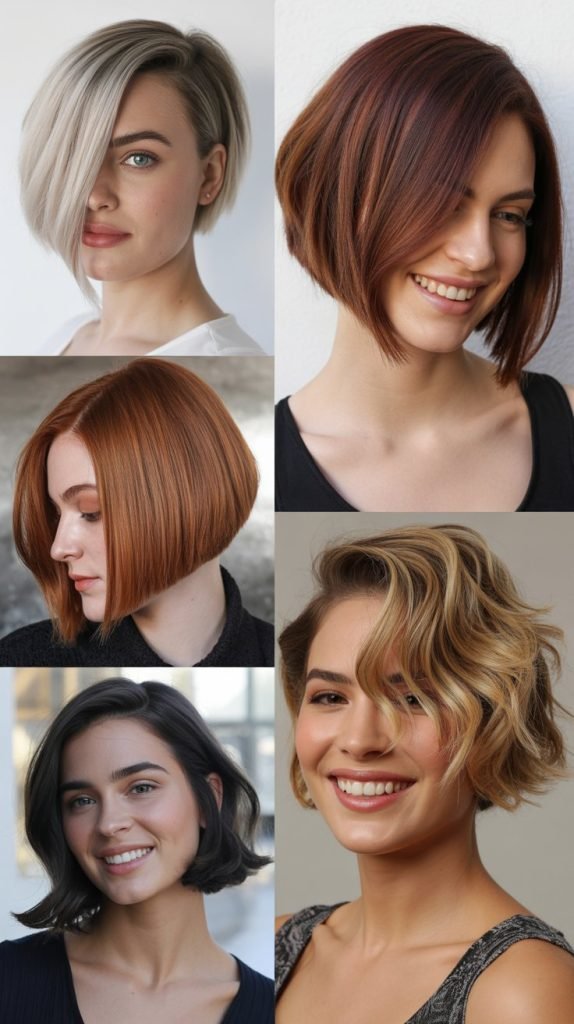
The blunt cut bob represents a counterintuitive approach to thin hair that works remarkably well by creating the illusion of density through a solid, unbroken baseline.
When executed at chin length, this style maximizes the appearance of thickness while remaining practical and stylish.
- The lack of layering means every strand ends at the same point, creating a fuller-looking perimeter
- Chin length hits at a universally flattering spot that balances facial proportions while keeping hair manageable
- The blunt edge reflects light uniformly, making hair appear denser and more substantial
- This cut minimizes the appearance of thin or sparse ends that layered styles can sometimes emphasize
- Internal layering can be added subtly without disrupting the blunt baseline, providing movement without sacrificing fullness
- The simple shape makes at-home touch-ups easier to manage between salon visits
- Styling is straightforward, with options ranging from sleek and polished to slightly textured for different occasions
4. Shaggy Short Cut with Razored Ends
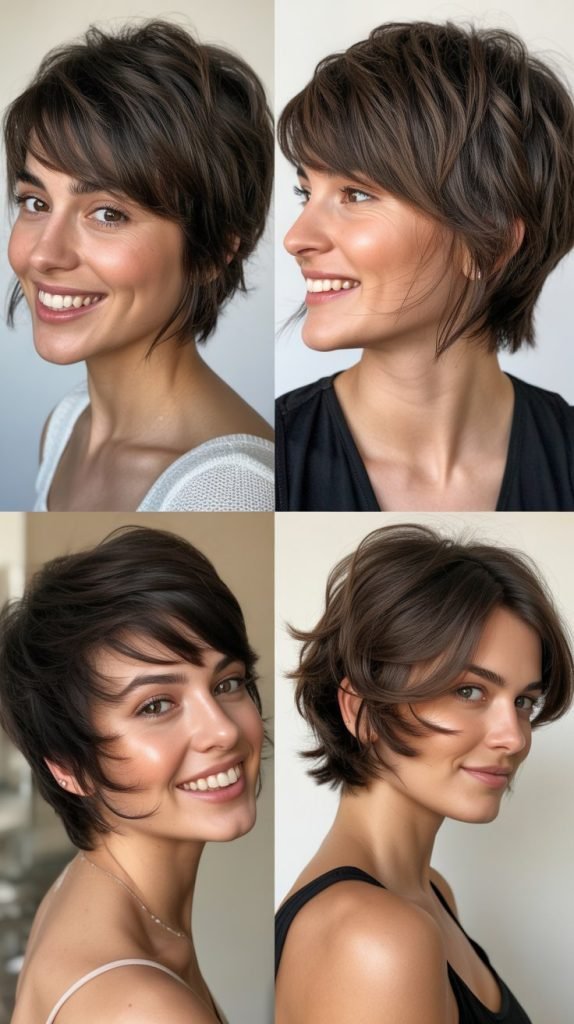
The shaggy short cut brings an effortlessly cool aesthetic while solving multiple fine-hair challenges through deliberate texture and movement.
Razored ends create feathery, piece-y texture that separates strands and prevents the clumping that makes thin hair look sparse.
- Razor cutting creates softer, more graduated edges compared to scissors, allowing layers to blend seamlessly
- The shag’s multiple layer lengths ensure some hair is always lifting away from the scalp, creating natural volume
- This style embraces intentional messiness, meaning fine hair’s tendency toward texture works in your favor
- The disconnected layers prevent hair from forming solid sections that reveal scalp through gaps
- Shags work with your hair’s natural movement pattern rather than requiring you to fight against it
- The style ages beautifully between cuts, with growth adding to rather than detracting from the intentionally undone look
- Various styling products can dramatically change the shag’s appearance, from piecey and defined to soft and flowing
5. Cropped Cut with Volume on Top
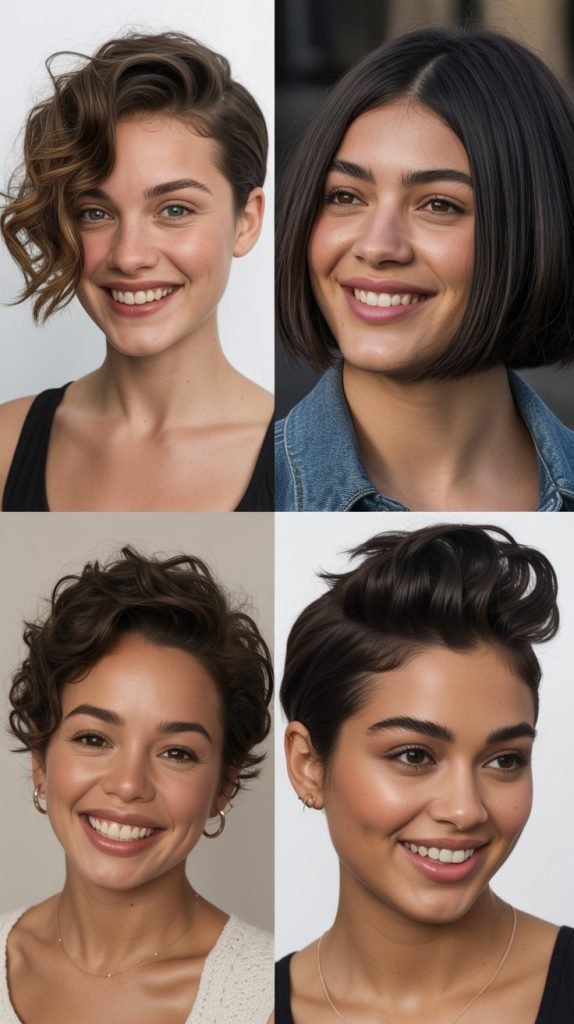
A cropped cut that concentrates length and volume on top creates dramatic lift that draws attention upward while minimizing the appearance of thinness.
This style is particularly effective because it removes competing weight that would pull down the areas where you most want volume.
- Shorter sides remove weight that would otherwise drag down the top section
- This cut allows for various styling options on top, from slicked back to textured and tousled
- The vertical lift elongates the face and draws eyes to the voluminous crown rather than the hairline
- Products with strong hold work effectively on the shorter length without weighing hair down
- The cropped sides keep the style looking fresh longer, as hair growth is less noticeable
- This modern style suits various personal aesthetics, from edgy and bold to refined and sophisticated
6. Graduated Bob with Stacked Back
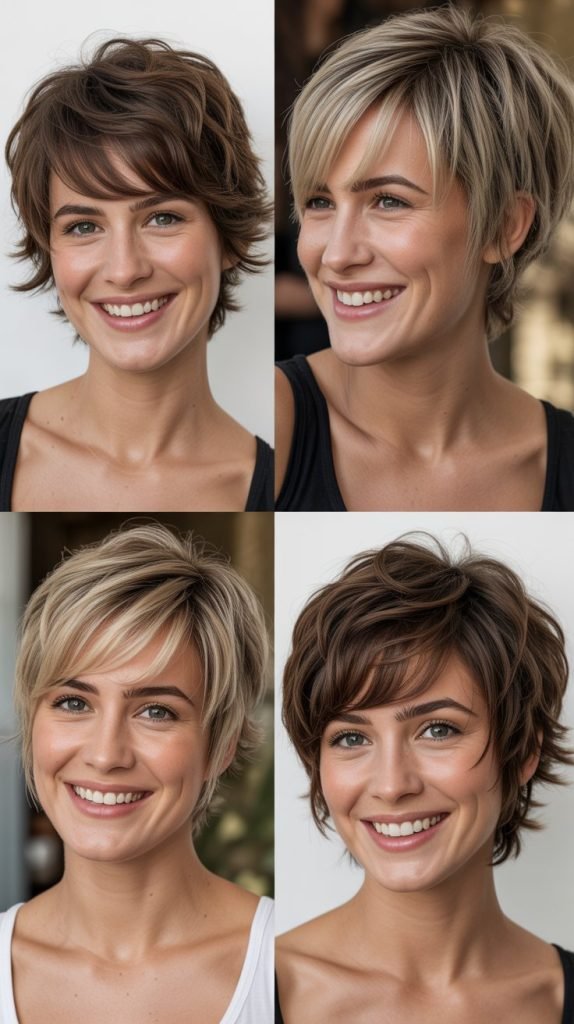
The graduated bob, also known as a stacked bob, creates significant volume through its angled cutting technique that layers hair shorter in the back and longer toward the front.
This method builds natural lift at the crown while maintaining length that frames the face beautifully.
- Stacking hair in graduated layers at the back creates a rounded shape that projects outward rather than lying flat
- Each layer in the stacked section lifts the layer above it, creating a self-supporting volume structure
- The longer front pieces draw the eye forward and downward, balancing the volume in the back
- This cut provides the feeling of length while actually removing significant weight that would flatten thin hair
- The graduation allows hair to move freely while maintaining shape, even in humid conditions
- Styling is simplified because the cut itself creates volume without requiring extensive product or technique
- The stacked back section grows out gracefully, maintaining shape longer than many other styles
7. Micro Fringe Pixie
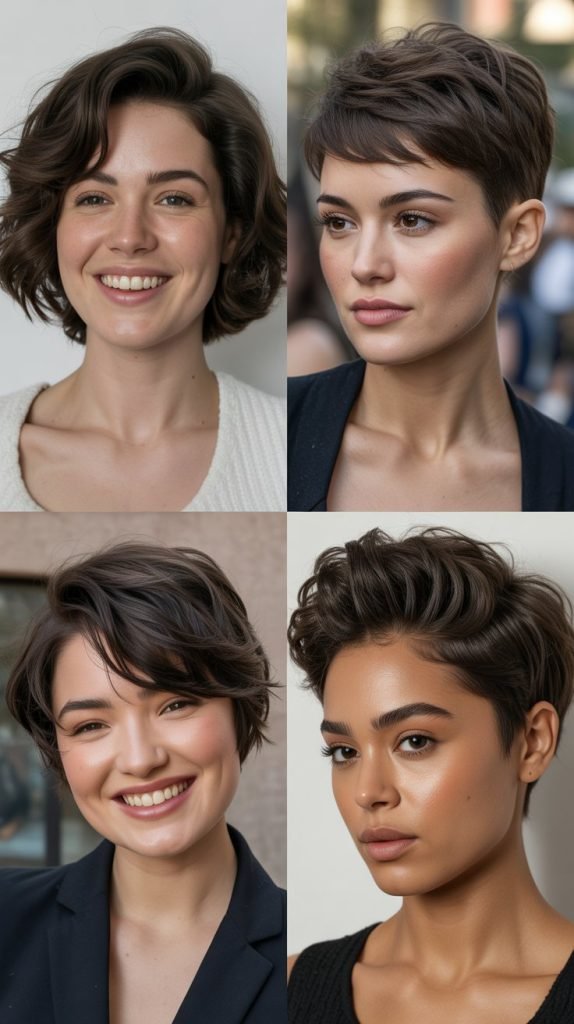
The micro fringe pixie combines the volume-boosting benefits of a short pixie with the face-framing appeal of a textured, piece-y fringe.
This style is particularly flattering for thin hair because it concentrates length where it’s most visible while keeping the rest short and lightweight.
- The short fringe adds dimension to the forehead area without requiring the bulk of traditional bangs
- Keeping the fringe piece-y and textured prevents the thin, wispy look that solid bangs can have with fine hair
- The pixie base removes weight throughout, allowing the fringe to stand out as a focal point
- This style can be personalized with fringe length and texture variations to suit different face shapes
- The micro fringe requires minimal styling, often air-drying into an attractive shape
- Regular trims keep the fringe sharp and intentional rather than grown-out and limp
- The contrast between the ultra-short base and textured fringe creates visual interest that suggests abundance
8. Tousled Lob with Beach Waves
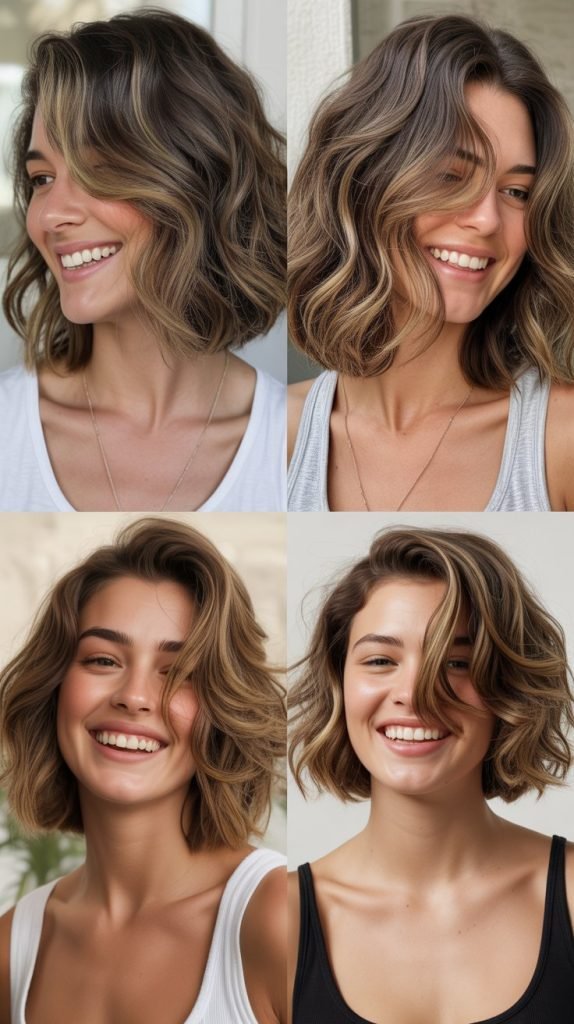
The tousled lob (long bob) creates the illusion of thickness through textured waves that add dimension and prevent hair from lying flat.
Beach waves introduce bends and curves that catch light, create shadows, and suggest volume that straight fine hair often lacks.
- The lob length hits between chin and shoulder, optimal for creating movement without the weight of longer hair
- Beach waves break up the hair’s surface, making it impossible for light to pass straight through to the scalp
- The tousled texture embraces imperfection, which naturally suits fine hair’s tendency to move and shift
- This style can be achieved with various tools including salt spray, curling wands, or braiding techniques
- The waves add width to hair that would otherwise fall straight and narrow against the head
- Styling variations range from tight, defined waves to loose, barely-there bends depending on preference
- The undone nature of the style means fine hair’s lack of perfect hold actually contributes to the desired aesthetic
9. Short Shag with Curtain Bangs
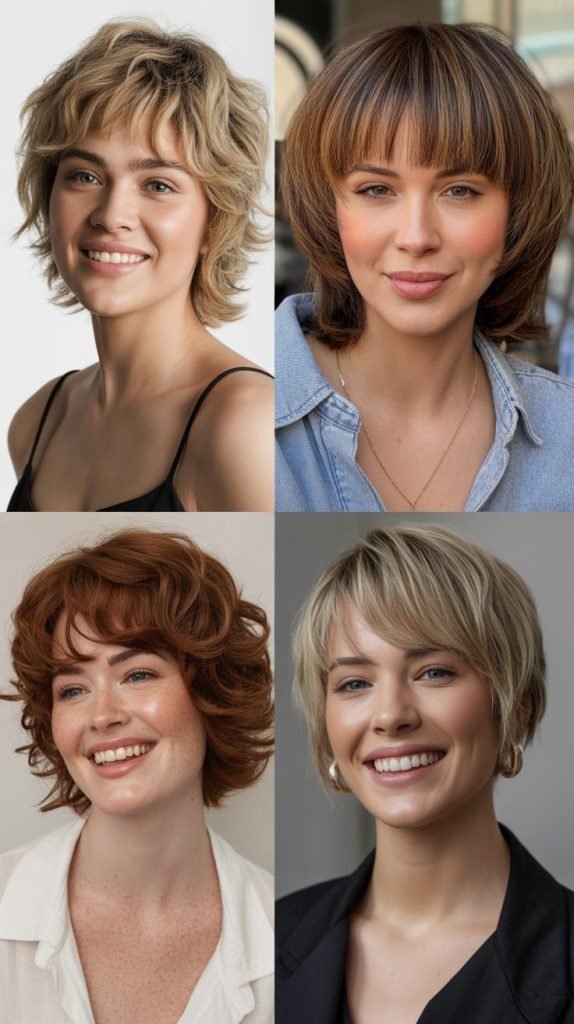
The short shag combined with curtain bangs delivers maximum impact for thin hair by layering volume-creating techniques throughout the cut.
Curtain bangs part in the middle and sweep to both sides, creating natural lift at the roots while framing the face beautifully.
- Curtain bangs divide at the center, creating two directions of growth that naturally lift away from the scalp
- The shag’s multiple layers ensure volume throughout rather than just at one point
- Face-framing layers graduate smoothly into the curtain bangs, creating seamless movement
- This style works exceptionally well with fine hair’s natural tendency to lay softly rather than stiffly
- The bangs can be styled in multiple ways, from swept back to fully forward, offering versatility
- Shorter shag layers in back prevent the style from looking bottom-heavy or triangular
- The combination creates a youthful, modern look that suggests abundance despite working with thin hair
10. Inverted Bob with Undercut
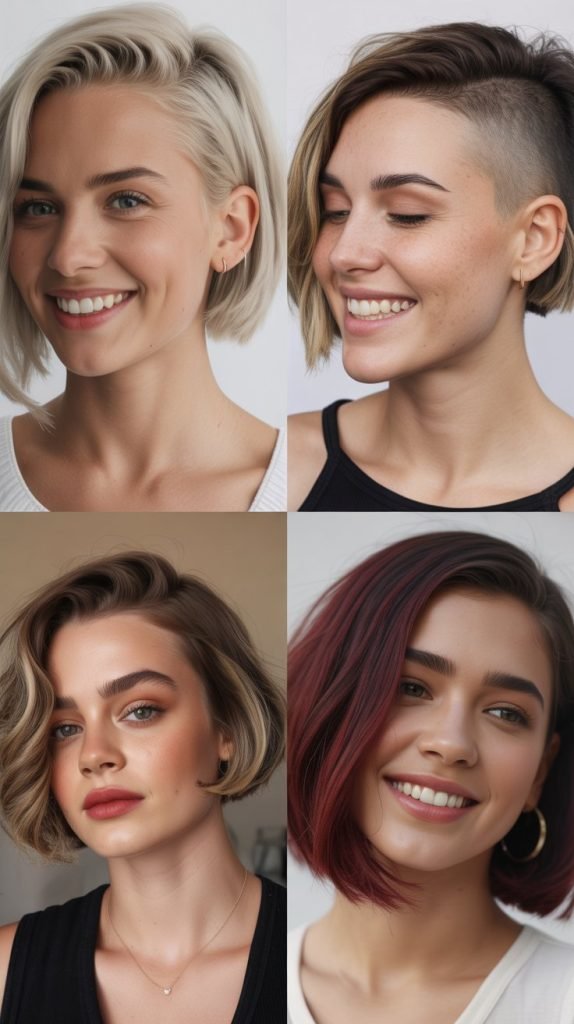
The inverted bob features shorter back sections and longer front pieces, creating a dramatic angle that builds volume where thin hair needs it most.
Adding an undercut beneath the visible layers removes hidden weight while maintaining the appearance of fullness.
- The inversion naturally stacks hair in the crown area, building height and roundness
- Longer front sections draw attention forward and downward, balancing the volume in back
- The undercut removes bulk from underneath without affecting the style’s silhouette
- This hidden technique allows styling products and techniques to work more effectively on the remaining hair
- The dramatic angle creates the illusion of more hair by presenting different lengths at every viewing point
- Styling is simplified because the cut itself creates shape, requiring minimal product or effort
- The undercut grows out discreetly, hidden beneath the longer upper layers, extending time between cuts
11. Feathered Crop with Wispy Ends
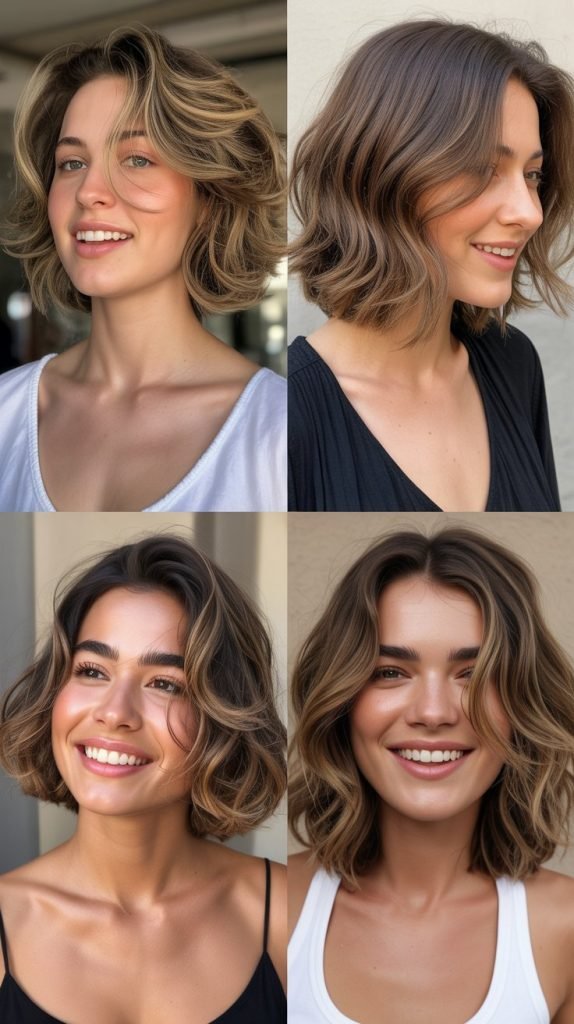
A feathered crop utilizes soft, graduated cutting techniques to create movement and texture that makes fine hair appear fuller and more dynamic.
The wispy ends prevent the blunt, heavy look while adding delicate detail that catches light beautifully.
- Feathering creates soft transitions between lengths rather than harsh lines that can emphasize thinness
- Wispy ends prevent the see-through appearance that blunt cuts can sometimes create with very fine hair
- The feathered technique removes just enough weight to allow movement without creating gaps
- This cut works beautifully with fine hair’s natural softness, enhancing rather than fighting the texture
- The crop length keeps hair lightweight and easy to style while providing enough length for texture
- Feathering can be concentrated in specific areas to address particular volume concerns
- The soft, romantic quality of this cut appeals to those seeking volume without an edgy appearance
12. Choppy Collarbone-Length Cut
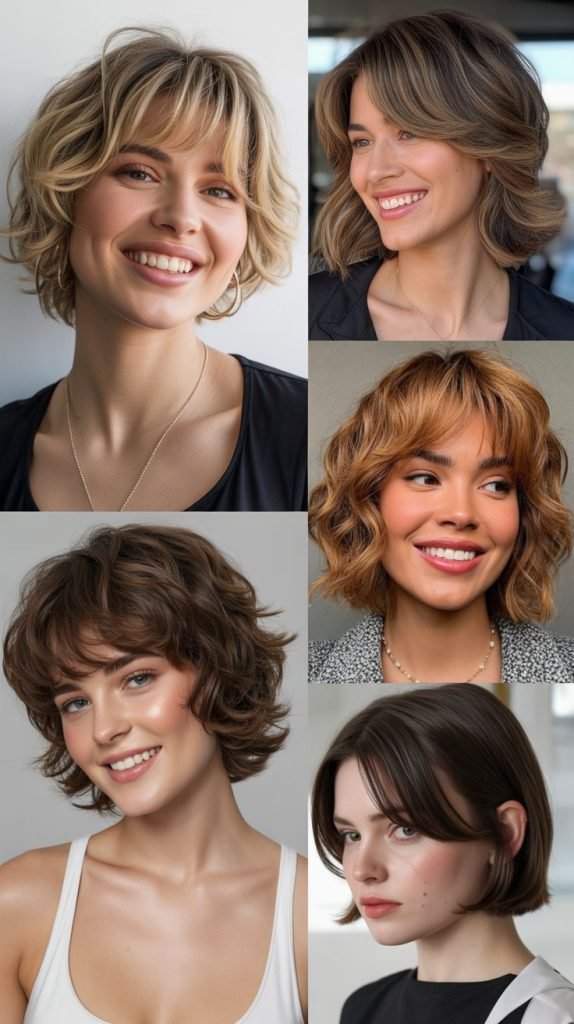
The choppy collarbone-length cut strikes an ideal balance between length and volume, hitting at a point that provides styling options while remaining light enough to hold shape.
The choppy texture throughout prevents flatness and creates dimension.
- Collarbone length maximizes the appearance of fullness without the weight that causes longer fine hair to fall flat
- Choppy layers create intentional unevenness that separates strands and prevents clumping
- The length allows for various styling options including ponytails, half-up styles, and full down looks
- Multiple layer lengths ensure some pieces always lift away from the head, creating natural volume
- This versatile length transitions easily from professional to casual settings
- The choppy texture adds an edgy, modern element while remaining wearable for everyday
- Styling products create dramatically different looks on this cut, from sleek to heavily textured
13. Curved Bob with Rounded Edges
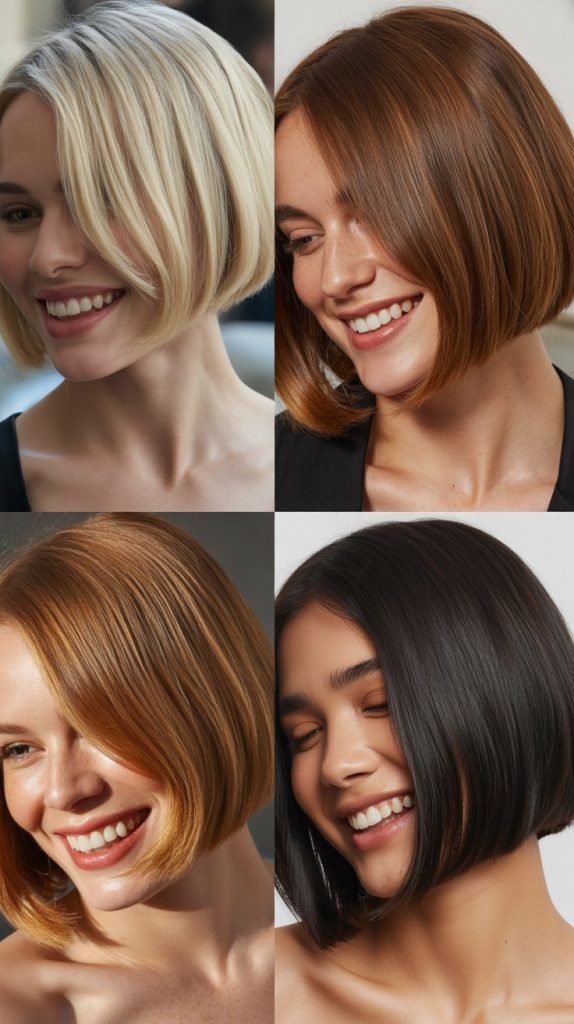
The curved bob features a hemline that gently curves under, creating a rounded silhouette that suggests fullness and deliberate shape.
This classic style has been adapted for thin hair by incorporating internal layering that builds volume while maintaining the iconic curved edge.
- The curved-under edge creates a fuller appearance at the perimeter, the point where thin hair often looks sparsest
- Internal layers add body and lift without disrupting the smooth, polished exterior shape
- The rounded silhouette draws the eye around the head rather than down the hair shaft
- This style works exceptionally well with a round brush during blow-drying to emphasize the curve
- The classic shape remains current and professional while solving thin-hair challenges
- The curve can be adjusted from subtle to dramatic based on personal preference and hair density
- This cut requires regular maintenance to keep the shape precise, ensuring it always looks intentional
14. Pixie with Side-Swept Volume
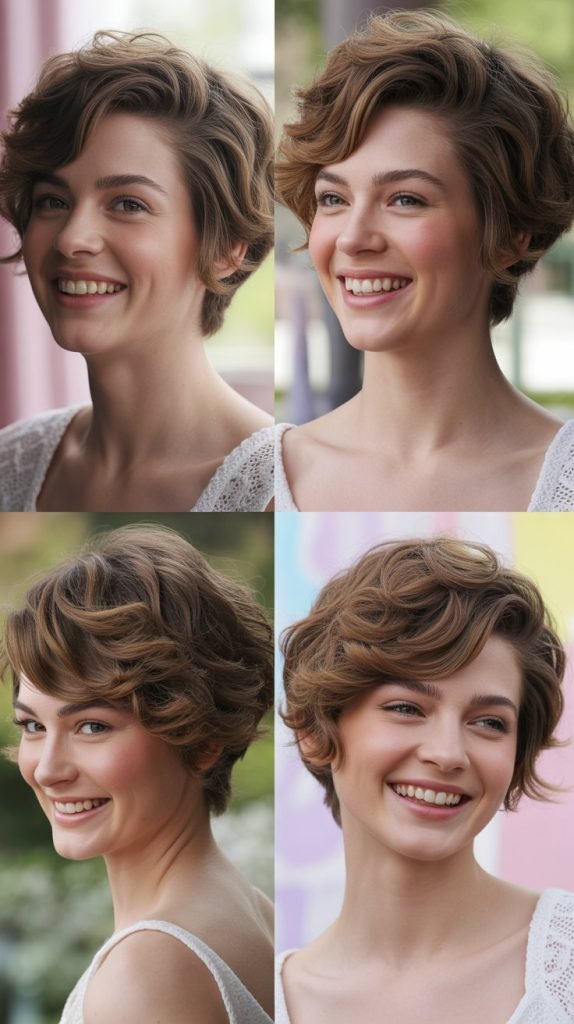
A pixie cut with deliberately side-swept styling creates asymmetrical volume that draws attention and suggests fullness through directional styling.
This approach works particularly well for thin hair because it concentrates length in one area rather than distributing limited hair evenly.
- Sweeping hair to one side creates natural lift at the roots where hair changes direction
- The asymmetrical styling prevents the flat-all-over look that can plague thin hair in symmetrical styles
- Concentrated length in the swept section creates a focal point that appears thick and full
- The shorter opposite side provides contrast that makes the voluminous side appear even fuller
- This style can be adjusted daily, swept to either side depending on mood or outfit
- Strong-hold products work effectively on the shorter length without weighing down fine strands
- The dramatic sweep creates a fashion-forward look that elevates thin hair beyond its natural limitations
15. Textured A-Line Bob
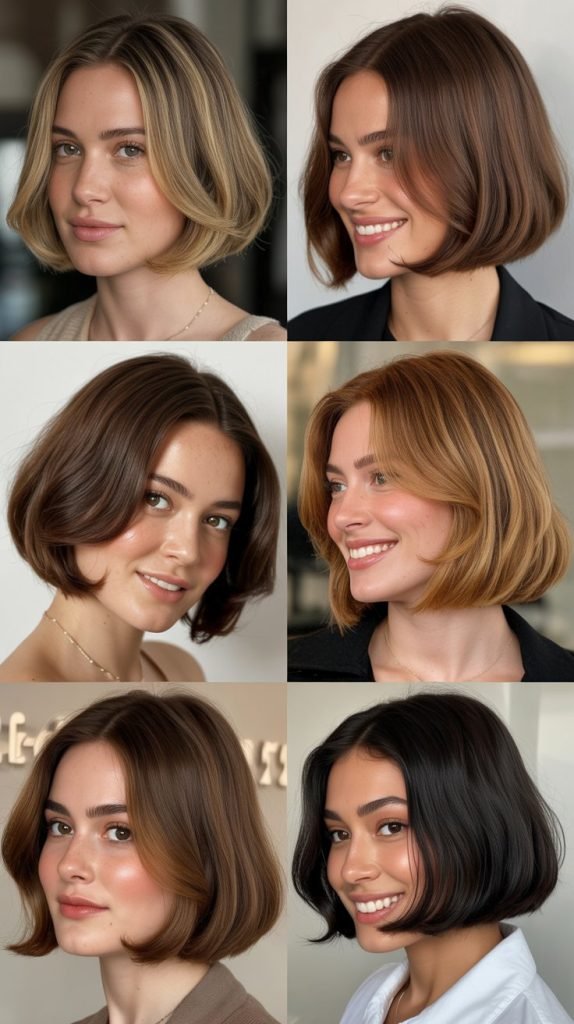
The textured A-line bob combines the volume-building angle of graduated cutting with the movement-creating benefits of texturized layers.
This hybrid approach addresses multiple thin-hair challenges simultaneously while maintaining a polished, sophisticated appearance.
- The A-line angle naturally creates more volume at the back of the head where hair is shorter
- Longer front pieces frame the face while the shorter back prevents weight from pulling everything flat
- Internal texturizing removes weight without creating visible layers, allowing movement within a structured shape
- This style bridges the gap between edgy and classic, appealing to diverse aesthetic preferences
- The angle can be customized from subtle to dramatic based on how much volume you want to create
- Texturizing allows for both sleek styling and more tousled, undone looks depending on the occasion
- The structured shape grows out gracefully, maintaining attractiveness even as length increases
16. Short Layered Cut with Volume at Crown
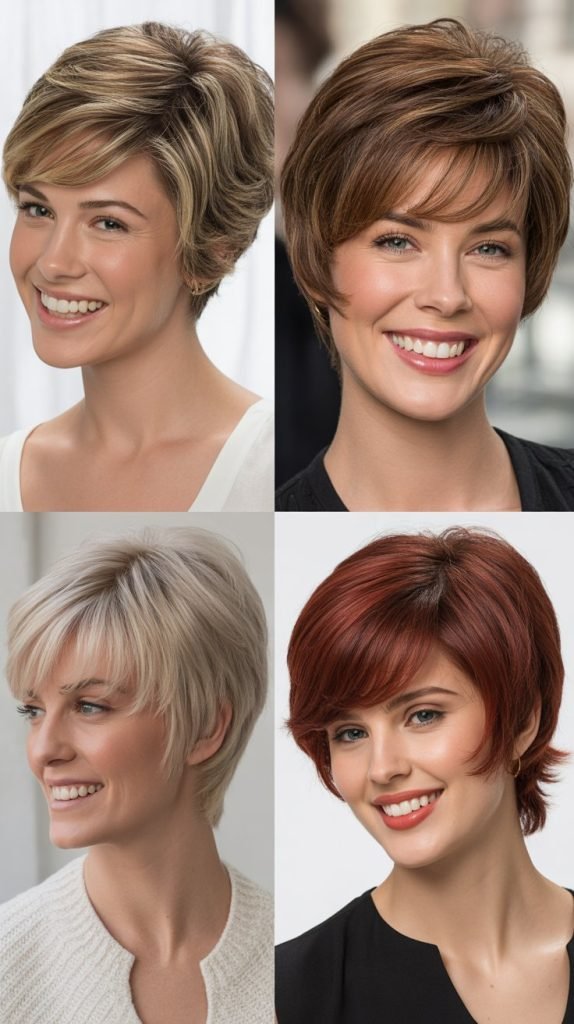
A short layered cut that specifically targets crown volume addresses one of the most common concerns with thin hair—flatness at the top of the head.
Strategic layering in the crown area creates natural lift that makes the entire style appear fuller.
- Shorter layers at the crown stack upon each other, creating a naturally lifted appearance
- Longer layers underneath support the shorter ones without adding weight that would flatten them
- The crown focus draws eyes upward and creates the illusion of overall fullness
- This technique works with gravity rather than against it, as the shorter top layers naturally want to lift
- The volume at the crown elongates the overall head shape, creating a flattering silhouette
- Styling products can be concentrated at the roots where volume is desired most
- The layering pattern ensures the style maintains shape even between styling sessions
17. Razored Shoulder-Length Cut
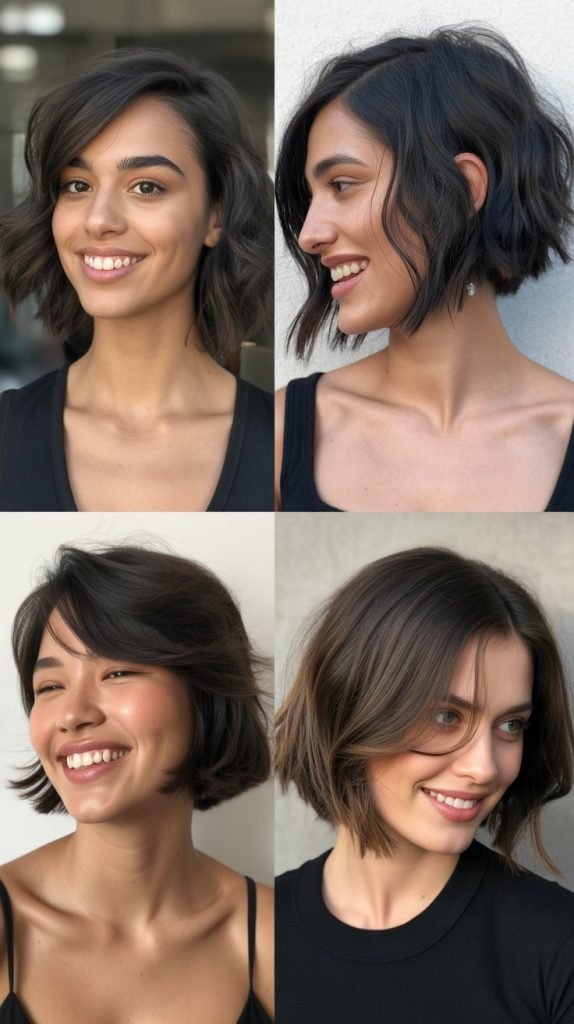
The razored shoulder-length cut uses razor-cutting techniques to create soft, feathered edges throughout while maintaining enough length for versatility.
This approach removes weight and creates texture simultaneously, addressing thin hair’s primary challenges.
- Razor cutting creates graduated edges that taper naturally, preventing the blunt appearance of scissor cuts
- The soft edges allow hair to move freely rather than lying in solid chunks
- Shoulder length provides styling flexibility while avoiding the weight of longer hair
- Razored layers blend seamlessly, creating dimension without obvious demarcation lines
- This technique works especially well with fine hair’s naturally soft texture
- The feathered ends catch and reflect light from multiple angles, creating depth
- Styling is simplified because the cut itself creates movement and texture
18. Pixie with Tapered Nape
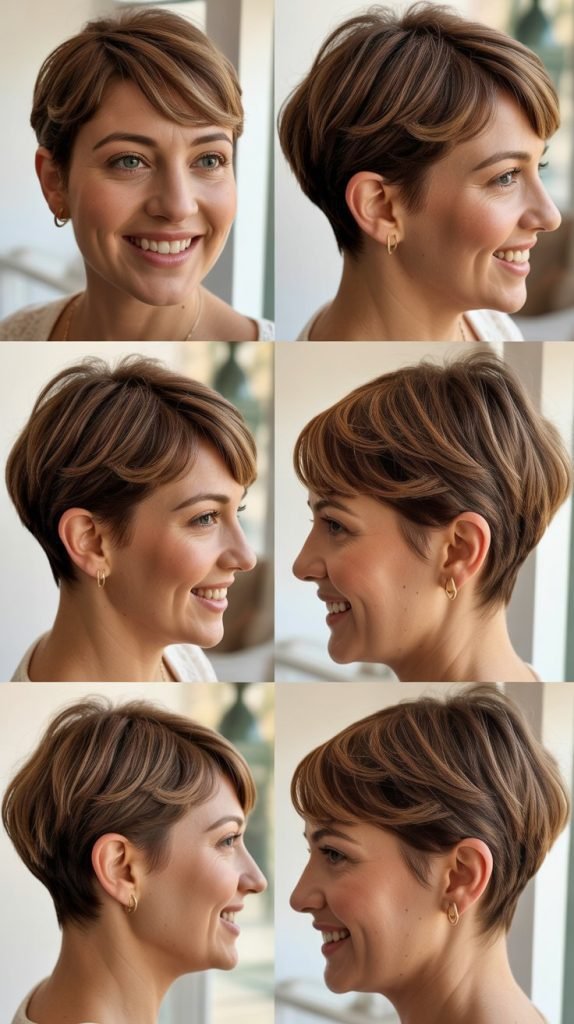
A pixie with a tapered nape creates a clean, refined silhouette while concentrating volume on top where it’s most visible.
The tapered nape removes bulk from an area where fine hair offers little styling benefit anyway, redirecting attention to the fuller crown.
- The tapered nape creates a gradual fade from longer hair on top to skin or very short hair at the neck
- This dramatic contrast makes the top section appear significantly fuller by comparison
- The clean nape line requires regular maintenance but always looks freshly cut and intentional
- Removing weight from the nape prevents any pulling or flattening of the crown area
- This modern take on the pixie appeals to those wanting an edgier, more contemporary look
- The taper can be customized in length and blend pattern to suit individual preferences
- Styling focuses exclusively on the top section, simplifying the morning routine
19. Layered Bob with Flipped Ends
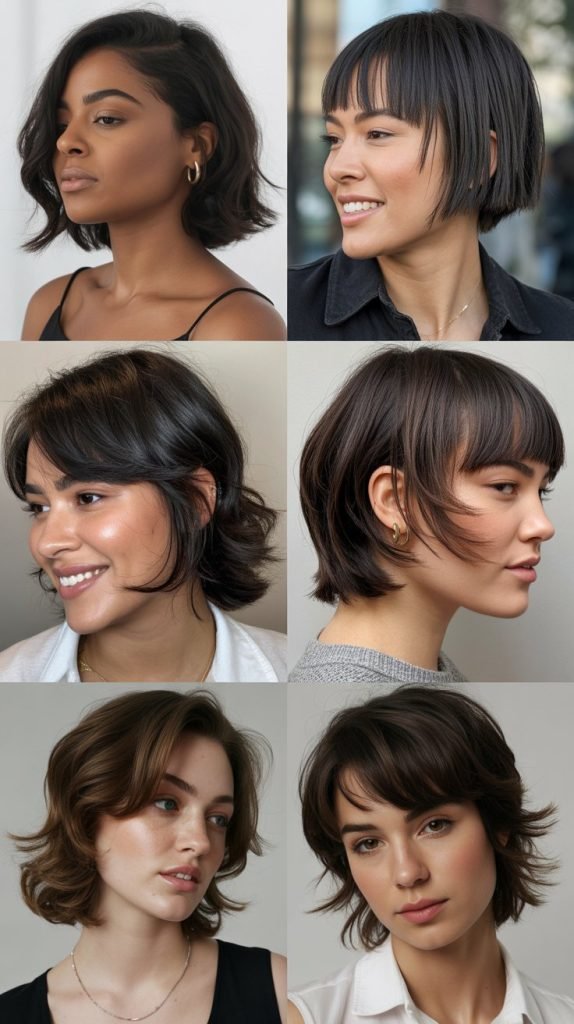
A layered bob with ends styled to flip outward creates immediate volume and a playful aesthetic that works beautifully with fine hair.
The outward movement prevents hair from lying against the head, creating space and dimension.
- Flipped ends create visual width that suggests fullness even with thin hair
- The outward movement lifts hair away from the face and neck, creating space that implies volume
- Layering allows the flip to occur naturally at various lengths rather than just at the perimeter
- This retro-inspired style has returned to popularity with modern texturizing techniques
- The flip can be achieved with a round brush, flat iron, or curling iron depending on preference
- This styling approach works with fine hair’s tendency to hold bends and curves
- The playful, youthful quality of flipped ends diverts attention from hair density concerns
20. Disconnected Undercut Bob
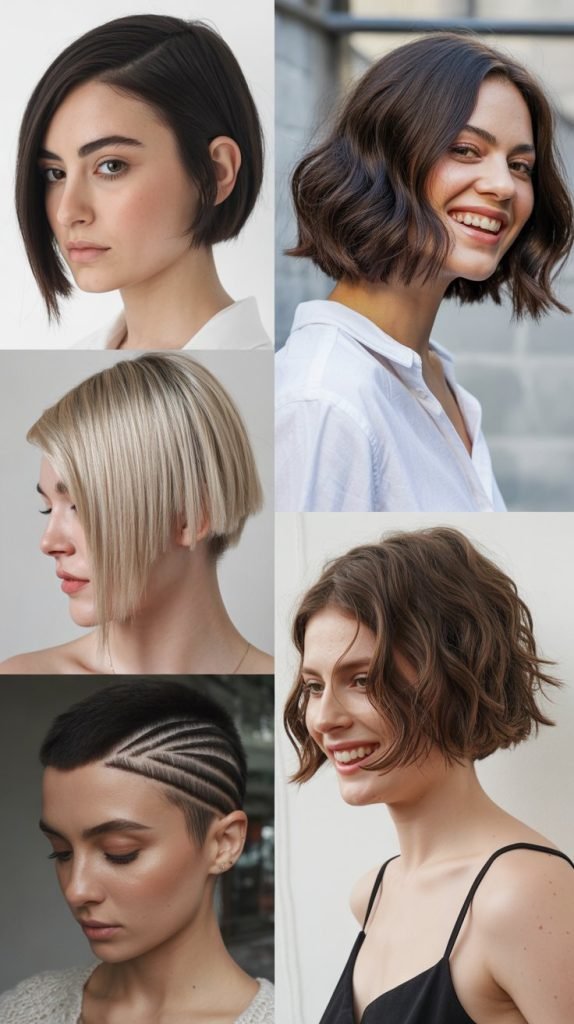
The disconnected undercut bob features visible length on top with a deliberately separate, much shorter section underneath.
This creates dramatic contrast while removing significant weight that would otherwise flatten thin hair.
- The disconnection means the top layer sits entirely on top of the shorter layer with no gradual blend
- This removes maximum weight while maintaining the appearance of a fuller, longer style
- The undercut can be hidden or revealed depending on styling, offering versatility
- When hair is down, the undercut remains hidden while doing its volume-enhancing work
- Pulling hair up or styling it reveals the edgy undercut design element
- The technique allows fine hair to achieve volume that would be impossible with all-over length
- This style appeals to those wanting a bold look with built-in practicality for thin hair
21. Wavy Bob with Root Lift
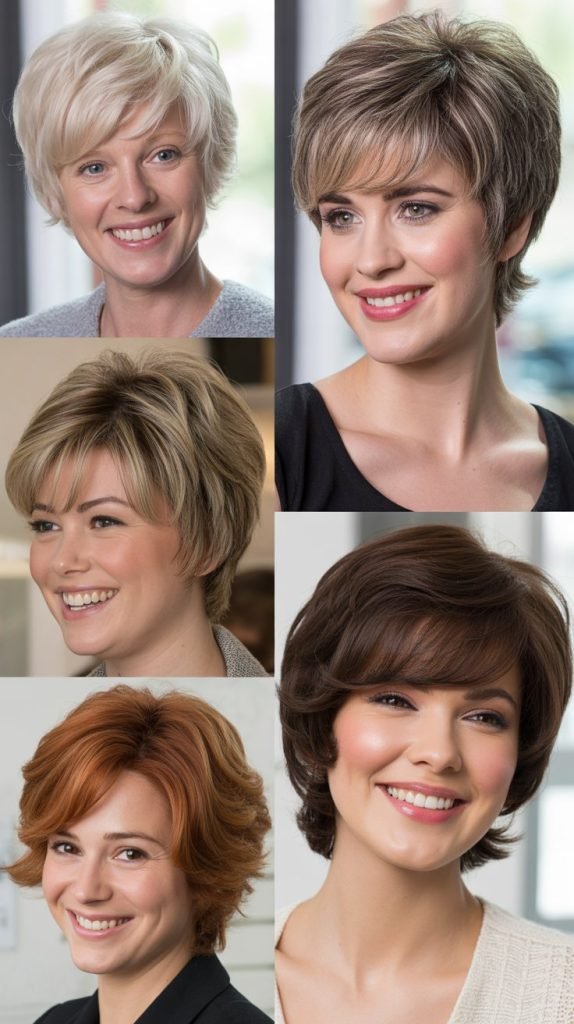
A wavy bob that incorporates specific root-lifting techniques creates all-over volume that makes thin hair appear substantially thicker.
The waves add dimension while the root lift ensures volume starts at the scalp rather than appearing only at the ends.
- Root lifting can be achieved through blow-drying techniques, products, or styling tools
- The waves create bends that prevent light from passing straight through to the scalp
- Combining root volume with textured length creates a multiplied fullness effect
- This style works beautifully with fine hair’s natural tendency to accept and hold waves
- The bob length keeps waves from weighing themselves down as they would in longer hair
- Various wave patterns can be created, from loose and beachy to more defined and structured
- The volume starts at the scalp and continues through the ends for comprehensive fullness
22. Choppy Midi Cut with Face-Framing Layers
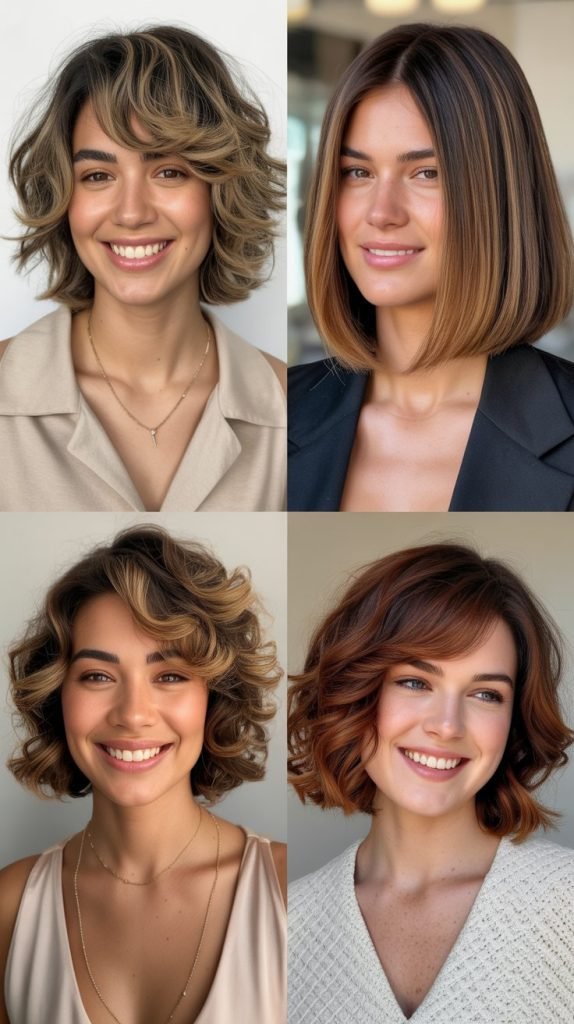
The choppy midi cut hits between the chin and shoulders, combining length with strategic layering that creates movement and volume.
Face-framing layers add dimension around the face while the choppy texture throughout prevents flatness.
- The midi length provides enough hair to create visual impact without the weight of longer styles
- Face-framing layers graduate from shorter around the face to longer in back, creating depth
- Choppy texturizing throughout breaks up the solid appearance that can make thin hair look sparse
- This length allows for various styling options including tucking behind ears, half-up styles, and full volume
- The layers can be customized to enhance or soften facial features as desired
- The choppy texture makes styling easier, as perfectly smooth hair isn’t required
- Multiple layer lengths ensure some hair is always lifting and moving, creating dynamic volume
23. Stacked Pixie with Longer Top
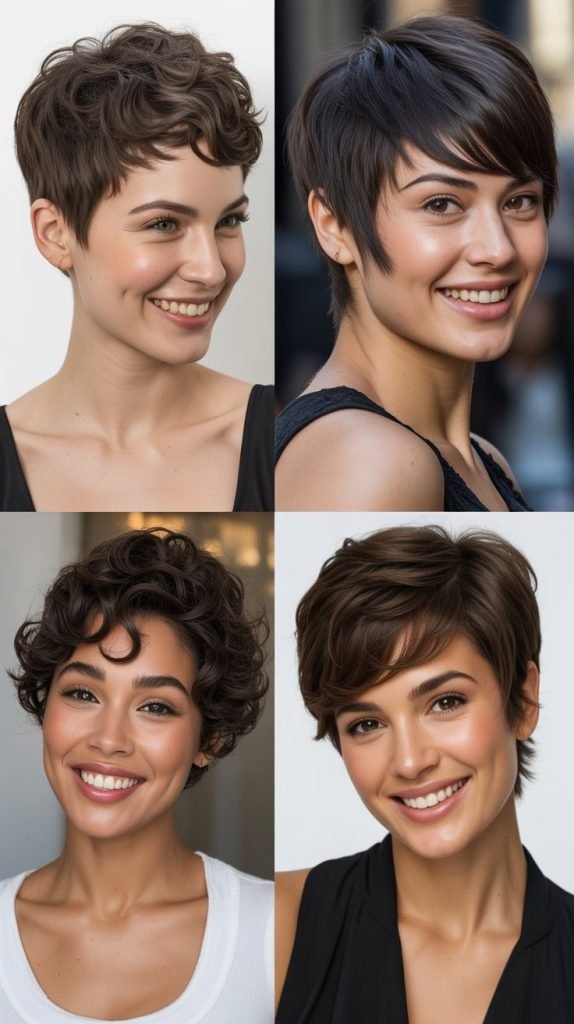
A stacked pixie concentrates short layers in the back while maintaining longer length on top, creating significant height and volume where it’s most visible.
This combination maximizes volume while keeping the style easy to manage.
- Stacking in the back creates a rounded, lifted shape that appears full and intentional
- The longer top allows for styling versatility, from slicked back to textured and messy
- Short stacked layers in back require less maintenance than all-over length
- The height created by stacking makes the entire head appear larger and the hair fuller
- This modern pixie variation offers more styling options than traditional cropped versions
- The contrast between back and top creates visual interest that distracts from hair density
- Products work effectively on the longer top section without weighing down the short back
24. Soft Undercut with Feminine Layers
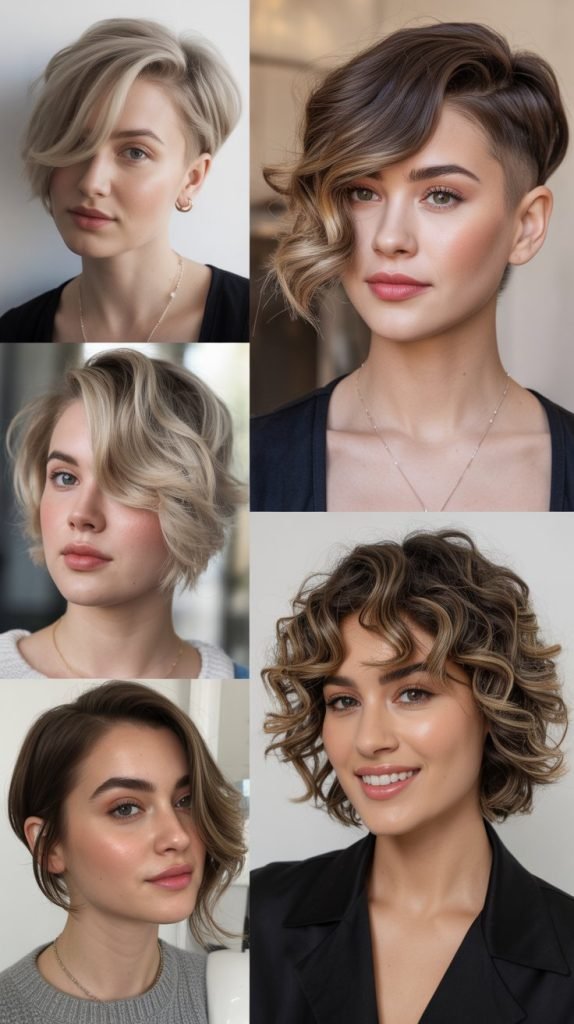
A soft undercut pairs hidden weight removal with feminine, flowing layers on top, creating a style that’s both edgy and romantic.
This approach gives thin hair the volume benefits of an undercut without the harsh, masculine appearance some variations can have.
- The undercut is kept subtle and hidden, revealing itself only when hair is pulled up or swept aside
- Feminine layers on top maintain length and softness while benefiting from the removed weight underneath
- This combination allows for versatile styling from completely hidden undercut to partially revealed
- The soft approach appeals to those wanting volume benefits without dramatic visible contrast
- Layers can be styled with waves or curls that appear fuller without underlying weight
- The hidden nature makes this style appropriate for conservative professional environments
- Fine hair achieves movement and lift that would be impossible without the strategic weight removal
25. Angled Lob with Balayage Highlights
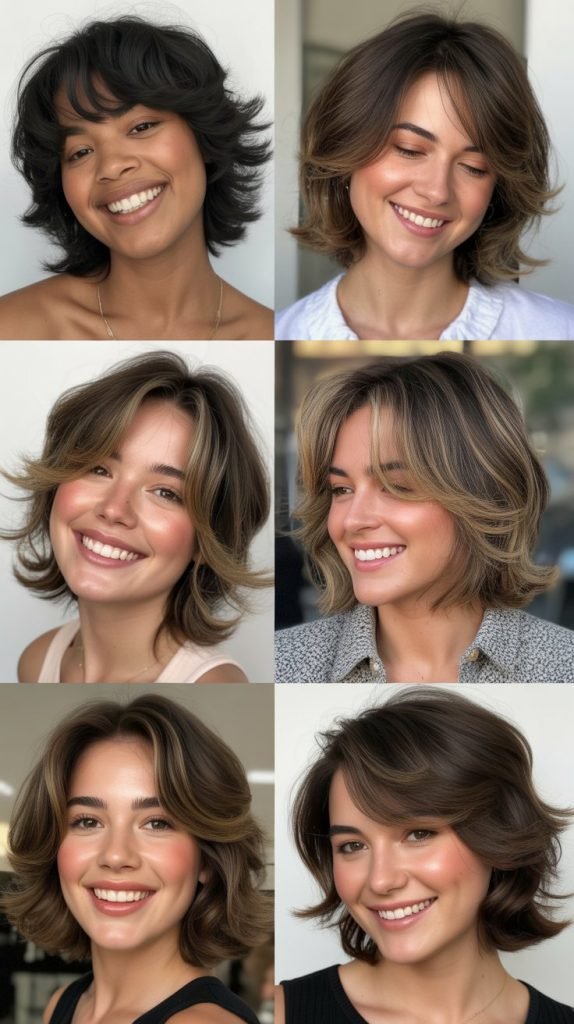
An angled lob combines the volume-creating cut with strategically placed highlights that add dimension and depth.
The color placement enhances the illusion of thickness by creating shadows and light that suggest multiple layers of hair.
- The angled cut naturally creates more volume in back while maintaining length in front
- Balayage highlights are hand-painted for a natural, dimensional look that suits fine hair
- Strategic color placement can make hair appear up to 30% fuller than solid color
- Highlights catch and reflect light, creating visual interest that suggests abundance
- The lob length is ideal for showcasing the dimensional color while maintaining volume
- Color variation breaks up the solid appearance that can emphasize thinness
- The combination of cut and color addresses volume concerns from multiple angles simultaneously
26. Tousled Crop with Piecey Texture
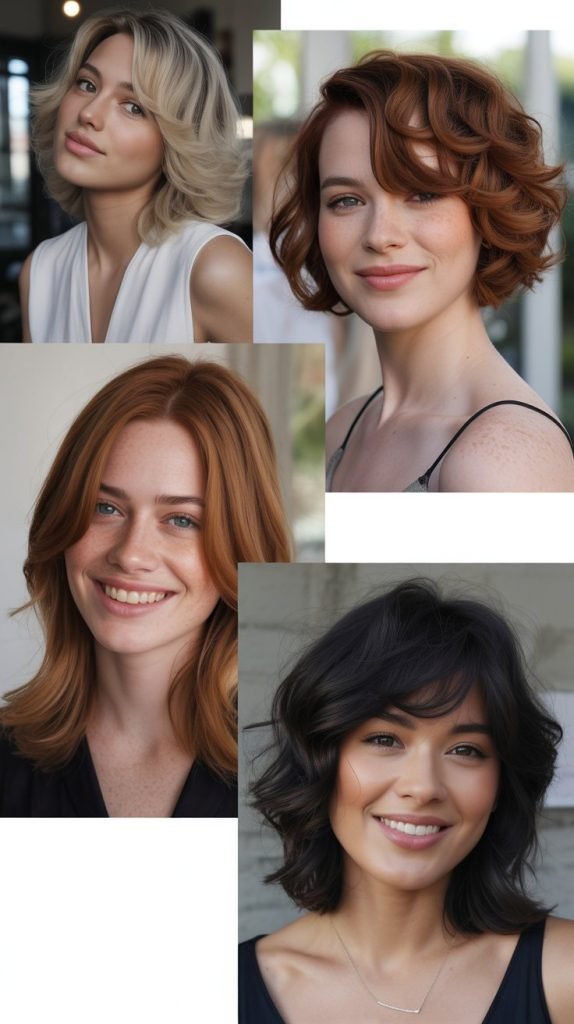
A tousled crop embraces intentional messiness while using piecey texturizing to create separation and movement that makes fine hair appear thicker.
This modern style works with fine hair’s natural characteristics rather than fighting them.
- Piecey texture separates hair into distinct sections that create visual interest and dimension
- The tousled nature means fine hair’s lack of perfect hold becomes an asset rather than a problem
- This low-maintenance style often looks better with minimal styling, embracing natural texture
- The crop length prevents weight from pulling down the intentionally lifted, tousled sections
- Various products from pomades to texturizing sprays can create different piecey effects
- The deliberately undone quality appeals to those wanting effortless-looking style
- This cut photographs exceptionally well, appearing full and dynamic from every angle
27. Graduated Layers with Flipped Crown
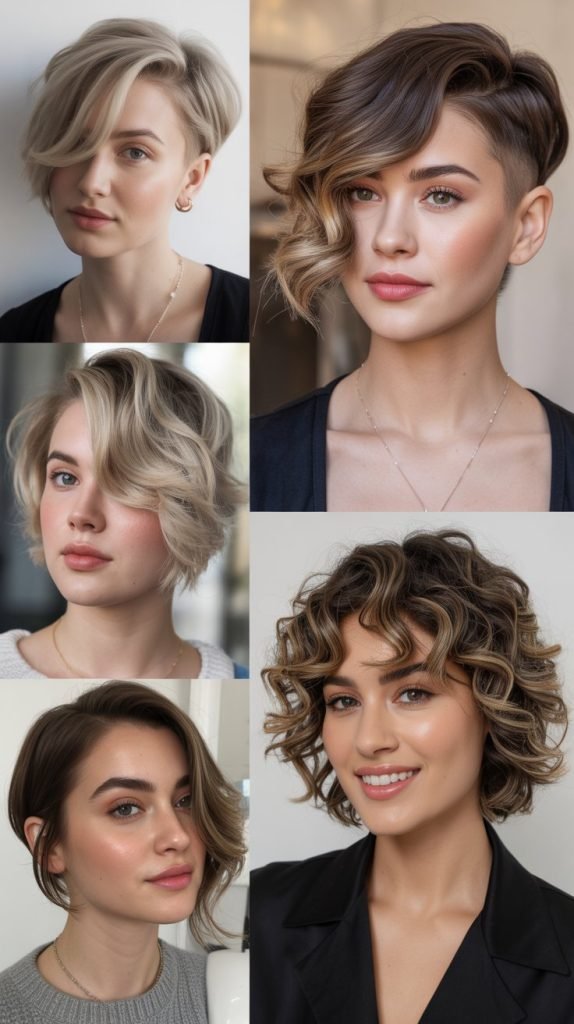
Graduated layers that specifically incorporate upward movement at the crown create immediate, dramatic volume that transforms thin hair.
This technique uses cutting and styling together to maximize lift exactly where fine hair needs it most.
- Crown layers are cut shorter specifically to allow upward styling that creates height
- Graduated cutting means each layer is slightly longer than the one above, creating support
- The flipped crown creates a focal point that draws attention to the voluminous area
- This technique can be combined with various overall lengths from short to medium
- Blow-drying with a round brush easily achieves the flipped crown effect
- The volume at the crown makes the entire head appear larger and the hair fuller
- This retro-inspired technique has been updated with modern texturizing for current appeal
28. Asymmetrical Pixie with Long Side Fringe
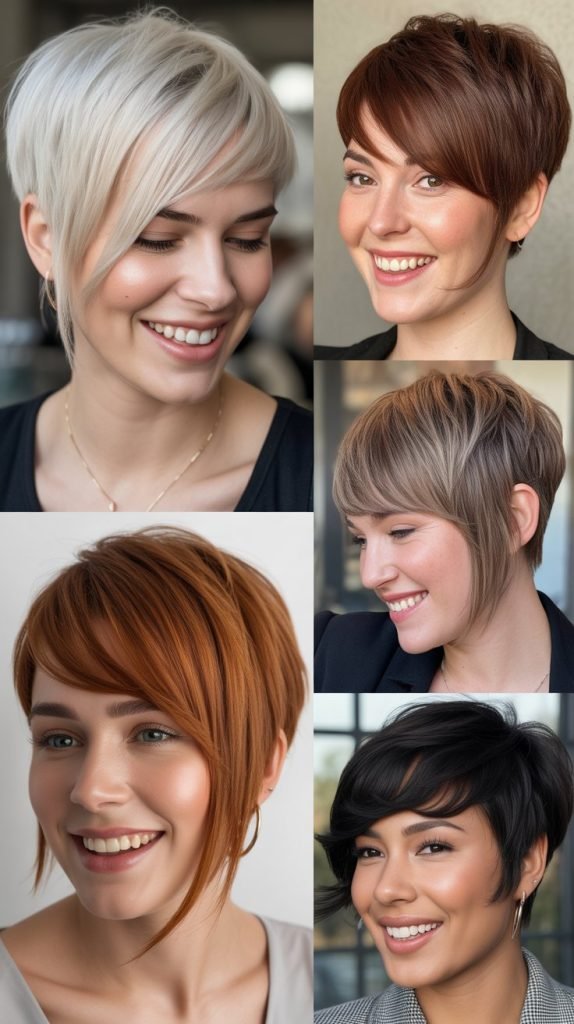
An asymmetrical pixie featuring a dramatically longer side fringe creates visual interest while concentrating length where it makes maximum impact.
This style removes weight everywhere except the focal point, allowing fine hair to achieve impressive volume in the featured section.
- The long side fringe provides styling versatility, able to be swept across or slightly back
- Removing weight everywhere else allows the fringe section to achieve maximum volume and presence
- The dramatic asymmetry creates a fashion-forward look that suggests abundance and intentionality
- This style works exceptionally well with fine hair’s natural softness in the fringe area
- The pixie base requires minimal maintenance while the fringe offers creative styling options
- Various products can transform the fringe from sleek and smooth to textured and piecey
- The bold asymmetry draws attention away from overall hair density to the striking style itself
29. Layered Bob with Side Bangs
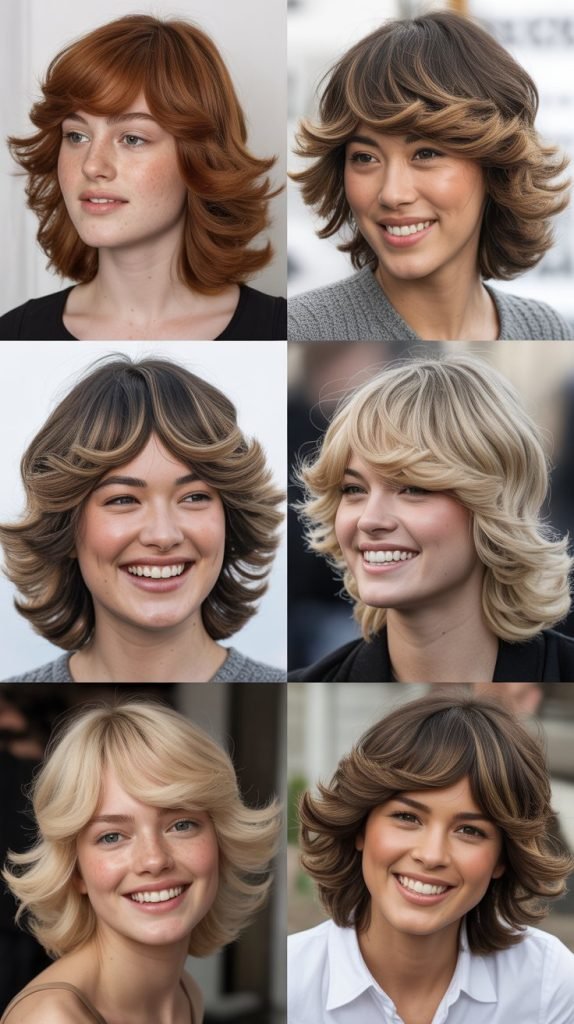
A layered bob combined with side-swept bangs creates multi-dimensional volume while the bangs add face-framing softness.
This classic combination has remained popular because it solves multiple styling challenges simultaneously, particularly for thin hair.
- Side-swept bangs create natural volume at the roots where hair changes direction
- The layered bob provides all-over movement that prevents flatness
- Bangs add dimension around the face without requiring the bulk of full, straight-across bangs
- The side sweep elongates the face while adding asymmetrical interest
- This style transitions easily from professional to casual settings with minimal restyling
- The bangs can be grown out or maintained depending on preference, offering flexibility
- Layering throughout ensures volume isn’t concentrated only in one area but distributed naturally
30. Textured Collarbone Cut with Curtain Bangs
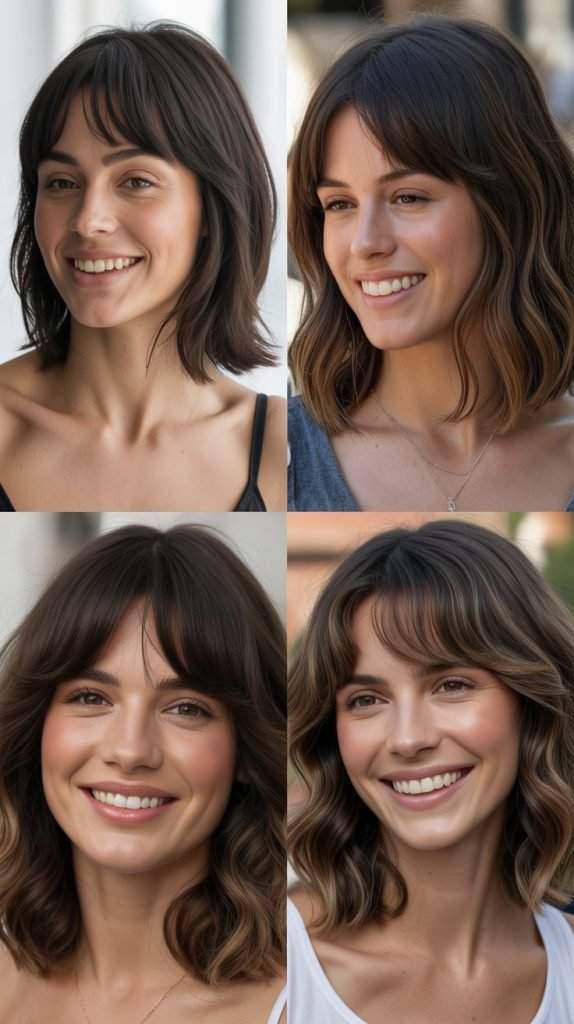
The textured collarbone cut with curtain bangs combines several volume-maximizing techniques into one comprehensive style.
This length hits at an ideal point for movement while the curtain bangs and texturizing create dimension throughout.
- Curtain bangs part in the center and sweep both ways, creating natural lift at the crown
- Collarbone length provides visual impact without the weight that flattens longer thin hair
- Texturizing throughout removes weight strategically while maintaining fullness appearance
- The center part with curtain bangs frames the face beautifully on both sides
- Multiple layer lengths ensure constant movement and dimension
- This versatile style can be worn straight, wavy, or curly with different volumizing effects
- The combination of length, texture, and bangs creates a complete volume solution for thin hair
Conclusion
Finding the perfect style among these 30 Volume Boosting Short Haircuts for Thin Fine Hair can genuinely transform not just your appearance but your confidence and daily routine.
The key to success with fine hair lies in understanding that strategic cutting techniques, proper layering, and the right length work together to create the illusion of thickness and body.
Whether you’re drawn to the edgy appeal of pixie cuts, the classic elegance of bobs, or the modern versatility of lobs, there’s a volume-boosting option that will work beautifully with your hair’s natural texture.
Remember that the best haircut is one that not only looks amazing but also fits your lifestyle, maintenance preferences, and personal style.
Working with a skilled stylist who understands the unique needs of thin, fine hair is essential—they can customize any of these cuts to suit your face shape, hair texture, and volume goals.
Don’t be afraid to show your stylist reference photos and discuss which techniques will work best for your specific hair density and growth patterns.
With the right cut from these 30 Volume Boosting Short Haircuts for Thin Fine Hair, you’ll discover that fine hair can be just as dynamic, stylish, and full of life as any other hair type. The secret has always been working with what you have rather than against it, and these volume-boosting styles do exactly that.
