

Finding the perfect hairstyle when you have thin, fine hair can feel like an impossible challenge, but short pixie haircuts might be exactly what you’ve been searching for.
These modern, flattering styles work with your hair’s natural texture rather than against it, creating the illusion of volume, movement, and thickness that longer styles simply can’t achieve.
Whether you’re looking for a dramatic transformation or simply want a low-maintenance cut that makes your hair appear fuller, this comprehensive guide to the 35 Best Short Pixie Haircuts for Thin, Fine Hair will walk you through the most flattering options available today.
From textured crops to sleek styles, layered cuts to asymmetrical designs, you’ll discover specific techniques, styling tips, and professional insights that will help you choose and maintain the perfect pixie that brings out the best in your fine hair.
In This Post......
- 1. Classic Tapered Pixie
- 2. Textured Pixie with Choppy Layers
- 3. Side-Swept Pixie with Long Bangs
- 4. Undercut Pixie for Maximum Volume
- 5. Pixie with Micro Bangs
- 6. Asymmetrical Pixie Cut
- 7. Pixie Bob Hybrid
- 8. Spiky Textured Pixie
- 9. Pixie with Shaved Nape Design
- 10. Soft Feminine Pixie
- 11. Pixie with Disconnected Layers
- 12. Pixie with Baby Bangs and Volume
- 13. Sleek Polished Pixie
- 14. Tousled Bedhead Pixie
- 15. Pixie with Wispy Nape
- 16. Crown-Focused Volume Pixie
- 17. Pixie with Side Undercut
- 18. Layered Pixie with Movement
- 19. Pixie with Curved Silhouette
- 20. Pixie with Elongated Sideburns
- 21. Platinum Blonde Pixie
- 22. Pixie with Razored Ends
- 23. Pixie with Deep Side Part
- 24. Pixie with Tapered Temples
- 25. Pixie with Longer Crown Section
- 26. Pixie with Forward-Swept Fringe
- 27. Pixie with Feathered Layers
- 28. Pixie with Buzzed Sides
- 29. Soft Pixie with Graduation
- 30. Pixie with Piece-y Definition
- 31. Pixie with Stacked Back
- 32. Pixie with Textured Fringe
- 33. Pixie with Angular Lines
- 34. Pixie with Swooped Front
- 35. Pixie with Color Contrast
- Conclusion
1. Classic Tapered Pixie

The classic tapered pixie remains timeless because it addresses the specific challenges of thin hair through strategic length variation. This foundational style features shorter sides and back with slightly more length on top, creating natural lift at the crown where fine hair tends to fall flat.
- The tapered sides reduce bulk at the ears while keeping enough length on top to style in multiple directions for maximum volume
- This cut works particularly well for round and oval face shapes by elongating the silhouette and drawing attention upward
- Styling requires minimal product—just a small amount of lightweight mousse applied to damp hair and blow-dried with fingers for texture
- The maintenance schedule is typically every 4-6 weeks to keep the shape clean and prevent the sides from becoming too heavy
- Color techniques like subtle highlights near the crown can enhance the dimensional appearance of this cut
2. Textured Pixie with Choppy Layers

Textured pixie cuts with choppy layers are specifically designed to combat the flatness that plagues fine hair by creating deliberate irregularity throughout the cut. The varying lengths trick the eye into perceiving more density and fullness than actually exists.
- Choppy layers remove weight without removing volume, allowing each section of hair to move independently for a fuller appearance
- This style benefits from point-cutting and razor techniques that create soft, feathered ends rather than blunt lines
- Texturizing products like sea salt spray or dry texture spray enhance the piecey, lived-in look this cut is designed to showcase
- The irregular lengths mean this style actually looks better between salon visits as it grows out naturally
- Face-framing shorter pieces can be customized to flatter your specific features, whether emphasizing cheekbones or softening the jawline
3. Side-Swept Pixie with Long Bangs

A side-swept pixie with long bangs creates asymmetry that adds visual interest while the longer front pieces provide styling versatility that shorter uniform cuts cannot offer. The diagonal line created by swept bangs is particularly flattering for adding width to narrow faces.
- Long bangs can be styled forward, swept to the side, or even tucked behind the ear for different looks from the same cut
- The weight of longer bangs helps anchor fine hair and prevents it from looking too wispy or insubstantial
- This style works exceptionally well for square and heart-shaped faces by softening angular features
- Blow-drying the bangs with a round brush creates lift at the root while the ends curve naturally to frame the face
- Deep side parts maximize volume on the heavier side while keeping the opposite side sleek and close to the head
4. Undercut Pixie for Maximum Volume

The undercut pixie removes substantial weight from the underneath layers, allowing the top sections to lift more easily and appear significantly fuller.
This dramatic style combines edgy aesthetics with practical volume-building benefits for thin hair.
- The shaved or very short undercut section creates a foundation that props up the longer top layers naturally
- This cut reduces styling time since the undercut requires no styling while the top can be quickly tousled or smoothed
- Undercuts can be subtle (just at the nape) or dramatic (extending to the temples) depending on your comfort level and lifestyle
- The contrast between the short undercut and longer top creates the illusion of density in the visible sections
- Growing out an undercut requires patience, but during the process, the growing hair can be incorporated into the style gradually
5. Pixie with Micro Bangs

Micro bangs paired with a pixie cut create a bold, fashion-forward statement while cleverly redistributing fine hair to areas where it can make the most visual impact.
The short fringe draws attention to the eyes and adds structure to the overall style.
- Micro bangs require very little hair, making them ideal for those with limited density who want bangs without sacrificing volume elsewhere
- This style creates strong horizontal lines across the forehead that balance vertical features and elongated face shapes
- The maintenance commitment is significant—micro bangs need trimming every 2-3 weeks to maintain their precise length
- Styling is remarkably simple since micro bangs are meant to lie flat and straight, requiring only a quick blow-dry
- This cut pairs beautifully with textured, tousled top sections, creating an intentional contrast between structured and undone elements
6. Asymmetrical Pixie Cut

Asymmetrical pixies feature intentionally uneven lengths from one side to the other, creating dynamic movement and visual intrigue that makes fine hair appear more substantial.
The imbalance draws the eye around the entire style rather than focusing on any single thin area.
- One side is typically cut shorter (often above the ear) while the other maintains length that can be tucked or swept across
- The longer side provides enough hair to experiment with different styling directions without overwhelming fine strands
- This cut naturally directs attention toward your best features while minimizing less favorable angles
- Asymmetry works particularly well for those with naturally asymmetrical faces, creating balance through strategic placement
- The dramatic difference in lengths means this style makes a strong statement and suits those who want a distinctive look
7. Pixie Bob Hybrid

The pixie bob hybrid maintains the short, manageable nature of a pixie while incorporating the slightly longer perimeter of a bob, creating a perfect middle ground for those hesitant to go extremely short.
This transitional length is especially forgiving for fine hair.
- The longer length around the face and nape provides more styling options than traditional pixies while still appearing full
- This style can be blow-dried smooth for a polished look or air-dried with texturizing products for casual volume
- The additional length means less frequent trims are required compared to shorter pixies—every 6-8 weeks is sufficient
- Pixie bobs work across all face shapes because the length can be customized to emphasize or minimize specific features
- This cut is ideal for those transitioning from longer hair to a pixie, serving as a confidence-building intermediate step
8. Spiky Textured Pixie

A spiky textured pixie adds height and dimension through deliberate upward styling that creates the maximum possible volume from fine hair.
The vertical orientation literally lifts hair away from the scalp, eliminating flatness.
- Spike formation works best with 1-2 inches of length on top, giving enough hair to manipulate without becoming too heavy
- Strong-hold styling products like pomade, wax, or gel are essential for creating and maintaining the spiky texture throughout the day
- This edgy style projects confidence and works particularly well for those with active lifestyles who need their hair to stay in place
- The spikes can be styled uniformly for a punk-inspired look or arranged in varied directions for a more modern, tousled appearance
- Fine hair actually holds spikes better than thick hair because there’s less weight pulling the strands downward
9. Pixie with Shaved Nape Design

A pixie featuring a shaved nape design combines practical volume benefits with artistic expression, as the shaved section reduces weight while providing a canvas for creative patterns.
This style is surprisingly versatile despite its bold appearance.
- The shaved nape dramatically reduces bulk at the heaviest part of the head, allowing top sections to appear fuller by contrast
- Designs can range from simple geometric patterns to intricate artwork, personalized to reflect individual style
- The visible design creates an unexpected element that appears when hair is worn up or when turning around
- Maintenance includes both haircut appointments and design touch-ups every 3-4 weeks to keep patterns sharp
- This style works especially well in professional environments where the design remains hidden during forward-facing interactions
10. Soft Feminine Pixie
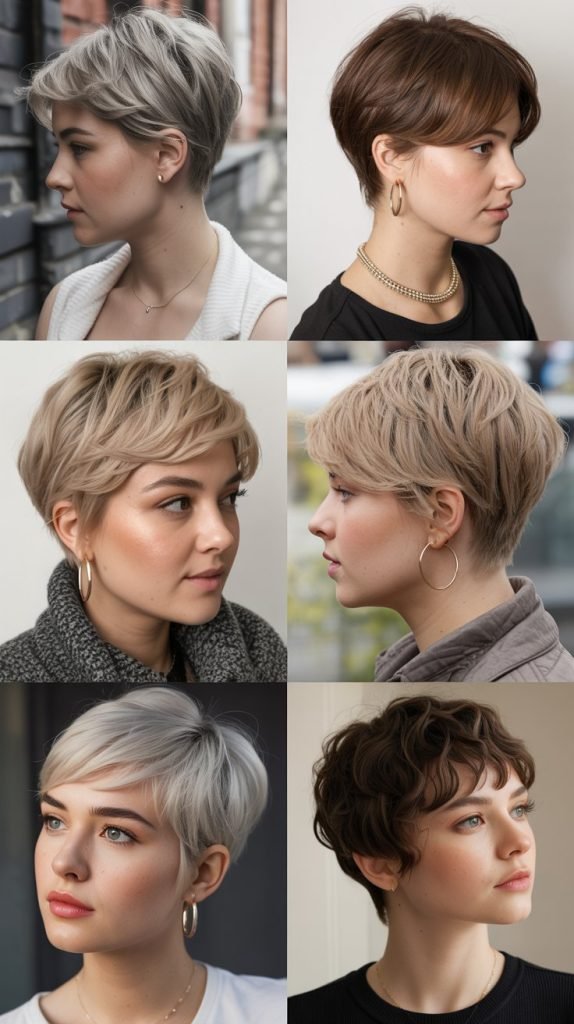
The soft feminine pixie prioritizes gentle, rounded shapes and longer, face-framing pieces that create an approachable, romantic aesthetic while still providing the volume benefits of short hair.
This style proves pixies don’t have to be edgy or severe.
- Longer layers around the face soften the overall look and can be curled or waved for added dimension
- Point-cutting techniques create soft, feathered edges rather than blunt lines, maintaining a delicate appearance
- This cut works beautifully with highlights or balayage that add warmth and depth to enhance the feminine quality
- Styling emphasizes smooth, curved shapes rather than spiky or heavily textured elements, using round brushes during blow-drying
- The softness of this pixie makes it particularly suitable for professional environments and those with classic, timeless style preferences
11. Pixie with Disconnected Layers

Disconnected layers in a pixie cut create intentional gaps between hair sections that prevent fine strands from clumping together and appearing stringy.
The separation between layers generates air pockets that translate to visible volume and movement.
- Each layer maintains its own length without blending seamlessly into the next, creating a stacked, dimensional effect
- The disconnection is typically most pronounced between the crown and the sides, maximizing height at the top
- This cutting technique allows for dramatic texture variation within a single style, from smooth underneath to piecey on top
- Styling requires minimal effort since the cut itself creates the texture—simply rough-dry with fingers for instant dimension
- The separation between layers means each section moves independently, creating the appearance of more overall density
12. Pixie with Baby Bangs and Volume

Baby bangs combined with volumized top sections create a playful, youthful appearance while strategically using limited hair to maximum effect.
The short bangs require minimal hair density, leaving more strands available for creating height.
- Baby bangs typically end mid-forehead, creating a retro-inspired look that’s currently trending in fashion-forward circles
- The combination of baby bangs with teased or blown-out crown sections creates pleasing proportion and balance
- This style particularly flatters oval and heart-shaped faces by adding width across the forehead
- Maintenance is demanding since baby bangs require frequent trimming to prevent them from growing past the ideal length
- The contrast between structured bangs and deliberately messy top sections creates visual interest that distracts from hair thinness
13. Sleek Polished Pixie

A sleek polished pixie offers a sophisticated, professional appearance that works for fine hair by embracing its naturally smooth texture rather than fighting it.
This refined style projects confidence and control while requiring minimal styling time.
- Smooth styling eliminates the texture that can sometimes reveal thinness, instead creating a uniform, glossy surface
- This cut features clean, precise lines that are regularly maintained to preserve the intentional shape
- Shine-enhancing products like serums or glossing sprays emphasize the sleekness and create the illusion of denser hair
- The polished look works particularly well for professional settings, formal events, and those with minimalist style preferences
- Side-parting a sleek pixie creates natural lift at the root while maintaining the smooth finish
14. Tousled Bedhead Pixie

The tousled bedhead pixie celebrates deliberately undone styling that works with fine hair’s tendency to fall naturally, creating an effortlessly cool, lived-in appearance.
This low-maintenance style actually looks better with a slightly imperfect finish.
- The intentionally messy texture disguises any natural thinness by creating controlled chaos throughout the cut
- This style requires minimal styling—often just applying texturizing product to damp hair and air-drying or rough-drying with hands
- The bedhead aesthetic means there’s no “perfect” version to achieve, removing styling pressure and saving time
- Fine hair holds this tousled texture exceptionally well since it doesn’t have weight pulling it flat
- Strategic highlighting enhances the multidimensional appearance that makes tousled styles so appealing
15. Pixie with Wispy Nape

A pixie with a wispy nape creates soft, tapered ends at the hairline that provide a delicate finishing touch while reducing bulk in an area where fine hair often appears thinnest.
The gentle graduation prevents harsh lines.
- The wispy finish is achieved through razor cutting or point-cutting that creates feathered, irregular ends
- This subtle detail makes the overall style appear more natural and less severe than blunt-cut napes
- The gradual taper from longer top sections to whisper-thin nape creates an elegant profile from the side
- This style works particularly well for those with sensitive necks who find blunt edges uncomfortable or itchy
- Wispy napes require less frequent trimming since the gradual nature of the cut means growth appears intentional rather than unkempt
16. Crown-Focused Volume Pixie

A crown-focused volume pixie concentrates length and layers at the highest point of the head, creating dramatic lift where fine hair most needs it.
This strategic placement draws the eye upward and elongates the overall appearance.
- The crown section maintains 2-4 inches of length while surrounding areas are cut shorter to emphasize the height difference
- Blow-drying with a round brush at the crown creates maximum lift that lasts throughout the day
- This style particularly flatters round faces by adding vertical dimension that balances facial proportions
- Teasing or backcombing the crown section provides additional temporary volume for special occasions
- The volume at the crown creates the illusion that all the hair is thicker and fuller than it actually is
17. Pixie with Side Undercut
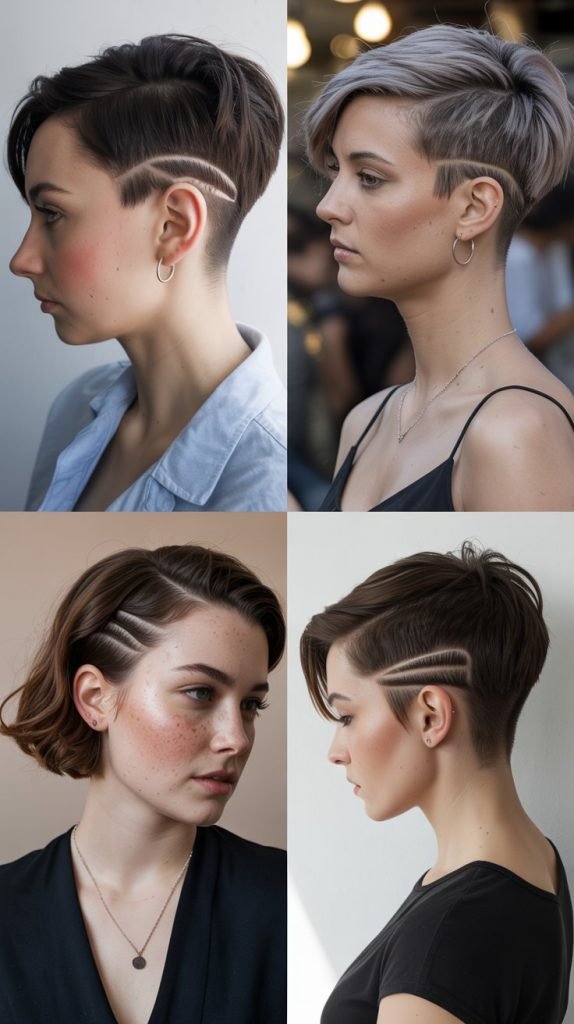
A side undercut pixie removes weight from one side while maintaining length on the other, creating dramatic asymmetry that makes a bold style statement.
This design draws attention away from overall hair density by focusing on the striking contrast.
- The undercut side can be shaved completely or cut very short with clippers, depending on desired impact level
- The longer side provides enough hair for various styling options including tucking behind the ear or sweeping across
- This style requires regular maintenance of the undercut side every 2-3 weeks to maintain the clean contrast
- Side undercuts work particularly well for those who want drama without committing to a full undercut
- The design can incorporate patterns or be left simple, and the undercut placement can be adjusted for face shape
18. Layered Pixie with Movement

A heavily layered pixie maximizes movement through multiple length variations throughout the cut, ensuring fine hair never appears static or lifeless.
Each layer moves independently, creating the perception of abundant, flowing hair.
- Multiple short layers stacked through the crown and back create internal volume that supports outer layers
- The movement reveals itself most dramatically when turning the head or in windy conditions, when each layer responds differently
- This cut benefits from regular trims every 4-5 weeks to maintain the distinct layer separation
- Styling can emphasize the movement through directional blow-drying that positions different layers in various directions
- The layered approach works across all face shapes because layers can be customized to begin at flattering points
19. Pixie with Curved Silhouette
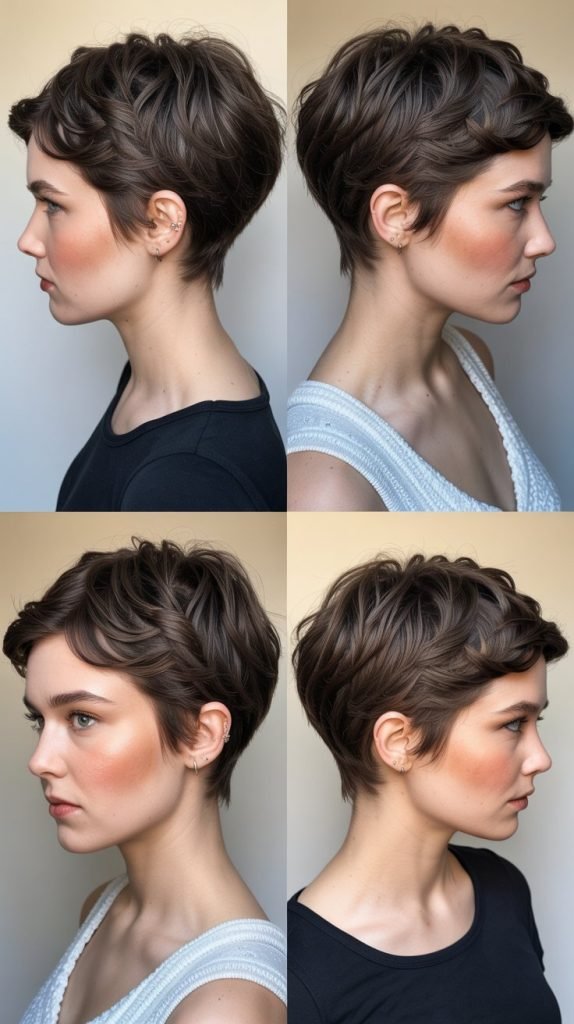
A pixie with a deliberately curved silhouette follows the natural head shape with rounded, feminine lines that create a soft, approachable appearance.
The curved nature provides flattering dimension that straight lines cannot achieve.
- The rounded shape is created through careful cutting that follows the contours of the skull rather than creating angular edges
- This style works particularly well for softening strong or angular facial features through complementary curved lines
- The curvature naturally creates volume by following the head’s roundest points, where lift is most visible
- Blow-drying with a round brush enhances and maintains the curved shape throughout the day
- This pixie variation suits those who want the practicality of short hair without the severe or edgy aesthetic
20. Pixie with Elongated Sideburns

Elongated sideburns on a pixie create distinctive face-framing elements that add visual interest and can be styled in multiple ways.
These longer pieces provide customization options while the rest of the cut remains short and manageable.
- Sideburns can extend to the jawline or even chin length, providing substantial framing without requiring overall length
- The longer sideburns can be styled straight, curled inward, or swept back behind the ears for versatility
- This design particularly flatters longer face shapes by adding width at the sides
- The sideburns provide enough hair to experiment with styling products and techniques without committing to overall length
- Maintenance focuses on preserving the sideburn length while keeping surrounding hair short and clean
21. Platinum Blonde Pixie
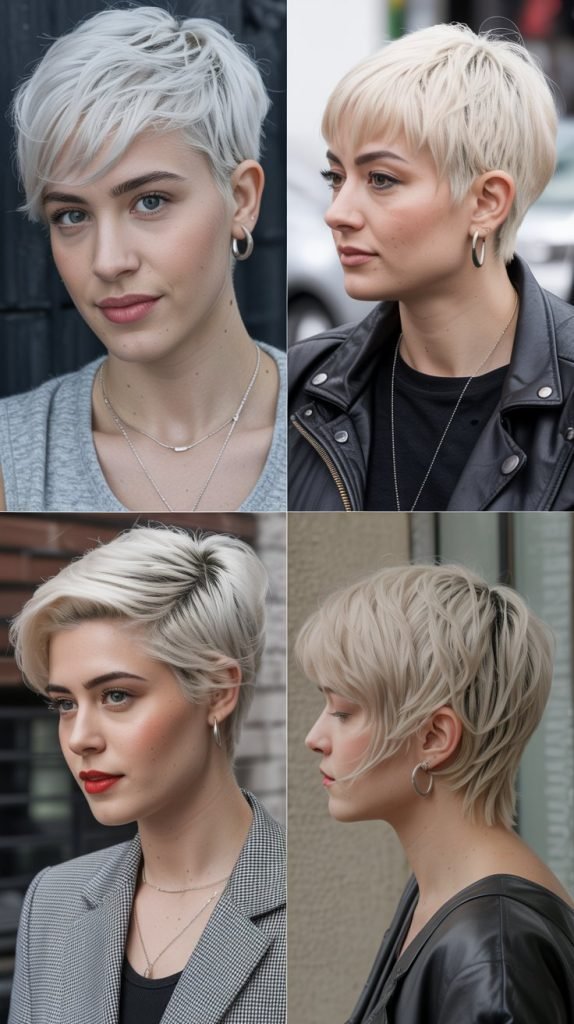
A platinum blonde pixie uses extreme lightness to create the optical illusion of more hair by reflecting maximum light from each strand.
The brightness makes individual hairs more visible and creates visual dimension against the scalp.
- Platinum blonde reflects more light than any other hair color, making fine hair appear less sparse
- The maintenance commitment is significant, requiring regular toning every 3-4 weeks to prevent brassiness
- This color works particularly well with cool skin undertones and can be adjusted with toners for customization
- The contrast between platinum hair and darker roots creates the appearance of depth and volume as hair grows
- Quality hair care products designed for color-treated hair are essential to maintain the health and integrity of bleached fine hair
22. Pixie with Razored Ends

Razored ends on a pixie create ultra-fine, feathered tips that add softness and movement while reducing the appearance of blunt, heavy lines.
The razor-cutting ais particularly beneficial for fine hair that needs textured rather than blocky shapes.
- Razor cutting creates tapered ends that move more freely than scissor-cut blunt ends, generating natural volume
- The technique removes weight without removing length, allowing for fuller appearance throughout the cut
- Razored pixies require more frequent trimming since the fine ends show growth more noticeably than blunt cuts
- This cutting method creates a lived-in, modern aesthetic that appears effortlessly stylish without excessive styling
- The soft, feathered nature of razored ends prevents fine hair from looking too severe or harsh
23. Pixie with Deep Side Part

A deep side part pixie maximizes volume on one side by concentrating hair at an extreme angle, creating dramatic height and movement.
The severe part line itself becomes a defining style element that adds visual interest.
- Parting hair deeply to one side naturally creates lift at the root on the heavier side through sheer volume concentration
- The style can be easily transformed by switching the part to the opposite side for a completely different look
- Deep side parts work particularly well with longer top sections that can be swept across for maximum drama
- The exposed side reveals the scalp intentionally, which works aesthetically with the volume on the opposite side
- This versatile approach to styling means the same cut can appear dramatically different based simply on part placement
24. Pixie with Tapered Temples

A pixie with tapered temples gradually reduces length from the top of the head down to the temple area, creating clean lines that frame the face beautifully.
This subtle detail makes a significant difference in the overall polished appearance.
- The taper at the temples creates a smooth transition that prevents awkward bulk or heaviness in this delicate area
- Tapered temples draw attention to the eyes and cheekbones by creating clean lines that point toward these features
- This technique works across all face shapes but is particularly flattering for those with wider foreheads
- The clean temple area reduces styling time since less hair in this region means less to manage daily
- Maintenance of the taper requires trimming every 4-6 weeks to prevent the temples from growing out and losing definition
25. Pixie with Longer Crown Section
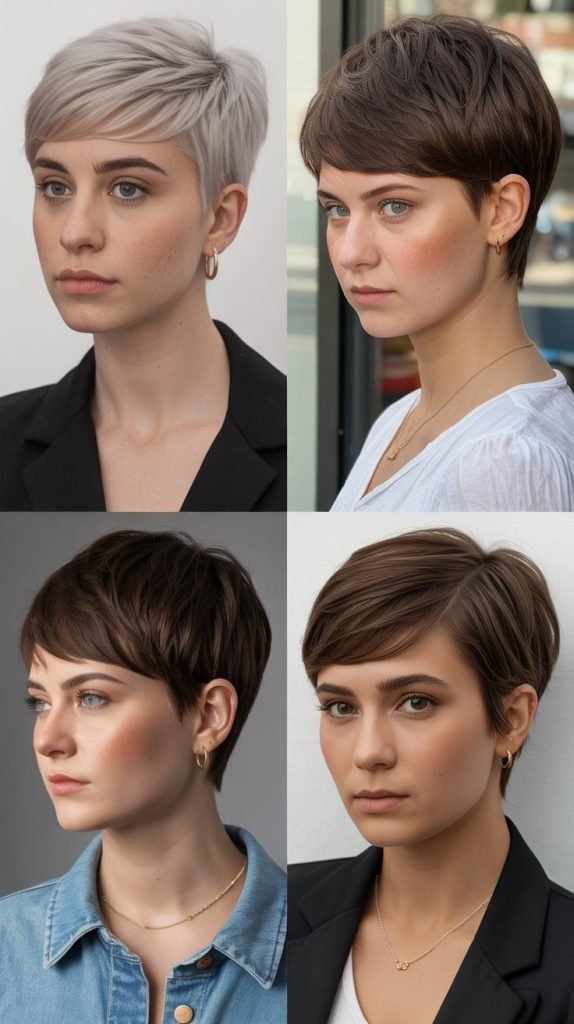
A pixie with an intentionally longer crown section creates a dramatic silhouette with most length concentrated at the head’s highest point.
This design principle maximizes the appearance of volume where it’s most visible and impactful.
- The crown section can be 3-5 inches long while surrounding areas remain much shorter, creating pronounced contrast
- The longer crown hair can be styled upward, swept to the side, or slicked back depending on the desired look
- This style provides the versatility of longer hair in one section while maintaining the ease of a pixie elsewhere
- The height created by the long crown section is particularly flattering for petite individuals, adding perceived height
- This cut works exceptionally well with fine hair because the concentrated length in one area appears fuller than distributed length
26. Pixie with Forward-Swept Fringe

A forward-swept fringe on a pixie creates horizontal emphasis across the forehead while providing facial framing that can disguise thinness through strategic placement.
The forward direction naturally adds volume through the styling approach itself.
- The fringe is cut to sweep naturally forward and can range from eyebrow-grazing to eye-covering length
- Blow-drying the fringe forward with a round brush creates natural lift at the root before the hair falls forward
- This style particularly flatters long or oval face shapes by creating width across the forehead
- The fringe provides enough hair to experiment with different styling products without affecting the entire cut
- Forward-swept fringes naturally cover forehead concerns while drawing attention to the eyes
27. Pixie with Feathered Layers
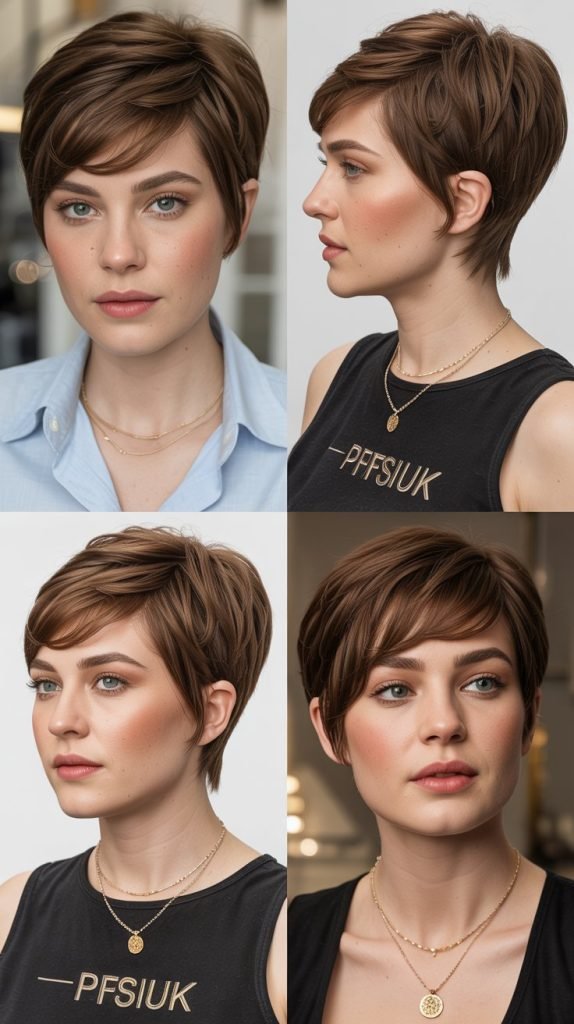
Feathered layers in a pixie create ultra-light, airy pieces that move independently and catch light beautifully, perfect for fine hair that needs every strand to count.
The feathering technique maximizes the perception of fullness through texture.
- Feathering is achieved through specific scissor or razor techniques that create wispy, separated ends
- Each feathered piece reflects light differently, creating dimensional appearance that makes hair look thicker
- This classic technique from the 1970s has been modernized and works exceptionally well on contemporary pixie cuts
- The feathered nature means styling is simple—products and blow-drying naturally enhance the pre-cut texture
- This approach works across all ages and face shapes, providing a universally flattering solution for thin hair
28. Pixie with Buzzed Sides
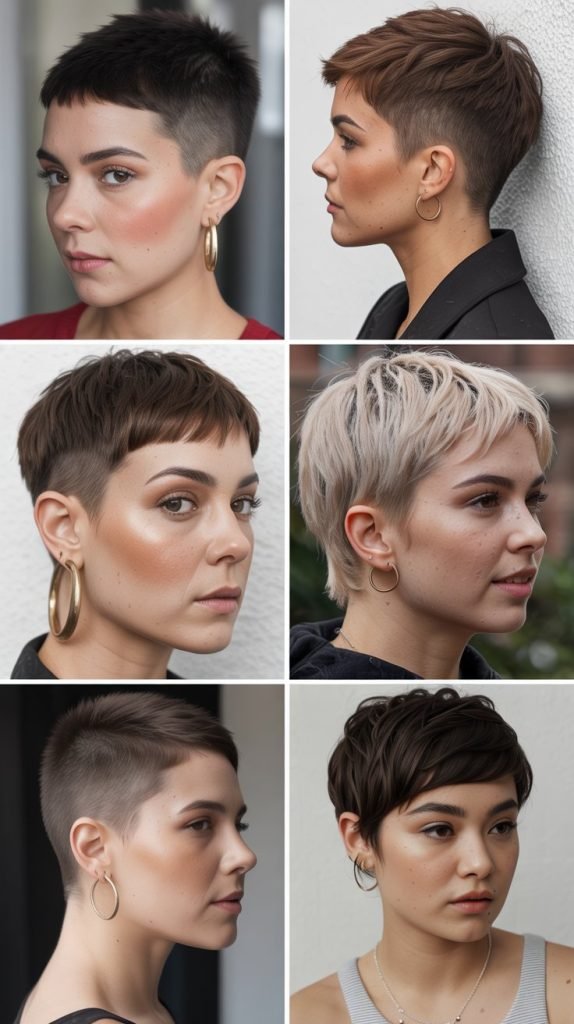
A pixie with buzzed sides removes substantial weight from the sides of the head, allowing the top section to appear dramatically fuller by comparison.
The extreme contrast makes this a bold, statement-making choice.
- The sides are cut with clippers to a uniform short length, typically between 1/8 and 1/2 inch
- The dramatic difference between buzzed sides and longer top creates the strongest possible volume illusion
- This low-maintenance style requires less daily styling since only the top section needs attention
- The buzzed sections need regular upkeep every 2-3 weeks to maintain the clean, sharp appearance
- This style works particularly well for those with active lifestyles who need hair that stays in place during physical activity
29. Soft Pixie with Graduation

A soft graduated pixie features gentle length progression from short at the nape to longer at the crown, creating a naturally flowing shape.
The graduation provides built-in volume through the stacking effect of the layers.
- Graduation is cut at angles that create lift as shorter underlayers support longer upper layers
- This technique is particularly effective for fine hair because it builds fullness through structural design rather than actual hair density
- The gentle nature of the graduation keeps the style feminine and approachable rather than severe
- Styling is simplified because the cut itself creates shape—minimal product and effort yield maximum results
- The graduated layers grow out more gracefully than uniform-length cuts, extending time between salon visits
30. Pixie with Piece-y Definition

A piece-y pixie emphasizes separation between hair sections, creating defined chunks rather than smooth, uniform coverage.
This intentional separation makes each section visible and prevents fine hair from appearing as one thin mass.
- Piece-y definition is created through both cutting techniques and styling products that encourage separation
- Each defined piece catches light independently, creating dimension and the appearance of more hair
- This modern styling approach works particularly well with current fashion trends favoring texture over smoothness
- Products like pomade, wax, or fiber creams applied to dry hair create the defined, separated appearance
- The piece-y style intentionally reveals small areas of scalp between sections, which reads as edgy rather than sparse
31. Pixie with Stacked Back

A stacked back pixie features graduated layers in the back that create rounded, full appearance from behind.
The stacking technique is specifically designed to combat flatness in the area where fine hair often appears thinnest.
- Stacking involves cutting progressively shorter layers that rest on top of each other, creating built-in volume
- The rounded shape in the back balances the overall silhouette and creates a polished appearance from all angles
- This technique works particularly well for those who previously had short bobs and want similar back fullness
- The stacked section requires regular maintenance every 5-6 weeks to preserve the distinct layers
- Blow-drying the stacked layers with a round brush enhances the rounded shape and maximizes volume
32. Pixie with Textured Fringe

A textured fringe on a pixie combines the face-framing benefits of bangs with the volume-creating properties of texture.
The irregular, piece-y nature of the fringe prevents it from appearing heavy or overwhelming fine hair.
- Textured fringes are cut with varying lengths and point-cut ends that create movement rather than solid bangs
- The textured nature means the fringe won’t fall flat, maintaining volume and interest throughout the day
- This style works across multiple face shapes because the fringe can be customized in density and length
- Styling involves applying light product and using fingers to create separation and direction in the fringe
- The textured approach requires less precision than smooth bangs, making daily styling quicker and more forgiving
33. Pixie with Angular Lines

An angular pixie features intentional sharp lines and geometric shapes that create a modern, architectural appearance.
The strong lines draw attention to the precision of the cut rather than the hair’s fine texture.
- Angular cuts incorporate straight lines and defined edges rather than soft, rounded shapes
- The geometric nature of this style creates visual interest through shape rather than volume or texture
- This bold approach works particularly well for those with strong, defined facial features that complement angular cuts
- Maintenance is critical—angular pixies require regular trimming every 4 weeks to maintain the precise lines
- Styling can be either smooth and sleek to emphasize the lines or textured to create contrast with the geometric base
34. Pixie with Swooped Front

A swooped front pixie features longer hair at the front that’s styled in a dramatic sweep across the forehead or to the side.
The swooping motion creates movement and draws the eye along the sweep line, creating visual interest.
- The front section is typically 3-4 inches long, providing enough length to create a substantial sweep
- The swooped styling naturally lifts hair at the root before directing it across, building volume through the technique
- This style particularly flatters those who want to disguise a high forehead or create balance for long face shapes
- The dramatic front provides styling variety—the sweep can change direction or intensity daily
- Products with hold are necessary to maintain the swooped position throughout the day without it falling flat
35. Pixie with Color Contrast

A pixie utilizing color contrast employs strategic placement of highlights, lowlights, or multiple tones to create the illusion of depth and dimension.
Color variation makes fine hair appear substantially fuller by creating visual complexity.
- Contrasting colors create shadows and highlights that mimic the appearance of volume and texture
- Techniques like balayage, foiling, or color blocking can all be adapted for short pixie lengths
- The color contrast is visible even when hair is styled smoothly, providing built-in dimension without texture
- Maintenance varies by technique—balayage grows out naturally while foiled highlights require more frequent touch-ups
- Cool and warm tones can be combined to create maximum dimensional effect that makes each strand count
Conclusion
Choosing from these 35 Best Short Pixie Haircuts for Thin, Fine Hair empowers you to transform what you might have considered a hair challenge into your greatest style asset.
Each of these carefully selected styles addresses the specific needs of fine hair through strategic cutting techniques, smart styling approaches, and volume-maximizing principles that professional stylists rely on daily.
Whether you’re drawn to edgy undercuts, soft feminine shapes, textured tousled styles, or sleek polished looks, there’s a pixie cut perfectly suited to your face shape, lifestyle, and personal aesthetic.
The key to success lies in working with a skilled stylist who understands fine hair, maintaining regular trims to preserve your chosen shape, and using the right products that enhance rather than weigh down your hair.
By embracing a pixie cut designed specifically for thin hair, you’ll discover newfound confidence, dramatically reduced styling time, and the joy of hair that finally looks as full and vibrant as you’ve always wanted it to be.
