

If you’ve been searching for a hairstyle that combines effortless cool with maximum volume control, you’re about to discover why the wolf cut has become the go-to choice for thick wavy hair.
This article on 37 Trendy Wolf Cut Hairstyles for Thick Wavy Hair will guide you through the most flattering variations of this edgy, layered cut that’s taking over social media and salons worldwide.
Thick wavy hair can be both a blessing and a challenge, but the wolf cut’s strategic layering technique removes bulk while enhancing your natural texture in ways that traditional haircuts simply can’t match.
From shoulder-length shags to dramatic long layers, you’ll explore dozens of styling options that work specifically for your hair type, complete with maintenance tips and styling secrets that professional hairstylists use.
Whether you’re looking for a bold transformation or a subtle update to your current look, this comprehensive guide will show you exactly how to rock a wolf cut that celebrates your thick, wavy hair instead of fighting against it.
1. Classic Shoulder-Length Wolf Cut with Face-Framing Layers

The shoulder-length wolf cut serves as the foundation for all variations and works exceptionally well for thick wavy hair by removing weight while maintaining length.
This style features heavily layered ends that create a shaggy, lived-in texture combined with shorter face-framing pieces that draw attention to your best features.
Key characteristics of this cut:
- Choppy layers starting at the cheekbones cascade down to shoulder length, creating dimension and movement
- The crown area is cut shorter to add lift and prevent the flat-top appearance common with thick hair
- Wispy ends prevent the blunt, heavy look that can weigh down wavy textures
- Face-framing pieces are typically 2-3 inches shorter than the longest layers to create a flattering frame
Styling approach:
- Apply a texturizing spray to damp hair before air-drying or diffusing for enhanced wave pattern
- Use a round brush on the top layers only to create volume at the roots
- Finish with a lightweight styling cream to define waves without adding weight
This versatile cut works beautifully for oval, heart, and square face shapes while requiring minimal daily styling effort.
2. Long Wolf Cut with Extended Layers

For those who aren’t ready to sacrifice length, the long wolf cut maintains hair past the shoulders while incorporating the signature layered shaggy aesthetic.
This version is particularly beneficial for thick wavy hair as it removes substantial weight from the mid-lengths and ends without requiring a dramatic chop.
Structural elements:
- Longest layers reach mid-back or below while shortest layers start around the chin or collarbone
- Graduated layering creates a triangular silhouette that’s fuller at the bottom
- Interior layers are texturized to reduce bulk and encourage natural wave formation
- The transition between layer lengths is seamless, avoiding harsh lines
Maintenance considerations:
- Regular trims every 8-10 weeks keep the layers fresh and prevent a grown-out, shapeless appearance
- Deep conditioning treatments maintain healthy ends despite the increased texturizing
- Overnight braiding or twisting helps preserve wave pattern and reduces morning styling time
This extended version offers maximum versatility for updos and half-up styles while still delivering the wolf cut’s signature edge.
3. Short Wolf Cut with Mullet Influence

The short wolf cut borrows heavily from mullet styling with dramatically shorter layers on top and at the sides while maintaining length at the nape.
This bold choice works surprisingly well for thick wavy hair by creating extreme contrast and removing maximum bulk.
Defining features:
- Top layers are cut to 2-4 inches, creating significant volume and lift at the crown
- Side layers graduate from short at the temples to longer toward the back
- The nape section retains 4-6 inches or more of length for the signature mullet effect
- Heavy texturizing throughout prevents the top from appearing too voluminous
Who should consider this cut:
- Those with naturally high volume who want an edgier, more dramatic transformation
- People with strong facial features that can carry a bold, statement hairstyle
- Anyone looking for a low-maintenance cut that air-dries beautifully
Styling tips:
- Scrunch in sea salt spray while hair is wet for enhanced texture and definition
- Use fingers instead of brushes to maintain the intentionally messy, undone appearance
- A small amount of pomade on the shorter layers adds piece-y definition
This daring variation makes a powerful style statement while being remarkably practical for everyday wear.
4. Wolf Cut with Curtain Bangs
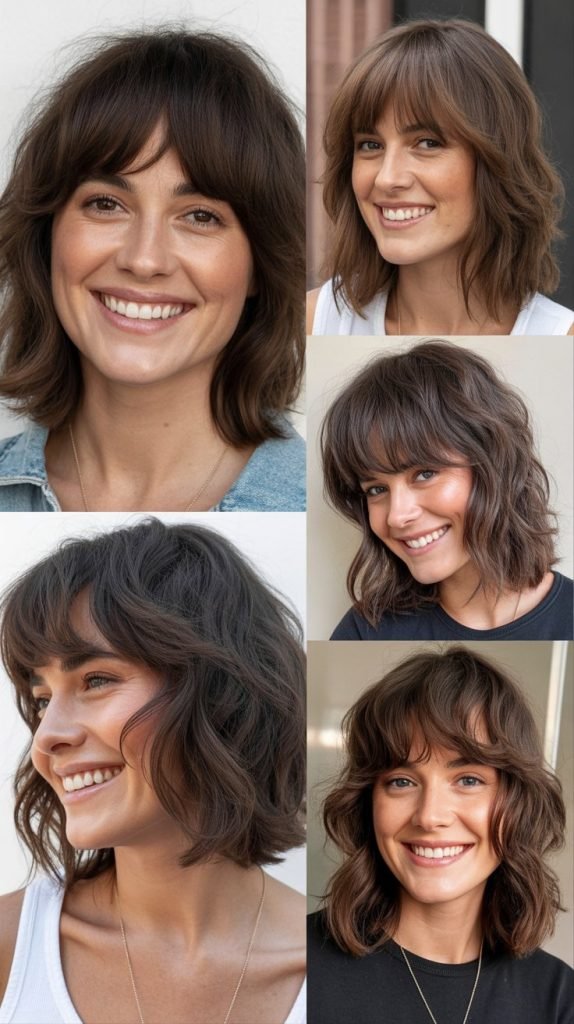
Combining the wolf cut with curtain bangs creates a softer, more romantic version that beautifully frames the face.
The curtain bang element adds a vintage-inspired touch while the wolf cut’s layers provide the modern edge that thick wavy hair craves.
Bang characteristics:
- Center-parted bangs sweep to both sides, typically reaching cheekbone to chin length
- The bangs blend seamlessly into the face-framing layers of the wolf cut
- Slight texturizing prevents the bangs from appearing too heavy or solid
- The center part can shift slightly based on natural hair growth patterns
Benefits for thick wavy hair:
- Curtain bangs remove weight from the front section, reducing the heavy feeling
- The parted style works with natural wave direction rather than fighting it
- Less daily styling required compared to straight-across bangs
- Grows out gracefully, extending the time between trims
Styling method:
- Blow-dry bangs with a small round brush, directing hair away from the center part
- Use a flat iron on low heat to gently bend the ends for a softer curve
- Avoid heavy products on the bangs to prevent greasiness and maintain movement
According to styling experts at Byrdie, curtain bangs are among the most flattering bang styles for wavy hair textures.
5. Layered Wolf Cut with Blonde Highlights

Adding dimensional color through blonde highlights elevates the wolf cut by emphasizing the layers and creating depth.
For thick wavy hair, strategic highlighting draws the eye to the cut’s movement while making the hair appear less heavy.
Color placement strategies:
- Face-framing highlights brighten the complexion and draw attention to the shortest layers
- Babylights throughout the top section create the illusion of natural sun-kissed dimension
- Balayage on the mid-lengths and ends enhances the textured, piece-y appearance
- Lighter tones on the interior layers create depth when hair moves
Color considerations:
- Warm blonde tones (honey, caramel, golden) complement warm skin undertones
- Cool blonde shades (ash, platinum, champagne) suit cool skin undertones
- Multi-tonal highlighting looks more natural and grows out more gracefully than single-tone color
Maintenance requirements:
- Toning treatments every 4-6 weeks prevent brassiness, especially important for wavy hair
- Purple shampoo maintains cool tones between salon visits
- Deep conditioning masks counteract potential dryness from chemical processing
- Heat protectant is essential before any heat styling on color-treated hair
The combination of strategic cutting and coloring creates a high-impact look that’s surprisingly low-maintenance for everyday wear.
6. Wolf Cut with Shaggy Bangs

Shaggy bangs add an additional layer of texture to the wolf cut, creating a more bohemian, carefree aesthetic.
This combination works exceptionally well for thick wavy hair by distributing weight across the forehead area while maintaining the cut’s signature volume.
Shaggy bang details:
- Bangs are cut with significant texturizing, creating wispy, separated pieces rather than a solid line
- Length typically ranges from eyebrow-grazing to just above the eyes
- The bangs feature varying lengths within themselves for an intentionally uneven appearance
- Point-cutting techniques create soft, feathered ends that blend naturally with face-framing layers
Advantages:
- Less precise styling required compared to blunt bangs
- Wavy texture is embraced rather than straightened
- Forehead coverage can be adjusted by styling bangs to the side or center
- The textured look hides any imperfections in the cut as it grows
Daily styling:
- Blow-dry bangs forward while still damp using fingers to create separation
- A small amount of texturizing paste worked through with fingertips adds definition
- For extra volume, use a small round brush at the roots only
- Dry shampoo refreshes bangs between washes without requiring water
This variation offers maximum styling flexibility while maintaining an effortlessly cool appearance.
7. Asymmetrical Wolf Cut

The asymmetrical wolf cut introduces an edgy, fashion-forward element by creating intentional unevenness in the length or layering.
This bold variation works particularly well for thick wavy hair as the asymmetry naturally reduces bulk while adding visual interest.
Asymmetrical design options:
- One side cut noticeably shorter than the other (typically 2-4 inches difference)
- Deeper layers on one side create more dramatic texture and volume
- An off-center part enhances the asymmetrical effect
- The longer side can be tucked behind the ear for additional styling variety
Face shape considerations:
- Longer side positioned toward the wider part of the face creates balance
- Works exceptionally well for round and square face shapes by adding angles
- Can visually correct facial asymmetry when strategically designed
Styling techniques:
- Emphasize the asymmetry by directing volume toward the shorter side
- Use a flat iron to add bends and curves that highlight the uneven lengths
- Switch the part occasionally to change up the look entirely
- Pin or clip the longer side for a temporary even-more-dramatic effect
This cutting-edge style makes a powerful statement while remaining practical for professional and casual settings.
8. Wolf Cut with Razored Ends

Incorporating razor cutting techniques into the wolf cut creates ultra-texturized ends that enhance movement and reduce weight dramatically.
For thick wavy hair, razored ends prevent the bottom-heavy appearance that can occur with blunt cutting methods.
Razor cutting benefits:
- Creates feathered, wispy ends that move independently for enhanced texture
- Removes bulk from thick hair more effectively than scissor cutting alone
- Produces a softer, less structured appearance that complements natural waves
- The cut grows out more gracefully with less obvious demarcation lines
Technical aspects:
- Razors are used at an angle to slice through hair rather than cutting straight across
- Point-cutting with razors creates piece-y separation
- Interior layers receive the most razor work to reduce density
- The perimeter gets lighter razor work to maintain some structure
Maintenance notes:
- Razored ends can become dry faster than scissor-cut ends, requiring regular conditioning
- Split ends may develop more quickly, necessitating trims every 6-8 weeks
- Heat styling should be minimized to prevent damage to the delicate ends
- Leave-in treatments help maintain the health and appearance of razored hair
When maintained properly, razored ends create the most dynamic, movement-filled version of the wolf cut.
9. Wolf Cut with Side Part

Styling the wolf cut with a deep side part creates a completely different aesthetic that’s more glamorous and polished.
This variation works beautifully for thick wavy hair by shifting volume to one side while maintaining the cut’s signature layered structure.
Side part styling:
- Part is placed 2-3 inches from the center, typically following the arch of the eyebrow
- The heavier side features more visible layers and volume
- The lighter side can be tucked behind the ear or left to fall naturally
- Face-framing layers become more prominent on the heavier side
Occasion versatility:
- Professional settings benefit from the more polished appearance
- Evening events can feature dramatic side-swept styling with added volume
- Casual days allow the side part to create effortless, undone waves
Styling process:
- Blow-dry hair directing the roots toward the heavier side for maximum lift
- Use a large round brush on the top section to create smooth volume
- Apply mousse to damp hair on the heavier side for lasting hold
- Finish with a light-hold hairspray to maintain the part position throughout the day
Product recommendations:
- Volumizing mousse at the roots creates height that lasts all day
- Texturizing spray on the ends prevents flatness
- Shine serum on the heavier side adds polish without weight
The side-parted wolf cut bridges the gap between edgy and elegant.
10. Wolf Cut with Wispy Layers

Focusing on ultra-lightweight, wispy layers throughout the wolf cut creates the most delicate, ethereal version of this style.
This approach particularly benefits thick wavy hair by maximizing bulk removal while creating a soft, romantic aesthetic.
Wispy layer characteristics:
- Extreme texturizing creates hair strands of varying thickness throughout
- Ends are point-cut and razored to create feather-light tips
- Interior layers are heavily thinned to remove density without losing length
- The overall silhouette remains soft and diffused rather than structured
Ideal candidates:
- Those with very thick, dense hair who struggle with heaviness
- People seeking a more feminine, romantic interpretation of the wolf cut
- Anyone wanting maximum movement and airiness in their hairstyle
Styling approach:
- Air-drying produces the most natural, lived-in result
- Diffusing with the head flipped upside down creates additional lift
- Minimal product use preserves the lightweight, airy quality
- Fingers are used instead of brushes to maintain piece-y separation
Maintenance considerations:
- Wispy ends require diligent conditioning to prevent dryness
- Regular trims every 6-8 weeks maintain the delicate appearance
- Avoid heavy oils or creams that can weigh down the wispy texture
This ultra-textured variation delivers maximum drama with minimal styling effort.
11. Wolf Cut with Graduated Bob Base

Combining the wolf cut’s layering with a graduated bob structure creates a sophisticated hybrid that maintains professional polish while adding modern edge.
This variation suits thick wavy hair by providing structure at the perimeter while allowing texture throughout.
Structural design:
- The perimeter is cut in a classic graduated bob shape, shorter in back and longer in front
- Wolf cut layers are added throughout the interior for texture and volume
- The combination creates a polished silhouette with an undone texture
- Front pieces typically reach collarbone to shoulder length
Benefits of this hybrid:
- More workplace-appropriate than a traditional wolf cut while maintaining style edge
- The bob base provides structure that contains very thick hair
- Graduated angles naturally add volume at the crown
- Styling versatility ranges from sleek to textured depending on the occasion
Styling variations:
- Smooth the exterior layers with a flat iron for a polished professional look
- Scrunch in texturizing products and air-dry for casual weekend styling
- Blow-dry with a round brush for maximum volume and smoothness
- Add waves with a curling iron focusing on mid-lengths to ends
This sophisticated option appeals to those wanting wolf cut texture without sacrificing professional polish.
12. Wolf Cut with Money Pieces
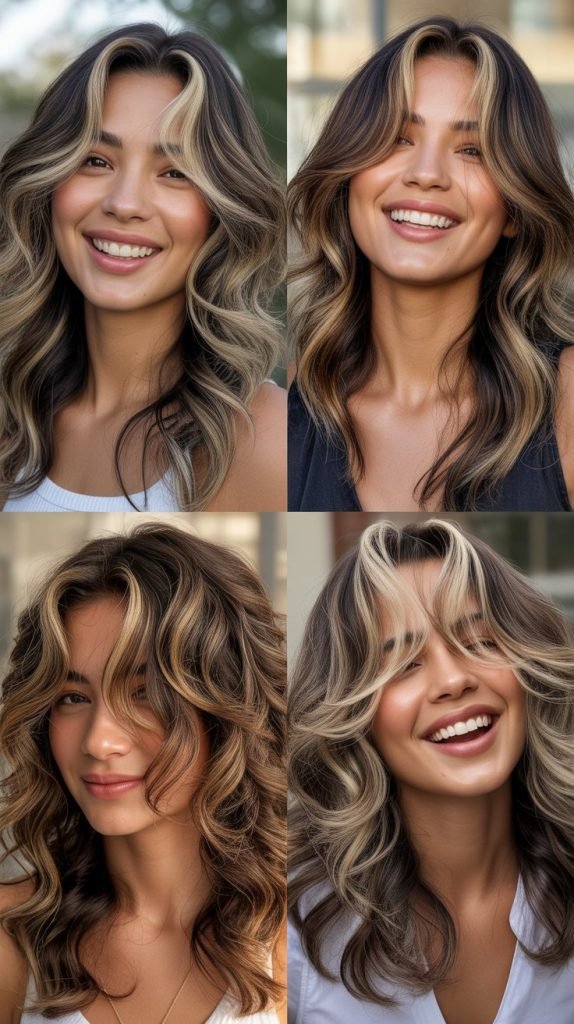
Adding money pieces—bold face-framing highlights—to a wolf cut creates instant dimension and draws attention to the face.
For thick wavy hair, this color technique complements the cut’s layers by creating visual lightness and movement.
Money piece placement:
- Two chunky highlights frame the face, typically starting at the hairline
- The highlighted sections are usually 1-2 inches wide on each side
- Color is typically 2-4 shades lighter than the base color
- The highlights extend from the roots through the face-framing layers
Color options:
- Blonde money pieces on brunette hair create dramatic, high-contrast framing
- Caramel tones on brown hair offer a softer, more natural dimension
- Platinum pieces on dark hair deliver maximum impact
- Subtle honey highlights on light brown hair provide gentle brightening
Styling to enhance money pieces:
- Face-framing layers should be styled to flip or curve toward the face
- Center or slightly off-center parts showcase both money pieces equally
- Waves or curls on the money pieces catch light and create dimension
- Straightening just the money pieces while leaving the rest wavy creates interesting contrast
Maintenance:
- Root touch-ups needed every 6-8 weeks to maintain the bright framing effect
- Toning treatments prevent brassiness on blonde money pieces
- Deep conditioning on highlighted sections prevents damage
According to hair color experts at Allure, money pieces remain one of the most flattering highlighting techniques for all face shapes.
13. Textured Wolf Cut with Beach Waves

Styling the wolf cut with intentional beach waves creates the ultimate effortless, vacation-ready aesthetic.
This combination particularly flatters thick wavy hair by working with its natural texture rather than against it.
Beach wave creation methods:
- Salt spray applied to damp hair and scrunched creates natural-looking texture
- Three-barrel wavers produce consistent, uniform beach waves throughout
- Braiding damp hair overnight results in authentic, non-heat-styled waves
- Curling iron technique using alternating directions creates varied, natural-looking movement
Key styling steps:
- Start with damp, towel-dried hair for best product absorption
- Apply texturizing spray or sea salt spray from mid-lengths to ends
- Scrunch hair upward repeatedly to encourage wave formation
- Allow to air-dry or diffuse on low heat for enhanced texture
- Finish with a light-hold hairspray to maintain the waves without stiffness
Product selection:
- Sea salt sprays add grit and texture that mimics ocean water effects
- Texturizing sprays provide hold and definition without crunchiness
- Wave-enhancing creams define natural wave patterns in thick hair
- Dry texture sprays refresh and add volume on non-wash days
Tips for longevity:
- Sleep with hair in a loose bun to preserve waves overnight
- Refresh in the morning with dry shampoo and additional texturizing spray
- Avoid touching or brushing waves to maintain their formed shape
This styling approach creates a perpetually vacation-ready look that celebrates natural texture.
14. Wolf Cut with Micro Bangs
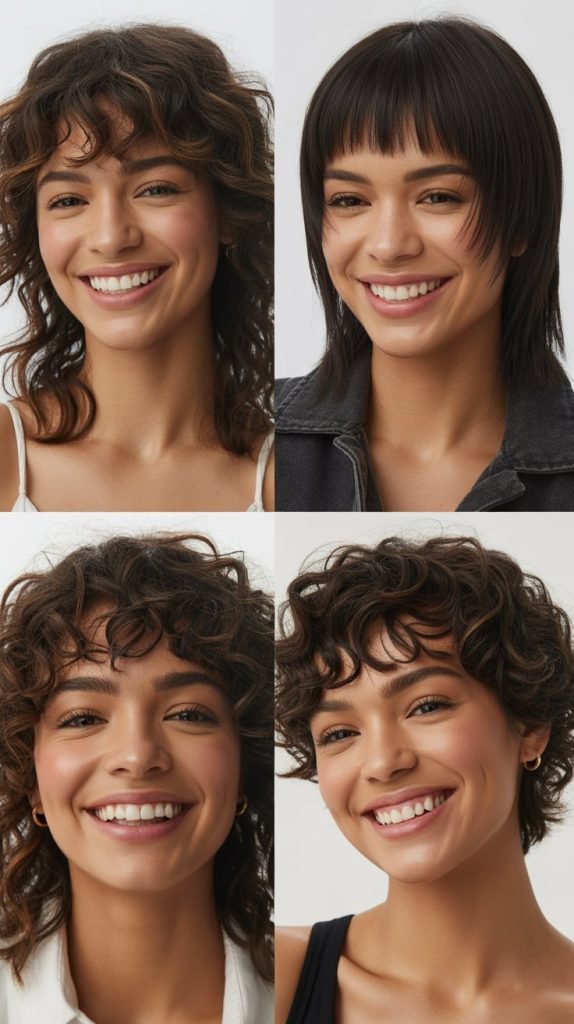
Pairing the wolf cut with micro bangs creates an ultra-bold, fashion-forward statement.
This daring combination works for thick wavy hair by distributing volume and creating dramatic contrast between the short fringe and layered length.
Micro bang specifications:
- Bangs are cut significantly above the eyebrows, typically mid-forehead
- The fringe is usually blunt-cut or slightly textured depending on desired effect
- Width typically extends from temple to temple
- The micro bangs create stark contrast with the longer, layered sections
Styling requirements:
- Daily blow-drying or straightening is necessary to maintain the blunt, straight appearance
- Regular trims every 2-3 weeks keep the length precisely where desired
- Strong-hold products are essential to keep micro bangs in place
- Wavy texture in the micro bangs disrupts the intended look, requiring straightening
Considerations before committing:
- This is the most high-maintenance bang option requiring daily styling
- Growing out micro bangs is a lengthy process that may require transitional styles
- Not suitable for those wanting a low-maintenance hairstyle
- Works best for those with bold personal style and confidence
Face shape compatibility:
- Oval faces can typically wear micro bangs successfully
- Long faces benefit from the horizontal line created by short bangs
- Round faces may find micro bangs emphasize width rather than length
This avant-garde choice is for the truly daring who want maximum style impact.
15. Wolf Cut with Burgundy Color

Incorporating rich burgundy tones into a wolf cut adds depth and sophistication while the red undertones enhance the cut’s dimension.
For thick wavy hair, burgundy color creates visual interest that complements the layered structure beautifully.
Burgundy color variations:
- Deep wine shades offer subtle red tones visible primarily in sunlight
- Bright burgundy creates bold, statement-making color
- Burgundy with violet undertones adds a cooler, more modern twist
- Burgundy balayage concentrates color on the ends while keeping roots darker
Application techniques:
- All-over color provides uniform burgundy throughout
- Balayage or ombre places burgundy primarily on the ends and layered pieces
- Highlights with burgundy create dimensional ribbons of color
- Shadow root technique keeps natural color at roots while adding burgundy length
Color maintenance:
- Color-safe shampoo and conditioner prevent premature fading
- Washing in cool water helps seal the cuticle and maintain color vibrancy
- Weekly color-depositing treatments refresh the burgundy tone between salon visits
- Minimize heat styling to prevent color oxidation and fading
Complementary factors:
- Burgundy tones warm up cool skin undertones beautifully
- The rich color makes layered texture more visible and dramatic
- Works year-round but particularly popular in fall and winter months
According to colorists at Cosmopolitan, burgundy remains a top choice for those wanting dramatic color without bleaching.
16. Layered Wolf Cut with Subtle Balayage

Combining the wolf cut with subtle balayage creates natural-looking dimension that enhances the layered texture.
This approach works exceptionally well for thick wavy hair by adding visual lightness without the commitment of dramatic color.
Balayage characteristics:
- Hand-painted highlights are strategically placed on the surface layers
- Color is 1-2 shades lighter than the base for a natural sun-kissed effect
- Highlights are concentrated where light naturally hits: around the face, crown, and ends
- The technique creates a gradual, seamless blend from darker roots to lighter ends
Benefits for layered cuts:
- Highlights on the shortest layers create dimension and draw the eye to the cut’s structure
- Lighter ends make layers more visible and defined
- The color variation reduces the appearance of bulk in thick hair
- Grows out gracefully without obvious regrowth lines
Placement strategy:
- Face-framing pieces receive the lightest color for brightening effect
- Interior layers get subtle highlighting to create depth
- The underneath sections remain darker for natural contrast
- Crown area receives strategic highlights for added dimension
Maintenance requirements:
- Refresh appointments every 10-14 weeks maintain the subtle effect
- Toning may be needed every 6-8 weeks for blonde balayage
- Deep conditioning treatments preserve hair health
- Heat protectant is essential before any thermal styling
This timeless color technique complements the wolf cut without overshadowing its structure.
17. Wolf Cut with Feathered Crown

Emphasizing extra feathering and layering at the crown creates maximum volume at the top while maintaining the wolf cut’s signature texture.
This variation brilliantly addresses the common concern of thick wavy hair lying flat at the roots.
Crown feathering technique:
- Short layers at the crown are cut at sharp angles to create lift
- Heavy point-cutting creates separated, wispy pieces that stand away from the scalp
- The crown layers typically range from 2-4 inches long
- Interior layers are thinned significantly to reduce weight that pulls down volume
Volume benefits:
- Removes weight directly where thick hair tends to flatten
- Creates natural lift without requiring extensive blow-drying
- The feathered pieces catch light and create dimension
- Works with the hair’s natural wave pattern rather than requiring straightening
Styling techniques:
- Apply volumizing mousse directly at the roots when hair is damp
- Blow-dry the crown area while lifting hair up and away from the scalp
- Use a small round brush or your fingers to direct roots upward
- Finish by flipping hair upside down and using cool shot setting to lock in volume
- Dry shampoo at the roots refreshes lift on second and third days
Face shape benefits:
- Adds height for round faces, creating a more oval appearance
- Balances longer face shapes by adding width at the crown
- Creates proportion for those with fuller lower faces or strong jawlines
This volume-focused approach solves one of thick hair’s biggest challenges while maintaining style.
18. Wolf Cut with Disconnected Layers
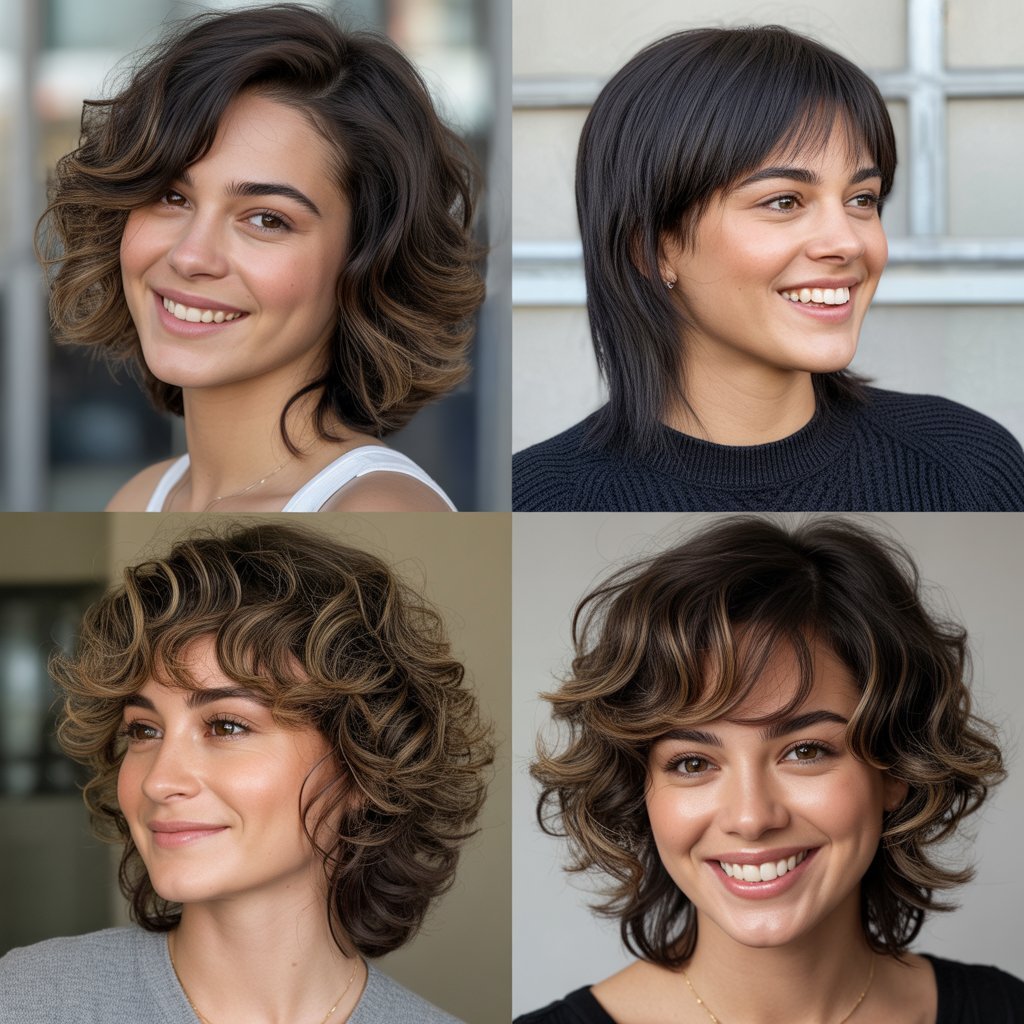
Creating intentionally disconnected layers adds drama and edge to the wolf cut through strategic placement of shorter sections that contrast sharply with longer ones.
For thick wavy hair, this technique removes maximum bulk while creating a fashion-forward aesthetic.
Disconnection technique:
- Shorter layers are cut without blending into longer sections, creating visible separation
- The shortest layers might sit 4-6 inches above the longest lengths
- This creates a stacked, almost stepped appearance when viewed from the side
- Interior disconnection removes weight without affecting the overall silhouette
Design considerations:
- Placement of disconnected layers determines the overall shape and volume distribution
- Shorter disconnected pieces at the crown create volume and lift
- Disconnected face-framing layers add dimension around the face
- The technique works best when the wave pattern is similar throughout all layers
Styling approach:
- Embrace the separated, piece-y nature rather than trying to blend layers
- Use texturizing products that emphasize disconnection
- Allow different layer lengths to move independently
- Consider straightening some disconnected pieces while leaving others wavy for contrast
Maintenance notes:
- The disconnected structure becomes more obvious as hair grows
- Requires trims every 6-8 weeks to maintain the intentional disconnection
- May need more frequent styling to keep the separated layers defined
This advanced cutting technique creates a highly artistic, modern interpretation of the wolf cut.
19. Wolf Cut with Natural Root Shadow

Incorporating a root shadow technique with the wolf cut creates low-maintenance dimension while allowing the cut’s texture to shine.
This color approach particularly benefits thick wavy hair by adding depth without requiring frequent touch-ups.
Root shadow details:
- Natural hair color is maintained or enhanced at the roots for 2-4 inches
- Color gradually transitions to lighter tones on the mid-lengths and ends
- The darker roots create depth and make the overall color appear more dimensional
- Regrowth blends seamlessly, extending time between color appointments
Color benefits:
- Reduces maintenance requirements to every 10-16 weeks
- Creates a more natural, lived-in appearance
- The darker roots add depth that makes lighter ends pop
- Healthier hair since roots aren’t repeatedly colored
Application techniques:
- Balayage or highlighting is applied starting several inches from the roots
- The shadow is blended upward for a seamless gradient
- Toner may be applied to ends to create the desired tone
- The root area receives no lightening product
Styling to enhance shadow:
- Center parts showcase the symmetrical shadow effect
- Side parts create a natural-looking color variation
- Waves and texture make the color gradient more visible
- The layered cut ensures the dimensional color is visible throughout
This practical color choice complements busy lifestyles while maintaining a polished appearance.
20. Wolf Cut with Face-Framing Highlights
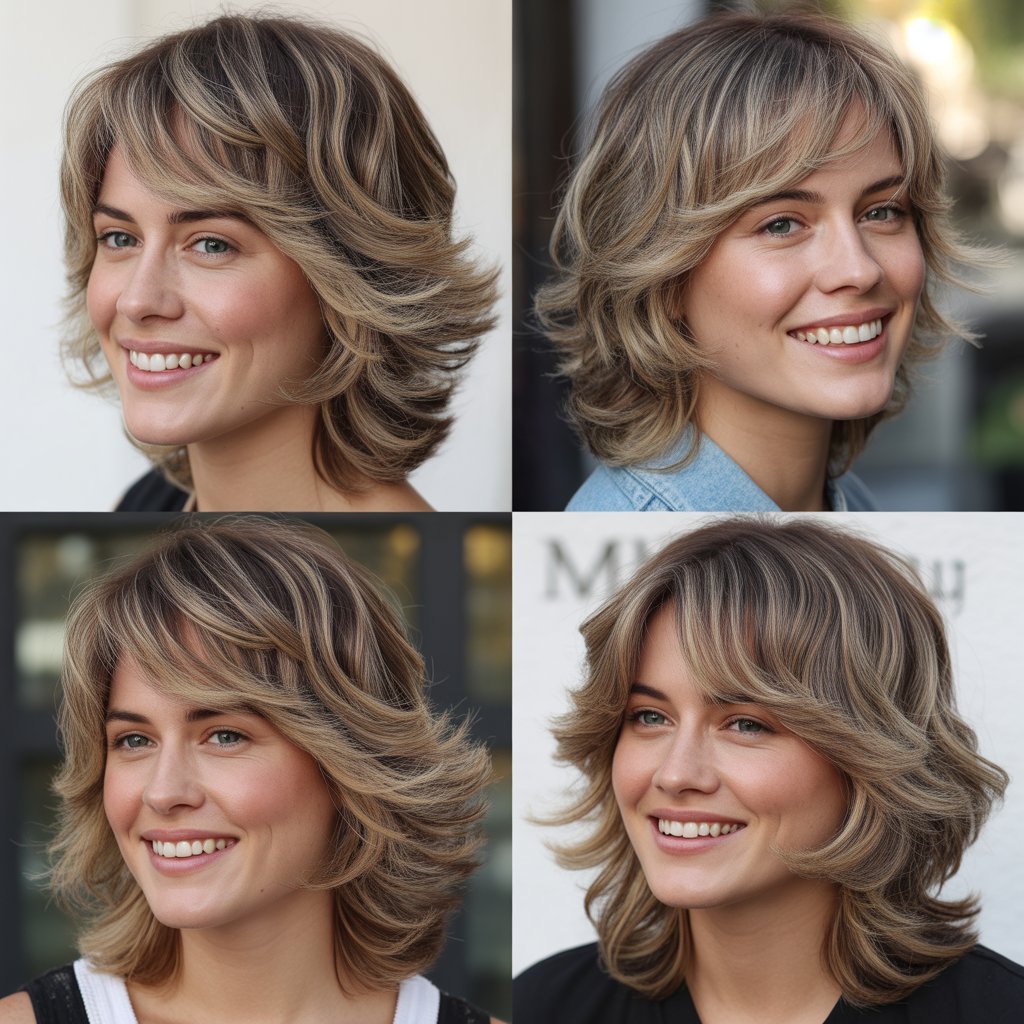
Concentrating highlights specifically around the face creates a brightening, lifting effect that complements the wolf cut’s structure.
For thick wavy hair, face-framing highlights reduce visual heaviness while drawing attention to facial features.
Highlight placement:
- Lighter pieces are concentrated in the front sections from the hairline back 2-3 inches
- The highlighted sections typically include the face-framing layers
- Color can range from subtle (1-2 shades lighter) to dramatic (4+ shades lighter)
- Highlights may extend down the length or be concentrated at the top for more contrast
Design variations:
- Chunky face-framing pieces create bold, statement contrast
- Fine, blended highlights offer a more natural sun-kissed appearance
- Ombré effect on face-framing pieces transitions from darker roots to lighter ends
- All-over lighter color on just the front pieces creates maximum brightness
Complementary benefits:
- Brightens the complexion by reflecting light near the face
- Makes eyes appear brighter and more noticeable
- Creates a lifted appearance that can have an anti-aging effect
- Draws focus to the wolf cut’s most flattering feature—the face-framing layers
Maintenance considerations:
- Requires touch-ups every 6-10 weeks depending on contrast level
- Toning maintains desired tone and prevents brassiness
- Concentrated conditioning on highlighted pieces prevents damage
- Heat protectant is crucial when styling the lightened sections
This targeted highlighting approach delivers maximum impact with minimal coverage.
21. Textured Wolf Cut with Defined Curls

When thick wavy hair leans more toward curly, styling the wolf cut with defined, enhanced curls creates a voluminous, romantic aesthetic.
This approach celebrates natural texture rather than fighting it.
Curl definition methods:
- Curl-enhancing cream applied to soaking wet hair encourages curl formation
- Squish to condish method loads moisture into curls for definition
- Diffusing with a bowl attachment prevents frizz while encouraging curl clumping
- Finger-coiling individual sections creates uniform, defined curl patterns
Product layering:
- Leave-in conditioner provides moisture foundation
- Curl cream adds definition and hold
- Gel creates cast that locks in curl shape
- Scrunching out the crunch after drying reveals soft, defined curls
Wolf cut advantages for curls:
- Layering prevents the triangular shape common with one-length curly hair
- Removes weight that pulls curls straight at the roots
- Creates volume at the crown where curly hair often falls flat
- Interior layering allows curls to form in varying lengths for dimensional texture
Refresh techniques:
- Mist with water-product mixture to reactivate curl products
- Scrunch upward to reform curl pattern
- Focus on sections that have lost definition rather than rewetting all hair
- Use curl refresher sprays designed specifically for next-day styling
According to curl specialists at NaturallyCurly, layering is essential for achieving manageable, defined curls on thick hair.
22. Wolf Cut with Platinum Highlights

Adding platinum or very light blonde highlights to a wolf cut creates dramatic, high-impact dimension that emphasizes the layered structure.
For thick wavy hair, platinum placement can create visual lightness while making a bold style statement.
Platinum placement strategies:
- All-over platinum requires full bleaching and toning for uniform light color
- Platinum money pieces frame the face with two bold bright sections
- Platinum balayage concentrates brightness on surface layers and ends
- Chunky platinum highlights throughout create high-contrast dimension
Process considerations:
- Multiple bleaching sessions may be required for very dark base colors
- Toning is essential to achieve true platinum without yellow or brassy tones
- Deep conditioning treatments are mandatory before, during, and after the process
- Hair must be healthy enough to withstand the intensive bleaching required
Maintenance requirements:
- Purple shampoo at every wash prevents yellowing and maintains cool tones
- Professional toning every 4-6 weeks keeps the platinum bright and true
- Deep conditioning masks weekly maintain hair health and prevent breakage
- Heat styling must be minimized or done with careful heat protection
- Root touch-ups needed every 4-8 weeks depending on contrast with natural color
Styling considerations:
- The platinum pieces catch light dramatically, emphasizing movement
- Wavy texture shows off the platinum highlights beautifully
- The contrast between platinum and natural color makes layers highly visible
This high-maintenance color choice creates maximum visual impact for those committed to upkeep.
23. Wolf Cut with Piecey Texture

Emphasizing separated, piecey texture throughout the wolf cut creates a modern, editorial aesthetic.
This styling approach works exceptionally well for thick wavy hair by preventing clumping and creating individualized strands.
Texture creation techniques:
- Point-cutting during the haircut creates separated ends rather than blunt lines
- Razor work throughout adds additional texturizing and separation
- Thinning shears remove interior density for lighter, more moveable pieces
- Notching technique creates intentionally disconnected sections
Product selection for piecey looks:
- Texturizing paste or clay provides strong hold with matte finish
- Sea salt spray adds grit and separation when applied to damp hair
- Dry texture spray creates piece-y definition on already-dry hair
- Light pomade on ends creates definition without looking greasy
Application methods:
- Apply products to damp hair, scrunching and separating with fingers
- Use fingers to pull apart sections and create distinct pieces
- Twist small sections around fingers to create defined, separated waves
- Avoid brushing or combing which would disrupt the piecey texture
- Layer products starting with cream-based for definition, finishing with spray for hold
Styling tips:
- Less product creates softer, more natural separation
- More product creates dramatic, high-definition pieces
- Focus product on mid-lengths to ends rather than roots for natural movement
- Allow hair to air-dry or diffuse for maximum texture
This contemporary styling creates an intentionally undone, effortlessly cool aesthetic.
24. Wolf Cut with Copper Tones

Incorporating warm copper tones into a wolf cut creates a vibrant, eye-catching color that enhances the cut’s dimension.
For thick wavy hair, copper adds warmth and makes the layered structure highly visible.
Copper color variations:
- Bright copper creates bold, orange-red tones
- Rose copper adds pink undertones for a softer effect
- Deep copper offers rich, auburn-like warmth
- Copper balayage concentrates color on ends and surface layers
Color application:
- All-over copper provides uniform warm tone throughout
- Copper highlights create ribbons of warmth through natural base color
- Copper lowlights add depth when placed under brighter copper highlights
- Shadow root technique keeps natural color at roots while adding copper to lengths
Skin tone compatibility:
- Warm skin undertones are complemented by copper’s golden-orange tones
- Cool skin tones should opt for rose copper with pink undertones
- Neutral skin tones can wear any copper variation successfully
Maintenance needs:
- Color-safe products prevent premature fading of copper tones
- Copper tends to fade faster than other colors, requiring more frequent refresh
- Weekly color-depositing treatments maintain vibrancy between appointments
- Minimize sun exposure which can cause copper to oxidize and appear brassy
- Cool water washing helps seal color and extend longevity
Seasonal considerations:
- Copper is particularly popular in fall but works year-round
- The warm tones pair beautifully with autumn fashion colors
- Summer sun can naturally lighten and brighten copper tones
Copper creates a vibrant, attention-grabbing effect that celebrates warmth and dimension.
25. Wolf Cut with Volume at the Crown
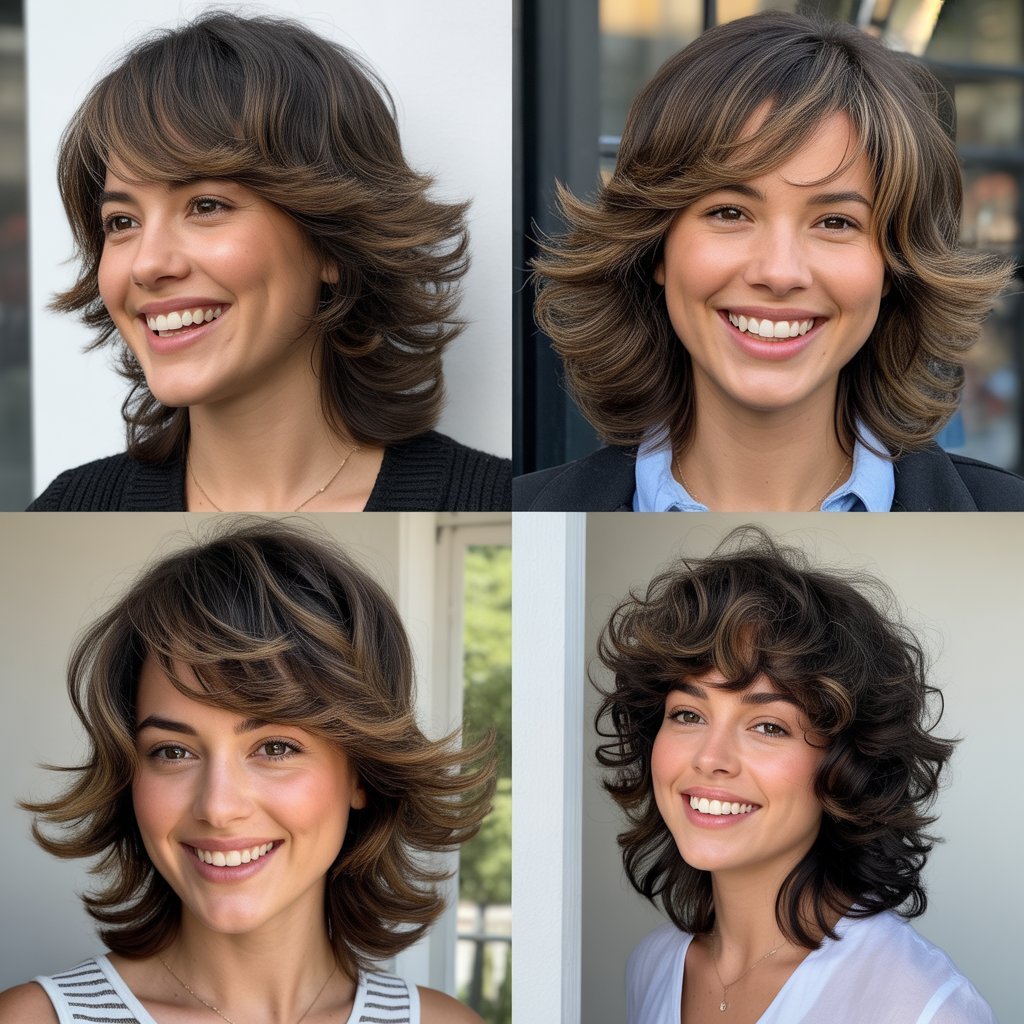
Specifically designing the wolf cut to maximize volume at the crown addresses a common concern for thick wavy hair.
This strategic approach creates lift where hair typically falls flat due to weight.
Volume-building cut techniques:
- Crown layers are cut significantly shorter (2-4 inches) than surrounding sections
- Texturizing at the root area removes weight that pulls hair down
- Graduation technique stacks layers to create natural lift
- Interior layers under the crown are thinned to reduce downward pull
Styling for maximum crown volume:
- Apply volumizing mousse specifically at the crown when hair is damp
- Blow-dry while lifting hair directly upward from the scalp
- Use a round brush under sections to create root lift
- Clip the crown section up while it cools to set the lift
- Finish with volumizing powder at the roots for lasting height
Product recommendations:
- Root-lifting sprays applied before blow-drying create foundation for volume
- Volumizing mousses provide hold without weight
- Texturizing powders absorb oil and create grit for lift
- Backcombing spray allows teasing without damage
Maintenance of crown volume:
- Sleep with hair in a high, loose bun to preserve volume
- Dry shampoo at roots refreshes lift between washes
- Avoid heavy conditioners near the crown area
- Regular trims maintain the short crown layers that create lift
This volume-focused cut creates a flattering silhouette that balances the overall shape.
26. Wolf Cut with Ombré Color

Pairing the wolf cut with ombré coloring creates a striking gradient effect that transitions from dark roots to light ends.
For thick wavy hair, ombré adds dimension while the layering showcases the color transition beautifully.
Ombré characteristics:
- Dark color at roots gradually transitions to lighter color at ends
- The transition zone typically begins at ear level to mid-length
- Color can shift subtly (2-3 shades) or dramatically (6+ shades)
- No color is applied to the roots, allowing natural growth without obvious lines
Color transition options:
- Brunette to blonde creates classic, high-impact ombré
- Black to brown offers subtle, low-maintenance dimension
- Red to copper creates warm, fiery gradient
- Brown to caramel provides natural-looking sun-kissed effect
Benefits for wolf cuts:
- Layered ends showcase the lighter color throughout the cut
- The shortest layers display color transition, creating dimensional interest
- Face-framing pieces often include the lighter tones for brightening effect
- Movement reveals the color gradient as hair shifts and waves
Maintenance advantages:
- Root growth is intentional and requires no touch-ups
- Color appointments needed only every 12-16 weeks for refresh
- Less damaging than all-over color since roots remain natural
- Grows out gracefully without obvious demarcation lines
Toning considerations:
- Lighter ends require regular toning to maintain desired tone
- Purple shampoo prevents brassiness in blonde ombré
- Deep conditioning focuses on the colored ends
Ombré provides the perfect balance of dramatic color and low maintenance.
27. Wolf Cut with Tapered Sides
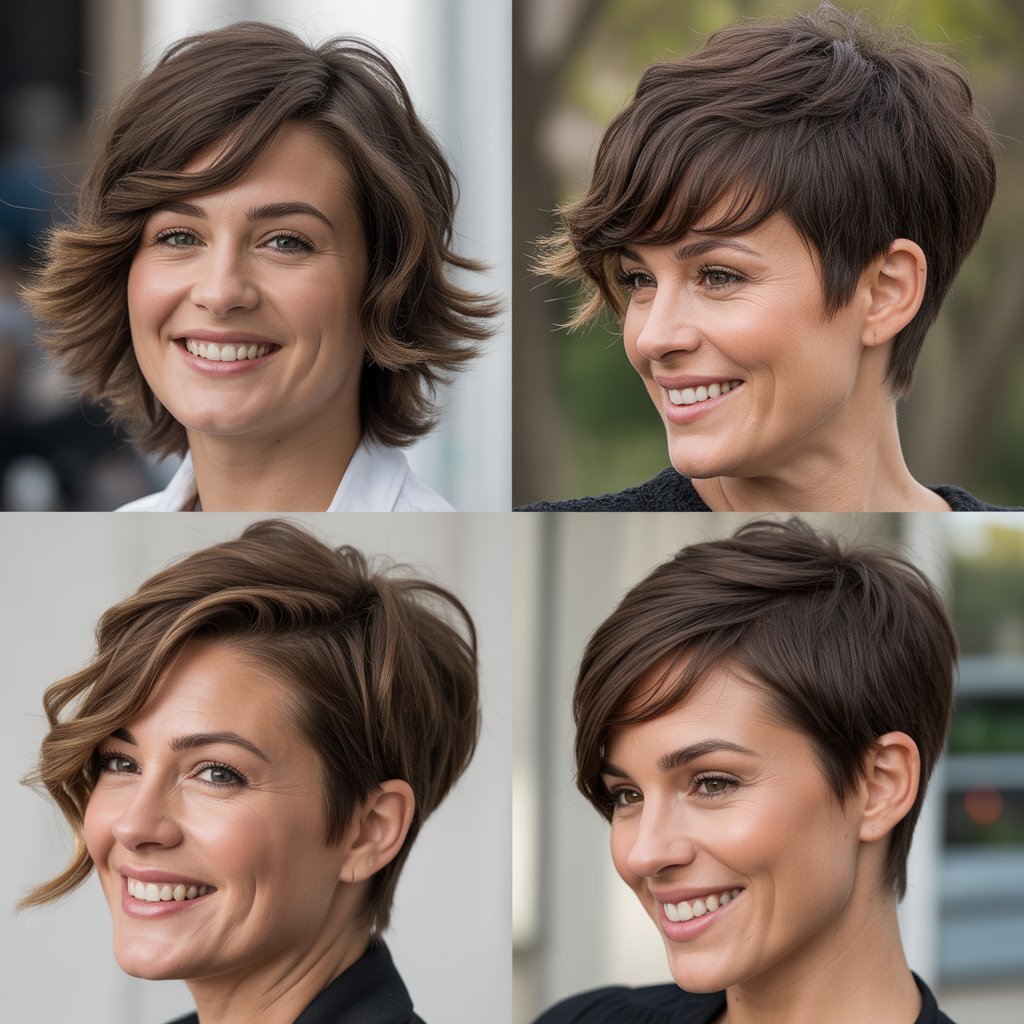
Incorporating tapered sides into the wolf cut creates a more structured, edited look while maintaining volume on top.
This variation works well for thick wavy hair by removing bulk from the sides while preserving texture and length on top and back.
Taper technique:
- Hair at the temples and sides is gradually shortened using clippers or scissors
- Length increases from the ears upward toward the crown
- The taper can be subtle (gradual) or dramatic (high contrast)
- Top sections maintain full length and layering of the classic wolf cut
Design variations:
- Low taper begins the length transition just above the ears
- Mid taper starts at the temple level
- High taper creates maximum contrast with very short sides
- Disconnected taper has no blending, creating a sharp line of demarcation
Styling benefits:
- Removes weight from sides that can make thick hair appear boxy
- Creates a more masculine or androgynous aesthetic when desired
- Reduces overall styling time since sides require minimal maintenance
- The top layers can be styled with maximum volume without side bulk
Maintenance requirements:
- Tapered sections need trimming every 3-4 weeks to maintain the clean look
- The top sections require less frequent trimming (every 6-8 weeks)
- Can be grown out gradually if desired by adjusting the taper line upward
This contemporary variation adds edge while creating a more managed silhouette.
28. Wolf Cut with Lived-In Texture

Styling the wolf cut with intentionally undone, lived-in texture creates the most effortless, low-maintenance version.
This approach embraces the natural texture of thick wavy hair while celebrating imperfection.
Lived-in styling characteristics:
- Minimal product use allows hair’s natural texture to dominate
- Air-drying is preferred over blow-drying for authentic texture
- Imperfect, uneven waves are celebrated rather than corrected
- Root volume is natural rather than enhanced with styling
Achieving lived-in texture:
- Wash hair and apply lightweight leave-in conditioner to damp hair
- Scrunch in a small amount of sea salt spray or light texture spray
- Allow to air-dry completely without manipulation
- Once dry, gently separate larger clumps with fingers
- Apply minimal styling products only where needed for definition
Product minimalism:
- One multi-purpose product (like a texture cream) handles most needs
- Dry shampoo extends time between washes while adding texture
- Avoid heavy serums, oils, or creams that create a polished look
- Less product = more natural, authentic texture
Philosophy behind the look:
- Celebrates natural hair texture rather than fighting it
- Embraces imperfection as part of the aesthetic
- Requires confidence to wear hair in its most natural state
- Perfect for those prioritizing convenience and authenticity
This approach creates the most authentic, unforced version of the wolf cut.
29. Wolf Cut with Deep Side Swept Fringe
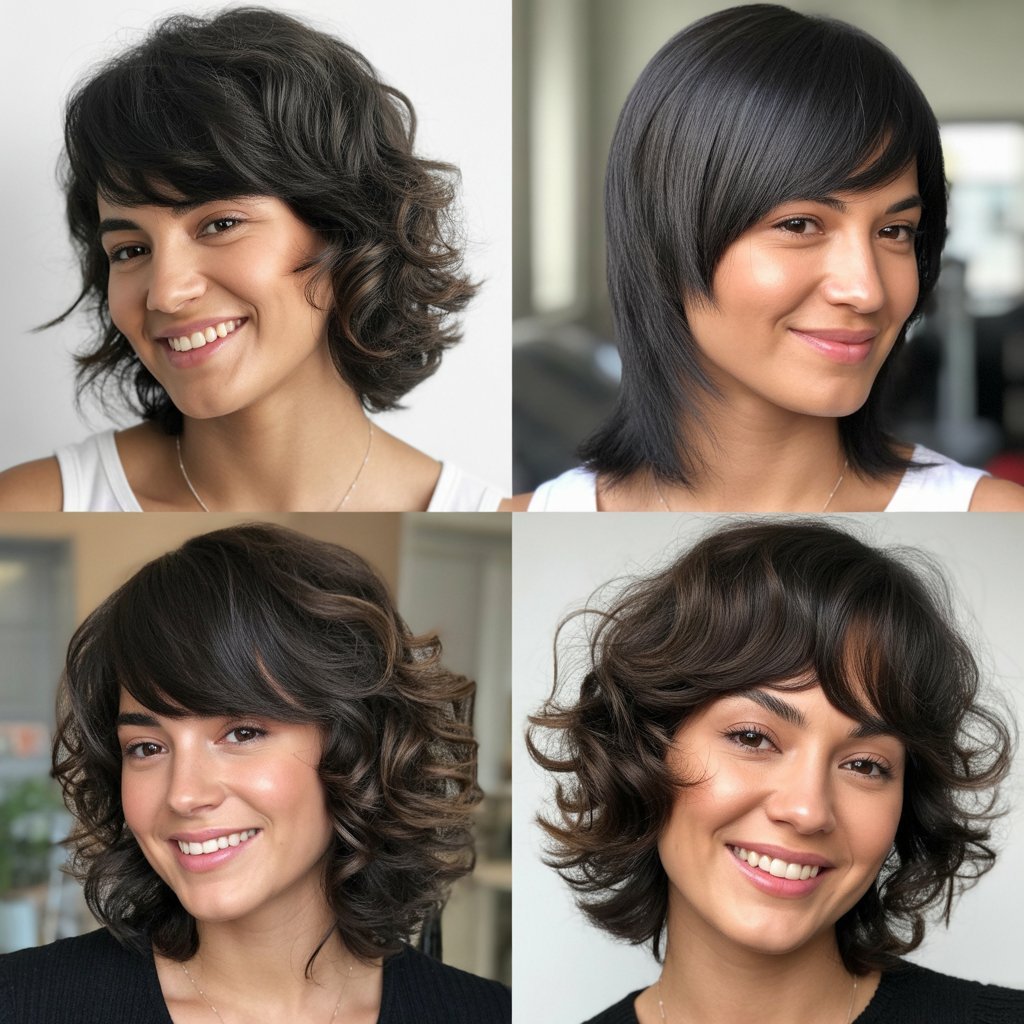
Adding a dramatic side-swept fringe to the wolf cut creates a glamorous, face-framing element.
For thick wavy hair, this styling approach adds elegance while maintaining the cut’s edgy foundation.
Fringe characteristics:
- Long bangs are swept dramatically to one side, typically reaching cheekbone or jaw length
- The fringe blends seamlessly into face-framing layers
- Heavy texturizing prevents the fringe from appearing too thick or heavy
- An extreme side part (positioned 3-4 inches from center) enhances the sweep
Styling requirements:
- Blow-drying is necessary to train the fringe to stay swept to the side
- Round brush technique creates volume at the roots while directing ends in the desired direction
- Strong-hold products (mousse or gel) keep the sweep in place throughout the day
- May require pinning or tucking during the training phase
Versatility:
- Can be swept to either side depending on mood or outfit
- The fringe can be styled straight back for a completely different look
- Works for both casual and formal occasions depending on styling approach
Maintenance considerations:
- Fringe grows quickly and may need trimming every 3-4 weeks
- Daily styling is required to maintain the dramatic sweep
- Shorter fringe pieces may fall out of the sweep and require restyling
This elegant variation adds drama and sophistication to the wolf cut’s edgy base.
30. Wolf Cut with Rose Gold Highlights

Incorporating trendy rose gold tones into a wolf cut creates a modern, Instagram-worthy color combination.
For thick wavy hair, rose gold highlights add warmth and dimension while making a fashion-forward statement.
Rose gold color profile:
- Combines pink, peach, and gold tones for a unique metallic finish
- Can range from subtle (barely-there pink shimmer) to bold (obvious pink-gold)
- Works on various base colors from blonde to light brown
- Darker bases require pre-lightening to achieve true rose gold tone
Application techniques:
- Balayage placement creates natural-looking rose gold dimension
- All-over rose gold creates uniform trendy color
- Rose gold money pieces frame the face with fashion-forward color
- Ombré from natural to rose gold creates gradient effect
Maintenance challenges:
- Rose gold fades faster than most colors, often shifting to peachy or brassy tones
- Requires toning every 3-4 weeks to maintain the pink undertones
- Purple and pink color-depositing shampoos help maintain tone between appointments
- Avoiding hot water and minimizing washing extends color longevity
Styling to enhance rose gold:
- Natural light shows off the color’s complexity and shimmer
- Waves create movement that reveals the metallic tones
- Simple styles let the color be the statement rather than competing with intricate styling
Commitment level:
- High maintenance color requires dedication to upkeep
- Fading is inevitable and part of the color’s evolution
- Best for those willing to refresh color frequently
This trendy color choice creates a soft, feminine, fashion-forward aesthetic.
31. Wolf Cut with Undercut Detail

Adding a hidden undercut beneath the wolf cut creates functional bulk removal while maintaining the appearance of full, thick hair.
This strategic technique particularly benefits thick wavy hair by reducing weight and improving manageability.
Undercut placement options:
- Nape undercut removes hair at the back neck area, hidden by upper layers
- Side undercut shaves or closely crops hair at one or both temples
- 360-degree undercut circles the entire head at the lower sections
- Asymmetrical undercut creates uneven, edgy detail
Practical benefits:
- Dramatically reduces overall hair weight and volume
- Improves cooling and comfort, especially in hot weather
- Decreases drying time significantly
- Makes styling easier by removing bulk that causes unwanted volume
Design possibilities:
- Undercut can be left plain for subtle functionality
- Patterns or designs can be shaved into the undercut area
- Graduated fade creates smooth transition from undercut to length
- Sharp line creates intentional, visible contrast when hair is up
Styling versatility:
- Hair worn down completely hides the undercut for professional settings
- Half-up styles reveal the undercut for edgy, casual looks
- Updos showcase the undercut as a deliberate design element
Growth considerations:
- Undercut requires maintenance trims every 3-4 weeks to stay clean
- Growing out creates an awkward phase that may last several months
- Can be gradually grown by adjusting the undercut line higher over time
This hidden technique provides relief from thick hair while maintaining styling flexibility.
32. Wolf Cut with Chunky Layers
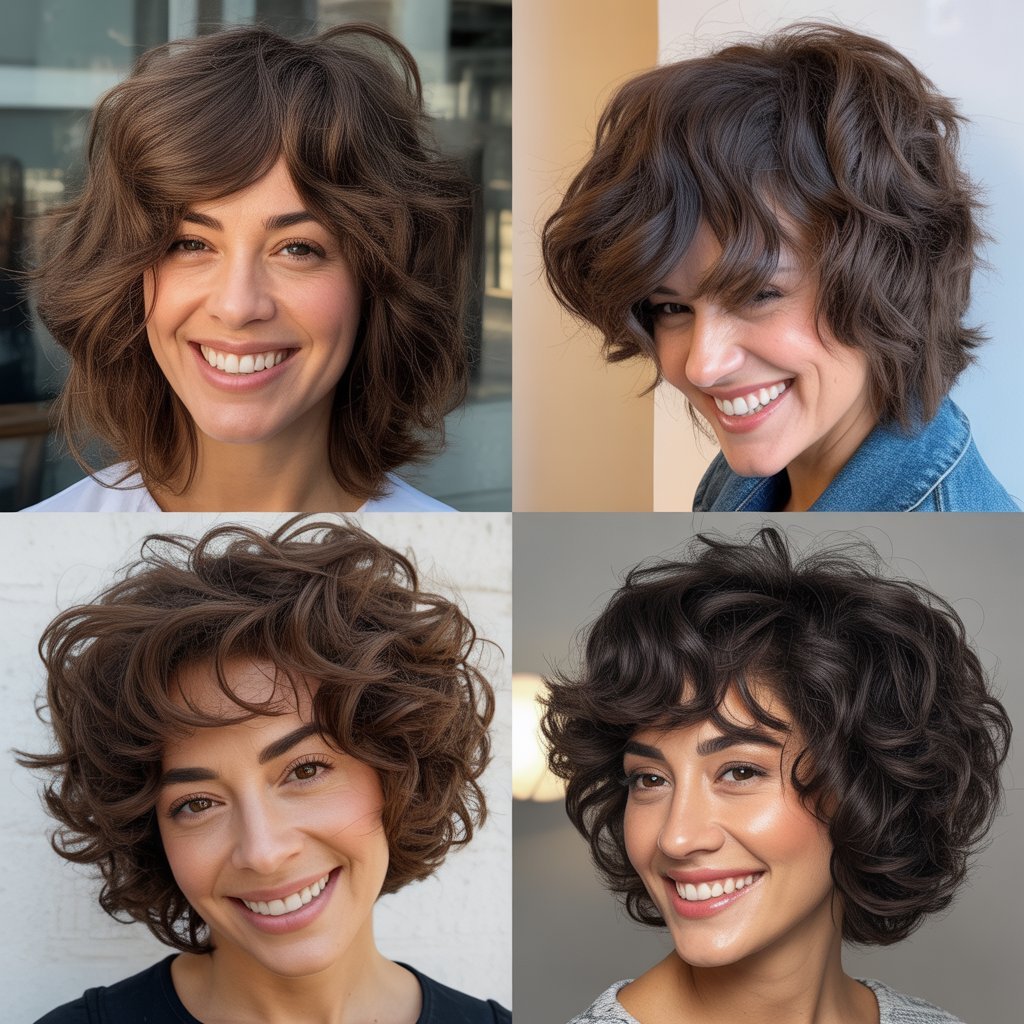
Emphasizing deliberately chunky, separated layers creates a bold, statement-making version of the wolf cut.
For thick wavy hair, chunky layers remove substantial bulk while creating a fashion-forward, editorial aesthetic.
Chunky layer characteristics:
- Layers are cut with greater distance between each level (2-3 inches apart)
- Each layer is visibly distinct rather than seamlessly blended
- Fewer total layers but more dramatic length differences between them
- The chunky sections create intentional weight and separation
Cutting technique:
- Blunt cutting creates the weight at the end of each chunk
- Minimal point-cutting preserves the solid, chunky appearance
- Interior texturizing removes bulk without disrupting the chunky perimeter
- Strategic placement creates dimension while maintaining structure
Styling for chunky layers:
- Minimal product allows the chunky structure to be visible
- Avoid over-smoothing which eliminates the separated chunk appearance
- Emphasize the separation by gently pulling apart larger sections
- Allow natural wave pattern to form within each chunky layer
Best candidates:
- Those wanting a bold, high-impact version of the wolf cut
- People with very thick hair who can afford to remove substantial bulk
- Anyone seeking an editorial, fashion-forward aesthetic
Maintenance:
- The chunky structure becomes more obvious as hair grows
- Requires commitment to the bold aesthetic
- Trims every 6-8 weeks maintain the intentional chunky placement
This daring interpretation creates maximum visual impact and dimension.
33. Wolf Cut with Natural Brunette Tones
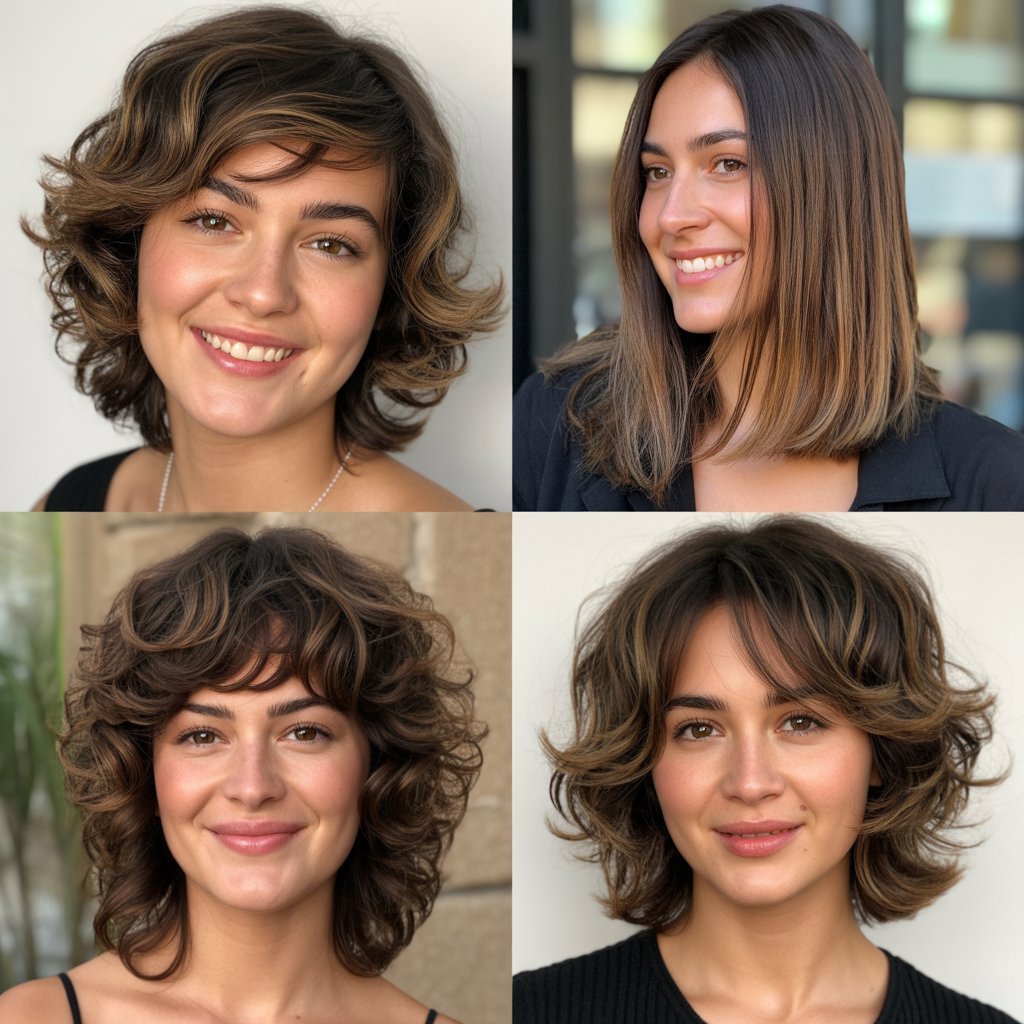
Keeping or enhancing natural brunette tones while rocking a wolf cut creates a timeless, low-maintenance color combination.
For thick wavy hair, rich brown tones add depth that showcases the cut’s layered structure beautifully.
Brunette tone variations:
- Espresso: Deep, dark brown with cool undertones
- Chocolate: Medium brown with warm, rich tones
- Chestnut: Brown with red and gold undertones
- Mushroom brown: Cool-toned brown with ashy, gray undertones
Enhancement techniques:
- Gloss treatments add shine and dimension to natural brown
- Subtle lowlights create depth within brunette hair
- Chocolate highlights add warm ribbons through natural brown
- Tonal color deposit refreshes faded brown without lightening
Benefits of staying brunette:
- Extremely low maintenance with minimal color upkeep
- Hair remains healthier without bleaching or heavy chemical processing
- Natural brown shows less obvious root growth
- Works professionally in any setting
- Brown tones make the layered structure highly visible
Care for brunette hair:
- Color-safe shampoo prevents premature fading of enhanced tones
- Weekly glossing treatments maintain shine and vibrancy
- UV protection prevents sun-fading of brown tones
- Deep conditioning maintains healthy-looking brown hair
Why brunette works perfectly:
- The dark base makes lighter interior layers visible when hair moves
- Brown tones show texture and dimension more clearly than very light colors
- Natural appearance never goes out of style
According to hair experts at Good Housekeeping, maintaining natural brunette color is one of the healthiest choices for hair.
34. Wolf Cut with Curved Layers
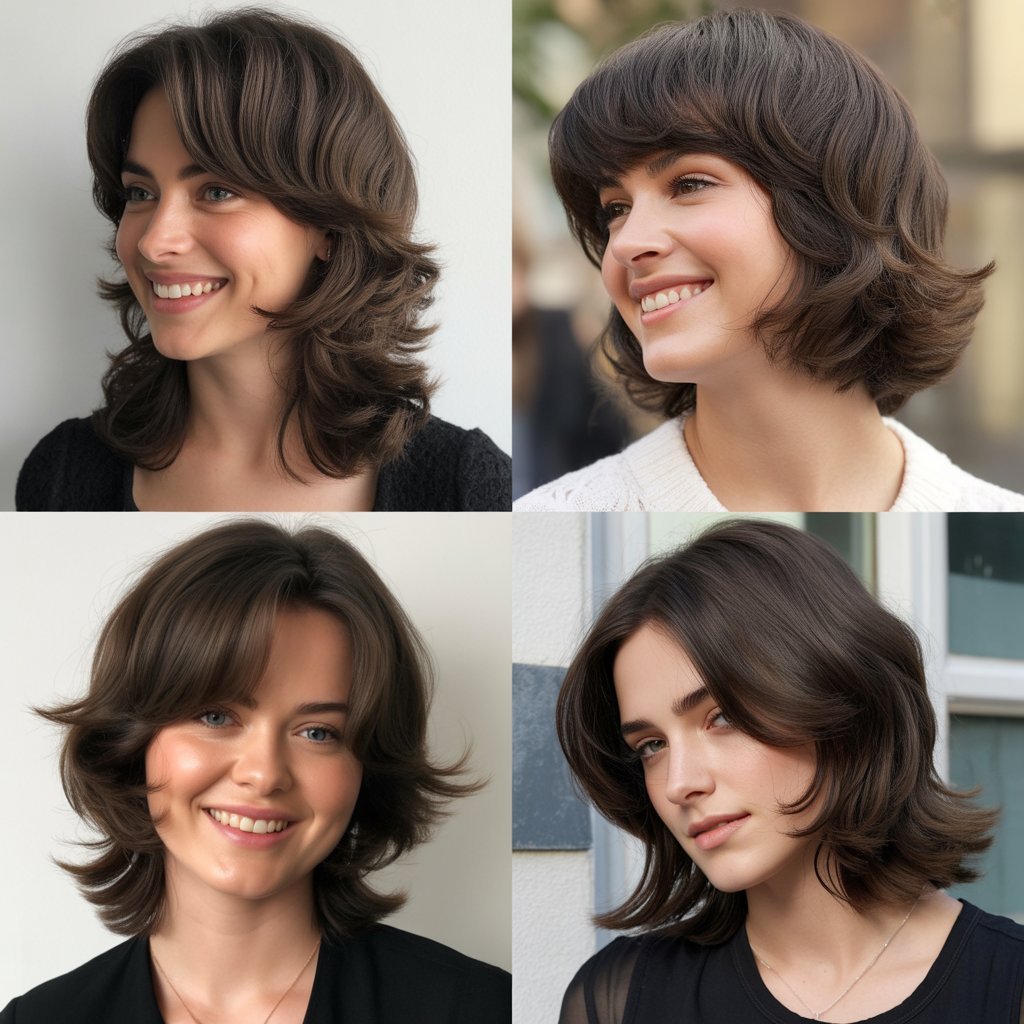
Designing the wolf cut with deliberately curved rather than straight layering creates a softer, more feminine interpretation.
For thick wavy hair, curved layers work harmoniously with natural wave patterns while reducing bulk.
Curved layer technique:
- Layers are cut following a curved rather than straight guideline
- Creates a rounded, softer silhouette especially around the face
- The curve follows the natural head shape for a more organic look
- Face-framing pieces curve gently rather than falling straight
Visual differences:
- Softer overall appearance compared to traditional straight-cut layers
- More romantic and feminine aesthetic
- Blends more seamlessly from layer to layer
- Creates gentler frame around the face
Technical approach:
- Hairstylist uses curved sectioning patterns during cutting
- Graduation is adjusted to follow the curved pattern
- Point-cutting maintains softness at layer transitions
- The curve can be subtle or dramatic depending on desired effect
Styling advantages:
- Natural waves follow the curved layer pattern beautifully
- Less precise styling required since the curve is organic
- Creates movement that flows rather than sharp direction changes
- Flattering for round faces by adding gentle angles
Maintenance:
- Curved layers grow out more gracefully than straight lines
- The soft structure remains visible even as hair grows
- Requires trims every 8-10 weeks to maintain curve definition
This gentler approach softens the wolf cut’s typical edge while maintaining its core benefits.
35. Wolf Cut with Maximum Texture
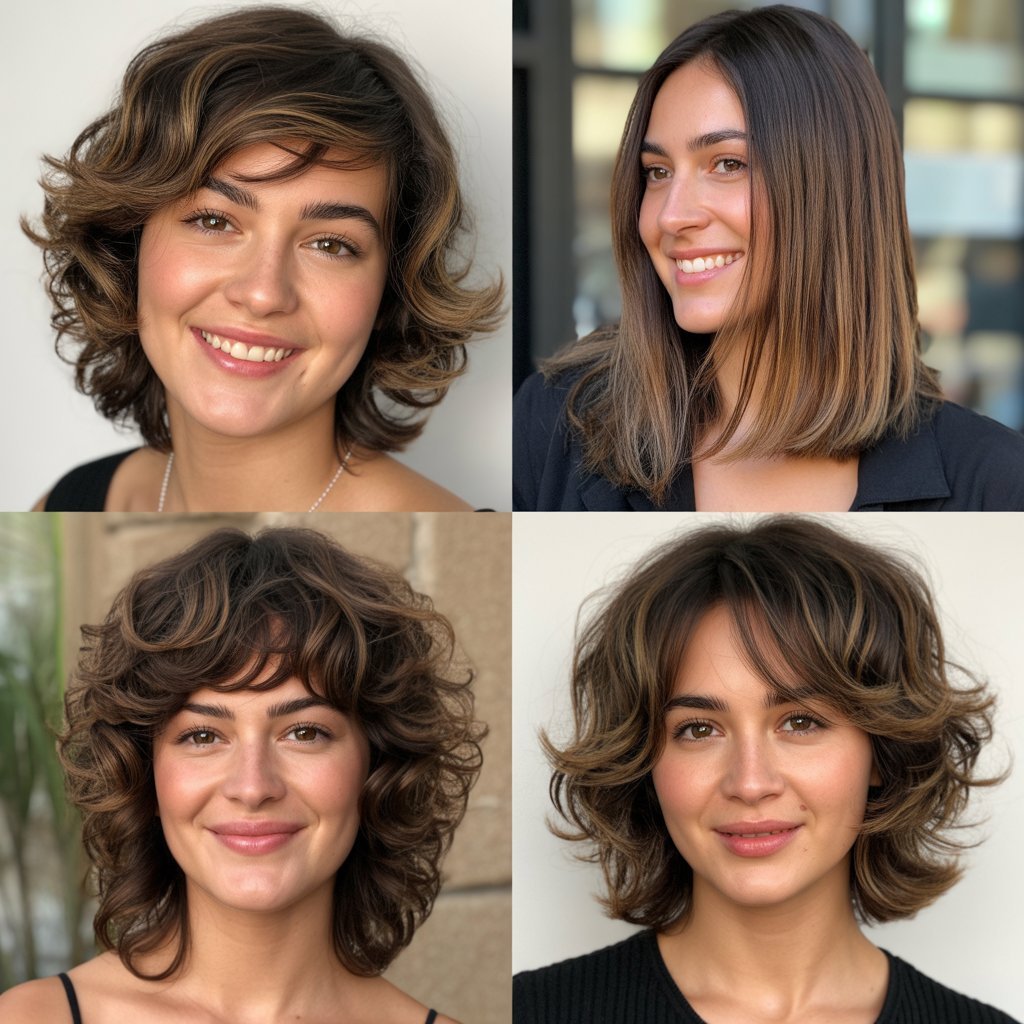
Pushing texture to the extreme creates the most dramatic, high-impact version of the wolf cut.
For thick wavy hair, maximum texturizing removes substantial weight while creating piece-y, editorial-level definition.
Extreme texturizing techniques:
- Heavy point-cutting throughout all layers creates separated ends
- Extensive razor work adds slice-like detail and removes bulk
- Thinning shears remove interior density without affecting perimeter length
- Notching creates intentional gaps and separation
- Undercutting removes hidden bulk that creates unwanted volume
Visual characteristics:
- Every strand appears individually defined
- Wispy, feathered ends throughout
- Extreme piece-y separation
- Airy, lightweight appearance despite thick hair
- High movement and swing
Styling for maximum texture:
- Texturizing products applied generously to damp hair
- Scrunching motion enhances separation and definition
- Air-drying or diffusing maintains the textured appearance
- Minimal brushing or combing preserves piece-y structure
- Dry texture spray adds additional grit and definition
Considerations:
- This is high-maintenance styling requiring specific products and techniques
- Extremely textured ends may become dry more quickly
- Regular deep conditioning treatments are essential
- The dramatic texture makes a bold statement not suitable for conservative settings
Maintenance requirements:
- Trims every 6-8 weeks maintain the textured integrity
- Weekly intensive conditioning prevents dryness
- Daily styling products are necessary to maintain the look
This maximal approach creates the most dramatic, fashion-forward wolf cut possible.
36. Wolf Cut with Soft Waves

Styling the wolf cut with deliberately soft, gentle waves creates a romantic, feminine aesthetic.
For thick wavy hair, enhancing natural texture into soft waves showcases the cut’s layers while maintaining elegance.
Soft wave creation:
- Large barrel curling iron (1.5-2 inches) creates gentle, open waves
- Curling direction alternated between sections creates natural-looking movement
- Waves are brushed through or combed for softened appearance
- Heat setting is lower to prevent tight curls, focusing on gentle bends
Product selection:
- Heat protectant spray is essential before any thermal styling
- Light-hold mousse provides structure without stiffness
- Flexible-hold hairspray maintains waves without crunchy texture
- Shine serum on ends adds polish and prevents frizz
Styling process:
- Start with damp, product-prepped hair
- Blow-dry smooth with round brush focusing on roots
- Section hair and curl with large barrel iron
- Allow curls to cool completely before touching
- Brush through gently with wide-tooth comb or fingers
- Finish with light hairspray mist
Occasion suitability:
- Perfect for professional settings requiring polish
- Romantic enough for special events and occasions
- Versatile for both day and evening wear
- Appropriate for any age group
Wave maintenance:
- Soft waves last 1-2 days with proper care
- Sleeping with hair in loose bun preserves wave pattern
- Refresh with dry shampoo and light re-curling of face-framing pieces
This polished styling transforms the edgy wolf cut into elegant, versatile beauty.
37. Wolf Cut with Bold Fashion Colors

Incorporating bold, unconventional fashion colors into a wolf cut creates the ultimate statement-making combination.
For thick wavy hair, vibrant colors emphasize the layered structure while expressing maximum creativity.
Fashion color options:
- Vivid blues (navy, cobalt, teal, turquoise)
- Bright purples (violet, lavender, magenta, plum)
- Fiery reds (crimson, scarlet, fire engine red)
- Vibrant greens (emerald, forest, mint, sage)
- Fantasy colors (rainbow, split-dye, color-blocking)
Application techniques:
- All-over color creates uniform vibrant statement
- Color-blocking places different colors in distinct sections
- Ombré transitions from natural to fashion color
- Highlights or lowlights with fashion colors add dimensional pops
- Money pieces in bold colors frame the face dramatically
Pre-color requirements:
- Hair must be pre-lightened to pale blonde for truest, most vibrant color
- The lighter the base, the more true-to-bottle the fashion color appears
- Multiple bleaching sessions may be required for very dark starting colors
- Hair health must be prioritized throughout the lightening process
Maintenance reality:
- Fashion colors fade quickly, often within 2-4 weeks
- Frequent color-depositing treatments maintain vibrancy
- Washing in cold water extends color life
- Color-safe shampoo is absolutely essential
- Touch-ups or complete recoloring needed monthly
Commitment considerations:
- High maintenance both in time and expense
- May limit professional opportunities in conservative fields
- Requires confidence to carry bold, attention-grabbing color
- Fading creates different color tones that some find undesirable
This ultimate self-expression through color creates unforgettable, head-turning style.
Conclusion
Throughout this comprehensive exploration of 37 Trendy Wolf Cut Hairstyles for Thick Wavy Hair, you’ve discovered countless ways to transform your thick, wavy locks into a manageable, stylish masterpiece.
The wolf cut’s genius lies in its ability to remove bulk while celebrating natural texture, making it the ideal solution for those who’ve struggled with heavy, unmanageable hair.
From classic shoulder-length variations to bold fashion-colored statements, each style offers unique benefits tailored to different preferences, lifestyles, and comfort levels with maintenance.
Whether you’re drawn to the low-maintenance appeal of natural brunette tones with lived-in texture or ready to commit to the high-impact drama of platinum highlights with maximum texture, there’s a wolf cut variation that perfectly matches your personal style.
The key to success with any of these 37 trendy wolf cut hairstyles for thick wavy hair is finding a skilled stylist who understands layering techniques and working with your specific hair texture, then committing to the appropriate maintenance routine that keeps your cut looking fresh and intentional.
Now armed with detailed knowledge about styling techniques, product recommendations, and maintenance requirements, you’re fully prepared to confidently walk into the salon and request the wolf cut transformation that will finally make your thick wavy hair work with you instead of against you.
