

Embracing gray hair after 50 doesn’t mean sacrificing style or dimension—it means discovering a whole new world of sophisticated beauty possibilities.
If you’ve been searching for ways to add depth, movement, and visual interest to your silver strands, you’ve landed in exactly the right place.
This comprehensive guide to 37+ Stunning Short Gray Hair Lowlights Ideas for Women Over 50 will transform how you think about gray hair, proving that lowlights can create stunning dimension while maintaining that elegant, natural appearance you desire.
We’ll explore everything from subtle charcoal undertones to rich pewter accents, demonstrating how strategic lowlight placement can take your short gray hair from flat to fabulous.
Whether you’re fully gray, salt-and-pepper, or transitioning, you’ll discover practical techniques, maintenance tips, color combinations, and real-world styling solutions that work specifically for mature hair textures.
Get ready to see gray hair in an entirely new light—one that celebrates your natural beauty while adding the depth and richness that makes heads turn.
1. Understanding Lowlights vs Highlights for Gray Hair
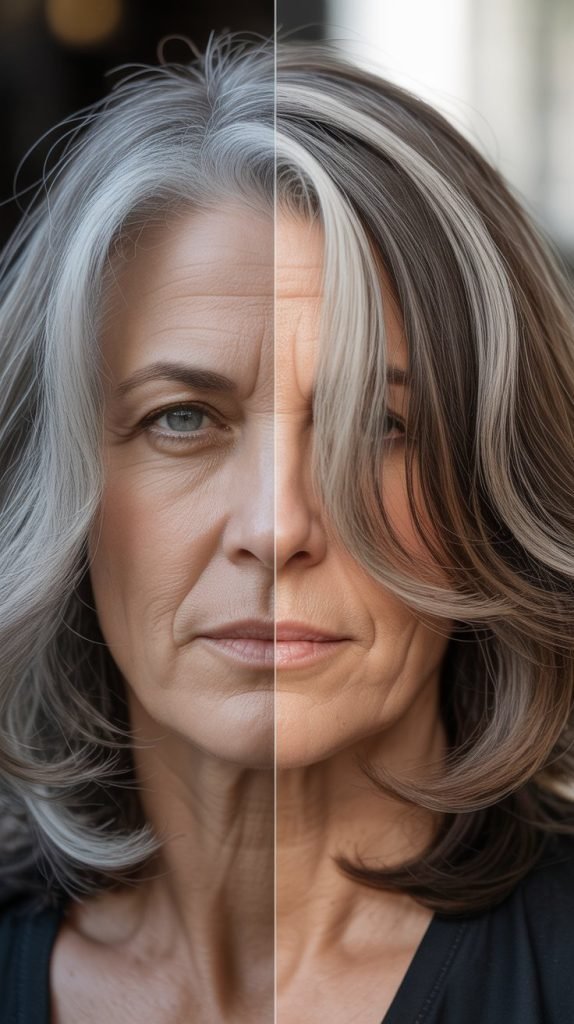
Before diving into specific ideas, it’s essential to understand what makes lowlights different from highlights and why they’re particularly flattering for women over 50 with gray hair. Lowlights involve adding darker tones to your base color, creating depth and dimension rather than brightness, which works beautifully with the natural luminosity of silver and gray hair.
What Makes Lowlights Special for Gray Hair
- Lowlights add richness and depth to gray hair that can sometimes appear flat or one-dimensional under certain lighting conditions.
- Unlike highlights that lighten hair, lowlights use darker shades like charcoal, slate, or pewter to create shadow and movement.
- For mature hair that may have lost some of its natural texture, lowlights create the visual illusion of thickness and body.
- Gray hair naturally reflects light beautifully, and lowlights enhance this quality by providing contrast that makes the lighter tones appear even more luminous.
- The technique is less damaging than highlighting since you’re depositing color rather than lifting it, which is ideal for hair that may be more fragile after 50.
The Science Behind Dimension
- Human eyes perceive depth through contrast, and lowlights provide that essential darker contrast against natural gray tones.
- Strategic placement of lowlights can contour your face, drawing attention to your best features while softening areas you’d prefer to minimize.
- The interplay between light and dark creates movement that makes hair appear fuller and more dynamic, especially important for fine or thinning hair.
- Research in color theory shows that multiple tones in close proximity create visual interest that single-tone color cannot achieve.
2. Charcoal Gray Lowlights with Silver Base
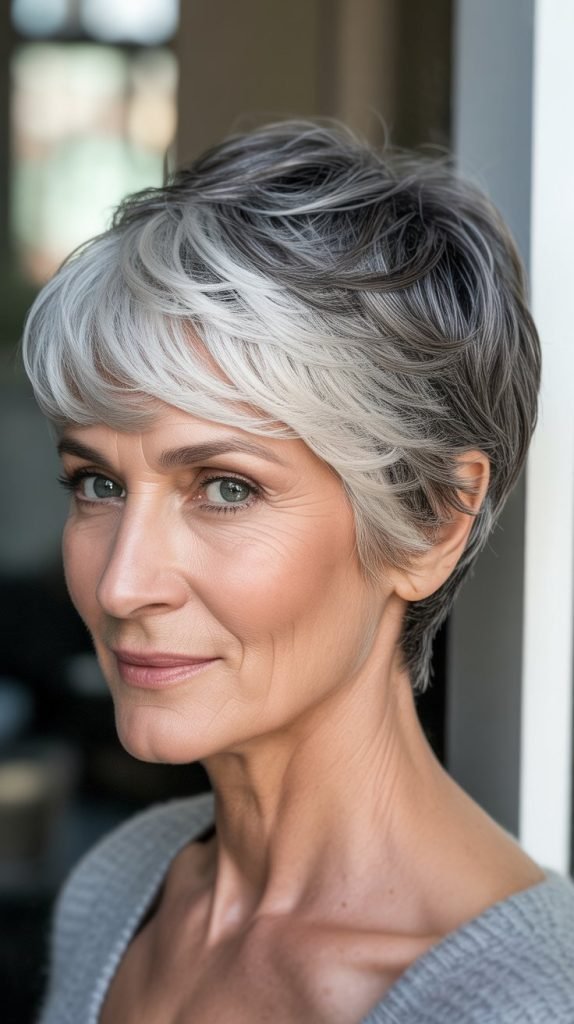
This classic combination remains one of the most requested looks for women over 50 because it strikes the perfect balance between natural and dimensional. Charcoal lowlights woven through a silver base create a sophisticated, modern appearance that works for any occasion.
Why Charcoal Works
- Charcoal is dark enough to provide significant contrast but soft enough to blend seamlessly with natural gray tones.
- This color combination mimics how hair naturally grays, with some strands darker than others, creating an authentic appearance.
- The cool undertones in both silver and charcoal complement most skin tones, particularly those with pink or neutral undertones.
- Charcoal lowlights don’t require frequent touch-ups since the contrast remains visible even as hair grows.
Best Short Styles for This Look
- A textured pixie cut with charcoal lowlights concentrated around the face creates instant dimension and frames your features beautifully.
- Short bobs with blunt ends benefit from charcoal lowlights placed in the underlayers, adding perceived thickness.
- Asymmetrical cuts gain even more drama when charcoal lowlights emphasize the longer side.
- Spiky, modern crops look edgier with scattered charcoal pieces throughout, creating that coveted “salt and pepper” effect.
3. Pewter Lowlights for Warm-Toned Gray Hair
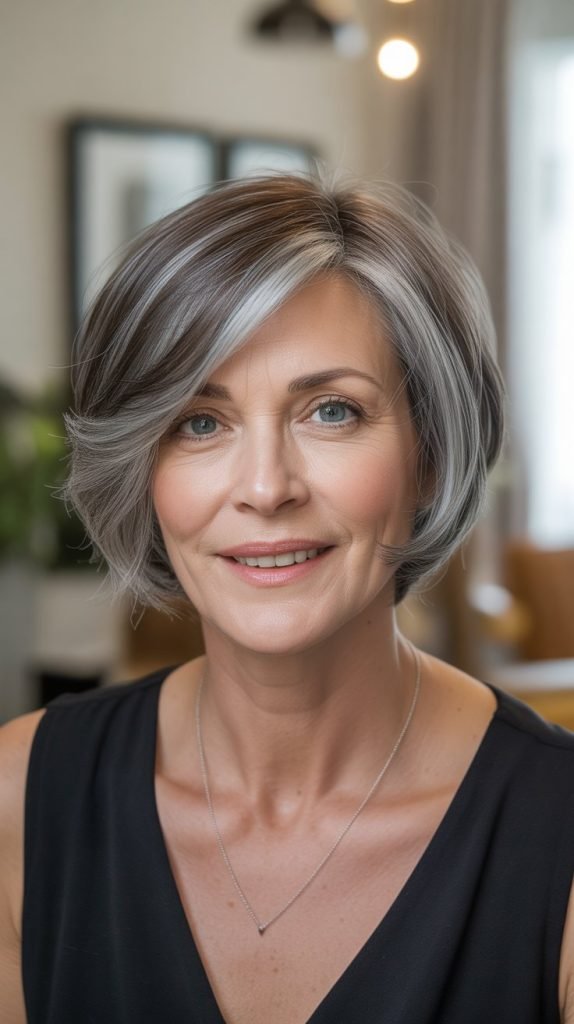
Women with warmer undertones or those whose gray has developed golden or cream tones will find pewter lowlights particularly flattering. Pewter bridges the gap between cool and warm, offering a sophisticated metallic dimension.
The Pewter Advantage
- Pewter contains both cool and warm pigments, making it incredibly versatile for various gray shades and skin tones.
- This tone prevents gray hair from looking brassy or yellow by adding sophisticated metallic depth.
- The subtle warmth in pewter complements the natural warmth that develops in some gray hair over time.
- Pewter lowlights catch light differently than pure gray, creating a luminous, almost iridescent effect.
Maintenance Considerations
- Pewter tones maintain their integrity longer than pure cool tones, requiring touch-ups every 8-10 weeks rather than every 6 weeks.
- Purple or blue-toned shampoos should be used sparingly with pewter lowlights to avoid stripping the warm undertones.
- Glossing treatments every 4-6 weeks help maintain the metallic sheen that makes pewter so attractive.
4. Slate Blue Lowlights for Contemporary Edge
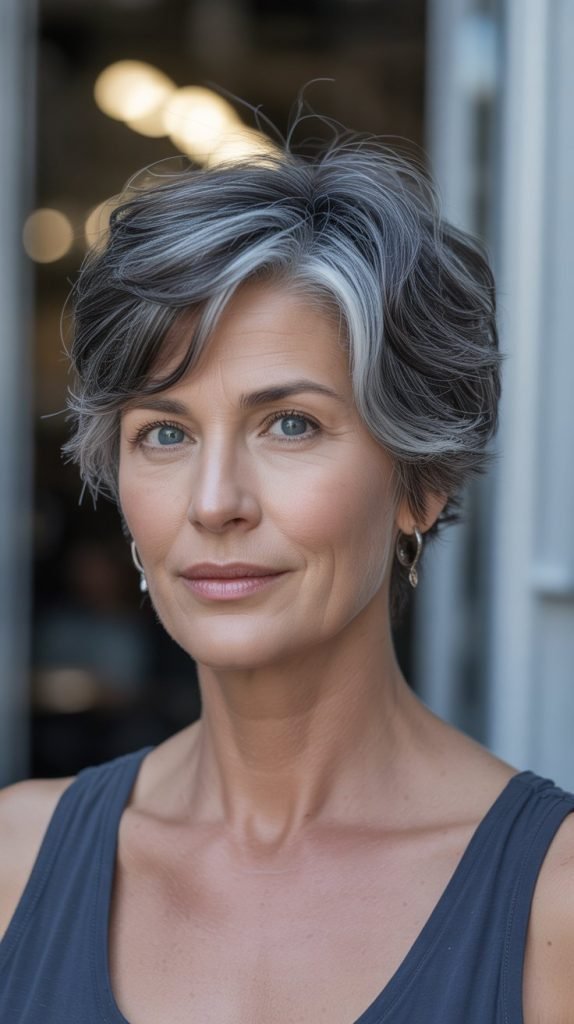
For the adventurous woman over 50 who wants to make a statement, slate blue lowlights offer a fashion-forward option that’s still sophisticated and wearable.
Breaking Traditional Rules
- Slate blue represents the cooler end of the lowlight spectrum, providing dramatic contrast against silver or white gray hair.
- This color choice signals confidence and style awareness, perfect for women who refuse to fade into the background.
- The blue undertones actually neutralize any yellow or brassy tones in gray hair, keeping it looking fresh and cool.
- Fashion experts have embraced blue-gray combinations as a modern alternative to traditional silver tones.
Styling for Maximum Impact
- Short, textured cuts showcase slate blue lowlights better than smooth styles, as the color peeks through layers.
- Concentrate slate blue at the nape and temples for a subtle effect, or throughout for more dramatic impact.
- This look pairs beautifully with modern, architectural fashion and statement accessories.
5. Soft Brown Lowlights for Natural Transitions
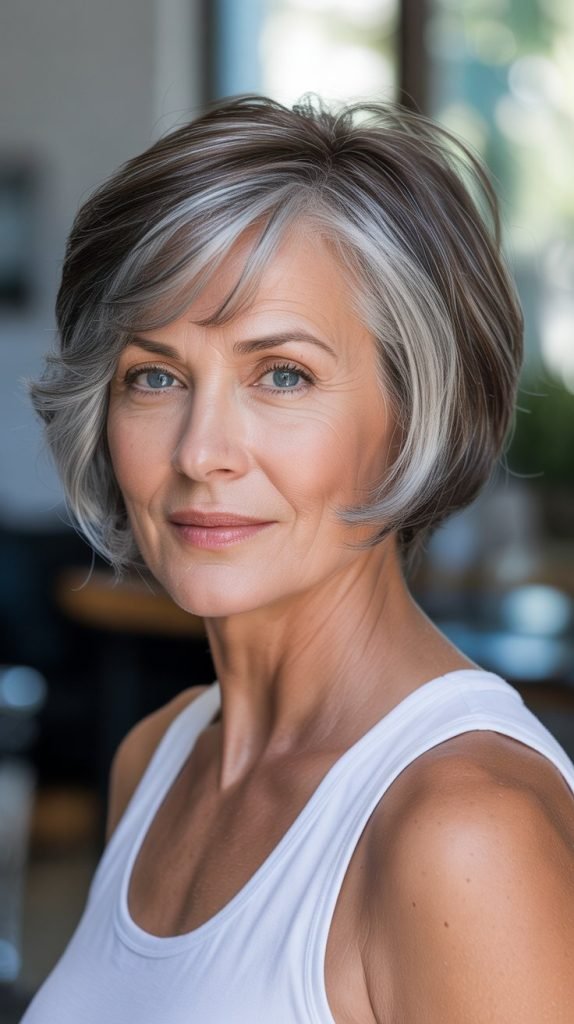
Many women over 50 are in various stages of going gray and want a natural-looking bridge between their remaining brown hair and emerging silver strands. Soft brown lowlights create that seamless transition.
Transitional Benefits
- Soft brown lowlights camouflage regrowth lines, making the grow-out process virtually invisible.
- This approach honors your natural hair history while embracing the gray, creating a personalized color story.
- Brown tones add warmth to cool gray, which can be especially flattering for women with warm or olive skin tones.
- The combination appears completely natural, as if your hair is simply taking its time to transition.
Color Formulation Tips
- Choose brown shades no more than two levels darker than your lightest gray for the most natural appearance.
- Ash brown lowlights prevent orange or red tones from developing, keeping the palette cool and sophisticated.
- Placing brown lowlights in the underlayers while keeping the top predominantly gray creates beautiful dimension.
6. Graphite Lowlights with White Hair
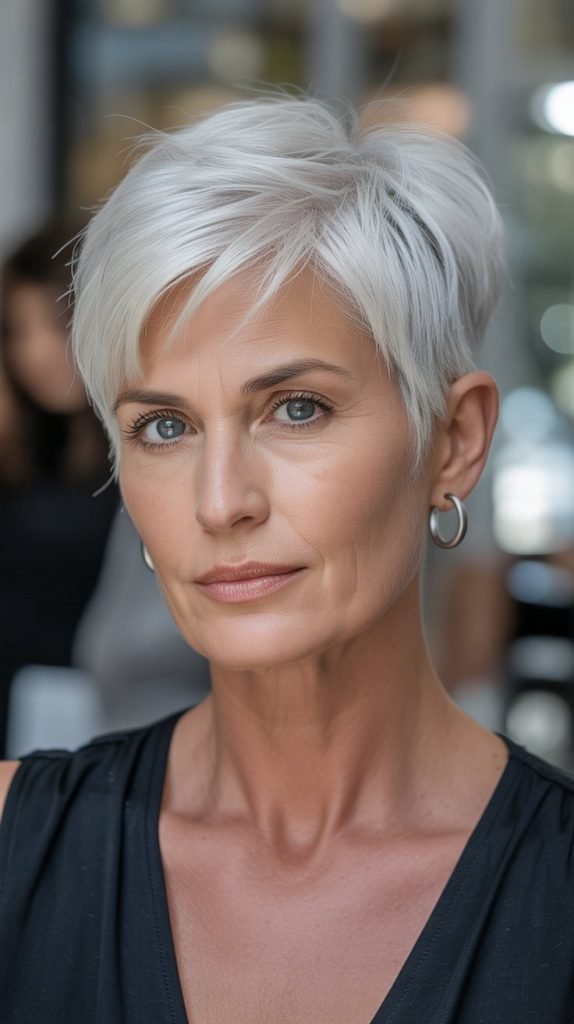
For women whose gray has evolved into striking white or platinum tones, graphite lowlights provide bold, high-contrast dimension that’s absolutely stunning on short haircuts.
High-Contrast Drama
- Graphite is darker than charcoal, nearly black, creating maximum contrast against pure white hair.
- This combination evokes a modern, fashion-forward aesthetic that’s simultaneously elegant and edgy.
- The stark contrast actually makes hair appear thicker and fuller by creating strong visual lines.
- White hair with graphite lowlights photographs beautifully, making it ideal for women who are frequently in pictures.
Ideal Candidates
- Women with naturally dark eyebrows and lashes carry this high-contrast look with particular ease.
- Those with cool skin tones find the combination especially flattering as it enhances their natural coloring.
- Short, geometric cuts like sharp bobs or architectural pixies showcase the contrast most effectively.
7. Multi-Dimensional Gray Lowlight Combinations
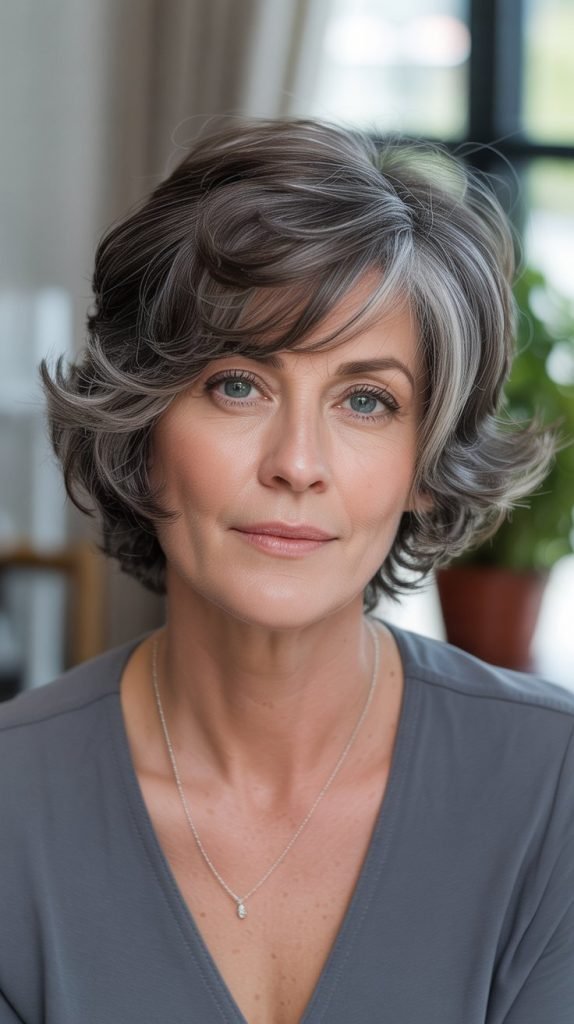
Why settle for one lowlight shade when you can combine multiple tones for ultimate dimension? Multi-dimensional approaches use 2-3 different lowlight shades to create depth that rivals natural hair’s complexity.
Layering Techniques
- Start with your lightest gray as the base, then add a medium-toned lowlight like pewter, and finish with darker accents in charcoal.
- This three-tier approach mimics how hair naturally contains multiple shades, creating the most authentic appearance.
- Placement matters tremendously—darker lowlights work best in underlayers while medium tones look beautiful throughout.
- The face-framing area typically benefits from lighter tones, with darker lowlights concentrated at the nape and crown.
Maintenance Schedule
- Multi-dimensional color requires more upkeep, with salon visits recommended every 6-8 weeks to maintain the balance.
- Between appointments, color-depositing conditioners in ash or silver tones help maintain the cool palette.
- Investing in professional-grade products designed for gray hair preserves the integrity of multiple tones.
8. Silver Lowlights for Platinum Gray Hair
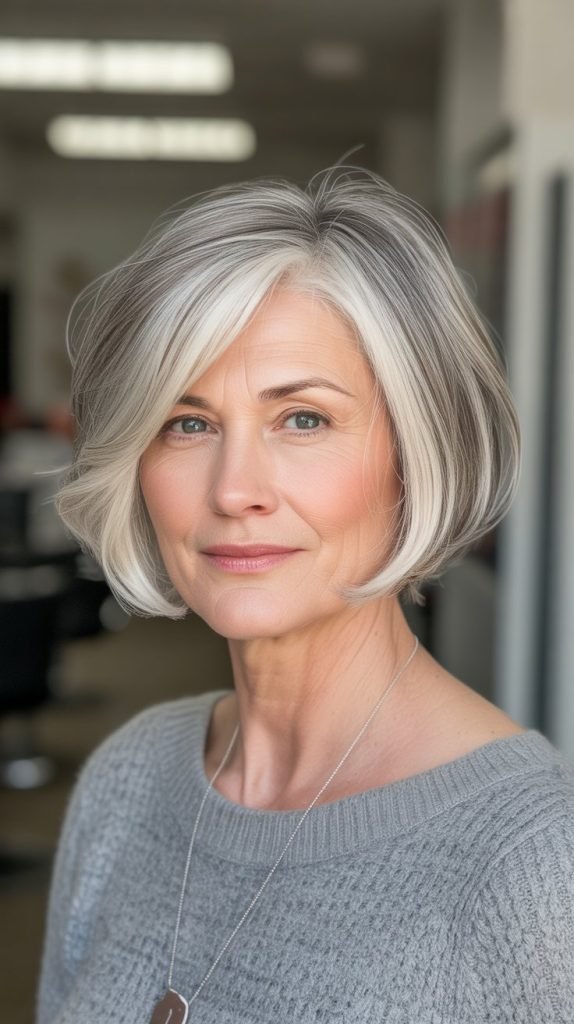
When your base color is platinum gray—that coveted bright, cool-toned gray—silver lowlights add subtle depth without darkening the overall effect.
Subtle Sophistication
- Silver lowlights are only slightly darker than platinum, creating whisper-soft dimension that’s elegant and refined.
- This approach is perfect for women who love their bright gray but want just a touch more visual interest.
- The tone-on-tone effect appears incredibly natural, as if your hair simply has natural variation in shade.
- Silver lowlights enhance shine because the slight contrast makes light reflection more noticeable.
Styling Considerations
- Smooth, polished styles like sleek bobs showcase silver lowlights beautifully as light plays across the surface.
- Adding silver lowlights to the underlayers creates a “lit from within” effect that’s particularly flattering.
- This combination works exceptionally well for formal occasions or professional settings where subtlety is valued.
9. Ash Gray Lowlights to Combat Brassiness
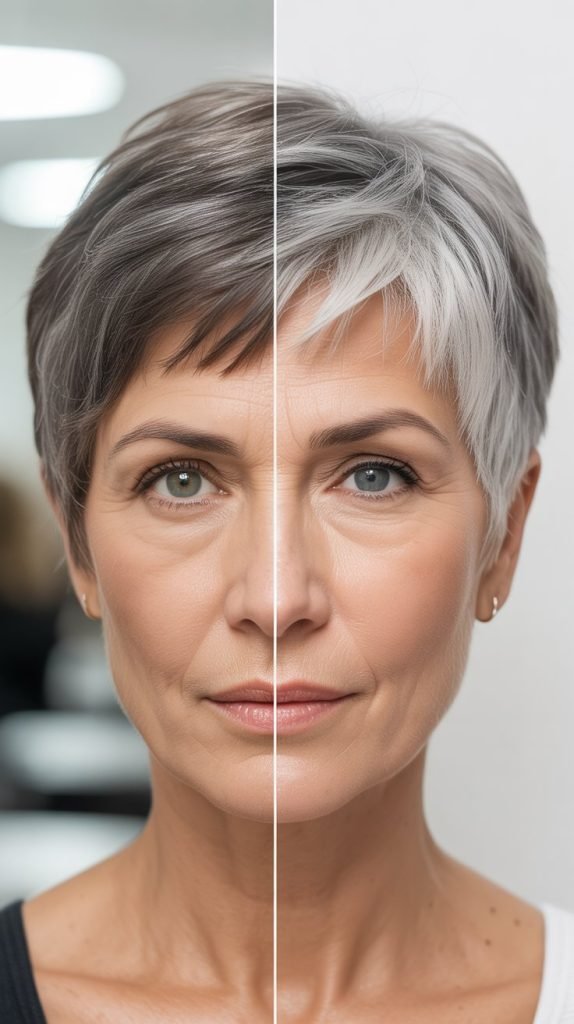
One common challenge for gray-haired women over 50 is unwanted warmth or brassiness that develops over time. Ash gray lowlights not only add dimension but actively combat those yellow or gold tones.
Color Correction Through Lowlights
- Ash tones contain blue and violet pigments that neutralize yellow and orange, effectively canceling out brassiness.
- Adding ash lowlights throughout gray hair creates an overall cooler, fresher appearance while adding dimension.
- This approach is both corrective and dimensional, solving two concerns with one technique.
- Ash gray lowlights work particularly well for women whose gray hair has developed warm tones from sun exposure or mineral buildup.
Preventive Maintenance
- Using violet-toning shampoos weekly helps maintain the cool tones between salon visits.
- Protecting hair from chlorine, hard water, and UV exposure prevents brassiness from developing in the first place.
- Regular glossing treatments with ash tones every 4-6 weeks keep the color looking fresh and cool.
10. Face-Framing Lowlights for Short Gray Hairstyles
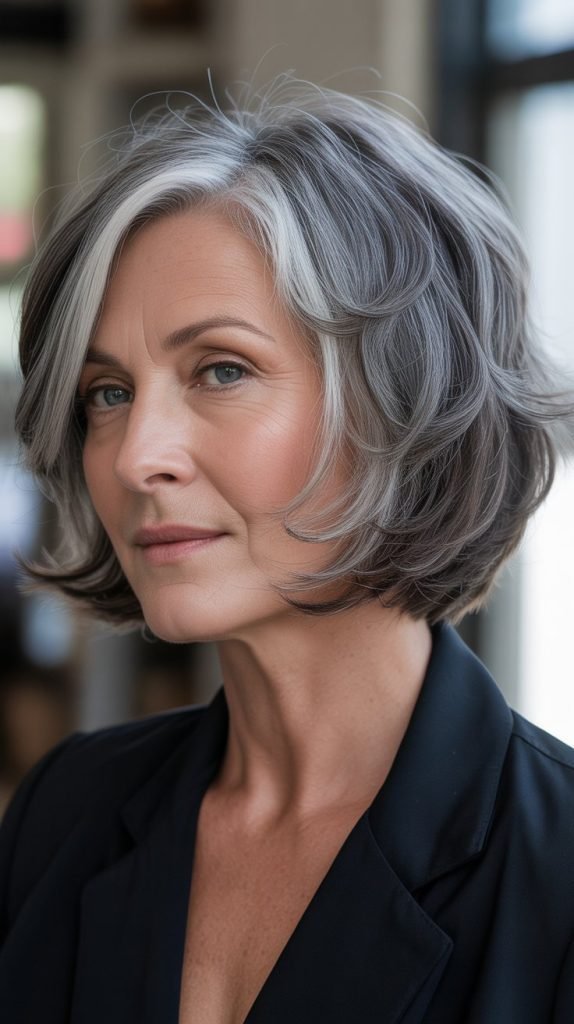
Strategic placement of lowlights around the face can create a contouring effect that flatters your features and draws attention exactly where you want it.
Strategic Placement Benefits
- Darker lowlights placed at the temples create the illusion of a narrower face, which many women find flattering.
- Lowlights framing the jawline add definition and can make the jaw appear more sculpted.
- Keeping the crown area lighter while adding lowlights around the perimeter creates lift and height.
- Face-framing lowlights draw the eye inward, emphasizing your features rather than the hair itself.
Customization for Face Shapes
- Round faces benefit from vertical lowlight placement that creates length rather than width.
- Square faces look softened when lowlights are woven diagonally rather than placed in straight sections.
- Heart-shaped faces need lowlights concentrated near the jawline to balance the proportions.
- Oval faces can carry lowlights anywhere, offering maximum flexibility in placement.
11. Lowlights for Gray Pixie Cuts
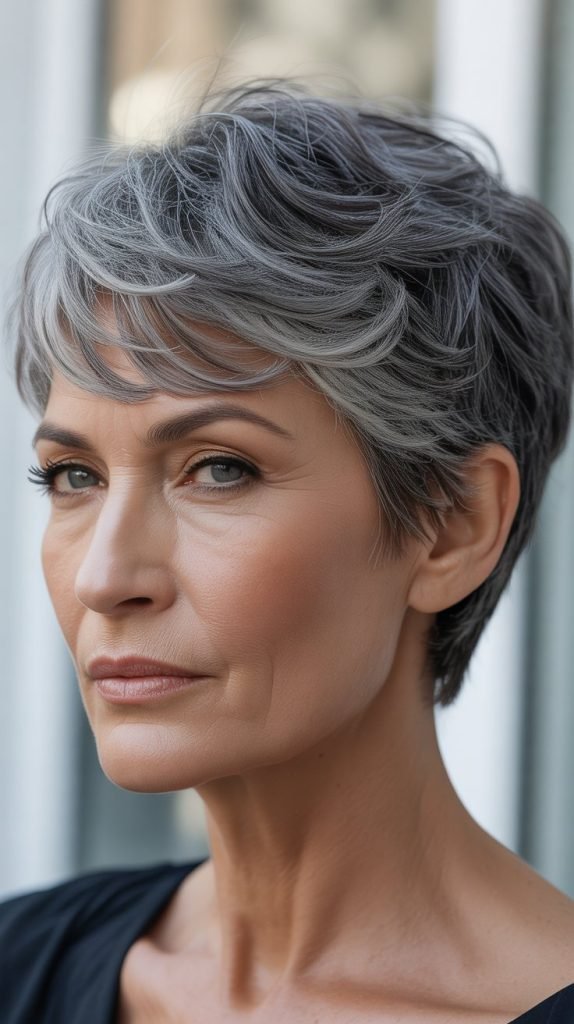
Pixie cuts are incredibly popular among women over 50, and lowlights can transform a flat pixie into a multi-dimensional masterpiece.
Maximizing Short Length
- Even with minimal length, strategic lowlight placement in a pixie creates the illusion of texture and fullness.
- Concentrating lowlights on the longer top section while keeping sides lighter adds height and visual interest.
- Pixies with longer bangs benefit from lowlights woven through the fringe for definition.
- The shorter the cut, the less maintenance required, as regrowth is cut away during regular trims every 4-6 weeks.
Pixie-Specific Techniques
- Balayage-style painting works beautifully on pixies, creating soft gradients that look incredibly natural.
- Lowlights placed at the nape add depth that shows when hair is tucked behind ears.
- For spiky pixies, alternating light and dark pieces create dimension that emphasizes the style’s texture.
12. Lowlights for Short Gray Bobs
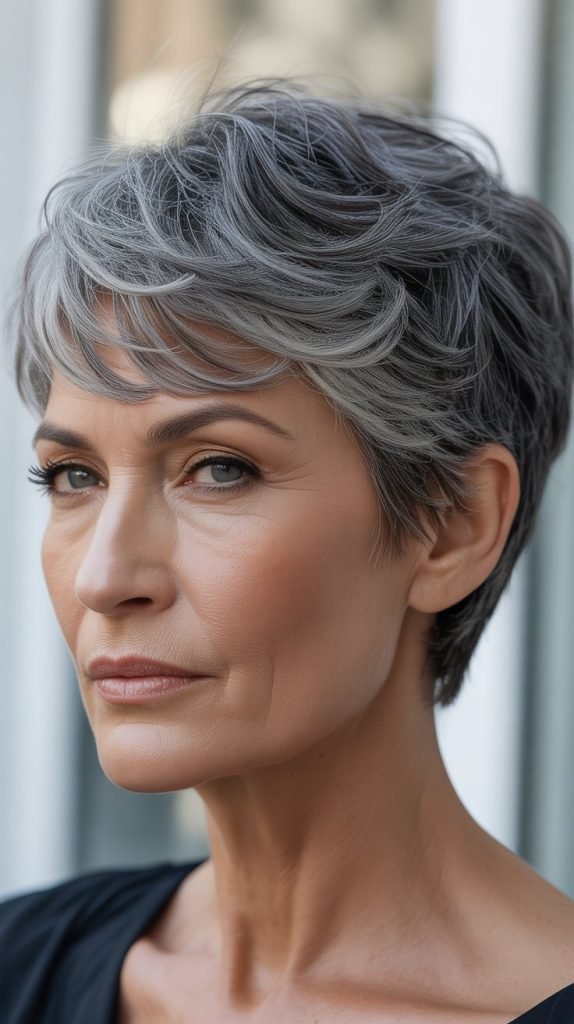
The bob is a timeless style for women over 50, and lowlights can customize this classic cut to suit your unique coloring and style preferences.
Bob Variations and Lowlight Placement
- Blunt bobs look less severe when lowlights are added throughout, softening the hard line.
- Angled bobs gain even more drama when the lowlights follow the angle, emphasizing the shape.
- Stacked bobs benefit from darker lowlights in the back layers, creating depth that makes the stack more prominent.
- Textured bobs showcase lowlights beautifully as the varied lengths reveal different tones.
Creating Movement
- Lowlights placed vertically through a bob create the illusion of length and movement, even in a stationary style.
- Alternating the depth of lowlights from underlayers to top layers builds dimension that reveals itself as you move.
- Concentrating lowlights on one side of a side-parted bob creates asymmetrical interest.
13. Balayage Lowlights for Natural Gray Hair
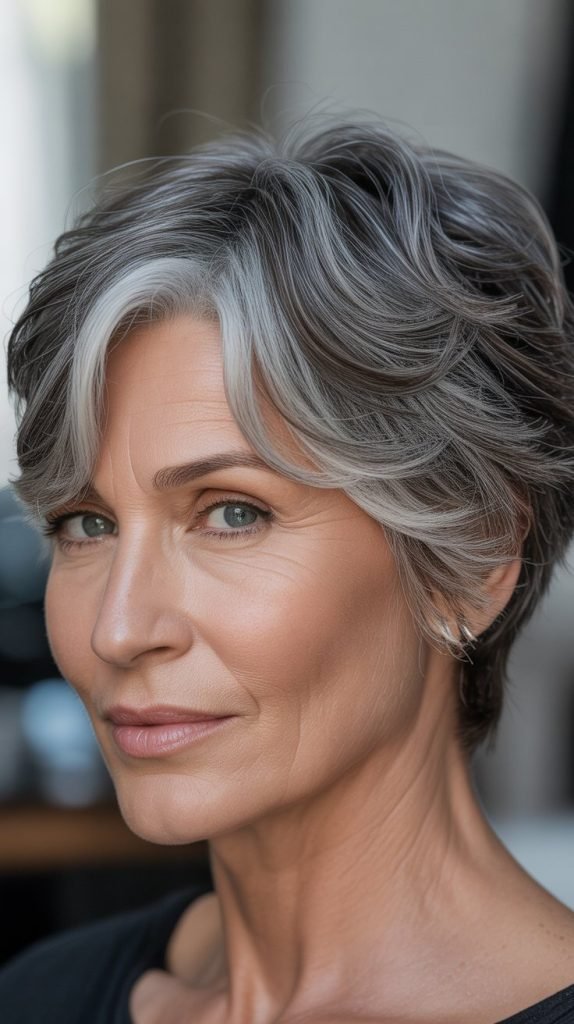
Balayage, the hand-painted technique that’s dominated hair trends for years, works beautifully for adding lowlights to gray hair, creating soft, natural-looking dimension.
Why Balayage Works for Gray Hair
- The freehand painting technique creates soft transitions without harsh lines, which is especially flattering for mature hair.
- Balayage lowlights grow out gracefully, requiring less frequent maintenance than traditional foil techniques.
- This method allows for complete customization, placing lowlights exactly where your hair needs dimension.
- The soft gradients created by balayage mimic natural hair variation, appearing completely authentic.
Application Differences
- Unlike traditional lowlights that are woven in foils, balayage is painted on the surface for a more subtle effect.
- The technique works particularly well on short, layered cuts where the varied lengths showcase the gradient.
- Balayage lowlights can be as subtle or dramatic as desired, depending on the amount of lowlight color applied.
14. Root Smudging with Lowlights for Gray Hair
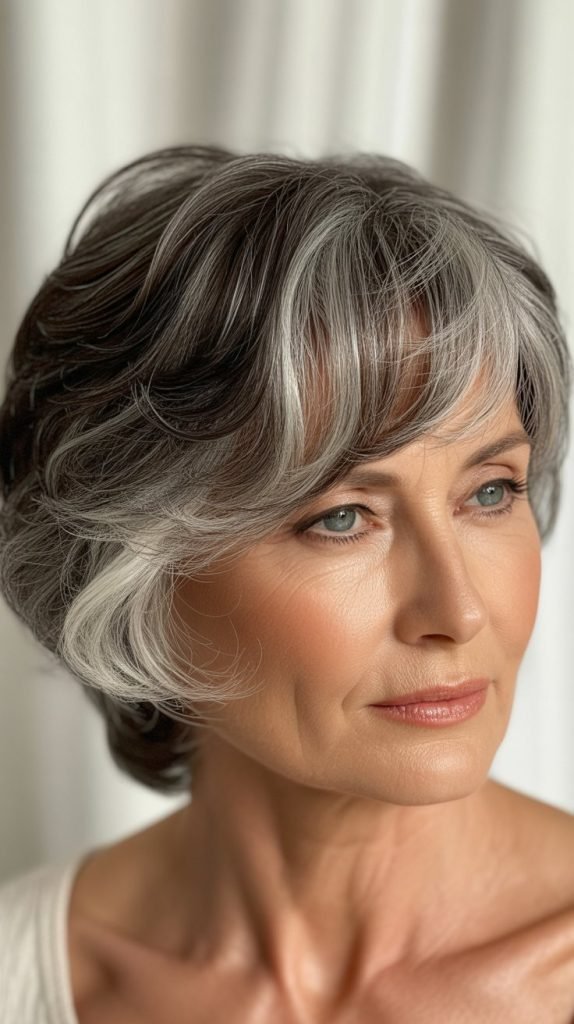
Root smudging is a technique where color is “smudged” into the root area to create a soft, shadow-like effect that adds depth and makes regrowth less noticeable.
Benefits of Root Smudging
- This technique creates a soft shadow at the root that adds instant depth and dimension.
- Root smudging makes any new growth blend seamlessly, extending time between color appointments.
- The darker root area creates lift, making hair appear fuller and less flat against the scalp.
- Combined with lowlights throughout the length, root smudging creates a cohesive, dimensional look.
Ideal Timing
- Root smudging works best when applied during a lowlight appointment, creating a unified color story.
- The technique should be refreshed every 6-8 weeks to maintain the soft shadow effect.
- For women with very light gray or white hair, root smudging with graphite or charcoal creates striking contrast.
15. Seasonal Lowlight Adjustments for Gray Hair
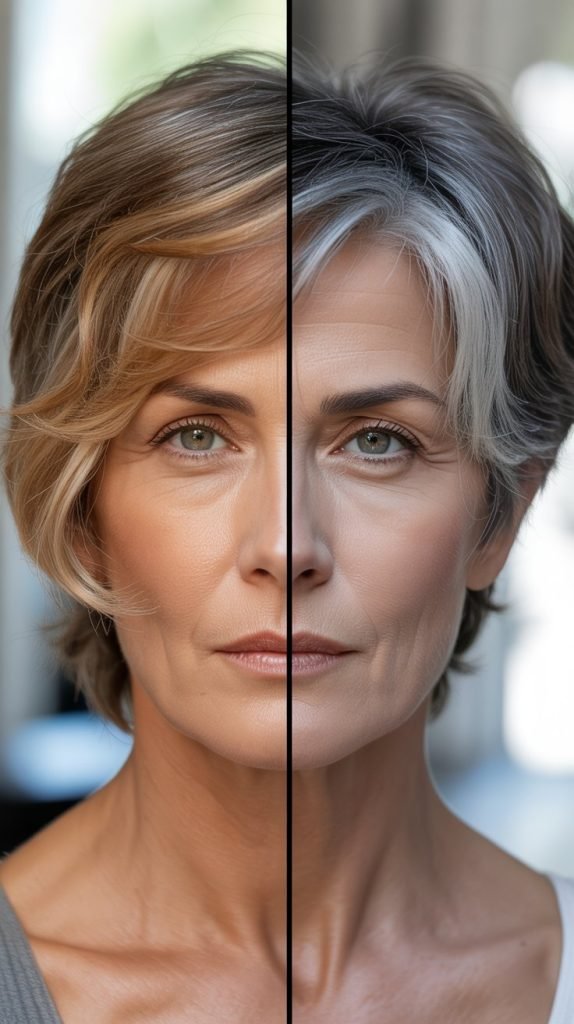
Your lowlight needs may change with the seasons, and adjusting your color throughout the year keeps your look fresh and harmonious with your environment.
Summer Lowlight Strategies
- Lighter lowlights in warmer months complement sun-kissed skin and lighter clothing palettes.
- Silver or pewter lowlights work beautifully in summer, creating a luminous effect in natural light.
- Consider adding slightly fewer lowlights in summer as natural sun exposure creates some dimension on its own.
Winter Lowlight Approaches
- Deeper, richer lowlights like charcoal or graphite complement darker winter wardrobes.
- Winter is the ideal time to add more dramatic lowlights since there’s less sun exposure to alter the color.
- Cooler months benefit from ash tones that combat indoor heating’s drying, yellowing effects.
Transition Seasons
- Spring and fall are perfect for subtle adjustments, gradually transitioning between dramatic winter tones and lighter summer shades.
- These seasons work well for trying new lowlight combinations without fully committing to a seasonal extreme.
16. Maintenance Tips for Gray Hair with Lowlights
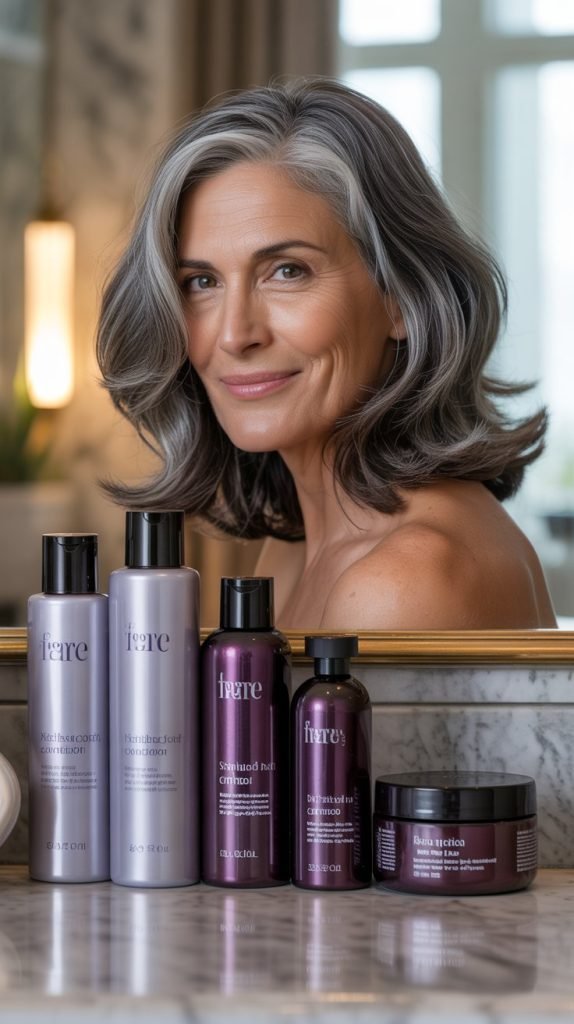
Keeping your gray hair and lowlights looking fresh requires specific maintenance strategies that differ from maintaining fully colored hair.
Essential Hair Care Products
- Purple or blue-toning shampoos used once or twice weekly prevent brassiness in both gray hair and lowlights.
- Color-depositing conditioners in ash or silver tones refresh lowlights between salon visits.
- Leave-in treatments with UV protection prevent sun damage that can alter lowlight tones.
- Hydrating masks should be used weekly since gray hair tends to be drier and more porous.
Professional Maintenance Schedule
- Plan salon visits every 6-8 weeks for lowlight touch-ups and toning treatments.
- Request a gloss treatment every other visit to maintain shine and vibrancy.
- Regular trims every 4-6 weeks for short styles ensure your cut showcases the lowlights optimally.
At-Home Maintenance
- Wash hair with cool or lukewarm water to seal the cuticle and lock in color.
- Limit heat styling to preserve both hair health and lowlight integrity.
- Sleep on silk or satin pillowcases to reduce friction that can dull gray hair’s natural shine.
17. Lowlights for Different Gray Hair Textures
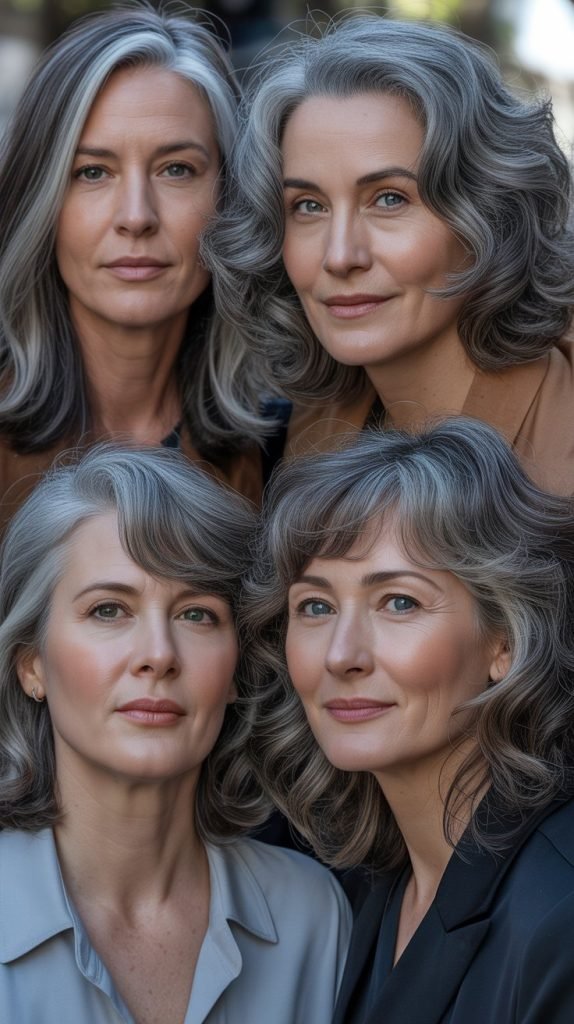
Gray hair texture varies significantly from person to person, and lowlight techniques should be adjusted based on whether your gray hair is coarse, fine, wavy, or straight.
Coarse Gray Hair Considerations
- Coarse gray hair holds lowlight color exceptionally well but may require stronger processing for even penetration.
- The robust texture showcases dimensional lowlights beautifully, making bold color choices particularly striking.
- Coarse hair benefits from multiple lowlight tones to break up what can appear as a heavy, solid mass.
- Deep conditioning treatments are essential as coarse gray hair can be prone to dryness.
Fine Gray Hair Strategies
- Fine hair requires careful lowlight placement to avoid looking too dark or heavy.
- Fewer, more strategic lowlights create dimension without overwhelming delicate hair.
- Lighter lowlight shades like pewter or soft brown work better than very dark tones on fine hair.
- Fine hair shows damage more readily, so gentle processing and quality hair care are crucial.
Wavy and Curly Gray Hair
- Textured hair naturally creates dimension, so lowlights should enhance rather than compete with the texture.
- Balayage-style lowlights follow the curl pattern beautifully, creating dimension that moves with the hair.
- Wavy hair benefits from lowlights that emphasize the wave pattern rather than fight against it.
18. Cost Considerations and Budgeting for Lowlights
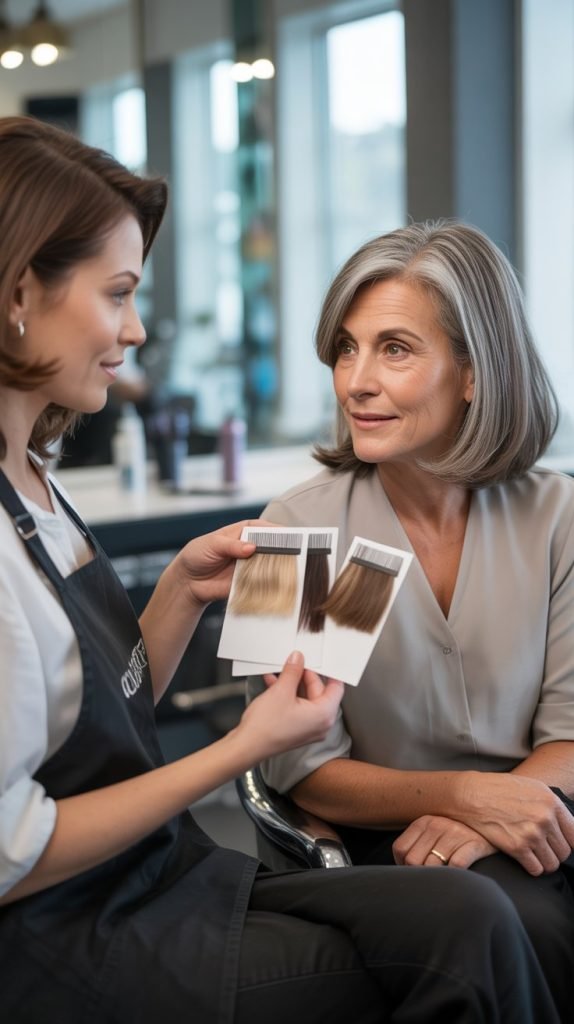
Understanding the financial commitment of maintaining gray hair with lowlights helps you plan and budget appropriately for this beauty investment.
Initial Investment
- Your first lowlight appointment for short hair typically costs between $120-$250, depending on location and salon reputation.
- More complex techniques like balayage or multi-dimensional color fall on the higher end of this range.
- Initial consultations may be complimentary or cost $25-$50, but provide valuable opportunity to discuss your goals and budget.
Ongoing Maintenance Costs
- Touch-up appointments every 6-8 weeks generally cost $100-$200 for short hair.
- Toning treatments add $35-$75 to your salon bill but significantly extend the life of your lowlights.
- Quality home maintenance products cost $50-$100 monthly but protect your investment and extend time between appointments.
Money-Saving Strategies
- Choose lowlight techniques that grow out gracefully, like balayage, to extend time between appointments.
- Invest in quality purple shampoo and ash-toned conditioner to maintain color at home.
- Consider scheduling appointments strategically during salon promotions or slower periods.
- Building a relationship with one colorist often results in loyalty discounts over time.
19. DIY vs Professional Lowlights for Gray Hair
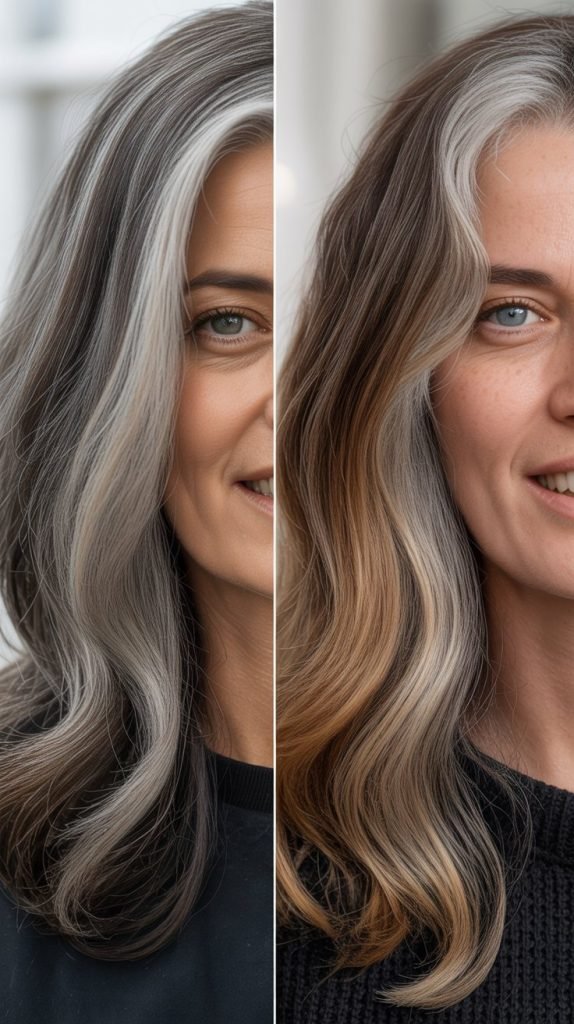
While some hair color techniques can be successfully attempted at home, lowlights for gray hair present unique challenges that are important to understand.
Why Professional Application Is Recommended
- Gray hair’s texture and porosity differ significantly from pigmented hair, requiring specialized knowledge for even color deposit.
- Professional colorists understand color theory and can select lowlight shades that complement your specific gray tones and skin tone.
- Proper placement requires seeing the hair from all angles, which is nearly impossible to achieve on yourself.
- Professionals have access to higher-quality color products that last longer and cause less damage.
At-Home Options for the Adventurous
- Temporary color sprays or wash-out lowlights allow experimentation without commitment.
- Root touch-up products can create a shadow effect similar to root smudging for short-term results.
- Color-depositing conditioners in darker shades can subtly deepen gray hair between professional appointments.
When to Definitely See a Professional
- Your first lowlight application should always be professional to establish the proper color formula and placement.
- Correcting previous color, whether DIY or professional, requires expert assessment and technique.
- Dramatic color changes or high-contrast lowlights like graphite on white hair need professional precision.
20. Lowlights and Hair Health After 50
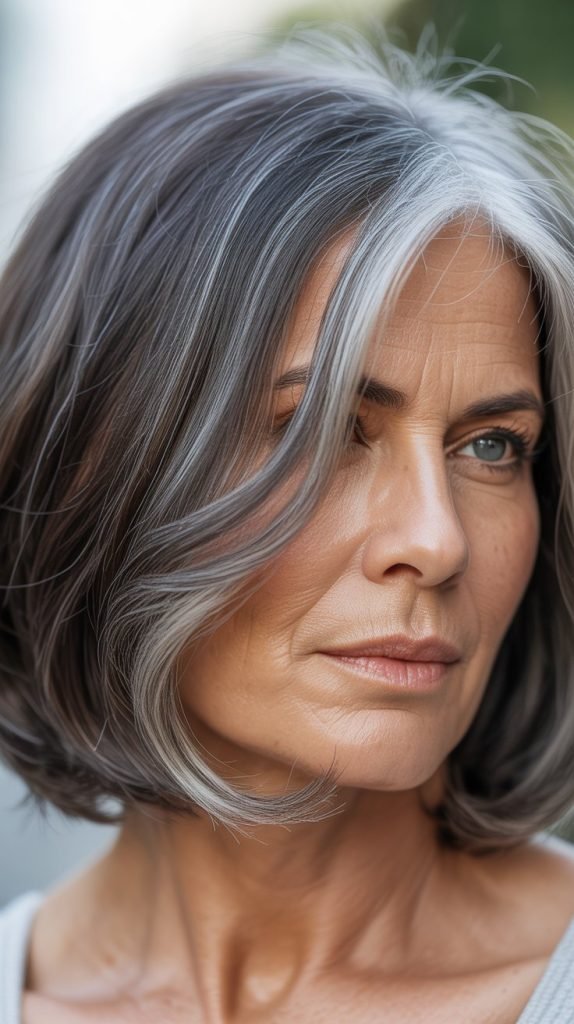
Maintaining hair health becomes increasingly important after 50, and understanding how lowlights impact hair integrity helps you make informed decisions.
How Lowlights Affect Hair Health
- Lowlights deposit rather than lift color, making them less damaging than highlights or lightening services.
- Modern lowlight formulas often include conditioning agents that can actually improve hair’s feel and manageability.
- However, any chemical process opens the hair cuticle, which can lead to dryness if not properly managed.
- Gray hair is naturally more porous, so it absorbs lowlight color quickly but also releases it faster without proper care.
Protecting Hair Health
- Always request that your colorist use a bond-building additive during the lowlight process to minimize damage.
- Schedule deep conditioning treatments immediately following color services.
- Use heat styling sparingly, as chemically processed hair is more vulnerable to heat damage.
- Consider professional treatments like Olaplex or K18 every 4-6 weeks to maintain hair strength.
Signs Your Hair Needs a Break
- If hair feels consistently brittle or straw-like despite conditioning efforts, pause color services temporarily.
- Excessive breakage around the hairline or crown indicates over-processing.
- Loss of elasticity, where hair snaps rather than stretches slightly, signals compromised hair health.
21. Complementary Haircuts for Gray Hair with Lowlights
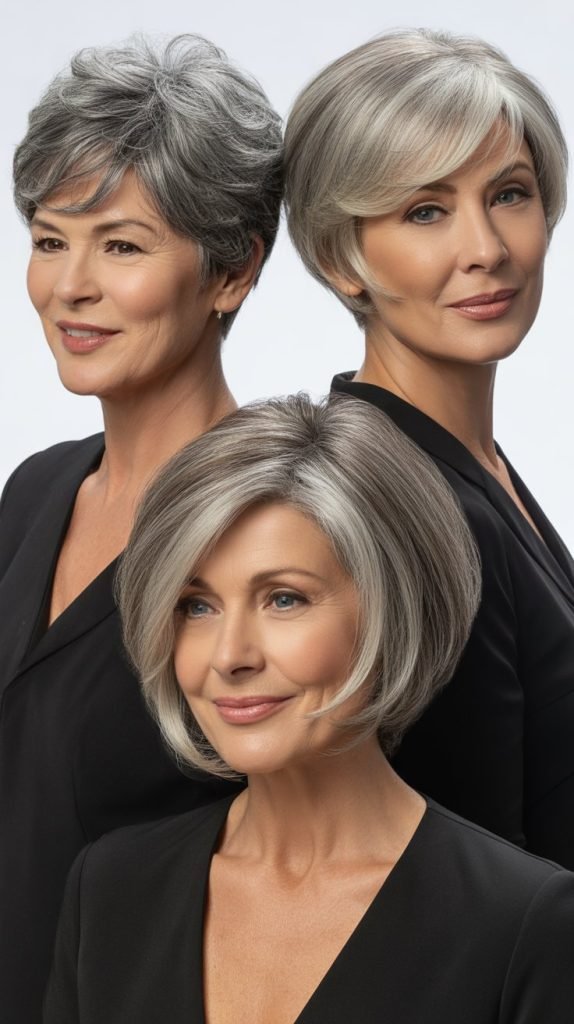
The right haircut maximizes the impact of your lowlights, while the wrong cut can hide all that beautiful dimension you’ve invested in.
Layered Cuts for Maximum Dimension
- Layers create movement that reveals lowlights as hair shifts and catches light from different angles.
- Short, choppy layers showcase multiple lowlight tones beautifully, creating a textured, modern look.
- Face-framing layers draw attention to lowlights placed around the perimeter, emphasizing the dimensional effect.
- Layered cuts tend to make hair appear fuller, an effect amplified by well-placed lowlights.
Textured Cuts Versus Blunt Cuts
- Textured cuts with point-cutting or razor techniques create separation that showcases individual lowlight pieces.
- Blunt cuts show lowlights primarily at the perimeter but create a sleek, sophisticated effect.
- Combination cuts with blunt weight lines and textured ends offer the best of both worlds.
Cuts to Avoid
- One-length cuts without any layers can make lowlights virtually invisible, especially on fine hair.
- Very short buzz cuts don’t provide enough length to showcase lowlight dimension effectively.
- Styles that are constantly slicked back or heavily sprayed hide dimensional color work.
22. Styling Techniques to Showcase Lowlights
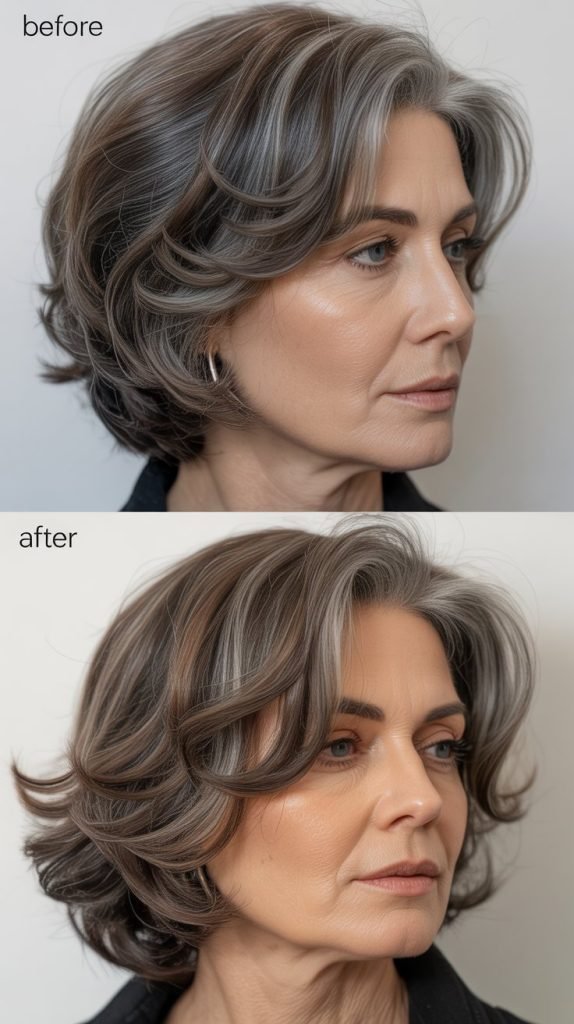
Once you’ve invested in beautiful lowlights, styling your short gray hair properly ensures everyone can appreciate the dimension you’ve created.
Blow-Drying for Dimension
- Blow-dry hair away from your face to showcase face-framing lowlights.
- Use a round brush to create lift at the crown, where lowlights create beautiful depth.
- Direct airflow downward along the hair shaft to smooth the cuticle and enhance shine, making lowlights more visible.
- Avoid over-smoothing with the brush, as some texture helps lowlights catch light.
Product Selection
- Lightweight mousses add body without weighing down short hair, allowing lowlights to be visible rather than flattened.
- Shine serums applied to dry hair make lowlights gleam and emphasize the dimensional effect.
- Texturizing sprays create separation between hair strands, revealing individual lowlight pieces.
- Avoid heavy waxes or pomades that can darken hair and obscure lowlight colors.
Styling for Special Occasions
- Sleek, polished styles showcase lowlights in a sophisticated way perfect for formal events.
- Tousled, piece-y styles emphasize lowlights in a casual, modern way ideal for everyday wear.
- Side-swept styles reveal lowlights on the exposed side while creating elegant asymmetry.
23. Lowlights for Active Lifestyles Over 50

Women over 50 lead active lives, and your hair color should complement rather than complicate your lifestyle, whether you’re hitting the gym, swimming, or enjoying outdoor activities.
Activity-Specific Considerations
- Chlorine from swimming can alter gray tones and lowlights, turning them greenish or brassy.
- Sweat and frequent washing from exercise routines can fade lowlights faster than sedentary lifestyles.
- Sun exposure during outdoor activities affects both gray hair and lowlights, potentially lightening lowlights over time.
- Sports that require helmets or tight headgear can flatten hair, hiding lowlight dimension.
Protective Measures for Active Women
- Apply leave-in conditioner with UV protection before outdoor activities to shield hair from sun damage.
- Wear a swim cap when swimming, or pre-saturate hair with clean water and conditioner before entering chlorinated pools.
- Use dry shampoo after workouts instead of washing daily to preserve lowlight color between necessary washes.
- Choose lowlight shades slightly darker than desired, as they’ll naturally lighten slightly with active sun exposure.
Low-Maintenance Lowlight Choices
- Balayage lowlights require less frequent touch-ups, ideal for busy, active schedules.
- Choose lowlight tones close to your natural gray for seamless grow-out that doesn’t require immediate maintenance.
- Multi-dimensional lowlights hide regrowth better than single-tone lowlights.
24. Lowlights for Professional and Corporate Settings
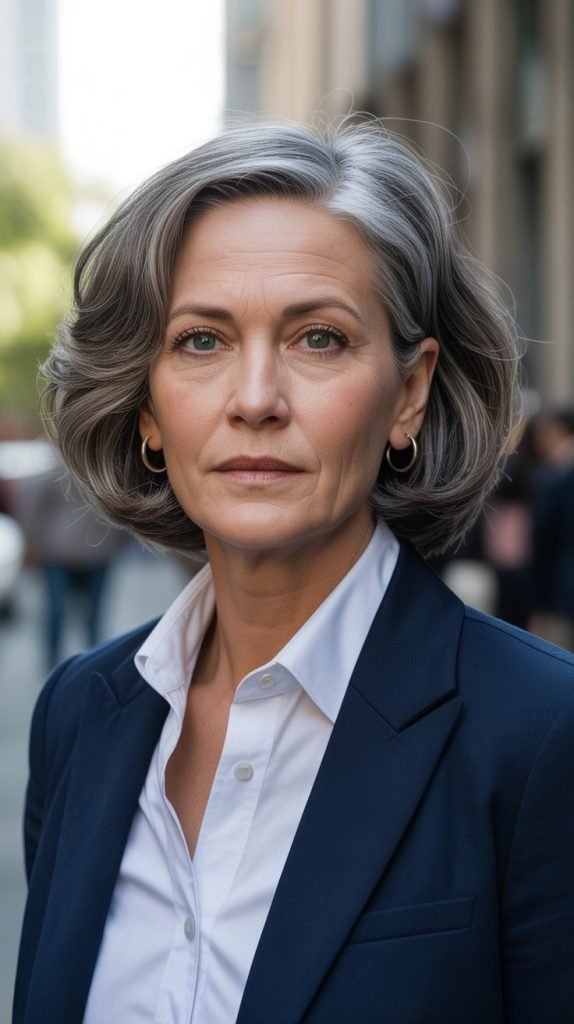
Many women over 50 are at the peak of their careers and need hair that looks polished, professional, and age-appropriate while still being stylish and modern.
Professional Image Considerations
- Subtle lowlights like pewter or silver maintain a conservative appearance while adding sophistication.
- High-contrast lowlights like graphite can work in creative or fashion-forward industries but may be too bold for traditional corporate environments.
- Well-maintained lowlights signal attention to detail and self-care, both valuable professional attributes.
- Natural-looking lowlights appear polished without seeming like you’re trying too hard or chasing youth.
Industry-Specific Guidelines
- Conservative industries like law, finance, or academia typically favor subtle, natural-looking lowlights.
- Creative fields like design, marketing, or media allow for more dramatic lowlight choices like slate blue or high-contrast graphite.
- Healthcare professionals benefit from practical, low-maintenance lowlights that withstand frequent hand-washing and busy schedules.
Balancing Professional and Personal Style
- Face-framing lowlights add dimension in a way that’s visible during video calls and meetings.
- Choose lowlight placement that complements your typical hairstyle—if you wear hair tucked behind ears, place lowlights where they’ll show.
- Maintain regular touch-ups so your color always looks intentional and well-kept rather than grown-out.
25. Combining Lowlights with Highlights for Ultimate Dimension
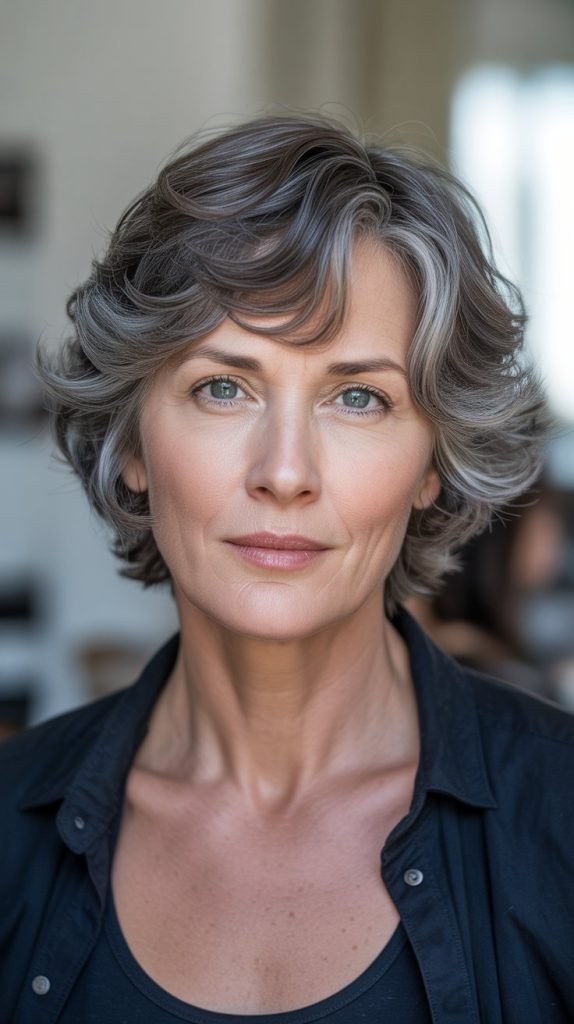
For maximum dimension, some women choose to combine both lowlights and highlights, creating depth and brightness simultaneously in their gray hair.
The Combined Approach
- Lowlights add depth while highlights add brightness, creating the most dimensional look possible.
- This technique is particularly effective for women transitioning to gray who want to blend remaining pigmented hair with emerging gray.
- Combining techniques creates visual interest that flat, single-tone color simply cannot achieve.
- The interplay between light and dark creates movement and the appearance of thicker, fuller hair.
Strategic Placement
- Place darker lowlights in underlayers and at the nape for depth.
- Add lighter highlights on the surface and around the face for brightness and lift.
- Keep the majority of hair in the mid-tone range to avoid a stripy appearance.
- Use three tones maximum to maintain cohesion—a base gray, one lowlight shade, and one highlight shade.
Maintenance Complexity
- Combining techniques requires more frequent salon visits, typically every 5-7 weeks.
- The investment is higher, with appointments costing $200-$350 depending on complexity and location.
- More complex color requires more
- sophisticated home care, including both purple shampoo for brightness and color-depositing conditioners for depth.
- Work with an experienced colorist who understands the delicate balance required for this advanced technique.
Best Candidates for Combined Techniques
- Women with naturally thick hair can carry the complexity of multiple tones without looking overdone.
- Those willing to commit to regular maintenance and quality home care products see the best long-term results.
- Women in transitional gray stages benefit most, as the combination seamlessly blends multiple natural tones.
26. Lowlights for Thin or Thinning Gray Hair
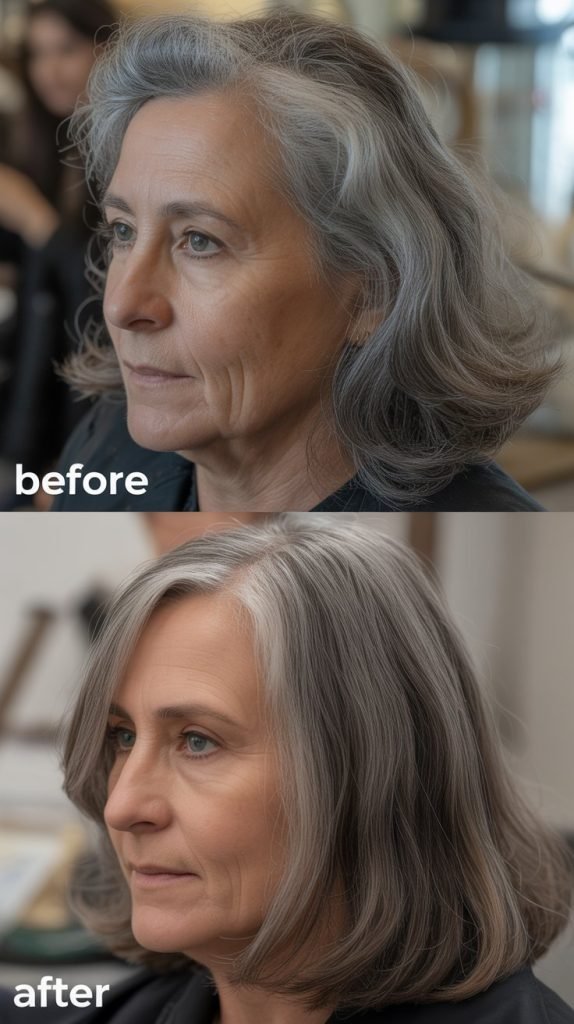
Hair thinning is a common concern for women over 50, and strategic lowlights can actually create the illusion of fuller, thicker hair.
Creating Visual Fullness
- Darker lowlights create shadows that make hair appear to have more depth and density.
- Strategic placement of lowlights along the scalp creates contrast that mimics the shadow of thicker hair.
- Multiple tones trick the eye into perceiving more individual strands than actually exist.
- Lowlights placed in thinning areas like the crown or temples draw less attention to the thinness itself.
Placement Strategies for Thin Hair
- Avoid placing lowlights too densely, which can make thin hair look darker and thus appear thinner overall.
- Focus lowlights in the underlayers rather than on top, where they create depth without adding surface darkness.
- Use fine weaving techniques that create delicate, natural-looking dimension rather than chunky sections.
- Consider root smudging to create shadow at the scalp, making the scalp less visible through thin hair.
Complementary Treatments
- Combine lowlights with volumizing cuts that create the illusion of fullness through strategic layering.
- Use thickening products and styling techniques that work synergistically with lowlights to maximize fullness.
- Consider scalp treatments or supplements that support hair health alongside color services.
27. Seasonal Color Trends and Gray Hair Lowlights
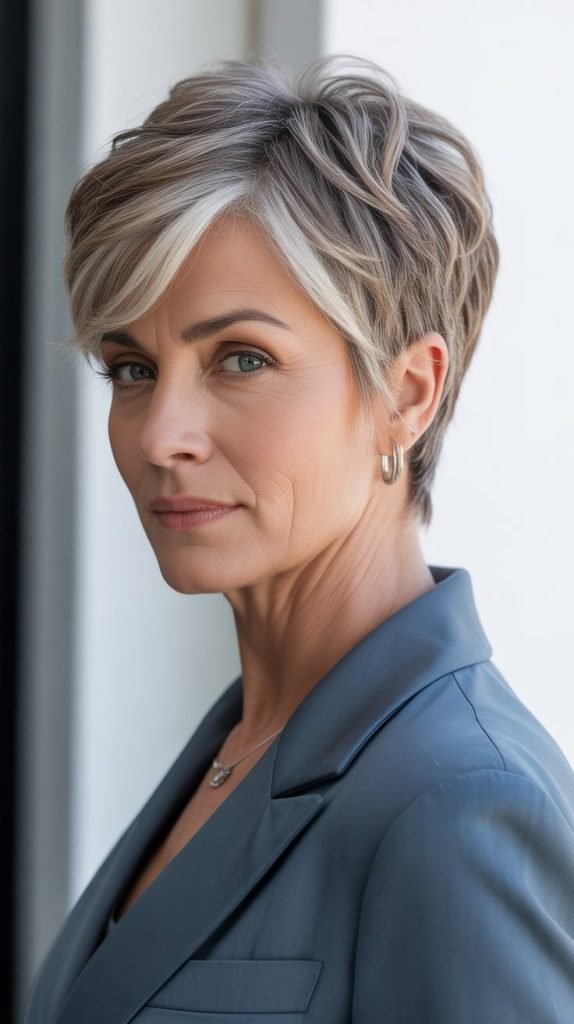
While gray hair is inherently timeless, incorporating subtle seasonal trends through lowlight choices keeps your look current and fresh.
Current Trends in Gray Hair Lowlights
- “Shadow roots” remain popular, creating depth at the root area that adds dimension and reduces maintenance.
- Cool-toned lowlights continue dominating, with ash, slate, and steel tones being particularly fashionable.
- Metallic lowlights like pewter and gunmetal offer a modern twist on traditional gray tones.
- Subtle, natural-looking dimension is trending over obvious, chunky color placement.
Adapting Trends for Mature Beauty
- Take trending techniques and adapt them to suit your personal style rather than copying them exactly.
- Choose trend-inspired lowlights that flatter your skin tone and lifestyle, not just what’s popular on social media.
- Work with your colorist to translate trends into age-appropriate, wearable versions for your hair.
- Remember that timeless, well-executed color always looks better than trendy but poorly executed color.
Trend Forecasting
- Experts predict continued movement toward embracing natural gray rather than covering it completely.
- Customized, personalized color approaches are gaining popularity over one-size-fits-all formulas.
- Sustainable, less-frequent color services with graceful grow-out are becoming increasingly desirable.
28. Lowlights for Different Skin Tones Over 50
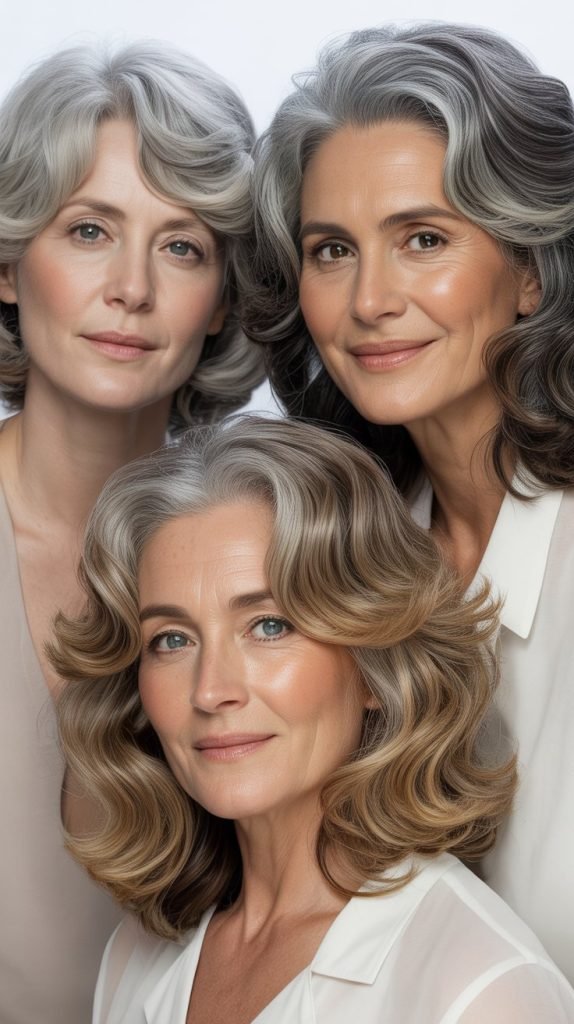
Your skin tone plays a crucial role in determining which lowlight shades will be most flattering and harmonious with your overall appearance.
Cool Skin Tone Recommendations
- Women with cool undertones (pink, red, or blue) look stunning with charcoal, ash, or slate blue lowlights.
- These cool-toned lowlights harmonize with natural skin undertones, creating a cohesive appearance.
- Avoid warm-toned lowlights like golden brown, which can clash with cool skin and create dissonance.
- Silver and graphite lowlights enhance cool skin tones by reflecting similar undertones.
Warm Skin Tone Guidelines
- Warm undertones (yellow, peach, or golden) pair beautifully with pewter, soft brown, or warm gray lowlights.
- Avoid extremely cool lowlights like slate blue, which can make warm skin appear sallow or dull.
- Lowlights with slight warmth prevent the overall look from becoming too stark or harsh.
- Mushroom and taupe-toned lowlights offer neutral options that complement warm skin beautifully.
Neutral Skin Tone Flexibility
- Lucky neutral-toned women can wear virtually any lowlight shade, from cool charcoal to warm pewter.
- This flexibility allows experimentation with trending colors and seasonal adjustments.
- Consider your wardrobe and personal style when choosing from the wide range of flattering options.
Testing for Undertones
- Look at the veins on your inner wrist—blue or purple indicates cool undertones, while green suggests warm undertones.
- Consider which metal jewelry flatters you most—silver for cool tones, gold for warm tones.
- Consult with your colorist, who can assess your undertones professionally and recommend ideal lowlight shades.
29. Transition Strategies: From Colored Hair to Gray with Lowlights
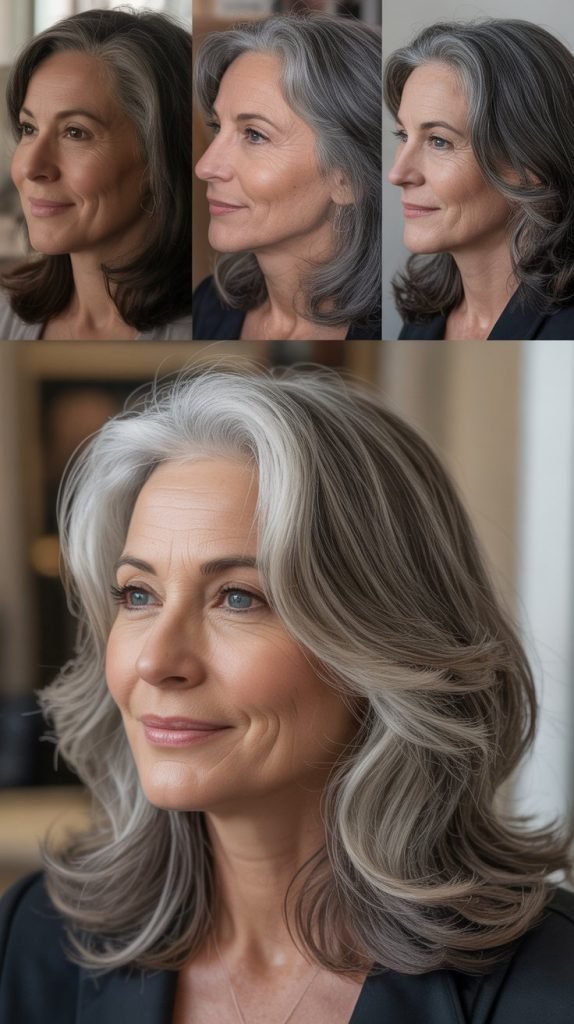
Many women over 50 are transitioning from artificially colored hair to natural gray, and lowlights can make this journey seamless and stylish.
The Lowlight Transition Method
- Lowlights in gray tones gradually introduce silver into colored hair, making the transition less shocking.
- Each appointment involves adding more gray-toned lowlights while allowing natural gray to grow in.
- This method typically takes 6-12 months but results in a natural, intentional-looking finish.
- The gradual approach allows you to adjust to your gray hair psychologically while it develops physically.
Step-by-Step Transition Plan
- Months 1-3: Add pewter or silver lowlights throughout colored hair, introducing gray tones while maintaining overall color.
- Months 4-6: Increase gray-toned lowlights and reduce base color coverage, allowing more natural gray to show.
- Months 7-9: Focus color only on remaining non-gray areas, using lowlights to blend everything seamlessly.
- Months 10-12: Final transition to full natural gray with dimensional lowlights for depth and sophistication.
Emotional Considerations
- Transitioning to gray is an emotional journey for many women, representing a shift in self-perception and identity.
- The gradual lowlight method provides time to adjust and control over the pace of change.
- Having a skilled, supportive colorist who understands the emotional aspects makes the journey more positive.
- Remember that you can pause the transition at any point if you’re not ready to proceed.
30. Correcting Unwanted Tones with Lowlights
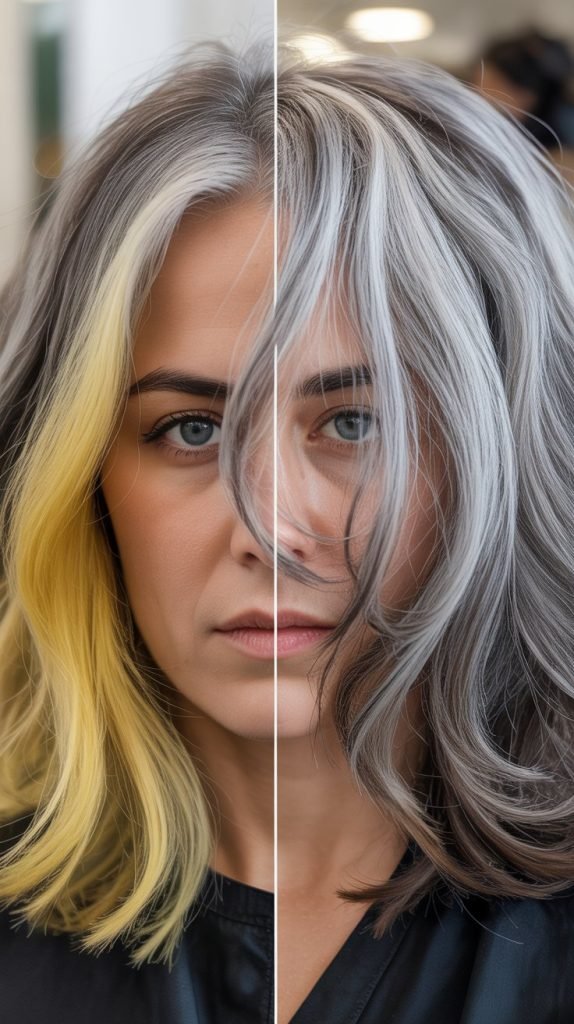
Sometimes gray hair develops unwanted tones like yellow, green, or brassy orange, and corrective lowlights can neutralize these issues while adding dimension.
Common Gray Hair Color Problems
- Yellow or brassy tones develop from mineral buildup, medication, sun exposure, or heat styling.
- Green tones can appear from chlorine exposure or certain medications interacting with hair.
- Uneven gray, where some areas are lighter or darker than others, creates a patchy appearance.
- Dull, flat gray lacks the vibrancy and dimension that make gray hair beautiful.
Corrective Lowlight Solutions
- Ash-toned lowlights neutralize yellow and brassy tones by depositing cool, blue-based pigments.
- Silver lowlights even out uneven gray, creating consistent color throughout.
- Multiple lowlight tones can disguise areas where color has been problematic, creating intentional dimension instead of accidental patchiness.
- Deep conditioning with color-correcting lowlights addresses both tone issues and adds shine.
Prevention Strategies
- Use chelating shampoo monthly to remove mineral buildup that causes discoloration.
- Install a shower filter to reduce minerals and chlorine in water before it touches your hair.
- Apply heat protectant before any heat styling to prevent heat-induced color changes.
- Wear hats with UV protection when spending extended time outdoors.
31. Lowlights for Short Gray Hair with Glasses
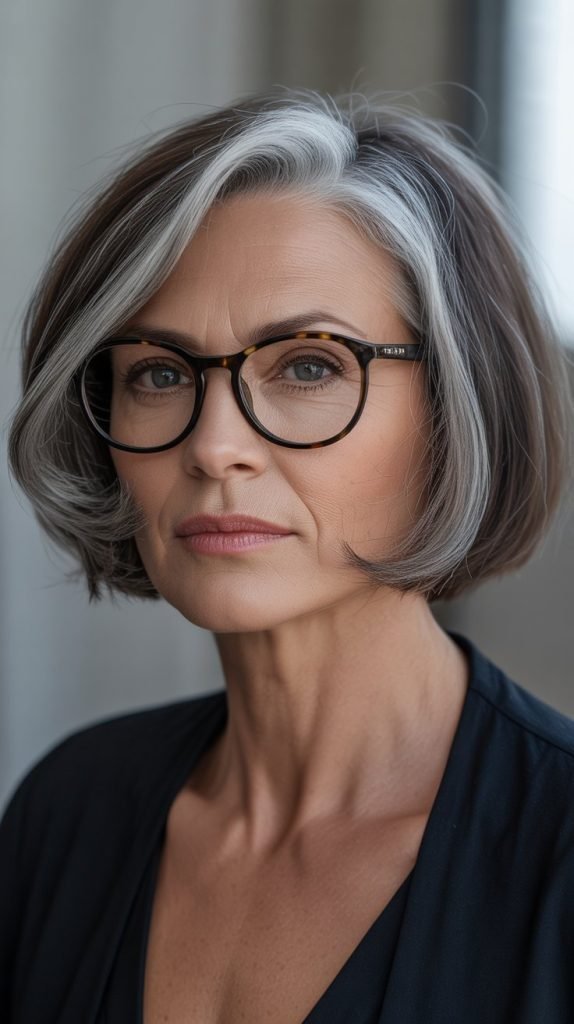
For the 75% of women over 50 who wear glasses, coordinating eyewear with hair color creates a harmonious, intentional appearance.
Coordinating Lowlights with Frame Colors
- Dark or black frames pair beautifully with charcoal or graphite lowlights, creating cohesive drama.
- Metallic frames in silver or gunmetal harmonize with silver or pewter lowlights for a coordinated look.
- Tortoiseshell or brown frames work well with softer, warmer lowlights like taupe or soft brown.
- Bold, colorful frames can be balanced with subtle, natural lowlights that don’t compete for attention.
Placement Considerations
- Face-framing lowlights should be visible beyond the temples, where glasses typically sit.
- Avoid placing heavy lowlights exactly where frames rest, as they may be obscured by eyewear.
- Crown and top-of-head lowlights remain visible regardless of frame size or style.
- Consider how you typically wear your glasses—constantly, for reading, or occasionally—when planning placement.
Enhancing Features Behind Frames
- Strategic lowlights can draw attention to eyes behind glasses, creating dimension that brings focus to your features.
- Lighter areas around the face brighten the eye area, which can be shadowed by glasses.
- Dimensional color creates visual interest that prevents glasses from dominating your appearance.
32. Budget-Friendly Lowlight Maintenance Tips
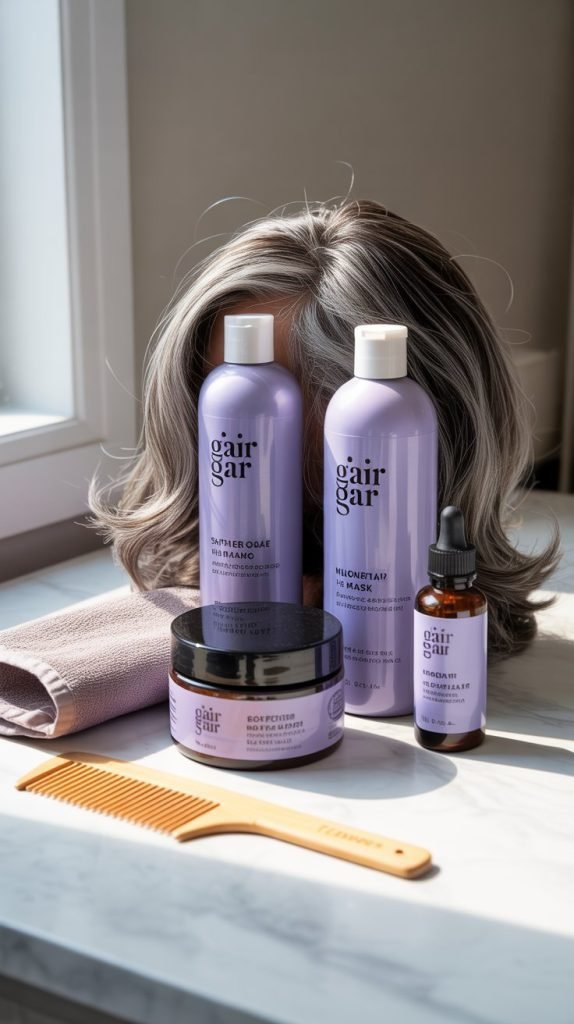
Maintaining beautiful lowlights doesn’t have to break the bank when you know how to maximize salon visits and extend color life through smart home care.
Stretching Time Between Appointments
- Choose lowlight techniques like balayage that grow out gracefully, extending time between touch-ups to 8-10 weeks.
- Request your colorist place lowlights strategically in areas that show dimension even as they grow out.
- Maintain healthy hair through proper care, as healthy hair holds color longer than damaged hair.
- Consider slightly bolder lowlights that remain visible even as regrowth occurs.
Affordable Home Maintenance Products
- Drugstore purple shampoos like Shimmer Lights or Clairol Shimmer Lights cost $7-$12 and work effectively.
- Generic color-depositing conditioners provide similar results to expensive salon brands at a fraction of the cost.
- DIY glossing treatments using demi-permanent color can be done at home for under $15 between salon visits.
- Invest in one high-quality product (like a good heat protectant) and save on others where quality differences are minimal.
Money-Saving Salon Strategies
- Book appointments during promotional periods, typically in January, June, and September when salons offer discounts.
- Ask about loyalty programs or package deals that reduce per-visit costs when you commit to multiple appointments.
- Consider training nights at reputable salons where advanced students perform services at reduced rates under supervision.
- Build a relationship with your colorist and ask about referral discounts or birthday specials.
33. Lowlights for Short Gray Hair in Different Climates
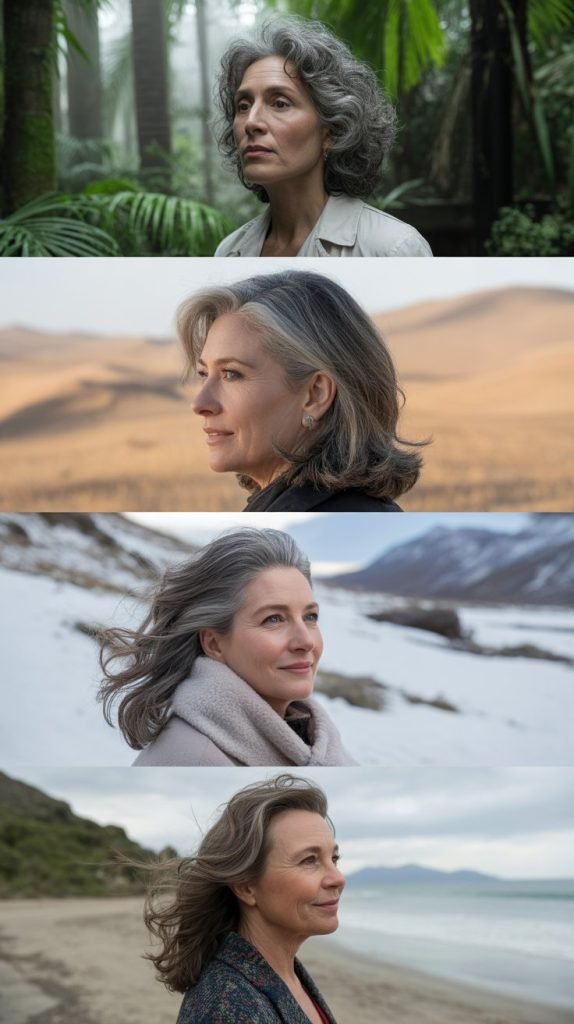
Your local climate affects your hair and how lowlights perform, requiring adjustments based on humidity, dryness, heat, or cold.
Humid Climate Considerations
- High humidity can cause color to fade faster as moisture opens the hair cuticle, releasing pigments.
- Choose lowlights in the same color family as your base gray to minimize visible fading.
- Use anti-humidity products that seal the cuticle, protecting both hair texture and color.
- Schedule color touch-ups slightly more frequently, every 6-7 weeks instead of 8.
Dry Climate Challenges
- Low humidity environments cause hair to become dry and brittle, making it absorb and hold color differently.
- Increase deep conditioning treatments to maintain hair health in dry climates.
- Lowlights may appear darker initially in dry hair due to high porosity, so choose slightly lighter shades.
- Use leave-in conditioners daily to maintain moisture balance that preserves lowlight vibrancy.
Extreme Temperature Effects
- Very cold climates require protective measures like hats, which can flatten hair and hide lowlights.
- Hot climates with intense sun exposure will naturally lighten lowlights over time, requiring darker initial color.
- Indoor heating in winter and air conditioning in summer both dry hair, affecting color retention.
- Adjust your lowlight strategy seasonally if you experience extreme temperature variations.
34. Combining Lowlights with Hair Treatments and Services
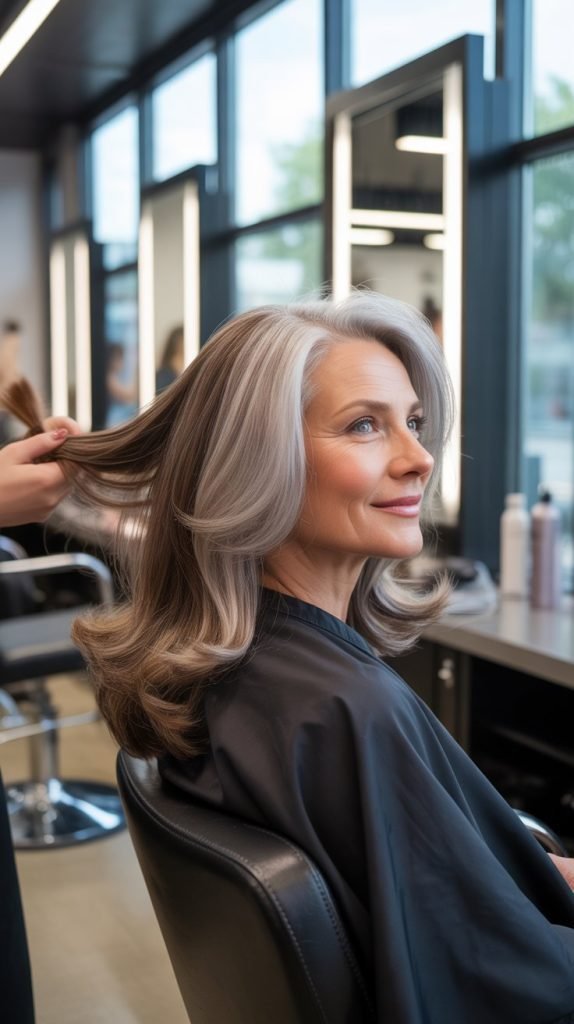
Many women over 50 use various hair treatments like keratin, Brazilian blowouts, or bond builders, and understanding how these interact with lowlights is essential.
Keratin Treatments and Lowlights
- Keratin treatments should be performed 2-3 weeks after color services, never on the same day.
- The smoothing process can slightly alter lowlight tones, typically shifting them slightly lighter.
- Inform your stylist about recent lowlights so they can adjust keratin formula accordingly.
- Keratin-treated hair holds lowlight color longer due to sealed cuticles, extending time between appointments.
Bond-Building Treatments
- Products like Olaplex, K18, or Wellaplex should be incorporated into every color service to minimize damage.
- These treatments can be done the same day as lowlights, actually enhancing color results and hair health.
- Standalone bond treatments between color appointments extend the life of lowlights by maintaining hair integrity.
- Investing in bond builders pays off in healthier hair that showcases lowlights beautifully.
Scalp Treatments
- Scalp health directly impacts hair health, which in turn affects how lowlights look and last.
- Schedule scalp treatments between color appointments rather than the same day for best results.
- Exfoliating scalp treatments should be avoided immediately before color to prevent sensitivity.
35. Lowlights for Gray Hair: Before and After Consultation Guide
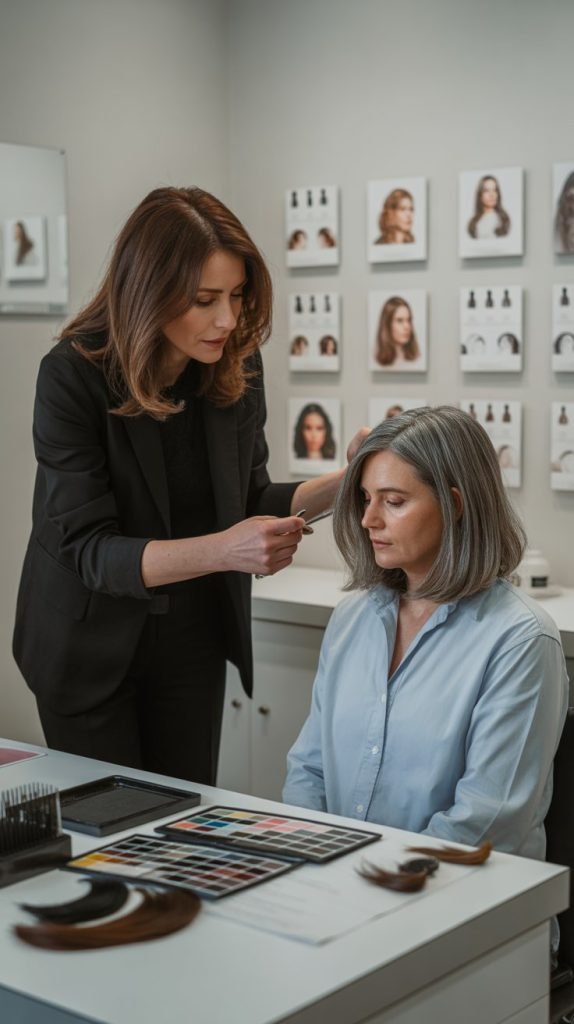
Knowing what to discuss during your consultation ensures you and your colorist are aligned, preventing disappointment and ensuring beautiful results.
Essential Questions to Ask Your Colorist
- “Which lowlight shade will best complement my skin tone and natural gray color?”
- “How often will I need touch-ups with the lowlight placement and technique you’re recommending?”
- “What will the maintenance cost over a year, including products?”
- “Can you show me photos of lowlights you’ve done on hair similar to mine?”
- “What at-home care routine do you recommend specifically for my hair and these lowlights?”
Information to Provide Your Colorist
- Your complete color history, including any previous highlights, lowlights, or single-process color.
- Your lifestyle factors including exercise frequency, swimming habits, and sun exposure.
- Your maintenance preferences and realistic budget for both salon visits and home care.
- Any medications or health conditions that might affect hair or color processing.
- Photos of lowlight results you love, helping your colorist understand your aesthetic preferences.
Setting Realistic Expectations
- Understand that photos from social media may be filtered or edited and may not be achievable on your hair type.
- First-time lowlights may require adjustment appointments to achieve your perfect result.
- Gray hair color can vary dramatically from person to person, affecting how lowlights appear.
- Trust your colorist’s professional opinion when they explain what will and won’t work for your specific hair.
36. Troubleshooting Common Lowlight Problems
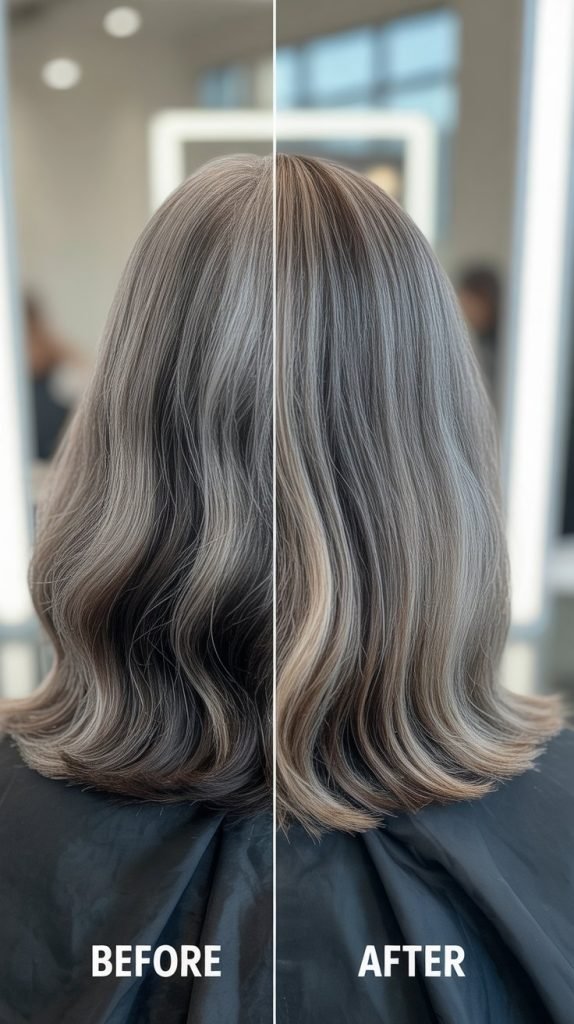
Even with the best colorist, sometimes lowlights don’t turn out exactly as planned, and knowing how to address common issues prevents panic and disappointment.
Lowlights Appear Too Dark
- Dark lowlights can be lightened using clarifying shampoo over several washes, gradually lifting some color.
- Your colorist can perform a color correction service using gentle lightener to reduce intensity.
- Adding more highlights or lighter lowlights around the face can balance overall darkness.
- Sometimes lowlights appear darker initially when hair is wet; wait until it’s completely dry before judging the result.
Lowlights Look Uneven or Patchy
- Uneven lowlights usually result from inconsistent application and require professional correction.
- Your colorist can fill in lighter areas with additional lowlights to create even distribution.
- A toning gloss can sometimes minimize the appearance of patchiness by creating more uniform overall color.
- If caught immediately after application, your salon should correct this issue at no additional charge.
Lowlights Faded Too Quickly
- Premature fading usually indicates either damaged hair or inadequate home care routine.
- Switch to sulfate-free, color-safe products and reduce washing frequency to 2-3 times weekly.
- Schedule a glossing treatment to refresh lowlights without completely redoing them.
- Consider whether medications, chlorine, or sun exposure might be contributing to rapid fading.
Scalp Irritation or Sensitivity
- Sensitivity can occur even with deposit-only color if scalp is compromised or you have new allergies.
- Apply aloe vera gel or hydrocortisone cream to soothe minor irritation after color services.
- Take an antihistamine if recommended by your doctor for mild allergic reactions.
- Contact your colorist and potentially your doctor if severe reactions like blistering, extreme redness, or swelling occur.
37. The Future of Gray Hair Color: Trends and Innovations
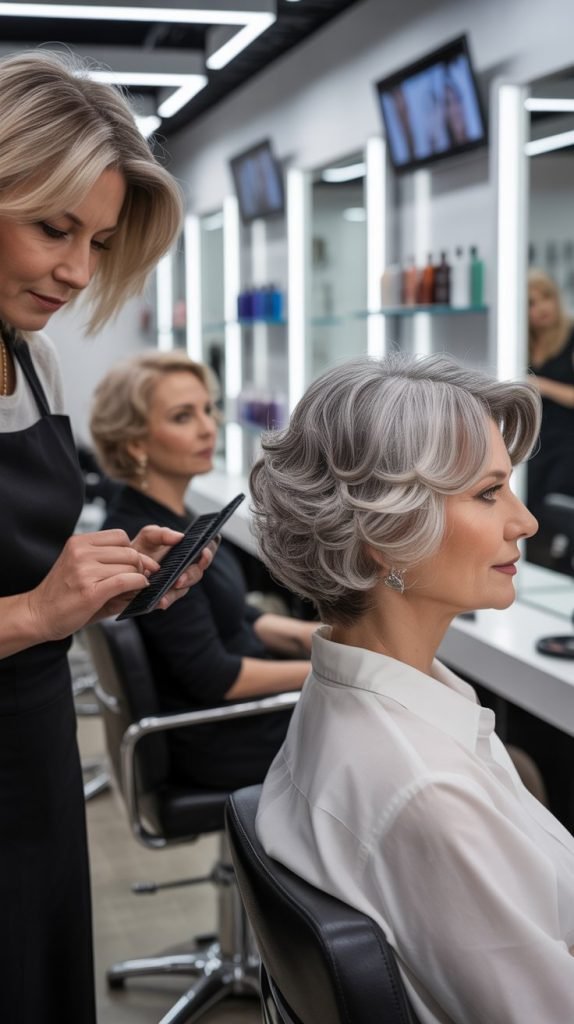
The world of gray hair color continues evolving with new techniques, products, and attitudes reshaping how women over 50 approach their silver strands.
Emerging Techniques
- “Money piece” lowlights, where chunky sections frame the face, are being adapted for gray hair with dramatic darker framing pieces.
- Micro-lowlighting creates ultra-fine, natural-looking dimension that’s virtually undetectable as color work.
- Color melting techniques blend multiple lowlight tones so seamlessly that no distinct sections are visible.
- Virtual try-on technology allows you to preview lowlight colors on your own photo before committing.
Product Innovations
- At-home glossing treatments specifically formulated for gray hair are making maintenance more accessible and affordable.
- Bond-building technology continues advancing, allowing more dramatic color work with less damage.
- Customized color formulas based on hair analysis provide perfectly matched lowlight shades for individual needs.
- Long-lasting semi-permanent lowlight options offer commitment-free experimentation with dimensional color.
Cultural Shifts
- Gray hair is increasingly viewed as aspirational rather than something to hide, with younger women even coloring their hair gray.
- Social media movements celebrating natural aging have made gray hair mainstream and fashionable.
- More salons are specializing in gray hair color services, recognizing the unique needs of this growing market.
- Male celebrities and influencers embracing silver hair have helped normalize gray as attractive across genders.
Sustainability Trends
- Eco-conscious consumers are seeking natural, plant-based lowlight formulas with fewer harsh chemicals.
- Low-maintenance color techniques that require fewer salon visits align with sustainable beauty values.
- Waterless color products and reduced-waste packaging are becoming available in professional color lines.
- The embrace of natural gray with minimal enhancement represents the ultimate sustainable hair approach.
Conclusion
Embracing your natural gray hair doesn’t mean accepting a flat, one-dimensional look—as this comprehensive guide to 37+ Stunning Short Gray Hair Lowlights Ideas for Women Over 50 has demonstrated, the possibilities for creating depth, dimension, and sophistication are virtually endless.
From subtle pewter accents that whisper elegance to bold graphite contrasts that command attention, lowlights offer the perfect solution for women who want to honor their natural silver while adding that extra touch of artistry and polish.
You’ve discovered how strategic color placement can contour your face, how different techniques suit various lifestyles and budgets, and how proper maintenance keeps your dimensional gray looking vibrant and intentional.
Whether you choose soft brown transitional lowlights, cutting-edge slate blue accents, or classic charcoal depth, remember that your gray hair is a canvas for self-expression and personal style.
The key is finding a skilled colorist who understands gray hair’s unique characteristics, investing in quality home care that preserves your beautiful color, and wearing your silver with the confidence it deserves.
Your gray hair journey is uniquely yours, and with the right lowlights, it can be absolutely stunning at any age—proving that the best is truly yet to come after 50.
