

If you’re blessed with thick, wavy hair that falls somewhere between your shoulders and collarbone, you’re sitting on a goldmine of styling possibilities that many can only dream of.
Medium-length cuts offer the perfect canvas for showcasing your hair’s natural texture while keeping it manageable enough for everyday styling.
This comprehensive guide explores 36 flattering medium hairstyles for thick wavy hair with movement, each designed to enhance your hair’s natural body, create stunning dimension, and make styling effortless whether you’re heading to the office or out for a special evening.
From layered cuts that reduce bulk to textured styles that amplify your waves, you’ll discover the perfect look that celebrates your hair’s unique characteristics while giving you the confidence-boosting style you deserve.
1. Layered Shoulder-Length Cut with Face-Framing Pieces
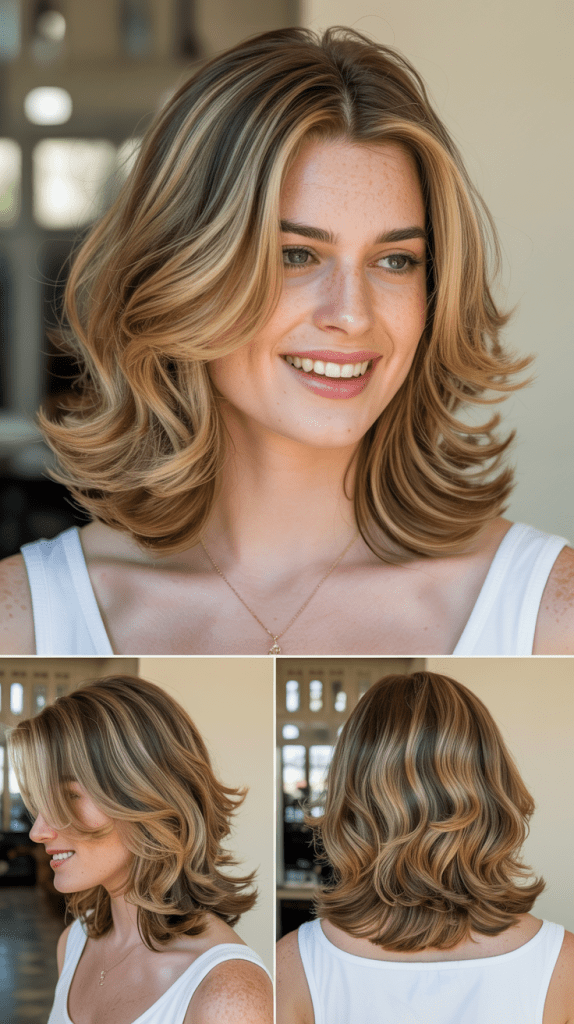
Layers are your best friend when working with thick, wavy hair, as they remove excess weight while creating beautiful movement throughout.
This classic cut features strategic layering that starts around chin level and cascades down to the shoulders, with shorter pieces framing the face to highlight your features.
- The face-framing layers draw attention to your eyes and cheekbones while softening angular features for a more flattering appearance.
- Internal layers throughout the cut prevent the pyramid effect that thick hair often creates when left one length.
- This style works exceptionally well with natural waves because the layers encourage the hair to bend and curl in different directions.
- Use a lightweight mousse on damp hair and diffuse with your head tilted to the side to maximize volume at the roots.
- The versatility of this cut means you can wear it sleek and straight for formal occasions or enhance the waves for a more casual, beachy vibe.
2. Shaggy Bob with Textured Ends
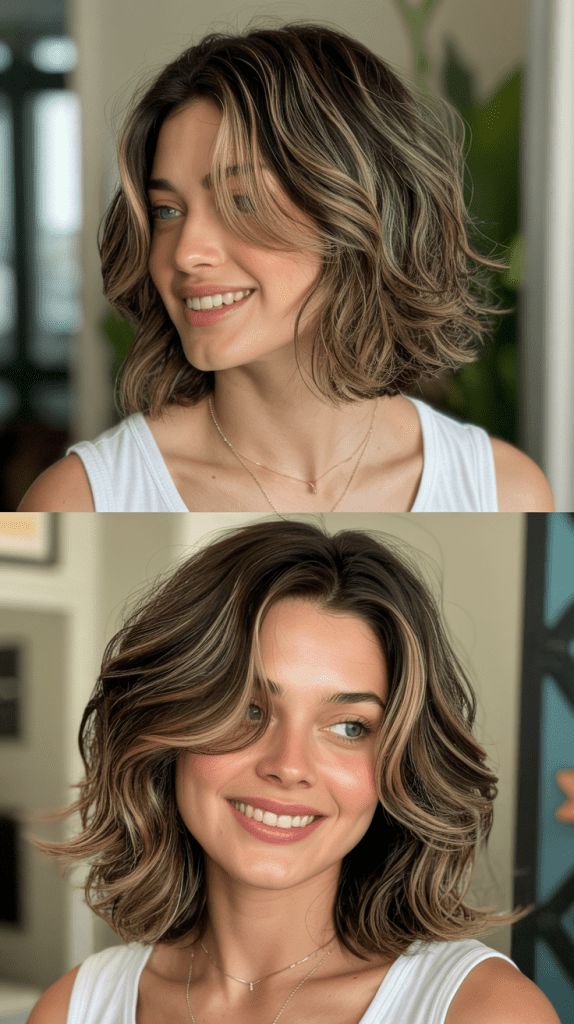
The modern shag has made a triumphant comeback, and it’s perfectly suited for thick, wavy hair that needs dimension and attitude.
This cut typically falls between the chin and shoulders, featuring choppy layers throughout and heavily textured ends that create an effortlessly cool appearance.
- The shaggy layers remove significant bulk from thick hair while maintaining fullness where you want it most.
- Textured ends created with point-cutting or razor techniques give the hair a lived-in, piecey finish that enhances natural wave patterns.
- This style requires minimal styling effort—simply scrunch in some texturizing spray and let your waves do their thing.
- The disconnected layers create movement in multiple directions, preventing your hair from looking heavy or flat.
- Request your stylist to add shorter layers around the crown for extra lift and dimension that prevents the top from appearing weighed down.
3. Collarbone-Length Cut with Curtain Bangs
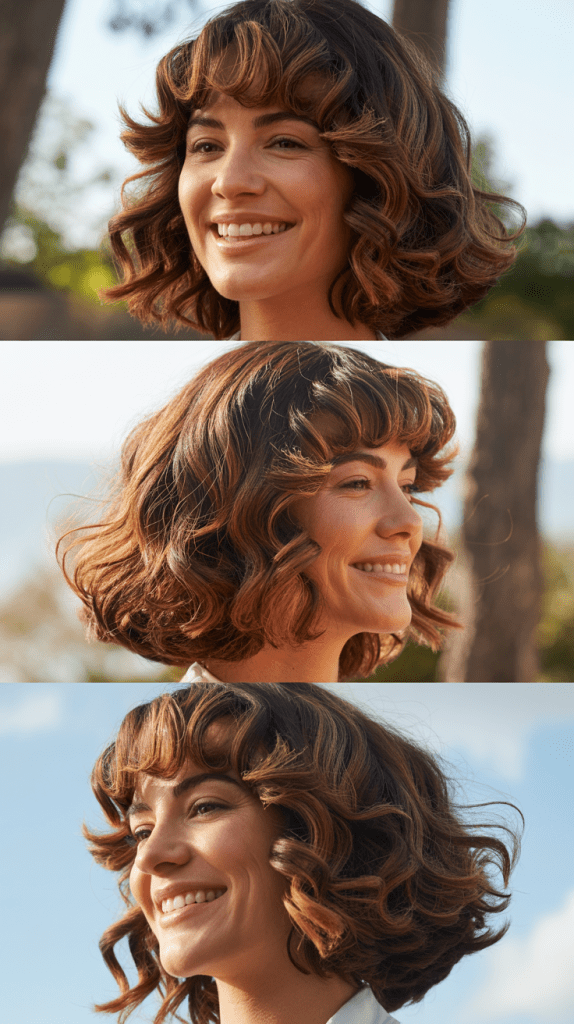
Curtain bangs have become incredibly popular because they suit virtually every face shape while adding a soft, romantic element to medium hairstyles.
When paired with a collarbone-length cut on thick, wavy hair, they create a balanced, face-framing look with plenty of movement.
- Curtain bangs part down the middle and sweep to either side of the face, creating a flattering frame that works with your hair’s natural wave pattern.
- The collarbone length is ideal for thick hair because it’s long enough to showcase your waves but short enough to prevent excessive weight.
- This combination softens a strong jawline while adding width to narrower face shapes for better overall proportion.
- Style the bangs with a round brush while blow-drying to create the characteristic outward curve that defines curtain bangs.
- The rest of the hair can be air-dried with a sea salt spray for an effortless, beachy texture that complements the relaxed vibe of the bangs.
4. Stacked Layers with Maximum Volume
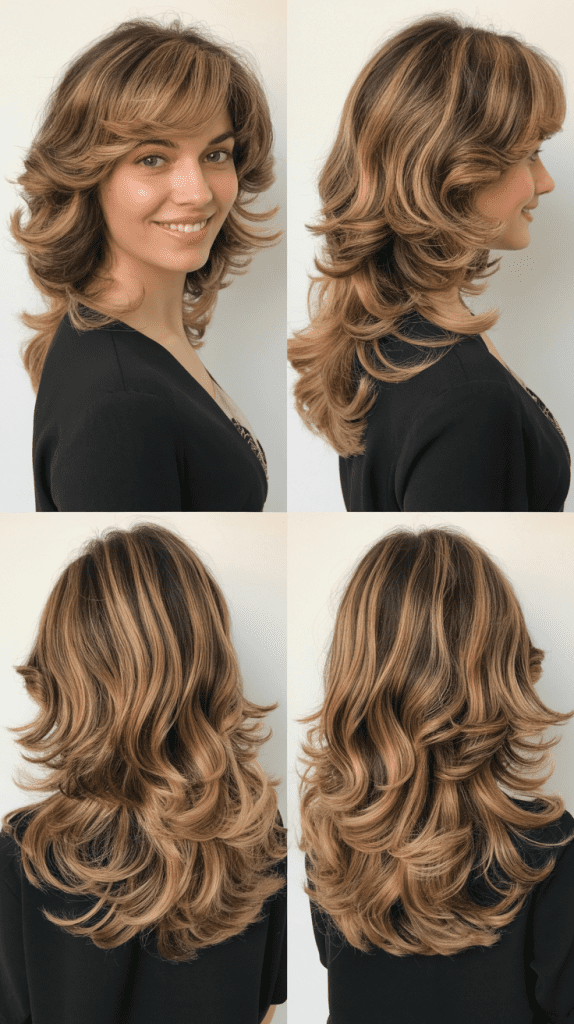
For those who want their thick, wavy hair to have impressive height and body, stacked layers create dramatic dimension from the crown down to the ends.
This technique involves cutting shorter layers on top with progressively longer layers underneath, building volume and preventing flatness.
- The stacking technique creates a rounded silhouette that lifts away from the head rather than falling flat against it.
- Each layer sits on top of the one below it, creating a cascading effect that enhances your hair’s natural wave pattern.
- This cut is particularly beneficial for fine-textured thick hair that lacks volume despite having density.
- Apply volumizing mousse at the roots before blow-drying with your head upside down to maximize the lift created by the cut.
- The shortest layers typically start at the crown or slightly below, with the longest pieces reaching shoulder length or just below.
5. Choppy Lob with Razored Layers
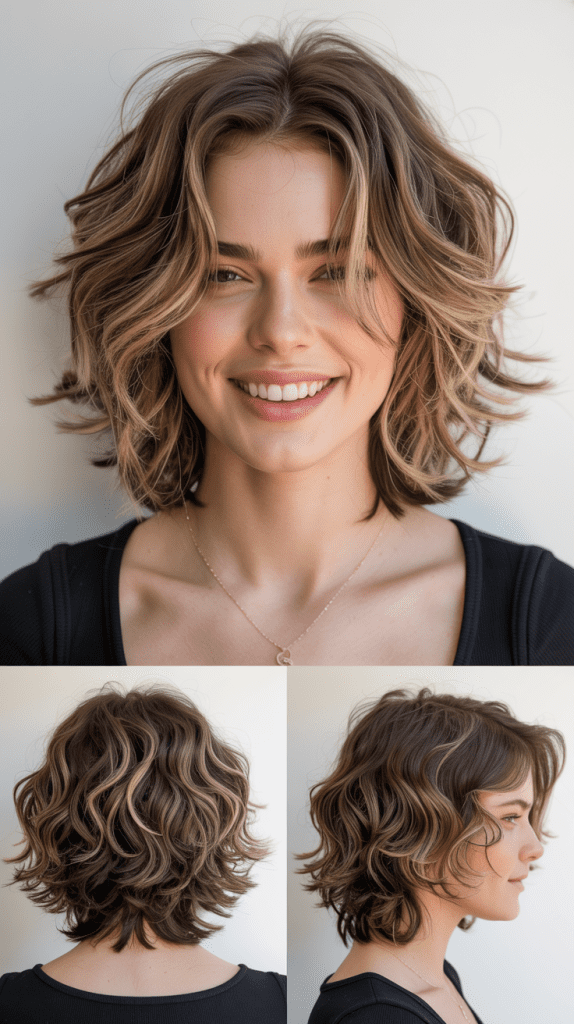
The long bob, or “lob,” remains one of the most versatile medium-length styles, and when executed with choppy, razored layers on thick wavy hair, it becomes a stunning statement piece.
This edgy variation adds texture and removes weight while maintaining a sophisticated silhouette.
- Razor cutting creates softer, more feathered ends compared to scissor cutting, which gives the hair a lighter, more movable quality.
- The choppy layers are intentionally uneven and disconnected, creating visual interest and preventing the style from looking too uniform or heavy.
- This cut works beautifully with natural waves because the texture enhances the intentionally undone aesthetic of the style.
- Use a texturizing cream on damp hair and scrunch while air-drying for an effortless, tousled finish that highlights the razored layers.
- The lob length typically falls between the chin and collarbone, making it professional enough for work while still being trendy and fashion-forward.
6. Side-Swept Style with Deep Part
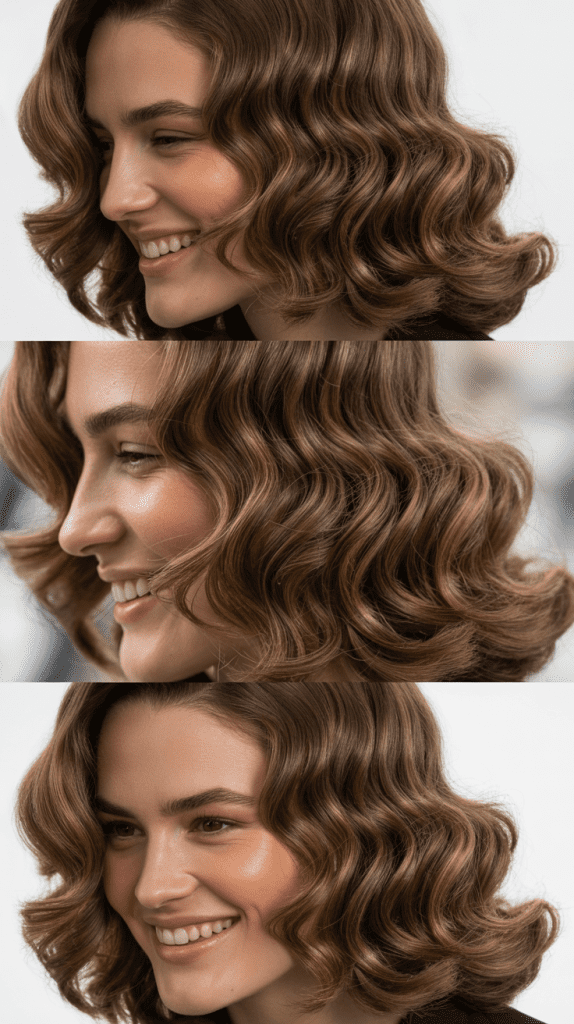
Sometimes the most dramatic transformation doesn’t require cutting at all—simply changing your part can create an entirely new look with impressive movement.
A deep side part on medium-length thick wavy hair creates asymmetry, volume, and a glamorous, face-framing effect.
- Creating a deep part—typically positioning it above the arch of one eyebrow—adds instant height and drama to the heavier side.
- The asymmetry of this style draws attention to your eyes and creates visual interest without requiring a new haircut.
- Thick, wavy hair holds this style particularly well because the natural texture provides grip and body that keeps the style in place.
- Apply root-lifting spray to the heavier side and blow-dry the hair away from your face using a large round brush for maximum volume.
- This styling technique works with virtually any medium-length cut, making it an easy way to change your look for special occasions without commitment.
7. Blunt Cut at Shoulder Length
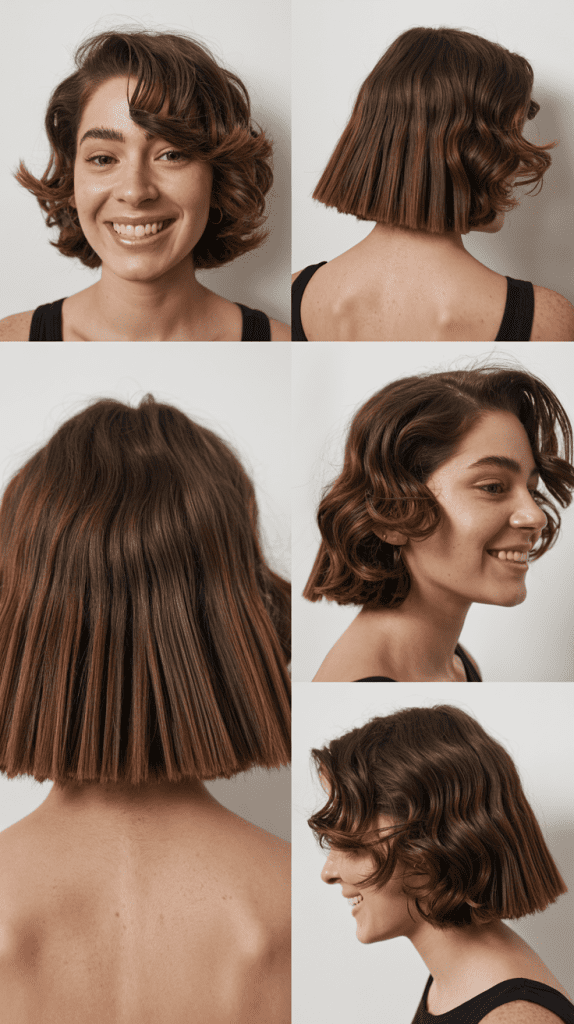
While layers are often recommended for thick hair, a blunt cut can create a bold, modern statement when styled correctly.
This one-length cut at shoulder level creates a strong horizontal line that looks particularly striking on wavy hair with good natural texture.
- The weight of a blunt cut can actually help control very thick, wavy hair that tends to become unruly with too many layers.
- This style creates a clean, sophisticated look that appears polished and intentional rather than overly casual.
- The solid perimeter works best when the hair has some natural wave or when you add waves with a curling iron to prevent it from looking too heavy or triangular.
- Regular trims every six to eight weeks are essential to maintain the crisp line that defines this cut.
- Use a smoothing serum before blow-drying to control frizz while maintaining your waves, then finish with a light texturizing spray for movement.
8. Graduated Bob with Shorter Back
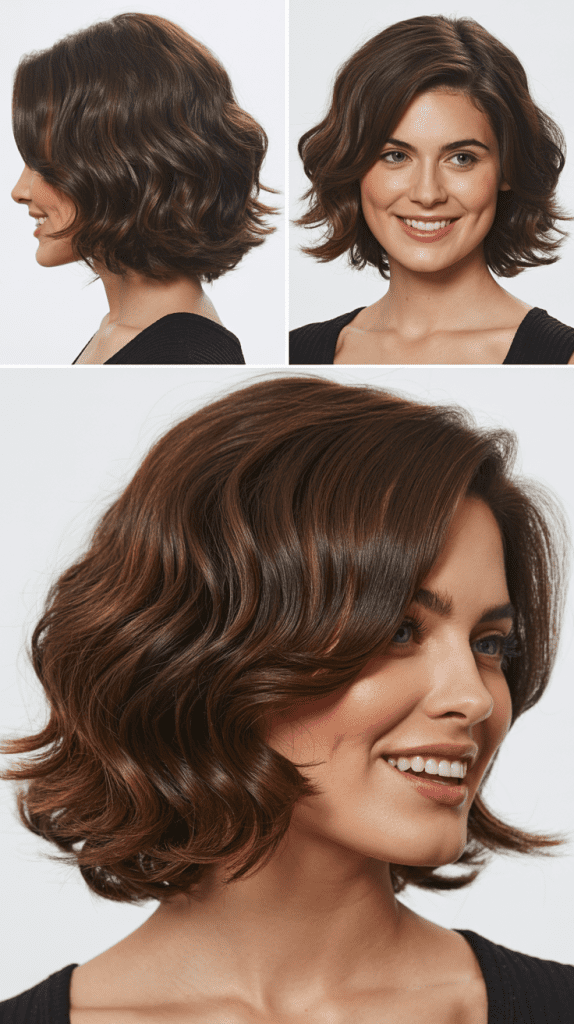
The graduated bob features hair that’s shorter in the back and gradually lengthens toward the front, creating an angled silhouette that’s both classic and contemporary.
On thick, wavy hair, this cut removes weight from the back while leaving length in the front for styling versatility.
- The graduation creates a stacked effect in the back that adds volume and prevents the hair from lying flat against the head.
- Front pieces that are one to three inches longer than the back frame the face beautifully and can be tucked behind the ears or left loose.
- This cut naturally encourages the hair to flip outward at the ends, which complements wavy texture and creates movement.
- The shorter back is easier to manage and reduces the bulk that thick hair creates at the nape of the neck.
- Style with a round brush while blow-drying to smooth the hair and enhance the graduated shape, or scrunch with styling cream for a more textured, casual finish.
9. Shattered Layers for Movement
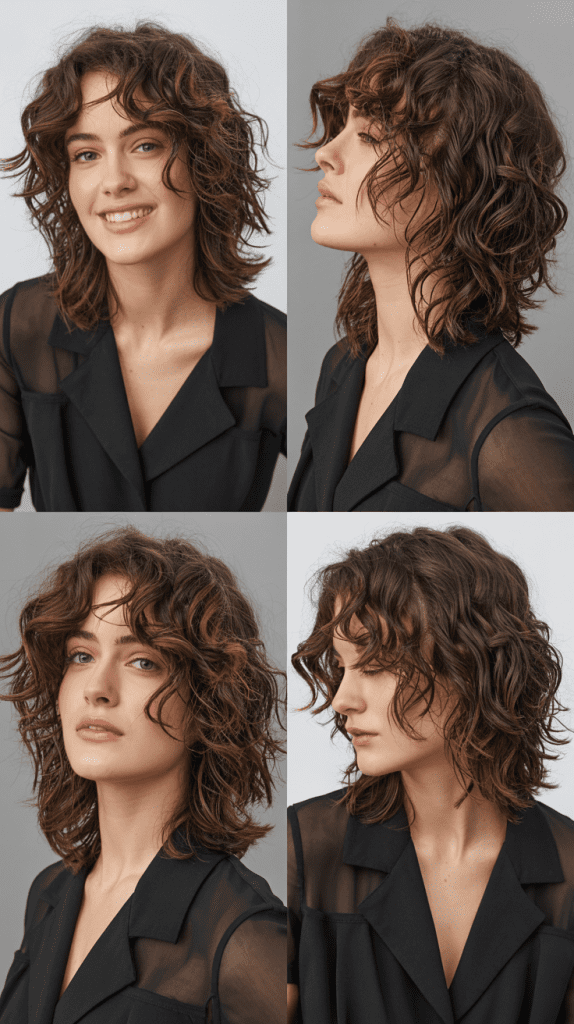
Shattered layers involve using specific cutting techniques to create multiple lengths throughout the hair that appear broken up or “shattered” rather than smoothly blended.
This approach maximizes movement and reduces bulk in thick, wavy hair while creating an edgy, contemporary aesthetic.
- The intentionally disconnected layers create gaps and spaces within the hair that allow individual waves to move independently.
- This cutting technique removes tremendous weight from thick hair without sacrificing length or fullness.
- Shattered layers look particularly striking when the hair is styled with products that enhance separation and definition rather than smoothing everything together.
- Use your fingers to apply a lightweight pomade or wax to individual sections, twisting them slightly to emphasize the shattered, piece-y texture.
- This style works exceptionally well for those with naturally kinky or very coarse wavy hair that can handle aggressive texturizing.
10. Long Layers with V-Shaped Back
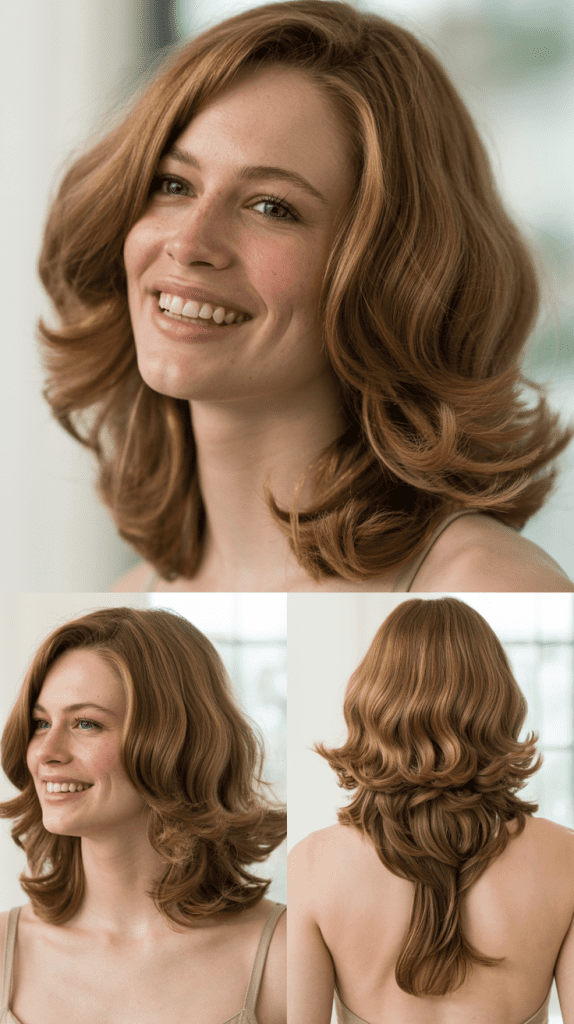
A V-shaped cut maintains more length in the back center while gradually shortening toward the sides, creating a distinctive silhouette when viewed from behind.
Combined with long, flowing layers, this style showcases the movement of thick, wavy hair while keeping it manageable.
- The V-shape creates a flattering focal point down the center of the back, drawing the eye downward and creating an elongating effect.
- Long layers that start around the cheekbones or chin gradually increase in length, creating a seamless transition to the V-point.
- This cut maintains substantial weight at the bottom, which can help control very thick, wavy hair that tends to become frizzy when over-layered.
- The V-shape becomes more pronounced when the hair is straightened but adds beautiful dimension and movement when styled wavy.
- Use a diffuser attachment when blow-drying to enhance your natural wave pattern while maintaining the definition of the V-shaped perimeter.
11. Tousled Layers with Beachy Waves
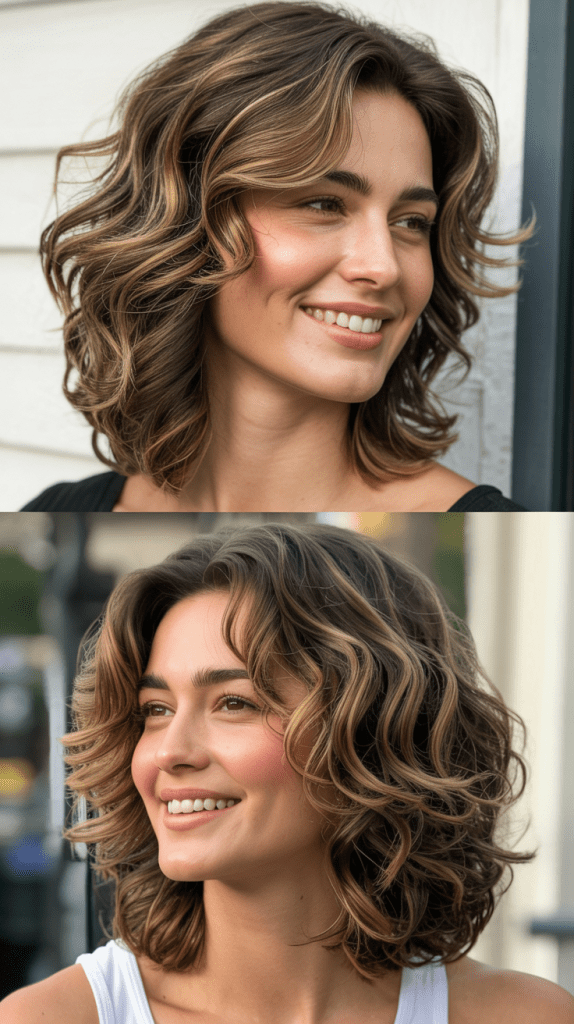
The effortlessly undone beachy wave look has become synonymous with relaxed California cool, and it’s particularly flattering on thick, wavy hair with the right layered cut.
This style embraces natural texture while looking purposefully styled rather than messy.
- Layers cut throughout the mid-lengths and ends create the foundation for beachy waves by removing excess weight that would pull the waves down.
- This style celebrates imperfection—the waves should appear random and varied in size rather than uniform and overly styled.
- Sea salt spray is the hero product for this look, adding texture and enhancing your hair’s natural wave pattern without making it stiff or crunchy.
- Apply the spray to damp hair, scrunch with your hands, and allow the hair to air-dry or use a diffuser on low heat for more definition.
- The beauty of this style is its versatility—it looks appropriate for everything from a beach day to a casual dinner, and second-day hair often looks even better as the waves settle into a more lived-in texture.
12. Asymmetrical Cut with One Side Longer
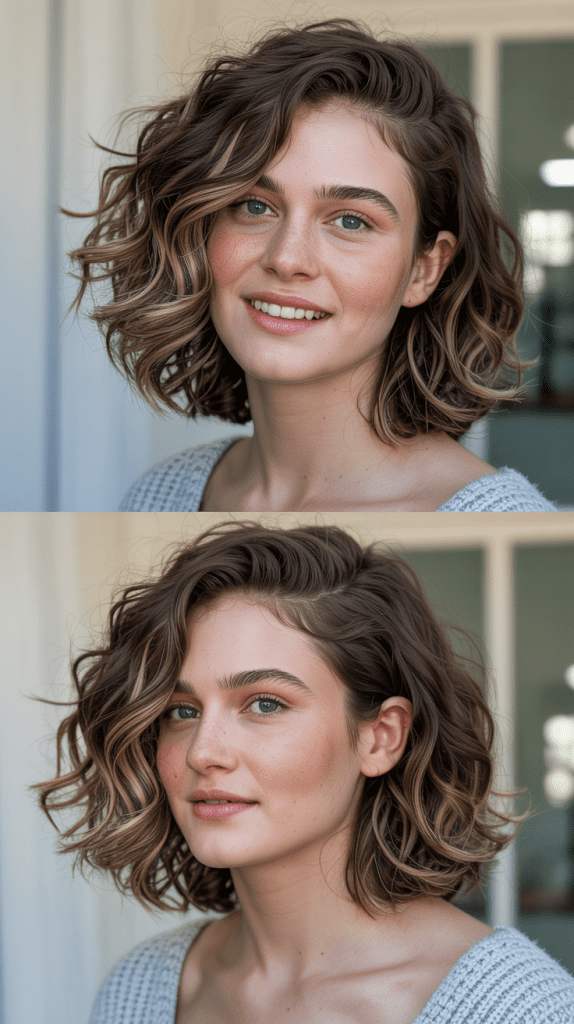
Asymmetry creates instant drama and visual interest, making it an excellent choice for those who want a distinctive style.
An asymmetrical cut on thick, wavy hair typically features one side significantly longer than the other, creating an edgy, fashion-forward look with built-in movement.
- The length difference between the two sides can be subtle (one to two inches) or dramatic (three to four inches or more), depending on your comfort level with bold styles.
- This cut creates a natural sweep of hair that falls across the face, framing features and adding mystery to your look.
- The asymmetry draws attention and makes a statement, so it’s ideal for those with the confidence to carry an unconventional style.
- Style the longer side with loose waves that cascade forward while keeping the shorter side tucked behind the ear for maximum impact.
- This cut requires a skilled stylist who can balance the asymmetry properly to ensure it looks intentional rather than uneven or unflattering.
13. Wispy Layers with Feathered Ends
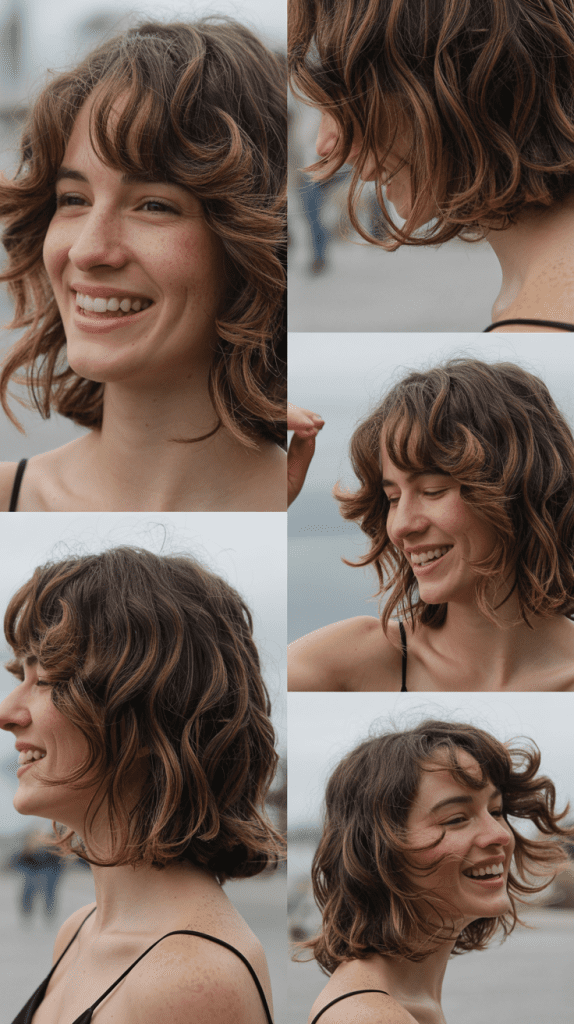
Feathered layers create a soft, feminine look that’s incredibly flattering on thick, wavy hair.
This technique involves cutting the layers at an angle so the ends taper to create a light, wispy effect that contrasts beautifully with the density of thick hair.
- Feathering removes bulk specifically at the ends, where thick hair can appear heavy and solid, while maintaining fullness throughout the mid-lengths.
- The wispy, tapered ends create a softer silhouette that moves more freely and blends seamlessly with your natural wave pattern.
- This cutting technique is achieved by holding sections of hair at an angle and using a slicing motion with the scissors, creating graduated lengths within each section.
- The feathered effect looks particularly beautiful when the hair catches light, as the varied lengths create dimension and highlight your waves.
- Style with a light-hold styling cream that defines your waves without weighing down the delicate feathered ends, maintaining their airy, touchable quality.
14. Curved Layers Following Face Shape
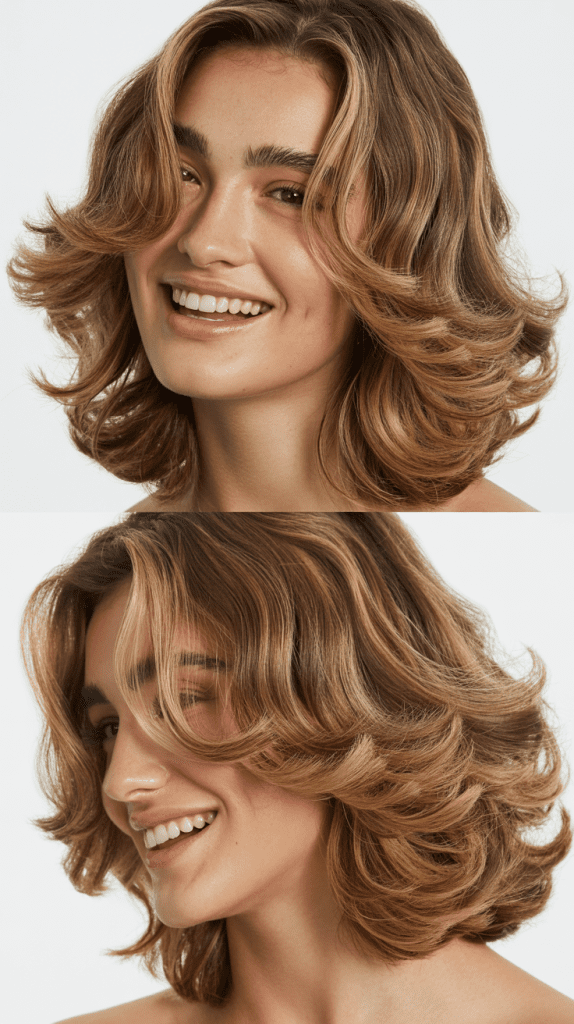
Strategic layering that follows and enhances your face shape can transform your entire appearance, making your features more balanced and your hair more manageable.
Curved layers for thick, wavy hair are cut to echo the contours of your face, creating a customized, flattering frame.
- A skilled stylist will assess your face shape—whether oval, round, square, heart-shaped, or oblong—and cut layers that enhance your best features while minimizing any areas of concern.
- Curved layers typically start shorter at the front, near the cheekbones or jawline, and gradually lengthen as they move toward the back.
- This technique creates a halo effect around the face, with the hair appearing to wrap around and embrace your features rather than falling straight down.
- The layers should follow the natural curve from your ear to your chin, creating a smooth, flowing line rather than choppy, disconnected sections.
- When styled wavy, these face-framing curves become even more pronounced, softening angular features and adding width to narrow faces.
15. Shoulder-Grazing Cut with Invisible Layers
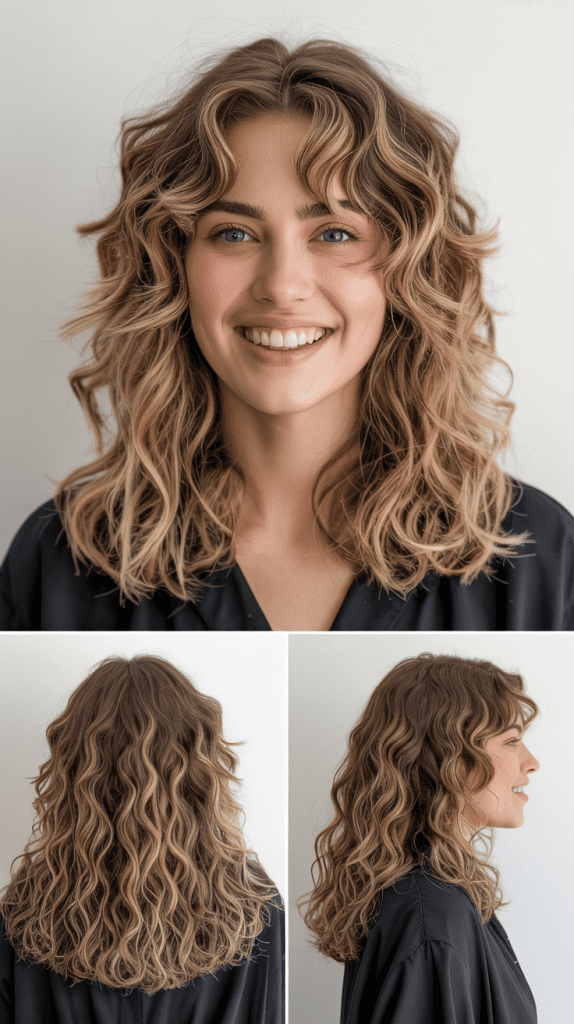
Invisible layers, also called internal layers, are cut within the hair rather than creating obvious, visible steps in length.
This technique is perfect for thick, wavy hair because it removes bulk and weight without dramatically changing the outer silhouette or perimeter of your cut.
- The magic of invisible layers happens inside the hair shaft, where the stylist removes density without affecting the outer shape.
- This approach maintains a more uniform, polished appearance on the exterior while creating substantial movement and reducing the heavy feel of thick hair.
- The technique is particularly beneficial for those who want to keep a blunt or one-length look while still enjoying the benefits of layering.
- Invisible layers prevent the “Christmas tree” or pyramid shape that thick, wavy hair often creates when cut without any internal texturizing.
- Ask your stylist to use a combination of point-cutting and slide-cutting techniques to create these hidden layers that significantly improve how your hair moves and behaves.
16. Textured Midi Cut with Piecey Definition
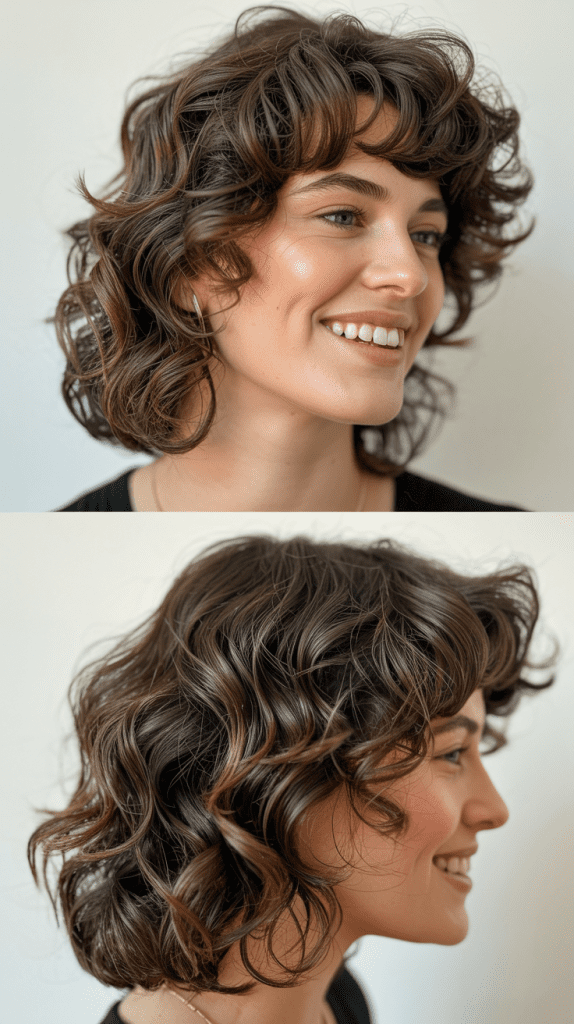
The midi length falls right in that sweet spot between a bob and long hair, typically hitting between the shoulder blades and mid-chest.
When combined with heavy texturizing and piecey definition, this cut becomes a stunning showcase for thick, wavy hair’s natural movement.
- Extensive texturizing throughout the cut removes bulk while creating multiple zones where the hair can bend, curve, and move independently.
- The piecey definition comes from both the cutting technique and the styling products used, creating separation between sections rather than a cohesive, smooth finish.
- This style embraces the “undone” aesthetic that looks effortlessly cool while actually requiring some intentional styling and product application.
- Use a combination of texturizing spray and lightweight pomade, applying them with your fingers to scrunch and separate the hair into distinct pieces.
- The midi length provides enough weight to stretch your waves slightly, preventing them from becoming too tight or springy while still showcasing beautiful natural texture.
17. Disconnected Layers for Modern Edge
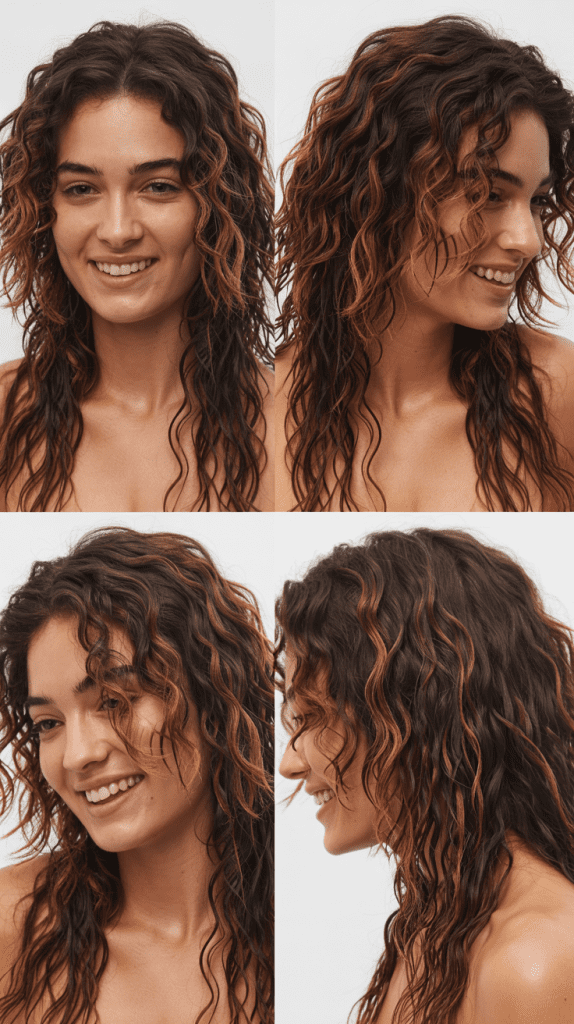
Disconnected layers are intentionally unblended, creating visible gaps or “disconnections” between different sections of hair.
This avant-garde technique adds a modern, edgy vibe to medium-length thick wavy hair while providing excellent bulk removal and movement.
- Unlike traditional layers that blend seamlessly into one another, disconnected layers create intentional steps or breaks in the hair’s length.
- This cutting technique is perfect for very thick hair because the disconnections allow air and light to penetrate the hair, preventing it from appearing too dense or heavy.
- The style looks particularly striking when individual sections are styled differently—some smooth, some wavy, some tightly curled—to emphasize the disconnected nature.
- This cut requires a confident stylist who understands how to create disconnection without making the hair look unintentionally choppy or poorly executed.
- Style with products that enhance texture and separation, such as dry texturizing sprays or matte finishing pastes, to showcase the intentional disconnected layers.
18. Soft Layers with Rounded Perimeter
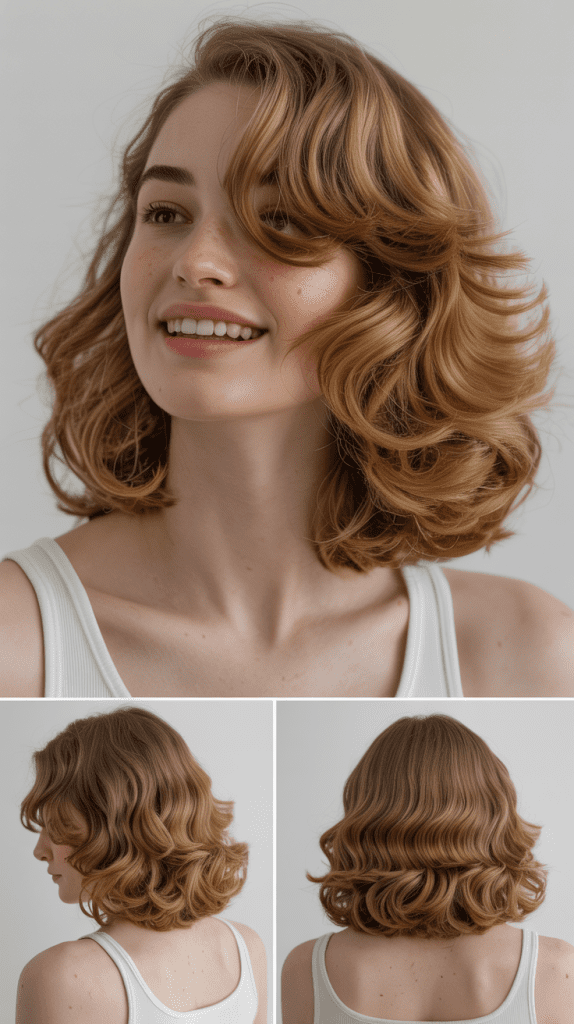
A rounded perimeter creates a softer, more feminine silhouette compared to a blunt or V-shaped cut.
Combined with soft, blended layers throughout, this style is universally flattering and showcases the natural movement of thick, wavy hair without appearing too edgy or trendy.
- The rounded perimeter is created by cutting the hair in a gentle curve, with the center back slightly longer than the sides, creating a semi-circular shape.
- Soft layers blended throughout prevent bulk while maintaining a polished, cohesive appearance rather than a deliberately textured or choppy look.
- This cut is ideal for those who prefer classic, timeless styles over trendy, statement-making cuts.
- The rounded shape flatters all face shapes by creating balance and drawing attention to the center of the face rather than the jawline or neck.
- Style with a large-barrel curling iron or hot rollers to create soft, flowing waves that complement the rounded perimeter and enhance the romantic, feminine aesthetic.
19. Layered Lob with Flipped Ends
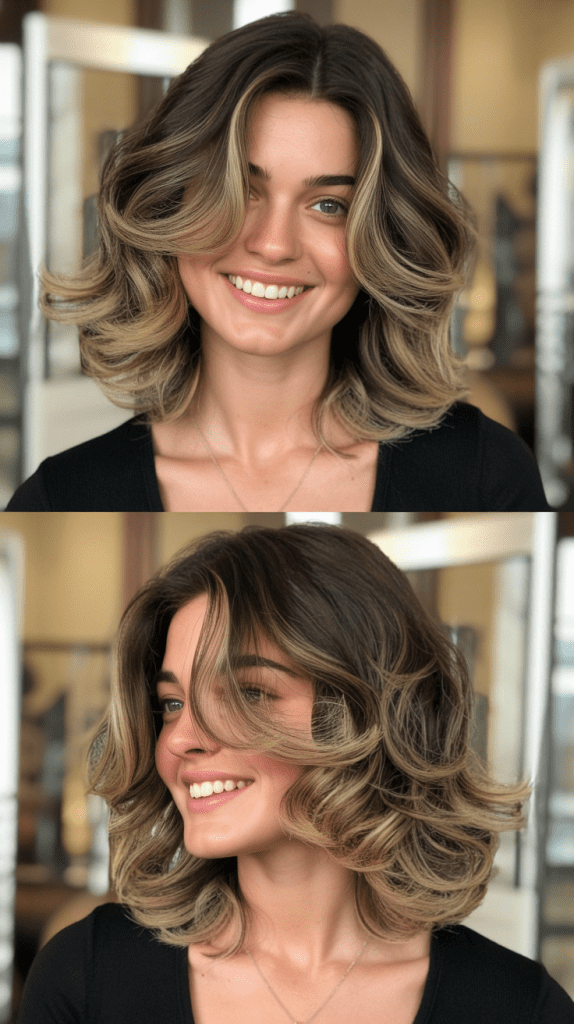
The long bob becomes even more dynamic when the ends are styled to flip outward rather than curl under.
Combined with layers throughout, this playful style adds movement and personality to thick, wavy hair while remaining sophisticated enough for professional settings.
- The outward flip creates a subtle retro vibe reminiscent of 1960s styles but updated for contemporary sensibilities.
- Layers cut throughout the lob create the foundation for this style by removing weight that would prevent the ends from lifting and flipping outward.
- This style works particularly well with natural waves because the hair’s tendency to bend and curve naturally contributes to the flipped-out effect.
- Create the flip by wrapping sections of hair around a medium-barrel curling iron with the ends directed away from your face, or use a round brush while blow-drying.
- The flipped ends add volume at the bottom of the style, which balances the density of thick hair and prevents it from appearing too heavy or weighed down.
20. Face-Framing Layers with Longer Back
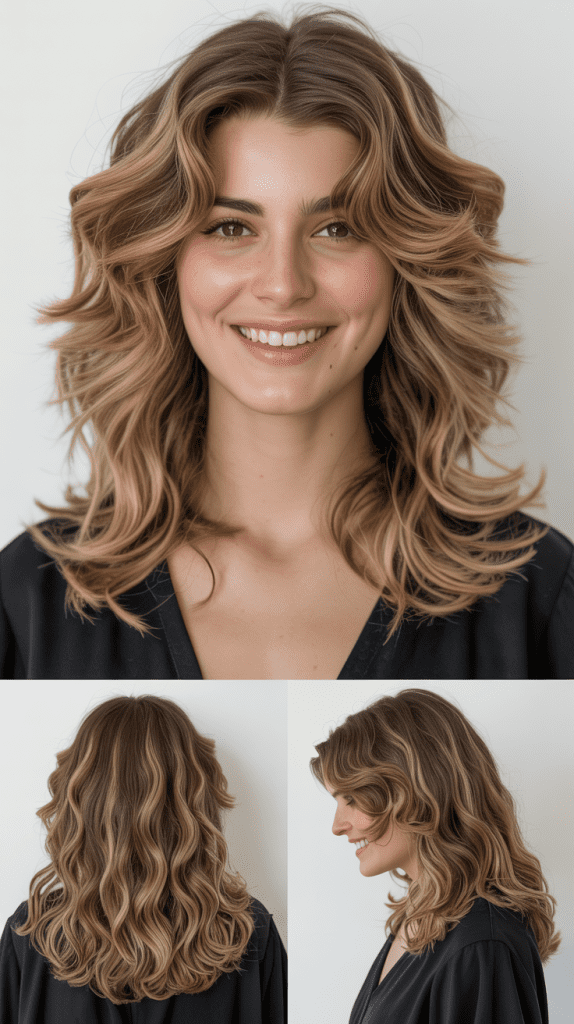
This strategic cutting approach focuses attention on the face with shorter layers around the perimeter while maintaining length and weight in the back.
It’s an excellent compromise for those who want the face-flattering effects of layers without committing to an overall short style.
- The face-framing layers typically start around the cheekbones or jawline and can be as short as you’re comfortable with, creating a customized frame for your features.
- The back remains substantially longer—often three to six inches longer than the front layers—maintaining the feeling of having longer hair while enjoying the benefits of layers around the face.
- This approach removes bulk where it’s most noticeable (around the face) while keeping weight in the back that helps control thick, wavy hair.
- The contrast between the shorter face-framing pieces and the longer back creates visual interest and dimension that prevents the style from appearing one-dimensional.
- Style the face-framing layers with a small round brush or curling iron to create a gentle curve toward or away from the face, depending on your preference and face shape.
21. Shaggy Layers with Bangs
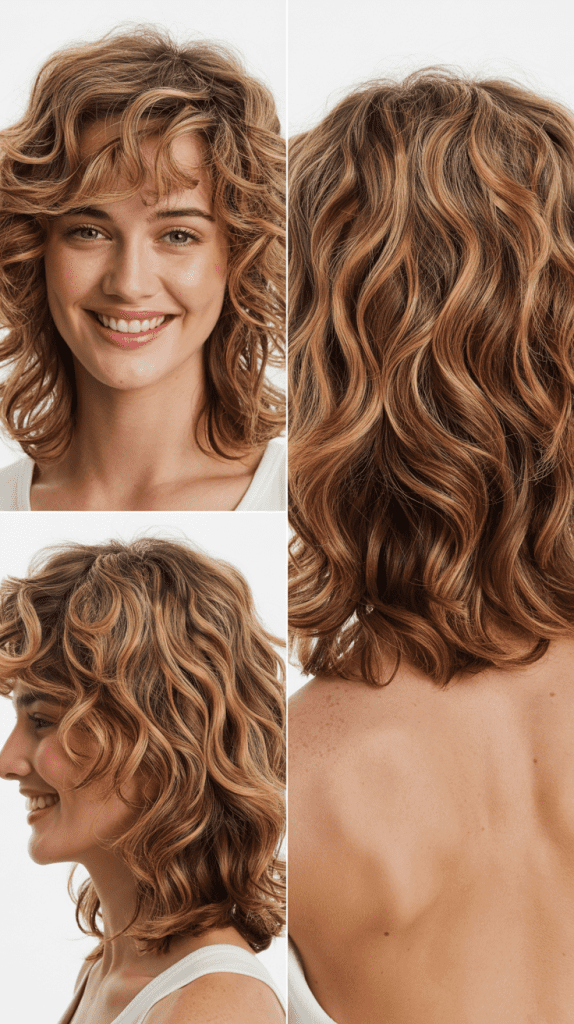
Combining shaggy layers throughout with a fringe creates a cohesive, textured look that’s both bohemian and chic.
On thick, wavy hair, this combination provides maximum movement and a youthful, energetic vibe that’s perfect for those who love a more casual, undone aesthetic.
- The shaggy layers throughout remove bulk while creating multiple lengths that move independently, giving the hair a naturally tousled appearance.
- Bangs add to the shaggy aesthetic and can be cut in various styles—wispy, curtain, or choppy—depending on your face shape and personal preference.
- This combination works beautifully with natural waves because the texture enhances the deliberately undone quality of the shag cut.
- The key to this style is embracing imperfection—it should look lived-in and slightly messy rather than overly polished or carefully styled.
- Use texturizing products like sea salt spray or dry shampoo to enhance the piece-y, separated quality that defines a modern shag with bangs.
22. Graduated Layers Building from Short to Long
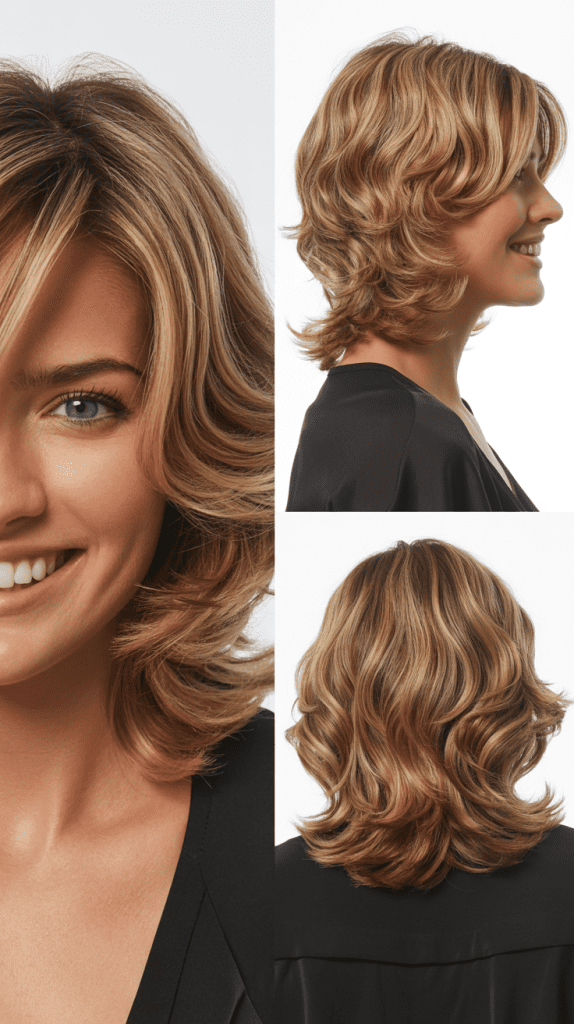
Graduated layering creates a smooth, flowing transition from shorter layers at the top to longer layers at the bottom, building volume at the crown while maintaining length at the perimeter.
This technique is ideal for thick, wavy hair that needs lift at the roots and movement throughout.
- The graduation prevents thick hair from appearing flat or heavy at the top by creating shorter layers that add lift and volume at the crown.
- Each successive layer is slightly longer than the one above it, creating a stacked or terraced effect that builds fullness and body.
- This cutting technique works with gravity rather than against it, allowing the natural weight of your hair to create a flattering, rounded silhouette.
- The graduated structure encourages your natural waves to form at different lengths, creating dimensional, multi-toned wave patterns throughout the style.
- This approach requires regular maintenance every eight to ten weeks to preserve the graduated structure and prevent it from growing out into a shapeless, bulky mass.
23. Undone Waves with Varied Layer Lengths
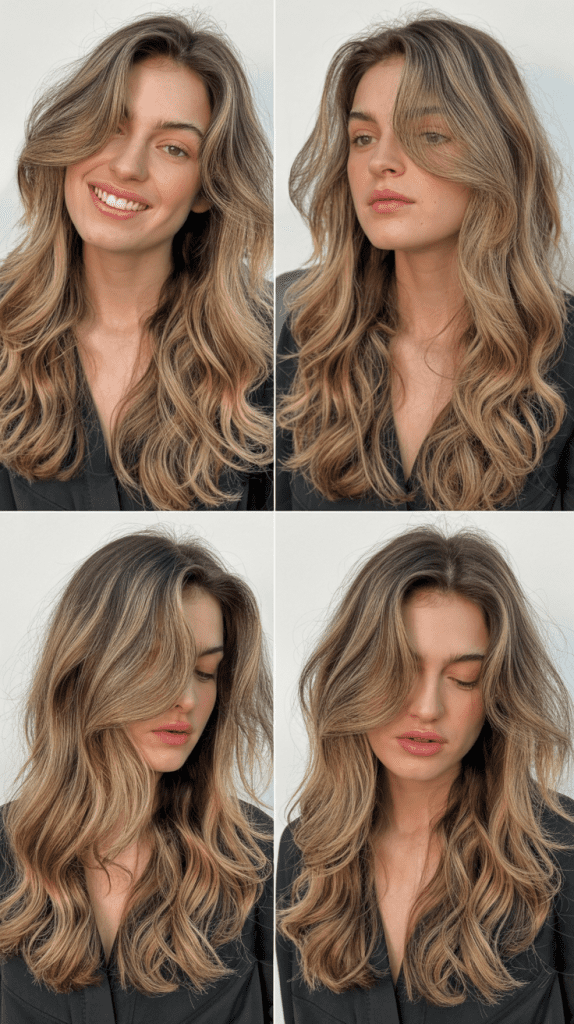
The intentionally imperfect, “undone” wave trend celebrates natural texture and randomness.
When paired with layers of varied lengths throughout thick, wavy hair, this style creates a beautifully chaotic look that appears effortless while showcasing incredible movement and dimension.
- Varied layer lengths mean the stylist cuts layers at multiple different lengths rather than creating uniform, evenly-spaced layers throughout.
- This randomness creates waves that form at different points along the hair shaft, preventing the uniform, overly-styled appearance of traditional layered cuts.
- The undone quality comes from both the cutting technique and the styling approach—products should enhance texture without creating control or definition.
- Apply a lightweight curl cream or texturizing spray to damp hair and either air-dry or use a diffuser without touching or scrunching the hair much during the drying process.
- The result should look like you woke up with naturally gorgeous waves—slightly messy, completely touchable, and full of personality and movement.
24. Collarbone Cut with Razored Ends
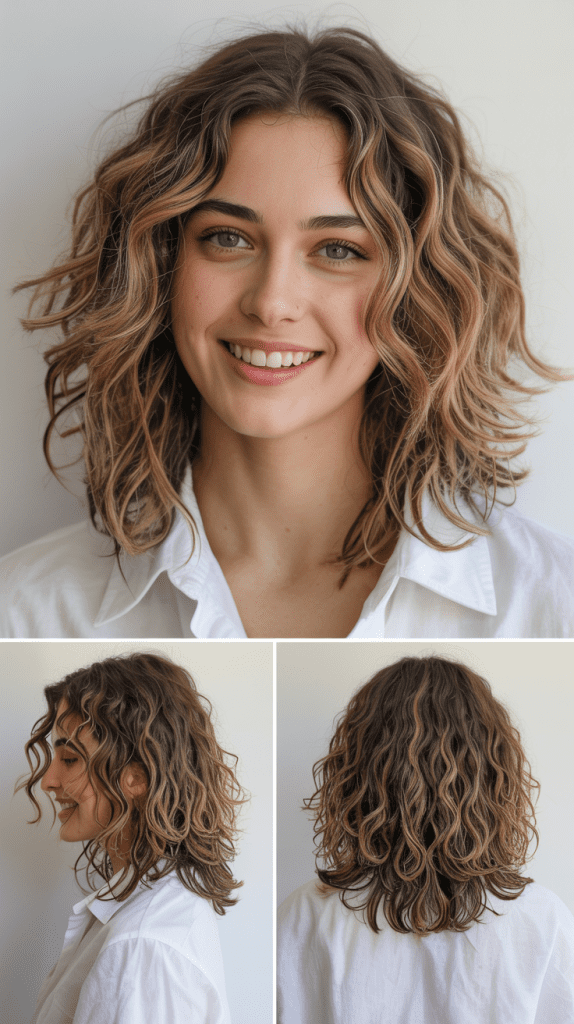
The collarbone length is universally flattering and incredibly practical for thick, wavy hair.
When the ends are finished with a razor rather than scissors, they become soft, feathered, and light, creating beautiful movement and preventing the blunt, heavy appearance that can plague thick hair.
- The collarbone length hits at a flattering point that elongates the neck while still providing enough length to pull back when desired.
- Razor-cutting creates soft, tapered ends that diffuse light beautifully and move more freely than blunt-cut ends.
- This technique is particularly effective on thick hair because it removes weight and bulk specifically from the ends, where heaviness is most noticeable.
- The razored ends create a slightly undone, lived-in appearance even when the hair is freshly cut and styled.
- This cut requires a stylist experienced with razor techniques, as improper razoring can create frizz or damage, especially on dry or processed hair.
25. Stacked Bob with Wave-Enhancing Layers
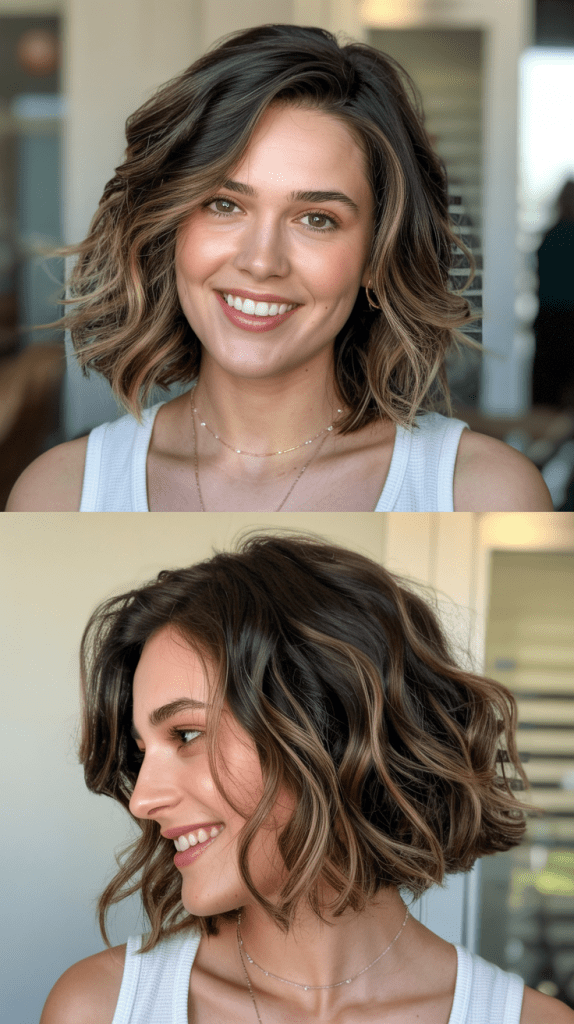
A stacked bob features shorter layers in the back that create volume and lift, with longer pieces in the front for face-framing and styling versatility.
When designed specifically to enhance natural waves on thick hair, this cut becomes a perfect balance of structure and movement.
- The stacking in the back creates a rounded, voluminous silhouette that prevents the flat, heavy appearance thick hair can have when cut without layering.
- Wave-enhancing layers are strategically placed where your natural wave pattern is strongest, working with your hair’s tendency rather than fighting against it.
- The front pieces typically fall between chin and shoulder length, providing face-framing softness and the option to style them smooth or wavy.
- This cut significantly reduces styling time because the layers and structure naturally encourage your waves to form in flattering patterns.
- Use a curl-enhancing cream and diffuse with your head tilted forward to maximize the volume created by the stacked back while defining the waves throughout.
26. Layered Midi with Side-Swept Volume
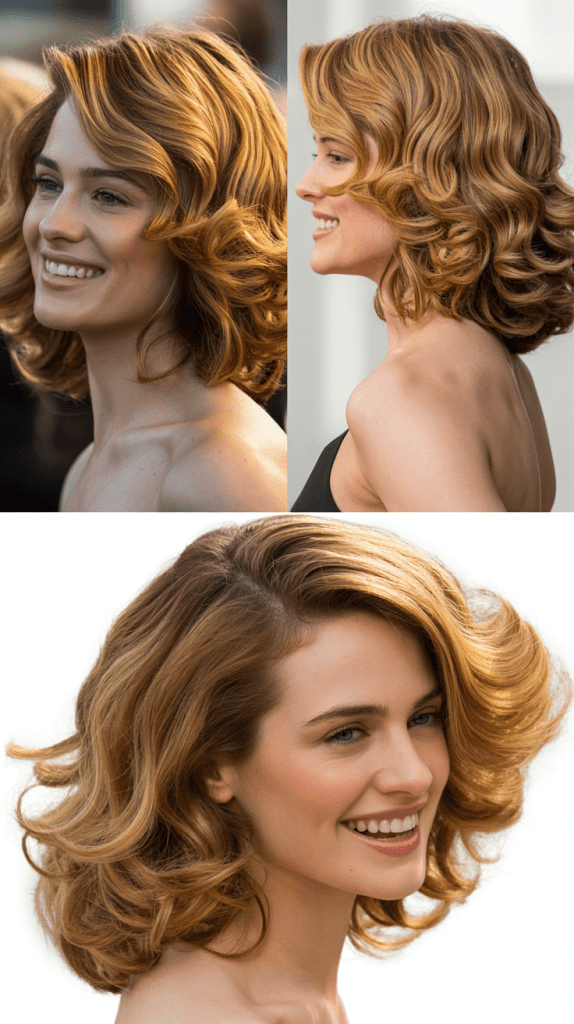
The midi length combined with strategic layering and a side-swept styling approach creates a glamorous, red-carpet-worthy look on thick, wavy hair.
This style emphasizes volume on one side while showcasing the hair’s length and movement.
- Creating a deep side part and sweeping the hair dramatically to one side instantly adds sophistication and old-Hollywood glamour to your look.
- Layers throughout the midi-length hair create the movement necessary for the swept style to flow and cascade rather than sitting flat and heavy.
- This styling works particularly well for special occasions when you want to make an impression without putting your hair fully up.
- The volume on the heavier side can be enhanced with strategic blow-drying using a large round brush, focusing on creating lift at the roots.
- Secure the swept hair with bobby pins behind the ear on the lighter side, allowing the heavy side to showcase your waves and the dimension created by your layers.
27. Choppy Midi Cut with Piecey Texture
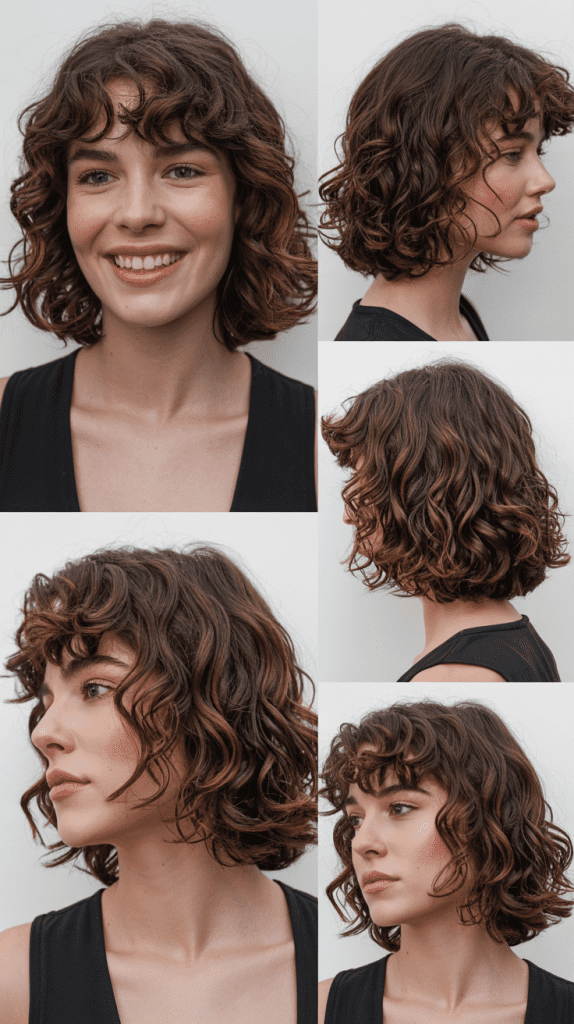
A choppy midi cut embraces intentional unevenness and texture, creating a modern, fashion-forward style that’s perfect for thick, wavy hair.
The piecey texture adds dimension and prevents the hair from appearing too solid or heavy despite its density.
- The choppy cutting technique involves using varying angles and techniques to create uneven, textured ends throughout the midi-length hair.
- This approach removes tremendous bulk from thick hair while maintaining fullness and body where you want it most.
- The piecey texture is enhanced with styling products that separate and define individual sections rather than smoothing everything together.
- This style looks best when it has a slightly undone, lived-in quality rather than appearing freshly styled and perfect.
- Apply a small amount of texturizing paste or pomade to dry hair, working it through with your fingers to create separation and emphasize the choppy, piecey nature of the cut.
28. Long Layered Lob with Center Part
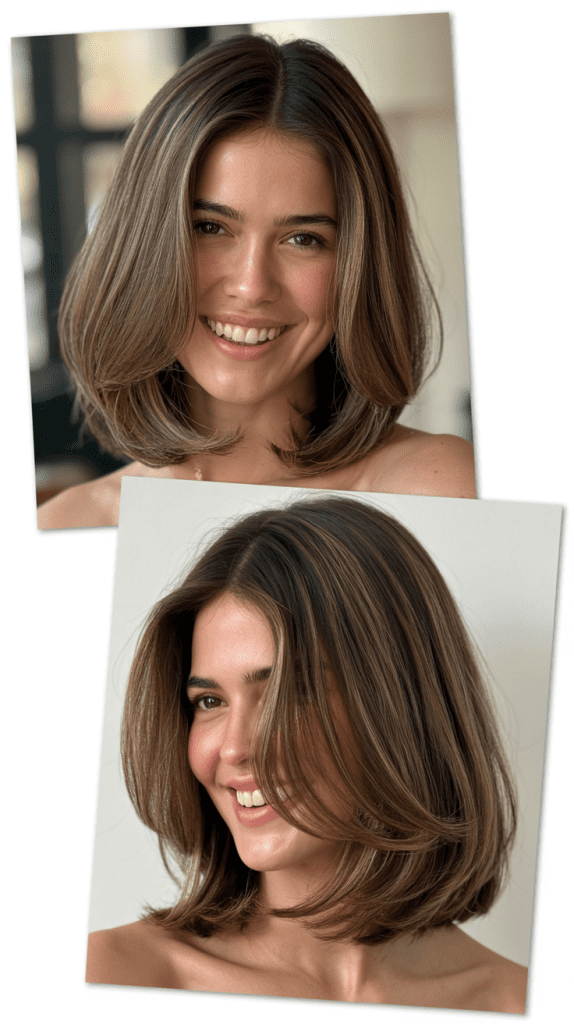
The long bob becomes even more versatile when paired with long, flowing layers and styled with a center part.
This combination creates a balanced, symmetrical look that flatters most face shapes while showcasing the natural movement of thick, wavy hair.
- A center part creates symmetry and draws attention to the center of the face, making it ideal for those with balanced, oval, or heart-shaped faces.
- Long layers that start around the chin or lower maintain substantial length while removing bulk and adding movement throughout the lob.
- This style has a modern, minimalist aesthetic that looks polished and intentional without being overly styled or fussy.
- The lob length—typically falling between the chin and collarbone—is short enough to feel fresh and manageable while long enough to showcase your waves.
- Apply a lightweight curl-enhancing cream to damp hair and either air-dry or use a diffuser to define your natural wave pattern while maintaining the clean center part.
29. Tapered Layers with Outward Movement
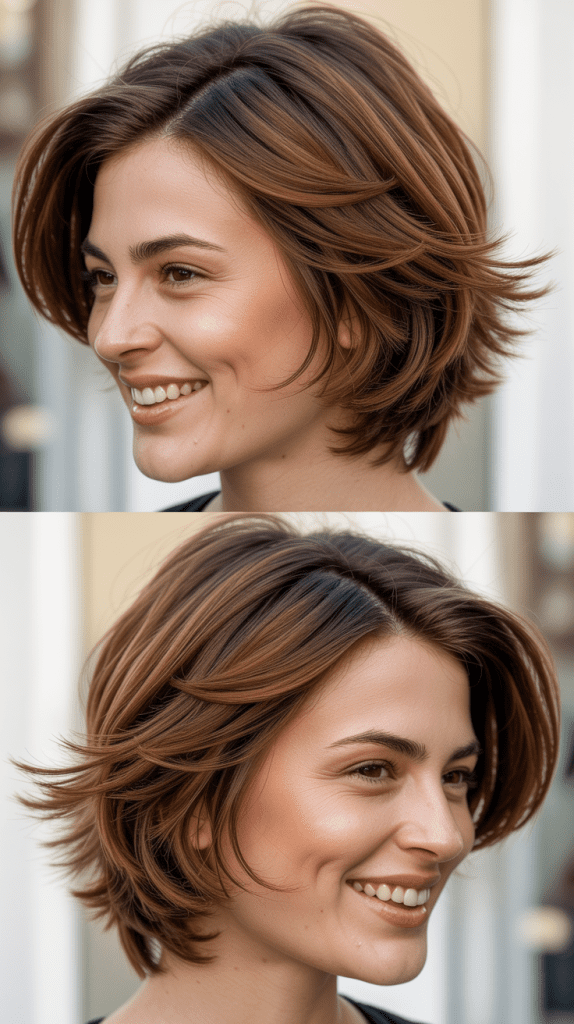
Tapered layers gradually thin out toward the ends, creating a feathered effect that encourages the hair to move outward rather than hanging straight down.
On thick, wavy hair at medium length, this creates a voluminous, full-bodied style with impressive movement in all directions.
- The tapering technique removes weight from the ends while maintaining density at the mid-lengths, creating the perfect balance for thick hair.
- This cutting approach naturally encourages the hair to flip and move outward, creating a fuller, more voluminous appearance at the perimeter.
- The outward movement adds width to the style, which can be particularly flattering for those with longer, narrower face shapes.
- The tapered layers work harmoniously with natural waves, as the reduced weight at the ends allows the waves to form more freely and lift away from the head.
- Style with a round brush while blow-drying, directing the ends outward with the brush to emphasize and exaggerate the natural outward movement created by the tapered layers.
30. Dimensional Layers with Varied Lengths
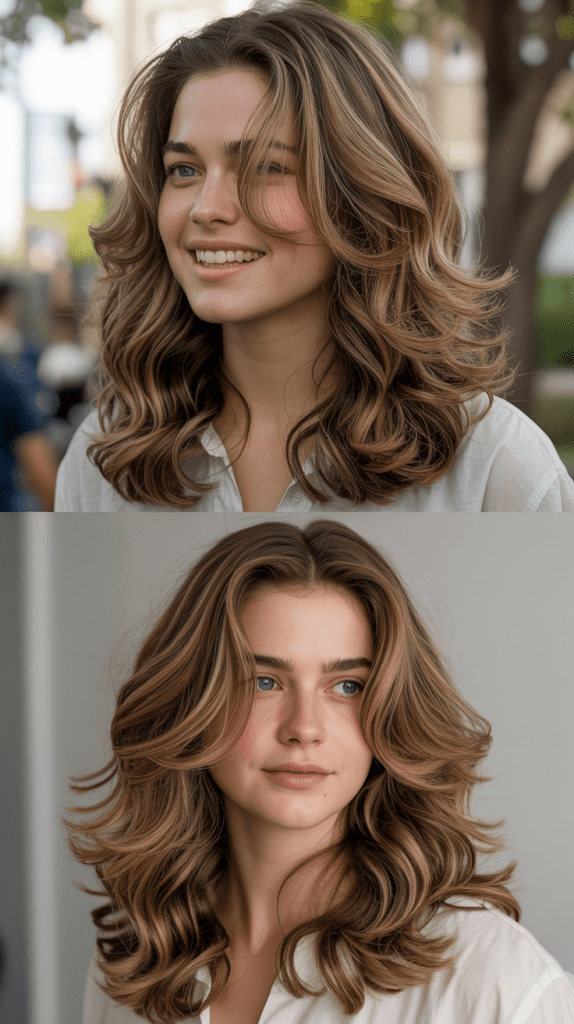
Creating dimension through layering involves cutting sections at dramatically different lengths rather than subtle, blended transitions.
This approach on thick, wavy hair creates visible depth and movement that prevents the hair from appearing flat or one-dimensional despite its density.
- Dimensional layers create shadows and highlights within the hair as shorter sections fall over longer ones, adding visual interest and depth.
- The varied lengths mean waves form at multiple different points along the hair shaft, creating a multi-textured appearance that’s far more interesting than uniform waves.
- This cutting technique is ideal for very thick hair because it removes bulk at multiple levels rather than just at the ends or just at the top.
- The dimensional quality becomes even more apparent when the hair is colored with techniques like balayage or highlights that emphasize the different layer lengths.
- These layers require minimal styling to look good because the dimension is built into the cut itself—simply enhance your natural waves with a bit of product and the dimension shines through.
31. Shoulder-Length Cut with Graduated Front Pieces
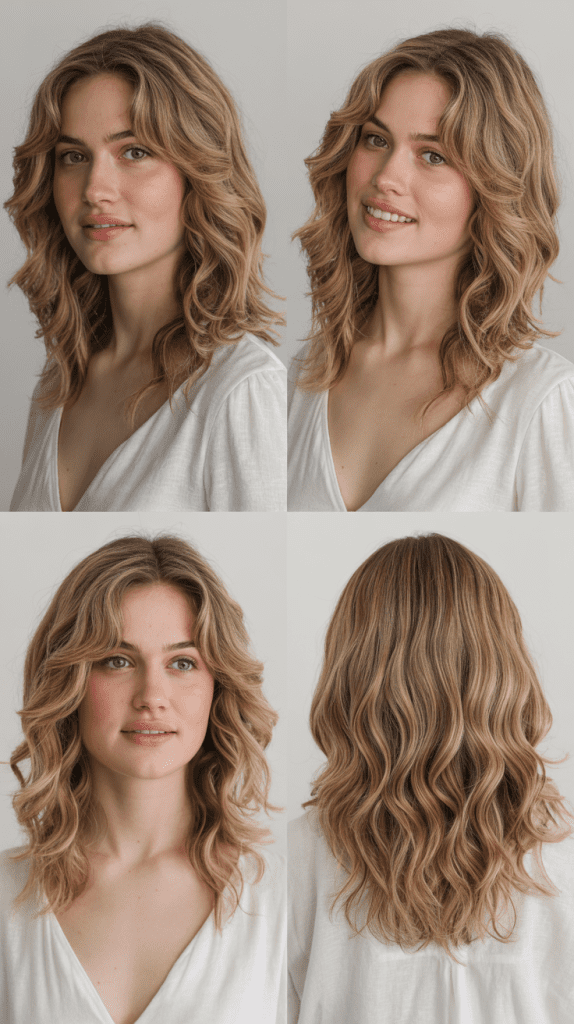
This strategic cut maintains a consistent length at the shoulder in the back while the front pieces gradually lengthen from shorter layers near the face to the shoulder-length perimeter.
This graduation creates face-framing movement while keeping the back manageable and full of body.
- The graduated front pieces create a natural, flowing transition from shorter face-framing layers to the longer shoulder-length back.
- This technique draws attention to the face while maintaining length throughout, giving you the best of both layered and one-length cuts.
- The graduation removes bulk specifically where it frames your face, preventing the heavy, overwhelming appearance thick hair can create around the face.
- The shoulder-length back provides enough weight to stretch your waves slightly, creating a more relaxed wave pattern that’s easier to manage than tighter curls.
- Style the front pieces with a curling iron or round brush to emphasize the graduation and create face-framing curves that highlight your features.
32. Textured Layers with Movable Pieces
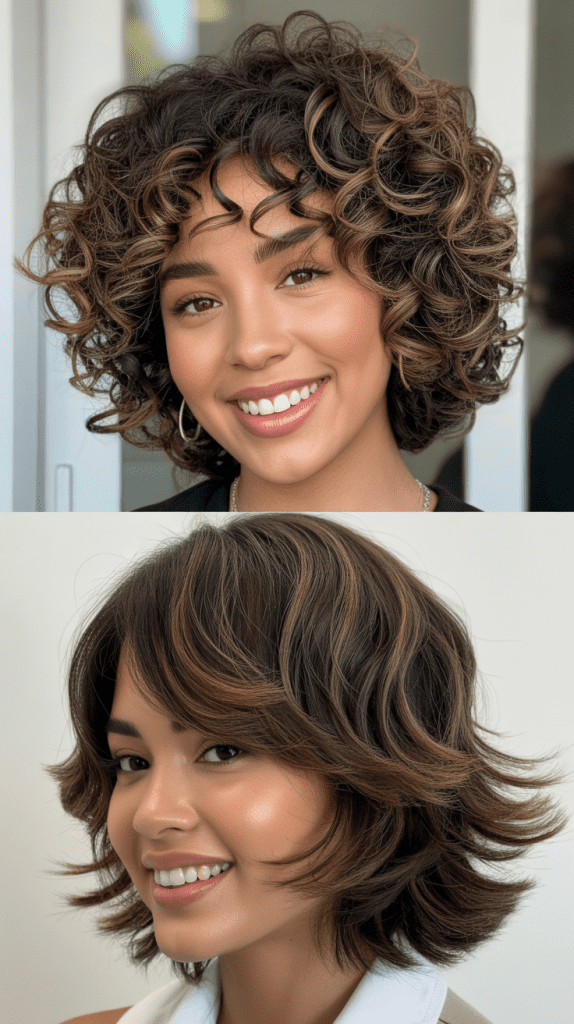
Highly textured layers cut throughout thick, wavy hair create individual sections that can move independently, resulting in a dynamic, ever-changing style that looks different from every angle.
This approach maximizes movement and prevents the static, unchanging appearance that can plague thick hair.
- Each textured section is cut to move separately rather than as part of a cohesive whole, creating a deliberately fragmented, piece-y appearance.
- This cutting style removes significant bulk while creating maximum movement, making it ideal for very thick, heavy hair that tends to sit flat.
- The movable pieces respond to even slight movement—turning your head, walking, or a gentle breeze—creating a style that’s constantly shifting and never static.
- This approach works beautifully with natural waves because each movable piece can form its own individual wave pattern rather than being forced into uniform waves.
- Use lightweight products that enhance movement rather than control it—flexible-hold sprays, light mousses, or curl creams that define without weighing down the textured pieces.
33. Rounded Layers with Inward Movement
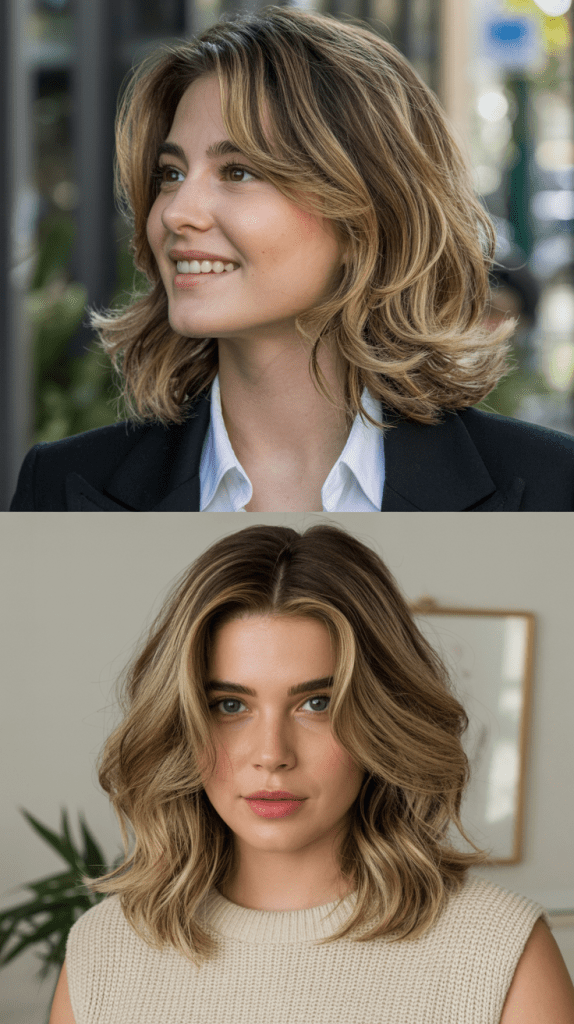
While outward-flipping styles have their place, inward-moving layers create a more classic, polished appearance.
Rounded layers that encourage the hair to curve gently inward toward the neck create an elegant silhouette on thick, wavy hair at medium length.
- Rounded layers that curve inward create a more conservative, professional appearance compared to outward-flipping or piece-y textured styles.
- This cutting and styling approach works with your hair’s natural tendency to bend and curve, simply directing that movement inward rather than outward.
- The inward movement creates a “hugging” effect around the neck and shoulders that’s feminine and flattering for most face shapes.
- This style is achieved through both the cutting technique and the styling method—using a round brush while blow-drying and directing the hair under and inward.
- The rounded layers create a polished, put-together appearance that’s appropriate for formal occasions and professional settings while still showcasing your natural waves.
34. Undone Shag with Maximum Texture
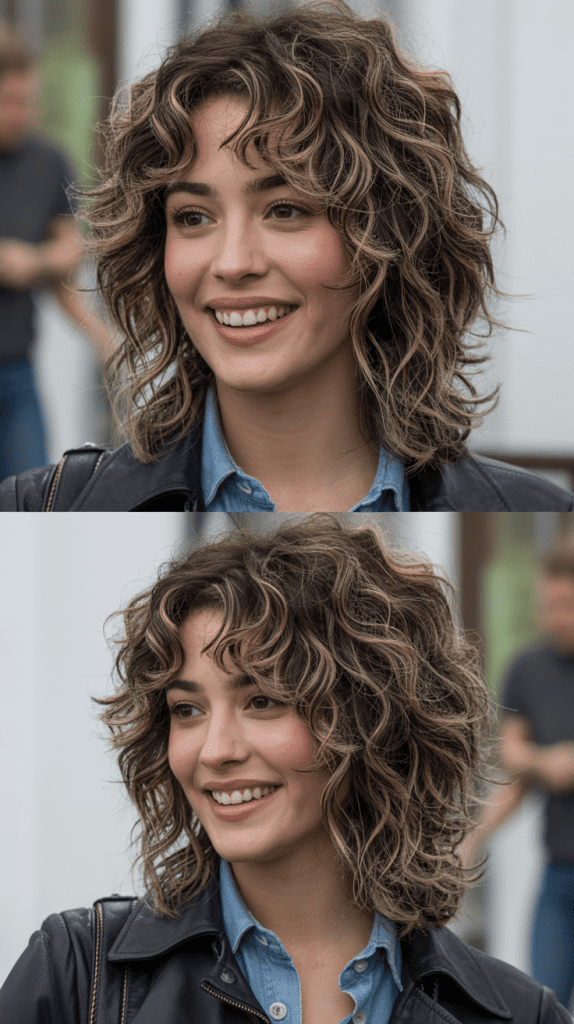
The undone shag celebrates disorder and texture, making it perfect for thick, wavy hair that naturally wants to do its own thing.
This style features heavy texturizing, varying lengths throughout, and an intentionally messy aesthetic that looks effortlessly cool.
- The undone shag is characterized by its lack of polish—it should look like you styled it quickly with your hands rather than carefully with brushes and products.
- Maximum texturizing removes substantial bulk from thick hair while creating the choppy, separated pieces that define the shag cut.
- This style works with all wave patterns and curl types because it celebrates natural texture rather than trying to control or change it.
- The key to achieving the undone look is using minimal product and allowing your hair to air-dry or dry naturally without excessive manipulation.
- This cut typically features shorter layers throughout, with the shortest pieces often around the crown and gradually lengthening toward the perimeter, creating a shaggy, layered silhouette.
35. Layered Collarbone Cut with Soft Waves
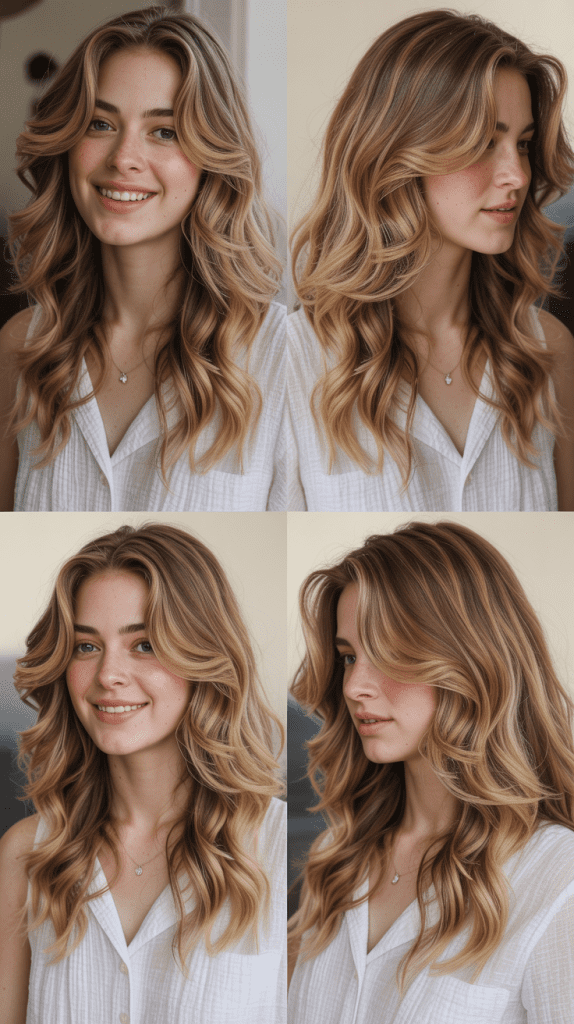
The collarbone-length cut with soft, flowing layers creates a romantic, feminine look that’s incredibly versatile.
When styled with gentle waves throughout, this combination showcases the natural beauty of thick, wavy hair while keeping it manageable and polished.
- Layers cut throughout the collarbone-length hair remove bulk while maintaining fullness and body, creating the perfect canvas for soft, feminine waves.
- The collarbone length is particularly flattering because it hits at a point that elongates the neck while framing the face and shoulders beautifully.
- Soft waves—as opposed to tight curls or beachy waves—create a more romantic, formal appearance suitable for special occasions and professional settings.
- Create these waves using a large-barrel curling iron, hot rollers, or by braiding damp hair and allowing it to air-dry for natural, heatless waves.
- The combination of layers and soft waves creates impressive movement throughout the hair while maintaining a polished, put-together appearance that never looks messy or unkempt.
36. Piece-y Layers with Defined Movement
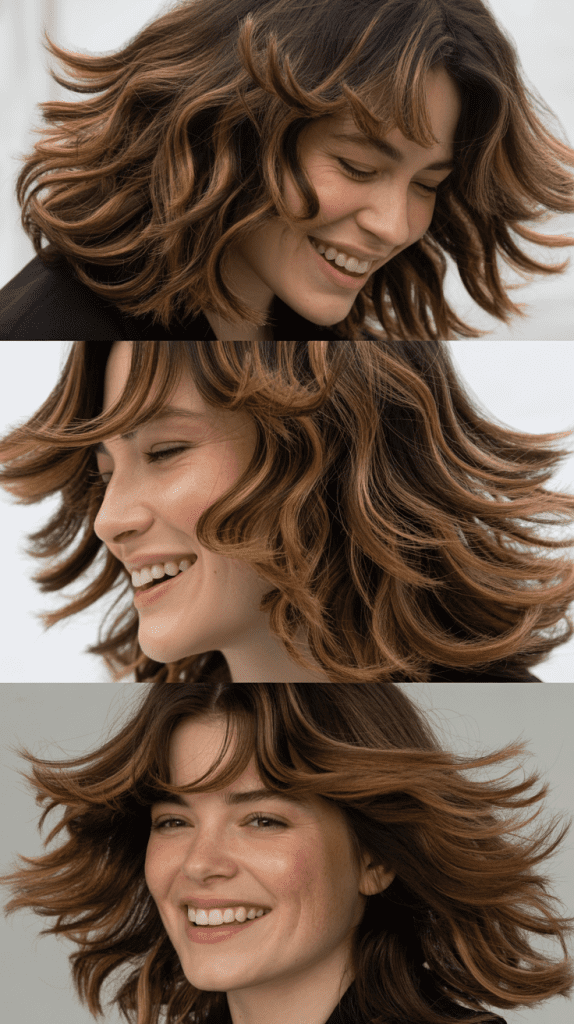
The final style celebrates individual sections of hair rather than treating it as one cohesive mass.
Piece-y layers with defined movement are cut to create separation between sections, allowing each piece to move and wave independently for maximum dimension and visual interest.
- Each piece-y section is cut and textured to move separately, creating a fragmented appearance that’s dynamic and constantly changing.
- This approach is ideal for thick hair because it breaks up the bulk and prevents the solid, heavy appearance that one-length or minimally layered thick hair can have.
- The defined movement comes from both the cutting technique and the styling products used—texturizing sprays, pomades, and waxes help separate and define individual pieces.
- This style requires active styling rather than passive air-drying—you need to work product through with your fingers, scrunching and separating to create the piece-y definition.
- The result is a modern, fashion-forward look that showcases your thick, wavy hair’s natural texture while preventing it from appearing heavy, flat, or uninteresting.
Conclusion
Whether you prefer the effortless appeal of beachy waves, the polished sophistication of rounded layers, or the edgy drama of asymmetrical cuts, these 36 flattering medium hairstyles for thick wavy hair with movement offer something for every personal style and occasion.
The key to success with thick, wavy hair lies in finding the right combination of cutting techniques that remove bulk where needed while preserving your hair’s natural body and enhancing its movement.
Work with a skilled stylist who understands the unique challenges and opportunities that thick, wavy hair presents, communicate clearly about your lifestyle and styling preferences, and don’t be afraid to try something new when you’re ready for change.
Your thick, wavy hair is an incredible asset that deserves a cut that celebrates its natural beauty while making your daily routine easier and your confidence soar—and with this comprehensive guide, you now have the knowledge to achieve exactly that.
