

Finding the perfect haircut when you have fine hair over 40 can feel like searching for a needle in a haystack, but the right cut can transform limp, lifeless strands into a bouncy, voluminous masterpiece.
As we age, our hair naturally becomes thinner and loses some of its density, making strategic styling choices more important than ever.
This comprehensive guide to 34 Volume-Boosting Haircuts for Women Over 40 with Fine Hair will walk you through the most flattering, modern cuts that create the illusion of thickness while complementing your face shape and lifestyle.
From short pixies that defy gravity to layered lobs that add movement and body, each haircut has been carefully selected to maximize volume and minimize styling time.
You’ll discover expert tips on how layers, angles, and lengths work together to lift your roots and create fullness where you need it most.
Whether you prefer wash-and-go simplicity or enjoy styling your hair each morning, these haircuts offer practical solutions that make fine hair look luxuriously thick and healthy.
1. Textured Pixie Cut

The textured pixie cut stands as one of the most liberating and volume-enhancing choices for women over 40 with fine hair, offering a youthful, modern aesthetic that requires minimal maintenance.
This cut removes weight from your hair, allowing each strand to stand up and create natural lift at the crown.
The strategic layering throughout creates a piecey, dimensional look that makes hair appear significantly thicker than it actually is.
- The textured pixie works by cutting hair to varying lengths throughout the head, typically keeping it slightly longer on top (2-4 inches) while shorter on the sides and back.
- Razor cutting or point cutting techniques create texture and separation between strands, preventing fine hair from lying flat against the scalp.
- This style particularly benefits women with oval, heart-shaped, or oblong faces, as the volume on top balances facial proportions beautifully.
- Styling takes just minutes with a small amount of volumizing mousse worked through damp hair and blown dry with fingers for a tousled effect.
- Regular trims every 4-6 weeks maintain the shape and prevent the cut from looking grown-out or losing its volume-boosting properties.
- The pixie cut can be customized with longer bangs, side-swept fringe, or an asymmetrical cut to suit individual preferences and face shapes.
2. Choppy Bob with Blunt Ends
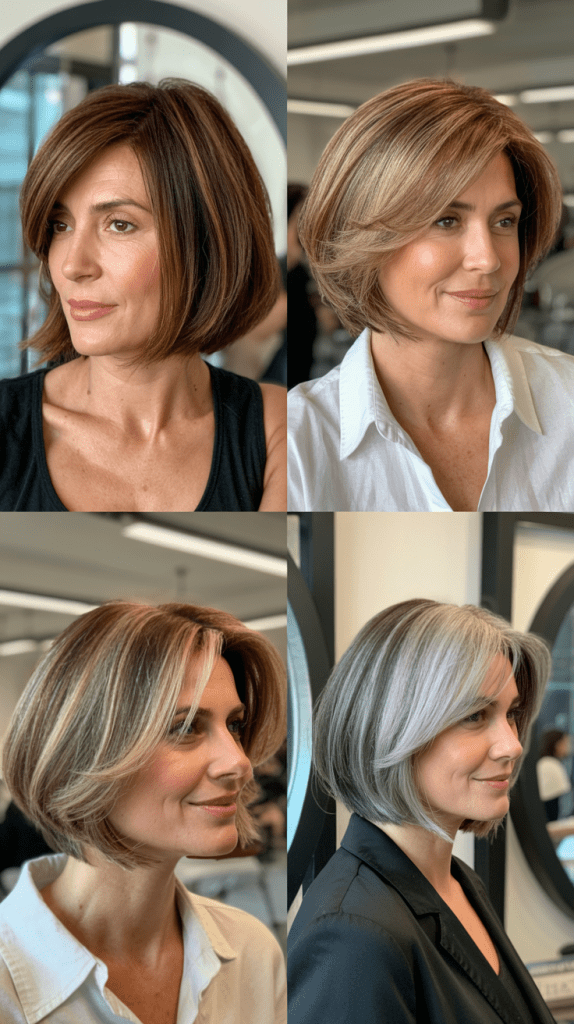
A choppy bob with blunt ends creates an optical illusion of thickness through its straight, solid baseline that makes fine hair appear denser and more substantial.
The combination of internal choppy layers with a blunt perimeter delivers the best of both worlds: movement and weight.
This versatile cut works exceptionally well for women seeking a polished yet edgy look that doesn’t require extensive styling expertise.
- The blunt baseline creates a visual wall of hair that tricks the eye into perceiving more density than actually exists.
- Internal choppy layers add movement and prevent the bob from looking boxy or too heavy, which can actually flatten fine hair.
- This cut typically falls between chin and shoulder length, with the exact placement depending on face shape and neck length.
- Styling involves blow-drying with a round brush to create slight bend at the ends, or using a flat iron for a sleeker, more sophisticated finish.
- The choppy texture works particularly well when enhanced with highlights or balayage, as the color dimension adds to the perception of fullness.
- This haircut suits most face shapes but is especially flattering on square and round faces, as the angles create definition.
3. Layered Lob (Long Bob)
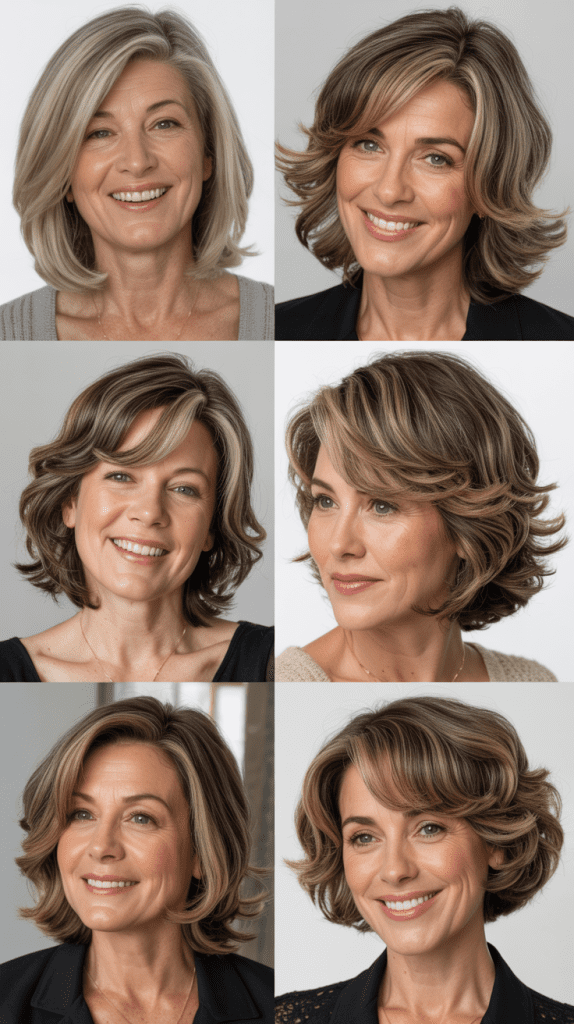
The layered lob has dominated hairstyle trends for good reason—it delivers maximum volume and versatility while maintaining enough length for various styling options.
For women over 40 with fine hair, the lob provides the perfect canvas for layers that create lift without sacrificing the security of having hair long enough to pull back when needed.
- Strategic layering begins at the jawline or below, creating cascading levels that build volume progressively from top to bottom.
- The length typically falls between the collarbone and shoulders, providing enough weight to prevent frizz while allowing maximum movement.
- Long layers around the face frame features beautifully and can be styled forward or tucked behind ears for different looks throughout the week.
- This cut air-dries beautifully when natural wave patterns are present, or can be styled sleek with a blow dryer and round brush.
- Adding soft waves or loose curls with a curling iron or wand multiplies the volume effect and creates a romantic, feminine appearance.
- The lob grows out gracefully, making it an economical choice for women who can’t visit the salon frequently.
- Regular toning treatments help maintain vibrancy in colored hair, which enhances the dimensional effect of the layers.
4. Shaggy Layers with Curtain Bangs

The modern shag haircut has evolved from its 1970s origins into a sophisticated, volume-boosting powerhouse that specifically addresses the challenges of fine, aging hair.
When combined with curtain bangs, this cut creates a youthful, effortless vibe while adding crucial volume at the crown and around the face.
The disconnected layers prevent fine hair from clumping together, allowing each section to move independently and create the appearance of fullness.
- Multiple layers cut throughout the hair at varying lengths create maximum movement and prevent the flat appearance common with fine hair.
- Curtain bangs part down the middle and sweep to either side, framing the face while adding volume at the front hairline where thinning often occurs first.
- The shag typically includes shorter layers at the crown (creating lift) that gradually blend into longer lengths toward the ends.
- This cut works beautifully with natural texture and actually looks better with a slightly undone, lived-in appearance rather than perfectly styled.
- Styling products like sea salt spray or texturizing cream enhance the piecey, separated look that makes fine hair appear thicker.
- The versatility of the shag allows it to be worn at various lengths from chin to past the shoulders, adapting to personal preferences.
- Regular deep conditioning treatments are important to maintain hair health, as the layers can make ends more prone to dryness.
5. Asymmetrical Bob

An asymmetrical bob makes a bold statement while cleverly disguising the challenges of fine hair through its angular lines and dramatic proportions.
This cut features one side longer than the other, creating visual interest and volume through its unconventional shape.
The asymmetry draws attention to the cut itself rather than the hair’s texture, making it an intelligent choice for women seeking a distinctive, modern look.
- The longer side typically falls anywhere from chin to shoulder length, while the shorter side ranges from ear to jawline level.
- Graduated layers on the shorter side create stacked volume that lifts away from the head, adding height and dimension.
- The dramatic angle creates an optical illusion of thickness as the eye follows the diagonal line rather than focusing on individual hair density.
- This cut particularly flatters women with strong facial features or those wanting to balance an asymmetrical face shape.
- Styling the longer side with waves or curls adds even more volume and creates a glamorous, red-carpet-worthy appearance.
- The asymmetrical bob requires commitment to regular trims every 4-6 weeks to maintain the precise angle and prevent uneven growth from diminishing the effect.
- Parting can be adjusted to the shorter or longer side depending on face shape and which features you want to emphasize.
6. Feathered Crown Layers
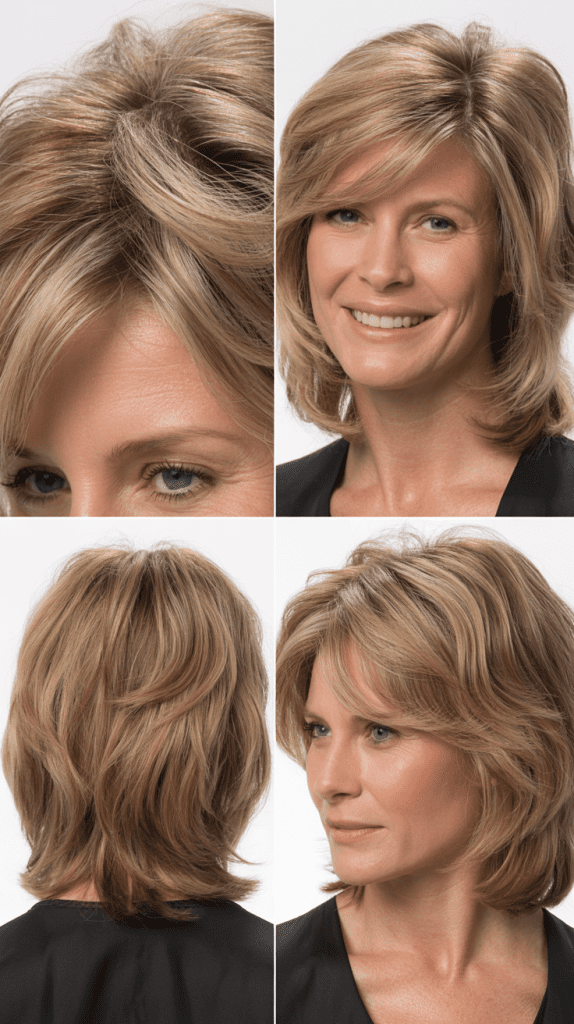
Feathered crown layers specifically target the area where fine hair most commonly falls flat—the top of the head—by incorporating short, graduated layers that create lift and movement at the roots.
This technique has been updated from the iconic Farrah Fawcett style into a modern, wearable cut that adds crucial volume where mature women need it most.
- Shorter layers at the crown area are cut at angles that encourage hair to lift up and away from the scalp rather than lying flat.
- The feathering technique involves cutting into the hair at an angle, creating soft, wispy ends that separate and move independently.
- These crown layers blend seamlessly into longer underneath sections, creating an undetectable transition that looks natural and polished.
- Blow-drying with a round brush focuses air flow at the roots in the crown area, setting the lifted shape and maximizing volume.
- This layering approach works at any overall length, from short crops to longer styles, making it universally adaptable.
- Women with cowlicks or strong growth patterns at the crown particularly benefit as the layers work with natural hair direction rather than against it.
- Volumizing powder or root-lifting spray applied at the crown before blow-drying intensifies the lifting effect and extends hold throughout the day.
7. Graduated Bob (Stacked Bob)

The graduated bob, often called a stacked bob, creates dramatic volume through its expertly engineered architecture that builds layers from shortest at the nape to longest at the front.
This geometric precision results in a rounded, lifted silhouette that defies the limitations of fine hair.
The stacked back section creates the appearance of abundant hair even when working with minimal density.
- The back sections are cut progressively shorter, creating a stacked effect that builds volume and curves away from the neck in a flattering arc.
- The A-line shape features shorter hair at the back that gradually angles longer toward the front, creating a slenderizing frame for the face.
- Internal graduation ensures each layer stacks upon the one below it, creating structural volume that doesn’t rely on styling products alone.
- This cut typically falls between chin and shoulder length at the longest front sections, with the back reaching anywhere from mid-neck to nape level.
- Styling requires blow-drying with a round brush, directing hair up and over at the back to emphasize the stacked volume.
- The graduated bob suits most face shapes but particularly flatters round and square faces by adding height and creating angles.
- Regular maintenance every 4-5 weeks is essential to preserve the graduated shape and prevent the back from losing its stacked volume.
8. Wispy Pixie with Long Top

A wispy pixie with extended length on top combines the ease of short hair with the styling versatility that comes from having enough length to create height and volume.
This variation allows for dramatic volume at the crown while maintaining the low-maintenance benefits of a pixie cut.
The contrast between the short sides and longer top creates dimension that makes fine hair look fuller and more textured.
- The top section ranges from 3-5 inches in length, providing sufficient hair to style upward, backward, or to the side for volume.
- Sides and back are kept shorter (1-2 inches), creating contrast that emphasizes the fullness on top and makes the overall style appear more voluminous.
- Wispy, textured ends throughout prevent the blunt appearance that can make fine hair look sparse or choppy.
- This cut allows for versatility in styling—slicked back for sophistication, tousled for casual days, or swept to one side for asymmetrical interest.
- Products like lightweight pomade or styling cream provide hold without weighing down fine hair, maintaining lift throughout the day.
- The longer top section also offers the option to grow out the cut more gracefully if you decide to transition to a different style.
- This style particularly suits women with strong bone structure, as the short sides emphasize facial features and cheekbones.
9. Shoulder-Length Layered Cut with Face-Framing Pieces
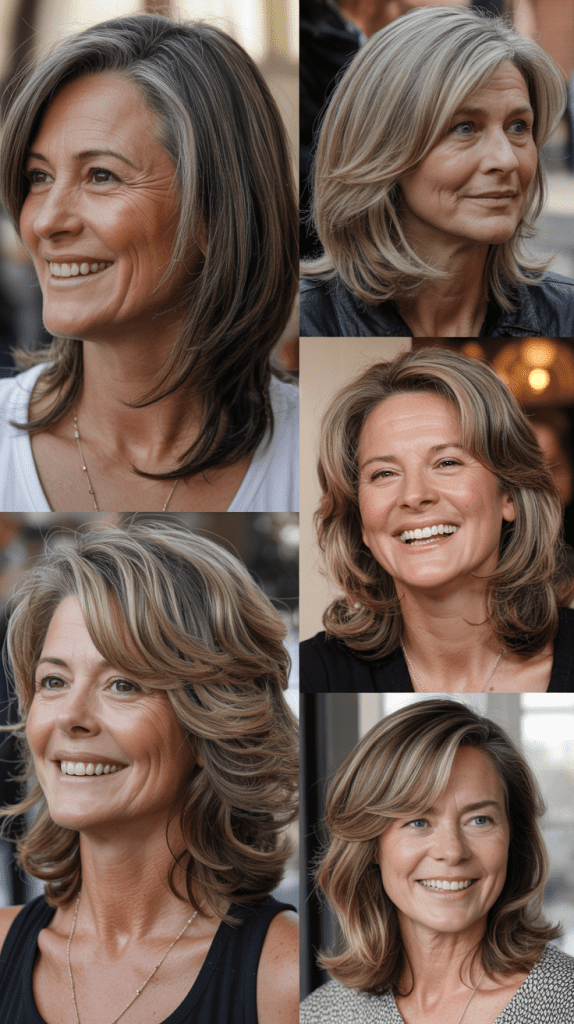
A shoulder-length layered cut enhanced with face-framing pieces delivers timeless elegance while strategically adding volume where it’s most visible and impactful.
This classic approach never goes out of style because it works with the natural fall of hair while incorporating layers that prevent fine hair from looking flat or lifeless.
The face-framing pieces draw attention to your best features while adding movement and dimension.
- Layers begin around the cheekbones or jawline and cascade downward, creating a graduated effect that adds volume through movement rather than weight.
- Face-framing pieces are cut shorter at the front, typically starting at cheekbone length, and angle back to blend with the overall length.
- The shoulder-length placement provides enough weight to keep hair smooth while allowing for volume-boosting styling techniques like blow-drying with a round brush.
- This length proves particularly practical for women who want the option to wear hair down, in a ponytail, or in a half-up style.
- Adding beach waves or loose curls with a large-barrel curling iron multiplies the volume effect and creates a soft, romantic appearance.
- Highlighting the face-framing pieces adds dimension and draws the eye to these sections, enhancing the illusion of fullness throughout.
- This cut grows out gracefully and requires maintenance only every 8-10 weeks, making it economical and low-commitment.
10. Blunt Chin-Length Bob

The blunt chin-length bob creates maximum impact through its precise, one-length cutting technique that produces a solid baseline of hair appearing remarkably thick and full.
This classic cut has remained popular across decades because it delivers immediate volume through the optical density created by blunt ends.
For women over 40 with fine hair, this bob offers a sophisticated, polished look that requires relatively simple styling.
- The precisely cut ends align at one level, creating a solid horizontal line that tricks the eye into perceiving abundant density.
- Chin length proves universally flattering as it draws attention to the jawline while creating balance with facial proportions.
- The lack of heavy layering means hair retains maximum weight at the ends, preventing the wispy, thin appearance that over-layered fine hair can develop.
- Internal texturizing using thinning shears or razor techniques removes bulk without sacrificing the blunt appearance at the perimeter.
- This cut can be styled pin-straight for sleek sophistication or with a slight bend under for soft, classic elegance.
- The blunt bob works exceptionally well with a center or deep side part, each creating different effects on face shape.
- Glossing treatments or shine serums enhance the sleek appearance and make hair look healthier and more substantial.
11. Layered Shag with Micro Bangs

The layered shag combined with micro bangs creates an edgy, fashion-forward statement that adds tremendous volume and texture throughout while making a bold statement with the unconventional bang length.
This combination specifically benefits fine hair by breaking up the overall mass into multiple moving pieces that create the illusion of thickness.
The micro bangs add an unexpected element that draws attention upward, emphasizing facial features while the shaggy layers add body throughout the length.
- Micro bangs are cut above the eyebrows, creating a striking focal point that draws the eye upward and adds a youthful, contemporary edge.
- The shag layers throughout create separation and movement, with shorter pieces at the crown building volume and longer pieces adding flow.
- This dramatic combination works best on women with confidence and a willingness to embrace a non-traditional, fashion-forward aesthetic.
- The heavy layering throughout prevents fine hair from appearing limp, as each section moves independently and catches light differently.
- Styling involves applying texturizing products to damp hair and either air-drying for natural texture or blow-drying with diffuser for enhanced volume.
- The micro bangs require frequent trimming every 2-3 weeks to maintain their precise length and prevent them from growing into standard bangs.
- This cut particularly suits oval and heart-shaped faces, though women with longer face shapes can adapt it by keeping the bangs slightly longer.
12. Tapered Pixie

The tapered pixie gradually decreases in length from top to bottom, creating a sophisticated silhouette that adds height and volume while maintaining a polished, professional appearance.
This refined version of the classic pixie offers more structure and shape than a uniform short cut, making it particularly flattering for women over 40 seeking a mature, elegant look.
The tapering technique removes weight strategically, allowing hair to lift and create natural volume.
- The top section maintains 2-4 inches of length while sides and back taper down to very short lengths, creating dimension and architectural interest.
- Gradual tapering rather than harsh disconnection creates a softer, more feminine appearance that flatters mature faces.
- The longer top can be styled forward, backward, or to the side, offering styling versatility despite the overall short length.
- This cut requires minimal daily styling but benefits from regular professional maintenance every 4-5 weeks to preserve the precise tapering.
- The volume concentrated at the top creates a lifting effect that’s particularly flattering and can make the face appear slightly elongated.
- Highlighting or lowlighting enhances the dimensional effect of the tapering and adds visual interest to the structured cut.
- This style suits most face shapes but proves especially flattering on oval, heart-shaped, and diamond-shaped faces.
13. Razored Layers Throughout
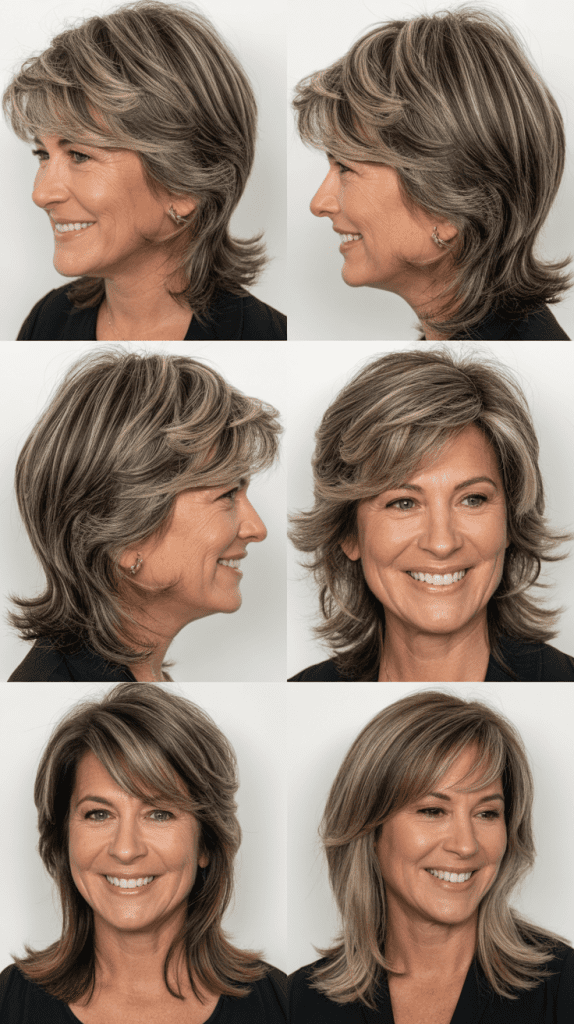
Incorporating razored layers throughout any length of hair creates a feathered, textured effect that makes fine hair appear significantly thicker by creating separation and movement between strands.
The razor cutting technique differs from traditional scissors in that it creates softer, more irregular edges that catch light differently and prevent fine hair from clumping together.
This approach works across all lengths and can be incorporated into virtually any haircut style.
- Razor cutting involves using a straight razor or razor comb to slice into hair at angles, creating textured, feathered ends rather than blunt lines.
- The varying lengths created by razor work prevent fine hair from lying flat and create natural separation that mimics the appearance of thicker hair.
- This technique removes weight without creating obvious layers, resulting in a more organic, natural-looking fullness.
- Razored layers work particularly well in combination with other volume-boosting cuts like shags, bobs, or long layered styles.
- The textured ends created by razor cutting hold styling products better, making volumizing mousses and sprays more effective.
- Hair cut with a razor requires excellent conditioning to prevent dryness at the ends, as the technique can sometimes create more surface area prone to moisture loss.
- This cutting method suits all hair lengths but proves especially transformative on medium to long hair where fine texture becomes most noticeable.
14. Angled Lob with Undercut

An angled lob combined with a hidden undercut creates an innovative solution that removes weight where it causes flatness while maintaining length and volume where you want it.
The undercut beneath the visible hair layers reduces bulk at the nape and sides, allowing the top layers to lift and move more freely.
This contemporary combination offers an edgy twist on the classic lob while solving practical volume challenges.
- The undercut involves shaving or cutting very short the hair underneath the top layers, typically at the nape and potentially along the sides.
- This hidden section remains invisible when hair is worn down but dramatically reduces weight that can pull fine hair flat against the scalp.
- The angled lob maintains longer front pieces (shoulder length or slightly below) that angle shorter toward the back, creating a slenderizing line.
- The combination of reduced underneath weight and maintained top length creates unprecedented lift and movement in fine hair.
- This style offers the option of wearing hair up or pulled back to reveal the undercut, creating two distinct looks from one haircut.
- The undercut requires maintenance every 4-6 weeks to prevent the hidden section from growing out and negating the volume-boosting benefits.
- This bold choice suits women comfortable with non-traditional styles and works particularly well for those with very fine, easily flattened hair.
15. Soft Layered Waves

Creating soft layered waves through strategic cutting and styling transforms fine, straight hair into a voluminous cascade that appears effortlessly thick and healthy.
The layers cut to encourage wave formation provide the structure, while the waves themselves create the visual bulk that fine hair naturally lacks.
This romantic, feminine style offers timeless appeal while delivering practical volume solutions.
- Long layers cut throughout provide the foundation for waves to form naturally or with minimal styling assistance.
- The length variations created by layering prevent waves from pulling flat against the head, maintaining volume from roots to ends.
- This cut typically works best at collarbone length or longer, as shorter lengths may not provide enough hair to create flowing wave patterns.
- Styling can be achieved with various methods including braiding damp hair overnight, using foam rollers, or creating waves with a curling iron or wand.
- The wave pattern itself creates depth and dimension that makes each section of hair appear fuller and more substantial.
- Highlights or balayage applied to emphasize the wave patterns enhance the three-dimensional effect and add to the illusion of thickness.
- This versatile cut can be worn wavy for volume or straightened for a sleeker look when the occasion demands, offering two styles in one.
16. Crown-Boosting Pixie

A crown-boosting pixie specifically engineered to create maximum height at the top of the head offers an ideal solution for women experiencing thinning or flatness in the crown area.
This specialized approach to the pixie cut concentrates the longest sections at the crown while keeping sides and back very short, creating dramatic vertical lift.
The resulting silhouette elongates the face and draws the eye upward rather than focusing on hair density.
- The crown section is left significantly longer (3-5 inches) than the sides and back, which may be cut to 1 inch or less.
- This extreme contrast in lengths forces the eye to focus on the height and volume rather than evaluating the overall thickness of the hair.
- Styling involves blow-drying the crown section upward and backward using a round brush, then setting with hairspray for lasting lift.
- Products like volumizing powder applied at the roots enhance and extend the lifting effect throughout the day.
- The shorter sides and back create a clean, polished frame for the face while eliminating weight that could pull down the crown area.
- This style requires confidence and suits women with strong facial features and well-defined bone structure.
- Regular trims every 4-5 weeks maintain the precise proportions necessary for the crown-boosting effect to remain dramatic.
17. Textured Bob with Deep Side Part
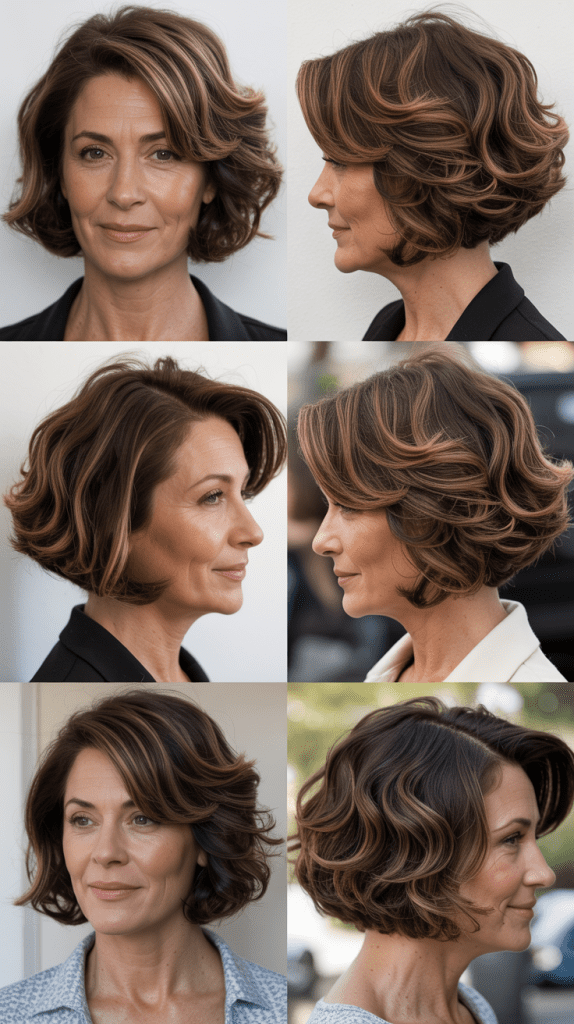
A textured bob enhanced by a deep side part creates asymmetrical volume that flatters the face while adding visual interest and fullness through the dramatic part placement.
The deep side part itself becomes a styling element that creates height on one side while the textured cutting throughout ensures both sides maintain body and movement.
This combination proves particularly effective for women with fine hair as it works with gravity rather than against it.
- The part is placed far to one side, typically above the outer edge of one eyebrow, creating a dramatic sweep of hair across the forehead and crown.
- The larger side of the part contains more hair volume naturally due to the asymmetrical division, creating instant fullness.
- Texturizing throughout both sides using point cutting or razor techniques ensures the smaller side doesn’t look sparse or flat.
- Bob length typically falls between chin and shoulder, with slight layering to encourage the hair to curve under or flip outward at the ends.
- This style can be flipped between sides to change your look, though choosing one dominant side and maintaining it creates a signature style.
- The deep part works particularly well for camouflaging thinning areas along the hairline or at the crown on the side with less hair.
- Styling products applied at the roots on the fuller side before blow-drying with a round brush maximize the volume potential.
18. Layered Shag with Longer Lengths

Taking the shag concept into longer territory (below the shoulders) creates a bohemian, free-spirited style that adds tremendous volume through multiple layer levels while maintaining the security of length.
This extended version of the shag proves perfect for women who love the volume and texture of shorter shags but aren’t ready to sacrifice their longer hair.
The layers prevent length from weighing down fine hair while creating movement throughout.
- Layers begin at the crown with 4-6 inch pieces and gradually blend down to the longest sections which may reach mid-back or longer.
- The multiple layer levels create a cascading effect where each tier adds volume and movement independently from the others.
- Longer lengths provide more versatility for wearing hair up in ponytails, buns, or half-up styles while maintaining the shaggy texture when down.
- The weight of longer hair actually helps create natural wave patterns that enhance the volume effect of the layers.
- This cut requires more maintenance than shorter styles, with trims needed every 8-10 weeks to prevent the layers from blending into one length.
- Styling can be minimal with air-drying and texturizing spray, or more polished with blow-drying and loose curls for added volume.
- The long shag suits most face shapes and proves particularly flattering for women who wear glasses, as the layers create visual interest around the face.
19. Undercut Bob

An undercut bob combines the sleek sophistication of a classic bob with the unexpected edge of a hidden undercut, creating a hybrid style that’s both professional and fashion-forward.
The undercut removes weight from beneath the visible layers, allowing the top sections to move freely and create natural lift.
This modern approach solves the common problem of fine hair looking weighed down while offering a secret style element that can be revealed or concealed.
- The undercut section at the nape and potentially lower sides is shaved or cut very short, typically with clippers, creating a dramatic reduction in bulk.
- The top bob layers fall over the undercut when hair is worn down, maintaining a conventional, professional appearance when desired.
- Bob length typically ranges from chin to shoulder, with the top layers cut in a classic bob shape that benefits from the removed weight beneath.
- This style allows for dramatic updos or half-up styles that showcase the undercut design, essentially providing two different looks.
- The undercut can be decorated with designs or patterns shaved into it, adding personal expression and artistry to the technical cut.
- Maintenance requires visiting the salon every 4-6 weeks to trim the undercut and maintain the bob shape.
- This bold choice suits confident women who appreciate non-traditional styles and works exceptionally well for those with very fine, heavy hair.
20. Voluminous Curly Pixie

For women with naturally curly or wavy fine hair, a voluminous curly pixie amplifies the hair’s natural texture while creating maximum volume and definition.
This specialized pixie cut works with curl patterns rather than against them, using the natural spring and dimension of curls to create fullness that straight fine hair cannot achieve.
The short length prevents curls from being weighed down while allowing them to bounce freely.
- The cut is shaped to enhance natural curl patterns, keeping hair longer where curls form most beautifully and shorter where they tend to frizz.
- Curl-specific cutting techniques like dry cutting (cutting hair when dry to see natural curl fall) ensure the style works with individual curl patterns.
- The short length removes weight that can drag curls down, allowing each curl to spring up and create maximum volume.
- Styling involves applying curl-enhancing products to damp hair and either air-drying or diffusing with a blow dryer on low heat.
- Regular moisture treatments are essential for curly pixies to maintain curl definition and prevent frizz that can make fine curly hair look unkempt.
- This cut particularly suits women with Type 2 (wavy) to Type 3 (curly) hair patterns, as these curl types benefit most from volume-focused short cutting.
- The curly pixie requires less frequent trims than straight pixies since curl patterns hide growth and the style grows out more gracefully.
21. Swoopy Long Bangs with Layers
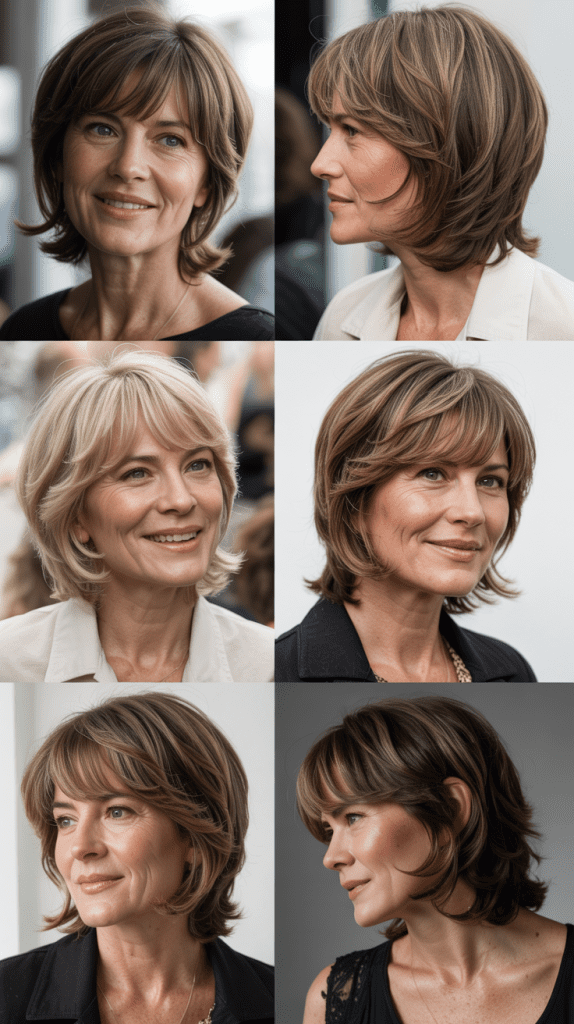
Swoopy long bangs that graze the eyebrows or can be swept to the side create instant face-framing volume while layers throughout the rest of the hair add body and movement.
These modern, piece-y bangs differ from traditional heavy bangs by being lighter and more textured, preventing them from overwhelming fine hair or making it look weighed down.
Combined with layers, this style offers maximum versatility and flattering softness.
- Swoopy bangs are cut with texture and separation, typically point-cut to create pieces that move independently rather than forming a solid line.
- The length falls around eyebrow level or slightly longer, allowing them to be worn across the forehead, swept to one side, or tucked behind ears.
- Layers throughout the remaining hair start where the bangs end and cascade downward, creating a cohesive flow from face to ends.
- This combination works at any overall length from bobs to long hair, making it universally adaptable to personal preferences.
- The bangs add crucial volume at the front hairline where thinning often first becomes noticeable in women over 40.
- Styling involves blow-drying bangs with a round brush to create the sweep, while the layered lengths can be worn straight or with added waves.
- This style requires bang trims every 3-4 weeks but the overall cut can go 8-10 weeks between salon visits.
22. Jaw-Length Wavy Bob
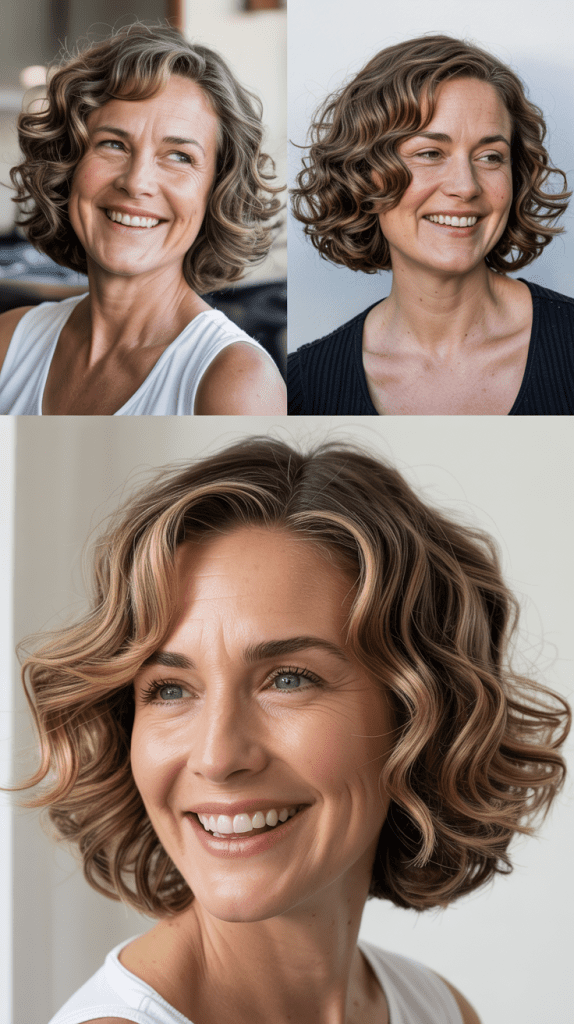
A jaw-length wavy bob creates the perfect balance between structure and softness, using both the precise cutting line of a bob and the volume-enhancing properties of waves.
The jaw-length placement proves universally flattering while the waves add crucial dimension and fullness that straight fine hair lacks.
This style has a timeless, classic appeal while delivering modern volume solutions.
- The cutting line falls precisely at jaw level, creating a horizontal reference point that draws attention to the facial structure and bone definition.
- Waves are either created through natural texture enhanced by proper cutting and products, or styled in using curling tools.
- The bob shape provides structure that prevents fine wavy hair from looking frizzy or unkempt, maintaining a polished appearance.
- Internal layers remove bulk without sacrificing the bob’s solid baseline, allowing waves to form without creating pyramid-shaped volume.
- This length offers easy styling options including wearing waves naturally, straightening for sleek variety, or adding more defined curls for evening events.
- The jaw-length placement requires precision cutting to ensure both sides fall evenly, creating balance and symmetry.
- Regular glossing treatments enhance shine and make the waves more defined, adding to the overall impression of healthy, full hair.
23. Pixie with Tapered Nape

A pixie with specifically tapered nape combines the classic pixie silhouette with a beautifully graduated back section that creates a feminine, elegant nape line while concentrating volume at the crown and top.
The tapered nape keeps the back section very close to the neck, eliminating bulk and weight that could pull the entire cut downward.
This refined approach to the pixie proves particularly sophisticated and age-appropriate.
- The nape area is closely tapered using clippers or scissors, creating a graduated effect that blends from very short at the hairline to longer toward the crown.
- This tapering creates an elongated appearance to the neck and emphasizes the head shape in a flattering way.
- The top sections maintain 2-4 inches of length, creating contrast with the short nape and allowing for various styling options.
- The tapered back requires more frequent maintenance (every 3-4 weeks) than other pixie variations to prevent the nape from growing bushy.
- This style particularly suits women with well-defined jawlines and necks, as it draws attention to these features.
- The clean nape line proves especially practical for women who wear necklaces or scarves, as the short hair doesn’t interfere with accessories.
- Styling the longer top sections forward, back, or to the side creates different looks while the tapered nape remains consistently polished.
24. Long Layers with Volume at Crown
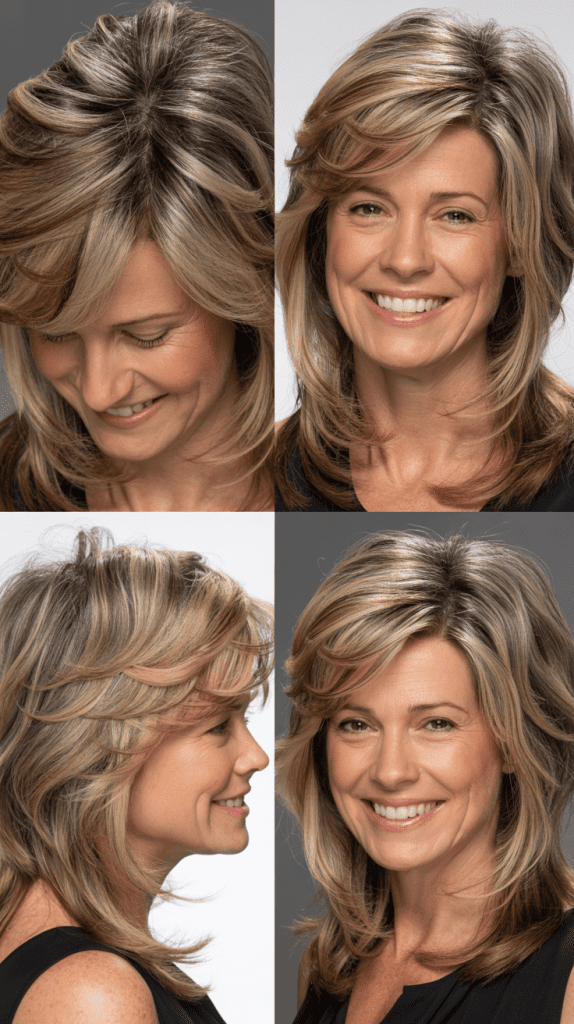
Long layers specifically designed to create maximum volume at the crown area offer a practical solution for women who want to maintain length while addressing the common concern of flatness at the top of the head.
This strategic layering approach concentrates the shortest layers at the crown, progressively blending to full length at the perimeter.
The result is a style that maintains feminine length while creating crucial lift where fine hair most commonly falls flat.
- Crown layers typically begin at 4-6 inches in length, creating pieces short enough to lift away from the scalp when styled.
- The layers are cut in a circular pattern radiating from the crown, ensuring even volume distribution around the top of the head.
- Longer layers throughout the remaining hair prevent the crown section from looking disconnected or obviously short compared to the overall length.
- Styling focuses on blow-drying the crown area with a round brush, lifting hair up and away from the scalp to set volume.
- Root-lifting products or volumizing powder applied specifically at the crown before styling enhance and prolong the lifted effect.
- This cut maintains length at the ends (mid-back or longer) for women who prefer long hair but need volume solutions.
- The natural weight of the longer sections helps keep the rest of the hair smooth and frizz-free while the crown maintains its lift.
25. Asymmetrical Pixie with Long Side Bang

An asymmetrical pixie featuring an extended side bang creates dramatic visual interest while solving volume challenges through strategic length placement.
The longer bang section draws the eye diagonally across the face, creating a slimming effect while the asymmetry makes the overall cut appear more voluminous through varied lengths.
This edgy style suits confident women seeking a bold, fashion-forward look.
- The side bang extends significantly longer than the rest of the pixie, typically reaching eyebrow level or beyond on one side.
- The remaining hair maintains classic pixie proportions with short sides and slightly longer top, creating contrast with the extended bang.
- This asymmetry naturally creates volume as the eye perceives more hair due to the varied lengths and the diagonal line across the face.
- The long bang can be styled forward over the eye, swept dramatically to the side, or tucked behind the ear for different daily looks.
- This cut requires technical precision to ensure the asymmetry appears intentional and well-balanced rather than uneven or accidental.
- Regular maintenance every 4-5 weeks keeps the proportions correct and prevents the asymmetry from growing out into a standard pixie.
- The style particularly flatters diamond, heart, and oval face shapes by adding width where needed and creating balanced proportions.
26. Textured Collarbone-Length Cut

A textured collarbone-length cut strikes the perfect balance between short and long, landing at a flattering, universally wearable length while incorporating texture throughout that creates movement and volume.
This versatile length grazes the collarbone, creating a connection point that draws attention to this delicate area while the texturizing techniques ensure fine hair appears full and dynamic rather than limp.
- The precise collarbone length falls in the ideal zone between too short and too long, preventing hair from looking sparse at the ends.
- Texturizing throughout using point cutting, notching, or razor techniques creates irregular, organic-looking ends that enhance volume perception.
- Subtle layers beginning below the chin and working down add movement without creating too much graduation or removing weight.
- This length allows for versatile styling including wearing it down, in a low ponytail, in a half-up style, or tucked behind ears.
- The collarbone placement provides enough weight to prevent frizz and flyaways while maintaining enough lightness for volume.
- Adding beach waves or loose curls enhances the textured effect and creates even more fullness and dimension.
- This cut grows out beautifully and can be maintained with trims every 8-10 weeks, making it economical and low-maintenance.
27. Short Crop with Longer Crown

A short crop featuring intentionally longer sections at the crown creates maximum volume through architectural precision and strategic length placement.
This ultra-short style removes all unnecessary weight while concentrating fullness exactly where it creates the most impact.
The dramatic height at the crown elongates the face and creates a youthful, energetic appearance that defies expectations about aging and hair volume.
- The crown section is left 2-3 inches longer than the closely cropped sides and back, which may be cut to 1/4 to 1/2 inch.
- This extreme length variation creates architectural volume that stands up dramatically from the head without requiring extensive styling.
- The short sides and back eliminate all weight that could pull the crown section down, ensuring maximum lift and height.
- Styling involves applying a small amount of strong-hold product to damp hair and either blow-drying upward or allowing hair to air-dry in its natural upward direction.
- This bold cut requires confidence and suits women comfortable with very short hair and significant attention to their hairstyle.
- The crop works particularly well for women with naturally thick eyebrows and strong facial features that can balance the dramatic hair volume.
- Maintenance every 3-4 weeks is essential to preserve the precise proportions and prevent the short sections from growing too long.
28. Layered Shag with Side Part
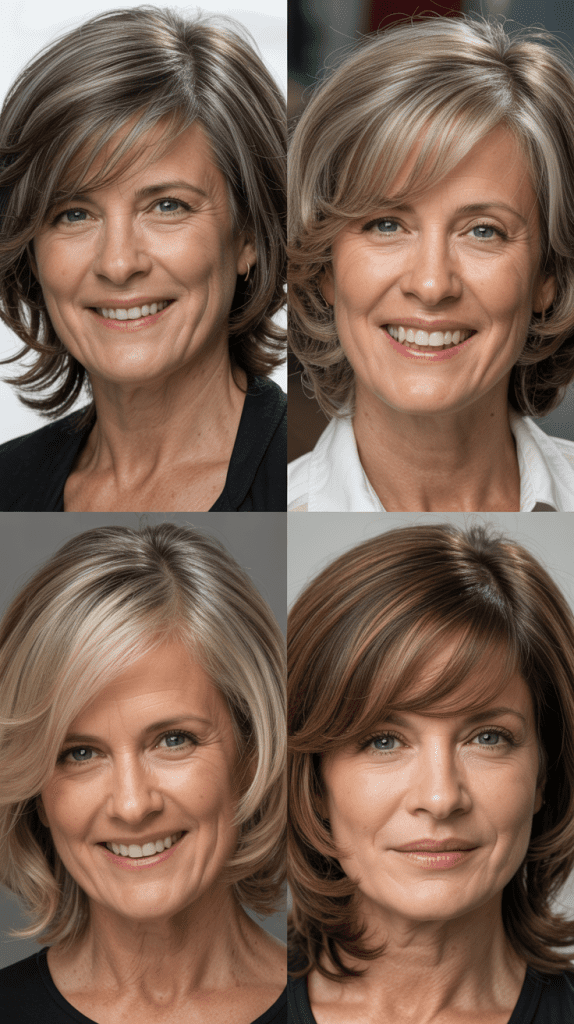
A layered shag enhanced by a classic side part creates a universally flattering combination that adds volume through both cutting technique and styling placement.
The side part itself creates natural asymmetry that adds visual interest while the shag layers throughout ensure movement and fullness.
This pairing offers a more polished, controlled version of the center-parted shag while maintaining all the volume benefits.
- The side part is placed approximately 1-2 inches from the center, creating subtle asymmetry without the drama of a deep side part.
- Shag layers cut throughout in varying lengths create texture and separation that prevents fine hair from clumping or lying flat.
- The side part naturally creates more volume on the fuller side while preventing the crown from looking flat or pulled tight.
- This combination works at various lengths from chin to past shoulders, adapting to personal preferences and lifestyle needs.
- Styling involves blow-drying with fingers or a round brush, directing hair away from the part line to maximize lift at the roots.
- The side part can be switched to the opposite side occasionally to change your look or prevent hair from permanently training in one direction.
- This versatile style suits all face shapes and proves particularly flattering for women with asymmetrical features they want to balance.
29. Blunt Lob with Internal Layers

A blunt lob featuring internal layers hidden beneath a solid perimeter creates the best of both worlds: the thickness perception of a blunt cut with the movement and volume of layers.
This sophisticated technique involves creating layers within the hair while maintaining a blunt baseline at the ends.
The result appears full and substantial while avoiding the weight and flatness that can plague one-length cuts on fine hair.
- The perimeter is cut bluntly at a consistent length (typically collarbone to shoulder), creating a solid visual line of hair density.
- Internal layers are cut beneath this solid baseline, removing weight and bulk without affecting the blunt appearance when hair is worn down.
- This hidden layering allows hair to move and bounce naturally rather than hanging heavy and straight like a true one-length cut.
- The blunt baseline prevents the wispy, thin-looking ends that can result when layers reach all the way to the perimeter of fine hair.
- Styling can be sleek and straight to emphasize the blunt line, or wavy to showcase the movement created by the internal layers.
- This cut requires a skilled stylist who understands weight distribution and can create internal layers without disrupting the perimeter line.
- Maintenance every 6-8 weeks preserves both the blunt baseline and the internal layer structure, ensuring continued volume and shape.
30. Disconnected Pixie

A disconnected pixie features intentionally abrupt length changes rather than gradual blending, creating a modern, edgy aesthetic that maximizes volume through strategic contrast.
The disconnection typically occurs between the longer top sections and shorter sides, with minimal blending between the two lengths.
This dramatic difference makes the top section appear substantially fuller and creates height that draws attention upward.
- The top section maintains 3-5 inches of length while sides are cut very short (1 inch or less), with minimal graduation connecting the two.
- This sharp contrast creates an angular, geometric appearance that feels modern and fashion-forward rather than soft and traditional.
- The longer top section can be styled in multiple directions including slicked back, pushed forward, or swept to one side for versatility.
- Disconnection prevents the top hair from being pulled down by surrounding hair, allowing it to stand up and create maximum volume.
- This bold cut requires confidence and suits women with strong personal style and willingness to embrace unconventional aesthetics.
- The disconnected nature means this cut can be more forgiving as it grows out, as the intentional length difference doesn’t require perfect proportions.
- Styling products with strong hold help maintain the architectural shape and keep the top section lifted throughout the day.
31. Soft Wispy Bob

A soft wispy bob combines gentle, feathered ends with classic bob structure to create a delicate, feminine style that adds volume through light, airy texture.
Unlike harsh, blunt bobs, the wispy version features point-cut or razor-cut ends that create soft, separated pieces.
This romantic approach proves perfect for women seeking volume without the hard edges of geometric cuts while maintaining the sophistication of a bob.
- Point cutting or razor cutting creates feathered, irregular ends that separate and move independently rather than forming a solid line.
- The bob length typically falls between chin and shoulders, with the wispy texture preventing the ends from looking sparse or thin.
- Internal layering adds movement throughout while the wispy perimeter maintains visual interest and lightness.
- This cut works beautifully with natural texture and actually looks better slightly tousled rather than perfectly styled.
- Styling can be enhanced with sea salt spray or light texturizing products that emphasize the wispy, piece-y effect.
- The soft ends require proper conditioning to prevent them from appearing damaged or overly dry, as the feathering creates more surface area.
- This versatile bob suits all face shapes and proves particularly flattering for women seeking a softer, less structured alternative to classic bobs.
32. Graduated Layers with Bangs

Graduated layers combined with bangs create a comprehensive volume solution that addresses multiple areas of concern simultaneously.
The graduated layers build fullness progressively from short at the crown to longer at the ends, while bangs add crucial density and interest at the front hairline.
This combination proves especially effective for women experiencing thinning at both the crown and hairline.
- Graduated layers begin short at the crown (3-5 inches) and progressively lengthen, creating stacked volume that builds upon itself.
- Bangs are cut to complement the layering, typically falling at eyebrow length or slightly longer with texture to match the graduated layers.
- The combination of bangs and crown layers creates a frame of volume around the face, drawing attention to facial features.
- This cut works at medium to long lengths, with the graduation preventing longer hair from pulling flat despite its weight.
- Styling involves blow-drying the bangs forward with a round brush while directing the crown layers upward and back for maximum lift.
- The bangs can be styled straight across, swept to the side, or with added texture depending on face shape and personal preference.
- Regular bang trims every 3-4 weeks maintain their length while the overall cut requires shaping every 8-10 weeks.
33. Layered Long Bob (Long Lob)

The layered long bob extends slightly longer than the traditional lob, reaching just past the shoulders while incorporating layers throughout that prevent length from weighing down fine hair.
This extended version offers maximum versatility by providing enough length for updos and ponytails while maintaining the volume-boosting properties of strategic layering.
The length remains manageable and professional while looking luxuriously full.
- The length typically falls 1-3 inches below the shoulders, providing more versatility than standard lobs while avoiding the weight issues of truly long hair.
- Layers begin around the jawline or chin level and gradually blend down, creating cascading movement without obvious stepping or gaps.
- The extended length allows for wearing hair half-up, in low ponytails or buns, and various braided styles while maintaining volume when down.
- This cut proves ideal for women transitioning from longer hair who aren’t ready for a dramatic short cut but want volume benefits.
- Styling can be simple with air-drying and sea salt spray, or more polished with blow-drying and curling for added volume and waves.
- The longer length provides more weight to keep hair smooth and reduce frizz compared to shorter cuts, while layers prevent flatness.
- Maintenance every 8-12 weeks keeps layers fresh and prevents the cut from growing into one length, which would sacrifice volume.
34. Edgy Disconnected Bob
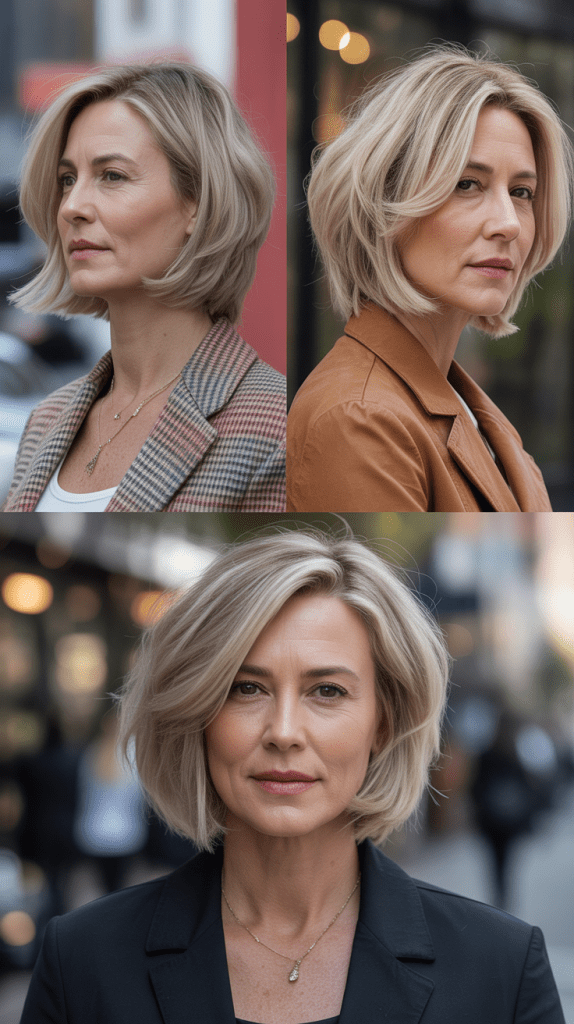
An edgy disconnected bob features intentional, abrupt length variations rather than smooth transitions, creating a modern, fashion-forward style that maximizes visual interest and perceived volume.
The disconnection typically appears between underlayers and top layers, with the contrast between lengths creating dimension and movement.
This contemporary approach to the classic bob offers striking style for women ready to make a statement.
- Underlayers are cut significantly shorter than top layers, creating a stacked or undercut effect that removes weight while maintaining length on top.
- The visible disconnection between lengths creates angles and geometric interest that draws attention to the cut itself rather than hair thickness.
- Bob length typically ranges from chin to just past shoulders, with the disconnection adding architectural volume regardless of actual hair density.
- This bold cut works particularly well when combined with vivid hair color or highlights that emphasize the different lengths and layers.
- Styling can emphasize the disconnection by creating texture in the top layers while keeping underneath sections smooth and sleek.
- The edgy nature of this cut requires confidence and suits women with strong personal style and creative or fashion-forward professions.
- Maintenance every 4-6 weeks preserves the precise disconnection and prevents the lengths from blending as hair grows.
35. Voluminous Layers at Multiple Levels
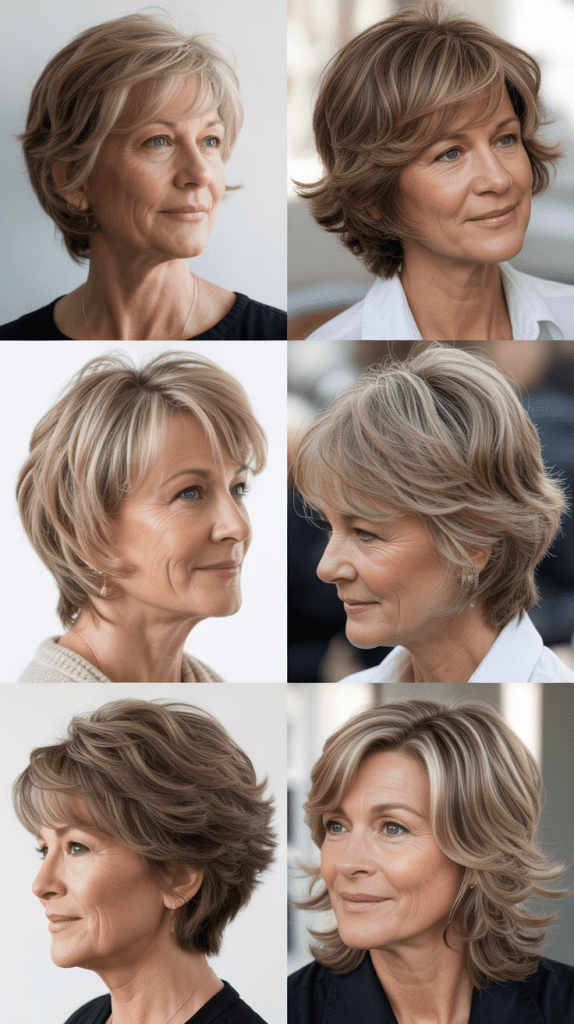
Creating voluminous layers at multiple distinct levels throughout the hair produces a cascading waterfall effect that maximizes fullness through strategic weight distribution.
Rather than gradual blending, this approach features several clear layer levels that each create their own volume and movement.
The multi-level technique proves especially effective for fine hair as it creates the illusion of multiple sheets of hair stacked upon each other.
- Layers are cut at specific, planned intervals (typically 3-5 distinct levels) rather than continuously graduated, creating visible separation between levels.
- Each layer level functions independently to create volume and movement, with the stacking effect multiplying the overall fullness.
- The technique works at medium to long lengths where there’s sufficient hair to create multiple distinct levels without the shortest layer becoming too short.
- Styling involves using a round brush to blow-dry each layer level separately, curving it under or outward to emphasize the individual sections.
- This cutting approach proves particularly effective when combined with color dimension like highlights or balayage that emphasizes the separate layers.
- The multi-level layers create abundant styling versatility, as hair can be worn with waves, curls, or straight with each creating different effects.
- Maintenance every 8-10 weeks refreshes the layer levels and prevents them from blending together, which would eliminate the volume-boosting effect.
Comparison Table: Best Haircuts by Hair Length
| Length Category | Best Cuts for Volume | Styling Time | Maintenance Frequency |
|---|---|---|---|
| Short (Pixie-length) | Textured Pixie, Crown-Boosting Pixie, Disconnected Pixie | 5-10 minutes | Every 4-5 weeks |
| Short-Medium (Bob) | Choppy Bob, Graduated Bob, Asymmetrical Bob | 10-15 minutes | Every 5-6 weeks |
| Medium (Lob) | Layered Lob, Angled Lob, Blunt Lob with Internal Layers | 15-20 minutes | Every 6-8 weeks |
| Medium-Long | Shoulder-Length Layered Cut, Textured Collarbone Cut | 15-25 minutes | Every 8-10 weeks |
| Long | Layered Shag with Longer Lengths, Long Layers with Crown Volume | 20-30 minutes | Every 10-12 weeks |
Conclusion
Finding the perfect volume-boosting haircut becomes significantly easier when you understand how different cutting techniques, lengths, and styling approaches work specifically with fine hair over 40.
These 35 Volume-Boosting Haircuts for Women Over 40 with Fine Hair represent the most effective, modern solutions for creating the appearance of fuller, thicker hair while maintaining style, sophistication, and manageability.
Whether you choose a daring pixie that maximizes height at the crown, a classic bob with strategic layers, or maintain your length with graduated cutting techniques, the key lies in working with your hair’s natural characteristics rather than against them.
Remember that the best haircut for you depends on multiple factors including your face shape, lifestyle, styling ability, and personal aesthetic preferences.
Consult with a skilled stylist who understands fine hair and can customize these cuts to suit your individual needs, and don’t be afraid to try something new—the right haircut can truly transform not just your hair but your entire outlook and confidence.
