

Finding the perfect haircut when you have fine hair after 40 can feel like searching for a needle in a haystack, but the right cut can transform limp, lifeless strands into a voluminous crown of confidence.
The secret lies in understanding how strategic layering, smart styling angles, and modern cutting techniques work together to create the illusion of thickness and body that fine hair naturally lacks.
This comprehensive guide to 35 Volume-Boosting Haircuts for Women Over 40 with Fine Hair will walk you through the most flattering styles—from chic pixie cuts and sophisticated bobs to layered lobs and textured shags—each specifically designed to maximize volume, minimize styling time, and complement mature facial features.
Whether you’re dealing with age-related hair thinning, genetic fine hair, or simply want to refresh your look with a cut that delivers serious body, you’ll discover expert-approved options that prove fine hair doesn’t mean flat hair.
Get ready to say goodbye to lifeless locks and hello to head-turning volume that makes you look and feel absolutely fabulous.
1. Classic Layered Bob
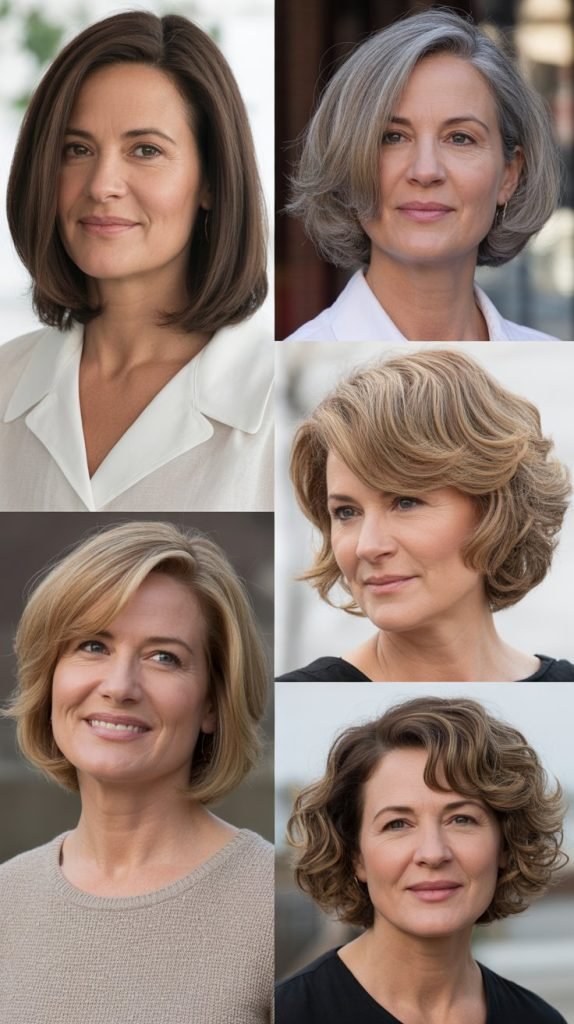
The classic layered bob remains one of the most reliable volume-boosting options for women over 40 because it combines timeless elegance with practical styling benefits.
Strategic layers remove excess weight while creating movement and dimension that makes fine hair appear fuller and more dynamic.
- The key to this cut lies in graduated layers that are shorter in the back and gradually lengthen toward the front, creating natural lift at the crown.
- Stylist experts recommend keeping the length between chin and shoulder level to maintain enough hair to work with while preventing the dragging effect that longer hair can have on fine strands.
- The internal layering technique removes bulk without sacrificing density, allowing each layer to stack upon the next for maximum fullness.
- Ask your stylist for texturizing at the ends rather than throughout the mid-lengths to preserve the appearance of thickness.
- This cut works exceptionally well with a side part, which instantly adds height at the roots and creates asymmetrical interest.
- Styling requires minimal effort—a round brush and blow dryer directed at the roots will amplify volume, while a light texturizing spray adds grip and hold.
- The classic layered bob flatters most face shapes, particularly oval, heart, and square faces, by softening angular features and balancing proportions.
2. Textured Pixie Cut

The textured pixie cut offers a bold, liberating option that maximizes volume through strategic choppy layers and piece-y texture.
This ultra-short style removes the weight that pulls fine hair down, allowing each strand to stand up and create the appearance of density.
- The modern pixie differs from traditional versions by incorporating longer pieces on top (usually 2-3 inches) that can be styled upward for dramatic height.
- Shorter sides and back create a beautiful contrast that emphasizes the volume on top while keeping the overall shape sleek and sophisticated.
- Point-cutting and razor techniques create irregular edges that prevent the blunt, heavy look that can make fine hair appear even thinner.
- This cut requires regular maintenance every 4-6 weeks to maintain its shape and prevent it from growing into an awkward in-between stage.
- Styling involves applying a volumizing mousse to damp hair and blow-drying with fingers to create lift and separation.
- The pixie cut works beautifully for women with strong facial features, high cheekbones, or graceful neck lines that this style showcases.
- It’s particularly practical for active lifestyles or those who prefer minimal morning styling routines while still looking polished and current.
3. Angled Lob with Face-Framing Layers
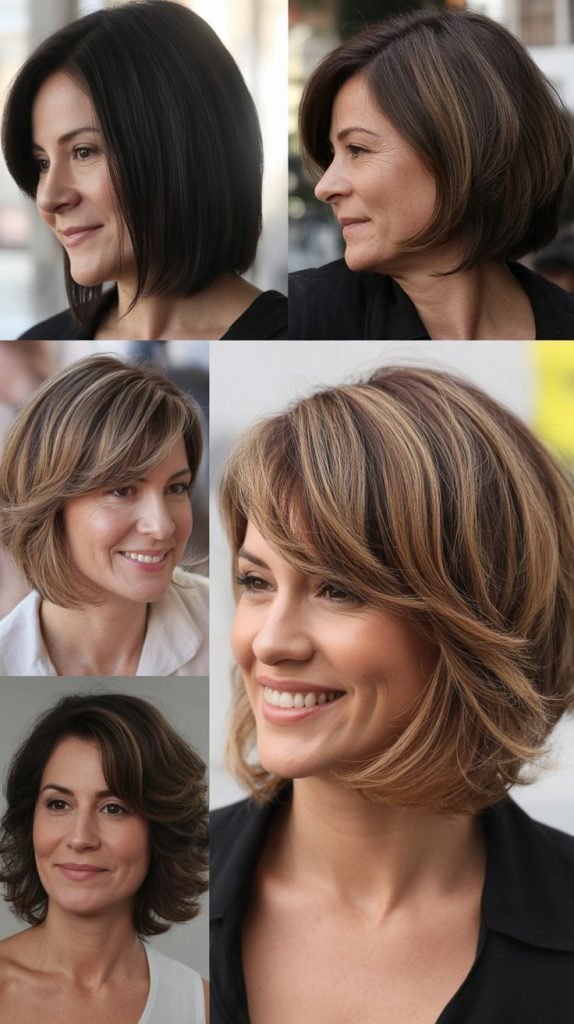
The angled lob (long bob) creates an optical illusion of volume through its diagonal line that’s slightly longer in front than in back.
Face-framing layers add dimension around the features that matter most while maintaining length that many women over 40 prefer.
- The angle of the cut typically ranges from half an inch to two inches difference between back and front, creating subtle movement without dramatic asymmetry.
- Face-framing layers begin around the cheekbone or chin area and blend seamlessly into the rest of the cut, drawing attention to your best features.
- This style works with natural texture whether your hair is straight or has a slight wave, making it versatile for different hair types within the fine hair category.
- The length hits just above or at the collarbone, which research shows is one of the most universally flattering lengths for women over 40.
- Internal layering removes weight from the interior of the hair while maintaining a relatively blunt perimeter that preserves the appearance of density.
- Styling can be as simple as air-drying with a volumizing spray or blown out smooth with ends slightly flipped for a polished finish.
- The angled lob flatters virtually all face shapes and can be customized with different parting styles to emphasize your best features.
4. Choppy Shag with Bangs
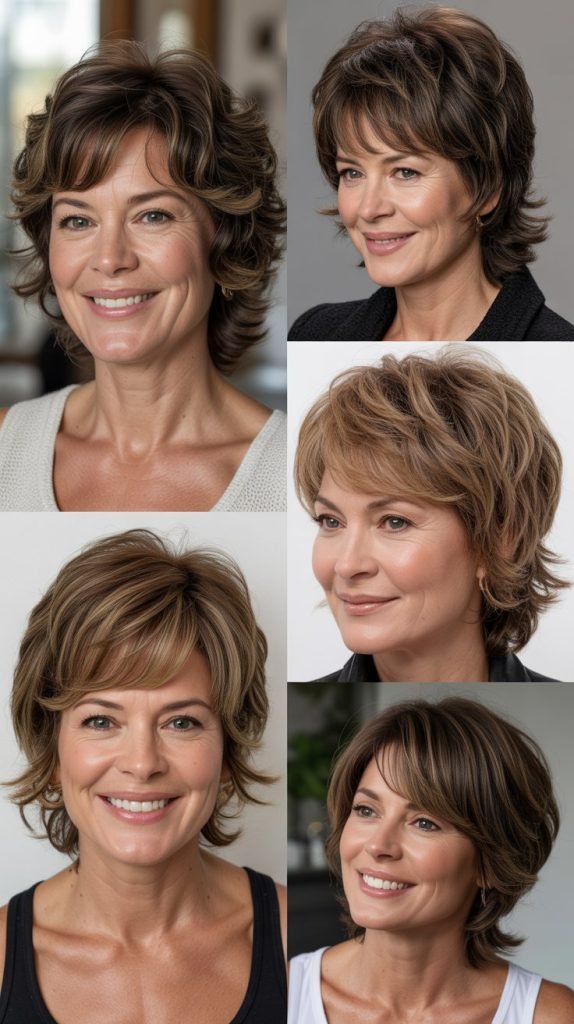
The choppy shag makes a powerful comeback as a volume-boosting superstar that combines rock-and-roll edge with sophisticated texture perfect for mature women.
Multiple layers throughout create separation and movement that prevents fine hair from lying flat against the head.
- The shag typically features layers starting at the crown and continuing throughout the length, with each layer creating lift and dimension.
- Choppy cutting techniques using point-cutting or slide-cutting create irregular, piece-y ends that add texture and prevent blunt lines that weigh hair down.
- Incorporating bangs—whether curtain, side-swept, or wispy—adds another dimension of volume at the front hairline where thinning often first appears.
- The modern shag differs from 1970s versions by being more refined and controlled, with strategic rather than random layering throughout.
- This cut works exceptionally well for naturally wavy or slightly textured hair, as it enhances existing movement rather than fighting against it.
- Styling involves scrunching with texturizing products while air-drying or using a diffuser to enhance the piece-y, undone texture.
- The shag suits oval, heart, and oblong face shapes particularly well, adding width where needed and softening elongated features.
5. Stacked Bob with Volume at the Crown
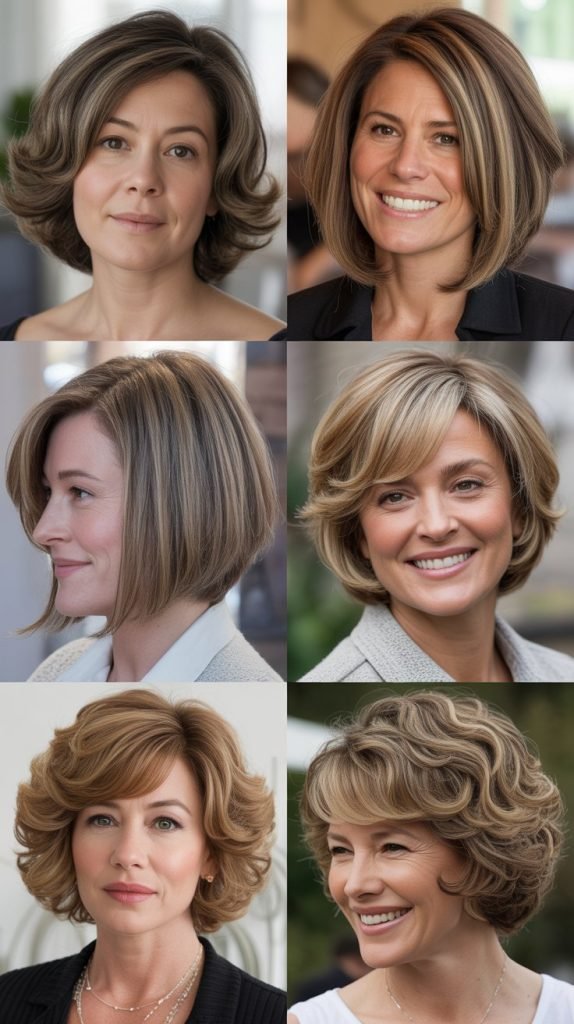
The stacked bob features dramatically shorter layers in the back that gradually lengthen toward the front, creating a curved silhouette that naturally lifts away from the head.
This architectural cut is specifically engineered to solve the flat-hair problem that plagues fine-haired women.
- The stacking technique involves cutting the back sections quite short (often exposing the nape) while front sections maintain longer length for a striking graduated effect.
- This creates a rounded shape at the back of the head that adds visual volume even when hair is pin-straight and fine.
- The interior is heavily layered and sometimes thinned to allow the outer layers to stack properly and create the signature curved shape.
- Weight is concentrated at the ends of the front sections, which frames the face beautifully while the back showcases the voluminous stacked structure.
- This cut requires professional maintenance every 5-7 weeks to maintain its precise shape and prevent the back from becoming too bulky as it grows.
- Styling involves blow-drying the back sections forward and down to emphasize the curve, then smoothing the front sections with a round brush.
- The stacked bob works best for round and oval face shapes, as it adds height at the crown that elongates and balances facial proportions.
6. Long Layers with Minimal Weight
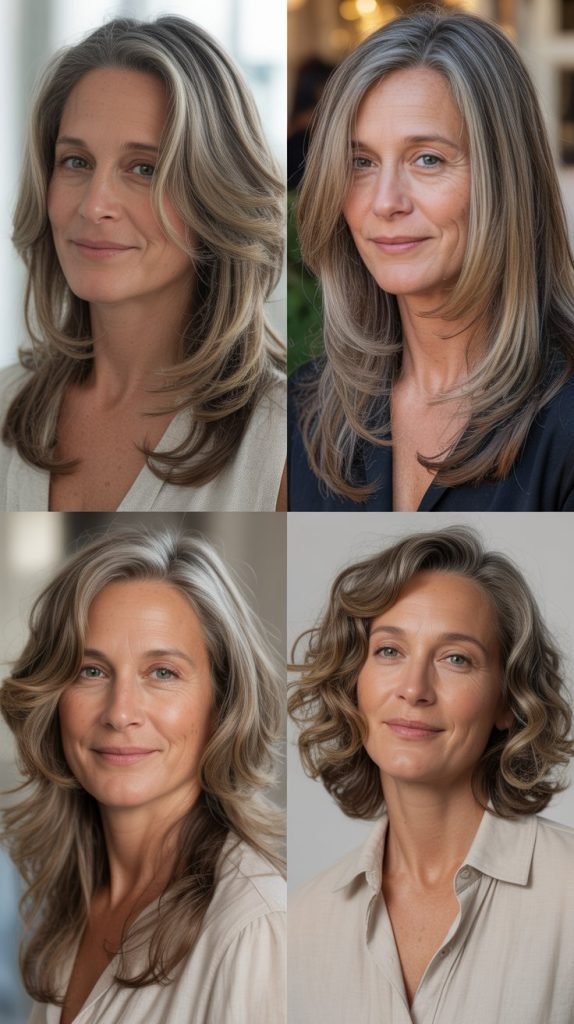
Long layers provide a volume solution for women who aren’t ready to sacrifice length but need to remove the weight that’s dragging their fine hair down.
Strategic layering throughout maintains length while creating movement and preventing the flat, stringy look.
- Layers typically begin around the chin or shoulder level and are cut in long, graduated sections rather than short, choppy pieces.
- The technique focuses on internal layering that removes bulk from inside the hair while maintaining a relatively intact perimeter for the illusion of thickness.
- Face-framing pieces are often incorporated to add dimension around the features without significantly affecting overall length.
- This cut works for hair that reaches shoulder length or longer, making it ideal for women transitioning from longer styles who aren’t ready for dramatic change.
- The key is asking your stylist to remove weight without removing density, which requires skill in long-layer cutting techniques.
- Styling involves blow-drying with a large round brush, lifting at the roots and smoothing through the lengths for polished volume.
- Long layers flatter all face shapes and can be customized with different parting styles to create various looks from the same cut.
7. Asymmetrical Pixie with Long Bangs
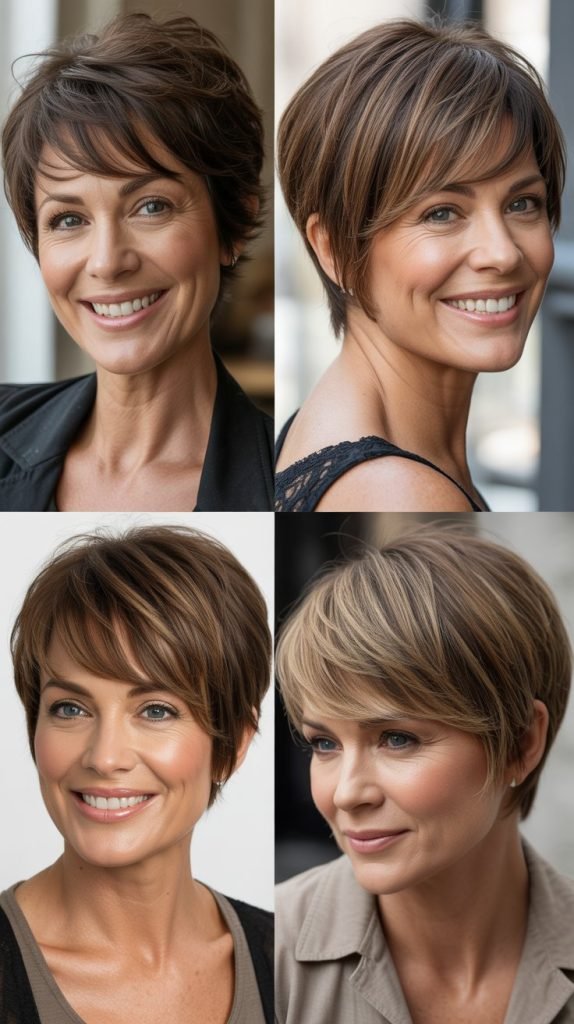
The asymmetrical pixie creates visual interest and volume through deliberate imbalance that draws the eye and emphasizes texture.
Longer sections on one side or in front provide styling versatility while the overall short length maximizes lift and fullness.
- The asymmetry typically involves keeping one side slightly longer than the other, or maintaining longer bangs that can be swept across the forehead while the rest remains cropped close.
- This creates a dynamic, modern look that’s far from boring and prevents the “helmet head” appearance that can plague uniform short cuts on fine hair.
- The longer sections provide something to work with for styling, allowing for slicked-back looks, textured forward styles, or swept-aside sophistication.
- Shorter sections remove weight and allow hair to stand away from the scalp, creating volume through shape rather than relying on products alone.
- This cut requires a skilled stylist who understands facial balance and can customize the asymmetry to complement your unique features and bone structure.
- Styling typically involves applying texturizing paste or pomade to the longer sections while leaving shorter areas natural for contrast.
- The asymmetrical pixie works beautifully for angular face shapes like square or rectangular, softening harsh lines with the swept, diagonal movement.
8. Blunt Cut Bob at Chin Length

The blunt bob creates the optical illusion of thickness through its clean, even perimeter that makes every strand count.
When cut at chin length specifically, it hits the sweet spot for adding volume while remaining flattering and age-appropriate for women over 40.
- The blunt cut means all hair is cut to exactly the same length at the perimeter, creating a dense, thick-looking edge that’s particularly beneficial for fine hair.
- Chin length provides enough hair to create volume without the weight of longer styles pulling everything down flat.
- Internal layers may be added for movement, but they’re subtle and don’t compromise the blunt perimeter that creates the illusion of fullness.
- This cut can be worn straight for a sleek, polished look or with waves and texture for a more casual, voluminous appearance.
- The strong horizontal line of the blunt cut creates a modern, confident aesthetic that’s both classic and contemporary.
- Styling involves blow-drying smooth with a paddle brush or creating gentle waves with a flat iron or curling iron for added dimension.
- The chin-length blunt bob particularly flatters oval, heart, and diamond face shapes by widening at the jawline and balancing facial proportions.
9. Feathered Layers Throughout

Feathered layers create soft, flowing movement that adds dimension and prevents fine hair from looking flat or lifeless.
This technique involves cutting layers at slight angles so hair tapers and blends rather than creating harsh lines or obvious steps.
- Feathering uses scissors or razors held at an angle to create soft, thin ends that move freely and catch light for dimensional depth.
- Layers are distributed throughout the cut from roots to ends, with each section blending seamlessly into the next for cohesive movement.
- This technique is particularly effective for fine hair because it creates separation between strands, preventing them from clumping together and looking sparse.
- The soft, feathery ends have more natural movement than blunt-cut ends, which helps create the appearance of body and bounce.
- Feathered cuts work beautifully with natural air-drying, making them low-maintenance options for busy women who don’t have time for extensive styling.
- Adding highlights or lowlights to feathered hair amplifies the dimensional effect, making hair look even fuller and more textured.
- This cutting technique flatters all face shapes and works with various lengths from short bobs to shoulder-length styles.
10. Crown-Layered Pixie Bob

The crown-layered pixie bob combines the best of both worlds—the easy maintenance of a pixie with the softness of a bob through concentrated layers at the crown.
This hybrid creates maximum volume where it’s needed most while maintaining slightly longer perimeter length.
- The crown area features short, choppy layers that stand up and create height, while the perimeter is left longer to soften the overall shape.
- This creates a “halo” of volume at the top of the head that draws eyes upward and creates the illusion of fuller, thicker hair overall.
- The contrast between shorter crown layers and longer perimeter provides styling versatility—you can emphasize the volume on top or smooth everything for a sleeker look.
- This cut works particularly well for fine hair with some natural texture or wave, as it enhances existing movement in the crown area.
- Face-framing pieces can be customized to flatter your specific features, whether you prefer them chin-length or slightly shorter.
- Styling involves scrunching or lifting the crown layers while blow-drying, then smoothing or curling the longer perimeter pieces as desired.
- The crown-layered pixie bob suits heart, oval, and square face shapes by adding width at the top and softening angular features.
11. Graduated Bob with Undercut
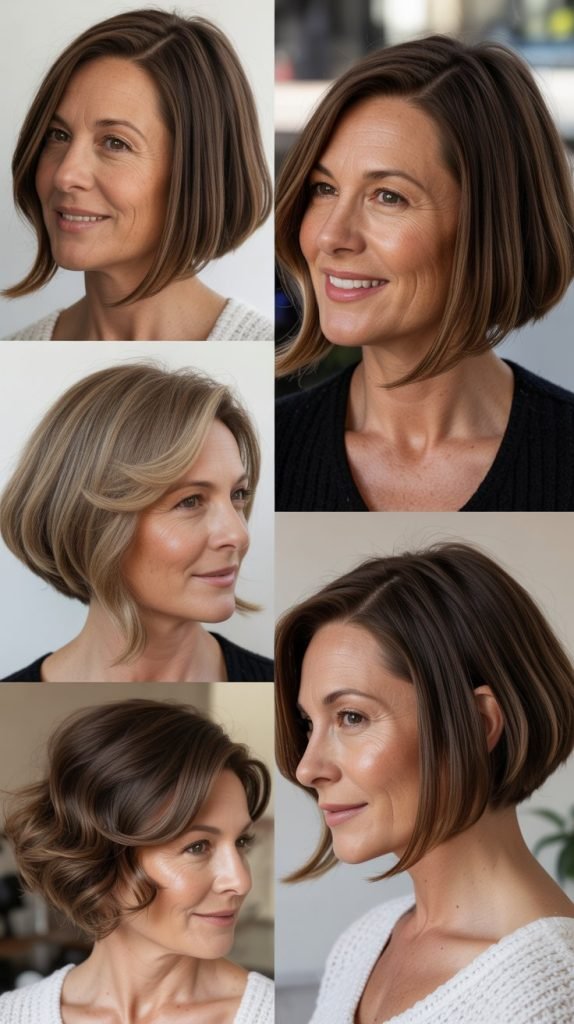
The graduated bob with undercut removes hidden weight through shaved or very closely cropped sections underneath while maintaining length on top.
This creates lift at the roots and prevents bottom-heavy appearance that can plague fine-haired women with bobs.
- The undercut typically involves clipper-cutting or very close scissor-cutting of the lower back and side sections, which remain hidden under the top layers.
- This removes significant weight that pulls hair down while the longer top layers cover the undercut for a polished, professional appearance.
- The result is dramatic root lift and volume because the top sections have nothing weighing them down and can stand away from the scalp naturally.
- As an added benefit, undercuts can make styling faster and reduce drying time since there’s less actual hair to work with.
- The undercut can be revealed when hair is worn in an updo or pushed behind the ears for an edgy, unexpected detail.
- This cut requires regular maintenance every 4-6 weeks to keep the undercut neat and the overall shape intact.
- Graduated bobs with undercuts work for most face shapes, with the length and graduation angle customized to flatter individual features.
12. Side-Parted Lob with Texture

The side-parted lob uses the natural volume boost of an off-center part combined with textured ends to create fullness and dimension.
This simple but effective combination makes fine hair appear significantly thicker and more dynamic.
- The deep side part immediately creates height at the crown on the heavier side, with hair naturally falling away from the scalp rather than lying flat.
- Lob length (long bob, typically between chin and collarbone) provides enough hair to create visual weight without the drag of truly long hair.
- Textured ends are achieved through point-cutting or texturizing shears that create irregular, piece-y tips rather than blunt edges.
- This prevents the stringy, see-through appearance that can happen when fine hair is cut bluntly at this length.
- The side part can be positioned to flatter asymmetrical features or hide areas of thinning along the hairline.
- Styling involves blow-drying with the part in place, using a volumizing spray at roots, and either leaving ends textured and piece-y or adding soft waves.
- This versatile cut flatters all face shapes and can be adjusted with the exact placement of the part and the degree of texturing at ends.
13. Wispy Layers with Curtain Bangs

Wispy layers throughout create soft, feminine movement while curtain bangs frame the face and add crucial volume at the front hairline.
This combination addresses the common concern of thinning hair around the face that many women over 40 experience.
- Wispy layers are cut with a point-cutting technique that creates soft, thin ends rather than blunt lines, allowing hair to move freely and appear fuller.
- Curtain bangs are parted in the middle or slightly off-center and swept to both sides, framing the face while adding fullness where it’s most visible.
- These bangs typically start shorter in the center (around eyebrow length) and gradually lengthen toward the sides to blend seamlessly with face-framing layers.
- The combination creates dimension and interest at the front while layers throughout prevent the back from looking flat or lifeless.
- This cut works with various base lengths from shoulder-length to long, making it adaptable to personal preferences.
- Styling involves blow-drying the bangs with a round brush, rolling them away from the face, while scrunching or air-drying the layers for natural texture.
- Wispy layers with curtain bangs particularly flatter oval, long, and heart-shaped faces by adding width and softening elongated features.
14. Inverted Bob with Stacked Back

The inverted bob features a dramatic angle with shorter back sections that stack upon each other while front sections extend significantly longer.
This architectural cut creates built-in volume through its geometric structure that doesn’t rely on styling products or techniques.
- The inversion refers to the dramatic angle difference—the back might be cut at ear-level or higher while the front reaches the chin or even collarbone.
- Stacking in the back creates a rounded, curved shape that lifts away from the head and provides automatic volume at the crown and back of the head.
- The sharp angle creates a striking, modern silhouette that’s both edgy and sophisticated, perfect for confident women over 40.
- This cut makes a bold statement and requires commitment to regular maintenance every 5-6 weeks to maintain the precise shape.
- The longer front pieces provide versatility for styling—they can be straightened, curled, or tucked behind ears for different looks.
- Styling involves blow-drying the stacked back sections forward to emphasize the curve and volume, then styling front pieces as desired.
- The inverted bob works beautifully for oval, round, and square face shapes, with the dramatic angle drawing eyes along the jawline.
15. Tousled Collarbone-Length Cut

The tousled collarbone-length cut embraces natural texture and piece-y movement for an effortlessly chic look that maximizes volume through calculated undone-ness.
This length hits the sweet spot between short and long while the tousled texture prevents fine hair from looking limp.
- Collarbone length provides enough hair to create visual weight and styling options without the drag that longer hair creates on fine strands.
- The cut incorporates internal layers and texturizing to create the piece-y, separated texture that defines the tousled aesthetic.
- Rather than smooth, uniform hair, the goal is intentional texture that creates gaps of air and light between sections for dimensional fullness.
- This cut works particularly well for hair with natural wave or slight texture, enhancing existing movement rather than fighting against it.
- Styling involves applying texturizing spray or salt spray to damp hair and scrunching while air-drying or diffusing for maximum natural texture.
- The deliberately imperfect finish is forgiving of styling mistakes and looks chic whether freshly styled or a few days post-wash.
- Tousled collarbone cuts flatter all face shapes and provide a youthful, modern aesthetic that doesn’t try too hard.
16. Short Layered Crop with Height
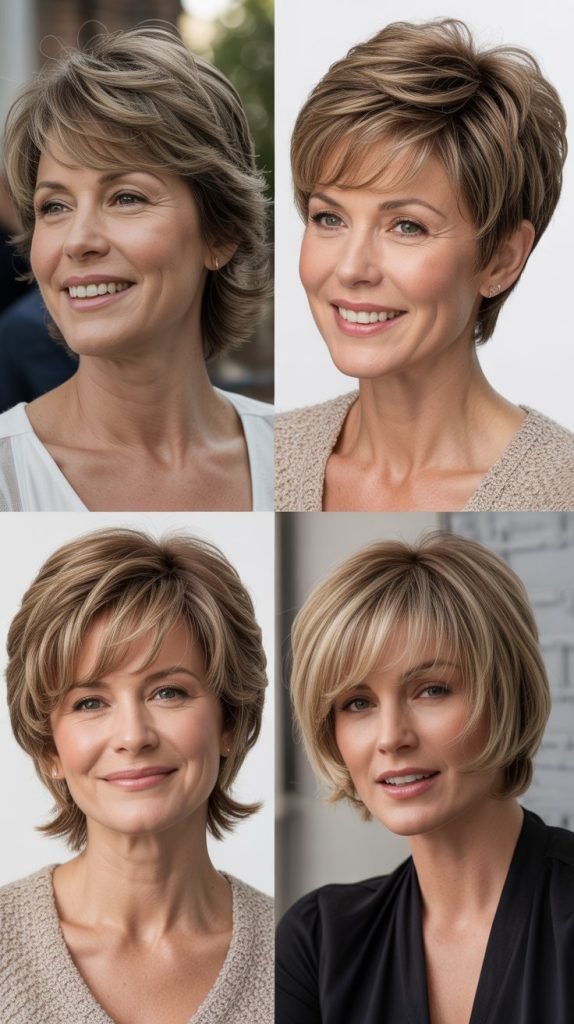
The short layered crop maximizes volume by removing all excess weight and creating concentrated layers on top that stand up dramatically.
This ultra-practical cut delivers serious height and fullness while requiring minimal maintenance.
- The crop typically features very short sides and back (often cut with clippers) while the top maintains 2-3 inches of length for styling versatility.
- Layers on top are cut at varying lengths to create texture and prevent the flat, uniform appearance that single-length cuts can have.
- The dramatic difference between short sides and longer top emphasizes the volume and height at the crown, drawing eyes upward.
- This cut is incredibly easy to maintain and style—often just requiring fingers, a bit of product, and natural air-drying for great results.
- It’s particularly liberating for women who’ve always had longer hair and want to experience the freedom and confidence of a dramatic short cut.
- The short crop works beautifully in professional settings while still having an edge that feels contemporary and fashion-forward.
- This style suits angular face shapes like square and rectangular, as well as those with strong, defined features that the short cut showcases.
17. Razored Ends for Soft Movement
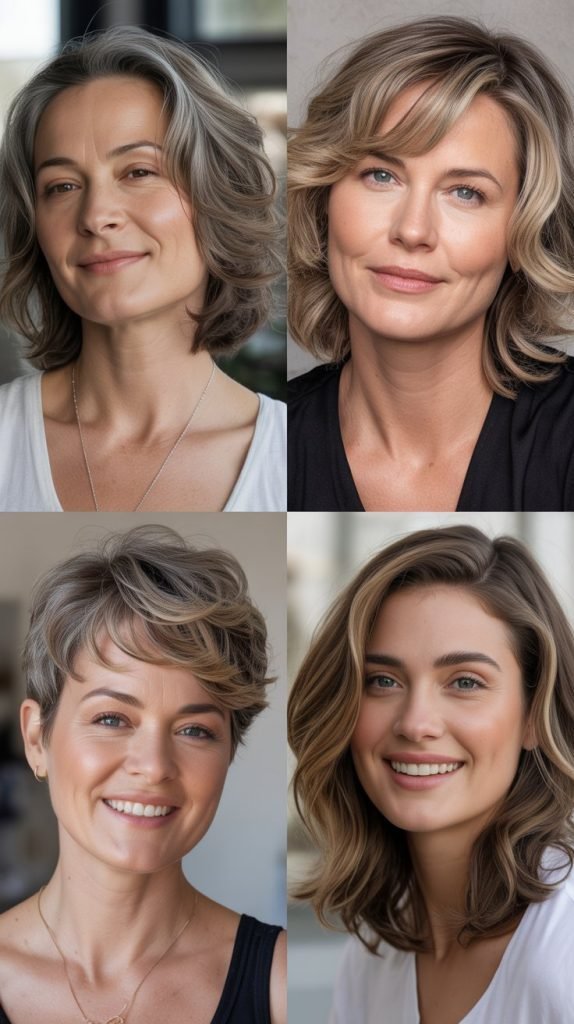
Razored ends create soft, feathery texture that helps fine hair move naturally and appear fuller through dimension rather than weight.
The razor-cutting technique produces irregular, tapering ends that catch light and create visual interest.
- Razor cutting involves using a straight razor or razor comb instead of scissors, which creates a different cutting angle and softer end result.
- The technique works by tapering hair strands rather than creating blunt ends, which helps fine hair lay in more interesting, dimensional ways.
- Razored ends move more freely than scissor-cut ends, creating a sense of lightness and bounce that’s particularly beneficial for fine hair.
- This cutting method can be applied to various base cuts—bobs, lobs, layers, or long hair—to enhance movement regardless of style.
- The soft, piece-y ends prevent the severe, blocky appearance that can happen with heavy, blunt-cut fine hair.
- Styling is minimal because the cut itself creates movement—simply blow-dry with fingers or air-dry with a light styling product.
- Razored ends work for all face shapes and add a soft, feminine quality that’s particularly flattering on mature women.
18. A-Line Bob with Subtle Graduation
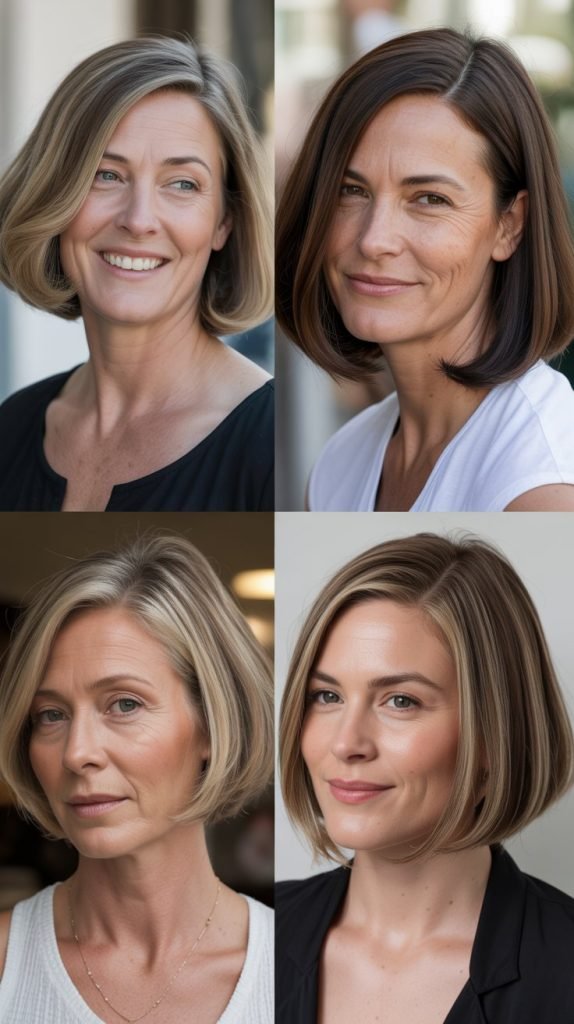
The A-line bob features a gentle angle from slightly shorter back to longer front, creating subtle graduation that adds volume through shape rather than dramatic styling.
This sophisticated cut offers professional polish with built-in fullness.
- The A-line differs from the inverted bob by having a more subtle angle—typically just an inch or two difference between back and front.
- The gentle graduation creates forward movement that frames the face while preventing the back from looking flat or heavy.
- Internal layers provide volume without disrupting the clean A-line silhouette that defines this classic cut.
- The shape naturally directs eyes toward the face and creates the illusion of fuller hair through its architectural structure.
- This cut works with straight or slightly wavy hair and can be styled sleek for professional settings or textured for casual occasions.
- Maintenance is relatively low—requiring trims every 6-8 weeks to maintain the angle and shape.
- The A-line bob flatters oval, round, and heart-shaped faces by creating width at the jawline and drawing attention to the eyes and cheekbones.
19. Piece-y Shag with Tapered Ends
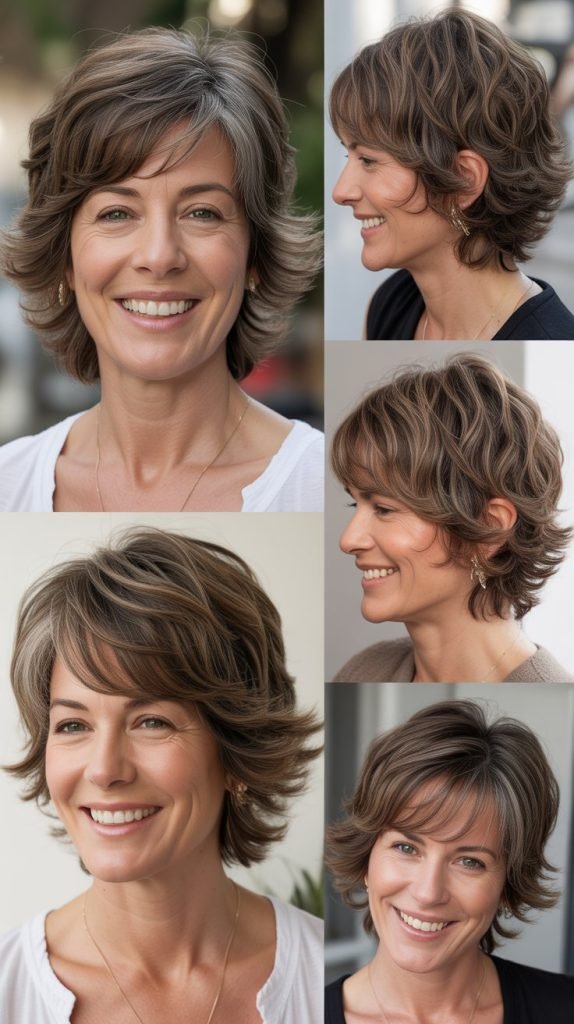
The piece-y shag creates deliberate separation and texture through choppy layers and tapered ends that prevent fine hair from clumping together.
This modern take on the shag is refined enough for mature women while maintaining the volume-boosting benefits of the classic cut.
- Piece-y refers to hair that’s cut to create distinct sections and separation rather than blending smoothly into a uniform mass.
- Tapered ends are created through point-cutting or slide-cutting techniques that create thin, separated tips rather than blunt edges.
- Layers throughout create lift and prevent weight from accumulating at any one point, allowing hair to stand away from the scalp naturally.
- The piece-y texture creates the optical illusion of more hair because each section stands somewhat independently, creating air and gaps that suggest fullness.
- This cut embraces natural texture and actually looks better with a bit of natural oil and grit rather than freshly washed hair.
- Styling involves scrunching with texturizing products and either air-drying or roughly blow-drying with fingers for intentionally imperfect results.
- The piece-y shag works for all face shapes and provides a youthful, modern aesthetic that doesn’t look like it’s trying too hard.
20. Layered Pixie with Longer Top

The layered pixie with longer top creates maximum height and volume by concentrating length where it matters most—at the crown and top of the head.
This variation on the classic pixie provides more styling versatility while maintaining the volume benefits of short hair.
- The top section typically measures 2-4 inches while sides and back are cropped much shorter, creating dramatic contrast and emphasizing height.
- Layers within the top section prevent it from lying flat and create texture that can be styled in multiple directions.
- The longer top can be swept forward, pushed back, styled to the side, or even divided for different looks from the same cut.
- This version of the pixie is particularly flattering for women with round or square faces, as the height elongates facial proportions.
- The cut requires regular trims every 4-6 weeks to prevent the sides from becoming bushy while the top maintains its length advantage.
- Styling involves applying product to damp hair and either blow-drying with fingers for lift or air-drying and manipulating the longer pieces once dry.
- The versatility of this cut makes it practical for various occasions—sleek for professional settings, textured for casual days, or dramatically styled for special events.
21. Rounded Bob with Interior Layers

The rounded bob creates a softly curved silhouette that adds volume through shape engineering rather than relying solely on products or styling techniques.
Interior layers remove weight without compromising the rounded perimeter that defines this feminine, flattering cut.
- The rounded shape is achieved through precise graduation that creates a curved line from crown to ends rather than a straight, horizontal line.
- Interior layers are cut into the under-sections of hair, removing bulk and allowing the outer layers to sit better and create the rounded silhouette.
- The perimeter remains relatively intact to maintain the illusion of thickness while the interior is strategically lightened for movement.
- This cut creates automatic volume at the back of the head, which is particularly beneficial for women with flat occipital areas.
- The rounded shape softens facial features and creates a youthful, feminine aesthetic that’s professional yet approachable.
- Styling involves blow-drying with a round brush, focusing on creating lift at the roots and smoothing the rounded shape into place.
- The rounded bob particularly flatters oval, heart, and diamond face shapes by adding width and softness around the features.
22. Disconnected Layers for Modern Edge
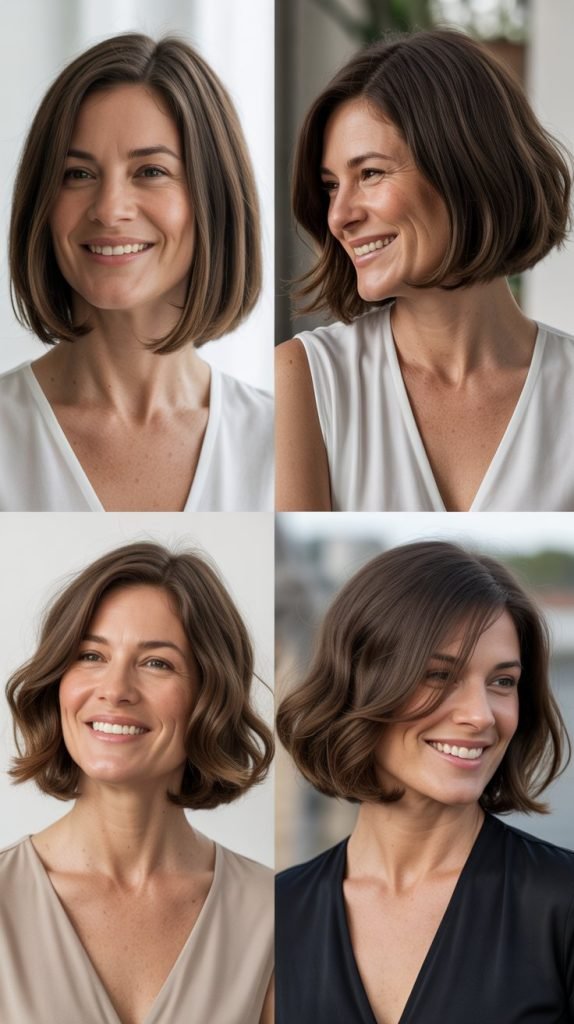
Disconnected layers create deliberate gaps between sections of hair rather than smoothly blended transitions, producing an edgy, modern look with significant volume benefits.
This contemporary cutting technique works surprisingly well for fine hair when executed properly.
- Disconnection means layers don’t smoothly transition from one to the next—instead, there are noticeable length differences that create texture and separation.
- This technique removes weight in strategic places while maintaining length in others, creating the illusion of fullness through contrast and dimension.
- The visible gaps between layers allow each section to move independently, creating more body and bounce than connected layers.
- This modern approach works with various base lengths and can be customized to be subtle or dramatic depending on personal style preferences.
- Disconnected layers are particularly effective when combined with texturizing techniques like point-cutting or razoring for piece-y ends.
- Styling is relatively easy because the cut itself creates interest—simply apply texturizing product and air-dry or roughly blow-dry with fingers.
- This cut suits women with a modern, fashion-forward aesthetic and works for most face shapes when customized appropriately.
23. Midi-Length with Flipped Ends

The midi-length cut (hitting between chin and shoulders) with flipped ends creates volume at the perimeter through outward curl or wave that makes hair appear fuller and more dynamic.
This retro-inspired technique works beautifully with modern cutting and styling methods.
- Midi-length provides enough hair to create visual weight without the drag of truly long hair, making it ideal for fine hair that needs body.
- Flipped ends are created by curling or blow-drying the last 2-3 inches of hair outward rather than under or straight.
- This outward flip creates width at the perimeter and prevents hair from lying limply against the neck and shoulders.
- The cut typically includes internal layers to remove weight and allow the ends to flip more easily without resistance from heavy mid-lengths.
- The flipped effect can be achieved with a round brush and blow dryer, a curling iron, or even velcro rollers for those who prefer traditional methods.
- This style has a playful, feminine quality that’s sophisticated when executed with modern cutting techniques and contemporary styling products.
- Midi-length with flipped ends flatters oval, heart, and long face shapes by adding width at the bottom and balancing facial proportions.
24. Undercut Bob with Top Volume

The undercut bob removes hidden bulk through shaved or closely cropped under-sections while maintaining full volume on top layers.
This combination creates dramatic lift without the appearance of an extreme or edgy cut when hair is worn down.
- The undercut section typically covers the lower back and possibly lower sides, removing significant weight that pulls hair down and causes flatness.
- Top layers have nothing weighing them down, allowing them to stand away from the scalp naturally and create impressive volume.
- When hair is worn down, the undercut remains hidden, creating a professional, polished appearance with exceptional body.
- When hair is pulled back or tucked behind ears, the undercut reveals as an unexpected detail that adds personality and edge.
- This cut significantly reduces drying and styling time since there’s less actual hair to work with while maintaining the appearance of fullness.
- The undercut requires regular maintenance every 4-6 weeks to keep the shaved sections neat and the overall balance intact.
- This style works for most face shapes, with the top layers customized in length and angle to flatter individual features.
25.Undercut Bob with Top Volume
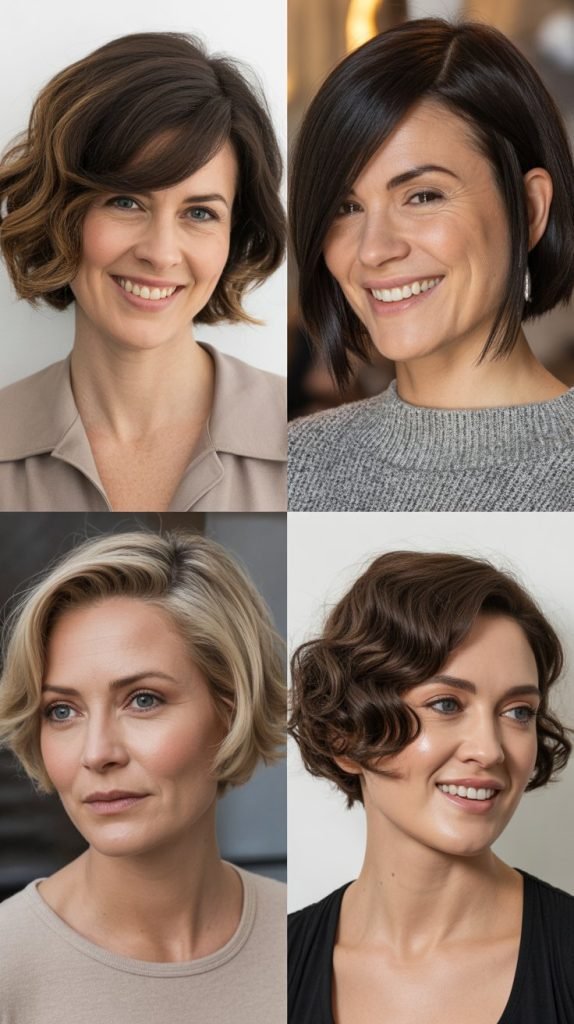
Soft waves combined with strategic layering create the ultimate volume illusion for fine hair, adding dimension, movement, and fullness through both cutting and styling techniques.
This romantic, feminine approach works beautifully for women over 40 who want polished elegance with body.
- The layered base cut is essential for preventing waves from looking heavy or pulling out—layers allow waves to form and hold better.
- Layers are typically placed throughout the cut, starting around eye or cheekbone level and continuing to the ends for maximum movement.
- Soft waves differ from tight curls or beachy waves—they’re gentle, flowing curves that add body without looking overly styled or textured.
- The combination creates gaps of air between hair sections where light can pass through, creating the illusion of fuller, more abundant hair.
- Waves can be created with a large-barrel curling iron, a flat iron using a waving technique, or even braiding damp hair and allowing it to dry.
- The key is keeping waves soft and not overly defined—they should blend together naturally rather than appearing as distinct ringlets.
- This style flatters all face shapes and works with various lengths from shoulder-length to longer, providing versatile elegance.
26. Side-Swept Asymmetrical Cut

The side-swept asymmetrical cut uses dramatic side-parting and intentional length imbalance to create volume and modern sophistication.
This bold approach makes fine hair appear fuller through strategic placement and eye-catching asymmetry.
- Asymmetry typically involves one side being noticeably shorter than the other—anywhere from one to several inches difference depending on personal preference.
- The dramatic side part concentrates the majority of hair on one side, creating significant volume and height where hair is swept over.
- The shorter side can be tucked behind the ear or left to fall forward, creating contrast that emphasizes the fullness of the longer side.
- This cut works with various base lengths from short pixie-bobs to lob length, each creating different degrees of drama.
- The style requires regular maintenance to keep the asymmetry precise and intentional rather than appearing grown-out and neglected.
- Styling involves blow-drying with the dramatic side part in place, focusing volume on the longer side while keeping the shorter side sleek or textured.
- Asymmetrical cuts work particularly well for oval, heart, and rectangular face shapes, creating balance through intentional imbalance.
27. Crown-Focused Layering

Crown-focused layering concentrates the shortest layers at the top and crown of the head while maintaining length elsewhere, creating targeted volume where thinning and flatness are most visible.
This strategic approach solves the specific problem of flat crowns that many women over 40 experience.
- The crown area features progressively shorter layers that lift away from the scalp naturally, creating height and fullness at the top of the head.
- Layers gradually lengthen as they move down and toward the sides, creating a natural transition rather than an obvious stepped appearance.
- This technique addresses the common issue of hair becoming thinner and finer at the crown specifically, which is often an age-related concern.
- The concentrated layering creates a “halo” of volume that draws eyes upward and creates the overall impression of fuller, thicker hair.
- Styling involves lifting the crown layers while blow-drying, using a round brush or fingers to direct hair upward and away from the scalp.
- The rest of the hair can be styled smoothly or with texture, depending on personal preference and the overall cut design.
- Crown-focused layering works with various base lengths and suits all face shapes by adding height that balances and elongates features.
28. Textured Ends with Minimal Layers

Textured ends with minimal layers throughout creates volume primarily at the perimeter rather than through extensive layering, maintaining maximum hair density while adding movement where it’s most visible.
This approach works well for fine hair that becomes too thin-looking when heavily layered.
- Texturizing focuses on the last 2-3 inches of hair, using point-cutting, razoring, or texturizing shears to create irregular, piece-y ends.
- Minimal interior layering means the bulk of hair maintains similar length, preserving the appearance of thickness and density.
- The textured ends prevent blunt, heavy lines that can make fine hair look stringy and allow the perimeter to move freely and catch light.
- This technique is particularly effective for women whose hair is fine but not necessarily sparse—maintaining density is the priority.
- The cut works with various base lengths from bobs to collarbone or shoulder length, depending on personal preferences.
- Styling can be minimal—the textured ends create natural movement that doesn’t require extensive blow-drying or product application.
- This approach flatters all face shapes and provides a natural, effortless aesthetic that’s perfect for low-maintenance lifestyles.
29. Choppy Bob with Blunt Bangs

The choppy bob with blunt bangs creates a bold, geometric look that maximizes volume through contrast between textured body and straight-across bangs.
This modern combination adds significant fullness while making a confident style statement.
- The choppy body features irregular, piece-y layers throughout that create separation and texture, preventing fine hair from lying flat.
- Blunt bangs cut straight across create a strong horizontal line that adds visual weight and draws attention to the eyes.
- The contrast between textured, piece-y body and solid, blunt bangs creates visual interest and the impression of thicker, fuller hair.
- Bangs should typically hit at or just below eyebrow level, providing maximum face-framing impact without overwhelming features.
- The choppy body can be achieved through point-cutting, slide-cutting, or razor techniques that create irregular, non-uniform ends.
- Styling involves blow-drying or flat-ironing bangs straight while scrunching or roughly drying the body with fingers for intentional texture.
- This cut works particularly well for oval, heart, and long face shapes, with the horizontal bang line shortening and widening facial proportions.
30. Graduated Pixie with Textured Top

The graduated pixie features precisely cut graduated sections that create a stacked, curved shape, combined with a textured top that provides styling versatility.
This combination delivers architectural volume with playful texture for maximum fullness.
- Graduation refers to systematic length changes throughout the cut, typically shorter at the nape and gradually longer toward the crown and top.
- The graduated back creates a rounded, curved shape that lifts away from the head naturally, providing automatic volume without styling.
- The textured top features choppy, piece-y layers that can be styled multiple ways—forward, back, to the side, or up for height.
- This combination provides both structured volume from the graduation and flexible volume from the textured top layers.
- The cut requires skilled execution to maintain the precise graduation while creating natural-looking texture that doesn’t appear choppy or disconnected.
- Styling involves emphasizing the graduated curve in back through blow-drying direction while adding product to top layers for texture and separation.
- The graduated pixie with textured top suits most face shapes and provides a modern, fashion-forward aesthetic that’s still professional.
31. Long Bob with Razored Layers
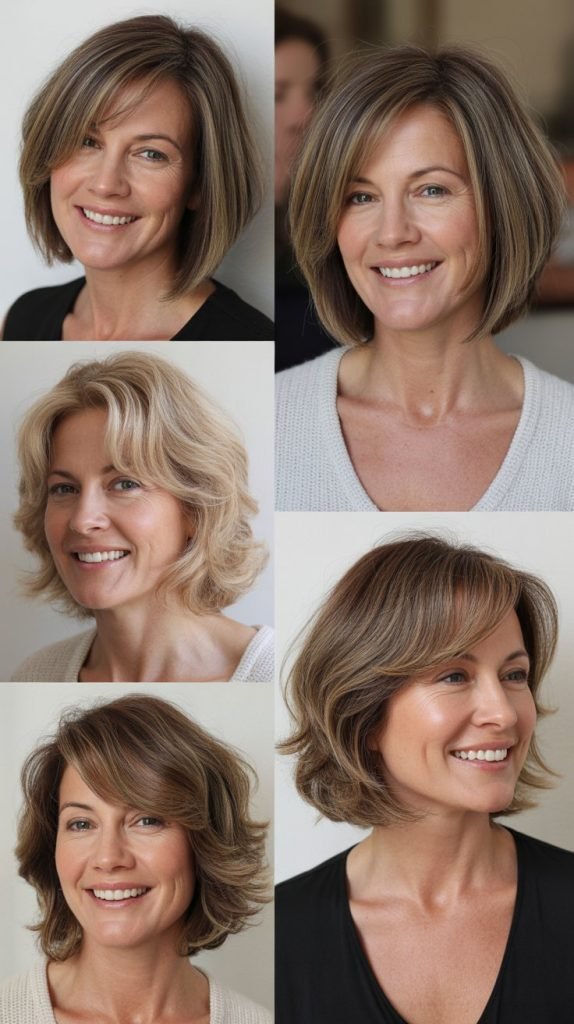
The long bob (lob) with razored layers combines the versatile lob length with the soft, feathery movement that razor-cutting provides.
This pairing creates dimensional fullness that makes fine hair appear significantly thicker and more dynamic.
- The lob length typically hits between chin and collarbone, providing enough length for styling options while avoiding the weight of longer hair.
- Razored layers are created using a straight razor instead of scissors, producing tapering, feathery ends that move differently than scissor-cut hair.
- The razor technique creates softer, more natural-looking layers that blend seamlessly and create fluid movement throughout the cut.
- This cutting method is particularly beneficial for fine hair because it reduces weight without creating harsh lines or obvious steps.
- The combination of lob length and razored texture creates a romantic, feminine aesthetic that’s both modern and timeless.
- Styling can range from sleek and straight to wavy and tousled, with the razored layers enhancing natural movement in any styling approach.
- This cut flatters all face shapes and works beautifully for women who want versatile length with volume-boosting benefits.
32. Voluminous Crown with Tapered Sides
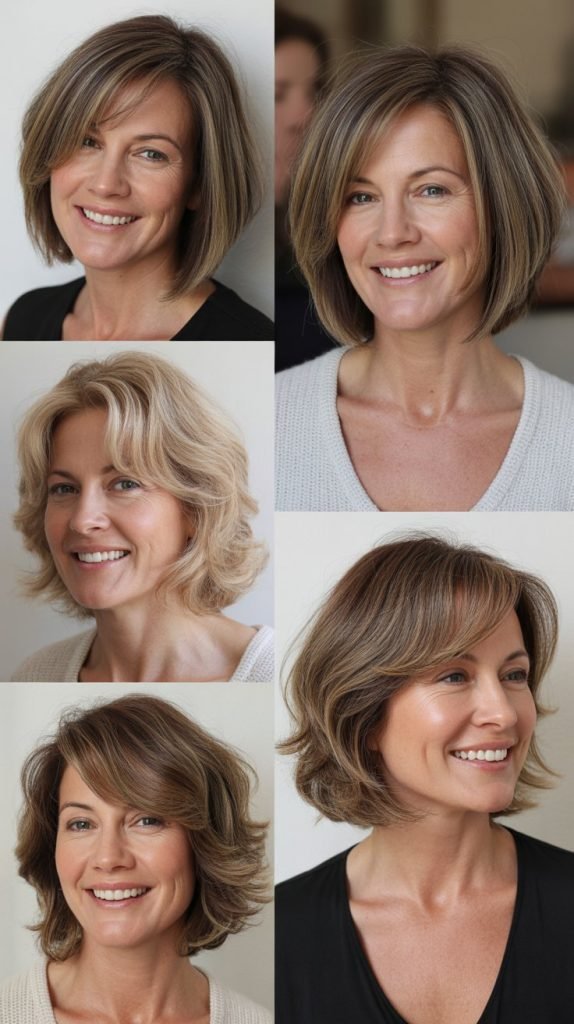
The voluminous crown with tapered sides creates dramatic height at the top of the head while keeping sides sleek and close, emphasizing the fullness where it’s most impactful.
This structured approach engineers volume through shape rather than relying on styling alone.
- The crown area features concentrated layers and length that stand up and create significant height when properly styled.
- Tapered sides gradually decrease in length from crown to ears, creating a smooth transition that emphasizes the volume on top.
- This silhouette creates a modern, fashion-forward shape that’s particularly flattering for women with round or square face shapes.
- The contrast between full crown and tapered sides makes the volume appear even more dramatic and impressive.
- This cut requires regular maintenance to keep the taper neat and the crown layers at optimal length for maximum volume.
- Styling involves blow-drying the crown layers upward and back while smoothing the tapered sides with a flat brush or straightener.
- The dramatic volume at the crown draws eyes upward, creating the impression of height and elongating overall proportions.
33. Shoulder-Grazing Cut with Internal Layers
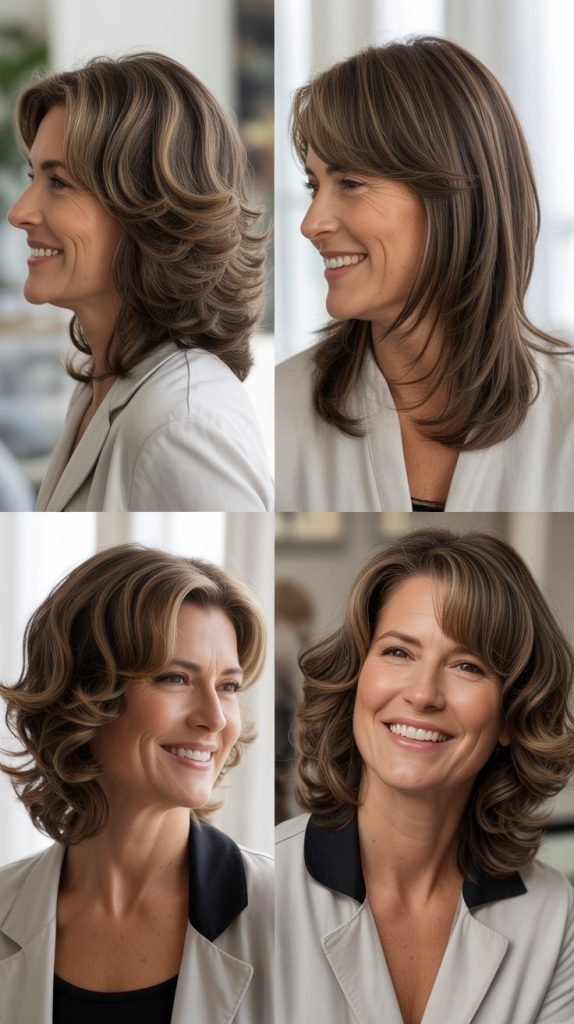
The shoulder-grazing cut with internal layers provides a balanced approach that maintains flattering length while removing interior weight that can drag fine hair down.
This versatile option works for women who want traditional length with modern volume-boosting techniques.
- Shoulder-grazing length hits right at or just above the shoulders, providing enough length for updos and ponytails while avoiding excessive weight.
- Internal layers are cut into the under-sections of hair, removing bulk without significantly affecting the outer perimeter and overall length.
- This technique maintains the appearance of thickness at the ends while creating lift and movement throughout the interior.
- The cut works particularly well for fine hair that’s evenly distributed rather than concentrated at the top or crown.
- Face-framing pieces can be added regardless of the internal layer structure, customizing the cut to flatter individual features.
- Styling involves blow-drying with a round brush, focusing on creating lift at the roots while smoothing the lengths and ends.
- This cut provides excellent versatility—it can be worn straight, wavy, curled, or in various updos and half-up styles for different occasions.
34. Micro-Layered Pixie

The micro-layered pixie features very short, precisely cut layers throughout that create maximum texture and lift for fine hair.
This technical cutting approach produces impressive volume from minimal hair through strategic layering and texturizing.
- Micro-layers refer to very small incremental length changes throughout the cut rather than dramatic stepped layers.
- This creates dense texture and lift because no section of hair is long enough to weigh down the sections below it.
- The technique requires skilled cutting to maintain a cohesive shape while creating enough texture to prevent the pixie from looking flat or too uniform.
- Despite being very short, this cut provides surprising styling versatility through the varied layer lengths that can be directed differently.
- The micro-layering creates natural separation and piece-y texture without requiring extensive product application or styling time.
- This ultra-short option is incredibly practical for active lifestyles, hot climates, or women who simply prefer minimal hair maintenance.
- The micro-layered pixie works best for oval, heart, and rectangular face shapes, adding width and texture that balances facial proportions.
35. Piecey Ends with Dimensional Layers

Piece-y ends with dimensional layers creates separated, textured tips combined with strategically placed layers that add depth and the illusion of thickness throughout.
This modern finishing technique maximizes the volume potential of fine hair through both cutting and texturing.
- Piece-y ends are achieved through point-cutting or notching techniques that create irregular tips rather than uniform blunt edges.
- Dimensional layers are placed at varying lengths and depths throughout the hair, creating a three-dimensional quality rather than flat, uniform sections.
- The combination prevents fine hair from clumping together and lying flat, instead creating separation and movement that suggests fullness.
- This technique works with various base lengths and can be subtle or dramatic depending on the degree of texturizing and layer placement.
- The piece-y texture and dimensional layering create interest and movement that catches light from multiple angles, enhancing the impression of thick, healthy hair.
- Styling can be minimal because the cut itself creates texture—simply apply a light styling product and allow hair to air-dry or quickly blow-dry with fingers.
- This approach flatters all face shapes and provides a contemporary, effortless aesthetic that’s perfect for modern women over 40.
Comparison Table: Length vs. Maintenance Requirements
| Cut Length | Maintenance Frequency | Styling Time | Best For |
|---|---|---|---|
| Pixie (1-3 inches) | Every 4-6 weeks | 5-10 minutes | Minimal maintenance, active lifestyle |
| Short crop/bob (3-5 inches) | Every 5-6 weeks | 10-15 minutes | Professional environments, easy styling |
| Bob/Lob (5-8 inches) | Every 6-8 weeks | 15-20 minutes | Versatility, traditional preferences |
| Shoulder length (8-12 inches) | Every 8-10 weeks | 20-30 minutes | Updo options, maximum versatility |
Styling Products for Fine Hair Volume
| Product Type | Purpose | Application Tips |
|---|---|---|
| Volumizing mousse | Root lift and all-over body | Apply to damp hair before blow-drying |
| Texturizing spray | Piece-y separation and grip | Spray on dry hair for definition |
| Dry shampoo | Volume refresh and oil absorption | Apply at roots, wait 2 minutes, massage in |
| Root lift powder | Targeted crown volume | Sprinkle at crown, massage with fingertips |
| Lightweight finishing spray | Hold without weight | Mist from 10 inches away after styling |
Conclusion
Finding the perfect volume-boosting cut from these 35 Volume-Boosting Haircuts for Women Over 40 with Fine Hair means considering your face shape, lifestyle, styling preferences, and how much maintenance you’re willing to commit to for optimal results.
Whether you choose a dramatic pixie that maximizes lift through minimal length, a sophisticated bob with strategic layering, or a textured lob that balances versatility with fullness, the right cut can transform your fine hair from a daily frustration into your most confidence-boosting feature.
Remember that the best haircut works with your natural texture rather than fighting against it, removes weight without sacrificing the appearance of density, and fits seamlessly into your daily routine without requiring extensive styling expertise or time.
Consult with a skilled stylist who specializes in fine hair and understands the unique challenges of mature hair texture, bringing photos of styles you love and being open to their professional recommendations based on your specific hair characteristics and facial features.
With the right cut from this comprehensive guide to volume-boosting styles for women over 40 with fine hair, you’ll discover that fine hair doesn’t have to mean flat hair—it simply means finding the strategic cut that unleashes your hair’s full potential for body, movement, and head-turning volume.
