

Short pixie haircuts have revolutionized the world of hairstyling, offering a perfect blend of sophistication, versatility, and low-maintenance beauty that appeals to women of all ages.
Whether you’re contemplating a dramatic transformation or simply seeking inspiration for your next salon visit, understanding the diverse range of pixie styles available can help you make a confident choice that complements your facial features, lifestyle, and personal aesthetic.
This comprehensive guide explores 33 top short pixie haircuts for fresh styling ideas, from classic tapered cuts to bold, textured variations that push the boundaries of contemporary hair fashion.
Throughout this article, you’ll discover detailed descriptions of each style, including their defining characteristics, styling techniques, and the face shapes they flatter most, empowering you to find the perfect pixie cut that reflects your unique personality and enhances your natural beauty.
1. Classic Tapered Pixie
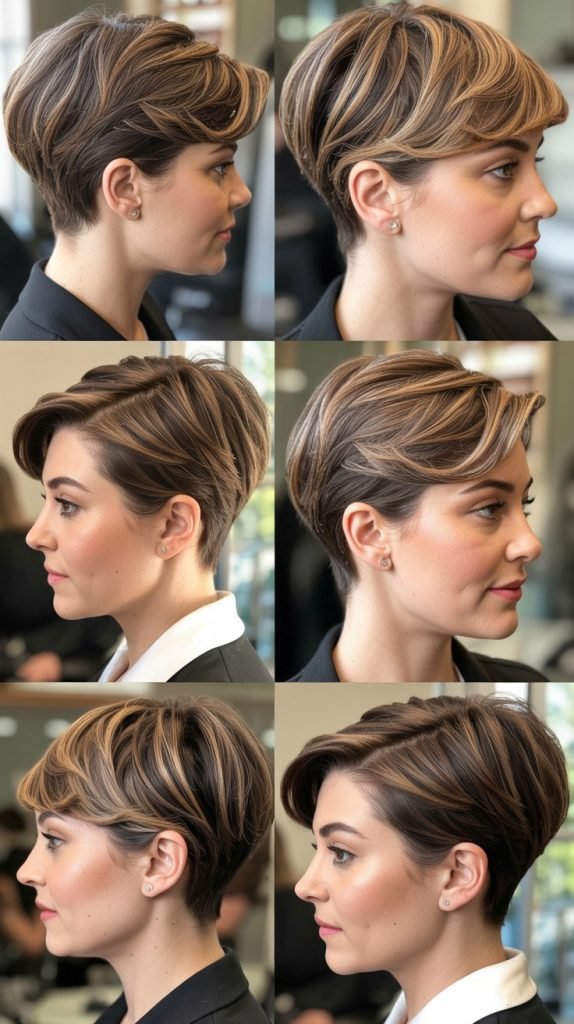
The classic tapered pixie serves as the foundation of all pixie haircuts, featuring gradually shortened sides and back with slightly longer hair on top that creates a timeless, elegant silhouette perfect for professional settings and everyday wear.
- This versatile style works exceptionally well for women with oval, heart-shaped, and diamond face shapes, as the balanced proportions create harmony with natural facial contours.
- The tapered sides are typically cut to about half an inch to one inch in length, while the top section ranges from two to four inches, allowing for various styling options from sleek and smooth to slightly tousled.
- Styling this cut requires minimal effort—simply apply a small amount of lightweight pomade or styling cream to damp hair and blow-dry with your fingers for a natural finish, or use a flat iron for a more polished appearance.
- Maintenance involves regular trims every 4-6 weeks to preserve the sharp, clean lines that define this classic style.
- This cut suits women with fine to medium hair texture, as it creates the illusion of fuller, thicker hair through strategic layering and precise tapering techniques.
2. Textured Choppy Pixie
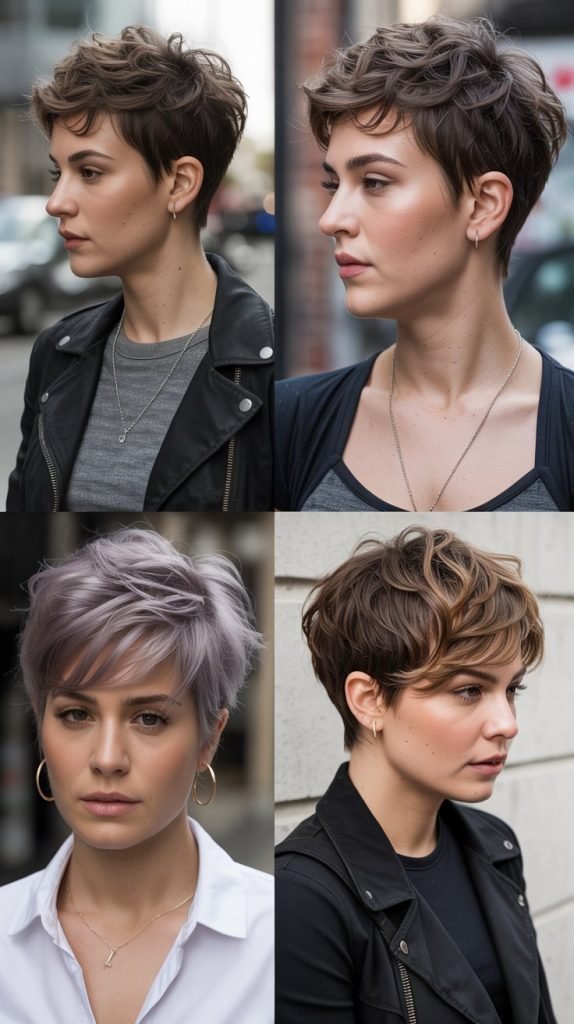
The textured choppy pixie introduces deliberate disconnection and piecey layers throughout the cut, creating a modern, edgy aesthetic that exudes confidence and contemporary style sensibilities.
- Hairstylists achieve this look through point-cutting and razor techniques that remove bulk while simultaneously creating movement and dimension within the hair structure.
- The choppy layers typically vary in length from one to three inches, with longer pieces strategically placed on top to frame the face and shorter sections at the nape and around the ears.
- This style works particularly well for thick or coarse hair textures, as the layering technique reduces weight and makes the hair more manageable while enhancing its natural texture.
- Styling requires texturizing products such as clay, paste, or sea salt spray applied to towel-dried hair, then scrunched or pieced out with your fingers to emphasize the choppy, separated effect.
- The textured choppy pixie flatters angular face shapes, including square and rectangular faces, by softening harsh jawlines and adding visual interest through varied lengths.
- Color techniques like highlights, lowlights, or balayage work exceptionally well with this cut, as the varied layers showcase dimensional color beautifully.
3. Asymmetrical Pixie Cut
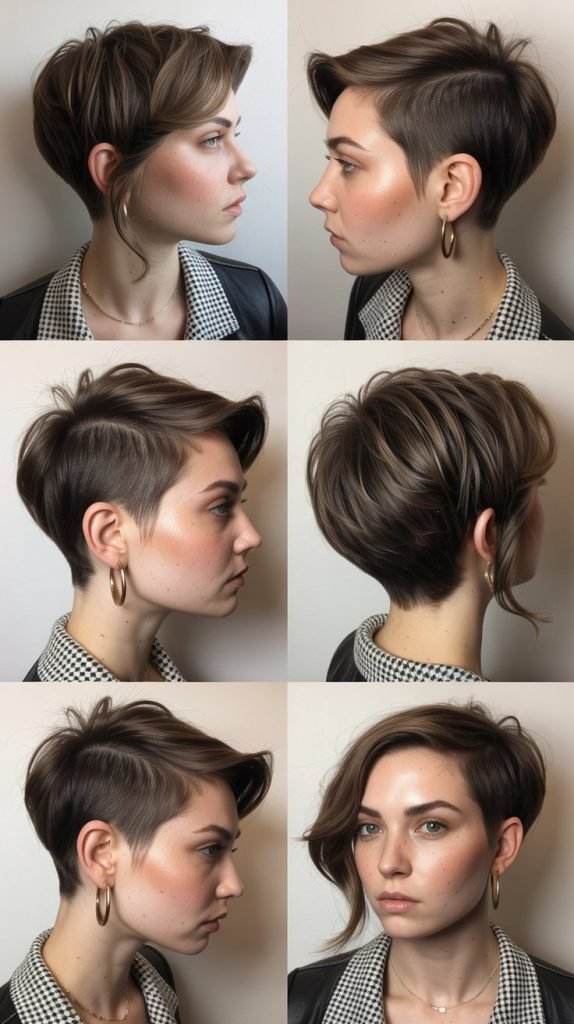
The asymmetrical pixie cut breaks traditional symmetry rules by featuring intentionally uneven lengths on either side of the head, creating a bold, artistic statement that draws attention and showcases individual creativity.
- One side is typically cut shorter, often buzzed or closely cropped to one-quarter inch or less, while the opposite side features longer lengths ranging from two to five inches that can be swept across the forehead or tucked behind the ear.
- This dramatic style particularly flatters round and square face shapes by creating angular lines that elongate the face and add visual interest through strategic asymmetry.
- The contrast between short and long sections allows for versatile styling options—wear the longer side swept dramatically across for evening events or style it back for a more subdued daytime look.
- Maintenance requires commitment, as the stark contrast between lengths necessitates regular trims every 3-4 weeks to maintain the distinctive asymmetrical silhouette.
- Women with fine to medium hair texture benefit most from this cut, as the asymmetry creates the illusion of volume and movement without requiring excessive thickness.
- Styling products should include strong-hold gel or pomade on the shorter side to maintain sleekness, while the longer side benefits from lightweight mousse or volumizing spray to enhance body and movement.
4. Undercut Pixie
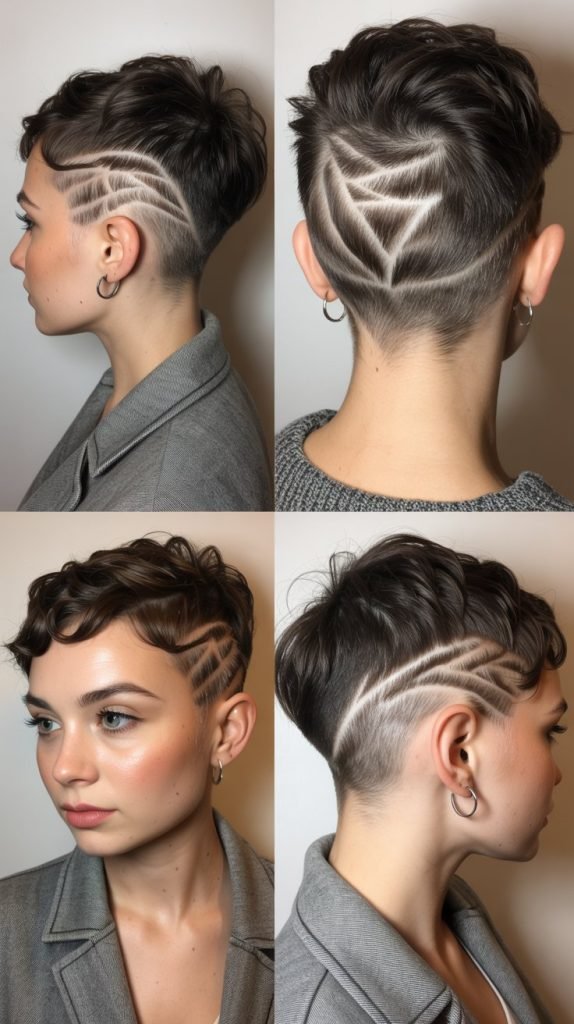
The undercut pixie combines feminine elegance on top with bold, shaved sections underneath, creating a striking contrast that allows for hidden edginess revealed only when hair is styled up or back.
- The undercut typically involves shaving or closely cropping the hair at the nape, sides, or both to approximately one-eighth inch using clippers, while leaving the top section significantly longer at three to six inches.
- This style offers incredible versatility—when the top hair is worn down, it conceals the undercut for a more conservative appearance, but styling it up or to the side reveals the dramatic shaved sections underneath.
- Women with thick, heavy hair particularly benefit from undercuts, as removing the bulk underneath makes the hair lighter, cooler, and significantly easier to style while maintaining volume on top.
- The undercut works well with all face shapes, though the specific placement of shaved sections can be customized to enhance individual features—side undercuts elongate round faces, while nape undercuts complement heart-shaped faces.
- Styling the top section can range from sleek and polished using straightening products to tousled and textured with volumizing mousse, offering multiple looks from a single cut.
- Maintenance includes trimming the longer top section every 6-8 weeks and refreshing the undercut every 2-3 weeks to keep the shaved sections neat and defined.
- According to professional hairstyling resources at Allure, undercut pixies have become increasingly popular among celebrities and everyday women seeking a balance between conventional beauty and alternative style.
5. Long Pixie Cut
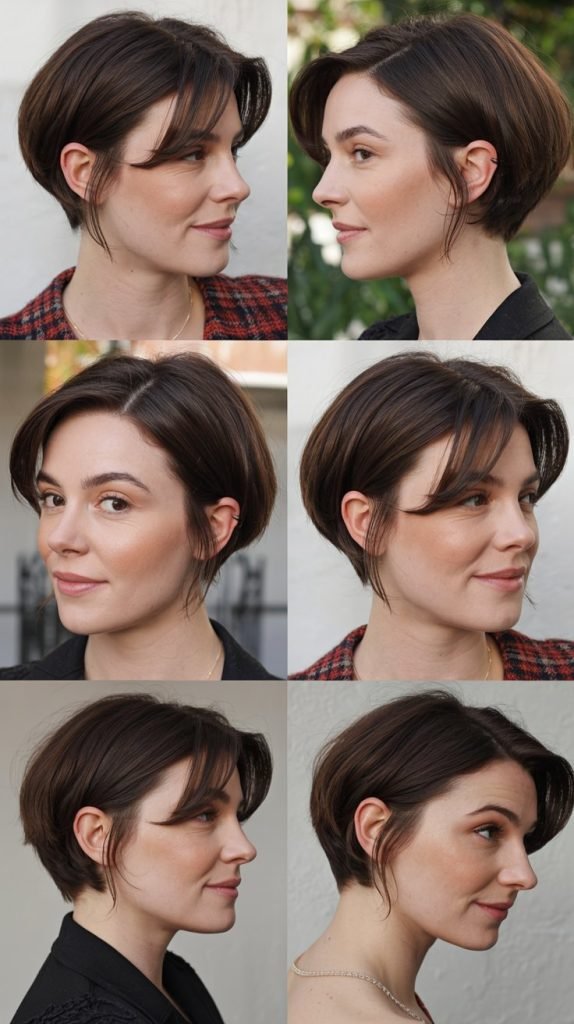
The long pixie cut bridges the gap between traditional pixie styles and short bobs, featuring extended lengths throughout that typically range from three to six inches, offering maximum styling versatility while maintaining the ease of short hair.
- This transitional style works perfectly for women hesitant to commit to very short hair or those growing out a shorter pixie, providing a comfortable middle ground that still reads as distinctly pixie rather than bob.
- The longer lengths allow for various styling options including tucking behind ears, creating soft waves or curls, styling into a small ponytail, or sweeping into a side part with volume.
- Face shape versatility is a key advantage—long pixies complement virtually all face shapes because the added length can be customized through layering and styling to either soften or define features as needed.
- Women with fine hair gain particular benefits from long pixies, as the extended length provides more hair to work with for creating volume and body through styling techniques and products.
- Styling typically involves blow-drying with a round brush to create lift at the roots, then using lightweight styling products like volumizing spray or texturizing mist to enhance movement without weighing hair down.
- Color techniques shine in long pixies—ombré effects, subtle balayage, and face-framing highlights all work beautifully with the extended canvas this length provides.
- Maintenance is slightly less demanding than shorter pixies, with trims needed every 6-8 weeks rather than monthly, making this an excellent choice for busy lifestyles.
6. Pixie with Side-Swept Bangs
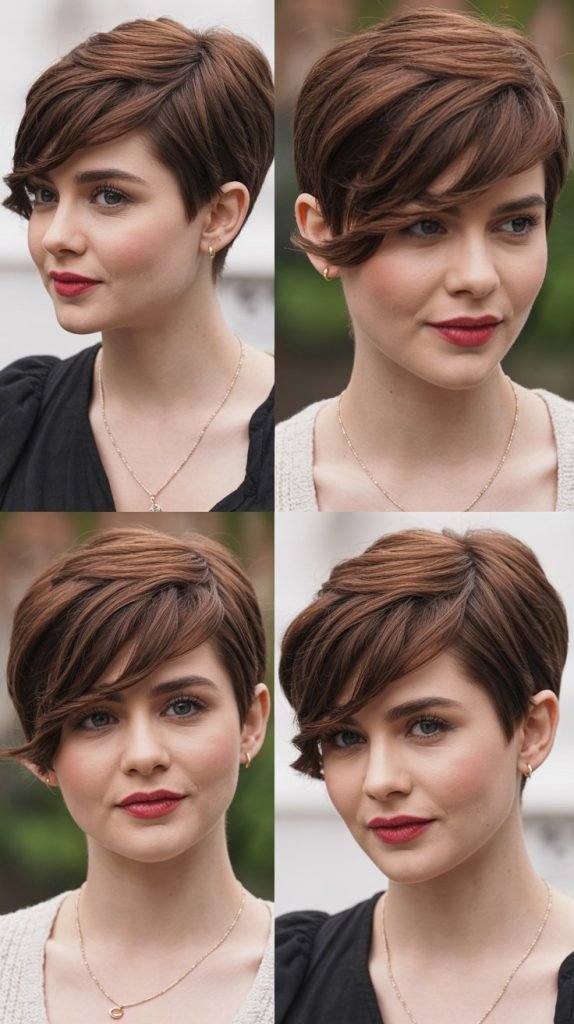
The pixie with side-swept bangs incorporates longer fringe sections that sweep dramatically across the forehead, creating a romantic, feminine element that softens the overall look while maintaining the pixie’s signature short profile.
- The bangs typically range from two to four inches in length, cut at an angle that allows them to sweep naturally to one side, creating asymmetry and visual interest that draws the eye across the face.
- This style particularly flatters women with prominent foreheads, angular features, or those who prefer some face-framing elements rather than the fully exposed look of traditional pixie cuts.
- Round and square face shapes benefit significantly from side-swept bangs, as the diagonal line created by the sweeping fringe elongates the face and softens angular jawlines.
- Styling involves blow-drying the bangs to the desired side using a round brush or flat iron, then securing the direction with a light-hold hairspray or smoothing serum to prevent flyaways.
- The contrast between the swept bangs and the shorter back and sides creates dimension and movement that prevents the cut from appearing too severe or stark.
- Women growing out their pixie cuts often adopt this style, as the longer bangs provide a transitional element while the rest of the hair gradually catches up in length.
- Regular bang trims every 2-3 weeks help maintain the perfect length and angle, while the overall cut requires maintenance every 4-6 weeks.
7. Spiky Pixie Cut
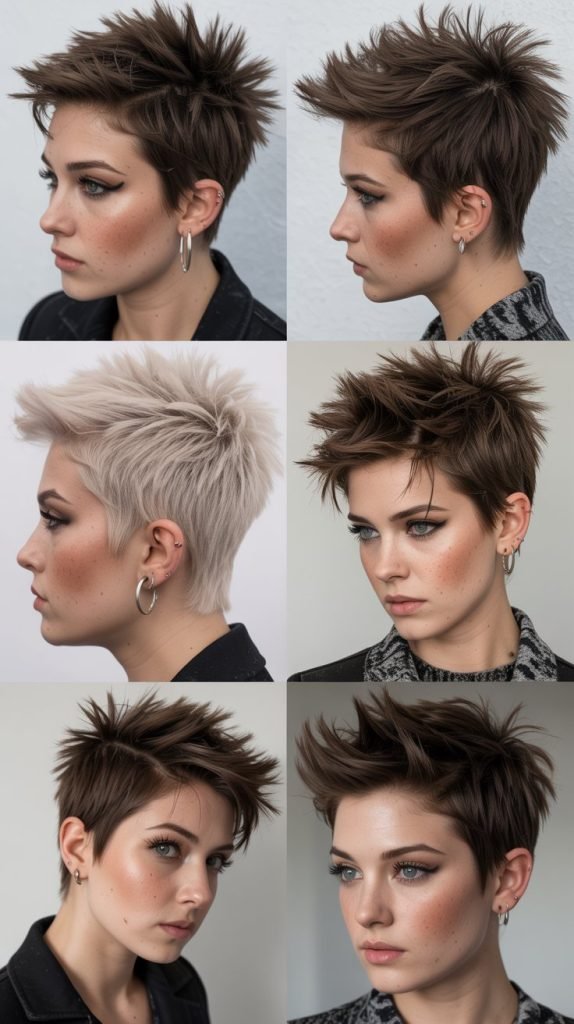
The spiky pixie cut channels punk rock energy and bold confidence through upward-styled hair that defies gravity, creating dramatic texture and height that commands attention and expresses individuality.
- Achieving this look requires hair cut to relatively uniform lengths of one to three inches throughout, with slight layering that allows pieces to stand up independently when styled with appropriate products.
- Strong-hold styling products are essential—gel, wax, or pomade applied to damp hair and worked through with fingers pointing upward creates the signature spiky texture that defines this edgy style.
- This cut works particularly well for fine to medium hair textures, as thick or heavy hair may be too weighty to hold the upward styling effectively without excessive product.
- Face shapes with strong features—including square, rectangular, and diamond shapes—are complemented by spiky pixies, as the vertical lines and texture draw the eye upward and balance angular features.
- The spiky pixie projects confidence and rebelliousness, making it popular among women in creative fields, younger demographics, and those who embrace alternative fashion aesthetics.
- Maintenance involves regular trims every 4-5 weeks to prevent the hair from growing too long to spike effectively, plus daily styling commitment to achieve and maintain the signature look.
- Color experimentation works beautifully with spiky pixies—platinum blonde, bold fashion colors, or multi-tonal highlighting all emphasize the textured, piece-separated nature of the style.
8. Curly Pixie Cut
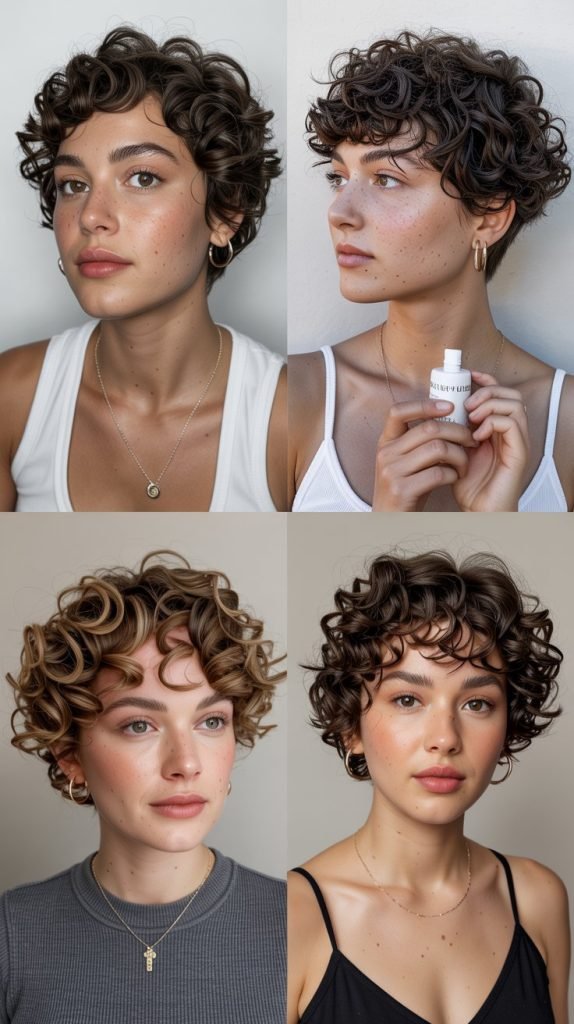
The curly pixie cut celebrates natural curl patterns by incorporating them into a short, shaped style that enhances rather than fights texture, creating a bouncy, voluminous look full of personality and movement.
- This style works specifically for women with naturally curly or wavy hair ranging from loose waves (Type 2) to tight ringlets (Type 3), as the cut is designed to work with rather than against natural curl patterns.
- Strategic layering throughout the cut removes bulk while encouraging curls to form their natural shape, preventing the triangular silhouette that can occur when curly hair is cut without considering curl pattern.
- The length typically ranges from two to four inches, providing enough hair for curls to form properly while maintaining the short, manageable nature of pixie cuts.
- Styling requires curl-specific products including leave-in conditioner, curl cream, and gel applied to soaking wet hair, then either air-dried or diffused on low heat to prevent frizz and maintain curl definition.
- Heart-shaped and oval face shapes particularly benefit from curly pixies, as the natural volume and width created by curls balance narrower chins and broader foreheads.
- Maintenance differs from straight-haired pixies—trims every 8-10 weeks suffice because curls shrink up and mask growth, though shape adjustments may be needed to maintain the desired silhouette.
- According to curl specialists at NaturallyCurly, the curly pixie has gained popularity as more women embrace their natural texture and seek low-manipulation styles that prioritize hair health.
9. Blonde Pixie Cut
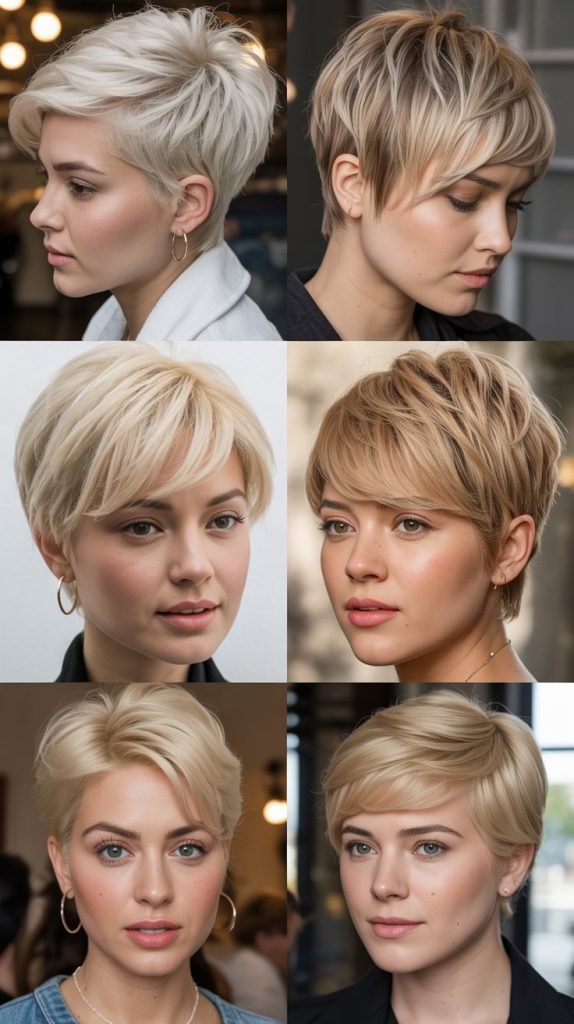
The blonde pixie cut combines the classic short silhouette with various blonde tones ranging from platinum to honey, creating a luminous, attention-grabbing look that brightens the complexion and emphasizes facial features.
- Blonde coloring works particularly well with pixie cuts because the short length showcases the color vibrantly while requiring less maintenance than longer blonde hair, which is prone to damage from lightening processes.
- Different blonde shades complement various skin tones—cool platinum and ash blondes suit cool undertones, while warm golden and honey blondes enhance warm undertones, and beige blondes work for neutral undertones.
- The contrast between dark roots and blonde lengths creates dimension and depth, with techniques like balayage or ombré adding visual interest that prevents the style from appearing flat or one-dimensional.
- Maintaining blonde pixie cuts requires purple or blue toning shampoos used weekly to neutralize brassy, yellow tones that naturally develop in lightened hair exposed to environmental elements.
- Women with fair to medium skin tones particularly glow with blonde pixies, as the light color brightens the face and creates a youthful, fresh appearance that draws attention to eyes and facial structure.
- Styling blonde pixies involves using heat protectant products before any thermal styling to prevent further damage to chemically processed hair, plus hydrating serums to maintain shine and prevent dryness.
- Regular salon visits every 6-8 weeks maintain both the cut and color, with root touch-ups needed more or less frequently depending on how much contrast is desired between natural and blonde tones.
10. Pixie Cut with Shaved Sides
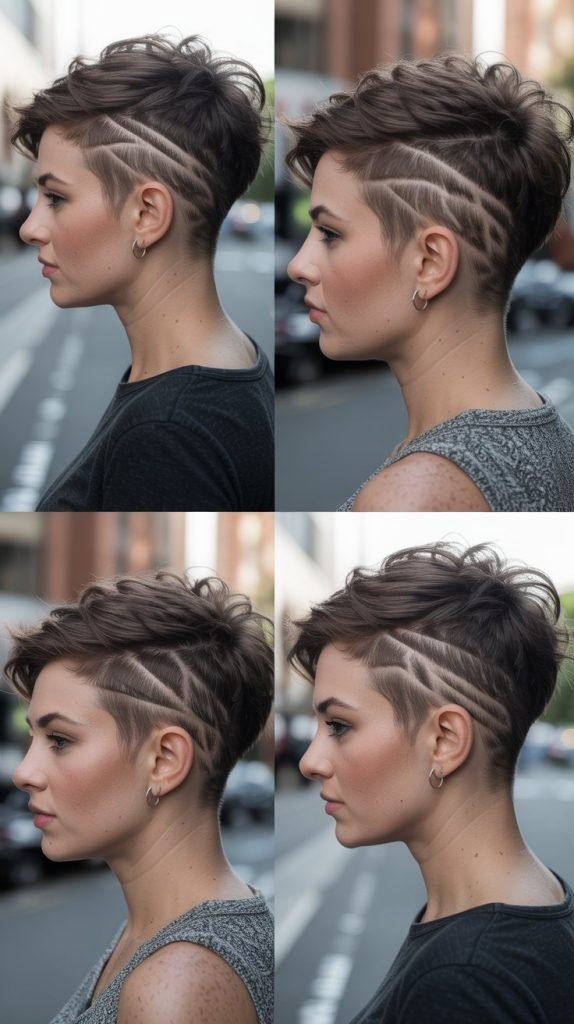
The pixie cut with shaved sides creates bold contrast through completely shaved or closely buzzed sides measuring approximately one-sixteenth to one-quarter inch, while maintaining longer hair on top that can range from two to six inches for dramatic versatility.
- This high-contrast style offers the best of both worlds—conservative coverage when the top hair is worn down, and striking edginess when styled up, back, or to the side to reveal the shaved sections.
- The shaved sides significantly reduce styling time and maintenance while keeping the head cooler, making this an excellent choice for active lifestyles, warm climates, or those who prefer wash-and-go simplicity.
- Face shape considerations include the width of shaved sections—wider shaved areas create vertical emphasis that elongates round faces, while narrower shaved strips add interest without dramatically altering face shape perception.
- Women with thick, heavy hair experience the most dramatic benefits, as removing hair from the sides reduces bulk substantially while maintaining fullness on top where it’s most visible and styleable.
- Styling options include slicking the top hair back with gel or pomade for formal occasions, tousling it with texturizing products for casual looks, or creating a faux hawk effect by styling upward and toward the center.
- The shaved sides require frequent maintenance every 2-3 weeks to prevent stubble from growing out unevenly, though the top section only needs trimming every 6-8 weeks.
- Temporary hair tattoos or designs can be added to shaved sections for extra personalization, ranging from simple lines to intricate patterns created by skilled barbers.
11. Pixie Bob Hybrid
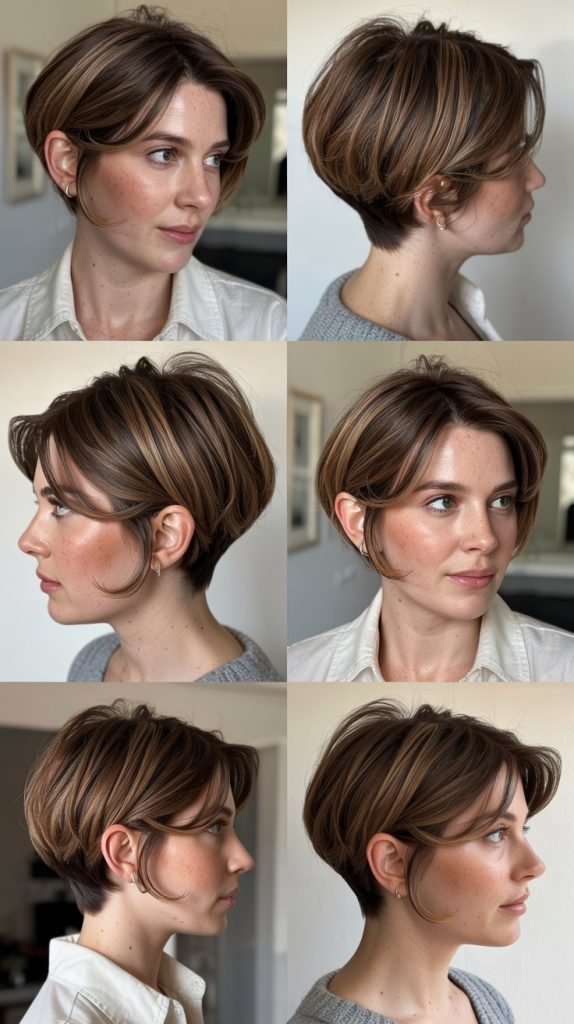
The pixie bob hybrid merges characteristics of both styles, featuring the short back and tapered sides of a pixie combined with slightly longer lengths at the front and crown reminiscent of a bob, creating a versatile transitional style.
- This style typically measures one to two inches at the nape and sides, graduating to three to five inches at the front and top, creating a forward-moving silhouette that frames the face beautifully.
- The pixie bob works exceptionally well for women transitioning between very short and longer hair, providing a comfortable intermediate length that maintains styling ease while offering more versatility than traditional pixies.
- Face shapes with prominent chins or jawlines benefit from the longer front pieces that soften these features, while the shorter back maintains the lightweight, easy-care benefits of pixie styling.
- Styling versatility includes tucking hair behind ears for a pixie appearance, wearing it forward for a bob-like effect, creating small waves or flips at the ends, or even securing small sections with decorative pins.
- This cut suits all hair textures—fine hair gains body through layering and styling, medium hair showcases the shape beautifully, and thick hair benefits from thinning techniques that prevent bulk while maintaining the silhouette.
- Maintenance falls between traditional pixies and bobs, requiring trims every 5-7 weeks to maintain the distinctive graduating lengths that define the hybrid style.
- Color techniques that emphasize the length graduation work particularly well, including darker roots graduating to lighter ends that accentuate the forward movement and dimensional nature of the cut.
12. Messy Pixie Cut
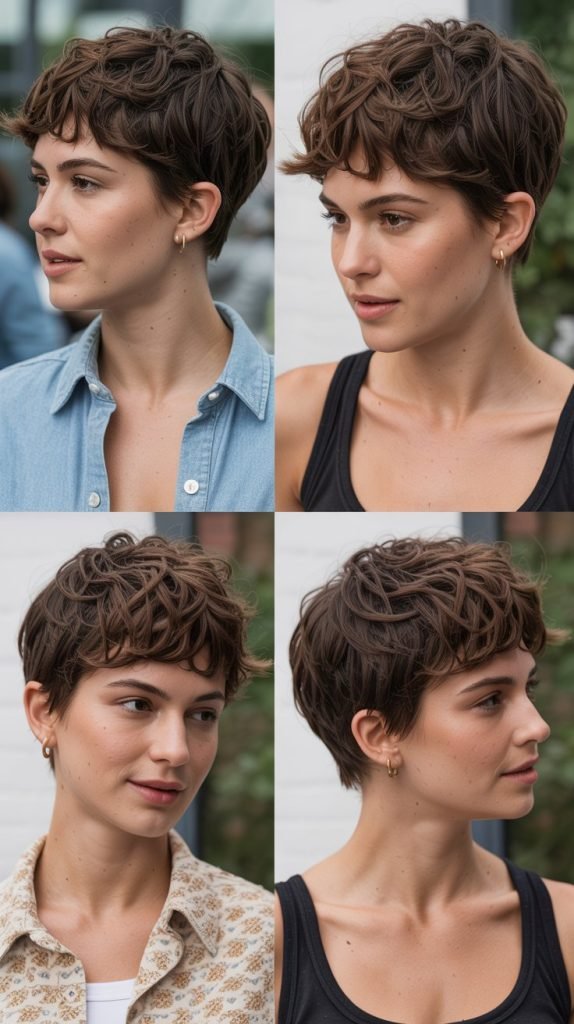
The messy pixie cut embraces intentional dishevelment and tousled texture, creating an effortlessly chic, just-rolled-out-of-bed aesthetic that projects casual confidence and contemporary style sensibilities.
- This style features varied lengths throughout—typically one to four inches—with strategic layering and texturizing that allows hair to fall naturally in different directions without appearing unkempt or neglected.
- Achieving the “messy” look requires the right products—sea salt spray, texturizing powder, or light-hold mousse applied to damp hair and scrunched or tousled with fingers creates the desired piecey, separated effect.
- The messy pixie works beautifully for all face shapes because its informal nature and varied directions create softness and movement that balance features without rigid structure or symmetry.
- Women with naturally wavy or slightly curly hair (Type 2A-2C) find this style particularly easy to maintain, as their natural texture contributes to the tousled appearance without extensive styling effort.
- This cut projects youthful energy and approachability, making it popular among creative professionals, younger demographics, and those who prefer low-maintenance styling that still looks intentionally styled.
- Maintenance is relatively minimal—trims every 6-8 weeks maintain the overall shape, while daily styling takes just minutes by applying product and using fingers to create the desired messy texture.
- The informal nature of messy pixies makes them extremely forgiving of growth between cuts, as slightly longer lengths simply add to the textured, piece-separated aesthetic rather than appearing overgrown.
13. Pixie with Tapered Nape
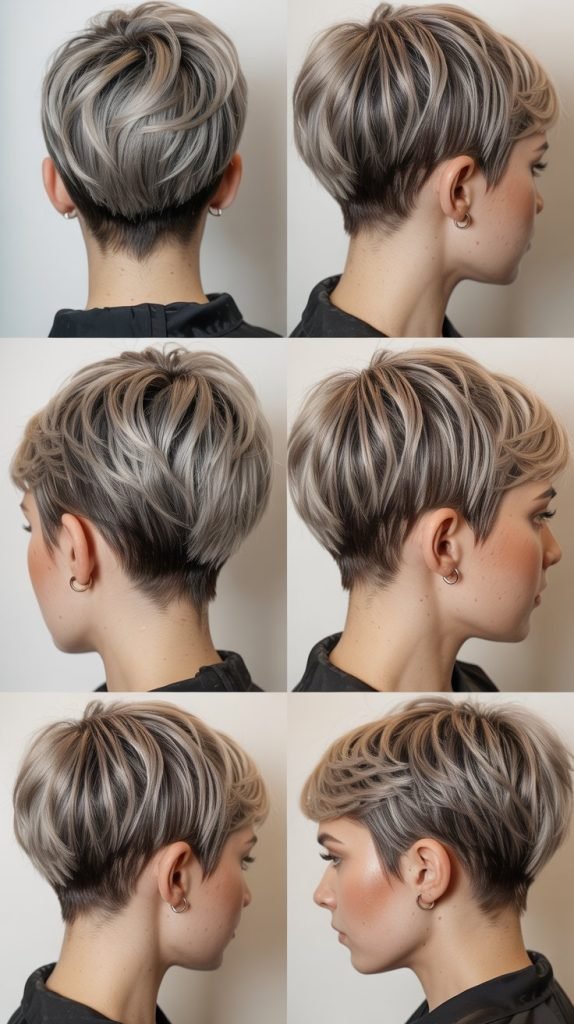
The pixie with tapered nape features gradually shortened hair at the back of the neck that creates a clean, defined silhouette while drawing attention to the neck and shoulders, combining femininity with precision.
- The tapering begins approximately two inches above the neckline and gradually decreases in length using clippers or scissors, creating a smooth transition from the longer hair on top to the closely cropped nape measuring about one-quarter inch.
- This refined detail adds polish and sophistication to any pixie variation, transforming a casual cut into something suitable for professional environments and formal occasions.
- The tapered nape particularly flatters women with long, graceful necks by emphasizing this feature, while also creating visual length that benefits those with shorter necks through the upward-drawing eye line.
- Styling the top hair in various ways—slicked back, tousled, or swept to the side—creates different aesthetics while the consistent tapered nape provides a clean, finished foundation regardless of top styling choices.
- Maintenance requires precision and regularity—the nape should be cleaned up every 3-4 weeks to maintain the sharp, defined taper that characterizes this detail-oriented style.
- Hair texture considerations include fine to medium hair working best, as very thick or coarse hair may create a bulky transition rather than the smooth, graduated effect desired in proper tapering.
- Professional barbers or hairstylists experienced with clippers achieve the best results, as proper tapering requires technical skill and understanding of natural hair growth patterns around the nape.
14. Disconnected Pixie
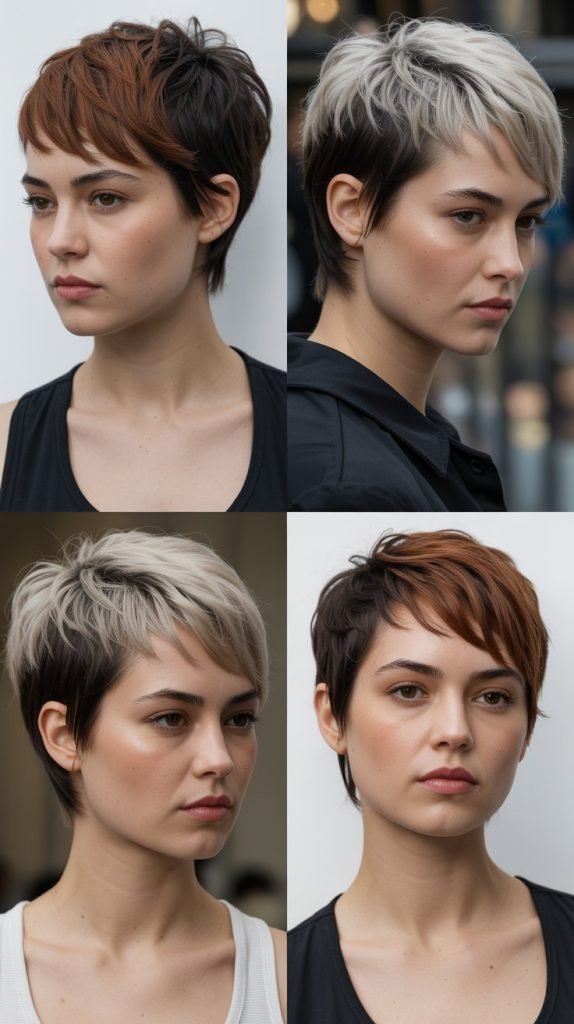
The disconnected pixie creates intentional separation between different sections of hair through varied lengths that don’t gradually transition but rather jump dramatically from short to long, creating modern, edgy contrast.
- This avant-garde style typically features very short sides and back measuring one-quarter inch or less, with top sections that are significantly longer at three to six inches, creating a distinct “disconnected” appearance between sections.
- The lack of gradual blending between lengths creates bold, architectural lines that make strong visual statements and allow for dramatic styling transformations depending on how the longer sections are positioned.
- Face shapes with strong, defined features—including square, rectangular, and diamond shapes—are complemented by disconnected pixies, as the bold lines and contrasts echo and enhance angular facial structure.
- Styling versatility is a key advantage—the longer top can be slicked back for sleek formality, spiked up for edgy rebellion, swept to one side for asymmetrical drama, or tousled for casual texture.
- This style requires confident, fashion-forward personalities comfortable with attention-grabbing hair that makes deliberate style statements rather than blending into conservative beauty standards.
- Maintenance demands commitment—the stark contrast between lengths requires regular trims every 3-4 weeks to prevent the disconnection from blurring into unintentional graduation as hair grows.
- Color blocking techniques work spectacularly with disconnected pixies, including different colors on top versus sides, or bold fashion shades on the longer sections while keeping shorter areas natural.
15. Feathered Pixie Cut
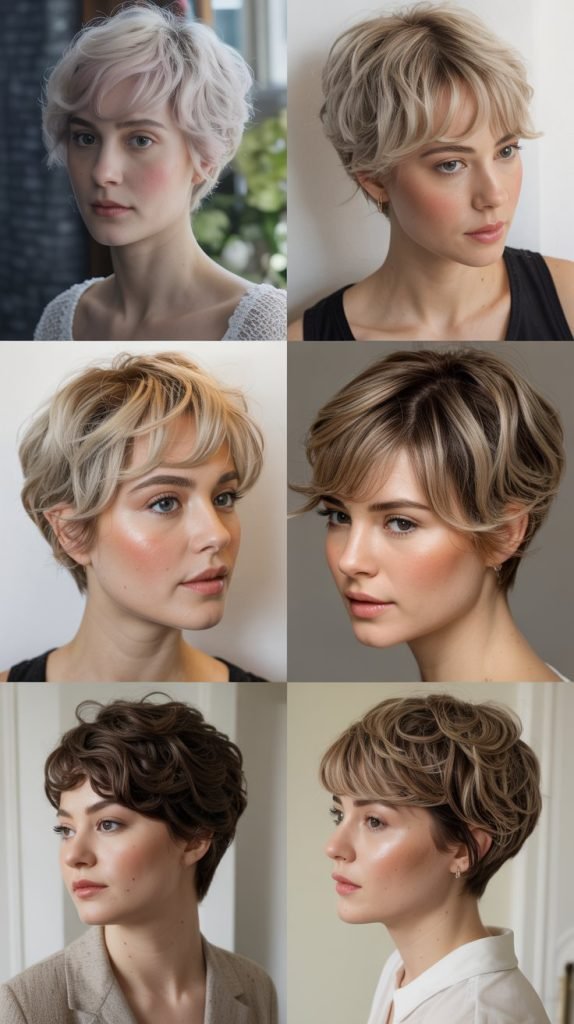
The feathered pixie cut incorporates soft, feather-like layers throughout that create airy, lightweight texture and gentle movement, evoking romantic, vintage-inspired aesthetics reminiscent of 1970s styling.
- Feathering is achieved through point-cutting and razor techniques that thin the ends of hair strands, creating soft, wispy tips that move independently and catch light beautifully for dimensional, multi-toned appearance.
- This technique works particularly well for thick or coarse hair textures, as the feathering reduces bulk and weight while creating the illusion of softer, more manageable hair without sacrificing volume.
- The feathered pixie typically features longer layers on top measuring two to four inches that are feathered to create movement, while sides and back remain shorter at one to two inches with similar feathering for textural consistency.
- Face shapes with harsh angles or prominent features benefit from feathering’s softening effect, as the wispy, light-catching layers create gentleness that balances strong jawlines, prominent cheekbones, or angular foreheads.
- Styling requires lightweight products—mousse, volumizing spray, or light-hold styling cream applied to damp hair and blown dry with fingers or a diffuser enhances the feathered texture without weighing it down or creating stiffness.
- This romantic style appeals to women seeking pixie cuts that maintain femininity and softness rather than the sharp, edgy aesthetics associated with more structured pixie variations.
- Maintenance involves trims every 5-6 weeks to refresh the feathered layers and prevent ends from appearing blunt or damaged, plus regular conditioning treatments to maintain the health of texturized ends.
16. Platinum Pixie Cut
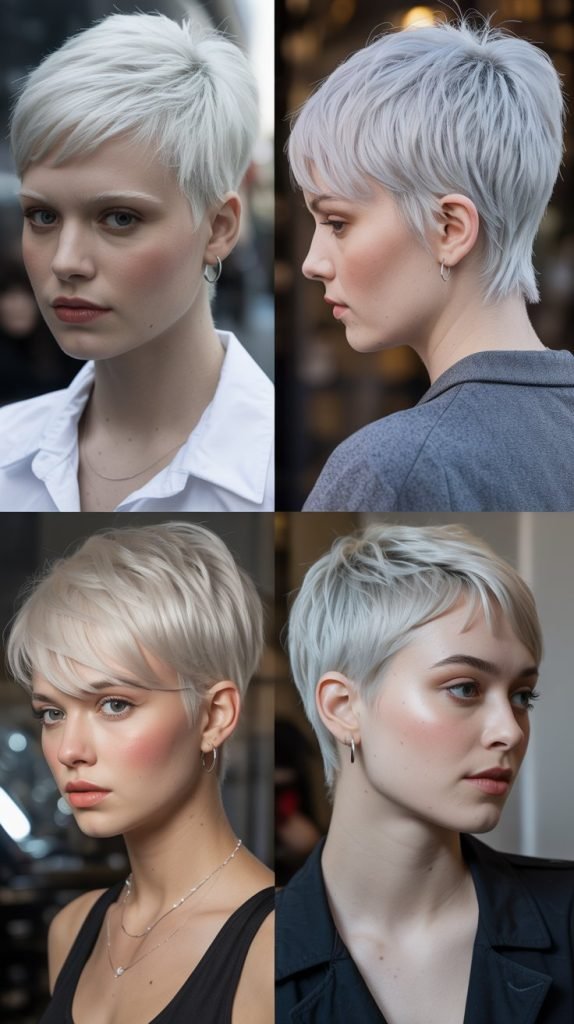
The platinum pixie cut features ultra-light, cool-toned blonde coloring that borders on white or silver, creating a striking, high-fashion statement that demands attention and projects bold confidence in personal style choices.
- Achieving true platinum requires significant lightening—often multiple sessions for those with dark natural hair—to lift pigment to the palest possible blonde before toning with violet or blue-based products to neutralize any remaining warmth.
- This dramatic color works particularly well with pixie cuts because the short length minimizes damage from the intensive lightening process while showcasing the platinum shade vibrantly against skin tones.
- Cool and neutral skin undertones are most complemented by platinum blonde, as warm undertones may appear washed out or create unflattering contrast, though strategic makeup choices can bridge this gap.
- The maintenance commitment for platinum pixies is substantial—purple shampoo and conditioner used at every wash prevents brassiness, while root touch-ups every 4-6 weeks maintain the all-over platinum appearance without visible grow-out.
- Platinum pixies have become signature looks for fashion-forward celebrities and influencers, creating instant recognizability and projecting avant-garde, trendsetting style sensibilities that differentiate wearers from mainstream beauty standards.
- Hair health considerations are paramount—platinum processing causes significant damage, requiring intensive conditioning treatments, protein masks, and minimal heat styling to prevent breakage and maintain integrity of chemically processed hair.
- According to colorists at Byrdie, platinum blonde requires the highest level of maintenance among all hair colors but delivers unmatched visual impact that many clients find worth the commitment.
17. Pixie with Micro Bangs
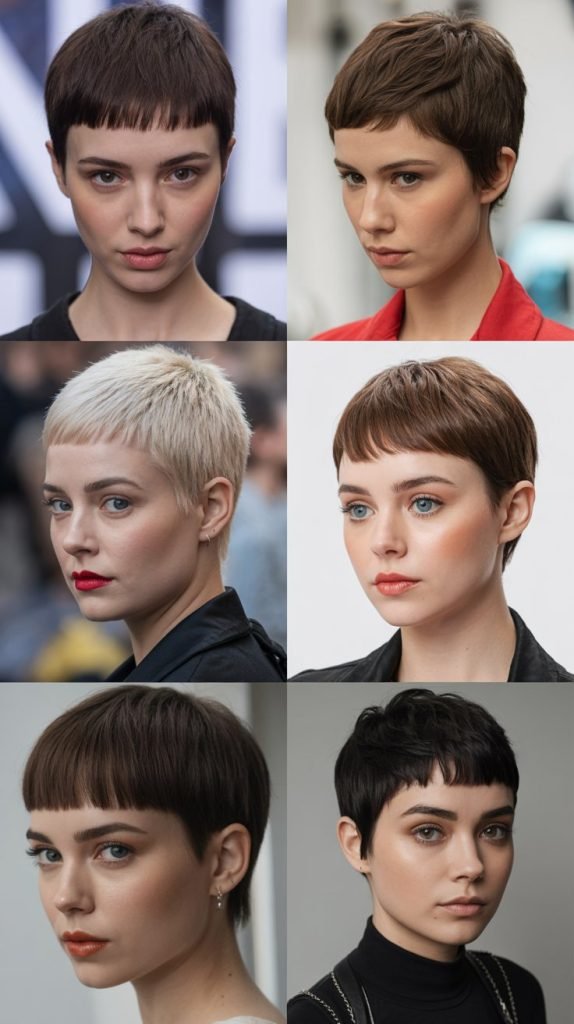
The pixie with micro bangs incorporates extremely short fringe cut straight across the forehead, typically measuring one to two inches in length, creating a bold, retro-futuristic aesthetic that channels vintage fashion with contemporary edge.
- Micro bangs sit well above the eyebrows—often at mid-forehead height—creating a dramatic, unconventional framing element that draws immediate attention to the eyes and upper facial features while challenging traditional beauty proportions.
- This avant-garde style works best for women with smaller, more delicate facial features, as the micro bangs can overwhelm larger faces or compete with prominent features rather than complementing them.
- The combination of short pixie cut with micro bangs creates a cohesive, intentionally styled appearance that projects artistic sensibility and fashion-forward thinking rather than accidental or haphazard styling choices.
- Styling micro bangs requires precision—they must be blown straight and smooth with a small round brush or flat iron, as any waviness or disruption in their clean line diminishes the sharp, geometric effect that defines this detail.
- Heart-shaped and oval face shapes particularly suit micro bangs, as these proportions provide balanced canvases where the short fringe creates interest without disrupting overall facial harmony.
- Maintenance demands frequent attention—micro bangs require trimming every 2-3 weeks to maintain their defining short length, as even slight growth significantly alters the precise aesthetic that makes this style distinctive.
- This bold choice appeals to creative professionals, artists, fashion enthusiasts, and those comfortable with attention-grabbing style statements that clearly communicate personal aesthetic preferences.
18. Wavy Pixie Cut
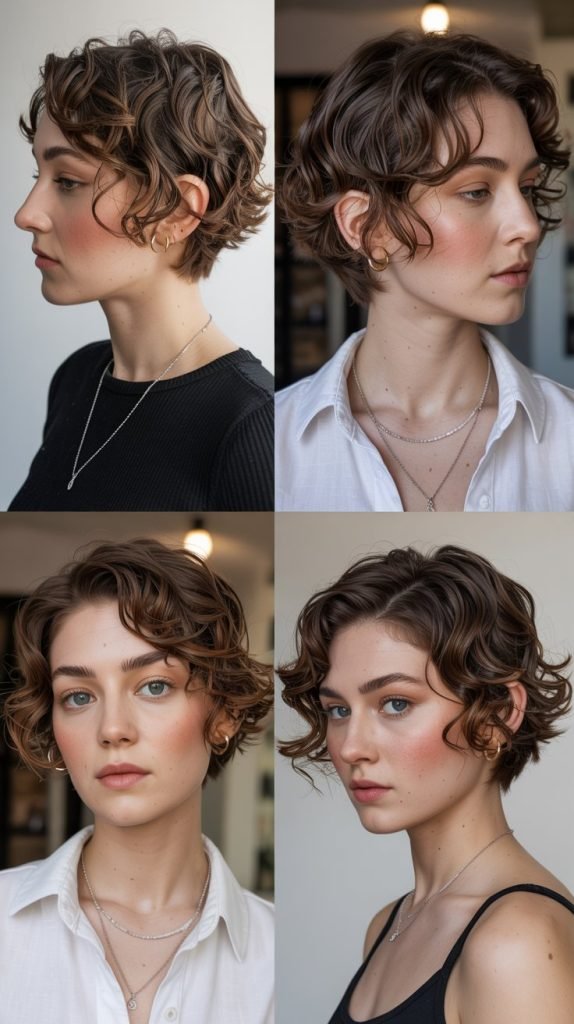
The wavy pixie cut celebrates natural wave patterns ranging from loose S-shaped waves to more defined bends, incorporating this texture into a short, shaped style that enhances movement and creates romantic, soft dimension.
- This style works specifically for women with Type 2 hair—naturally wavy texture that falls between straight and curly—allowing them to embrace rather than fight their natural pattern through appropriate cutting and styling techniques.
- Strategic layering throughout the cut removes weight that can pull waves straight while encouraging natural wave patterns to form more defined shapes, creating volume and movement that straight or curly hair cannot achieve.
- The length typically ranges from two to four inches on top with shorter tapered sides, providing sufficient hair for waves to form their characteristic S-shape while maintaining the manageable, short nature of pixie styling.
- Styling requires wave-specific products including salt spray, curl-enhancing mousse, or wave cream applied to damp hair and either air-dried or diffused on low heat to encourage wave formation without creating frizz or disrupting natural pattern.
- Face shapes benefit differently from wavy pixies—the soft, romantic movement flatters angular features by providing gentleness, while adding width that balances longer, narrower face shapes like oblong or rectangular.
- Maintenance resembles curly pixies in timing—trims every 6-8 weeks suffice because waves, like curls, shrink up and conceal length as they dry, though shape adjustments may be needed to control volume distribution.
- Color dimension particularly enhances wavy pixies, as highlights and lowlights accentuate the light-catching movement and three-dimensional nature of wave patterns throughout the cut.
19. Pixie with Colored Highlights
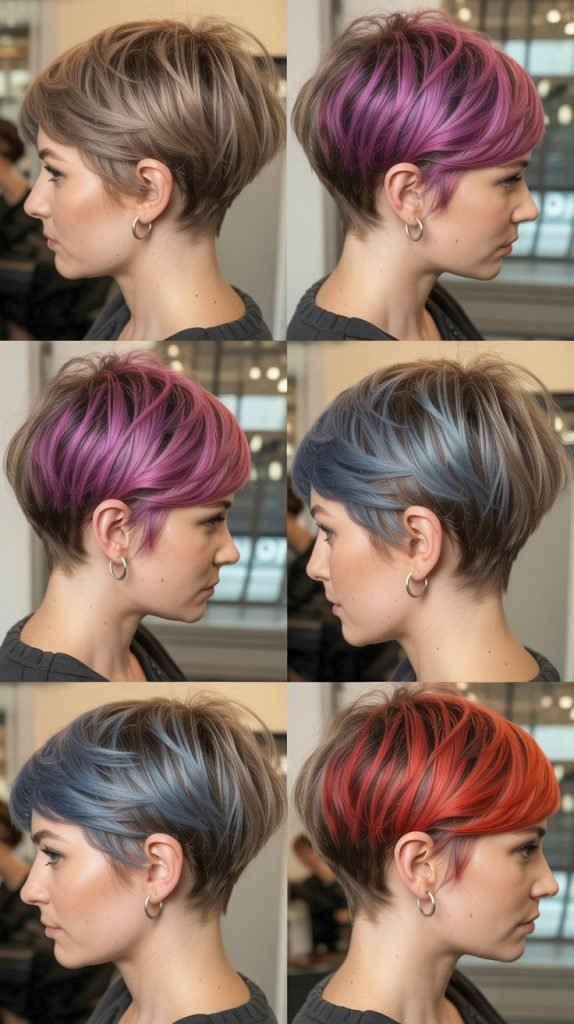
The pixie with colored highlights incorporates strategically placed lighter or fashion-toned sections throughout the cut, creating dimension, visual interest, and personalized style expression through customized color placement.
- Highlight placement in pixies typically focuses on the top and front sections where they’re most visible, using foiling or balayage techniques to create natural-looking dimension or bold, deliberate contrast depending on desired aesthetic.
- Color choices range from subtle, natural-looking highlights one to two shades lighter than base color for dimension, to bold fashion shades including pastels, jewel tones, or vivid primaries for dramatic artistic expression.
- The short length of pixie cuts makes them ideal canvases for highlighting—less hair means less processing time, reduced product costs, and easier maintenance compared to highlighting longer hair where more surface area requires color treatment.
- Face-framing highlights strategically placed around the hairline draw attention to facial features, brighten complexion, and create the illusion of sun-kissed, natural lightening that enhances rather than overwhelms overall appearance.
- Dimensional highlighting—combining multiple highlight tones rather than single-color placement—creates depth and prevents pixies from appearing flat or one-dimensional, particularly important in shorter cuts where length-based dimension isn’t available.
- Maintenance varies by contrast level—subtle highlights need refreshing every 8-12 weeks and blend gracefully with regrowth, while bold, high-contrast highlights require touch-ups every 4-6 weeks to maintain the dramatic separation between base and highlight colors.
- According to professional colorists, pixie cuts allow for more experimental color choices because the short commitment—both in terms of hair length and growth time—makes trying bold shades less risky than with longer hair that takes years to grow out if results disappoint.
20. Side-Parted Pixie
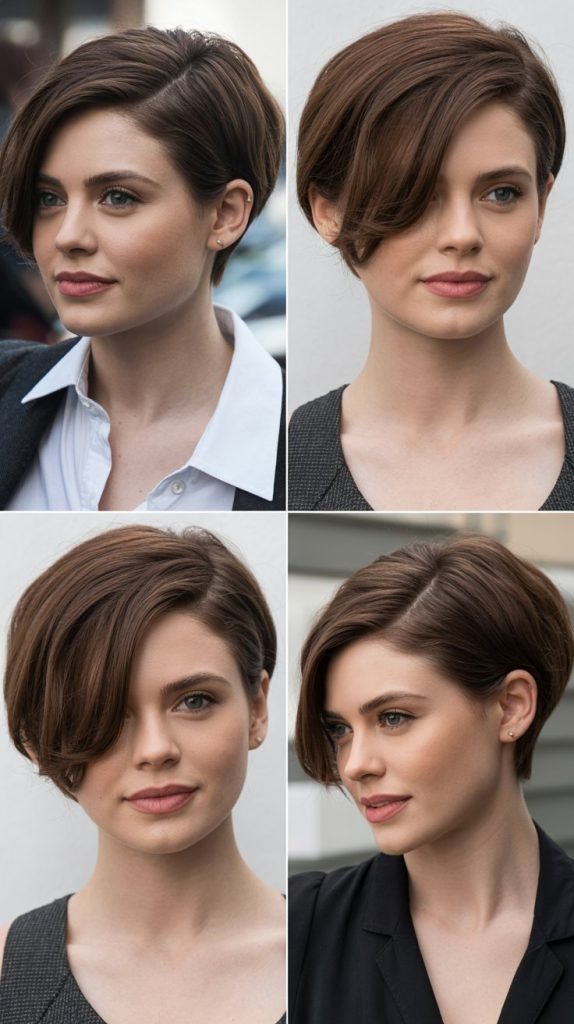
The side-parted pixie incorporates a distinct, deep side part that creates asymmetry and allows for volume on one side while the opposite side remains sleeker and closer to the head, offering classic elegance with modern versatility.
- The part is typically placed significantly off-center—approximately two to three inches from the natural center line—creating enough disparity between sides to make the asymmetry intentional and stylistically deliberate rather than accidentally uneven.
- Volume on the heavier side is achieved through blow-drying against the direction of hair growth using a round brush, creating lift at the roots that adds height and fullness to contrast with the sleeker opposite side.
- This style flatters virtually all face shapes because the side part’s placement can be customized—deeper parts elongate round faces through vertical emphasis, while less dramatic parts balance already elongated faces by maintaining width.
- The side-parted pixie bridges casual and formal aesthetics effectively—worn tousled and textured for daytime casualness or smoothed and polished with product for evening sophistication, both using the same fundamental cut and part.
- Women with fine to medium hair texture particularly benefit from this style, as the side part creates the illusion of more hair by concentrating volume on one side rather than distributing limited hair evenly across the head.
- Styling requires directional blow-drying—air from the dryer should hit the roots from the opposite direction of desired volume, essentially pushing hair up and over to create lasting lift that holds throughout the day.
- Maintenance involves regular trims every 4-6 weeks plus teaching the hair to naturally fall into the side-parted position through consistent styling, eventually training growth patterns to cooperate with the desired part placement.
21. Pixie with Buzz Cut Sides
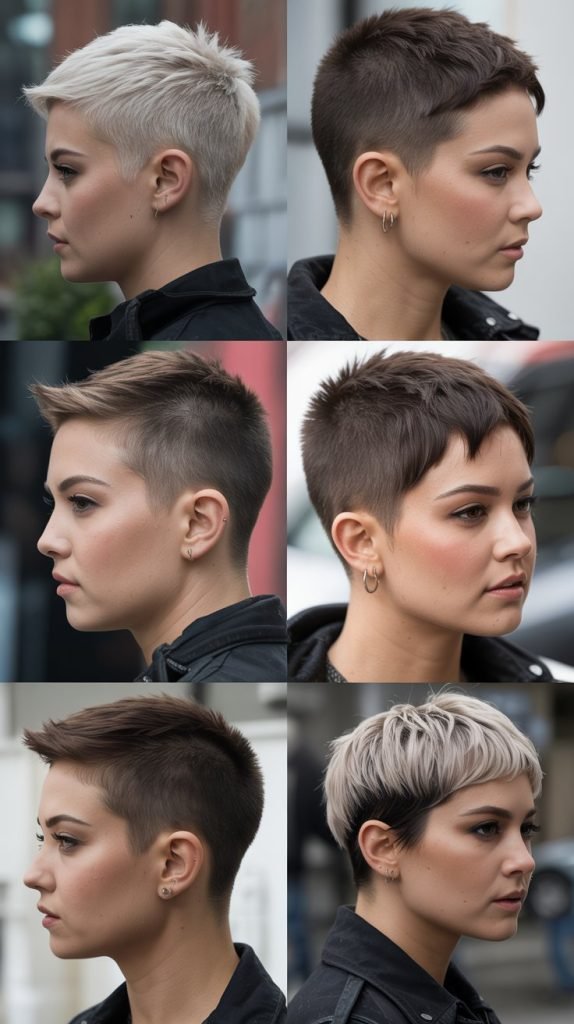
The pixie with buzz cut sides features completely buzzed sides and back cropped to uniform lengths of one-eighth inch or less using clippers, creating maximum contrast with significantly longer top sections ranging from three to eight inches.
- This high-contrast style delivers the most dramatic transformation from conventional hair styling, clearly communicating bold personal style choices and comfort with attention-grabbing, non-traditional beauty standards.
- The extensive buzzing significantly reduces overall styling time and maintenance while providing cooling comfort, making this an excellent choice for athletes, those in hot climates, or anyone prioritizing low-maintenance wash-and-go simplicity.
- The longer top section allows for extreme styling versatility—slicked back for sleek sophistication, styled upward into mohawk-inspired shapes, swept dramatically to one side, or left natural and tousled depending on occasion and mood.
- Women with thick, heavy hair experience dramatic relief from bulk removal, finding their remaining top hair easier to style, lighter on the head, and significantly cooler while maintaining impressive volume where it remains.
- Face shape considerations include the knowledge that buzzed sides create strong vertical lines that elongate the face, making this particularly flattering for round, square, and heart-shaped faces that benefit from length-adding visual elements.
- Maintenance requires dedication—buzzed sections need clippers run over them every 1-2 weeks to maintain the clean, uniform appearance without visible regrowth creating shadow or texture differences across the buzzed area.
- This bold choice has gained popularity among younger demographics, LGBTQ+ communities, and women in progressive creative fields where non-conventional beauty expression is celebrated rather than discouraged.
22. Textured Crop Pixie
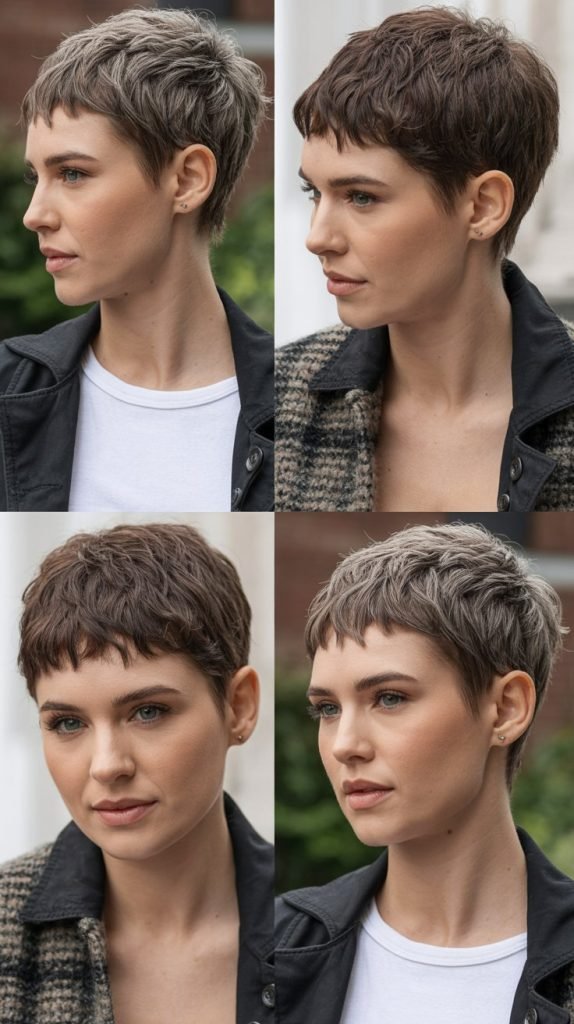
The textured crop pixie features relatively uniform short lengths throughout—typically one to three inches—with heavy texturizing that creates separation, movement, and piecey definition reminiscent of modern men’s crop cuts adapted for feminine aesthetics.
- This androgynous-leaning style blurs traditional gender lines in hairstyling, offering women access to the low-maintenance, effortlessly cool aesthetics traditionally associated with masculine grooming while maintaining feminine face-framing and softness.
- The heavy texturizing is achieved through point-cutting, razor work, and thinning shears that remove bulk and create separation between hair strands, preventing the cut from lying flat and creating the desired piecey, textured appearance.
- Styling requires minimal effort—lightweight texturizing products like clay, paste, or salt spray worked through towel-dried hair with fingers creates instant texture and separation, making this ideal for busy lifestyles or those who prefer quick styling routines.
- All face shapes can wear textured crop pixies because the informal, varied texture creates softness and movement that balances features without rigid structure that might emphasize or conflict with specific facial characteristics.
- This style particularly appeals to women with naturally straight or slightly wavy hair (Type 1 to 2A), as these textures respond well to texturizing techniques without the competing natural pattern that curly hair introduces.
- Maintenance is relatively low-demand—trims every 5-7 weeks maintain the overall length and refresh texturizing, while daily styling takes just minutes with simple product application and finger-styling.
- The textured crop has become increasingly popular in fashion-forward circles, embraced by models, influencers, and style-conscious women seeking fresh, modern alternatives to conventional feminine hairstyles.
23. Razored Pixie Cut
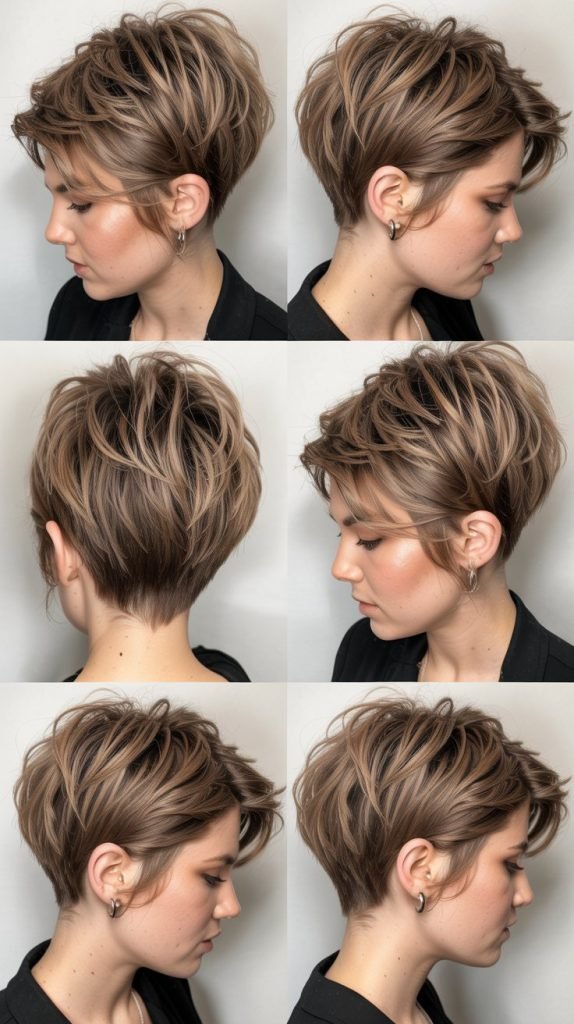
The razored pixie cut utilizes razor cutting techniques rather than scissors to create the entire shape, resulting in softer, more textured edges and feathered movement throughout that provides airiness and contemporary sophistication.
- Razor cutting involves using a straight razor or razor comb that simultaneously cuts and thins hair, creating tapered ends on individual strands that move independently and catch light for dimensional, multi-toned appearance even in solid color.
- This technique works particularly well for thick or coarse hair that can appear heavy and blunt when cut with scissors, as razoring removes bulk while maintaining length, creating lighter, more manageable hair with built-in movement.
- The razored pixie typically features varied lengths from one to four inches with no harsh lines or blunt edges, instead showcasing organic-feeling transitions that appear soft and natural rather than precisely geometric.
- Face shapes benefit universally from razored pixies because the soft, feathered nature of razor cutting creates gentleness that flatters rather than competes with facial features, providing forgiveness that harder-lined cuts cannot offer.
- Styling embraces the natural texture and movement created by razor cutting—lightweight products applied to damp hair and air-dried or diffused enhance the inherent texture without fighting the razored ends’ natural tendency toward separation and movement.
- Maintenance requires attention to product choice—razored ends can appear damaged if hair becomes dry, necessitating regular conditioning treatments, hydrating serums, and heat protection to maintain the intentionally textured appearance versus accidentally damaged look.
- Professional expertise matters significantly with razor cutting, as improper technique can create actual damage rather than intentional texture, making skilled hairstylist selection crucial for achieving desired results.
24. Slicked-Back Pixie
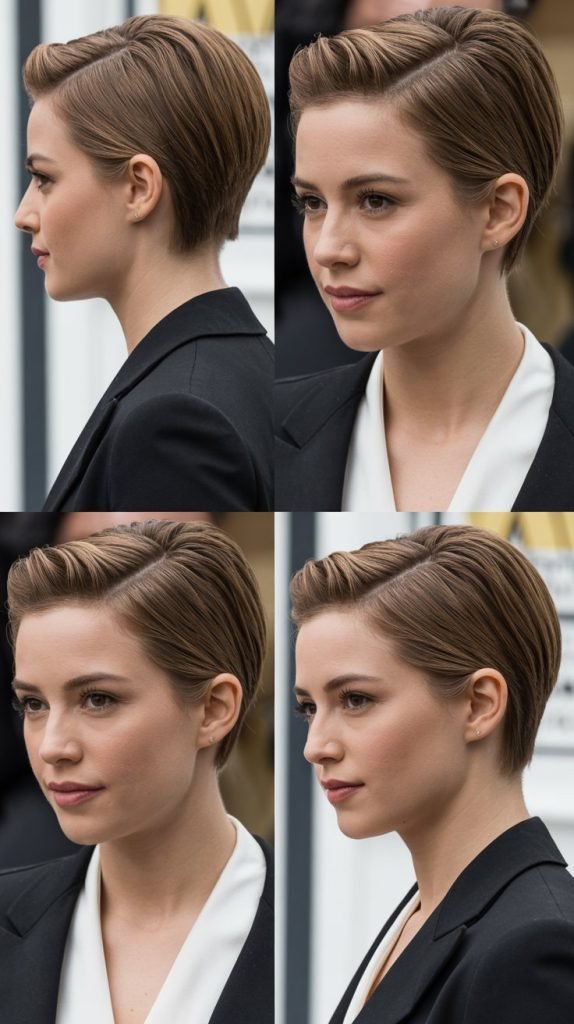
The slicked-back pixie features hair styled smoothly away from the face using strong-hold products, creating sleek, polished sophistication that transitions pixie cuts from casual daytime wear to elegant evening appropriateness.
- This styling approach requires sufficient length on top—typically three to five inches minimum—to create the swept-back look without pieces popping up or losing the smooth, controlled silhouette that defines this aesthetic.
- Strong-hold gel, pomade, or wax applied to damp hair and combed or brushed straight back from the hairline creates the signature sleek appearance, with product choice affecting finish from high-shine gloss to matte sophistication.
- The slicked-back style particularly flatters women with strong, beautiful facial features—prominent cheekbones, striking eyes, well-defined jawlines—as the style removes all hair from the face, creating an unobstructed canvas that showcases these attributes.
- Face shape considerations include awareness that slicking hair back exposes the entire face and forehead, making this most flattering for oval, heart-shaped, and diamond faces with balanced proportions rather than very round or elongated shapes.
- This formal styling option makes pixie cuts appropriate for business environments, formal events, weddings, and other occasions where polished professionalism trumps casual, textured styling typically associated with pixie cuts.
- The style holds well throughout the day when properly executed with appropriate products, though touch-ups may be needed after activities that cause sweating or in humid environments that challenge product hold.
- Transitioning from slicked-back styling back to textured or natural looks simply requires shampooing to remove products, demonstrating the versatility of a single pixie cut to present multiple aesthetics through styling variations alone.
25. Pixie with Shaggy Layers
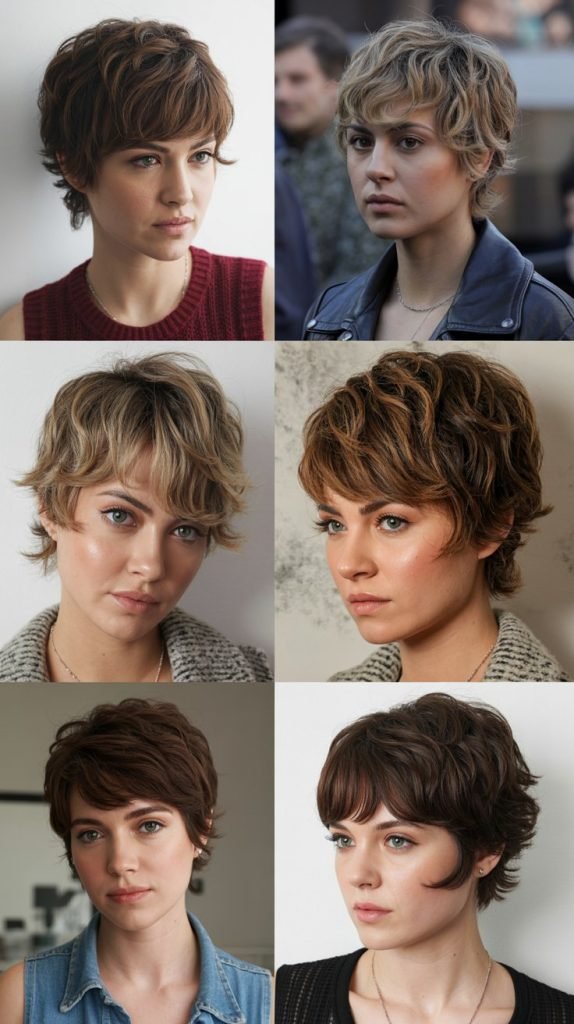
The pixie with shaggy layers incorporates deliberately uneven, choppy layering throughout that creates casual, rock-and-roll-inspired texture with intentional messiness that appears effortlessly cool rather than carefully styled.
- This laid-back style features varied lengths typically ranging from one to four inches distributed throughout the cut without distinct sections or precise graduation, creating organic-feeling movement that appears naturally fallen rather than structured.
- The shaggy aesthetic channels 1970s rock aesthetics and early 2000s grunge-inspired styling, appealing to women who appreciate vintage-influenced fashion and music-driven subculture style references.
- Texturizing throughout the cut—achieved through point-cutting, razor work, and deliberately uneven layering—creates separation and piece-definition that prevents hair from lying flat or appearing too polished and refined.
- This style works particularly well for naturally wavy or slightly textured hair (Type 2), as the inherent movement cooperates with shaggy layering to create the desired tousled, undone appearance without extensive styling effort.
- Face shapes with softer, rounder features benefit from shaggy layers’ casual nature, as the informal texture and varied lengths create visual interest without harsh angles that might create unwanted contrast with gentle facial characteristics.
- Styling embraces low-maintenance approaches—texturizing spray or lightweight mousse applied to damp hair and air-dried creates the desired shaggy texture, while over-styling with heat tools or excessive product contradicts the intentionally undone aesthetic.
- Maintenance is forgiving—the deliberately imperfect nature means slight growth or missed trim appointments don’t disrupt the overall look as dramatically as with more precise pixie variations that depend on specific length maintenance.
26. Pixie with Volume on Top
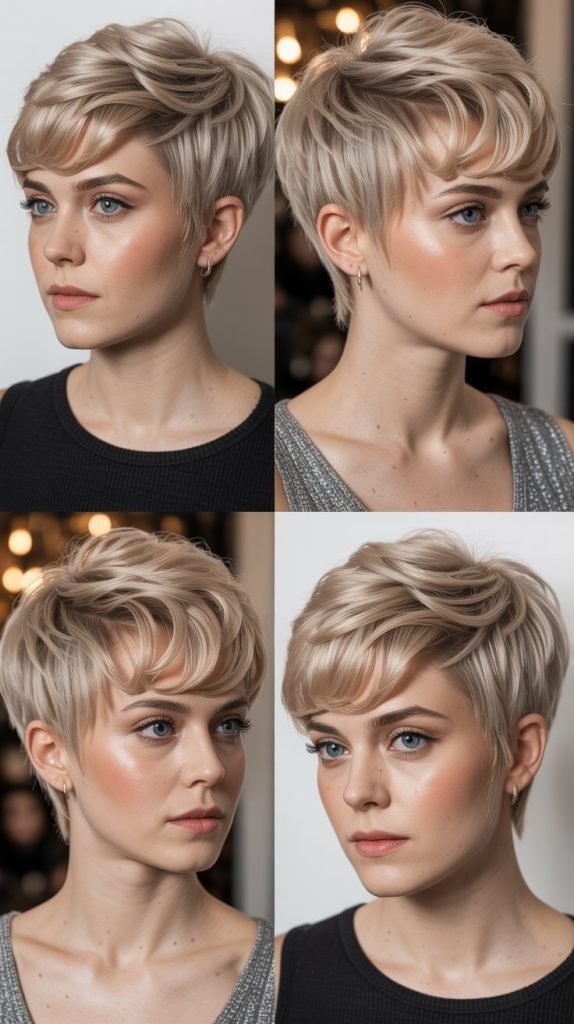
The pixie with volume on top emphasizes height and fullness at the crown and front sections while maintaining shorter, closer sides and back, creating dramatic vertical interest and flattering proportions that elongate the overall silhouette.
- Achieving volume requires strategic cutting—shorter underlayers with progressively longer top layers create stacking that naturally produces lift, while styling techniques using round brushes and blow-dryers enhance this built-in volume potential.
- This style particularly flatters round and square face shapes by adding height that creates vertical lines, visually elongating the face and balancing width to create more oval-appearing proportions.
- The contrast between voluminous top and sleeker sides draws the eye upward and provides styling versatility—the amount of volume can be adjusted daily based on styling effort, from dramatic height to moderate lift depending on occasion.
- Women with fine or thin hair benefit significantly from this cut, as the volume-focused styling creates the illusion of significantly more hair than actually exists, addressing common concerns about lack of fullness.
- Styling requires blow-drying with a round brush, lifting hair at the roots while directing heat from below to create lasting volume, then setting with volumizing spray or light-hold hairspray to maintain height throughout the day.
- Products matter significantly—volumizing mousse applied to damp roots before styling, dry texturizing powder applied to styled hair, and finishing spray all contribute to creating and maintaining the signature volume that defines this variation.
- Maintenance involves regular trims every 4-6 weeks to preserve the layering that creates natural volume, plus potential adjustments to layer lengths if volume becomes excessive or insufficient as hair grows.
27. Tapered Pixie for Thick Hair
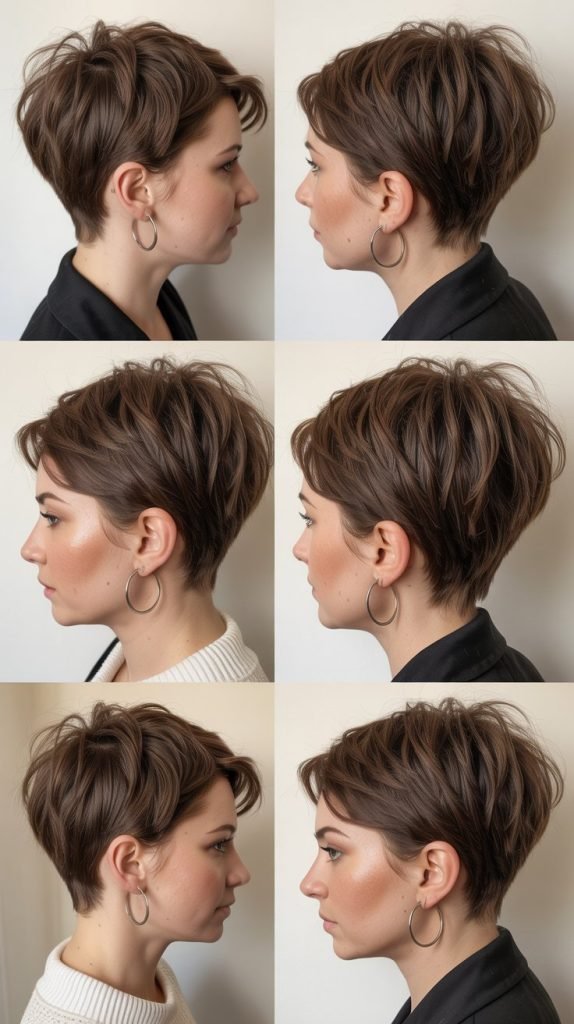
The tapered pixie for thick hair specifically addresses the unique challenges of abundant hair density through strategic thinning, layering, and tapering techniques that remove bulk while maintaining the shape and manageability benefits of pixie styling.
- Thick hair presents specific cutting considerations—excessive weight can prevent proper styling and create unflattering triangular silhouettes, necessitating extensive thinning throughout the cut to reduce bulk without losing desired volume where it enhances the style.
- The tapering in this variation extends beyond standard pixie tapers, incorporating graduated lengths throughout the interior of the cut rather than just perimeter edges, creating lightness and movement impossible to achieve through exterior shaping alone.
- Women with thick hair often experience dramatic transformation satisfaction from pixie cuts—the removal of significant weight creates immediate relief, cooling comfort, reduced styling time, and often the first experience of easily manageable hair.
- This cut typically features one to three inches throughout with extensive razor work or thinning shear use that removes up to 30-50% of hair density while maintaining coverage and preventing sparse or patchy appearance.
- Styling becomes significantly easier compared to thick hair in longer lengths—products penetrate better, drying time reduces dramatically, and achieving desired shapes requires less effort when fighting against reduced weight and bulk.
- The tapered nature creates natural movement and prevents the blunt, heavy appearance that thick hair often produces in shorter cuts without proper thinning, ensuring the style appears intentionally textured rather than accidentally dense.
- Maintenance involves slightly more frequent trims every 4-5 weeks compared to other pixie variations, as thick hair shows growth and bulk accumulation more quickly, requiring regular thinning to maintain the lightweight feeling that makes this cut appealing.
28. Pixie with Soft Edges
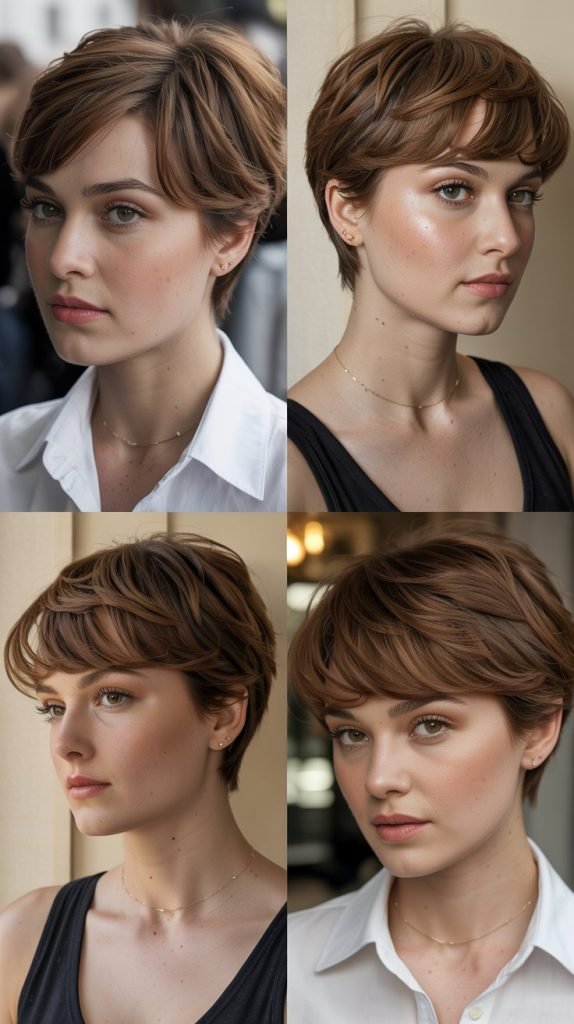
The pixie with soft edges deliberately avoids harsh lines, angles, or severe cuts, instead incorporating rounded shapes, gentle transitions, and curved lines that create romantic femininity and approachable softness throughout the style.
- This aesthetic prioritizes gentleness over edginess, making it appealing to women seeking the practical benefits of pixie cuts—easy maintenance, cooling comfort, styling speed—without the bold, dramatic statements associated with more angular pixie variations.
- Cutting techniques include using scissors rather than razors, avoiding straight-line perimeters in favor of curved shapes, and creating subtle layering that transitions gradually rather than creating distinct sections or disconnections.
- Face shapes with naturally angular features—strong jawlines, prominent cheekbones, defined foreheads—benefit particularly from soft-edged pixies, as the rounded cutting lines balance and soften these features rather than echoing and emphasizing them.
- The soft-edged approach also suits women in conservative professional environments where more dramatic pixie variations might feel too bold or non-traditional for workplace culture expectations.
- Styling emphasizes smoothness and polish over texture and separation—products like smoothing cream, shine serum, or light-hold spray create finished appearances without piece-separation or deliberate messiness that contradicts the soft aesthetic.
- Color choices that enhance softness include warm tones, subtle highlights, and dimensional coloring rather than high-contrast or bold fashion shades that create visual sharpness inconsistent with the rounded, gentle cutting approach.
- Maintenance involves regular trims every 4-6 weeks to maintain the curved lines and prevent blunt edges from developing as hair grows, which would contradict the deliberately softened silhouette.
29. Edgy Punk Pixie
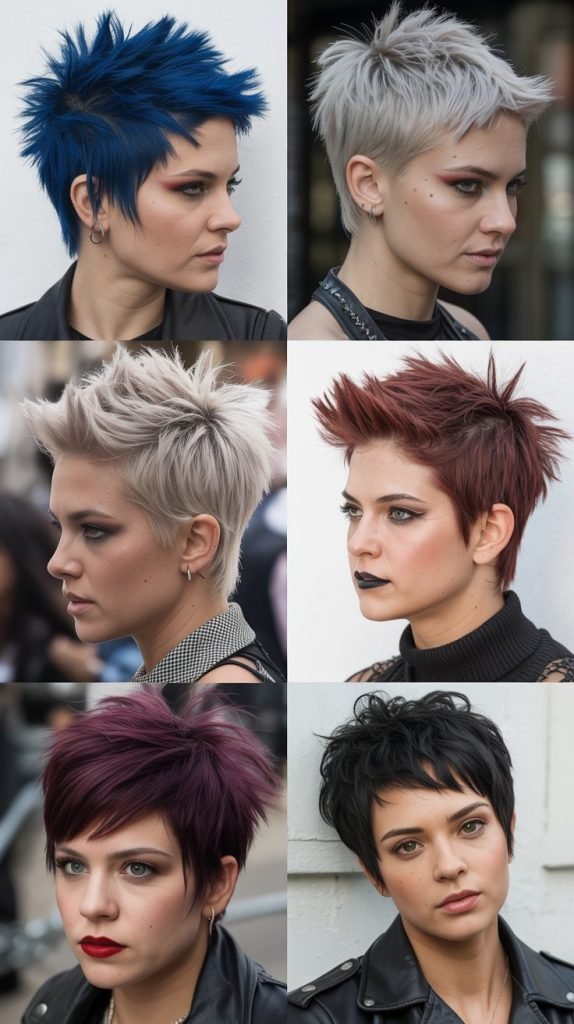
The edgy punk pixie channels rebellious punk rock aesthetics through extreme texture, dramatic styling, bold color choices, and unconventional shapes that deliberately challenge mainstream beauty standards and conservative styling norms.
- This subculture-inspired variation typically features very short buzzed or shaved sections combined with longer spiky or asymmetrical areas, creating maximum contrast and visual impact that clearly communicates alternative style affiliations.
- Color plays a significant role—unnatural shades including vivid primaries, neon brights, pastels, or stark black with contrasting highlights create the bold visual statements associated with punk aesthetic traditions.
- Styling involves strong-hold products creating dramatic upward spikes, exaggerated side-sweeping, or intentionally chaotic texture that appears deliberately styled rather than naturally fallen or accidentally messy.
- This style appeals primarily to younger demographics, those in creative or alternative professional fields, members of punk and alternative music communities, and anyone comfortable with attention-grabbing, non-conformist personal presentation.
- Face shape considerations become secondary to attitude and lifestyle compatibility—punk pixies make strong statements that require confidence and comfort with standing out rather than blending into conventional beauty expectations.
- The maintenance commitment extends beyond regular trims to include color upkeep for fashion shades, product investment for achieving dramatic styling, and comfort with frequent salon visits every 3-4 weeks to maintain sharp contrasts.
- Accessories often accompany punk pixies—bold makeup, multiple piercings, studded jewelry, and alternative fashion choices that create cohesive aesthetic statements rather than isolated hairstyle choices.
30. Pixie with Natural Gray Hair
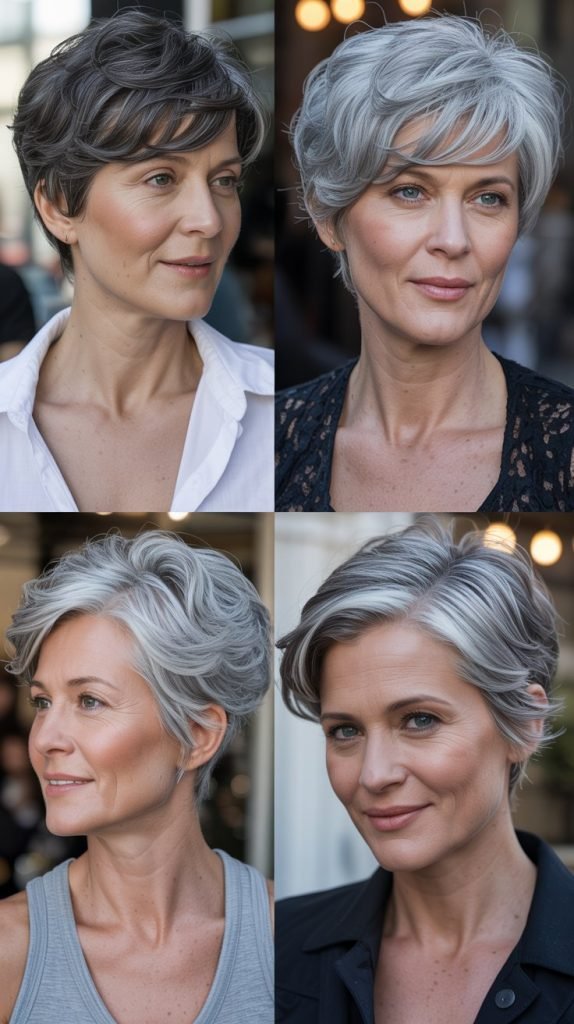
The pixie with natural gray hair embraces silver and gray tones that occur naturally with aging, celebrating this color as sophisticated, stylish, and intentionally beautiful rather than something requiring concealment through coloring.
- The decision to wear natural gray represents a growing movement toward authentic beauty standards, rejecting the expectation that women must disguise aging signs and instead celebrating the silver tones as distinctive, elegant, and fashion-forward.
- Gray hair texture often differs from previously pigmented hair—typically coarser and sometimes more resistant to styling—making the manageable length of pixie cuts particularly practical for working with gray hair’s unique characteristics.
- The combination of gray color with pixie styling creates sophisticated, contemporary aesthetics that appear deliberately chosen and fashion-conscious rather than accidentally aged or neglected, particularly when the cut is well-maintained with clean lines.
- Women transitioning to natural gray through pixie cuts benefit from the short growth-out period—approximately 6-12 months removes all colored hair, compared to years required for longer lengths, making pixies ideal vehicles for gray transitions.
- Styling gray pixies often emphasizes sleekness and polish to showcase the beautiful silver tones without frizz or dullness—smoothing products, purple shampoo to prevent yellowing, and shine serums maintain vibrancy and luster.
- Face shapes and skin tones influence how flattering gray appears—cooler undertones typically complement gray beautifully, while warmer undertones may require adjusting makeup choices to prevent washed-out appearances.
- According to aging and beauty experts at AARP, the acceptance of natural gray hair has increased significantly in recent years, with women finding empowerment and confidence in authentic presentation rather than conforming to youth-oriented beauty standards.
31. Pixie with Hair Jewelry
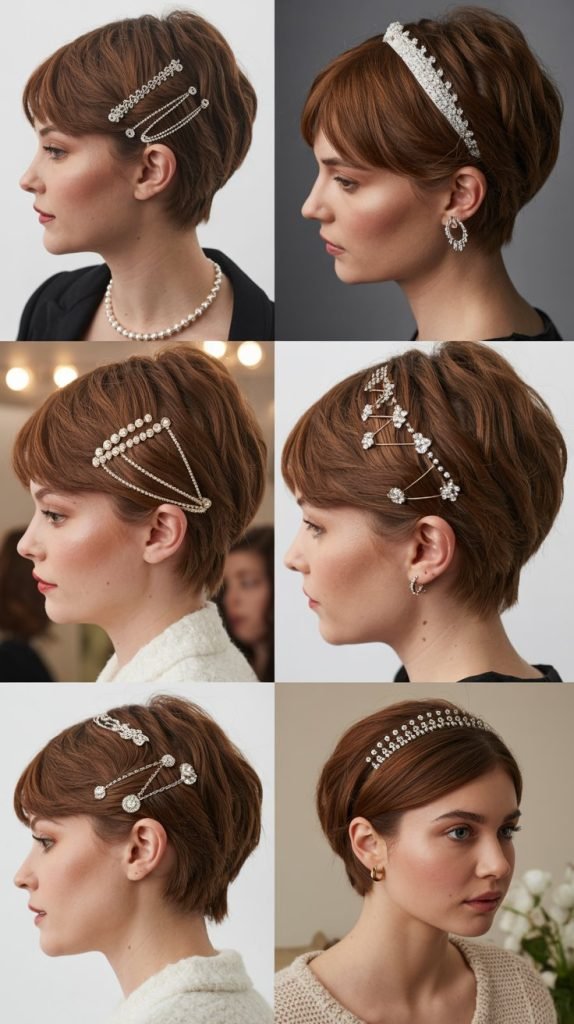
The pixie with hair jewelry incorporates decorative accessories including clips, pins, headbands, small tiaras, or jeweled accessories that add visual interest, personalization, and styling versatility to short hair that offers limited traditional styling options.
- Hair jewelry transforms simple pixie cuts for special occasions—weddings, formal events, parties—allowing short-haired women access to decorative elements typically reserved for longer hair that can accommodate elaborate updos or braiding.
- Strategic placement matters significantly—decorative pieces positioned at the side part, along the crown, or clustered at the nape add interest without overwhelming the limited canvas that short hair provides.
- This styling approach particularly appeals to women who appreciate feminine accessories and decorative elements but want to maintain the practical benefits of pixie cuts rather than growing hair longer solely for styling variety.
- The jewelry choices range from subtle and understated—small crystal pins or delicate metal clips—to bold and dramatic—statement headbands, jeweled combs, or multiple coordinated pieces creating elaborate decorative schemes.
- Pixie length actually provides advantages for hair jewelry—the short length keeps accessories visible and prevents them from getting lost in abundant hair, while the secure attachment to short sections prevents slipping that occurs in longer, heavier hair.
- Seasonal and occasion-based jewelry changes allow a single pixie cut to present varied aesthetics—sparkly pieces for holidays, floral clips for spring and summer, sophisticated metallics for professional events, playful colors for casual outings.
- This approach also addresses common concerns about pixie cuts appearing “too boyish”—adding feminine accessories clearly signals intentional gender expression and personal style preferences that embrace both short hair practicality and decorative femininity.
32. Rounded Bowl Pixie
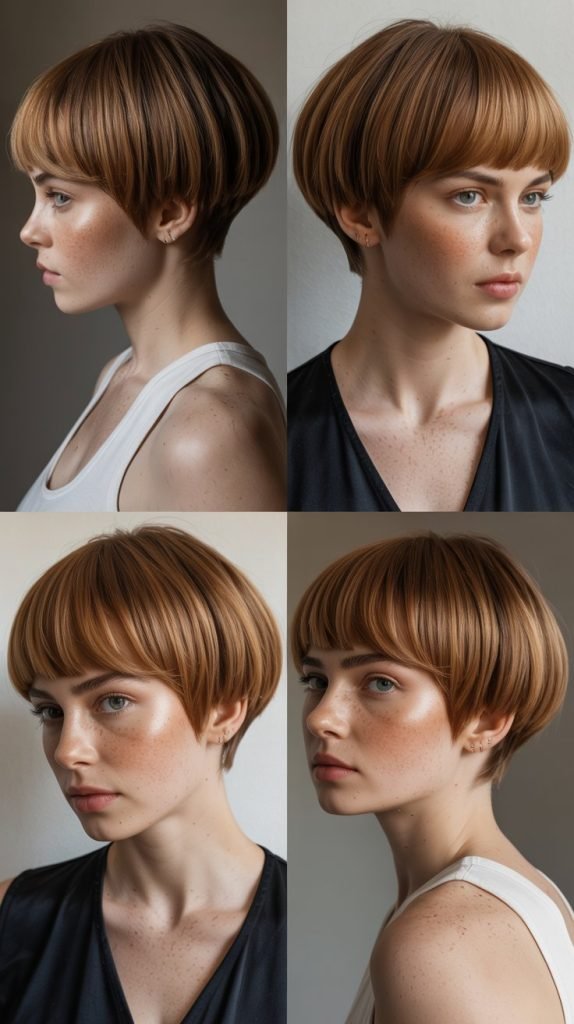
The rounded bowl pixie features curved, uniform cutting that creates a rounded silhouette reminiscent of bowl cuts but refined and modernized through contemporary cutting techniques, layering, and styling that distinguish it from dated or childish associations.
- This shape emphasizes soft, curved lines around the entire head perimeter, creating a dome-like silhouette that appears intentionally geometric and architectural while maintaining approachable softness through rounded rather than angular shaping.
- The modern interpretation includes subtle internal layering that prevents the flat, heavy appearance of traditional bowl cuts, instead creating movement and dimension that makes the rounded shape feel contemporary rather than retro-costume-like.
- Face shapes that are already rounded may find this style emphasizing circularity rather than balancing it, making the rounded bowl pixie most flattering for oval, heart-shaped, and angular faces that benefit from softening curves.
- Styling requires smoothness to maintain the clean rounded silhouette—blow-drying with a round brush, using smoothing products, and sometimes flat-ironing create the sleek finish that showcases the deliberate shape rather than allowing texture to disrupt the lines.
- This cut appeals to fashion-forward individuals who appreciate minimalist aesthetics, geometric design principles, and bold style choices that clearly communicate intentional presentation rather than accidental or default styling.
- The rounded shape works particularly well with solid, vibrant colors—bold fashion shades, rich jewel tones, or even solid natural colors showcase the geometric silhouette without the distraction of multi-tonal highlighting or complex color placement.
- Maintenance requires precision and regularity—the rounded bowl pixie needs trims every 3-4 weeks to maintain the exact curved perimeter that defines this specific shape, as uneven growth quickly disrupts the intentional geometric silhouette.
33. Pixie with Fringe Detail
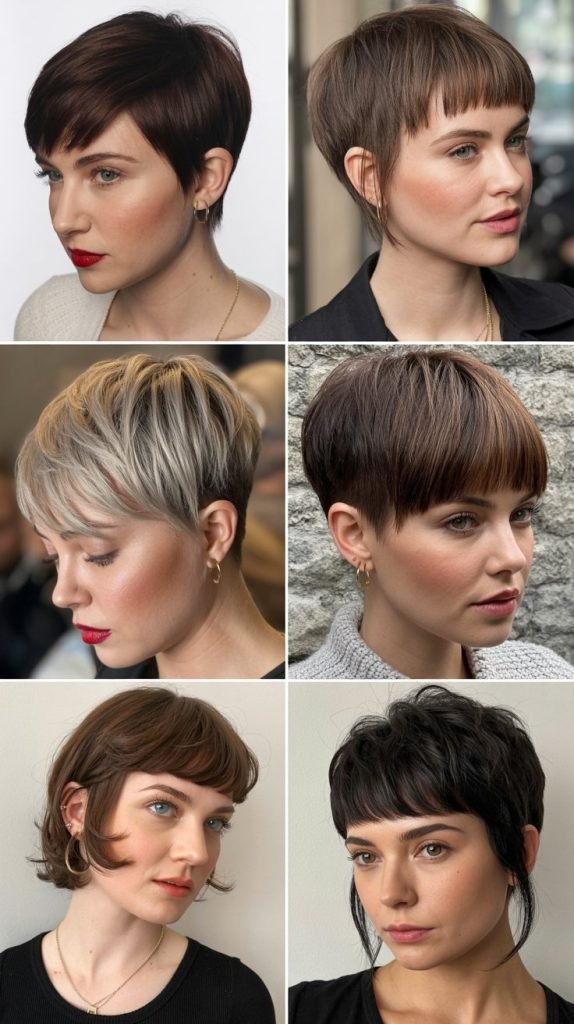
The pixie with fringe detail incorporates various fringe styles—side-swept, blunt, wispy, or piecey—that add face-framing elements and styling versatility while maintaining the fundamentally short nature of pixie cuts throughout the rest of the head.
- Fringe options provide customization opportunities—blunt straight-across fringe creates bold, fashion-forward statements; side-swept fringe offers romantic femininity; wispy fringe provides soft, gentle face-framing; while piecey fringe delivers edgy texture and modern appeal.
- The fringe length typically ranges from eyebrow-grazing to mid-forehead, with texture and density varying based on desired aesthetic—thick, heavy fringe creates drama while thinner, more textured fringe maintains lightness and subtlety.
- Face shape considerations are crucial with fringe—longer faces benefit from horizontal fringe lines that add width, round faces prefer side-swept fringe that creates diagonal elongating lines, and heart-shaped faces suit most fringe styles due to balanced proportions.
- Fringe maintenance requires more frequent attention than the overall pixie cut—bang trims every 2-3 weeks maintain optimal length and shape, while the rest of the cut needs attention every 4-6 weeks, creating staggered maintenance schedules.
- Styling fringe varies by type—blunt fringe requires blow-drying straight with a round brush, side-swept fringe needs directional styling to maintain the sweep, wispy fringe benefits from texturizing products, and piecey fringe uses separation techniques with styling products.
- The addition of fringe to pixie cuts addresses concerns about forehead prominence or angular hairlines, providing coverage and softening that straight-back or all-over-short pixies cannot offer.
- Fringe also increases styling versatility—wearing fringe down for one look or pinning it back or to the side for alternative presentations allows multiple aesthetics from a single cut, maximizing the style value of the pixie investment.
Conclusion
The exploration of these 33 top short pixie haircuts for fresh styling ideas demonstrates the remarkable versatility, adaptability, and creative potential that pixie cuts offer to women seeking transformative hairstyle changes.
From classic tapered silhouettes that provide timeless elegance to bold, asymmetrical variations that make dramatic fashion statements, the world of pixie haircuts encompasses options suitable for every face shape, hair texture, lifestyle requirement, and personal aesthetic preference.
Whether you’re drawn to the romantic softness of feathered layers, the edgy rebellion of punk-inspired spikes, the sophisticated polish of platinum coloring, or the natural beauty of embracing gray, there exists a pixie variation that can reflect your unique personality while delivering the practical benefits of low-maintenance, stylish short hair.
As you consider which of these styles resonates most with your vision, remember that the best pixie cut is one that not only flatters your features but also aligns with your lifestyle, confidence level, and willingness to maintain the specific requirements each variation demands, ensuring that your choice brings lasting satisfaction and empowerment to your daily life.
