

Finding the perfect hairstyle when you have fine hair can feel like searching for a needle in a haystack, but short haircuts offer a world of possibilities that can transform your look entirely.
Fine hair doesn’t mean limited options—in fact, shorter styles can add volume, texture, and dimension in ways that longer styles simply cannot achieve.
From classic pixie cuts to modern shaggy bobs, textured crops to sleek asymmetrical styles, you’ll discover cutting techniques, styling methods, and expert tips that work specifically for fine hair textures.
Whether you’re considering a dramatic chop or simply looking to refresh your current short style, this article covers everything from maintenance requirements to styling products, face shape considerations to color techniques that enhance volume.
This comprehensive guide explores 33 of the latest short hairstyles specifically designed to make fine hair look fuller, more dynamic, and incredibly stylish.
Get ready to find your next signature look among these stunning short hairstyles that prove fine hair can be just as versatile, voluminous, and gorgeous as any other hair type.
1. The Textured Pixie Cut
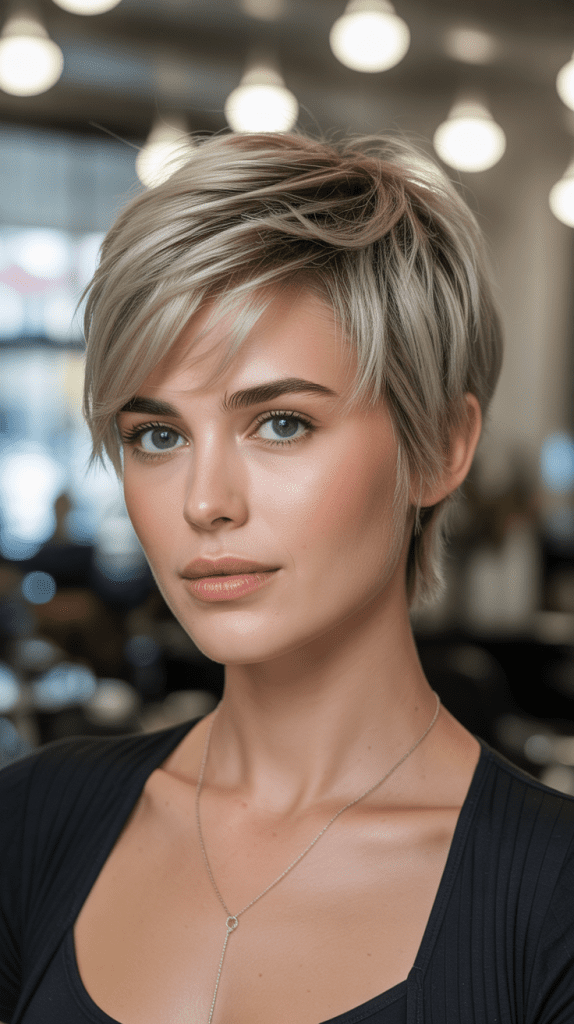
The textured pixie cut remains one of the most flattering and volumizing options for fine hair, offering a youthful and effortless appearance.
This style uses strategic layering and texturizing techniques to create the illusion of thickness and movement.
Key Features:
- The textured pixie incorporates multiple layers throughout the crown and top sections to lift hair away from the scalp and create natural volume.
- Wispy, piece-y ends prevent the hair from looking too blunt or flat, which is essential for fine hair that tends to lie limp.
- The sides and back are typically kept shorter while leaving more length on top, creating a dimensional shape that draws the eye upward.
- Texturizing shears or point-cutting techniques remove weight without sacrificing the appearance of fullness.
2. The Classic Bob with Blunt Ends

A classic bob cut with blunt ends creates a polished look while giving fine hair the appearance of density and weight at the bottom.
This timeless style has been updated with modern techniques that specifically benefit thinner hair textures.
Styling Approach:
- Blunt ends create a solid perimeter that makes hair appear thicker and fuller, as there are no wispy or tapered ends to reveal sparse density.
- The length typically falls between the chin and shoulders, with the ideal length varying based on individual face shape and hair texture.
- A slight bend or wave added with a flat iron or curling iron prevents the style from looking too heavy or dated.
- The bob should be cut with precision to maintain the clean line that gives fine hair its appearance of thickness.
- Regular trims every 6-8 weeks are essential to maintain the blunt edge and prevent split ends that can make fine hair look even thinner.
3. The Layered Shaggy Bob
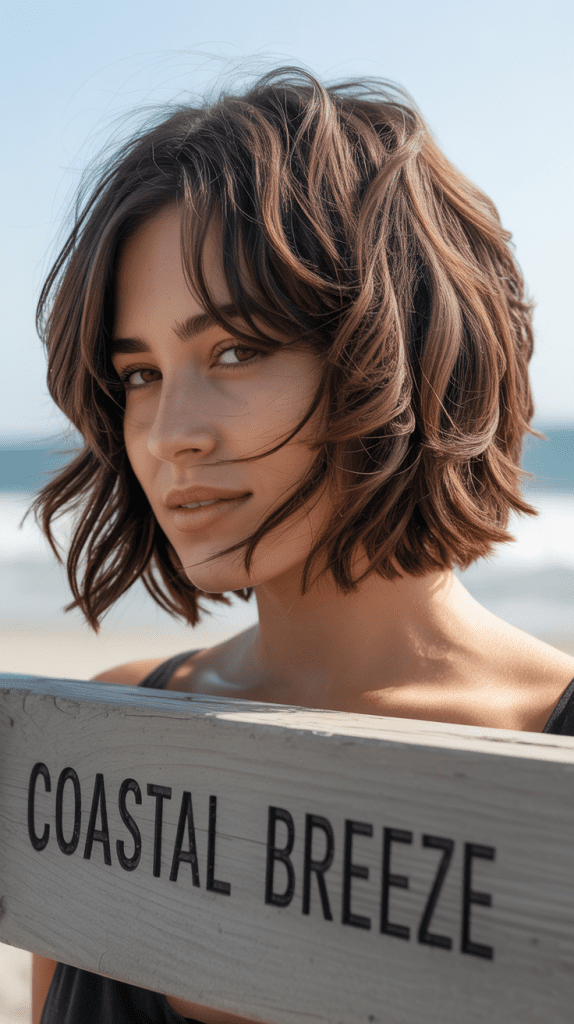
The shaggy bob combines the structure of a classic bob with the movement and texture of shag haircut layers, creating an ideal balance for fine hair.
This contemporary style has surged in popularity due to its ability to add dimension and volume.
Design Elements:
- Multiple layers are cut throughout the hair, with shorter pieces in the crown area to create lift and volume at the roots.
- The shaggy texture prevents fine hair from appearing flat or lifeless by introducing movement in multiple directions.
- Face-framing layers draw attention to facial features while adding softness to the overall look.
- The choppy, lived-in texture means the style looks great even when not perfectly styled, making it low-maintenance for busy lifestyles.
- This cut works beautifully with natural texture or can be enhanced with sea salt spray or texturizing products for added definition.
4. The Asymmetrical Lob
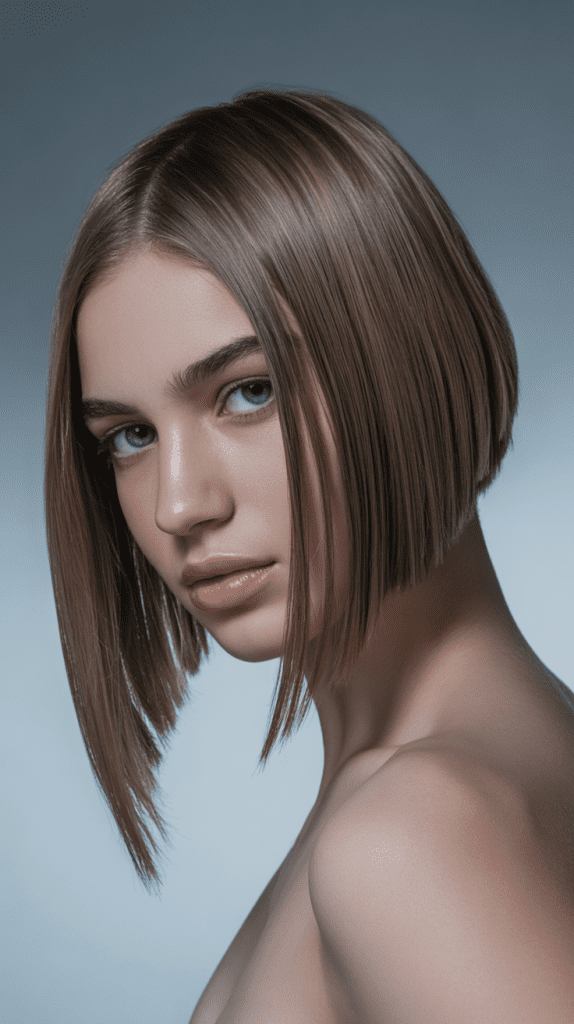
An asymmetrical lob (long bob) offers visual interest and modern edge while providing fine hair with strategic volume placement.
The uneven lengths create a dynamic silhouette that distracts from any lack of density.
Construction Details:
- One side is cut noticeably longer than the other, typically with a difference of 1-3 inches, creating an eye-catching imbalance.
- The longer side can be styled behind the ear or swept forward, while the shorter side showcases the cut’s architectural quality.
- Subtle layering within the cut prevents the style from appearing too heavy on one side while maintaining volume throughout.
- The asymmetry draws attention away from fine hair texture and toward the interesting shape and design of the cut.
- This style pairs exceptionally well with side-swept bangs or a deep side part to emphasize the asymmetrical nature.
5. The Micro Fringe Pixie
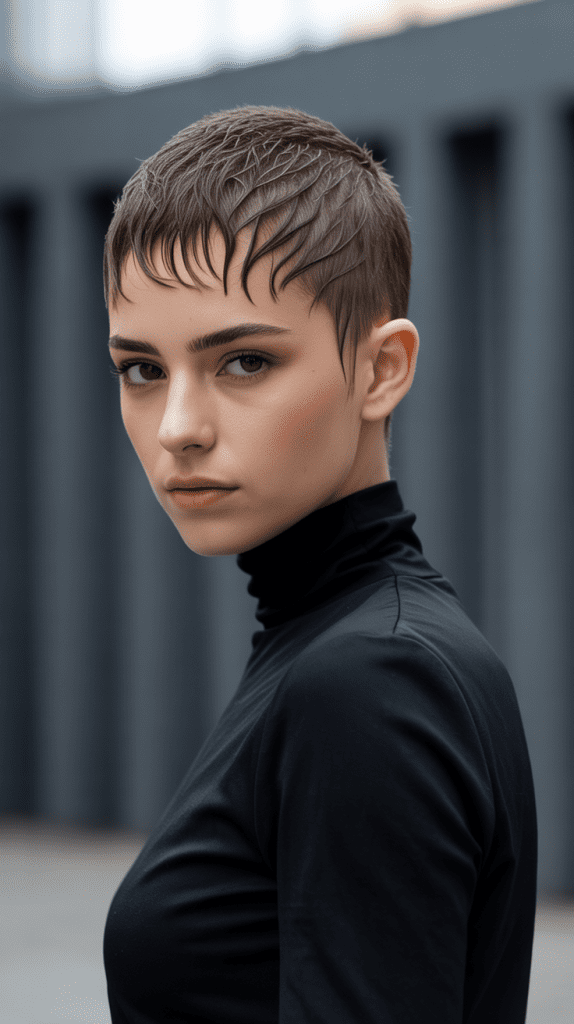
The micro fringe pixie combines an ultra-short fringe (bangs) with a cropped pixie cut, creating a bold and fashion-forward statement.
This style is particularly effective for fine hair as it eliminates length that can weigh hair down.
Distinctive Characteristics:
- The fringe is cut very short, typically only 1-2 inches long, creating a striking focal point that draws attention to the eyes.
- The rest of the hair is kept similarly short, with slight variations in length to create texture and dimension.
- This dramatic style removes enough weight that fine hair appears to have more body and can hold its shape throughout the day.
- The micro fringe can be styled straight across for a bold look or slightly textured for a softer appearance.
- Maintenance is relatively low once styled, as the short length means less daily manipulation and fewer products needed.
6. The Graduated Bob
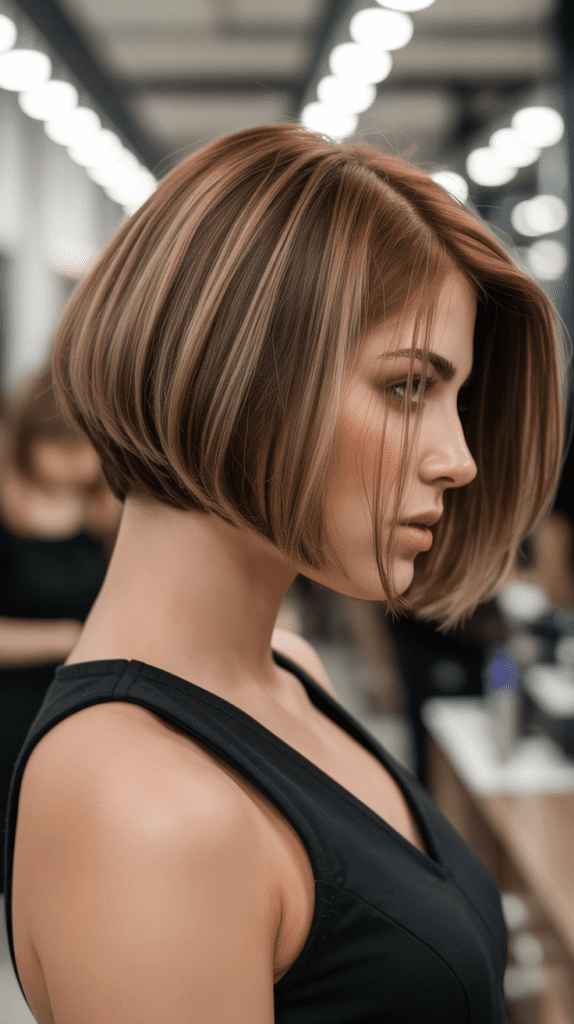
A graduated bob features stacked layers in the back that create volume and height, while the front remains longer for a flattering face-framing effect.
This technical cut is specifically engineered to add fullness where fine hair needs it most.
Technical Specifications:
- The back is cut in graduated layers, with each layer slightly shorter than the one below it, creating a stacked or wedged appearance.
- This stacking technique builds volume at the crown and back of the head, areas where fine hair often falls flat.
- The front sections are left longer and can be customized to fall anywhere from the jawline to the collarbone.
- The dramatic angle from short back to longer front creates visual interest and a slimming effect on the face.
- This cut requires regular maintenance every 4-6 weeks to preserve the stacked shape and prevent the back from growing out unevenly.
7. The Tousled Crop
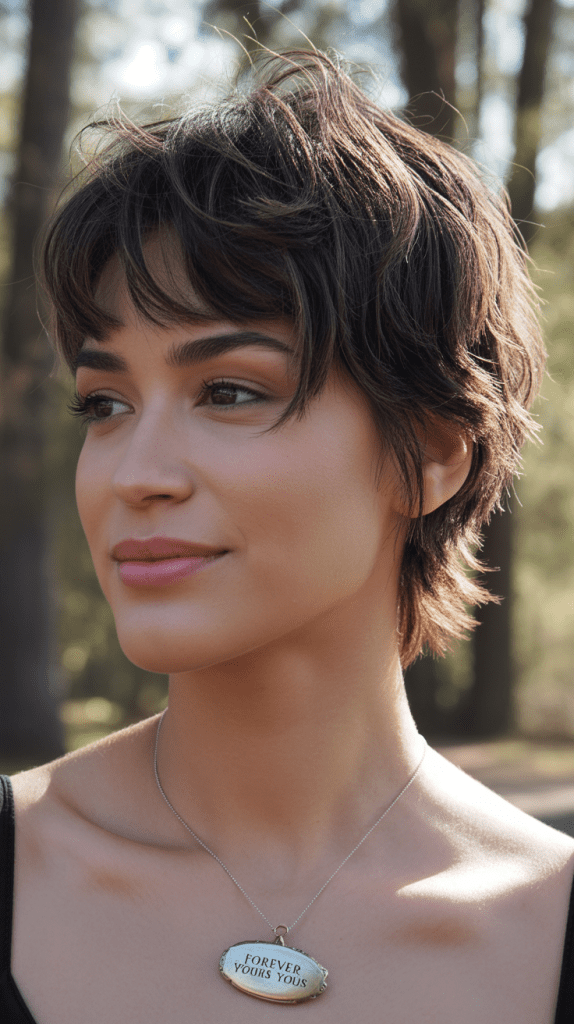
The tousled crop is an intentionally messy, bedhead-inspired style that works wonderfully with fine hair’s natural tendency to move easily.
This low-maintenance cut celebrates texture rather than fighting against it.
Styling Philosophy:
- The hair is cut to a uniform short length all over, typically 2-4 inches, with slight variations to create organic movement.
- Texturizing techniques remove weight and create separation between individual pieces, preventing the clumping that can make fine hair look sparse.
- The “tousled” appearance is achieved through minimal styling with fingers rather than brushes, maintaining an effortless aesthetic.
- A small amount of lightweight pomade, wax, or clay can define pieces without weighing down fine hair.
- This style embraces the natural movement of fine hair and looks intentionally undone rather than messy or unkempt.
8. The Side-Swept Pixie
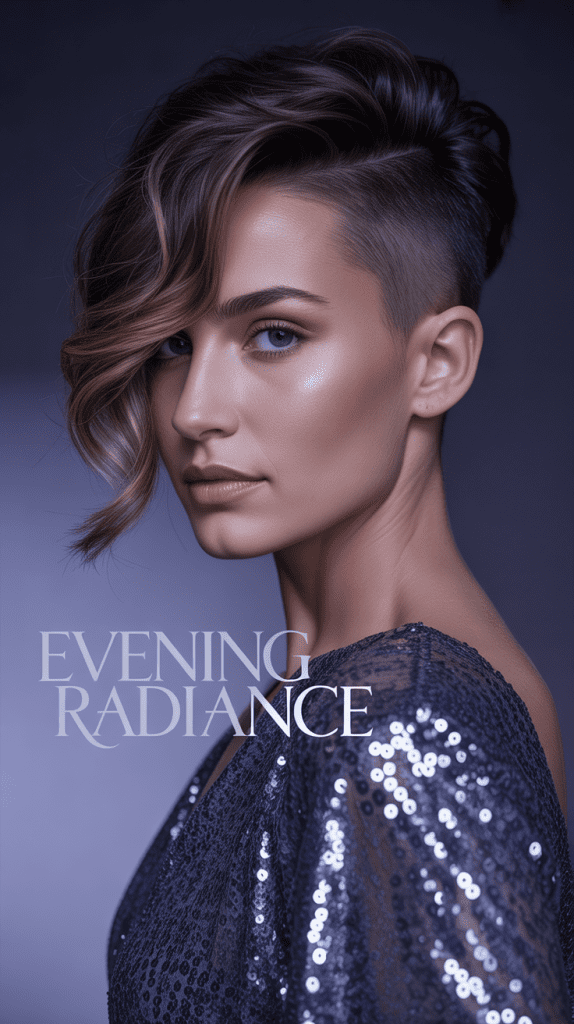
A side-swept pixie features longer pieces on top that are styled dramatically to one side, creating asymmetry and visual interest.
This style is particularly flattering for fine hair as it creates height and dimension.
Styling Mechanics:
- The top section is left significantly longer (3-5 inches) than the sides and back, allowing for dramatic side-swept styling.
- Hair is pushed to one side and can be secured with styling products to maintain the swept appearance throughout the day.
- The contrast between the short sides and longer top creates the illusion of more volume and thickness.
- This style can be adjusted for different occasions—smoothed down for professional settings or textured for casual environments.
- A strong-hold lightweight gel or spray helps maintain the side-swept shape without making fine hair look greasy or weighed down.
9. The Choppy Lob with Bangs
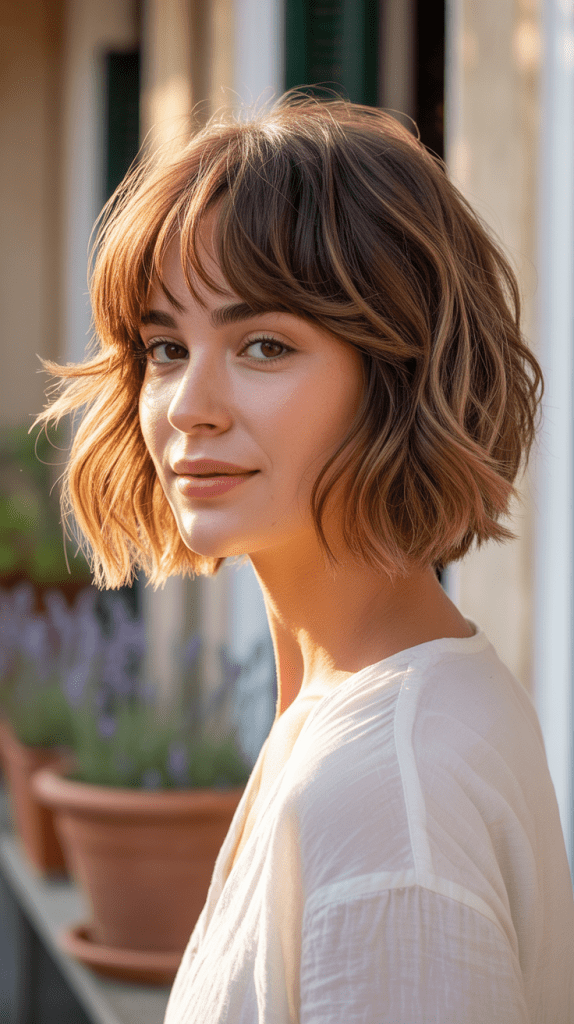
Combining a choppy lob with bangs creates multiple points of visual interest and texture that benefit fine hair tremendously.
The layered approach throughout adds movement while bangs provide coverage and style.
Component Breakdown:
- The lob is cut with varying lengths throughout, creating a choppy, piece-y texture that adds dimension to fine hair.
- Bangs can be blunt, wispy, or curtain-style depending on face shape and personal preference, but all add fullness to the front hairline.
- The combination of textured body and framed face creates a cohesive look that appears deliberately styled rather than thin.
- Internal layering removes weight while maintaining the appearance of thickness at the perimeter.
- This versatile style can be worn straight, wavy, or with added texture depending on the desired look for the day.
10. The Undercut Pixie
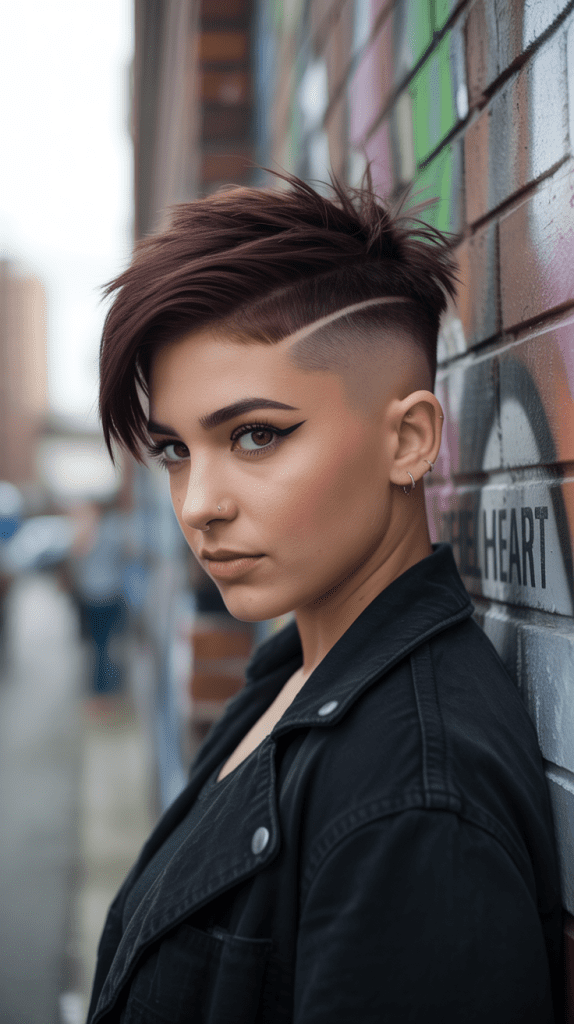
An undercut pixie features shaved or very short sides and back with longer hair on top, creating dramatic contrast and an edgy aesthetic.
This bold style removes weight in strategic areas to maximize volume where it remains.
Construction Method:
- The sides and back are cut very short with clippers (typically using a guard between #2 and #4) or even shaved completely.
- The top section maintains 3-6 inches of length, creating a stark contrast with the shaved areas.
- This extreme removal of hair from the sides means all the fine hair’s volume is concentrated on top where it’s most visible.
- The undercut grows out gracefully, though maintaining the shaved sections requires touch-ups every 3-4 weeks.
- Styling options are diverse—the top can be slicked back, pushed forward, textured, or styled in various directions.
11. The French Bob

The French bob is a chin-length or shorter bob with a blunt fringe, inspired by classic Parisian style.
This chic cut gives fine hair a polished, sophisticated appearance while adding the illusion of density.
Signature Elements:
- The length typically hits right at the jawline or slightly above, creating a clean, geometric shape.
- A full, blunt fringe (usually straight across) is the defining feature, adding weight and structure to the front.
- The overall shape is relatively uniform without dramatic layers, which helps fine hair appear thicker and more solid.
- The style embodies effortless French elegance and pairs beautifully with a center or slight side part.
- Minimal styling is required—a quick blow-dry with a round brush creates the slightly turned-under ends characteristic of the French bob.
12. The Feathered Pixie

The feathered pixie incorporates soft, feathered layers throughout that create movement and lightness while maintaining volume.
This technique is particularly beneficial for fine hair that needs texture without losing body.
Layering Technique:
- Feathering involves cutting hair at an angle with texturizing techniques that create soft, wispy ends.
- These feathered pieces move independently, creating the illusion of more hair strands and greater overall volume.
- The layers are typically shorter at the crown and gradually longer toward the perimeter, building height naturally.
- This softer approach to the pixie cut is more romantic and less severe than a traditional close-cropped style.
- The feathered texture catches light differently on each piece, adding visual dimension that makes fine hair appear fuller.
13. The Slicked-Back Pixie
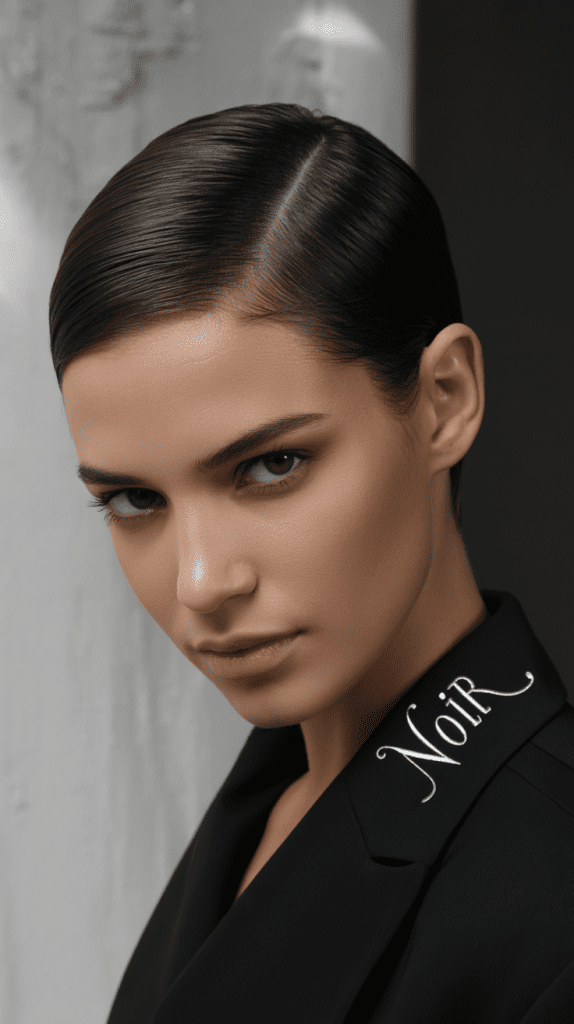
A slicked-back pixie uses styling products to push all the hair backward, creating a sleek, androgynous look that’s both modern and classic.
This style works surprisingly well for fine hair when executed with the right products.
Styling Requirements:
- Hair gel, pomade, or styling cream is applied to damp hair and combed straight back from the forehead to the crown.
- The slicked-back style actually makes fine hair look intentionally sleek rather than thin, as the smoothness is part of the aesthetic.
- This look requires hair to be at least 2-3 inches long on top to have enough length to style backward.
- The sides can be slicked back as well or kept shorter for contrast, depending on personal preference.
- A shine-enhancing product adds to the polished, sophisticated appearance while holding the style in place.
14. The Curly Pixie

For those with naturally fine but textured or curly hair, a curly pixie celebrates the natural curl pattern while removing weight that can pull curls down.
This style creates a halo of volume around the face.
Curl-Specific Considerations:
- The cut follows the natural curl pattern, cutting curls when dry to see their true length and shape.
- Removing length and weight allows fine curls to spring up and create maximum volume at the crown.
- Layering is strategic to avoid creating a triangular shape, with more length kept on top and sides tapered appropriately.
- Curl-enhancing products like mousses and gels help define individual curls without weighing down fine hair texture.
- This style requires minimal daily styling—often just refreshing curls with water and product is sufficient.
15. The Angled Bob
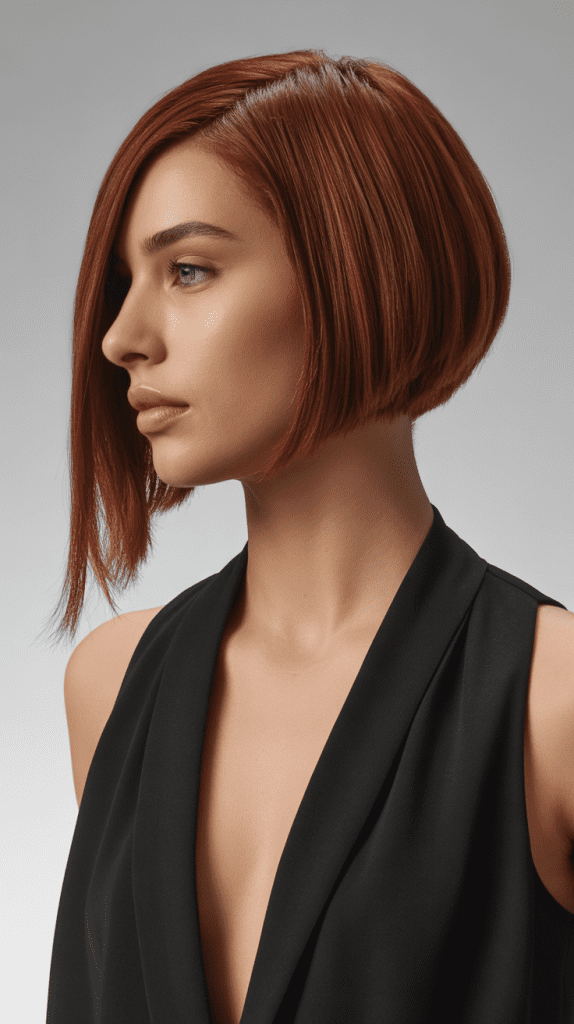
An angled bob features a sharp angle from shorter back to longer front, creating a modern silhouette that flatters most face shapes.
The distinct angle adds visual interest that draws attention away from fine hair texture.
Geometric Precision:
- The back is cut significantly shorter than the front, with the angle gradually increasing as it moves toward the face.
- This dramatic angle can be subtle (1-2 inch difference) or extreme (3-4 inches or more), depending on personal style.
- The clean lines require precision cutting and regular maintenance to preserve the angular shape.
- The angled shape naturally lifts hair away from the neck and creates volume through its architectural structure.
- Styling is straightforward—a round brush blow-dry emphasizes the angle and creates a polished finish.
16. The Textured Lob
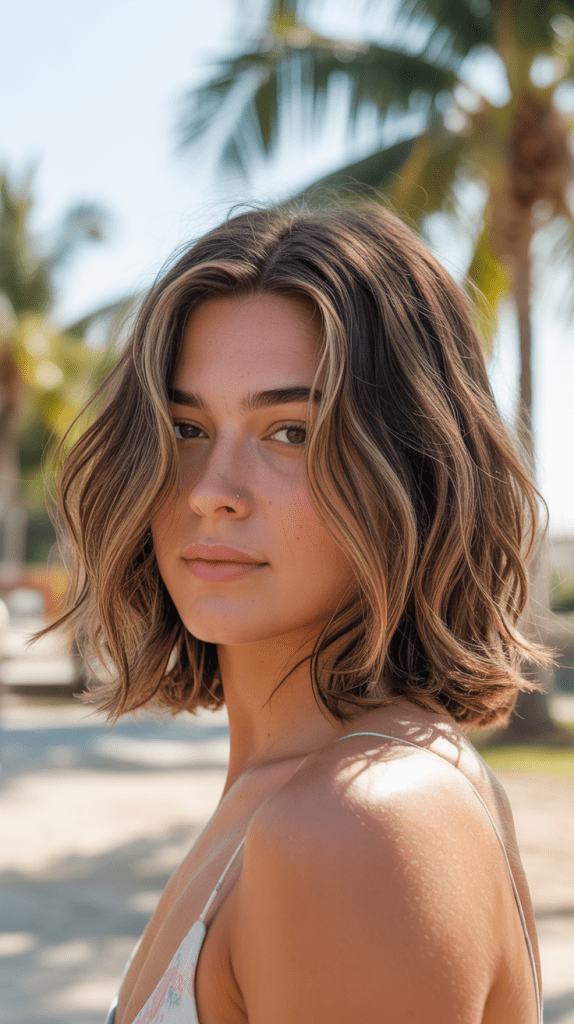
A textured lob incorporates various cutting techniques to create a piece-y, lived-in appearance that gives fine hair the illusion of movement and volume.
This modern approach to the long bob has become extremely popular.
Texturizing Methods:
- Point cutting, razor cutting, and texturizing shears are used throughout to create separation and remove weight strategically.
- The result is a lob that doesn’t lie flat but has natural movement and dimension in multiple directions.
- Internal layers add volume without creating visible layering at the perimeter, maintaining a full appearance.
- The textured approach means the style looks good whether perfectly styled or in its natural state.
- Styling products like sea salt spray or texturizing cream enhance the piece-y separation and beachy texture.
17. The Bowl Cut Revival

The updated bowl cut is far from its 90s predecessor, featuring softened edges, texture, and modern styling that makes it surprisingly flattering for fine hair.
This retro-inspired cut has been reimagined for contemporary style.
Modern Interpretation:
- Unlike the harsh, blunt bowl cuts of the past, the modern version incorporates subtle layering and texturizing.
- The perimeter creates a rounded shape that frames the face, but edges are softened to avoid looking too severe.
- Fine hair actually benefits from the structured shape, as the weight of the cut creates the appearance of fullness.
- Internal texturing prevents the style from looking too heavy or mushroom-like while maintaining the characteristic rounded silhouette.
- This bold style makes a fashion statement and works particularly well with bold makeup or fashion-forward personal style.
18. The Razor-Cut Bob
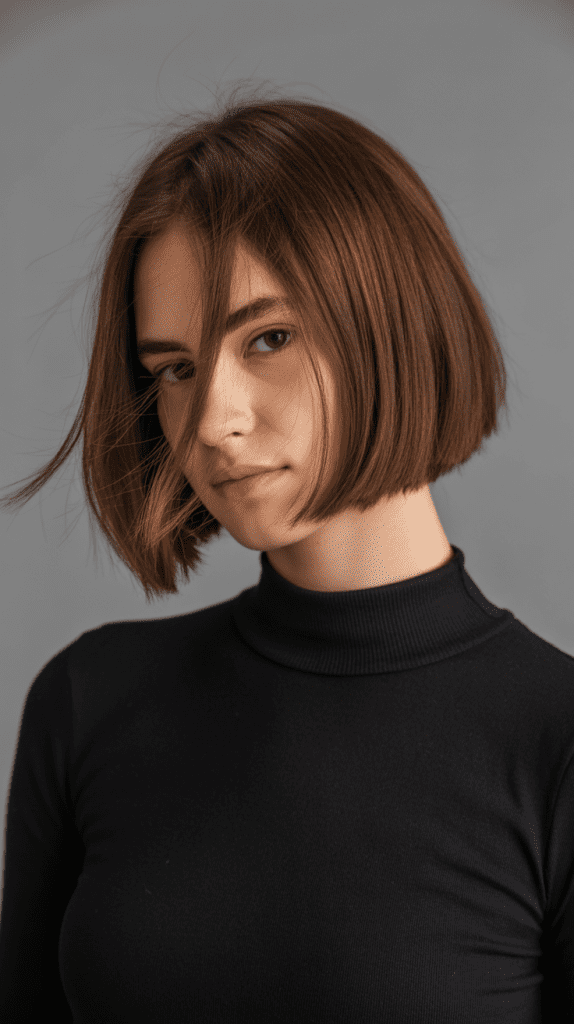
A razor-cut bob uses a razor blade instead of scissors to create soft, feathered ends that add movement and texture to fine hair.
This cutting technique creates a distinctly different texture than traditional scissor cutting.
Razor Technique Benefits:
- The razor creates softer, more tapered ends that move easily and create natural separation between hair strands.
- This technique removes weight efficiently, which is crucial for preventing fine hair from appearing limp or flat.
- The resulting texture has more movement and swing than a blunt-cut bob, creating a livelier appearance.
- Razor cutting works particularly well for hair that will be worn with natural texture or loose waves.
- The cut grows out gracefully with less obvious “grow-out lines” than scissor-cut styles.
19. The Pixie with Long Bangs
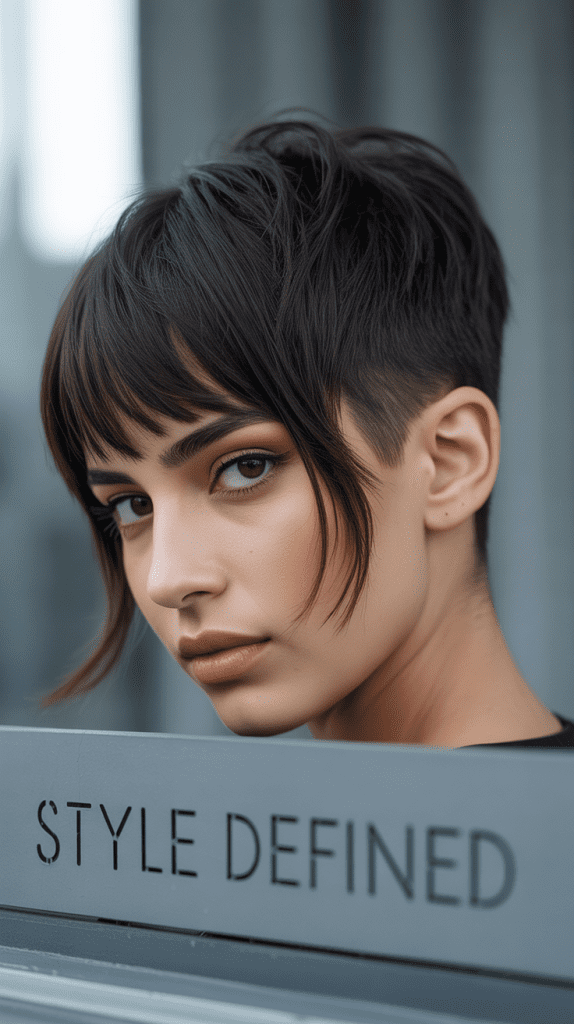
This variation on the pixie cut features notably longer bangs that can be swept across the forehead or styled in various ways, adding versatility to the short style.
The longer fringe creates a focal point and additional styling options.
Bang Variations:
- The bangs extend 2-4 inches longer than the rest of the pixie cut, typically reaching eyebrow level or below.
- These longer pieces can be swept to the side, styled straight across, or even tucked behind the ear for different looks.
- The contrast between short back and sides with longer bangs creates dimension and the illusion of more hair.
- The versatile bangs allow for multiple styling options without committing to a completely uniform short cut.
- This style provides the benefits of a pixie cut (low maintenance, volume) while maintaining some length for styling flexibility.
20. The Stacked Pixie
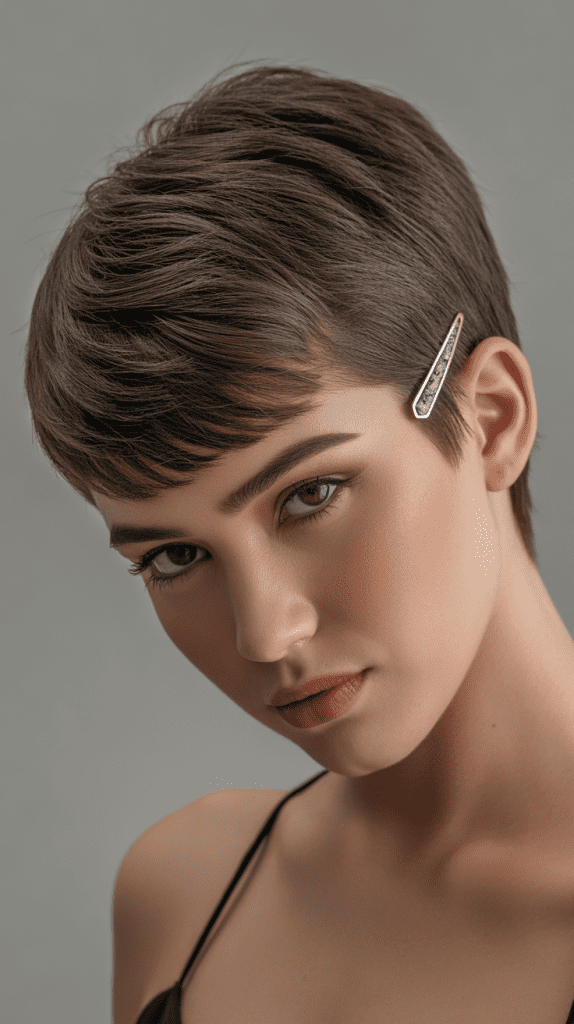
A stacked pixie features graduated layers in the back that create volume and height, similar to a stacked bob but in pixie form.
This technical cut is engineered specifically to address fine hair’s tendency to fall flat.
Stacking Structure:
- The back is cut in progressively shorter layers, with each layer stacked on top of the previous one to create height.
- This architecture lifts hair away from the scalp at the crown, where fine hair often needs volume most.
- The front and sides are typically kept longer to frame the face, while the stacked back provides the volume boost.
- The stacked shape requires regular maintenance every 4-6 weeks to preserve its structure and prevent flattening.
- When properly cut and styled, this pixie variation creates impressive volume that seems impossible for fine hair.
21. The Wavy Bob
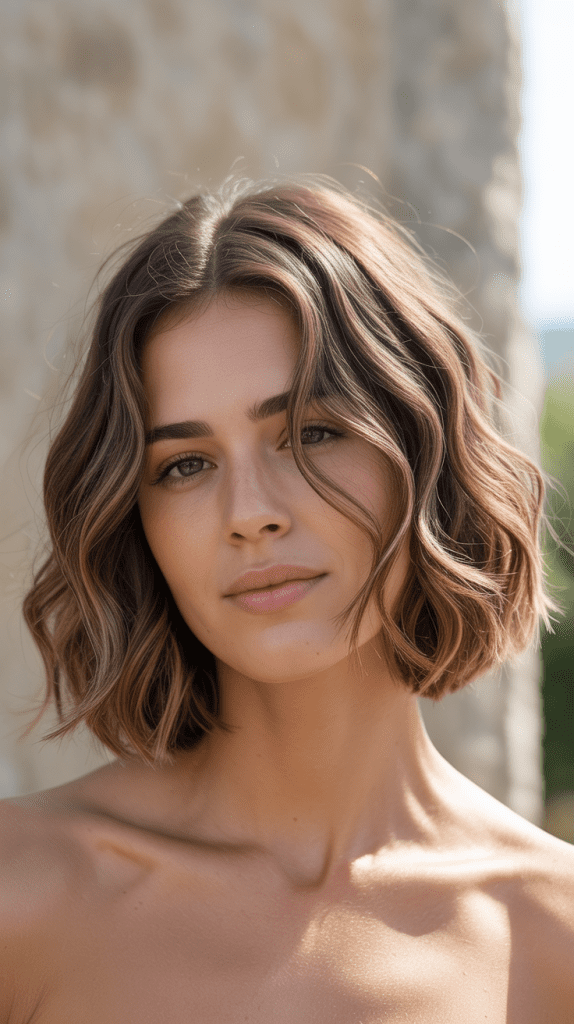
A wavy bob enhances fine hair by adding bends and curves that create the illusion of volume and texture.
Whether naturally wavy or styled with tools, this approach transforms a basic bob into something dimensional.
Wave Creation:
- Natural waves can be enhanced with curl-defining products and diffusing, allowing fine hair’s natural texture to shine.
- For straight fine hair, waves can be created with a curling iron, wand, or flat iron using various wrapping techniques.
- The waves should be loose and lived-in rather than tight, which can make fine hair look sparse at the roots.
- The key is creating texture that makes individual strands visible rather than having hair lie in flat sheets.
- A light hold hairspray preserves waves without making fine hair crunchy or weighed down.
22. The Disconnected Pixie
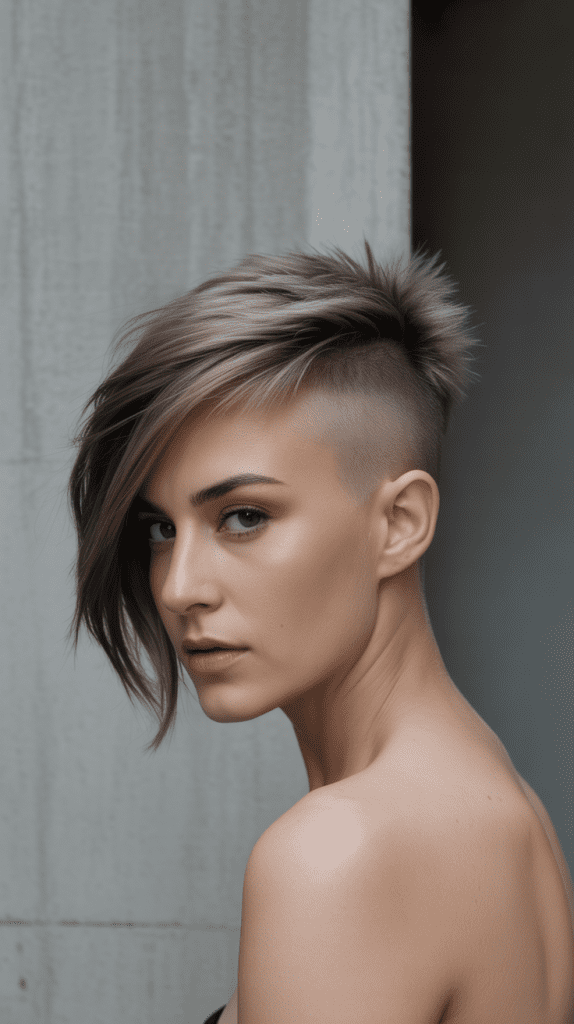
A disconnected pixie features distinct sections of different lengths that don’t blend seamlessly, creating an edgy, modern aesthetic.
This intentional disconnect adds visual interest and can make fine hair appear more dynamic.
Disconnection Strategy:
- The top section is kept notably longer without gradual transitioning to the shorter sides and back.
- This creates a deliberate contrast between sections rather than a gradual fade or blend.
- The disconnected look is fashion-forward and works particularly well for those wanting an avant-garde style.
- Fine hair benefits because the longer sections can be styled with volume while the short sections reduce overall weight.
- Styling typically involves adding texture to the top section while keeping sides sleek or very short.
23. The Soft Undercut
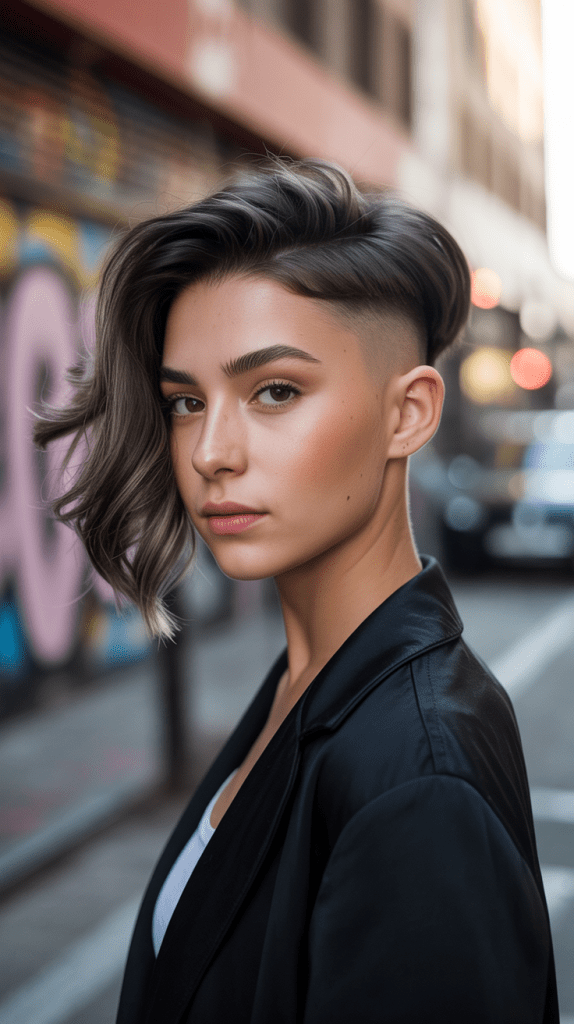
A soft undercut features shortened sides that aren’t completely shaved, creating a more subtle and feminine version of the traditional undercut.
This approach removes weight while maintaining a softer overall appearance.
Subtle Reduction:
- The sides and possibly back are cut short (typically with scissors or long clipper guards) but not shaved to the skin.
- This creates a weight reduction that helps volume on top without the dramatic contrast of a traditional undercut.
- The softer approach grows out more gracefully and requires less frequent maintenance than shaved undercuts.
- Fine hair on top has more room to move and create volume without the weight of hair at the sides pulling it down.
- This style can be hidden or revealed depending on how the top sections are styled, offering versatility.
24. The Piecey Bob
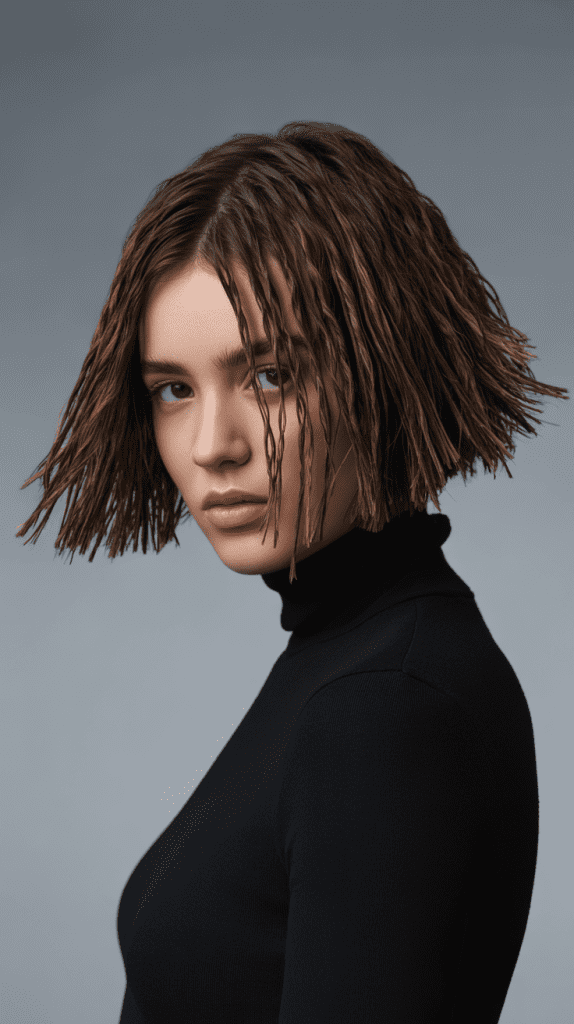
A piecey bob uses texturizing techniques and styling products to create visible separation between hair strands, giving fine hair a fuller, more textured appearance.
This modern styling approach transforms a basic bob into something more dimensional.
Creating Definition:
- The cut includes internal layering and texturizing that creates natural separation points.
- Styling products like pomades, waxes, or texturizing creams are worked through to define individual pieces.
- The separation makes it appear as though there are more individual hairs, creating the illusion of density.
- This style works with various bob lengths from chin to shoulder and can be worn sleek or tousled.
- The piecey texture catches light differently on each separated strand, adding visual dimension.
25. The Shattered Bob
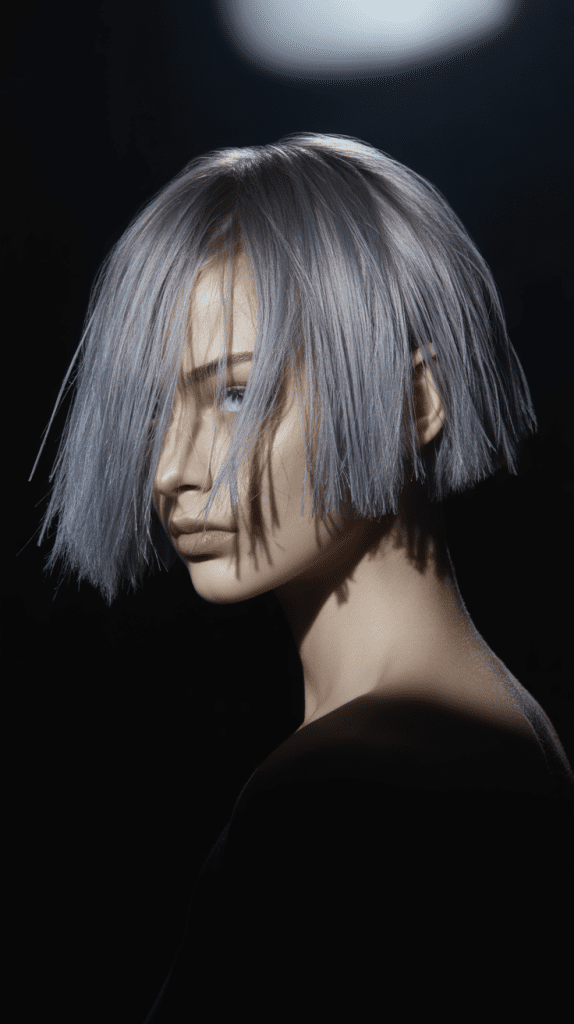
A shattered bob features extremely choppy, fragmented ends that create maximum texture and movement.
This editorial-inspired style is perfect for fine hair that needs visual interest and dimension.
Fragmentation Technique:
- The cutting technique involves aggressive texturizing that creates a highly piece-y, broken-up perimeter.
- This “shattered” appearance adds so much texture that fine hair appears to have more body and volume.
- The fragmented ends catch light in multiple directions, creating visual complexity that distracts from any lack of density.
- This bold style makes a fashion statement and works particularly well for those with edgy personal style.
- Styling can be sleek to emphasize the fragmented ends or tousled to create additional texture throughout.
26. The Curly Bob
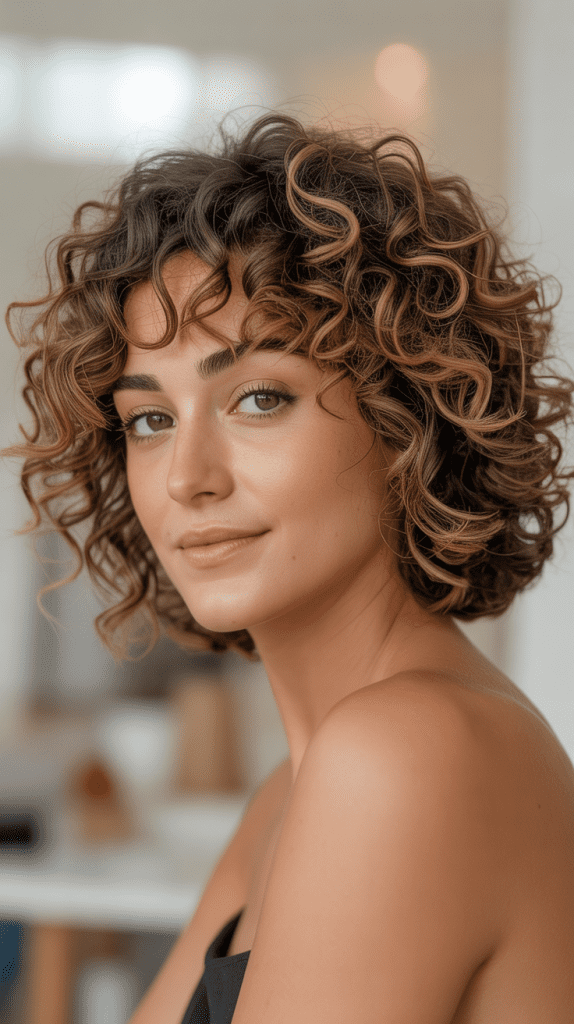
For those with naturally curly fine hair, a curly bob harnesses the volume potential of curls while keeping a manageable length.
The bob shape contains curls while allowing them to create fullness.
Curl Management:
- The bob shape prevents curls from being weighed down by excessive length, allowing them to spring up naturally.
- Cutting curls at the right length ensures they bounce at flattering points around the face and jawline.
- Layering within a curly bob must be strategic to create volume without creating a pyramid shape.
- Curl-specific cutting techniques when hair is dry ensure the style will look correct when curly.
- Products designed for fine curly hair enhance definition without weighing down the delicate curl structure.
27. The Side-Part Bob

A deep side part transforms any bob style by creating asymmetry and volume on the heavier side.
This simple styling change can dramatically affect how full fine hair appears.
Parting Strategy:
- The part is placed far to one side rather than in the center, creating an approximately 70/30 or 80/20 division.
- The heavier side naturally has more volume due to having more hair massed in one area.
- The dramatic side part creates a sweeping effect across the forehead that flatters most face shapes.
- Fine hair benefits because the massing of hair on one side creates the illusion of greater density.
- This styling approach works with any bob length and can be changed to the opposite side for a fresh look.
28. The Choppy Pixie

A choppy pixie incorporates aggressive texturizing throughout the cut, creating a piece-y, edgy look that’s full of movement.
This approach is ideal for fine hair that needs maximum texture and dimension.
Choppy Construction:
- The entire cut is textured with various techniques including point cutting, razor work, and texturizing shears.
- The result is a pixie with visible separation and definition rather than a smooth, uniform appearance.
- The choppy texture creates shadows and highlights within the cut that add visual depth.
- This style can be worn messy and tousled or smoothed down slightly for different occasions.
- The aggressive texturizing removes weight while maintaining the appearance of fullness through strategic separation.
29. The Rounded Bob
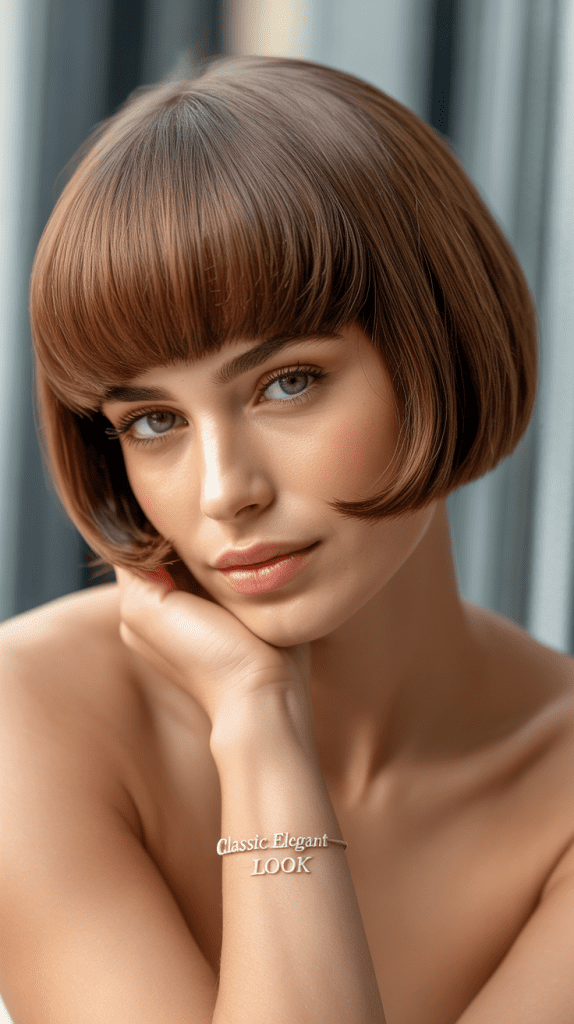
A rounded bob creates a curved, dome-like silhouette that frames the face beautifully and gives fine hair structure and shape.
The rounded appearance is achieved through specific cutting and styling techniques.
Curved Architecture:
- The cut creates a rounded shape from all angles, with subtle layering that maintains fullness at the perimeter.
- The rounded silhouette naturally lifts hair away from the face and neck, creating volume.
- This shape is particularly flattering for rounder face shapes as it complements rather than emphasizes roundness.
- Styling involves blow-drying with a round brush, turning hair under slightly to emphasize the curved shape.
- The structured shape gives fine hair a polished, put-together appearance even with minimal styling.
30. The Textured Crop with Fringe
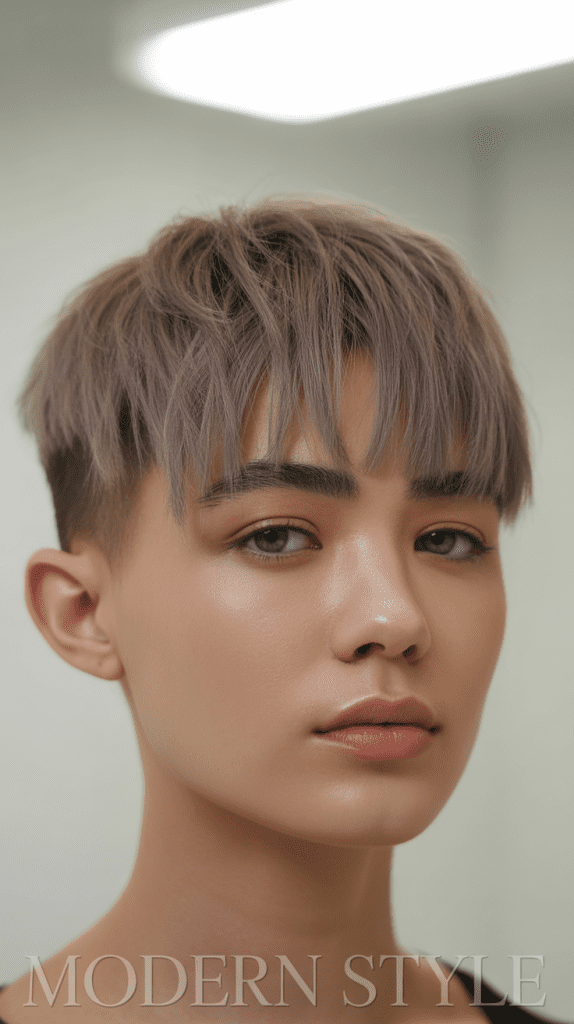
This ultra-short style combines the convenience of a crop cut with the style element of a textured fringe.
It’s an excellent option for fine hair as it removes length while adding strategic texture.
Cropped Specifications:
- The overall length is very short, typically 1-3 inches throughout, with slightly more length left in the fringe area.
- The fringe can be textured, piece-y, or slightly longer to create a focal point and styling versatility.
- The extremely short length means fine hair can hold volume and texture throughout the day.
- Texturizing throughout the cut creates separation and prevents the hair from lying completely flat.
- This low-maintenance style requires minimal styling products and time while still looking intentional and fashionable.
31. The Layered Pixie Bob

The pixie bob (or “bixie”) combines elements of both a pixie cut and a bob, creating a hybrid style that offers the best of both worlds.
This transitional length is particularly flattering for fine hair.
Hybrid Design:
- The length falls somewhere between a traditional pixie and bob, typically 2-4 inches throughout.
- Layers are incorporated throughout to create movement and prevent the style from looking too heavy or blunt.
- The back and sides may be shorter while the top and front maintain more length for versatility.
- This length provides more styling options than a traditional pixie while still offering the volume benefits of shorter hair.
- The layered approach ensures fine hair has maximum movement and doesn’t lie flat against the head.
32. The Voluminous Crown Pixie
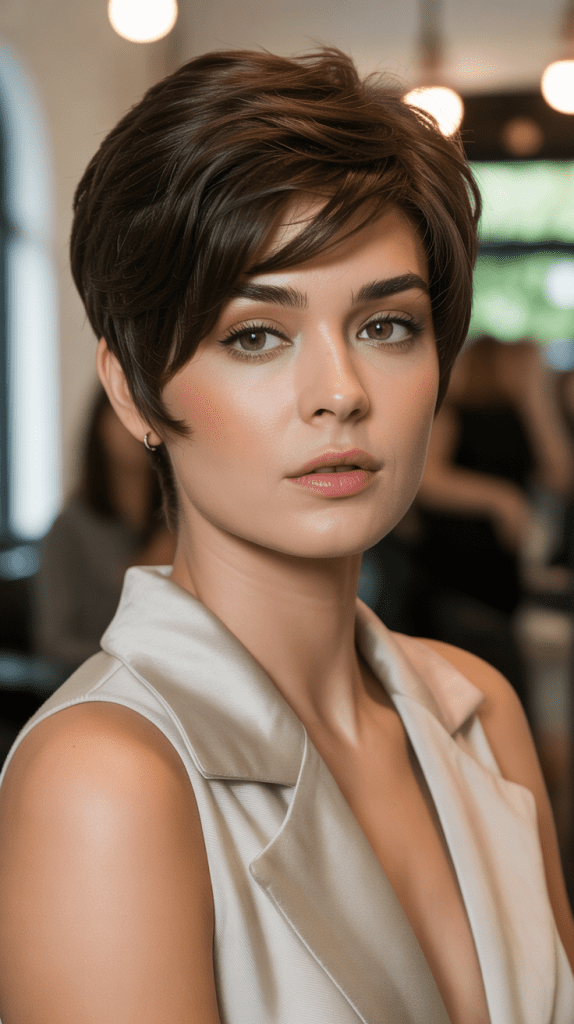
This pixie variation focuses on creating maximum volume at the crown through strategic cutting and styling.
The height at the crown creates a flattering silhouette and makes fine hair appear fuller overall.
Volume Engineering:
- The crown area is left longer and may be layered to create lift away from the scalp.
- Styling focuses on creating height at the highest point of the head using blow-drying techniques and volumizing products.
- The sides are kept shorter to emphasize the volume contrast at the crown.
- This vertical emphasis creates an elongating effect that flatters most face shapes.
- The crowned volume makes fine hair appear more substantial and gives the style architectural interest.
33. The Sleek Lob
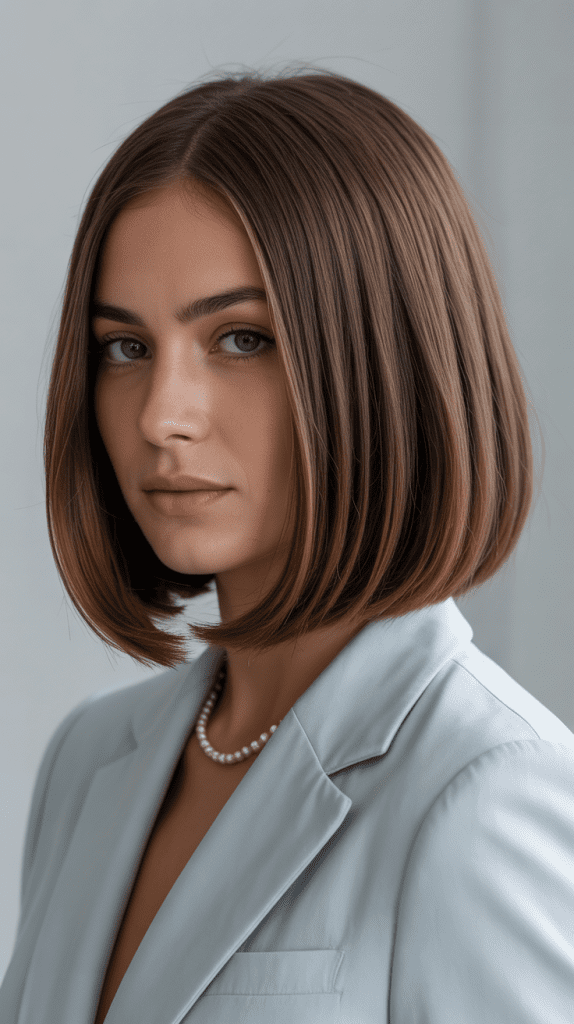
A sleek lob offers a polished, sophisticated look that can make fine hair appear glossy and healthy rather than thin.
The key is achieving smoothness and shine through proper cutting and styling techniques.
Sleek Finish Requirements:
- The cut should be precise with careful attention to creating even, smooth lines throughout.
- Styling involves blow-drying smooth with a paddle brush or using a flat iron to create a glossy finish.
- Shine-enhancing products like serums or glossing sprays add luminosity without weighing down fine hair.
- The sleek approach works particularly well for professional environments and formal occasions.
- When fine hair is properly smoothed and shiny, it appears healthy and intentionally sleek rather than limp or thin.
Best Styling Products for Fine Hair
Volumizing Mousses:
- Lightweight mousses add body and lift without weighing down fine hair strands.
- Apply to damp hair at the roots before blow-drying for maximum volume effect.
- Mousses distribute evenly throughout hair and provide flexible hold that allows movement while maintaining volume.
Texturizing Sprays:
- These sprays add grit and separation to fine hair, creating the appearance of more individual strands.
- Sea salt sprays are particularly popular for creating beachy, tousled texture that makes hair look fuller.
- Apply to dry or damp hair and scrunch or tousle with fingers to enhance natural texture.
- Texturizing sprays work exceptionally well with short layered cuts to define piece-y separation.
- They provide a matte finish that can make fine hair appear less limp and more substantial.
Lightweight Styling Creams:
- Styling creams designed for fine hair provide definition and control without heaviness.
- They help smooth frizz and flyaways while maintaining natural movement and body.
- A small amount (typically pea-sized) is sufficient for short fine hair to avoid product buildup.
- These creams are ideal for defining layers and creating polished looks without stiffness.
- Look for formulas specifically labeled for fine or thin hair to ensure appropriate weight.
Root-Lifting Products:
- Root lifters and volumizing powders target the area where fine hair needs the most help—at the scalp.
- These products are applied directly to roots on dry hair to create instant lift and texture.
- Volumizing powders absorb oil while adding texture, making them perfect for extending time between washes.
- Root-lifting sprays can be applied to damp hair before blow-drying for lasting volume.
- These targeted products allow you to add volume where needed without affecting the rest of your style.
Dry Shampoos:
- Dry shampoo serves double duty for fine hair—absorbing oil while adding texture and volume.
- It can extend time between washes, which is beneficial since fine hair can be prone to over-washing damage.
- Apply at the roots and massage in thoroughly to avoid visible white residue.
- Dry shampoo adds grit that helps styling products grip better and styles hold longer.
- Choose lightweight formulas that won’t build up on fine hair strands over time.
Face Shape Considerations for Short Fine Hair
Oval Face Shapes:
- Oval faces are considered the most versatile and can wear virtually any of the 33 short hairstyles listed.
- Styles like the classic bob, textured pixie, and lob all complement the balanced proportions of oval faces.
- The key is choosing a style based on personal preference and lifestyle rather than face shape limitations.
- Oval faces can experiment with bold asymmetrical cuts and dramatic styles without concern.
- Both side parts and center parts work well, offering maximum styling flexibility.
Round Face Shapes:
- Round faces benefit from styles that add height and create vertical lines to elongate the face visually.
- Pixies with volume at the crown, asymmetrical lobs, and angled bobs are particularly flattering.
- Avoid styles that add width at the sides, such as very rounded bobs that emphasize face roundness.
- Side-swept styles and deep side parts help create the illusion of length and angularity.
- Leaving some length around the face rather than going extremely short can provide more flattering framing.
Square Face Shapes:
- Square faces have strong jawlines that can be softened with the right short hairstyle choices.
- Styles with soft texture like feathered pixies, shaggy bobs, and razor-cut styles work beautifully.
- Avoid blunt cuts that end right at the jawline, as they can emphasize jaw width.
- Side-swept bangs and asymmetrical styles help soften angular features.
- Textured, piece-y styles are more flattering than severely sleek, geometric cuts.
Heart-Shaped Faces:
- Heart-shaped faces have wider foreheads and narrower chins, benefiting from styles that add width at the jawline.
- Bobs that end at chin level or slightly below help balance proportions beautifully.
- Side-swept or longer bangs can minimize forehead width while drawing attention to eyes.
- Avoid very short pixies that expose the entire forehead and emphasize the narrow chin.
- Styles with volume at the sides and ends rather than on top create the most balanced appearance.
Long or Oblong Face Shapes:
- Long faces benefit from styles that add width and avoid excessive height at the crown.
- Blunt bobs, French bobs with full bangs, and rounded styles are particularly flattering.
- Horizontal lines created by blunt cuts help visually shorten and balance elongated faces.
- Avoid very tall, voluminous crown styles that further elongate the face vertically.
- Bangs of any kind are extremely flattering as they shorten the appearance of face length.
Color Techniques to Enhance Volume in Fine Hair
Dimensional Highlights:
- Multi-tonal highlighting creates depth and dimension that makes fine hair appear fuller and more textured.
- Lighter pieces catch light differently than base color, creating the illusion of more hair strands.
- Balayage or hand-painted highlights look particularly natural and add dimension without harsh lines.
- The contrast between tones tricks the eye into perceiving more volume and thickness.
Lowlights for Depth:
- Adding darker tones throughout fine hair creates shadows that add visual depth and dimension.
- Lowlights can make the base color appear richer while creating the appearance of fuller hair.
- They work particularly well with lighter base colors to prevent hair from looking flat or one-dimensional.
- Strategic placement of lowlights can enhance the architectural elements of layered cuts.
- The interplay between highlights and lowlights creates maximum visual complexity.
Root Shadowing:
- Root shadowing involves keeping roots darker while lightening the rest of the hair gradually.
- This technique creates depth at the scalp that can make hair appear to have more density at the roots.
- It also reduces maintenance needs since regrowth is less obvious than with traditional all-over color.
- The darker roots create a natural shadow effect that adds dimension to fine hair.
- This low-maintenance approach is ideal for busy lifestyles while still providing color enhancement.
Face-Framing Highlights:
- Concentrating lighter pieces around the face draws attention to facial features and away from hair texture.
- These strategic highlights brighten the complexion and create a focal point.
- Face-framing color works with any of the 33 short hairstyles and enhances their flattering qualities.
- The lighter pieces can be as subtle or bold as desired, from a few tones lighter to dramatic contrast.
- This targeted approach requires less overall coloring, which is gentler on fine, delicate hair.
Glossing and Toning:
- Gloss treatments add shine and vibrancy to color while making fine hair appear healthier and fuller.
- These semi-permanent treatments deposit subtle color while creating a reflective, glossy finish.
- The enhanced shine makes each hair strand more visible, creating the appearance of more hair.
- Toning can neutralize unwanted undertones while adding depth and richness to color.
- Regular glossing treatments (every 4-6 weeks) maintain color vibrancy and hair health.
Blow-Drying Techniques for Maximum Volume
Upside-Down Drying:
- Flipping hair upside down while blow-drying allows gravity to work in your favor, lifting roots away from the scalp.
- Direct the dryer at roots first while hair is inverted to set volume at the base.
- Once roots are about 80% dry, flip hair back to normal position and finish drying.
- This technique works with any short style and creates impressive lift without special tools.
- The volume created at roots makes fine hair appear to have more density overall.
Round Brush Technique:
- Using a round brush while blow-drying creates lift, shape, and polished smoothness simultaneously.
- Section hair and wrap each section around the brush, directing heat from roots to ends.
- Roll the brush up toward the scalp and hold with heat, then cool before releasing for lasting volume.
- Choose an appropriately sized brush—smaller brushes for shorter hair, larger for longer styles.
- This classic technique creates the bouncy, voluminous finish seen in professional blowouts.
Root Lifting Method:
- Focus the dryer nozzle directly at roots while lifting hair up and away from the scalp with fingers or a brush.
- Hold each section up with tension while applying heat to set the lifted position.
- Work in small sections around the head, paying special attention to the crown area.
- Use the cool shot button on your dryer to set the volume once hair is dry.
- This targeted approach maximizes volume where fine hair needs it most without over-styling.
Rough Drying for Texture:
- For textured, tousled styles, rough dry hair by scrunching with fingers rather than using a brush.
- Keep the dryer moving constantly and avoid smoothing hair down against the head.
- Tip head in different directions while drying to create natural movement and prevent flat spots.
- This technique is perfect for shaggy bobs, tousled crops, and other intentionally messy styles.
- The less “perfect” the drying technique, the more natural texture and volume the result.
Diffusing for Curly Styles:
- Use a diffuser attachment on low heat and airflow to dry curly fine hair without disrupting curl pattern.
- Cup curls gently in the diffuser bowl and hold in place until mostly dry before moving to next section.
- Avoid touching or scrunching hair excessively during drying to minimize frizz.
- This gentle drying method preserves curls’ natural volume and definition.
- Once completely dry, scrunch out any crunchiness from styling products for soft, voluminous curls.
Common Mistakes to Avoid with Fine Hair
Over-Washing:
- Washing fine hair too frequently strips natural oils that provide body and protection.
- Fine hair can become limp and lifeless when over-washed, paradoxically looking thinner.
- Most experts recommend washing fine hair every 2-3 days rather than daily.
- Use dry shampoo between washes to absorb oil and add texture without water.
- Less frequent washing allows hair to maintain its natural volume and resilience.
Using Heavy Products:
- Heavy conditioners, oils, and styling products weigh down fine hair and eliminate volume.
- Always choose products specifically formulated for fine or thin hair types.
- Apply conditioner only to mid-lengths and ends, avoiding roots where fine hair needs lift.
- Use minimal amounts of any styling product—a little goes a very long way on fine hair.
- If hair looks greasy or flat after styling, you’re likely using too much product.
Skipping Heat Protection:
- Fine hair is more susceptible to heat damage from styling tools than thicker hair types.
- Always apply a heat protectant spray before using blow dryers, flat irons, or curling irons.
- Heat damage makes fine hair look even thinner and more fragile over time.
- <a href=”https://www.healthline.com/health/heat-protectant-for-hair”>Heat protectants</a> create a barrier that reduces moisture loss and damage during styling.
- Protecting hair from heat preserves its health and helps maintain whatever volume it has.
Brushing When Wet:
- Fine hair is most fragile when wet and susceptible to breakage from aggressive brushing.
- Use a wide-tooth comb or detangling brush specifically designed for wet hair.
- Start from the ends and work gradually up to roots to minimize pulling and breakage.
- Consider finger-combing or using a microfiber towel to remove tangles gently.
- Breakage makes fine hair look even thinner, so gentle handling when wet is crucial.
Neglecting Regular Trims:
- Split ends and damage travel up the hair shaft, making fine hair look wispy and unkempt.
- Regular trims every 6-8 weeks (or more frequently for some styles) maintain hair health and shape.
- Fresh, blunt ends make fine hair appear thicker and fuller than damaged, splitting ends.
- Keeping up with trims is especially important for short styles that rely on specific shapes.
- Well-maintained haircuts always look fuller and more intentional than overgrown, damaged styles.
Styling Tools Essential for Fine Hair
Quality Blow Dryer with Nozzle:
- A professional-quality blow dryer with adjustable heat and speed settings is essential for styling fine hair properly.
- The concentrator nozzle attachment focuses airflow precisely where needed for maximum control.
- Ionic technology in modern dryers can help reduce frizz and add shine to fine hair.
- Look for dryers with cool shot buttons to set styles and add lasting volume.
- Lightweight dryers are easier to maneuver when styling short hair from various angles.
Small Round Brush:
- A small-to-medium round brush (1-2 inches in diameter) is perfect for styling short fine hair.
- Ceramic or metal core brushes retain heat from the dryer, creating better lasting results.
- The size should correspond to hair length—shorter styles need smaller brushes.
- Natural boar bristles help smooth hair and distribute natural oils while creating polish.
- A quality round brush is investment-worthy as it significantly impacts styling results.
Flat Iron:
- A slim flat iron with adjustable temperature settings allows for versatile styling on fine hair.
- Lower heat settings (250-300°F) are sufficient for fine hair and cause less damage than maximum heat.
- Flat irons can create sleek straight looks or be used to add bends and waves.
- Choose plates that are 1 inch or smaller for better control on short hair.
- Quality plates (ceramic, titanium) heat evenly and glide smoothly without snagging.
Texturizing Tools:
- Texturizing tools like crimpers or wavers can add strategic texture to fine hair at roots for volume.
- These tools create bends in hair that prevent it from lying completely flat against the scalp.
- Use sparingly and strategically in underlayers where texture is needed but won’t be visible.
- Texturizing at roots creates a foundation of volume that supports the visible outer layers.
- These specialty tools can be game-changers for creating lasting volume in fine hair.
Wide-Tooth Comb:
- An essential tool for detangling fine hair gently without causing breakage.
- Use on wet hair to distribute products evenly and remove tangles safely.
- Wide spacing between teeth prevents snagging and pulling that can damage fine strands.
- A quality comb should have smooth, seamless teeth without rough edges.
- Keep one at home and one in your bag for touch-ups throughout the day.
Professional vs. At-Home Maintenance
Professional Cutting:
- Fine hair requires precision cutting by experienced stylists who understand how to maximize volume.
- Professionals have specialized scissors, razors, and texturizing tools that create specific effects.
- A skilled stylist can customize any of these 33 styles to suit individual hair texture and face shape.
- Professional cuts typically last longer and grow out more gracefully than home cuts.
- The investment in professional cutting pays off in better-looking, easier-to-style hair.
Professional Coloring:
- Achieving dimensional color that enhances fine hair requires professional expertise in placement.
- Colorists understand how to use multiple tones to create depth without damaging delicate fine hair.
- Professional products are often gentler and more conditioning than home color kits.
- The precision of professional highlighting creates natural-looking dimension that maximizes fullness appearance.
- Color correction for mistakes made with home coloring can be expensive and damaging.
At-Home Styling:
- Daily styling at home becomes easier when you have a professional cut that works with your hair texture.
- Investing in quality styling tools and products makes at-home maintenance more successful.
- Ask your stylist to demonstrate styling techniques during your appointment for better home results.
- Practice makes perfect—the more you style your cut at home, the easier and faster it becomes.
- Taking photos of your style when done professionally gives you a reference for recreating the look.
At-Home Touch-Ups:
- Some maintenance like trimming bangs between appointments can be done carefully at home.
- Use professional hair-cutting shears rather than regular scissors for cleaner cuts.
- Watch tutorial videos specific to your style before attempting any at-home trimming.
- Understand your limitations—structural cuts and layering should always be left to professionals.
- Small touch-ups can extend time between salon visits without compromising overall style quality.
Product Investment:
- Professional salon products are concentrated and effective, often lasting longer than drugstore alternatives.
- Products designed for fine hair from professional lines deliver better results without heavy buildup.
- Your stylist can recommend specific products that work with your cut and styling routine.
- While initial cost is higher, professional products are often more cost-effective long-term.
- Quality products protect your investment in professional cutting and coloring.
Lifestyle Considerations for Short Fine Hair
Active Lifestyles:
- Short styles are ideal for active individuals as they require minimal styling after workouts.
- Styles like textured crops, pixies, and choppy bobs air-dry beautifully after gym sessions.
- Fine hair often dries quickly, making post-workout styling convenient.
- Styles without bangs or face-framing pieces are easier to manage during sports and fitness activities.
- The low-maintenance nature of short hair suits busy, active lifestyles perfectly.
Professional Environments:
- Sleek bobs, French bobs, and polished pixies convey professionalism in corporate settings.
- Short hair can be styled quickly in the morning, saving time on busy work days.
- These styles maintain their shape throughout the day without constant adjustment.
- The put-together appearance of well-maintained short hair projects confidence and competence.
- Many professional women find short hair liberating and empowering in workplace environments.
Travel-Friendly Styles:
- Short hairstyles require fewer products and tools, making packing for travel simpler.
- Styles with natural texture look great even in humid or unpredictable climates.
- Quick drying time means less waiting around with wet hair during travel.
- Many short styles look intentionally tousled, so less-than-perfect styling while traveling still looks good.
- The convenience of short hair makes it ideal for frequent travelers.
Climate Adaptability:
- Short hair is more comfortable in hot, humid climates than longer styles.
- Fine hair’s tendency to go limp in humidity is less problematic when cut short.
- Cold weather is easier to manage with short hair that fits comfortably under hats.
- The versatility of short styles allows adaptation to various climate challenges.
- Less hair surface area means less exposure to damaging environmental factors.
Age Considerations:
- Short hair can be youthful and fresh at any age, particularly for those with fine hair.
- Many women find that short styles become more flattering as hair naturally thins with age.
- The right short cut can take years off appearance while being age-appropriate.
- Texture and movement in short styles create vitality that can be harder to achieve with longer, aging fine hair.
- There’s no age limit on any of these 33 styles—it’s all about confidence and maintenance.
Transitioning from Long to Short Hair
Mental Preparation:
- Making the decision to cut long hair short is significant and requires mental readiness.
- Consider your motivations—are you seeking convenience, style, volume, or change?
- Look at photos of various short styles on people with similar face shapes and hair texture.
- Understand that hair grows back, so while the decision feels permanent, it’s actually quite temporary.
- Trust your instincts—if you’re excited about the change, that’s a good sign you’re ready.
Gradual Transition:
- If hesitant about going very short immediately, transition gradually through medium lengths first.
- Start with a lob, then move to a bob, then to a longer pixie if desired.
- Each cut allows you to adjust to shorter hair mentally and practically before going shorter.
- Gradual transitions let you determine what length feels most comfortable and looks best.
- This approach reduces the risk of dramatic regret if shorter hair isn’t what you expected.
Finding the Right Stylist:
- Research stylists in your area who specialize in short hair and have portfolios demonstrating their work.
- Read reviews and look for mentions of working with fine hair specifically.
- Schedule a consultation before committing to the cut to discuss your goals and concerns.
- A skilled stylist will assess your hair texture, face shape, and lifestyle before recommending specific styles.
- Don’t be afraid to be specific about what you want and to bring reference photos.
First Cut Experience:
- Bring multiple reference photos showing different angles of your desired style.
- Communicate clearly about any concerns, particularly regarding how short you want to go.
- Trust the process—watching long hair fall to the floor can be emotional but also liberating.
- Ask questions during the cut about styling and maintenance for your new look.
- Take photos immediately after the cut while in the salon to remember how it’s styled professionally.
Adjustment Period:
- Allow yourself time to adjust to your new look—it typically takes 1-2 weeks to feel completely comfortable.
- Experiment with different styling techniques and products to find what works best.
- Your new short style may require a different morning routine—give yourself extra time initially.
- Embrace the lighter, cooler feeling of short hair and the compliments you’ll likely receive.
- Remember that confidence is the best accessory for any new hairstyle.
Maintaining Hair Health with Short Styles
Regular Deep Conditioning:
- Even short fine hair benefits from weekly deep conditioning treatments to maintain health.
- Focus treatments on mid-lengths and ends, avoiding roots to prevent weighing down fine hair.
- Leave-in treatments designed for fine hair provide ongoing conditioning without heaviness.
- Healthy hair always looks fuller and more vibrant than damaged hair, regardless of length.
- Protein treatments can temporarily strengthen fine hair and improve its ability to hold styles.
Protecting from Damage:
- Use heat protectant products every time you use hot styling tools on your hair.
- Limit the frequency of heat styling when possible, allowing hair to air-dry occasionally.
- UV protection products prevent sun damage that can make fine hair look dull and brittle.
- Protect hair when swimming with leave-in conditioner or a swim cap to prevent chlorine damage.
- Silk or satin pillowcases reduce friction and breakage while sleeping.
Scalp Health:
- A healthy scalp is essential for growing healthy hair, even when keeping it short.
- Regular scalp massages stimulate blood flow and can improve hair health.
- Address any scalp issues like dandruff or irritation promptly as they affect hair quality.
- Clarifying shampoos used monthly remove product buildup that can weigh down fine hair.
- Keep scalp clean but not over-washed to maintain its natural protective oils.
Nutritional Support:
- Hair health starts from within with proper nutrition including protein, vitamins, and minerals.
- <a href=”https://www.health.com/nutrition/vitamins-for-hair-growth”>Vitamins</a> like biotin, vitamin D, and iron support healthy hair growth.
- Staying hydrated helps maintain hair’s moisture balance and overall health.
- A balanced diet rich in omega-3 fatty acids supports scalp health and hair quality.
- Consider supplements if dietary intake is insufficient, after consulting with a healthcare provider.
Gentle Handling:
- Treat fine hair gently during all styling and maintenance activities.
- Avoid tight hair accessories or styles that pull on hair and cause breakage.
- Pat hair dry with a microfiber towel rather than rubbing vigorously with regular towels.
- Be patient when detangling and always start from ends working toward roots.
- Remember that every broken hair means less overall volume for fine hair types.
In conclusion, discovering the perfect style among these 33 Latest Short Hairstyles for Fine Hair opens up a world of possibilities that many people with fine hair never realized existed.
Short haircuts offer solutions to the most common challenges faced by those with fine hair—lack of volume, limpness, and difficulty holding styles—while providing modern, stylish looks that work for every lifestyle and personal aesthetic.
From the dramatic transformation of an undercut pixie to the timeless elegance of a French bob, from the playful texture of a shaggy bob to the sleek sophistication of a polished lob, there’s genuinely a perfect short style for everyone with fine hair.
The key to success lies in choosing a cut that complements your face shape, suits your lifestyle, and most importantly, makes you feel confident and beautiful.
Working with a skilled stylist who understands the unique properties of fine hair, investing in quality products designed specifically for your hair type, and learning proper styling techniques will ensure your short hairstyle looks salon-fresh every day.
Remember that fine hair is not a limitation but simply a characteristic that requires the right approach, and short styles provide that approach beautifully.
Whether you’re ready for a dramatic transformation or simply seeking inspiration for your next trim, these 33 styles prove that fine hair can be just as versatile, voluminous, and stunning as any other hair type when cut and styled with expertise and care.
