
Long hair becomes a canvas of endless possibilities when face-framing layers enter the picture.
Whether you’re seeking to soften sharp angles, accentuate your cheekbones, or simply add movement to heavy locks, the right layering technique can transform your entire look.
This comprehensive guide explores 33 Best Long Hairstyles Featuring Face-Framing Front Layers that work across different hair textures, face shapes, and personal styles.
From subtle curtain bangs to dramatic feathered layers, you’ll discover how strategic cutting around the face creates dimension, reduces bulk, and brings out your best features.
These versatile styles offer solutions for thick hair that needs lightening, fine hair requiring volume, and everything in between, proving that face-framing layers aren’t just a trend but a timeless approach to enhancing natural beauty.
1. Classic Curtain Bangs with Long Layers
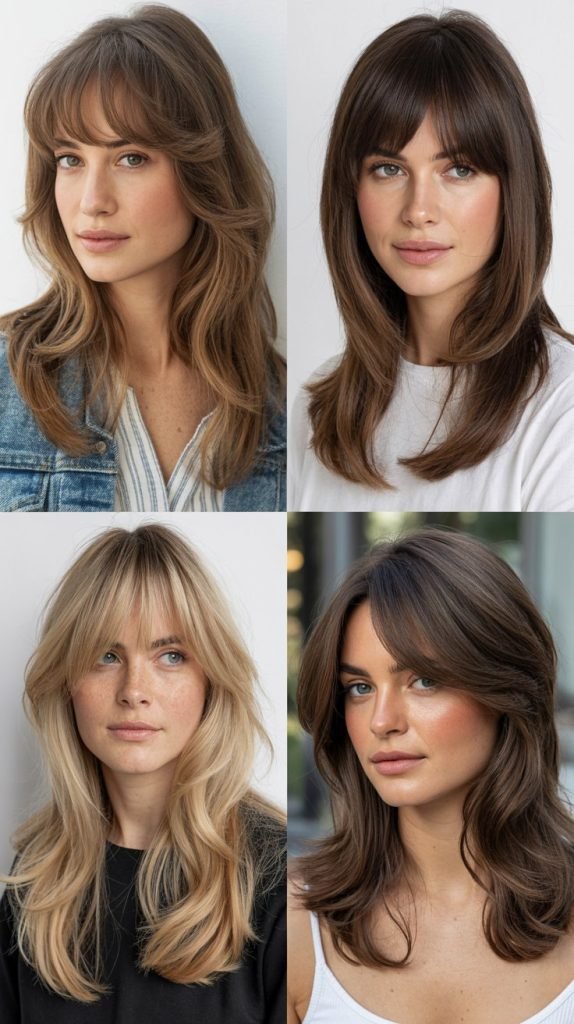
Curtain bangs remain one of the most flattering face-framing options, parting naturally down the middle to frame both sides of the face.
This style works by creating shorter pieces that gradually blend into longer layers, offering a soft, romantic look that suits nearly every face shape.
The beauty of curtain bangs lies in their versatility—they can be styled sleek and straight for a polished appearance or tousled with a curling iron for effortless texture.
- The shortest point of curtain bangs typically hits at the cheekbone or just below, creating an elongating effect that draws attention to the eyes
- These bangs grow out gracefully without the harsh line that traditional blunt bangs create, making maintenance easier and salon visits less frequent
- Curtain bangs pair exceptionally well with long, flowing layers that start around the shoulders, creating a cohesive, balanced look
- For styling, a round brush and blow dryer directed away from the face helps achieve the signature swept-back shape
- This hairstyle reduces the appearance of a prominent forehead while adding softness to angular jawlines
2. Feathered Layers for Volume and Movement
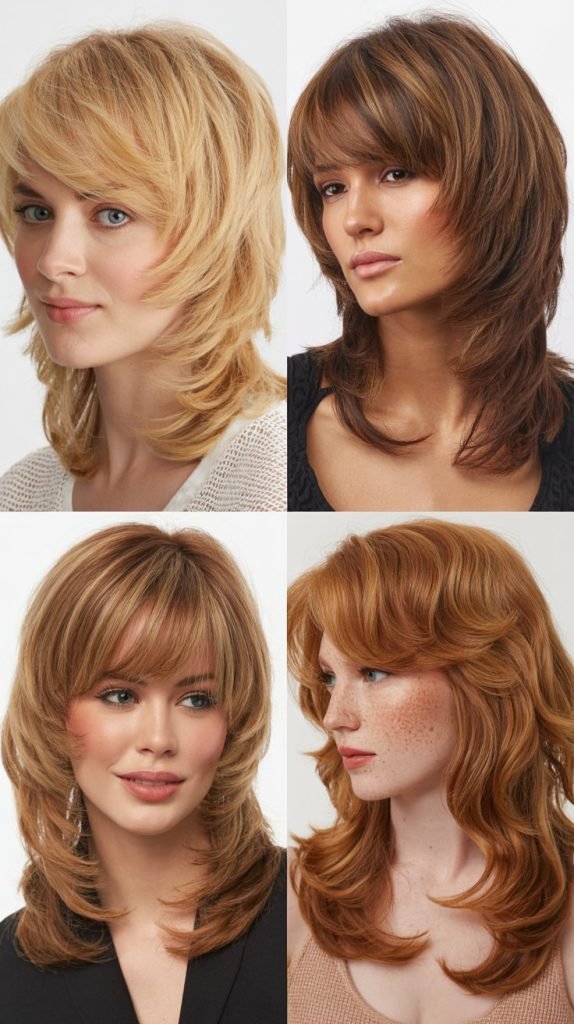
Feathered layers bring a retro-inspired touch to long hair while delivering exceptional movement and dimension.
This technique involves cutting layers at slight angles so the ends taper and flip outward naturally, creating a feathered effect reminiscent of the iconic styles from the 1970s.
The face-framing pieces are cut shorter to create that signature feathered texture around the cheeks and chin.
- Feathering works particularly well for those with thick, heavy hair as it removes bulk while maintaining length
- The layering technique creates an airy, lightweight feel that allows hair to bounce and move with natural body
- Face-framing feathered pieces should start around the chin or jawline to properly frame facial features
- This style requires regular trims every 6-8 weeks to maintain the feathered texture and prevent split ends
- A medium-barrel curling iron or hot rollers enhance the feathered effect, while smoothing serum prevents frizz
3. Long Shag with Choppy Front Layers
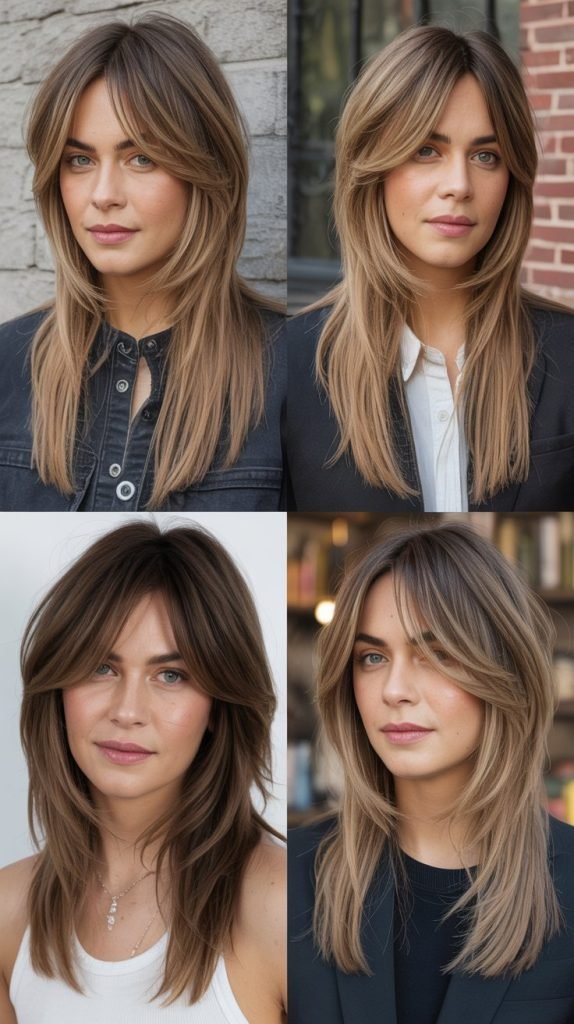
The modern shag haircut has evolved into one of the most requested styles, combining edgy texture with feminine length.
Choppy front layers define this look, creating irregular, piece-y sections around the face that add personality and reduce the need for perfect styling.
The shag works by incorporating multiple layer lengths throughout, with the shortest pieces concentrated around the face.
- Choppy layers create separation and definition, making this style ideal for those who want an effortlessly cool, lived-in appearance
- The irregular cutting technique ensures no two pieces are exactly the same length, contributing to the relaxed, undone aesthetic
- Face-framing choppy layers typically begin at the eyes or cheekbones, gradually lengthening as they move back
- This style minimizes styling time since the intentionally messy texture means hair doesn’t need to look perfect
- Sea salt spray and texturizing products enhance the piecey, shaggy texture while maintaining a natural finish
4. Soft Wispy Layers for Fine Hair
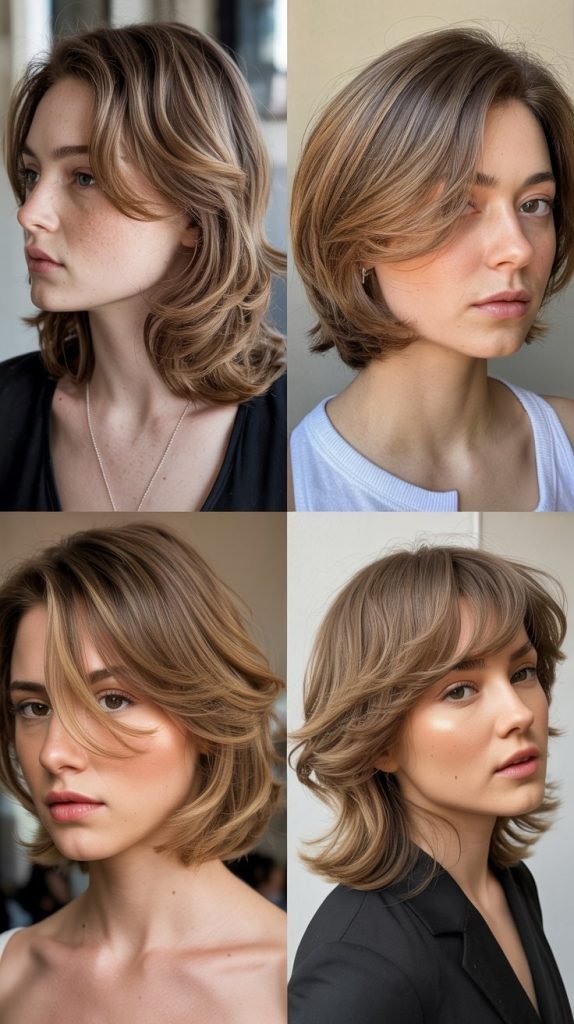
Fine hair benefits tremendously from soft, wispy face-framing layers that create the illusion of fuller, thicker locks.
This delicate layering approach involves cutting thin sections around the face that taper to soft, feathery ends.
Unlike heavy or blunt layers, wispy layers maintain airiness while adding gentle movement that doesn’t weigh down delicate strands.
- Wispy layers are cut using point-cutting or razor techniques that create soft, diffused ends rather than blunt lines
- The face-framing pieces should be kept slightly longer to avoid making fine hair appear thinner
- This technique creates subtle dimension without removing too much density from already-fine hair
- Volumizing mousse applied at the roots before blow-drying lifts fine hair and makes wispy layers more noticeable
- These layers grow out beautifully, blending seamlessly with the rest of the hair as they lengthen
5. Blunt Ends with Soft Face-Framing Only
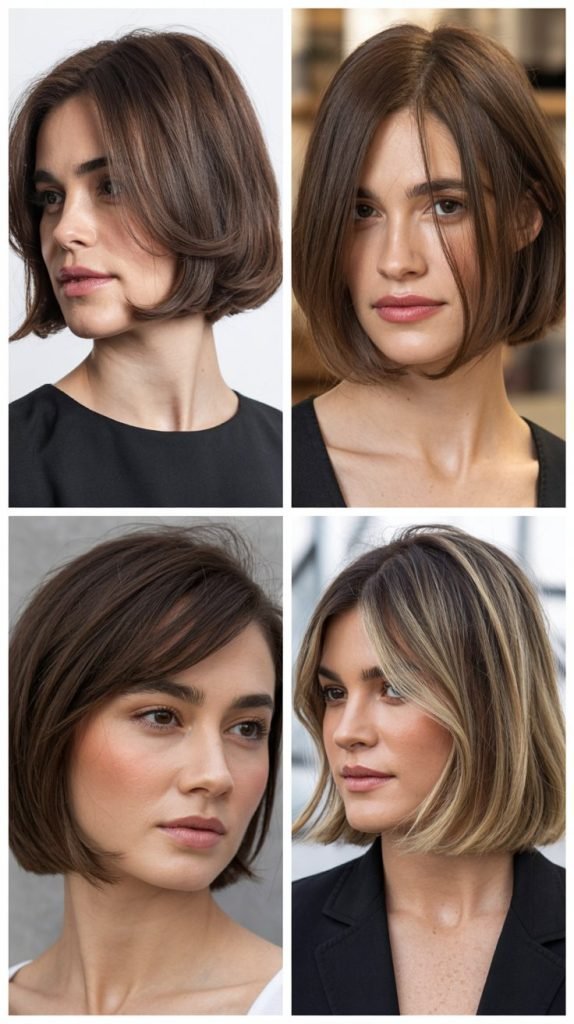
For those who love the look of blunt, one-length hair but want some face-framing dimension, this hybrid approach offers the best of both worlds.
The bulk of the hair remains blunt and even at the ends, while only the front sections receive soft, graduated layers.
This creates a striking contrast that keeps the style modern while adding customized framing around facial features.
- Maintaining blunt ends throughout the back and sides preserves hair density and creates a healthy, thick appearance
- Face-framing layers are isolated to the front sections only, typically starting at the cheekbones or jawline
- This style works exceptionally well for those transitioning from all-one-length hair who want to test layering without full commitment
- The blunt perimeter creates a strong, bold statement while the soft front layers add femininity and softness
- Flat ironing the blunt sections emphasizes the contrast between the sleek body and textured face-framing pieces
6. Side-Swept Layers with Deep Part
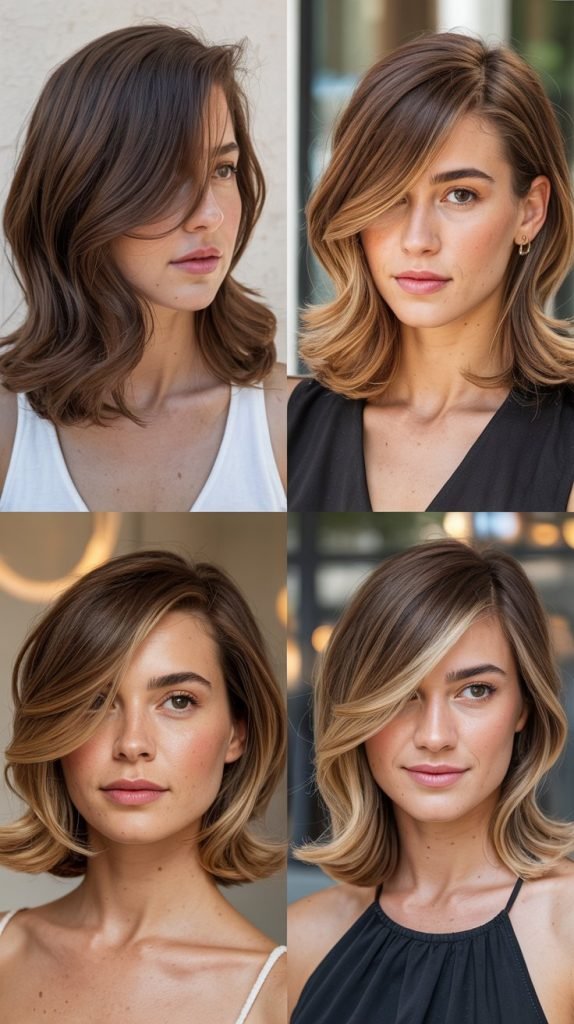
A deep side part combined with long, side-swept layers creates dramatic asymmetry that’s both glamorous and practical.
This style involves creating more volume on one side while the face-framing layers sweep across to the heavier side, elongating the face and creating a slimming effect.
The deep part typically falls about two inches from the center, creating visual interest through uneven distribution.
- Deep parts work especially well for those with round or square face shapes, as they create vertical lines that elongate
- Side-swept layers should begin at the eye level on the lighter side and cascade across the face to blend with the heavier side
- This asymmetrical approach adds instant sophistication and works beautifully for formal events or professional settings
- Teasing the roots on the heavier side creates additional volume and emphasizes the dramatic side-swept effect
- The style naturally frames one side of the face more heavily, drawing attention to the eyes and cheekbones
7. Butterfly Layers for Maximum Dimension
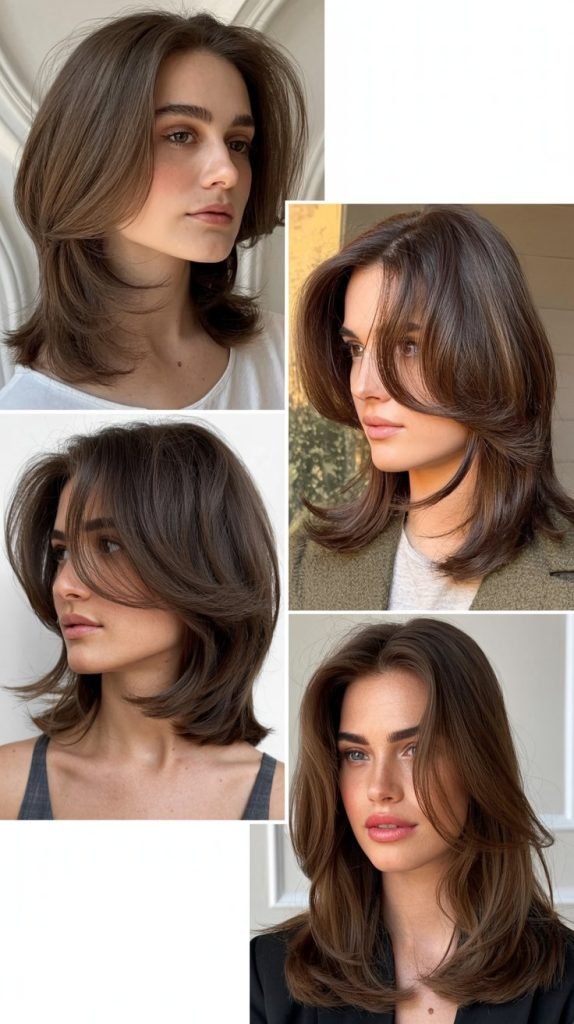
Butterfly layers take their name from the shape they create when hair is viewed from the front—resembling butterfly wings spreading from the face.
This technique involves cutting face-framing layers that are significantly shorter than the rest of the hair, creating dramatic contrast and movement.
The layers typically start around the chin and gradually extend outward and downward.
- The shortest butterfly layers usually begin at chin-length, creating a pronounced frame around the lower face
- These dramatic layers add exceptional movement when hair is flipped or turned, creating that signature butterfly wing effect
- This style works best on medium to thick hair textures that can support the dimensional layering
- Butterfly layers beautifully showcase highlights or balayage as the varied lengths catch light differently
- Blow-drying with a round brush directs the layers outward, emphasizing the wing-like shape
8. Long Layers with Micro Bangs
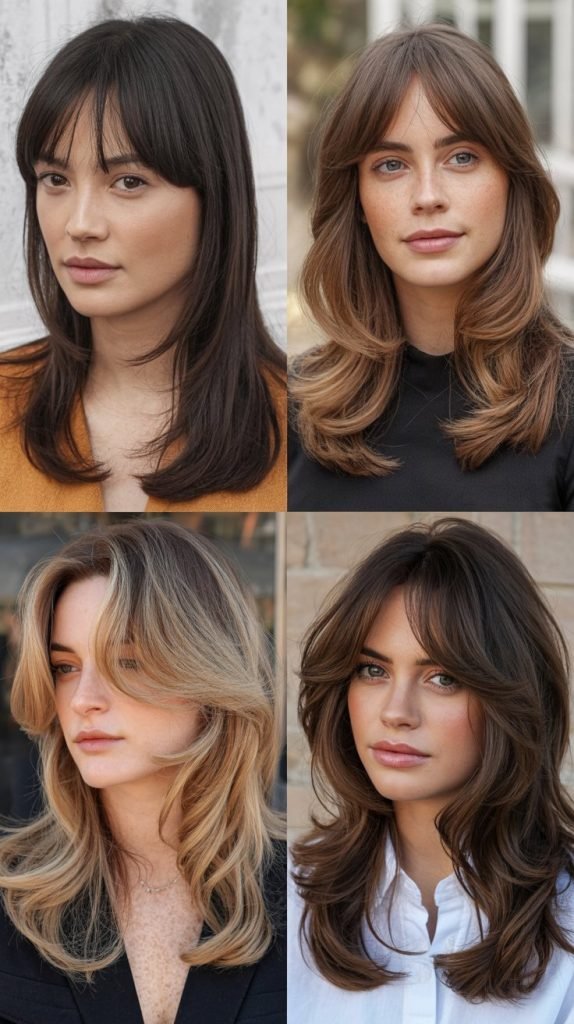
Combining micro bangs with long, face-framing layers creates an edgy, fashion-forward look that’s gained popularity on runways and red carpets.
Micro bangs sit well above the eyebrows, creating a bold statement, while the longer face-framing layers soften the dramatic fringe.
This high-contrast combination works for those confident enough to embrace a daring aesthetic.
- Micro bangs require regular maintenance every 2-3 weeks to keep them at the proper short length
- The face-framing layers should start below the ears to create appropriate transition space between the short bangs and longer pieces
- This style works best on those with smaller foreheads and oval or heart-shaped faces
- The dramatic bangs draw immediate attention to the eyes, while longer layers balance the proportion
- Styling micro bangs requires flat ironing them straight across for the cleanest, most precise appearance
9. Graduated Face-Framing with U-Shaped Back
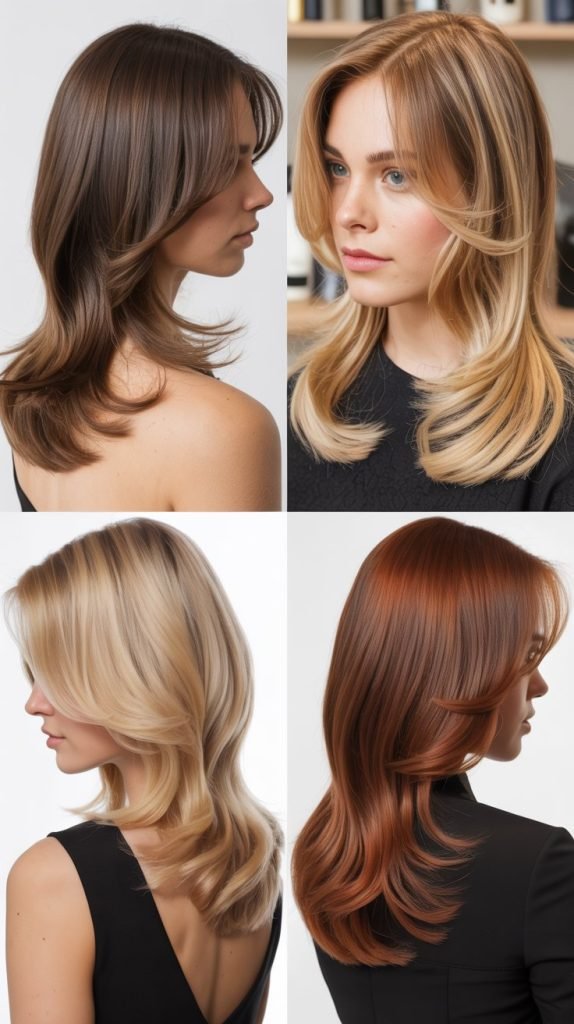
The U-shaped cut creates a rounded hemline at the back while maintaining shorter face-framing layers in the front.
This style offers a feminine, romantic silhouette that emphasizes length while keeping hair manageable around the face.
The graduated face-framing layers follow the natural curve of the face, shortening as they move forward.
- The U-shape at the back creates visual interest and prevents the heavy, straight-across look of blunt cuts
- Face-framing layers graduate smoothly from the cheekbones down, blending seamlessly into the U-shaped back
- This cut works particularly well for those with long necks as it draws the eye downward along the curved hemline
- The style maintains maximum length at the center back while removing weight from the sides
- Curling just the face-framing pieces while leaving the back straight creates beautiful contrast
10. Razor-Cut Layers for Textured Movement
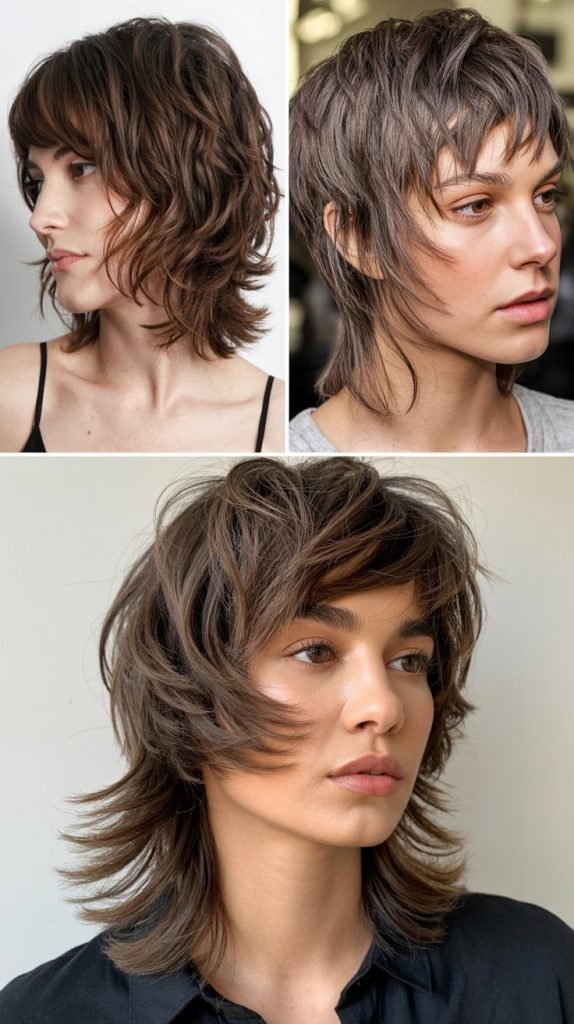
Razor cutting creates softer, more textured layers compared to scissor cutting, resulting in feathery, movable face-framing pieces.
This technique involves using a razor blade to cut hair at an angle, creating tapered ends that blend seamlessly and move more freely.
The razor-cut face-framing layers appear lighter and more natural, perfect for those seeking an effortless look.
- Razor cutting removes less bulk than traditional scissors, making it ideal for thick hair that needs lightening without losing too much density
- The tapered ends created by razor cutting lay flatter against the face, reducing unwanted volume around the cheeks
- Face-framing razor cuts should start at the mid-face level to properly frame features without creating excessive shortness
- This technique creates natural-looking texture that requires minimal styling products
- Hair cut with a razor may require more frequent trims as the ends can become damaged more quickly than scissor-cut hair
11. Face-Framing Highlights with Layered Dimension
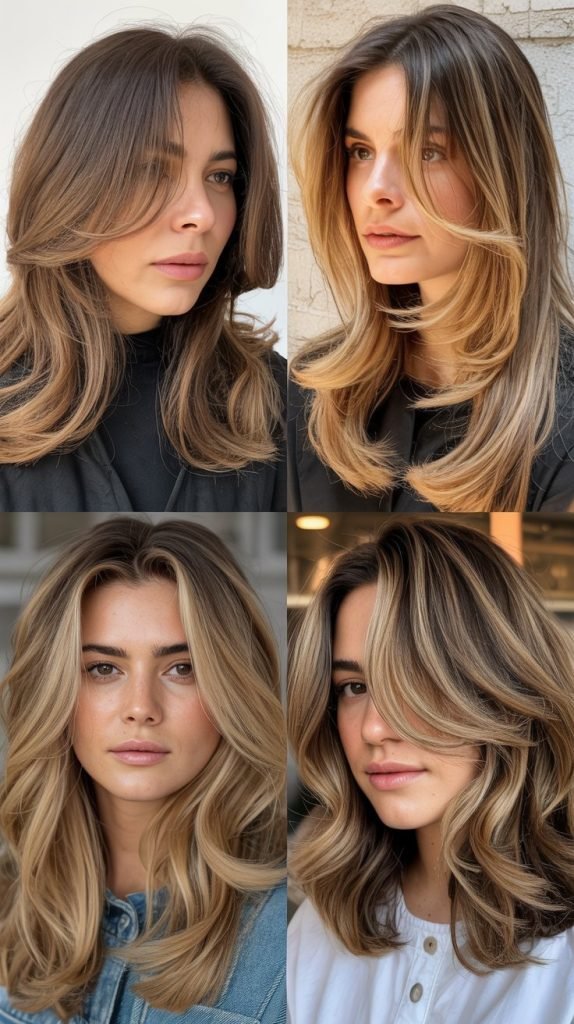
Combining face-framing highlights with strategic layering creates depth through both color and cut.
Lighter pieces placed around the face naturally draw attention to facial features while the layers create movement that showcases the dimensional color.
This dual approach enhances facial structure through both technique and artistry.
- Face-framing highlights should be 2-3 shades lighter than the base color for noticeable but natural-looking dimension
- Placing highlights on the shortest face-framing layers maximizes their visibility and impact
- The layered texture allows highlights to peek through different sections, creating a multi-dimensional color effect
- Balayage technique works particularly well with face-framing layers as it creates natural-looking gradients
- Toning highlighted sections helps prevent brassiness and maintains the fresh, salon-quality appearance
12. Asymmetrical Front Layers with Even Back
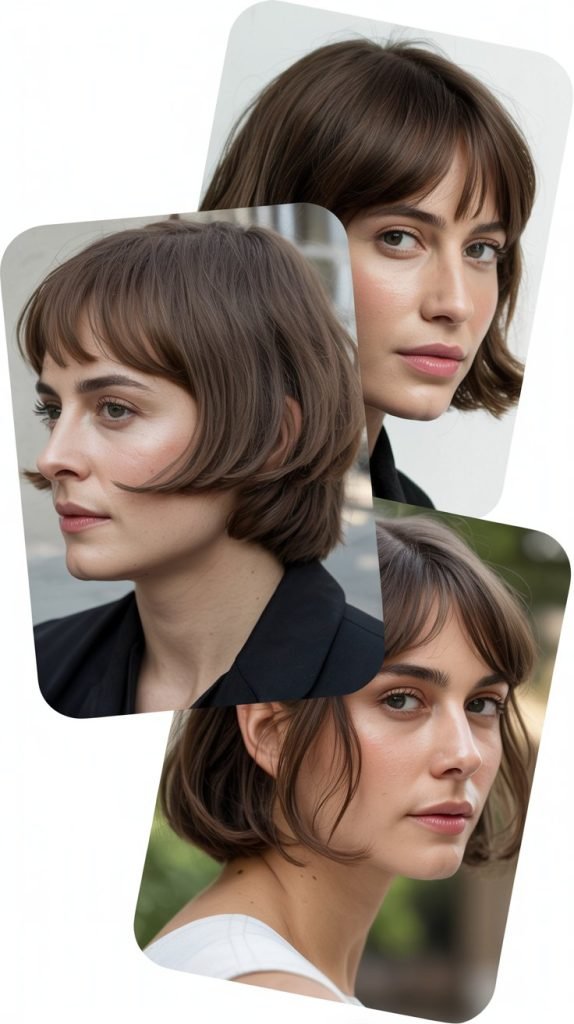
Asymmetrical face-framing creates visual interest by cutting one side shorter than the other while maintaining even length in the back.
This style adds personality and edge without committing to a fully asymmetrical cut.
The longer side can be tucked behind the ear while the shorter side showcases the layering.
- The asymmetry should be noticeable but not extreme—typically a 1-2 inch difference between sides works best
- The shorter side usually hits at the jawline while the longer side extends to the collarbone
- This style naturally directs attention to one side of the face, ideal for highlighting your best angle
- Asymmetrical layers work well for those with off-center parts as they enhance the natural asymmetry
- The even back maintains balance and prevents the style from appearing too unbalanced or choppy
13. Long Layers Starting at Collarbone
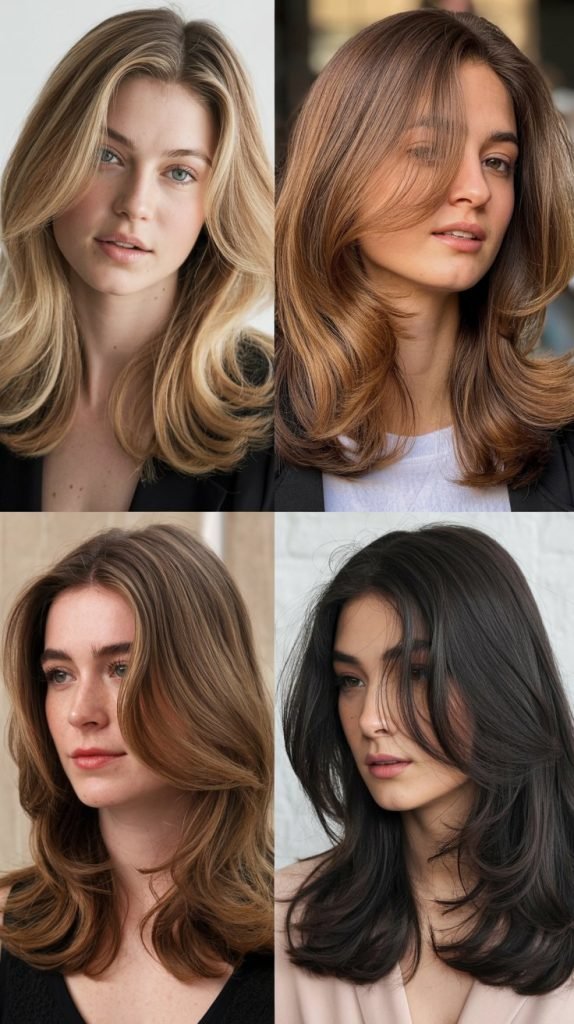
Collarbone-length face-framing layers offer a conservative approach to layering that maintains significant length while creating flattering dimension.
Starting the shortest layers at the collarbone ensures versatility—they’re long enough to pull back but short enough to frame the face effectively.
This moderate layering approach suits professional environments and those new to layers.
- Collarbone-length layers create a strong horizontal line that widens the appearance of narrow shoulders
- This length is long enough to tuck behind ears or incorporate into updos while still providing face-framing benefits
- The layers should be cut at a slight angle so they blend smoothly into the longer lengths below
- This conservative layering approach works well for those testing whether they like layers before committing to shorter face-framing pieces
- Styling these layers with loose waves creates romantic movement without appearing too casual
14. Soft Bangs Blended into Long Layers
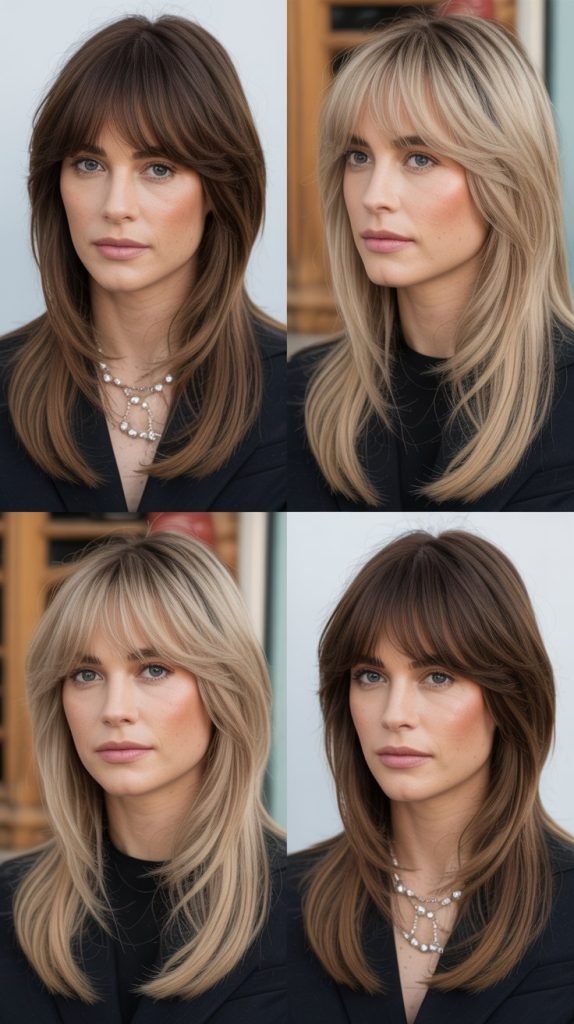
Soft bangs that seamlessly blend into long face-framing layers create a cohesive, flowing look without harsh lines.
Unlike distinct, separate bangs, these soft fringe pieces are cut at varying lengths that gradually extend into the face-framing layers.
This creates a forgiving, low-maintenance option that grows out gracefully.
- Soft bangs typically start at the eyebrows and gradually lengthen toward the temples, creating a natural blend
- The varied lengths prevent the blunt, straight-across look of traditional bangs while still providing forehead coverage
- This style is ideal for first-time bang wearers as it doesn’t require the commitment of full, heavy bangs
- The blended nature means grow-out periods are less awkward and require fewer salon visits
- Styling with a round brush creates lift and curve while maintaining the soft, diffused appearance
15. V-Shaped Cut with Face-Framing Accent
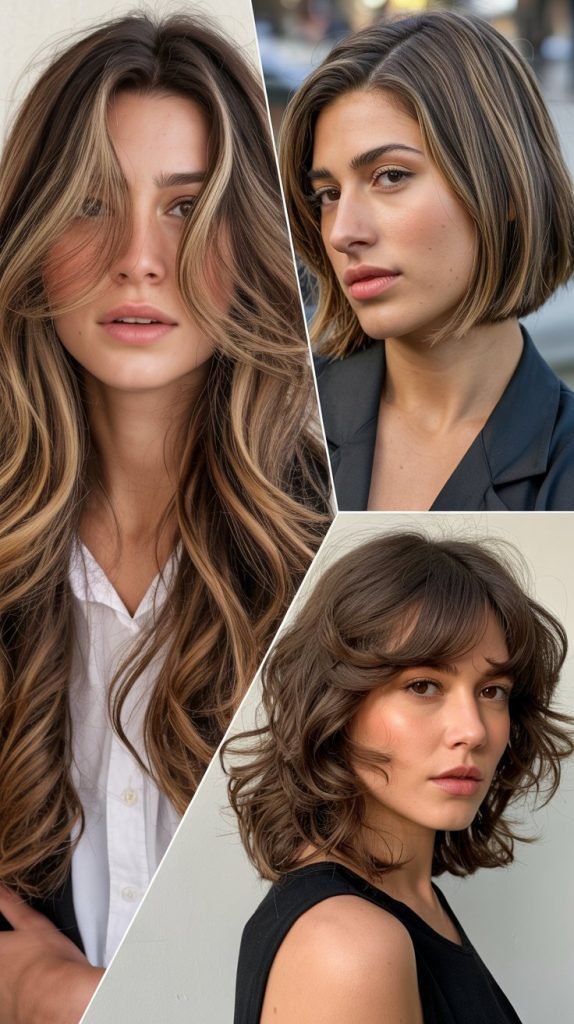
The V-shaped cut creates a dramatic point at the center back while face-framing layers add customized dimension around the face.
This combination offers a bold, distinctive silhouette that works particularly well on very long hair.
The V-shape elongates the torso while the face-framing pieces keep the style from appearing too severe.
- The V-shape creates maximum length at the center back, perfect for those wanting to showcase extreme length
- Face-framing layers should be significantly shorter than the point of the V to create noticeable dimension
- This cut creates a slimming vertical line down the back that’s especially flattering on shorter or petite frames
- The dramatic V-point works beautifully when styled in braids or pulled back, showcasing the unique shape
- Maintaining the sharp V requires regular trims every 8-10 weeks to prevent the point from becoming rounded
16. Layered Lob-Length Front with Long Back
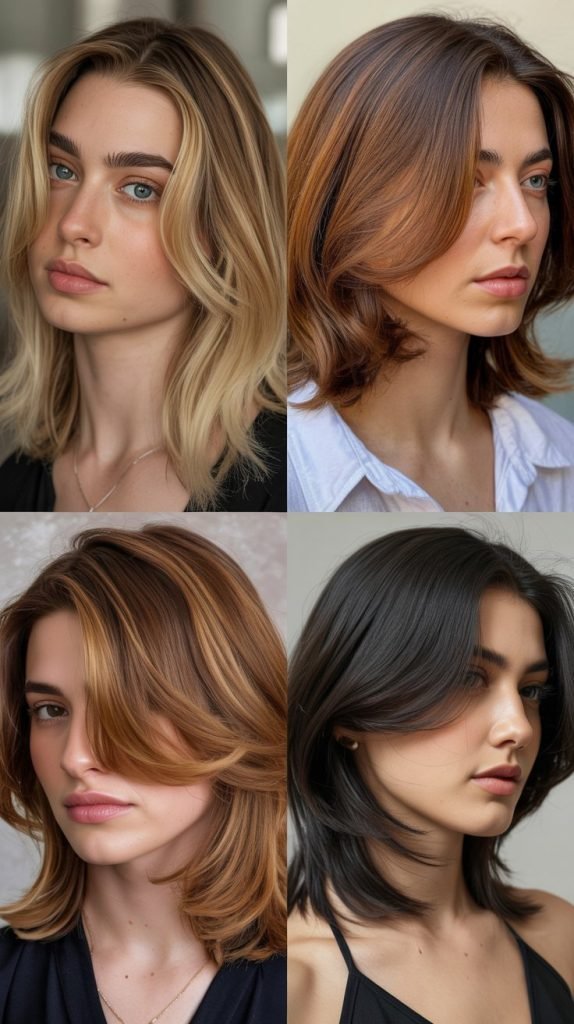
Creating lob (long bob) length layers in the front while maintaining significantly longer hair in the back produces an unexpectedly modern and versatile style.
The front pieces hit between the chin and shoulders while the back extends much longer, creating dramatic length variation.
This style offers the ease of shorter hair around the face with the femininity of long hair in back.
- The lob-length front pieces are long enough to pull back but short enough to require less daily styling
- This dramatic length variation creates a distinctive silhouette that stands out from typical long layered styles
- The shorter front is practical for keeping hair out of the face during activities while the long back maintains traditional long-hair benefits
- This style works exceptionally well for thick hair as it removes significant weight from the front without sacrificing overall length
- When worn down, this creates an almost mullet-inspired shape that’s fashion-forward and unexpected
17. Choppy Layers Throughout with Shortest at Face
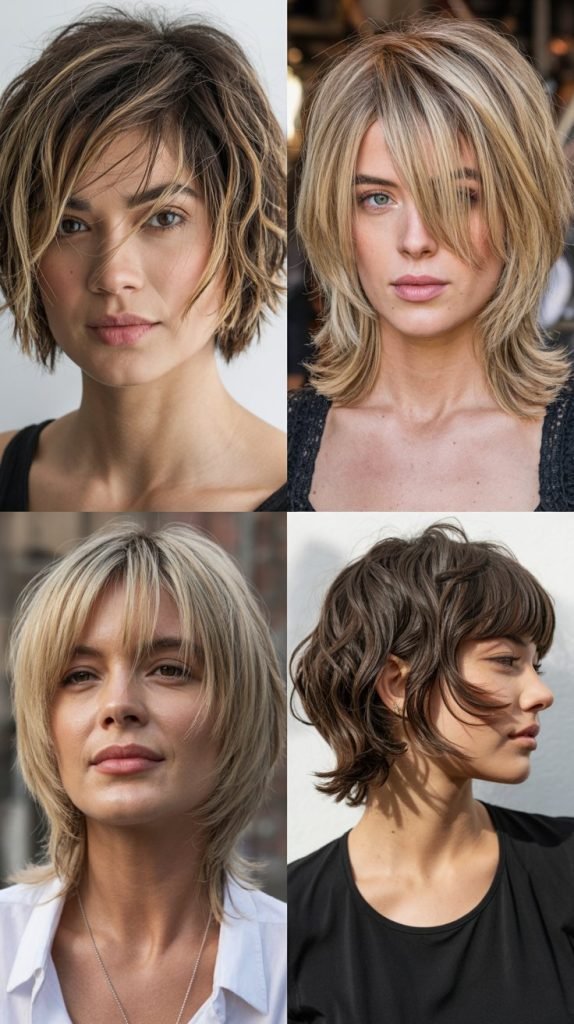
Incorporating choppy, piece-y layers throughout the entire length of hair with the shortest sections at the face creates maximum texture and movement.
This comprehensive layering approach removes weight evenly while ensuring the face-framing pieces remain the focal point.
The choppy cutting technique creates separation between sections for an edgy, modern appearance.
- Choppy layers are achieved through point-cutting technique that creates irregular, jagged ends rather than smooth lines
- The shortest face-framing choppy layers should hit at the cheekbones to properly frame facial features
- This all-over layering approach is ideal for thick, heavy hair that feels overwhelming or difficult to manage
- The separated, piece-y texture works beautifully with natural texture, enhancing waves or curls
- Styling with texturizing spray and scrunching enhances the choppy, separated appearance
18. Side Bangs with Graduated Long Layers
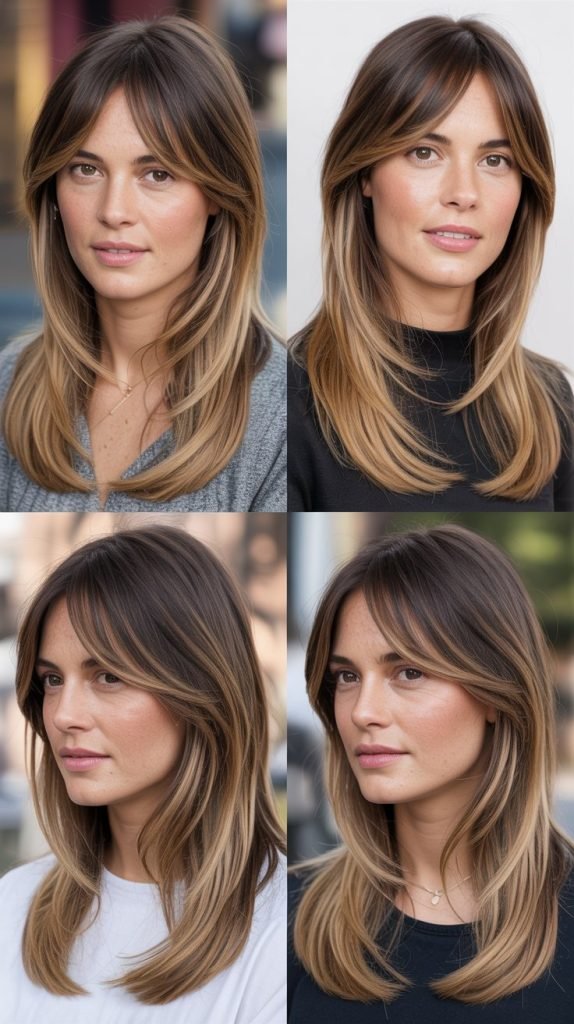
Side bangs swept to one side create classic elegance when paired with graduated long layers.
The side bangs typically hit at cheekbone length and sweep dramatically across the forehead, while the graduated layers extend downward with progressively increasing length.
This timeless combination flatters most face shapes and hair textures.
- Side bangs should be cut at an angle, shorter near the part and longer at the end to create the sweeping effect
- Graduated layers follow the natural fall line of hair, creating smooth transitions between lengths
- This style is particularly flattering for those with prominent foreheads or asymmetrical facial features
- The side-swept bangs naturally direct attention toward the eyes while the graduated layers slim the lower face
- Blow-drying side bangs with a round brush while directing them away from the part creates volume and movement
19. Money Piece Layers for Face-Framing Brightness
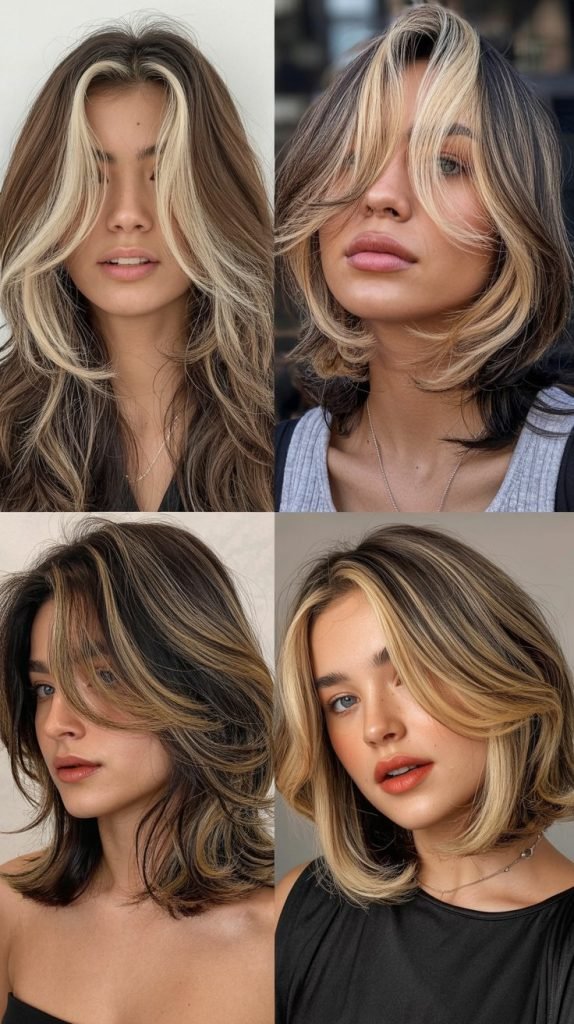
Money piece highlights combined with strategic face-framing layers create a brightening effect that illuminates the face.
he “money piece” refers to the two front sections of hair that frame the face, lightened to create contrast with the base color.
When cut into layers, these bright sections become even more prominent and eye-catching.
- Money piece highlights should be significantly lighter than the base color—typically blonde or caramel tones on darker bases
- The layers on the money pieces should start at the cheekbones to maximize their face-brightening effect
- This color and cut combination creates a lifting effect that makes the complexion appear more radiant
- The bright face-framing sections draw immediate attention to the eyes and facial structure
- Maintaining money pieces requires toning every 4-6 weeks to prevent brassiness and keep the color fresh
20. Tapered Layers with Rounded Perimeter
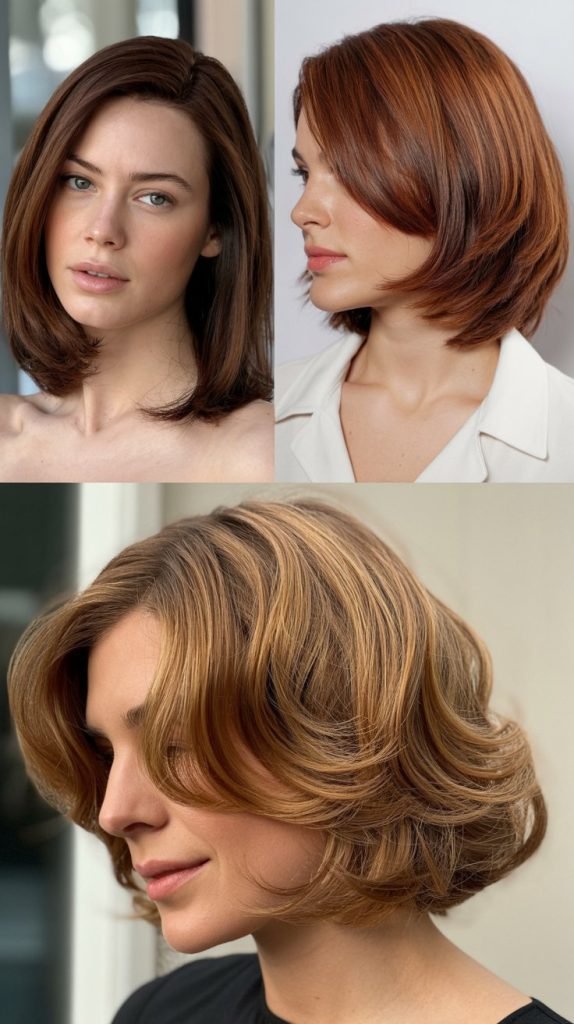
Tapered face-framing layers combined with a rounded perimeter create a soft, feminine silhouette without harsh angles.
he tapering technique involves cutting hair at an angle so the ends are thinner than the mid-shaft, creating feathery, soft movement.
The rounded perimeter follows a gentle curve rather than a straight or V-shaped line.
- Tapered layers create a softer, more romantic appearance compared to blunt-cut layers
- The rounded perimeter complements the soft face-framing by continuing the curved, flowing aesthetic throughout
- This combination works beautifully on medium to fine hair textures as it doesn’t remove excessive density
- Face-framing tapered layers should begin at the jawline to create optimal facial framing
- The soft ends created by tapering are less likely to appear damaged or split compared to blunt cuts
21. Layered Curtain Bangs with Center Part
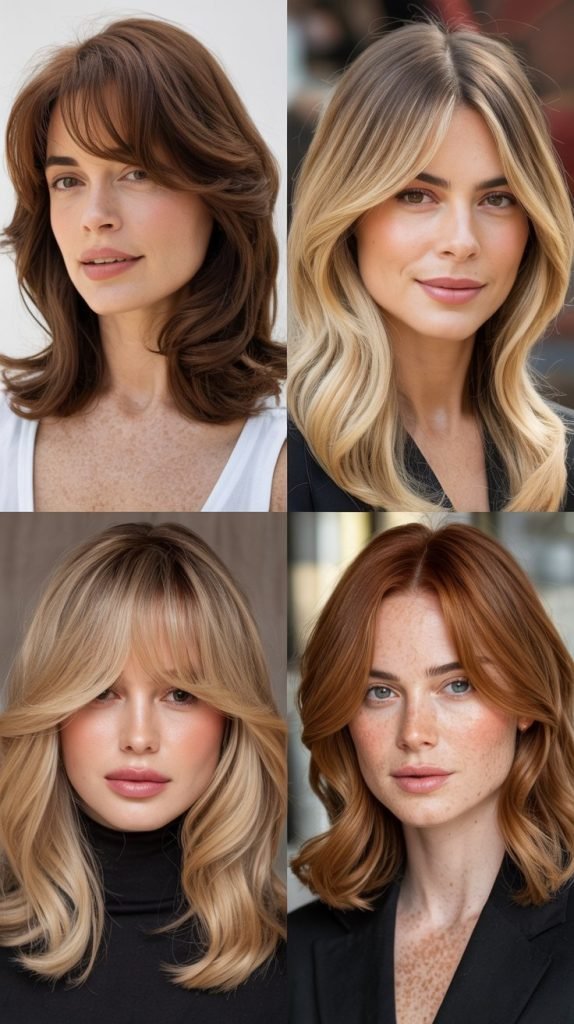
Curtain bangs specifically designed for a center part create symmetrical face-framing that suits balanced facial features.
Unlike side-swept versions, center-parted curtain bangs divide evenly, with each side mirroring the other.
The layers blend seamlessly into the longer hair, creating a cohesive, put-together appearance.
- Center-parted curtain bangs work best on oval and heart-shaped faces as they emphasize facial symmetry
- The bangs should be cut so the shortest point hits at the eyebrows, gradually lengthening toward the temples
- This symmetrical approach creates a balanced, harmonious look that’s both classic and contemporary
- Blow-drying with a round brush while directing hair away from the center part creates the signature curtain effect
- This style requires minimal maintenance as the center part naturally falls into place without extensive styling
22. Long Shaggy Layers with Textured Ends
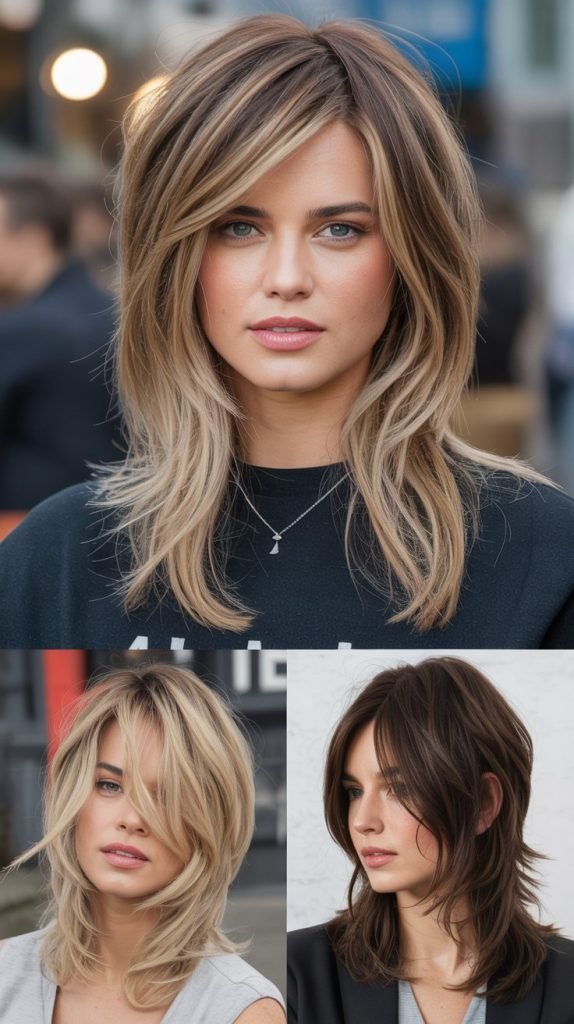
Shaggy layers throughout long hair with particularly textured ends create a bohemian, effortlessly cool aesthetic.
This style incorporates multiple layer lengths with the face-framing pieces cut in a choppy, irregular manner.
The textured ends add to the lived-in, carefree appearance that requires minimal styling effort.
- Shaggy layers are cut at various lengths without following a specific pattern, creating an organic, random appearance
- Face-framing shaggy layers typically start at the eyes and extend irregularly downward
- Textured ends can be achieved through point-cutting, razor-cutting, or a combination of techniques
- This style embraces natural texture and actually looks better when slightly messy or tousled
- Sea salt spray and air-drying enhance the shaggy texture while maintaining the relaxed, beachy vibe
23. Face-Framing Layers with Blunt Bangs
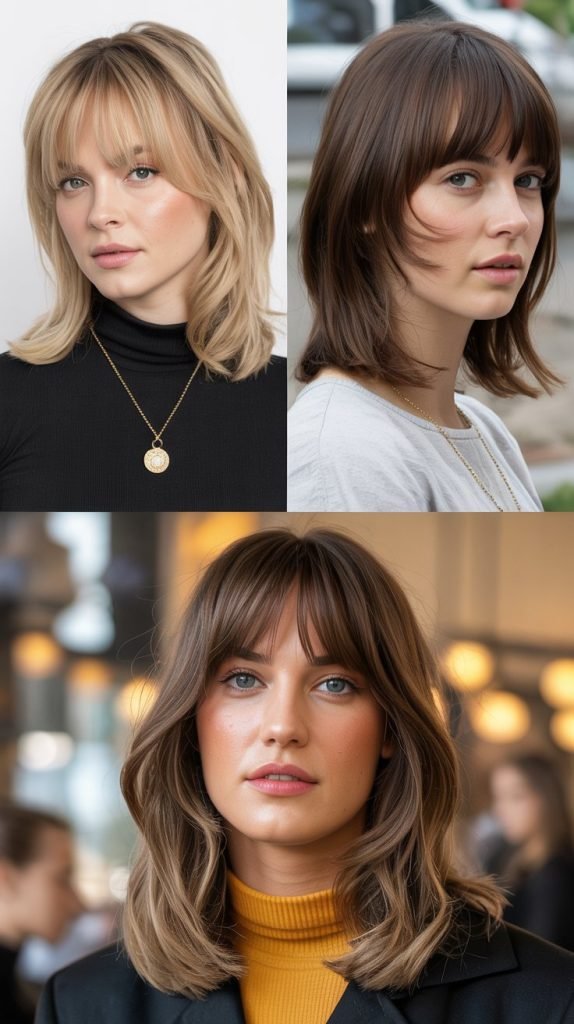
Combining blunt, straight-across bangs with longer face-framing layers creates an interesting contrast between structured and flowing elements.
The blunt bangs provide a strong horizontal line across the forehead while the softer face-framing layers add movement and dimension below.
This combination works for those who want the boldness of bangs with added softness around the face.
- Blunt bangs should hit at or just above the eyebrows for classic positioning
- Face-framing layers should start below the bangs, typically at cheekbone level, to avoid competing with the fringe
- This style works best on those with straight or slightly wavy hair as the blunt bangs require sleekness
- The contrast between structured bangs and softer layers creates visual interest and dimension
- Maintaining blunt bangs requires trims every 3-4 weeks to keep them at the proper length
24. Swooped Layers for One-Sided Styling
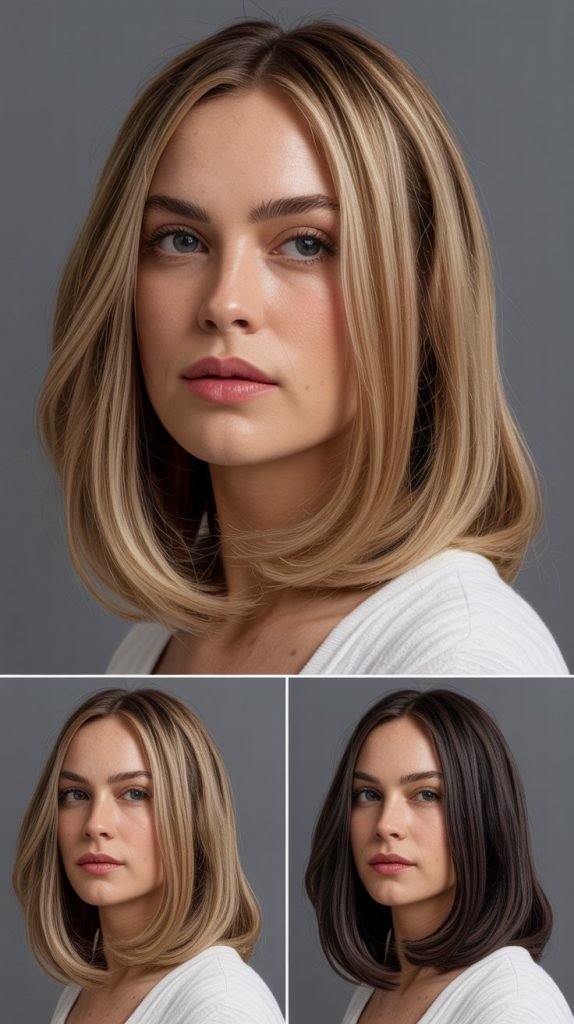
Swooped layers designed to be styled to one side create a glamorous, red-carpet-ready appearance.
All the face-framing layers are cut and styled to sweep dramatically to one side, creating volume and movement in that direction.
This asymmetrical styling approach offers Hollywood elegance perfect for special occasions.
- Swooped layers should be cut slightly longer on the side they’ll be swept toward to create appropriate length for styling
- The layers begin at the opposite side’s hairline and sweep across the face to the dominant side
- This style works beautifully for formal events, creating an elegant, sophisticated appearance
- Adding waves or curls to the swooped section enhances the dramatic, voluminous effect
- Strong-hold hairspray on the roots at the dominant side maintains volume and prevents the swooped style from falling flat
25. Layered Face-Framing with Beachy Waves
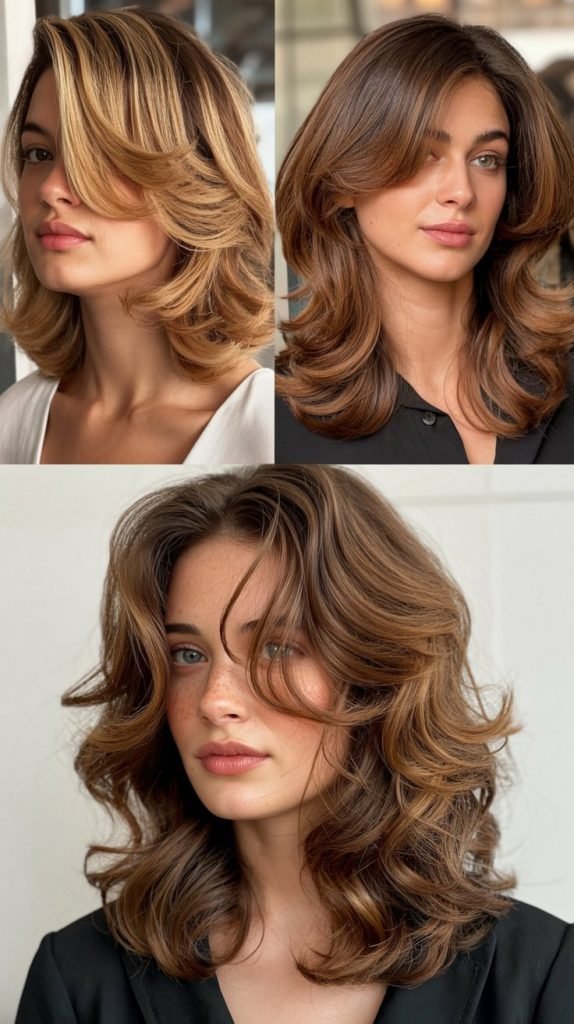
Face-framing layers styled with beachy waves create a relaxed, coastal-inspired look that’s effortlessly beautiful.
The layers enhance the natural wave pattern, with the face-framing pieces curving softly around the cheeks and jawline.
This combination of cut and style delivers maximum movement and texture.
- Beachy waves work best when face-framing layers are at least chin-length to properly hold the wave pattern
- The layered cut allows waves to separate and move independently, preventing a heavy, triangle-shaped appearance
- Creating beachy waves involves alternating curl directions with a curling iron or using a sea salt spray with scrunching
- This style embraces natural texture and looks intentionally undone rather than perfectly polished
- The face-framing waves create softness that complements the relaxed, vacation-inspired aesthetic
26. Disconnected Layers for Modern Edge
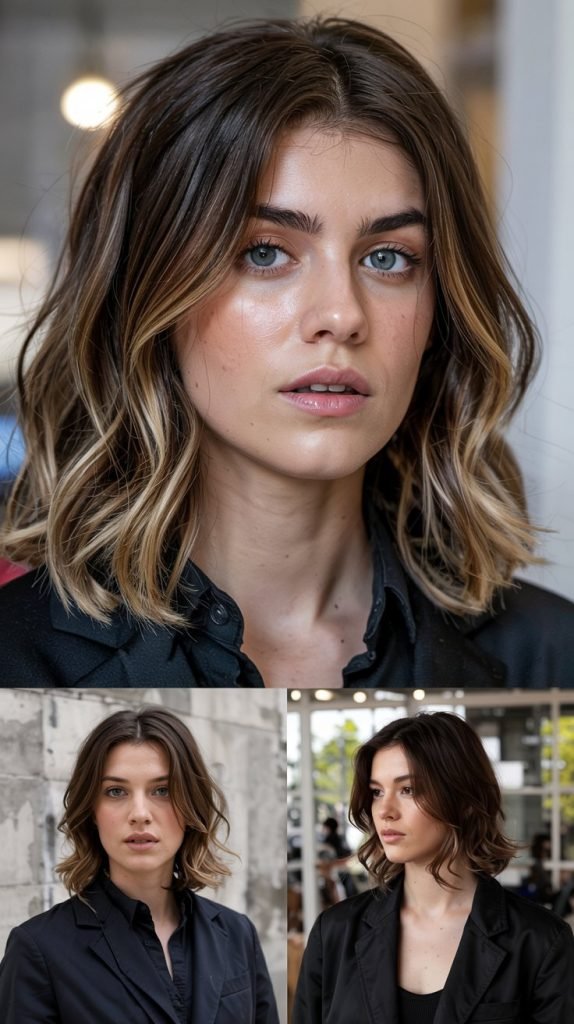
Disconnected face-framing layers involve creating intentional separation between the short face-framing pieces and the longer remaining hair.
Rather than smooth graduation, there’s a noticeable gap in length, creating a modern, edgy appearance.
This bold layering approach makes a statement and works for those wanting high-impact style.
- Disconnected layers typically involve face-framing pieces that are 4-6 inches shorter than the next section of hair
- This dramatic difference creates a distinctive two-tier appearance that’s fashion-forward and contemporary
- The style works best on medium to thick hair that can support the weight of the longer sections
- Disconnected face-framing pieces can be styled straight while the longer hair is curled, or vice versa, for additional contrast
- This cut requires confidence as it’s bold and unconventional compared to traditional layering
27. Subtle Layers for Conservative Face-Framing
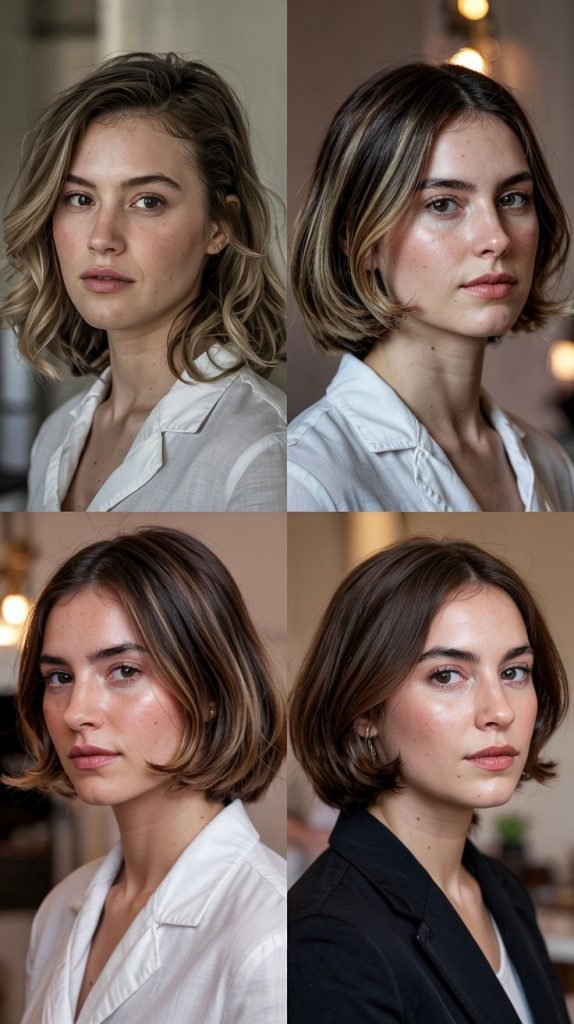
Subtle face-framing layers offer a conservative approach that adds gentle dimension without dramatic change.
These barely-there layers create soft movement around the face while maintaining the appearance of mostly one-length hair.
This approach suits professional environments and those who prefer understated styling.
- Subtle layers should differ from the base length by only 1-2 inches maximum to maintain the appearance of minimal layering
- Face-framing pieces are cut at a very slight angle that creates gentle movement without obvious layering
- This conservative approach works well for those transitioning from one-length hair or growing out previous layers
- The minimal layering creates just enough movement to prevent hair from appearing flat without requiring extensive styling
- Straightening or adding loose waves both work with subtle layers, making them highly versatile
28. Heavily Layered Crown with Face-Framing
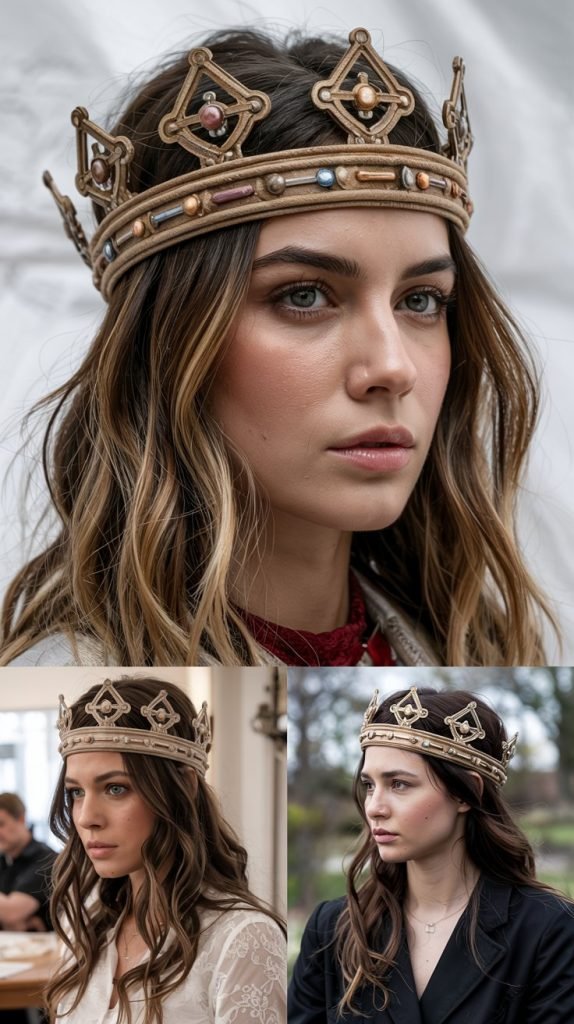
Creating heavy layers throughout the crown area combined with face-framing pieces adds exceptional volume at the top while maintaining length at the bottom.
This approach removes weight from the crown, allowing hair to lift away from the scalp, while the face-framing layers customize the look around facial features.
- Crown layers should be cut 4-6 inches shorter than the base length to create noticeable volume
- Face-framing layers blend from the crown layers downward, creating smooth transitions
- This technique is ideal for those with flat roots or fine hair that lacks natural volume
- The heavy crown layering creates a rounded, voluminous silhouette that balances the face
- Styling with volumizing products at the roots and blow-drying upside down maximizes the lifted effect
29. Angled Face-Framing with Straight Styling
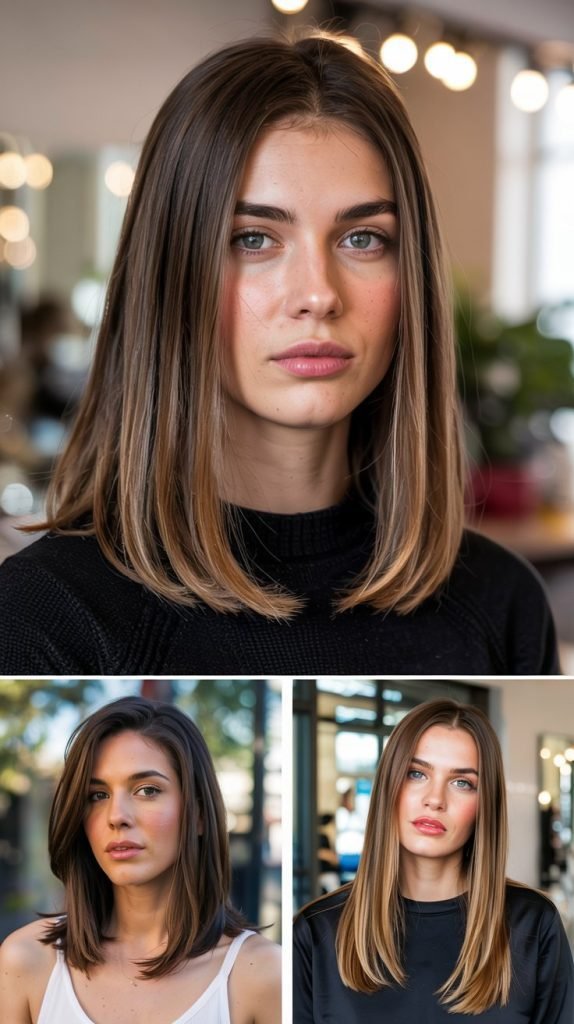
Angled face-framing layers cut at a precise diagonal create sharp, clean lines when styled straight.
This geometric approach to layering offers a polished, modern appearance that’s both professional and stylish.
The angles should follow the natural structure of the face, slimming and elongating as they extend downward.
- Angled layers are cut with precision, creating a clean diagonal line from shorter to longer
- When styled straight with a flat iron, the angles become pronounced and graphic
- This style works best on straight or straightened hair as natural texture can obscure the clean lines
- The angled face-framing creates a slimming effect that elongates round or square faces
- Maintaining the sharp angles requires regular trims every 6-8 weeks
30. Layered Face-Framing with Balayage
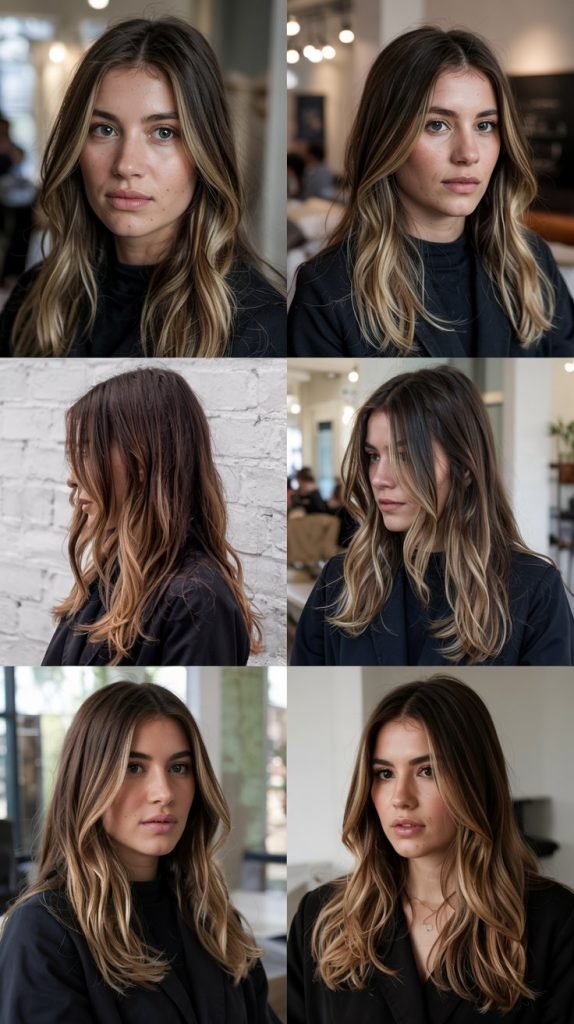
Balayage color technique combined with face-framing layers creates dimension through both color and cut.
The hand-painted highlights follow the layer lines, emphasizing the movement created by the cut.
Placing lighter tones on the face-framing pieces brightens the complexion and draws attention to facial features.
- Balayage should be concentrated on the face-framing layers to maximize the brightening effect
- The gradual color transition of balayage complements the gradual length transition of layers
- Lighter pieces at the face create a natural, sun-kissed appearance that enhances the dimensional cut
- The combination of layered texture and dimensional color creates depth that catches light beautifully
- Styling with waves or curls showcases both the layering and the color placement effectively
31. Rounded Face-Framing for Soft Contour
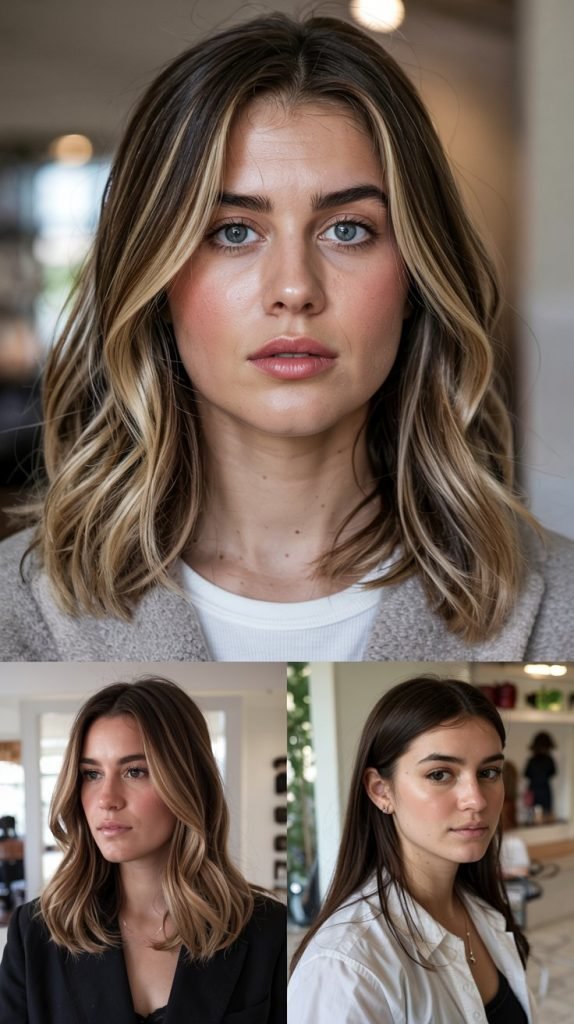
Rounded face-framing layers follow the natural curve of the face, creating a soft, feminine contour.
Unlike angular or choppy layers, rounded face-framing maintains consistent, smooth curves that gently hug the cheeks and jawline.
This approach offers maximum softness and flatters delicate features.
- Rounded face-framing is achieved by cutting layers that follow a curved path rather than straight angles
- The shortest point typically hits at the cheekbones, curving smoothly downward toward the collarbone
- This technique creates a slimming effect without harsh lines, perfect for those with round or square face shapes
- The gentle curves complement natural facial contours, enhancing rather than contrasting with bone structure
- Styling with loose curls or waves enhances the rounded, flowing nature of this face-framing approach
32. Textured Layers with Piecey Definition
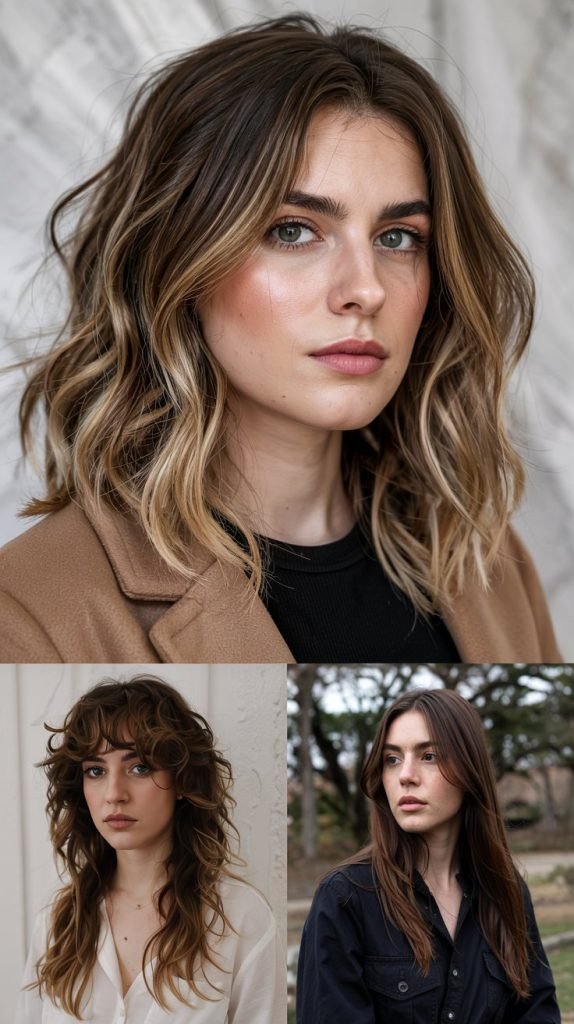
Textured face-framing layers with piecey definition create separation between sections, offering a modern, editorial look.
This style involves cutting layers at varying lengths and using styling techniques that create distinct, separated pieces rather than blended smoothness.
The piecey texture adds edge and personality to long hair.
- Achieving piecey texture requires point-cutting technique combined with texturizing products like pomade or wax
- Face-framing pieces should be cut at irregular lengths to create the separated, non-uniform appearance
- This style works particularly well on straight to slightly wavy hair where the separation is most visible
- Individual pieces can be twisted or separated with fingers and styling product for enhanced definition
- The textured, piecey look embraces an intentionally undone aesthetic that’s low-maintenance yet stylish
33. Classic Long Layers with Minimal Face-Framing
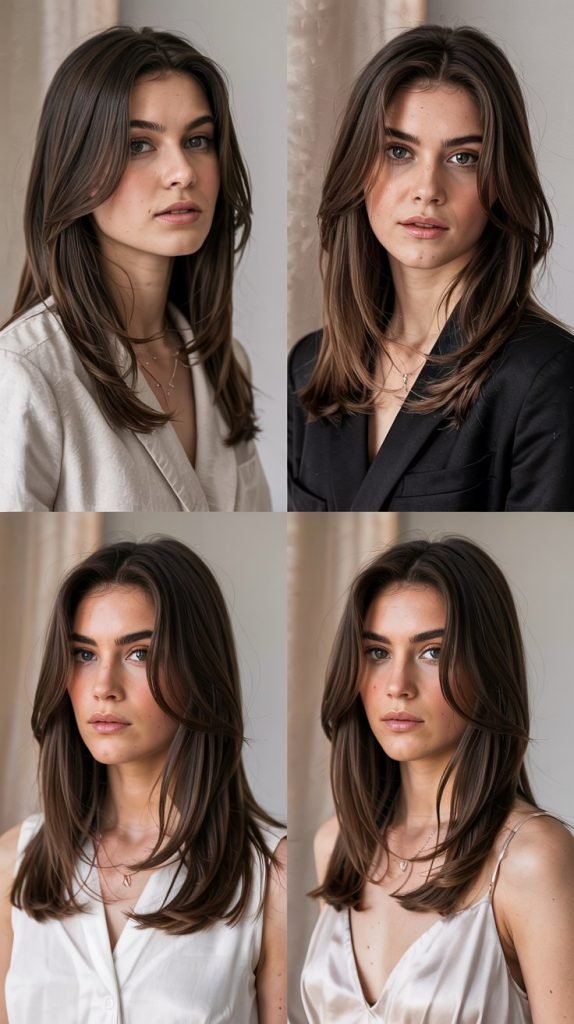
Classic long layers with minimal face-framing offer a timeless, universally flattering approach that never goes out of style.
This technique involves subtle layering throughout with the shortest face-framing pieces beginning just below the chin.
The conservative placement ensures versatility while adding just enough dimension to prevent hair from appearing flat.
- Classic long layers are cut at a gentle angle, creating smooth transitions between lengths
- Face-framing pieces starting below the chin are long enough to pull back but short enough to create gentle framing
- This approach works across all hair types and face shapes, making it the most versatile option
- The minimal face-framing requires little styling—hair naturally falls into place with simple blow-drying
- This style is perfect for those who want dimension without bold statements or high-maintenance cuts
- Regular trims every 8-10 weeks maintain the layered shape without requiring dramatic changes
Styling Tips for Face-Framing Layers
Maintenance Considerations
- Thin or fine hair with face-framing layers requires trims every 6-8 weeks to prevent thinning appearance at ends
- Thick hair benefits from longer intervals between cuts, typically 8-10 weeks, as layers grow out more gracefully
- Curtain bangs and micro bangs need more frequent trims every 3-4 weeks to maintain proper length
- Color-treated face-framing pieces require toning every 4-6 weeks to prevent brassiness
- Deep conditioning treatments help maintain healthy ends on layered hair, preventing split ends from traveling up the layers
- Heat styling should always be accompanied by heat protectant spray to preserve the integrity of face-framing pieces
Choosing the Right Face-Framing Layers for Your Face Shape
Understanding your face shape helps determine which face-framing approach will be most flattering.
Oval faces can wear virtually any style of face-framing layers, from bold and dramatic to soft and subtle.
Round faces benefit from longer, angled face-framing that begins below the fullest part of the cheeks, creating a slimming vertical effect.
Square faces look best with soft, rounded layers that begin at the cheekbones, softening angular jawlines.
Heart-shaped faces are flattered by layers that add width at the jawline, typically starting at chin length or slightly below.
Long or oblong faces benefit from face-framing layers with added width, such as curtain bangs or feathered pieces that create horizontal dimension.
For best results, consult with a professional stylist who can assess your individual features, hair texture, and lifestyle needs to recommend the most appropriate face-framing layer style.
Conclusion
The journey through these 33 Best Long Hairstyles Featuring Face-Framing Front Layers reveals that the right layering technique transforms not just your hair, but your entire appearance and confidence.
Face-framing layers offer solutions for every hair type, face shape, and personal style preference, from the soft romance of curtain bangs to the bold statement of disconnected layers.
Whether you prefer conservative, professional styles or daring, fashion-forward looks, face-framing layers provide the versatility to adapt your long hair to any occasion.
The key lies in understanding your unique features and working with a skilled stylist to create customized layers that enhance your natural beauty.
With proper maintenance and styling techniques, these face-framing approaches ensure your long hair remains dynamic, flattering, and manageable.
Take inspiration from these diverse styles, consider your lifestyle and comfort level with styling, and embrace the transformative power of strategic face-framing layers that bring out your absolute best.
