
30 Stylish Curly Hairstyles for Men
Curly hair has evolved from being seen as difficult to manage into one of the most coveted and stylish hair textures in modern men’s grooming.
Whether you’re blessed with natural ringlets, loose waves, or tight coils, understanding how to style and maintain your curls can transform your entire look.
This comprehensive guide to 30 Stylish Curly Hairstyles for Men explores everything from classic cuts to contemporary trends, providing you with the inspiration and knowledge needed to embrace your natural texture with confidence.
From short, low-maintenance styles to longer, statement-making looks, we’ll cover styling techniques, maintenance tips, and expert advice to help you find the perfect curly hairstyle that matches your personality, lifestyle, and face shape.
Get ready to discover how versatile and attractive curly hair can truly be.
1. The Classic Curly Undercut
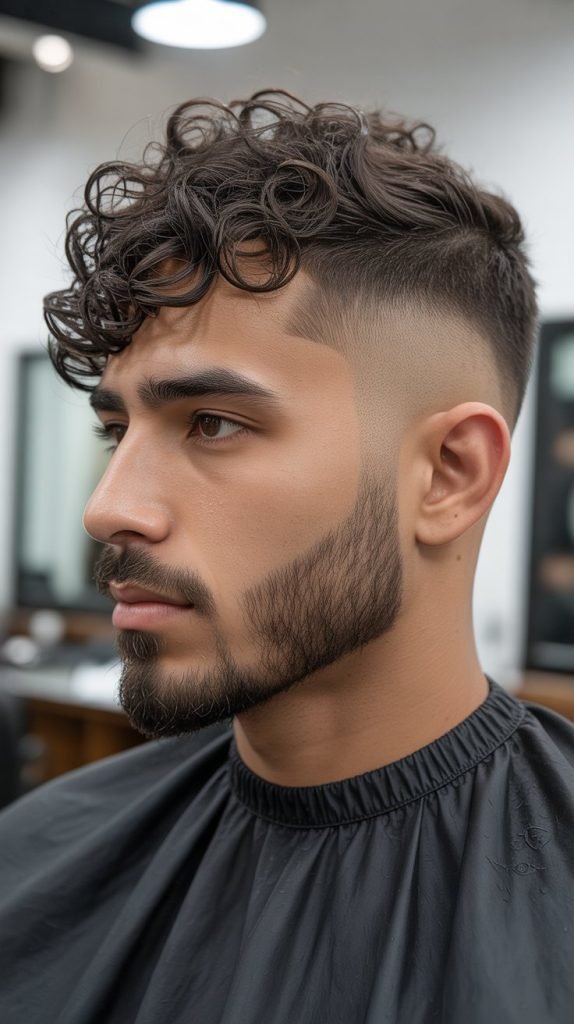
The classic curly undercut combines the boldness of shaved sides with the volume and texture of natural curls on top. This style creates a striking contrast that highlights your curls while keeping the overall look clean and modern.
Key Features:
- The sides and back are typically cut to a #1 or #2 guard length, creating a dramatic contrast with the longer top section
- The top section is left between 3-5 inches long to allow curls to form naturally and maintain their shape throughout the day
- This style works exceptionally well for men with medium to tight curl patterns who want a contemporary edge
- Regular maintenance every 2-3 weeks is essential to keep the undercut fresh and prevent the sides from growing out
Styling Tips:
- Apply a curl-defining cream to damp hair and scrunch upwards to enhance curl formation
- Use a diffuser attachment on your blow dryer set to low heat to add volume without causing frizz
- Avoid touching your curls too much throughout the day to maintain definition and prevent the style from falling flat
- A light-hold hairspray can help lock in the style for all-day wear
2. Tousled Curly Quiff
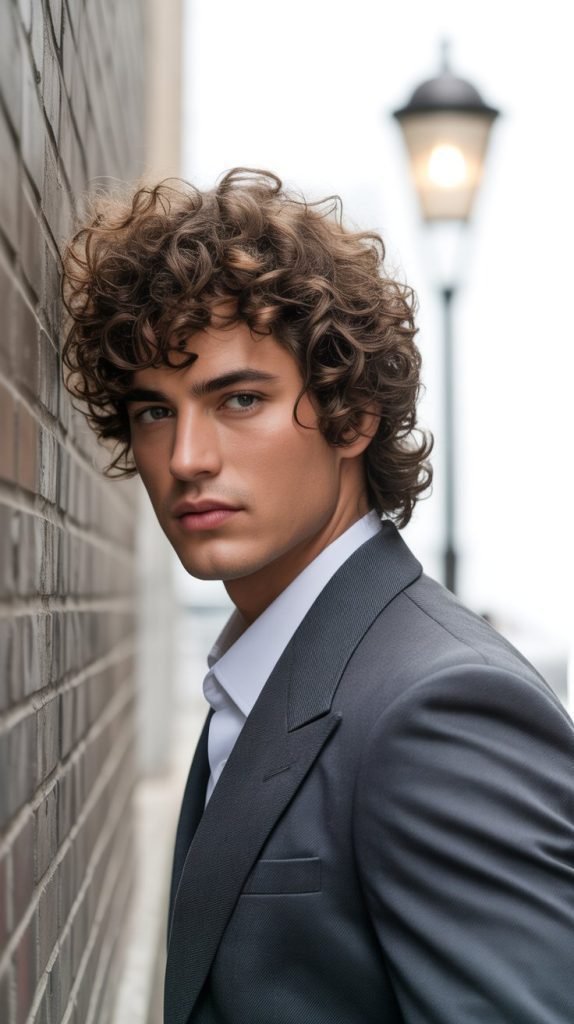
The tousled curly quiff brings together vintage sophistication and modern texture, creating a hairstyle that’s both polished and effortlessly cool.
This style emphasizes height and volume at the front while maintaining natural curl texture throughout.
Characteristics:
- The front section is styled upward and slightly backward to create the signature quiff volume
- Hair length ranges from 3-6 inches on top, with sides either tapered or kept at a medium length
- This versatile style suits oval, square, and heart-shaped faces particularly well
- The tousled finish prevents the look from appearing too rigid or overly styled
How to Achieve:
- Start with towel-dried hair and apply a volumizing mousse from roots to ends
- Blow dry while lifting the front section upward with your fingers or a round brush
- Use a curl cream to define individual curls and add separation
- Finish with a medium-hold product to maintain the quiff’s height without stiffness
3. Short Curly Crop
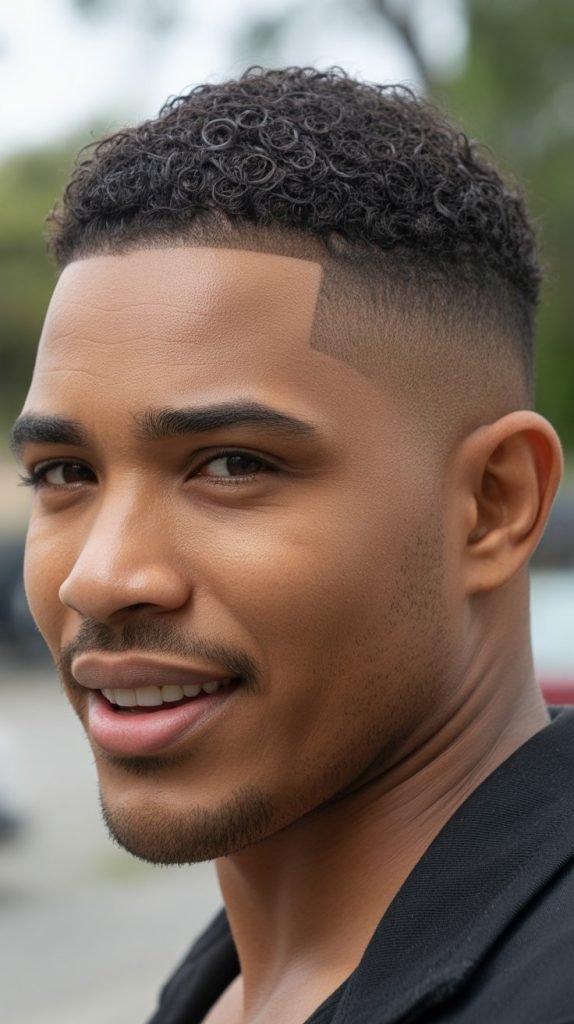
The short curly crop is a low-maintenance, practical hairstyle that celebrates natural curl texture while keeping hair manageable and neat. This style is perfect for men who want the benefits of curly hair without lengthy styling routines.
Style Details:
- Hair is cut to approximately 1-2 inches all over, allowing curls to coil naturally
- The uniform length creates a balanced, symmetrical appearance that flatters most face shapes
- Ideal for men with type 3B to 4C curl patterns who want a professional yet stylish look
- This cut requires minimal daily styling, making it perfect for busy lifestyles
Maintenance Guide:
- Wash hair 2-3 times per week with a moisturizing shampoo designed for curly hair
- Apply a leave-in conditioner while hair is damp to maintain moisture and curl definition
- Use a soft-bristle brush or pick to shape curls without disrupting their natural pattern
- Schedule haircuts every 3-4 weeks to maintain the crop’s clean shape
4. Long Curly Flow
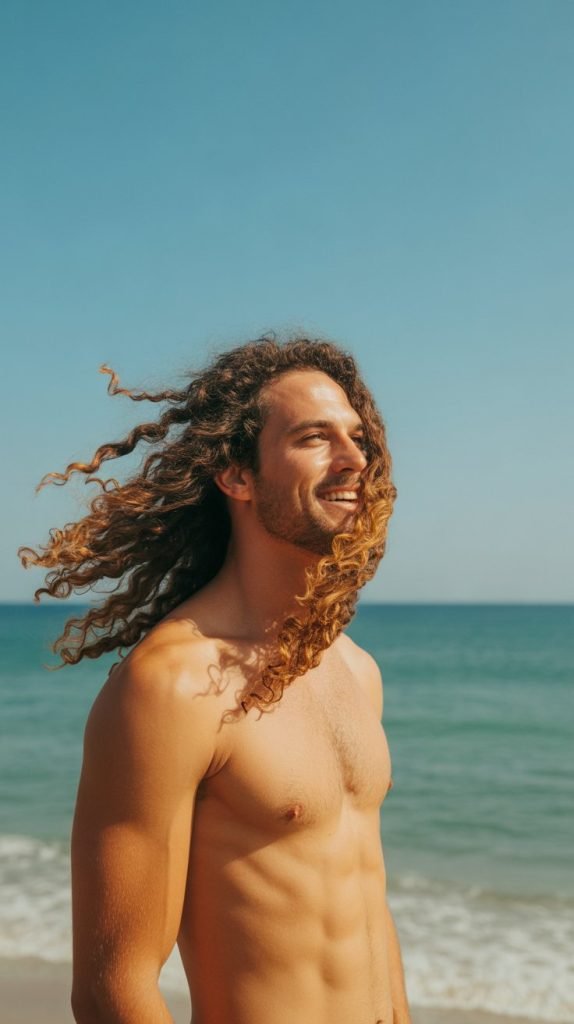
Long curly flow embraces maximum length and natural movement, creating a romantic, free-spirited aesthetic that makes a bold statement. This style requires commitment to hair care but rewards you with distinctive, eye-catching results.
Defining Features:
- Hair extends past the ears and often reaches shoulder length or beyond
- Natural curl pattern is enhanced rather than manipulated, creating organic volume and movement
- Works beautifully with loose waves (2C-3A) through tight spirals (3C)
- The style projects confidence and individuality, perfect for creative professionals and free spirits
Care Essentials:
- Deep condition weekly to maintain moisture in longer curls and prevent dryness
- Detangle gently using a wide-tooth comb on wet, conditioned hair to avoid breakage
- Apply a curl-enhancing cream and air dry or use a diffuser on cool setting
- Consider using a silk pillowcase to reduce friction and maintain curl integrity overnight
- Regular trims every 8-10 weeks prevent split ends while maintaining healthy growth
5. Curly Fade
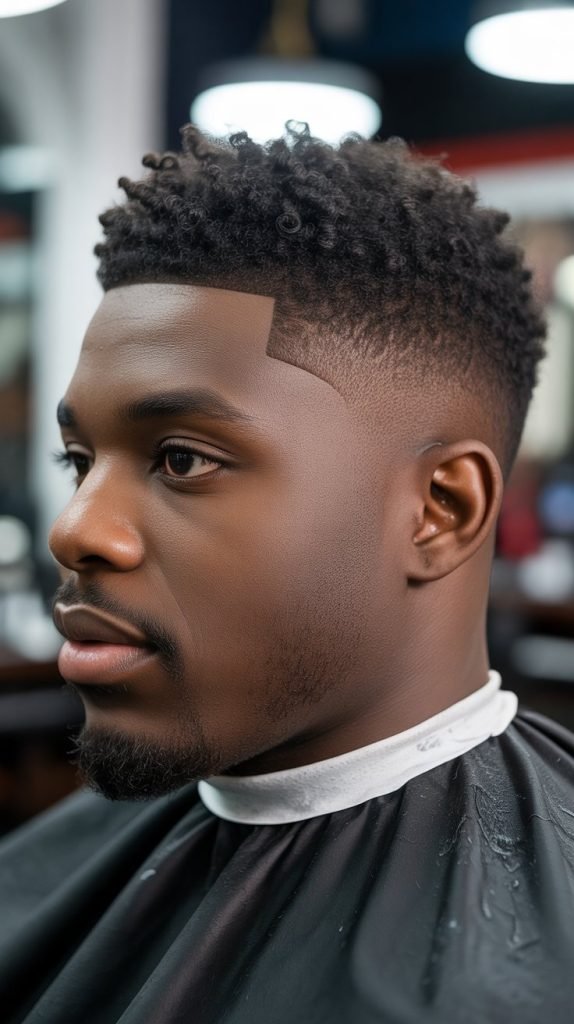
The curly fade seamlessly blends shaved sides into longer curly hair on top, creating a gradient effect that’s both modern and universally flattering. This technical cut requires a skilled barber but delivers impressive results.
Technical Aspects:
- The fade typically begins with skin or a #0 guard at the bottom and gradually increases in length
- The transition zone is carefully blended to create a smooth gradient without visible lines
- Top section maintains 2-4 inches of length to showcase natural curl texture
- High, mid, or low fade variations allow for personalization based on face shape and preference
Styling Process:
- Apply a curl-defining product to damp hair, focusing on the top section
- Use your fingers to encourage curl formation and create desired shape
- Allow hair to air dry or use a diffuser to maintain natural texture
- Edge up the hairline regularly to keep the fade looking sharp and fresh
6. Messy Curly Fringe
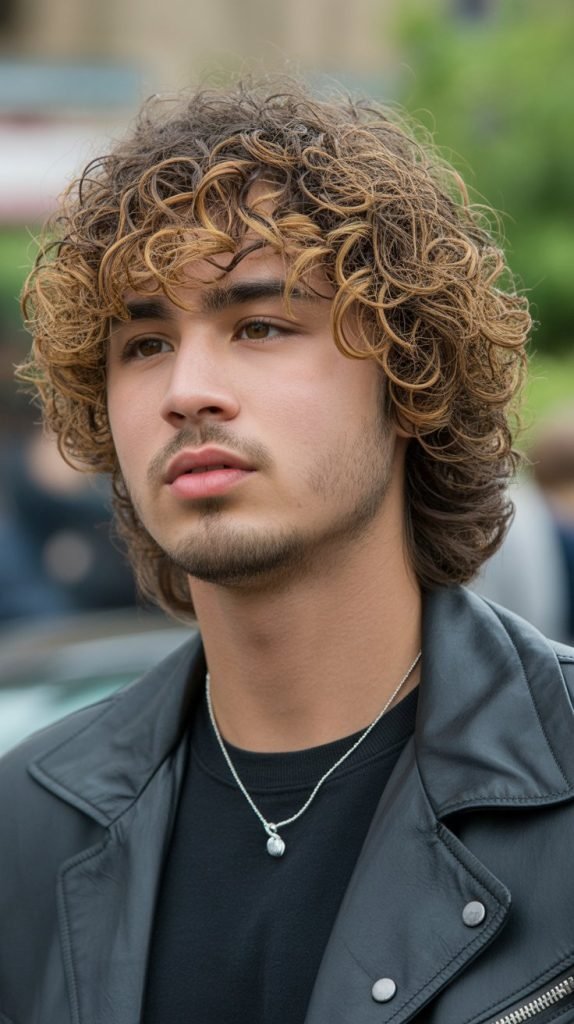
The messy curly fringe creates an intentionally disheveled look that’s youthful, modern, and effortlessly stylish. This hairstyle works particularly well for men who want texture and movement without appearing too polished.
Style Characteristics:
- The fringe section extends forward onto the forehead, creating a relaxed, casual appearance
- Hair length varies from 3-5 inches, allowing curls to have natural movement and bounce
- Sides can be tapered, faded, or kept at a medium length depending on personal preference
- The intentional messiness requires strategic styling rather than true neglect
Achieving the Look:
- Start with damp hair and apply a texturizing cream or sea salt spray
- Scrunch hair upward and forward to encourage curls to form with volume
- Allow hair to dry naturally or use a diffuser while tousling with fingers
- Finish by separating some curls with your fingers to create a lived-in, undone texture
7. Curly Pompadour
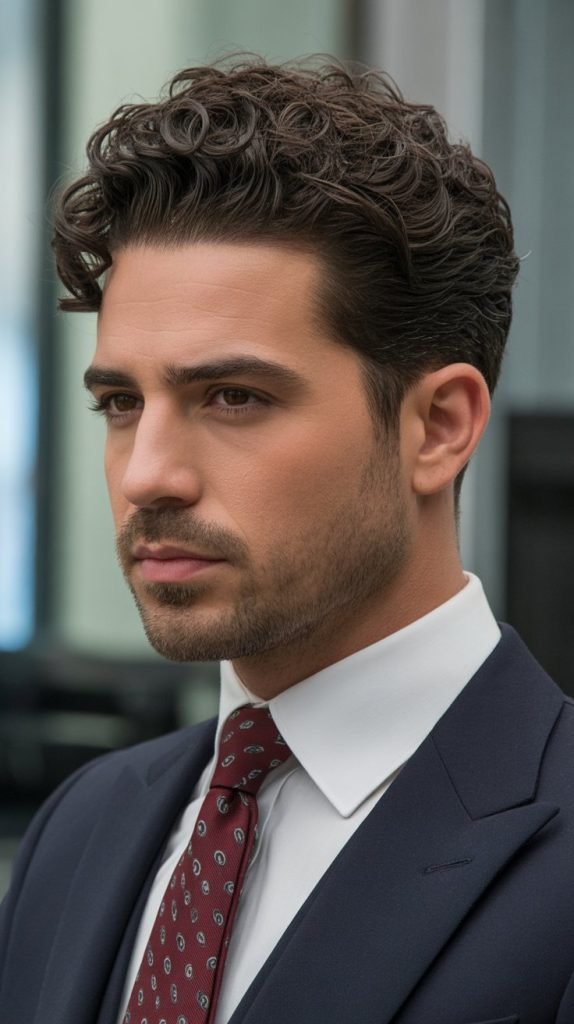
The curly pompadour elevates classic men’s styling by incorporating natural curl texture into a traditionally smooth style. This creates a unique fusion of vintage elegance and contemporary texture that commands attention.
Key Elements:
- The front section is styled high and back, creating significant volume and height
- Hair length should be 4-6 inches on top to allow for proper pompadour shaping
- Sides are typically kept shorter, either faded or at a medium length for contrast
- This style suits confident men who appreciate attention to detail in their grooming
Styling Instructions:
- Apply a strong-hold mousse to damp hair, concentrating on the front section
- Blow dry while brushing hair upward and backward using a round brush for structure
- Use a curl cream to define individual curls while maintaining the pompadour shape
- Set with a firm-hold hairspray to ensure the style lasts throughout the day
8. Textured Curly Top with Taper
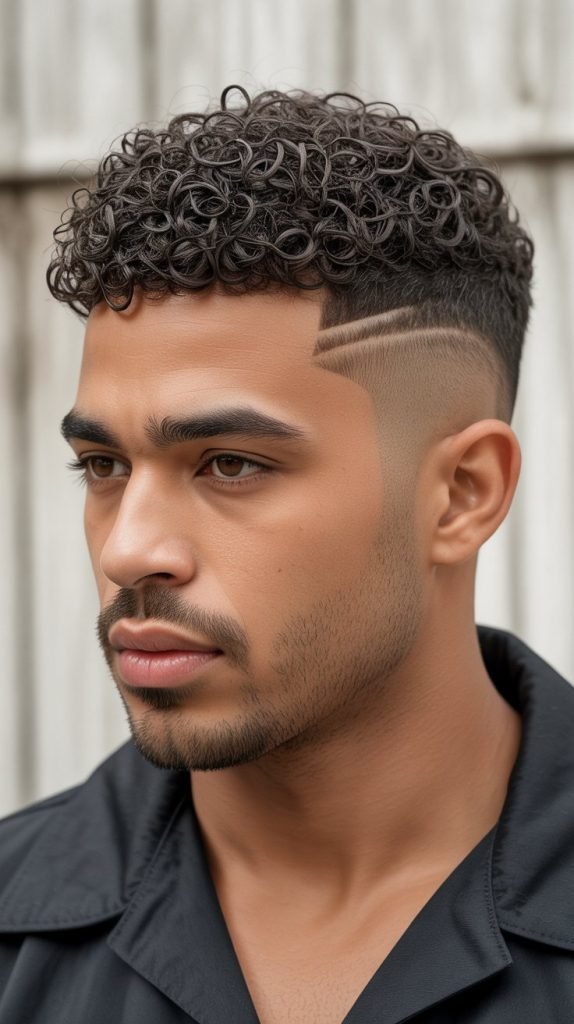
The textured curly top with taper balances substantial volume on top with gradually shortened sides, creating a proportionate and polished appearance. This versatile style works for both professional and casual settings.
Style Description:
- The top section maintains 3-4 inches of length with enhanced texture and definition
- Sides feature a gradual taper rather than a dramatic fade, creating a softer transition
- This style complements various face shapes and is particularly flattering for round and square faces
- The balanced proportions make it suitable for conservative professional environments
Maintenance Tips:
- Use a curl-defining product daily to maintain texture and separation
- Visit your barber every 3-4 weeks to keep the taper clean and well-shaped
- Refresh curls between washes using a water-based curl refresher spray
- Sleep on a satin or silk pillowcase to preserve curl definition overnight
9. Curly Side Part
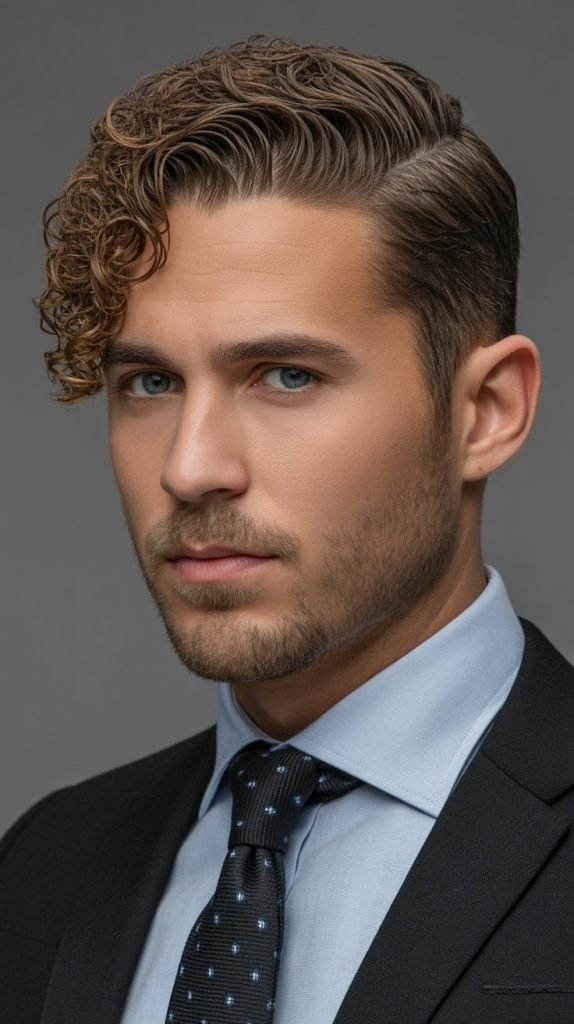
The curly side part introduces classic structure to naturally textured hair, creating a sophisticated look that works equally well in boardrooms and social settings. This timeless style proves that curly hair can be refined and professional.
Defining Characteristics:
- A clearly defined part line divides the hair, typically on the left or right side
- Hair is styled to one side while maintaining natural curl texture and volume
- Length ranges from 3-5 inches on top with sides kept shorter for contrast
- The style projects professionalism while celebrating natural texture
How to Style:
- Create the part line while hair is damp using a fine-tooth comb
- Apply a curl cream and comb hair to the desired side following the part
- Use a blow dryer with diffuser attachment to set the direction while maintaining curl definition
- Finish with a light pomade or styling cream to control flyaways and add shine
10. Curly Mohawk Fade
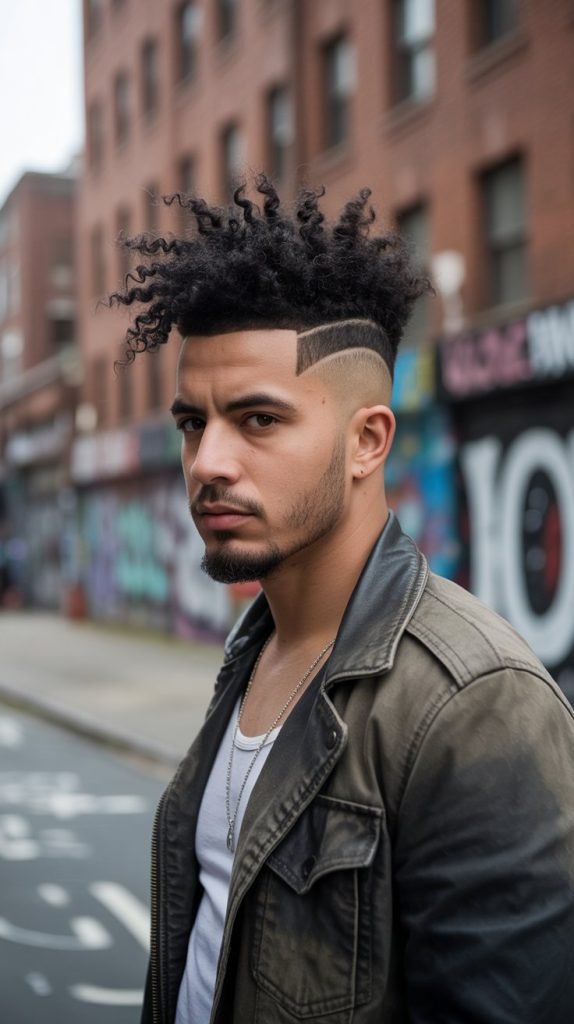
The curly mohawk fade makes a bold statement by creating a strip of voluminous curls down the center of the head while fading the sides dramatically short. This edgy style is perfect for men who want to stand out from the crowd.
Style Specifications:
- The central mohawk section typically ranges from 3-6 inches in height
- Sides are faded down to skin or very short length, creating maximum contrast
- The mohawk strip can be narrow (2-3 inches wide) or wider (4-5 inches) depending on preference
- This style requires regular maintenance to keep the fade fresh and the mohawk defined
Styling Approach:
- Apply a strong-hold curl cream to damp hair in the mohawk section
- Use a pick or your fingers to lift curls upward for maximum height
- Set with a firm-hold gel or styling paste to maintain the vertical shape
- Consider using a blow dryer with diffuser while lifting hair upward for added volume
11. Natural Curly Afro
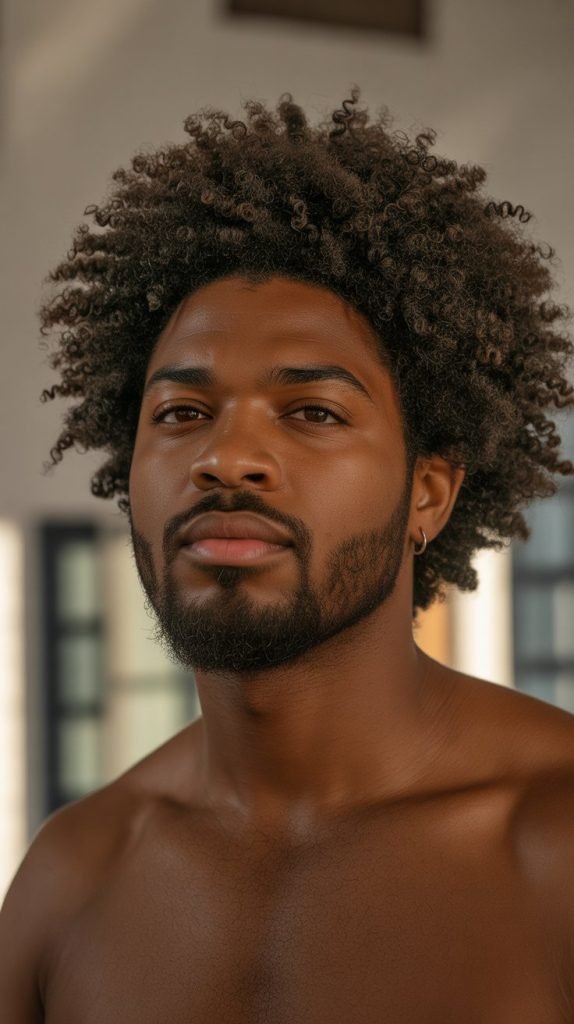
The natural curly afro celebrates hair in its most authentic form, creating a spherical silhouette that’s both iconic and powerful. This style embraces maximum volume and natural texture without alteration or manipulation.
Style Attributes:
- Hair grows outward in all directions, creating a rounded, symmetrical shape
- Length typically ranges from 3-6 inches, though variations exist from smaller to larger afros
- Works best with type 3C to 4C curl patterns that naturally grow outward
- The style carries cultural significance and represents natural hair acceptance
Care Routine:
- Moisturize daily with a water-based leave-in conditioner to prevent dryness
- Use a pick with wide-spaced teeth to shape the afro without disrupting curl pattern
- Deep condition weekly with protein treatments to maintain hair strength and elasticity
- Protect hair at night with a satin bonnet or durag to preserve shape and moisture
- Trim only to maintain desired shape, not to reduce volume or texture
12. Curly Caesar Cut
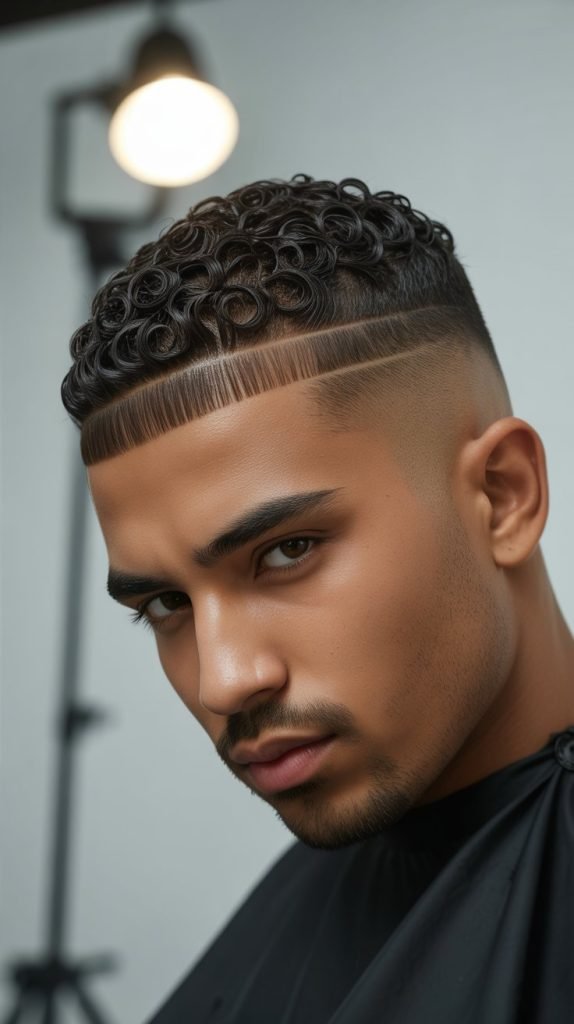
The curly Caesar cut offers a low-maintenance, military-inspired style that’s been modernized for contemporary tastes. This short, forward-brushed style creates a neat, uniform appearance while showcasing natural curl texture.
Style Details:
- Hair is cut to approximately 1-2 inches all over with a slightly longer fringe section
- The fringe is brushed forward to create a horizontal line across the forehead
- Sides and back are kept at the same length as the top or slightly shorter
- This classic cut suits men with any curl type and works particularly well for receding hairlines
Styling Method:
- Apply a small amount of curl cream to damp hair
- Brush or comb hair forward toward the forehead
- Allow curls to form naturally as hair dries
- Use a soft-bristle brush to maintain the forward direction and neat appearance
13. Curly Man Bun
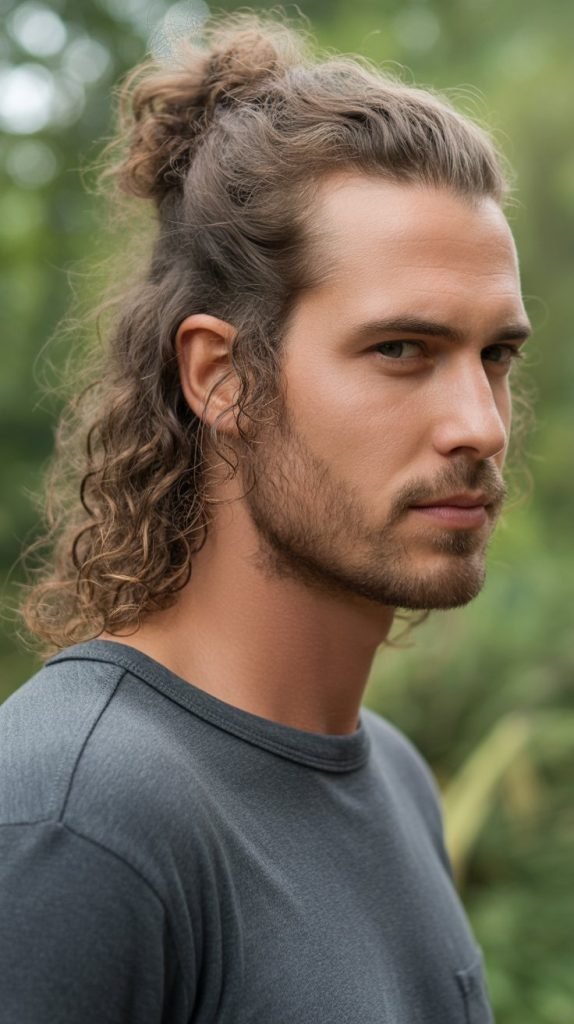
The curly man bun combines practicality with style by gathering longer curls into a bun at the crown or back of the head. This versatile style can be dressed up or down and keeps hair secure during activities.
Key Features:
- Requires hair length of at least 6-8 inches to create a proper bun
- Can be positioned high on the crown for a topknot effect or lower at the back
- Loose curls can be left out around the face for a softer, more romantic look
- Works well for both casual and semi-formal occasions
How to Create:
- Gather hair at the desired position using your fingers or a brush
- Twist hair into a coil and wrap it around itself to form the bun shape
- Secure with a hair elastic that matches your hair color for a seamless look
- Use bobby pins if needed to secure any loose sections
- Apply a light oil or serum to any face-framing curls for definition
14. Short Curly Buzz Cut
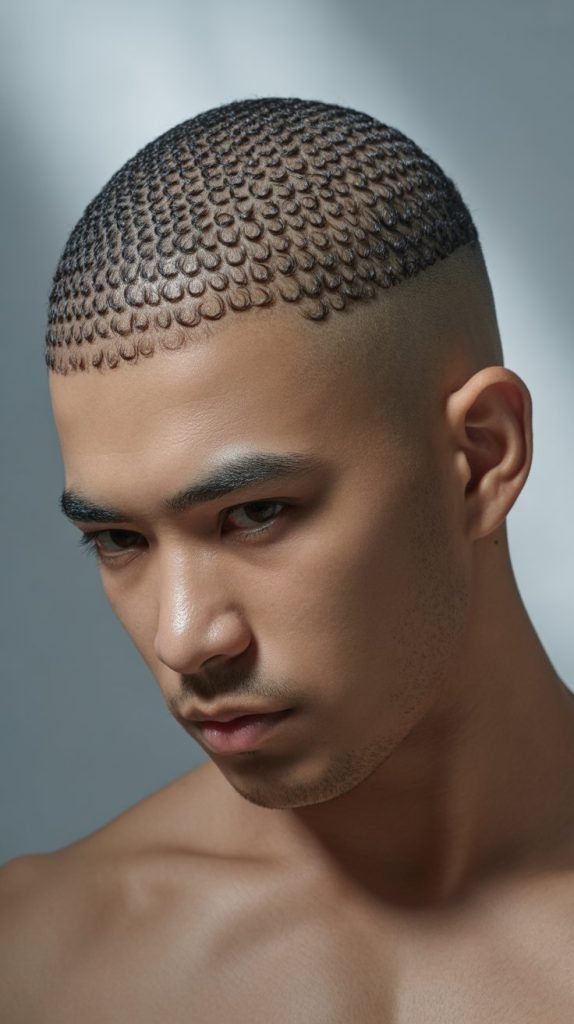
The short curly buzz cut takes a minimalist approach to curly hair styling by cutting everything to a uniform short length. This ultra-low-maintenance style is perfect for men who value convenience without sacrificing their natural texture.
Characteristics:
- Hair is clipped to approximately 1/4 to 1/2 inch all over using clippers
- Natural curl pattern remains visible even at this short length
- Requires minimal daily styling, making it ideal for active lifestyles
- Particularly flattering for men with well-shaped heads and strong facial features
Maintenance:
- Cut hair every 2-3 weeks to maintain the uniform length
- Wash hair regularly but condition less frequently due to the short length
- Apply a light moisturizing oil to keep scalp healthy and prevent dryness
- The short length reduces the need for styling products significantly
15. Curly Slicked Back
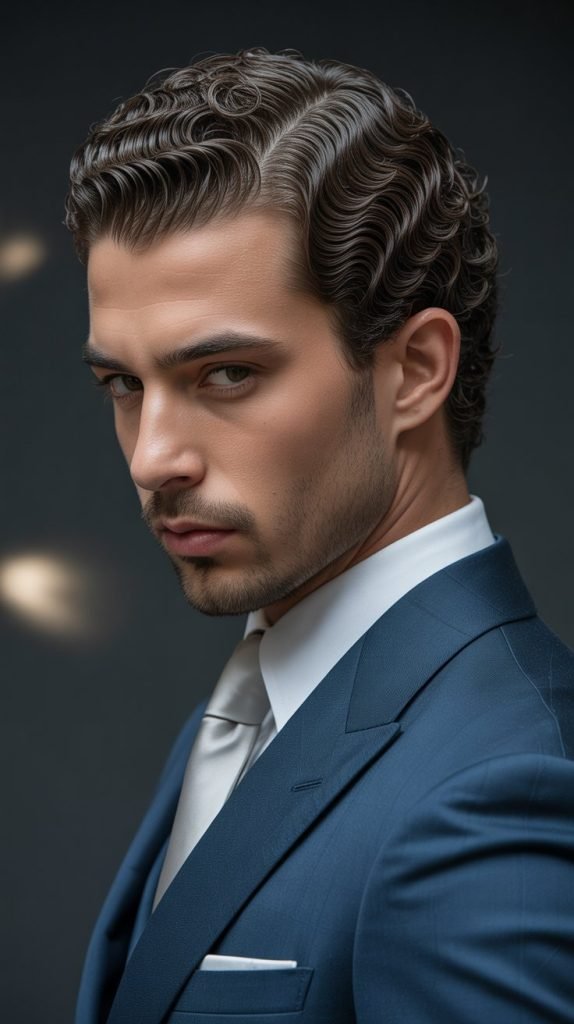
The curly slicked back style takes natural curls and directs them backward, creating a polished, sophisticated look that’s perfect for formal occasions. This style proves that curly hair can achieve the sleekness traditionally associated with straight hair.
Style Elements:
- All hair is directed backward from the face, creating a clean, refined silhouette
- Hair length should be 3-5 inches to allow for proper slicking while maintaining curl definition
- A strong-hold product is essential to keep curls in place throughout the day
- This style elongates the face and works particularly well for round face shapes
Application Process:
- Start with damp, clean hair for best product distribution
- Apply a generous amount of strong-hold gel or pomade from roots to ends
- Use a fine-tooth comb to direct all hair backward, working in sections
- Allow hair to air dry or use a blow dryer on cool setting to set the style
- Apply additional product if needed to control any curls that want to spring forward
16. Asymmetrical Curly Cut
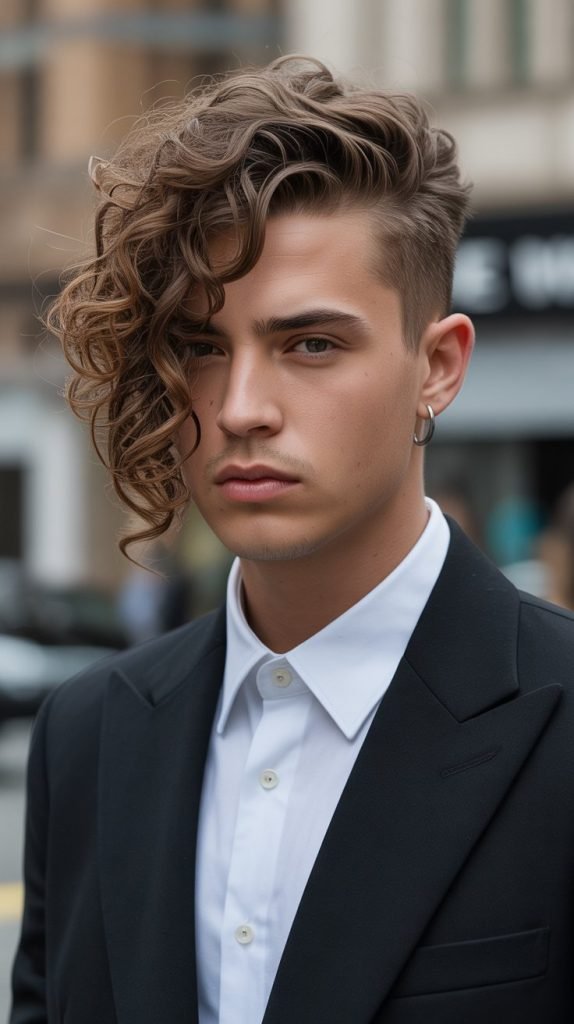
The asymmetrical curly cut introduces intentional imbalance into the hairstyle, with one side longer than the other. This artistic approach creates visual interest and allows for creative expression through hair.
Design Features:
- One side is significantly longer (3-5 inches) while the other is cut short (1-2 inches)
- The contrast creates dynamic visual movement and draws attention
- Works best for men with medium to loose curl patterns (2C-3B)
- This bold choice suits creative professionals and those in artistic fields
Styling Tips:
- Apply curl cream to the longer side, scrunching to enhance definition
- Use a pomade or gel on the shorter side to keep it sleek and controlled
- The asymmetry naturally creates volume on the longer side
- Experiment with which side works best for your face shape and hair growth pattern
17. Curly French Crop
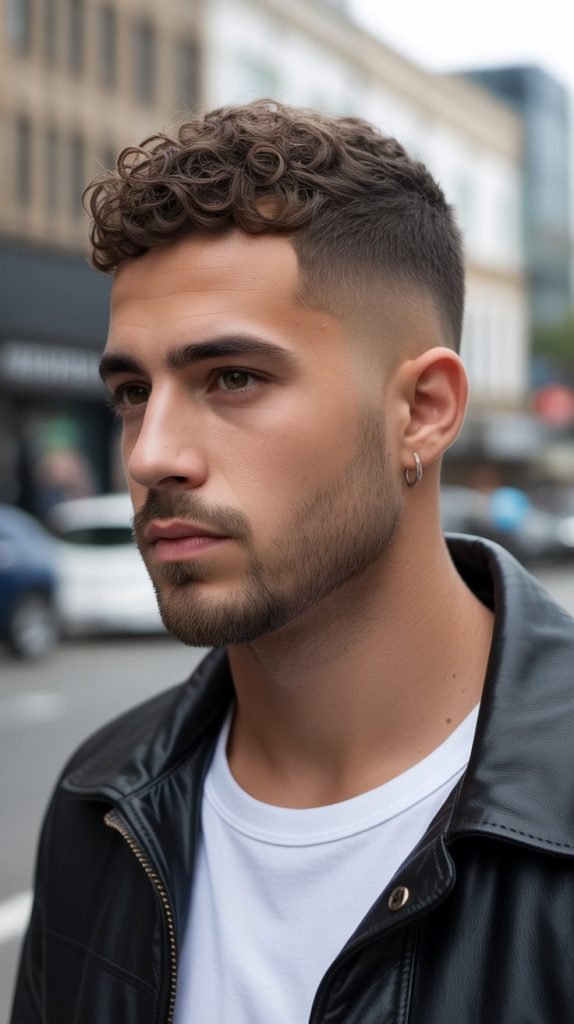
The curly French crop features short sides with a textured, forward-brushed top and a distinct fringe line. This European-inspired style combines practicality with contemporary fashion sensibility.
Style Specifications:
- The top section is 2-3 inches long with curls directed forward toward the face
- Sides are tapered or faded short, creating contrast with the textured top
- A blunt fringe line is created across the forehead, distinguishing it from other styles
- This versatile cut works well for most face shapes and curl types
Maintenance:
- Use a texturizing product to enhance the natural curl and create separation
- Brush or comb hair forward daily to maintain the characteristic direction
- Visit your barber every 3-4 weeks to keep the fringe line sharp and the sides neat
- This style requires minimal daily effort while looking intentionally styled
18. Curly Shag
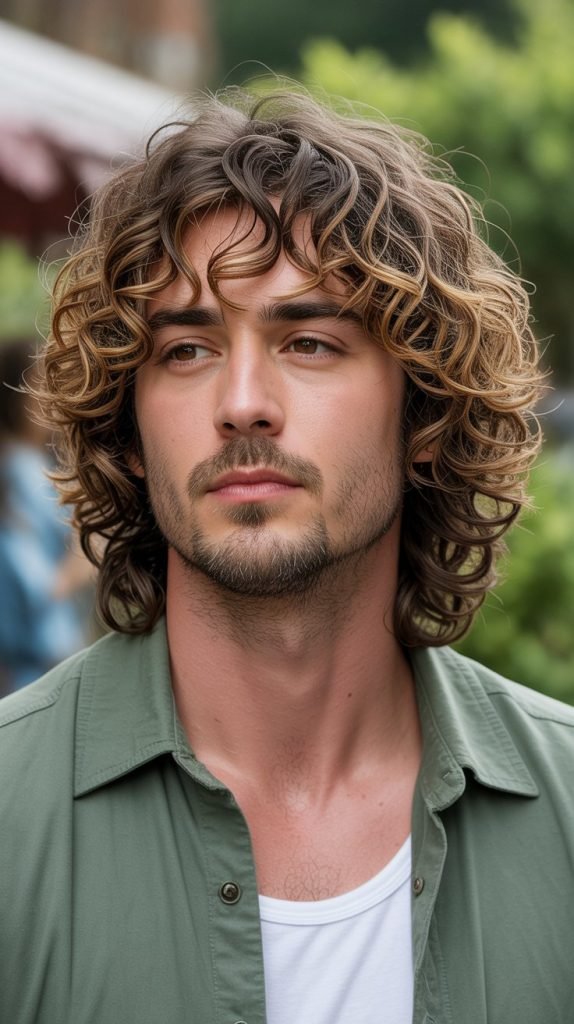
The curly shag brings 1970s-inspired layering into the modern era, creating movement, texture, and a carefree vibe. This style works beautifully with medium-length curly hair and suits men who embrace a more bohemian aesthetic.
Characteristics:
- Multiple layers are cut throughout the hair, creating various lengths that enhance movement
- Length typically ranges from 3-6 inches depending on location and desired effect
- The layering prevents hair from looking too heavy or triangular
- Works exceptionally well with loose to medium curls (2B-3B)
Styling Approach:
- Apply a sea salt spray or curl cream to damp hair for natural texture
- Scrunch hair while drying to encourage the layered curls to form with volume
- Avoid over-styling; the shag should look effortless and slightly undone
- Use your fingers to separate and position curls rather than brushes or combs
19. Temple Fade with Curly Top
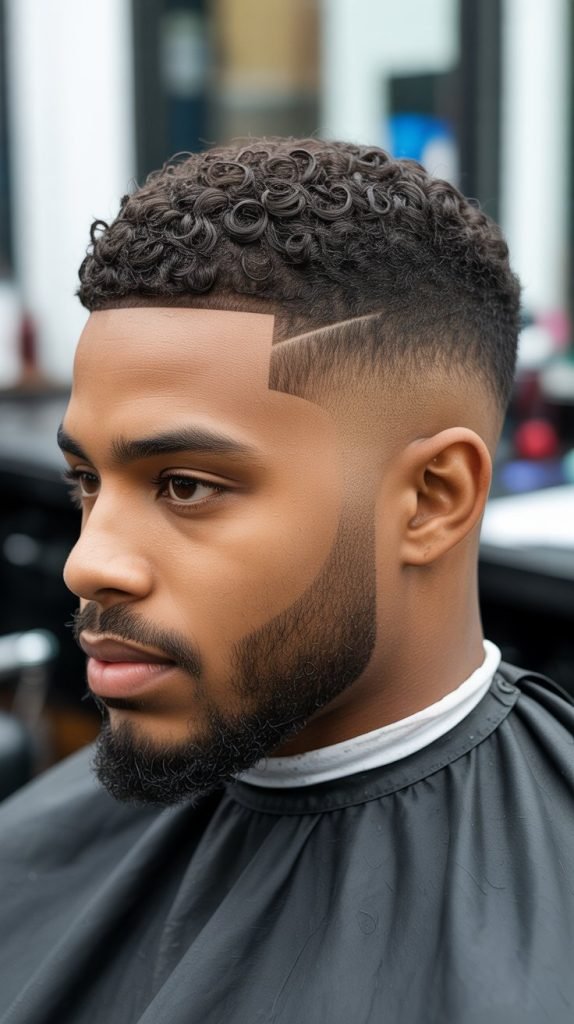
The temple fade focuses the fade specifically on the temple area, creating a clean frame for the face while maintaining length elsewhere. This subtle variation offers a fresh take on traditional fades.
Design Details:
- The fade occurs primarily at the temple regions, creating a clean edge around the face
- Back and sides maintain more length compared to a full fade, typically 1-2 inches
- Top section features 3-4 inches of curly hair with natural texture
- This style offers a compromise between fully faded and more conservative cuts
Benefits:
- Creates a polished appearance without the dramatic contrast of full fades
- Requires less frequent maintenance than styles with extensive fading
- Frames the face attractively while keeping the overall look balanced
- Suitable for professional environments while remaining fashionable
20. Curly Bowl Cut
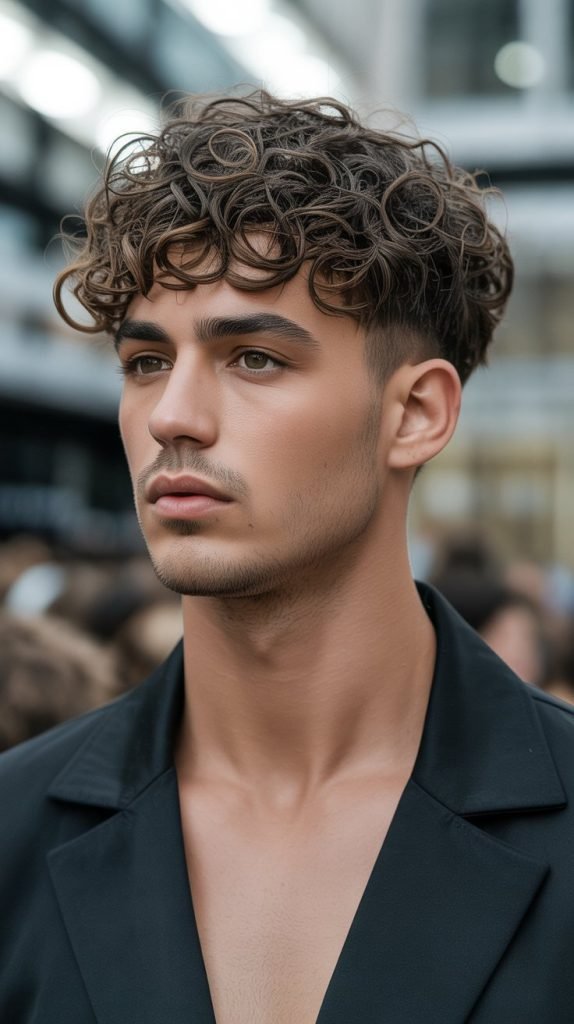
The curly bowl cut reimagines a controversial classic by incorporating natural curl texture, transforming it from outdated to fashion-forward. This bold choice requires confidence and works best for those with strong personal style.
Modern Interpretation:
- Hair is cut in a rounded shape around the entire head, but textured rather than blunt
- Length typically ranges from 2-4 inches, allowing curls to create a softer perimeter
- The modern version incorporates texture and movement, avoiding the severe look of traditional bowl cuts
- This avant-garde style appears frequently in high-fashion and editorial contexts
Styling:
- Apply curl cream throughout to enhance natural texture and prevent the cut from looking too structured
- Allow hair to dry naturally or with a diffuser to maintain the organic curl pattern
- Use fingers to break up any overly uniform sections for a more contemporary feel
- This style makes a statement and isn’t for everyone, but it’s undeniably unique
21. Curly High and Tight
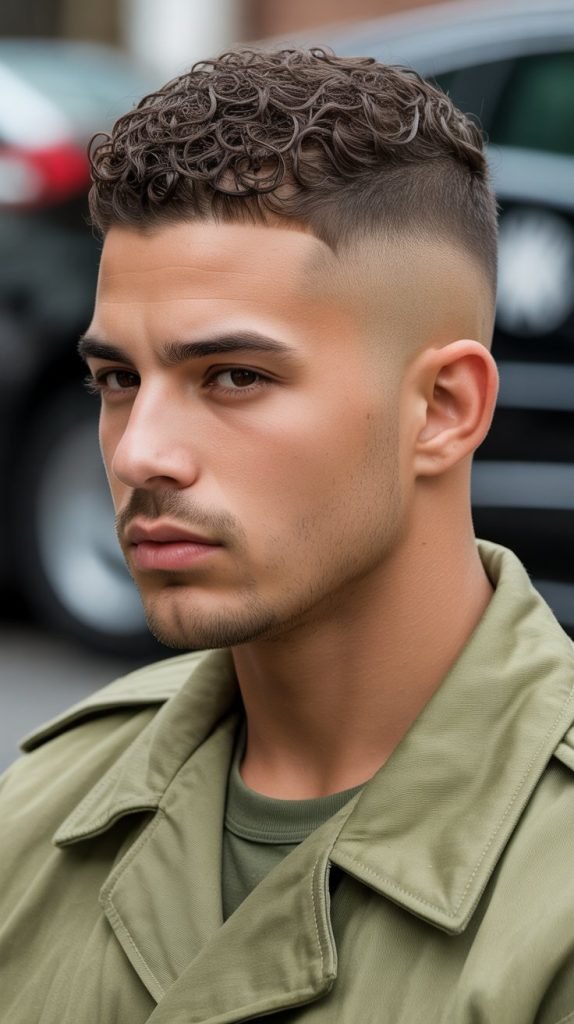
The curly high and tight borrows from military styling with very short sides and back contrasted against slightly longer curly hair on top. This disciplined yet stylish cut offers a masculine, clean-cut appearance.
Style Parameters:
- Sides and back are clipped to a #1 or #2 guard, creating a very short, uniform appearance
- Top section maintains 1-3 inches of length, just enough to showcase curl texture
- The contrast between top and sides is dramatic, creating a bold silhouette
- This practical style requires minimal styling while looking sharp and intentional
Care Instructions:
- Use a curl-defining cream on the top section to enhance texture
- The short sides require regular trimming every 2-3 weeks
- This style is virtually wash-and-go, making it perfect for busy schedules
- Works particularly well for men with athletic builds and active lifestyles
22. Curly Ivy League
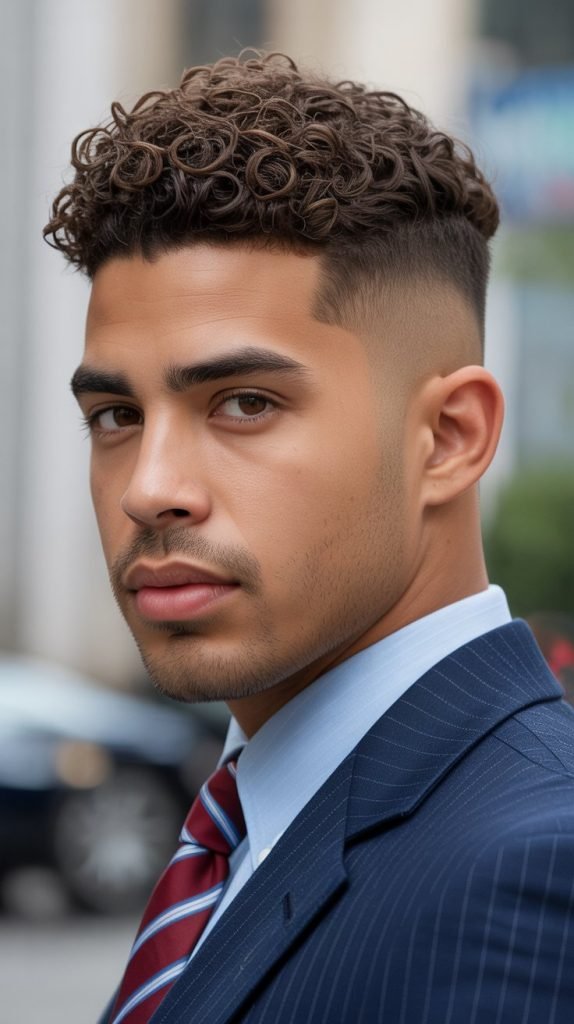
The curly Ivy League combines collegiate sophistication with natural texture, creating a refined yet approachable style. This versatile cut transitions seamlessly from casual to professional settings.
Defining Features:
- Similar to a crew cut but with enough length on top (2-3 inches) to part or style
- Sides are tapered gradually shorter, maintaining a conservative, clean appearance
- Top section can be styled with a side part or swept to one side
- The refined nature makes it particularly suitable for corporate and academic environments
Styling Method:
- Apply a small amount of pomade or cream to damp hair
- Create a side part if desired and comb hair in the intended direction
- Allow curls to form naturally while maintaining the overall styled direction
- This cut looks polished even with minimal product, making morning routines efficient
23. Curly Faux Hawk
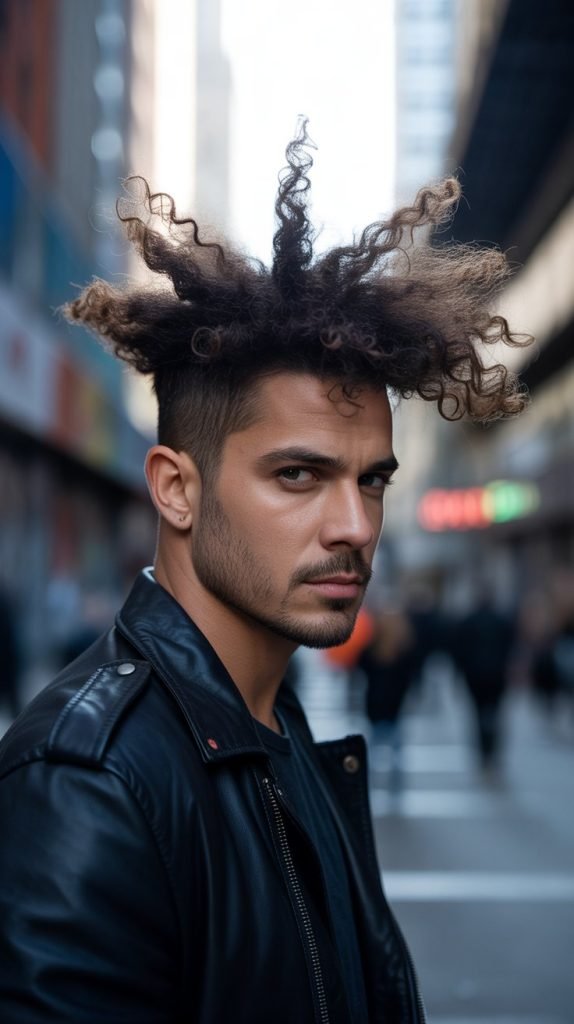
The curly faux hawk creates the illusion of a mohawk without the commitment of shaving the sides completely. This style offers edginess with versatility, as it can be styled more conservatively when needed.
Style Characteristics:
- The center strip of hair is styled upward to create a ridge or peak
- Sides are cut shorter (1-2 inches) but not shaved, maintaining some length
- Height in the center section typically reaches 3-5 inches when styled
- This style can be toned down for professional settings or amplified for social occasions
Creating the Look:
- Apply a strong-hold gel or mousse to damp hair in the center section
- Use your fingers or a comb to direct hair upward and toward the center
- Blow dry while continuing to lift and shape the central ridge
- Set with hairspray to maintain the height throughout the day
- For a more subtle version, simply add volume to the top without creating a sharp ridge
24. Curly Burst Fade
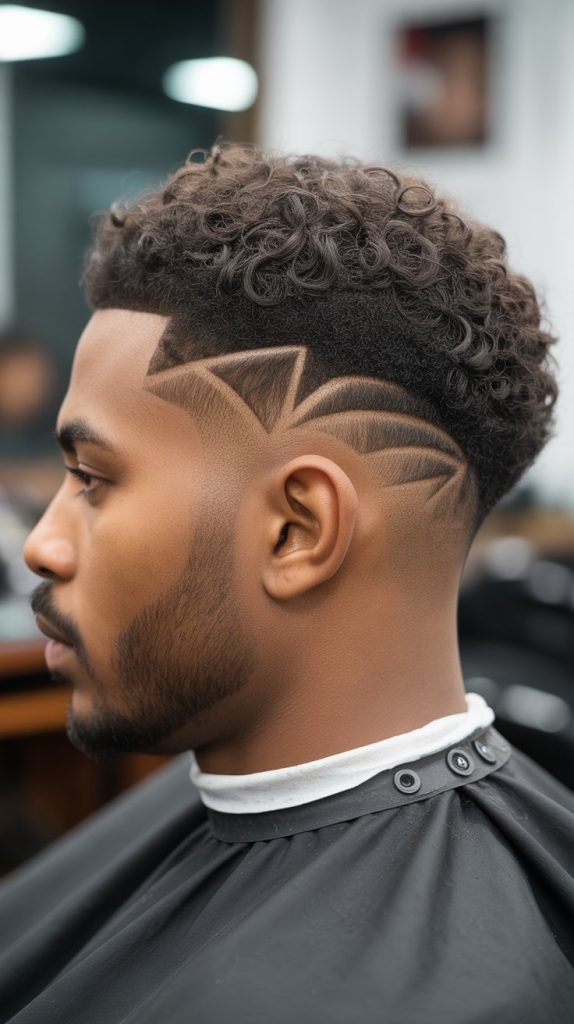
The burst fade creates a semi-circular fade around the ear that “bursts” outward, while the back maintains more length. This technical cut adds artistic flair to standard fade styles and showcases barber skill.
Technical Details:
- The fade forms a curved, arc-like shape around each ear rather than following traditional straight lines
- Back section maintains significantly more length, creating an interesting contrast
- Top section features 2-4 inches of curly hair with natural texture
- This style works particularly well when paired with a beard for complete facial framing
Maintenance Requirements:
- Requires a skilled barber who understands the technical aspects of burst fades
- The precision of this cut demands maintenance every 2-3 weeks
- Style the top section with curl-defining products to complement the clean fade
- The burst fade is more noticeable and distinctive than traditional fades
25. Shoulder-Length Curly Hair
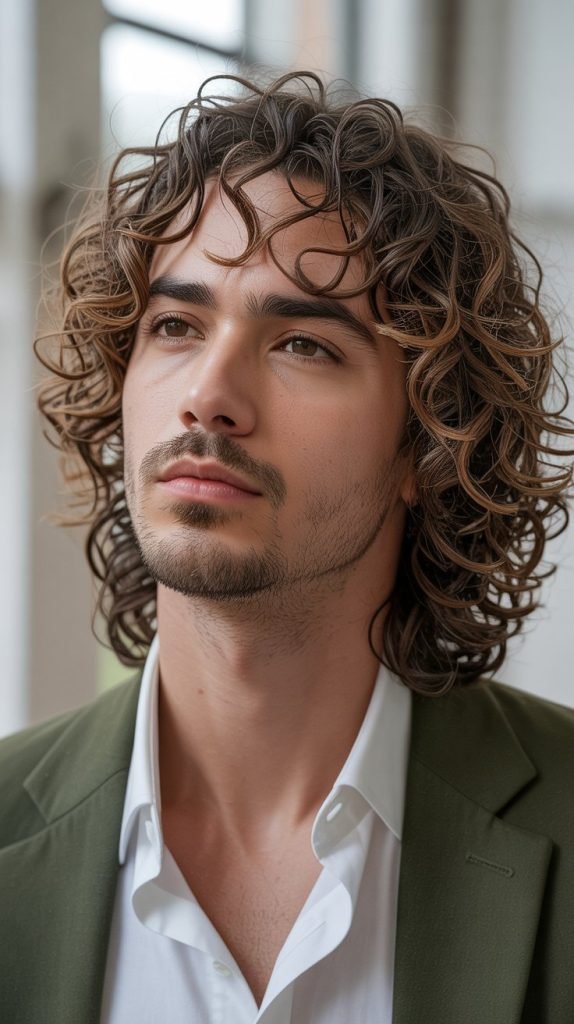
Shoulder-length curly hair represents a commitment to length that creates a dramatic, romantic appearance. This style requires dedication to hair care but offers maximum styling versatility.
Style Overview:
- Hair extends to or just past the shoulders, typically requiring 1-2 years of growth
- Natural curl pattern creates volume and dimension throughout the length
- Works with curl types ranging from loose waves to tight spirals
- This bold choice projects confidence and often appeals to creative individuals
Comprehensive Care:
- Wash hair 1-2 times per week to prevent stripping natural oils
- Use a sulfate-free shampoo and rich, moisturizing conditioner
- Apply leave-in conditioner and curl cream to damp hair for definition
- Detangle only when hair is wet and saturated with conditioner
- Deep condition weekly with heat to maximize moisture penetration
- Consider protective hairstyles like loose braids at night to prevent tangling
- Regular trims every 10-12 weeks maintain healthy ends without sacrificing length
26. Curly Comb Over
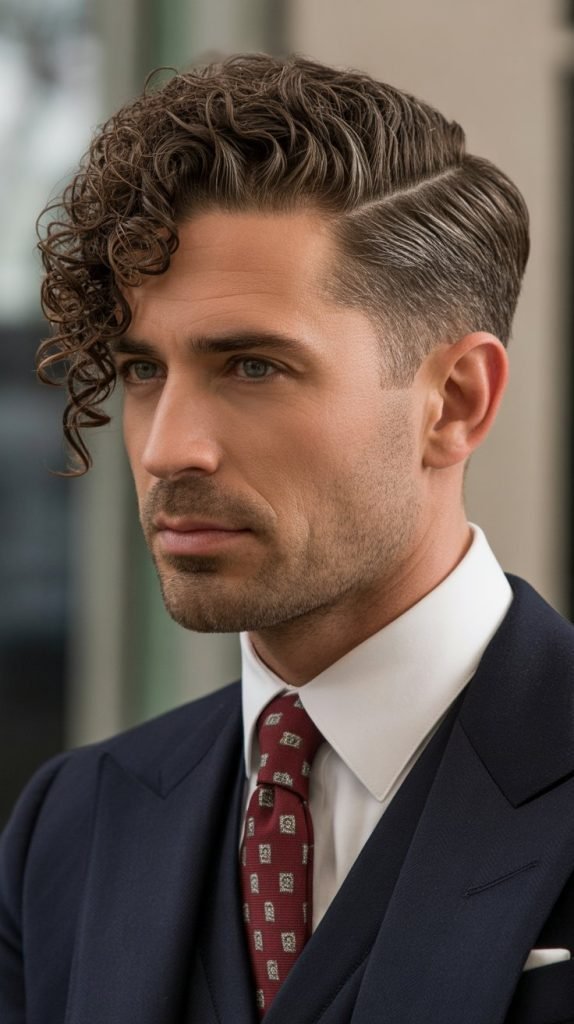
The curly comb over takes a classic style and adapts it for natural texture, creating a sophisticated look that works for mature men and those seeking a polished appearance.
Style Description:
- Hair is grown longer on one side (3-5 inches) and combed across to the other
- A defined part line separates the combed section from the shorter side
- Sides are typically tapered or faded to create contrast with the longer top
- This style is particularly effective for men with thinning hair or receding hairlines
Styling Process:
- Create a deep side part on damp hair using a fine-tooth comb
- Apply pomade or styling cream and comb hair across from the part
- Use a blow dryer with comb attachment to set the direction while adding volume
- Finish with hairspray to ensure the comb over stays in place
- The natural texture of curls adds dimension that straight-hair comb overs lack
27. Curly Top Knot
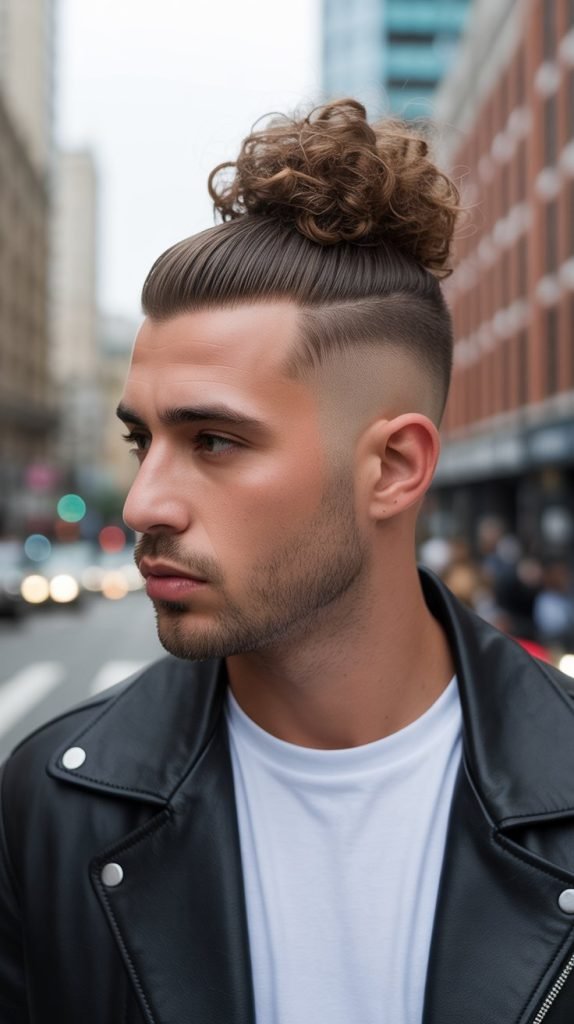
The curly top knot pulls longer hair into a knot positioned high on the crown, creating a trendy, practical style. This look has gained significant popularity in recent years among fashion-conscious men.
Key Aspects:
- Requires at least 5-6 inches of length on top to create a proper knot
- The knot is positioned high on the crown, creating elevation and presence
- Sides are often faded or undercut to emphasize the knot
- Loose curls can frame the face for added softness
Creating the Style:
- Gather hair from the top section only, pulling it upward and toward the crown
- Twist the gathered hair and wrap it around itself to form a knot
- Secure with an elastic band, preferably one that matches your hair color
- Use bobby pins to secure any loose pieces within the knot
- Apply a light styling cream to the knot itself to define individual curls
28. Curly Disconnected Undercut
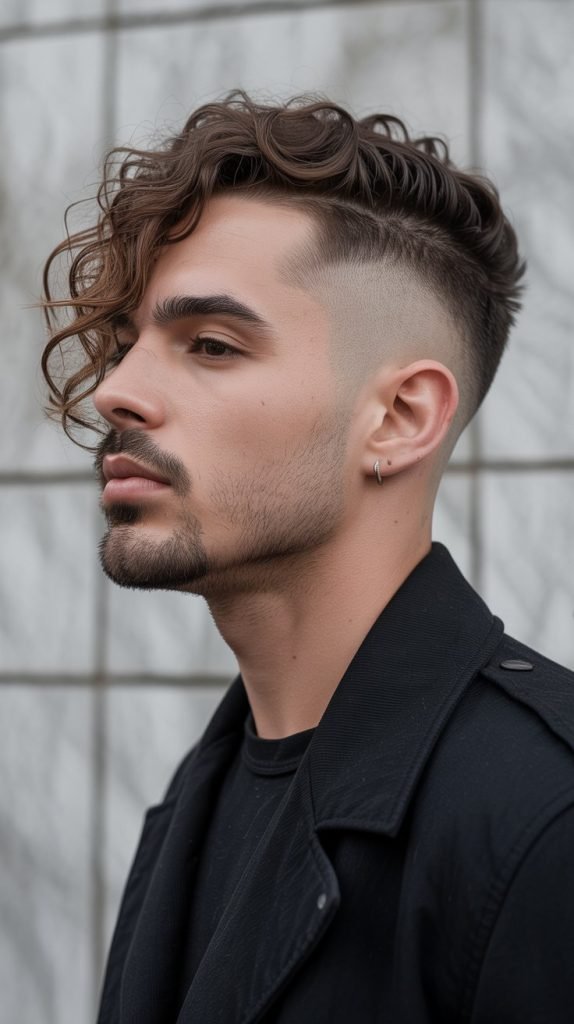
The curly disconnected undercut features a stark separation between the long top and short sides with no gradual transition. This bold, contemporary style creates maximum contrast and visual impact.
Distinctive Features:
- There is no blending or transition between the long top (3-6 inches) and short sides
- The disconnection line is clearly visible, creating an intentional, dramatic effect
- Sides can be shaved to skin or kept at a very short guard length
- This avant-garde style appeals to men who want to make a strong fashion statement
Styling Guidelines:
- Focus styling efforts on the top section with curl-defining products
- The dramatic contrast means the curls on top become the focal point
- Experiment with different ways of styling the top: forward, back, to the side, or up
- Regular maintenance of the sides keeps the disconnection line sharp and visible
- This style requires confidence to wear as it naturally draws attention
29. Textured Curly Crew Cut
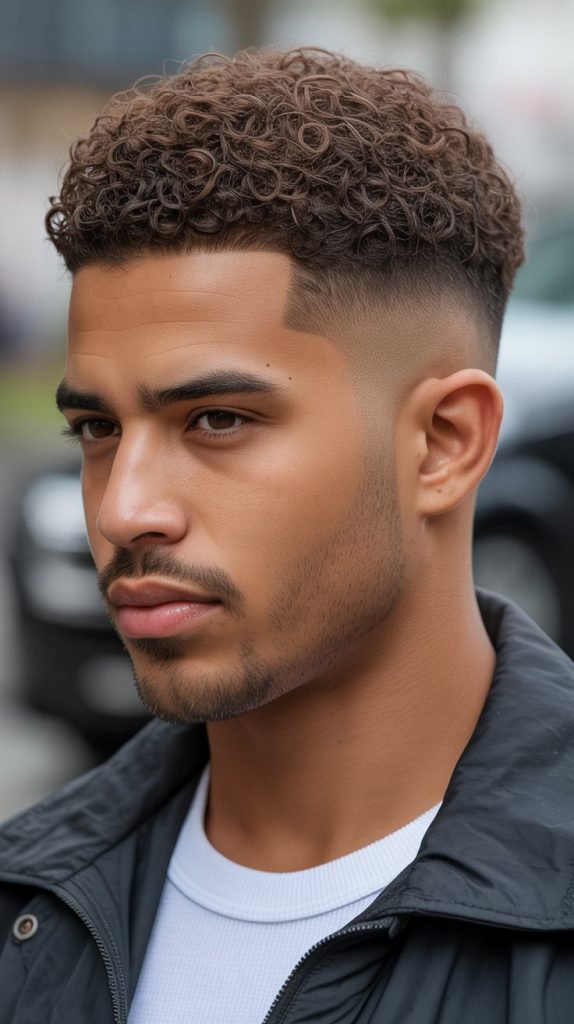
The textured curly crew cut updates the classic military cut by incorporating natural curl texture and modern styling techniques. This short, practical style maintains masculinity while showcasing your natural hair pattern.
Style Features:
- Hair on top is cut to approximately 1-2 inches, just enough to show curl texture
- Sides and back are tapered or faded short, typically to a #2 or #3 guard
- The short length makes this extremely low-maintenance while remaining stylish
- Particularly flattering for athletic builds and men with active lifestyles
Daily Routine:
- Apply a small amount of curl cream to damp hair in the morning
- Use your fingers to encourage curls to form and add texture
- Allow hair to air dry or use a blow dryer for faster results
- The short length means styling takes less than two minutes
- Haircuts every 3-4 weeks maintain the clean, structured appearance
30. Curly Mullet
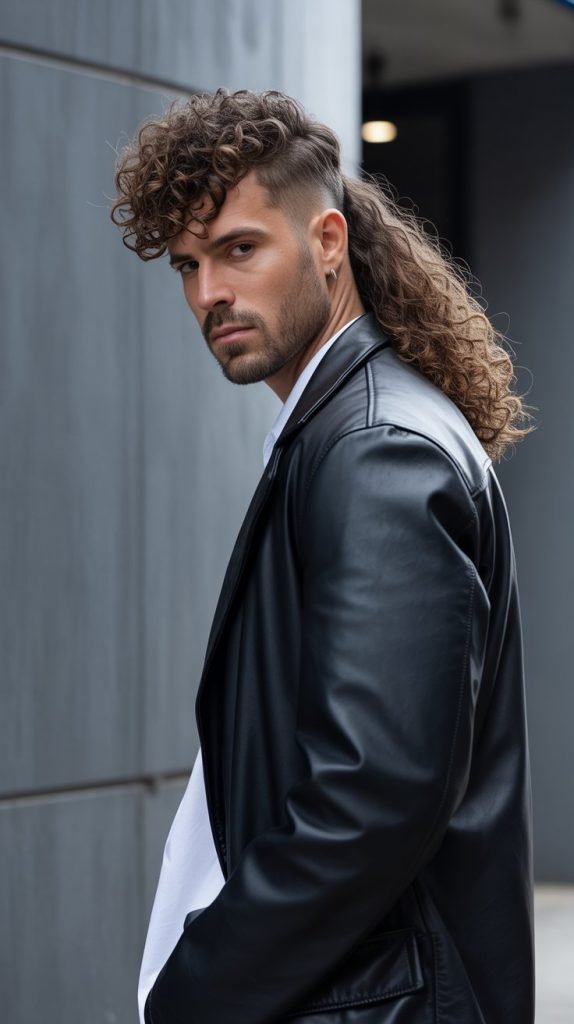
The curly mullet resurrects a controversial classic with modern sensibility, creating “business in the front, party in the back” with natural curl texture. This bold, ironic style has experienced a surprising renaissance in fashion-forward circles.
Modern Interpretation:
- Front and top sections are cut to 2-3 inches with texture and volume
- Back and sides are left significantly longer, ranging from 4-6 inches or more
- The modern version incorporates texture and layering rather than the blunt cuts of the 1980s
- This ironic, fashion-forward choice has appeared on runways and in editorial spreads
Styling the Mullet:
- Apply different products to different sections: texturizing cream on top, curl cream on the back
- The front section can be styled forward, up, or to the side depending on preference
- Allow the back to flow naturally, showcasing the length and curl pattern
- This style is intentionally bold and works best for those who embrace its unconventional nature
- The curly mullet requires confidence and a sense of humor about hair fashion
Styling Products for Curly Hair
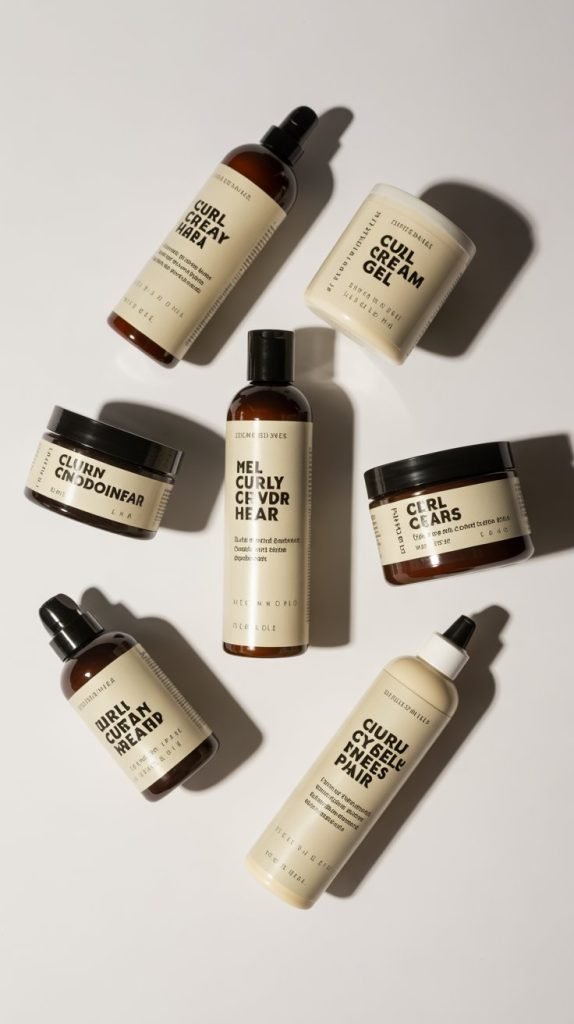
Understanding the right products for curly hair is essential to achieving and maintaining any of these 30 styles. Different curl types and desired looks require specific product formulations.
Product Application Tips:
- Always apply styling products to damp, not dry, hair for better distribution and curl formation
- Use the “praying hands” method by rubbing product between palms and smoothing over sections of hair
- The “scrunch” technique works well for enhancing natural curl by cupping hair in your palm and pushing upward
- Less is more with most products; start with a small amount and add more only if needed
- Layer products strategically: leave-in conditioner first, then curl cream, then gel or mousse for hold
Avoiding Common Mistakes:
- Never use products containing sulfates, silicones, or drying alcohols that damage curly hair
- Don’t apply too much product at once, which weighs down curls and creates a crunchy texture
- Avoid rubbing hair with regular towels; instead, use microfiber towels or t-shirts to reduce frizz
- Don’t touch or manipulate curls while they’re drying, as this disrupts formation and causes frizz
Hair Care Essentials for Curly Hair
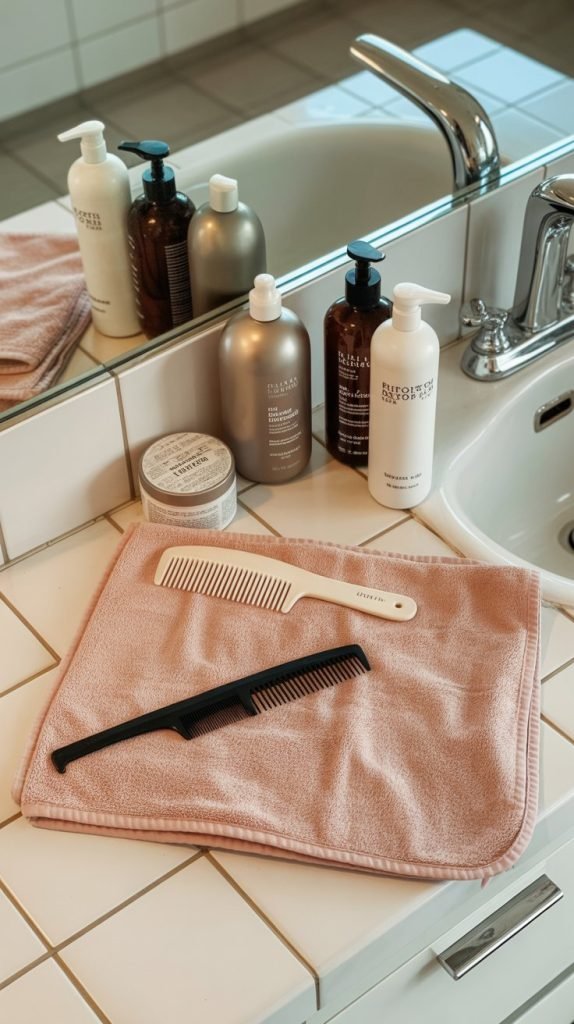
Proper care is the foundation of any great curly hairstyle, regardless of which of the 30 styles you choose. Understanding curly hair’s unique needs ensures your style looks its best.
The Curly Hair Washing Routine:
- Frequency matters: wash curly hair 1-3 times per week depending on your curl type and scalp oiliness
- Pre-poo treatments with oil before shampooing can protect hair from the drying effects of cleansing
- Use sulfate-free shampoos that clean without stripping essential natural oils from curls
- Focus shampoo primarily on the scalp where oil and product buildup accumulate
- Condition generously from mid-length to ends, where curly hair tends to be driest
- Detangle during conditioning while hair is slippery and saturated with product
- Rinse conditioner with cool water to seal the hair cuticle and enhance shine
Deep Conditioning Protocol:
- Deep condition weekly or bi-weekly depending on hair damage and dryness levels
- Apply a rich, protein-free mask to clean, damp hair from roots to ends
- Use heat from a shower cap, warm towel, or hooded dryer to open cuticles for deeper penetration
- Leave the treatment on for 20-30 minutes before rinsing thoroughly
- Alternate between moisturizing and protein treatments if hair is damaged or over-processed
Protecting Your Curls:
- Sleep on satin or silk pillowcases to reduce friction that causes frizz and breakage
- Consider protective nighttime styles like loose pineapples, braids, or wearing a satin bonnet
- Refresh morning curls with water or curl refresher spray rather than rewashing
- Protect hair from sun damage with leave-in products containing UV filters
- Minimize heat styling; when necessary, always use heat protectant and low temperatures
- Get regular trims every 8-12 weeks to remove split ends and maintain shape
Understanding Porosity:
- Low porosity hair resists moisture absorption and requires lighter products and heat during conditioning
- Medium porosity hair is balanced and works well with most products and techniques
- High porosity hair absorbs moisture quickly but loses it just as fast, requiring heavier products and regular deep conditioning
- Determine your porosity level by placing a clean hair strand in water: floating indicates low porosity, sinking indicates high porosity
Choosing the Right Style for Your Face Shape
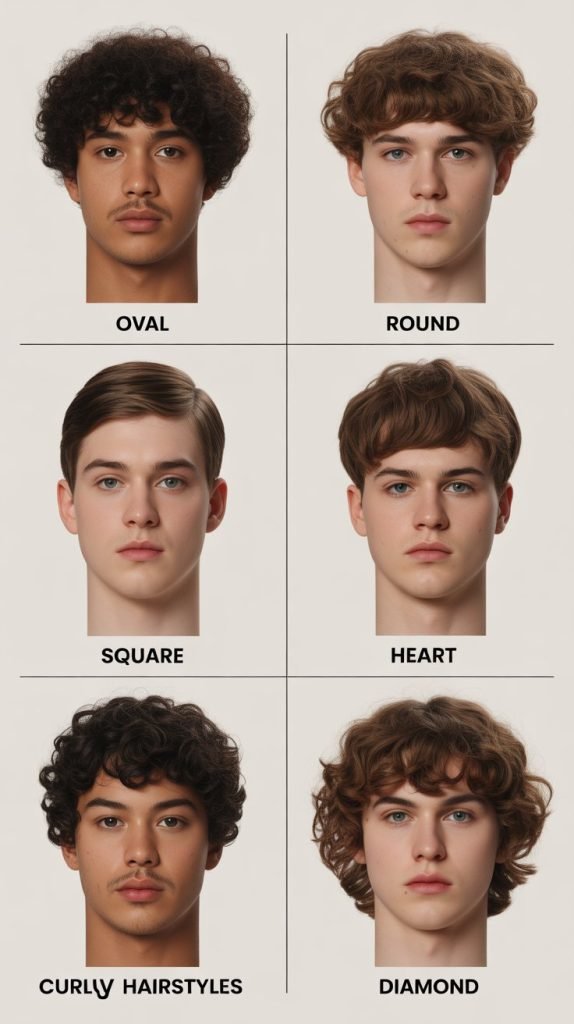
Selecting from these 30 stylish curly hairstyles becomes easier when you understand which styles complement your specific face shape. The right choice enhances your natural features.
Oval Face Shape:
- Most versatile face shape that works with nearly all 30 styles presented
- Can experiment freely with length, volume, and structure without concern
- Both angular styles (undercuts, fades) and softer styles (shags, long flow) are flattering
- The balanced proportions of oval faces provide a blank canvas for creativity
Round Face Shape:
- Styles with height and volume on top elongate the face: pompadours, quiffs, curly mohawks
- Avoid styles that add width at the sides, which emphasize roundness
- Fades and undercuts work well by keeping sides close and creating vertical emphasis
- Angular styles provide contrast to soft, curved facial features
Square Face Shape:
- Softer, textured styles balance strong, angular jawlines: messy fringe, shags, tousled looks
- Medium-length styles that soften the perimeter work beautifully
- Avoid styles that are too short or too angular, which emphasize the squareness
- Side-swept styles and curly side parts create diagonal lines that flatter
Heart Face Shape:
- Fuller styles at the jawline balance wider foreheads: longer curls, fuller sides
- Avoid too much height on top, which emphasizes the forehead width
- Styles with forward movement like French crops and fringes work well
- Medium-length styles that frame the face are particularly flattering
Diamond Face Shape:
- Add width at the forehead or jawline to balance narrow mid-face: full fringes, fuller sides
- Avoid styles that are too short on the sides, which emphasize narrow cheekbones
- Textured, fuller styles work better than slicked or tight styles
- Medium-length curly hair with volume throughout creates balance
Curly Hair Types and Texture Guide
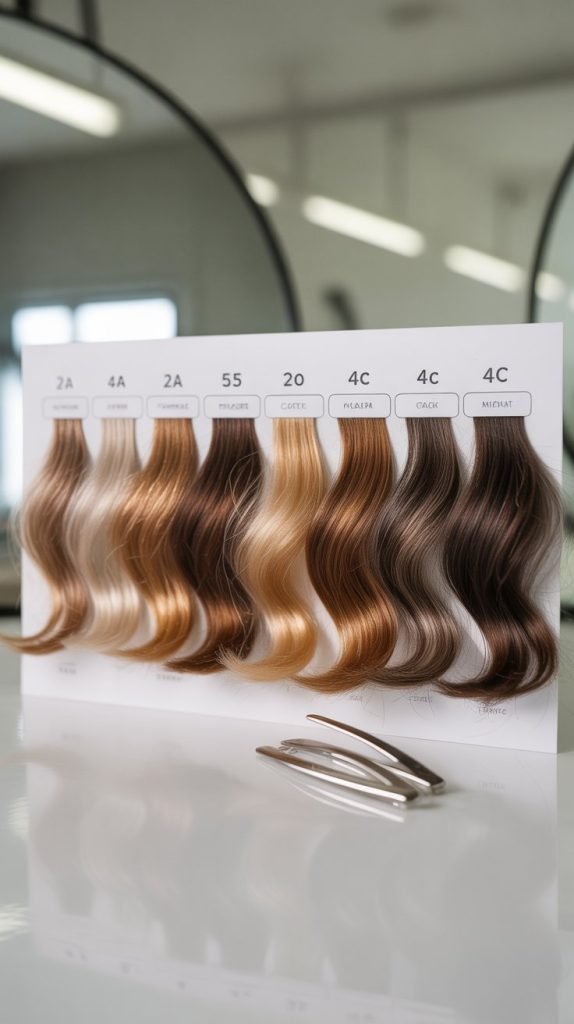
Understanding your specific curl type helps you choose the most suitable styles from the 30 options and select appropriate products and techniques.
Type 2: Wavy Hair
- 2A: Loose, subtle S-shaped waves with fine texture that lies relatively flat
- 2B: More defined waves with moderate volume and slight frizz tendency
- 2C: Well-defined waves that start from the roots with more volume and texture
- Best styles: Tousled quiffs, messy fringes, textured crops, curly shags
- Works well with lightweight products like mousses and sea salt sprays
Type 3: Curly Hair
- 3A: Loose, large curls with a circumference similar to sidewalk chalk
- 3B: Springy ringlets with a circumference around a Sharpie marker
- 3C: Tight corkscrew curls with a circumference similar to a pencil or straw
- Best styles: Most of the 30 styles work well, from short crops to long flow
- Requires moisture-rich products like curl creams and leave-in conditioners
Type 4: Coily Hair
- 4A: Tightly coiled S-pattern curls that are springy and retain moisture better
- 4B: Z-shaped bends with less definition and more shrinkage (up to 75%)
- 4C: Densely packed coils with maximum shrinkage and fragile texture
- Best styles: Afros, short curly crops, high and tight, tapered cuts, twists
- Needs intensive moisture with butters, oils, and heavy creams
Curl Pattern Considerations:
- Shrinkage varies by type: looser curls shrink 10-20%, while coily hair can shrink 75% or more
- Tighter curls require more moisture and gentle handling to prevent breakage
- Looser curls may need more product for hold and definition
- Some men have multiple curl patterns on different areas of their head
- Climate affects curl behavior: humidity increases volume and frizz, while dry air causes dryness
Common Curly Hair Challenges and Solutions
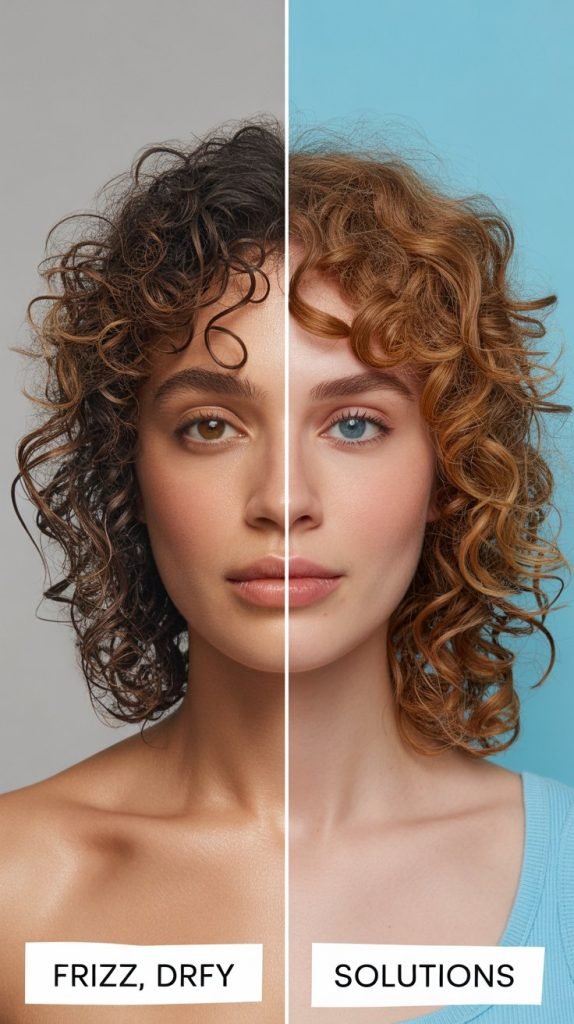
Even with the right style choice from these 30 options, curly-haired men face specific challenges. Understanding solutions keeps your hair looking its best.
Challenge: Frizz
- Cause: Raised hair cuticles seeking moisture from the environment, caused by dryness, humidity, or friction
- Solution: Use anti-humidity products containing polymers that seal the cuticle
- Prevention: Apply products to soaking wet hair, scrunch rather than rub, use microfiber towels
- Quick fix: Apply a tiny amount of lightweight oil or anti-frizz serum to problem areas
- Long-term strategy: Increase moisture through deep conditioning and eliminate sulfates from your routine
Challenge: Lack of Definition
- Cause: Product buildup, insufficient moisture, wrong product selection, or manipulation during drying
- Solution: Clarify hair monthly to remove buildup, then apply curl-defining products to very wet hair
- Technique: Use the “squish to condish” method by squishing conditioner into curls with cupped hands
- Product strategy: Layer leave-in conditioner, curl cream, and gel in that order for maximum definition
- Styling tip: Don’t touch curls while they dry; let them form completely before scrunching out any crunch
Challenge: Dryness
- Cause: Curly hair’s spiral structure makes it difficult for natural scalp oils to travel down the hair shaft
- Solution: Deep condition weekly and use leave-in products daily to maintain moisture
- Hydration method: Use the LOC method (Liquid, Oil, Cream) to seal in moisture effectively
- Ingredient focus: Look for products containing glycerin, aloe vera, shea butter, and natural oils
- Lifestyle adjustment: Drink adequate water and consider a humidifier in dry climates
Challenge: Undefined Curls at Roots
- Cause: Weight of hair, product application technique, or natural growth pattern
- Solution: Apply styling products from roots to ends, not just mid-length and tips
- Volume technique: Clip roots while hair dries to create lift at the scalp
- Cutting solution: Ask your barber for layers that remove weight and allow roots to curl
- Product choice: Use lightweight, volumizing products near roots and heavier products on ends
Challenge: Triangle or Pyramid Shape
- Cause: Lack of layers causing hair to grow outward without proper shaping
- Solution: Get a layered cut that removes bulk and creates shape
- Styling approach: Apply more product to the sides and less on top to control width
- Technique: Scrunch sides more intensely than top to encourage curls to form tighter
- Prevention: Regular trims every 6-8 weeks maintain shape and prevent the pyramid effect
Professional Maintenance Schedule
Maintaining any of these 30 stylish curly hairstyles requires a consistent schedule of professional cuts and at-home care. Here’s a comprehensive timeline for optimal results.
Weekly Maintenance:
- Deep condition once per week to maintain moisture levels and hair health
- Refresh curls 2-3 times between washes using water or curl refresher spray
- Detangle gently once per week on wet, conditioned hair using appropriate tools
- Apply hair masks or treatments as needed based on hair condition
- Examine hair and scalp for any issues requiring attention
Bi-Weekly Maintenance:
- Clarify hair every 2-4 weeks to remove product buildup that dulls curls
- Trim any obvious split ends at home if comfortable, or wait for professional trims
- Assess product effectiveness and adjust routine if results aren’t satisfactory
- Take progress photos to track hair growth and health improvements
Monthly Maintenance:
- Professional haircut or shape-up every 3-4 weeks for short styles with fades or undercuts
- Every 4-6 weeks for medium-length styles like quiffs, pompadours, or textured tops
- Every 6-8 weeks for longer styles, focusing on removing split ends while maintaining length
- Protein treatment if hair feels limp, stretchy, or lacks elasticity (balance with moisture treatments)
Seasonal Adjustments:
- Summer: Use products with stronger hold to combat humidity-induced frizz and increase UV protection
- Fall: Transition to slightly heavier moisturizers as air becomes drier
- Winter: Intensify moisturizing routines to combat indoor heating and cold, dry air
- Spring: Clarify thoroughly to remove winter buildup and refresh hair for warmer weather
Styling Tools for Curly Hair
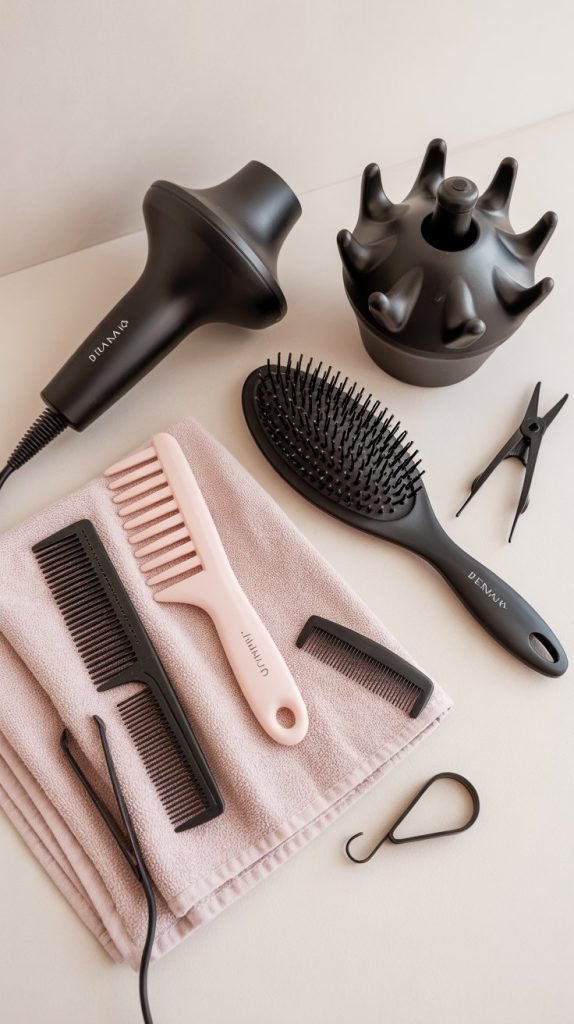
Having the right tools makes achieving and maintaining these 30 stylish looks significantly easier. Invest in quality tools designed specifically for curly hair needs.
Essential Tools:
- Wide-tooth comb: The only comb type suitable for detangling curly hair without damage; use exclusively on wet, conditioned hair
- Denman brush: Features widely-spaced rows of pins perfect for defining curl clumps and distributing product evenly
- Microfiber towel or t-shirt: Reduces friction compared to regular towels, minimizing frizz and preserving curl definition
- Diffuser attachment: Distributes blow dryer air evenly to dry curls without disrupting their pattern or causing frizz
- Sectioning clips: Hold hair sections during styling and drying, particularly useful for voluminous or long hair
Optional but Beneficial:
- Satin or silk bonnet: Protects curls overnight, reducing morning styling time and preserving definition
- Pick or afro comb: Lifts roots for volume in afros, mohawks, and styles requiring height
- Fine-tooth comb: Creates clean parts for comb overs, side parts, and Ivy League styles
- Root clips: Lift hair at the scalp while drying to create volume and prevent flat roots
- Spray bottle: Refreshes curls between washes without soaking hair completely
Tools to Avoid:
- Regular brushes with tightly packed bristles break up curl clumps and cause severe frizz
- Fine-toothed combs on dry hair cause breakage and destroy curl definition
- Regular towels create friction that roughs up the hair cuticle and increases frizz
- High-heat blow dryers without diffusers blast curls with concentrated air that destroys pattern
- Metal or plastic combs with seams can snag and break curly hair
Barbershop Communication Tips
Getting the curly hairstyle you want requires effective communication with your barber. These tips ensure you leave the barbershop satisfied with results.
Before Your Appointment:
- Save reference photos showing the exact style you want from multiple angles
- Identify which of the 30 styles in this article most closely matches your vision
- Understand your curl type and any unique characteristics of your hair growth pattern
- Consider your lifestyle and how much daily maintenance you’re willing to do
- Research barbers who specialize in curly hair or have portfolios showing curly cuts
During Consultation:
- Show your barber the reference photos and explain specifically what you like about them
- Discuss whether the desired style is realistic for your curl type and face shape
- Ask for the barber’s honest opinion about what would work best for your hair
- Specify the length you want on top, sides, and back using inches rather than vague descriptions
- For fades, clarify where you want the fade to start (high, mid, or low) and how gradual the transition should be
- Mention any problem areas like cowlicks, uneven curl patterns, or thinning spots
Key Questions to Ask:
- “How often will I need to come back to maintain this style?”
- “What products do you recommend specifically for my curl type with this cut?”
- “Can you show me how to style this at home?”
- “Are there any tools I should invest in to maintain this look?”
- “What will this style look like as it grows out?”
Communication Phrases:
- Use specific terminology: undercut, fade, taper, textured, layered, disconnected, tapered, blended
- Describe desired lengths: “Three inches on top,” not “leave it kind of long”
- Reference guard numbers for clippers: “#2 on the sides” provides clarity
- Explain lifestyle context: “I need something low-maintenance” or “I’m willing to spend 15 minutes styling daily”
- Be honest about your styling skills: “I’m not great with products” helps barbers adjust the cut
Curly Hair Myths Debunked
Misconceptions about curly hair often prevent men from achieving their best look. Let’s clarify the truth behind common myths.
Myth: Curly Hair Should Be Brushed Daily
- Truth: Brushing dry curly hair destroys curl clumps and creates massive frizz
- Reality: Detangle only when wet and saturated with conditioner using appropriate tools
- Exception: Some men with loose waves (2A-2B) can brush before washing without significant damage
Myth: Curly Hair Doesn’t Grow Long
- Truth: Curly hair grows at the same rate as straight hair (approximately half an inch per month)
- Reality: Shrinkage makes curly hair appear shorter than it actually is when stretched
- Fact: Breakage from improper care, not slow growth, prevents length retention in curly hair
Myth: You Need to Wash Curly Hair Every Day
- Truth: Daily washing strips natural oils that curly hair desperately needs for moisture
- Reality: Most curly-haired men should wash 1-3 times per week depending on curl type and lifestyle
- Alternative: Refresh curls between washes with water or curl refresher spray
Myth: All Curly Hair Products Work the Same
- Truth: Different curl types require different product formulations and hold levels
- Reality: Loose waves need lighter products while tight coils need heavier, more moisturizing formulations
- Consideration: Climate, lifestyle, and desired style also influence optimal product selection
Myth: Curly Hair Can’t Look Professional
- Truth: Numerous styles in this article (Ivy League, curly side part, Caesar cut, short crop) are workplace-appropriate
- Reality: Proper cutting and styling make curly hair equally professional as any other texture
- Perspective: This outdated belief reflects bias rather than actual professional standards
Myth: You Should Cut Curly Hair When It’s Dry
- Truth: While some specialists cut curly hair dry to see the natural curl pattern, wet cutting is also effective
- Reality: The best method depends on the stylist’s training and the desired style
- Recommendation: Find a barber experienced with your specific curl type regardless of their cutting method
Color and Highlights for Curly Hair
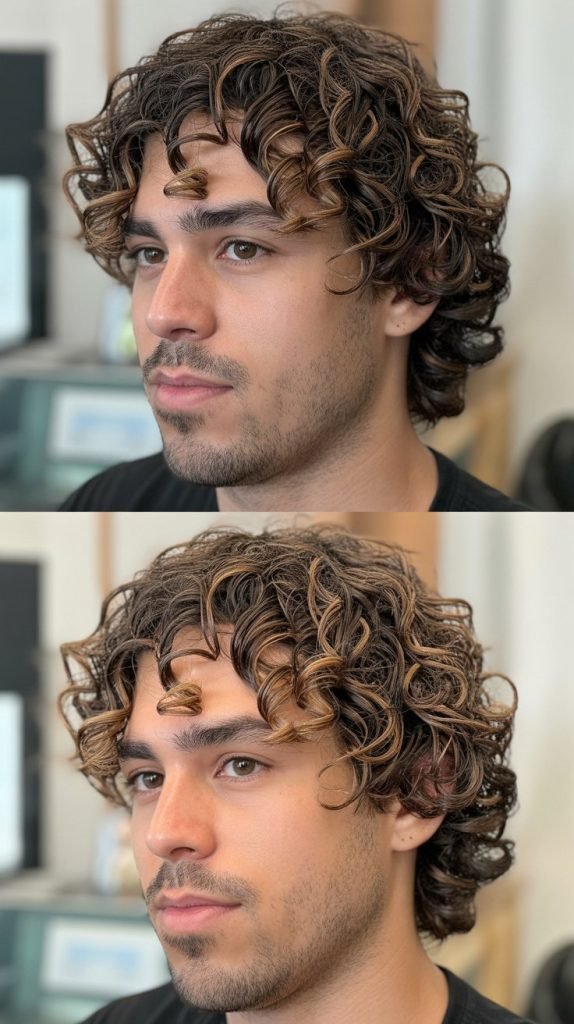
Adding color dimension to curly hair can enhance texture and create visual interest in any of these 30 styles. Understanding how color interacts with curls ensures beautiful results.
Color Considerations for Curls:
- Curly hair is typically more porous and dry than straight hair, making it more susceptible to color damage
- The three-dimensional nature of curls shows color dimension beautifully, making highlights particularly effective
- Darker base colors with lighter highlights create contrast that emphasizes curl definition
- All-over color can be dramatic but requires significant maintenance to prevent damage
- Professional color services are strongly recommended over at-home kits for curly hair
Popular Color Techniques:
- Balayage: Hand-painted highlights that create natural-looking dimension throughout curls
- Highlights: Strategic lightening of select curl sections for contrast and depth
- Lowlights: Adding darker tones to create richness and multidimensionality
- Ombré: Gradual color transition from darker roots to lighter ends
- Full color: Complete color change requiring the most maintenance and care
Maintaining Colored Curly Hair:
- Use sulfate-free, color-safe shampoos specifically formulated for curly, colored hair
- Deep condition more frequently (twice weekly) to combat the drying effects of color
- Apply purple or blue shampoo if you have blonde highlights to prevent brassiness
- Minimize heat styling, which is especially damaging to colored curly hair
- Get regular glossing treatments to maintain color vibrancy and add shine
- Space out color services to allow hair to recover between treatments
Best Styles for Colored Curly Hair:
- Longer styles (long curly flow, shoulder-length, curly shag) showcase color dimension beautifully
- Textured styles (messy fringe, tousled quiff) benefit from highlights that emphasize movement
- Undercuts and fades with colored tops create dramatic contrast
- Curly pompadours and quiffs display color gradient effects particularly well
Conclusion
Throughout this comprehensive guide to 30 Stylish Curly Hairstyles for Men, we’ve explored an extensive range of options that celebrate and enhance natural curl texture.
From the bold statement of a curly mohawk fade to the sophisticated polish of a curly Ivy League, from the low-maintenance practicality of a short curly crop to the romantic drama of shoulder-length curls, there’s a style to match every personality, lifestyle, and preference.
Understanding your curl type, face shape, and personal style preferences empowers you to choose the perfect cut and maintain it with confidence.
Remember that healthy, well-maintained curls form the foundation of any great hairstyle, so invest in quality products, proper care routines, and regular professional maintenance.
Whether you’re making a dramatic change or refining your current look, these 30 stylish curly hairstyles for men prove that curly hair isn’t just manageable—it’s one of the most versatile and attractive hair textures you can have.
Embrace your natural texture, communicate clearly with your barber, follow proper care protocols, and wear your chosen style with confidence.
