

We’ve all been there—the alarm didn’t go off, you overslept, and there’s absolutely no time for a hair wash before school.
Greasy hair days can feel like a confidence killer, but they don’t have to be.
This comprehensive guide on 30 Simple Greasy Hair Hairstyles for School transforms your bad hair day into a styling opportunity with practical, quick, and genuinely stylish solutions that work specifically for oily or unwashed hair.
Whether you have long, medium, or short hair, these hairstyles strategically hide grease while keeping you looking polished and put-together throughout your school day.
From classic updos to creative braids, sleek ponytails to textured buns, each style is designed to be completed in under ten minutes while effectively concealing oiliness at the roots.
You’ll discover how to turn your hair’s natural texture and weight from grease into an advantage, creating hairstyles that actually hold better and look more intentional than they would on freshly washed hair.
1. The Classic High Ponytail

The classic high ponytail is your ultimate go-to solution for greasy hair days, as it pulls all the oily roots away from your face and scalp, creating a sleek, athletic look that appears intentional rather than unkempt.
The natural oils actually help smooth flyaways and create that coveted glossy finish that would require styling products on clean hair.
- Position your ponytail at the crown of your head, where the angle naturally lifts your facial features and draws attention upward away from oily roots.
- Use a fine-tooth comb to smooth the hair back tightly, which distributes the oils more evenly and creates a deliberately polished appearance.
- Wrap a small section of hair from the ponytail around the elastic to hide it, securing with a bobby pin underneath for a refined finishing touch.
- Spray the smoothed sections with hairspray to lock the style in place and add extra shine that makes the oils look like intentional gloss.
- The higher the ponytail, the more volume you create at the crown, which balances out the weight of oily hair and prevents flatness.
2. The Messy Top Knot

The messy top knot embraces texture and deliberately tousled styling, making it perfect for concealing greasy roots while creating an effortlessly cool aesthetic that’s popular in school settings.
The undone nature of this style means the oils contribute to piece-y texture rather than appearing neglected.
- Flip your head upside down and gather all your hair at the highest point of your head, which automatically creates volume and hides the oily scalp area.
- Twist the ponytail loosely around its base without worrying about perfection, as the casual nature is part of the style’s appeal.
- Secure with a thick elastic or scrunchie, leaving the ends sticking out intentionally rather than tucking them under.
- Pull out a few face-framing pieces to soften the look and draw attention to your facial features instead of your hair’s condition.
- Gently tug at different sections of the bun to create strategic volume and texture that disguises any greasiness with intentional messiness.
3. The Sleek Low Bun

The sleek low bun is a sophisticated option that turns your hair’s natural oils into an advantage, creating the smooth, polished finish that ballet dancers and professionals strive for with multiple styling products.
This elegant style keeps all attention at the back of your head, away from oily roots at the hairline.
- Brush all your hair straight back using a paddle brush, allowing the natural oils to create a sleek, gel-like effect without any products.
- Gather the hair at the nape of your neck and twist it into a tight rope before coiling it into a circular bun shape.
- Secure with multiple bobby pins in an X-pattern for maximum hold, as greasy hair can be heavier and slip more easily.
- Use a toothbrush sprayed with hairspray to smooth any baby hairs or flyaways along the hairline for an ultra-polished appearance.
- Apply a small amount of oil or serum to the already-smooth sections to transform the grease into intentional shine and sophistication.
4. The Dutch Braid Crown

The Dutch braid crown creates a stunning halo effect that strategically incorporates your roots into a textured pattern where oils actually enhance grip and hold.
This intricate-looking style is surprisingly simple and keeps hair completely off your face and neck.
- Start by parting your hair down the middle from forehead to nape, creating two equal sections for symmetrical braids.
- Begin a Dutch braid (inverted French braid) on one side by crossing sections under rather than over, which makes the braid pop out from your head.
- Continue braiding along your hairline, following the curve of your head while incorporating new hair sections as you progress.
- Repeat on the other side, then cross both braids at the back of your head and tuck the ends underneath, securing with bobby pins.
- The braid pattern strategically hides the roots while the texture created by braiding disguises any oil as deliberate piece-y definition.
5. The Half-Up Top Knot

The half-up top knot combines the practicality of keeping hair off your face with the coverage that down hair provides for the greasiest sections near your ears and nape.
This trendy style works exceptionally well for medium to long hair with oily roots.
- Section off just the top portion of your hair from temple to temple, leaving the bottom half down to cover oilier sections.
- Pull this top section into a high ponytail at your crown, which creates immediate lift and volume where you need it most.
- Twist and wrap this ponytail into a small, contained bun, securing with an elastic or pins depending on your hair thickness.
- Leave the remaining hair down, allowing it to fall naturally and cover the sides and back where oil tends to accumulate.
- The contrast between the secured top and flowing bottom sections creates visual interest that distracts from any greasiness in the lengths.
6. The Side Swept Braid
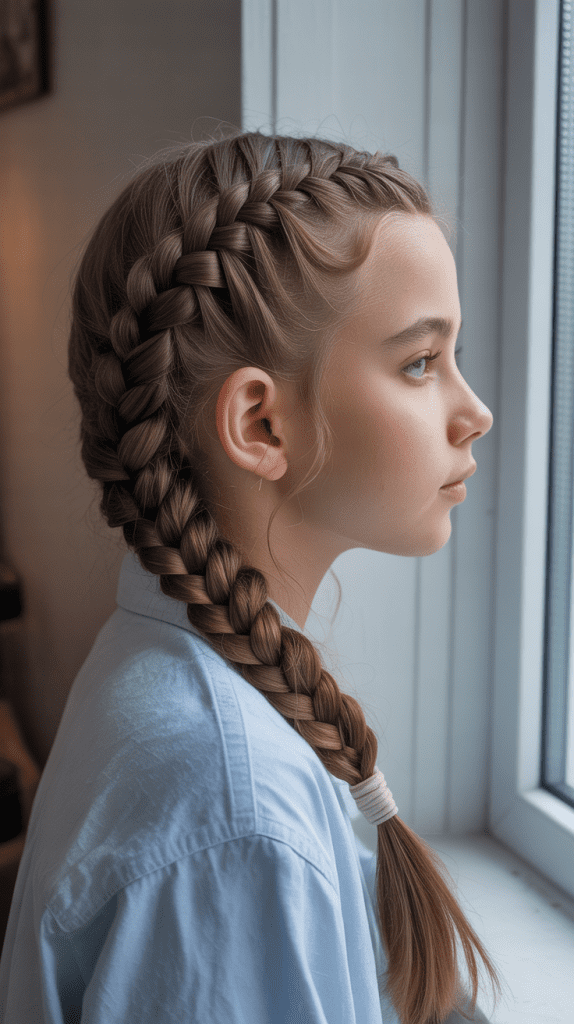
The side swept braid elegantly showcases one side of your face while concealing greasy roots within a textured pattern that actually benefits from the extra grip that oils provide.
This romantic style appears complex but comes together quickly for busy school mornings.
- Create a deep side part on the less greasy side of your head, which immediately adds asymmetrical interest to your overall look.
- Begin a French braid or regular three-strand braid starting near your temple on the heavier side of the part.
- Braid loosely down toward the opposite shoulder, allowing the pattern to drape gracefully across your head.
- Secure the end with a clear elastic, then gently pull at the braid sections to create width and a deliberately undone texture.
- The braid pattern naturally incorporates the oily roots while the diagonal line draws eyes across your face rather than down toward greasy sections.
7. The Twisted Low Ponytail

The twisted low ponytail adds sophisticated detail to a basic style through simple rope twists that create texture and visual interest while strategically managing greasy roots.
The oils actually help the twists hold their shape without unraveling throughout the school day.
- Divide your hair into two equal sections from a center part, working from your forehead back to where you want the ponytail to sit.
- Twist each section tightly in the same direction (both clockwise or both counterclockwise) from roots to where they’ll meet.
- Bring both twisted sections together at your desired ponytail position and secure them with an elastic band.
- The twists will naturally want to wrap around each other, which you can allow for added texture or keep separated for cleaner lines.
- This style smooths oily roots into the twist pattern while creating dimension that makes thin or limp greasy hair appear fuller.
8. The Bubble Ponytail

The bubble ponytail transforms a simple ponytail into a statement style with strategically placed elastics that create voluminous sections, perfect for disguising the heavy, flat appearance that greasy hair often has.
This playful style works for all hair lengths past shoulder-level.
- Create a standard ponytail at your desired height, smoothing the roots back with the natural oils for a deliberate sleek appearance.
- Place additional elastics down the length of the ponytail at even intervals of 2-3 inches, depending on your hair length.
- Gently pull and pancake each section between elastics to create rounded, bubble-like segments that add dramatic volume.
- The bubbles hide the stringy texture that greasy hair can develop while creating a fun, youthful aesthetic appropriate for school.
- Use bobby pins to secure any sections that feel too loose or heavy, ensuring the bubbles maintain their shape throughout the day.
9. The Braided Headband Style

The braided headband style uses your own hair to create a crown-like accessory that strategically covers your greasiest roots right at the hairline while allowing the rest of your hair to flow freely.
This bohemian look appears intricate but requires minimal actual braiding skill.
- Section off a 1-2 inch wide strip of hair from behind one ear, following your hairline toward the other ear.
- Create a simple three-strand braid with this section, keeping it tight so it lays flat against your head like a headband.
- Bring the braid across your forehead or slightly back from your hairline, securing the end behind your opposite ear with bobby pins.
- The remaining hair stays down, covering the sides and back where additional oil has accumulated near your ears and neck.
- This style directly addresses the most visible greasy area—your frontal hairline—while creating an accessory-like focal point.
10. The Messy French Twist

The messy French twist offers timeless elegance with a deliberately undone finish that makes greasy hair look like textured styling rather than neglected hygiene.
The classic updo keeps all hair off your neck and face while the oils help create the piece-y texture that defines this modern take on a vintage style.
- Gather all your hair to one side at the back of your head, holding it firmly at the nape of your neck.
- Twist the gathered hair upward along your head, rolling it toward the center back while tucking the ends inside the roll.
- Secure the twist with bobby pins inserted vertically into the roll, using as many as needed to feel secure with heavier greasy hair.
- Pull out strategic pieces around your face and a few from the twist itself to create the intentionally messy, romantic effect.
- The upward twisting motion distributes oils along the hair shaft while the vertical style draws eyes upward and away from the scalp.
11. The Double Dutch Braids

Double Dutch braids create two prominent raised braids that follow your head’s curve, offering a sporty and practical solution that keeps hair completely secured while transforming oily roots into braid grip.
This athletic style works perfectly for PE class or active school days.
- Part your hair precisely down the middle from your forehead to the nape of your neck, creating two equal sections.
- Begin a Dutch braid on one side by taking a small section at your hairline and crossing the outer strands under the middle strand.
- Continue adding hair to the braid as you work down your head, keeping the braid tight and close to your scalp for maximum hold.
- Repeat the exact process on the other side, trying to maintain symmetry in braid size and positioning for a balanced appearance.
- The braiding technique pulls oily roots directly into the pattern while the raised braid structure prevents the flat, greasy look.
12. The Low Twisted Bun

The low twisted bun combines the sophistication of a classic chignon with the texture of twisted sections, creating an elegant style that strategically uses your hair’s natural oils for hold and shine.
This versatile updo works for both casual school days and more formal events.
- Gather your hair into a low ponytail at the nape of your neck, using the natural oils to smooth the hair back without flyaways.
- Divide the ponytail into two or three sections and twist each section individually in the same direction until tight.
- Wrap the twisted sections around the elastic base in alternating directions, creating a textured, dimensional bun.
- Secure with bobby pins placed at various angles, ensuring the heavier weight of greasy hair doesn’t cause slippage.
- The twisting technique disguises stringy greasy texture as intentional rope-like definition while the low placement feels sophisticated.
13. The Slicked Back Ponytail
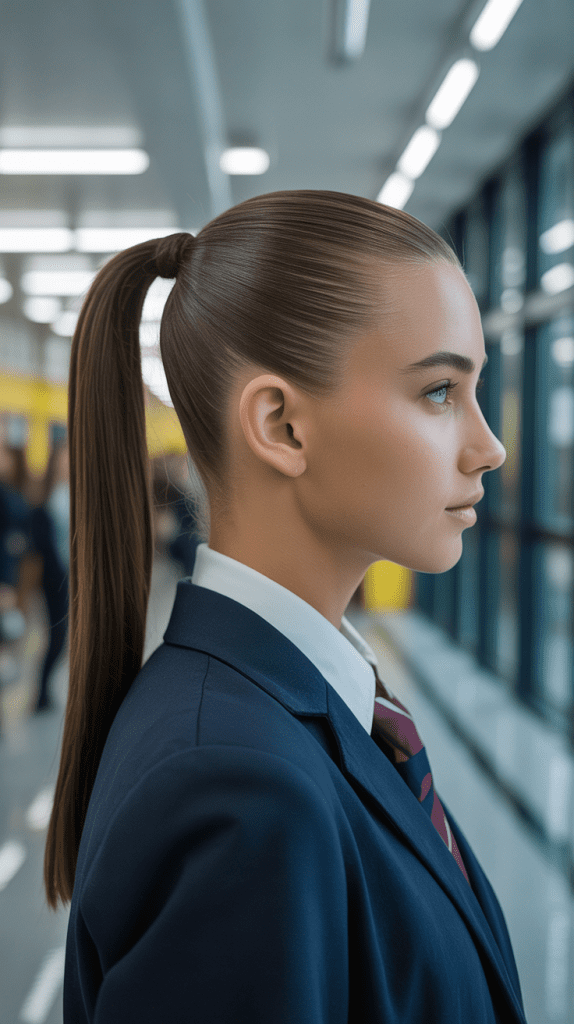
The slicked back ponytail embraces the wet-look aesthetic that’s currently trending, turning what would be a hair emergency into a deliberately edgy fashion statement.
Your natural oils replace the gel and pomade that others need to achieve this bold, confident look.
- Apply a small amount of water to your roots if they’re too greasy, which paradoxically helps redistribute oils more evenly for better control.
- Use a fine-tooth comb to slick all hair straight back from your hairline, creating a perfectly smooth surface without any bumps.
- Secure the ponytail at your desired height with a strong elastic, ensuring the base is tight enough to hold throughout the day.
- Apply a small amount of hair gel, oil, or even hand lotion to the slicked sections to enhance the intentional wet appearance.
- This bold style requires confidence but completely reframes greasy hair as a deliberate fashion choice rather than a hygiene issue.
14. The Rope Braid Ponytail

The rope braid ponytail offers an alternative to traditional three-strand braiding with a twisted technique that’s actually easier and faster, perfect for rushed mornings when greasy hair needs quick management.
The rope texture creates visual interest while oils provide the grip needed to prevent unraveling.
- Create a ponytail at your preferred height, using the natural oils to smooth and sleek the gathered hair at the base.
- Divide the ponytail into just two sections instead of three, simplifying the braiding process significantly.
- Twist both sections individually in the same direction (both clockwise), then wrap them around each other in the opposite direction (counterclockwise).
- The opposing tensions create a rope effect that holds itself together, especially with the added grip from natural oils.
- Secure the end with an elastic and optionally pancake the rope braid by gently pulling sections apart for added width and texture.
15. The Space Buns

Space buns create a playful, youthful appearance with two high buns that keep all hair off your neck and face while the divided sections make managing greasy roots easier.
This fun style works especially well for casual school days and has remained popular across multiple fashion cycles.
- Part your hair down the exact middle from forehead to nape, creating two equal sections that will form separate buns.
- Create a high ponytail on one side, positioned where you want the bun to sit, typically near the crown or slightly back.
- Twist the ponytail and wrap it around its base, forming a bun shape and securing with bobby pins or an additional elastic.
- Repeat the identical process on the other side, trying to match the height and size of the first bun for symmetry.
- The division of hair means each bun contains less greasy weight, making them easier to secure and maintain throughout the school day.
16. The Waterfall Braid

The waterfall braid creates a cascading effect where sections of hair appear to flow through the braid like water, offering a romantic and intricate-looking style that strategically incorporates greasy roots into its pattern.
This impressive style takes practice but effectively disguises oily hair as intentional texture.
- Start with a small section of hair near your temple and begin a basic French braid moving horizontally across your head.
- After each stitch, drop the bottom strand and let it fall, replacing it with a new section picked up from below.
- Continue this drop-and-replace pattern across the back of your head, creating the cascading waterfall effect.
- The dropped strands blend with your remaining down hair, which helps hide any greasy sections in the lengths.
- Secure the braid behind your opposite ear with bobby pins, allowing the waterfall effect to frame your face beautifully while disguising oily roots.
17. The Twisted Crown

The twisted crown wraps sections of hair around your head like a natural headband, creating a soft, romantic style that covers your greasiest roots at the hairline while appearing delicate and feminine.
This style works particularly well for medium to long hair with natural texture.
- Create a deep side part, then take a 2-3 inch section of hair from the heavier side near your temple.
- Begin twisting this section back away from your face, adding small amounts of hair from below as you twist around your head.
- Continue the twist-and-add pattern following your hairline like a crown, securing with bobby pins as needed for hold.
- When you reach behind your opposite ear, secure the twist and allow the remaining hair to hang freely or tuck it behind your ear.
- This style directly addresses visible forehead and temple greasiness while creating a soft, braided-crown appearance without actual braiding.
18. The Low Side Ponytail

The low side ponytail offers an asymmetrical alternative to centered styles, creating visual interest while allowing you to position the ponytail away from your greasiest side.
This casual yet polished style works for all hair types and lengths past the shoulders.
- Create a deep side part on your less greasy side, which immediately adds volume where you need it most.
- Gather all your hair to one side at ear level or slightly below, smoothing it with your natural oils for a deliberate sleek effect.
- Secure with an elastic at the nape of your neck on whichever side you prefer, considering which angle you’ll be seen from most.
- Wrap a small section of hair from the ponytail around the elastic to conceal it, securing with a bobby pin underneath for polish.
- The asymmetry draws attention and makes the style feel intentional while the low placement works well with the weight of greasy hair.
19. The Braided Low Bun
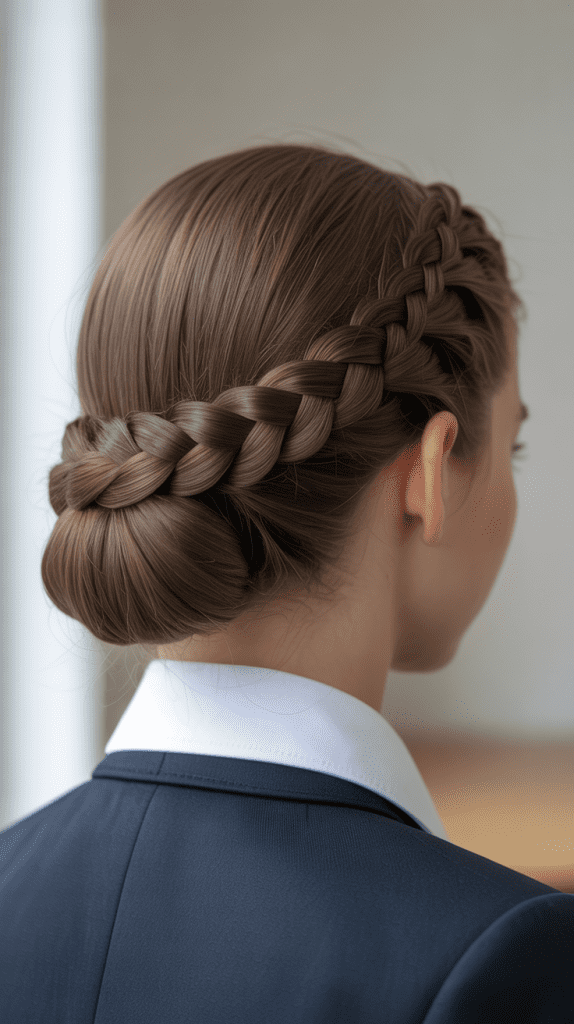
The braided low bun incorporates a braid into a classic updo, adding texture and visual interest that disguises greasy hair as intricate styling.
The combination of techniques creates a sophisticated look that works for presentations, school photos, or any day you want to feel more put-together.
- Create a low ponytail at the nape of your neck, using your natural oils to smooth the hair back perfectly.
- Braid the entire ponytail using a three-strand or rope braid technique, securing the end with a small elastic.
- Wrap the braided ponytail around its base in a circular motion, creating a textured bun with visible braid pattern.
- Secure the bun with multiple bobby pins inserted at different angles, ensuring it stays put despite the heavier weight of oily hair.
- The braid texture within the bun creates dimension and interest that transforms flat, greasy hair into intentionally textured styling.
20. The Half-Up Half-Down with Twist

The half-up half-down with twist combines the practicality of keeping face-framing hair secured with the coverage that down hair provides, incorporating twists that add sophistication and texture.
This balanced style works universally well across face shapes and hair types.
- Section off the front portions of your hair from temple to temple, leaving the back sections down to cover neck and ear area grease.
- Divide the front section into two parts and twist each one back away from your face, working from front to back.
- Secure both twists where they meet at the back of your head with bobby pins, creating an X-pattern for strong hold.
- Leave the remaining hair down, where it naturally covers the greasiest areas near your ears and nape.
- The twists elevate a basic half-up style while incorporating oily roots into the pattern where they actually help maintain the twist structure.
21. The Messy Side Braid

The messy side braid embraces imperfection with a deliberately undone aesthetic that makes greasy hair look like intentional piece-y texture rather than neglected roots.
This relaxed style projects effortless confidence perfect for creative or casual school environments.
- Sweep all your hair over one shoulder without worrying about smoothness, allowing the natural texture and weight to create organic movement.
- Create a loose three-strand braid starting at ear level, keeping your tension relaxed throughout the entire braiding process.
- Secure the end with an elastic, leaving several inches of length beyond the braid for a casual, unfinished effect.
- Pull apart the braid sections by pancaking them, creating width and deliberately messy texture that hides stringy greasiness.
- Allow face-framing pieces to fall naturally and don’t fuss with flyaways, as the undone nature is the entire point of this style.
22. The Pinned Back Sides

The pinned back sides keep your face clear while leaving most of your hair down to cover the greasiest sections near your ears and nape.
This simple technique requires minimal time and skill but creates a polished appearance suitable for any school setting.
- Take a 1-2 inch section of hair from each temple area, starting near your part and working back about 2-3 inches.
- Pull these sections back away from your face, either twisting them slightly or keeping them flat depending on your preference.
- Cross the sections at the back of your head and secure with bobby pins in an X-pattern for stability.
- Leave all remaining hair down, which naturally covers your greasiest areas while keeping your face clear and visible.
- This style takes under two minutes but effectively frames your face while hiding problem areas, perfect for rushed mornings.
23. The High Braided Ponytail

The high braided ponytail combines the face-lifting effect of a high ponytail with the texture of a braid, creating a sporty style that keeps hair completely secured and manageable.
The oils actually improve braid hold while the elevated placement prevents scalp visibility.
- Create a high ponytail at your crown, pulling all hair upward and securing tightly with a strong elastic band.
- Begin braiding the ponytail using your preferred technique—three-strand, Dutch, or rope—working from the base down to the ends.
- The braiding concentrates the hair’s weight into a single controlled structure that won’t swing and expose greasy roots.
- Secure the braid end with another elastic and optionally wrap a small hair section around the base elastic for polish.
- This athletic style keeps hair completely contained during physical activities while the braid texture disguises any oil as deliberate definition.
24. The Twisted Half-Up Bun

The twisted half-up bun combines twisting and bunning techniques on just the top section of hair, creating a style that’s more interesting than a basic half-up while providing excellent greasy root coverage.
This trendy style works especially well for medium-length hair.
- Section off the top half of your hair from temple to temple, leaving the bottom layer down to cover your neckline.
- Twist this entire section as you pull it back, creating tension that lifts your roots and adds volume at the crown.
- Form the twisted section into a small bun at the back of your head, securing with bobby pins or an elastic depending on thickness.
- The twisting motion distributes oils along the hair shaft while the bun contains the greasiest parts of your roots.
- Leave the lower half down and slightly tousled, which provides contrast to the secured top and covers side greasiness effectively.
25. The Scarf Integrated Ponytail

The scarf integrated ponytail incorporates a fabric accessory that adds color and pattern while strategically covering your ponytail base where grease tends to be most visible.
This creative style turns a practical solution into a fashion statement that works in schools with flexible dress codes.
- Create your ponytail at any desired height, using your natural oils to slick back the hair smoothly and deliberately.
- Take a long, narrow scarf or fabric strip and wrap it around the elastic base multiple times, completely covering the band.
- Continue wrapping the scarf down the length of the ponytail, creating a spiral pattern that adds visual interest and covers stringy texture.
- Tie the scarf ends in a bow or knot, allowing the ends to hang decoratively with the rest of your ponytail.
- The scarf draws all attention away from hair condition toward the colorful accessory while adding personality to a basic style.
26. The Infinity Braid

The infinity braid creates a figure-eight pattern that appears complex and impressive while effectively incorporating greasy roots into its intricate structure.
This show-stopping style works beautifully for school events, presentations, or any day you want to make a statement.
- Divide your hair into two equal sections and begin as if starting a regular braid near your crown or hairline.
- Instead of traditional over-under braiding, create a figure-eight motion by bringing the right section over and under in a continuous loop.
- Continue this infinity pattern down the length of your hair, maintaining consistent tension for even loops throughout.
- The complex weaving incorporates all sections of hair, including greasy roots, into a pattern where oils enhance hold.
- Secure at the bottom with an elastic and optionally pancake sections for width, creating an impressive braid that distracts from any hair concerns.
27. The Double Twisted Ponytail

The double twisted ponytail stacks two ponytails vertically, creating dramatic volume and length while strategically breaking up the appearance of greasy, flat hair.
This creative style adds interest to a basic ponytail with minimal additional effort.
- Create your first ponytail at the crown of your head, securing it tightly and using oils for smooth gathering.
- Create a second ponytail directly below the first at approximately ear level, gathering all remaining hair.
- The top ponytail will naturally drape over and cover the elastic of the bottom ponytail, creating a flowing, layered effect.
- Optionally tease both ponytails slightly or add texture to create more volume and disguise any limpness from oil.
- This double-tier approach breaks up the visual line of greasy hair while adding playful dimension and apparent length.
28. The Braided Headband with Bun

The braided headband with bun combines two powerful greasy hair techniques—braiding at the hairline and gathering everything else into a bun—for maximum coverage and style.
This comprehensive approach addresses all greasy areas while creating a polished, complete look.
- Create a braided headband following the technique from style #9, securing it across your hairline to cover frontal greasiness.
- Gather all remaining hair at the nape of your neck and form a low bun using your preferred bunning technique.
- The combination addresses grease at both your hairline and your scalp/neckline, leaving no problem areas visible.
- Secure the bun thoroughly with bobby pins, as it will contain more hair than a half-up style and may be heavier.
- This comprehensive style works for long school days when you need confidence that your hair will stay put and look intentional from morning to final bell.
29. The Side Swept Low Ponytail with Braid

The side swept low ponytail with braid combines asymmetry, texture, and strategic placement to create an elegant style that completely manages greasy hair while appearing romantically deliberate.
This versatile style works equally well for casual days and special school events.
- Create a deep side part and sweep all hair over one shoulder, positioning everything toward your front for maximum visibility and style.
- Secure a low ponytail at your neckline on the side, using natural oils to create sleek smoothness in the gathered sections.
- Braid the ponytail using your preferred technique, creating texture that disguises any stringy or greasy appearance in the lengths.
- Pull one or two face-framing pieces loose at the front to soften the look and add romantic, intentionally undone appeal.
- The combination of side placement, braided texture, and low positioning works together to make oily hair appear like deliberately styled, glossy perfection.
30. The Faux Hawk Ponytail

The faux hawk ponytail creates an edgy, modern look with a series of ponytails or sections that form a mohawk-like shape down the center of your head.
This bold style is perfect for creative school environments and completely contains greasy hair while making a confident statement.
- Section your hair into 3-4 horizontal sections from your forehead to your crown, creating separate areas that will form the faux hawk.
- Create individual ponytails with each section, positioning them along your centerline and securing tightly with elastics.
- Gently tease or pull each ponytail section upward and forward to create height and the mohawk silhouette.
- Use bobby pins to secure the lifted sections in place, creating stability that lasts through a full school day.
- The dramatic vertical styling draws all attention to the intentional shape while completely containing and disguising any greasy roots or flat sections.
Additional Tips for Managing Greasy Hair at School
Successfully navigating greasy hair days requires more than just knowing hairstyles—it involves understanding quick fixes, preventive strategies, and confidence-building approaches that make your school day easier.
- Keep dry shampoo or baby powder in your locker for emergency touch-ups between classes when roots start showing oil.
- Use a small makeup brush to apply powder products precisely at your part line and temples where grease shows most visibly.
- Avoid touching your hair throughout the day, as the oils from your hands will transfer and make greasiness worse.
- Change your pillowcase frequently to reduce oil transfer while sleeping, which can prevent morning greasiness before it starts.
- Carry extra elastics, bobby pins, and a small comb in your backpack for quick style adjustments or complete hair emergencies.
- Consider the day’s activities when choosing your style—select more secure options for PE days or presentations when you’ll be active.
- Experiment with styles at home before attempting them for school to build confidence and reduce morning stress.
- Remember that confidence sells any hairstyle better than perfection, so wear your choice with assurance regardless of hair condition.
Common Mistakes to Avoid with Greasy Hair Styling
Understanding what not to do is equally important as knowing the right techniques when dealing with greasy hair at school.
- Never leave your hair completely down and unstyled on greasy days, as this draws maximum attention to the oil and makes it appear like neglect rather than a hair type.
- Avoid center parts on extremely greasy days, as they create a visible line of oil down your scalp that’s impossible to disguise without styling.
- Don’t use heavy products or additional oils thinking they’ll blend with natural oils—this only makes hair look heavier and greasier.
- Resist the urge to over-wash your hair in response to greasiness, as this strips natural oils and causes your scalp to overproduce even more oil.
- Never apply conditioner to your roots or scalp area, as this contributes to faster oil buildup that creates more frequent greasy hair days.
- Avoid tight elastics that create visible dents when removed, as you may need to adjust your style during the day.
- Don’t apologize or draw attention to your hair—most people won’t notice unless you point it out, so confidence is your best accessory.
- Skip styles that require pristine, freshly-washed hair as a base, since fighting against your hair’s natural state creates frustration and poor results.
Conclusion
Managing your appearance during busy school days doesn’t have to mean perfect hair every morning, and this guide to 30 Simple Greasy Hair Hairstyles for School proves that rushed mornings and oily roots can actually become opportunities for creative styling.
Each of these hairstyles transforms what feels like a beauty emergency into an intentional fashion choice, using your hair’s natural oils as an advantage rather than fighting against them.
From the athletic practicality of double Dutch braids to the romantic elegance of waterfall braids, from the edgy confidence of slicked-back ponytails to the playful charm of space buns, you now have a complete arsenal of styles for every school situation and personal aesthetic.
The key to success with greasy hair isn’t achieving perfection but rather embracing strategic styling that works with your hair’s condition rather than against it.
Remember that some of the most iconic hairstyles throughout fashion history—the sleek bun, the glossy ponytail, the textured braid—actually look better with the natural grip and shine that oils provide.
With these 30 techniques mastered, you’ll never again feel unprepared or self-conscious about facing your school day with less-than-fresh hair, and you might even find yourself preferring the styling possibilities that second or third-day hair provides over the slippery challenge of freshly washed strands.
