

The Renaissance era, spanning from the 14th to the 17th century, was a golden age of artistry, culture, and breathtaking beauty that extended far beyond paintings and sculptures into the realm of personal adornment.
Hair during this period was treated as a canvas for intricate braiding techniques that showcased femininity, social status, and creative expression.
The elaborate braided hairstyles of Renaissance women featured complex weaving patterns, decorative ribbons, jeweled accessories, and architectural structures that defied gravity and celebrated the wearer’s elegance.
Modern fashion enthusiasts and hairstylists continue to draw inspiration from these timeless designs, adapting them for weddings, themed events, editorial shoots, and everyday glamour.
This comprehensive guide explores 30 beautiful Renaissance braided hairstyles that capture the essence of this magnificent period, offering detailed descriptions of each style’s unique characteristics, historical significance, and contemporary applications.
Whether you’re seeking inspiration for a special occasion or simply fascinated by historical beauty trends, these Renaissance braiding techniques will transport you to an era where hair was transformed into wearable art.
From simple crown braids to elaborate cascading designs adorned with pearls and flowers, each hairstyle in this collection represents the pinnacle of Renaissance sophistication and craftsmanship.
1. The Classic Crown Braid
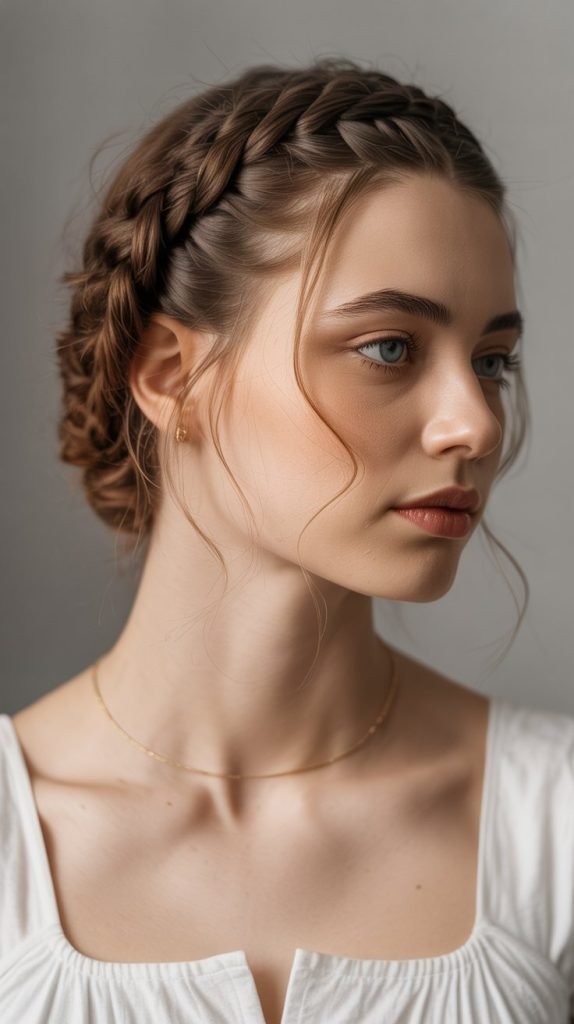
The crown braid represents one of the most recognizable and enduring Renaissance hairstyles, characterized by a braided band that encircles the head like a regal coronet.
This style was particularly popular among noblewomen who wanted to display their hair’s length and quality while maintaining a modest and elegant appearance.
- The crown braid typically begins with a center or side part, with hair sectioned into manageable portions for braiding around the entire circumference of the head.
- Renaissance women often wove ribbons, thin gold chains, or silk cords directly into the braid structure to add color, texture, and a symbol of their wealth or social standing.
- The braid itself could vary in thickness from a delicate single strand to a substantial rope-like creation that made a bold statement against the wearer’s forehead and temples.
- Loose tendrils were strategically left to frame the face, softening the overall look and adding a romantic quality that balanced the structured braiding.
- This hairstyle worked beautifully with the high-necked gowns and elaborate collars of the period, drawing the eye upward to the face and creating an elongated, graceful silhouette.
- Modern interpretations often incorporate flowers, decorative pins, or even LED accessories for evening events, proving the crown braid’s versatility across centuries.
2. The Cascading Side Braid
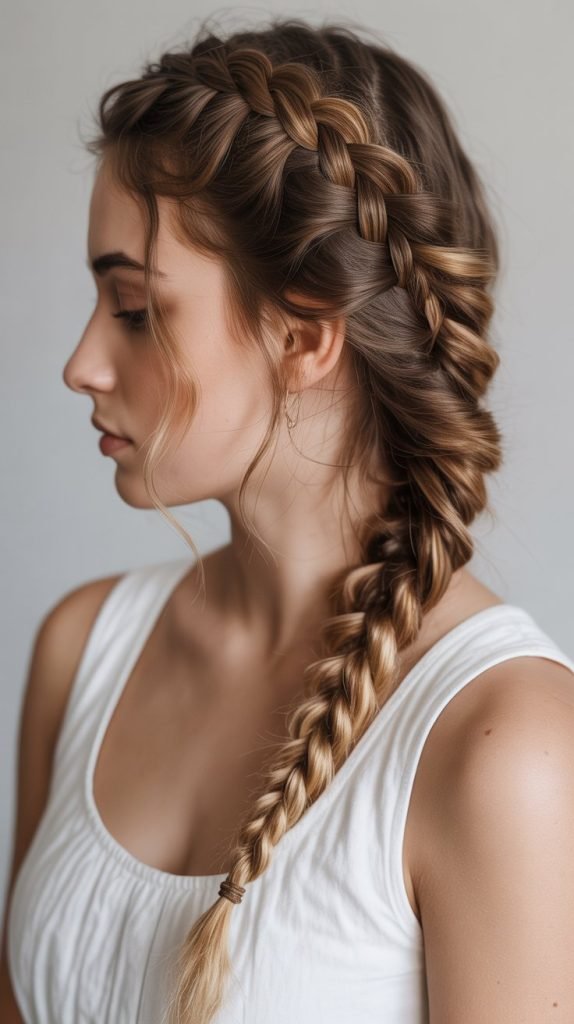
The cascading side braid embodied romance and femininity in Renaissance fashion, featuring a substantial braid that draped gracefully over one shoulder and extended down the torso.
This asymmetrical style created visual interest and allowed women to showcase extremely long hair, which was considered a mark of beauty and virtue.
- The side braid was constructed by gathering all hair to one shoulder and creating either a single thick braid or multiple smaller braids woven together into one cohesive design.
- Pearls were frequently sewn or pinned throughout the length of the braid at regular intervals, catching candlelight during evening gatherings and creating a luminous effect.
- The end of the braid was often secured with an ornate metal clasp, decorative tassel, or elaborate bow made from expensive fabrics like brocade or velvet.
- Some variations included intentionally loosening sections of the braid to create a more relaxed, deliberately undone appearance that suggested natural beauty rather than overly constructed styling.
- The cascading side braid paired exceptionally well with off-shoulder or asymmetrical necklines popular in Italian Renaissance fashion, creating a harmonious balance in the overall ensemble.
- Hair extensions or false braids were sometimes incorporated to achieve the impressive lengths depicted in Renaissance portraiture, demonstrating that hair enhancements are far from a modern invention.
3. The Double Braid Crown
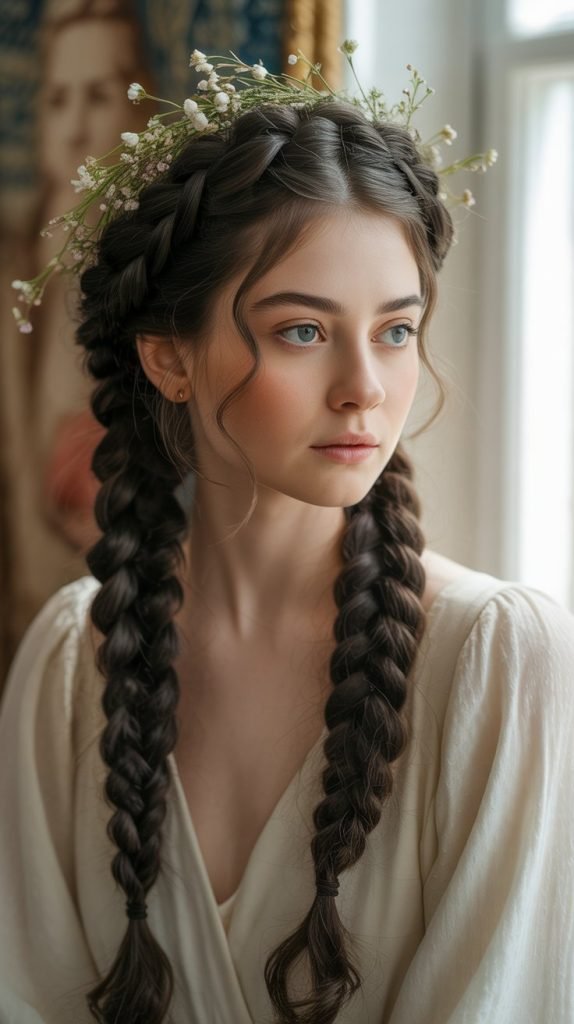
The double braid crown elevated the simple crown braid concept by incorporating two braids that wrapped around the head in parallel or overlapping patterns.
This more complex style demonstrated advanced braiding skills and was often reserved for special occasions or worn by women of higher social ranks.
- Two separate braids were created, either starting from opposite sides of the head and meeting at the crown, or both beginning at the nape and circling upward in a spiral formation.
- The double braids could be positioned with a small gap between them to showcase decorative headbands, jeweled chains, or embroidered ribbons placed in the space.
- Contrasting colors were sometimes achieved by weaving dyed wool, silk threads, or even thin strips of metallic fabric into one or both braids to create visual dimension.
- This style provided excellent support for veils, which were commonly worn for modesty or religious observance during the Renaissance period.
- The architectural quality of the double braid crown created an impression of height and grandeur, elongating the face and emphasizing the neck’s elegant line.
- Variations included crossing the braids at specific intervals to create a lattice effect, adding even more intricacy to an already sophisticated hairstyle.
4. The Braided Chignon
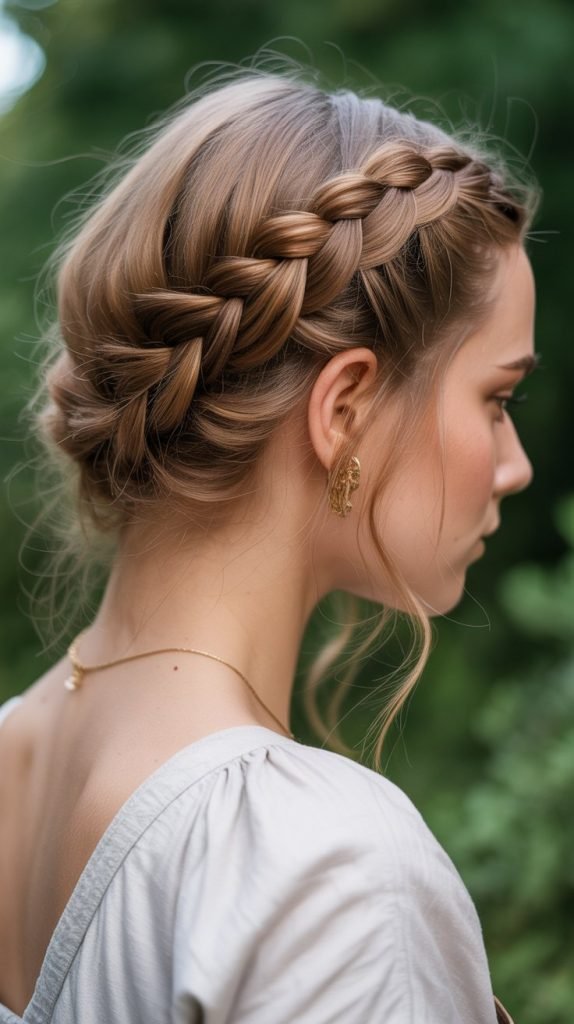
The braided chignon represented sophistication and practicality, gathering braided hair into a low bun at the nape of the neck.
This style was favored by both working women and aristocrats for its ability to keep hair secure while maintaining an elegant, polished appearance throughout long days.
- Multiple braids of varying thicknesses were created from different sections of hair and then coiled or wrapped around each other to form a substantial bun at the nape or slightly higher at the occipital bone.
- Decorative pins with ornamental heads shaped like flowers, stars, or insects were strategically placed both to secure the structure and to add visual interest from all viewing angles.
- The chignon could be positioned asymmetrically to one side of the nape for a more casual, contemporary interpretation that still honored Renaissance aesthetics.
- Fine mesh nets called cauls, often made from gold or silver thread, were sometimes placed over the braided chignon to contain any flyaway hairs and add a luxurious shimmer.
- This style worked particularly well for women with extremely thick or heavy hair, as the braiding process made the hair more manageable before coiling it into the chignon shape.
- Renaissance paintings frequently show the braided chignon adorned with fresh flowers, demonstrating the period’s love of incorporating natural elements into personal adornment.
5. The Coronet with Cascading Braids
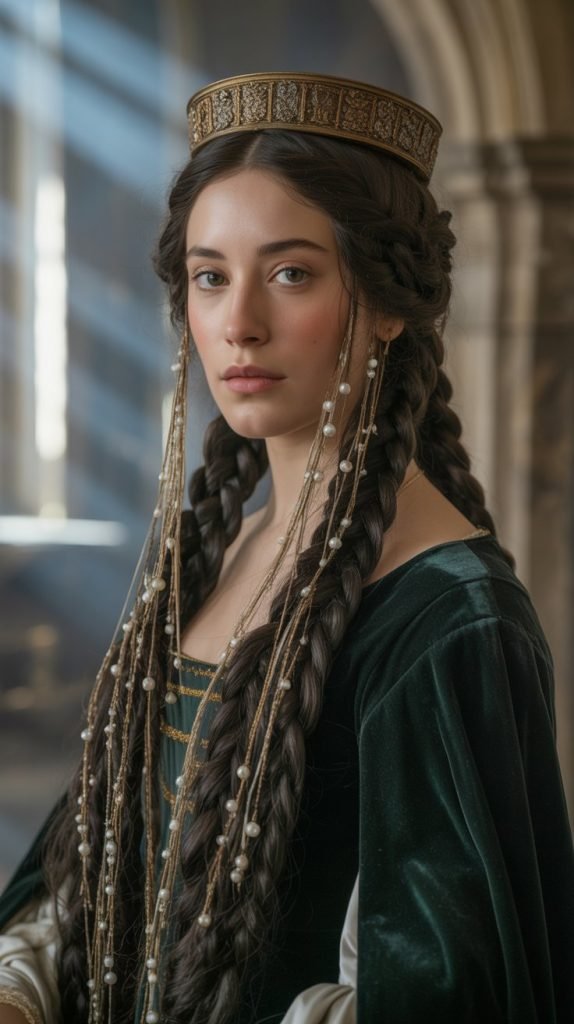
The coronet with cascading braids combined structured upper styling with flowing lower elements, creating a hairstyle that was both controlled and romantic.
This design showcased braiding expertise while allowing the hair’s natural beauty to shine through multiple textures and levels.
- A primary braid or series of braids formed a crown or coronet around the top portion of the head, similar to the classic crown braid but often more substantial and decorated.
- From strategic points in the coronet, additional braids were released to cascade down the back, creating a waterfall effect of varying braid thicknesses and lengths.
- The cascading braids could number anywhere from two to eight or more, depending on the hair’s volume and the desired level of elaboration for the occasion.
- Ribbons in coordinating or contrasting colors were often woven into only the cascading portions, creating a beautiful gradient or ombré effect as the eye traveled from crown to tips.
- This style was particularly popular for wedding ceremonies and other significant celebrations where elaborate personal presentation was expected and appreciated.
- The architectural crown portion kept hair away from the face for practical purposes, while the cascading elements fulfilled the Renaissance ideal of displaying hair’s length and beauty.
6. The Twisted Rope Braid
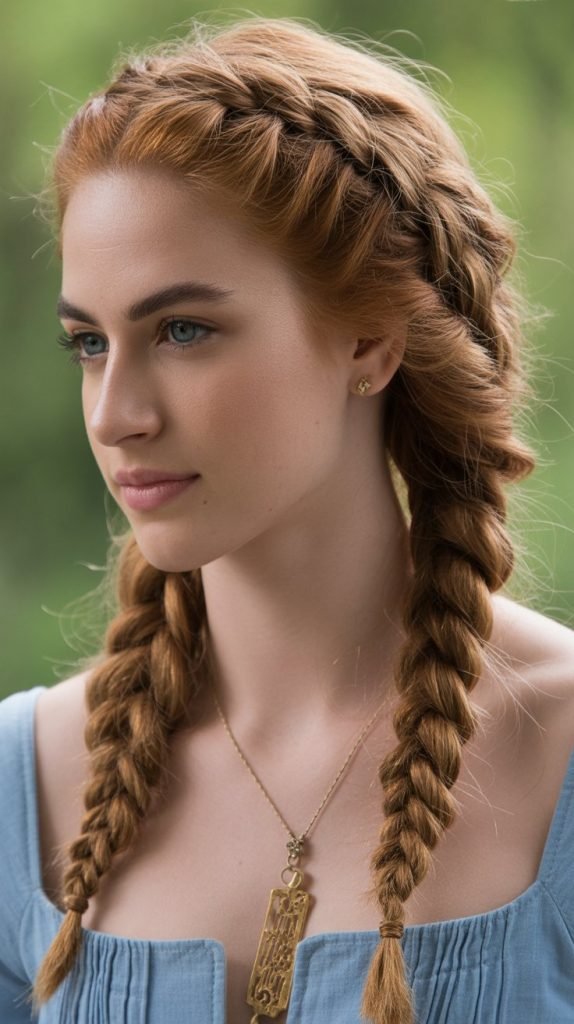
The twisted rope braid offered a simpler alternative to traditional three-strand braiding while still achieving the textured, dimensional look prized during the Renaissance.
This technique involved twisting two sections of hair around each other to create a rope-like effect that was both elegant and somewhat easier to construct than more complex braiding patterns.
- Two substantial sections of hair were each twisted in the same direction (typically clockwise), then wrapped around each other in the opposite direction (counterclockwise) to create tension and prevent unraveling.
- The rope braid technique worked exceptionally well for women with slightly shorter hair who couldn’t achieve the dramatic lengths shown in elaborate multi-strand braids.
- This style was often incorporated into larger hairstyle constructions, with rope braids forming structural elements or decorative accents within more complex designs.
- The texture created by rope braiding caught light differently than traditional plaiting, creating visual interest through shadows and highlights along the twisted sections.
- Renaissance women discovered that rope braids held their shape longer than traditional braids, making this technique ideal for multi-day hairstyles during travel or extended festivities.
- The simplicity of the technique didn’t diminish its elegance, as rope braids were regularly adorned with the same pearls, ribbons, and jewels used on more elaborate braiding styles.
7. The Braided Updo with Center Part
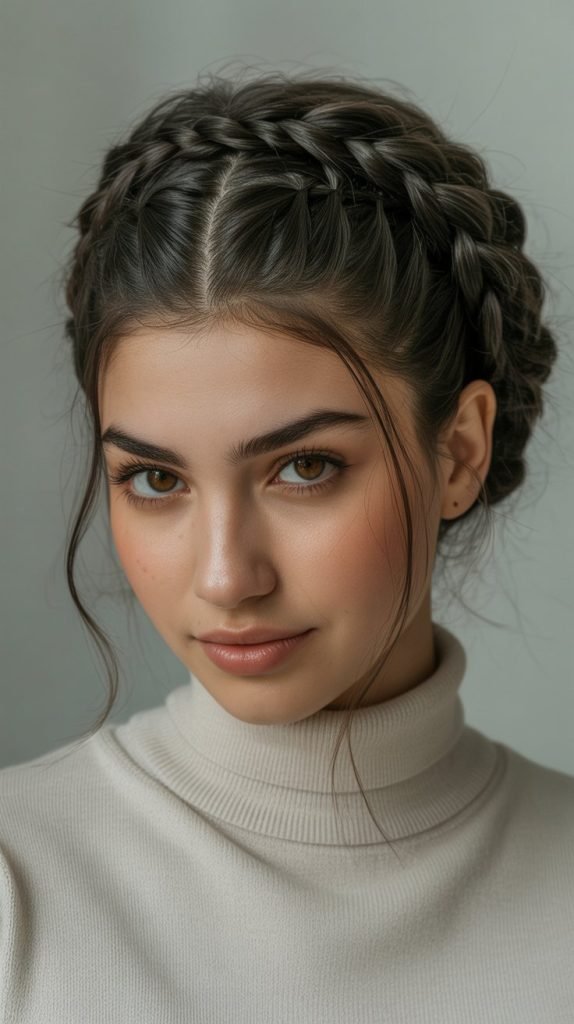
The braided updo with center part epitomized symmetry and balance, two qualities highly valued in Renaissance aesthetics.
This style featured a precise center part with hair on each side elaborately braided and then arranged atop the head in various sculptural configurations.
- The center part created two equal sections of hair that received identical braiding treatments, emphasizing the Renaissance appreciation for mathematical proportion and visual harmony.
- Multiple braids from each side were wrapped, coiled, or pinned upward and inward to create volume and height at the crown, sometimes achieving several inches of added elevation.
- The symmetrical nature of this style complemented the Renaissance fashion for balanced, architecturally-inspired garment construction and jewelry placement.
- Small braided sections were sometimes left to hang as decorative elements near the temples or ears, breaking the severity of the slicked-back portions while maintaining overall formality.
- This updo style provided an excellent foundation for elaborate headdresses, crowns, or veils that were secured to the braided base for maximum stability during long court events.
- The hairstyle’s construction created natural pockets and surfaces where jewels, flowers, or decorative pins could be strategically placed without additional reinforcement or modification.
8. The Waterfall Braid with Loose Curls
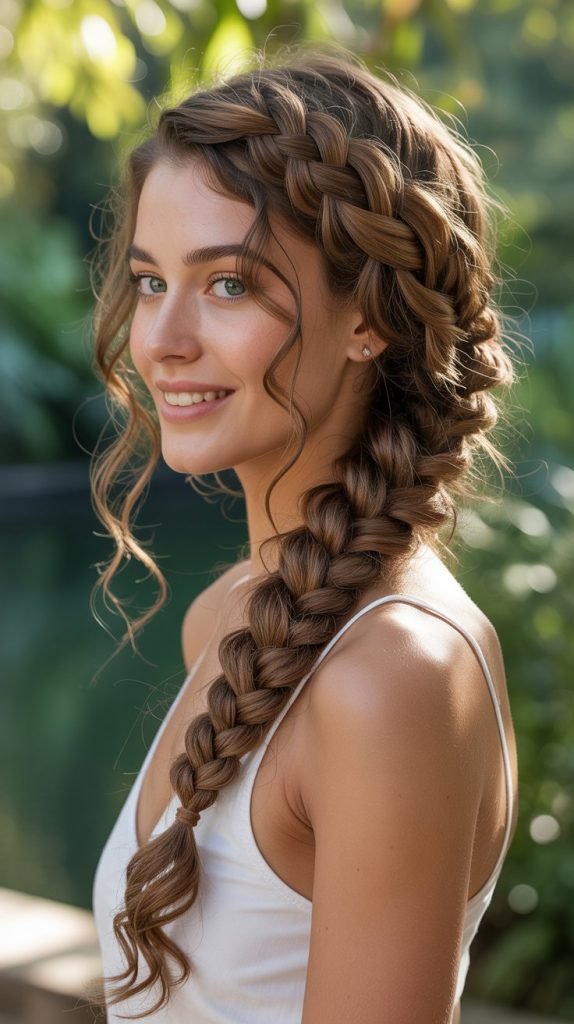
The waterfall braid combined structural braiding with flowing, unbraided hair to create a romantic style that suggested both control and freedom.
This technique involved dropping sections of hair through the braid at regular intervals, allowing them to cascade naturally while the braid itself continued across the head.
- The waterfall effect was achieved by braiding a section across the crown or from temple to temple, but instead of incorporating all hair into the braid, sections were deliberately released to fall freely.
- The released sections were often curled or waved to create texture and volume, contrasting beautifully with the smooth, controlled appearance of the braid itself.
- This style was particularly flattering for women with layered hair, as the varying lengths created natural volume and dimension in the cascading sections.
- Renaissance women achieved the curled portions by wrapping damp hair around heated rods or cloth strips overnight, a time-consuming process that produced the era’s characteristic soft, natural-looking waves.
- The waterfall braid could be positioned at various heights on the head, from a high placement that kept hair completely away from the forehead to a lower, more casual position behind the ears.
- This style represented the Renaissance ideal of sprezzatura—studied carelessness—appearing effortlessly beautiful while actually requiring significant time and skill to construct properly.
9. The Lattice Braid Crown
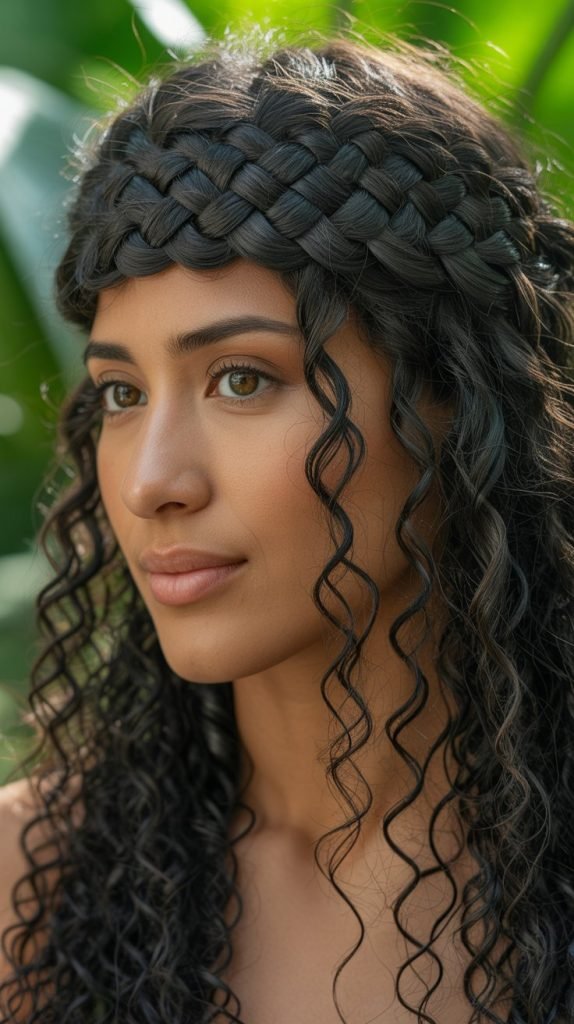
The lattice braid crown showcased advanced braiding techniques by creating a woven, basket-like pattern around the head.
This intricate style required multiple thin braids that were interlaced at regular intervals to form a decorative lattice structure that was both beautiful and architecturally impressive.
- Four to eight separate thin braids were created from sectioned hair and then woven over and under each other in a consistent pattern to create the lattice appearance.
- The openings created by the lattice weaving were often filled with small flowers, jeweled pins, or colored ribbons threaded through for added decoration.
- This technique required significant time and often an assistant’s help, making it a true luxury hairstyle reserved for special occasions or worn by women with dedicated ladies’ maids.
- The mathematical precision of the lattice pattern reflected Renaissance interests in geometry, perspective, and the underlying mathematical principles governing beauty.
- Hair of medium thickness worked best for this style, as very thick hair became unwieldy when trying to maintain the open lattice structure, while very fine hair couldn’t hold the architectural shape.
- The lattice crown was particularly popular in Northern European regions where complex braiding traditions had deep cultural roots predating the Renaissance period.
10. The Side-Swept Braided Bun
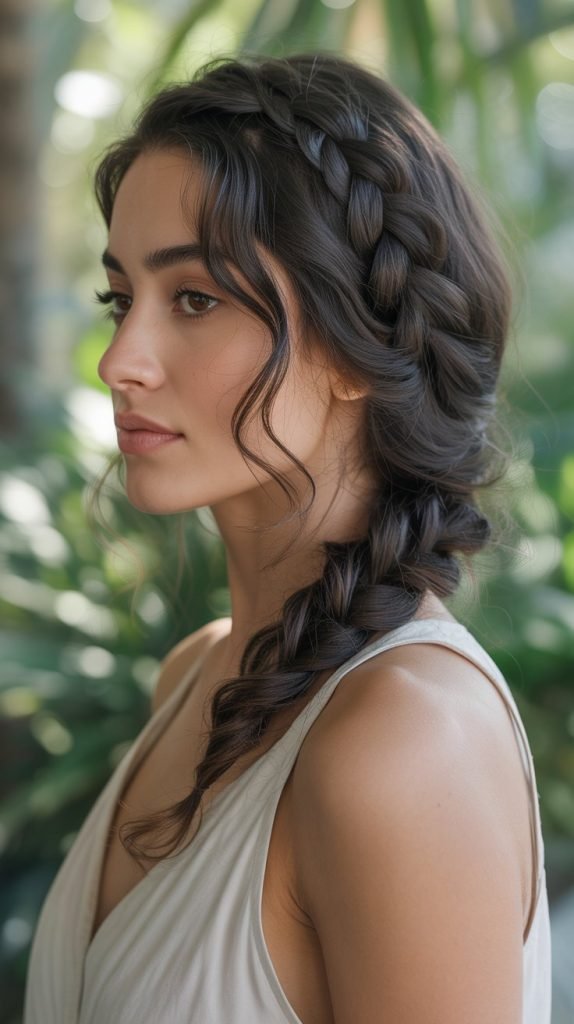
The side-swept braided bun offered an asymmetrical alternative to traditional centered updos, creating a more dynamic and visually interesting silhouette.
This style gathered braided hair to one side of the head where it was coiled into a substantial bun, creating balance through intentional imbalance.
- All hair was directed to one side, typically the left, where multiple braids were created and then wrapped around a central point to form a voluminous bun.
- The asymmetrical placement created an opportunity for elaborate decoration on the bun itself, with jewels, flowers, or fabric ornaments arranged to be visible from the featured angle.
- This style worked particularly well with Renaissance fashion’s tendency toward elaborate shoulder decoration, as the side bun balanced visual weight on the opposite side.
- The neck on the opposite side of the bun was left fully exposed, creating an elegant line and allowing neck jewelry to be displayed without hair interference.
- Different sized braids were often incorporated into the same bun, with thicker structural braids forming the base and thinner decorative braids wrapped around the exterior.
- The side-swept bun could be positioned at various heights from ear-level to the back of the head, each placement creating distinctly different aesthetic effects.
11. The Herringbone Braid
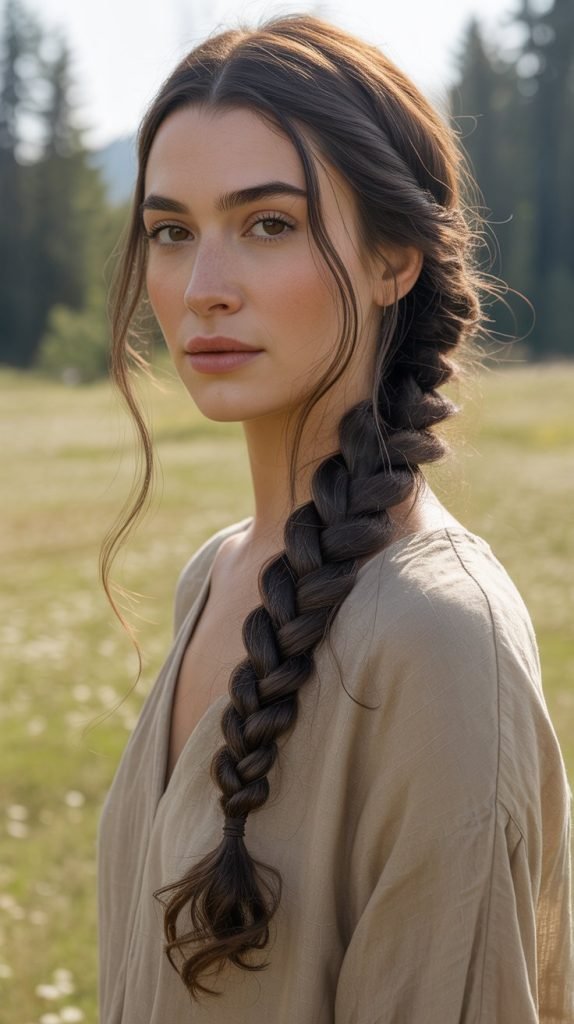
The herringbone braid, also known as the fishtail braid, created a distinctive pattern resembling the skeletal structure of fish bones or woven fabric.
This technique divided hair into two sections and created a braid by taking small pieces from the outside of each section and crossing them to the opposite side.
- The herringbone pattern produced a flatter, wider braid compared to traditional three-strand braids, making it particularly suitable for women with fine or thin hair who wanted to create the illusion of volume.
- This braiding technique was often used for the entire length of hair worn down the back or incorporated into more complex updos where its distinctive texture added visual interest.
- The tighter the sections taken during braiding, the more defined and intricate the herringbone pattern appeared, with some Renaissance women creating braids with such fine detail they resembled woven metalwork.
- Ribbons could be woven into herringbone braids more subtly than in traditional braids, with the ribbon appearing to be integrated into the pattern itself rather than obviously added.
- The herringbone technique held well without excessive tension, making it comfortable for all-day wear during long Renaissance court functions or religious ceremonies.
- This style was particularly popular in regions with Scandinavian influence, where similar braiding techniques had been used for centuries and were incorporated into Renaissance fashion as it spread northward.
12. The Braided Halo with Center Bun
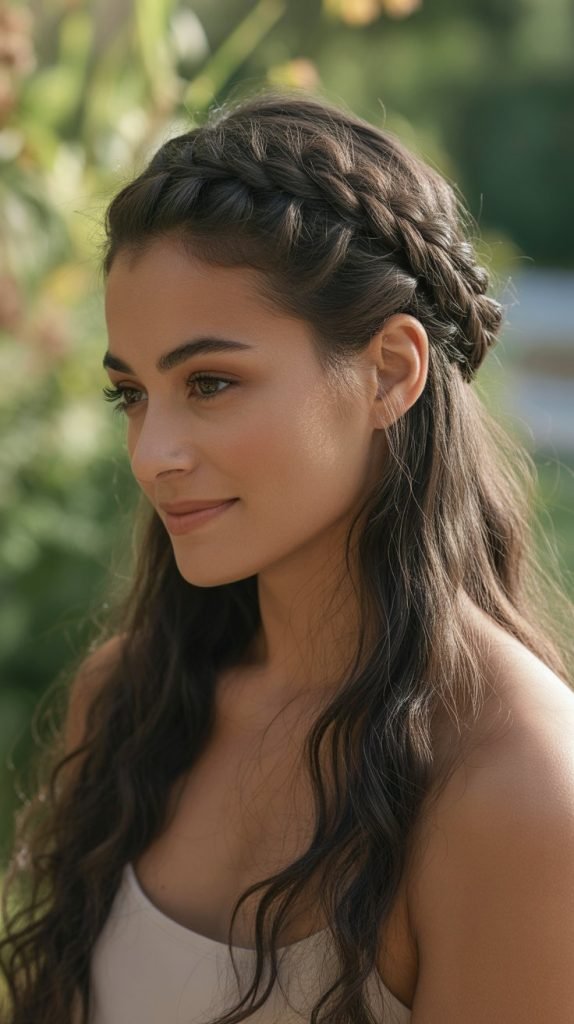
The braided halo with center bun combined two popular Renaissance elements into one cohesive style that was both practical and beautiful.
A braid circled the head like a halo while the remaining hair was gathered into a central bun, creating a balanced composition that worked well with various fashion styles.
- The halo braid was created first, using hair from the front and sides of the head, while the back section was reserved for the central bun construction.
- This two-element design allowed for different decorative treatments on each component, with pearls or jewels on the halo and flowers or fabric ornaments on the bun.
- The central bun could be positioned high on the crown for a more formal, elongating effect, or lower near the occipital region for a casual, comfortable style suitable for daily wear.
- This hairstyle provided excellent support for various head coverings popular during the Renaissance, from simple veils to elaborate coifs with wired frames.
- The halo element kept hair away from the face completely, making this an ideal style for artists, scholars, or women engaged in detailed handwork who needed unobstructed vision.
- The versatility of this design meant it could be dressed up or down depending on the choice and quantity of accessories, making it suitable for multiple occasions from a single basic structure.
13. The Multi-Strand Braid Cascade
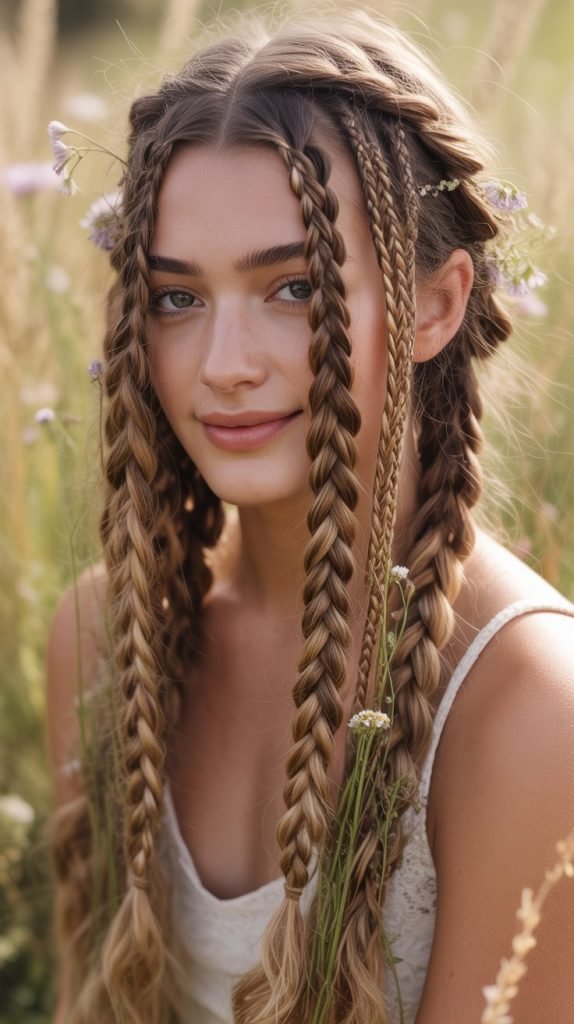
The multi-strand braid cascade represented the pinnacle of braiding complexity, incorporating five, seven, or even nine strands woven together in intricate patterns.
This technique created substantial, textured braids with dimensional patterns that seemed to shift and change as the wearer moved.
- Multi-strand braiding required dividing hair into the desired number of sections and following specific over-under patterns that varied depending on whether an odd or even number of strands was used.
- The resulting braids had a much more substantial appearance than three-strand braids, making them ideal for women who wanted to showcase their hair’s volume and their own patience and skill.
- Different colored ribbons could be assigned to different strands, creating striped or patterned effects within the braid structure that added another layer of visual interest.
- These complex braids were often preserved for multiple days by wrapping them in silk cloths at night, as the time investment required to create them made daily restyling impractical.
- The multi-strand technique worked best on straight or slightly wavy hair, as very curly textures made distinguishing the individual strands within the pattern difficult.
- This braiding style was frequently depicted in Renaissance portraiture as evidence of wealth, since only women with leisure time or dedicated servants could maintain such elaborate hairstyles.
14. The Temple Braids with Flowing Hair
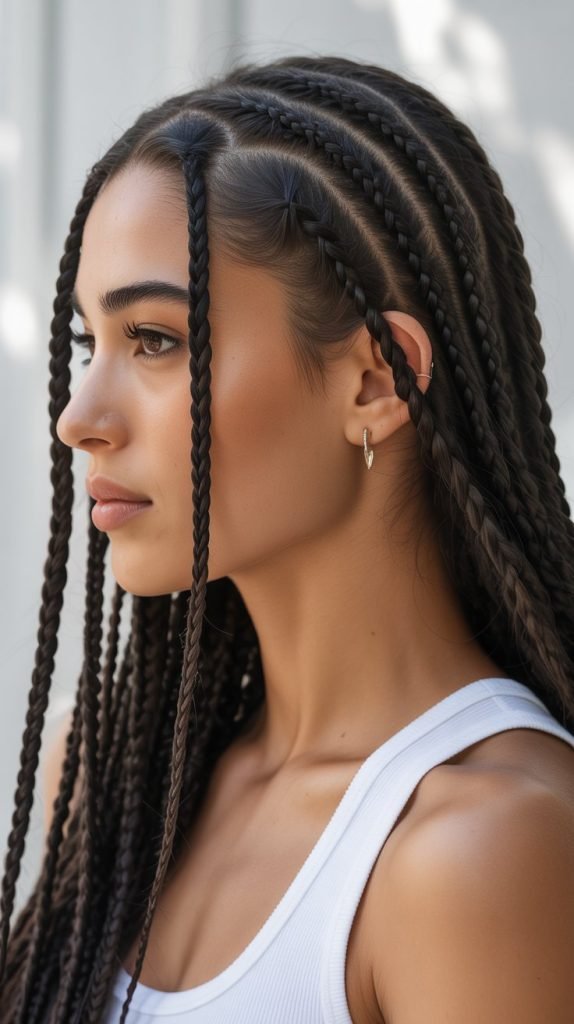
The temple braids with flowing hair combined structure and freedom by braiding only the hair at the temples while leaving the majority of the hair loose and flowing.
This style framed the face beautifully while allowing the full length and texture of the hair to be displayed.
- Small to medium braids were created starting at the temples, either extending straight back to be pinned or woven into a crown-like structure around the back of the head.
- The temple braids served the practical purpose of keeping hair away from the face while eating, reading, or performing handwork, without committing to a fully constructed updo.
- This style was particularly flattering for women with oval or heart-shaped faces, as the temple braids emphasized cheekbones and created a softening frame around the eyes.
- Decorative pins or small jeweled clasps were often used to secure where the temple braids met at the back, creating a focal point that was visible when viewing the wearer from behind.
- The flowing hair could be left natural, curled, or waved depending on personal preference and the formality of the occasion.
- This relatively simple style was accessible to women across social classes, as it required less time and assistance than more elaborate constructions while still achieving an elegant Renaissance aesthetic.
15. The Wrapped Braid Crown with Jewels
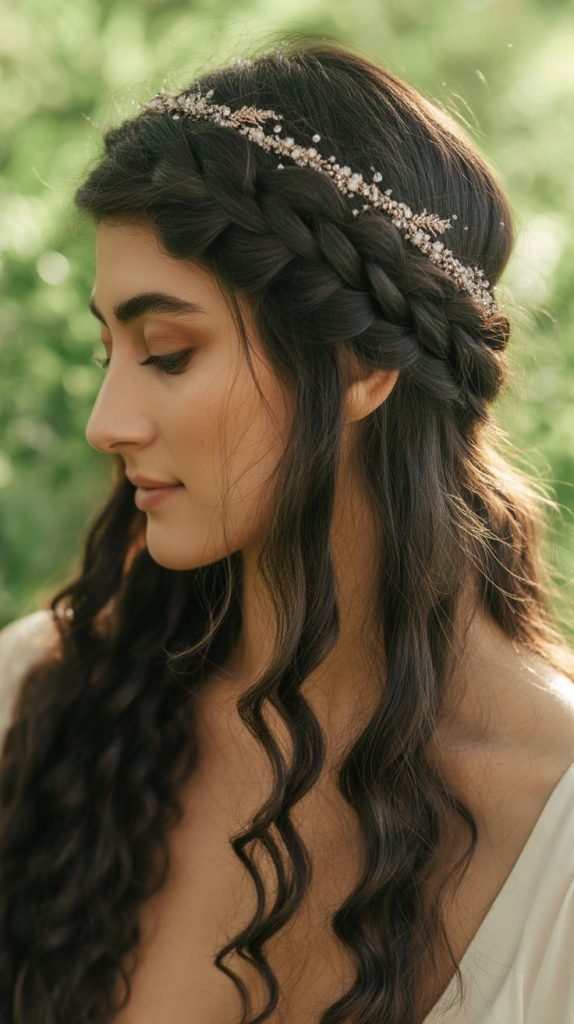
The wrapped braid crown with jewels elevated the basic crown braid concept through elaborate decoration and additional wrapped elements.
This luxurious style incorporated both braided hair and sections of hair wrapped around the braid base, creating texture variation and providing surfaces for extensive jeweled ornamentation.
- The foundation braid circled the head as in a traditional crown braid, but additional sections of unbraided hair were then wrapped spirally around the braid base to increase its diameter and visual impact.
- Jewels were strategically pinned or sewn into the wrapped sections at regular intervals, creating a coronet effect that mimicked actual royal crowns without requiring metal or other materials.
- The jewels used ranged from precious gemstones for nobility to polished glass, semi-precious stones, or even elaborately carved wooden beads for middle-class interpretations.
- This style required significant hair length and volume to achieve the impressive proportions seen in Renaissance paintings and contemporary recreations.
- The wrapped braid crown sat comfortably on the head without pins in many cases, as the wrapping technique created natural friction that helped hold the structure in place.
- This hairstyle was particularly popular for wedding ceremonies, betrothal celebrations, and important court functions where displaying wealth and status through personal adornment was expected.
16. The Braided Heart Shape
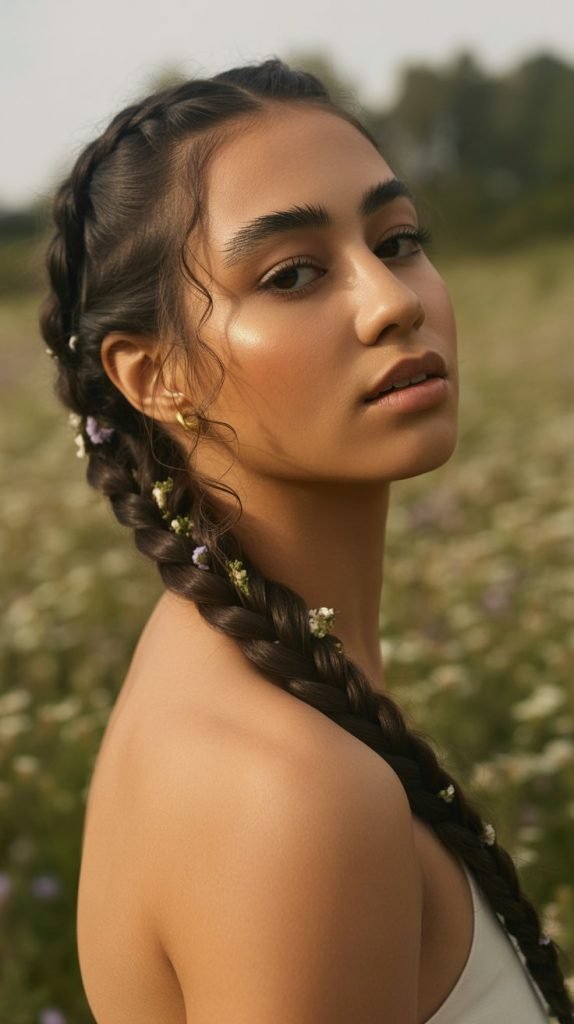
The braided heart shape represented romantic symbolism through hairstyling, creating braids that formed a heart pattern visible from behind.
This whimsical yet sophisticated style required planning and precision but resulted in a memorable design perfect for celebrations of love and commitment.
- Two braids started from the temples or high crown area and were curved outward then brought together at a central point, creating the upper curves and point of a heart shape.
- The braids could continue as a single unified braid from the heart’s point, or the heart shape could be formed and pinned while the remaining hair flowed freely.
- This style required hair of medium length at minimum, as shorter hair wouldn’t maintain the curved shape necessary for the heart’s rounded top portions.
- The heart shape was often outlined with contrasting ribbon woven along the edges of the braids, making the symbolic shape more immediately visible and defined.
- Small flowers, particularly red roses when available, were sometimes tucked into the heart shape’s point or distributed along its curves for added romantic symbolism.
- While the heart shape was particularly popular for young women and wedding-related events, variations of this technique were adapted for other occasions by modifying the shape or decoration to be less explicitly romantic.
17. The Diagonal Braid Sweep
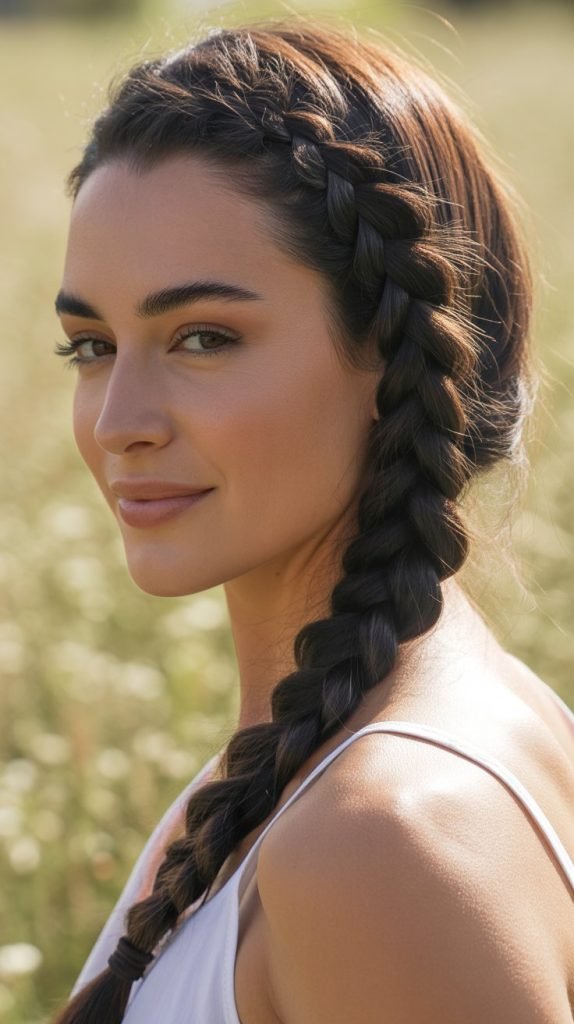
The diagonal braid sweep created dynamic movement through braiding that traveled diagonally across the head from one side to the other.
This asymmetrical style added visual interest through its unexpected angle and worked particularly well for women who wanted to showcase one side of their face or neck more prominently.
- The braid began at one temple or high on one side of the head and traveled diagonally across the crown to end at the opposite shoulder or near the opposite ear.
- Multiple diagonal braids could be layered at slightly different angles to create a cascading effect that increased texture and dimension.
- This style was particularly effective for women with layered haircuts, as the diagonal angle naturally accommodated varying lengths without creating awkward gaps in the braid.
- The diagonal sweep could be incorporated into half-up styles, with the braid securing the top section while the bottom remained loose and flowing.
- Ribbons woven into diagonal braids emphasized the line and movement, drawing the eye along the intended path and enhancing the style’s dynamic quality.
- This technique was often used in combination with other styles, serving as an accent element rather than the primary focus, adding complexity to otherwise simple designs.
18. The Braided Bun with Ribbon Weaving
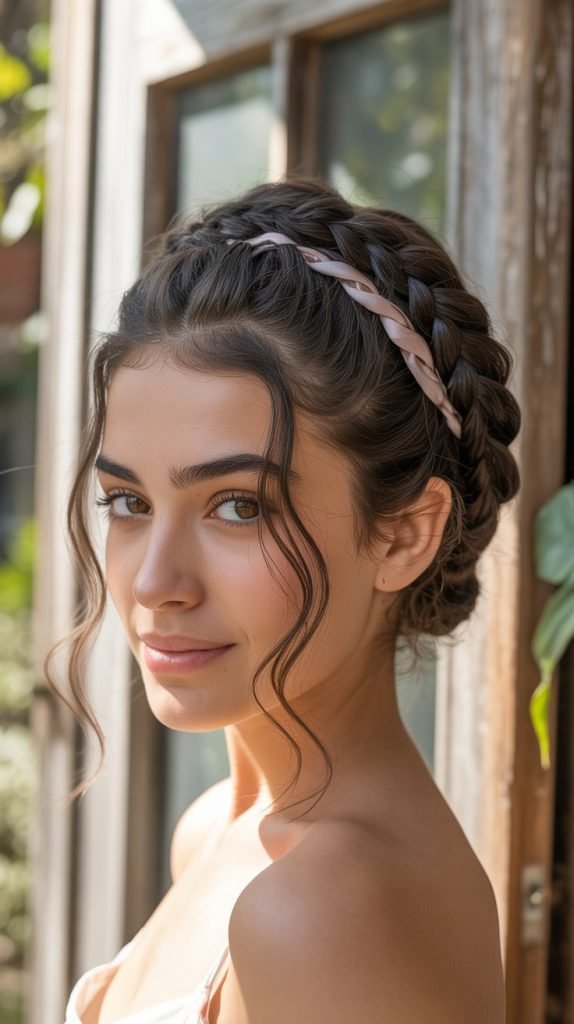
The braided bun with ribbon weaving combined structural braiding with colorful textile art, creating a style where ribbons were as important as the hair itself.
This technique involved weaving ribbons through braids before coiling them into buns, resulting in multicolored, textured designs that caught light and drew attention.
- Multiple ribbons in coordinating or contrasting colors were selected based on the occasion, season, or the wearer’s garment colors to create a harmonious overall presentation.
- The ribbons were woven into braids using various patterns—simple alternating, complex lattice, or even pictorial designs that created recognizable shapes within the weaving.
- The ribbon-woven braids were then coiled into buns of various sizes and positions, with the ribbons’ colors creating spiral patterns or concentric circles depending on the coiling direction.
- This style was particularly popular during festival seasons when bright colors and elaborate decoration were embraced more enthusiastically than during ordinary days.
- The ribbons served the dual purpose of decoration and structural support, as the additional material helped thinner hair create more substantial-looking buns.
- Different ribbon textures from smooth silk to textured velvet or metallic brocade created varied effects, with each material catching and reflecting light differently throughout the day.
19. The Crown with Cascading Mini Braids
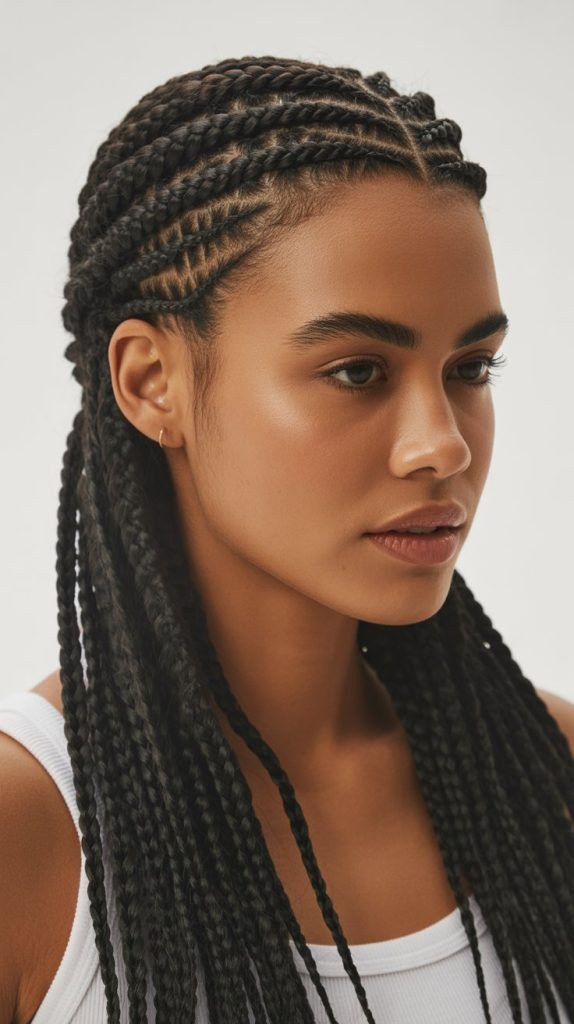
The crown with cascading mini braids created texture and movement through volume rather than individual braid thickness.
This style featured a substantial crown braid or woven band around the head with numerous thin braids cascading down from strategic release points, creating a waterfall effect of delicate textured strands.
- Dozens of very thin braids, sometimes fifty or more, were created from the hair not incorporated into the crown structure, requiring significant time investment but resulting in spectacular visual impact.
- The mini braids could be left as individual strands or gathered into sections with ribbons or jeweled bands at various heights, creating layered tiers of braided texture.
- This style worked exceptionally well for women with very thick hair who wanted to manage volume while still showcasing their hair’s abundance.
- The thin braids moved gracefully with the wearer’s movements, creating a fluid, almost liquid quality that contrasted with the solid, stable crown structure.
- Mixing braided and unbraided thin sections created additional texture variation, with the unbraided portions providing soft contrast to the structured braids.
- This hairstyle was particularly popular in regions with Mediterranean influence, where similar styles had ancient roots and were adapted to Renaissance sensibilities.
20. The Asymmetric Braided Updo
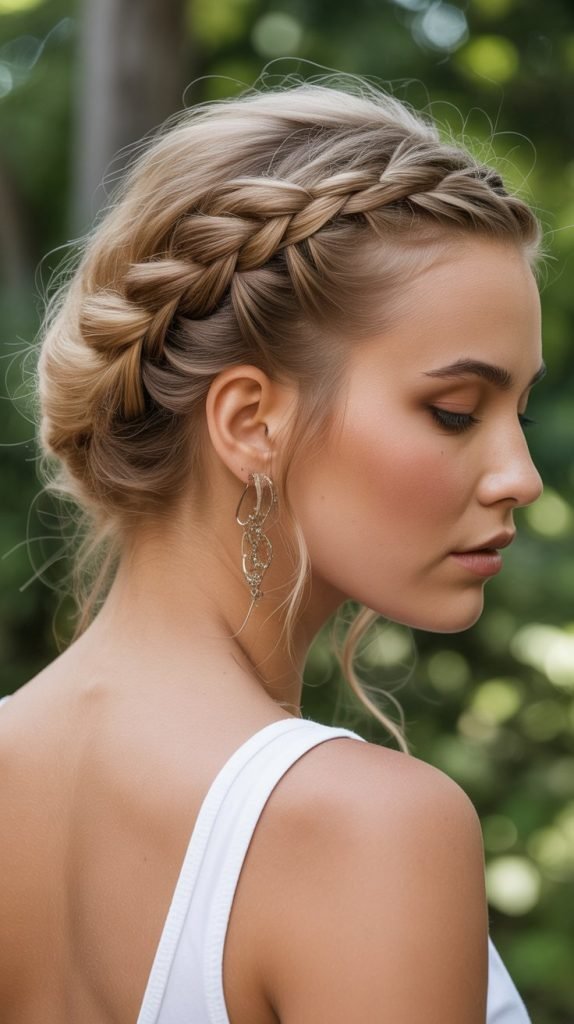
The asymmetric braided updo deliberately eschewed Renaissance symmetry preferences to create modern-feeling styles that were nonetheless constructed using period techniques.
This design gathered braided hair predominantly to one side or featured uneven height distributions that created dynamic, interesting silhouettes.
- Braids of varying thicknesses were created from different sections and arranged asymmetrically, with more volume or decoration concentrated on one side of the head.
- This style often featured one side slicked back smoothly while the opposite side showcased elaborate braiding, coiling, and ornamentation.
- The asymmetry could be subtle, with just slightly uneven placement, or dramatic, with almost all hair gathered to one extreme side.
- This approach worked particularly well for women with naturally uneven hair growth patterns or those who had experienced hair loss on one side due to illness or other factors.
- The asymmetric design created opportunities for showing off multiple braiding techniques within a single hairstyle, as different sides could feature completely different approaches.
- While less common in formal Renaissance portraiture, evidence from period literature and less formal artwork suggests asymmetric styles were worn more frequently than the formal paintings might indicate.
21. The Four-Strand Braid with Ribbon
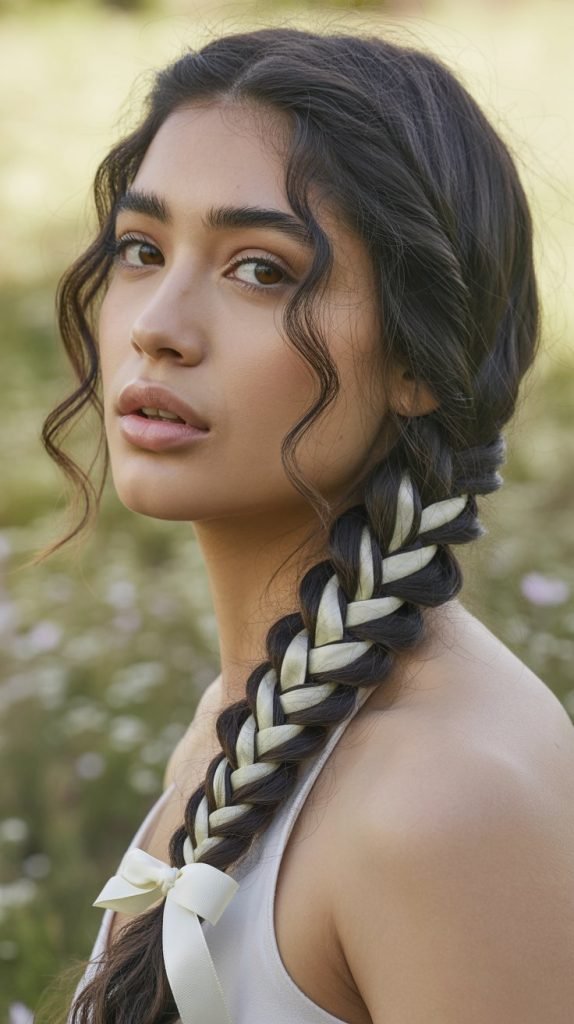
The four-strand braid with ribbon created a complex, dimensional braid that incorporated a ribbon as one of the four strands.
This technique produced a checkerboard-like pattern where the ribbon appeared and disappeared throughout the braid’s length, creating visual rhythm and adding color to the natural hair.
- The four strands consisted of three sections of hair and one ribbon, though some variations used two hair sections and two ribbons for even more color integration.
- The braiding pattern followed a specific sequence where the rightmost strand crossed under its neighbor, over the next, and under the last, then the pattern repeated from the left side.
- The resulting braid was rounder and fuller than a three-strand braid, with the ribbon creating highlights and color breaks that enhanced the dimensional appearance.
- Different ribbon widths created different effects, with narrow ribbons integrating subtly while wider ribbons made bold color statements that dominated the overall design.
- This technique worked well for hair of medium thickness, as very thick hair overwhelmed the ribbon while very thin hair didn’t provide enough substance to complement it.
- The four-strand braid could be worn as a single substantial braid down the back, incorporated into updos, or used to create crown structures with built-in color accents.
22. The Milkmaid Braid
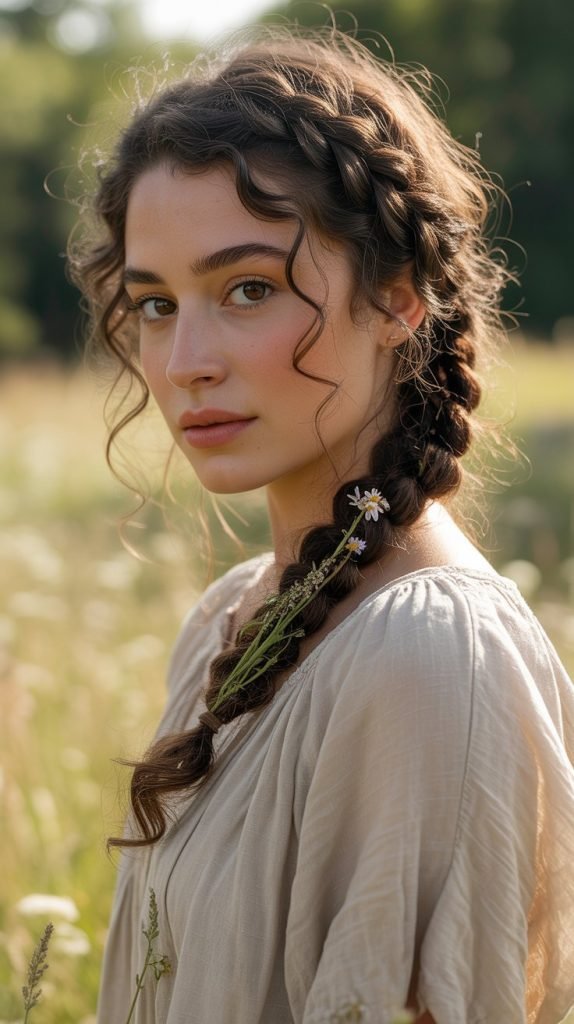
The milkmaid braid, despite its name suggesting humble origins, was adapted by all social classes during the Renaissance and became a versatile style suitable for both work and formal occasions.
This design featured braids wrapped over the crown of the head, creating a practical yet elegant appearance.
- Two substantial braids were created, one from each side of a center part, then lifted and pinned across the top of the head, with each braid’s end tucked under the opposite braid’s base.
- The milkmaid configuration kept hair completely off the neck and face, making it ideal for physical work, warm weather, or situations where maintaining a neat appearance throughout a long day was important.
- Despite its practical nature, the milkmaid braid was easily dressed up with flowers, ribbons, or jeweled pins inserted along the braids’ paths across the crown.
- This style created a soft, rounded silhouette at the crown that complemented Renaissance fashion’s tendency toward rounded shapes and gentle curves.
- The milkmaid braid worked well with veils or light head coverings, as the flat braids provided a stable base for fabric draping.
- Variations included offsetting the braids slightly rather than creating perfect symmetry, or creating thicker braids on one side for an updated take on the traditional design.
23. The Braided Ponytail with Decorative Base
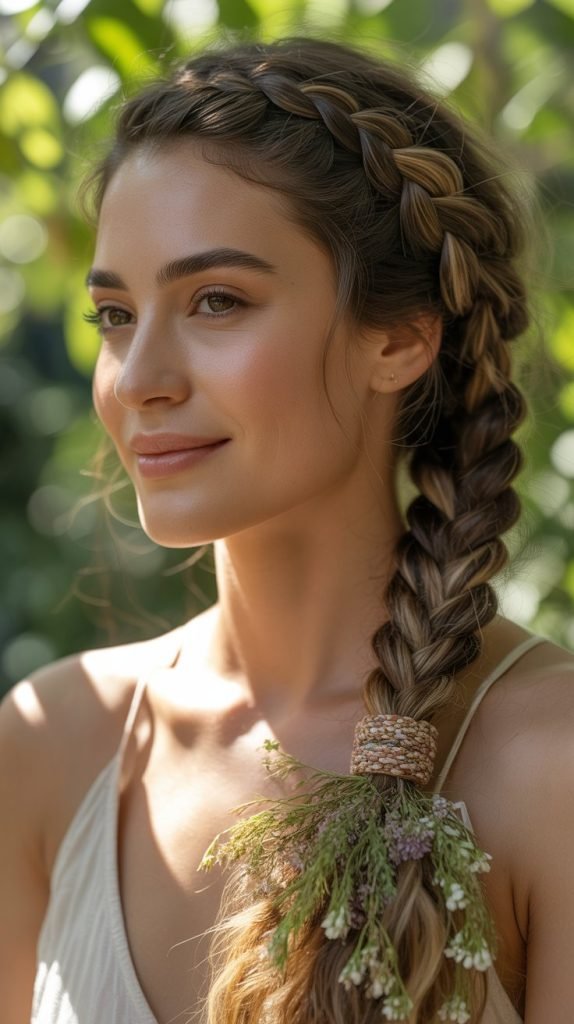
The braided ponytail with decorative base combined the convenience of a ponytail with the elegance of braiding and the artistry of an ornate base treatment.
This style gathered hair at various heights on the head, with the base area receiving special attention before the ponytail itself was braided.
- Multiple braiding techniques could be combined in the base area, with some sections using three-strand braids, others using rope braids, and still others left twisted for texture variation.
- The ponytail itself could feature a single substantial braid, multiple smaller braids bound together, or a combination where the top portion was braided and the bottom left loose and flowing.
- Decorative elements like jeweled bands, chains, or elaborate fabric rosettes were positioned at the base where they received maximum visibility and created a focal point.
- The height of the ponytail placement dramatically changed the style’s character, with high ponytails suggesting youth and energy while lower placements conveyed sophistication and restraint.
- This style was particularly popular for equestrian activities and outdoor pursuits where hair needed to be secure but the wearer still wanted to display length and styling effort.
24. The Spiral Braid Crown
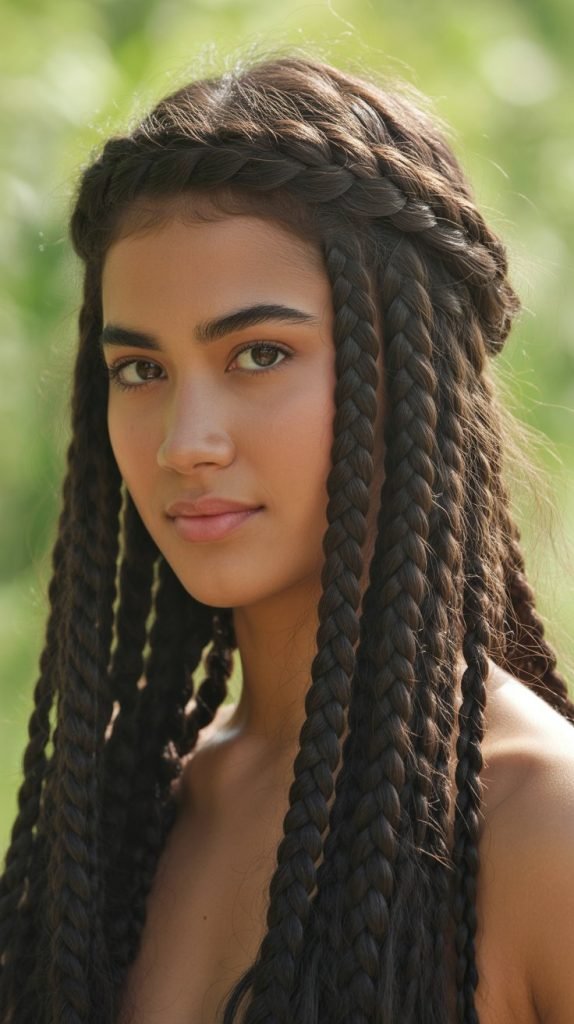
The spiral braid crown created mesmerizing visual movement through braids that wrapped around the head in a continuous spiral pattern rather than a simple circle.
This technique required mathematical precision in planning the braid’s path to ensure it completed the circuit properly while maintaining consistent spacing.
- The spiral began at a central point, either at the crown or slightly off-center, and wrapped outward in expanding circles until it reached the hairline or desired ending point.
- This style created an optical illusion of motion even when the wearer was perfectly still, as the eye naturally followed the spiral’s path around the head.
- The spiral could move clockwise or counterclockwise depending on the braider’s preference and the wearer’s natural hair growth patterns.
- Decorative elements were often placed at regular intervals along the spiral, emphasizing its mathematical precision and creating rhythm through repetition.
- This braiding technique worked best on hair of uniform length, as significant layering made maintaining the spiral’s smooth continuity challenging.
- The spiral crown was particularly popular among women with connections to maritime regions, where spiral patterns held symbolic significance related to shells, waves, and the ocean’s power.
25. The Braided Half-Up Style
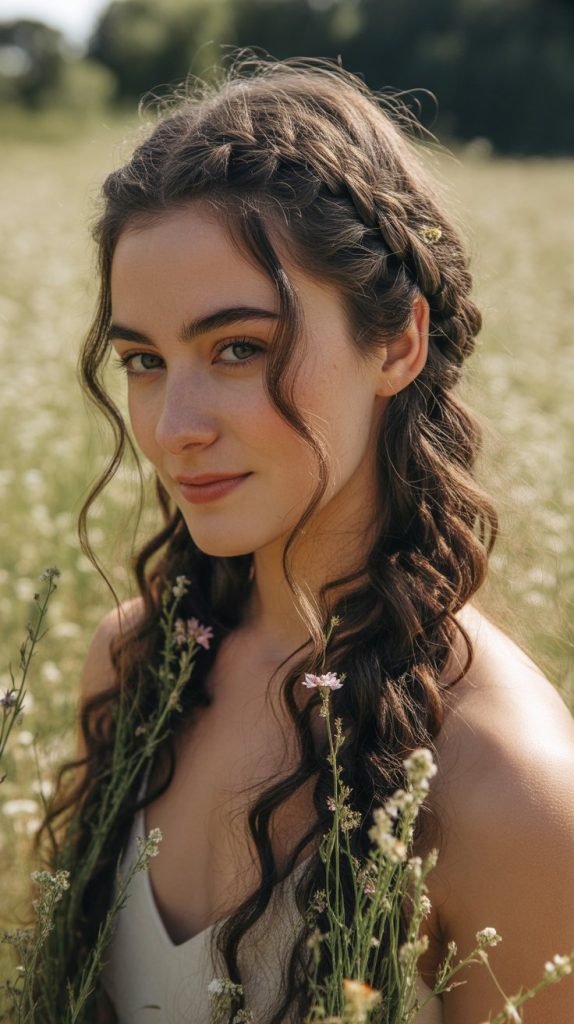
The braided half-up style perfectly balanced the Renaissance desire to display long hair with the practical need to keep it away from the face.
This versatile design secured the top portion of hair with braids while allowing the lower section to flow freely, creating dimension through the contrast between structured and loose elements.
- Multiple small braids were created from the hair at the temples and crown, then gathered and secured at the back of the head, typically at ear level or slightly higher.
- The braids could be combined using various methods—twisted together, woven into each other, or simply gathered and tied with ribbon or secured with a decorative clasp.
- The loose lower section was often curled or waved to create additional texture and volume that contrasted with the sleek, controlled upper braids.
- This style was particularly favored by younger women and those in artistic or intellectual circles who wanted to appear fashionable without committing to the time-intensive fully constructed updos.
- The braided elements could vary in thickness and number depending on hair volume and desired effect, from two substantial temple braids to eight or more thin decorative braids.
- Seasonal variations included weaving flowers through the braids in spring and summer, while autumn and winter versions might incorporate berries, leaves, or fabric flowers in rich jewel tones.
26. The Wrapped Coil with Braid Accents
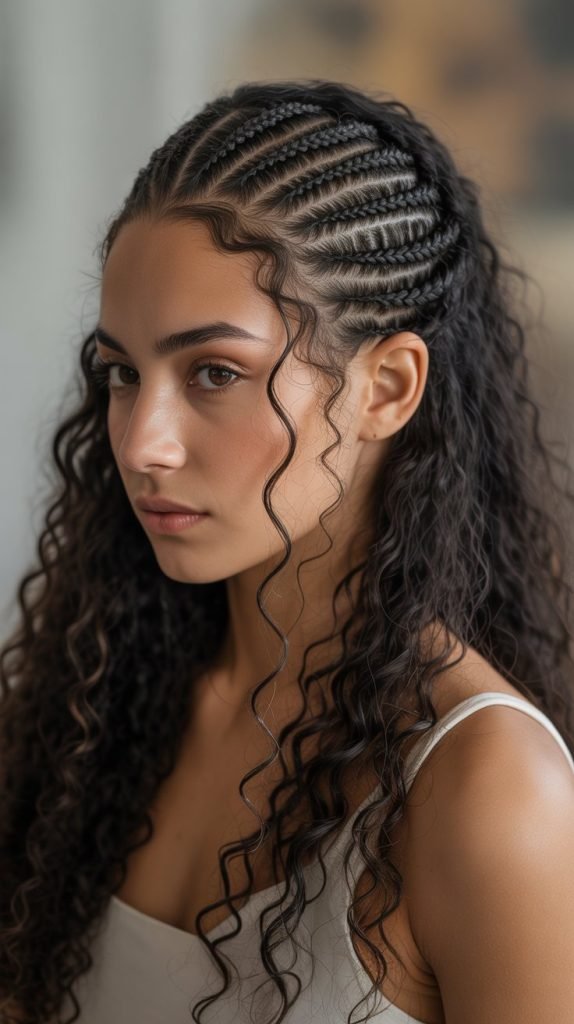
The wrapped coil with braid accents featured hair wound into smooth coils as the primary structure, with strategic braid accents adding texture and visual interest.
This style represented a sophisticated approach to updo construction where braids served as decorative elements rather than the entire hairstyle’s foundation.
- Large sections of hair were smoothly wrapped into coils positioned at various locations on the head, creating substantial volume and architectural presence.
- Smaller braided sections were woven around, through, or across the wrapped coils, creating contrast between the smooth wrapped areas and textured braided accents.
- This technique allowed women with different hair textures to achieve similar final appearances, as the wrapping smoothed very curly hair while braided accents added texture to straighter hair types.
- The wrapped coils provided structure and held their shape well throughout long days, while the braid accents could be adjusted or re-pinned without disturbing the entire hairstyle.
- Decorative pins were often placed at the points where braids intersected or crossed wrapped coils, both securing the structure and adding ornamental beauty.
- This style was particularly popular for multi-day events like wedding celebrations that lasted several days, as the basic structure could be maintained while the braid accents were refreshed daily.
27. The Figure-Eight Braid
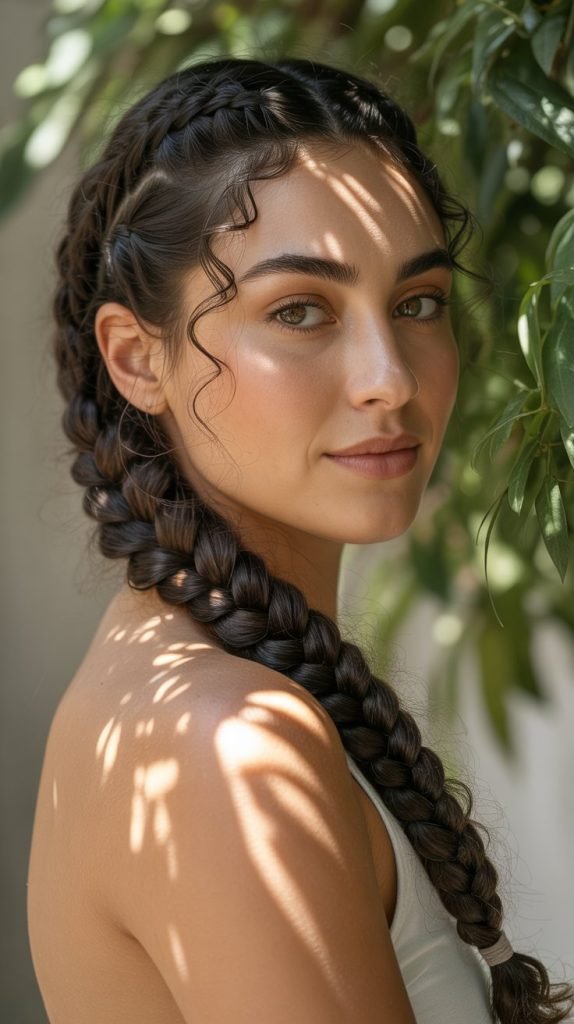
The figure-eight braid created distinctive looping patterns that resembled the number eight or infinity symbol when viewed from specific angles.
This playful yet sophisticated style required planning and precision but resulted in memorable designs perfect for festive occasions and celebrations.
- The braid was manipulated to create loops that crossed over each other in the center, forming the characteristic figure-eight shape that could be positioned horizontally, vertically, or diagonally.
- Multiple figure-eight formations could be stacked or arranged in patterns across the head, creating complex geometric designs that showcased advanced braiding skills.
- The crossing point in the center of the figure-eight provided an ideal location for a decorative element like a jeweled pin, fabric rosette, or cluster of small flowers.
- This technique worked best with hair of medium to long length that had enough substance to hold the looped shape without collapsing but wasn’t so thick that the loops became unwieldy.
- The figure-eight could be incorporated into larger hairstyles as an accent element or serve as the primary design feature depending on the occasion’s formality.
- The mathematical precision required for this style appealed to Renaissance sensibilities regarding geometry and proportion, making it popular among educated women and those in scholarly circles.
28. The Basket-Weave Crown Braid
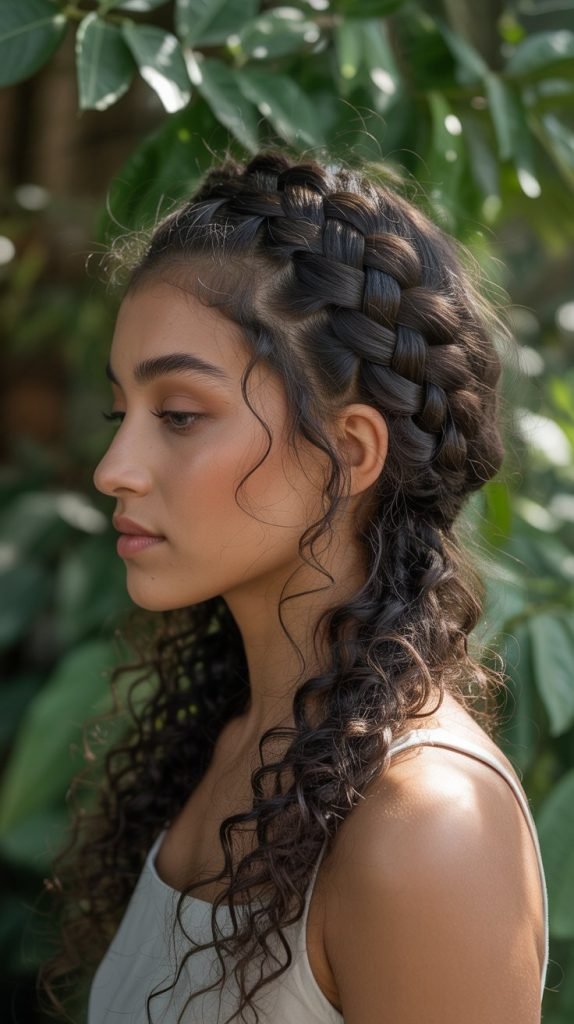
The basket-weave crown braid elevated the standard crown braid concept by creating a woven pattern that mimicked basket construction.
This intricate technique required multiple strands woven over and under each other in specific sequences to create the distinctive checkerboard appearance of traditional basketry.
- Four to six separate sections of hair were maintained as distinct strands and woven using an over-two-under-two or similar pattern that created the basket-weave texture.
- The resulting crown had significant depth and dimension compared to standard braids, creating visual interest from multiple viewing angles.
- This technique required considerable skill and often professional help from a hairdresser or experienced lady’s maid, making it a status symbol indicating both wealth and access to skilled servants.
- The basket-weave pattern created natural pockets where small decorative elements could be tucked without additional pinning or securing.
- This style held its shape exceptionally well throughout long wear periods, as the interwoven structure created natural tension that prevented unraveling.
- The basket-weave crown was particularly associated with harvest festivals and autumn celebrations, where the basket imagery connected symbolically to gathering and abundance.
29. The Braided Side Sweep with Flowers
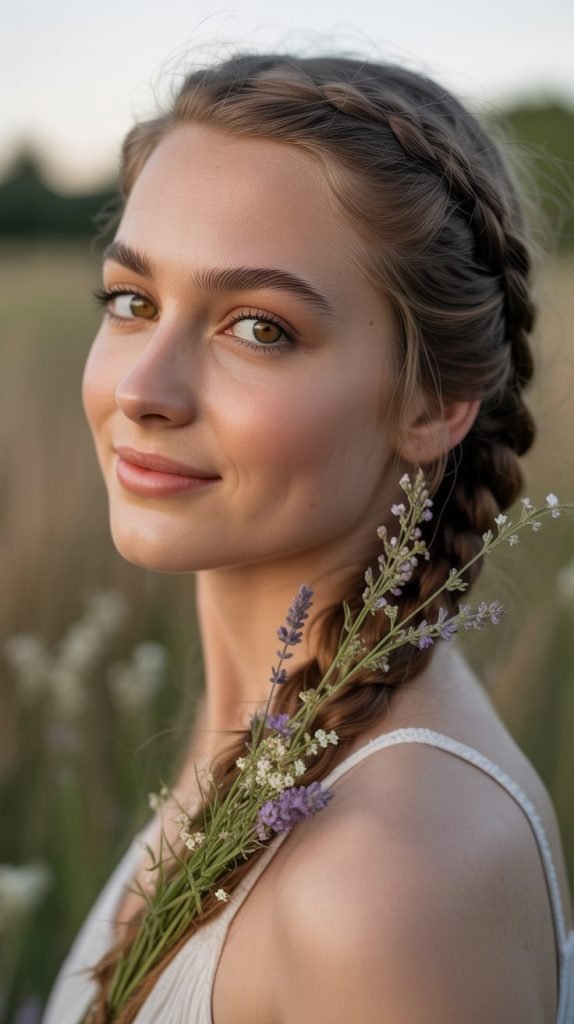
The braided side sweep with flowers combined structured braiding with natural beauty by incorporating fresh or silk flowers throughout the braid’s length.
This romantic style was especially popular for spring and summer occasions, though dried flowers or fabric alternatives extended its use throughout the year.
- A substantial braid was created starting at one side of the head and sweeping across to drape over the opposite shoulder, creating an elegant diagonal line.
- Flowers were individually placed along the braid’s length, either tucked between the strands or secured with thin wire or thread that was concealed within the braid structure.
- The flower selection often held symbolic meaning, with roses representing love, lilies suggesting purity, and various herbs and wildflowers conveying specific messages understood by Renaissance audiences.
- The braid could incorporate a single flower type for unified impact or mix multiple varieties for a garden-like abundance.
- This style required careful planning regarding flower size and weight, as overly large or heavy blooms could pull the braid downward or cause premature wilting.
- For extended wear, the flower stems were often wrapped in damp cloth and then sealed with wax to extend their freshness throughout day-long events.
30. The Architectural Braided Tower
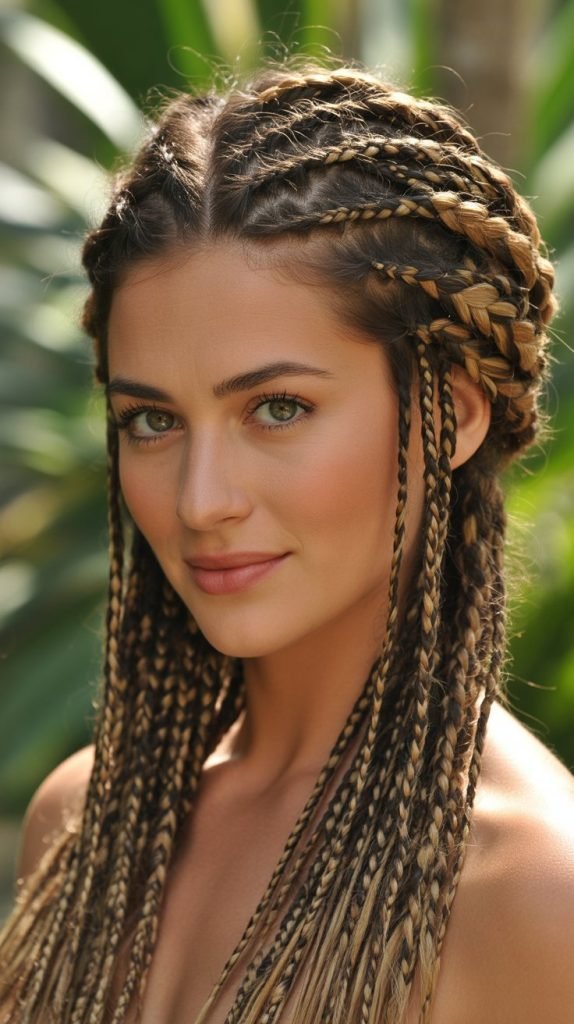
The architectural braided tower represented the apex of Renaissance hair engineering, creating vertical structures of substantial height achieved through stacking braided coils and using supportive frames.
This dramatic style made bold statements at the most formal occasions and demonstrated the highest levels of hairstyling expertise.
- Multiple braids were coiled and stacked vertically on top of the head, sometimes requiring internal wire frames, padding, or structural supports to achieve the desired height.
- The tower could reach impressive heights of six to twelve inches above the natural crown, dramatically altering the wearer’s silhouette and stature.
- Each level of the tower often featured different braiding techniques, decorative treatments, or incorporated elements, creating a graduated effect that drew the eye upward.
- This style required extensive pinning and often the use of period-appropriate hair products like beeswax mixtures or egg white preparations to maintain structure throughout wear.
- The architectural tower was almost exclusively reserved for the highest nobility and worn only at the most significant court functions, coronations, or state occasions.
- Despite its impressive appearance, skilled hairstylists could construct these towers to be relatively comfortable by distributing weight evenly and ensuring pins didn’t press directly against the scalp.
Conclusion
The 30 Beautiful Renaissance Braided Hairstyles presented in this comprehensive guide represent more than mere fashion statements—they embody the Renaissance era’s artistic spirit, mathematical precision, and celebration of human creativity.
These intricate braided designs ranged from practical everyday styles like the milkmaid braid to extraordinary architectural towers reserved for royalty, each reflecting the wearer’s social position, personal taste, and the occasion’s significance.
The Renaissance approach to hair as a canvas for artistic expression continues to inspire modern hairstylists, bridal designers, and fashion enthusiasts who recognize the timeless beauty of these carefully constructed designs.
Whether you’re drawn to the romantic waterfall braid adorned with flowers, the geometric precision of the lattice crown, or the dramatic impact of cascading multi-strand braids, each style offers unique opportunities for personal expression and connection to historical tradition.
The techniques, patience, and artistry required to create these Renaissance braided hairstyles remind us that beauty has always been worth the investment of time and skill, and that some aesthetic principles transcend centuries.
As you explore these thirty distinctive styles, you’ll discover that Renaissance braided hairstyles offer endless possibilities for adaptation to contemporary life while honoring the sophisticated elegance that made them treasured throughout one of history’s most culturally rich periods.
These beautiful Renaissance braided hairstyles continue to prove that true artistry in personal adornment never goes out of style, inviting each new generation to appreciate and reinterpret these magnificent designs for their own era.
