

Long hair offers endless styling possibilities, and when combined with strategically placed layers, it transforms into a masterpiece of movement and dimension.
If you’ve been searching for ways to add life to your lengthy locks without sacrificing your hard-earned length, you’re in the right place.
The 30 Beautiful Long Haircuts With Straight Back & Front Layers featured in this article showcase how precise layering techniques can enhance your natural beauty while maintaining the elegance of long hair.
From face-framing front layers that highlight your features to cascading back layers that create gorgeous movement, these styles prove that you don’t need to choose between length and volume.
Whether you have fine hair that needs body, thick hair that requires shape, or simply want to refresh your current style, this comprehensive guide will walk you through stunning options that work for every face shape, hair texture, and lifestyle.
Get ready to discover your next signature look that combines the best of both worlds—beautiful length with dynamic, eye-catching layers.
1. Classic Face-Framing Layers With Long Back

Face-framing layers are the foundation of dimensional long haircuts, creating a soft transition from shorter pieces around your face to the full length at the back.
This timeless style works beautifully for those who want to maintain maximum length while adding movement and shape around the face.
- The front layers typically start around chin or collarbone length, gradually blending into the longer back sections.
- This technique creates a flattering frame that draws attention to your eyes and cheekbones while softening angular features.
- Face-framing layers work exceptionally well for oval, round, and heart-shaped faces by adding vertical lines that elongate the face.
- The style requires minimal maintenance beyond regular trims every 8-10 weeks to maintain the shape and prevent the layers from growing out unevenly.
- You can customize the starting point of your face-framing layers based on your facial structure—shorter layers emphasize cheekbones while longer ones elongate the face.
2. Curtain Bangs With Layered Length

Curtain bangs paired with long layered hair create a effortlessly chic look that’s been dominating fashion runways and social media feeds.
The center-parted bangs frame your face like curtains, while the layered length adds movement throughout.
- Curtain bangs are parted down the middle and swept to either side, creating a soft, romantic frame around the face.
- The bangs typically reach cheekbone to chin length, allowing them to blend seamlessly into the front layers.
- This style works wonderfully for women who want the impact of bangs without the high-maintenance commitment of straight-across fringe.
- The layered back prevents the style from looking too heavy while maintaining substantial length for updos and ponytails.
- You can style curtain bangs with a round brush for volume or let them air-dry for a more relaxed, lived-in appearance.
- This cut suits most face shapes, particularly long and oval faces, as the bangs create width and balance proportions.
3. Long Layers With Blunt Front Pieces

Combining blunt front sections with layered back creates a striking contrast that adds both structure and movement to long hair.
This modern approach gives you the best of both worlds—clean lines in front with soft dimension behind.
- The front sections are cut blunt at a specific length, typically around the collarbone or chest, creating a strong horizontal line.
- Behind the front sections, layers are strategically placed to remove bulk and add movement without disrupting the blunt appearance from the front view.
- This technique works exceptionally well for thick hair, as the back layers reduce weight while the blunt front maintains structure.
- The contrast between blunt and layered sections creates visual interest and prevents the haircut from looking one-dimensional.
- Styling is versatile—you can wear it sleek and straight to emphasize the clean lines or add waves for a softer, romantic effect.
- Regular trims every 6-8 weeks keep the blunt sections looking sharp and prevent split ends from traveling up the hair shaft.
4. V-Shaped Back With Graduated Front Layers
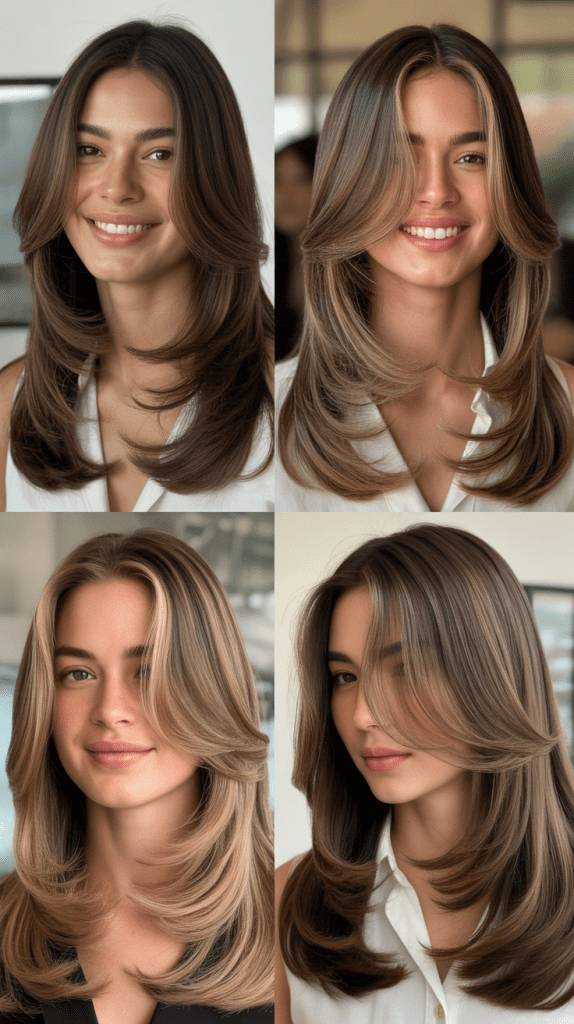
The V-shaped cut creates a dramatic point at the back while graduated front layers add dimension and frame the face beautifully.
This style is perfect for showcasing length while adding architectural interest to your haircut.
- The V-shape is created by cutting the hair shorter at the sides and gradually increasing length toward the center back, forming a distinct point.
- Front layers are graduated, meaning they’re cut at varying lengths to create a staircase effect that adds dimension.
- This cut creates the illusion of even more length while removing bulk from the sides and adding movement throughout.
- The V-shape looks particularly stunning when hair is worn down and straight, as it showcases the geometric precision of the cut.
- This style suits women with thick, straight to wavy hair textures who want to maintain impressive length while reducing volume.
- The graduated front layers can be customized to start at different points—higher layers add more movement while lower placement maintains more weight.
5. Soft Butterfly Layers
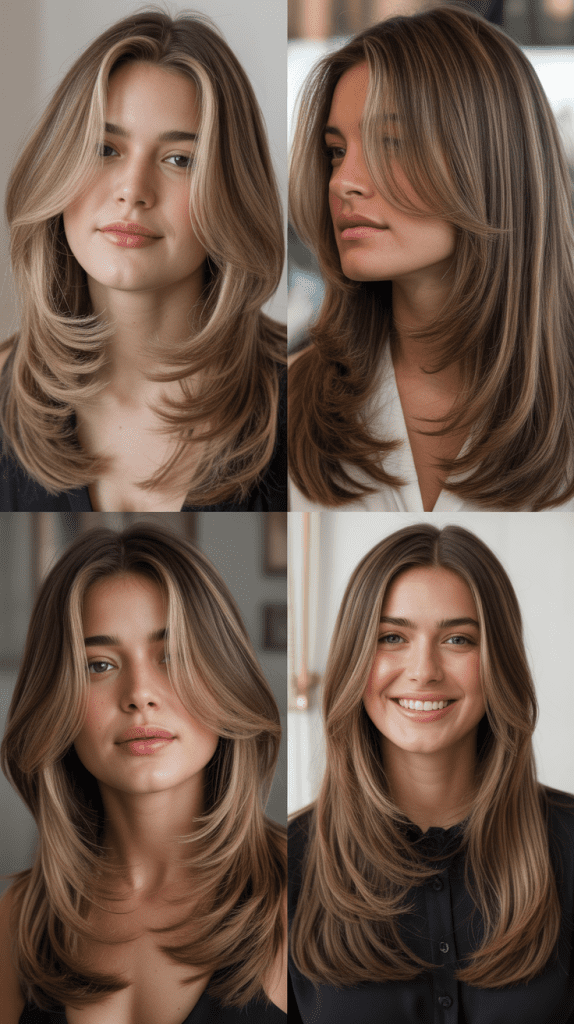
Butterfly layers get their name from the way the cut resembles butterfly wings when styled, with shorter layers concentrated around the face and crown that gradually lengthen toward the back.
This trending style adds maximum volume without sacrificing length.
- The technique involves cutting shorter layers around the crown and face, typically starting at ear to shoulder length.
- These shorter layers create lift and volume at the top and sides while the longest layers maintain your desired length at the back.
- The style works beautifully for fine to medium hair textures, as the layering adds the appearance of fullness and body.
- When styled with a round brush or curling iron, the layers create a bouncy, voluminous effect reminiscent of 1970s glamour.
- The cut requires minimal daily styling—even air-dried, the layers create natural movement and dimension.
- This approach is ideal for women who feel their long hair looks flat or lifeless, as the strategic layering injects instant vitality.
6. Invisible Layers With One-Length Front

Invisible layers are subtle, internal layers that add movement and reduce bulk without creating obvious steps or graduation in the hair.
Combined with a one-length front, this cut maintains a sleek appearance while preventing heaviness.
- The layering is done internally, meaning the stylist removes weight from inside the hair shaft rather than creating visible external layers.
- From the front, the hair appears to be one length, maintaining a polished, sophisticated look.
- When the hair moves or is styled, the invisible layers reveal themselves through enhanced bounce and swing.
- This technique is exceptional for women with very thick hair who want to maintain a sleek appearance without the bulkiness.
- The one-length front creates a strong, modern aesthetic that works well in professional environments.
- Invisible layers also help hair hold styles longer, as the reduced internal weight allows curls and waves to maintain their shape.
- This cut requires a skilled stylist familiar with internal layering techniques to achieve the proper balance.
7. Long Shag With Extended Length
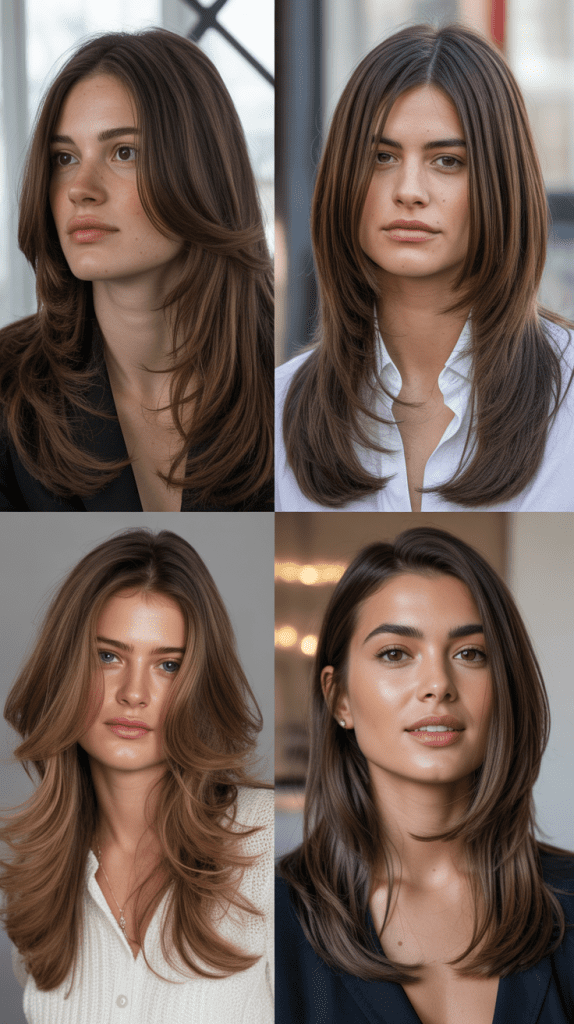
The long shag brings rock-and-roll edge to lengthy hair, featuring choppy layers throughout with extended length at the back.
This style creates intentional texture and effortless movement that looks both edgy and feminine.
- Shag layers are cut at varying lengths throughout the hair, creating a deliberately textured, piece-y appearance.
- The front typically features shorter, choppy layers starting around the cheekbones or chin that frame the face dynamically.
- Unlike traditional layered cuts, shags incorporate point-cutting and razor techniques to create softer, more feathered edges.
- The extended length at the back maintains the overall long-hair aesthetic while the layers add rock-inspired attitude.
- This style works beautifully for women with naturally wavy or textured hair, as it embraces and enhances natural movement.
- Styling is intentionally effortless—the shag looks best with air-dried texture or loose, undone waves rather than polished smoothness.
- Regular texturizing treatments and trims every 6-8 weeks keep the shag looking fresh and prevent it from becoming too grown-out.
8. U-Shaped Cut With Minimal Front Layers

The U-shaped cut creates a gentle curve at the back of the hair rather than a straight line or dramatic V, offering a softer, more rounded silhouette.
Paired with minimal front layers, this cut maintains maximum fullness and length.
- The U-shape is created by cutting the hair slightly shorter at the sides and gradually increasing length toward the center, forming a rounded curve.
- Front layers are kept minimal and long, starting around collarbone length or lower to maintain weight and fullness.
- This cut is ideal for women who want to keep their hair as long and full as possible while adding slight shaping.
- The rounded shape creates a softer, more feminine appearance compared to blunt or V-shaped cuts.
- U-shaped cuts work particularly well for medium to thick hair textures that can support the rounded shape without looking thin.
- The minimal layering means less maintenance and fewer trims needed to maintain the style—every 10-12 weeks is typically sufficient.
- This cut allows for easy styling versatility, working equally well worn straight, wavy, or in updos.
9. Feathered Layers With Long Back Length

Feathered layers create soft, wispy ends that blend seamlessly from front to back, offering a vintage-inspired look with modern appeal.
The technique adds incredible movement and lightness to long hair.
- Feathering is achieved through point-cutting or razor techniques that create soft, tapered ends rather than blunt lines.
- The layers graduate from shorter in front to longest in back, with each layer featuring the characteristic feathered texture.
- This technique reduces bulk exceptionally well while maintaining a soft, feminine aesthetic throughout the cut.
- Feathered layers work beautifully for all hair textures but show up particularly well on fine to medium hair where the delicate ends are most visible.
- The style requires heat styling with a round brush to achieve the classic feathered flip, though it can also be worn with natural texture.
- This cut offers a nostalgic nod to 1970s and 1980s hairstyles while feeling completely contemporary when paired with modern color and styling.
10. Razor-Cut Layers For Texture
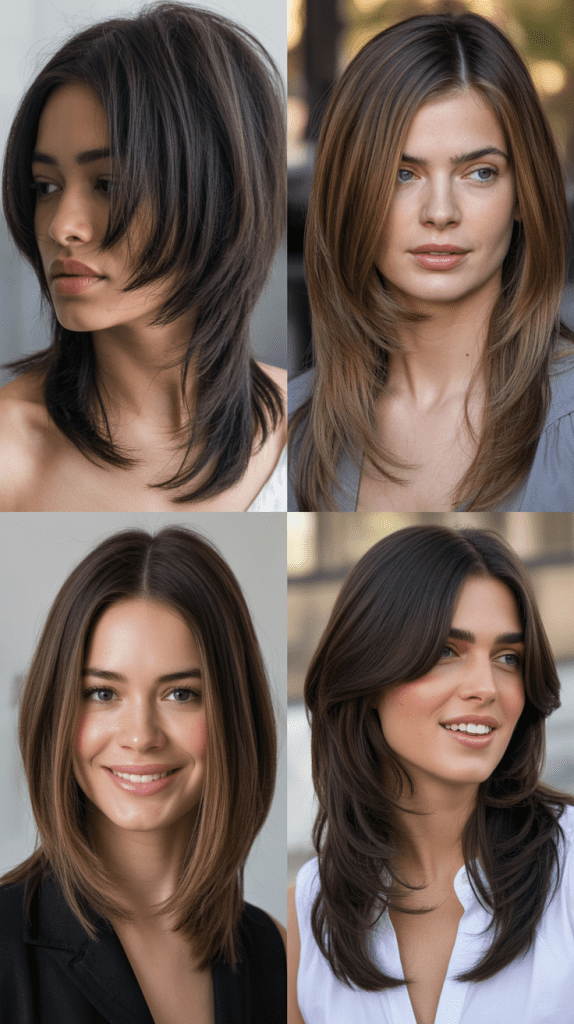
This technique adds significant movement and reduces weight dramatically while maintaining length.
- A razor is used instead of scissors to cut the layers, creating tapered ends that blend seamlessly into each other.
- The technique naturally adds texture and removes bulk without creating harsh lines or obvious steps in the hair.
- Razor-cut layers work exceptionally well for thick, coarse hair that needs significant weight removal.
- The resulting texture makes styling easier, as the hair naturally falls with more movement and dimension.
- This cut requires a stylist experienced in razor techniques, as improper razor-cutting can damage fine or fragile hair.
- Maintenance includes regular deep conditioning treatments to keep the tapered ends healthy and prevent frizz.
- The textured layers look stunning when styled with sea salt spray or texturizing products that enhance the piece-y, lived-in appearance.
11. Money Piece Highlights With Layered Cut

Money piece highlights—bright, face-framing streaks—paired with a layered long haircut create dimension through both color and cut.
This combination offers a high-impact look that draws attention to your facial features.
- Money piece highlights are placed in the front sections of hair, typically starting from the part and framing the face on both sides.
- The layered cut complements the highlights by creating movement that allows the lighter pieces to catch light and create contrast.
- Front layers are usually incorporated to showcase the highlights, with the brightest pieces placed in the most visible, face-framing positions.
- This combination works for all hair colors—blondes can go lighter, brunettes can add caramel or golden tones, and dark hair looks stunning with bold contrasts.
- The layered cut ensures the highlighted sections blend naturally into the rest of the hair rather than sitting flat and obvious.
- Maintenance requires regular toning to keep the money pieces looking fresh and vibrant, along with standard layer trims every 8-10 weeks.
12. Side-Swept Layers With Center Back Length
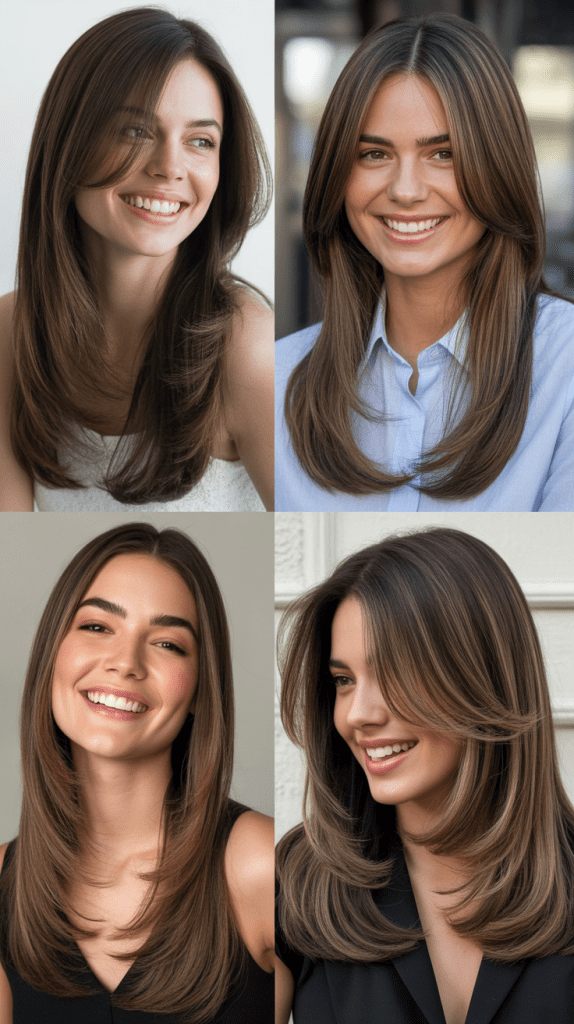
Side-swept layers create asymmetry and visual interest in the front while maintaining even, full length at the back.
This style offers versatility and works beautifully for women who prefer wearing their hair swept to one side.
- The front layers are cut longer on one side and shorter on the other, creating natural asymmetry that complements side-parted styling.
- When swept to the preferred side, the layers cascade at varying lengths, creating beautiful dimension and movement.
- The back remains one length or features minimal layering, maintaining fullness and weight at the longest points.
- This cut is ideal for women with naturally off-center parts or those who consistently style their hair swept to one side.
- The asymmetrical layers add interest without requiring dramatic styling—simply side-parting and tucking one side behind the ear creates an elegant look.
- Face shape considerations include which side to keep longer—longer layers on the side you sweep toward create more coverage, while shorter layers add openness.
13. Waterfall Layers For Volume
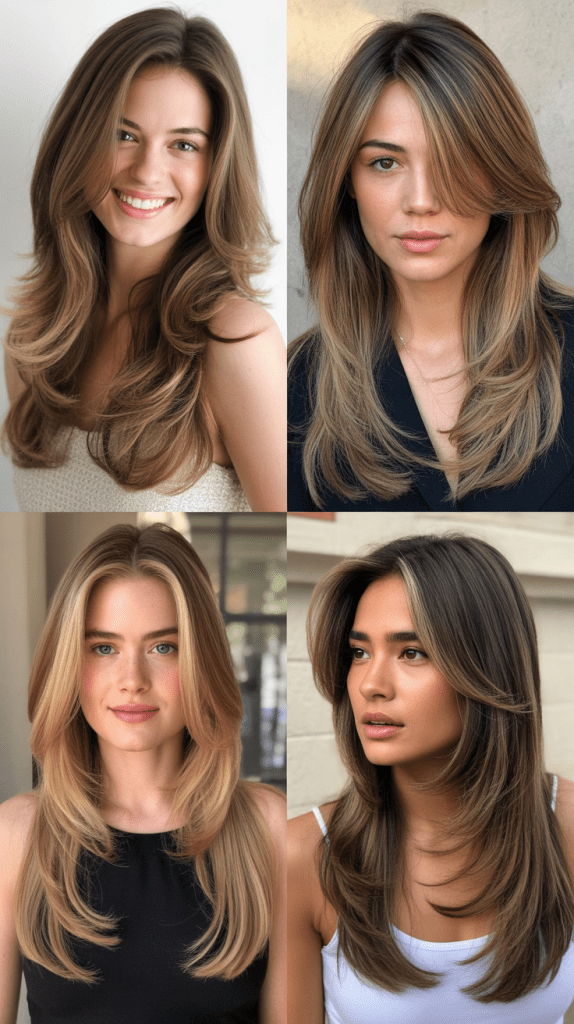
Waterfall layers cascade down the hair in a flowing, staircase-like pattern that creates maximum volume and movement.
Each layer is clearly defined, creating a dramatic dimensional effect from front to back.
- Layers are cut at distinctly different lengths, creating visible separation between each level like a waterfall flowing downward.
- The technique typically starts with shorter layers around the crown and face, with each subsequent layer noticeably longer than the previous one.
- This approach creates significant volume at the top and crown area while maintaining substantial length at the bottom.
- Waterfall layers work best for women with thick to very thick hair, as the technique removes considerable weight while maintaining fullness.
- The defined layers make styling easier, as each level can be curled or waved individually for maximum impact.
- This cut requires more frequent trims (every 6-8 weeks) to maintain the distinct separation between layers and prevent blending.
- When styled with volume-enhancing products and techniques, waterfall layers create red-carpet-worthy glamour and bounce.
14. Long Bob Layers Extended To Length

This hybrid approach starts with long bob (lob) layers in the front and gradually extends to full length in the back, creating a unique transitional cut.
The style offers the best of both worlds—the chic structure of a lob with the versatility of long hair.
- The front sections are cut to long bob length, typically falling between chin and shoulders, creating a modern, structured frame.
- As you move toward the back, the hair gradually lengthens, eventually reaching your desired full length.
- This creates an elongated, face-framing effect in front while maintaining the option for long ponytails and updos.
- The transitional layering adds significant movement throughout without creating harsh lines or obvious steps.
- This cut suits women who love the look of lob haircuts but aren’t ready to commit to cutting their length.
- Styling versatility is a major benefit—you can tuck the longer back sections into a bun while leaving the lob-length front pieces framing your face.
- The cut works well for all face shapes, as the lob-length front can be customized to flatter specific features.
15. Choppy Ends With Smooth Layers

Combining smooth, blended layers throughout the bulk of the hair with intentionally choppy, textured ends creates an edgy yet polished look.
This contrast adds visual interest and modern appeal to classic long layers.
- The majority of the layers are cut and blended smoothly, creating a polished, cohesive look through the mid-lengths.
- The ends are point-cut or razor-cut to create intentional texture and a piece-y, choppy finish.
- This technique adds edge and personality to an otherwise classic layered cut without requiring dramatic changes to length or structure.
- The choppy ends reduce the appearance of bluntness at the bottom of the hair, making the style look more lived-in and effortless.
- This cut works particularly well for women transitioning from damaged ends—the choppy technique disguises irregularities while maintaining length.
- Styling is flexible—wear it sleek to emphasize the contrast or add waves to enhance the textured appearance.
- Maintenance includes regular dusting of the ends every 8-10 weeks to maintain the choppy texture without allowing split ends to develop.
16. Diagonal Forward Layers

Diagonal forward layers are cut at an angle that moves from back to front, creating layers that naturally sweep forward and frame the face.
This technique adds directional movement and emphasizes facial features beautifully.
- Layers are cut on a diagonal angle, shorter in the back and longer in the front, creating a forward motion when styled.
- The diagonal cut naturally directs hair toward the face, creating effortless face-framing without requiring extensive styling.
- This technique works exceptionally well for women with thick hair, as it removes weight while creating intentional direction.
- The forward angle flatters most face shapes by creating vertical lines that elongate and slim the appearance of the face.
- Styling is simplified because the cut does much of the work—simply blow-drying hair forward creates the intended shape.
- The longest pieces in front can reach collarbone, chest, or even longer depending on your preference and the overall length of your hair.
- This cut requires a skilled stylist who understands angle and graduation to execute properly.
17. Thinned Ends With Face-Framing Front

Thinning out the ends creates a lighter, airier finish while strategic face-framing pieces add dimension around the face.
This combination is perfect for thick hair that tends to look heavy at the bottom.
- Thinning shears or point-cutting techniques remove internal weight from the ends, creating a softer, less blunt finish.
- Face-framing layers are added around the front, typically starting at cheekbone to chin length, to add dimension and highlight facial features.
- This approach maintains length while significantly reducing the heaviness that can weigh down thick, long hair.
- The thinned ends blend seamlessly into the layers, creating a cohesive look without obvious demarcation lines.
- This cut is ideal for women who want to keep their length but struggle with hair that feels too heavy or thick to style easily.
- Styling products like lightweight oils or serums help smooth the thinned ends and prevent frizz while maintaining the airy appearance.
- Regular maintenance every 8-10 weeks keeps the ends thinned properly and prevents the regrowth of excessive bulk.
18. Stacked Layers At Crown, Long At Back

Stacking layers at the crown creates significant volume and height in the upper portions of the hair while maintaining full length at the back.
This technique offers dramatic lift without sacrificing your hard-earned length.
- Short layers are stacked at the crown area, each layer slightly shorter than the one below it, creating built-in lift and volume.
- The back remains long with minimal to no layering, maintaining fullness and length for versatile styling options.
- This cut works beautifully for women with fine or flat hair who struggle to achieve volume at the roots and crown.
- The stacked crown creates a natural “bump” or volume point that makes hair appear fuller and more dynamic.
- Styling the crown with a round brush or volumizing products enhances the lift created by the stacked layers.
- The dramatic contrast between voluminous crown and long back creates a contemporary, fashion-forward silhouette.
- This style requires commitment to styling the crown area—letting it air-dry may not achieve the intended voluminous effect.
19. Micro Layers For Subtle Movement
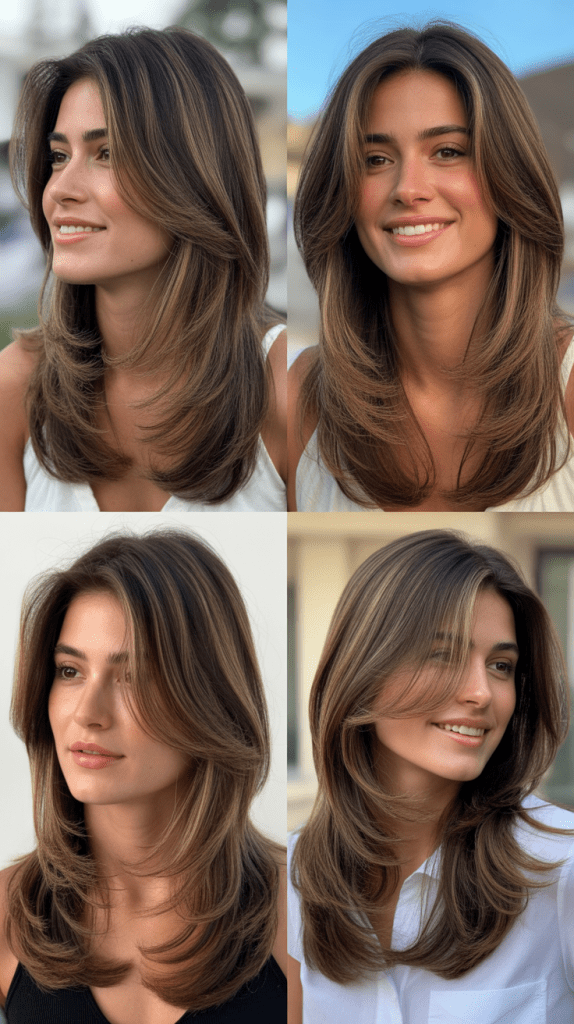
Micro layers are tiny, incremental layers placed throughout the hair that create subtle movement without dramatic length variation.
This technique is perfect for women who want minimal change with maximum impact.
- Layers are cut in very small increments, sometimes as little as half an inch between each layer level.
- The subtle graduation creates movement and dimension that’s visible when hair moves but maintains an overall one-length appearance.
- This approach is ideal for conservative styling preferences or professional environments where dramatic cuts may not be appropriate.
- Micro layers work well for all hair textures but are particularly effective on fine hair that can’t support heavy layering.
- The technique adds enough dimension to prevent hair from looking flat without creating obvious steps or graduation.
- Maintenance is minimal—the subtle nature of the layers means they grow out gracefully without requiring frequent trims.
- This cut allows you to test layered hair without committing to dramatic length differences that take years to grow out.
20. Layered Curtain Effect Front, Full Back
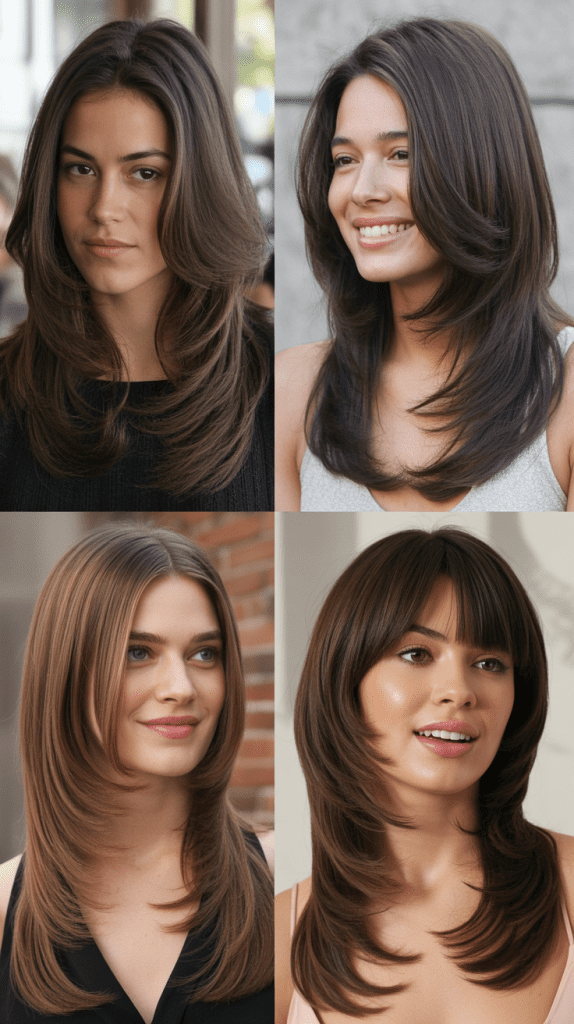
Creating a curtain effect with the front layers while maintaining full, unlayered length at the back offers face-framing dimension with maximum versatility for updos and styling at the back.
- Front sections are cut in a curtain pattern, shorter at the center part and gradually lengthening as they move outward.
- The curtain layers naturally fall to frame the face on both sides, creating symmetry and highlighting facial features.
- The back is left at full length without interior layering, maintaining maximum thickness and styling versatility.
- This combination works exceptionally well for women who frequently wear half-up styles or ponytails, as the curtain pieces frame the face while the back stays full.
- The cut flatters oval, long, and heart-shaped faces by adding width and balance through the curtain layers.
- Styling is simple—the curtain naturally falls into place with basic blow-drying or can be enhanced with a round brush.
- This approach allows you to experiment with layered front sections while keeping the commitment minimal—if you don’t like it, the back remains untouched.
21. Wispy Front Layers With Blunt Back

Wispy, delicate front layers create a soft, romantic frame while a blunt-cut back maintains structure and bold lines.
This juxtaposition offers both softness and strength in one cohesive style.
- Front layers are point-cut or razor-cut to create fine, wispy pieces that softly frame the face without heaviness.
- The back is cut in a straight, blunt line that creates a strong horizontal statement and maintains maximum density.
- This contrast creates visual interest and appeals to women who want both delicate femininity and bold structure.
- The wispy front layers are low-maintenance, air-drying beautifully into soft, face-framing pieces without requiring styling tools.
- The blunt back stays looking healthy and full, as blunt cuts prevent the tapered, thinned-out appearance some long hair develops.
- This cut works well for medium to thick hair textures that can support both the delicate front and the heavy blunt back.
- Regular trims every 8-10 weeks maintain the blunt line while refreshing the wispy pieces to prevent them from looking stringy.
22. Collarbone Front Layers, Hip-Length Back

This dramatic length variation features front layers that end at the collarbone while the back extends to hip length or beyond, creating extreme contrast and versatility in a single cut.
- Front sections are cut to collarbone length, providing substantial face-framing and ease of styling in the front portions.
- The back maintains dramatic length, often reaching the hips or even longer for a striking contrast.
- This cut allows for maximum styling versatility—wear it down to showcase the length variation or pull it into updos that highlight both short and long pieces.
- The collarbone-length front pieces are practical for daily life, staying out of your face while eating, working, or exercising.
- This style works beautifully for women transitioning from very long hair to more manageable lengths without sacrificing all their length at once.
- The dramatic difference between front and back creates an editorial, fashion-forward appearance that stands out.
- Maintenance focuses on keeping the front pieces at the desired collarbone length while allowing the back to grow or maintaining it at hip length.
23. Internal Layers With Surface One-Length

Internal layers remove weight and add movement from inside the hair shaft while the surface remains one length, creating hidden dimension that reveals itself through movement rather than visible layers.
- Stylists use specialized cutting techniques to remove bulk from the interior of the hair without affecting the surface or perimeter length.
- From a static view, the hair appears to be one length with no visible layering or graduation.
- When the hair moves or is styled, the internal layers create bounce, swing, and movement that wouldn’t exist in truly one-length hair.
- This technique is exceptional for very thick, heavy hair that needs weight removal without compromising the sleek appearance.
- Internal layering allows for polished professional looks while maintaining the movement and styling ease that layers provide.
- The cut requires a highly skilled stylist who understands internal weight distribution and how to remove it without creating surface irregularities.
- Maintenance is straightforward—regular trims maintain the one-length perimeter while refreshing the internal layers to prevent weight buildup.
24. Disconnected Front Layers

Disconnected layers feature an intentional gap between the front layers and the rest of the hair, creating a bold, avant-garde look.
Rather than blending seamlessly, the layers are distinctly separate, making a strong style statement.
- Front layers are cut significantly shorter than the next layer back, creating visible space or “disconnection” between lengths.
- The disconnected sections typically start around the cheekbones or chin and sit noticeably separate from longer layers beneath.
- This bold technique creates an editorial, high-fashion appearance that’s intentionally dramatic rather than naturally blended.
- Disconnected layers work well for women who embrace edgy, unconventional styles and want their haircut to make a statement.
- The technique requires confidence to wear, as the obvious separation draws attention and may not suit conservative environments.
- Styling can either emphasize the disconnection by straightening to show clean lines or soften it by adding waves that help the pieces blend more naturally.
- This cut requires maintenance every 6-8 weeks to keep the disconnection crisp and prevent the pieces from growing into each other.
25. Graduated Bob Front, Waterfall Back

This hybrid style features a graduated bob cut in the front sections that transitions into waterfall layers throughout the back, combining structured shaping with flowing movement.
- The front is cut in a graduated bob style, typically with the hair shorter at the nape and gradually lengthening toward the face.
- This graduated front creates an angled, stacked effect that provides structure and frames the face with precision.
- The back transitions into waterfall layers, with multiple distinct length levels cascading downward.
- The combination offers the best of both worlds—structured, contemporary shaping in front with romantic, flowing layers in back.
- This cut works beautifully for thick hair, as the graduated front removes bulk while the waterfall back maintains impressive length.
- Styling versatility is a major benefit—you can emphasize the bob structure with sleek styling or focus on the waterfall layers with voluminous waves.
- The complexity of this cut requires an experienced stylist familiar with both graduated bobs and layered techniques.
26. Slide-Cut Layers For Shine

Slide-cutting is a specialized technique where scissors slide down the hair shaft rather than cutting straight across, creating soft layers that enhance shine and movement.
This method is perfect for adding dimension while maximizing light reflection.
- The stylist holds the scissors at an angle and slides them down the hair length, creating tapered, soft-edged layers.
- This technique naturally closes the hair cuticle, which enhances the hair’s ability to reflect light and appear shinier.
- Slide-cut layers are more subtle than traditional layers, creating gentle movement without obvious steps or graduation.
- The method works exceptionally well for fine to medium hair textures that benefit from enhanced shine and smooth edges.
- Because the cutting technique is gentler on the hair shaft, slide-cut layers often stay healthier-looking longer between trims.
- This cut is ideal for women who want layered dimension without the potential frizz or texture that more aggressive cutting techniques can create.
- Maintaining the shine requires quality hair care products and regular deep conditioning treatments along with trims every 10-12 weeks.
27. Asymmetrical Front With Balanced Back
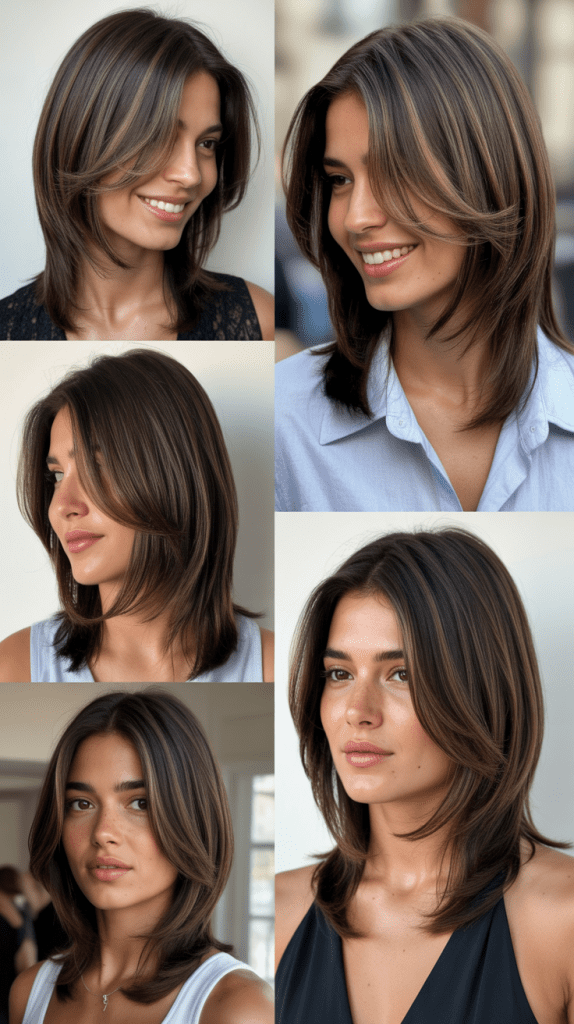
Creating asymmetry in the front sections while keeping the back balanced and even offers a contemporary, fashion-forward look with practical symmetry where it matters most.
- One side of the front is cut noticeably shorter than the other, creating intentional imbalance that draws the eye.
- The asymmetry is usually most pronounced around the face, with one side potentially chin-length while the other reaches collarbone or longer.
- The back remains even and balanced, providing stability and symmetry that prevents the cut from looking accidentally uneven.
- This style works beautifully for women who want edgy, modern styling without committing to dramatic cuts throughout all their hair.
- The asymmetry can be worn with a deep side part to emphasize the length difference or with a center part for a more subtle effect.
- Face shape considerations include which side to keep shorter—typically, the shorter side is placed on your less-preferred profile side.
- The cut requires styling commitment, as wearing the hair completely straight back eliminates the asymmetrical effect.
28. Texturized Ends With Smooth Layers
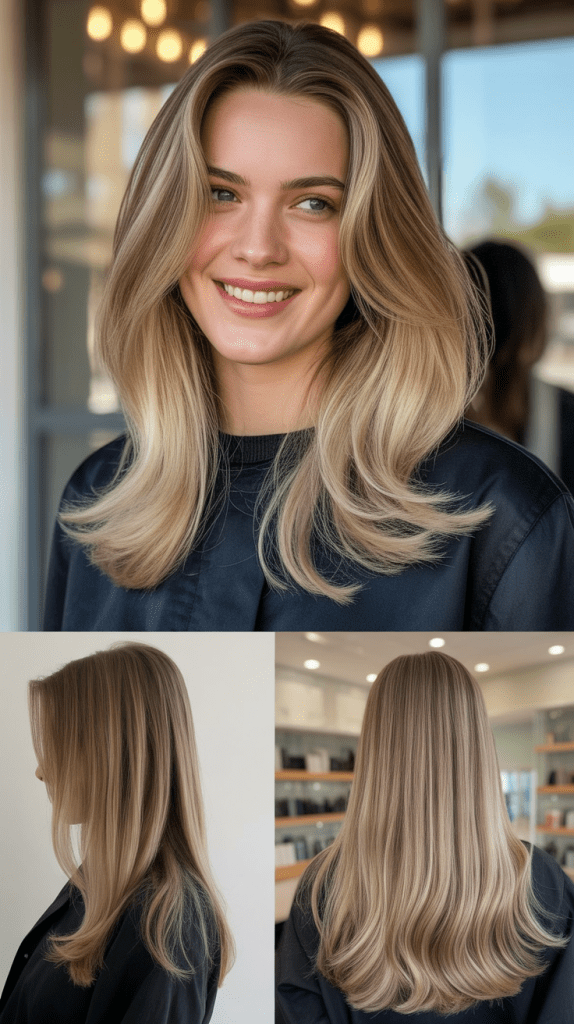
Combining smooth, well-blended layers through the mid-lengths with heavily texturized ends creates a polished-to-edgy gradient effect.
This style offers refinement where you need it and personality at the ends.
- The layers through the bulk of the hair are cut and blended smoothly using traditional scissor techniques for a polished appearance.
- The bottom few inches are heavily texturized using point-cutting, razor techniques, or texturizing shears to create piece-y, separated ends.
- This combination prevents the hair from looking too perfect or “done,” adding lived-in appeal while maintaining sophistication in the upper sections.
- The texturized ends work particularly well for thick hair, as they remove weight and prevent the bottom from looking too blunt or heavy.
- Styling products like texture sprays or sea salt mists enhance the texturized ends while smoothing serums can be applied to the upper lengths.
- The contrast between smooth and textured sections creates visual interest and dimension that’s noticeable even in simple, straight styles.
- Maintenance includes regular texturizing of the ends every 6-8 weeks to maintain the piece-y effect and prevent excessive split ends.
29. Crown Layers With Tapered Length

Strategic layers concentrated at the crown area paired with gradually tapered length throughout creates lift at the top while maintaining fullness from roots to ends.
This approach solves the common problem of flat-crown syndrome.
- Shorter layers are placed specifically at the crown area to create natural lift and volume at the highest point of the head.
- The length gradually tapers from crown to ends, with each section slightly longer than the one above it, creating seamless graduation.
- This technique addresses the common issue of hair lying flat at the crown, particularly problematic for fine or straight hair types.
- The tapered length prevents blunt ends while maintaining substantial length and fullness throughout the hair.
- Styling the crown with volumizing products and blow-drying with a round brush maximizes the lift created by the layers.
- This cut is ideal for women who want height and dimension without losing length or dealing with obvious, choppy layers.
- The gradual taper means the cut grows out gracefully without requiring frequent trims—every 10-12 weeks is typically sufficient.
30. Long Layers With Beveled Ends

Beveled ends feature hair cut at a slight angle rather than straight across, creating soft edges that add movement while long layers throughout provide dimension.
This subtle technique offers polish with personality.
- The perimeter of the hair is cut at a subtle angle rather than straight across, creating a beveled edge that appears softer and more dynamic.
- Long layers are distributed throughout, typically starting around shoulder length or lower and gradually increasing to full length.
- The beveled technique removes the harsh horizontal line of blunt cuts while maintaining fullness and avoiding overly thinned ends.
- This approach works well for all hair textures and is particularly flattering for women who want subtle shaping without dramatic changes.
- The angled ends catch light differently than blunt cuts, creating the appearance of more shine and dimension.
- Styling is versatile—the beveled ends look polished when worn straight and create beautiful movement when styled with waves or curls.
- Maintenance is straightforward, requiring trims every 8-10 weeks to maintain the beveled angle and keep the long layers fresh.
- This cut bridges the gap between one-length hair and obviously layered styles, perfect for women who want subtle enhancement.
Maintenance Schedule for Layered Long Hair
Every 6-8 Weeks:
- Trim front layers to maintain face-framing shape
- Refresh heavily textured or choppy sections
- Remove split ends before they travel up the hair shaft
Every 8-10 Weeks:
- Full layer refresh for most traditional layered cuts
- Reshape graduated or beveled sections
- Maintain blunt lines and perimeter shapes
Every 10-12 Weeks:
- Maintenance for subtle layers and minimal cutting
- One-length cuts with internal layering
- Cuts designed to grow out gracefully
Hair Care for Long Layers
Maintaining healthy long layered hair requires consistent care and attention to both the layered sections and the length:
- Deep condition weekly to keep ends hydrated and prevent the frizz that layered cuts can sometimes emphasize.
- Use heat protectant religiously before any heat styling, as layers often require more styling than one-length hair.
- Trim regularly according to your cut’s maintenance schedule to prevent layers from looking grown-out and shapeless.
- Apply products strategically by using lighter products on layers and heavier treatments on ends where dryness concentrates.
- Sleep on silk or satin pillowcases to reduce friction that can cause frizz, particularly important for textured or feathered layers.
- Avoid over-washing which can dry out layers and cause them to lose shape—aim for 2-3 times weekly depending on your hair type.
- Get professional treatments quarterly such as keratin smoothing, glossing, or bond-building treatments to maintain the health and appearance of your layers.
Choosing the Right Layers for Your Face Shape
Oval Face:
- Can wear virtually any layered style
- Experiment with different layer placements without restriction
- Both face-framing and crown layers work beautifully
Round Face:
- Choose longer layers that start below the chin to create length
- Avoid short, chin-length layers that emphasize roundness
- Diagonal or side-swept layers create flattering vertical lines
Square Face:
- Soft, wispy layers around the jawline soften angular features
- Avoid blunt layers that end at the jaw, which emphasize squareness
- Textured, feathered layers work particularly well
Heart-Shaped Face:
- Layers starting at chin level balance a wider forehead
- Avoid too much volume at the crown which emphasizes the heart shape
- Face-framing pieces around the cheekbones are especially flattering
Long Face:
- Layers that add width at the sides rather than length
- Crown layers that create volume horizontally
- Avoid layers that are too long and vertical, which elongate further
Conclusion
The 30 Beautiful Long Haircuts With Straight Back & Front Layers presented throughout this article demonstrate that you don’t have to sacrifice length to achieve dimension, movement, and style.
From subtle micro layers that create barely-there enhancement to dramatic waterfall layers that make a bold statement, there’s a perfect layered long haircut for every woman, face shape, and hair texture.
The key to success with long layers lies in choosing the right technique for your specific hair characteristics, maintaining regular trims to keep the shape fresh, and using appropriate styling methods to showcase the dimension your layers create.
Whether you prefer the structured sophistication of blunt front pieces with layered backs, the romantic softness of feathered layers, or the edgy appeal of disconnected cuts, these styles prove that long hair can be both practical and stunning.
Remember that the best haircut is one that fits your lifestyle, works with your natural texture, and makes you feel confident every time you look in the mirror.
Consult with a skilled stylist who understands layering techniques, bring reference photos of your favorite styles from this collection, and don’t be afraid to customize any of these cuts to perfectly suit your unique features and preferences.
With the right layered long haircut, you’ll enjoy hair that’s easier to style, full of movement, and beautifully flattering from every angle.
