

Finding the perfect haircut for your little boy can feel overwhelming with so many options available, but short hairstyles offer the ideal combination of style, practicality, and minimal upkeep that busy parents appreciate.
Short haircuts for boys are not only trendy and age-appropriate but also keep your child comfortable during active play, sports, and warm weather while reducing the time spent on daily grooming routines.
This comprehensive guide explores 28 short little boy haircuts that are easy to maintain, covering classic styles that never go out of fashion, modern cuts that reflect current trends, and versatile options suitable for different hair types and face shapes.
Whether your son has straight, wavy, curly, or thick hair, you’ll discover practical styling tips, maintenance advice, and inspiration to help you choose a haircut that suits his personality and your lifestyle.
From timeless crew cuts and buzz cuts to contemporary fades and textured styles, these low-maintenance options will keep your little one looking sharp without requiring extensive styling products or complicated morning routines.
1. Classic Crew Cut
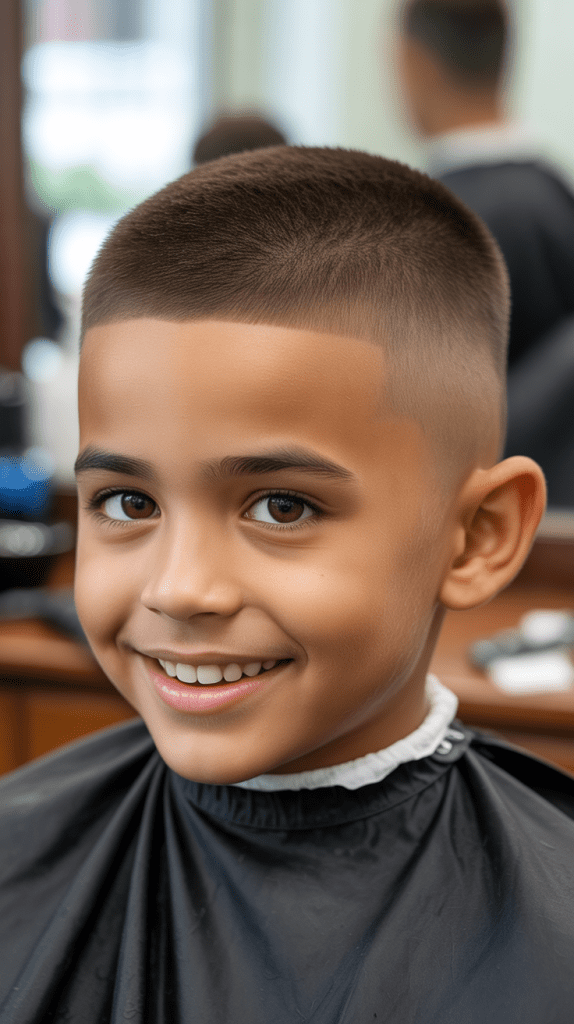
The crew cut remains one of the most popular and practical short haircuts for little boys, offering a clean, neat appearance that works for any occasion.
This timeless style features short sides with slightly longer hair on top, typically measuring about one inch in length, creating a uniform look that’s professional yet playful.
Key Features:
- Hair on top is cut to approximately 3/4 to 1 inch in length
- Sides and back are tapered shorter, usually using clipper guards #3 or #4
- Requires minimal styling and maintenance
- Grows out evenly without looking unkempt
- Perfect for active boys who play sports or spend time outdoors
Maintenance Tips:
- Needs a trim every 4-6 weeks to maintain the shape
- Can be styled with a small amount of lightweight pomade for special occasions
- Wash with regular shampoo and air dry for everyday wear
- Works well for all hair types including straight, wavy, and thick hair
2. Buzz Cut
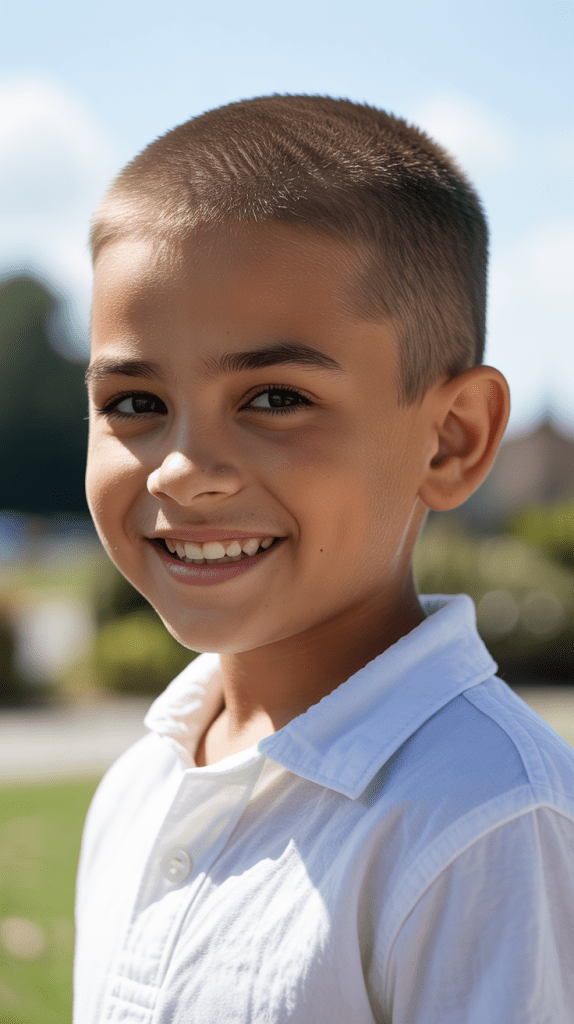
The buzz cut is the ultimate low-maintenance haircut for little boys, requiring virtually no styling effort while keeping your child cool and comfortable.
This simple yet effective style uses clippers set to one uniform length all over the head, creating a clean, practical look that’s perfect for summer months and active lifestyles.
Benefits:
- Takes only minutes to cut at home with basic clippers
- Eliminates the need for brushing, combing, or styling products
- Stays neat-looking for weeks without professional trims
- Keeps boys cool during hot weather and physical activities
- Works equally well for all hair textures and types
Length Options:
- Guard #1 (1/8 inch) for a very short, close-cropped look
- Guard #2 (1/4 inch) for slightly more coverage
- Guard #3 (3/8 inch) for a fuller appearance while remaining very short
- Guard #4 (1/2 inch) for maximum length in the buzz cut category
3. Ivy League Cut

The Ivy League cut offers a sophisticated upgrade to the classic crew cut, featuring slightly longer hair on top that can be styled with a subtle side part.
This versatile haircut bridges the gap between casual and formal, making it suitable for school pictures, family events, and everyday activities.
Styling Characteristics:
- Top hair measures 1 to 2 inches in length for styling flexibility
- Sides and back are tapered short using clippers
- Front hairline allows for a small side-swept fringe
- Creates a more polished appearance than standard crew cuts
- Can be worn styled or naturally tousled
How to Style:
- Apply a small amount of styling cream to damp hair
- Use fingers or a comb to create a side part
- Sweep front hair slightly to one side
- Allow to air dry for a natural finish
- For special occasions, use a light-hold pomade for more definition
4. High and Tight

The high and tight haircut delivers a bold, military-inspired look with extremely short sides and back contrasted against slightly longer hair on top.
This dramatic style creates strong definition and works exceptionally well for boys with thick or coarse hair that holds shape naturally.
Cut Specifications:
- Sides and back are clipped very short (guard #0, #1, or #2)
- Top section is left 1-2 inches long
- Sharp contrast line between short sides and longer top
- Minimal blending creates the distinctive “high and tight” appearance
- Emphasizes the shape of the head and facial features
Best Suited For:
- Boys with thick, straight hair that stands up naturally
- Active children who need extremely low-maintenance styles
- Creating a confident, bold appearance
- Parents who prefer clean, structured haircuts
- Boys who enjoy sporty or athletic aesthetics
5. Textured Crop
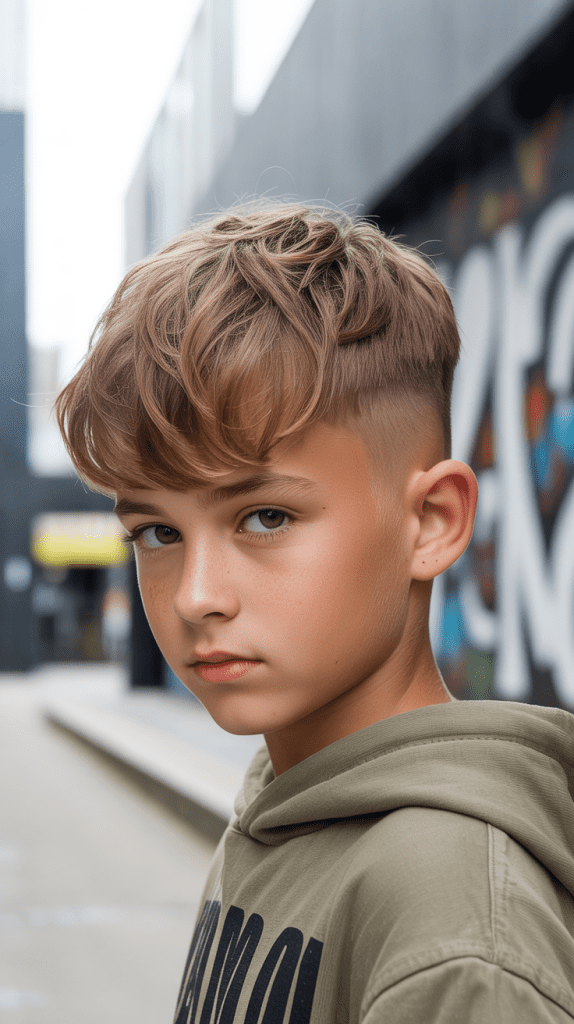
The textured crop has become increasingly popular for little boys, offering a modern, stylish appearance with deliberately uneven, choppy layers on top.
This contemporary cut provides natural movement and dimension while remaining easy to maintain with minimal daily styling.
Style Details:
- Top hair is cut to varying lengths (1-2 inches) for texture
- Point-cutting technique creates a choppy, layered effect
- Sides are kept short with clippers or scissors
- Fringe area can be left slightly longer for versatility
- Works beautifully with natural hair texture and cowlicks
Advantages:
- Hides difficult growth patterns and cowlicks naturally
- Requires very little styling product or effort
- Grows out gracefully without losing shape
- Adds volume and movement to fine or thin hair
- Creates a fashionable, modern appearance
6. Side Part Fade
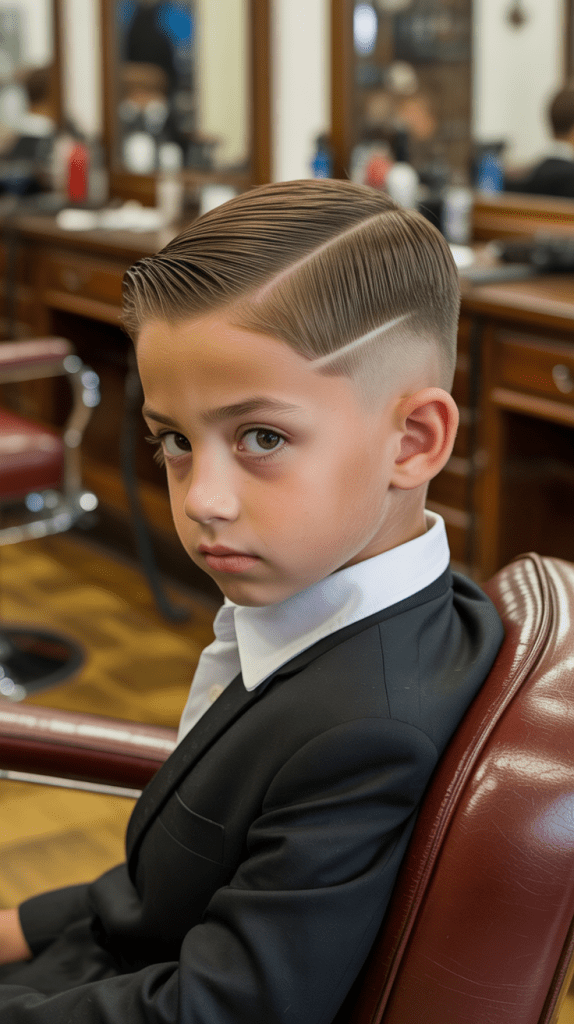
The side part fade combines classic sophistication with modern barbering techniques, featuring a defined side part with gradually faded sides.
This polished yet age-appropriate style works well for both casual and formal occasions, offering versatility that parents appreciate.
Technical Elements:
- Clean, defined side part created with clippers or razor
- Hair on top measures 2-3 inches for styling flexibility
- Sides gradually fade from longer to shorter (high, mid, or low fade)
- Seamless blending creates a professional finish
- Top hair can be combed over or styled with slight texture
Styling Guide:
- Apply lightweight styling cream to towel-dried hair
- Use a comb to create and define the side part
- Comb top hair across to the opposite side
- Keep sides smooth or add slight texture to top
- Refresh the part daily with a quick comb-through
7. Short Spiky Hair

Short spiky hair brings fun and personality to little boys’ hairstyles, allowing them to express their playful nature while keeping hair manageable.
This energetic style uses short to medium-length hair on top styled upward with minimal product for a youthful, dynamic appearance.
Creating the Look:
- Top hair should be 1-2 inches long for optimal spike formation
- Sides are cut short to emphasize the spiky top
- Use a small amount of strong-hold gel or wax
- Apply product to damp hair and use fingers to create spikes
- Work from back to front for best results
Personality Match:
- Perfect for energetic, outgoing boys
- Creates a fun, playful appearance
- Easy enough for kids to style themselves as they grow
- Works well with straight or slightly wavy hair
- Adds height and volume to the overall look
8. Bowl Cut Modern Version
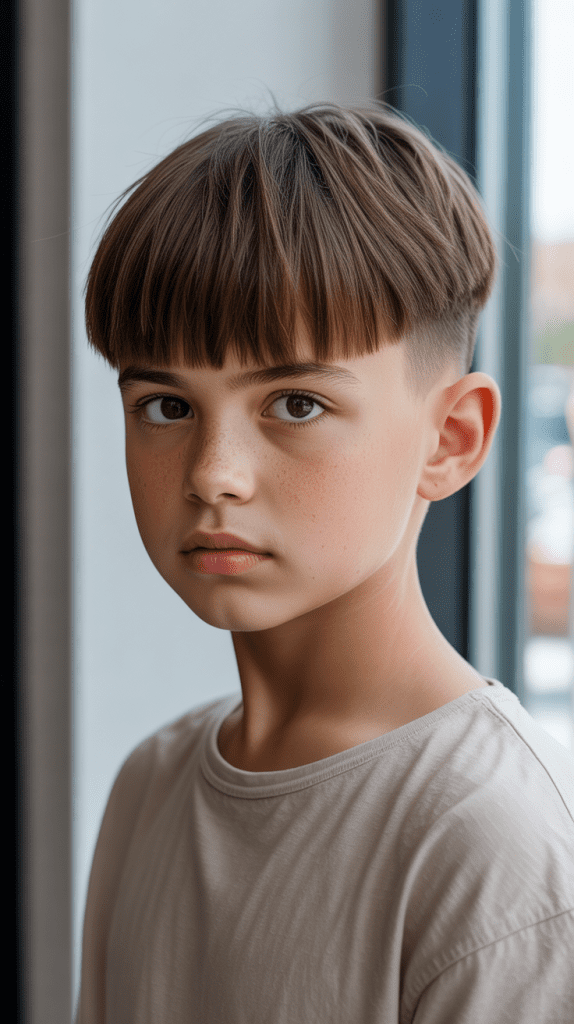
The modern bowl cut has evolved from its traditional predecessor into a stylish, updated version that’s surprisingly practical for little boys.
This contemporary interpretation features softer edges, subtle layering, and a more natural appearance while maintaining the easy-maintenance benefits of the classic style.
Modern Updates:
- Softer, less blunt cutting lines create a natural look
- Subtle layering adds movement and prevents the “helmet” effect
- Fringe can be customized to different lengths
- Works with natural hair texture rather than forcing uniformity
- Can incorporate slight tapering on sides for a fresher appearance
Maintenance Benefits:
- Requires trimming only every 6-8 weeks
- No daily styling needed for everyday wear
- Hair naturally falls into place after washing
- Works well for boys with straight or slightly wavy hair
- Keeps hair out of eyes while maintaining length
9. Faux Hawk
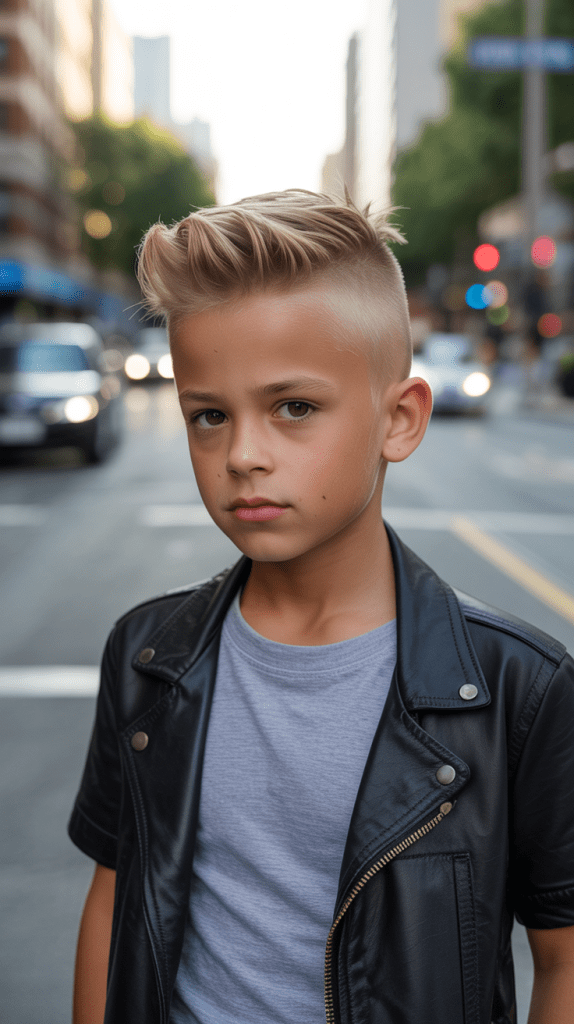
The faux hawk offers an edgy, trendy alternative for fashion-forward little boys, creating a mohawk-inspired look without the extreme commitment.
This playful style features longer hair in a strip down the center of the head with shorter sides, styled upward and toward the center for special occasions or left natural for everyday wear.
Design Elements:
- Center strip of hair measures 2-3 inches long
- Sides are cut progressively shorter (guards #2-#4)
- Gradual blending creates a softer appearance than traditional mohawks
- Can be styled up for events or worn flat for school
- Provides styling versatility depending on the occasion
Styling Flexibility:
- Leave natural for a subtle, understated version
- Apply gel or pomade and push hair toward center for defined look
- Create texture by scrunching product through hair
- Spike the center section for maximum impact
- Switch between styled and natural looks easily
10. Caesar Cut
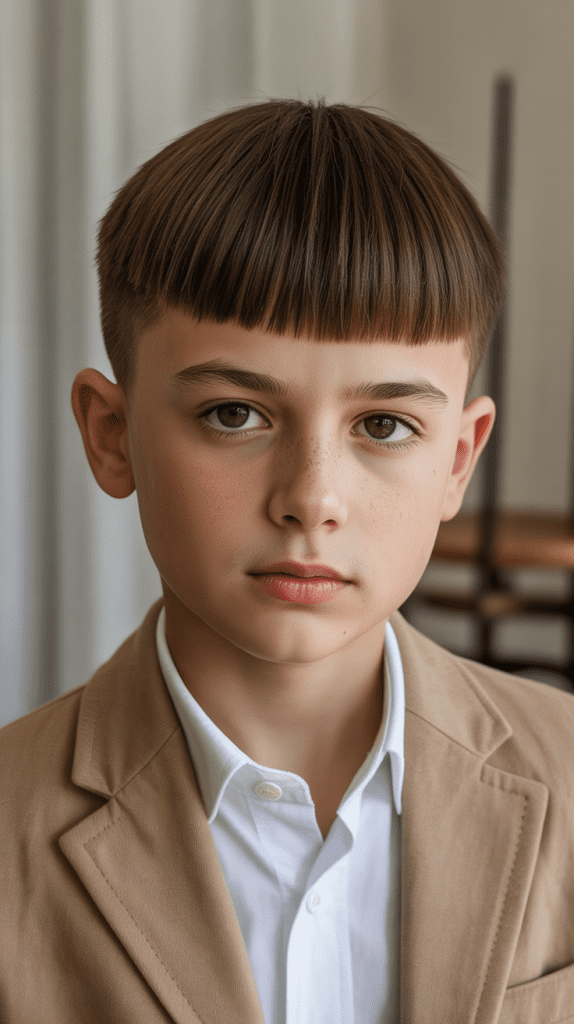
The Caesar cut provides a practical, Roman-inspired style characterized by a short, horizontal fringe and uniform length throughout.
This timeless haircut works exceptionally well for boys with straight hair and requires virtually no styling while maintaining a neat, put-together appearance.
Cut Characteristics:
- Overall length ranges from 1-2 inches throughout
- Short, straight fringe across the forehead
- Minimal to no tapering on sides and back
- Blunt cutting technique creates clean lines
- Hair naturally falls forward toward the face
Ideal Candidates:
- Boys with straight or slightly wavy hair
- Children with square or rectangular face shapes
- Active boys needing low-maintenance styles
- Boys who dislike hair falling in their eyes
- Children with thick hair that can support the cut’s structure
11. Undercut
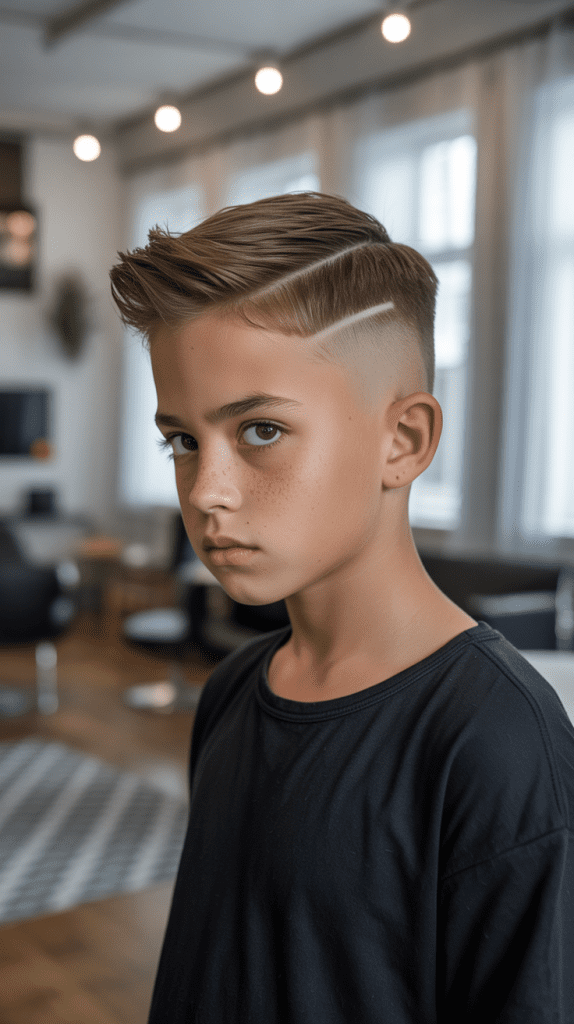
The undercut creates dramatic contrast by combining very short or shaved sides and back with significantly longer hair on top.
This bold, fashionable style has become increasingly popular for boys, offering a modern edge that can be styled multiple ways or worn naturally.
Structural Details:
- Sides and back are shaved or cut very short (guard #0-#2)
- Top section maintains 3-4 inches of length
- Sharp, defined line separates short sides from longer top
- No gradual blending or fading
- Top hair can be worn forward, back, or to the side
Styling Options:
- Slick back with pomade for formal occasions
- Sweep to side for everyday style
- Leave natural and tousled for casual look
- Push forward for a fringe effect
- Experiment with different partings and directions
12. Short Comb Over
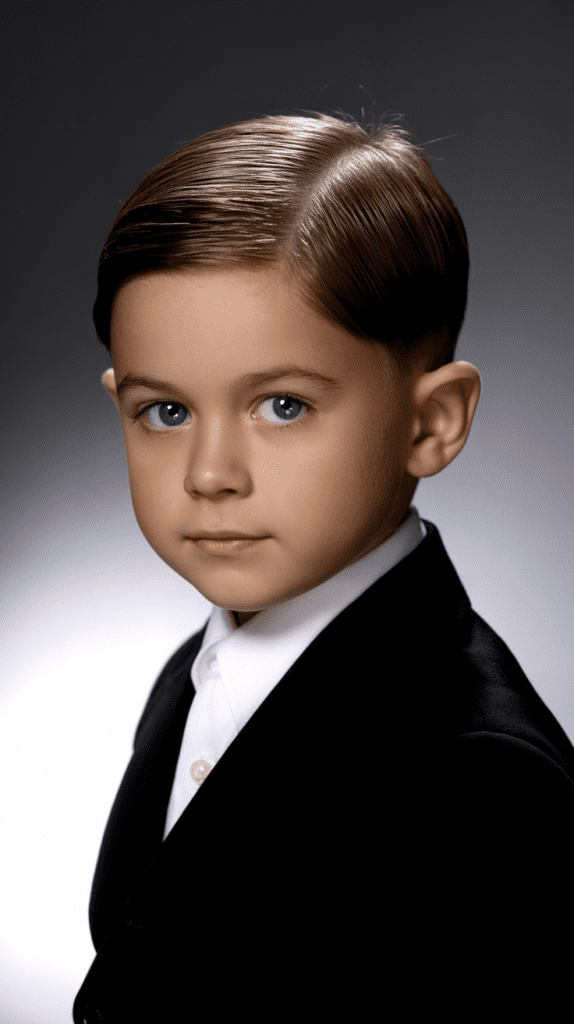
The short comb over brings classic sophistication to little boys’ hairstyles with a modern, scaled-down approach.
This gentlemanly style features hair combed neatly to one side with shorter sides, creating a polished appearance that’s perfect for school and special events.
Style Components:
- Top hair length of 2-3 inches allows for combing
- Sides are cut short or faded for contrast
- Hair is combed from one side across the top
- Can include a defined part or natural division
- Creates a clean, mature appearance while remaining age-appropriate
Maintenance and Styling:
- Apply light styling cream or pomade to damp hair
- Use a comb to direct hair to the preferred side
- Smooth down any flyaways or unruly sections
- Allow to air dry or use low heat from a blow dryer
- Quick morning refresh with water and comb keeps it neat
13. Butch Cut

The butch cut sits between a buzz cut and crew cut in terms of length, offering a practical middle ground that’s easy to maintain while providing slightly more styling options.
This versatile short haircut uses a longer clipper guard throughout, creating a uniform appearance that works for virtually any occasion.
Length and Specifications:
- Typically uses guard #4 or #5 (1/2 to 5/8 inch)
- Uniform length all over the head
- Slightly longer than buzz cuts allow for minimal styling
- Can be buzzed at home between professional cuts
- Provides more coverage than very short buzz cuts
Practical Benefits:
- Perfect for boys transitioning from longer to shorter hair
- Comfortable during all seasons and activities
- Grows out evenly and slowly
- No awkward in-between stages during growth
- Can be easily maintained at home with clippers
14. French Crop
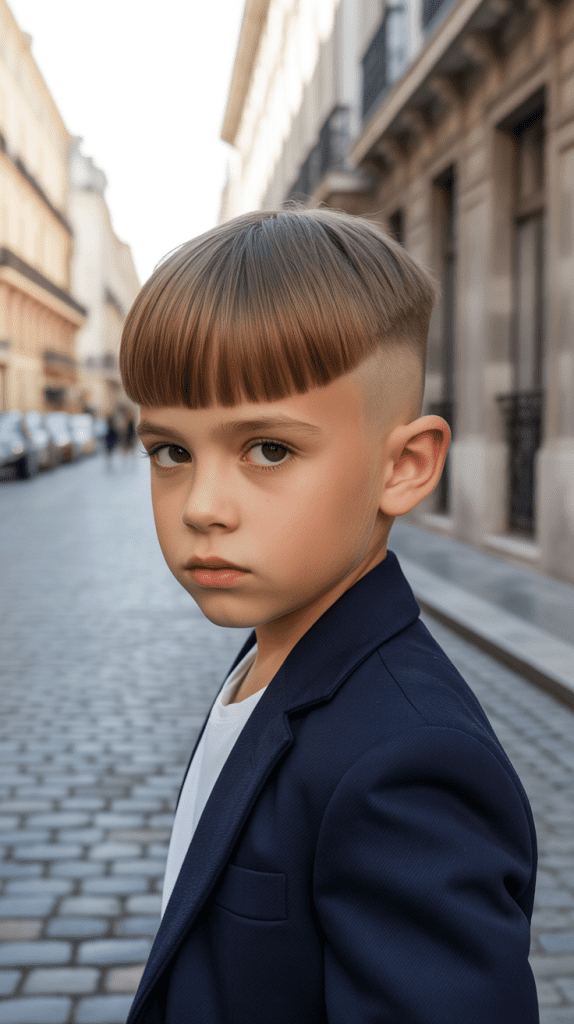
The French crop offers European sophistication with its distinctive short fringe and textured top, creating a stylish yet practical option for fashion-conscious little boys.
This contemporary cut features a blunt, horizontal fringe with disconnected, textured hair on top and short, faded sides.
Defining Features:
- Short, blunt fringe cut straight across the forehead
- Textured, choppy layers on top for dimension
- Disconnected from sides (no blending at the top)
- Sides are faded or cut very short
- Creates a modern, fashion-forward appearance
Hair Type Compatibility:
- Works exceptionally well with thick, straight hair
- Can be adapted for wavy hair with proper texturizing
- Best suited for boys with medium to thick density
- Helps manage heavy, forward-growing hair
- Creates the illusion of more volume for fine hair
15. Regulation Cut
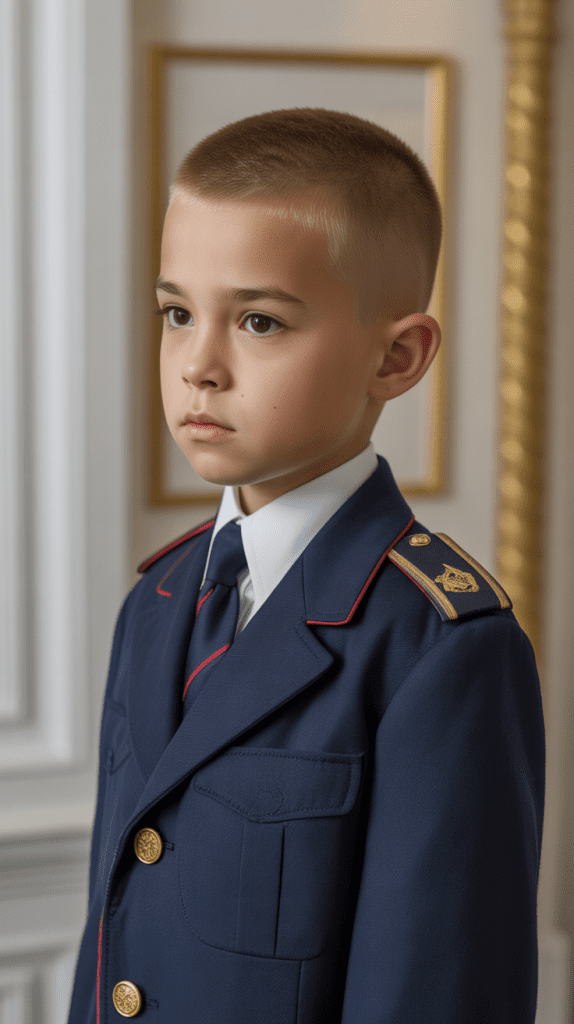
The regulation cut provides a neat, uniform military-style appearance that’s extremely practical and easy to maintain for little boys.
This disciplined haircut features short, even length throughout with slightly tapered sides, offering a clean-cut look that parents and teachers appreciate.
Cut Details:
- Overall length of 3/4 to 1 inch throughout
- Slight tapering around ears and neckline
- Uniform appearance without dramatic contrasts
- Creates a tidy, disciplined aesthetic
- Meets most school and organization dress codes
When to Choose This Style:
- Boys attending schools with strict grooming policies
- Children participating in military programs or academies
- Parents preferring traditional, conservative styles
- Active boys needing extremely low maintenance
- Summer months when shorter hair is more comfortable
16. Messy Textured Top
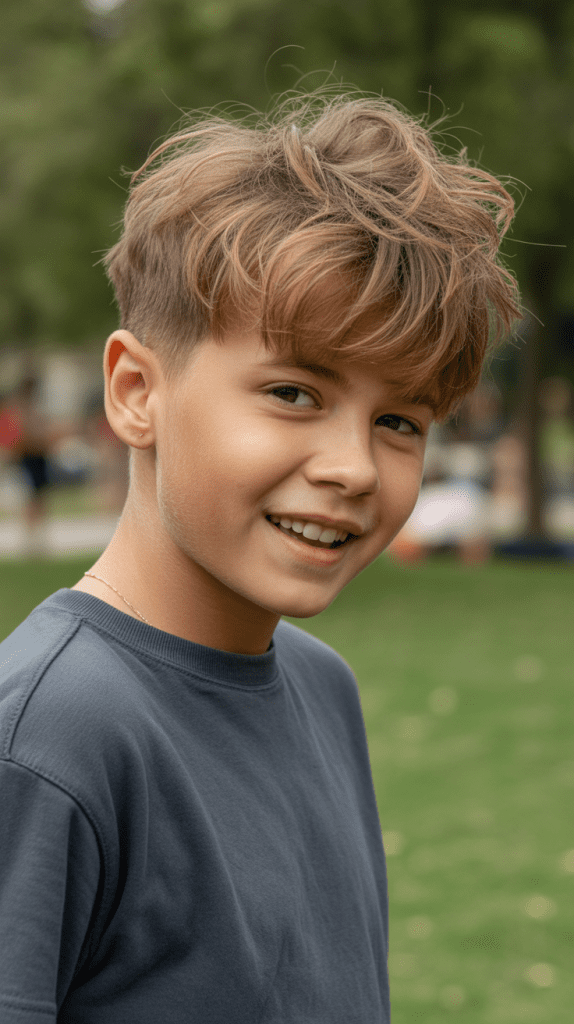
The messy textured top embraces natural texture and controlled chaos, creating a stylish, effortless look that’s surprisingly easy to maintain.
This modern style features deliberately tousled hair on top with short sides, perfect for boys whose hair naturally wants to go in multiple directions.
Texture Techniques:
- Top hair is point-cut to create varied lengths
- Choppy layers add movement and dimension
- Natural cowlicks are worked into the style rather than fought
- Product is scrunched in to enhance texture
- Intentionally imperfect finish is the goal
Low-Maintenance Appeal:
- Works with natural hair patterns and growth
- Hides bedhead and irregular styling
- Quick morning routine with minimal product
- Grows out gracefully without looking unkempt
- Embraces the natural, carefree appearance of childhood
17. Short Afro
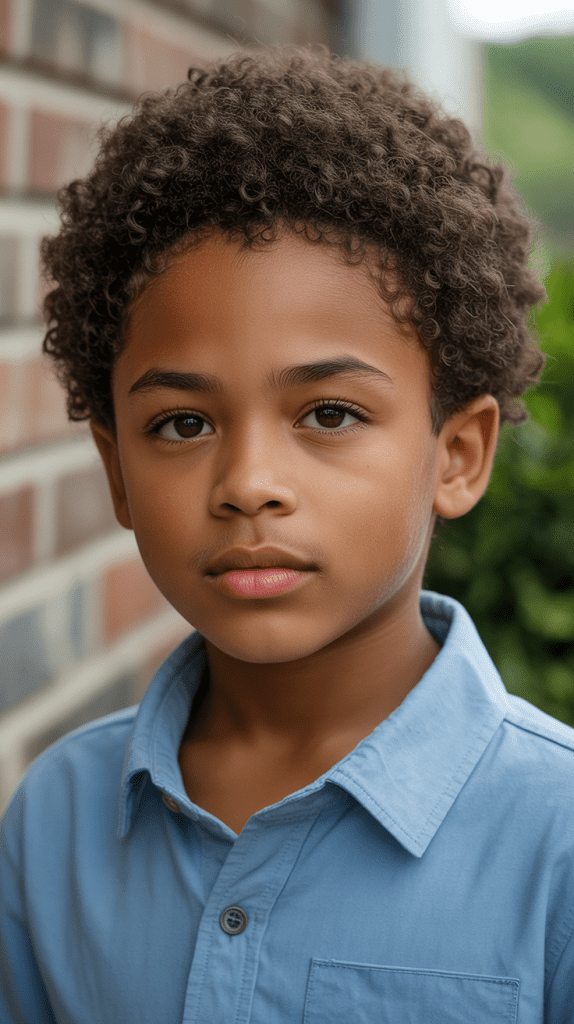
The short afro celebrates natural texture while keeping hair at a manageable, easy-to-maintain length for little boys with curly or coily hair.
This classic style honors natural hair texture while providing a neat, rounded shape that’s both stylish and practical.
Styling and Shaping:
- Hair is cut to uniform length of 1-2 inches throughout
- Natural curl pattern creates the rounded afro shape
- Regular shaping maintains the circular silhouette
- Can be picked out for added volume and shape
- Edges are kept neat and defined
Care Requirements:
- Moisturize regularly with leave-in conditioner or oil
- Use a wide-tooth comb or pick to shape
- Trim every 4-6 weeks to maintain size and shape
- Protect at night with a satin or silk cap
- Gentle cleansing to prevent dryness
18. Short Curly Top
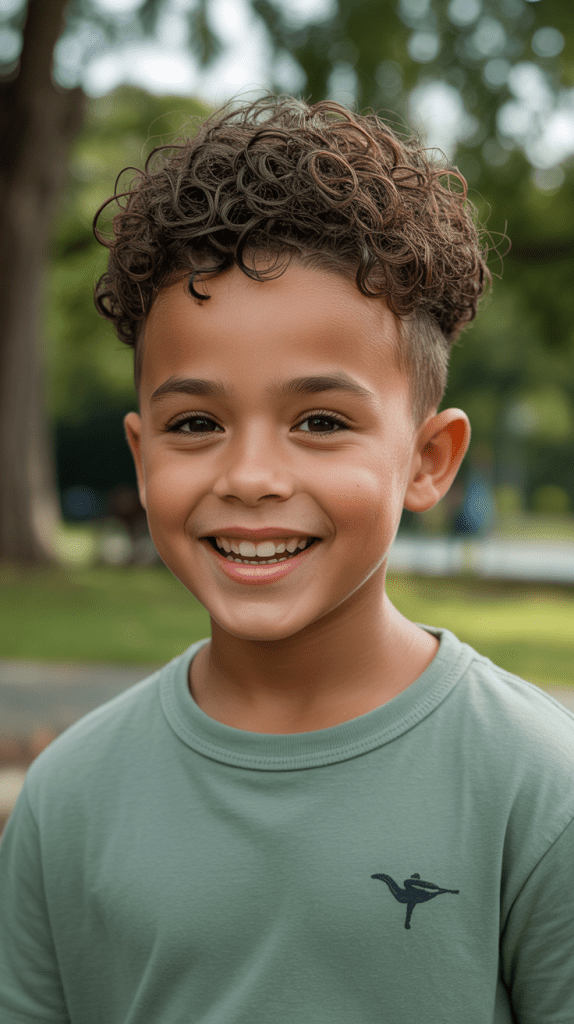
The short curly top highlights natural curls while keeping them at a manageable length that won’t tangle or become overwhelming.
This style features shorter sides with curly hair on top left long enough to show curl pattern but short enough for easy care.
Managing Curls:
- Top curls are kept at 2-3 inches when pulled straight
- Sides are cut shorter to emphasize the curly top
- Curls spring up to create natural volume
- Regular conditioning prevents frizz and tangles
- Defines curl pattern while remaining practical
Product Recommendations:
- Use curl-defining cream on damp hair
- Apply leave-in conditioner for moisture and manageability
- Scrunch curls gently to enhance definition
- Avoid brushing dry curls to prevent frizz
- Refresh curls between washes with water spray
19. Taper Fade
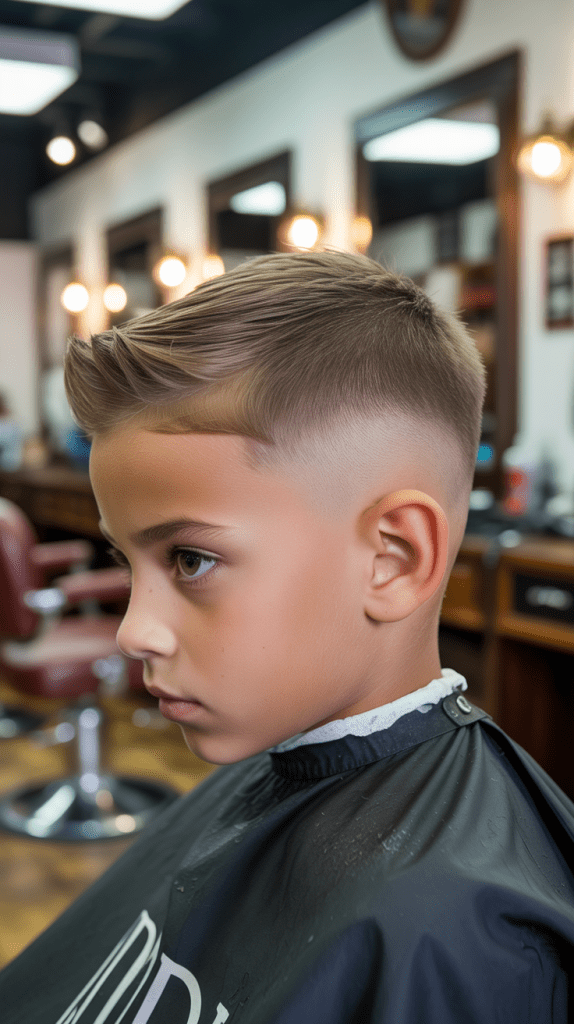
The taper fade offers a clean, gradual transition from longer hair on top to progressively shorter hair on the sides and back.
This versatile cut provides a polished, contemporary appearance while remaining appropriate for young boys and easy to maintain between barbershop visits.
Fade Variations:
- Low taper fade starts the transition near the ears
- Mid taper fade begins halfway up the sides
- High taper fade starts higher on the head
- Gradual blending creates smooth transitions
- Can be combined with various top styles
Longevity and Maintenance:
- Looks fresh for 2-3 weeks after cutting
- Grows out more gracefully than hard-lined cuts
- Requires professional cutting for best results
- Touch-ups every 3-4 weeks maintain the look
- Works with all hair types and textures
20. Slicked Back Short
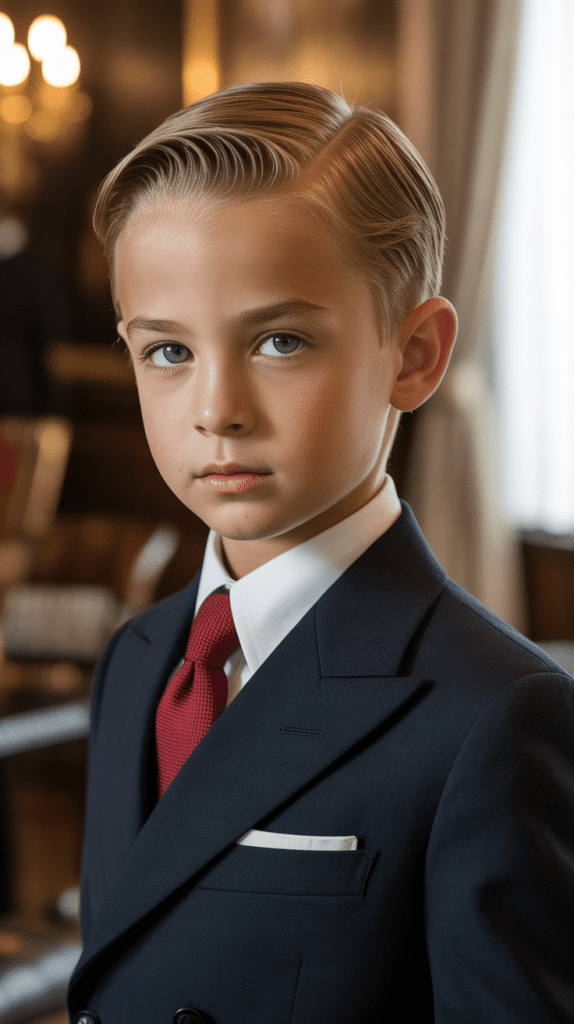
The slicked back short style brings vintage Hollywood charm to little boys’ haircuts with a modern, age-appropriate twist.
This polished look features hair combed back away from the face with shorter sides, creating a sophisticated appearance for special occasions while remaining practical enough for daily wear.
Styling Process:
- Top hair needs 2-3 inches of length minimum
- Apply pomade or styling cream to damp hair
- Use comb or fingers to direct hair backward
- Smooth hair down flat against the head
- Finish with light hairspray if needed for hold
Occasion Versatility:
- Perfect for formal events, weddings, and photos
- Can be styled for special occasions then worn naturally other days
- Teaches boys basic grooming and styling skills
- Creates a mature, well-groomed appearance
- Works well with side parts or center-back styling
21. Short Mohawk
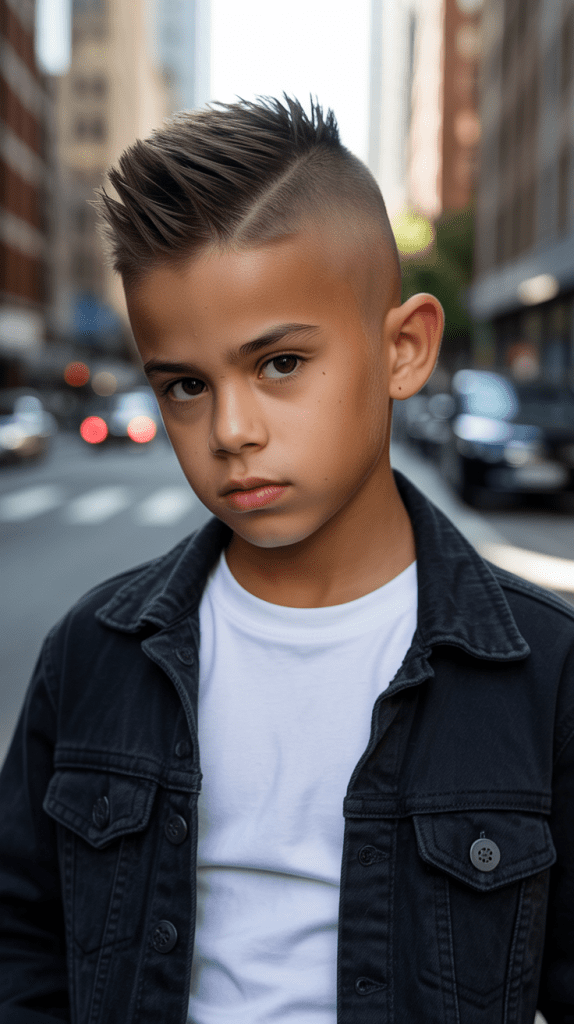
The short mohawk delivers rebellious style in a parent-approved package, featuring a distinct center strip of hair with very short sides.
This edgier version of the faux hawk creates more dramatic contrast while remaining appropriate for children and relatively easy to maintain.
Mohawk Specifications:
- Center strip is 2-3 inches wide and 2-4 inches long
- Sides are cut very short or shaved (guard #1-#2)
- Sharp contrast line defines the mohawk strip
- Can be styled upward or left natural depending on occasion
- Creates a bold, confident statement
Personality Considerations:
- Suits boys with outgoing, confident personalities
- Makes a strong visual statement
- May not be appropriate for all school environments
- Requires some styling for the full effect
- Can be grown out gradually if desired
22. Short Wavy Hair

Short wavy hair embraces natural wave patterns while keeping length manageable and easy to care for throughout busy days.
This style works with the hair’s natural texture rather than against it, creating an effortlessly stylish appearance that requires minimal intervention.
Working with Waves:
- Cut to 2-3 inches on top to show wave pattern
- Layers help reduce bulk and enhance movement
- Sides can be short or gradually tapered
- Natural texture creates built-in style
- Waves add dimension without requiring product
Care Tips:
- Use lightweight, wave-enhancing products
- Scrunch hair while damp to encourage waves
- Avoid over-brushing which can create frizz
- Let air dry naturally for best wave definition
- Trim regularly to maintain shape and prevent triangle effect
23. Short Pompadour
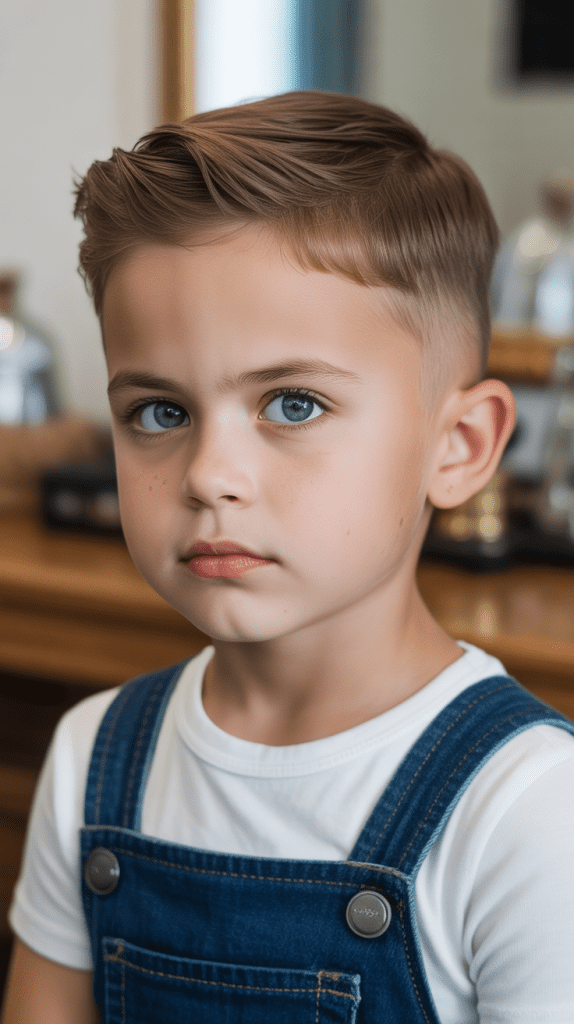
The short pompadour scales down the classic rockabilly style for little boys, creating a fun, vintage-inspired look with modern practicality.
This playful cut features hair swept upward and back from the forehead with shorter sides, offering just enough style without requiring extensive maintenance.
Creating the Mini Pomp:
- Front and top hair should be 2-3 inches long
- Sides are cut short or faded for contrast
- Hair is styled upward and slightly backward
- Less dramatic height than adult pompadours
- Age-appropriate version maintains playfulness
Daily Styling:
- Apply small amount of pomade to damp hair
- Use fingers or brush to sweep hair up and back
- Create gentle lift at the front
- Sides remain smooth and neat
- Style takes just 2-3 minutes once learned
24. Bald Fade
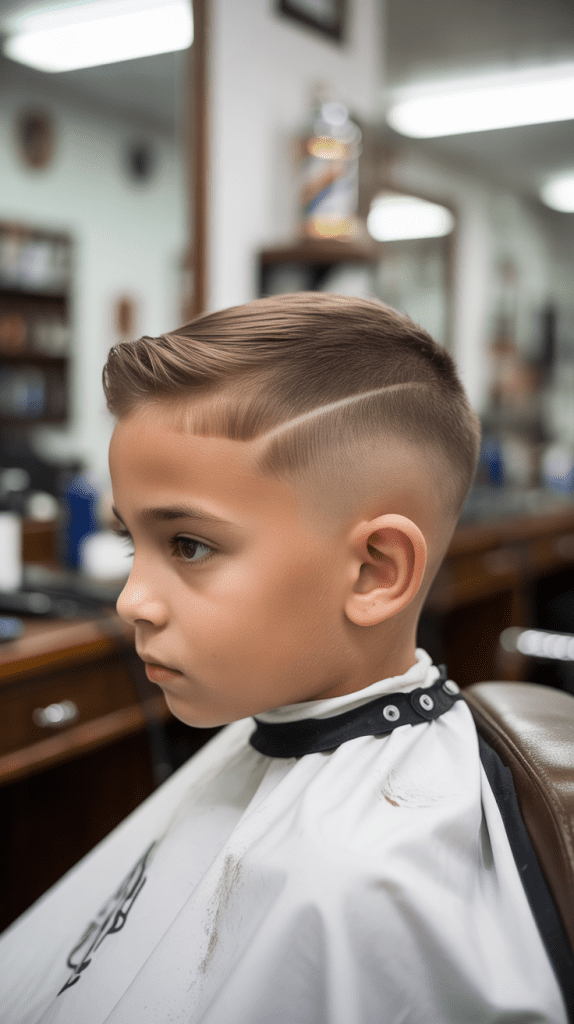
The bald fade creates a striking, contemporary look by gradually transitioning from longer hair on top to completely shaved skin at the sides and back.
This advanced barbering technique delivers a sharp, clean appearance that makes a bold statement while remaining surprisingly practical for active boys.
Fade Characteristics:
- Hair fades down to skin (bald) at the shortest point
- Seamless blending from top length to skin
- Can start high, mid, or low on the head
- Creates maximum contrast and definition
- Requires skilled barber for best results
Maintenance Requirements:
- Needs professional cutting every 2-3 weeks
- Keeps looking sharp longer than standard cuts
- No at-home maintenance required between visits
- Works beautifully with all hair types
- Creates a clean, athletic appearance
25. Short Shaggy Cut
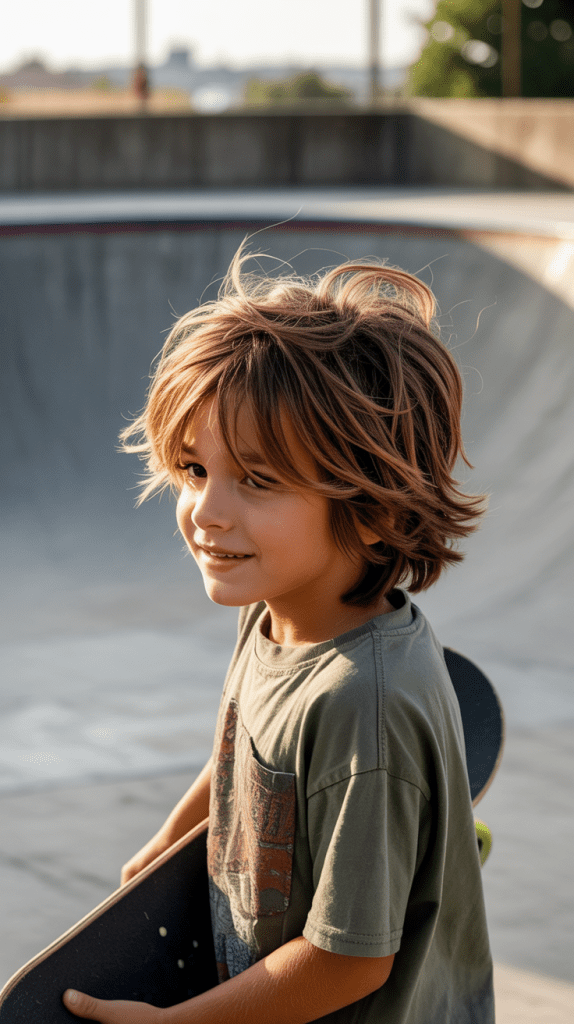
The short shaggy cut brings controlled messiness to little boys’ hairstyles with choppy layers and piece-y texture throughout.
This relaxed, casual style embraces a slightly undone look while keeping hair short enough to remain practical and easy to manage daily.
Shaggy Elements:
- Multiple layers create texture and movement
- Uneven, choppy cutting technique adds dimension
- Front can be left slightly longer for fringe effect
- Natural separation between hair sections
- Intentionally imperfect finish
Styling Simplicity:
- Requires minimal to no daily styling
- Natural texture and layers do the work
- Small amount of texturizing product enhances definition
- Finger-comb or tousle for effortless appearance
- Grows out well without looking sloppy
26. Short Flat Top
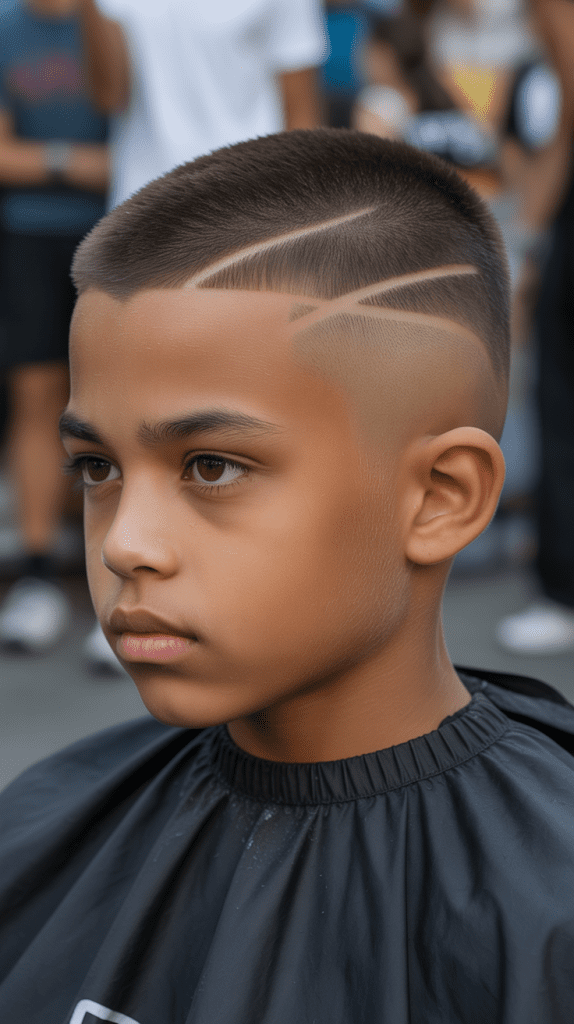
The short flat top delivers a distinctive, geometric look with hair cut to stand upright on top in a flat, level plane.
This unique style requires specific hair texture to work properly but creates an unmistakable, confident appearance when executed correctly.
Flat Top Requirements:
- Works best with thick, coarse, straight hair
- Hair on top is cut to uniform height (1-2 inches)
- Sides are faded or cut very short
- Top is literally cut flat across using clippers over comb
- Creates a box or rectangular shape when viewed from side
Who It Works For:
- Boys with naturally thick, straight hair that stands up
- Those wanting a distinctive, memorable style
- Athletic boys who appreciate clean-cut appearances
- Children comfortable with attention-getting styles
- Boys whose hair naturally has strong upward growth
27. Short Side Swept

The short side swept style offers easy elegance with hair gently brushed to one side while keeping overall length short and manageable.
This versatile cut provides enough length for styling while maintaining the practical benefits of short hair, making it perfect for boys transitioning between styles.
Style Details:
- Top hair measures 2-3 inches for sweeping movement
- Sides are cut shorter but not dramatically so
- Hair naturally falls to one side
- Can be worn with or without defined part
- Creates soft, approachable appearance
Everyday Practicality:
- Air dries naturally into place
- Quick finger-comb refresh keeps it neat
- Optional light product for extra hold
- Works for school, play, and special events
- Transitions easily from styled to casual
28. Short Quiff
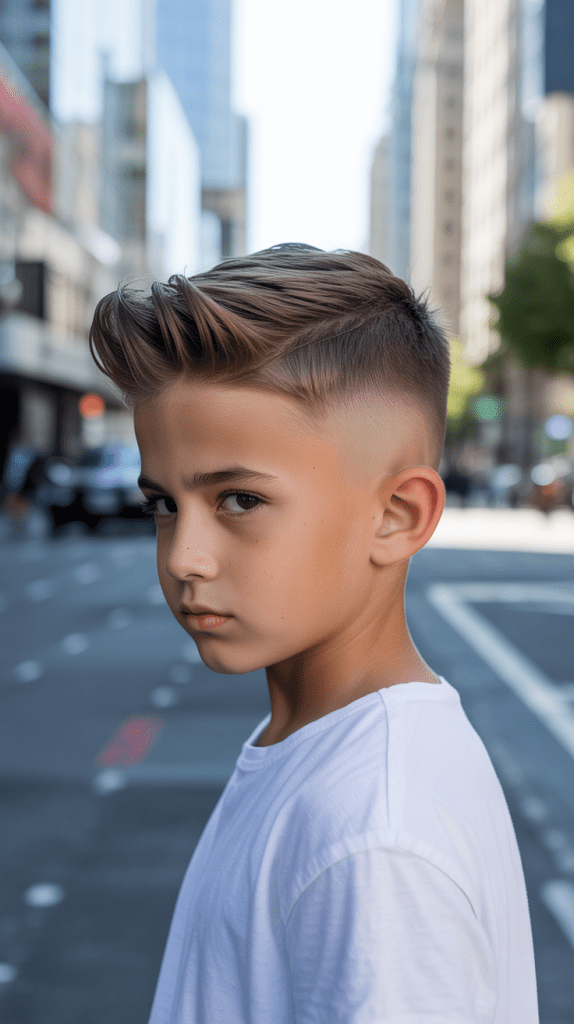
The short quiff brings modern British style to little boys with hair styled upward and slightly back at the front while keeping the overall length practical.
This contemporary cut offers a fashionable edge while remaining age-appropriate and reasonably easy to maintain with minimal morning effort.
Quiff Construction:
- Front section is 2-3 inches long for lift
- Sides are faded or cut short for contrast
- Hair is styled up and back from the forehead
- Less dramatic than pompadours, more refined than spikes
- Creates height and dimension at the front
Styling Method:
- Apply styling cream to towel-dried hair
- Use fingers or brush to lift front section up and back
- Push sides flat and smooth
- Allow to air dry or use blow dryer for extra volume
- Finish with light hairspray if desired
Choosing the Right Haircut for Your Little Boy
Selecting the perfect short haircut for your son involves considering several important factors beyond just appearance.
Hair texture plays a crucial role in determining which styles will work best and be easiest to maintain, as some cuts require specific hair types to achieve the intended look.
Factors to Consider:
- Natural hair texture (straight, wavy, curly, coily)
- Hair thickness and density (fine, medium, thick)
- Growth patterns including cowlicks and whorls
- Face shape and proportions
- Your child’s activity level and lifestyle
- Personal style preferences and personality
Practical Considerations:
- Time available for daily styling and maintenance
- Your skill level with hair products and tools
- School or organization grooming requirements
- Climate and seasonal weather conditions
- Frequency you can visit the barber
- Your child’s comfort with attention-getting styles
Involving Your Child:
- Show pictures of different options together
- Discuss what they like and dislike about current haircut
- Consider their friends’ styles and peer influences
- Start with conservative changes if child is hesitant
- Respect their growing sense of personal style
- Remember hair grows back if they want to try something new
Tips for Maintaining Short Haircuts at Home
Keeping your little boy’s short haircut looking fresh between professional barber visits requires some basic knowledge and simple techniques.
Many parents successfully maintain shorter styles at home with minimal equipment, saving time and money while keeping their child looking neat.
Essential Tools:
- Quality hair clippers with multiple guard attachments
- Sharp hair-cutting scissors for touch-ups
- Fine-tooth comb for guiding cuts
- Spray bottle for dampening hair
- Cape or towel to catch clippings
- Handheld mirror for checking back and sides
Home Maintenance Techniques:
- Clean up neckline between cuts using clippers without a guard
- Trim around ears carefully with small scissors or clippers
- Maintain fade lines with appropriate guard lengths
- Remove any straggly or overgrown pieces
- Even out the overall shape if growing unevenly
- Keep tools clean and blades sharp for best results
When to See a Professional:
- Initial haircut or significant style changes
- Complex cuts like fades or layered styles
- Fixing mistakes or uneven cutting
- Your child is uncomfortable with home cuts
- Regular maintenance cuts every 4-6 weeks
- When unsure about technique or results
Products and Styling Essentials
Understanding which products work best for little boys’ short hair helps maintain healthy, manageable styles without overwhelming young scalp or using unnecessary chemicals.
Most short haircuts require minimal product, but having the right basics on hand makes styling easier when needed.
Recommended Products:
- Lightweight pomade: Provides light hold and shine for combed styles
- Texturizing cream: Enhances natural texture and adds definition
- Strong-hold gel: Keeps spikes and structured styles in place
- Leave-in conditioner: Maintains moisture and prevents dryness (especially for textured hair)
- Dry shampoo: Refreshes hair between washes
- Light hairspray: Adds extra hold for special occasions
Product Application Tips:
- Always start with less product than you think you need
- Apply to damp hair for easier distribution and more natural results
- Work product through hair with fingers for even coverage
- Comb or brush through if achieving a polished look
- Avoid heavy products that can weigh down fine hair
- Choose products specifically formulated for children when possible
Hair Health Basics:
- Wash hair 2-3 times per week (not daily unless very active)
- Use gentle, sulfate-free shampoos appropriate for children
- Condition if hair tends toward dryness
- Protect from sun exposure during extended outdoor time
- Address dandruff or scalp issues with appropriate gentle treatments
- Keep scalp clean but not over-washed to maintain natural oils
Natural Alternatives:
- Coconut oil for moisture and shine (use sparingly)
- Aloe vera gel for light natural hold
- Shea butter for textured or curly hair hydration
- Apple cider vinegar rinse for clarifying and shine
- Argan oil for smoothing flyaways and frizz
Best Haircuts by Hair Type
Different hair textures require specific cutting techniques and styles to look their best and remain manageable.
Understanding your child’s hair type helps you choose cuts that work with rather than against natural characteristics, ensuring easier maintenance and better results.
Straight Hair:
- Works well with: Crew cuts, Ivy League, Caesar cut, buzz cuts, bowl cuts
- Benefits from: Clean lines, structured styles, geometric shapes
- Considerations: Can appear flat without texture or layers
- Styling tip: Add texture products for dimension or keep it sleek and simple
- Growth pattern: Grows straight down, requires regular trims to maintain shape
Wavy Hair:
- Works well with: Textured crop, messy top, short wavy styles, taper fades
- Benefits from: Embracing natural wave pattern, layered cuts
- Considerations: Can become triangular if cut too short on sides
- Styling tip: Enhance waves with curl cream and scrunching
- Growth pattern: May flip or wave at certain lengths, work with it
Curly Hair:
- Works well with: Short curly top, textured styles, tapered cuts
- Benefits from: Proper moisture, curl-enhancing products, regular conditioning
- Considerations: Shrinkage means hair appears shorter when dry
- Styling tip: Cut when dry to see true length, use leave-in products
- Growth pattern: Grows outward creating volume, needs shaping to control
Coily/Kinky Hair:
- Works well with: Short afro, tapered cuts, fades with textured top
- Benefits from: Regular moisturizing, protective styling between cuts
- Considerations: Requires specialized cutting techniques and care
- Styling tip: Keep well-moisturized, use wide-tooth combs or picks
- Growth pattern: Maximum shrinkage, very fragile when dry, needs gentle handling
Seasonal Considerations for Short Haircuts
Different times of year may influence which short haircut works best for your little boy’s comfort and lifestyle.
Seasonal factors including weather, activities, and school schedules can help guide your styling decisions throughout the year.
Summer Haircuts:
- Shortest styles like buzz cuts and crew cuts keep boys coolest
- Minimal styling needed during hot weather and swimming
- More frequent washing due to sweat, chlorine, and outdoor play
- Consider cutting shorter before summer camps or vacations
- Sun protection for scalp important with very short cuts
- Less product needed in humid conditions
Fall/Back-to-School:
- Fresh haircut makes good first impression
- Consider school dress code requirements
- Slightly longer styles acceptable as weather cools
- Establish maintenance schedule around school calendar
- Photos and special events may influence style choice
- Time to try new styles after casual summer cuts
Winter Haircuts:
- Slightly longer styles provide warmth
- Hat hair becomes consideration with frequent cap wearing
- Indoor heating can dry out scalp and hair
- Static electricity may affect fine, straight hair
- Holiday photos and events may call for polished styles
- Less frequent washing needed in cold, dry weather
Spring Updates:
- Transition to shorter styles as weather warms
- Good time to try new styles before summer
- Outdoor activities increase, practical cuts work best
- End-of-year photos and events approaching
- Growth spurts may affect how styles look
- Prepare for upcoming summer activities and camps
Common Mistakes to Avoid
Parents and even professional stylists can make errors when cutting or maintaining little boys’ short haircuts.
Being aware of common pitfalls helps you avoid disappointing results and keeps your child’s hair looking its best between professional cuts.
Cutting Mistakes:
- Cutting hair too short initially without testing child’s comfort level
- Attempting complex fades or techniques without proper training
- Using dull clippers or scissors that pull and snag hair
- Cutting dry hair when it should be dampened first
- Removing too much length at once instead of gradual trimming
- Ignoring natural growth patterns like cowlicks and whorls
- Creating harsh, blunt lines that look unnatural
Styling Errors:
- Using too much product, making hair look greasy or stiff
- Applying adult-strength products on young children’s sensitive scalps
- Over-washing hair, stripping natural protective oils
- Brushing curly or coily hair when dry, causing breakage
- Fighting against natural hair texture instead of working with it
- Using heat tools excessively on young children’s hair
Maintenance Problems:
- Waiting too long between cuts, letting style grow out completely
- Not addressing neckline or ear growth between visits
- Neglecting to clean clippers, leading to pulling and poor results
- Skipping conditioning for dry or textured hair types
- Using harsh shampoos that irritate sensitive scalps
- Not protecting short hair from sun damage during outdoor activities
Communicating with Your Barber
Effective communication with your child’s barber or stylist ensures you get the haircut you envision while building a positive relationship that makes future visits easier.
Clear explanations combined with visual references create the best results and minimize misunderstandings.
Before the Appointment:
- Bring reference photos showing multiple angles of desired style
- Note specific details you like or dislike about current haircut
- Consider your child’s hair texture and growth patterns
- Decide on approximate length in inches or clipper guard numbers
- Think about maintenance level you’re comfortable with
- Arrive with clean, dry hair for accurate cutting
During the Consultation:
- Show reference photos and discuss what’s realistic for your child’s hair
- Explain your child’s activity level and lifestyle needs
- Mention any specific problem areas or cowlicks
- Ask questions about maintenance and styling requirements
- Discuss how often you’ll need to return for trims
- Request tips for styling or maintaining the cut at home
- Be open to professional suggestions and modifications
Questions to Ask Your Barber:
- How often will this style need professional trimming?
- What products do you recommend for this haircut?
- Can you show me how to style it at home?
- Will this style work with my son’s hair texture?
- How will this cut grow out between appointments?
- Can we do a less dramatic version if my son is nervous?
Building Your Child’s Confidence with Their Haircut
A haircut significantly impacts a child’s self-image and confidence, making it important to involve them in the process appropriately for their age.
Positive experiences with grooming help build good hygiene habits and self-care skills that last throughout life.
Age-Appropriate Involvement:
- Toddlers (2-4): Keep it simple, focus on making experience positive, offer small choices
- Young children (5-7): Show 2-3 options, explain what haircut involves, praise cooperation
- Older children (8-10): Involve in decision-making, discuss practical vs. desired styles, teach basic grooming
- Pre-teens (11-12): Allow significant input, respect preferences within reason, teach self-styling
Making Haircut Day Positive:
- Schedule appointments when child is rested and fed
- Bring comfort items for anxious or younger children
- Use positive language about the experience
- Praise cooperation and bravery, especially for first cuts
- Consider small rewards for particularly challenging appointments
- Take photos to commemorate new styles
- Express genuine enthusiasm about the results
Handling Haircut Regret:
- Validate their feelings if they dislike the result
- Remind them that hair grows back quickly
- Focus on positive aspects of the new style
- Avoid blaming child for the choice
- Work with barber to make minor adjustments if possible
- Use as learning experience for future haircuts
- Don’t over-emphasize the issue or make child more self-conscious
Budget-Friendly Haircut Options
Keeping your little boy’s short haircut looking fresh doesn’t have to strain the family budget.
Strategic planning, home maintenance, and smart choices help you manage grooming costs while maintaining a neat, well-groomed appearance.
Money-Saving Strategies:
- Learn basic clipper skills for simple buzz cuts and crew cuts at home
- Maintain neckline and ear areas between professional cuts
- Choose styles that grow out gracefully and look good longer
- Buy quality clippers that pay for themselves after 3-4 uses
- Look for barber schools offering discounted student cuts
- Consider franchise salons with kids’ cut specials
- Schedule appointments during promotional periods
When to Invest in Professional Cuts:
- First haircut or major style changes
- Complex techniques like fades or layered cuts
- Special occasions requiring polished appearance
- Correcting home cutting mistakes
- Every 2-3 home cuts to maintain proper shape
- Styles requiring specialized texturing or techniques
Cost Comparison:
- Professional barbershop: $15-30 per cut
- Kids’ salon chain: $12-20 per cut
- Home cutting: $30-50 initial clipper investment, then free
- Barber school: $5-10 per cut
- Annual cost estimate: $150-360 (professional) vs. $30-50 (mostly home)
Haircuts for Special Occasions
Special events and milestones often call for extra attention to your little boy’s appearance, making a fresh haircut an important part of preparation.
Timing and style choices ensure your child looks their best while photographs capture these important memories.
Event-Specific Timing:
- School photos: Schedule cut 3-5 days before for natural look
- Weddings: Cut 2-3 days prior, allowing time to settle
- Holidays: Fresh cut 1 week before major gatherings
- First day of school: Cut 3-4 days before for photo-ready appearance
- Birthday parties: Can cut day-of for extra fresh look
- Religious ceremonies: Follow tradition, typically 2-3 days before
Occasion-Appropriate Styles:
- Formal events: Classic crew cut, Ivy League, side part fade
- Casual gatherings: Textured crop, messy top, short wavy styles
- Sports photos: Buzz cut, regulation cut, high and tight
- Creative photos: Faux hawk, mohawk, styled quiff
- Traditional ceremonies: Conservative crew cut, regulation cut, Caesar cut
Photo Day Preparation:
- Wash hair night before for natural oils and texture
- Use minimal product for natural, not-overly-styled appearance
- Bring comb and product for last-minute touch-ups
- Smooth cowlicks with small amount of pomade if needed
- Keep it simple – less is more for children’s photos
Transitioning Between Styles
As boys grow and their preferences evolve, they may want to change their haircut style significantly.
Managing these transitions smoothly ensures the process doesn’t involve awkward in-between stages that frustrate both parent and child.
Growing Out Short Hair:
- Be patient through awkward lengths (typically 6-8 weeks)
- Regular trims shape growth without removing significant length
- Focus on keeping neckline and ears neat during transition
- Use headbands or hats during difficult growth stages
- Consider intermediate styles that work with current length
- Products can help control and style during growth phase
Moving from Longer to Shorter:
- Make gradual changes if child is nervous about drastic cuts
- Start with moderate short cut before going very short
- Show reference photos and discuss realistic expectations
- Remind child that hair grows back if they dislike change
- Choose a time when new style won’t cause school-related stress
- Get professional cut for first significant length reduction
Trying Trendy Styles Temporarily:
- Consider doing bold styles during summer breaks
- Use temporary changes (styling, not cutting) to test looks
- Allow experimentation while setting reasonable boundaries
- Discuss school appropriateness before committing
- Start with less dramatic versions of edgy styles
- Support their self-expression within age-appropriate limits
Addressing Common Hair Problems
Little boys can experience various hair and scalp issues that affect how their haircuts look and how comfortable they feel.
Recognizing and addressing these concerns helps maintain healthy hair and scalp while keeping styles looking their best.
Cowlicks and Growth Patterns:
- Work with natural patterns rather than fighting them
- Choose cuts that incorporate or camouflage cowlicks
- Use small amount of product to train stubborn areas
- Blow dry in desired direction while hair is damp
- Consider shorter cuts where cowlicks are less visible
- Consult barber about cutting techniques for problem areas
Dandruff and Dry Scalp:
- Use gentle, moisturizing shampoos formulated for children
- Avoid washing hair daily which can worsen dryness
- Apply light oil or moisturizer to scalp if needed
- Ensure proper rinsing of all hair products
- Consider tea tree oil shampoo for mild dandruff
- Consult pediatrician if condition persists or worsens
Fine or Thin Hair:
- Choose cuts that create illusion of volume and thickness
- Avoid very short cuts that emphasize thinness
- Use volumizing products designed for children
- Consider textured styles that add dimension
- Blow dry upward at roots for lift
- Avoid heavy products that flatten hair
Sensitive Scalp:
- Use fragrance-free, hypoallergenic hair products
- Avoid clipper blades that are too hot or dull
- Request scissors cutting around sensitive areas
- Communicate sensitivities to barber before cutting
- Keep hair products minimal and gentle
- Watch for reactions to new products and discontinue if irritation occurs
Teaching Boys to Care for Their Own Hair
As children grow older, teaching them to maintain their own hair builds independence and good grooming habits.
Starting with age-appropriate tasks and gradually increasing responsibility prepares them for teenage years and beyond.
Ages 5-7: Beginning Skills:
- Recognizing when hair needs washing
- Cooperating during bath time hair washing
- Learning to rinse thoroughly
- Basic combing of longer styles
- Understanding that tangles need gentle handling
- Following simple grooming routines
Ages 8-10: Building Independence:
- Washing own hair with supervision
- Applying and rinsing conditioner correctly
- Basic styling with finger-combing or brush
- Applying small amounts of product with guidance
- Recognizing when haircut is needed
- Participating in discussions about style preferences
Ages 11-12: Self-Sufficiency:
- Complete independence in washing and basic styling
- Proper product application and amounts
- Simple home touch-ups to neckline or length
- Communicating directly with barber about preferences
- Maintaining grooming schedule independently
- Experimenting with different styling techniques
Teaching Tips:
- Demonstrate techniques multiple times before expecting independence
- Start with one task at a time, building skills gradually
- Praise efforts even when results aren’t perfect
- Create routines that make grooming habitual
- Provide appropriate tools and products for their age
- Allow natural consequences (within reason) to teach importance of grooming
Cultural Considerations in Boys’ Haircuts
Different cultural backgrounds bring unique perspectives, traditions, and preferences regarding children’s hair and grooming.
Understanding and respecting these diverse approaches enriches the conversation about boys’ haircuts while celebrating varied expressions of identity.
Cultural Traditions:
- Some cultures have specific haircut ceremonies or coming-of-age traditions
- Certain styles hold cultural or religious significance
- Hair length and styling may carry spiritual or traditional meaning
- Family and community expectations may influence acceptable styles
- Historical and regional variations create diverse aesthetic preferences
Religious Considerations:
- Some faiths have specific guidelines about cutting children’s hair
- Certain traditions involve first haircut ceremonies at particular ages
- Religious observances may dictate style limitations or requirements
- Consultation with religious leaders may guide grooming decisions
- Respecting these traditions while finding practical solutions
Finding Balance:
- Honor cultural heritage while allowing personal expression
- Discuss family traditions and their significance with children
- Adapt traditional styles to modern contexts when appropriate
- Seek barbers familiar with diverse hair types and cultural styles
- Celebrate cultural identity through grooming choices
- Navigate between traditional expectations and contemporary preferences
Conclusion
The journey to finding the perfect short haircut for your little boy becomes much simpler when armed with knowledge about the 28 Short Little Boy Haircuts That Are Easy to Maintain explored throughout this comprehensive guide.
From timeless classics like crew cuts and buzz cuts to contemporary styles like textured crops and fades, the diverse range of options ensures every boy can find a haircut that matches his personality, hair type, and lifestyle while remaining practical for busy families.
The key to success lies in considering your child’s natural hair texture, growth patterns, and personal preferences while balancing maintenance requirements with your available time and styling skills.
Whether you choose ultra-low-maintenance buzz cuts requiring zero daily styling, versatile cuts like the Ivy League that transition from casual to formal, or trendy styles like faux hawks that let your son’s personality shine through, short haircuts offer unmatched practicality without sacrificing style.
Remember that involving your child in the decision-making process, working with a skilled barber who understands children’s cuts, and maintaining realistic expectations about styling and upkeep will lead to positive experiences that build confidence and establish healthy grooming habits.
As your son grows and his preferences evolve, don’t hesitate to experiment with different styles from this collection, knowing that hair grows back and each cut offers an opportunity to discover what works best.
With the insights, tips, and detailed descriptions provided for these 28 Short Little Boy Haircuts That Are Easy to Maintain, you’re now equipped to make informed decisions that keep your little boy looking sharp, feeling confident, and ready to take on whatever adventures childhood brings his way.
