

If you have fine hair and dream of a chic, manageable hairstyle that doesn’t fall flat by midday, short bob haircuts might be your perfect solution.
Fine hair comes with its own set of challenges—lack of volume, tendency to look limp, and difficulty holding styles—but the right bob cut can transform these concerns into stunning assets.
This comprehensive guide explores 25 short bob haircuts specifically designed for fine hair, each offering unique styling advantages that create the illusion of thickness, movement, and texture.
From classic cuts to modern interpretations, you’ll discover how strategic layering, smart length choices, and clever styling techniques can give your fine hair the body and bounce you’ve always wanted.
Whether you’re looking for something edgy and contemporary or timeless and elegant, these bob variations prove that fine hair can be just as versatile and voluminous as any other hair type.
Get ready to explore cutting-edge styles that will revolutionize your approach to fine hair, complete with practical maintenance tips and styling insights that make looking fabulous effortlessly achievable every single day.
1. The Classic Blunt Bob
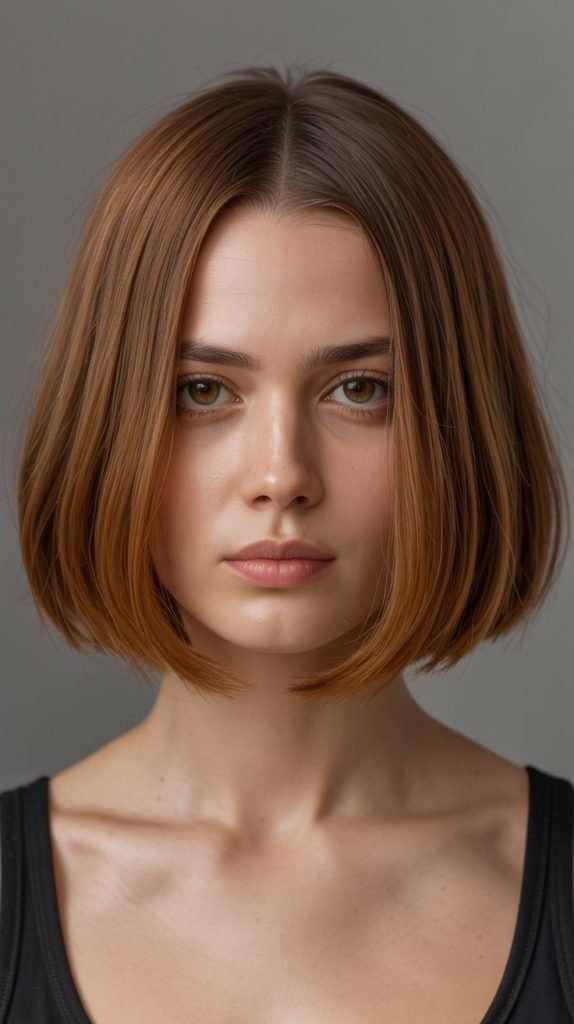
The classic blunt bob is a timeless choice that works exceptionally well for fine hair by creating the appearance of density and fullness. T
his clean-cut style features hair cut straight across at one length, typically falling between the chin and shoulders, which makes fine strands appear thicker at the ends.
Why It Works for Fine Hair:
- The blunt cut line creates a solid, thick-looking perimeter that prevents fine hair from appearing wispy or see-through.
- All hair strands end at the same point, which concentrates the visual weight and makes hair look fuller.
- This style requires minimal layering, which means you retain maximum density throughout the cut.
- The geometric precision of the cut gives fine hair structure and prevents it from looking shapeless.
Styling Tips:
- Use a volumizing mousse on damp hair before blow-drying to add body from the roots.
- Blow-dry with a round brush, directing hair slightly inward at the ends for a polished finish.
- Apply a lightweight shine serum to the mid-lengths and ends to create the illusion of thicker, healthier hair.
- Refresh the style between washes with dry shampoo at the roots to maintain volume.
2. The Textured Choppy Bob
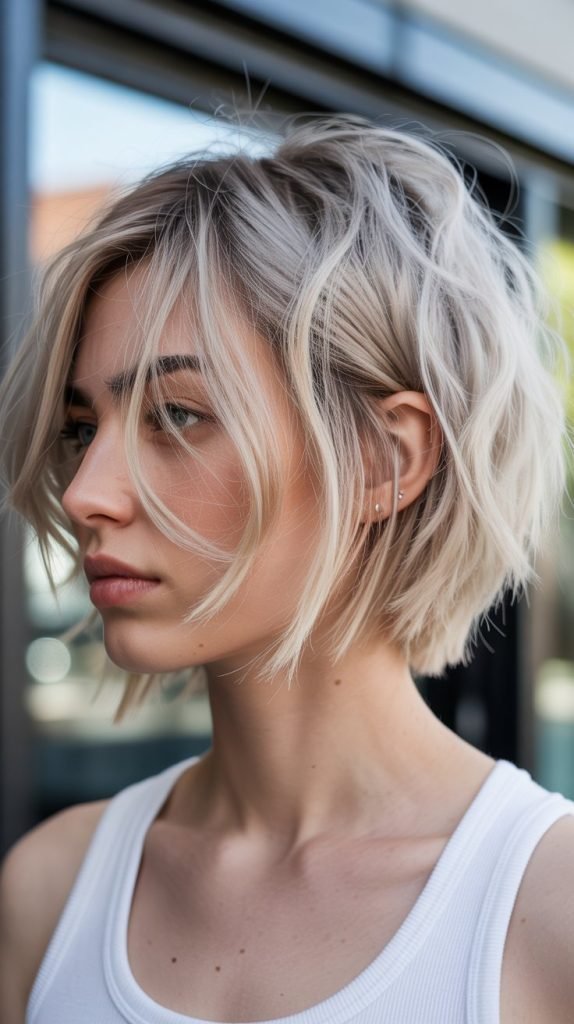
The textured choppy bob introduces strategic irregularity into the cut, creating movement and dimension that fine hair often lacks naturally.
This style features varying lengths and point-cut ends that add visual interest and the appearance of thickness through deliberate imperfection.
Key Features:
- Point-cutting techniques create jagged, uneven ends that add texture and prevent fine hair from looking too sleek or flat.
- The choppy layers introduce multiple lengths that create shadows and depth, making hair appear fuller.
- This cut works particularly well with air-drying, requiring less heat styling than more polished bobs.
- The intentionally undone finish gives fine hair an effortlessly cool, lived-in appearance.
Maintenance Advice:
- Visit your stylist every 6-8 weeks to maintain the choppy texture and prevent the style from growing out into a regular bob.
- Use a texturizing spray or sea salt spray on damp hair to enhance the piece-y, separated look.
- Scrunch hair while drying to encourage natural texture and movement.
- Sleep with hair in a loose bun to create additional texture and wave overnight.
3. The Inverted Bob (A-Line Bob)
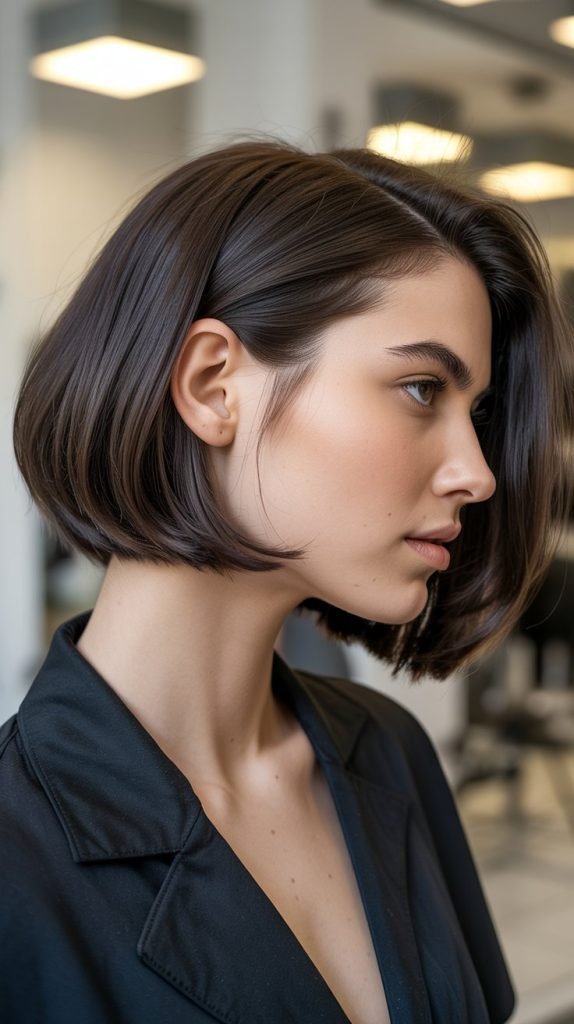
The inverted bob, also known as an A-line bob, features shorter hair at the back that gradually lengthens toward the front, creating a dramatic angle that adds volume and style to fine hair.
This architectural cut provides built-in lift at the crown while maintaining length and movement around the face.
Structural Benefits:
- The stacked layers at the back create natural volume and lift at the crown where fine hair tends to fall flat.
- The angled cut draws attention away from hair density and toward the striking silhouette.
- Shorter back sections reduce weight, allowing the crown area to maintain height throughout the day.
- The longer front pieces frame the face beautifully while maintaining fullness.
Styling Recommendations:
- Blow-dry the back sections forward and upward to maximize volume at the crown.
- Use a flat iron on the longer front pieces to create smooth, sleek lines that emphasize the angle.
- Apply volumizing powder at the roots in the crown area for extra lift.
- The stacked back requires regular trims every 4-6 weeks to maintain the shape and prevent growing out awkwardly.
4. The Layered Bob with Wispy Bangs
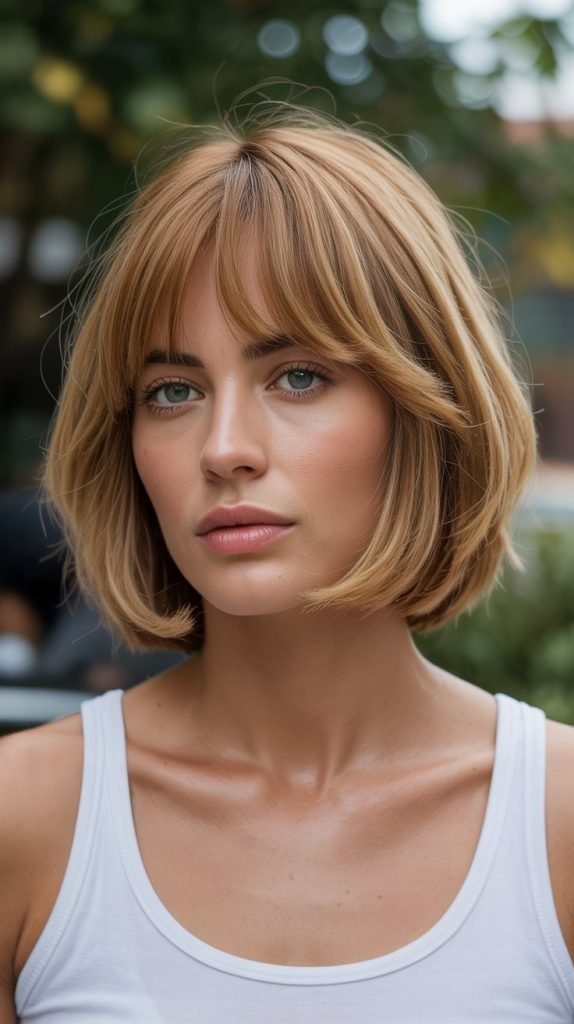
Combining a layered bob with wispy bangs creates a soft, feminine look that adds movement to fine hair while strategically covering the forehead to draw attention to your best features.
The layers provide dimension, while the bangs add a youthful, face-framing element.
Design Elements:
- Subtle layers throughout the bob prevent fine hair from looking heavy or triangular in shape.
- Wispy, textured bangs are lighter and easier to maintain than heavy, blunt bangs on fine hair.
- The combination of layers and bangs creates multiple focal points that distract from hair density.
- This style offers versatility in styling—you can wear bangs swept to the side or straight across.
Bang Maintenance:
- Trim bangs every 3-4 weeks to keep them at the ideal length and prevent them from becoming too heavy.
- Use a small round brush when blow-drying bangs to create a soft, curved shape rather than a flat line.
- Apply dry shampoo to bangs between washes as they tend to get oily faster than the rest of your hair.
- Consider curtain-style wispy bangs that part in the middle for a more forgiving, low-maintenance option.
5. The Asymmetrical Bob
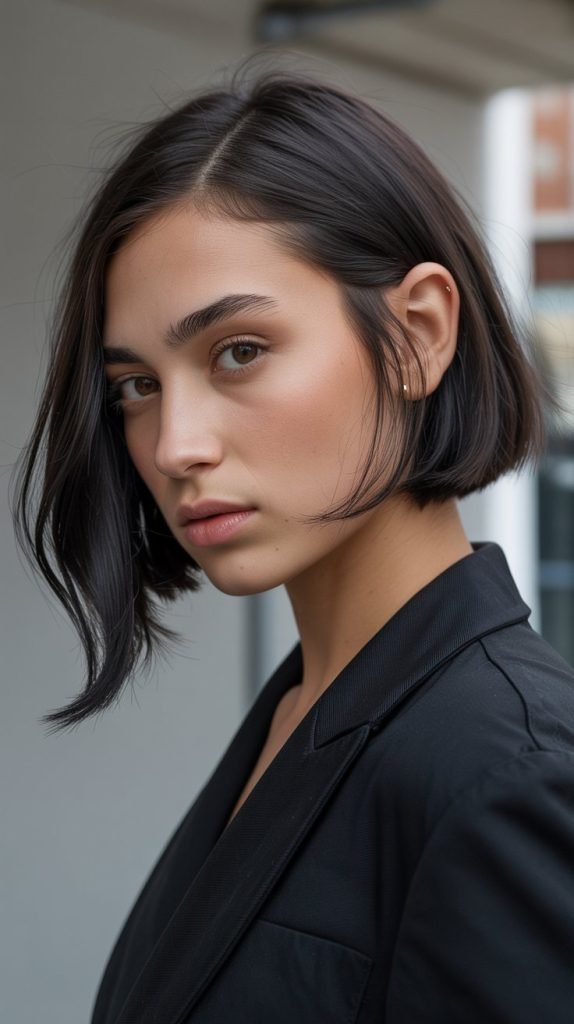
The asymmetrical bob features one side cut significantly shorter than the other, creating a bold, edgy look that adds instant style and personality to fine hair.
This modern cut uses dramatic angles to create visual interest that compensates for lack of natural volume.
Style Advantages:
- The dramatic difference in length between sides creates a striking visual that draws attention away from hair texture.
- The longer side can be styled with more volume and movement, while the shorter side appears bold and contemporary.
- This cut works exceptionally well for those who want to make a statement without relying on hair thickness.
- The asymmetry naturally creates the illusion of more hair on the longer side through strategic weight distribution.
Styling Considerations:
- Decide which side you prefer longer based on your face shape and natural part.
- Use a flat iron to create sleek, smooth sections that emphasize the geometric lines of the cut.
- Apply texturizing product to the longer side to create piece-y definition and movement.
- This cut requires commitment to regular maintenance as it grows out less gracefully than symmetrical styles.
6. The Curly Bob for Fine Hair
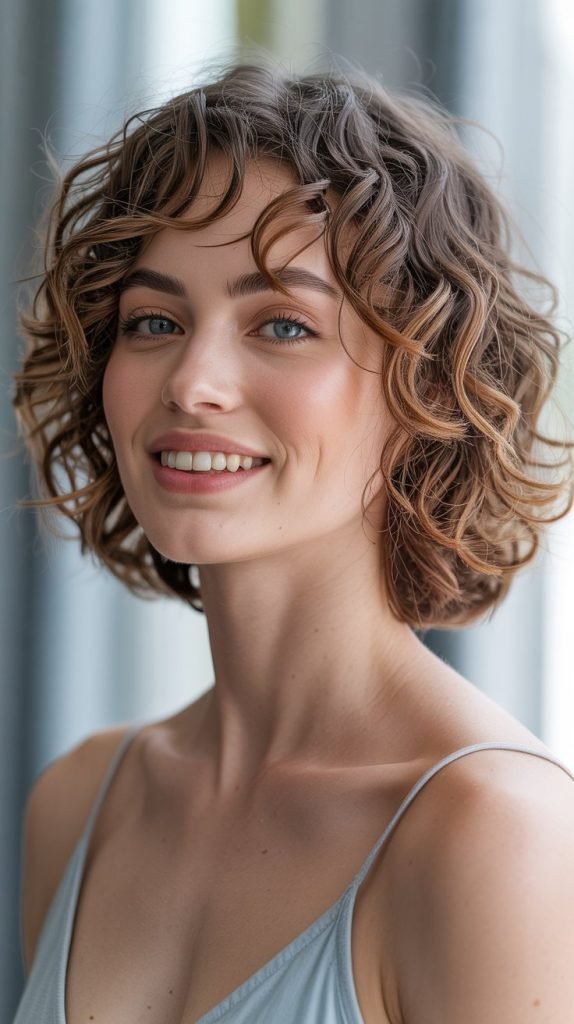
Fine hair and curls can coexist beautifully in a curly bob that embraces natural texture while maintaining a manageable length.
This style works for naturally curly fine hair or can be achieved with styling tools on straight fine hair to create lasting volume and bounce.
Curl Benefits for Fine Hair:
- Curls create the optical illusion of thickness by expanding the hair’s volume and taking up more space.
- A bob length prevents curls from being weighed down by excess length, allowing them to maintain their spring.
- Fine-textured curly hair appears fuller when cut to this length because the curls stack upon each other.
- The rounded shape of a curly bob naturally lifts away from the scalp, creating built-in root volume.
Curl Care:
- Use a diffuser attachment when blow-drying to enhance natural curl pattern without creating frizz.
- Apply a curl-defining cream to damp hair to encourage uniform curl formation.
- Avoid brushing curly hair when dry, as this breaks up the curl pattern and creates frizz on fine strands.
- Refresh curls on second-day hair by misting with water and scrunching in additional curl cream.
7. The Bob with Curtain Bangs
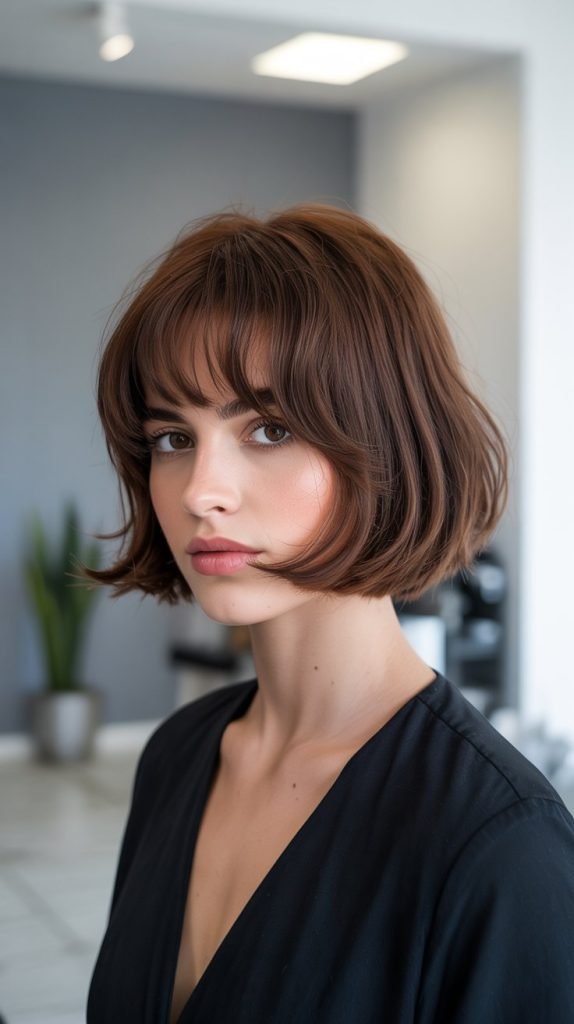
Curtain bangs paired with a bob create a effortlessly chic, face-framing style that adds softness and movement to fine hair. The bangs part down the middle and sweep to each side, creating a curtain effect that draws attention to the eyes and cheekbones.
Curtain Bang Appeal:
- The center part and sweeping sides create a balanced, flattering frame for most face shapes.
- Curtain bangs require less precise maintenance than straight-across bangs, making them ideal for fine hair that needs frequent washing.
- The longer length of curtain bangs (typically cheekbone to chin level at their longest point) means less frequent trimming.
- The sweeping motion adds horizontal movement that makes fine hair appear more dynamic and voluminous.
Achieving the Look:
- Blow-dry curtain bangs using a round brush, rolling the brush away from your face on each side.
- The bangs should be slightly longer at the sides, gradually shortening toward the center part.
- Use a lightweight styling cream to add separation and definition without weighing down fine bangs.
- This style works beautifully whether you wear the bob straight, wavy, or with added texture.
8. The Stacked Bob
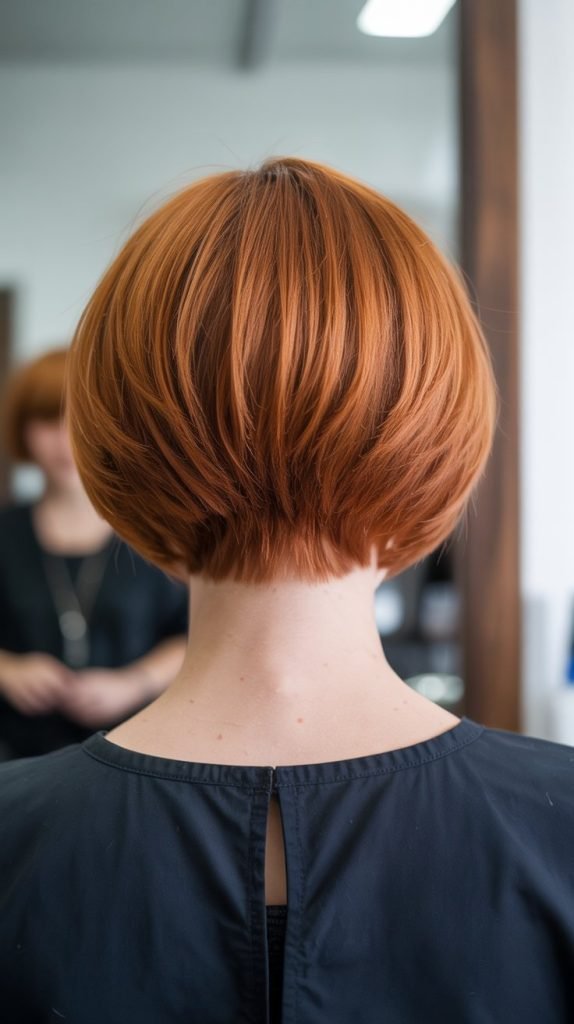
The stacked bob features graduated layers concentrated at the back of the head, creating significant volume and a rounded silhouette that’s particularly flattering for fine hair.
The stacked section provides built-in lift while maintaining sleek lines around the face.
Stacking Technique:
- Layers are cut progressively shorter as they move up the back of the head, creating a stacked, tiered effect.
- This technique removes weight from the nape area, allowing the crown to lift naturally without products.
- The rounded shape created by stacking is feminine and polished, ideal for professional settings.
- The front remains longer and sleek, creating a sophisticated contrast with the volumized back.
Maintenance Requirements:
- Stacked bobs require frequent trims every 4-6 weeks to maintain the precise layering and prevent mullet-like growth.
- Blow-dry the back sections upward and forward to emphasize the stacked shape.
- The nape area may require extra attention with a small round brush or flat iron to keep layers smooth.
- Consider this cut if you enjoy regular salon visits and want a style that always looks intentionally shaped.
9. The Wavy Bob with Beach Texture
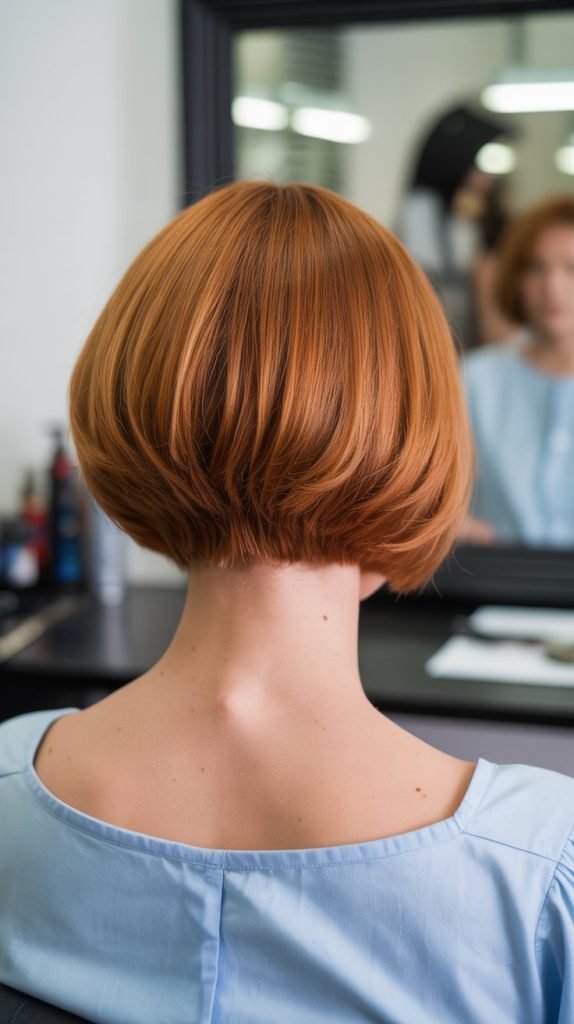
A wavy bob with beach texture gives fine hair a relaxed, effortless appearance that masks lack of density through tousled waves and strategic texture.
This style mimics the natural movement and volume created by salt water and sea air.
Beach Wave Benefits:
- Waves add horizontal volume that makes fine hair appear thicker and more substantial.
- The intentionally undone texture hides any areas where fine hair might look sparse or flat.
- This low-maintenance style embraces natural texture and imperfection, requiring minimal daily styling.
- The movement created by waves catches light differently, adding dimension to fine hair.
Creating Beach Waves:
- Apply sea salt spray to damp hair and scrunch while air-drying for natural texture.
- Alternatively, use a curling iron or wand with a large barrel (1-1.5 inches) to create loose, irregular waves.
- Wrap sections of hair around the barrel in alternating directions for a more natural, undone look.
- Finish with a texturizing spray and scrunch with your hands to break up uniform curl patterns.
10. The Razor-Cut Bob
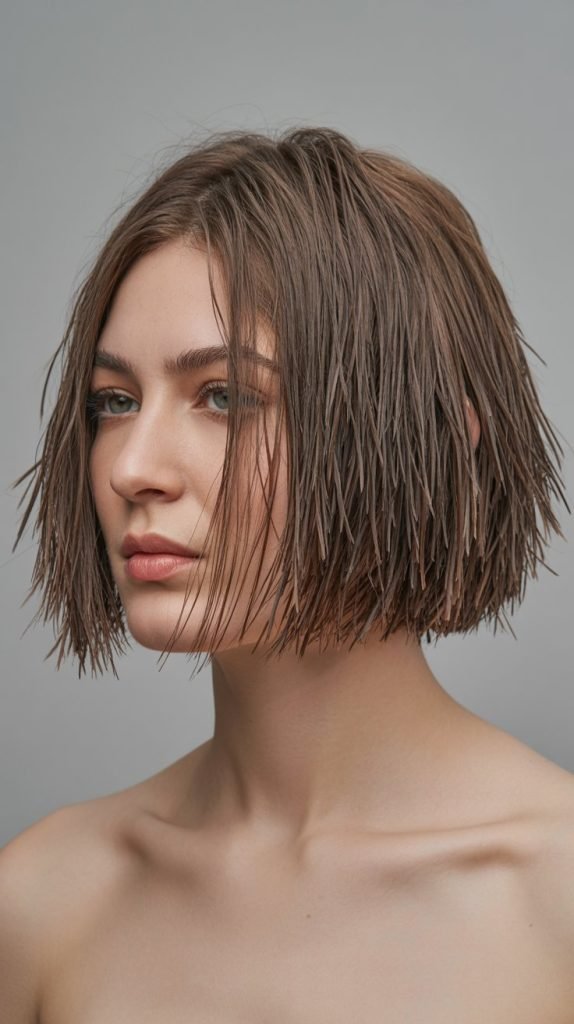
A razor-cut bob uses a straight razor instead of scissors to create softer, feathered edges that add movement and lightness to fine hair.
This cutting technique produces a more textured, lived-in appearance compared to scissor-cut bobs.
Razor-Cutting Advantages:
- The razor creates softer, more diffused ends rather than blunt lines, which can appear wispy and add movement to fine hair.
- This technique naturally thins out bulk while maintaining length, perfect for fine hair that tends to look flat.
- Razor cuts create micro-layers throughout the hair that add dimension without obvious layering lines.
- The feathered ends move more freely and create a softer, more romantic silhouette.
Important Considerations:
- Razor cutting works best on healthy fine hair, as damaged hair can appear even more frayed with this technique.
- Find a stylist experienced in razor cutting, as improper technique can cause damage and split ends.
- This cut requires good hair products to enhance the textured finish and prevent frizz.
- Razor-cut bobs typically need refreshing every 6-8 weeks to maintain the soft, feathered appearance.
11. The Bob with Side-Swept Bangs
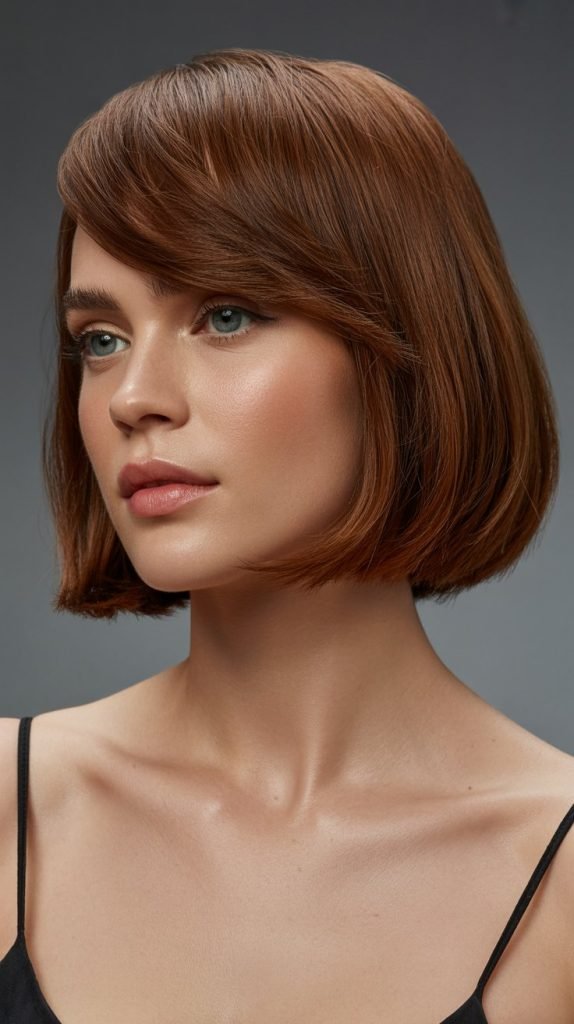
Combining a classic bob with side-swept bangs creates a sophisticated, face-slimming style that adds dimension and movement to fine hair.
The diagonal line of the bangs draws the eye across the face while adding volume at the crown.
Side-Swept Bang Benefits:
- The angular sweep of the bangs creates visual height at the crown, beneficial for adding volume to fine hair.
- Side-swept bangs are more forgiving than blunt bangs and can be easily grown out or restyled.
- The diagonal line is universally flattering and adds asymmetry that distracts from hair density concerns.
- This style offers versatility—bangs can be swept to either side depending on your outfit or mood.
Styling Side-Swept Bangs:
- Blow-dry bangs in the opposite direction first (if sweeping right, blow-dry left) to create lift at the roots.
- Then blow-dry in the desired direction for a smooth, voluminous sweep.
- Use a light-hold hairspray to keep bangs in place without making them stiff or crunchy.
- Fine hair bangs may need daily washing or dry shampoo application to prevent oiliness.
12. The Blunt Lob (Long Bob)
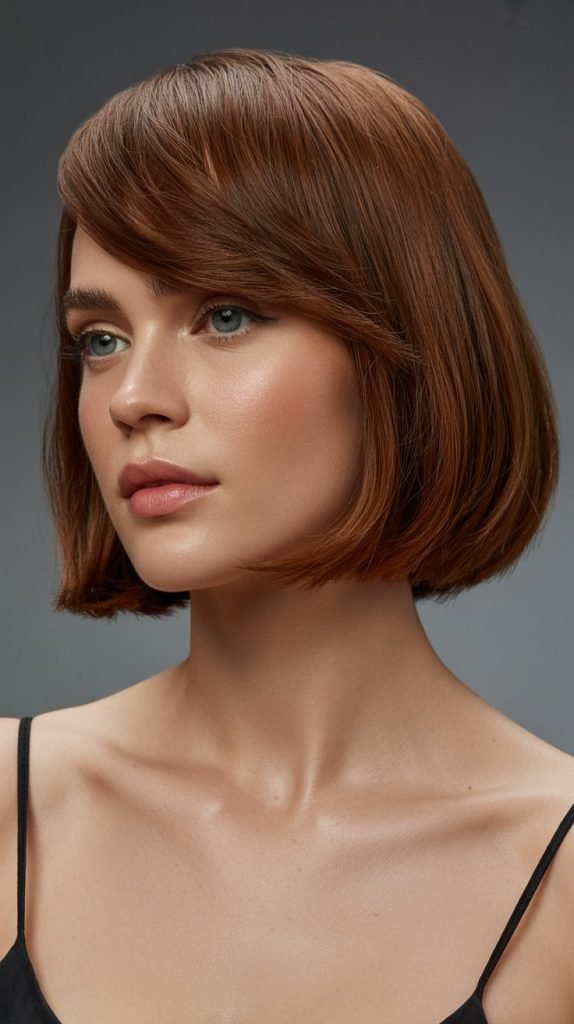
The blunt lob, or long bob, sits between the chin and shoulders with a clean, straight-across cut that maximizes the appearance of thickness in fine hair.
This slightly longer version of the classic bob provides more styling versatility while maintaining fullness.
Lob Advantages:
- The additional length compared to a chin-length bob provides more styling options while still being manageable.
- The blunt cut creates a solid line that prevents fine hair from appearing thin or scraggly at the ends.
- This length works well for those transitioning from long to short hair, offering a less dramatic change.
- The lob is currently one of the most popular and flattering cuts for all hair types, including fine hair.
Styling Versatility:
- Wear the lob straight and sleek for a polished, professional appearance.
- Add loose waves or curls for a more romantic, voluminous look.
- Pull hair into a low ponytail or bun for casual days while maintaining the blunt line when worn down.
- The length is perfect for tucking behind ears or wearing half-up styles without sacrificing the overall shape.
13. The Graduated Bob
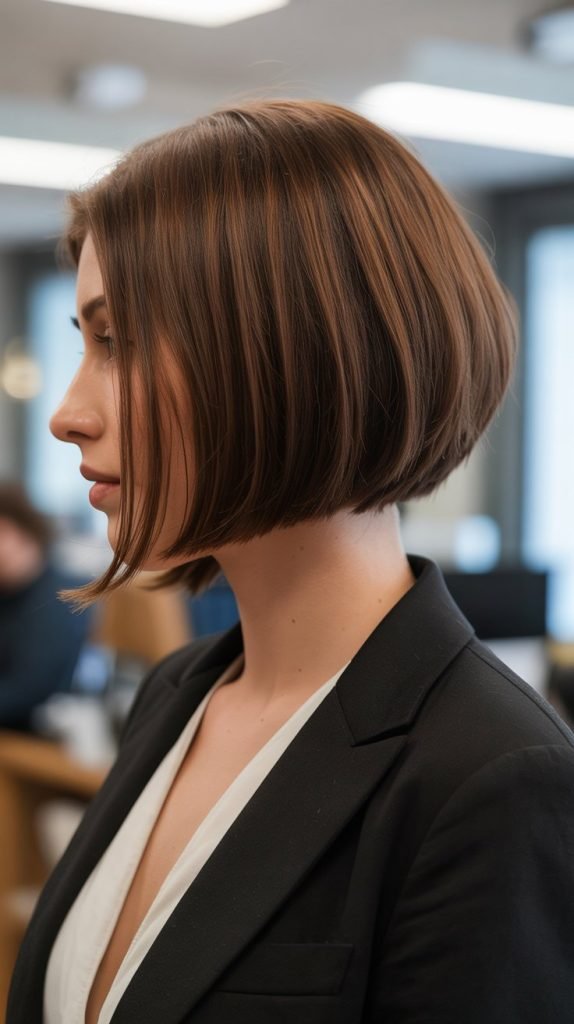
The graduated bob features layers that gradually increase in length from the nape to the front, creating a smooth transition and adding volume through strategic weight removal
This technical cut combines the best elements of layering with the structure of a bob.
Graduation Technique:
- Hair is cut at increasing lengths from back to front, creating a stacked effect that adds volume.
- The graduation is more subtle than an inverted bob, offering a softer, more natural appearance.
- This technique removes weight from the back while maintaining fullness around the face.
- The smooth graduation creates a rounded silhouette that’s flattering and feminine.
Ideal Candidates:
- Those with fine, straight hair who want added volume without obvious layering.
- People seeking a professional, polished look that requires minimal daily styling.
- Anyone who wants the benefits of an inverted bob but prefers a less dramatic angle.
- This cut works particularly well for those with round or heart-shaped faces.
14. The Shaggy Bob
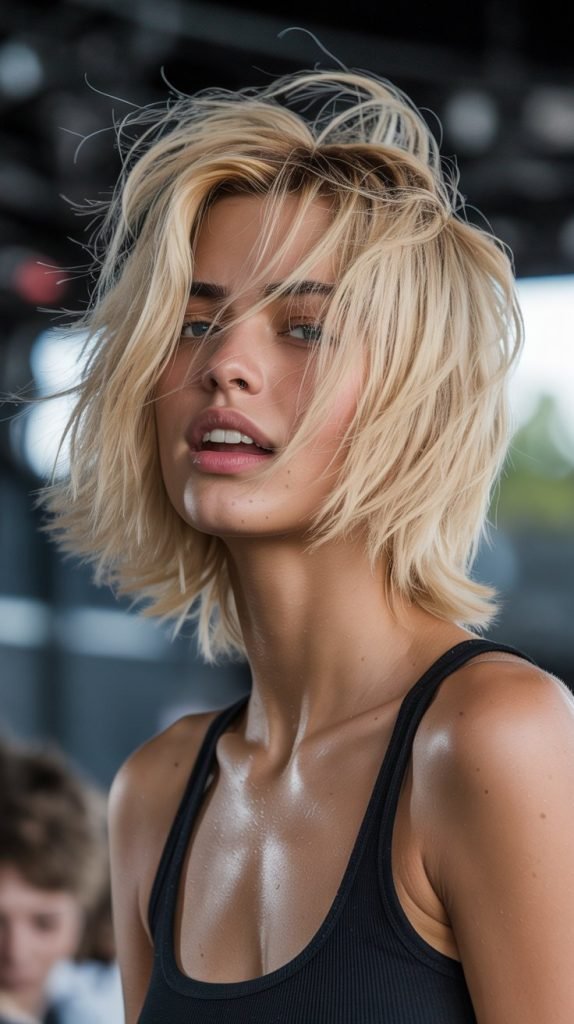
The shaggy bob brings 1970s-inspired texture and movement to fine hair through choppy layers, piece-y ends, and deliberate dishevelment.
This rock-and-roll style creates the illusion of thickness through texture and strategic layering.
Shag Elements:
- Multiple layers throughout create movement and prevent fine hair from lying flat against the head.
- The choppy, irregular cutting technique adds texture that makes hair appear fuller.
- Shaggy bobs typically feature more layers around the crown and face for maximum volume and movement.
- The intentionally messy styling hides any areas where fine hair might appear sparse.
Achieving the Shag:
- Work with a stylist experienced in shag cuts, as the layering requires precision despite the casual appearance.
- Use volumizing mousse and texturizing spray to enhance the piece-y, separated look.
- This style works best when air-dried or diffused rather than blow-dried smooth.
- The shaggy bob requires regular trims every 6-8 weeks to prevent the layers from becoming too long and losing definition.
15. The Bob with Micro Bangs
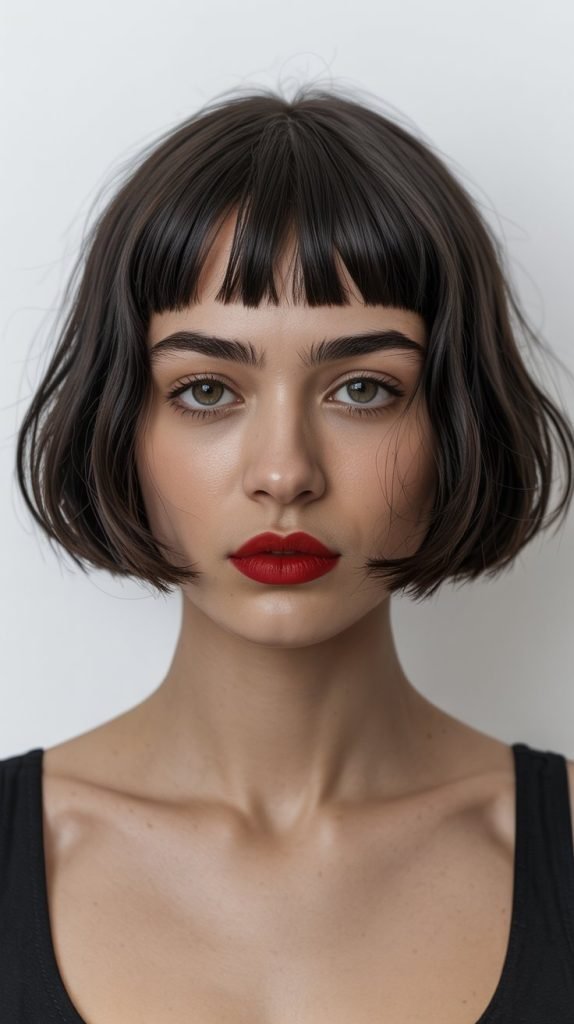
A bob paired with micro bangs (also called baby bangs) creates an avant-garde, fashion-forward look that draws attention to the eyes and adds a unique edge to fine hair.
The ultra-short bangs create a striking contrast with the bob length.
Micro Bang Impact:
- The unexpected short length of the bangs creates a bold statement that shifts focus from hair texture to overall style.
- Micro bangs work particularly well with fine hair as they lie flat against the forehead without requiring much styling.
- The contrast between short bangs and the bob length adds visual interest and dimension.
- This daring style suits those with strong facial features and a confident, fashion-forward aesthetic.
Considerations:
- Micro bangs are a bold commitment—they take months to grow out if you change your mind.
- These bangs work best on straight or slightly wavy hair, as curly hair doesn’t maintain the precise line.
- Fine hair holds this style well since micro bangs need to lie flat rather than have volume.
- Regular trims every 2-3 weeks are essential to keep micro bangs at the correct length.
16. The Rounded Bob
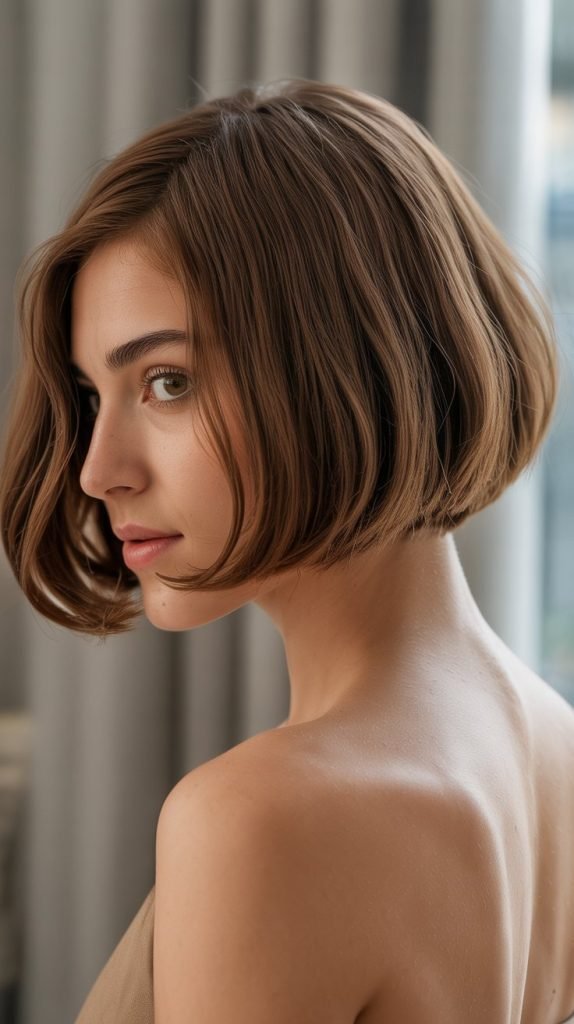
The rounded bob features curved shaping that follows the natural curve of the head, creating a soft, feminine silhouette that adds fullness to fine hair.
This cut emphasizes a rounded shape at the back and sides rather than straight geometric lines.
Rounded Shape Benefits:
- The curved shape creates the optical illusion of more hair by following the natural contours of the head.
- This cut adds softness and femininity while providing structure for fine hair.
- The rounded silhouette makes fine hair appear fuller by concentrating volume around the curve.
- This versatile style works well for various occasions, from casual to formal.
Styling the Round:
- Use a round brush while blow-drying to enhance the curved shape and add volume.
- Direct hair slightly inward at the ends to maintain the rounded silhouette.
- Apply volumizing products at the roots to support the curved shape throughout the day.
- This cut requires regular maintenance every 5-7 weeks to keep the rounded shape precise and prevent it from growing out into a triangle.
17. The Disconnected Bob
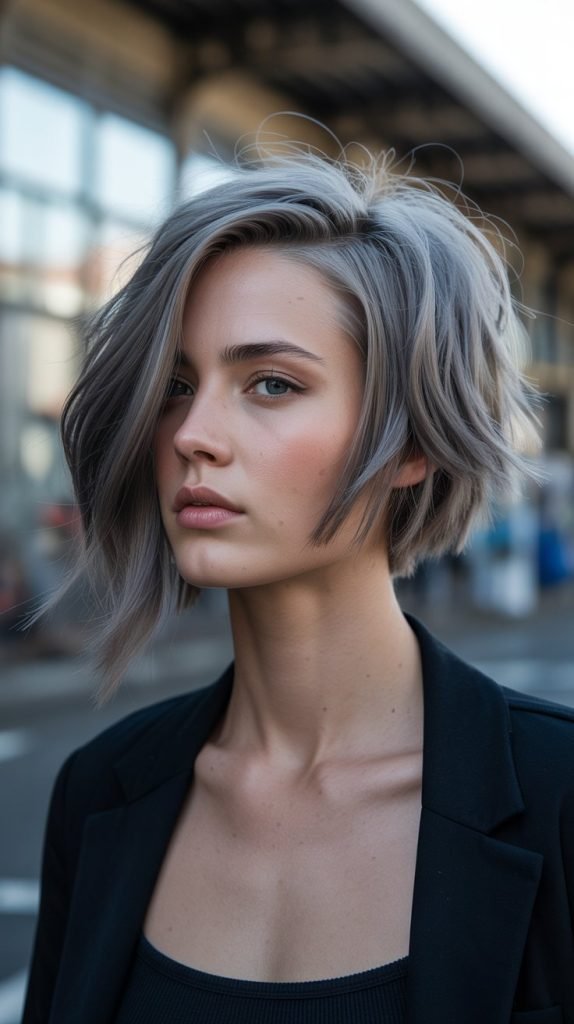
The disconnected bob features contrasting lengths with minimal blending, creating distinct sections that add dimension and edgy style to fine hair.
The intentional lack of smooth transition between lengths creates visual interest.
Disconnection Technique:
- Certain sections are cut significantly shorter than others without gradual blending, creating distinct “disconnected” areas.
- Common variations include undercut sides with longer top sections, or a long top layer over shorter underlying hair.
- The contrast in lengths adds dimension that makes fine hair appear more substantial.
- This modern, edgy style works well for those who want a bold, unconventional look.
Styling Options:
- The disconnection allows you to style different sections independently for varied looks.
- Longer sections can be curled or straightened while shorter sections remain sleek.
- Use pomade or wax to emphasize the separation between different length sections.
- This cut works particularly well with fun hair colors or highlights that emphasize the disconnected sections.
18. The Bob with Full Bangs
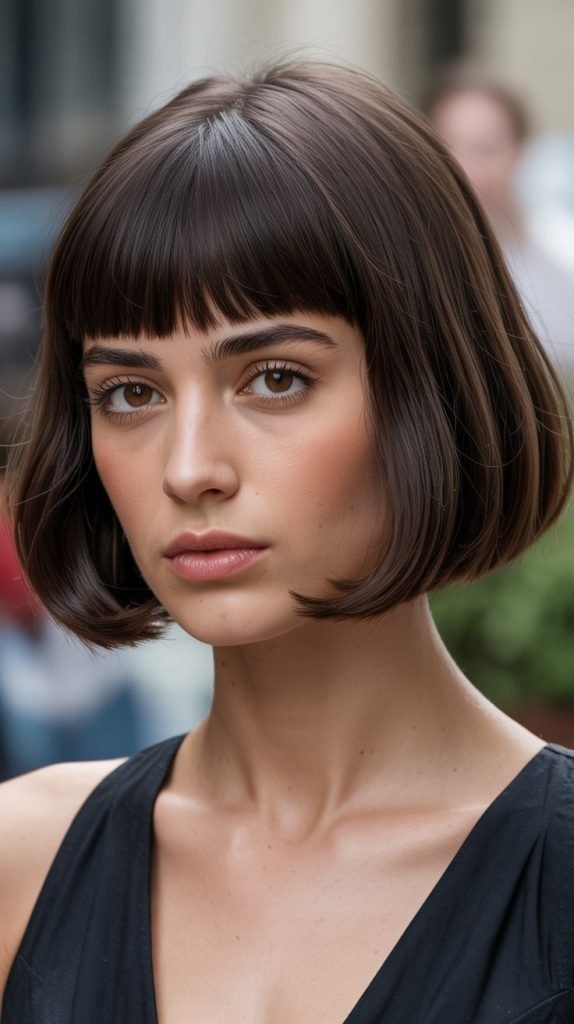
A bob with full, straight-across bangs creates a striking, youthful frame for the face while adding visual weight to fine hair.
The solid line of bangs combined with the bob structure creates a cohesive, polished look.
Full Bang Characteristics:
- Full bangs create a solid horizontal line that adds visual weight and structure to fine hair.
- The bangs hide the forehead, drawing attention to eyes and cheekbones rather than hair texture.
- When combined with a bob, full bangs create a geometric, structured appearance.
- This classic combination has remained popular for decades due to its timeless appeal.
Bang Maintenance:
- Full bangs require commitment to frequent trims every 2-3 weeks to maintain the correct length.
- Fine hair bangs tend to show oil more quickly, requiring daily washing or strategic use of dry shampoo.
- Blow-dry bangs with a round brush to prevent them from drying flat against the forehead.
- Consider the weight of full bangs—if you have very fine hair, ask your stylist about creating slightly thinner bangs that won’t overwhelm your hair.
19. The Tapered Bob
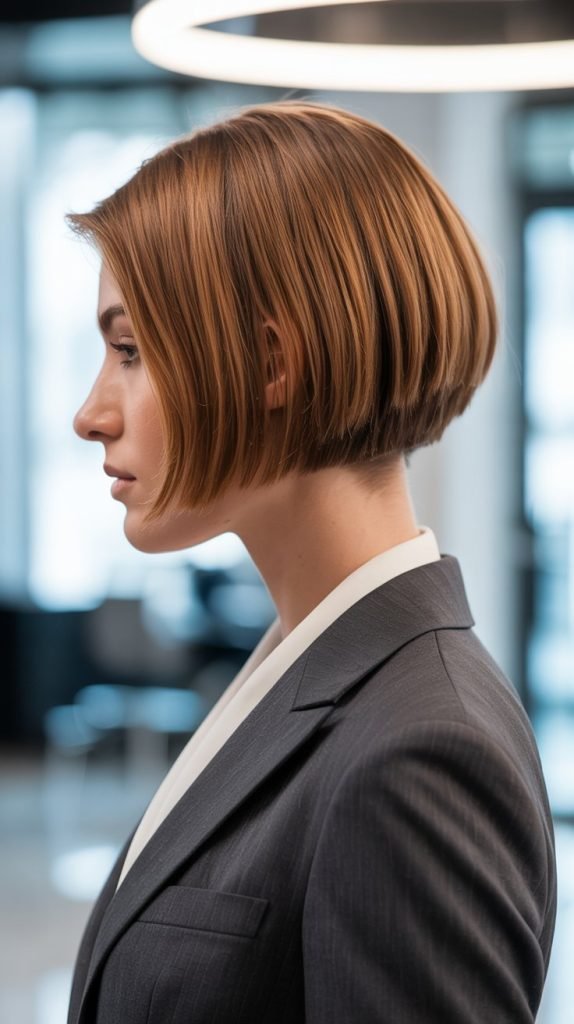
The tapered bob gradually decreases in length from top to bottom, creating a narrowing effect at the nape that adds sophistication and volume to fine hair.
This professional-looking cut combines clean lines with strategic volume placement.
Tapering Benefits:
- The tapered nape removes bulk at the bottom, allowing the crown area to appear fuller by comparison.
- The clean, professional appearance makes this cut ideal for corporate environments.
- Tapering creates a sleek, refined silhouette that appears intentional and well-maintained.
- The narrowing effect at the nape elongates the neck and creates a graceful line.
Professional Appeal:
- This cut requires precise technique and regular maintenance to keep the taper clean and defined.
- The tapered bob works exceptionally well when blow-dried smooth for a polished finish.
- Consider adding subtle highlights along the crown area to emphasize the volume created by the taper.
- Schedule trims every 5-6 weeks to prevent the taper from losing its defined shape.
20. The Bob with Piecey Layers
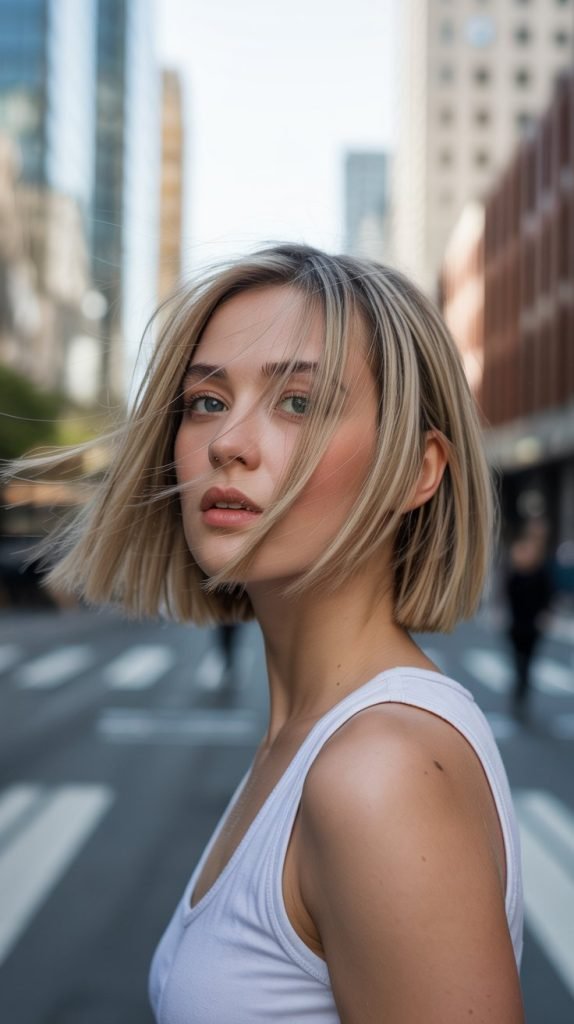
A bob featuring piece-y layers creates separation and texture that makes fine hair appear fuller through strategic sectioning and definition.
The layers are cut to create distinct pieces rather than blended smoothness.
Piece-y Layer Advantages:
- Individual pieces create shadows and dimension that add depth to fine hair.
- The separation between pieces makes hair appear more voluminous than smoothly blended layers.
- Piece-y texture provides a modern, current aesthetic that’s less formal than traditional bobs.
- This style works beautifully with minimal styling, often air-drying well.
Creating Definition:
- Use texturizing paste, pomade, or wax to enhance the separation between pieces.
- Twist small sections while styling to encourage piece-y definition.
- Avoid over-brushing, which will blend the pieces together and reduce dimension.
- This cut benefits from point-cutting or razor-cutting techniques that create softer, more separated ends.
21. The Angled Bob with Undercut
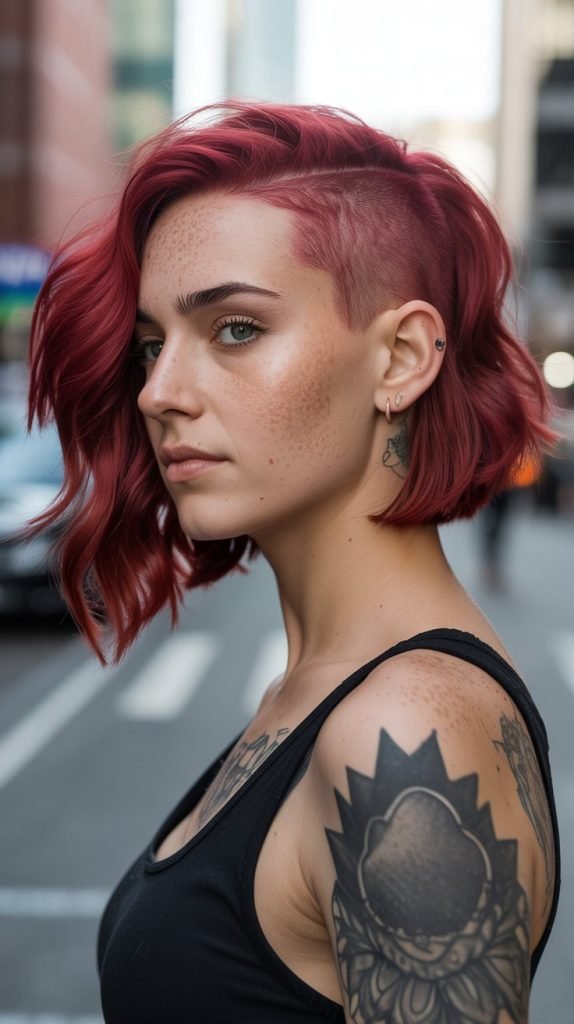
An angled bob combined with an undercut adds edgy contrast and reduces bulk, creating a bold style that works exceptionally well for fine hair.
The hidden undercut removes weight while the angled bob maintains length and style on top.
Undercut Integration:
- The undercut removes hair at the nape and/or sides, significantly reducing weight and allowing the top sections to lift more easily.
- Fine hair responds particularly well to undercuts because removing the underlayer eliminates bulk without visible thinning.
- The contrast between the undercut and the angled bob creates dramatic visual interest.
- This style offers versatility—you can wear the bob down to hide the undercut or style it up to showcase the shaved section.
Maintenance:
- Undercuts require frequent maintenance every 3-4 weeks to keep the shaved section clean and defined.
- Consider adding design elements like patterns or shapes to the undercut for additional personality.
- The angled bob portion requires regular trims every 6-8 weeks to maintain the angle and prevent uneven growth.
- This bold style suits those who enjoy making a statement and aren’t afraid of commitment to regular upkeep.
22. The Soft Layered Bob
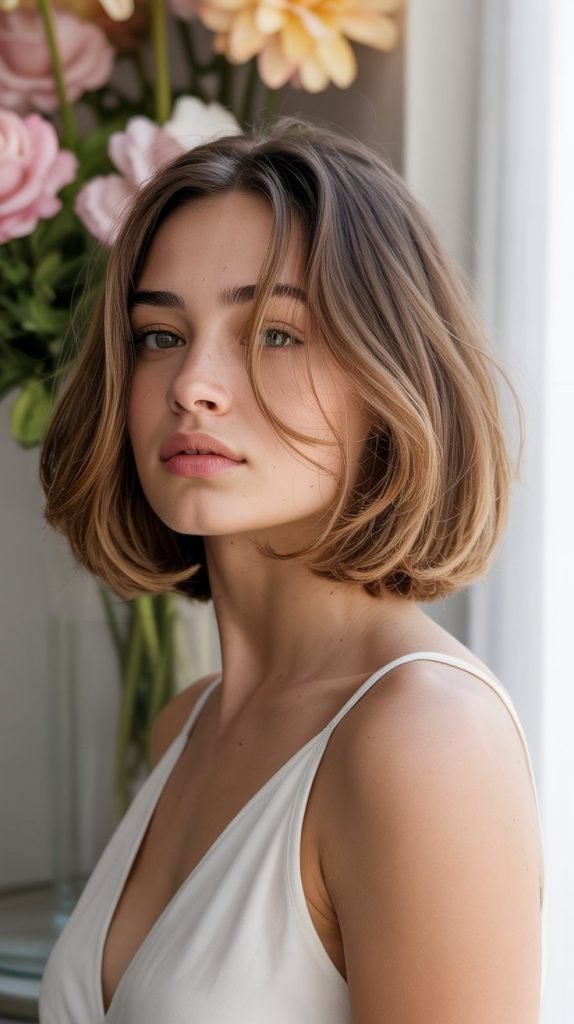
A soft layered bob features gentle, blended layers that add movement without creating obvious steps or severe lines.
This feminine, romantic style adds dimension to fine hair through subtle layering.
Soft Layer Characteristics:
- Layers are carefully blended to create seamless transitions rather than distinct steps.
- The gentle layering adds movement and prevents fine hair from appearing flat without removing too much density.
- This cut creates a soft, feminine silhouette that’s flattering and easy to wear.
- The subtle nature of the layers makes this bob appropriate for both professional and casual settings.
Styling for Softness:
- Use a large round brush while blow-drying to create smooth, flowing movement.
- Apply a lightweight smoothing serum to enhance shine and emphasize the soft layers.
- This style works beautifully with subtle waves or when worn straight.
- The soft layers blend well as the bob grows out, requiring less frequent maintenance than more structured bobs.
23. The Bob with Balayage Highlights
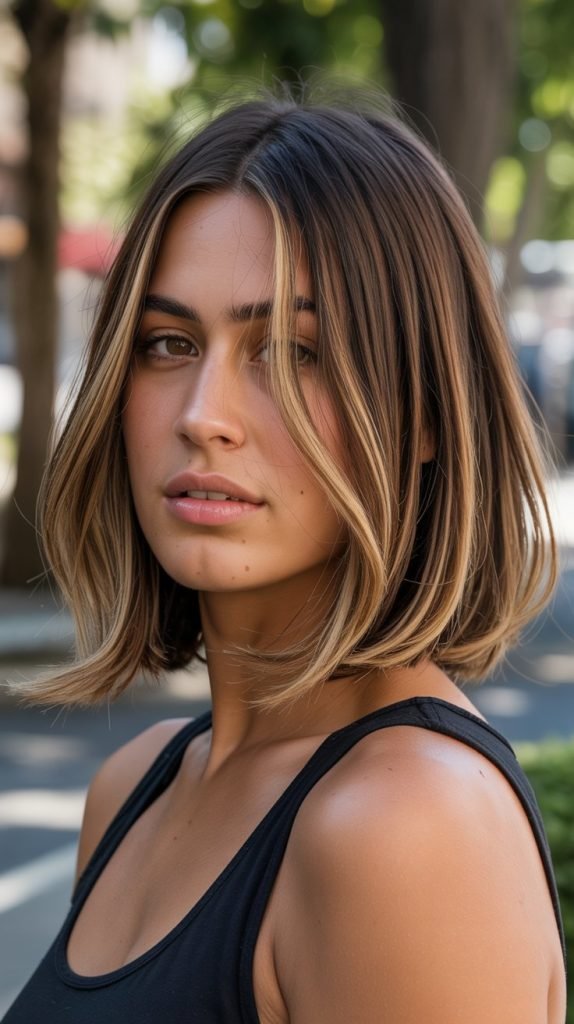
Combining a bob cut with balayage highlights adds dimension, depth, and the illusion of volume to fine hair through strategic color placement.
The hand-painted highlights create natural-looking dimension that makes hair appear fuller.
Color Dimension Benefits:
- Balayage highlights create light and shadow throughout the hair, making it appear more three-dimensional and fuller.
- The varied tones break up the solid color that can make fine hair appear flat and one-dimensional.
- Strategic highlight placement around the face and crown adds brightness that draws the eye upward, creating the impression of volume.
- Unlike traditional foil highlights, balayage grows out more gracefully, requiring less frequent maintenance.
Balayage Placement:
- Request highlights focused around the face, crown, and ends where dimension has the most impact.
- Lighter pieces around the face create a brightening, volumizing effect.
- Keep the base color slightly darker at the roots to create depth and the illusion of shadow (which implies fullness).
- Work with a colorist experienced in coloring fine hair, as proper placement is crucial for the dimensional effect.
24. The Chin-Length Bob with Side Part
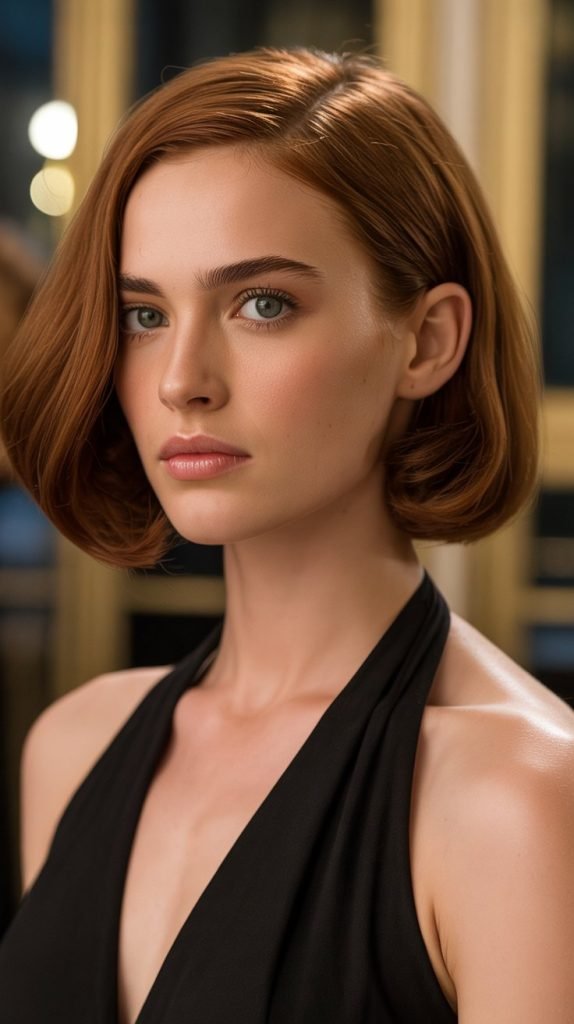
A classic chin-length bob paired with a deep side part creates elegant asymmetry that adds volume and style to fine hair.
The side part naturally creates lift on one side while providing a flattering sweep across the forehead.
Side Part Advantages:
- A deep side part creates natural volume on the heavier side by directing more hair to one area.
- The asymmetry created by the side part adds visual interest and breaks up the symmetry that can emphasize thinness.
- Chin length is universally flattering and provides enough length for styling versatility.
- The side part allows for face-framing pieces on one side while keeping the other side sleek.
Maximizing Volume:
- Create the part when hair is wet and blow-dry in that direction to encourage the hair to stay in place.
- Apply volumizing mousse at the roots on the heavy side of the part to maintain lift.
- Use a flat iron to create a sleek finish that emphasizes the clean lines of the cut.
- Periodically change the location of your side part to prevent permanent indentations and encourage volume.
25. The Textured French Bob
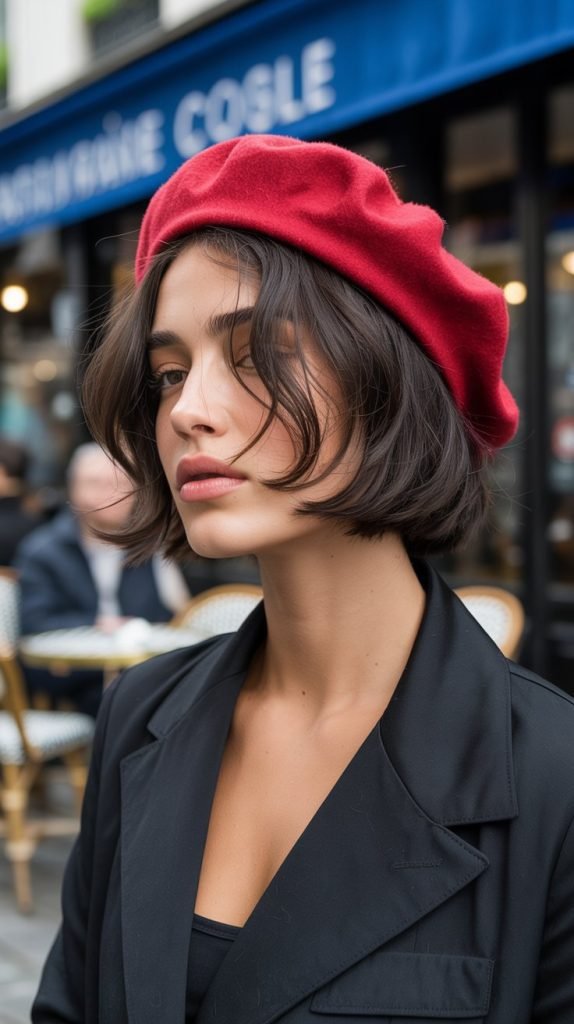
The French bob is a chic, slightly shorter bob that typically ends above the chin, often around mid-ear to jawline level, with textured ends that add Parisian effortlessness to fine hair.
This stylish cut embraces a slightly undone aesthetic.
French Bob Characteristics:
- The shorter length (above chin) reduces weight and allows fine hair to maintain volume more easily.
- Textured, piece-y ends create an intentionally undone look that’s effortlessly chic.
- Often paired with bangs or a natural, slightly messy styling approach that embraces texture.
- The cut embodies the French philosophy of looking stylish without appearing to try too hard.
Achieving French Girl Style:
- Embrace natural texture and avoid over-styling—the French bob should look slightly undone.
- Air-dry when possible or use a diffuser to maintain natural movement.
- Apply a small amount of texturizing paste to the ends for piece-y definition.
- This cut works beautifully with or without bangs, and the shorter length is perfect for those ready to go bold with their fine hair.
Lowlights and Depth:
- Adding lowlights creates shadow that makes hair appear more three-dimensional.
- Darker tones at the roots create contrast that enhances the perception of volume.
- Strategic lowlight placement can create the illusion of depth and thickness.
- Combining highlights and lowlights creates the most natural, dimensional result.
Color Maintenance:
- Use color-safe, sulfate-free shampoos to extend the life of your color treatment.
- Fine hair often processes color faster, so communicate this to your colorist.
- Avoid overly light colors that can make fine hair appear transparent or see-through.
- Schedule color refreshes every 8-12 weeks to maintain dimension without over-processing.
Best Colors for Fine Hair:
- Multi-dimensional colors with varied tones create more visual fullness than solid colors.
- Warm tones like caramel, honey, and golden shades reflect light and create the illusion of volume.
- Cooler tones like ash and platinum can work well but require strategic placement to avoid looking flat.
- Consider your natural coloring and skin tone when selecting hair color for the most flattering results.
Creating Texture and Body:
- Use a curling iron or wand to add bends and waves that create visual fullness.
- Curl sections in alternating directions for a more natural, voluminous result.
- Tease roots gently at the crown for added height, then smooth the top layer over the teasing.
- Scrunch hair with hands after styling to break up uniform patterns and add texture.
Setting the Style:
- Allow hair to cool completely after heat styling before touching or moving it.
- Use a flexible-hold hairspray in light layers rather than one heavy application.
- Avoid over-touching styled hair throughout the day, as this can flatten volume.
- Refresh volume with dry shampoo or volumizing spray at the roots as needed.
Face Shape Guide for Choosing Your Bob
Image Prompt: Realistic photo collage showing different face shapes with appropriate bob haircuts, oval round square heart diamond faces, style guide illustration, beauty consultation visual, professional styling reference photography
Selecting the right bob style for your face shape ensures the most flattering result:
Oval Face Shape:
- Most bob styles suit oval faces, as this is considered the most balanced face shape.
- Chin-length to shoulder-length bobs work particularly well.
- Both blunt and layered styles are flattering on oval faces.
- Feel free to experiment with bangs of any style.
Round Face Shape:
- Choose bobs with angles and asymmetry to create the illusion of length.
- Inverted or angled bobs that are longer in front work exceptionally well.
- Avoid blunt, chin-length cuts that emphasize roundness.
- Side-swept or curtain bangs are more flattering than straight-across bangs.
Square Face Shape:
- Soft, layered bobs help balance strong jawlines.
- Avoid blunt cuts at jaw length that emphasize squareness.
- Longer bobs (lobs) that fall below the jaw are particularly flattering.
- Soft, wispy bangs and textured ends soften angular features.
Heart Face Shape:
- Chin-length bobs balance a wider forehead and narrower chin.
- Add volume at the jawline to create width in the lower face.
- Avoid styles with excessive volume at the crown.
- Side-swept or curtain bangs help minimize forehead width.
Diamond Face Shape:
- Bobs with width at the chin balance narrow foreheads and chins.
- Soft, textured styles work better than severe, geometric cuts.
- Consider bobs that tuck behind the ears to showcase cheekbones.
- Wispy or side-swept bangs help balance facial proportions.
Common Mistakes to Avoid with Fine Hair Bobs
Avoiding these common pitfalls will help your fine hair bob look its best:
Over-Layering:
- Too many layers can remove density and make fine hair appear even thinner.
- Request minimal, strategic layering that adds movement without sacrificing fullness.
- Avoid heavily layered shag styles unless you have enough density to support them.
- Work with a stylist who understands the unique needs of fine hair.
Using Heavy Products:
- Heavy oils, serums, and creams weigh down fine hair and eliminate volume.
- Choose lightweight, fine-hair-specific products that provide benefits without bulk.
- Apply products sparingly, focusing on ends rather than roots.
- Less is always more when it comes to product application on fine hair.
Neglecting Regular Trims:
- Skipping trims allows split ends to develop, making fine hair appear even thinner and more damaged.
- Regular trims maintain the shape and precision of bob cuts.
- Schedule appointments every 6-8 weeks to keep your bob looking fresh.
- Well-maintained ends create the appearance of thicker, healthier hair.
Over-Washing or Under-Washing:
- Washing too frequently strips natural oils that add texture and body to fine hair.
- Washing too infrequently allows oil buildup that flattens fine hair against the scalp.
- Find the right balance for your hair, typically every other day or every two days.
- Use dry shampoo strategically to extend time between washes without sacrificing volume.
Excessive Heat Styling:
- Daily heat styling damages fine hair, making it appear even thinner and more fragile.
- Allow hair to air-dry when possible to maintain health.
- Always use heat protectant and moderate temperature settings.
- Embrace natural texture occasionally to give hair a break from heat.
Seasonal Styling Adjustments for Bob Cuts
Adapting your bob styling routine to seasonal changes helps maintain the best appearance year-round:
Summer Styling:
- Embrace natural texture and air-drying to minimize heat damage in humid weather.
- Use anti-humidity products to prevent frizz and maintain style.
- Protect hair from sun damage with UV-protective sprays or hats.
- Consider slightly shorter styles that keep hair off your neck in hot weather.
Fall Adjustments:
- Transition to richer hair colors with dimensional lowlights that complement autumn tones.
- Incorporate more textured, tousled styles that suit the season’s aesthetic.
- Begin repairing summer sun damage with deep conditioning treatments.
- Experiment with bolder bob styles as you refresh your look for the new season.
Winter Care:
- Combat static electricity with anti-static products and ionic hair dryers.
- Increase moisture treatments to counteract dry indoor heating.
- Protect hair from cold weather damage by wearing hats with silk or satin linings.
- Style hair with more polish and smoothness to combat winter frizz.
Spring Refresh:
- Schedule a fresh cut to remove winter damage and embrace lighter styles.
- Consider adding highlights to brighten your look for the season.
- Transition to lighter products as humidity levels increase.
- Experiment with soft, romantic styling that reflects the season’s renewal.
Conclusion
The versatility and flattering nature of short bob haircuts make them an excellent choice for anyone with fine hair seeking a stylish, manageable look.
Throughout this guide on 25 Short Bob Haircuts for Fine Hair That Are Stylish and Easy to Maintain, we’ve explored how strategic cutting techniques, proper styling methods, and the right products can transform fine hair from a limitation into an asset.
Whether you prefer the clean lines of a classic blunt bob, the edgy appeal of an asymmetrical cut, or the romantic softness of textured waves, there’s a bob variation perfectly suited to your personal style and hair texture.
The key to success lies in choosing a cut that works with your face shape, committing to regular maintenance, and embracing styling techniques that maximize volume and movement.
Fine hair doesn’t mean you have to sacrifice style or settle for limited options—instead, these 25 bob variations demonstrate that fine hair can be beautifully versatile, offering endless possibilities for self-expression while remaining refreshingly easy to maintain.
Take inspiration from these styles, consult with an experienced stylist who understands fine hair, and prepare to fall in love with your new bob that finally gives your fine hair the volume, style, and confidence you deserve.
