

There’s something undeniably liberating about the moment you decide to go ultra short with your hair.
The ultra short pixie haircut has evolved from a daring statement into a versatile canvas for self-expression, offering women of all ages a chance to embrace boldness, elegance, and effortless style.
Whether you’re seeking a dramatic transformation or simply want a low-maintenance look that turns heads, 24 Bold Ultra Short Pixie Haircuts for Women presents a comprehensive guide to the most striking short hairstyles available today.
From textured crops to sleek buzz cuts, each style in this collection offers unique benefits for different face shapes, hair types, and personal aesthetics.
This article explores the essential elements of ultra short pixies, styling techniques, maintenance tips, and the confidence-boosting power of a dramatic hair change that can redefine your entire appearance.
1. The Classic Tapered Pixie

The classic tapered pixie serves as the foundation for ultra short haircuts, featuring gradually shortened sides and back with slightly more length on top.
This timeless style offers versatility while maintaining a clean, sophisticated appearance that works in both professional and casual settings.
- The taper creates a natural gradient that flatters most face shapes by drawing attention upward toward the eyes and cheekbones.
- Styling requires minimal product—just a small amount of pomade or wax worked through the top section for texture and definition.
- This cut typically requires maintenance every 3-4 weeks to keep the tapered sections crisp and prevent the style from growing out unevenly.
- The classic tapered pixie works exceptionally well for thick hair types, as the graduated cutting technique removes bulk while maintaining shape and structure.
2. The Textured Crop

The textured crop brings dimension and movement to ultra short hair through strategic layering and point-cutting techniques.
This modern approach to the pixie creates a deliberately tousled appearance that feels effortlessly chic and youthful.
- Hairstylists create texture by using razor cutting or point-cutting methods that break up blunt lines and add natural-looking irregularity.
- The textured crop particularly benefits fine hair by creating the illusion of fuller, thicker hair through strategic layering.
- Styling involves applying a texturizing spray or sea salt spray to damp hair and using fingers to create piecey, separated sections.
- This style offers more forgiveness as it grows out compared to blunt cuts, making it ideal for those who may miss appointments occasionally.
- The deliberately messy aesthetic means less time perfecting your look each morning while still appearing intentionally styled.
3. The Buzz Cut Pixie
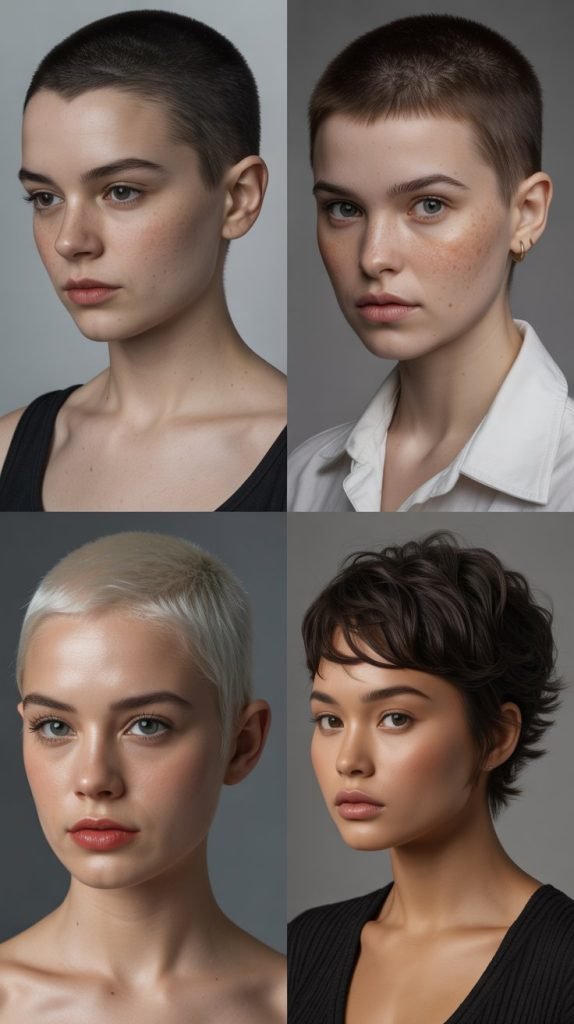
The buzz cut pixie represents the ultimate in minimalist hair styling, featuring uniformly short hair typically between 1/8 inch to 1/2 inch in length.
This bold choice emphasizes facial features and bone structure while requiring virtually no daily styling.
- Buzz cuts direct complete focus to your face, making eye makeup, earrings, and facial symmetry the primary aesthetic elements.
- This style requires the least maintenance of any haircut, with washing and drying taking mere minutes.
- Clipper guard numbers determine length: #1 gives approximately 1/8 inch, #2 provides 1/4 inch, and #3 offers 3/8 inch coverage.
- The buzz cut pixie works best for those with well-defined facial features and confidence in their natural face shape.
- Sunscreen becomes essential for your scalp, as the minimal hair coverage provides little protection from UV rays.
4. The Asymmetrical Pixie
The asymmetrical pixie creates visual interest through intentional imbalance, featuring longer sections on one side while keeping the other side closely cropped. This edgy style adds artistic flair and modern sophistication to the ultra short category.
- The longer side typically sweeps across the forehead, creating a flattering diagonal line that can minimize a wide forehead or soften angular features.
- Styling the longer section with a flat iron or small round brush adds polish and emphasizes the asymmetric design.
- This cut works particularly well for heart-shaped and oval faces, as the asymmetry balances proportions naturally.
- The dramatic difference between sides makes this style especially photogenic and striking in profile views.
- Maintenance focuses primarily on keeping the short side cropped close while allowing the longer side to grow slightly between appointments.
5. The Undercut Pixie
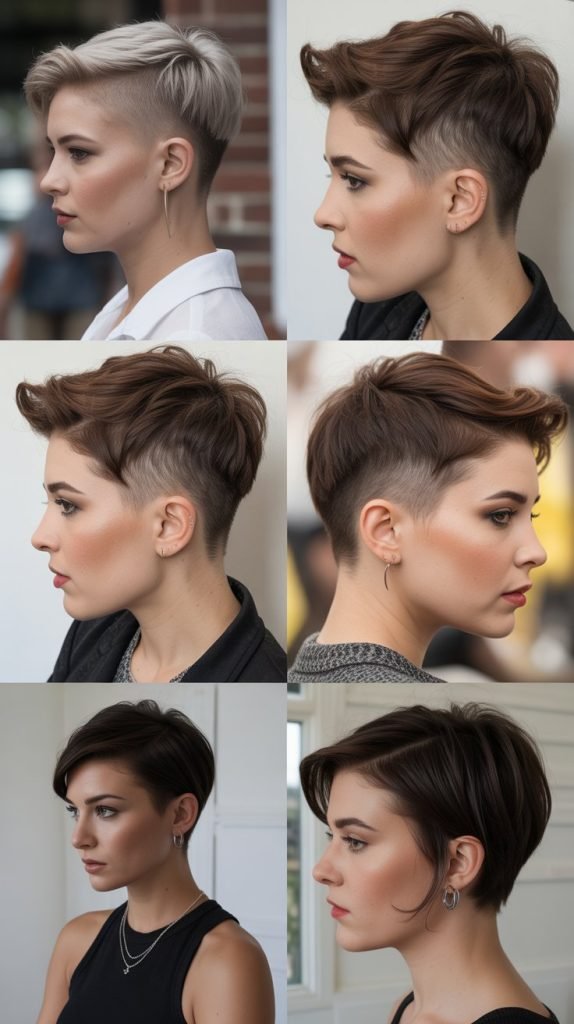
The undercut pixie combines longer top sections with shaved or very short sides and back, creating a striking contrast that offers versatility in styling.
This edgy variation allows for slicked-back looks, forward styling, or textured top arrangements.
- The undercut provides excellent cooling in warm weather while maintaining enough length on top for styling options.
- Fading the undercut section creates a softer transition, while a hard line offers maximum contrast and edge.
- This style allows for creative expression through designs or patterns shaved into the undercut sections.
- The top section can be styled forward, backward, or to the side depending on your mood and occasion.
- Regular maintenance of the undercut is necessary every 2-3 weeks to prevent the shaved sections from growing out and losing definition.
6. The Side-Swept Pixie

The side-swept pixie features longer bangs or fringe that sweep dramatically across the forehead, creating a softer, more romantic take on ultra short hair.
This style offers femininity and versatility while maintaining the convenience of minimal length.
- The sweeping fringe draws attention to the eyes and can help balance facial proportions, particularly for those with prominent foreheads.
- Styling requires blow-drying the fringe in your desired direction while the hair is still damp for maximum hold.
- This style works beautifully for those transitioning to ultra short hair, as the longer fringe provides a sense of security during the adjustment period.
- The side-swept element softens the overall look, making this option more conservative for professional environments where extreme styles may be questioned.
7. The Choppy Pixie

The choppy pixie embraces deliberately uneven layers and jagged edges to create a punk-inspired, rebellious aesthetic.
This high-texture style rejects uniformity in favor of artistic irregularity and attitude-filled styling.
- Choppy layers remove weight and add movement, preventing the hair from lying flat against the head.
- This style particularly suits those with naturally wavy or slightly curly hair, as the texture enhances the intentionally disheveled appearance.
- Styling products like clay, putty, or matte paste work best to separate pieces and emphasize the choppy texture.
- The irregular cutting pattern means this style maintains its character longer as it grows, requiring less frequent salon visits.
- This pixie variation pairs exceptionally well with bold hair colors, especially platinum blonde or vivid fashion shades.
8. The Slicked-Back Pixie

The slicked-back pixie transforms ultra short hair into a polished, sophisticated statement through the strategic use of styling products that create a sleek, controlled finish.
This refined approach works beautifully for formal occasions and professional settings.
- Achieving this look requires a strong-hold gel or pomade applied to damp hair and combed straight back from the hairline.
- The slicked-back style elongates the face and highlights cheekbones, making it particularly flattering for round or square face shapes.
- The high-shine finish creates a glamorous, red-carpet-ready appearance that elevates even casual outfits.
- Evening out requires only running damp hands through the hair to refresh the slicked appearance without complete restyling.
9. The Curly Pixie

The curly pixie celebrates natural texture by cutting curly hair into an ultra short shape that allows curls to form beautiful, dimensional patterns.
This style proves that pixie cuts aren’t exclusive to straight hair and can beautifully showcase natural curl patterns.
- Curly hair requires different cutting techniques, with stylists often cutting hair while dry to see how natural curl patterns fall.
- The shape of a curly pixie typically features more length than straight-haired versions to account for curl shrinkage.
- Moisturizing products are essential, with curl creams, leave-in conditioners, and oils preventing dryness and frizz.
- The natural volume of curly hair creates fullness that straight-haired individuals might need to achieve with styling products.
- Diffusing with a blow dryer on low heat or air-drying maintains curl definition without causing frizz or damage.
10. The Pixie with Shaved Designs

The pixie with shaved designs incorporates artistic patterns or geometric shapes into the shortest sections, transforming a simple haircut into wearable art.
This creative approach allows for personal expression and uniqueness that sets the style apart from standard pixie cuts.
- Common designs include straight lines, zigzags, stars, geometric patterns, or even intricate artistic renderings.
- The shaved design typically appears on the sides or back where it’s visible when hair is styled or swept to one side.
- These designs require frequent touch-ups every 1-2 weeks to maintain crisp lines as hair grows.
- Visiting a barber or stylist experienced in precision work ensures clean, professional-looking designs.
- This style option appeals particularly to younger women or those in creative fields where self-expression through appearance is encouraged.
11. The Boyish Pixie

The boyish pixie embraces androgynous aesthetics with short, uniform length and minimal styling, creating a clean, no-nonsense appearance.
This gender-neutral approach prioritizes simplicity and comfort while making a confident statement.
- The boyish pixie typically features similar length all over the head, usually between 1 to 2 inches, without dramatic variations.
- This style works exceptionally well for athletic women or those with active lifestyles who need hair that stays out of the way.
- Minimal gendered styling means less time applying products and less concern about humidity or weather affecting appearance.
- The androgynous nature of this cut challenges traditional beauty standards and appeals to those seeking freedom from conventional feminine presentation.
- Despite its simplicity, adding accessories like bold earrings or headbands can quickly feminize the look when desired.
12. The Feathered Pixie

The feathered pixie incorporates soft, wispy layers that create delicate, feather-like texture throughout the cut.
This vintage-inspired approach brings lightness and movement to ultra short hair while maintaining a distinctly feminine quality.
- Feathering techniques involve point-cutting or razor-cutting to create thin, tapered ends that separate naturally.
- This style particularly benefits fine or thin hair by creating the illusion of fullness through the dimensional layering.
- Blow-drying with a small round brush lifts the feathered sections away from the scalp, maximizing volume.
- The soft texture of feathered cuts creates a more approachable, gentle appearance compared to edgier pixie variations.
- This style experienced popularity in the 1970s and has returned as a modern reinterpretation with updated techniques.
13. The Platinum Pixie

The platinum pixie combines ultra short hair with striking platinum blonde coloring to create maximum visual impact.
This high-maintenance but stunning combination delivers an editorial, fashion-forward aesthetic that commands attention.
- Achieving platinum blonde typically requires bleaching, especially for those with naturally dark hair, which demands commitment and proper hair care.
- Toning treatments maintain the cool, silvery blonde shade and prevent brassiness or yellow tones from developing.
- Purple shampoo becomes an essential maintenance product, used weekly to neutralize warm tones and preserve the platinum color.
- The bright color draws maximum attention to facial features, making skincare and makeup particularly important considerations.
- Platinum hair requires more frequent deep conditioning treatments to counteract the drying effects of bleach.
14. The Disconnected Pixie

The disconnected pixie features intentionally separated sections with distinct length differences and no gradual blending between areas.
This avant-garde style creates architectural interest and modern edge through its deliberate lack of transition.
- The disconnected technique might combine a longer top section with very short sides without the typical fading or blending.
- This bold approach creates graphic lines and distinct shapes that photograph beautifully and create memorable visual impact.
- Styling the disconnected sections differently—perhaps slicking one area while texturizing another—emphasizes the intentional separation.
- This cut requires a highly skilled stylist who understands advanced cutting techniques and can create clean, intentional lines.
- The architectural quality of disconnected cuts makes them particularly popular in fashion editorials and runway presentations.
15. The Soft Pixie
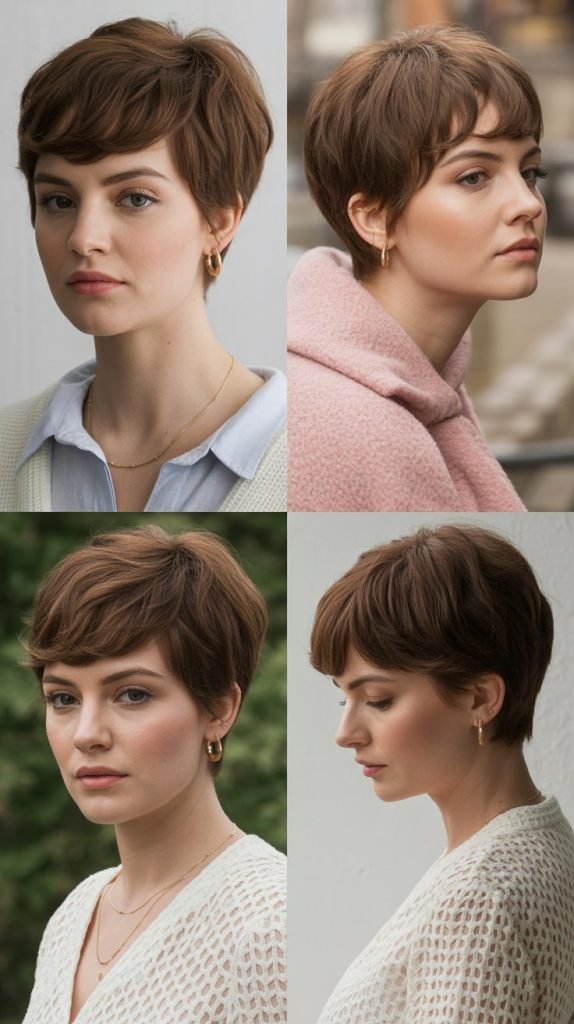
The soft pixie prioritizes gentle curves, rounded shapes, and feminine details to create an ultra short style that feels delicate and romantic.
This approach proves that extremely short hair can maintain traditionally feminine aesthetics.
- Rounded cutting techniques remove harsh angles and create softer transitions between different length sections.
- This style often incorporates slightly longer sections near the face to frame features gently and create softness.
- Styling products with light to medium hold preserve the natural movement without creating stiff, harsh textures.
- The soft pixie particularly suits those with delicate facial features or those seeking an ultra short cut without aggressive edge.
- Color choices like honey blonde, caramel, or soft brown tones complement the gentle aesthetic of this pixie variation.
16. The Spiky Pixie

The spiky pixie creates vertical texture through strategic product application and styling techniques that encourage hair to stand upward.
This energetic, youthful style adds height and personality while maintaining the convenience of ultra short length.
- Creating spikes requires strong-hold products like gel, mousse, or spiking wax applied to damp hair.
- The spiky technique works best on hair between 1 to 3 inches in length, which provides enough length to manipulate upward.
- Shorter spikes create a subtle textured appearance while longer, more defined spikes make a bolder statement.
- This playful style particularly appeals to younger women or those with outgoing, vibrant personalities that match the energetic aesthetic.
- The 1990s and early 2000s popularized spiky pixies, and contemporary versions offer updated, more refined interpretations.
17. The Vintage Pixie
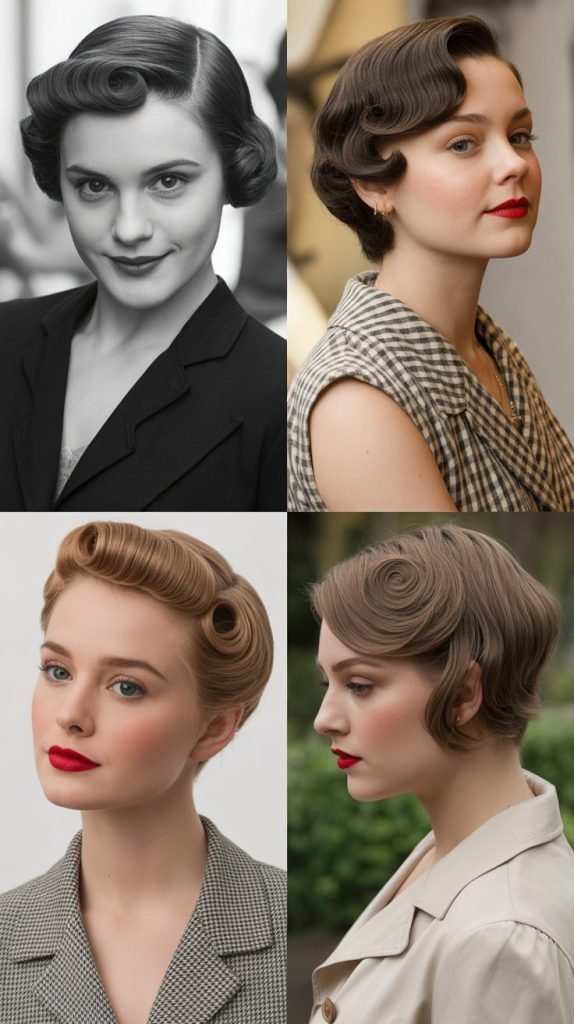
The vintage pixie draws inspiration from classic Hollywood icons of the 1950s and 1960s, incorporating retro elements like pin curls, finger waves, or carefully styled volume.
This nostalgic approach brings old-world glamour to ultra short hair.
- Vintage styling often requires more time investment than modern pixie approaches, using setting lotions, rollers, or pin curl techniques.
- The structured, polished appearance of vintage pixies creates sophistication suitable for formal events or themed occasions.
- Icons like Audrey Hepburn, Mia Farrow, and Twiggy popularized pixie cuts during their respective eras and continue to inspire modern interpretations.
- Vintage pixies typically maintain more uniform length and rely on styling rather than cutting for their distinctive shape.
- Modern products make vintage styling more accessible, with texturizing sprays and volumizing mousses replacing traditional setting lotions.
18. The Colored Pixie

The colored pixie incorporates vivid, non-traditional hair colors—from pastel pinks to electric blues—into ultra short styles for maximum creative expression.
This combination of dramatic cut and bold color creates unforgettable visual impact.
- Fashion colors require bleaching hair to a pale blonde base before applying the desired shade for true color payoff.
- Vivid colors fade more quickly than natural shades, requiring frequent toning or refresh appointments every 3-4 weeks.
- Color-safe shampoos and cool water washing help extend the vibrancy of fashion colors between salon visits.
- Matching or complementing makeup colors to your hair shade creates cohesive, intentional styling that maximizes the bold color choice.
19. The Grown-Out Pixie
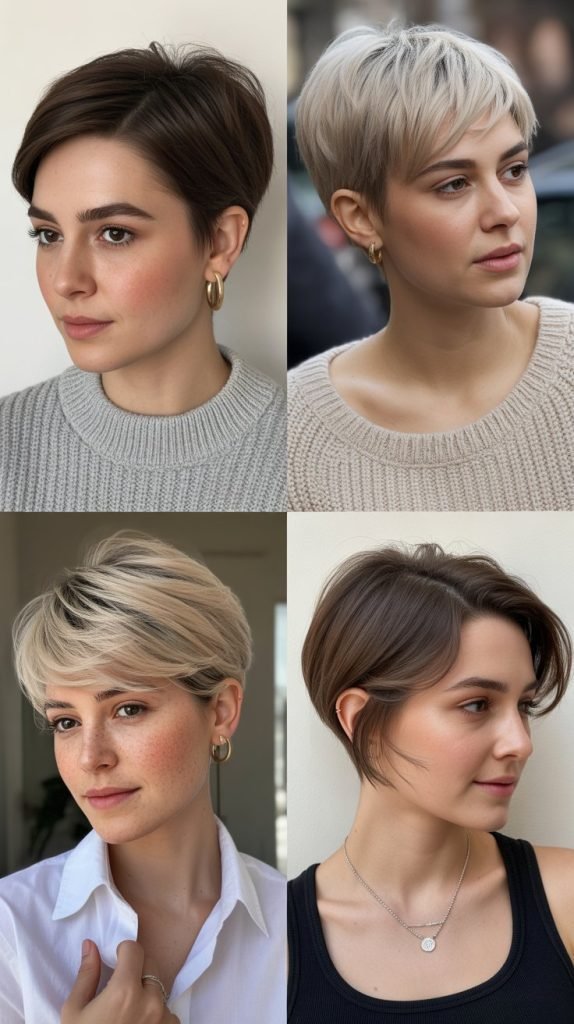
The grown-out pixie embraces the transitional phase between fresh cut and longer length, styling the in-between stage into an intentional, textured look.
This approach recognizes that not every pixie cut requires frequent maintenance to look stylish.
- Strategic product use helps control and shape hair during the awkward growth phases between appointments.
- Headbands, clips, and small hair accessories become valuable tools for managing sections that have grown too long.
- The grown-out phase often reveals new styling possibilities, with longer sections offering more versatility.
- Some women discover they prefer their pixie at this slightly longer length and maintain it as their regular style.
- Growing out a pixie completely typically takes 12-18 months, with several intermediate styles possible along the way.
20. The Graduated Pixie

The graduated pixie features stacked layers at the back that create volume and shape while maintaining shorter sides and front sections.
This technical cutting approach delivers dimension and structure that enhances head shape.
- The graduated technique stacks shorter layers over longer ones at the back of the head, creating a curved, volumized shape.
- This structure particularly benefits those with flat or less defined back-of-head shapes by adding architectural interest.
- The stacking requires precise cutting skills to maintain the proper graduation angle and prevent bulkiness.
- Blow-drying the graduated section with a round brush emphasizes the volume and shows off the dimensional layering.
- Regular trims every 4-6 weeks maintain the graduated shape and prevent the stacked layers from growing out unevenly.
21. The Pixie Bob Hybrid

The pixie bob hybrid combines elements of both ultra short pixie cuts and slightly longer bob haircuts, creating a versatile in-between style.
This approach offers more styling options while maintaining much of the ease of shorter lengths.
- The hybrid typically features pixie-short sides and back with a longer bob-like section on top that can reach chin length.
- This style provides the option to tuck longer sections behind ears for a true pixie appearance or style them forward for a bob aesthetic.
- The length variation creates natural movement and swing that pure pixie cuts cannot achieve.
- Those uncertain about committing to ultra short hair often choose this transitional style as a compromise.
- Styling versatility includes the ability to straighten, curl, or texture the longer sections depending on the desired look.
22. The Edgy Mohawk Pixie
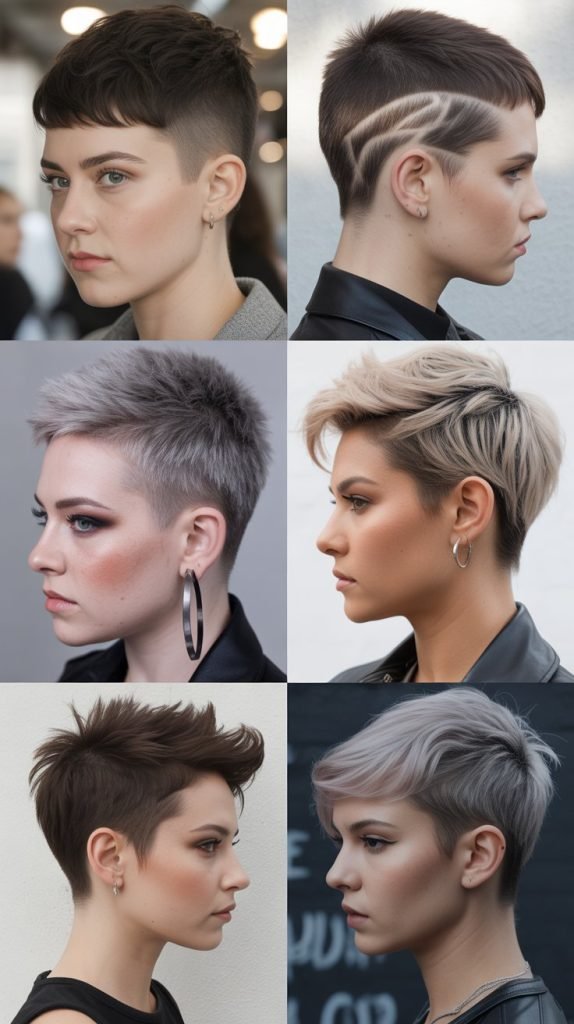
The edgy mohawk pixie incorporates punk-inspired elements by maintaining longer length through the center of the head while keeping sides very short or shaved.
This rebellious style makes a bold statement about individuality and confidence.
- The center section typically stands 2-4 inches tall and can be styled upward, forward, backward, or left naturally textured.
- Shaving or closely cropping the side sections creates maximum contrast and emphasizes the mohawk-inspired shape.
- This style allows for creative color application, with many choosing to highlight or dye only the center section differently from sides.
- Styling products with strong hold keep the center section in place, whether creating height or directing it in a specific direction.
- The mohawk pixie appeals to those with alternative fashion senses or those working in creative industries with relaxed appearance standards.
23. The Micro Fringe Pixie
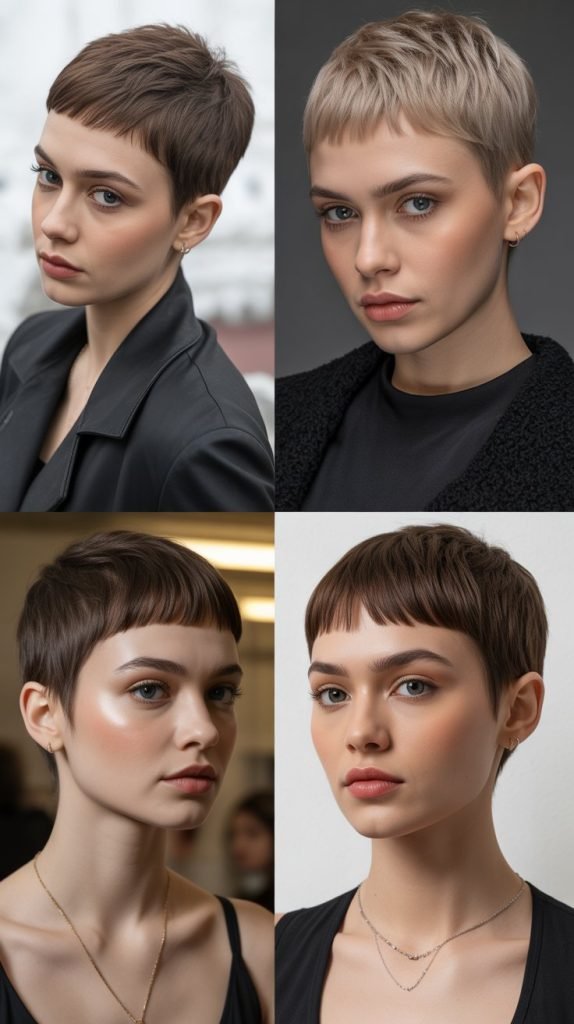
The micro fringe pixie incorporates very short, blunt-cut bangs that sit high on the forehead, creating an avant-garde, fashion-forward statement.
This unconventional fringe approach adds unique character to ultra short hair.
- Micro fringe typically sits 1-2 inches above the eyebrows, creating a distinctive geometric line across the forehead.
- This bold fringe choice draws maximum attention to the eyes and eyebrows, making careful grooming of these features essential.
- The avant-garde nature of micro fringe makes it more suitable for fashion-forward individuals comfortable with unconventional aesthetics.
- Styling the fringe straight and blunt emphasizes the architectural quality, while texturizing creates a softer interpretation.
- This style experienced runway popularity and has gradually entered mainstream acceptance as an artistic expression choice.
24. The Natural Texture Pixie
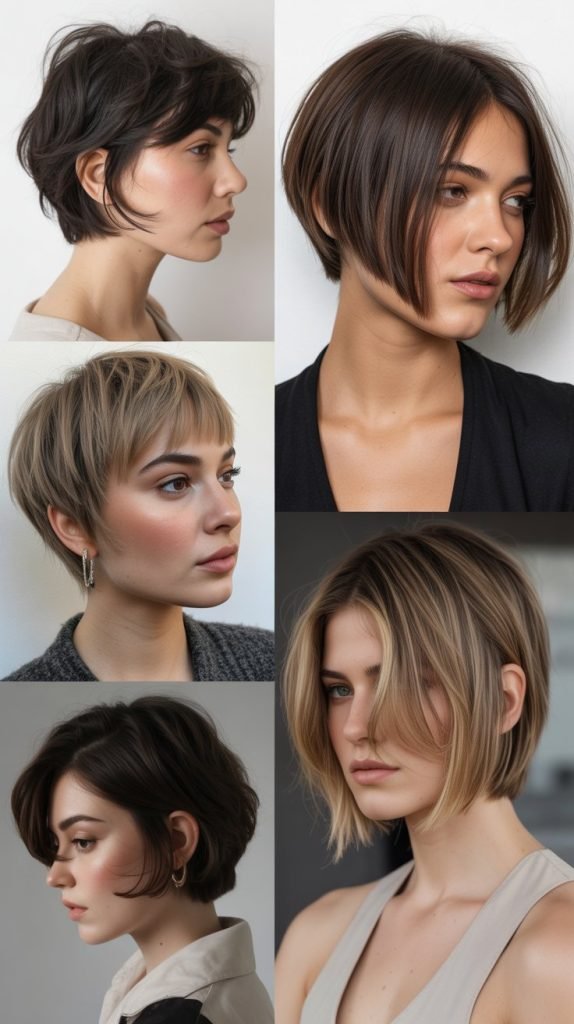
The natural texture pixie works with—rather than against—your hair’s inherent qualities, whether wavy, kinky, coily, or straight.
This approach celebrates authenticity and reduces daily styling time while showcasing your unique hair characteristics.
- Cutting techniques specifically designed for your texture ensure the style complements rather than fights your natural hair pattern.
- Natural texture pixies require hair type-specific products, with curl creams for curly hair, smoothing serums for frizz-prone hair, and volumizers for fine hair.
- This approach typically involves less heat styling and chemical processing, promoting healthier hair overall.
- Embracing natural texture reflects current beauty trends that celebrate diversity and authenticity over uniformity.
- The reduced styling time makes this approach ideal for busy women who want a stylish look without extensive daily maintenance.
Maintenance and Care
- Ultra short pixie cuts require regular trimming every 3-6 weeks depending on the specific style and how quickly your hair grows.
- Washing frequency can often decrease with pixie cuts since shorter hair accumulates less oil and product buildup than longer styles.
- Quality styling products become more important with short hair, as there’s less length to dilute or hide poorly performing products.
- Scalp health deserves increased attention with ultra short hair, as scalp conditions become more visible without length coverage.
- Heat protection remains important even with short hair if you use blow dryers or flat irons during styling routines.
- Regular deep conditioning treatments maintain hair health and prevent the brittleness that can result from frequent cutting and styling.
- Consulting with your stylist about home maintenance techniques ensures you can recreate the salon look between appointments.
- Investing in the proper tools—quality brushes, combs, and if needed, clippers for at-home touch-ups—extends the life of your cut.
For comprehensive hair care guidance, the American Academy of Dermatology provides excellent resources on maintaining scalp and hair health. Additionally, professional styling tips can be found through resources like Allure’s hair section, which regularly features expert advice on short hairstyles.
The decision to embrace 24 Bold Ultra Short Pixie Haircuts for Women represents more than just a change in hairstyle—
it’s a declaration of confidence, a celebration of personal style, and often a transformative moment in a woman’s life.
Whether you choose the classic elegance of a tapered cut, the edgy boldness of an undercut, or the creative expression of a colored pixie, ultra short hair offers freedom, versatility, and undeniable impact.
These styles prove that femininity isn’t measured in inches of hair but in the confidence with which you wear your chosen look.
From minimal-maintenance buzz cuts to artfully styled textured crops, each variation provides unique benefits suited to different lifestyles, face shapes, and personal aesthetics.
The journey into ultra short hair may feel daring at first, but countless women discover that their pixie cut becomes not just a hairstyle but an essential part of their identity—one that brings daily convenience, compliments, and the empowering feeling of breaking free from conventional beauty expectations.
